Duncan Cox from Cundall discusses the role of the consultant in initiating important conversations and not walking away from clients because they don’t act on good advice.
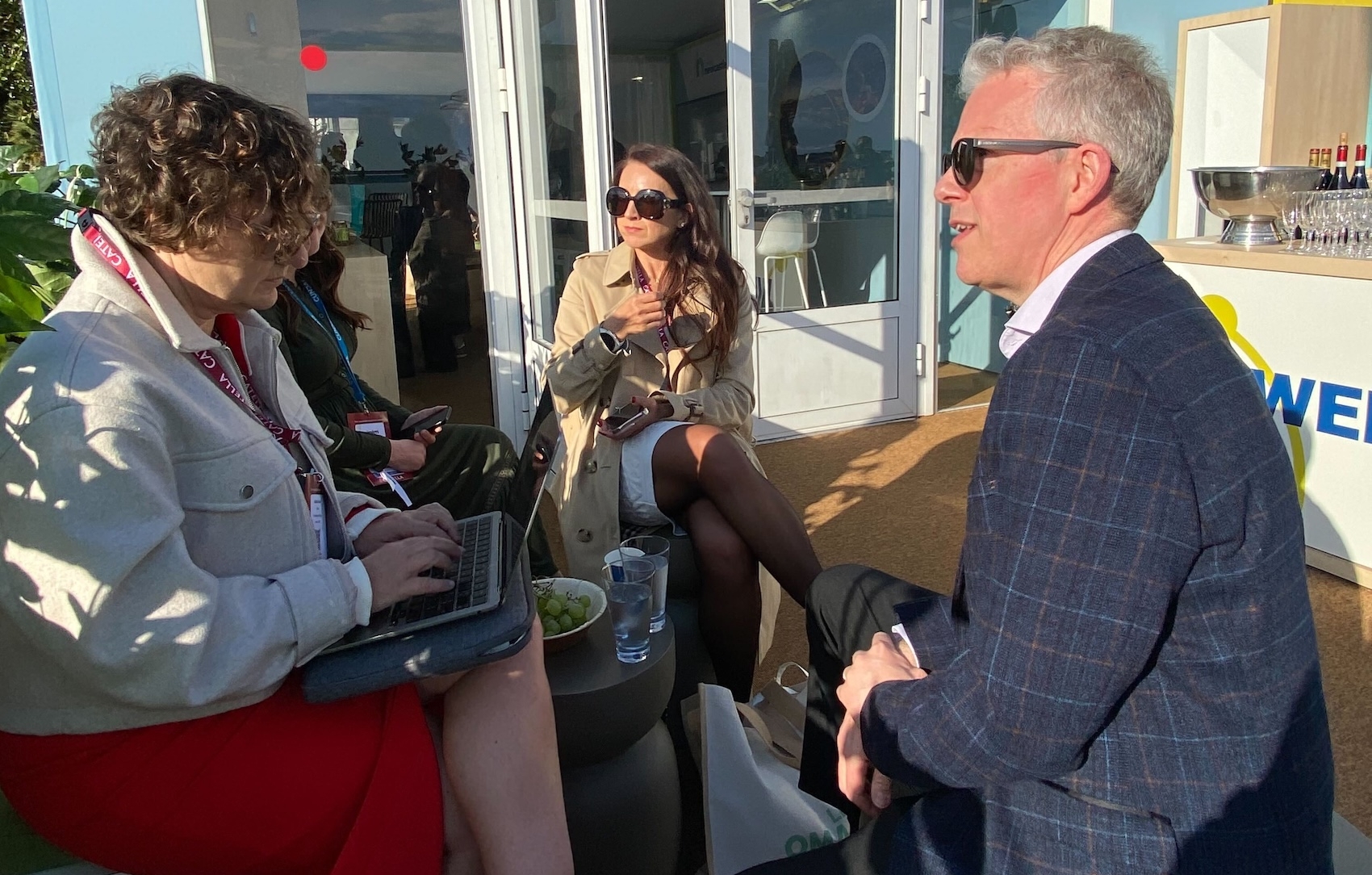
Isabel Allen and Duncan Cox at the Newcastle Pavilion.
How are you enjoying MIPIM?
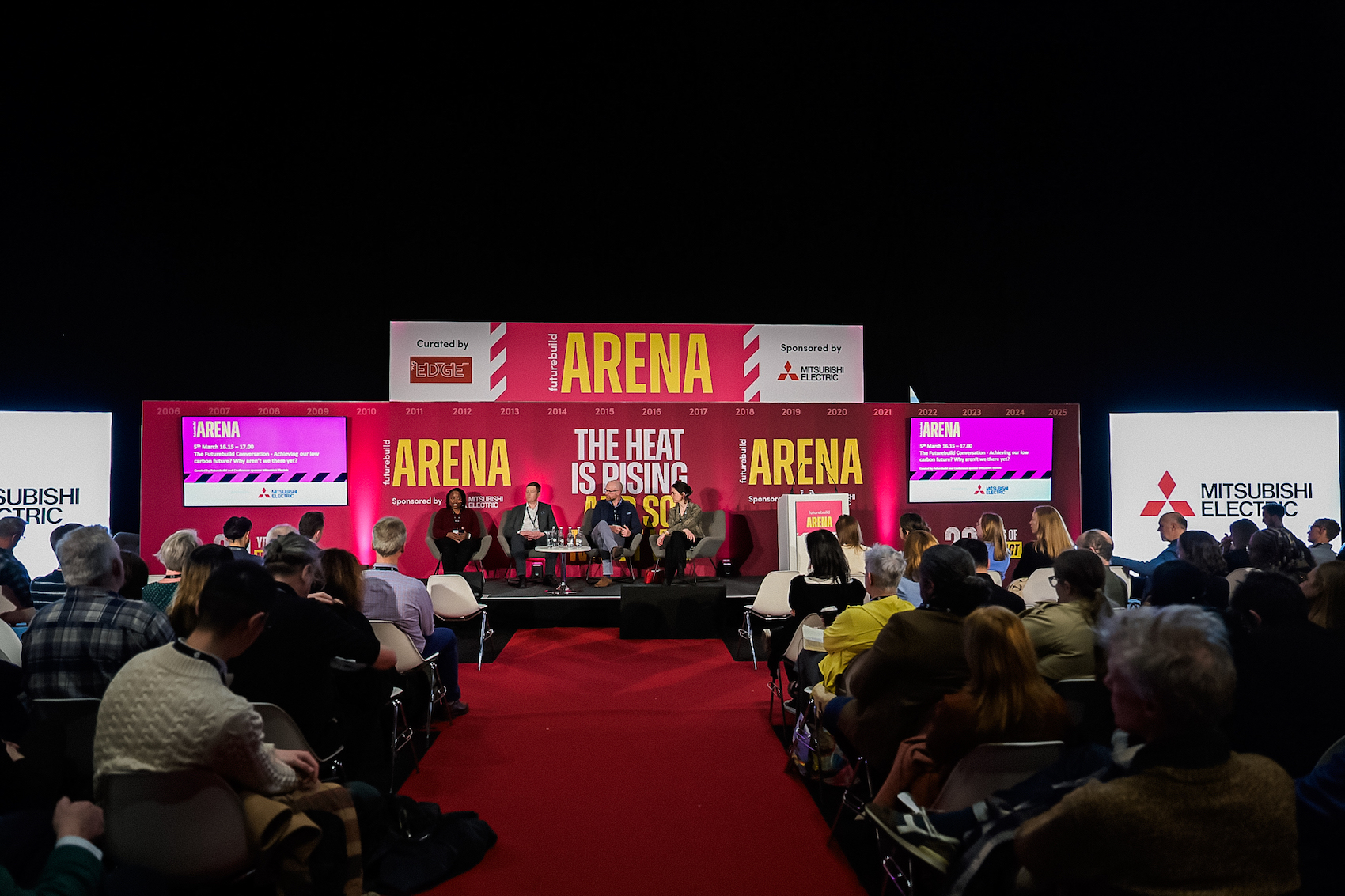
You don’t truly see the benefit of MIPIM until the third year you’ve come – and this is only my second year! Personally, it’s been more relaxed his time, and it’s been more exciting because I’ve been able to sit on a few panels. It’s been great spending time on the Oman stand. I’ve met leaders of city regeneration who I know because of the work we’ve been involved in, some of which we launched at the stand this year. It’s been fantastic to finally see those visions come to life, and to actually meet some of the people I’ve only every met on Teams before.
What are Cundall’s priorities for the next five years?
The big thing is Zero Carbon Design 2030 for which I have the honour of being one of the leaders in the business, which is exciting and challenging, but also scary because of the magnitude of what it represents in terms of setting the bar and following through.
So how do you determine what targets you set yourselves as a company?
It depends where you are in the world. In the UK you have established net zero carbon standards, but actually that only applies to a remarkably small proportion of countries where we operate. So the civil engineering part of the business are collating their own data and setting standards. We’re looking at what we’ve actually achieved, and we’re not shying away from setting really bold targets, but that then means that you have to encourage clients not just to set targets but to look at how you measure it, and how you respond to it.
Would you walk away from the client if they weren’t prepared to come on board with those ambitions?
At the end of the day we’re consultants and our role as advisors is to encourage those conversations. We advise on what we believe is reasonably achievable based on the information and the data that we have. In terms of being accountable, we can’t turn a client away because they say we don’t want to work with that target. What we can do is educate them about the reasons why we’re having that conversation, and to give the best advice we can, based on the data and the reality of our experience – that’s the nature of consultancy. Our clients may choose to accept or to ignore the advice that we can give, but we hope to provide advice that persuades them to do the right thing.