Designing commercial roofs with solar in mind is fast becoming a commercial necessity. Edward Cooke, AccuRoof National Sales Manager (Solar & Renewables) discusses how early-stage PV integration, technical coordination and warranty-led thinking can help specifiers deliver long-term value with confidence.
In association with
As the 2026 update to the UK Building Regulations sharpens its focus on operational energy, carbon performance, and long-term accountability, the role of the roof is evolving. Increasingly, it is expected to deliver more than weather protection – acting instead as a critical platform for integrated, performance-led design. Furthermore, frameworks, such as CF25, the UK Department for Education’s Construction Framework 2025 for schools, are moving beyond lowest‑cost capital expenditure and demanding demonstrable alignment with upcoming regulations (not just today’s minimum standards), whole‑life cost efficiency, and scalable national delivery capability.
In the commercial sector – among others – AccuRoof is helping project teams futureproof roofs by embedding solar-readiness into the earliest stages of specification and procurement. The goal is to give architects, contractors, and developers the tools to specify with confidence, avoid fragmented responsibility, and deliver compliant, futureproof solutions. AccuRoof National Sales Manager (Solar & Renewables) Edward Cooke, in conversation with AT Technical Editor John Ramshaw, discusses the benefits of PV-enabled roofing, what specifiers need to consider, and how early engagement can unlock long-term value.
What are PV-enabled commercial roofs and what are the main benefits?
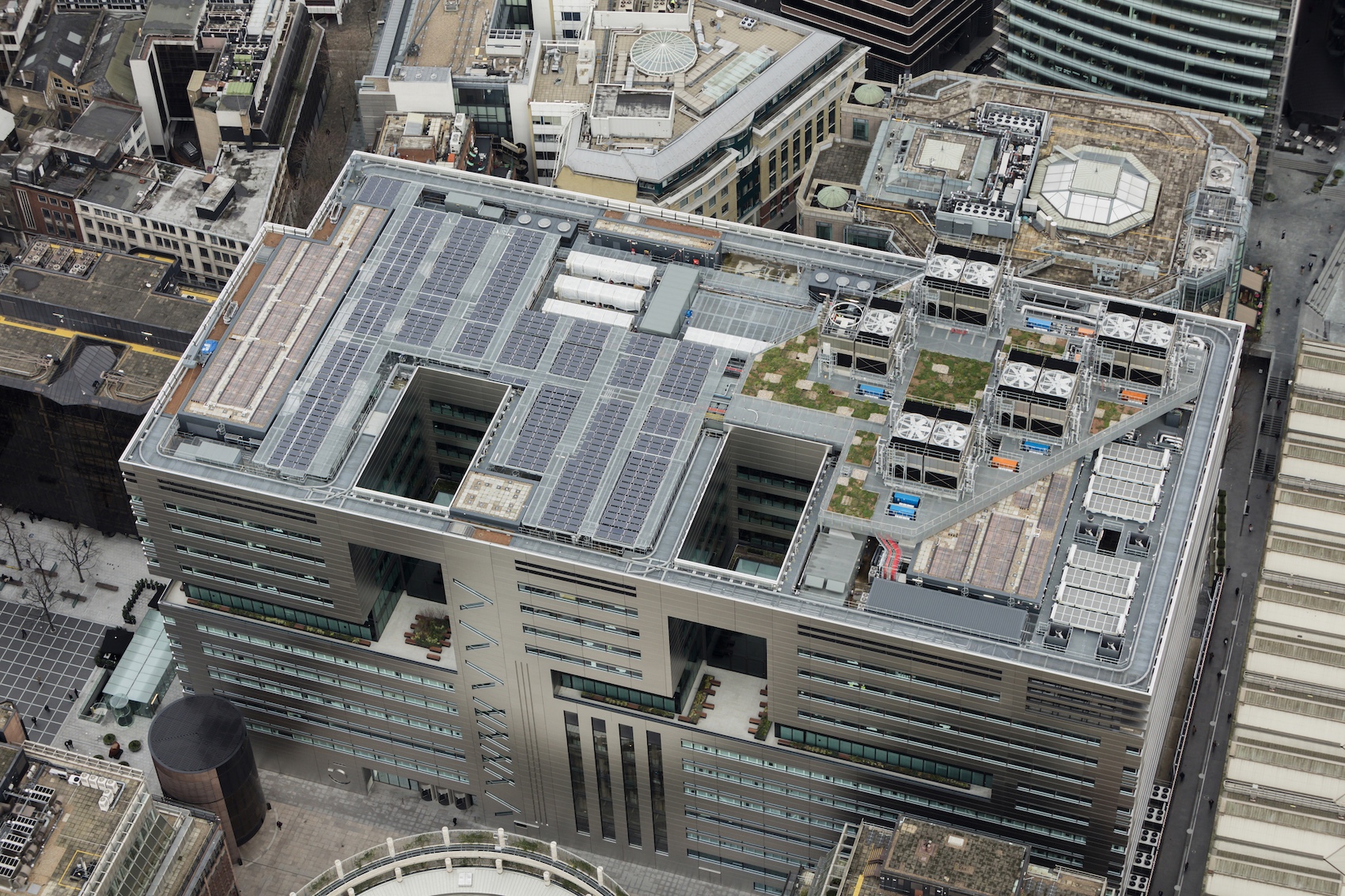
A PV-enabled commercial roof, often referred to as building-integrated photovoltaics (BIPV) or in-roof solar system, is not a proprietary product, but a coordinated roofing and solar strategy developed from the outset of a project. Structural capacity, waterproofing build-ups, wind uplift, fire performance, drainage, access and maintenance are all considered alongside PV layout, fixing strategy and future expansion potential. Under Building Regulations 2026, this integrated approach matters more than ever. Late-stage solar retrofits frequently expose gaps in structural design, fire strategy and access planning, all of which now carry greater regulatory and commercial risk.
From a contractor’s perspective, the value of PV-enabled roofs is as much contractual as it is technical. When solar is added late, responsibility is often split between roofing and PV trades, creating grey areas around penetrations, fixings and warranties. By contrast, an integrated approach can deliver clearer scopes of work, fewer variations, simpler sequencing on site and reduced risk of post-completion disputes. Better coordination upstream consistently leads to fewer problems downstream.
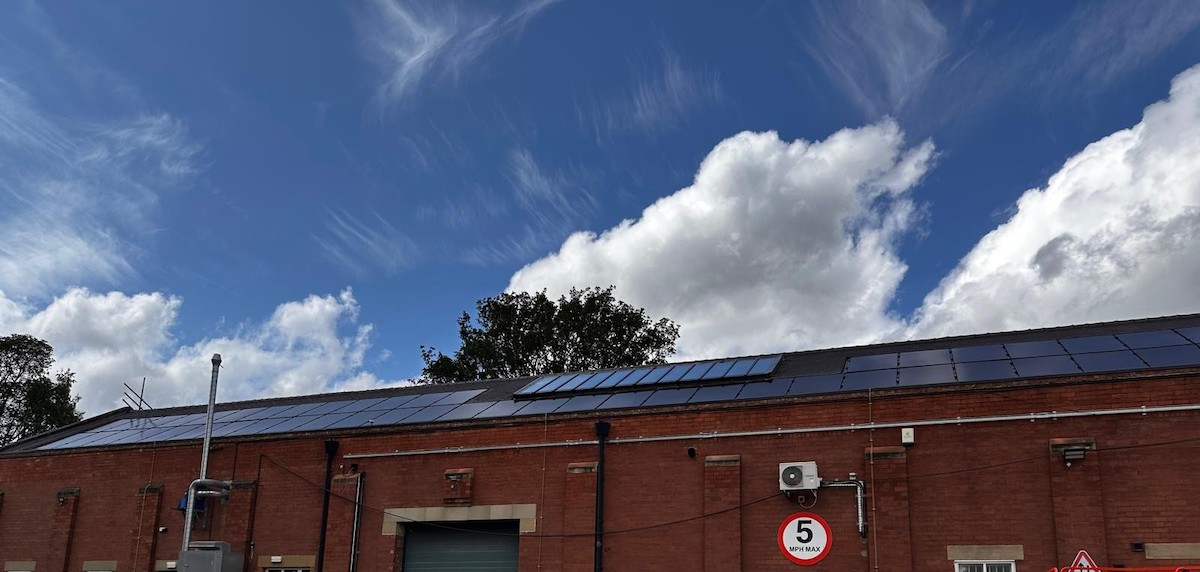
A 30kw GSE in-roof solar PV system at West Yorkshire Police Headquarters in Wakefield (photo: courtesy of SRM Solar).
Why is it important to consider solar PV as part of the roof design, rather than a later addition?
Designing solar in from the outset is advantageous. Retrofitted PV systems can compromise waterproofing through unplanned penetrations, overload structures through excessive ballast, undermine fire performance, and overlook safe access and maintenance. Addressing PV at concept stage allows load paths, fire strategy, wind uplift and drainage to be assessed holistically, addressing both future regulatory compliance considerations and contractor margin.
At what stage should project teams start thinking about PV-enabled roofs, and what are the key criteria to consider?
As early as possible; ideally at RIBA Stage 1 or 2. Key questions should include: Is the building likely to have a high energy demand? Is the roof orientation suitable? Are there visual or planning constraints? Is it flat or pitched? Where are the plant zones? It’s not just about space, it’s about build-up, parapet heights, access strategy, loading, and aesthetics. And with public expectations shifting, there may be a reputational cost to overlooking solar strategies.
What types of commercial roofs are suitable for solar PV integration?
Most commercial roof types can accommodate solar when correctly designed, including warm, cold and inverted flat roofs, single-ply, bitumen, and liquid-applied systems, metal and standing seam roofs, as well as green, blue and biosolar roofs. The determining factor is not roof type, but how well the roofing and PV systems are integrated, detailed and supported together.
How does AccuRoof reduce risk in practice?
AccuRoof supports integration through a comprehensive technical and supply framework. This includes free early-stage design advice, roof and PV layout planning, inverter and safety considerations, wind uplift, U-value and drainage calculations, and the use of specialist software to assess ballast and loadings. Advice is system-agnostic, allowing the most appropriate PV panels, fixing systems and warranties to be selected for each project, rather than forcing a ‘one-size-fits-all’ solution.’ AccuRoof also supplies the full roofing and PV component package, with support for battery storage where appropriate.
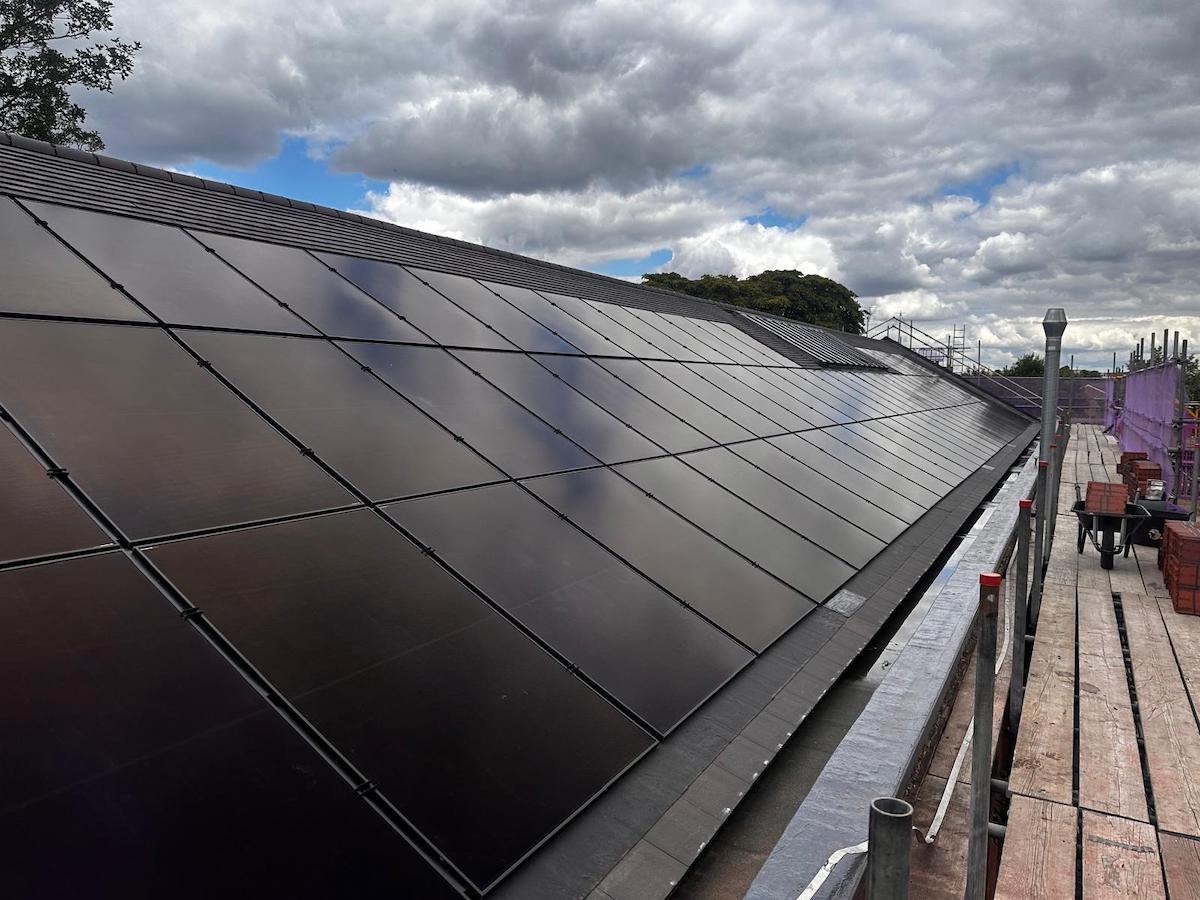
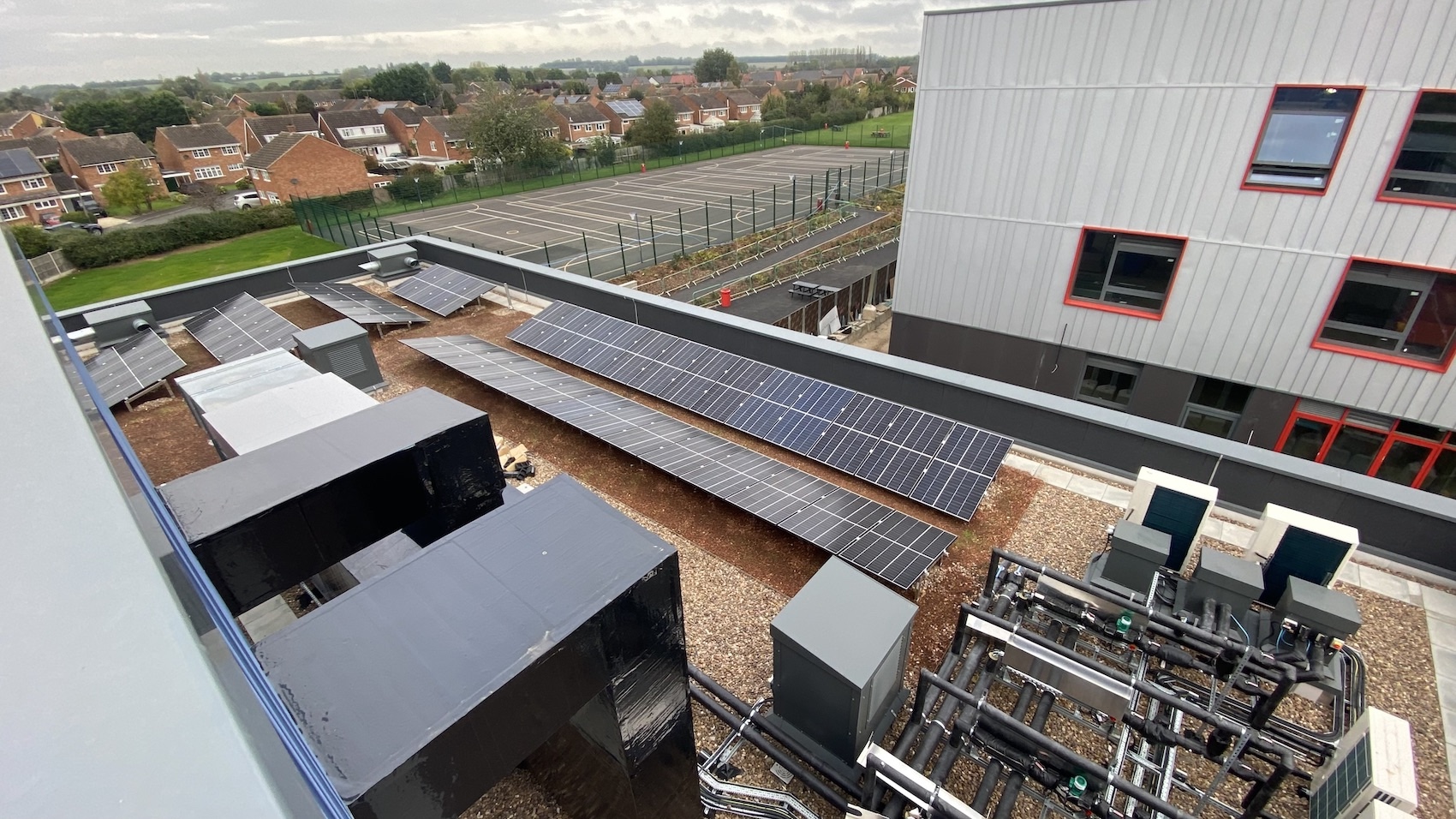
Solar PV system under construction (photo: courtesy of SRM Solar).
How does AccuRoof approach the specification of PV-enabled roof systems?
We’ve made solar a core part of the fact-finding process. Our specification checklist now includes renewable energy integration as a mandatory section, not an optional one. This prompts early conversation about whether the roof should be solar-ready, and if so, what that entails in terms of build-up, compatibility, and futureproofing. Rather than just following a client brief verbatim, we encourage our team to think ahead and advise on upgraded roofing systems where appropriate – explaining how a small upfront investment can avoid potential larger retrofit costs down the line. Furthermore, installation and compliance are underpinned by access to registered installer networks, training and competency assurance, site surveys, inspections and technical guidance.
What are the key differences between ballasted and penetrative PV systems?
Both ballasted and mechanically-fixed PV systems can be viable when correctly designed. Ballasted systems avoid penetrations but increase dead load and demand careful wind and drainage analysis. Mechanically-fixed systems reduce structural load and improve wind performance, but require precise waterproofing detailing. A system-agnostic, performance-led approach ensures the fixing strategy is selected based on the building’s structure, wind zone, fire strategy and maintenance requirements – not product bias.
What is a biosolar roof, and when is it appropriate?
Biosolar roofs, which combine PV with green or biodiverse roof systems, are becoming increasingly relevant where planning policy encourages biodiversity net gain. These systems can improve PV efficiency by reducing surface temperatures while delivering biodiversity and sustainable drainage benefits. However, they require particularly close coordination between roofing, landscaping and PV design, reinforcing the importance of early technical engagement. The determining factor is how well the roofing and PV systems are integrated, detailed and supported together.
How are warranties and long-term maintenance managed on PV-enabled roofs?
One of the most significant risk reducers is AccuRoof’s warranty structure. By covering roof systems, PV fixings and interfaces together, this approach removes split responsibility, simplifies maintenance and inspection regimes, and provides long-term confidence for insurers, funders and asset owners.
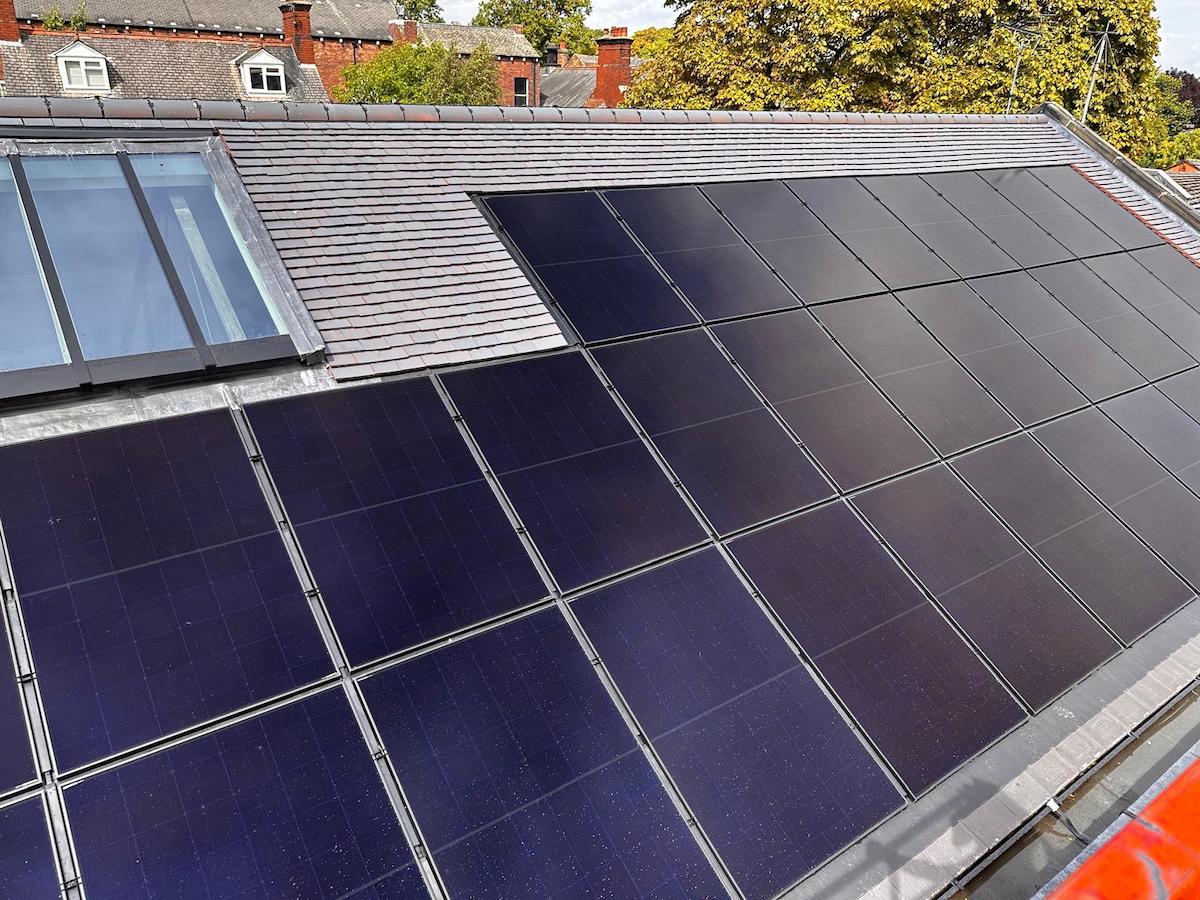
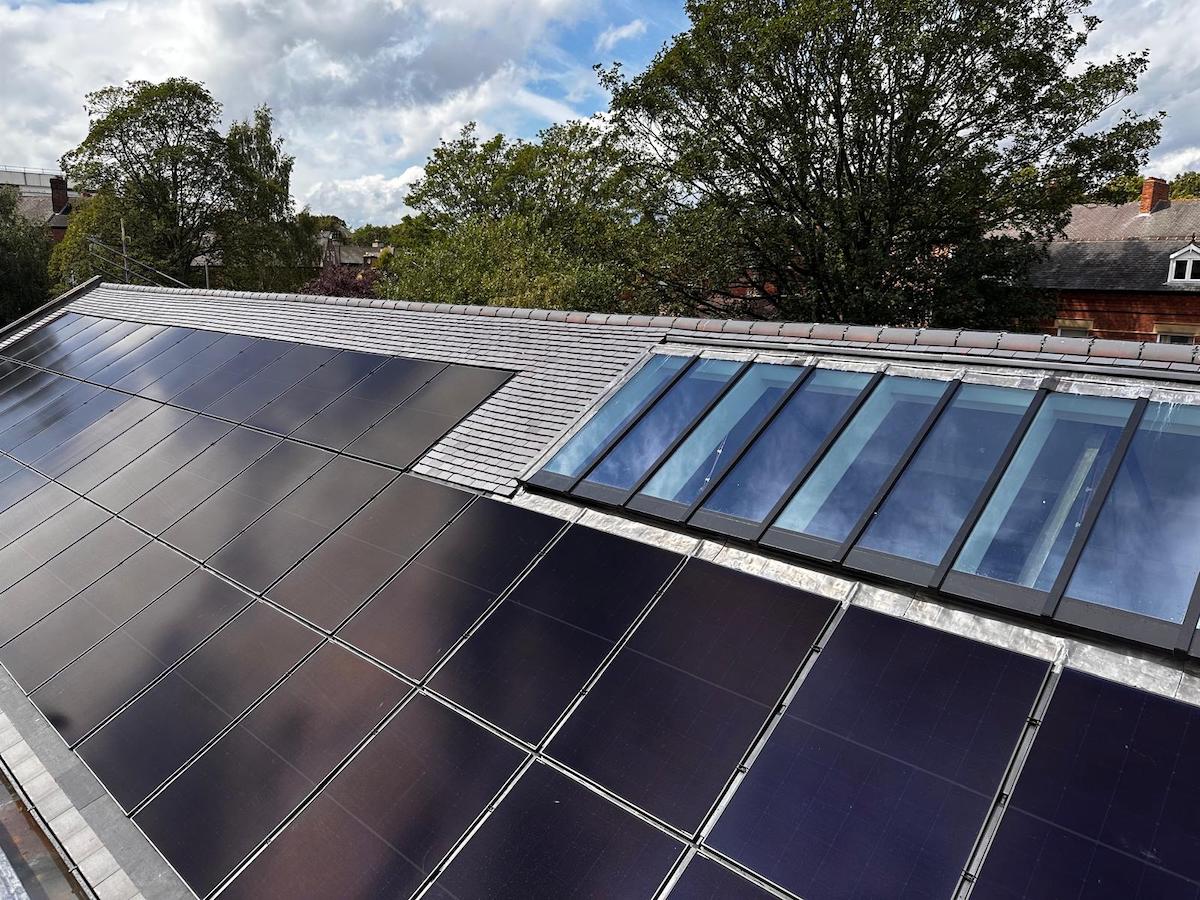
The photovoltaic panels are integrated into the roof, providing a visually-clean, low-profile appearance (photo: courtesy of SRM Solar).
Why does a system-agnostic approach matter for PV-enabled roofing?
By remaining system-agnostic and working with a broad range of manufacturers, we can tailor the solution to the building – not the other way around. This ensures that design integrity, energy output, and warranty compatibility are all optimised. As UK Building Regulations 2026 signal a decisive shift towards measurable building performance and long-term accountability, contractors are increasingly expected to move beyond isolated work packages. By enabling early contractor engagement, coordinated design, regulatory alignment and PI insurance-backed warranties, AccuRoof helps contractors evolve into genuine building-performance partners, capable of delivering roofs that generate energy, reduce risk and protect long-term value.
At a wider level, this collaborative, performance-led approach supports a stronger construction sector. By fostering local collaboration, sharing best practice and promoting continuous improvement through innovation, technology and new delivery models, AccuRoof contributes to a more resilient, efficient and sustainable supply chain. In 2026 and beyond, PV-enabled commercial roofs are not simply about sustainability credentials; they are about buildability, certainty and better-performing buildings.
Contact Details
For more information, please call 01509 505 714, email, or visit the AccuRoof website.