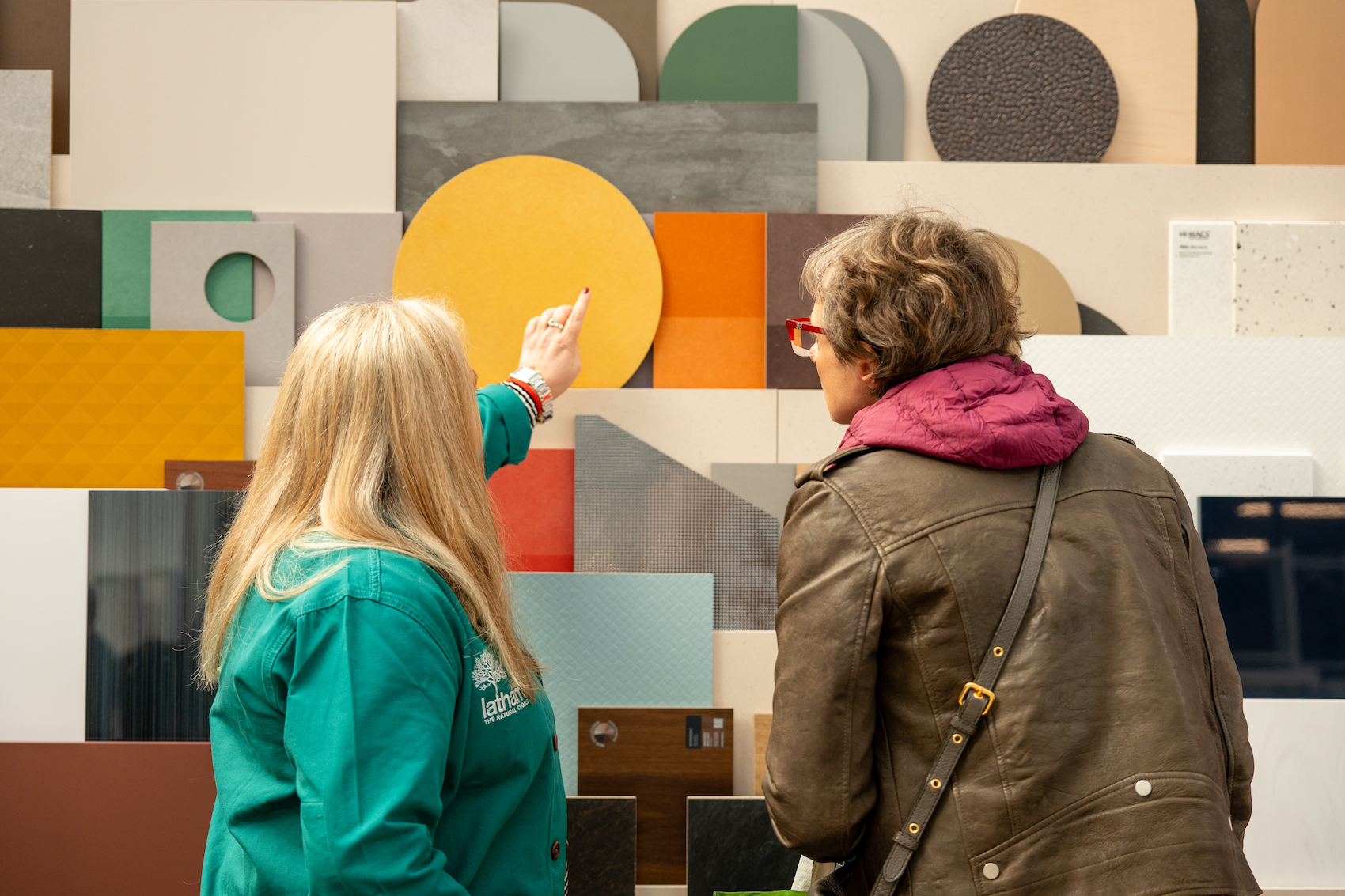
James Latham’s plywood expert David Briggs speaks to Architecture Today’s Technical Editor John Ramshaw about how to specify ‘conflict-free’ plywood, alongside the performance characteristics and applications of key products within its range, including Garnica’s poplar panels.
In association with
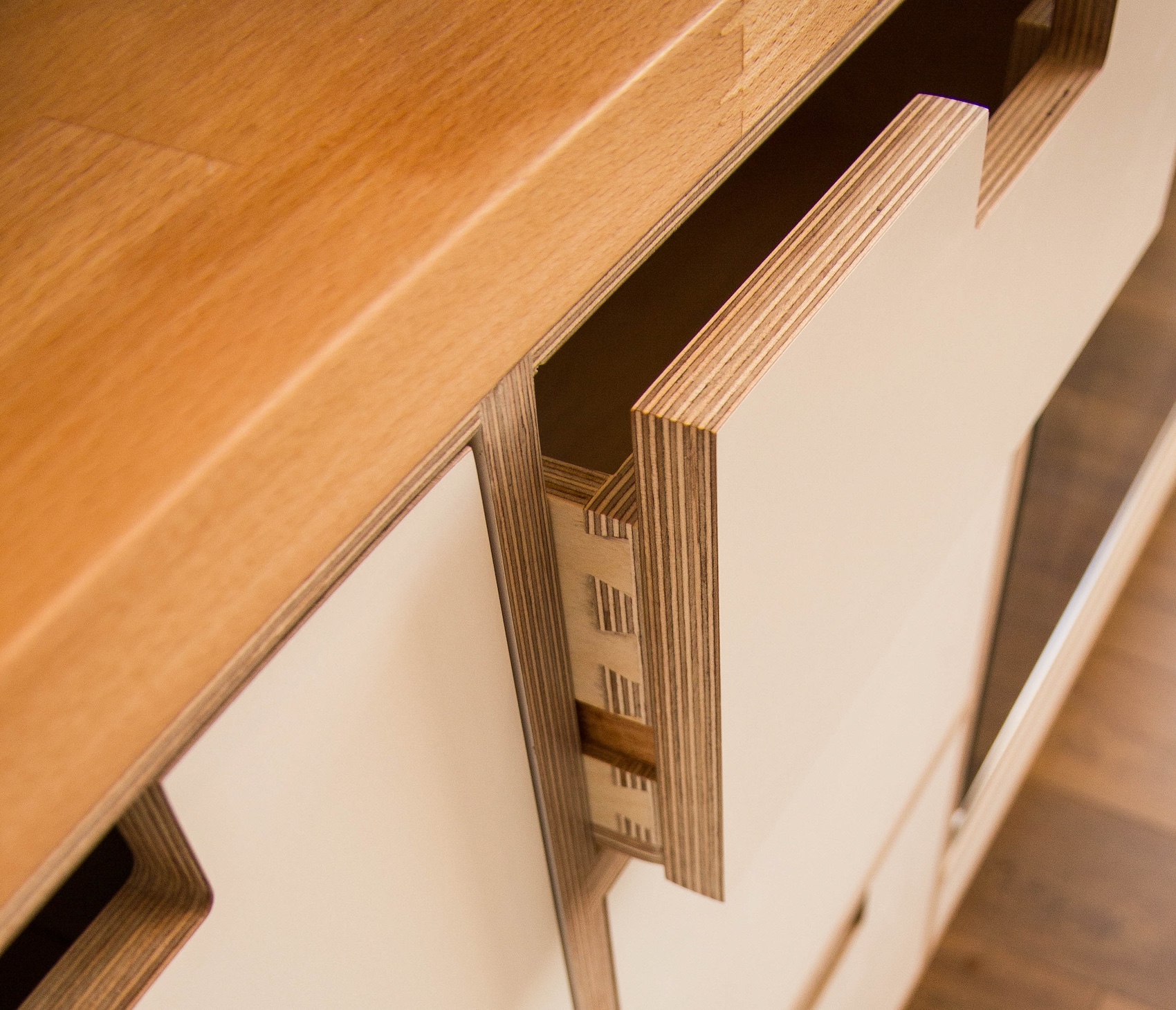
CNC-machined drawer front in white melamine birch plywood (photo: courtesy of Advanced Technical Panels).
Plywood remains one of the most widely specified panel products across the industry, valued for its strength, versatility and cost-effectiveness. However, increasing scrutiny of global supply chains has placed greater emphasis on legality, environmental impact and ethical sourcing. The concept of ‘conflict-free’ plywood has therefore become a critical consideration, requiring specifiers to look beyond performance and assess provenance, certification and traceability. At the same time, advances in engineered plywood are expanding what the material can achieve, delivering improved consistency, reduced weight and enhanced fire performance.
James Latham’s plywood portfolio reflects both of these priorities, combining responsibly- sourced materials with a curated range of high-performance products. Among these are Garnica’s poplar plywood panels, including Ultralight, Duraply and Fireshield, each developed to meet specific technical and applicational requirements. James Latham Leeds Depot Director and resident plywood expert David Briggs, in conversation with Architecture Today’s Technical Editor John Ramshaw, explores how architects can specify plywood with confidence, balancing performance, compliance and design intent.
What do we mean by ‘conflict-free’ plywood, and why is this an important consideration within specifications?
Conflict-free plywood is fundamentally about legality, traceability and ethical sourcing. Since the trade restrictions on Russian birch plywood, there has been a real need to ensure that material entering the UK market is from legal territories and not Russian product being routed through third countries to bypass sanctions. We’ve seen attempts to move product through places like Kazakhstan, Turkey or China, and that’s where the risk lies. At James Latham, we take a very rigorous approach to due diligence and we do not simply accept what suppliers tell us, but carry out evidence based verification of the information provided. For specifiers, this matters because having a certificate is not always enough. You need confidence in the full chain of custody, from forest to finished board.
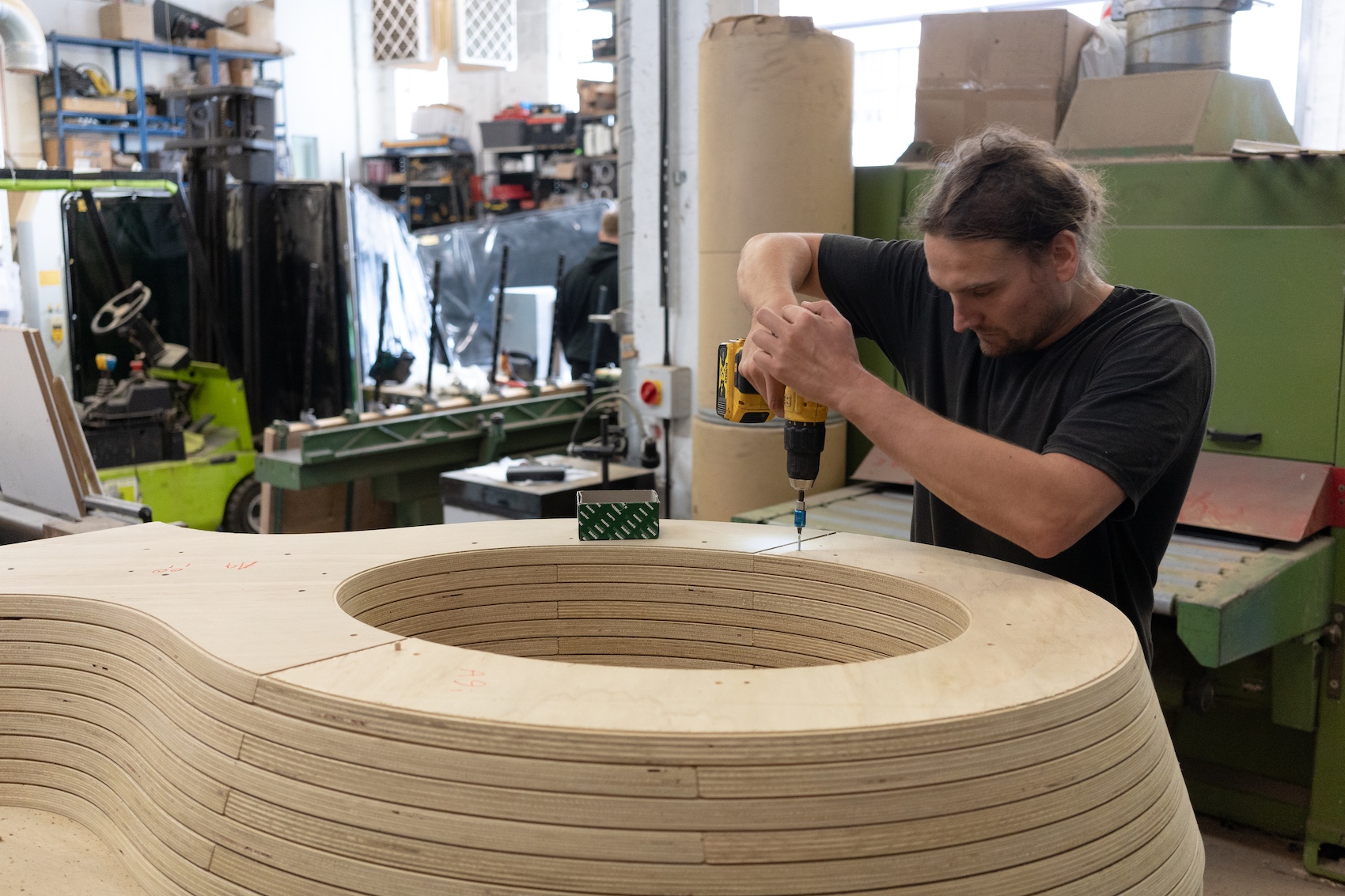
Lacuna street furniture in WISA Spruce Special under construction (photo: courtesy of WISA).
What are the key risks associated with specifying plywood from unknown or unverified sources?
The risks are both legal and reputational. If you knowingly or unknowingly purchase restricted material, you are breaking the law. Even where legality is less clear, you may still be in breach of wider regulations or ethical expectations. There’s also a significant reputational risk. Many manufacturers and contractors are supplying high-value clients who expect full transparency. If something is found to be non-compliant further down the line, it reflects back through the entire supply chain.
What certifications or documentation should specifiers look for?
Certification plays a key role in tracing the origin of a product, enabling verification down to the country of harvest and, where applicable, to the specific concession or region. We assess the integrity of the entire supply chain, including thorough verification of documentation (e.g. invoices and related records), to ensure consistency, authenticity, and transparency at each stage. It’s a detailed process. FSC and PEFC certification are key benchmarks, along with compliance with UK Timber Regulations. But specifiers should not rely on a single document. The real assurance comes from working with a supplier that is carrying out thorough due diligence behind the scenes.
How does James Latham ensure traceability and responsible sourcing?
We carry out a full audit process for any product we bring in. That includes verifying the origin of the timber, reviewing supply chain documentation, and ensuring compliance with all relevant standards. We are consistently pushing for certified material and maintaining strict controls over sourcing. The aim is to provide complete confidence that what we supply is both legal and responsibly sourced.
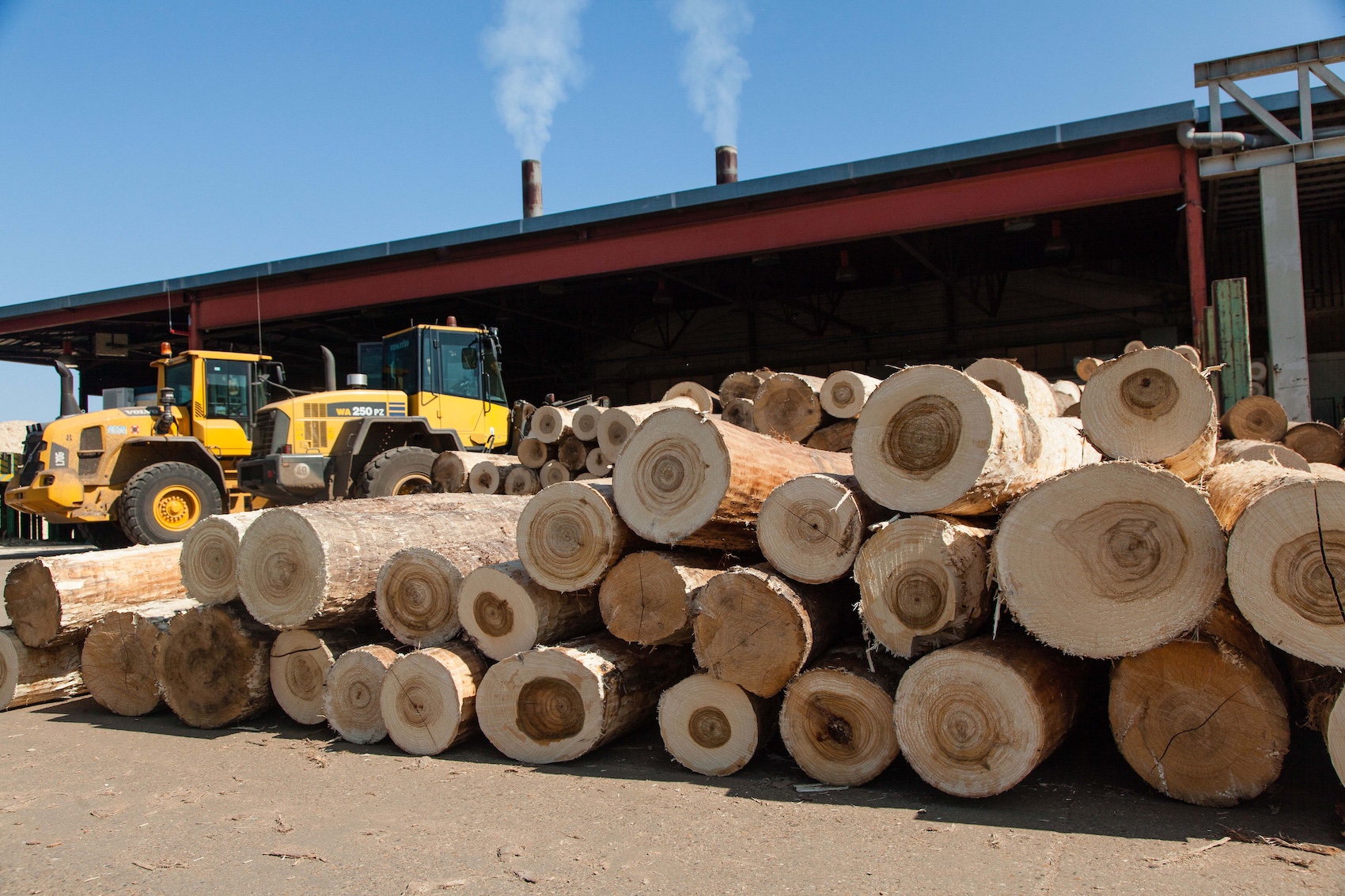
Poplar logs awaiting peeling (photo: courtesy of Garnica).
Are there particular supply chains specifiers should approach with caution?
Yes. One of the biggest red flags is supply appearing from regions that don’t have a history of producing that material. For example, the sudden availability of large volumes of birch plywood from countries where birch tree species do not naturally occur, or are not widely distributed, should be considered a potential red flag and trigger further due diligence. It’s about applying common sense and asking where the material is really coming from. If something seems too readily available or too competitively priced, it’s worth investigating further.
What are the main differences between hardwood and softwood plywood?
The distinction is not always straightforward. Birch plywood, which is a hardwood, is typically used where strength and consistency are critical. It uses thin veneers and is manufactured to a very uniform standard, making it reliable for structural or demanding applications. Softwood plywood can vary significantly. Some products, like spruce plywood, are highly engineered and offer strong performance, while others are more cost-driven. The key is to match the product to the application rather than relying on broad categories.
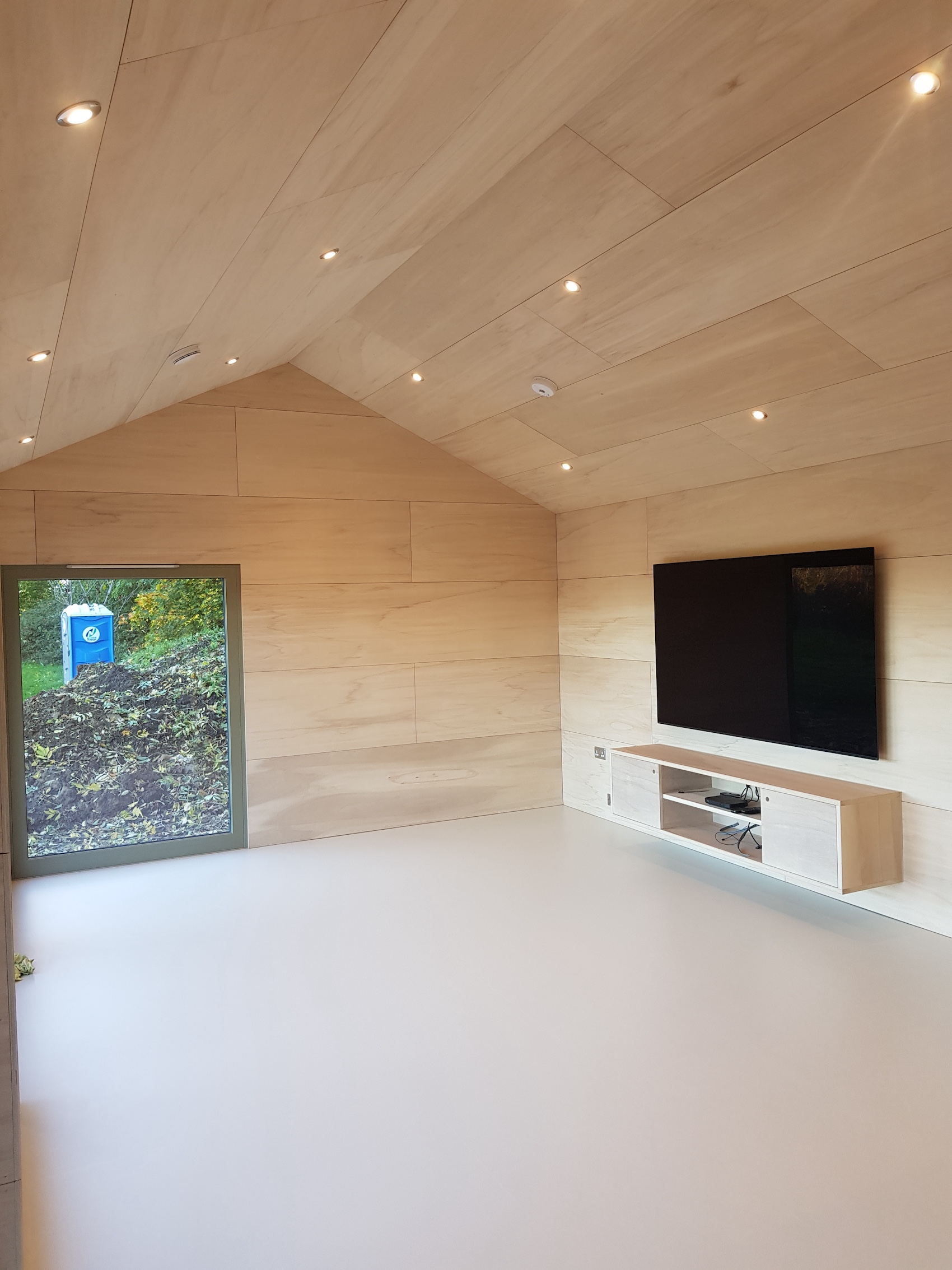
Garden room clad in Garnica Elegance plywood (photo: courtesy of Ecospace).
What distinguishes poplar plywood from other types?
Poplar plywood offers a clear advantage in weight. It is significantly lighter than birch, which makes it easier to handle, transport and install. That opens up different applications, particularly where weight reduction is important. It also provides flexibility in finishes and performance, including fire-rated options. While it may not match birch for strength, it offers a strong balance of performance and practicality in the right context.
Can you talk us through Garnica Ultralight?
Ultralight is a sandwich panel with a lightweight core, which dramatically reduces weight while maintaining a plywood surface. It’s ideal for non-structural applications where handling and weight are key considerations. We’ve seen it used effectively in large-format joinery, such as oversized doors. You can achieve a high-quality aesthetic without the weight penalty of a traditional solid panel.

Garnica Duraply bench at the London Festival of Architecture (photo: courtesy of Garnica).
What are the advantages of Garnica Duraply?
Duraply is designed for exterior performance. Each layer is treated before the board is assembled, which means the protection runs throughout the panel rather than just on the surface. It comes with a long-term guarantee against degradation and can be used outside if protected or in more demanding environments. From a sustainability perspective, it also avoids the need for more intensive chemical treatments later in the product lifecycle.
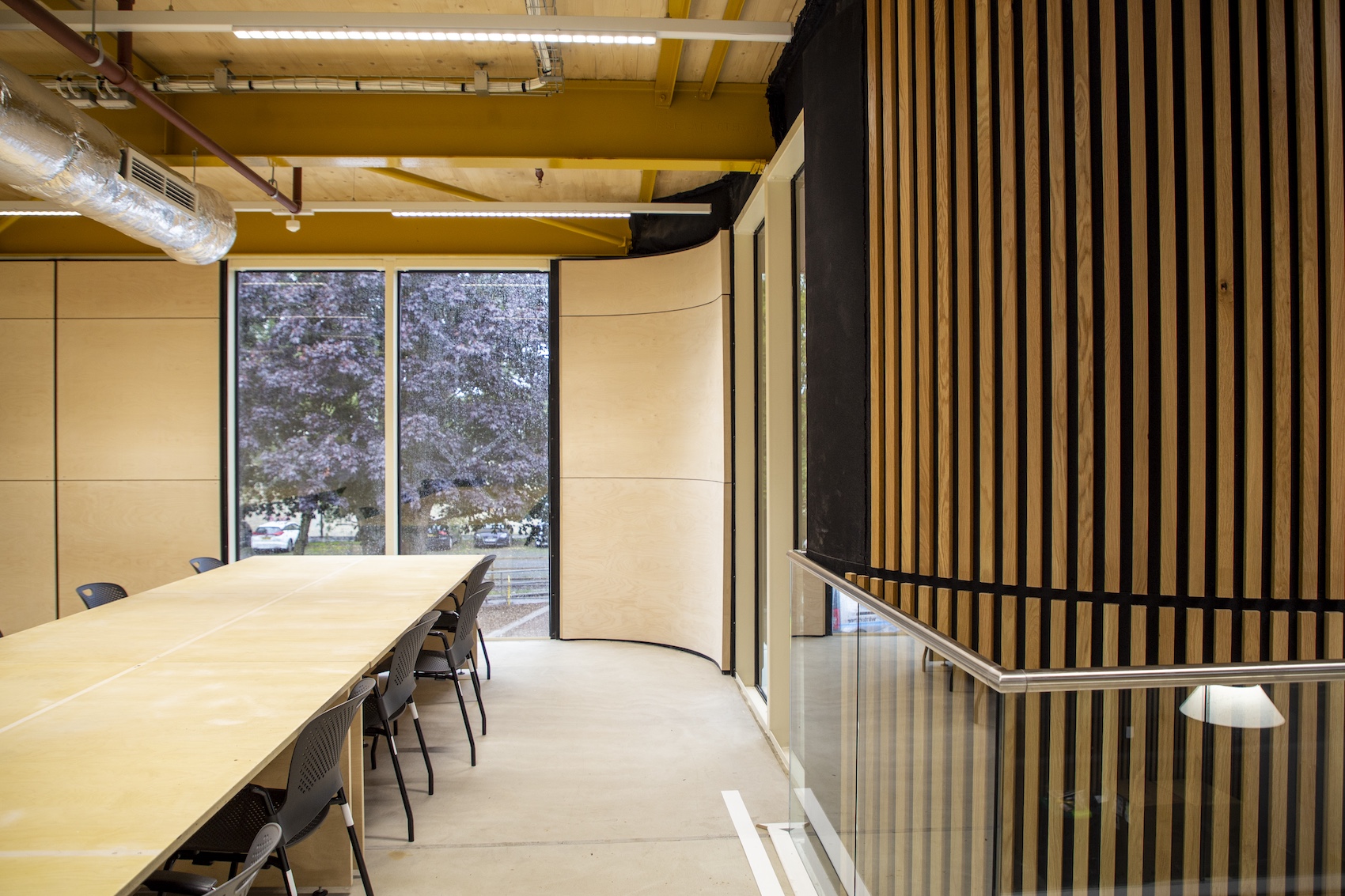
Garnica Fireshield was specified for Bath Action Factory in Somerset (photo: courtesy of Garnica).
What makes Garnica Fireshield valuable for architects?
Fireshield achieves a Euroclass B-s1-d0 rating rating, which makes it suitable for applications where fire performance is critical. Like Duraply, each veneer layer is treated individually, so the fire-retardant properties remain consistent even when the panel is cut or machined. It’s important to note that any further processing or additional finishes can affect fire performance, so specifiers need to follow the guidance carefully to maintain compliance.
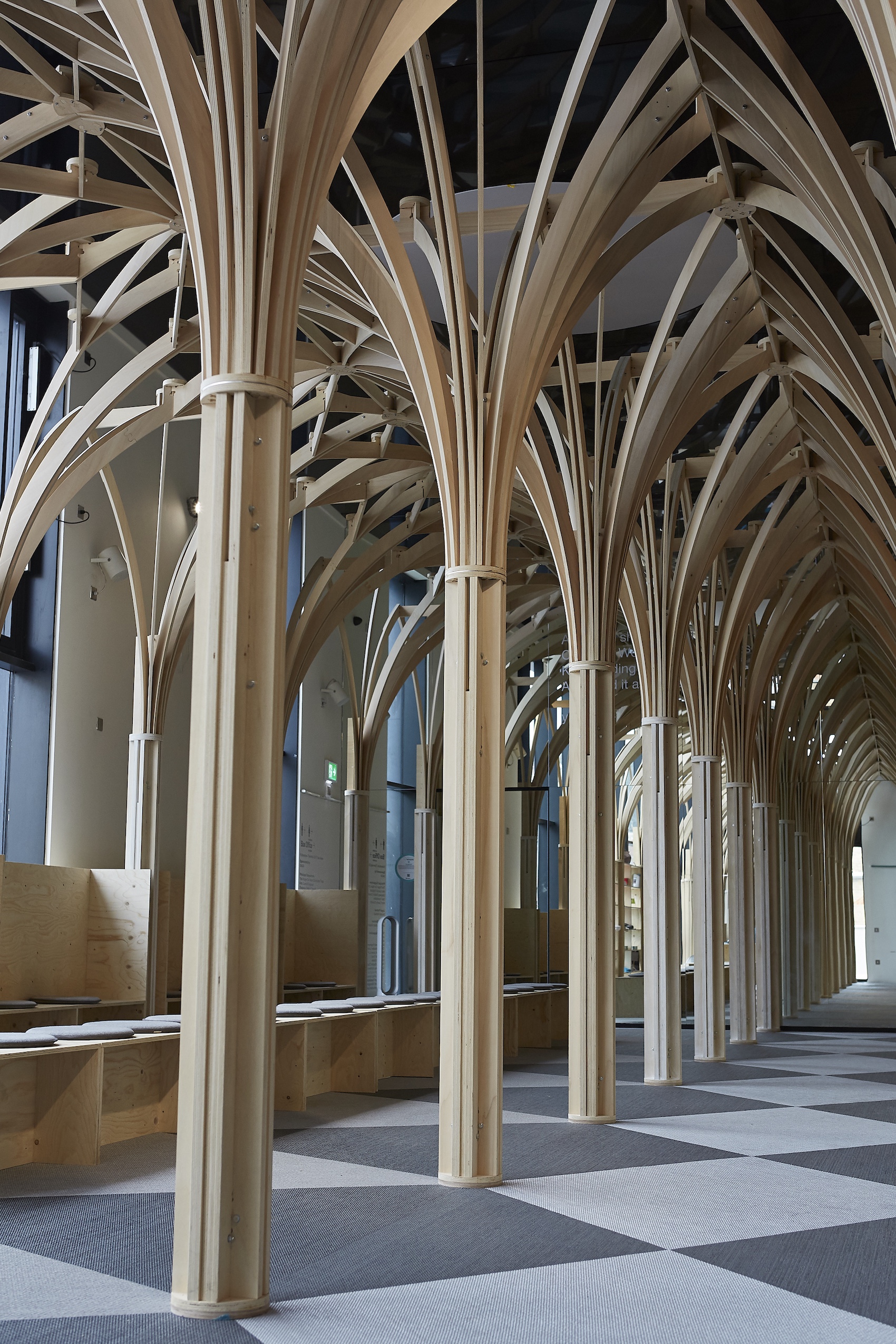
Garnica poplar ply is used to striking effect at Folkestone Quarterhouse in Kent (photo: Philip Panting).
What about the aesthetics of different plywoods?
Aesthetics are a major factor, particularly in architectural applications. Grain direction, for example, has a significant visual impact. In the UK, there is a strong preference for long-grain birch plywood, where the grain runs along the length of the board. Following the loss of Russian supply, sourcing this type of material has been a challenge. We’ve worked closely with suppliers to reintroduce long-grain options, as it’s a key requirement for applications like wall linings and joinery. There is also growing interest in alternative decorative options, including veneered plywood and Maple faced poplar panels with distinctive grain patterns. These provide designers with more choice and flexibility.

Premium long grain WISA birch plywood (photo: Matt Livey).
What role do adhesives and bonding systems play?
Adhesives are a critical but often overlooked aspect of plywood. There is increasing focus on reducing formaldehyde emissions and improving environmental performance. Many manufacturers are now developing lower-emission or alternative bonding systems. These improvements not only benefit indoor air quality but can also reduce the overall carbon footprint of the product. It’s something specifiers should consider alongside the timber itself.
What advice would you give to architects specifying plywood today?
The most important thing is to work with a supplier who understands the complexity of the market. Plywood is not a single product, it’s a wide range of materials with very different properties and origins. By starting with the application and working back to the right product, you can balance performance, cost and compliance effectively. And by ensuring proper due diligence, you can specify with confidence that the material meets both technical and ethical requirements.
Contact Details
To find out more about James Latham’s extensive plywood offering, please email or visit the website.