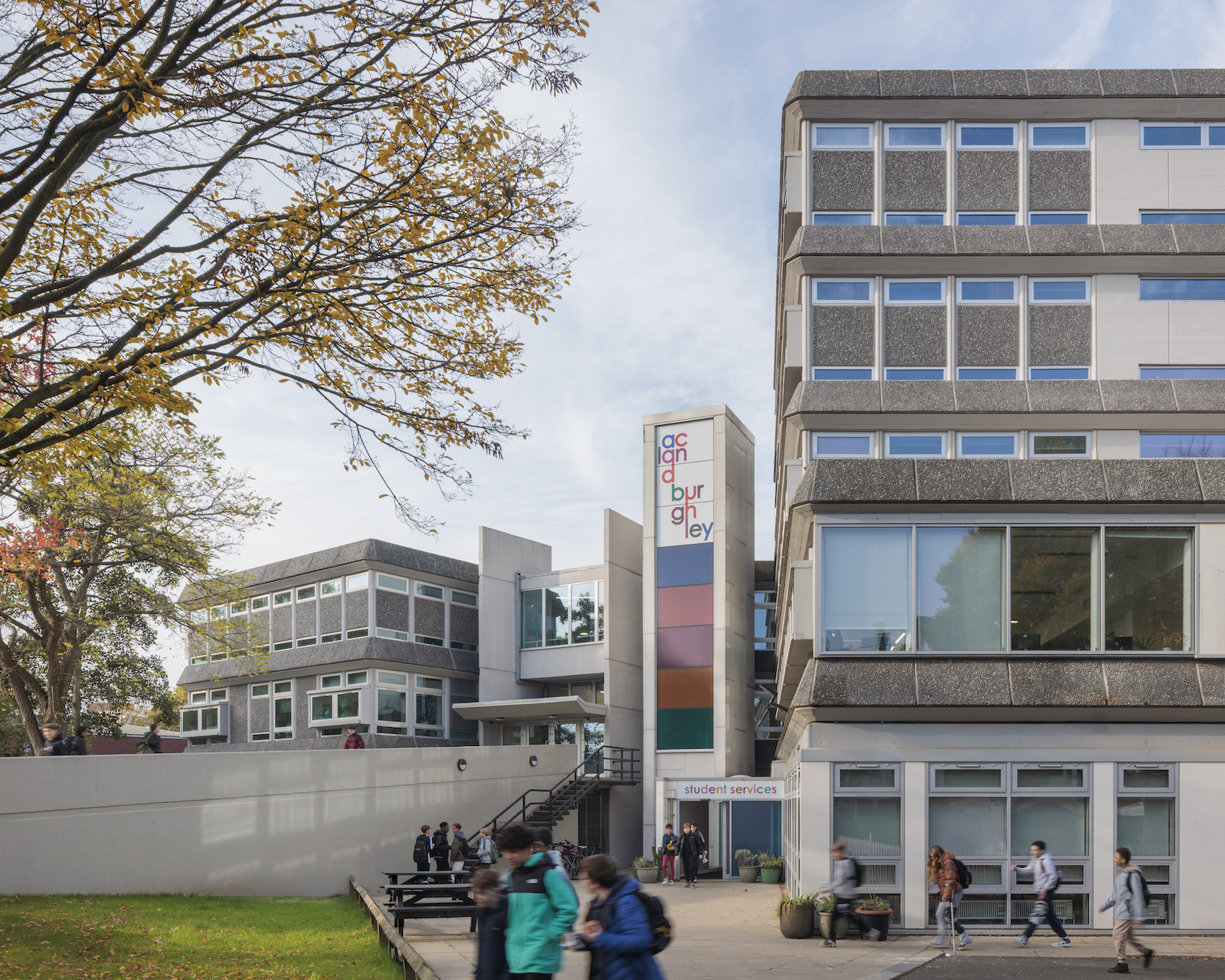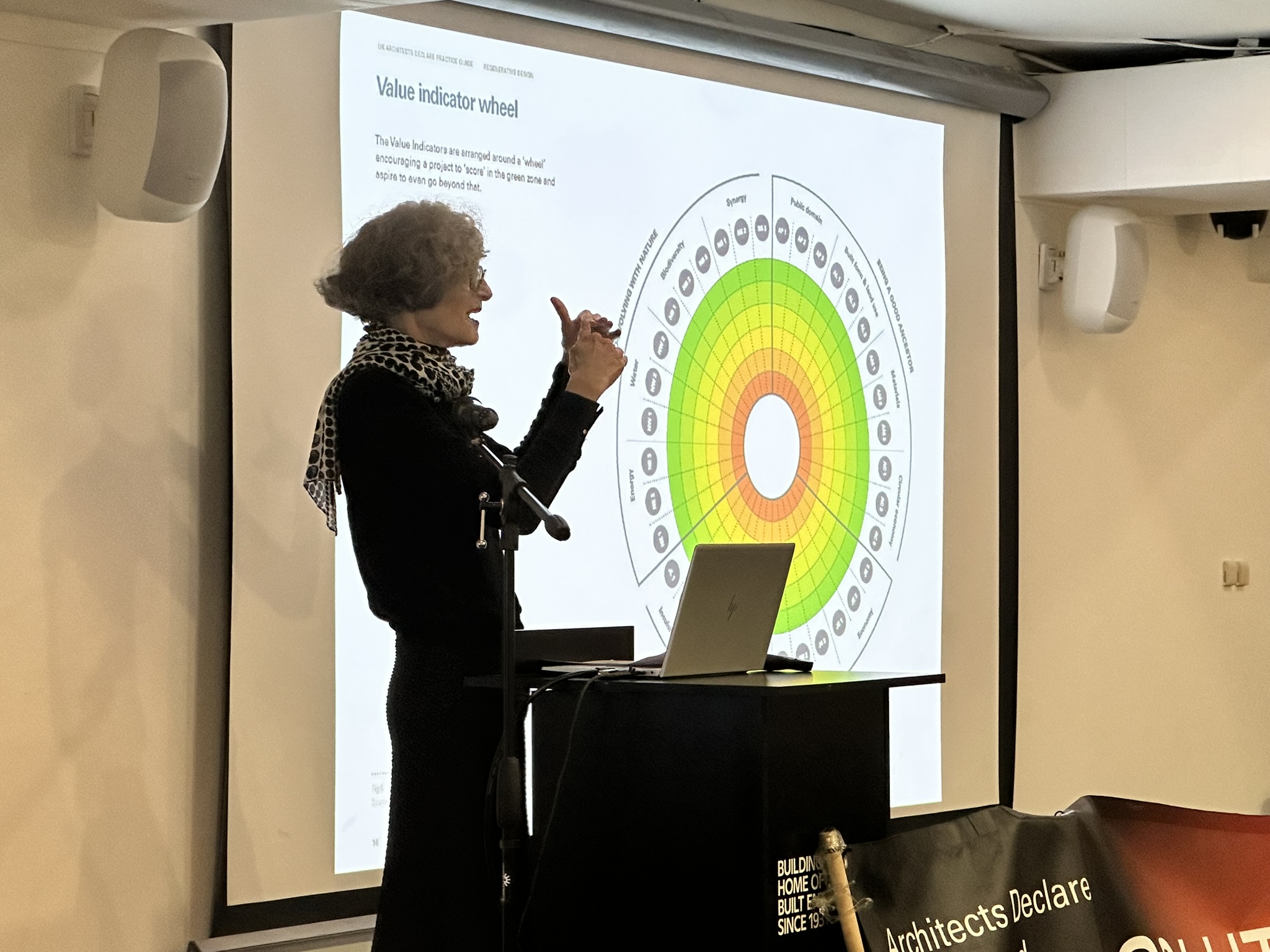
Forming part of Regenerative Design 2026, Architecture Today, in partnership with Interface, hosted a round table discussion exploring how circular design, material reuse and more intelligent specification can become standard practice across the construction industry.
In association with Interface 
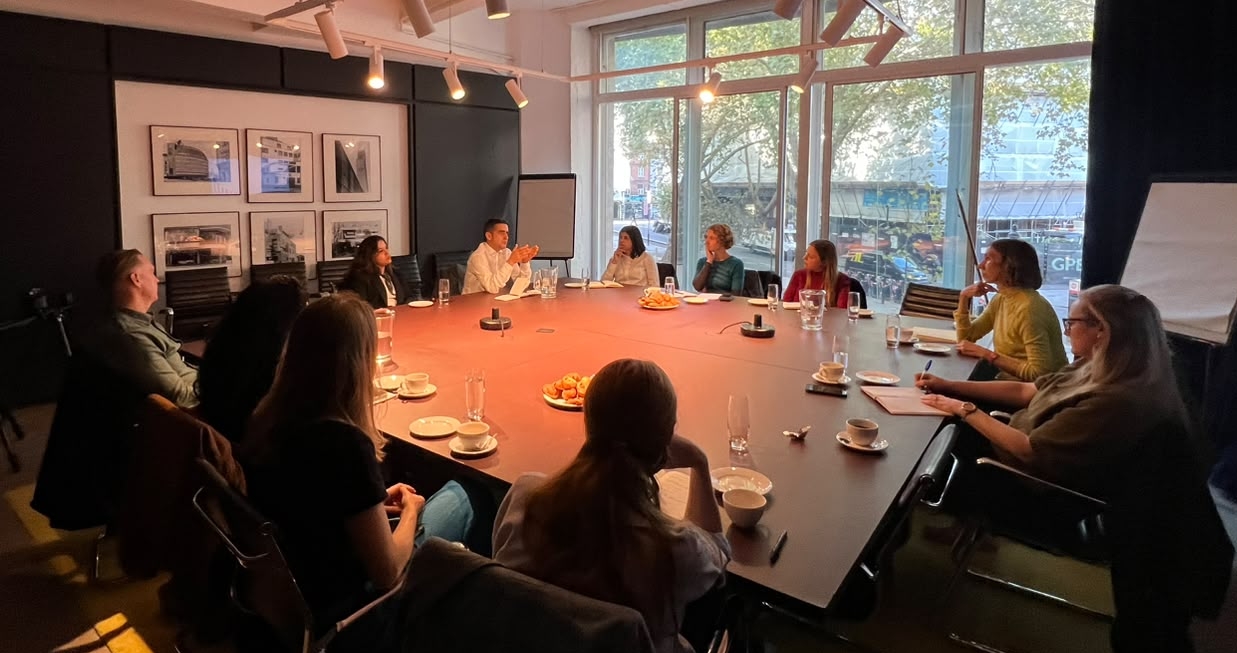
Round table participants
Becky Gordon
Interface (chair)
Aditi Saxena
Bond Bryan
Chiara Cozzolino
tp bennett
Harshita Mathur
MAKE Architects
Joanna Wilson
Fletcher Priest
Juliana Renn
HLM Architects
Louisa Bowles
Hawkins\Brown
Lucia Berasaluce
Haptic Architects
Megan Greig
Elliott Wood
Nikolay Shahpazov
DSDHA
Scott Farrar
Scott Brownrigg
Circularity offers the construction industry an opportunity to reduce waste, retain the value of existing materials and rethink the relationship between buildings and the resources used to create them. Yet the transition from a linear model of extraction, consumption and disposal to one based on reuse, repair and regeneration remains difficult. Short lease cycles, fragmented supply chains, conventional procurement practices and uncertainty around cost and liability continue to favour replacement over retention.
The challenges are particularly apparent in commercial interiors, where perfectly serviceable materials can be removed after only a few years to accommodate changing tenants, branding or workplace requirements. Even where clients and designers are committed to reuse, sourcing appropriate products, demonstrating their performance and coordinating their recovery can introduce complexities that conventional construction processes are poorly equipped to accommodate.
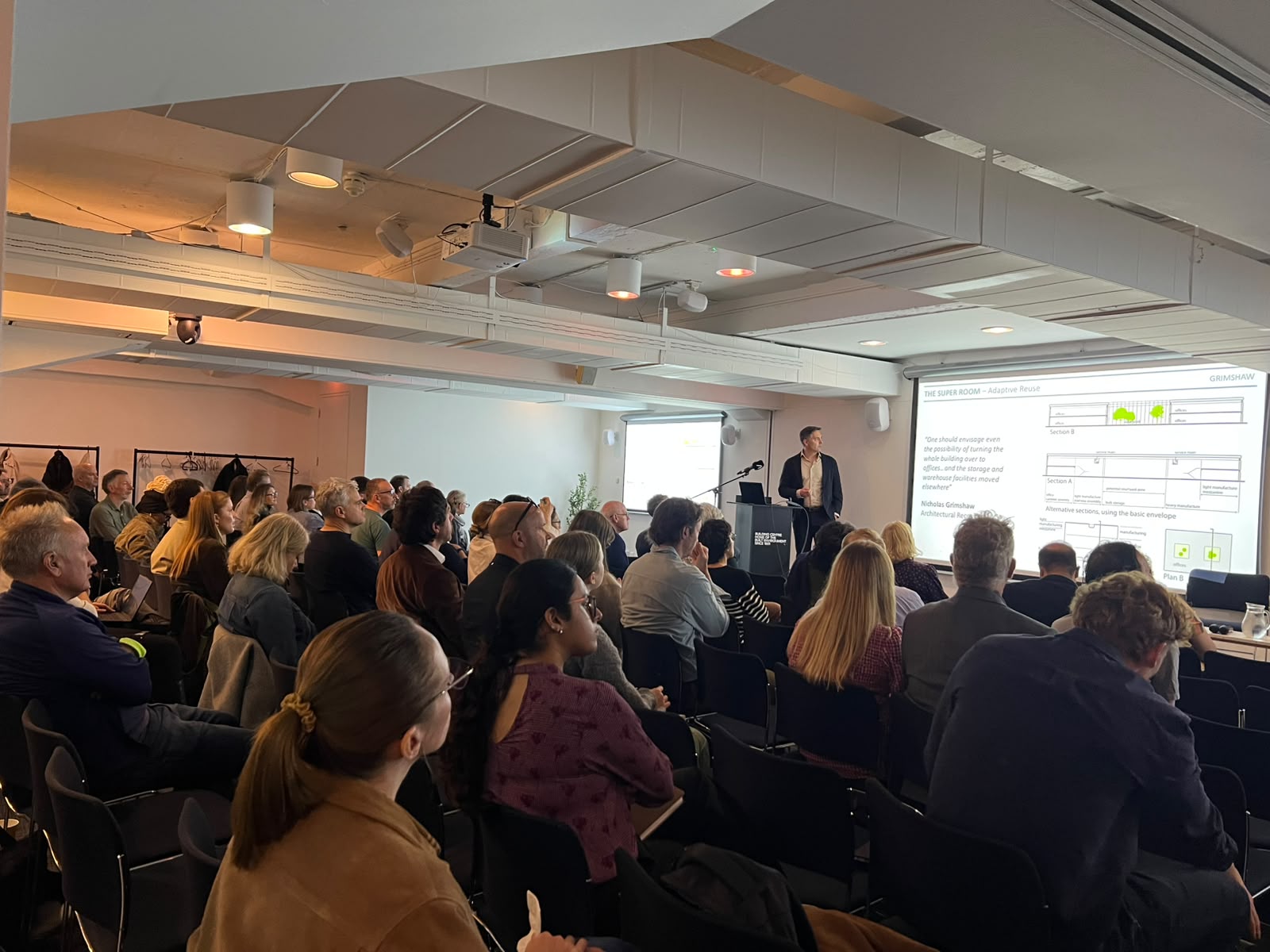
These issues formed the basis of a round table discussion hosted by Architecture Today in partnership with Interface at the Building Centre in London, as part of Regenerative Design 2026. Chaired by Becky Gordon of Interface, the conversation brought together architects, engineers and sustainability specialists to examine the practical barriers to circularity and explore how design, procurement, manufacturing and client expectations might change to make reuse a viable and routine part of construction.
Gordon opened by emphasising the need for collective action. “We need everyone working together,” she said, acknowledging that no single organisation or profession could deliver the transition to circularity alone.
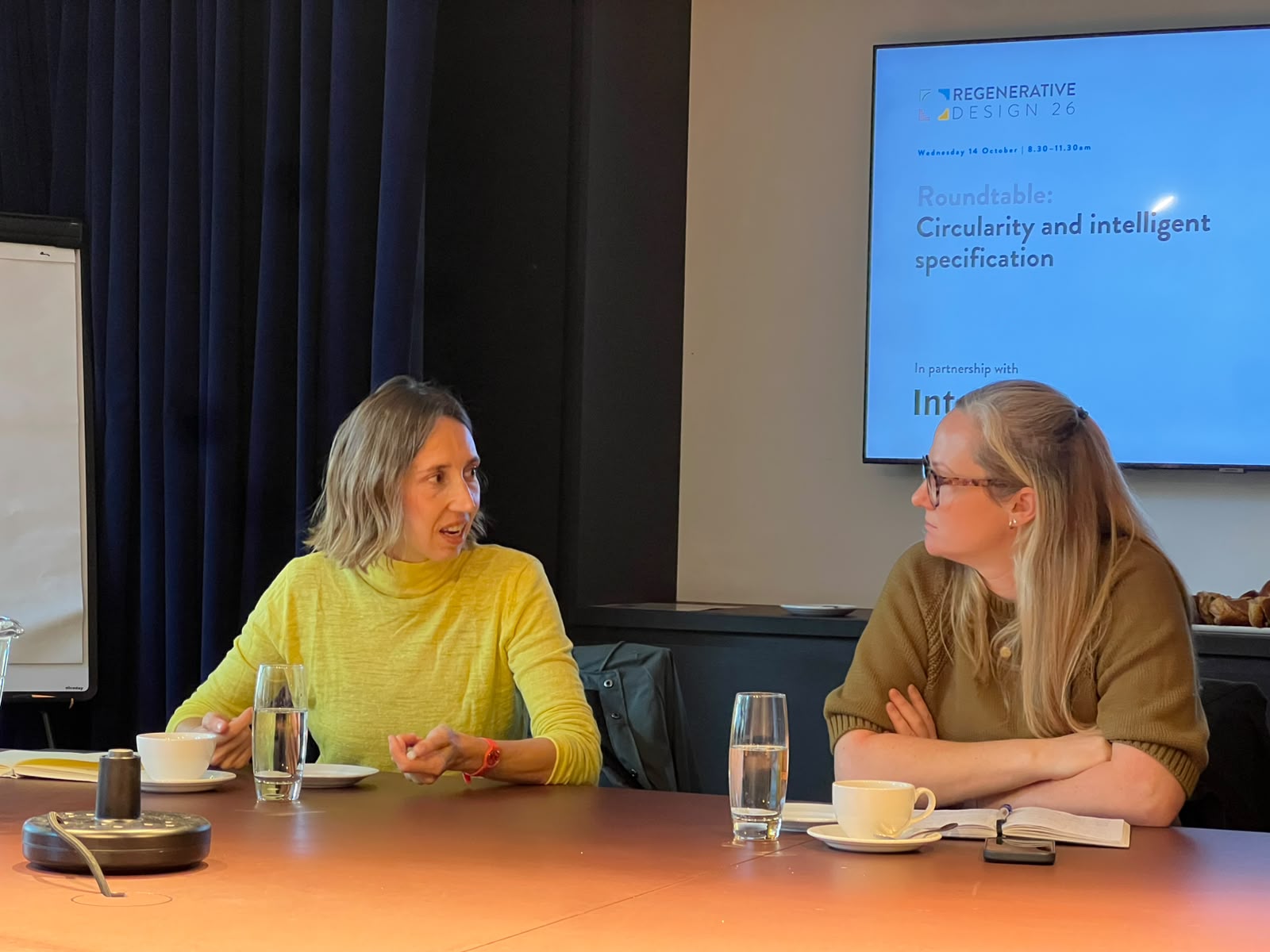
Left: Lucia Berasaluce. Right: Becky Gordon.
Challenging the culture of replacement
The discussion began with the commercial fit-out sector and its tendency to replace interiors long before their constituent materials reach the end of their useful lives. Gordon questioned how designers could persuade clients to look beyond short-term trends and consider the longer-term value of the materials they specify.
Aditi Saxena drew on Bond Bryan’s experience as a commercial tenant to highlight how waste can occur before a new occupier has even moved in. “What we are finding in our projects is that the waste has already happened before the lease is let,” she explained. Landlords frequently fit out offices to a high standard to attract prospective tenants, only for incoming businesses to remove finishes and fittings that do not align with their requirements or corporate identity.
Scott Farrar suggested that landlords could instead invest in adaptable interiors using “durable partitions, demountable partitions” and joinery that could remain in place through successive tenancies. Tenants would retain the flexibility to personalise spaces without wholesale replacement. He also identified contractual requirements to return premises to their original condition as an important source of unnecessary waste. Engaging quantity surveyors and development managers earlier could help challenge these obligations.
Nikolay Shahpazov identified a more fundamental obstacle: the lack of infrastructure to support recovery and redistribution. Materials removed from one building may not be needed elsewhere for another 18 months, creating a mismatch between demolition and construction programmes. “First we need that infrastructure,” he argued, calling for more storage facilities and organisations capable of managing reclaimed materials.
For Chiara Cozzolino, overcoming these problems requires widening the conversation beyond designers. Project managers and quantity surveyors need to understand the logistical, financial and programme implications of circularity from the outset. “We need to open the conversation,” she argued, suggesting that their involvement is essential to making circular proposals commercially viable.
Lucia Berasaluce added that clients have an important role in overcoming resistance. Where a client explicitly demands the retention or reuse of materials, project teams have a stronger mandate to develop appropriate solutions, particularly where the existing materials have an obvious financial or architectural value.
Megan Greig offered an example in which presenting material reuse as a way to increase supply chain resilience helped secure client support. The argument focused on reducing exposure to global disruption rather than simply appealing to environmental responsibility. Once the client supported the proposal, previously cautious project managers and quantity surveyors became more receptive.
Gordon suggested that the example demonstrated the importance of speaking the client’s language. Rather than relying solely on the environmental case, designers could make circularity relevant to risk, cost and supply chain security.
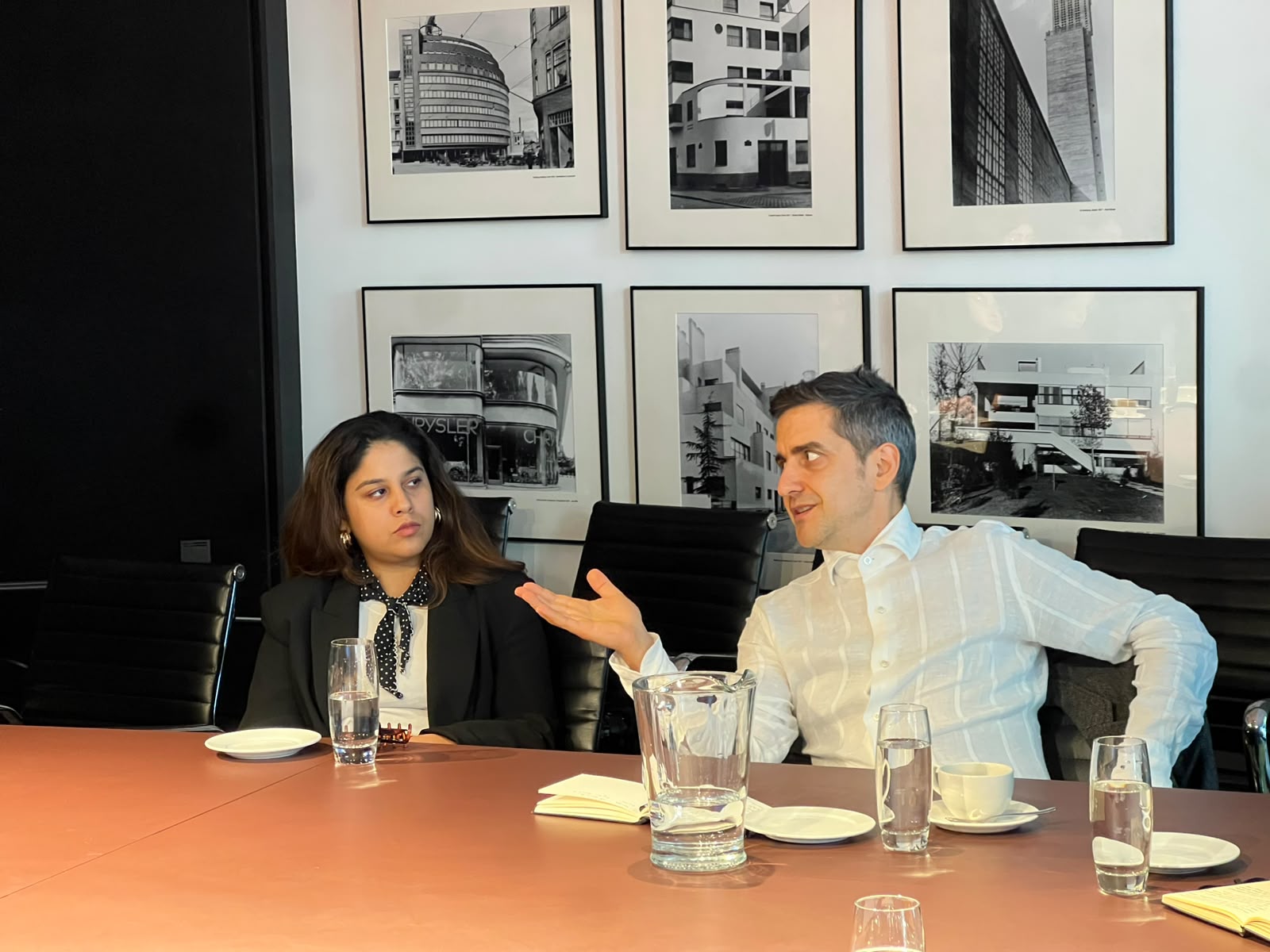
Left: Harshita Mathur. Right: Nikolay Shapahzov.
Making the financial case for reuse
Several participants challenged the assumption that reclaimed products are necessarily more expensive than new alternatives. The difficulty, they suggested, often lies in how costs are calculated and how unfamiliar processes are represented in procurement.
“I think it’s very important that we recognise clients’ priorities,” said Juliana Renn. “Circularity sustainability can actually be an enabler of some of those priorities.”
Renn described a project involving refurbished furniture and raised access flooring, where specialist suppliers were able to source, clean, store and recondition materials for reuse. This produced savings on furniture costs while demonstrating how established remanufacturing businesses could reduce the logistical burden on project teams.
However, securing reclaimed materials remains unpredictable. On the same project, an anticipated source of furniture became unavailable when its owner decided not to release it. Such experiences reinforce the need for contingency planning, particularly where programme certainty is important.
Louisa Bowles described how Hawkins\Brown had used tender documentation to test the feasibility of circular proposals directly with the market. Where conventional cost advice could not establish whether a strategy was viable, the practice asked contractors and suppliers to price the intended approach. “Let’s craft the tender documents and send out what we would like to happen,” she explained, allowing suppliers to respond with their assessments of the costs and practical requirements.
Greig emphasised the importance of ensuring that reuse requirements were properly reflected in the quantity surveyor’s tender documents, rather than confined to supporting sustainability information.
The discussion also considered the reuse of structural steel, including Great Portland Estates’ 30 Duke Street project. Cozzolino highlighted the potential commercial benefits of recovering valuable materials, while Greig challenged the assumption that the project had necessarily achieved financial savings.
“The steel in that project actually got more expensive in the end,” Greig explained, attributing the additional cost to unnecessary processing. The experience illustrated how carefully material recovery and reconditioning need to be planned if their economic and environmental benefits are to be realised.
Harshita Mathur pointed to the role of client commitment in delivering ambitious reuse projects. “It’s also the confidence of the client which counts a lot,” she said, describing how the reuse of structural steel, marble and stone had been pursued despite technical challenges.
Bowles described another project where existing steel was processed and reinstalled on site as part of a roof extension. Retaining the material within the project reduced transportation requirements and demonstrated how reuse can become more practical when site conditions and construction sequencing are considered together.
For the group, the underlying issue was not simply whether reuse costs more or less. It was whether project teams have the knowledge, evidence and procurement structures needed to make informed comparisons.
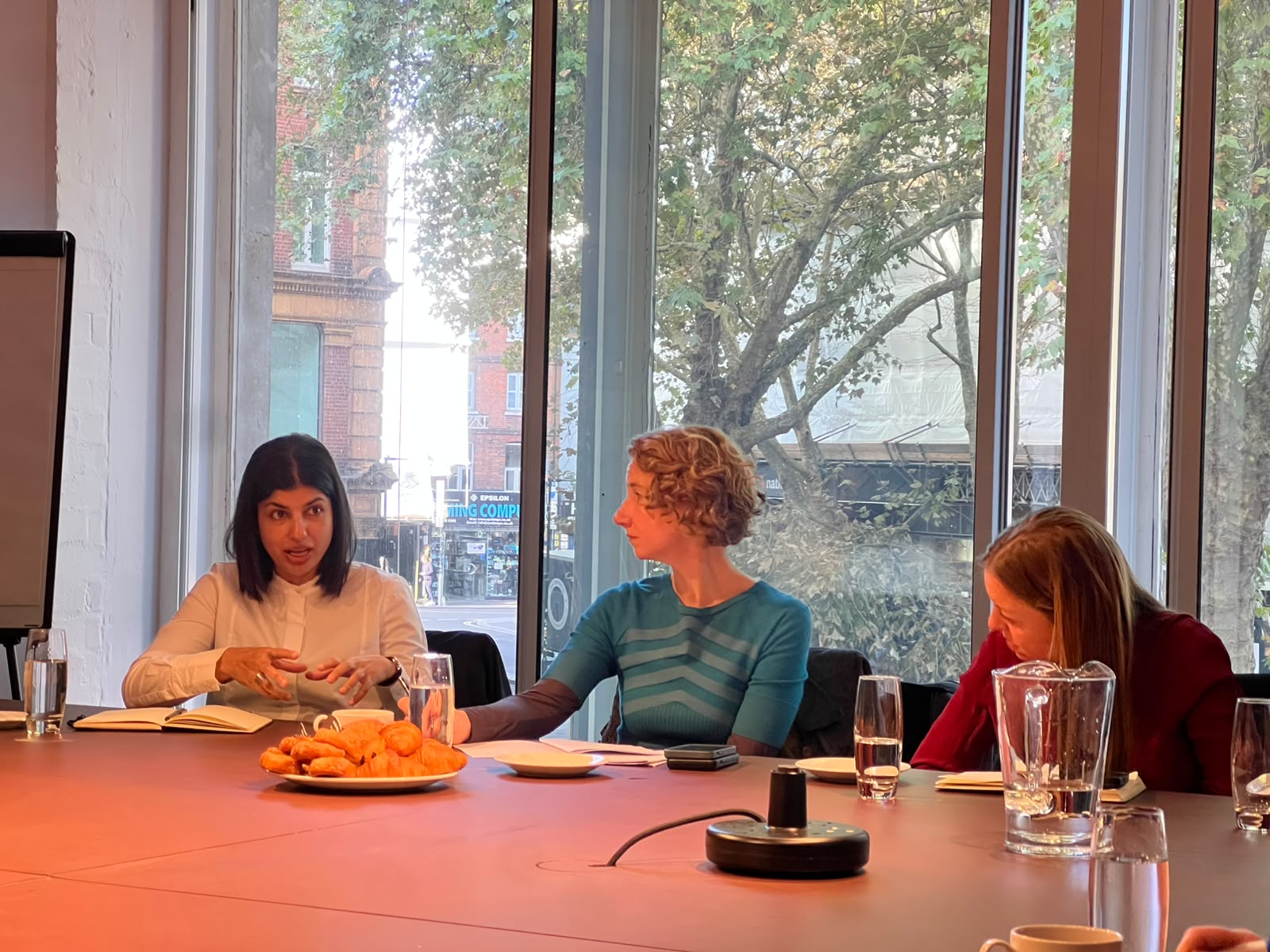
Left: Aditi Saxena. Middle: Lousia Bowles. Right: Chiara Cozzolino.
Developing the infrastructure for a circular economy
The practical difficulties of sourcing and storing reclaimed products emerged repeatedly throughout the conversation.
Shahpazov argued that the industry needs a much more extensive network of storage facilities, material brokers and digital platforms if reuse is to become commonplace. Without somewhere to hold recovered materials, even components with substantial residual value can end up being discarded.
Berasaluce highlighted examples from Scandinavia, where materials recovered from buildings approaching demolition are catalogued and made available for subsequent projects. Such systems can connect designers with existing furniture, partitions and finishes, but they also need reliable information about condition and performance.
The discussion turned to warranties and the role of specialist remanufacturers. Berasaluce described suppliers able to refurbish products and provide warranties comparable to those offered with new materials. This could offer clients reassurance while allowing existing components to remain in use.
Renn suggested that a shared marketplace providing information on available products, take-back schemes and leasing arrangements could make circular specification more accessible. “Maybe it’s about easy access to information,” she said, questioning whether a common platform could help designers identify opportunities much earlier in a project.
Joanna Wilson agreed, pointing out that manufacturers sometimes offer circular services that are difficult to discover without contacting them directly. “You’ve got to talk to people, you’ve got to know to talk to people,” she observed, highlighting the time and knowledge required to navigate an increasingly fragmented market.
Bowles emphasised the resource implications for designers. “You get a complex project, and every element now has its own pathway,” she said. “And you’re not paid to coordinate all of that.”
She described the complexity of identifying separate recovery routes for windows, frames, flooring and ceilings, each requiring different conversations with manufacturers and specialist suppliers.
Berasaluce suggested that a dedicated reuse contractor could help simplify the process, providing designers and quantity surveyors with reliable information on availability, cost and programme implications early enough to influence decisions.
The group considered whether the answer lay in a single integrated service or a more accessible network of specialist suppliers. Either way, the need for better coordination was clear.
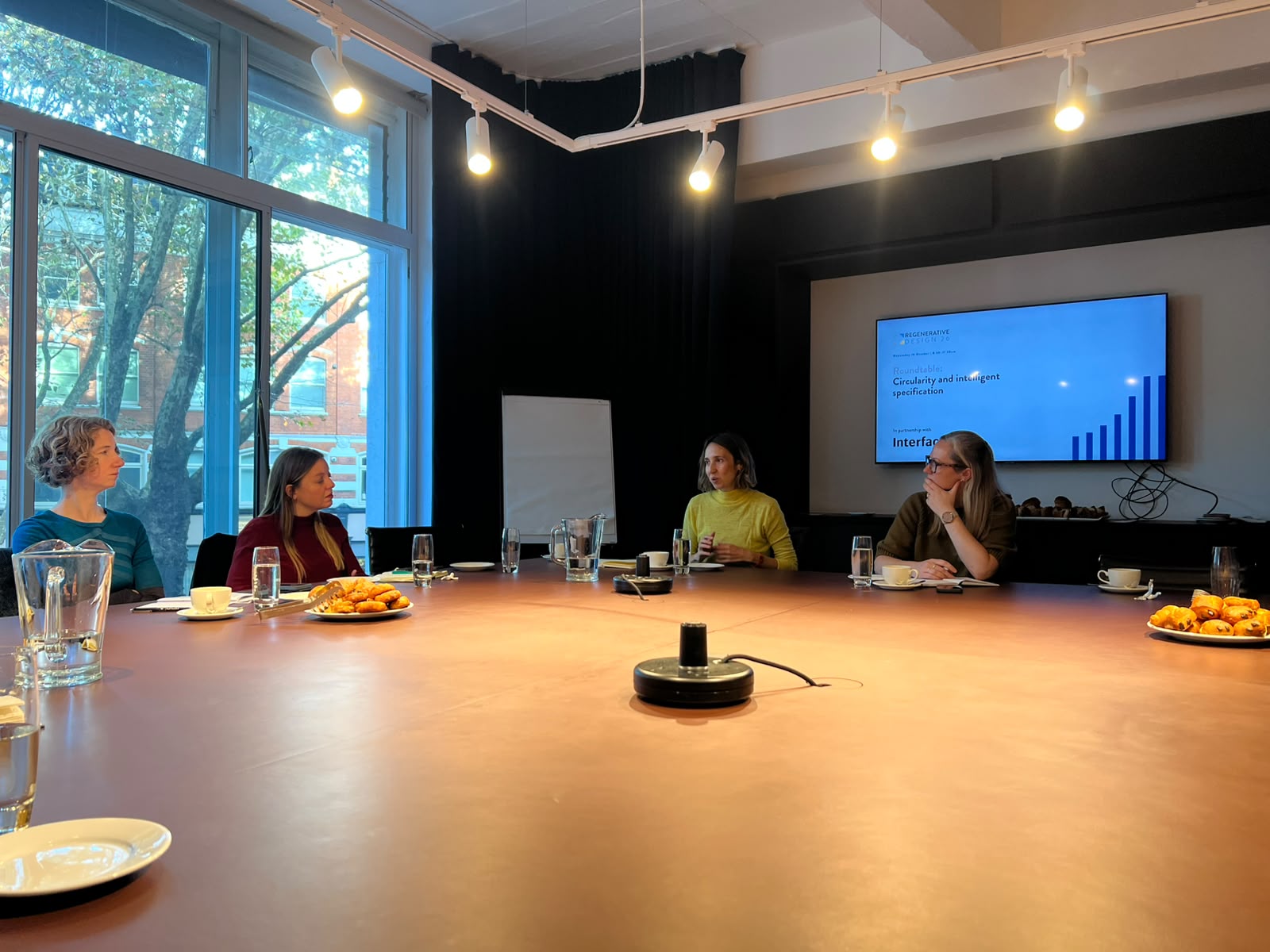
Left to right: Louisa Bowles, Chiara Cozzolino, Lucia Berasaluce and Becky Gordon.
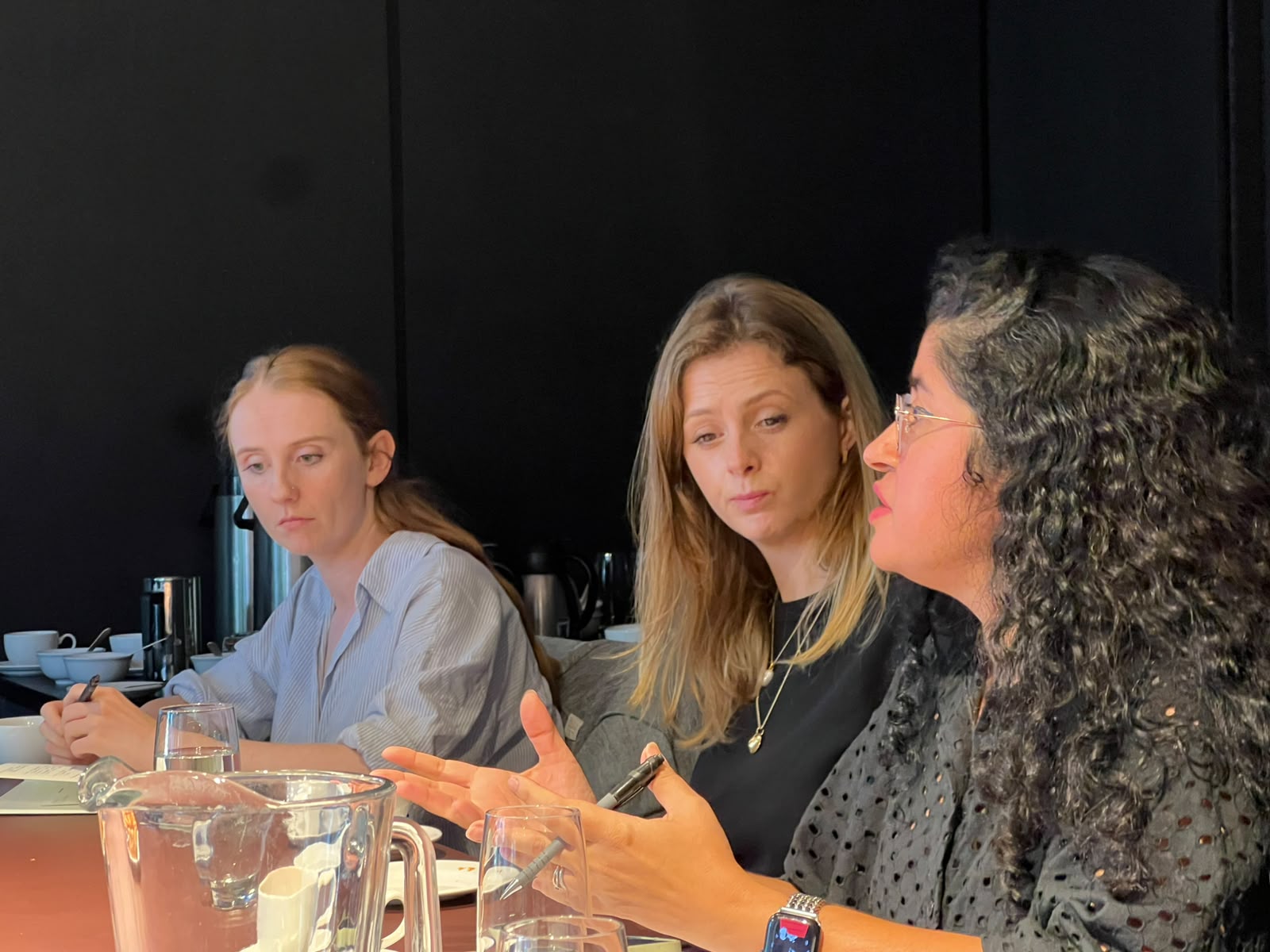
Left: Megan Greig. Middle: Joanna Wilson. Right: Juliana Renn.
Leasing, ownership and the value of materials
If buildings are to become material banks rather than sources of waste, the industry may also need to reconsider who owns their components.
Saxena proposed exploring leasing models that would allow manufacturers or specialist providers to retain ownership of products, maintain them during use and recover them when an occupier’s requirements change. “Leasing offers the most flexibility you could ever want,” she suggested.
Gordon explained that Interface had explored product leasing, but found limited market demand. More recent attempts to offer leasing through third-party arrangements had encountered similar difficulties.
Wilson questioned whether manufacturers would have sufficient commercial incentive to participate in leasing systems operated by third parties. Others suggested that take-back, refurbishment and resale could provide a more practical route, allowing manufacturers to recover value from products they had already supplied.
The discussion exposed the tension between the environmental logic of retaining materials in circulation and the commercial structures through which construction products are currently sold.
Gordon also highlighted the importance of product identification and traceability. “Not being able to tell where a product comes from doesn’t make it easy to work out what to do with it at end of life,” she said.
Material passports and product identification systems could help address this, but their usefulness depends on consistent data and widespread adoption. Products need to carry information that remains accessible long after their initial installation, allowing future owners, contractors and designers to establish what they are working with.
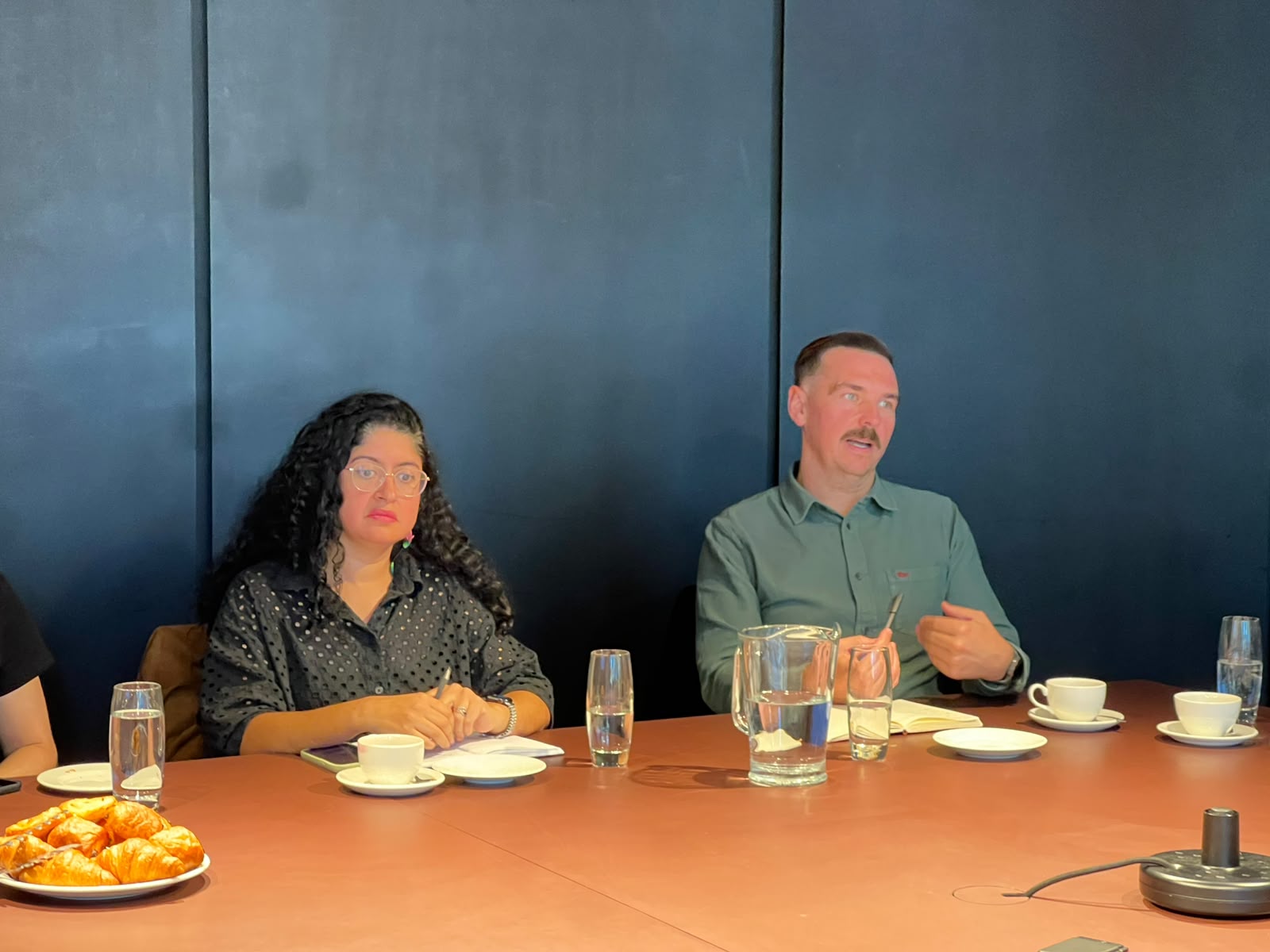
Left: Julliana Renn. Right: Scott Farrar.
Rethinking risk and project delivery
Another major obstacle to circularity is the perception that unfamiliar materials and construction methods introduce unacceptable risk.
Cozzolino argued that designers should engage more directly with insurers and underwriters, whose knowledge of how buildings perform in operation could inform better decisions. Rather than assuming that non-standard materials or details will be rejected, project teams should establish a dialogue around their performance, repairability and potential risks.
“Clients won’t take a risk if their insurance won’t,” she observed, arguing that insurance considerations need to be addressed through direct communication rather than treated as immovable barriers.
Shahpazov described research comparing a conventional construction assembly with an alternative using earth blocks, hempcrete, clay plaster and timber. By involving specialist manufacturers and installers in the costing process, the team found that the regenerative option was broadly comparable in price with conventional construction.
“Both options almost identical,” he said of the cost comparison. The exercise demonstrated the importance of involving people who understand unfamiliar materials early enough to influence design and cost planning.
Without their input, quantity surveyors may have little choice but to apply conservative assumptions or risk allowances.
Shahpazov also discussed the use of excavated subsoil to manufacture building blocks for a project. Where conventional warranties were unavailable, the team assembled testing evidence and documented exchanges between consultants, manufacturers and the client to establish a shared understanding of the proposed solution.
Renn described HLM’s regenerative twin research, which explores how the design and delivery of buildings might change if regenerative principles were embedded from the outset. The research brought together disciplines and supply chain partners earlier than would be typical in a conventional project.
An important element was establishing a shared commitment to the project’s objectives. In the educational building study, the regenerative approach involved higher initial costs, but the research indicated a payback period of approximately 11 years. Renn stressed that the finding was specific to that project rather than universally applicable.
The example also demonstrated the importance of rethinking conventional project stages. Rather than developing designs and presenting them to manufacturers, installers and insurers for approval, the participants advocated earlier collaboration between all those responsible for making proposed solutions work.
For Cozzolino, the commitment of individuals throughout the project team was equally important. She argued that successful reuse projects are not necessarily those driven by sustainability specialists, but those where sustainability is embedded in the values of the wider team.
Unless we make this whole process more efficient, we’re not going to make any progress”
Sharing knowledge and reducing duplication
The conversation also revealed how much time individual practices spend developing their own circularity guidance, material libraries, specifications and research. Wilson questioned whether this duplication was sustainable, particularly when the costs of testing new approaches can be significant.
“Unless we make this whole process more efficient, we’re not going to make any progress,” she warned, calling for greater sharing of knowledge and testing between projects.
Berasaluce agreed, highlighting the cost of testing unfamiliar materials and construction assemblies. “The testing is expensive,” she said, suggesting that a shared database of results could allow designers to demonstrate performance without repeatedly commissioning the same investigations.
Shahpazov argued that knowledge sharing needed to become more open. “We need to work together,” he said, contrasting the traditional tendency to protect commercially valuable research with the opportunity for practices to learn from one another’s experience.
Greig highlighted the Engineers for Reuse Collective, which brings together engineering practices to share case studies, specifications and technical knowledge. She suggested that similar collaboration between architects could help reduce duplication and make circular approaches more accessible.
Farrar questioned whether the ambition should be broader still. “Should we not have a construction industry wide one that we include contractors and QSs, insurers into the conversation as well?” he asked, suggesting that the same collective approach could extend beyond individual professions. Gordon recognised the value of both industry-wide collaboration and smaller specialist groups, where participants can address material-specific challenges in greater detail.
The group also considered the role of professional institutions and regulation. Berasaluce suggested that organisations such as RIBA and ARB might be able to support wider data sharing through established professional systems.
Saxena argued that voluntary initiatives alone were unlikely to deliver comprehensive reporting. “I think unless it becomes mandatory,” she said, questioning whether sufficient information could be gathered without clearer requirements.
However, creating and maintaining useful datasets requires funding and sustained effort. Farrar noted the reliance of many industry initiatives on voluntary work undertaken alongside demanding professional responsibilities. Wilson similarly highlighted the importance of keeping guidance accurate and up to date, rather than simply creating more information.
The group recognised that a database is only useful if it is accessible, reliable and maintained over time.

Left: Joanna Wilson. Middle: Julliana Renn. Right: Scott Farrar.
What manufacturers need to do differently
Turning directly to manufacturers, Gordon asked what would make reclaimed and remanufactured products easier for designers to specify.
Cozzolino called for clear take-back arrangements, readily available repair services and transparent information about refurbished stock. Rather than requiring designers to investigate multiple options independently, manufacturers could make circular services an integral part of their product offering.
Shahpazov suggested that manufacturers should go further by developing alternatives based on regenerative principles, even where these involve different performance characteristics from conventional products.
“I feel that every manufacturer in our industry should have a regenerative option,” he said, arguing that manufacturers should be willing to challenge the assumptions governing conventional product design rather than simply offering lower-carbon versions of familiar materials.
Bowles emphasised the importance of detailed, product-specific environmental information. She described a project where a client’s requirements extended beyond carbon to include chemical composition, biodiversity and other environmental and health considerations. Clear and transparent manufacturer data made it possible to identify a product that met those expectations.
“Things are improving in terms of the data that suppliers can provide,” she acknowledged, stressing the value of information that relates to a specific product rather than an entire range.
Saxena offered another example from educational projects, where a supplier had provided a straightforward comparison of products meeting both sustainability objectives and relevant school specifications. This made it substantially easier for designers to identify appropriate products without undertaking extensive additional research.
Gordon acknowledged the importance of simplifying the process, but highlighted the burden placed on manufacturers by receiving numerous requests for similar information in different formats.
“This is also a challenge for manufacturers because I probably get requests from all of your companies in different formats that I need to fill in,” she explained.
Standardised digital product passports could help reduce duplication while making reliable information more accessible to designers.
Mathur also highlighted the importance of linking product information to digital building models. Where the specification, dimensions and quantities of products recorded in BIM differ from what is actually installed, material accounting becomes more difficult. Better-integrated product passports could help improve accuracy and provide a more reliable record for future reuse.
The conversation also addressed the problem of surplus materials ordered as contingency stock. Berasaluce questioned whether manufacturers could retain central stocks of spare products for future repairs, reducing the need for every project to purchase and store more material than it immediately requires.
Shahpazov reinforced the point with an example of excess insulation being left over from a construction project, illustrating how valuable products can become waste simply because no suitable storage or redistribution mechanism exists.
“The storage is the biggest issue,” agreed Farrar, describing the difficulty of matching available materials with projects operating to different programmes.
He suggested that project sustainability strategies could reserve space for material storage during construction. Even modest allowances, such as using temporarily vacant areas of a site, could make it easier to retain products for reuse rather than dispose of them.
What is our model for the future, and how do we get it right?”
Closing the loop
As the discussion drew to a close, Gordon reflected on Interface’s experience operating a carpet tile take-back programme since 1995. Despite the longevity of the initiative, only a relatively small proportion of the company’s products are returned.
One major barrier is the timing of manufacturers’ involvement. By the time Interface is approached, designs may be complete, products may have been removed incorrectly, or materials may have been damaged during strip-out.
Gordon explained that the company works with partners to enable carpet tiles to be cleaned and reused where possible, but developing a commercially sustainable system for recovery, storage, refurbishment and resale remains challenging.
“What I am looking at across Europe is what is our model for the future, and how do we get it right?” she said.
The company is exploring how its approach might develop, including maintenance services and ways of extending product lifespans. Full financial leasing models have proved difficult to establish, but working with clients to maintain products, reduce unnecessary replacement and plan for eventual take-back offers a more achievable approach.
Where leasing has not been commercially viable, Interface has explored combining conventional product sales with cleaning, maintenance and end-of-life recovery services. Gordon suggested that such arrangements could maintain the underlying principles of circularity without requiring clients to adopt an entirely different financial model.
The experience reinforced one of the central conclusions of the roundtable: circularity cannot be delivered through specification alone. It depends on decisions made throughout a building’s life, from its initial design and procurement to occupation, maintenance, adaptation and eventual refurbishment.
The discussion demonstrated that circularity is already being achieved across a growing range of projects, from reused structural steel and refurbished furniture to reclaimed flooring and regenerative material assemblies. What remains difficult is making these approaches routine rather than exceptional.
That will require more than better products. Clients need clearer evidence of financial and operational value; designers need accessible information and sufficient time to investigate alternatives; manufacturers need viable recovery models; and contractors, quantity surveyors and insurers need to become involved much earlier.
Perhaps most importantly, the industry needs to share what it has learned. The experience, testing and practical knowledge generated by individual projects could have far greater value if it were made available to others.
The challenge is therefore not simply to design buildings that can be taken apart or products that can be reused. It is to establish the commercial relationships, infrastructure and collaborative working practices that allow those opportunities to be realised. Circularity will become standard practice when retaining the value of existing materials is easier, more predictable and more commercially attractive than replacing them.