Jennifer O’Donnell from plattenbaustudio speaks to AT about their practice: from the nature of drawing ‘as a means of transmission’, to how Berlin made them stay, and why Dublin keeps calling them back.
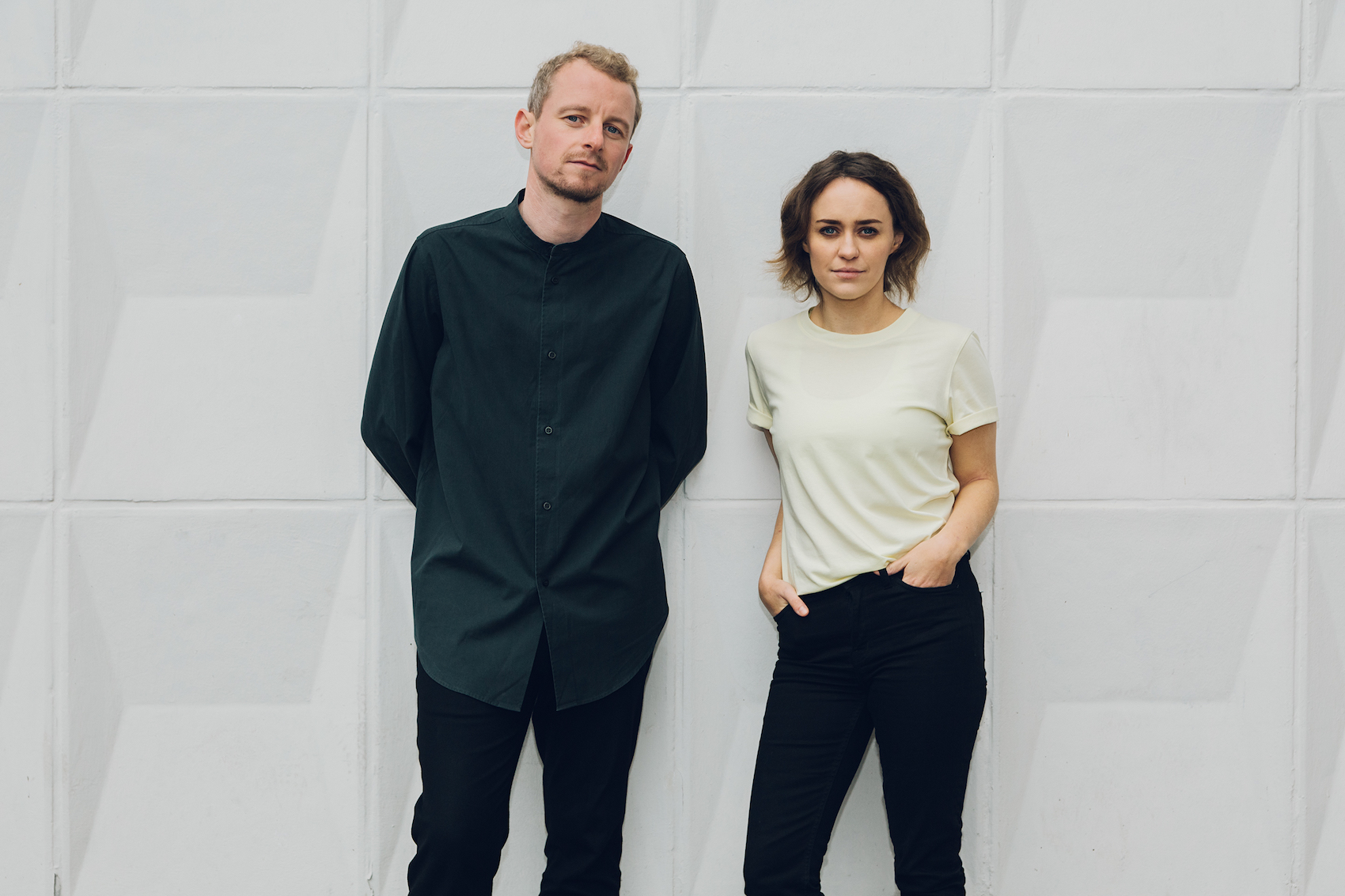
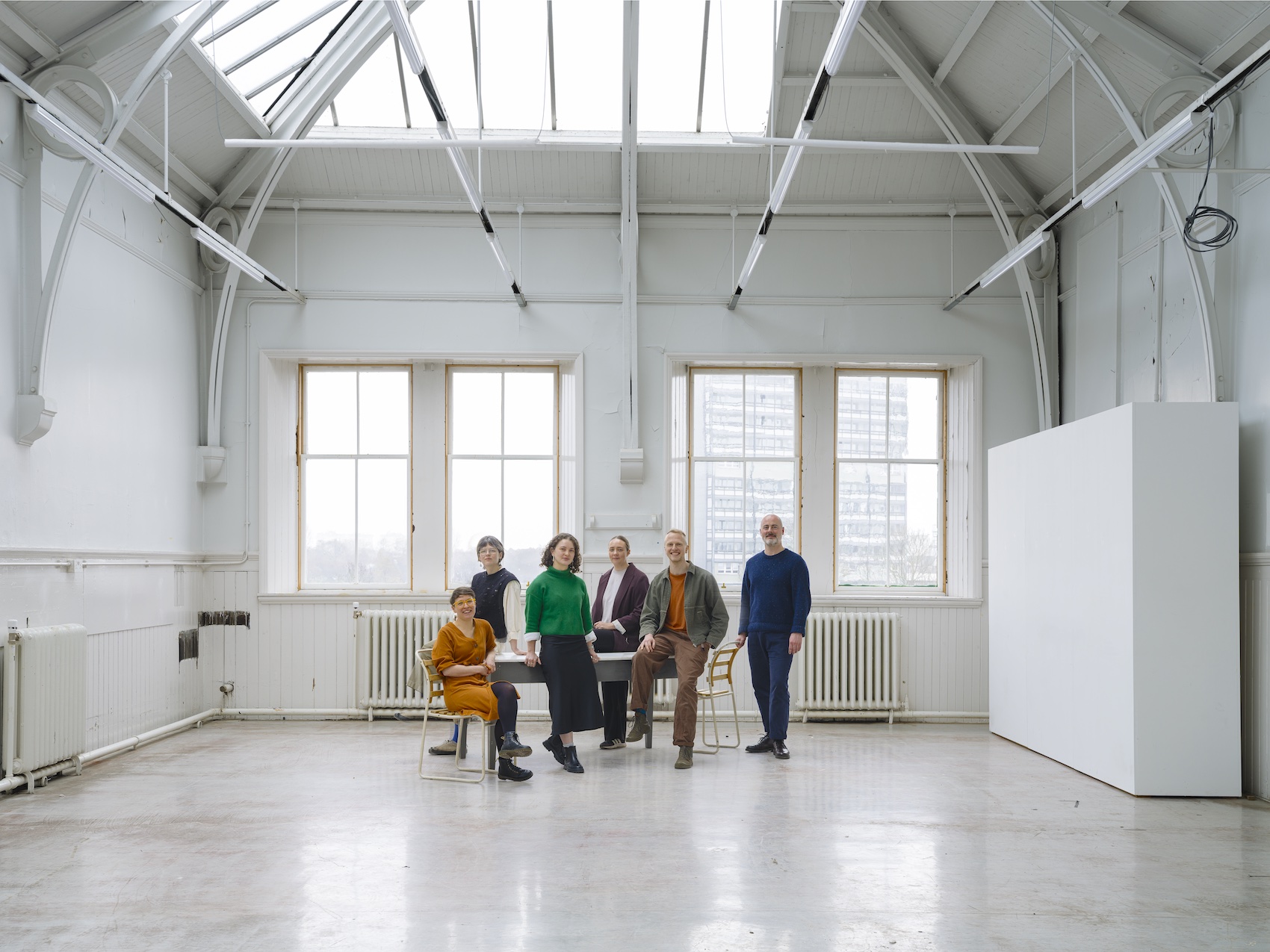
Founded by Jennifer O’Donnell and Jonathan Janssens, plattenbaustudio is an architecture and drawing studio based in Berlin. The pair trained in Dublin, gaining experience working for GKMP and O’Donnell + Tuomey, before moving to Sauerbruch Hutton in Berlin, where they set up their own practice in 2018.
Combining teaching, with research, writing, drawing and design, pattenbaustudio tows many disciplinary lines, approaching architecture through critical practice. Their interest in the everyday stems from an understanding of architecture as a functional tool that conducts and influences the way people live their lives.
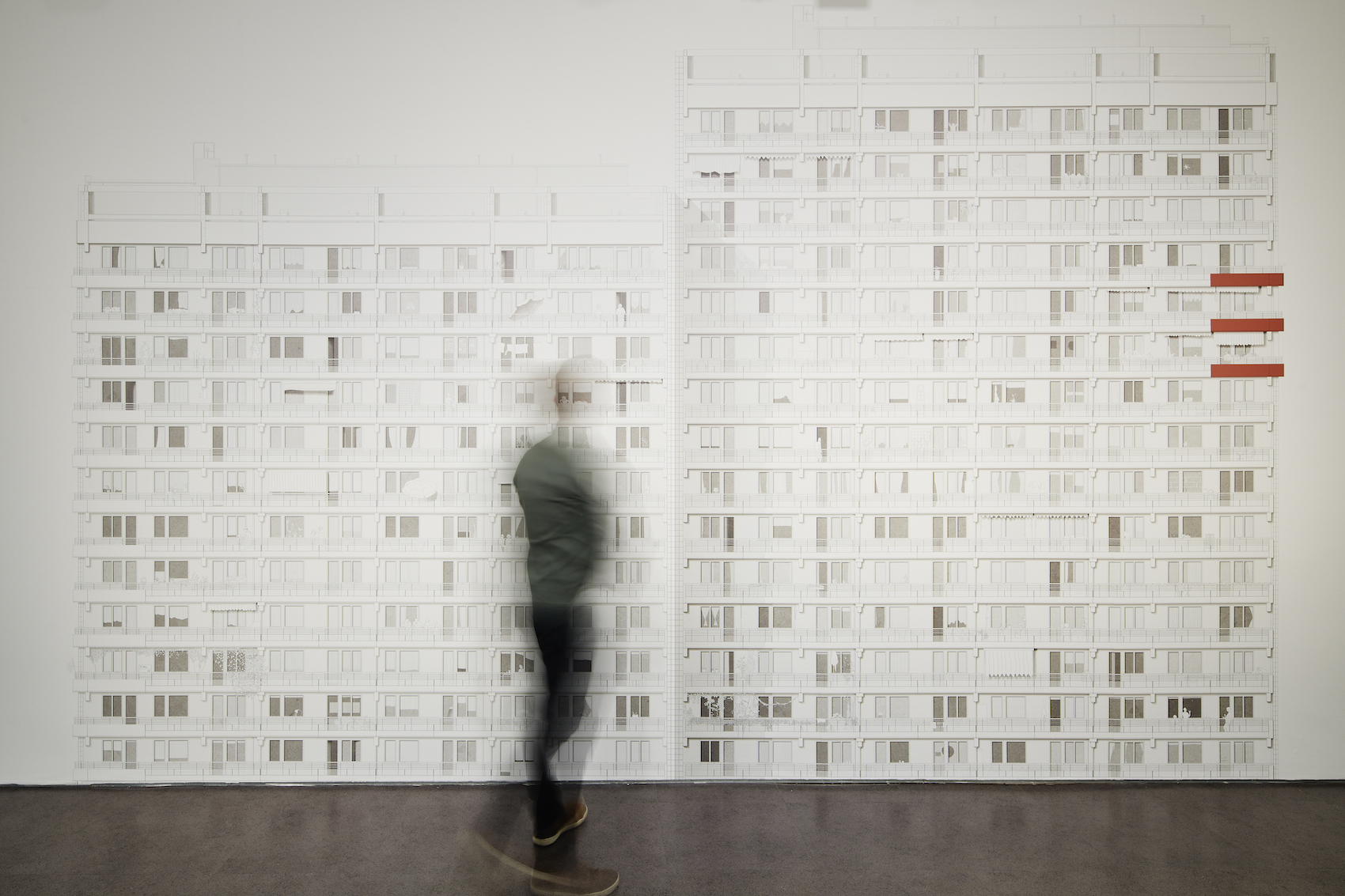
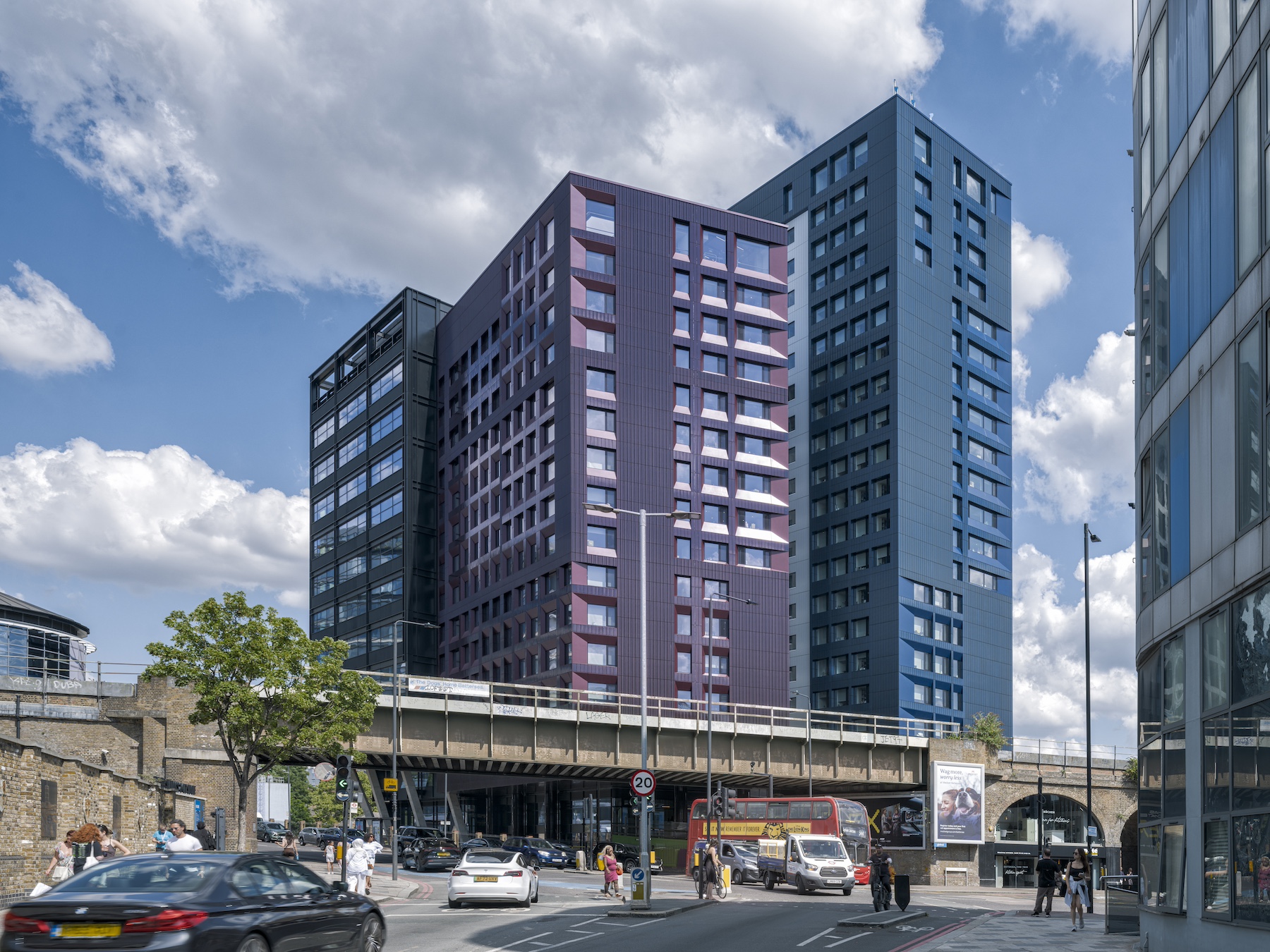
Digital print from ‘Highrise’: a project that surveyed one of Berlin’s most famous highrise buildings. The Leipziger Strasse plattenbauten, meaning ‘plate buildings’ are eight towers in East Berlin built by the GDR in 1969 to tackle a housing shortage. The towers represent the success of the socialist East.
As a practice that tows many different lines, how would you describe plattenbaustudio?
We are an architecture studio that is interested in investigating the edges of what an architectural practice might be. We are, and always will be, fascinated by buildings, but we are also endlessly curious about what else we as architects might be able to contribute to outside of the construction of spaces.
How would you describe your output as a practice? Are you keen to categorise some work as ‘architecture’ and others as ‘research’ or ‘sculpture’ or do these definitions and boundaries not interest you?
Our output is architecture since we are trained as architects and that’s all we know how to do. But we definitely think it is more interesting to ignore, or at least question those boundaries and definitions rather than to adhere to them. We would argue that a public sculpture can be within the remit of architecture, as can research and drawing and everything else that we do, and conversely, the most productive environments we have been a part of are those where no one is interested in us being architects specifically.
I think the word process is key here; we are interested in the processes that create our world, from the ones we observe to the ones we work through in the design of a project. We have a certain type of process that comes from our training where we think about space and light and programme, but also about how space is influenced by systems and society and politics and the environment. That process is more or less always the same since those factors are constant. But how a thought can evolve into a unique piece of work existing within this complicated world is fascinating to us.
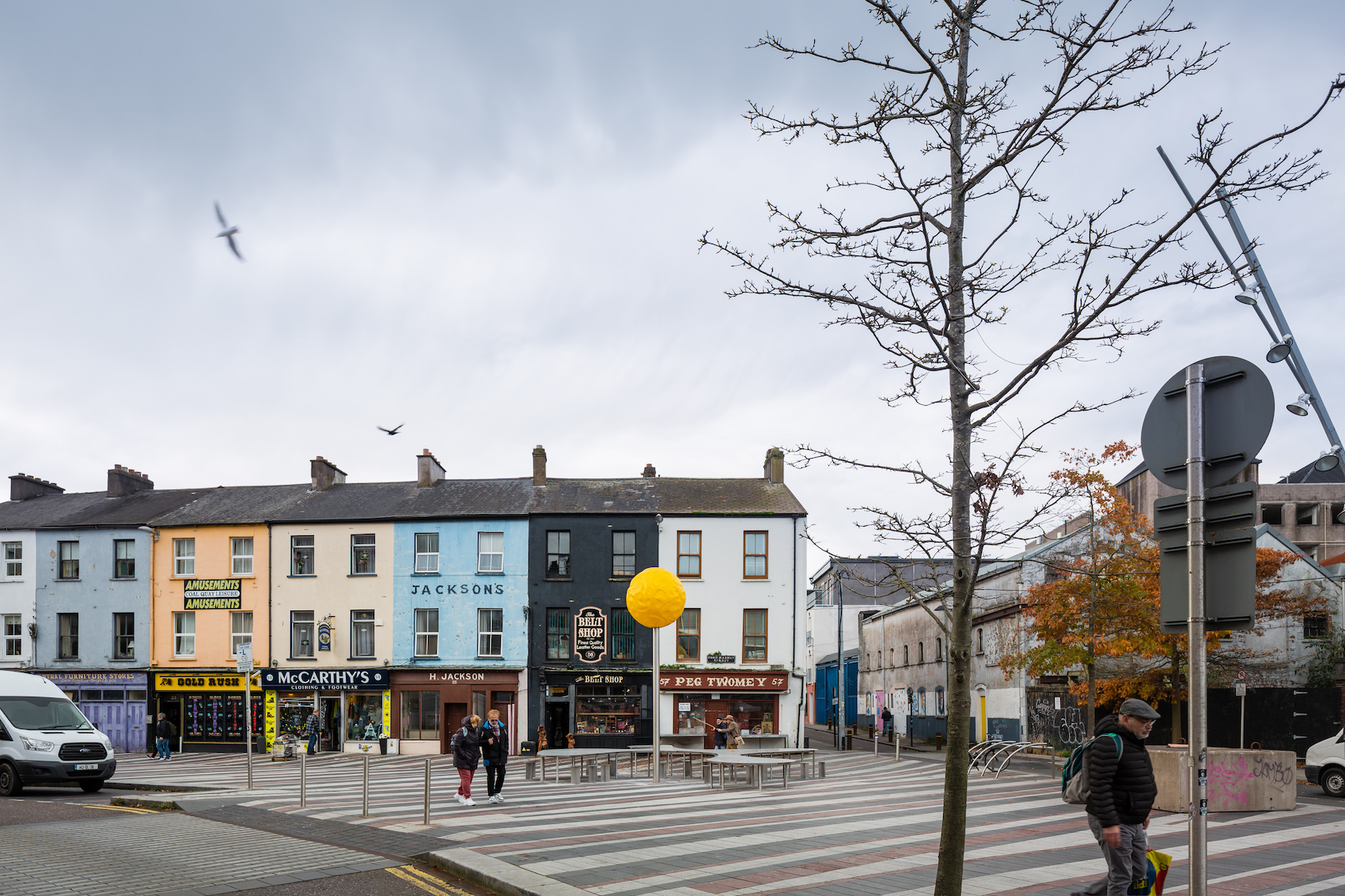
Public sculpture titled ‘Urban Mirror’ in Cork city, Ireland, 2024.
What are you working on and thinking about at the moment?
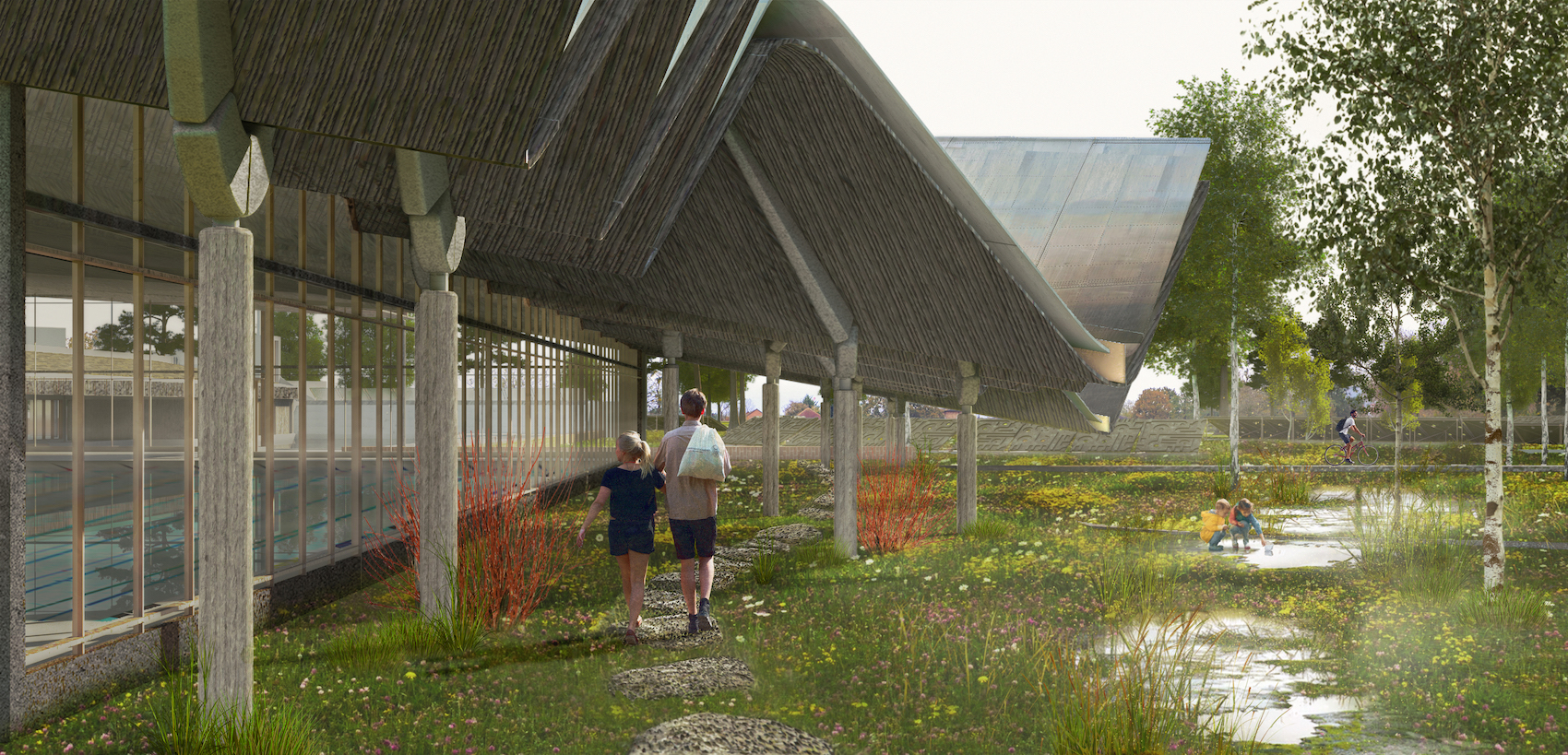
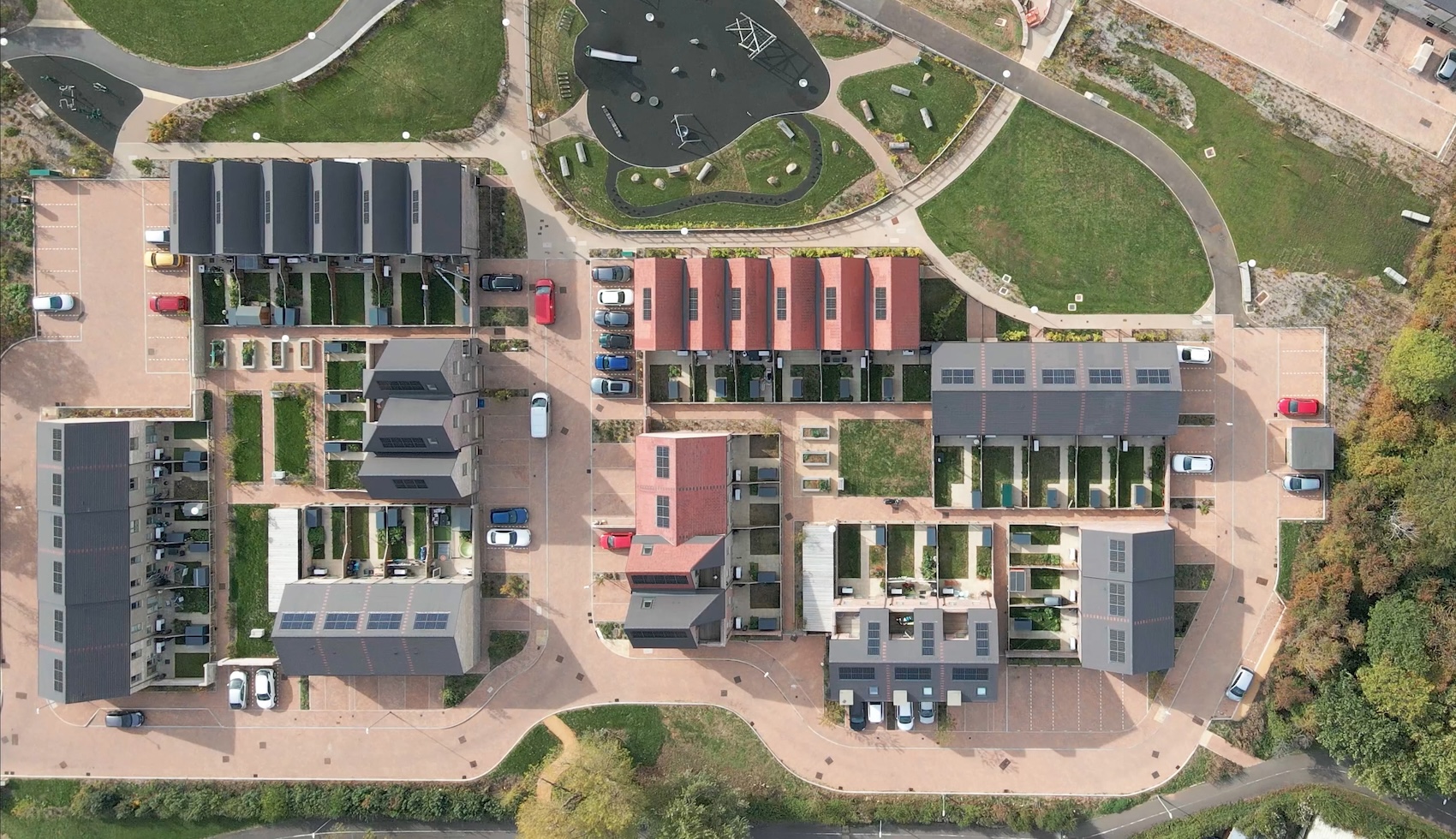
Right now we are focused on domestic space and public space; that’s what’s on our desks. At one scale, we’re working on houses and housing, both in Berlin and Ireland, and on the other scale we’re looking at public spaces in urban contexts. With all of the projects, the focus is on celebrating the everyday lives set to animate these places, on trying to understand what that one move on our part might be that can bring meaning and dignity and joy to these spaces. We’re thinking about how to create intelligent, sustainable structural systems and flexible floor plans, how to draw public space, but also about where to put mucky wellies and hide Christmas presents. Mostly we’re just thinking about storage.
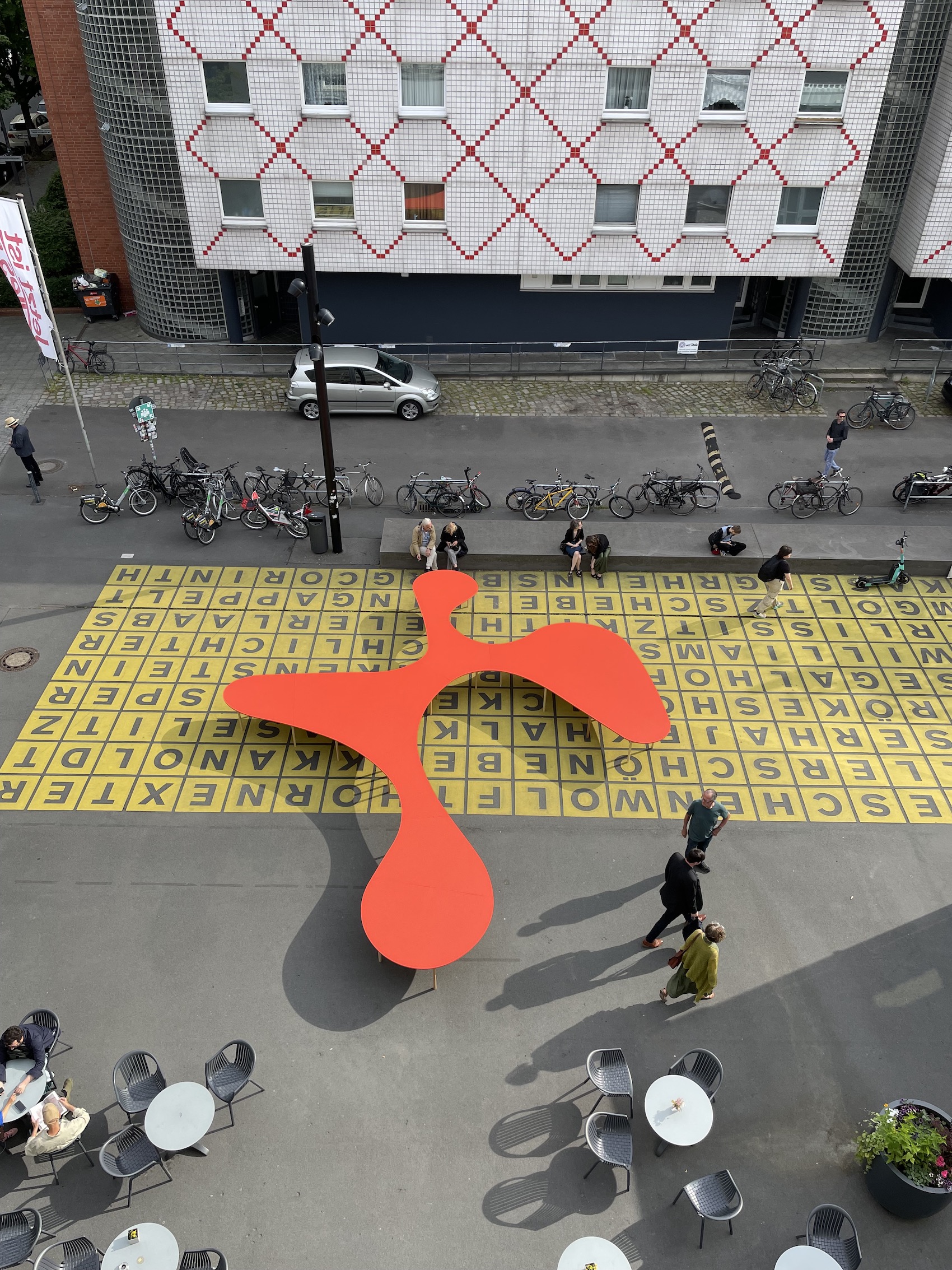
‘Twin Table’ exhibited at the Berlinische Gallery in Berlin, 2025.
How does the architecture culture in Berlin compare to that of Dublin? What is it about Berlin that made you settle and what’s something about Dublin that draws you back?
We settled in Berlin for the quality of life here; for its vast cultural offerings and green spaces and stable rent and public transport and long summers and and above all for a sense of being part of a city that belongs to its citizens. The culture of architecture in Berlin is much larger and more dynamic than that of Dublin, which is to be expected of a big metropolis on mainland Europe. The offices here are typically a lot bigger, and the range of work much wider, from high-rises to temporary interventions and everything in-between, and we love that.
The architect also takes on much more responsibility for a building project; we are responsible for cost calculations and site supervision, which we think is brilliant because it gives us more control and a deeper understanding of the projects we work on. And yet despite the vibrancy of Berlin as a whole, it is Dublin where we see a dedicated, engaged culture of architects committed to improving their city, to fighting for their built heritage and to raising and platforming the serious issues like dereliction and the housing crisis that affect us all.
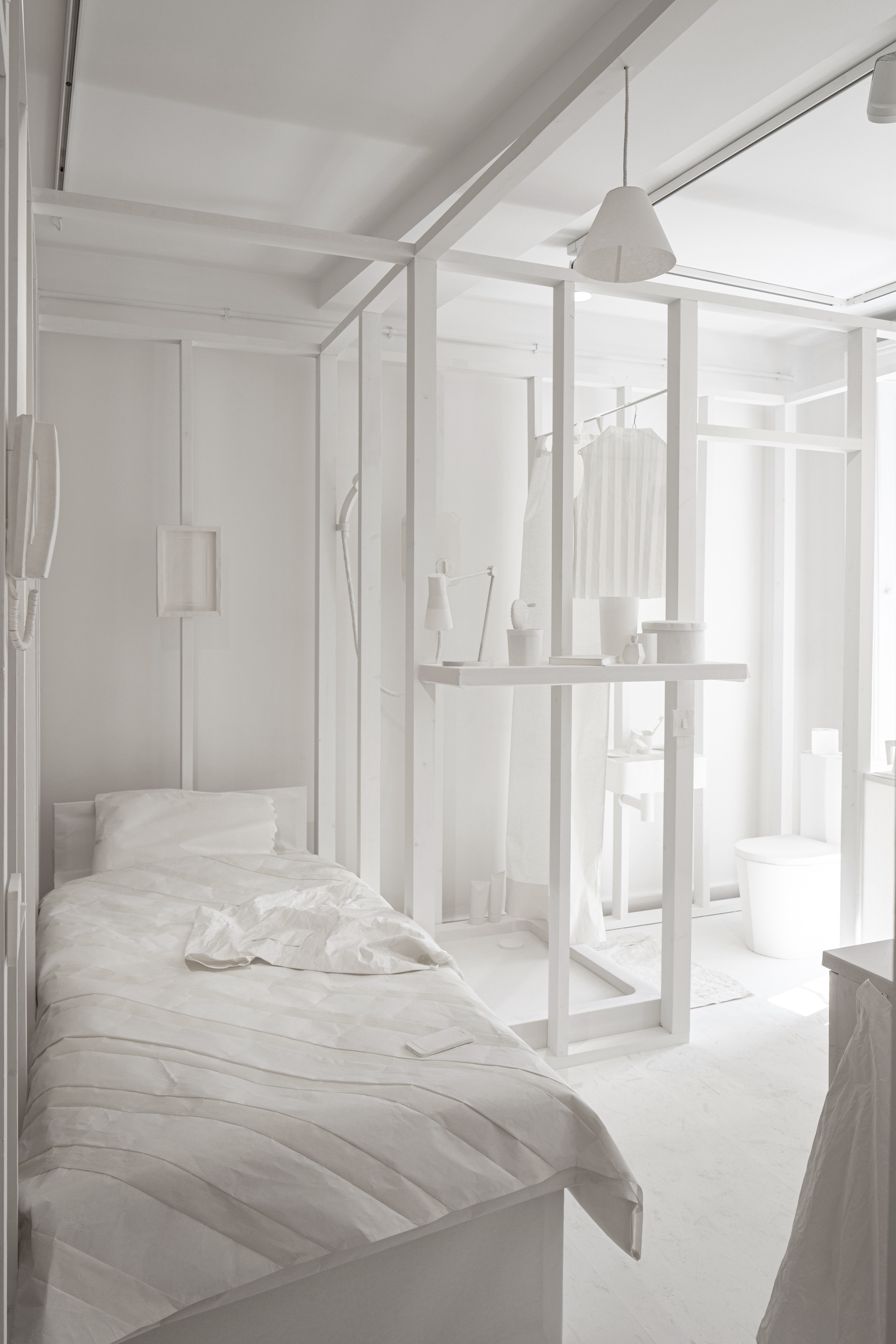
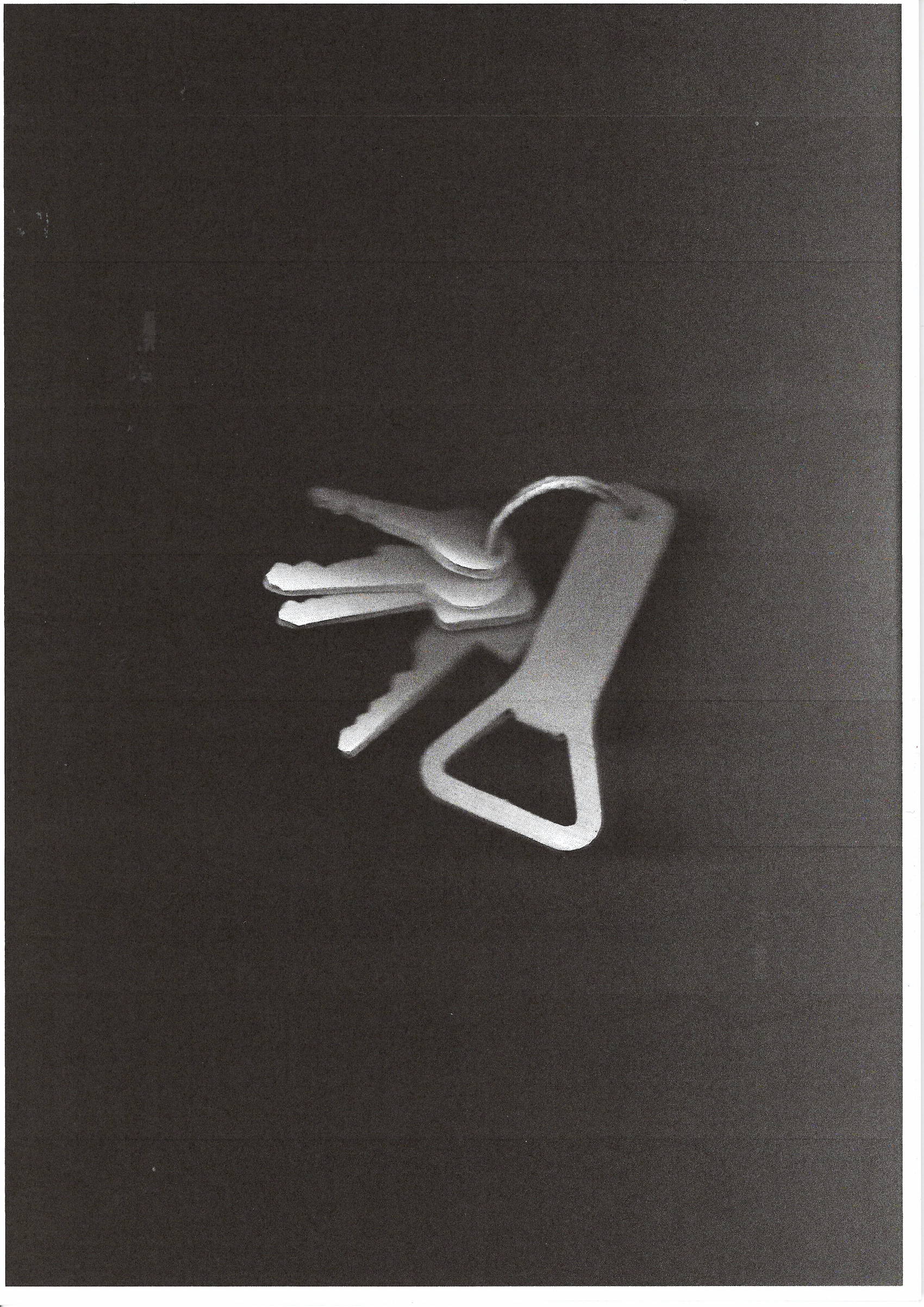
‘All Mod Cons’ paper installation in the Irish Architecture Foundation, 2021.
Your work often grapples with the everyday and routine based, human, practices. What is it about this that interests you?
We are interested in architecture for how it can improve our lives, and our lives are for the most part wrapped up in ordinary, everyday things. So for us the ordinary is worth studying because it is everything that is important, really. A bench in the sun is ordinary and boring until you think about how many thousands (hundreds of thousands?) of people sat there. Or a kitchen sink facing a wall instead of a window is irrelevant until you realise how many hours people (mostly women) spend facing that wall during the week. The everyday is extraordinary just through the fact that we all share these routines, and almost all of them happen within architecture. So our hope is that if we study the everyday, and care about it, then we have a better chance of understanding it and coming up with a valid answer in response when we go to place something in the world.
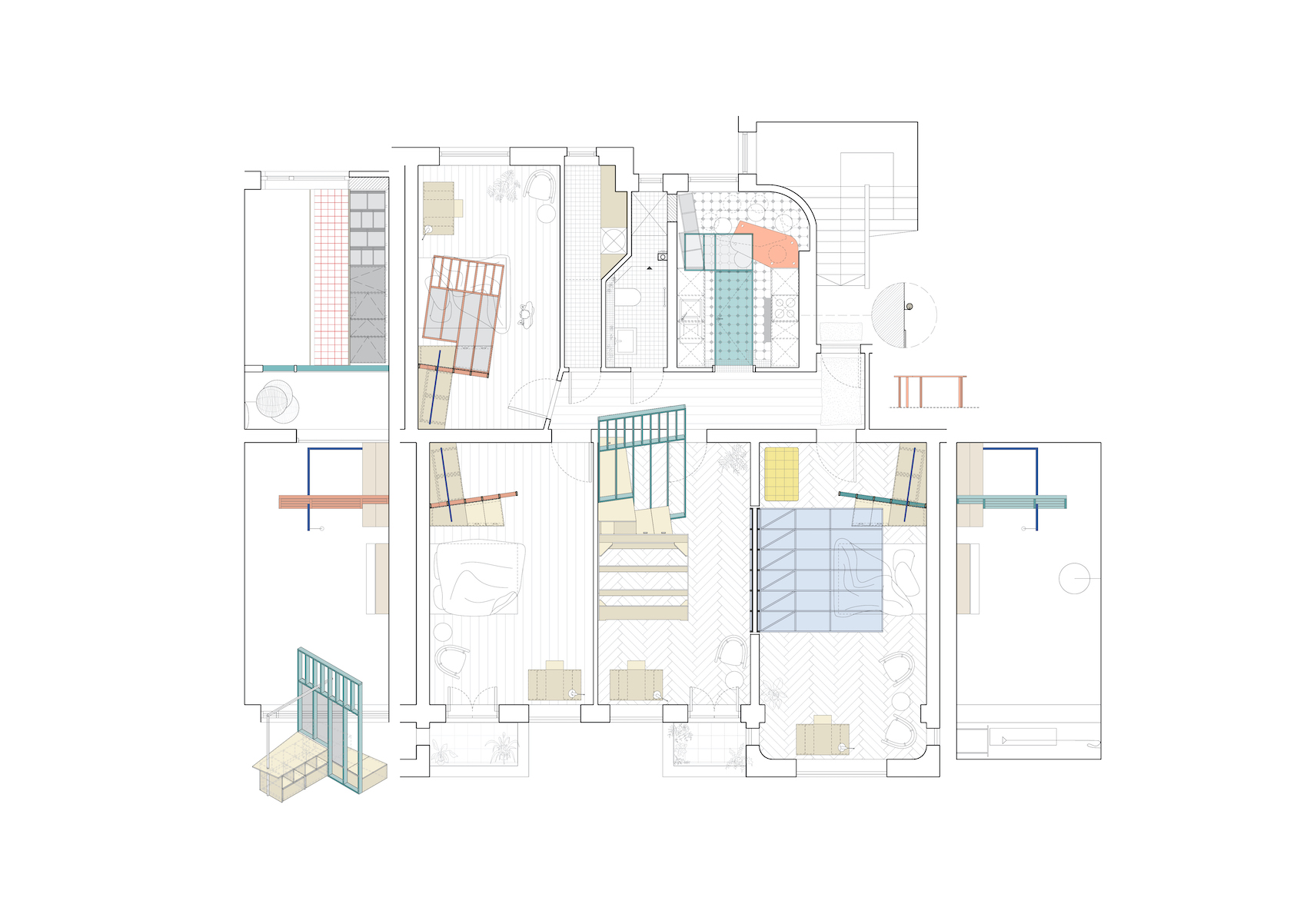
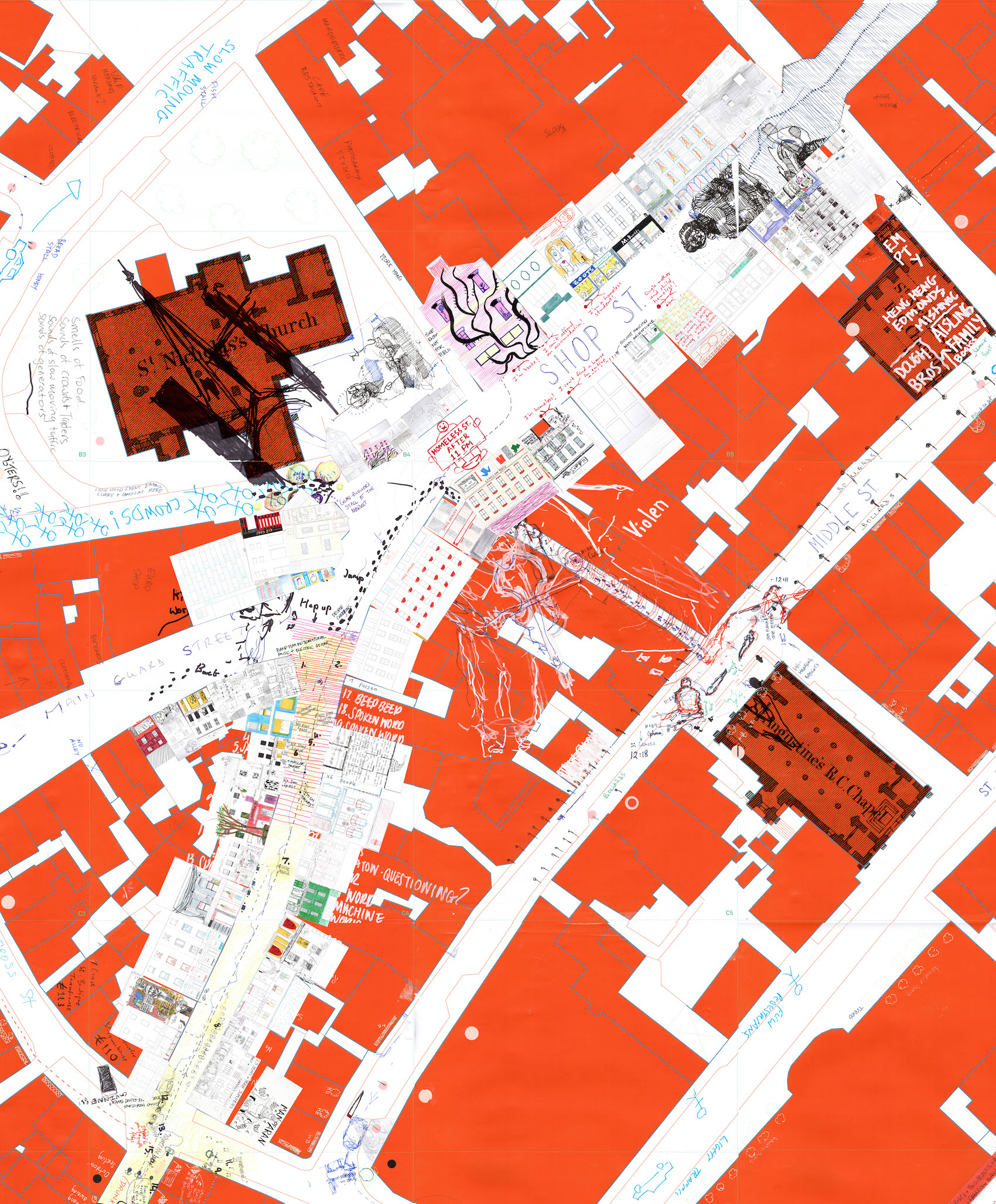
Left: plan of an apartment in Paris. Right: workshop collage for Architecture at the Edge Festival, Galway, 2021.
What does the act of drawing mean to your practice? What makes a good drawing?
A drawing is a method of translating thought into line. That’s reductive, but drawings do have this amazing capacity to take our thoughts and ideas about the world and refine them into a language of lines and dots and surfaces that have meaning and value. The artist Nanne Meyer calls drawing a means of transmission, and we think of this a lot. For us, a good drawing is one that is very clear in what it is being communicated, and – just as importantly – what is being omitted. Drawings are very useful filters for everything that bounces around in our heads.
If you could teach all architecture students one lesson, at the start of their education, what would it be?
To use your semesters and project briefs as test sites for your own interests in architecture; see every project as a chance to lose yourself in something that fascinates you and to deep-dive into that curiosity until you come out the other side with that new knowledge or skill that is completely, inherently yours.