Rob Goodman, Group Specification Manager at James Latham, discusses the design, fabrication and performance characteristics of HIMACS solid surface with Architecture Today’s Technical Editor John Ramshaw.
In association with

Solid surfaces are used to expressive effect in this boardroom fit-out (photo: Allwood Joinery).
James Latham is perhaps best known as one of the UK and Ireland’s largest independent suppliers of timber and panel products. With a heritage dating back to 1757, the company has long been a trusted distributor of joinery grade timber, decorative veneers and modified woods. Less well known, but no less significant, is its expertise in decorative surfaces, including laminates, melamine-faced materials, and high-performance solid surfaces.
James Latham’s exclusive solid surface brand, HIMACS from LX Hausys, has enabled the company to support architects and fabricators with a range of durable, hygienic and visually-expressive products. In conversation with Architecture Today’s Technical Editor John Ramshaw, Rob Goodman, Group Specification Manager at James Latham, explores the material characteristics, applicational benefits, and specification guidance for HIMACS solid surface across commercial, public and high-traffic environments.
What are solid surface materials, and how do they differ from alternatives, such as natural stone, quartz or compact laminates?
Solid surface is a homogenous blend of minerals and pigments set in an acrylic matrix. Despite having a stone-like feel and sharing some of the aesthetic qualities of stone and quartz products, solid surface differs in terms of its performance, design capabilities, sustainability, and repairability. The versatility and workability of solid surface are also key differentiators, together with its inherent hygiene, stain-resistance and ability to be refinished. Furthermore, it can be joined seamlessly and thermoformed into almost any shape.
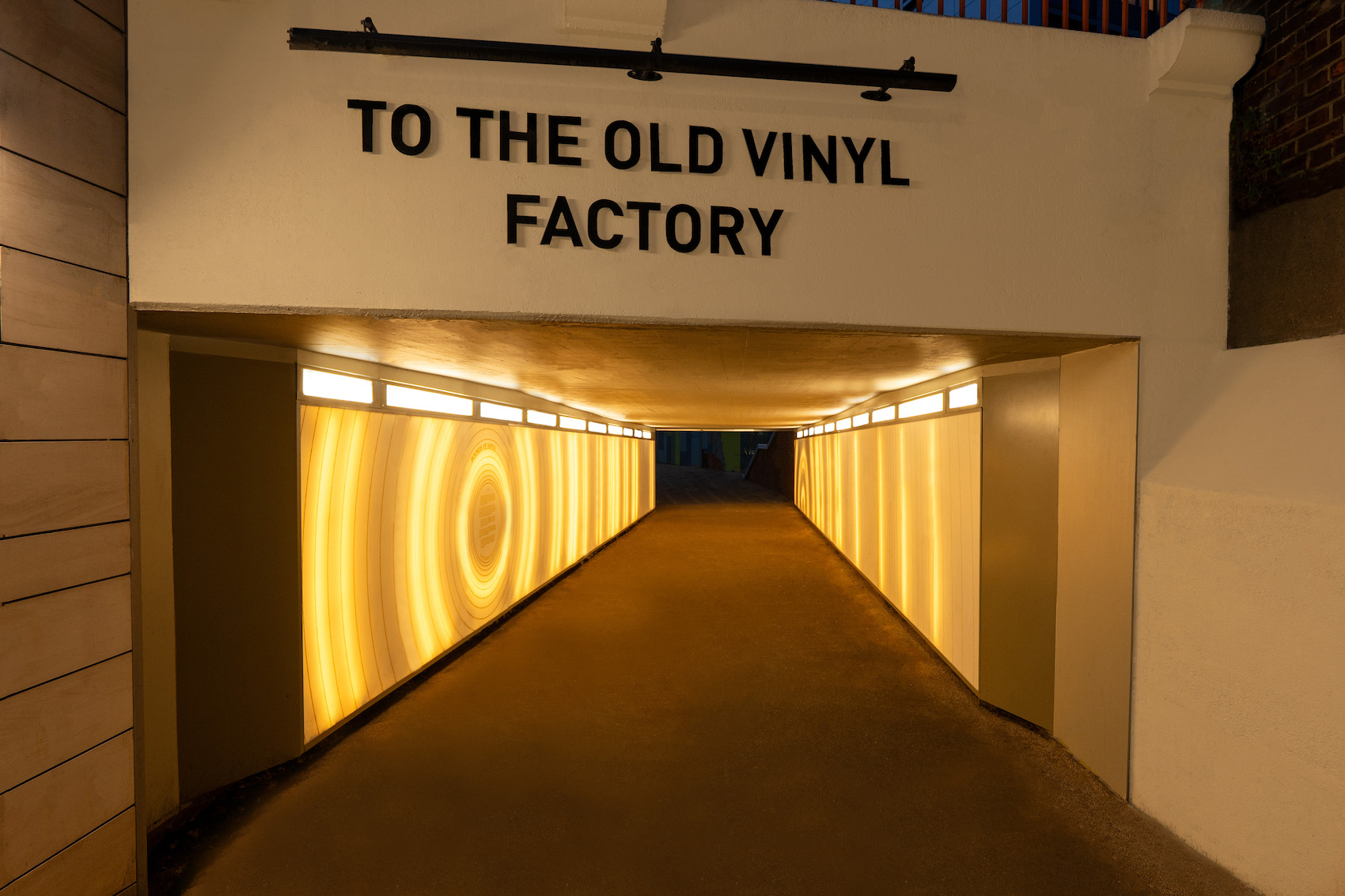
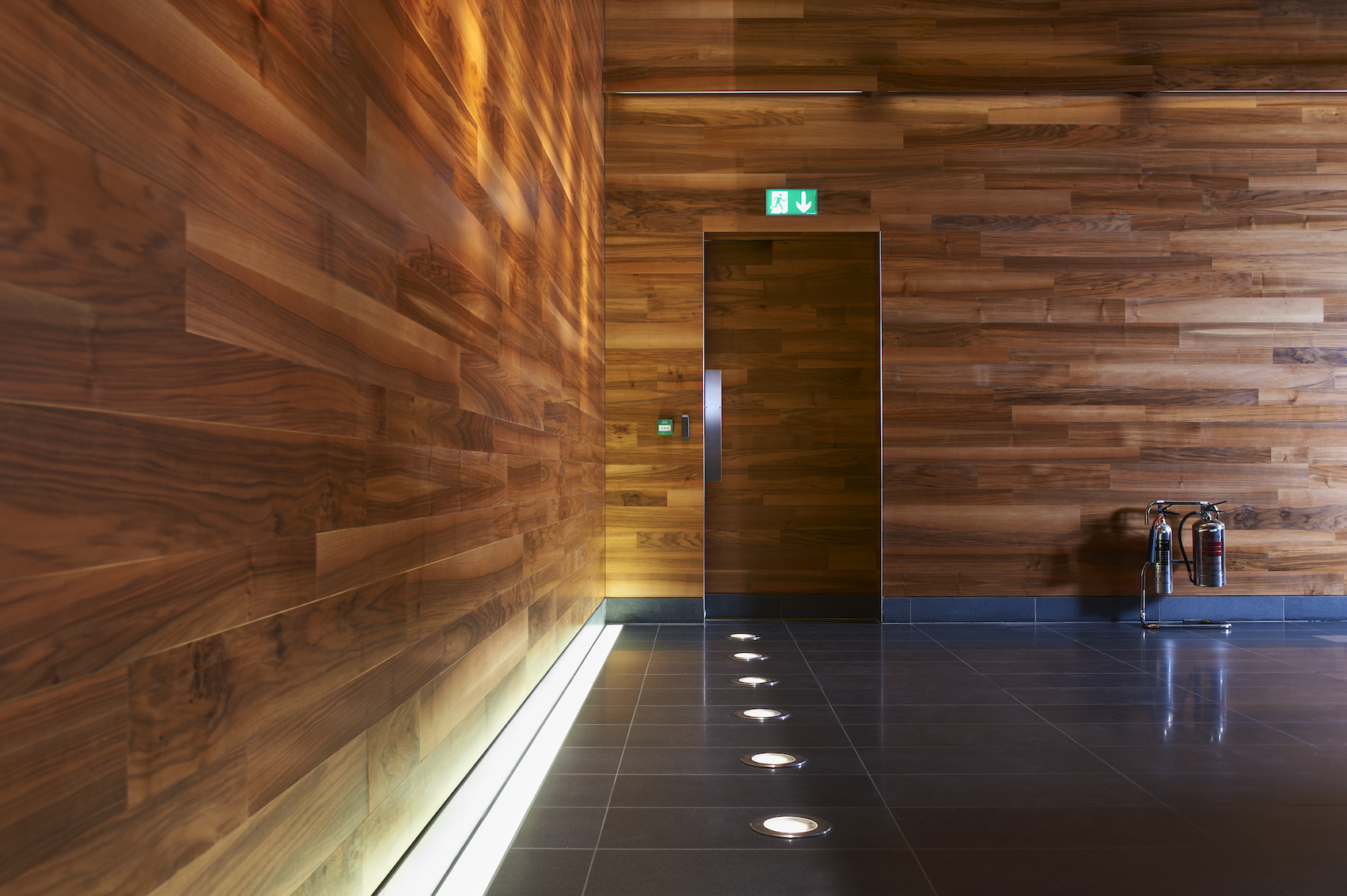
Backlit HIMACS solid surface panels illuminate Hayes underpass in London (photo: James Latham).
What are the key performance and design benefits of specifying solid surfaces in architectural projects?
The combination of almost limitless creative freedom and reliable performance open up all kinds of possibilities for creatives. Solid surfaces can be both decorative and functional in one application. Exclusive to James Latham in the UK, HIMACS offers a vast range of colour choices, from marble-like veining to earthy stone effects, and from subtle neutrals to bold, vibrant hues. There’s also a number of colour choices featuring SCS-certified recycled content. Through a simple heating process, HIMACS boasts three-dimensional thermoplastic forming capabilities, enabling greater design flexibility than most conventional alternative materials.
Can you tell me more about HIMACS and what sets it apart from competitor solid surfaces?
Not all solid surfaces are alike. HIMACS, is a premium product that uses the finest acrylic resin, minerals and natural pigments, as well as an innovative thermal-cure production process. Colour consistency, defect-free sheets, and ease of fabrication are a result of the quality and ratio of the ingredients used, and the differences in manufacturing techniques that LX Hausys prides itself on. These benefits allow the company to provide a 15-year limited installed warranty when HIMACS is fabricated and installed by a member of the HIMACS Quality Club.
What fabrication methods are typically used when working with HIMACS solid surface, and what level of design flexibility do they offer?
Although HIMACS is almost as robust as stone, it can be worked in the same way as wood. Using conventional carpenters’ tools, this solid surface material can be easily sawn, routed or drilled. Thanks to the thermal cure technology, HIMACS not only performs better than standard solid surfaces, but also offers greater design flexibility. Added to this, installers can save precious time because it is easier to work with. HIMACS Ultra Thermoforming sheets, which are available in a number of different shades, push solid surface innovation even further with 30 per cent more thermoforming capability.
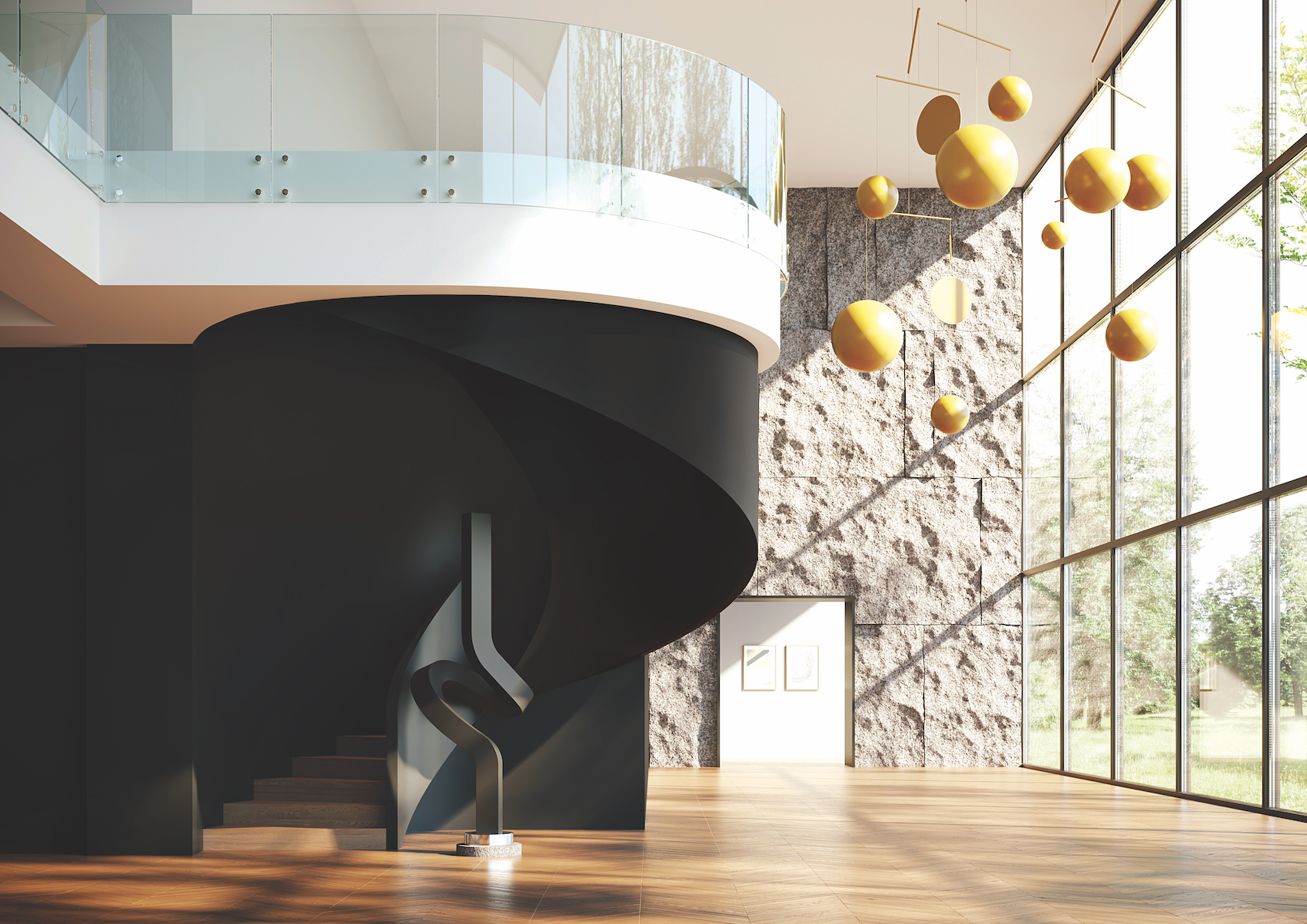
Thermoformed staircase in HIMACS Intense Ultra Black (photo: LX Hausys).
Could you tell me more about thermoforming and seamless jointing, and what these can deliver in terms of design and installation?
Seamless jointing involves bonding individual panels using a colour-matched adhesive, which is then sanded flush. The result is an invisible join – no visible seams, no dirt traps, and a perfectly smooth, continuous surface. This is particularly advantageous for hygiene-critical applications, such as healthcare and hospitality settings, where cleanability and sterility are paramount.
Thermoforming – the process of heating the material to a pliable state and shaping it in a mould – allows HIMACS to be formed into three-dimensional curves, organic shapes and complex geometries. This unlocks extraordinary design potential for flowing reception desks, undulating wall panels, curved seating elements, and bespoke furniture. When combined with seamless joints, designers can achieve uninterrupted, sculptural forms, such as long, sweeping countertops with integrated sinks, continuous benching, or even outdoor furniture with fluid transitions between horizontal and vertical surfaces. For architects seeking a refined, monolithic aesthetic, HIMACS enables a level of material integration that’s simply not possible with stone, quartz or laminate alternatives.
This fusion of function and form makes HIMACS a go-to solution for architects looking to express creativity without compromising performance. Whether the goal is a sculpted, tactile front-of-house statement piece or a hardwearing, hygienic surface in a clinical environment, the fabrication capabilities of HIMACS ensure that practicality and creativity go hand in hand.
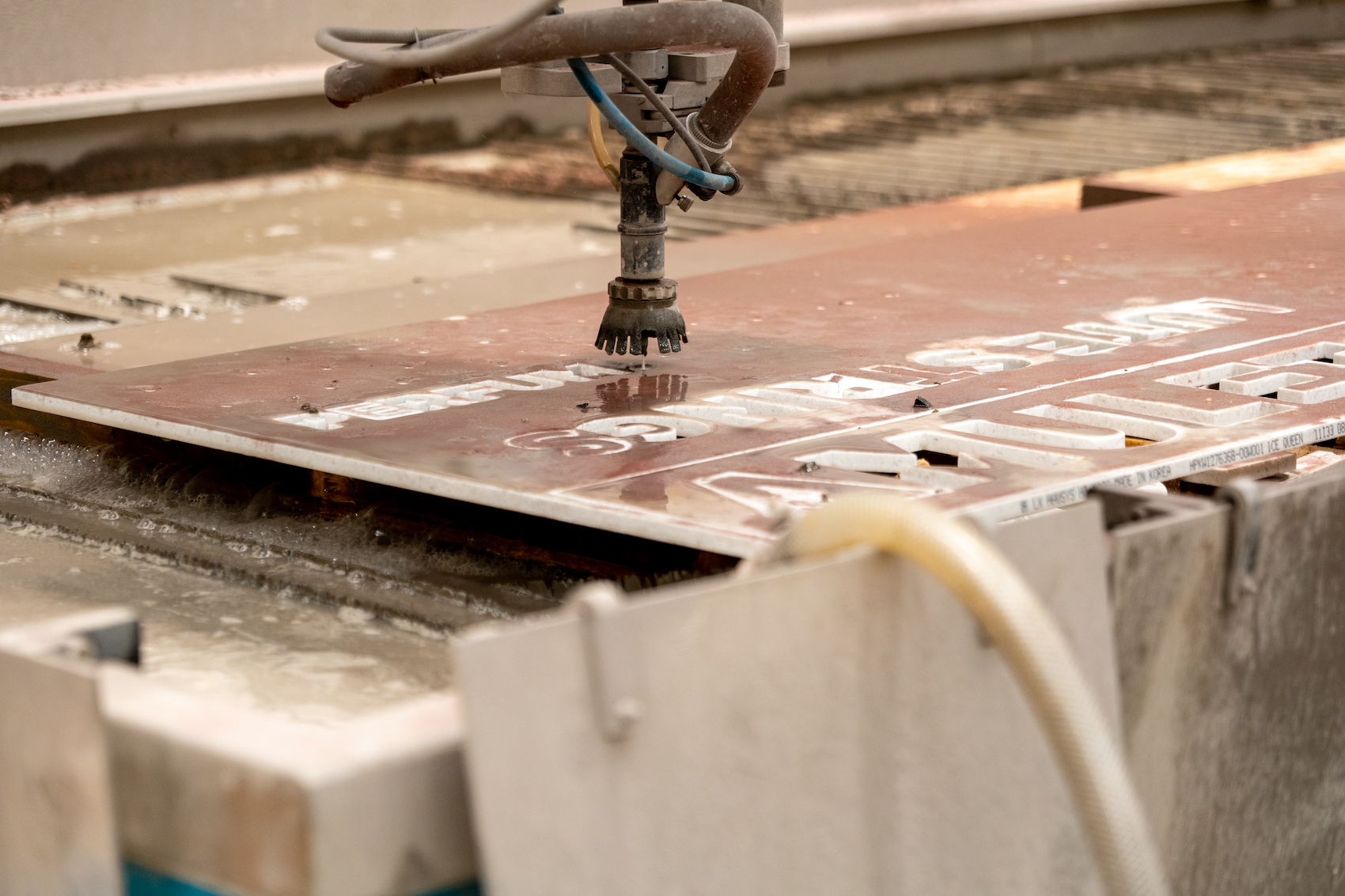
Solid surfaces are easy to CNC and machine (photo: James Latham).
What are the most common architectural applications for solid surfaces, and where do you see growth in use across the built environment?
HIMACS can be used internally or externally and vertically or horizontally in humid, high-traffic or hygiene-critical environments. It combines aesthetic performance with functionality, whether employed as an external façade, curved reception desk, kitchen worktop with integrated sink, retail display unit, or operating theatre surface. The design possibilities are endless! While James Latham is currently seeing good market share gains across the board, we are expecting further growth in retail and hospitality, as well as the residential sector – especially purpose-built student accommodation, apartments and luxury retirement communities.
What makes HIMACS solid surface particularly suitable for high-traffic or hygiene-sensitive environments?
Internationally certified, HIMACS is resistant to mould, dirt, viruses, bacteria and numerous chemicals. The smooth, non-porous and seamless surface meets the highest quality standards for hygiene, while also combining functionality, robustness and good aesthetics. With a fine array of colours to choose from, HIMACS remains a material of choice across the healthcare, education and hospitality sectors.
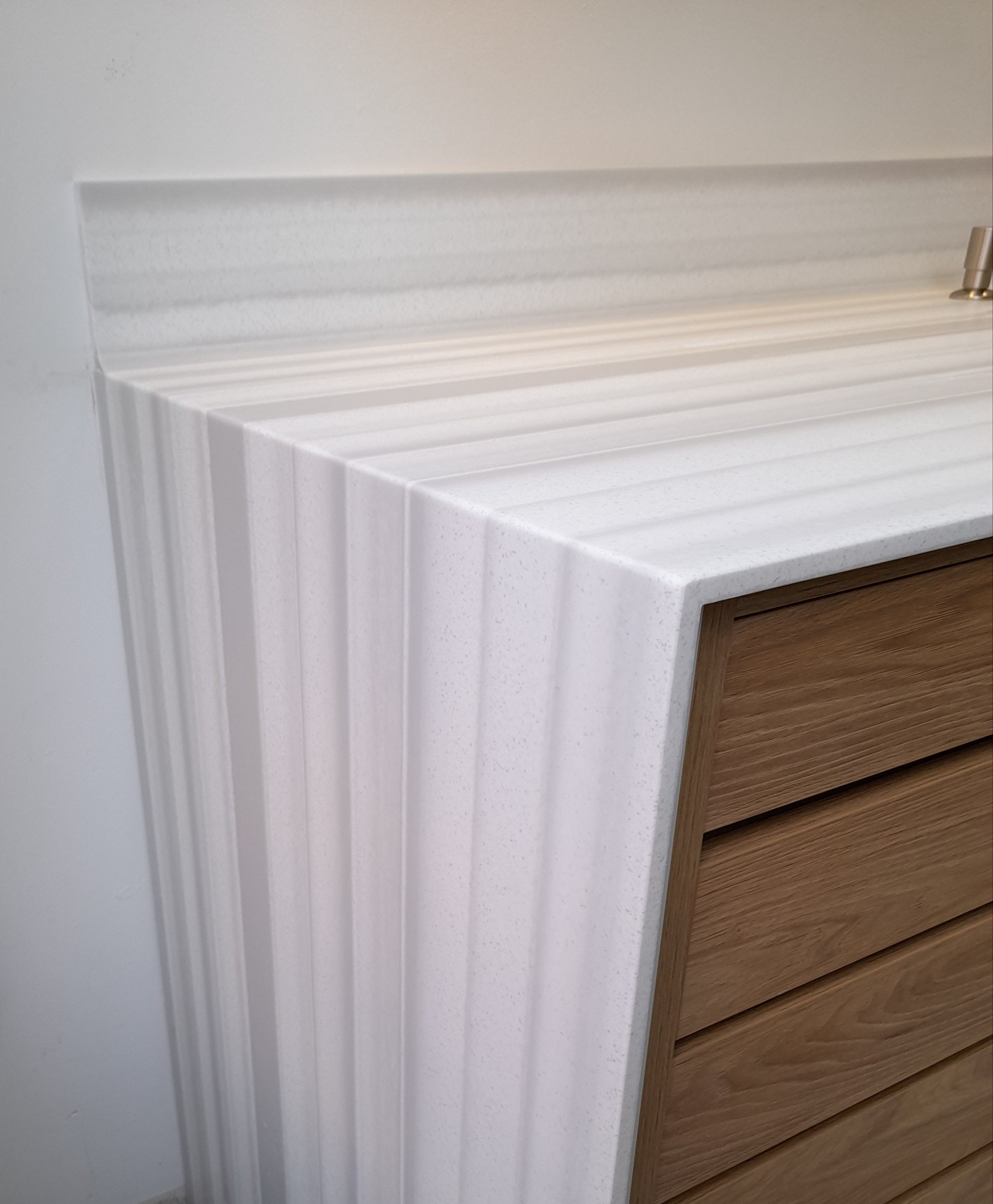
Solid surface ‘waterfall’ countertop (photo: Westbrook Interiors).
How does HIMACS perform in terms of durability, UV resistance, thermal stability and reparability?
In addition to its hardwearing nature and hygienic properties, HIMACS is extremely durable, resistant, and repairable. What’s more it has been extensively tested, certified to EN13501-1: B-s1-d0 for fire safety, and does not emit VOCs. We have numerous chemical-resistance test data, along with test results, showing standard HIMACS colors are UV stable and that the colour will not fade in typical indoor applications.
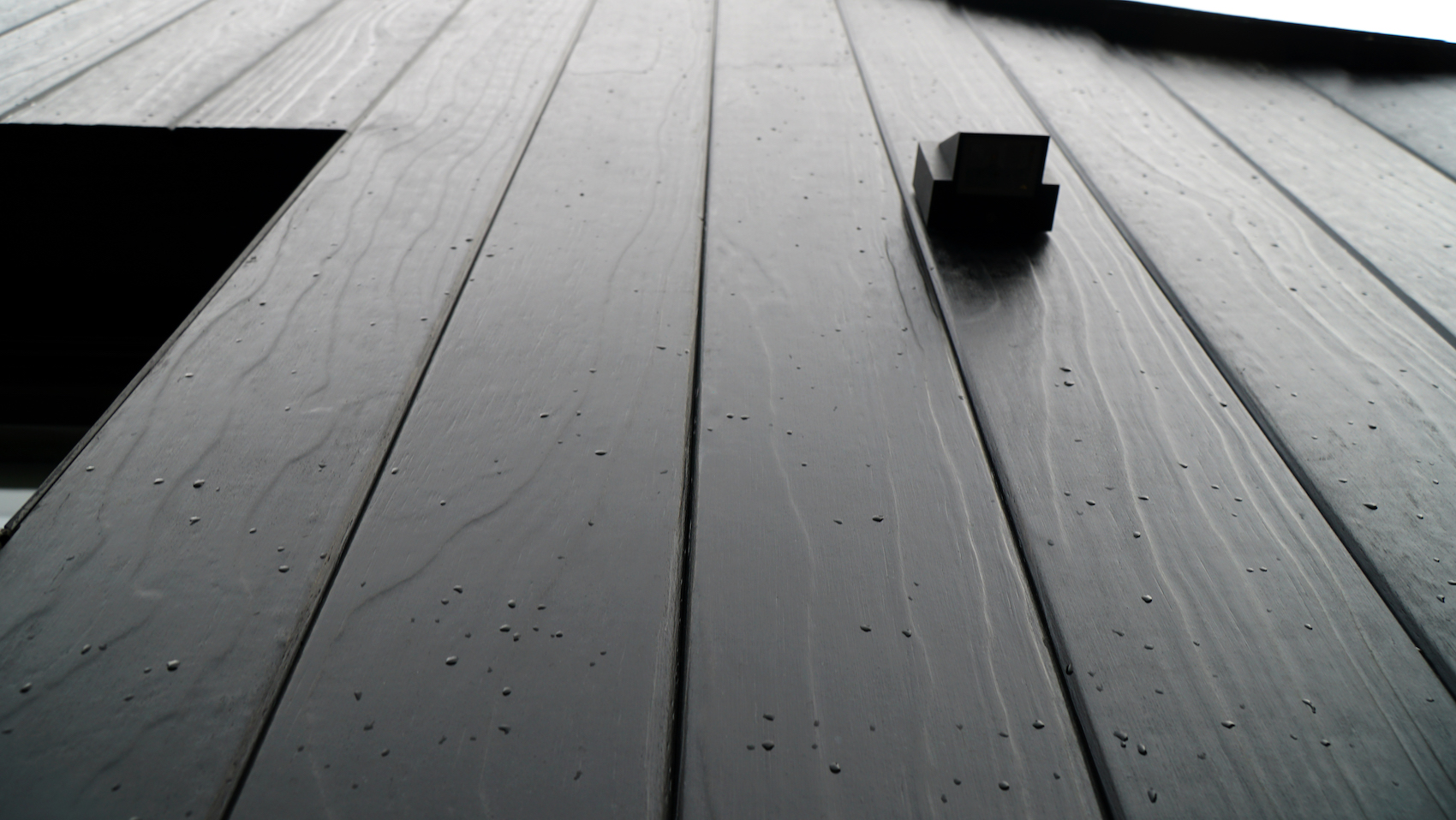
The HIMACS outdoor range, Exteria®, offers a choice of attractive colours, while achieving B-s1-d0 classification, and carrying a 10- year warranty for UV resistance. The HIMACS façade colour range can withstand humidity, UV radiation, and variations in temperature, thanks to its homogeneous, non-porous composition and other advantageous material properties.
What environmental or sustainability credentials does the product carry?
LX Hausys and James Latham take environmental ethics incredibly seriously. The sustainability credentials are comprehensive, from SCS-certified recycled content in a number of decors to BREEAM, Greenguard and NSF certification across the range. HIMACS is also silica free, and James Latham can provide a full EPD for the product.
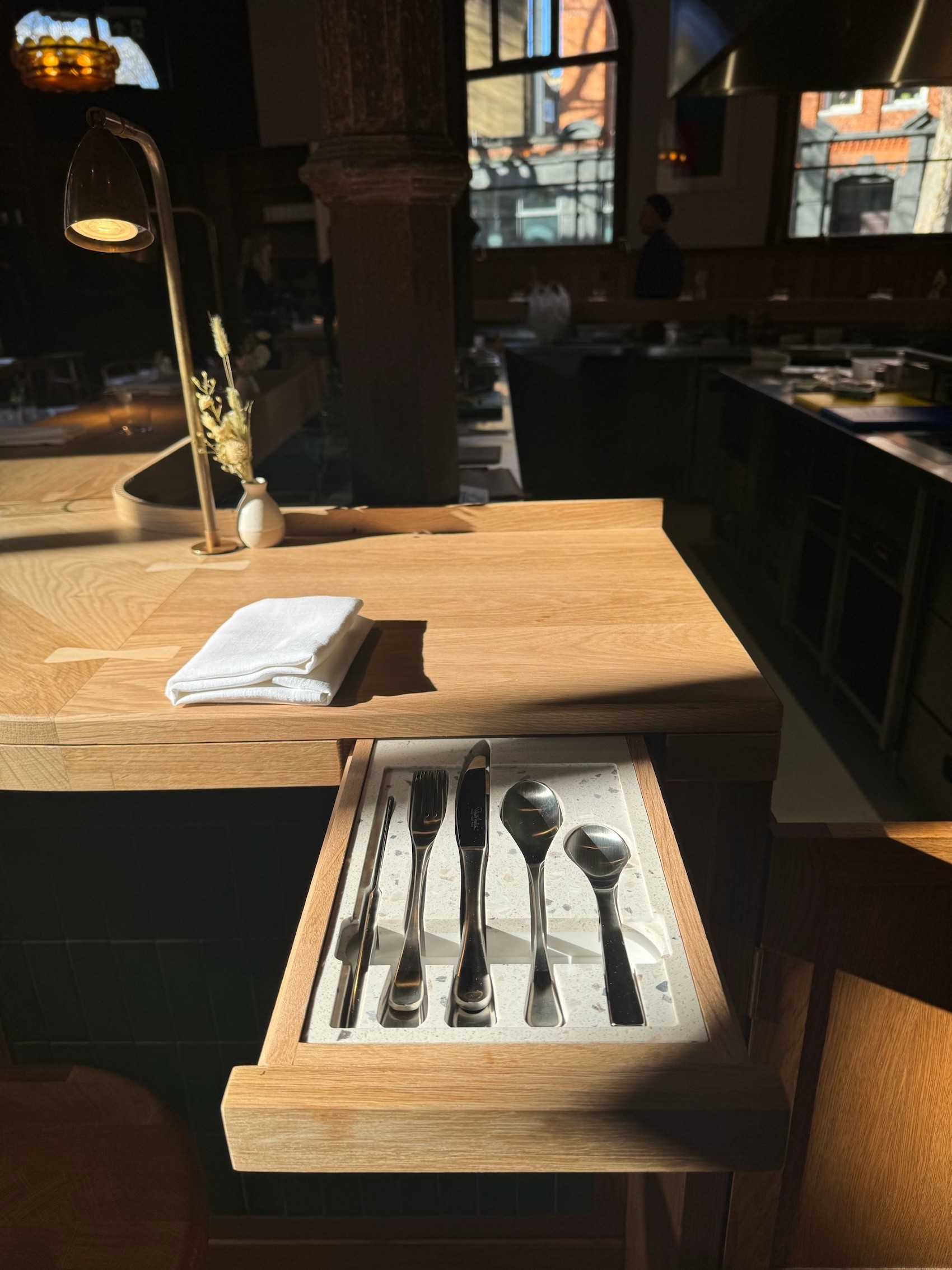
Solid surface cutlery drawer in wrap-around bar counter by Tim Parker Joinery (photo: James Latham).
What ongoing care or maintenance is recommended to preserve the appearance and performance of solid surface installations?
As I mentioned before, HIMACS is a homogeneous non-porous material, so normal, everyday cleaning only requires a damp cloth and a mild cleanser. Tougher stains, caused by food colouring, tea or fruit juice can easily be removed using a diluted bleach. It is advisable to place a mat or board beneath hot objects. Scratches can be removed with Scotch-Brite pads, but we recommend speaking to the fabricator or a member of our team first.
What advice and support can James Latham give architects who are looking to use HIMACS solid surface on their projects?
Both James Latham and LX Hausys, have a team of experts on hand to assist architects, designers and contractors through the specification process – from technical support to sampling for review and ensuring products comply with performance standards and environmental expectations. We also have a National Technical Manager available to offer fabrication advice and further training to HIMACS fabricators.