Studio Saar and Atelier One’s landmark pavilion for the London Design Festival reinterprets traditional Indian shields to create a bamboo canopy that explores protection, power, displacement and cultural exchange in the heart of the capital.
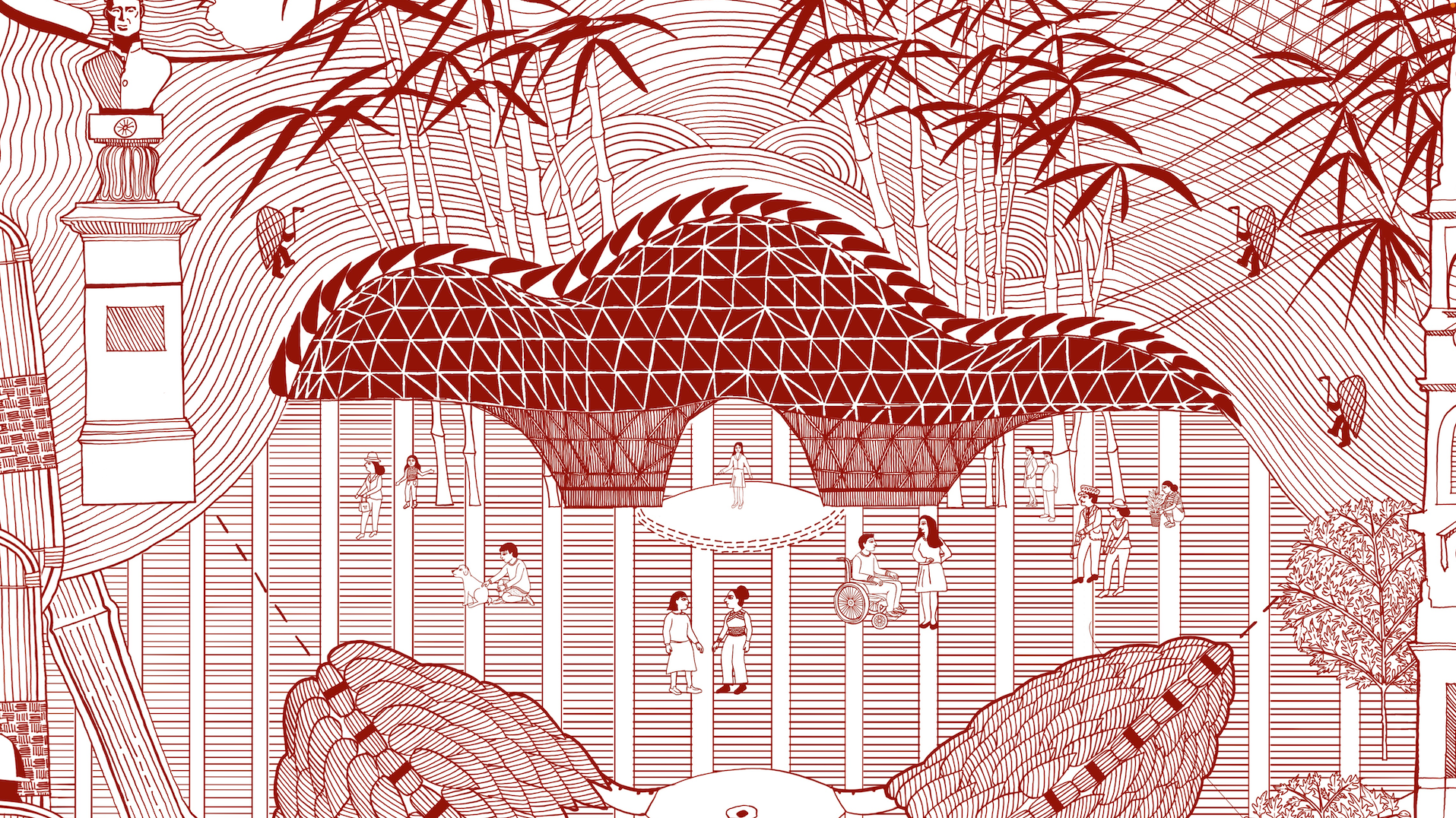
The Pangolin Shield by Studio Saar and Atelier One, supported by Secure.
Studio Saar and Atelier One have collaborated on The Pangolin Shield, the first ‘Landmark Project’ announced for this year’s London Design Festival, set to open in September. Supported by Secure, the temporary pavilion will occupy a prominent position on the Strand, where it invites visitors to reflect on relationships between craft, innovation and place while exploring wider themes of colonial histories, ecological exploitation and the movement of people and species across borders.
Inspired by the pangolin, the world’s most trafficked mammal, whose overlapping scales provide its natural armour, the installation examines the contrasting ideas of vulnerability and protection, acceptance and displacement, and the cultural dialogue between East and West. Positioned within one of London’s busiest public spaces, it will look to create a place of shelter and a serve as a catalyst for conversation.
The structure combines Studio Saar’s interest in culturally rooted design with Atelier One’s longstanding expertise in innovative structural systems. Constructed as a lightweight bamboo gridshell, the pavilion demonstrates how traditional materials can be engineered into precise, contemporary structures while maintaining a low embodied carbon footprint. Bamboo’s structural efficiency enables the pavilion to achieve a large spanning form with minimal material, reinforcing the project’s wider environmental ambitions.
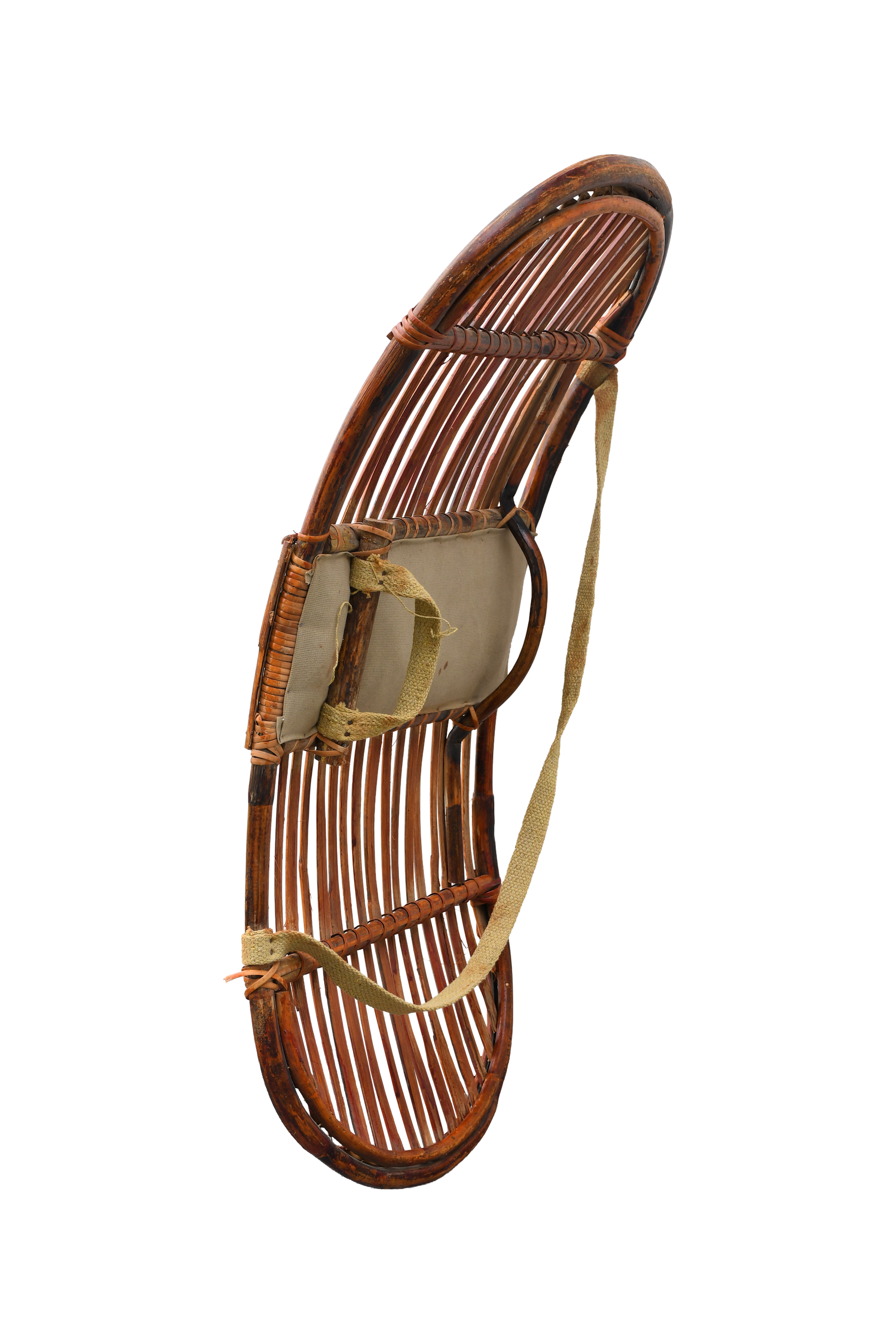
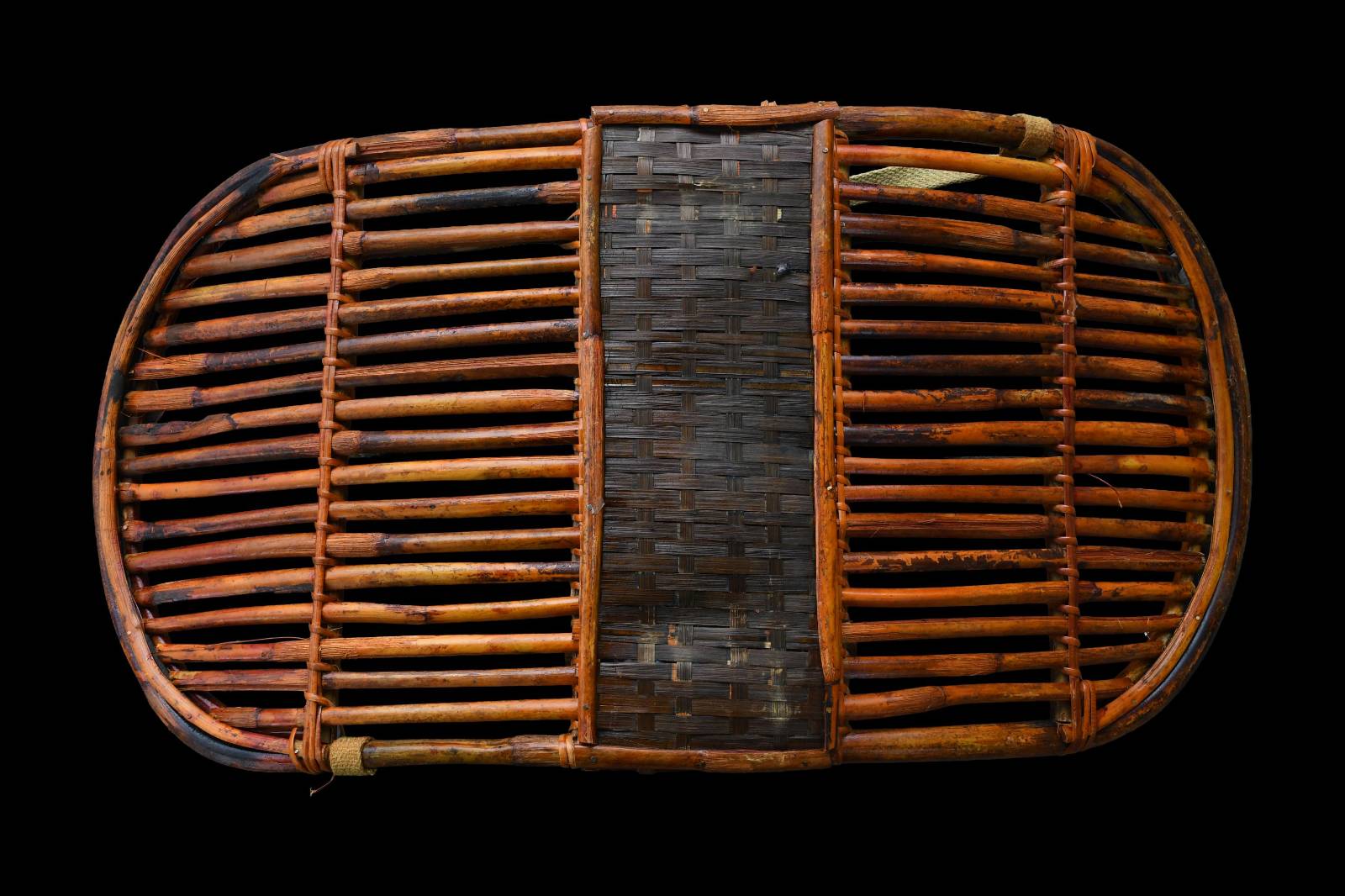
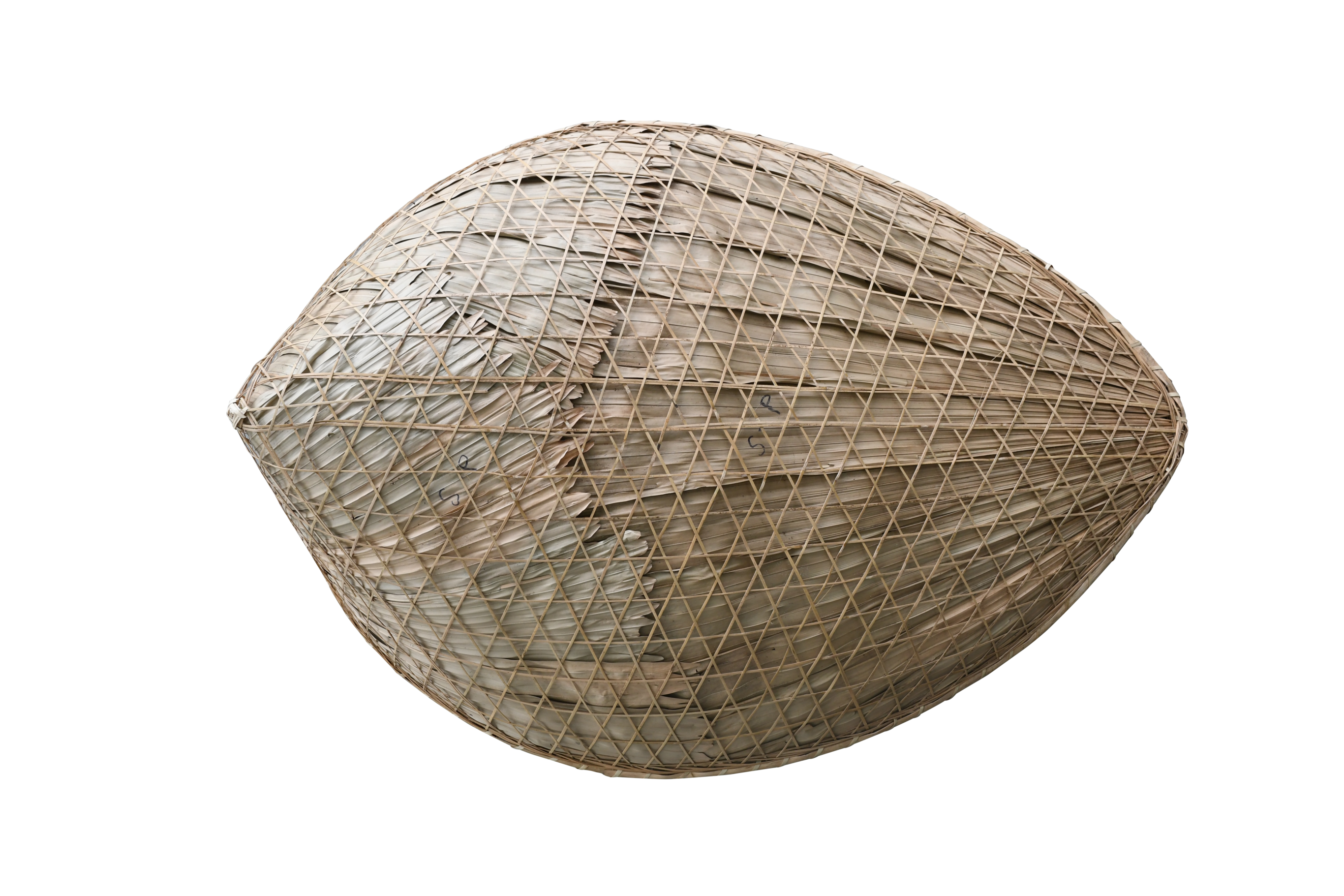
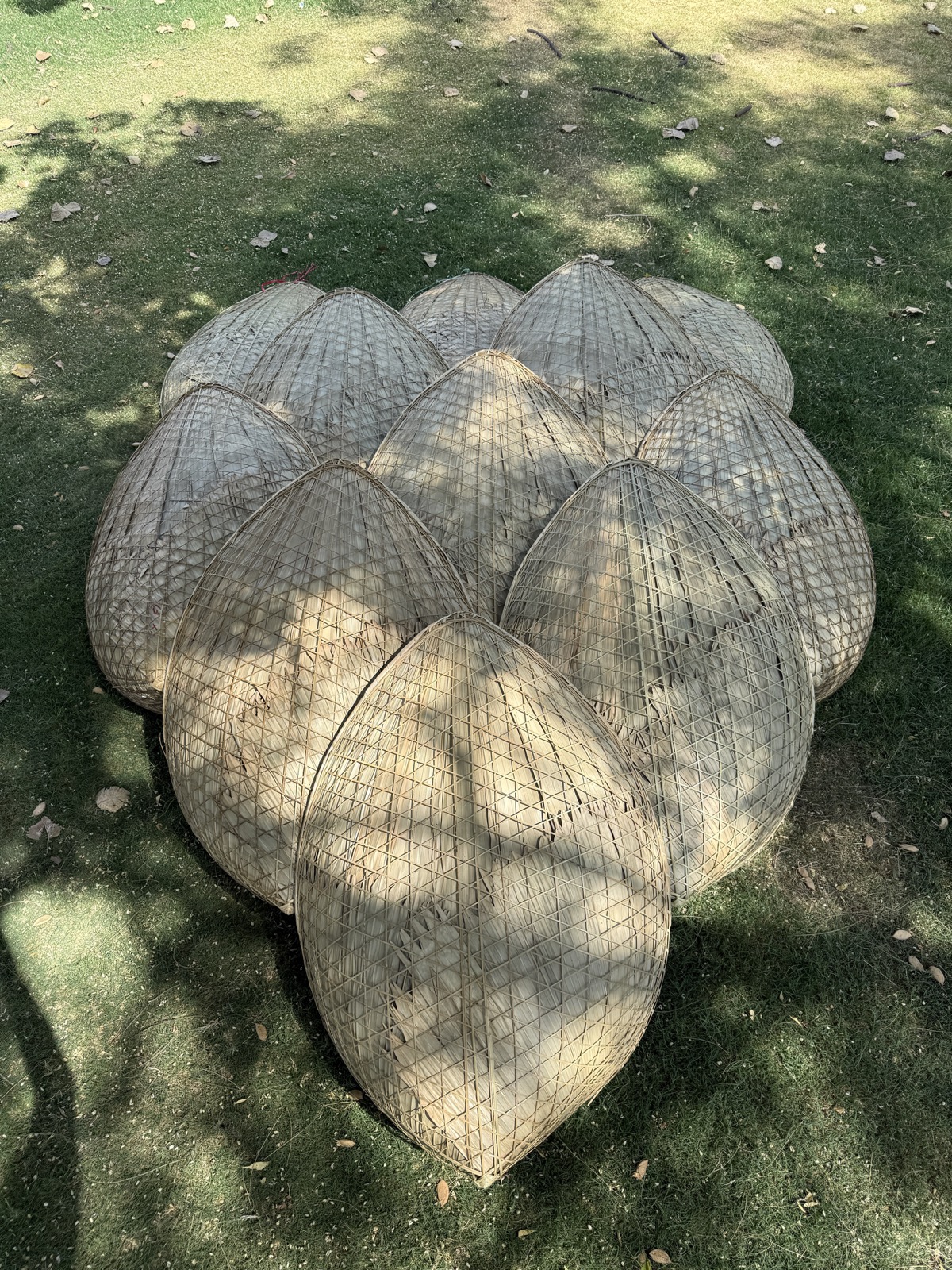
Covering the bamboo framework are two distinct forms of traditional Indian shielding. Police shields made from lathis are combined with woven rain shields, or knups, traditionally used by farmers in north-eastern India. Arranged across the surface like the scales of a pangolin, the overlapping elements filter daylight while creating a sheltered public space beneath. Their layered construction produces shifting patterns of light and shadow throughout the day, transforming functional objects into an architectural skin.
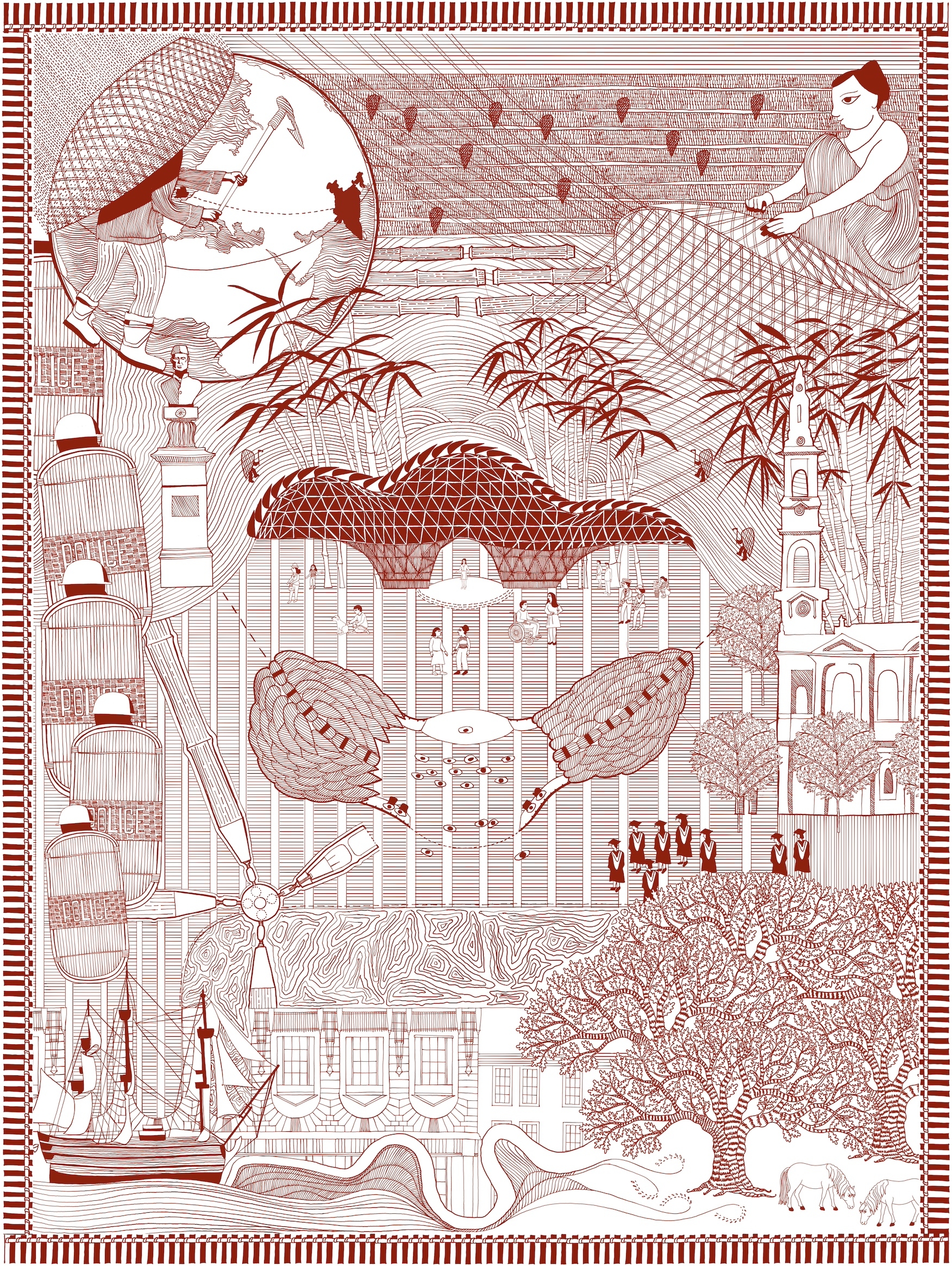
Presentation drawing. Right: close-ups of the drawing.
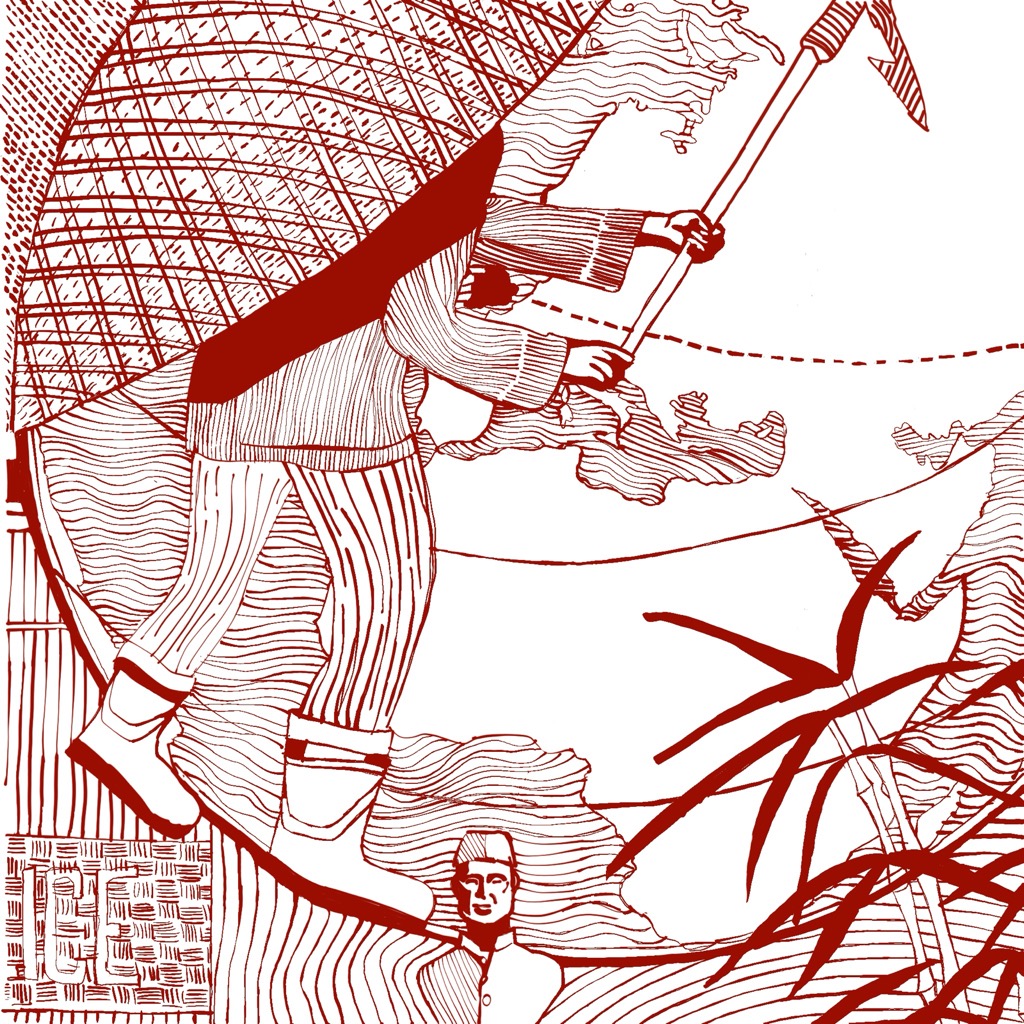
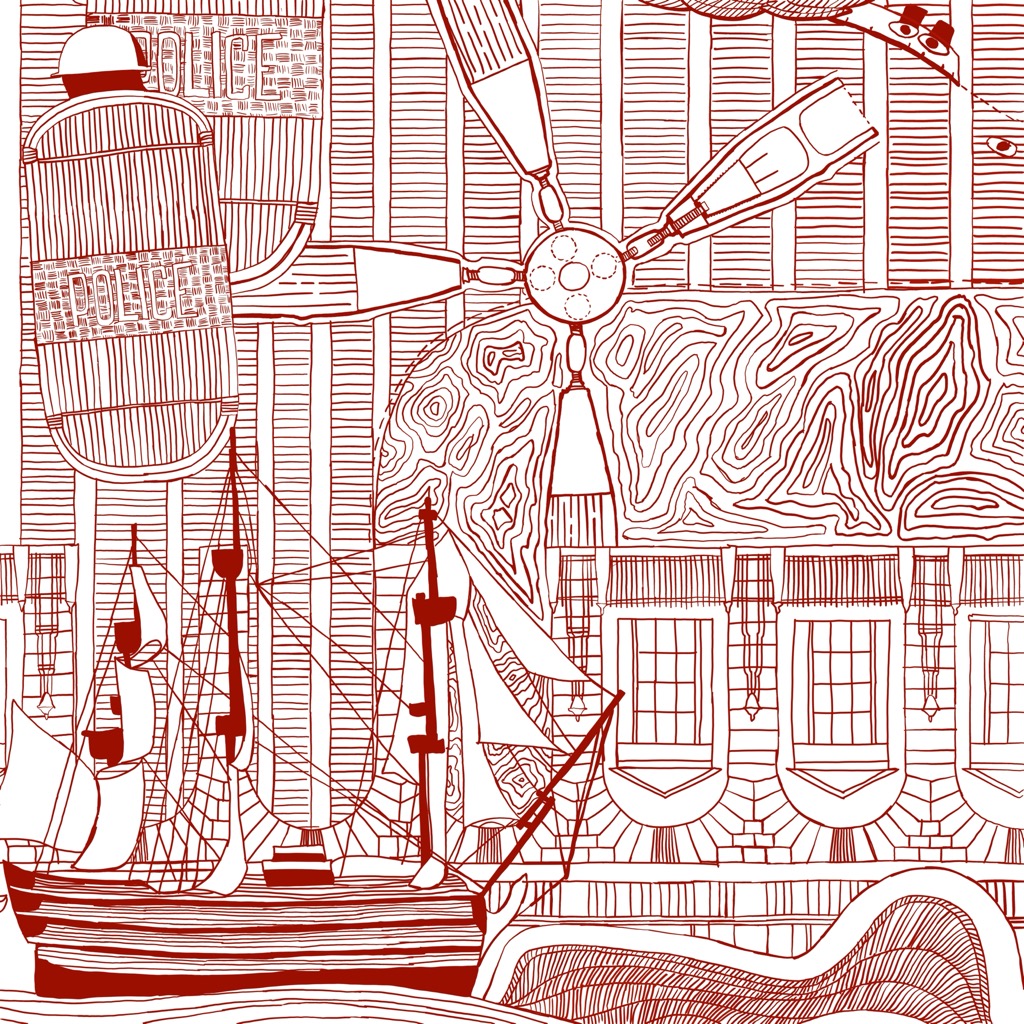
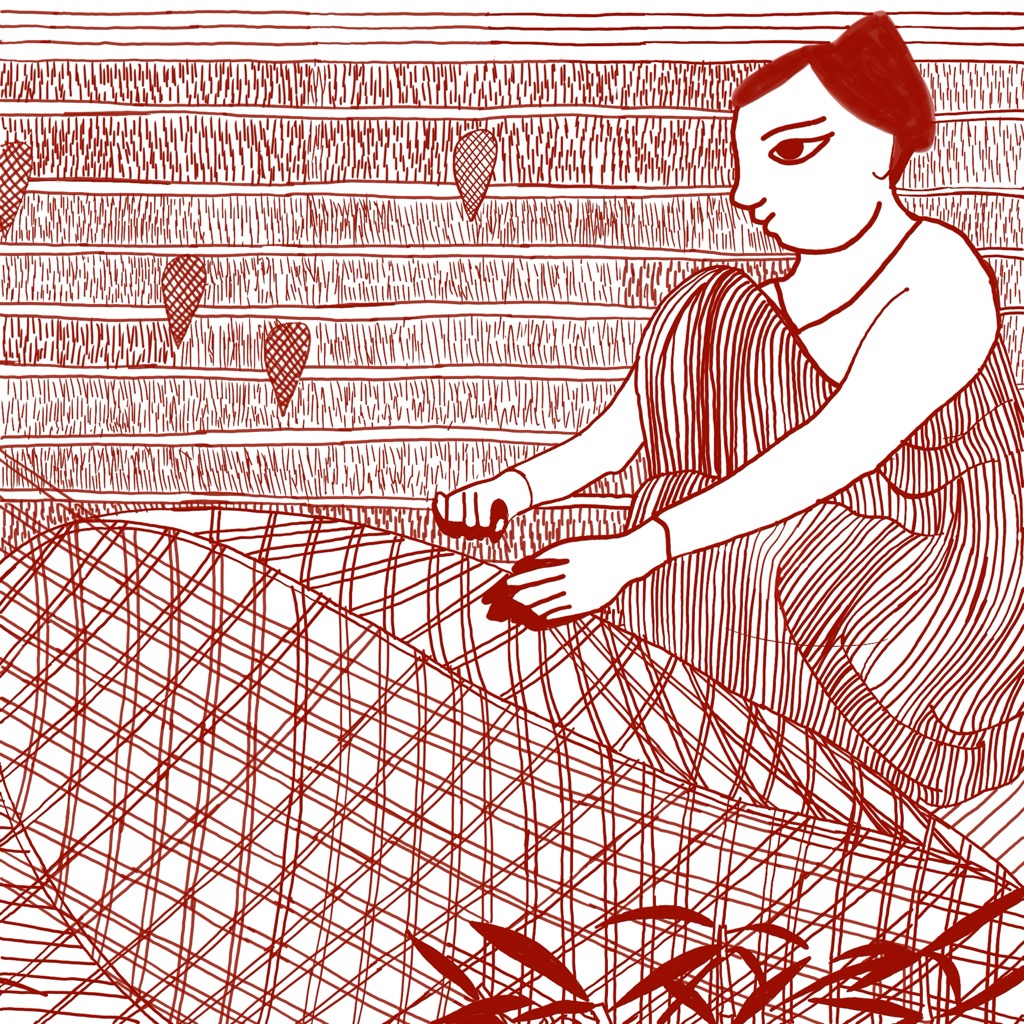
By removing police shields (see examples below) from their original context of confrontation and state authority, and placing them alongside the everyday protection offered by agricultural rain shields, the designers deliberately reframe their meaning. Rather than symbols of division, the two forms are brought together as a shared protective canopy intended to encourage dialogue, reflection and community.
The pavilion’s location also forms an important part of its narrative. Set within a pedestrianised section of the Strand, it is orientated towards the bust of Jawaharlal Nehru, India’s first prime minister, located outside the Indian High Commission. This carefully considered alignment establishes a visual relationship between the installation and its surroundings, reinforcing its exploration of colonial legacies, political power and cultural exchange.
For 2026 RAI members Studio Saar, whose practice operates across the UK and India, the project reflects an ongoing interest in drawing together diverse cultural perspectives through architecture and making. Working alongside fellow RAI studio, Atelier One, whose pioneering work with bamboo has helped establish the material as a highly accurate structural system for complex contemporary projects, The Pangolin Shield aims to demonstrate how architecture can combine technical innovation with cultural storytelling to create a meaningful public intervention within the city.
Precedent pictures