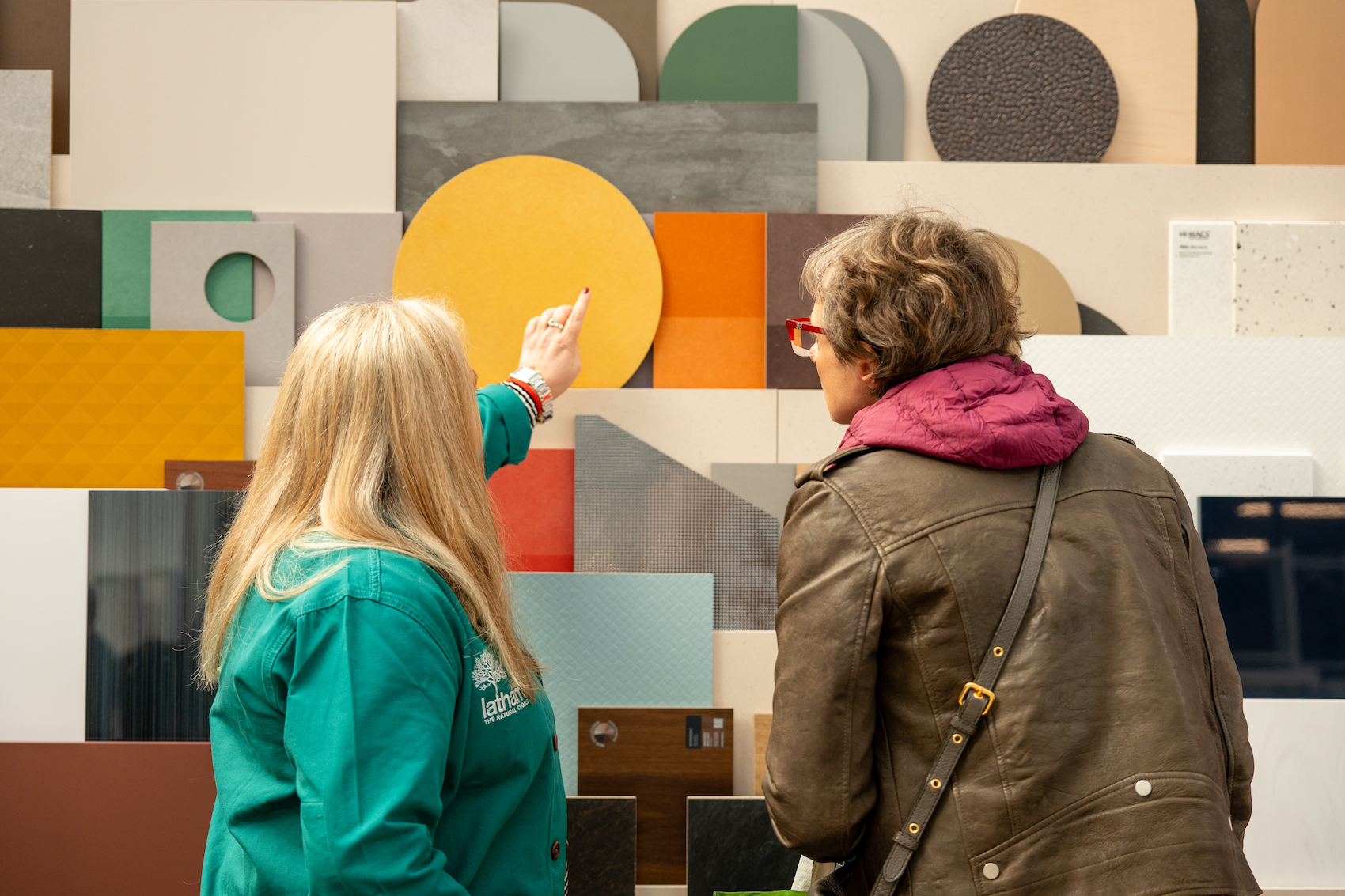
Martin Fowler, Machined Timber/Cladding Sales at Latham Timber Manufacturing, speaks to Architecture Today’s Technical Editor John Ramshaw about the company’s extensive range of high-performance timber cladding and mouldings, as well as the advanced digital tools and bespoke customisation services that support them.
In association with
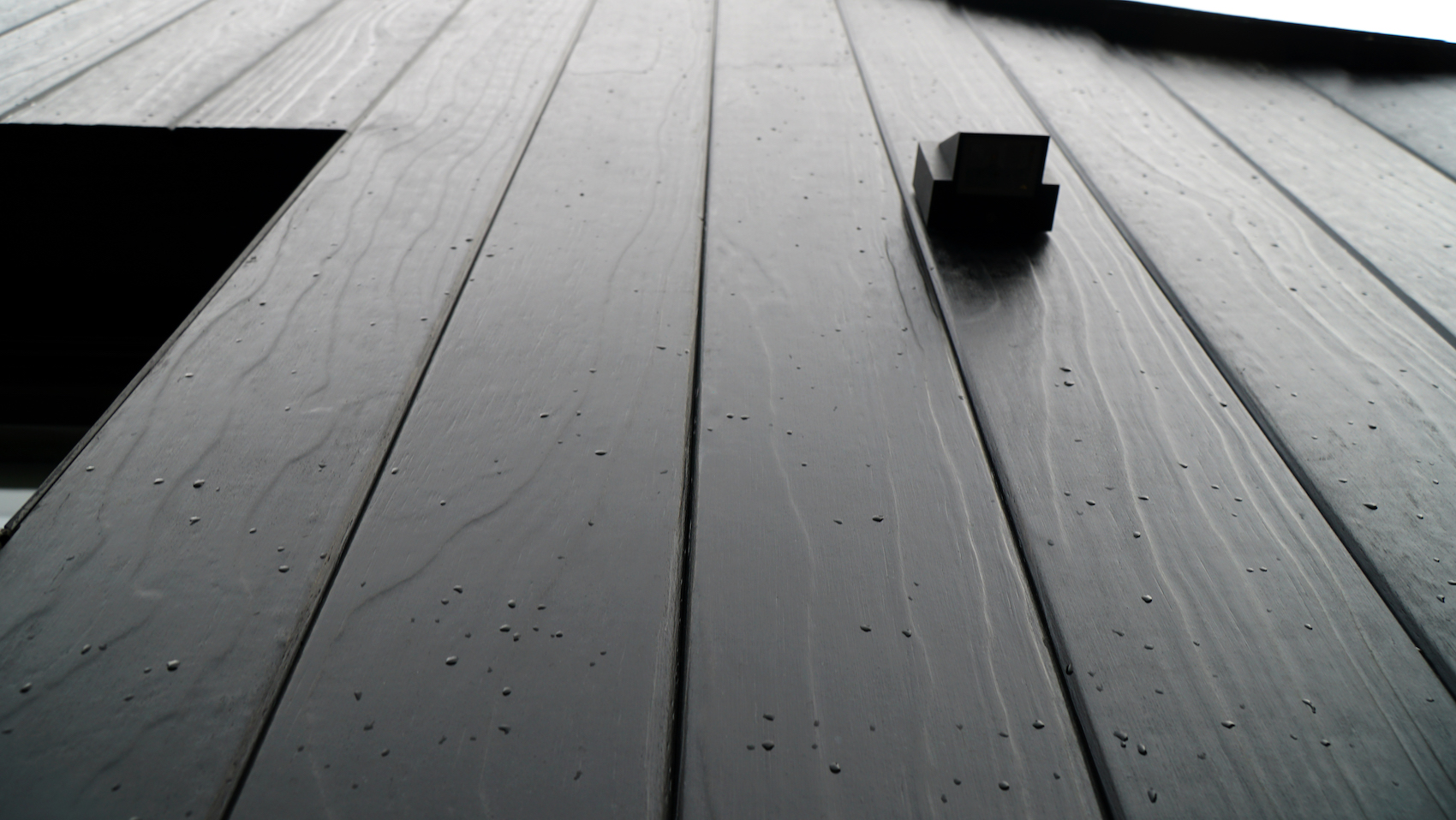
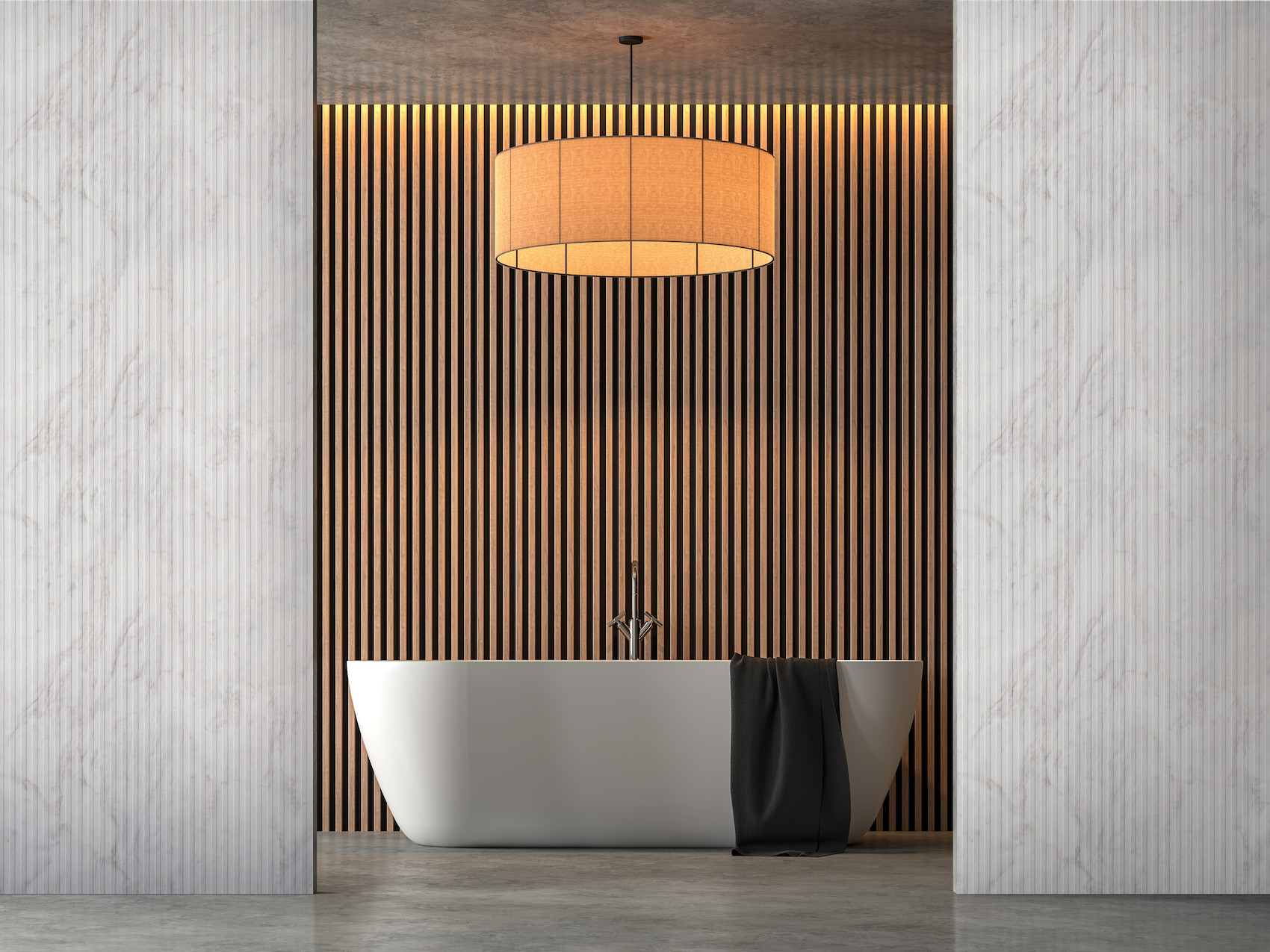
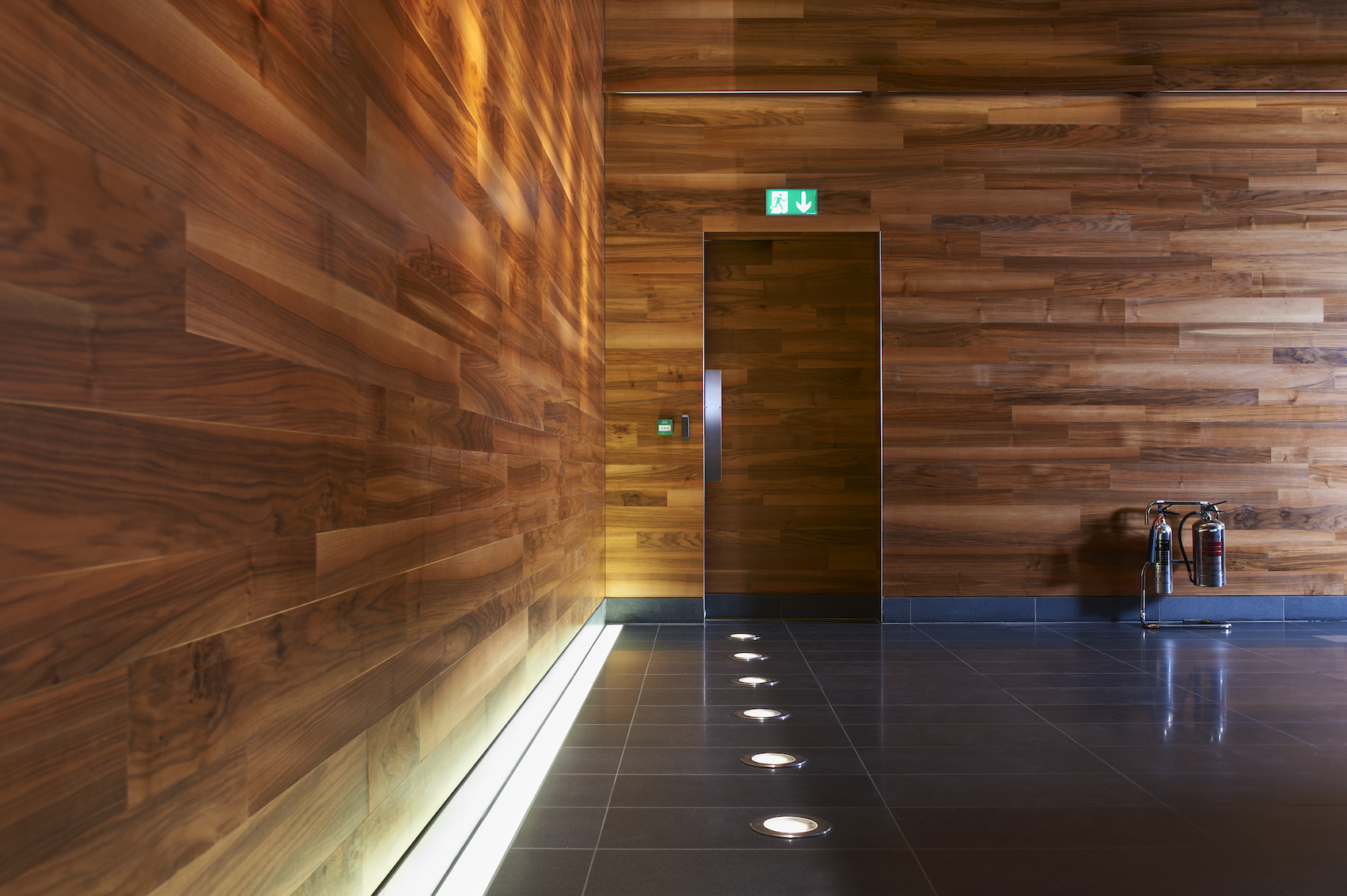
Factory-finished ‘Finish Line’ cladding (photo: Karl Harrison Designs).
Latham Timber Manufacturing – the manufacturing arm of James Latham’s timber distribution business – has an extensive portfolio of timber cladding and mouldings, aimed at meeting the needs of architects, interior designers, and joiners working across new-build and refurbishment projects. Supporting its design-led, performance-driven products are state-of-the-art digital tools, including the company’s 3D Cladding Visualiser, access to bespoke machining services, and advanced finishing options. In conversation with Architecture Today’s Technical Editor John Ramshaw, Martin Fowler, Machined Timber/Cladding Sales at Latham Timber Manufacturing, discusses cladding types and species; finishes and profiles; decorative timber mouldings, the benefits of visualisation and customisation; and how James Latham is helping architects deliver technically robust, and aesthetically-pleasing timber interiors and façades.
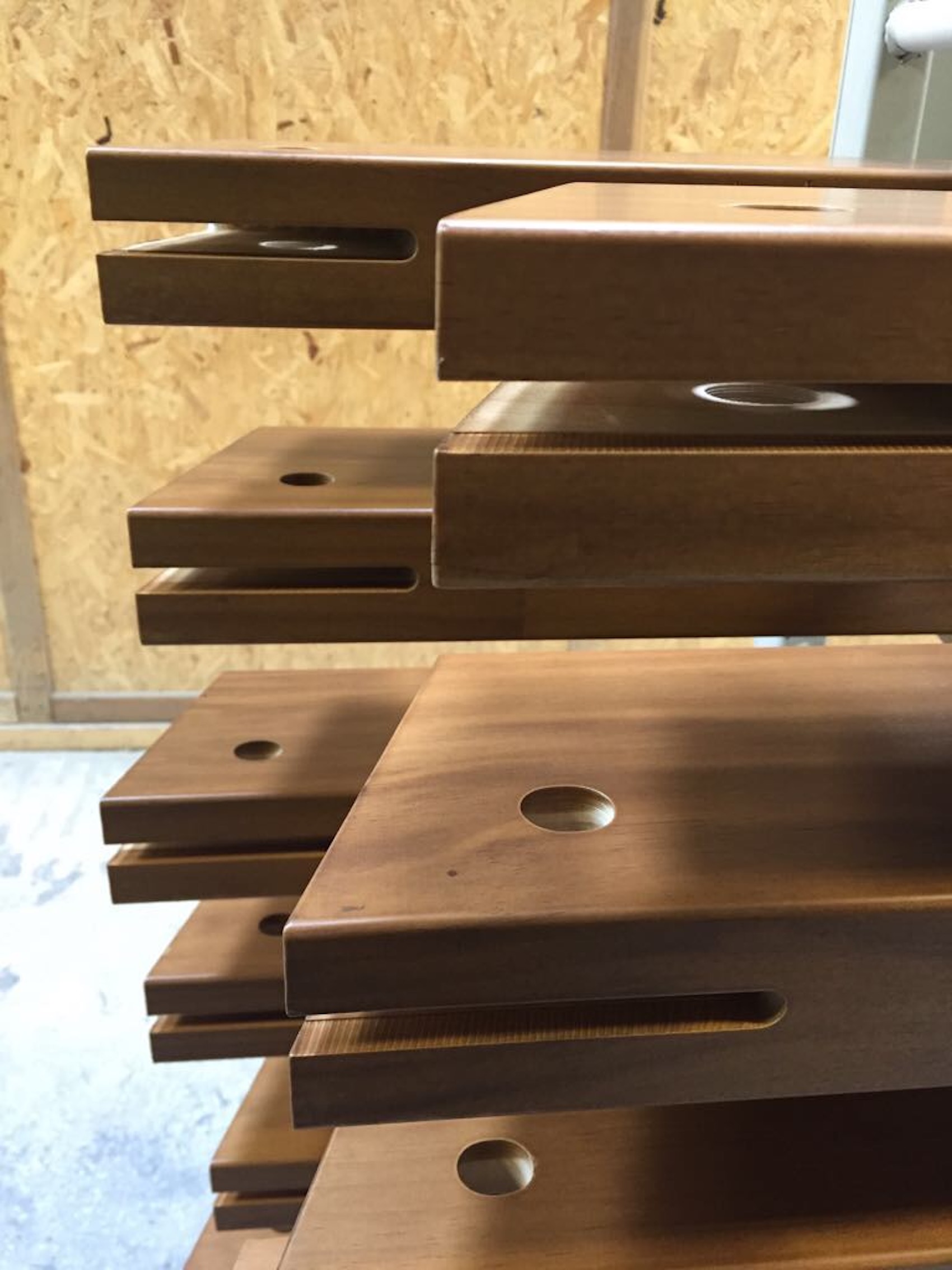
Curtain walling sections machined and finished.
A manufacturing division is quite unusual for a company recognised as a distributor of finished products. What services does Latham Timber Manufacturing offer?
Latham Timber Manufacturing (LTM) was established to add value to James Latham’s already extensive timber distribution offer. We’re very much integrated into the wider business, but it gives us the flexibility to produce finished and semi-finished products to exact customer requirements – all while maintaining full control over quality and lead times. Our capabilities cover a wide range of timber machining and finishing services, including cladding, architectural mouldings, and laminated timber components. We support both bespoke projects and volume manufacturing.
One of our key strengths is collaboration – working directly with architects and designers to turn design intent into precisely machined and finished components. This includes interpreting bespoke moulding profiles, re-creating historic trims from photographic or CAD records, and advising on material selection, detailing and installation.
What types and species of cladding are available, and how do specifiers choose the right one for their project?
We offer a wide variety of timber species – both modified and unmodified – depending on what the project calls for. Accoya is one of our most popular materials, particularly for external applications, because it’s so stable and durable. We also work with Western Red Cedar, European Larch, European Oak and a number of other softwoods and hardwoods. The choice often comes down to the desired appearance, the expected service life, and how much maintenance the client is willing to commit to. Sometimes the architect wants a timber that will silver down naturally, like larch or cedar; other times they’re looking for something with a rich colour that holds better with a coating. We help them weigh up all these factors.
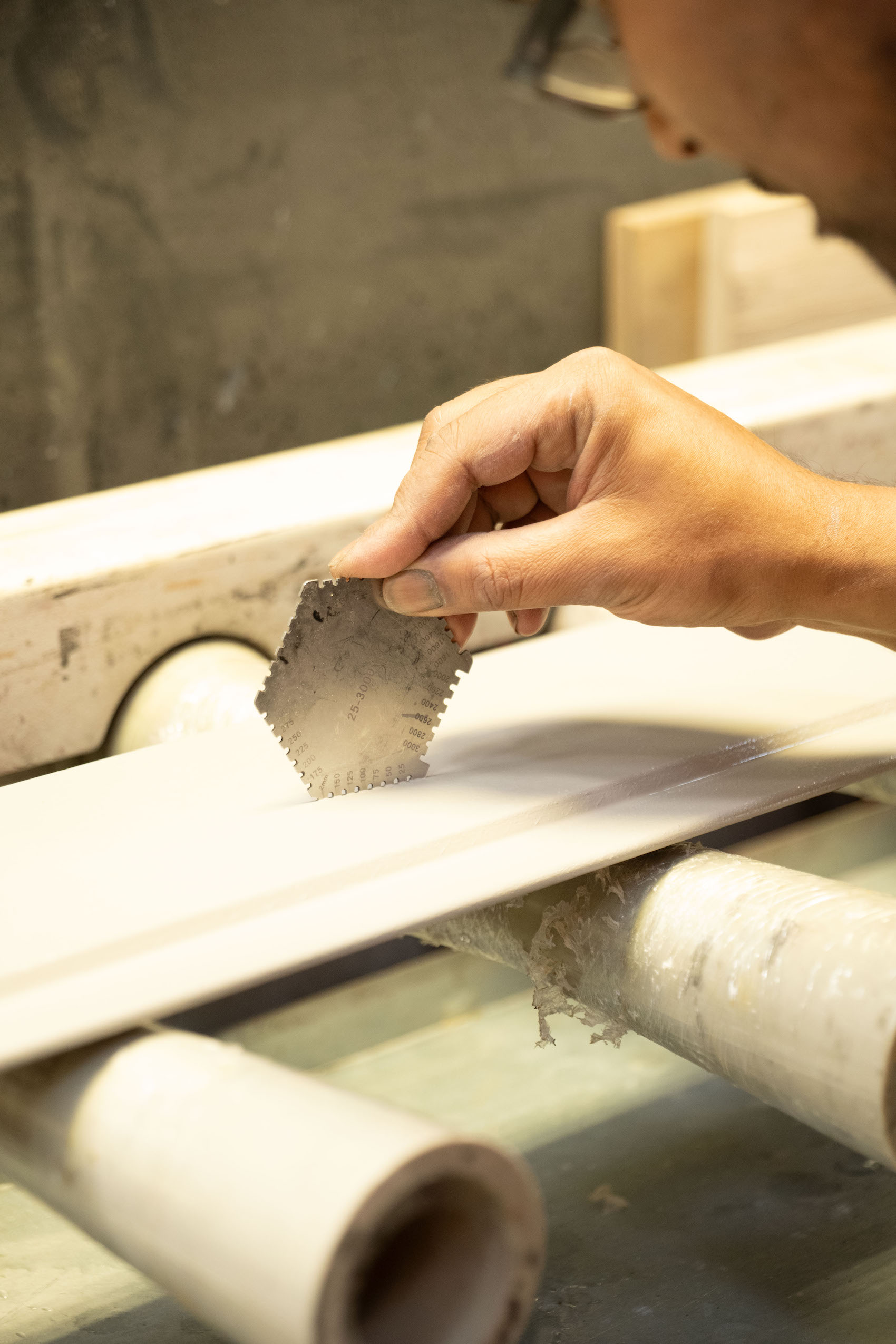
Checking coating depth in the spray line.
What finishing options and protective coatings are available – and how do these impact both aesthetics and longevity?
We offer a full range of factory-applied finishing and coating solutions, allowing us to treat the boards efficiently and consistently. The coatings can be pigmented or clear, depending on what the specifier wants. Pigmented finishes will generally last longer because they provide better UV protection, but many architects still favour the look of clear coatings or leave the timber unfinished to weather naturally. We can provide stains, oils or paint coatings, depending on the system specified.
The main benefit of factory finishing is consistency and performance – the coating is applied in a controlled environment, which is far better than doing it on site. You also get the assurance of compatibility between the timber, the profile and the finish, because we do all the testing ourselves. It’s important to remember, that the finish is not just about appearance – it’s a vital part of the timber’s overall performance. A good coating system will reduce weathering, minimise discolouration from UV, and improve moisture resistance. This in turn helps preserve the structural integrity and surface quality of the cladding. We also work with specifiers to create custom finishes or colour-match existing schemes when required.
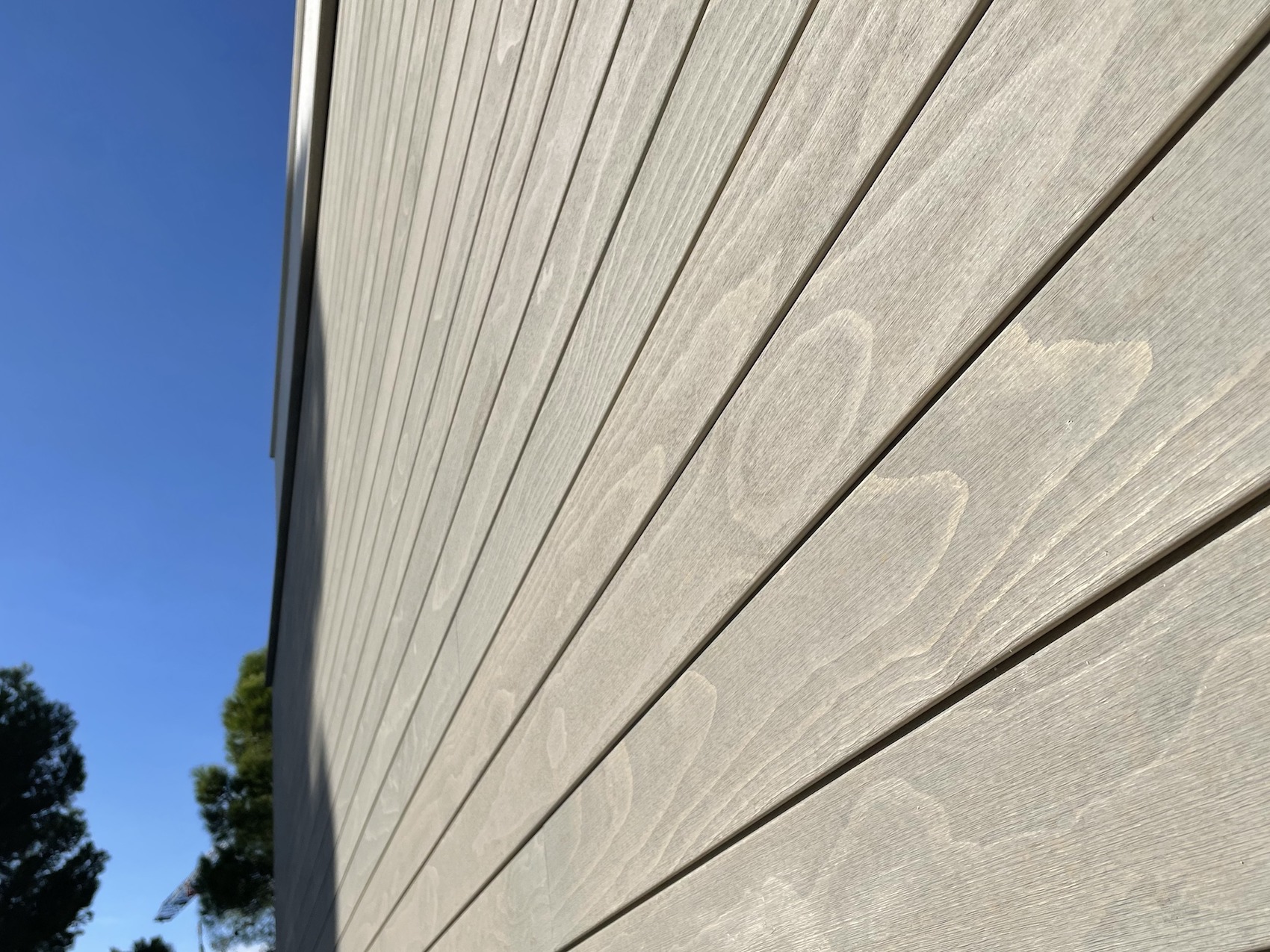
Wire brushing brings through the grain.
What advice do you offer around the maintenance and care of timber cladding to ensure its long-term performance and appearance?
Maintenance depends on the timber species, the coating system used, and the location of the cladding. For example, if a natural weathering effect is desired (as with untreated larch or cedar), specifiers need to account for silvering and uneven ageing in more exposed areas. If a consistent appearance is important, regular maintenance of coatings – every few years depending on exposure – is essential. For coated products, we recommend checking surface conditions regularly, cleaning as needed, and recoating according to the product manufacturer’s guidelines. With factory-coated products, the initial protection is much better, so you’re already starting ahead.
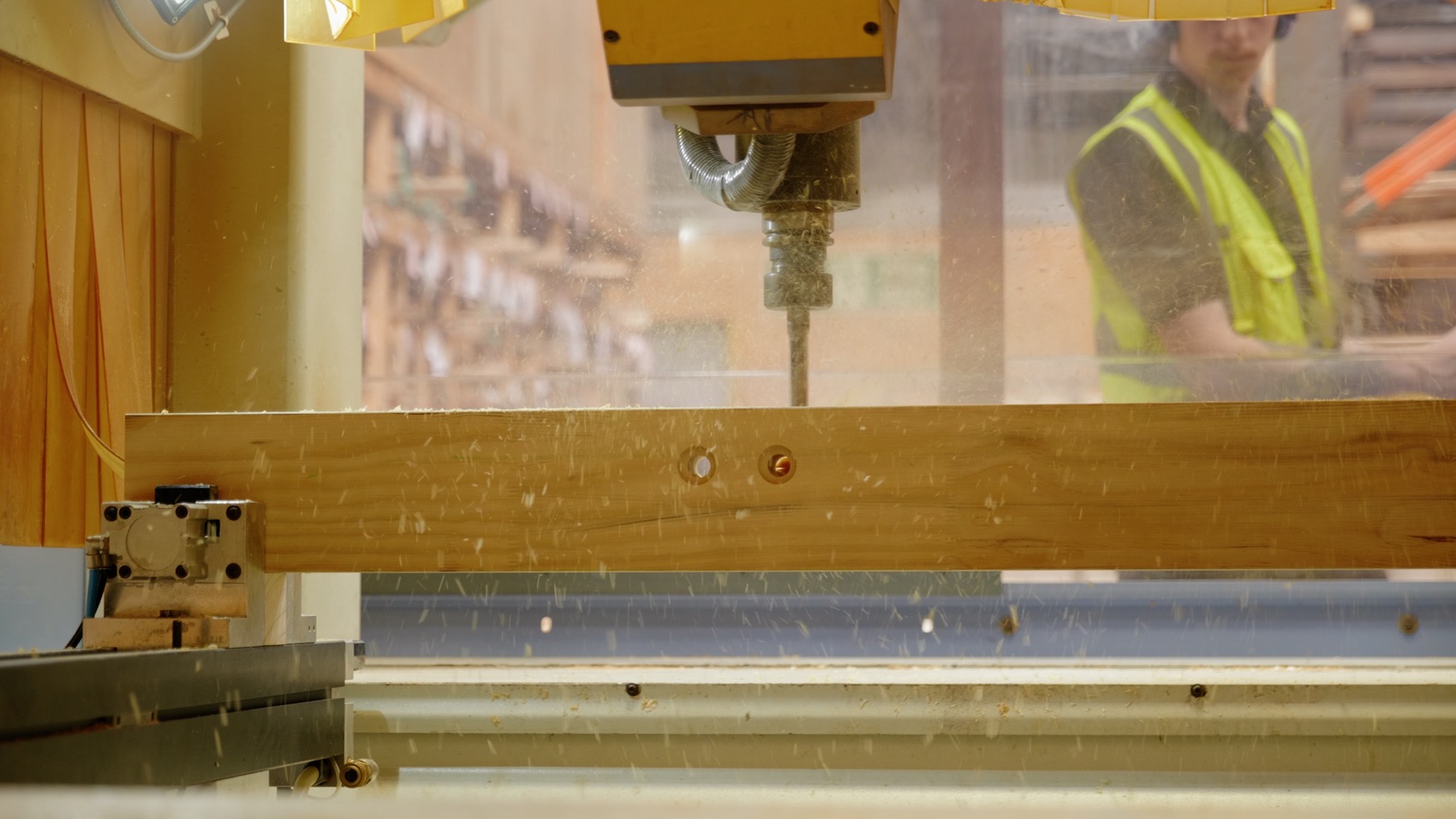
Precision machining, moulding and finishing, all under one roof.
How does the James Latham 3D Cladding Visualiser tool work, and what are the benefits for architects and designers during the specification process?
The James Latham 3D Cladding Visualiser is an intuitive, browser-based digital tool designed to help architects and designers explore timber cladding options at the earliest stages of a project. It allows users to trial different species, profiles, finishes and colour treatments in real time, using high-resolution 3D models that respond dynamically to lighting and perspective. This makes it easier to understand how surface textures, colour variations and profile types will look in practice – helping to narrow down the most appropriate aesthetic and technical solutions.
The visualiser includes a wide selection of Latham’s most popular cladding options – including modified timbers, such as ThermoWood and Accoya, as well as Western Red Cedar, European Oak, and other hardwood and softwood species. Multiple profile types are supported, from classic tongue-and-groove to contemporary rainscreen systems, each with its own set of surface treatments and finishes.
Once a design combination has been created using the visualiser, specifiers can easily take the next step in the specification journey. A simple interface allows them to request physical samples of the exact species, profile and finish shown on screen, ensuring alignment between digital design intent and material reality.
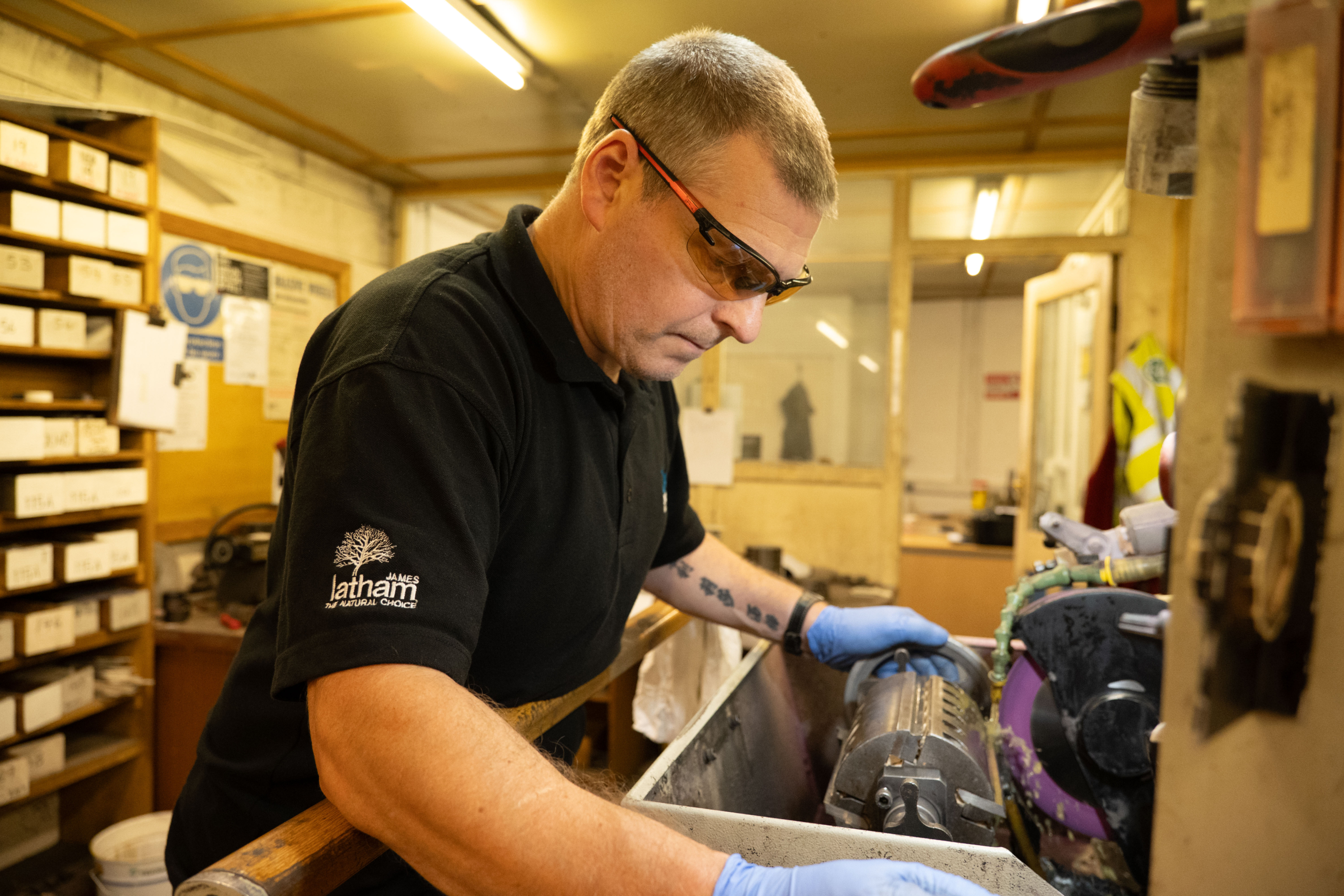
Project-specific tooling is made in house.
How do your cladding and moulding products support sustainability goals, and what certifications are in place?
All of the timber we machine complies to recognised global environmental standards, ensuring that it comes from responsibly managed forests. We also use thermally-modified species that don’t require chemical treatments to achieve durability – reducing environmental impact. Accoya, for example, is a modified timber that’s not only incredibly durable but also sourced from fast-growing, sustainable species. The coating systems we use are water-based and low-VOC, and we’re constantly looking for ways to reduce our environmental impact across the manufacturing process.
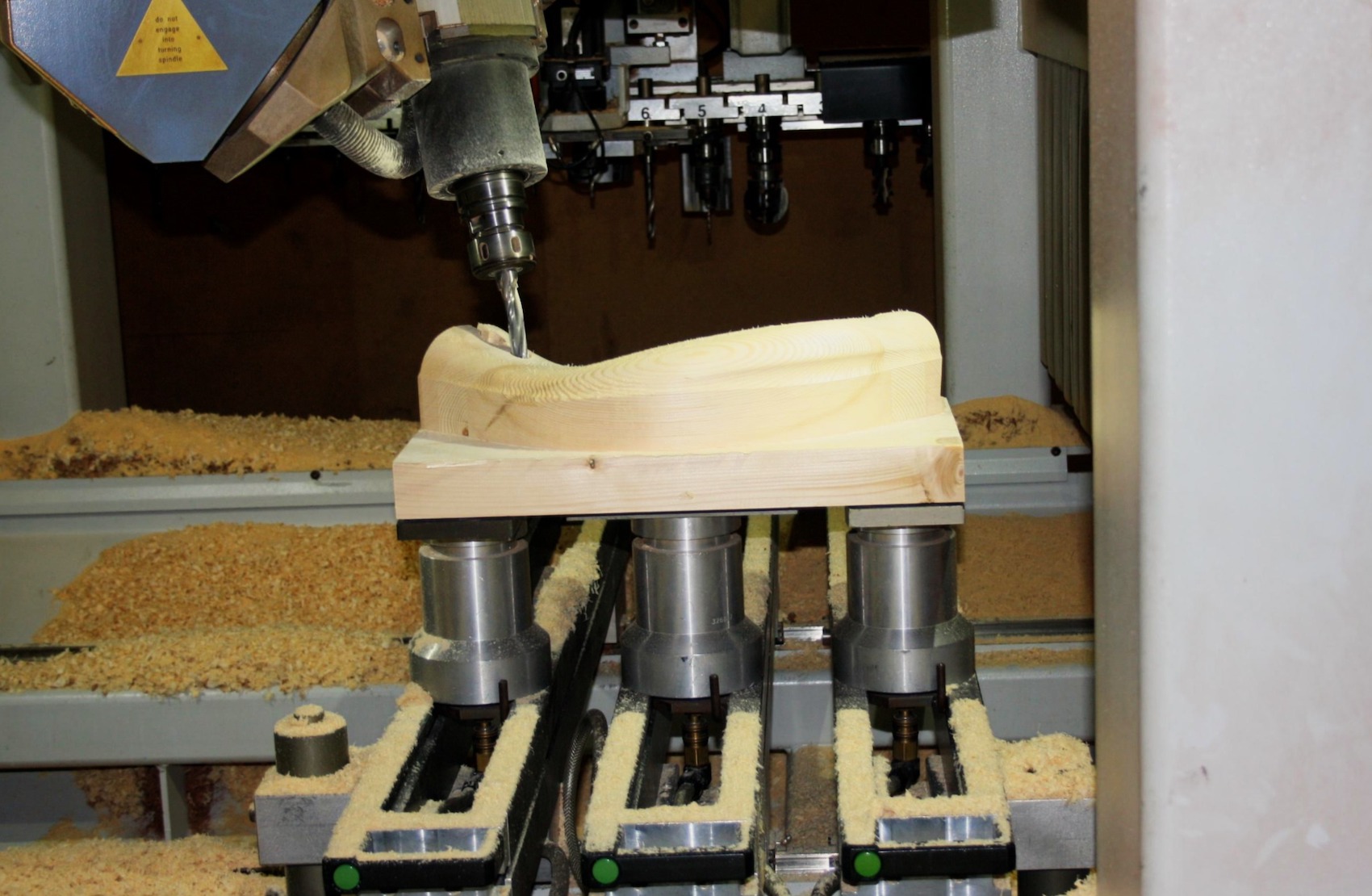
A bespoke decorative mouldings service.
Could you tell us more about your bespoke machining and moulding services – what’s possible and what’s typically requested by architects?
Our bespoke machining service is one of our standout offerings. We can produce virtually any decorative moullding profile – whether that’s a completely new design created by an architect, or a replica of an existing detail for a heritage restoration. We work from CAD drawings, technical sketches, or even physical samples, which we scan and reproduce using CNC technology. Common bespoke requests include curved or tapering columns, large-format mouldings, decorative trims and cornices, skirtings, architraves and more. Our capacity for flexibility means we can deliver unique timber solutions that align precisely with project vision and technical requirements.
But it’s not just about one-off profiles – we keep an extensive library of existing profiles that architects can browse. If they’re looking for inspiration or need a starting point, we can often match or adapt something from our catalogue. The bespoke machining also extends to cladding, where we can adjust standard profiles or develop new ones depending on the project’s aesthetic and performance requirements. It’s a very collaborative process, and we’re always happy to work closely with designers to bring their ideas to life.
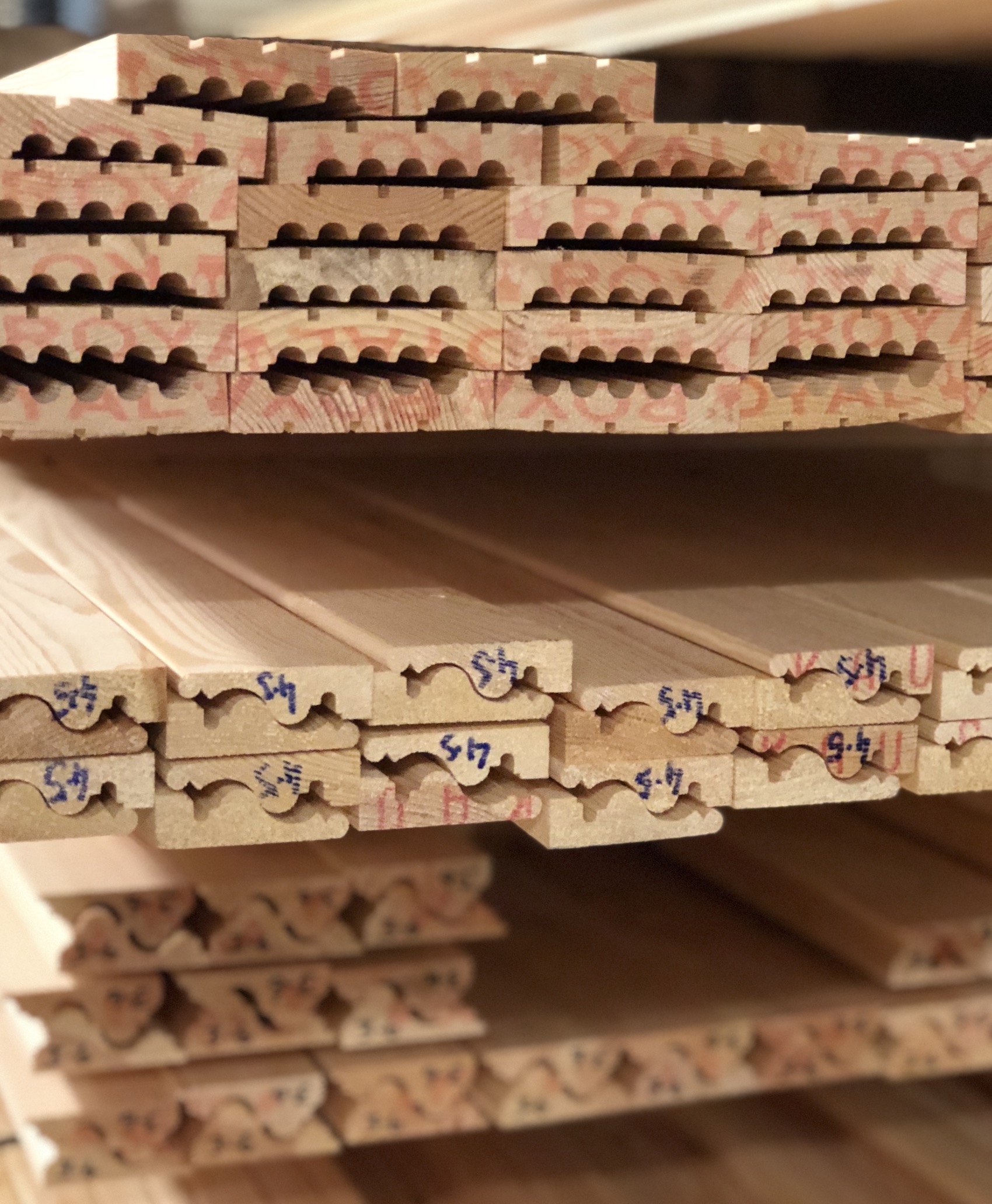
A wide range of decorative and architectural timber mouldings.
Tell us more about your decorative mouldings offering in the context of historic and conservation projects?
Latham Timber Manufacturing has a strong track record in providing decorative mouldings for historic and conservation work. We’re often asked to reproduce historic mouldings – either because the original ones are damaged, or because the client wants to match something that already exists in the building. It’s usually part of a wider refurbishment or reinstatement project, and accuracy is absolutely key. Whether it’s reinstating a lost cornice in a Georgian townhouse or replicating elaborate skirting in a Victorian civic building, LTM can manufacture mouldings that are indistinguishable from the originals. Where physical samples are available, they can be scanned and reverse-engineered into cutting tools. Alternatively, the team can work from legacy drawings or site measurements to create detailed profiles.
LTM’s flexible production capabilities allow it to handle everything from small batch orders to large-scale repeat runs – ideal for projects where multiple rooms or phases require identical profiles. Specifiers also benefit from a choice of timber species, allowing mouldings to match existing woodwork or meet conservation-grade standards. This service provides a valuable bridge between heritage-sensitive design intent and modern production efficiency.
What support does LTM offer to architects and specifiers looking to integrate timber cladding and mouldings into their projects?
We offer a wide range of specification support – from digital tools to physical samples and technical consultations. Our team is available to discuss the most appropriate timber species and profiles for a particular brief, provide environmental data, or assist with compliance queries. Furthermore, each James Latham depot has dedicated product champions, and we have a nationwide network of technical advisors who can support architects from concept through to installation. Ultimately, our goal is to provide a one-stop service that helps architects unlock the full design potential of the timber used in their projects.
Contact Details
To find out more, please email or visit the about Latham Timber Manufacturing website. Click here to see how the 3D cladding visualiser works.