On the banks of the River Liffey, Dublin’s first public watersports centre by Urban Agency, transforms a stretch of the North Quay into an accessible and resilient public space, recasting the river as an active and usable asset to the city.
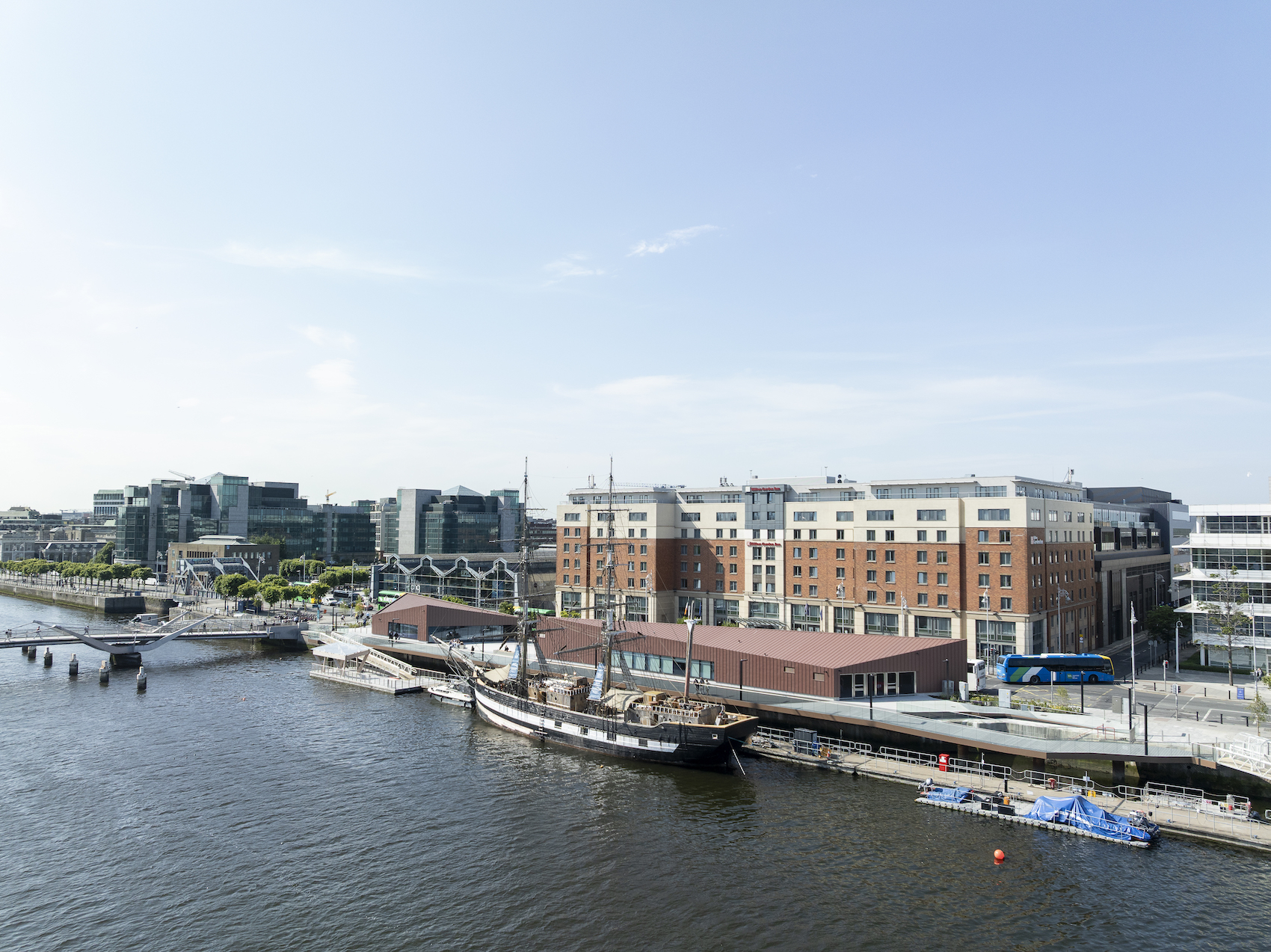
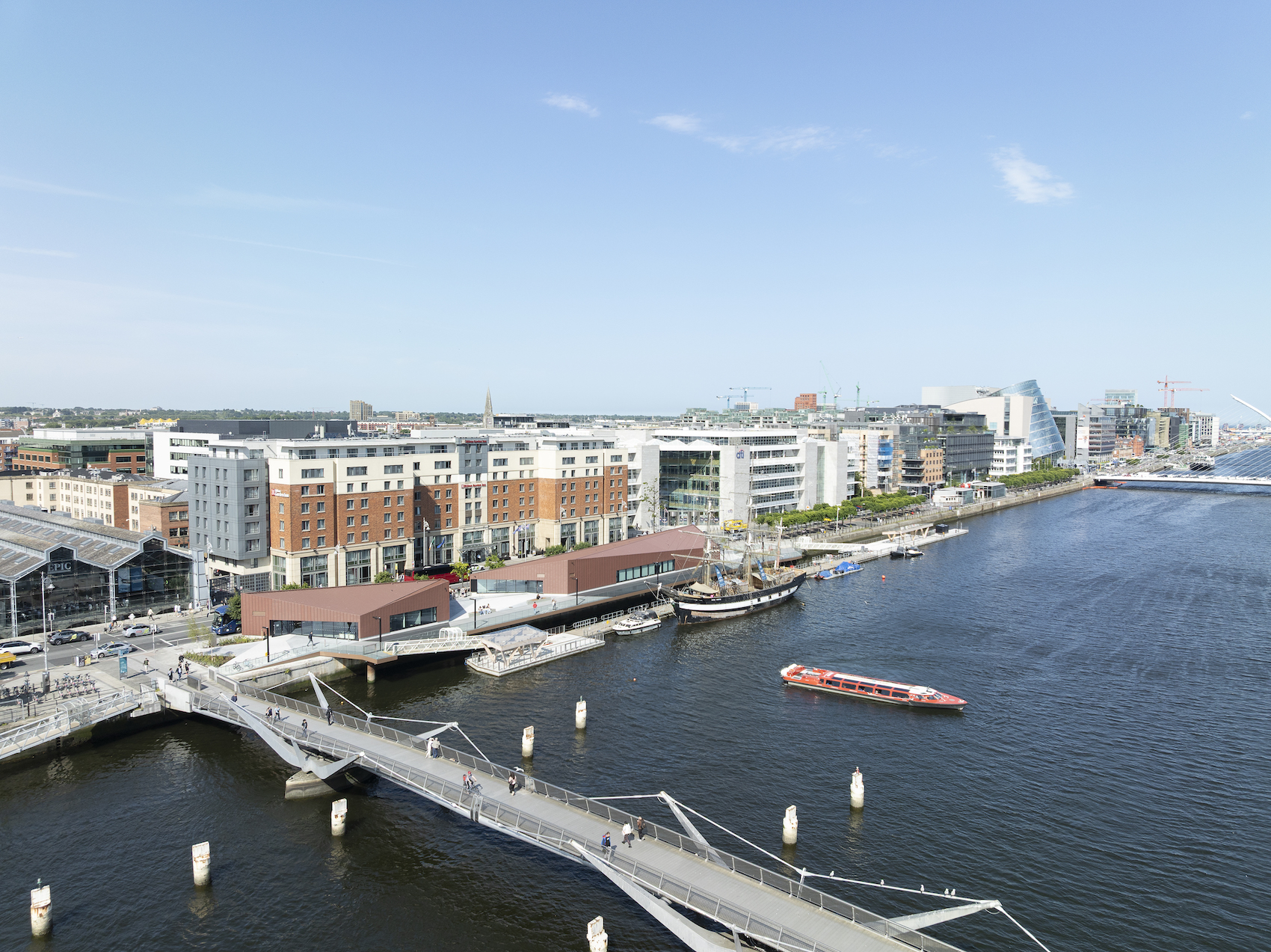
On Dublin’s waterfront, the Quayside Watersports Center by Urban Agency has reclaimed a section of the North Quays transforming it into part recreation hub, part municipal workplace, and part flood defence. Delivered for Dublin City Council who occupy one of the two buildings, the project forms part of a wider waterfront regeneration programme.
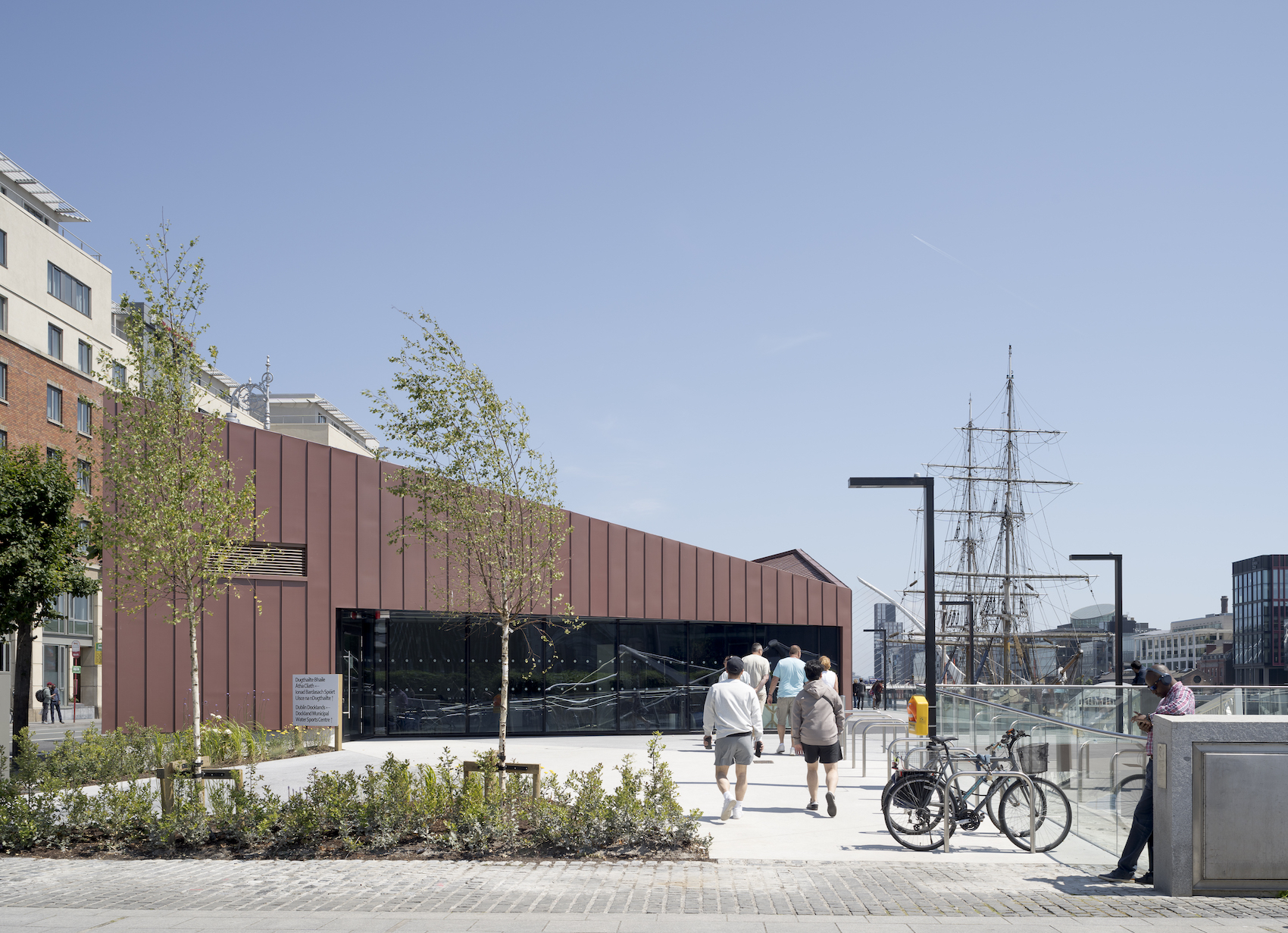
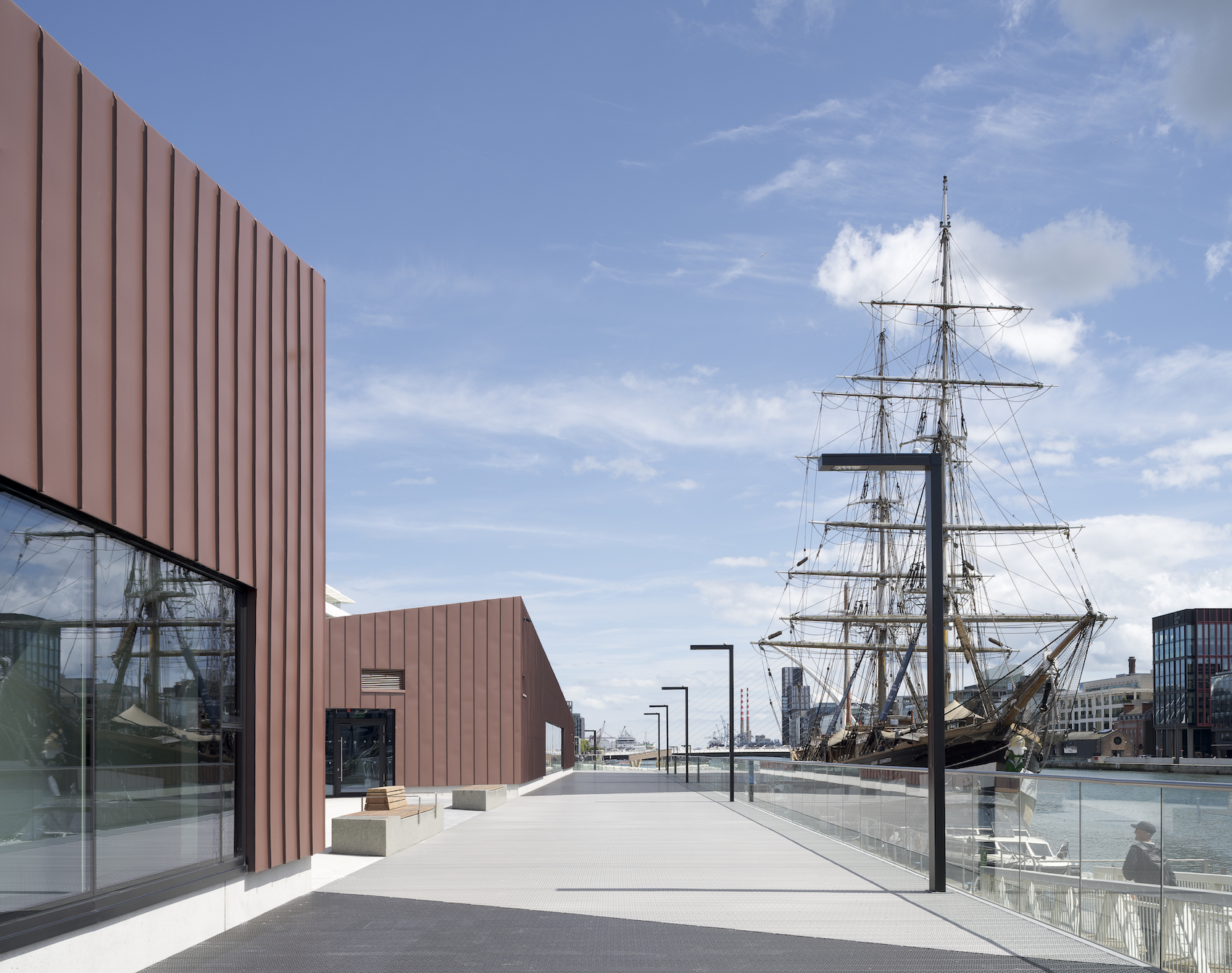
A warehouse-inspired structure is sliced in two by a new public space and accessible boardwalk, enabling step-free access to the river and establishing a clear visual connection between the emerging maritime quarter and the water. The Liffey is established as an active civic stage, as kayaking, rowing and sailing are brought into everyday view.
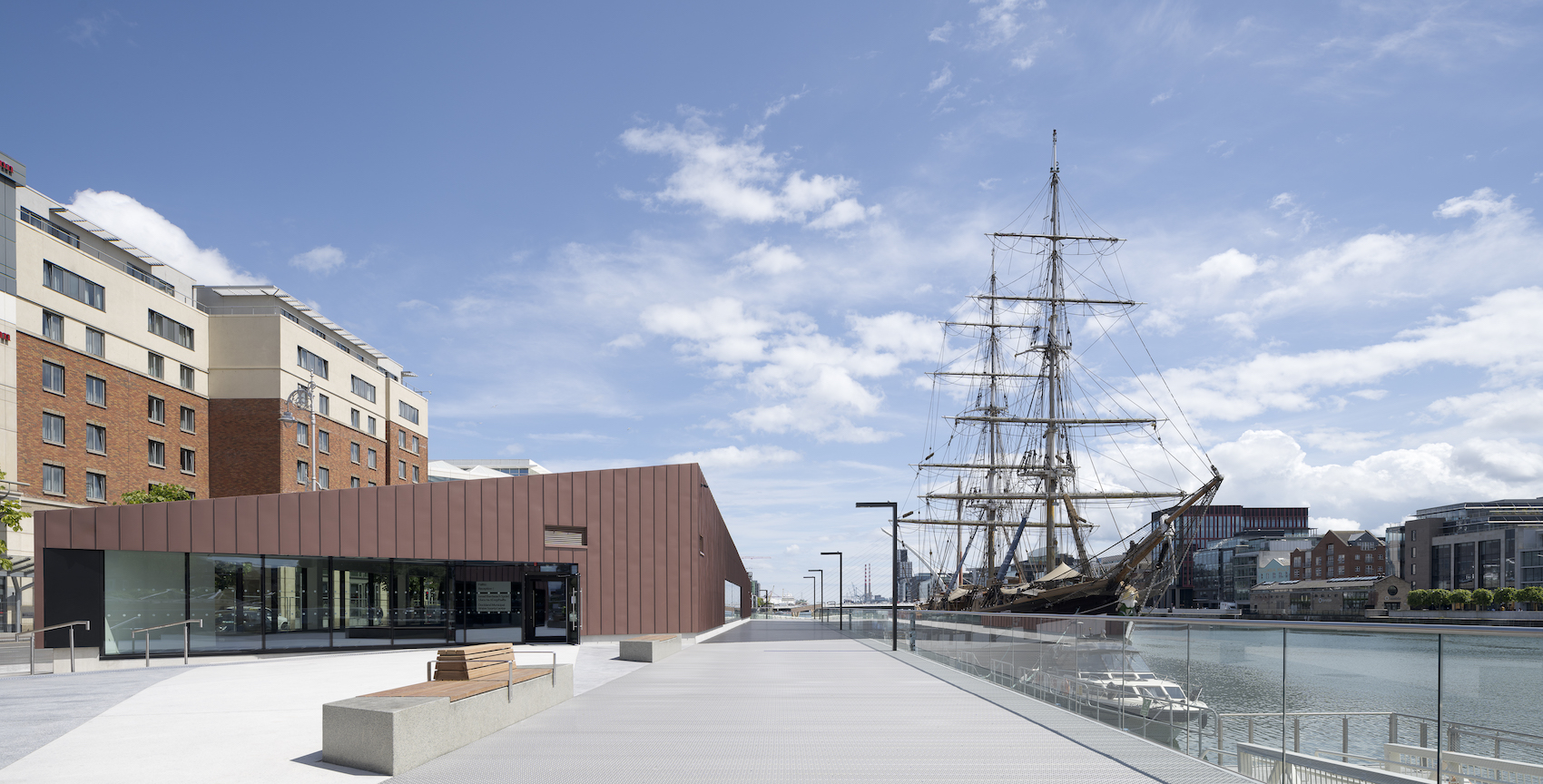
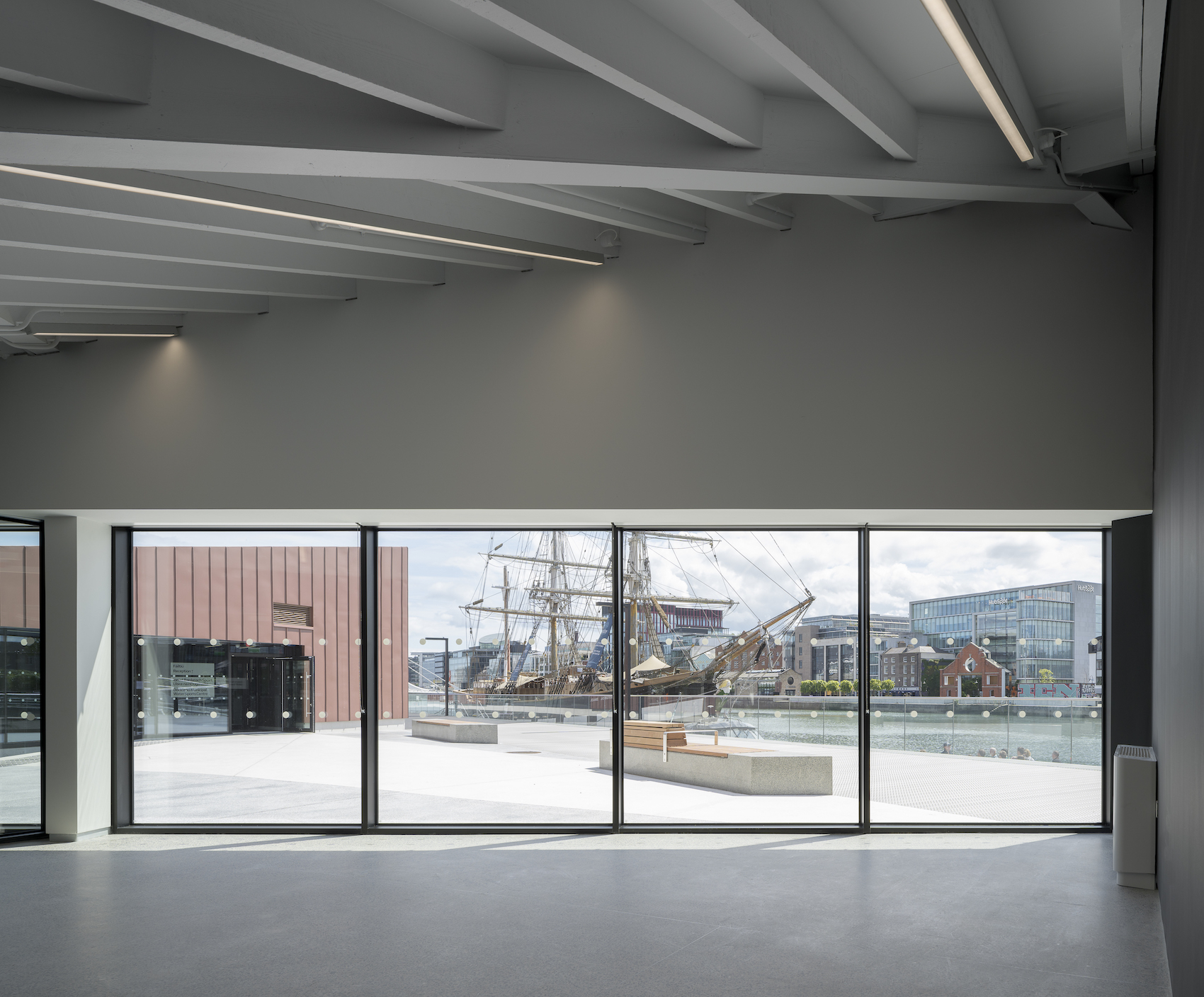
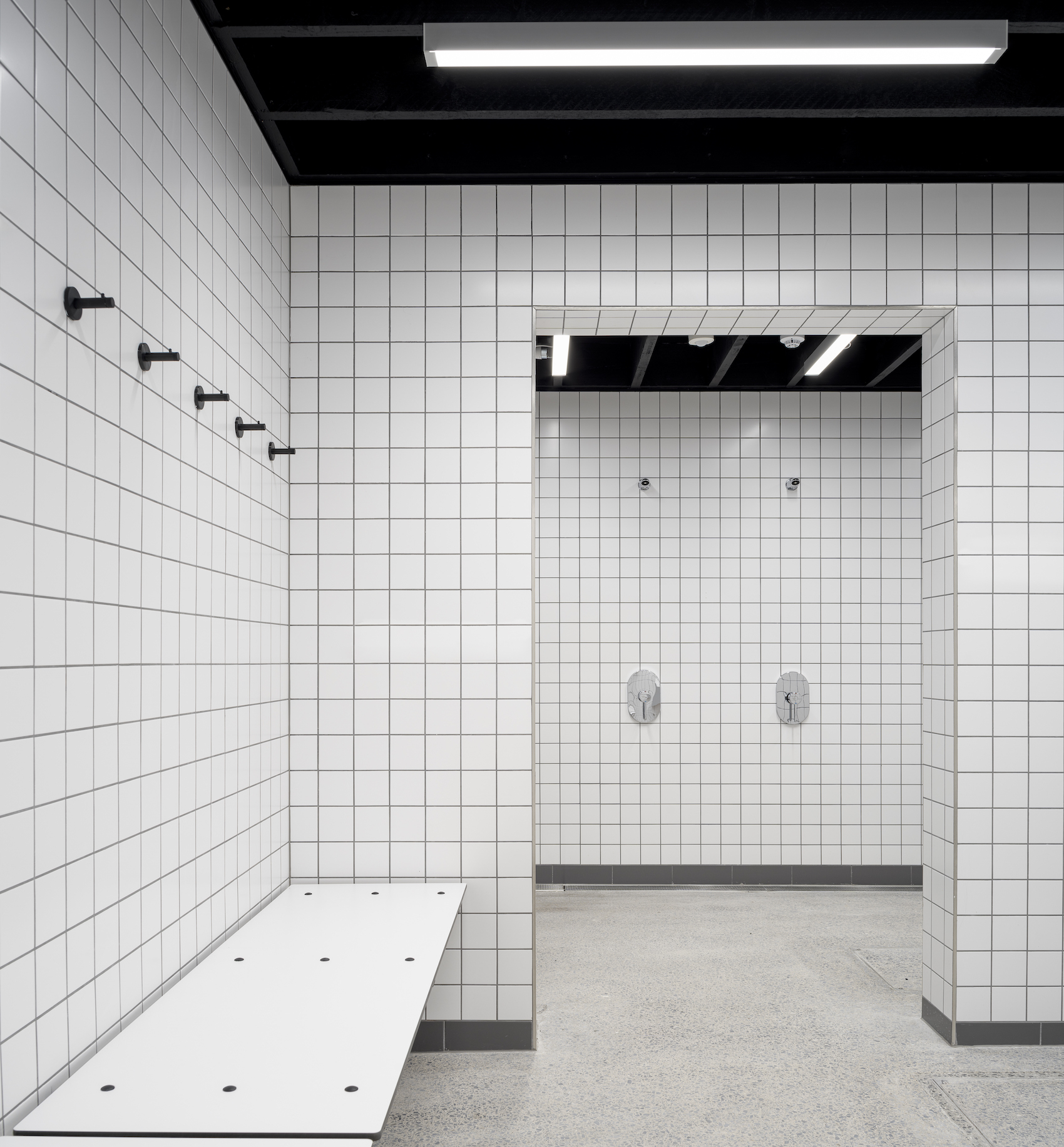
The western building is to house a new Docklands base for Dublin City Council, with a large, river facing boardroom, offices and basic amenities. The eastern building is to be occupied by the cities first public watersports centre. Largely open plan, offices, equipment hire, changing rooms and amenities float as units in the space, painted a dark grey against the bright white of the timber beams, making a relatively small space feel open and airy. Viewed from the south across the river, or from the north across the street, the building simultaneously evokes two diametrically opposed architectural typologies: robust brick warehouse, and lightweight tent.
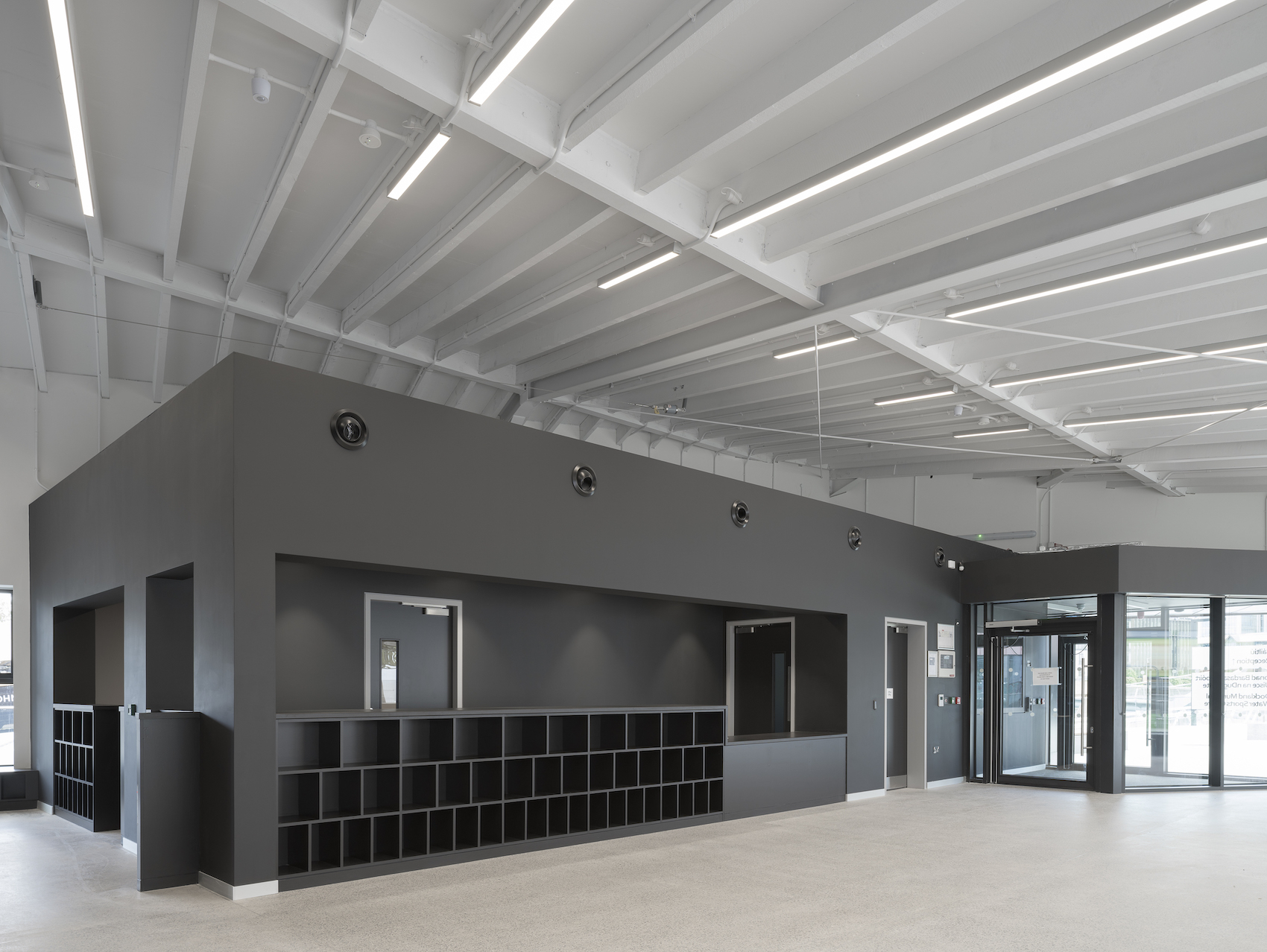
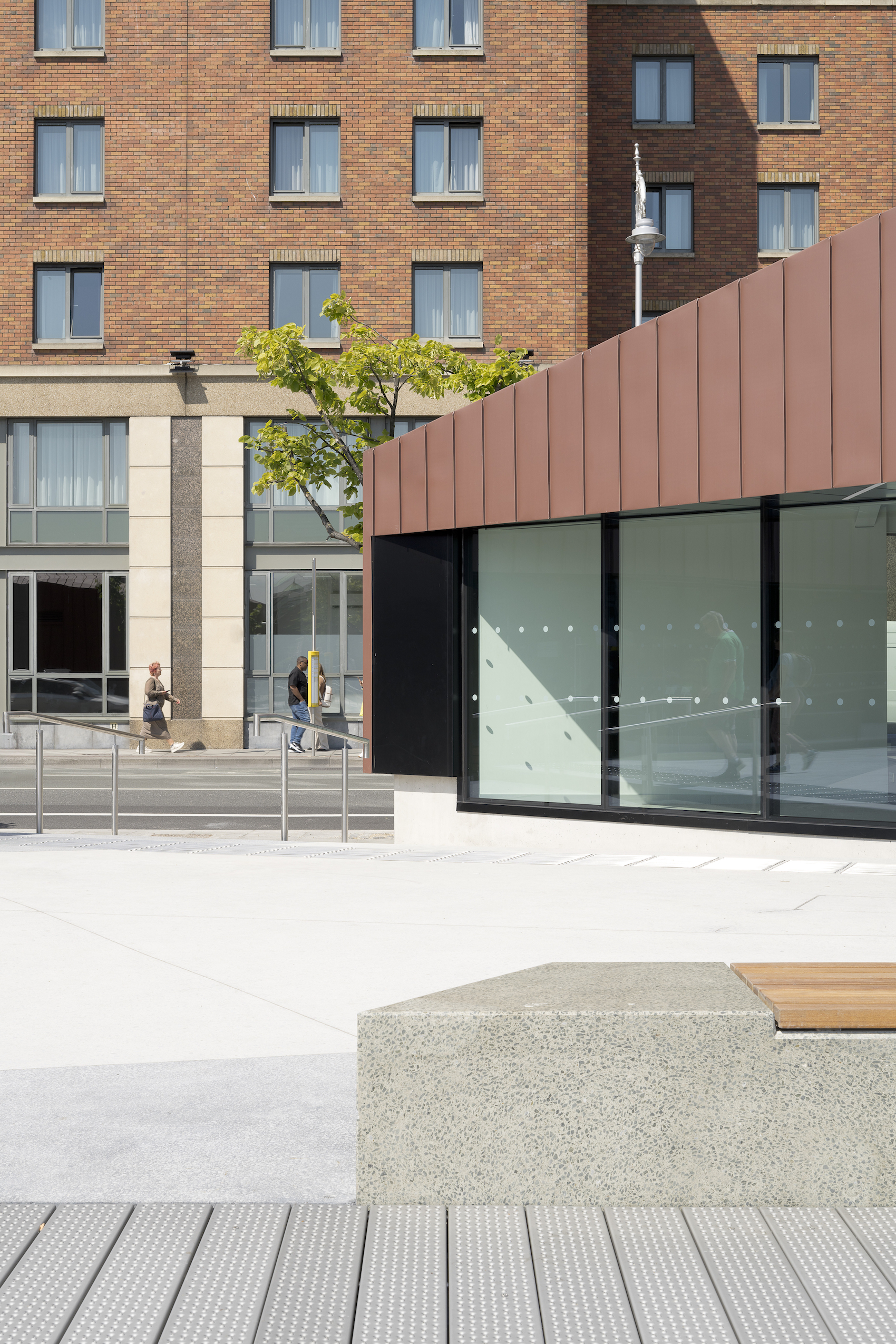
The two volumes draw on the robust, pitched roofs of the timber and brick warehouses of the docklands. The architects have reinterpreted this riverside language in an origami-like zinc roof that folds around two single storey, flexible spaces.
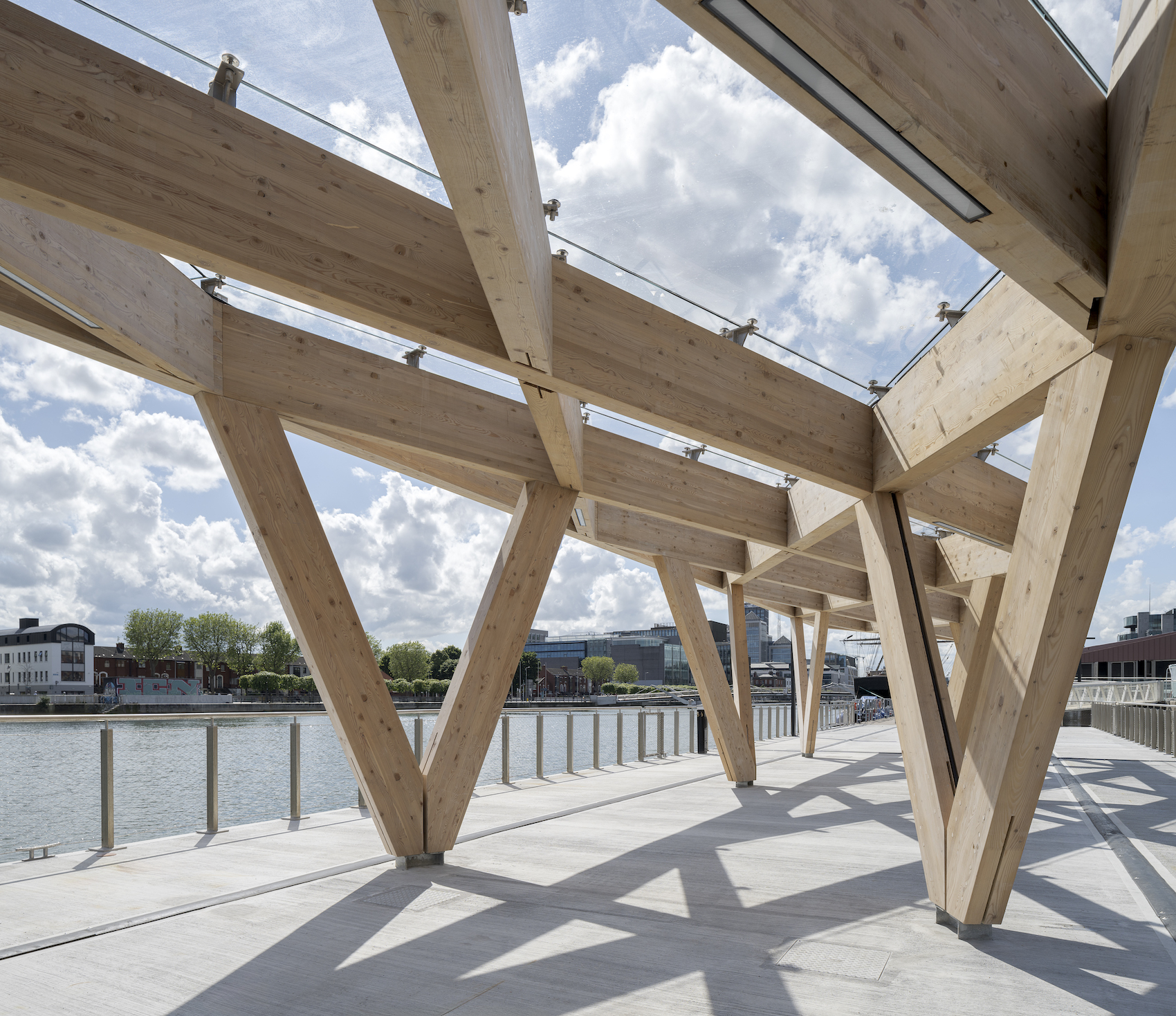
The site sits adjacent to the former Queen’s bonded timber yard, and timber is used both structurally and aesthetically throughout the project. A timber structure is left exposed internally, while geometric, glulam canopies sit down on the pontoon.
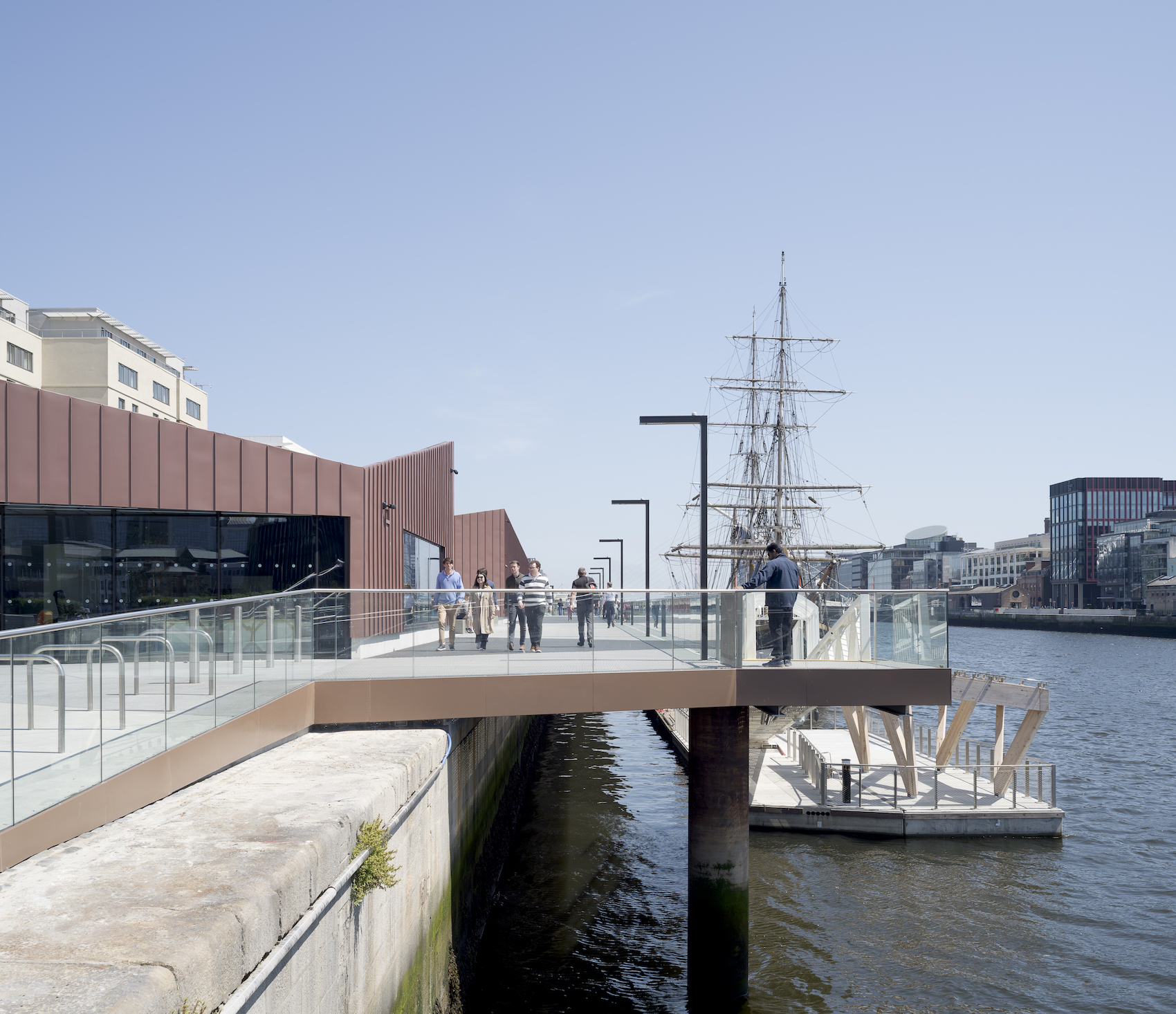
Elevated above ground, the buildings protect the historic Gandon and Rennie river walls below, and integrates an upstand and deployable barriers as part of the city’s flood-defence system. The building and surrounding public space blends environmental necessity with public amenities, and in consolidating sport, workplace and waterfront into a coherent civic space, the Quayside Watersports Center positions the Liffey not as backdrop but as Dublin’s primary public space. It is a project that understands regeneration less as spectacle then as reconnection – restoring life to the river by making access and collective use the catalyst for architecture and infrastructure.

Credits
Architect
Urban Agency
Civil and structural engineer
RPS Consulting Engineers Ltd
Cost consultant
Cumming Group
Fire consultant
MJP
Landscaping
Cunnane Stratton Reynolds
Assigned Certifier
ORS
M&E
JV Tierney
Contractor
Purcell Construction
Conservation
Howley Hayes Cooney
Health & Safety
Ashview Consultants
Additional images