
Planning policy for housing came under fire at the Annual Planning Update of the Cambridge University Land Society for causing London’s delivery figures to plummet, with calls for a radical ‘regime change’ to tackle the problem.
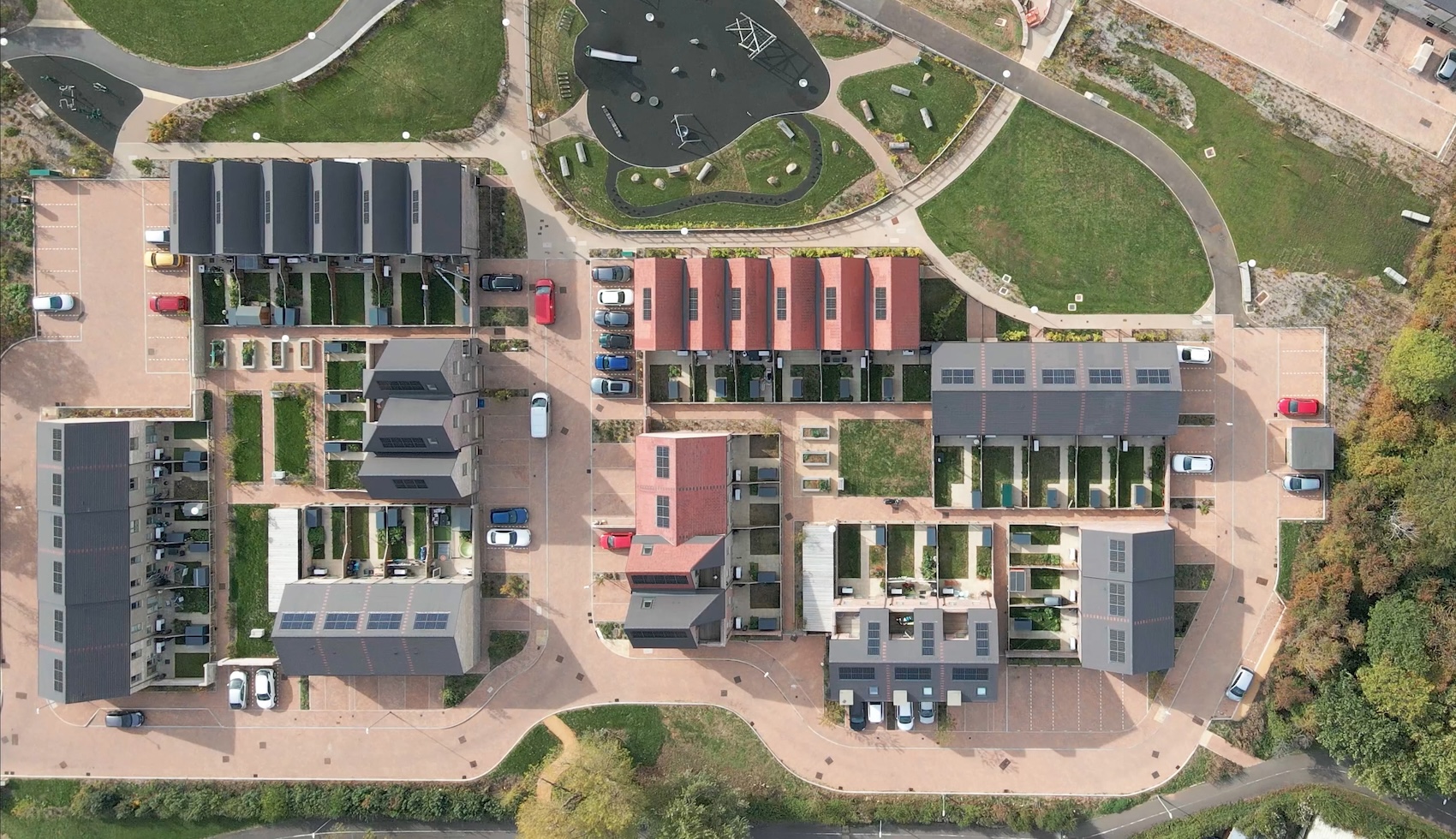
Two ‘Homesteads’ at Oakfield, Swindon, delivered by Metropolitan Works for Nationwide Building Society. These informal, semi-permeable clusters of homes deliver 48 dph and are arranged around communal garden spaces providing opportunities for bike storage, vegetable growing and play.
Blamed for causing London’s delivery figures to plummet, planning policy for housing came under fire at the Annual Planning Update of the Cambridge University Land Society. Lee Mallett reports back from the conference where urgent calls for a radical ‘regime change’ were issued to tackle the problem.
The event, organised with Planning in London magazine, the ACA and lawyers Dentons, was chiefly about the Government’s changes to planning and its new draft National Planning Policy Framework (NPPF), designed to speed the process up while encouraging growth. These were largely welcomed but not seen as sufficient to reverse the collapse in delivery in the timely fashion London’s crisis requires. Speakers repeatedly cited the complexity, cost and viability-destroying ‘value capture’ required by planning policy as the underlying cause of tanked delivery figures, likely to worsen as war looms.
Residential research guru, Tim Craine of Molior, fired an Exocet at London Mayor Sir Sadiq Khan for overstating affordable housing delivery since Spring 2023 by 30,000 homes. Only 86,000 had been built not the 110,000 claimed, said Craine and he showed a 1970s block ‘in which people are still living’ misleadingly included in GLA figures. More damaging was his take on viability and its impact on supply causing young Londoners in particular much grief – and architectural practices. There are 290,000 permitted unbuilt homes in London, said Craine. All of those would have be under construction now to hit the Mayor’s target of 88,000 new homes a year within at least three years. The current total of new homes being built annually is only 5,000, less than 6% of that.
Viability has evaporated from most of the capital. Craine showed a contour map. Sales values are lower than development costs in most of outer London. They are marginal in inner London and only in central London is there tangible viability. “And if anyone tells you overseas buyers are a problem you can tell them there were just 290 sales to overseas purchasers in Q4 2025,” said Craine. Also, if anyone thinks the struggling Build to Rent sector might help, planned completions of private rented homes “look like falling to zero by 2029”.
Nick Cuff, former local politician and MD of developer Urban Sketch, said there was “huge distress out there” – a lot of unbuilt schemes with high debt and the need to amend consents to fix viability, for which there was “little hope of relief”.
“The market is static, the game has changed, and we must protect the resilience of London’s housing supply,” he said. The thresholds at which affordable housing is required must be raised and there was “nothing for SME developers” in the proposed changes to policy.
Steve Quartermain, former Government Chief Planning Officer, characterised the latest round of reform as “a group of people on a bus to Utopia, full of people who haven’t decided what Utopia is, or how to get there.” He felt Government needed to make its messaging much stronger around good growth that could also deliver environmental goals. But resourcing remained a serious weakness.
James Harris of planning consultant Lichfields, summarising the NPPF, said applicants must demonstrate the most effective use of land or face refusal, such as the required minimum densities around stations. He questioned whether the idea to test site viability at the Local Plan stage, rather than after an application was made, was realistic. All should be aware the NPPF clarifies the new “not-well-designed” grounds for refusal, he said, with eight expanded themes; context, liveability, climate, nature, movement, built form, public space and identity.
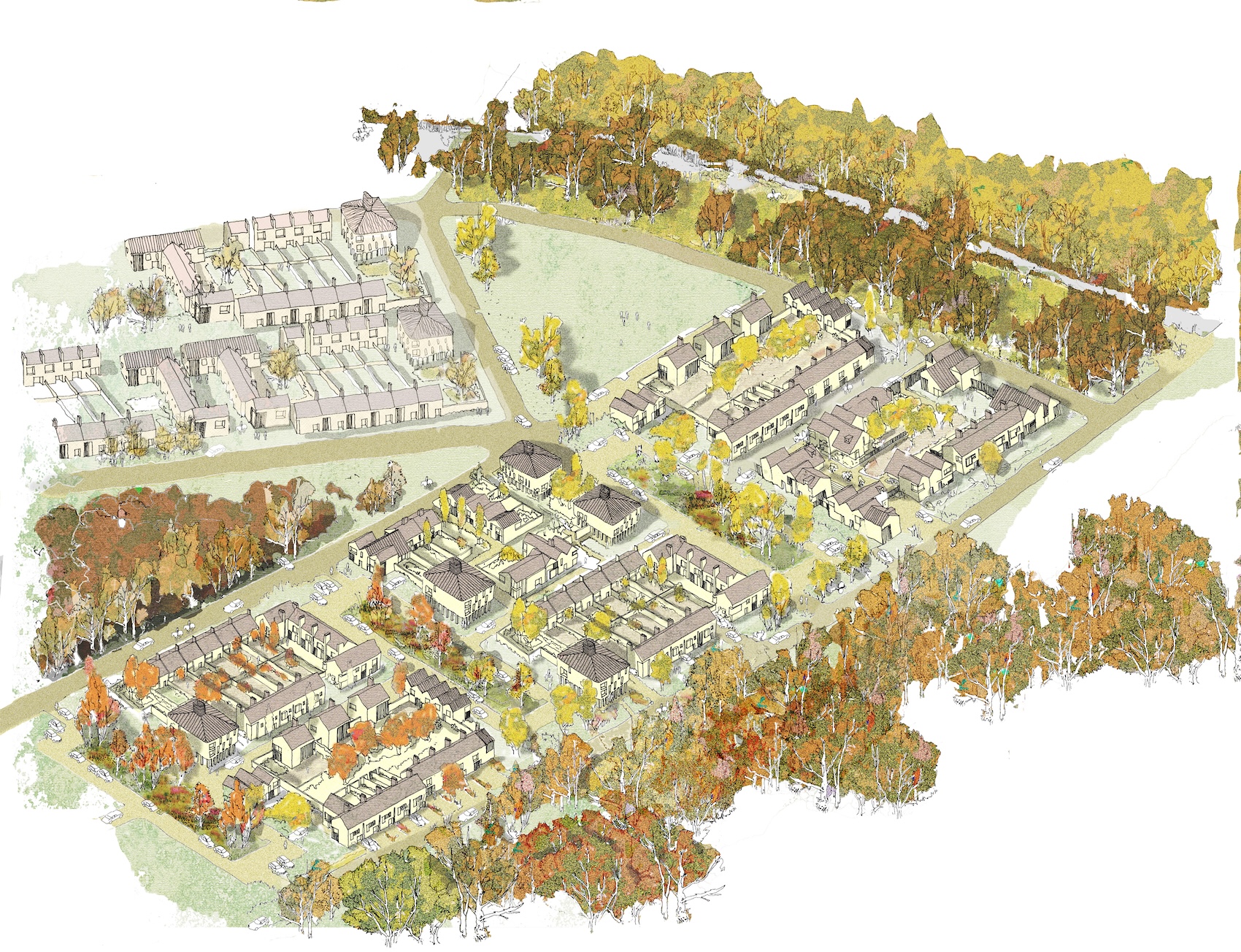
Metropolitan Workshop's Homestead concept applied to Mayfields, West Sussex, a 10,000-home walkable neighbourhood with the charm and character of a village, but the jobs and culture of a thriving market town.
A brighter spot amid policy gloom was a design session looking at the densification of suburbia, required in the NPPF. Neil Deely of Metropolitan Workshop presented the practice’s investigations into ‘A New Kind of Suburbia’. Metwork has developed the ‘Homestead’ concept, a flexible unit of development. This enhances density and communal amenity by reducing private gardens and vehicular infrastructure, enabling home types to be flexed within the Homestead to suit local needs. He showed built examples, designed for Nationwide Building Society in Swindon and handsome infill schemes in London and Dublin.
The event was wound up by former CABE chair and WAF director Paul Finch who’d “been thinking about war… because planning is one battle after another”. He told of Berkeley Homes’ recent shock at having completed several hundred homes on a site, only to find itself outbid on an adjacent site by a self-storage company – hard evidence alternative uses are beating residential to the draw.
“Why is planning loaded with all this stuff that could be in Building Regs?” Finch asked. And why is spatial planning “loaded with things [S106 requirements] that are really about numbers?” His answer was “armchair generals”, the “political caste” that appear oblivious to the real battles on the ground. And could planning deliver anything anyway? He thought not. “Planning is the neutral ground on which battles are fought.” The system has been “overloaded and cannot take it”, nor is it designed to deliver anything. “The Mayor is in denial and under the mistaken impression the house-building sector can deliver a social housing programme. We now have the evidence of several decades. It cannot do it. Yet we do have models that show how London managed to do this up until say 1982. We did it with the Olympic Village.”
The conference was produced with the Association of Consultant Architects, London Planning & Development Forum (LPDF) and Planning in London (PiL)magazine, supported by Dentons. View details of forthcoming LPDF meetings and subscriptions. Lee Mallett is co-editor of PiL.