Stefano Boeri’s Parliament of Living Species transforms Milan’s council chamber into a forum where non-human life is given a political voice, challenging conventional approaches to urban planning by asking how cities might be designed if animals, insects and ecosystems were represented alongside people.
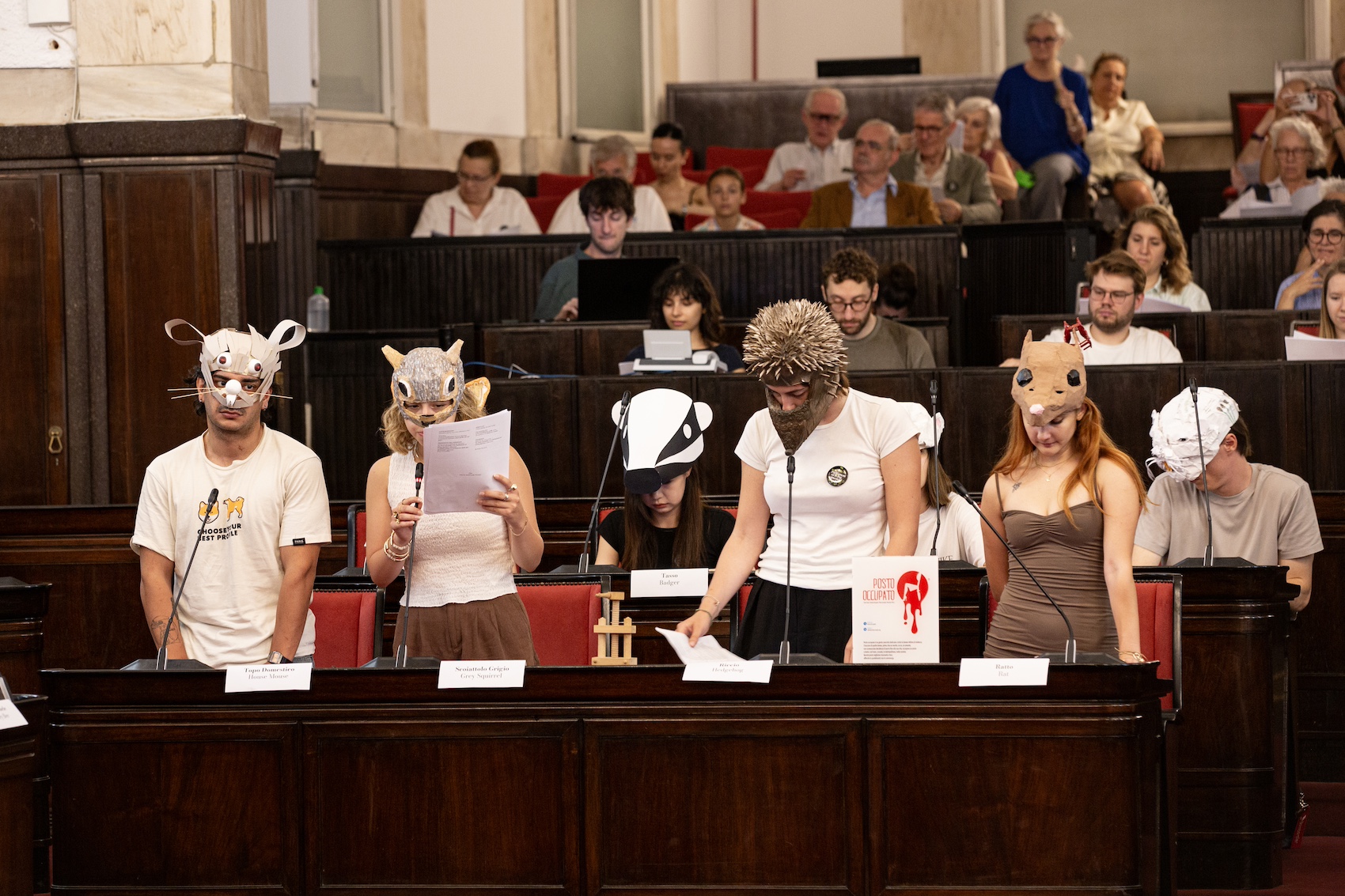
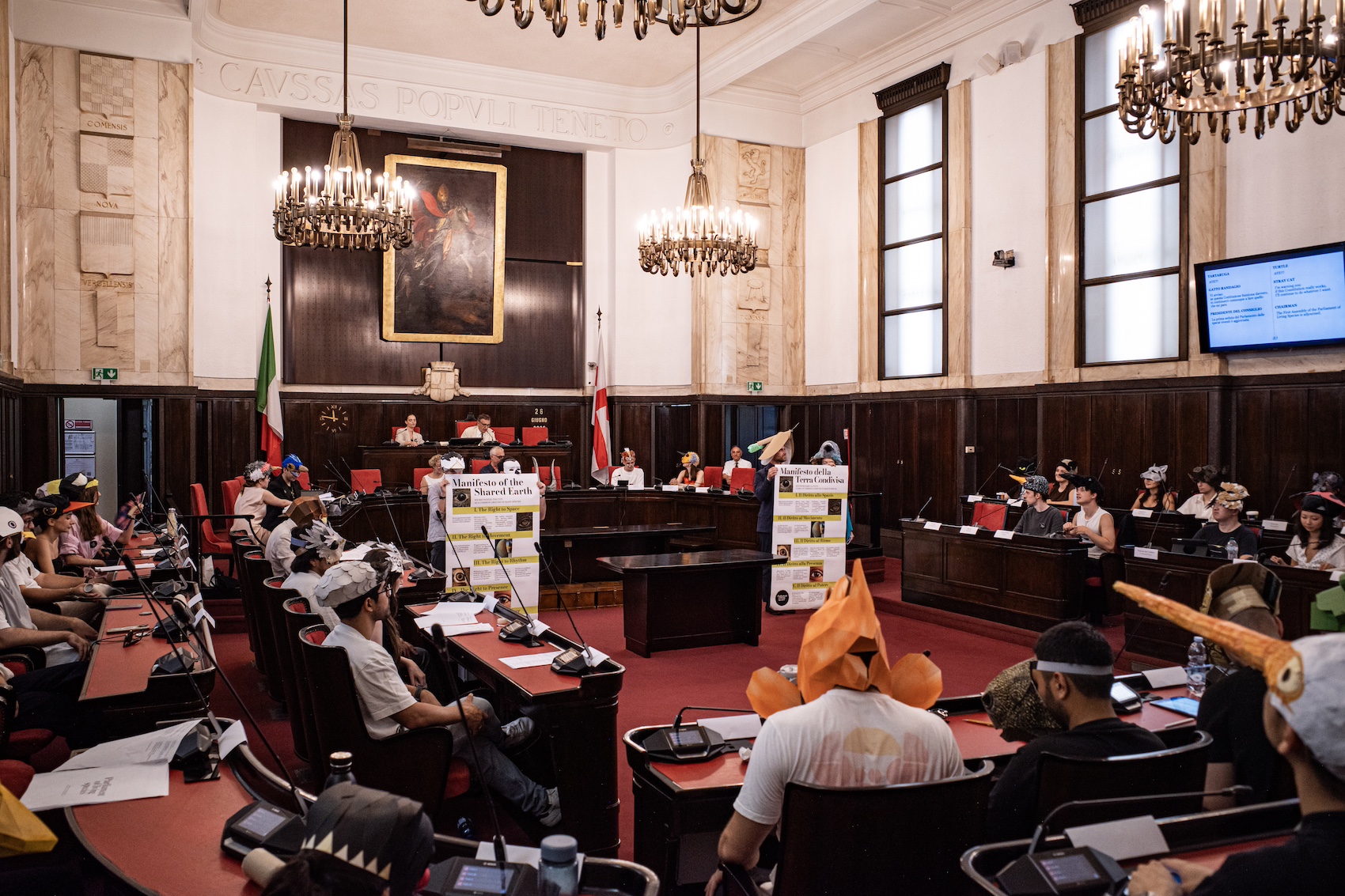
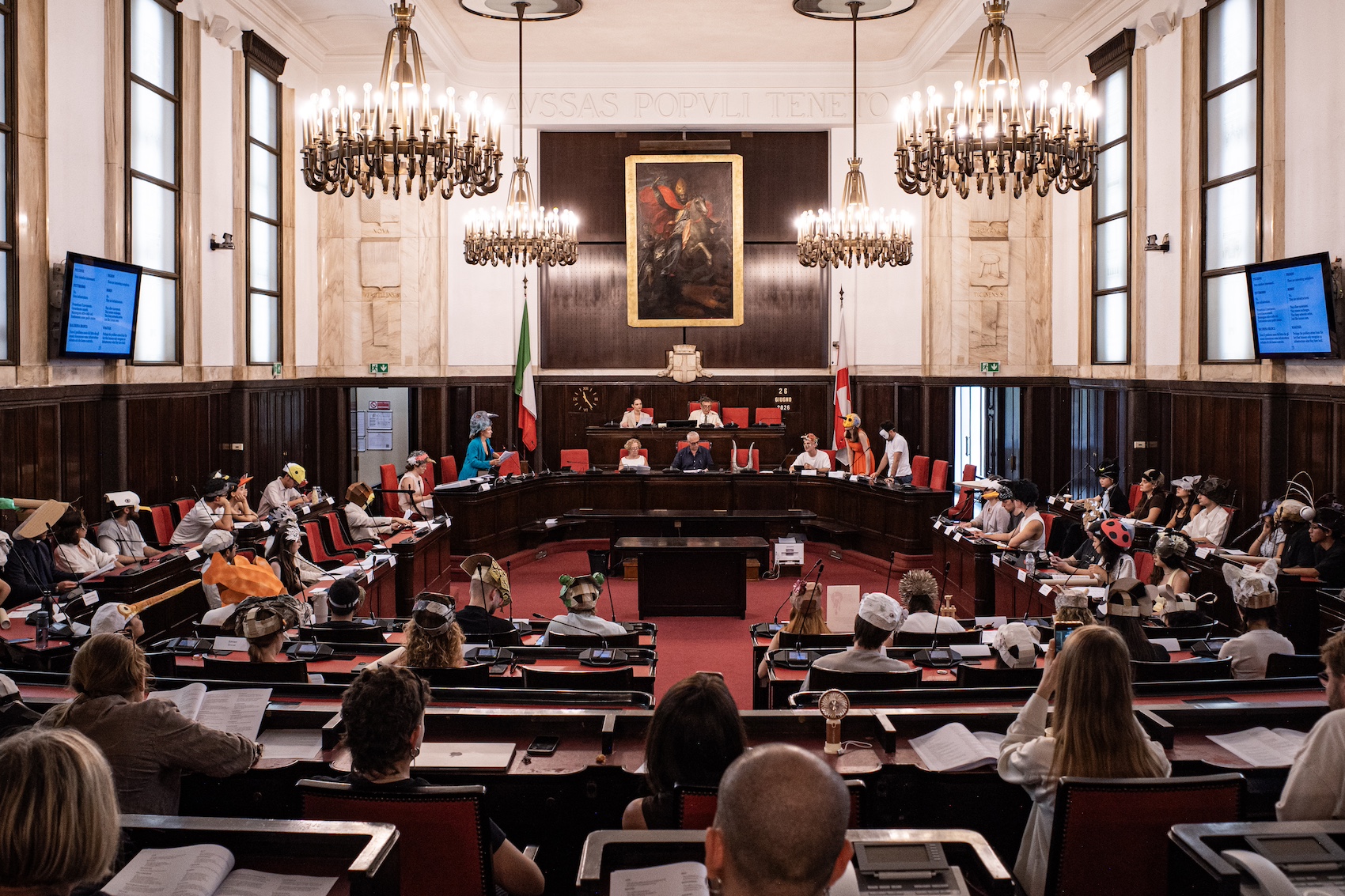
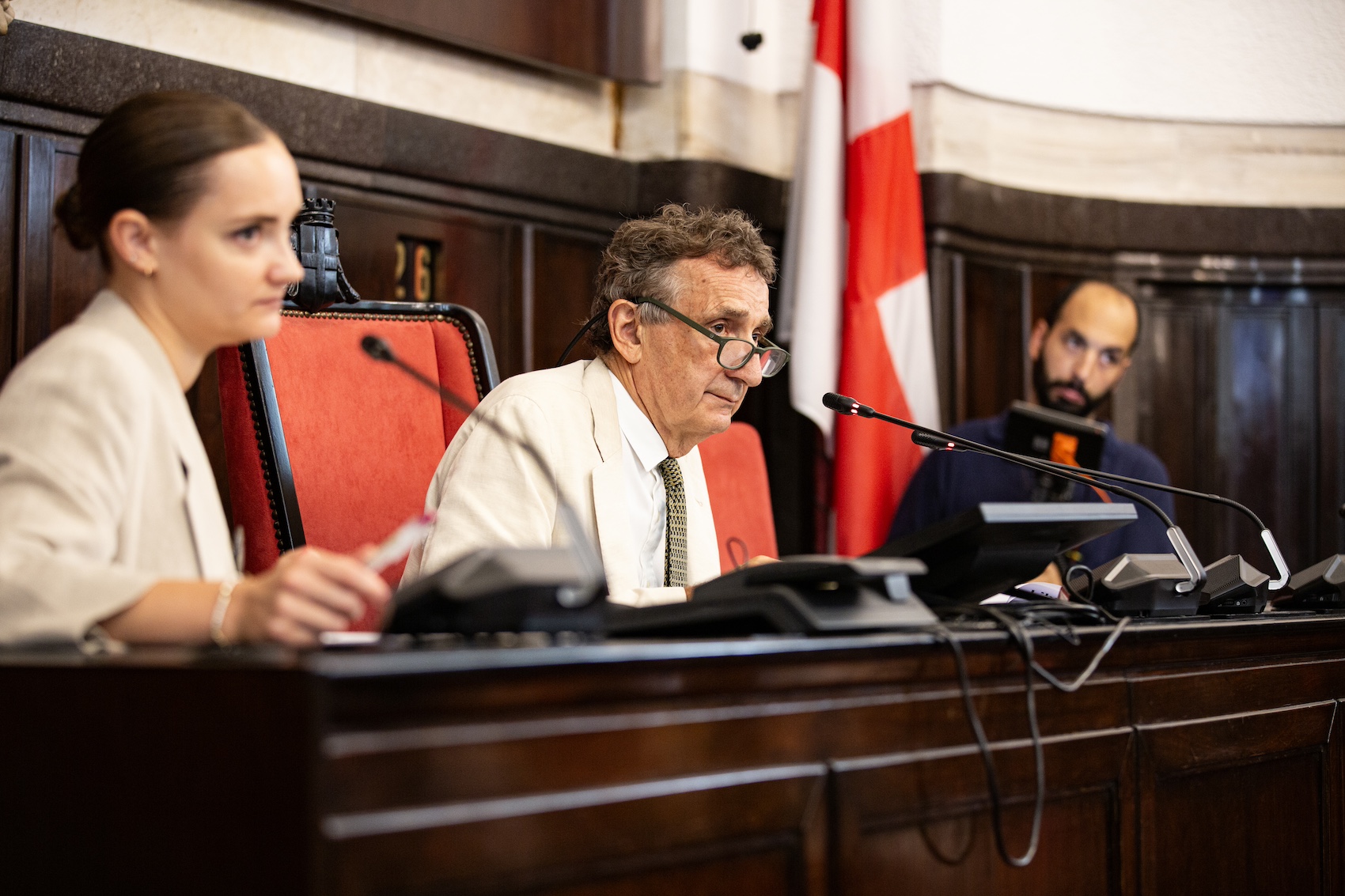
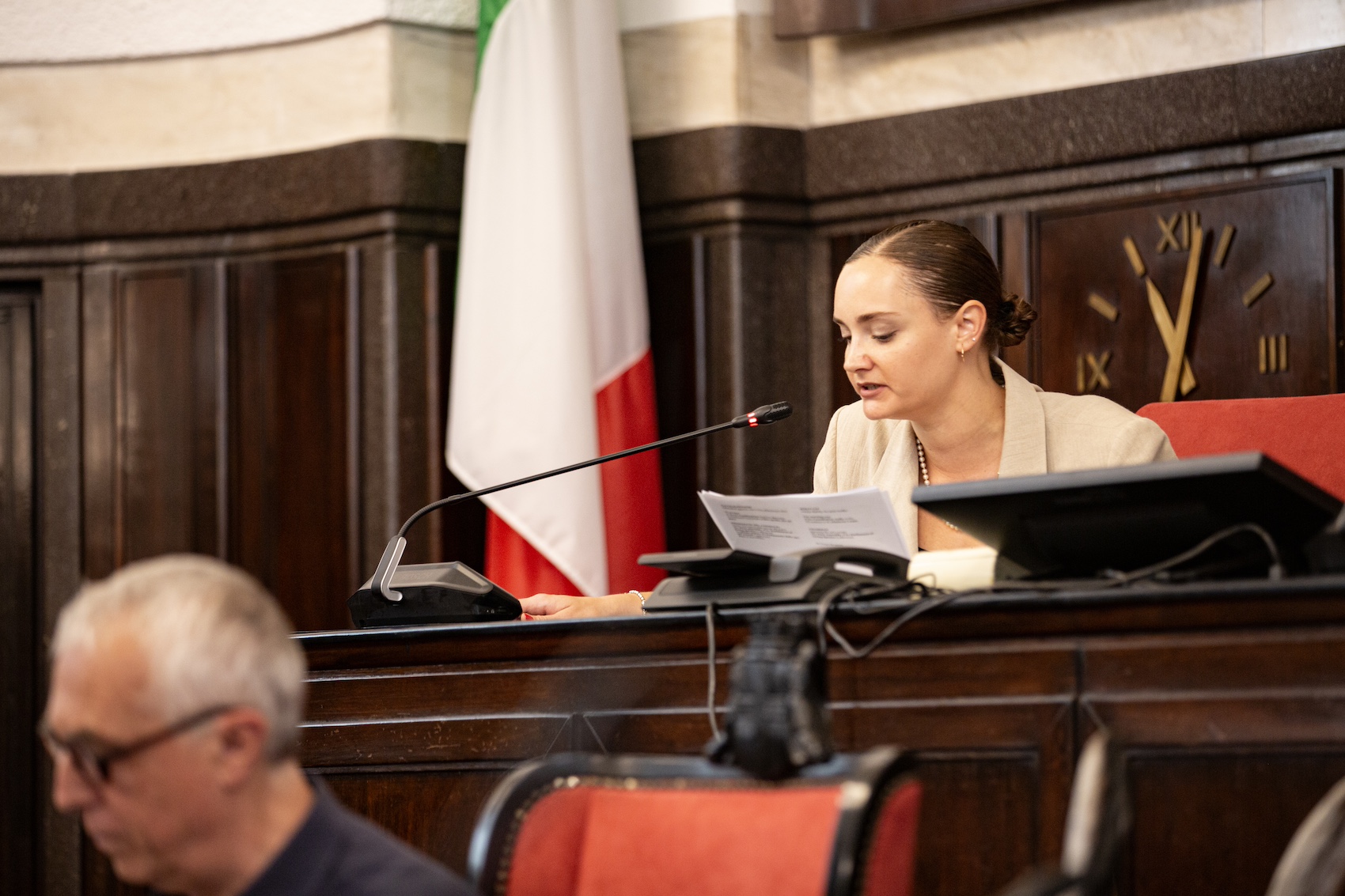
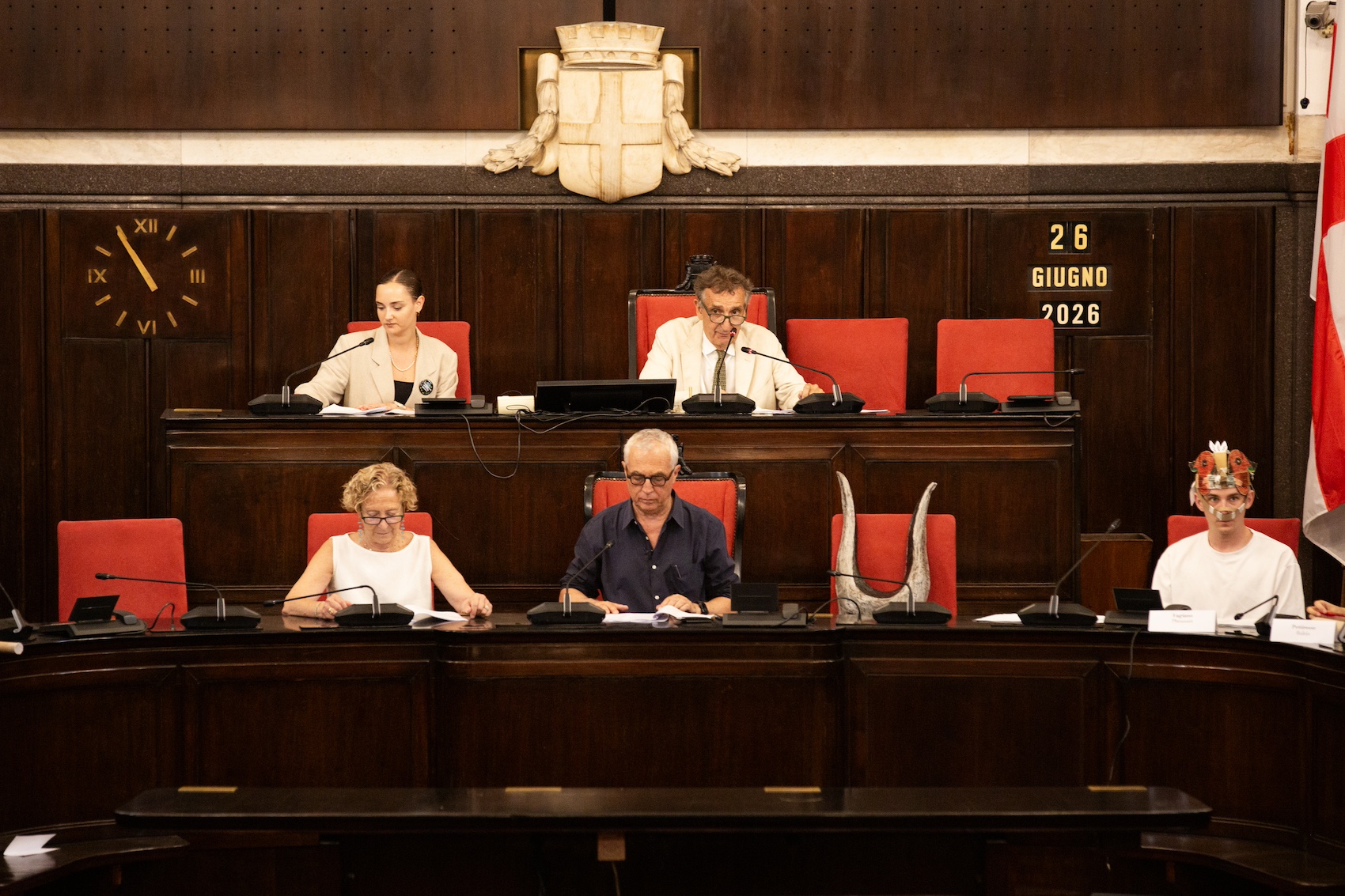
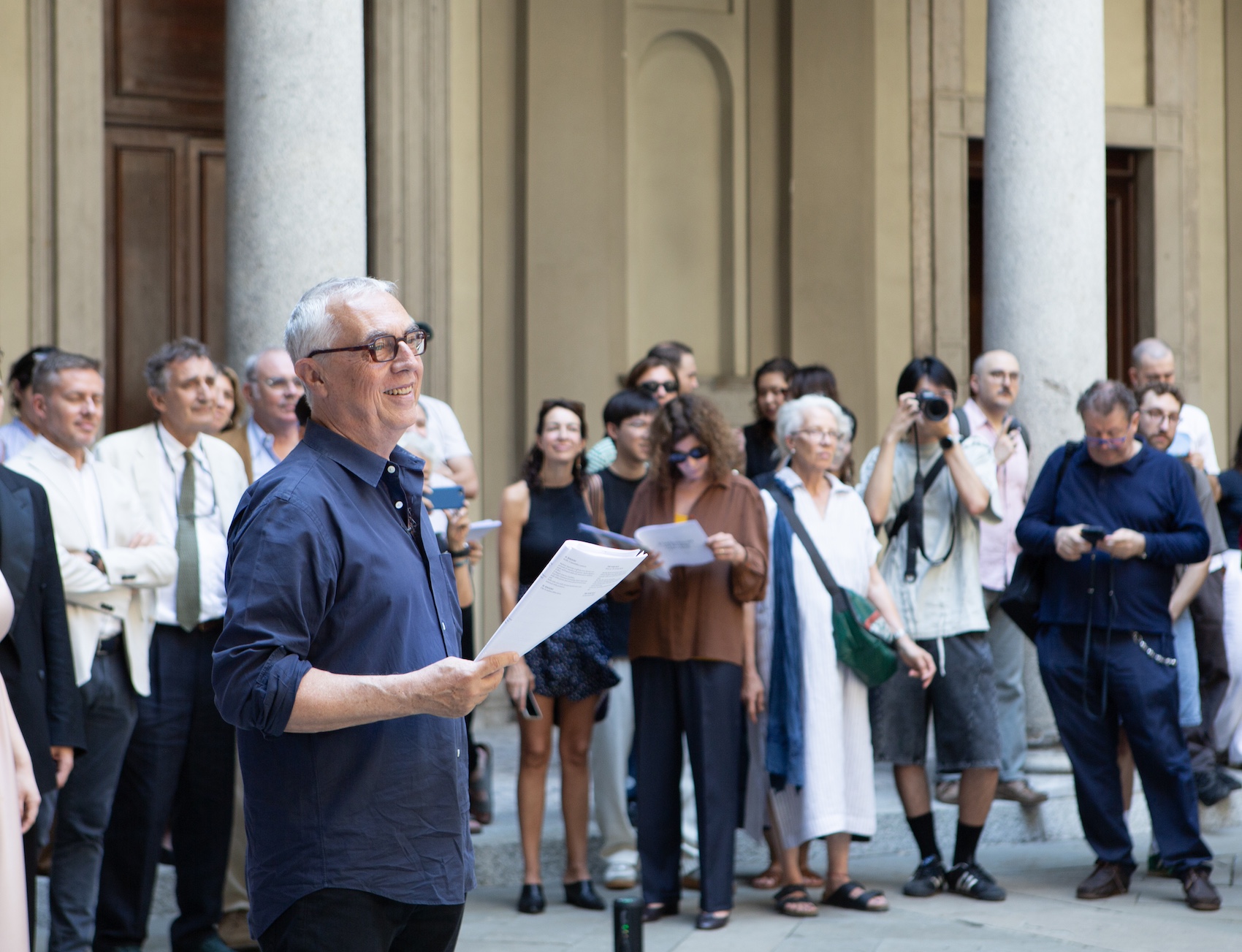
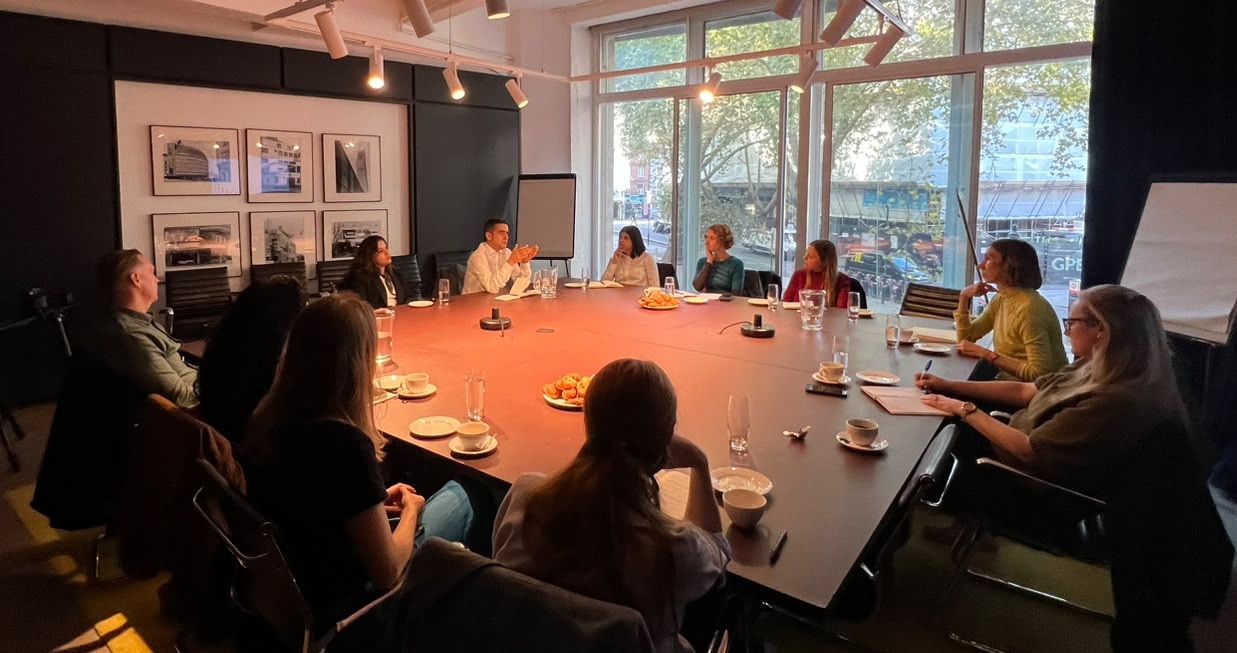
The first session of the Parliament of Living Species at Milan City Hall.
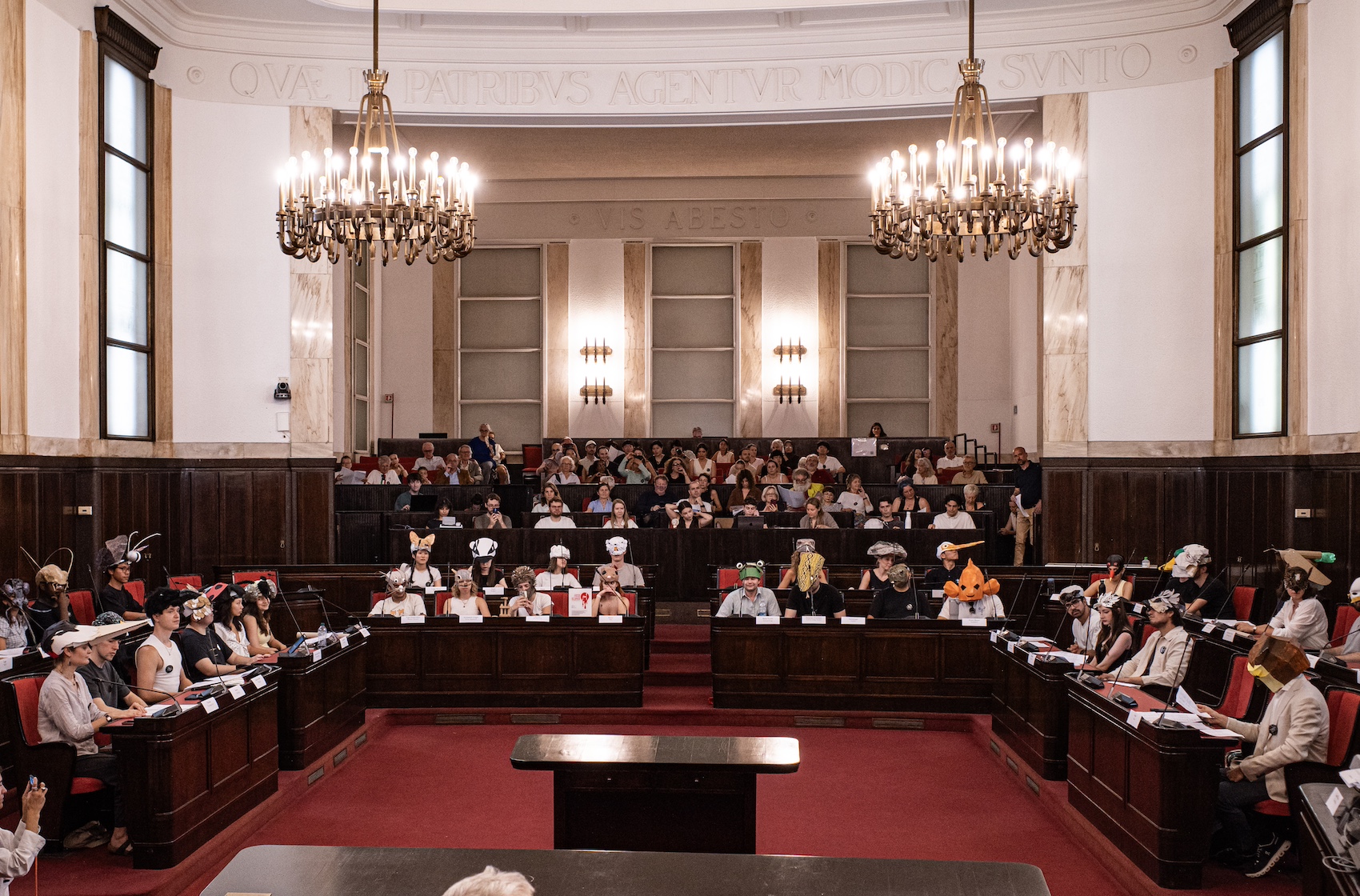
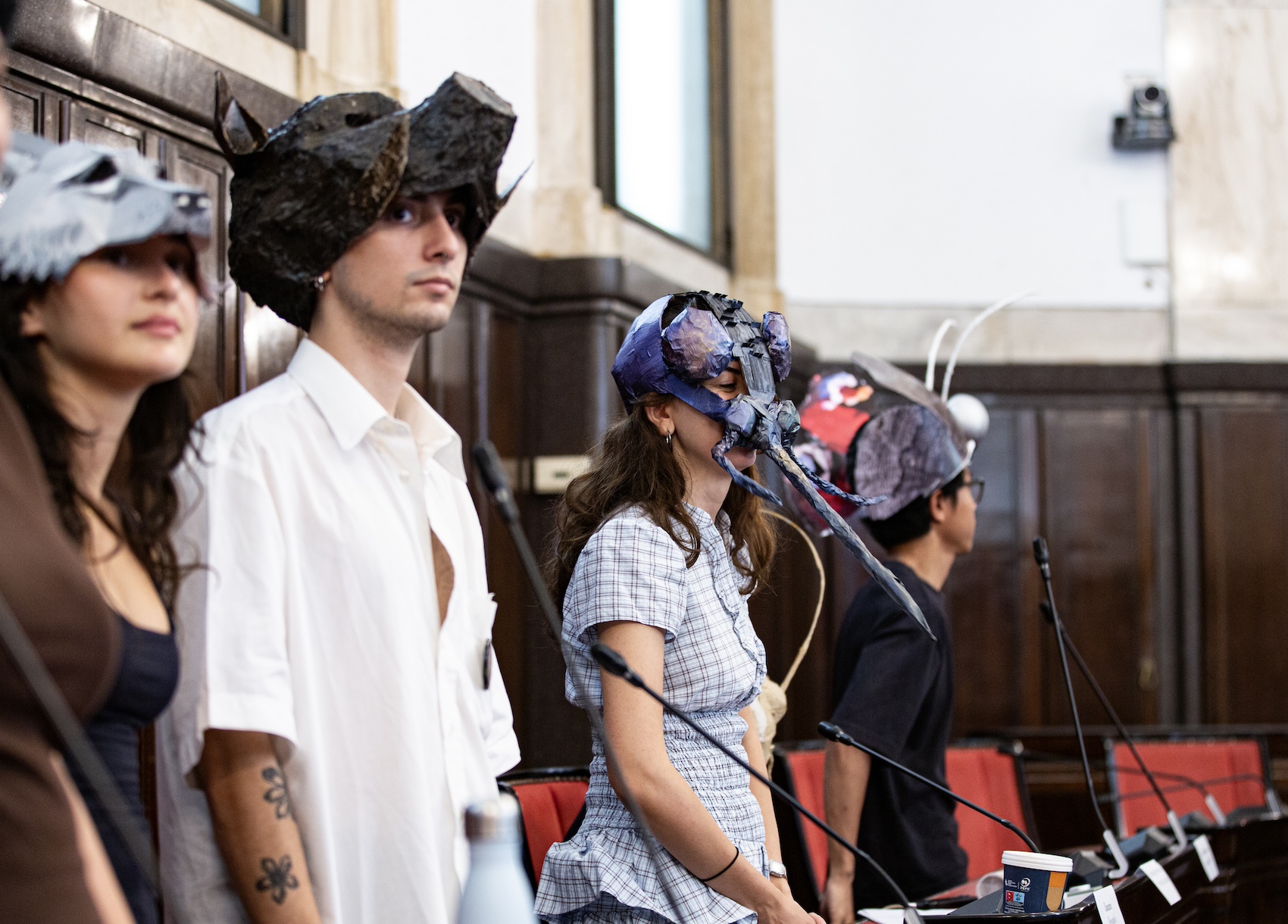
The council chamber of Milan’s Palazzo Marino recently became the setting for an unusual parliamentary session. Instead of elected politicians debating housing, transport or finance, representatives of around 50 animal species gathered to discuss the future of the city from a non-human perspective. Conceived by Stefano Boeri’s Urban Planning Laboratory at the Politecnico di Milano, the Parliament of Living Species combines architecture, theatre and environmental research to explore how urban decision-making might change if biodiversity were afforded formal representation.
Developed in collaboration with the Piccolo Teatro di Milano and the City of Milan, the initiative extends the Animal City research project first presented at the Fondation Cartier pour l’Art Contemporain in Paris. While speculative in form, it addresses increasingly pressing questions surrounding the rights of nature, ecological governance and the relationship between urban development and biodiversity. Rather than presenting these ideas through conventional exhibition or academic formats, the project stages them as a theatrical parliamentary debate inside the city’s own civic institution.
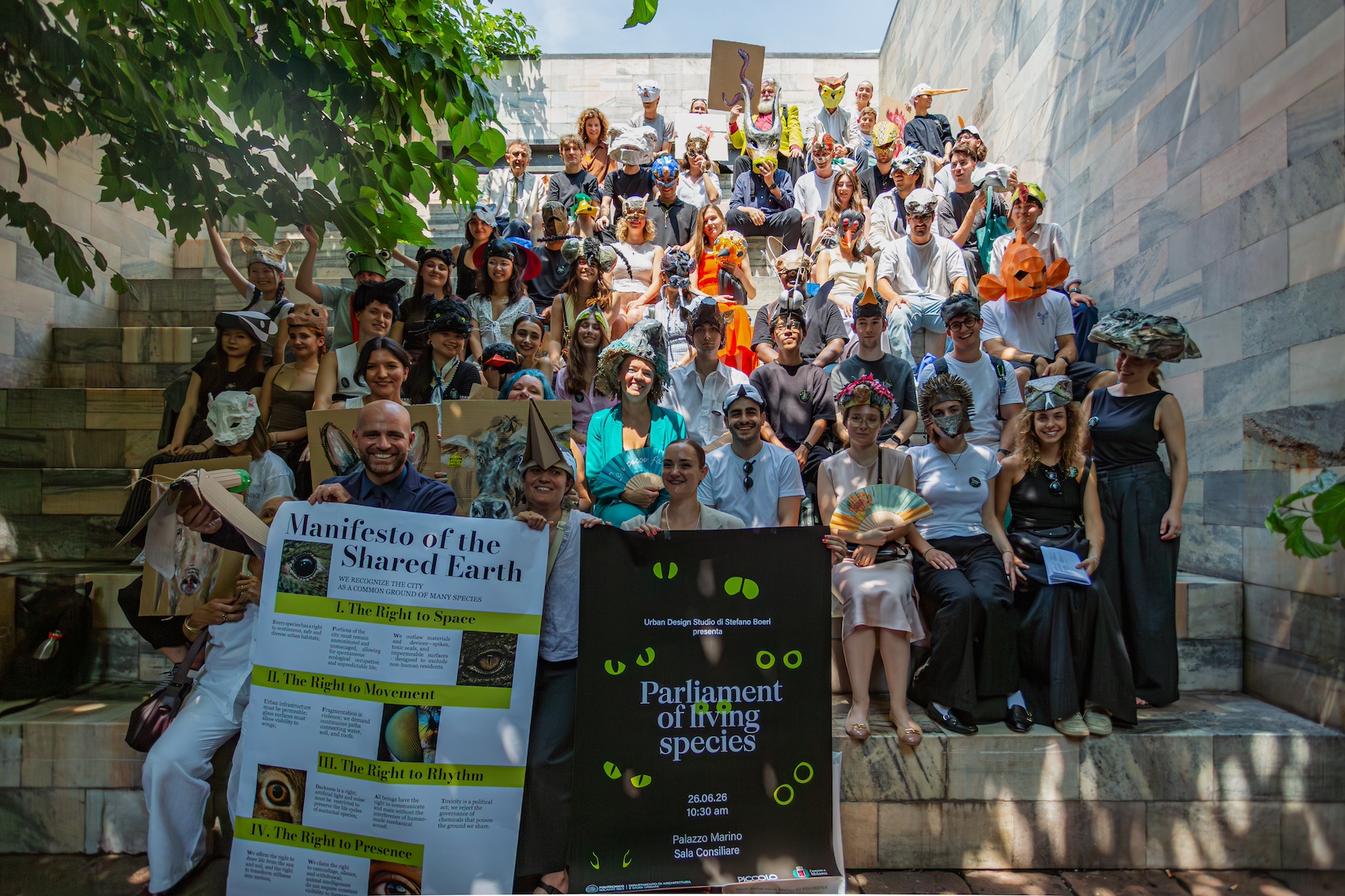
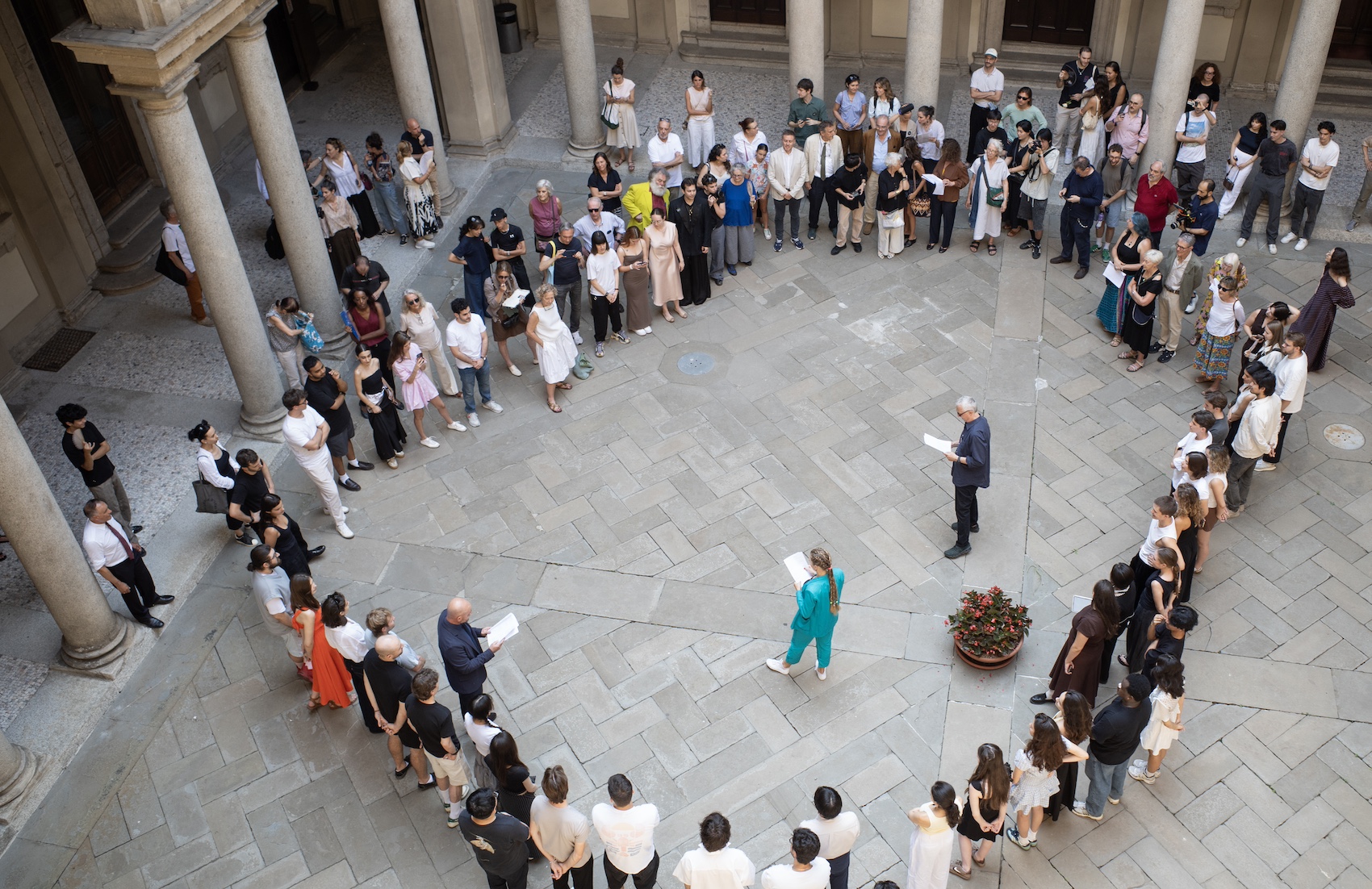
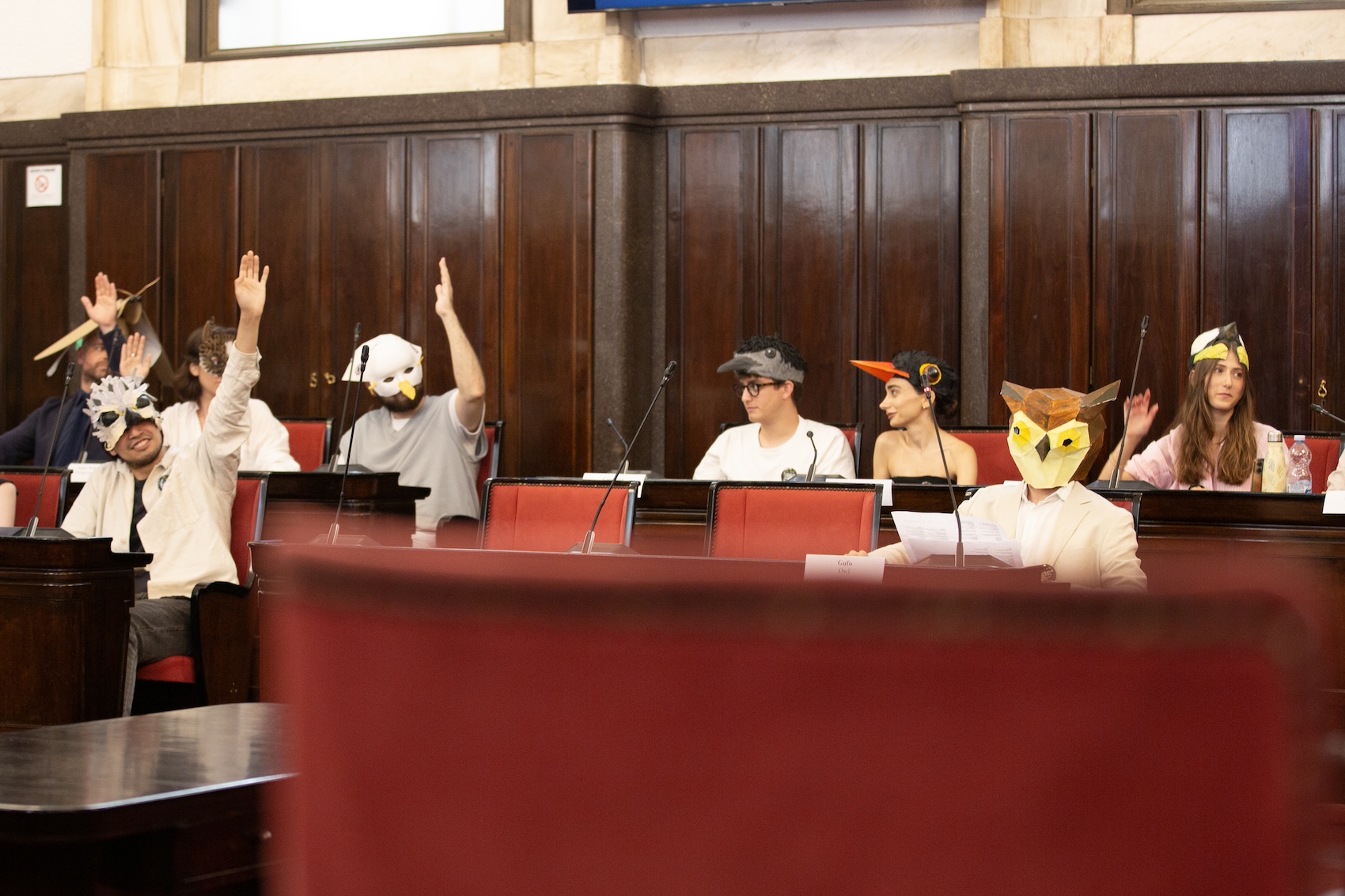
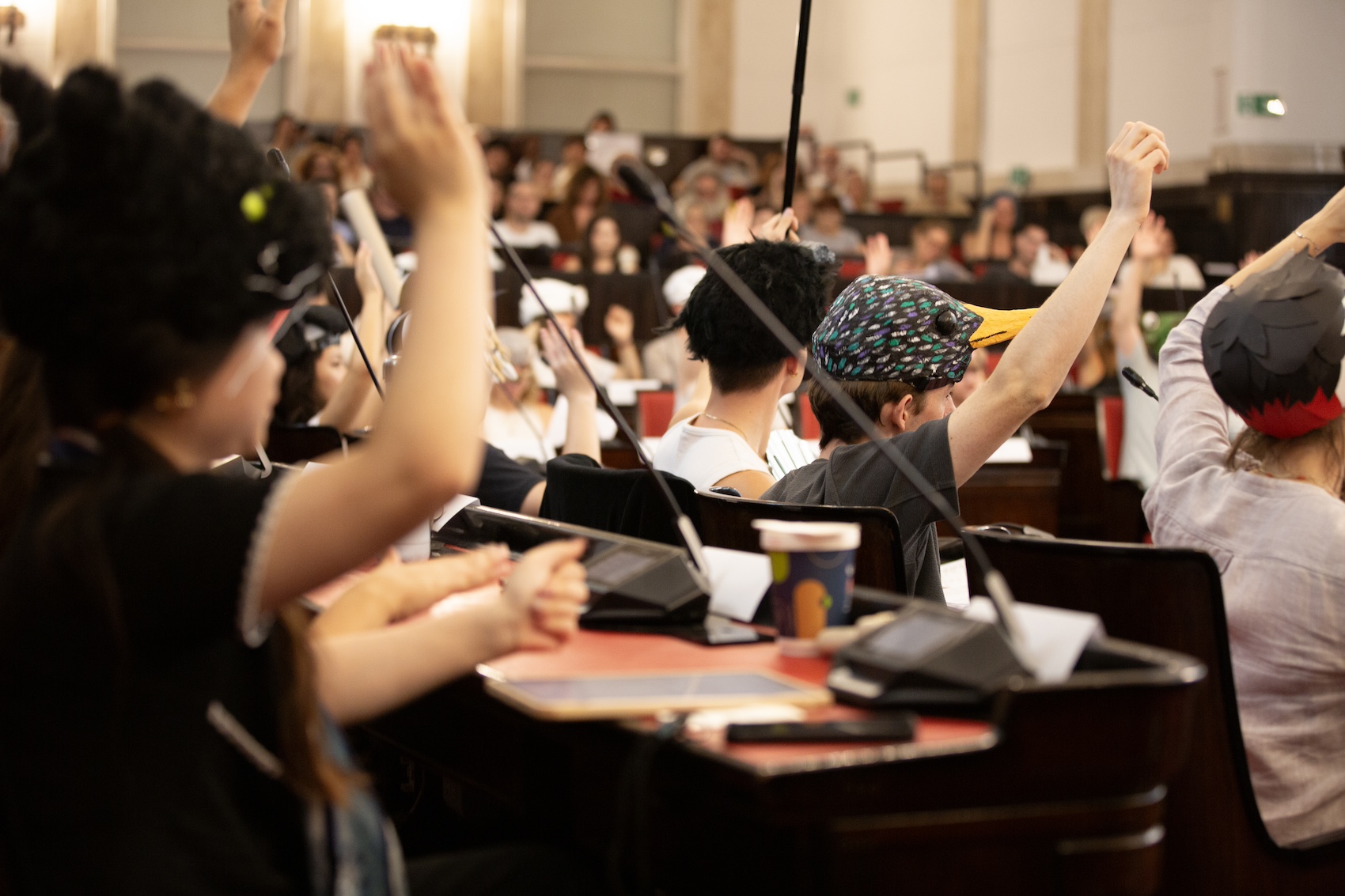
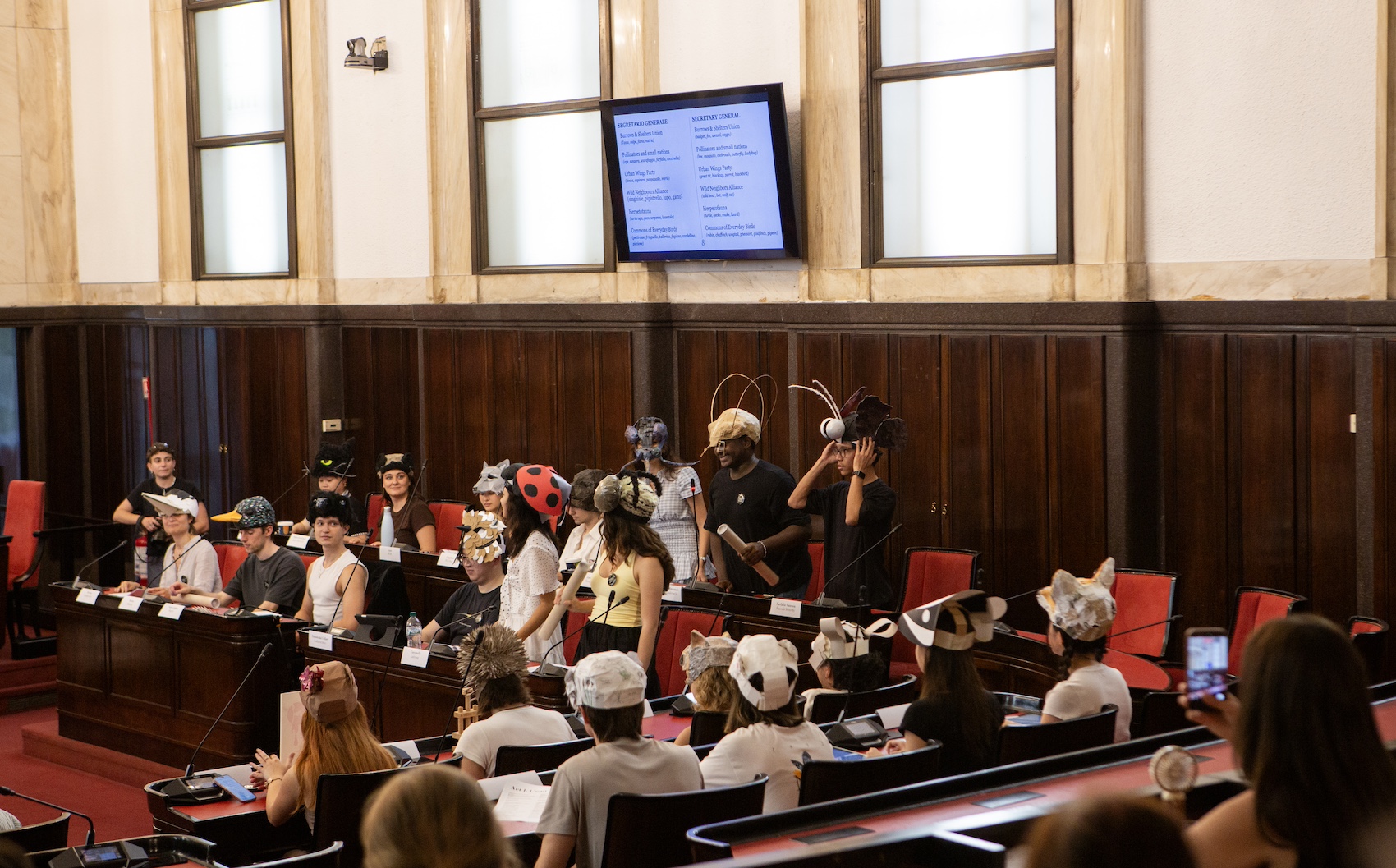
Students from the Urban Planning Laboratory assumed the roles of species ranging from swifts, foxes and bats to frogs, bees and earthworms, each advocating for the ecological interests of their respective habitats. The participants debated issues currently shaping Milan’s urban future, including the proposed demolition of the San Siro stadium, the reopening of sections of the Navigli canals, contemporary façade design, permeable public realm, and the management of spontaneous vegetation. Throughout the proceedings, questions normally framed around economic or political priorities were reconsidered through the needs of ecosystems and wildlife.
Rather than presenting nature as something separate from the city, the project argues that urban environments already function as complex multispecies ecosystems. The inaugural assembly symbolically invited wild species that permanently inhabit Milan, together with migratory visitors that occupy the city seasonally. Particular emphasis was placed on species most affected by urban transformation, recognising that the ecological consequences of planning decisions often remain invisible within conventional democratic processes.
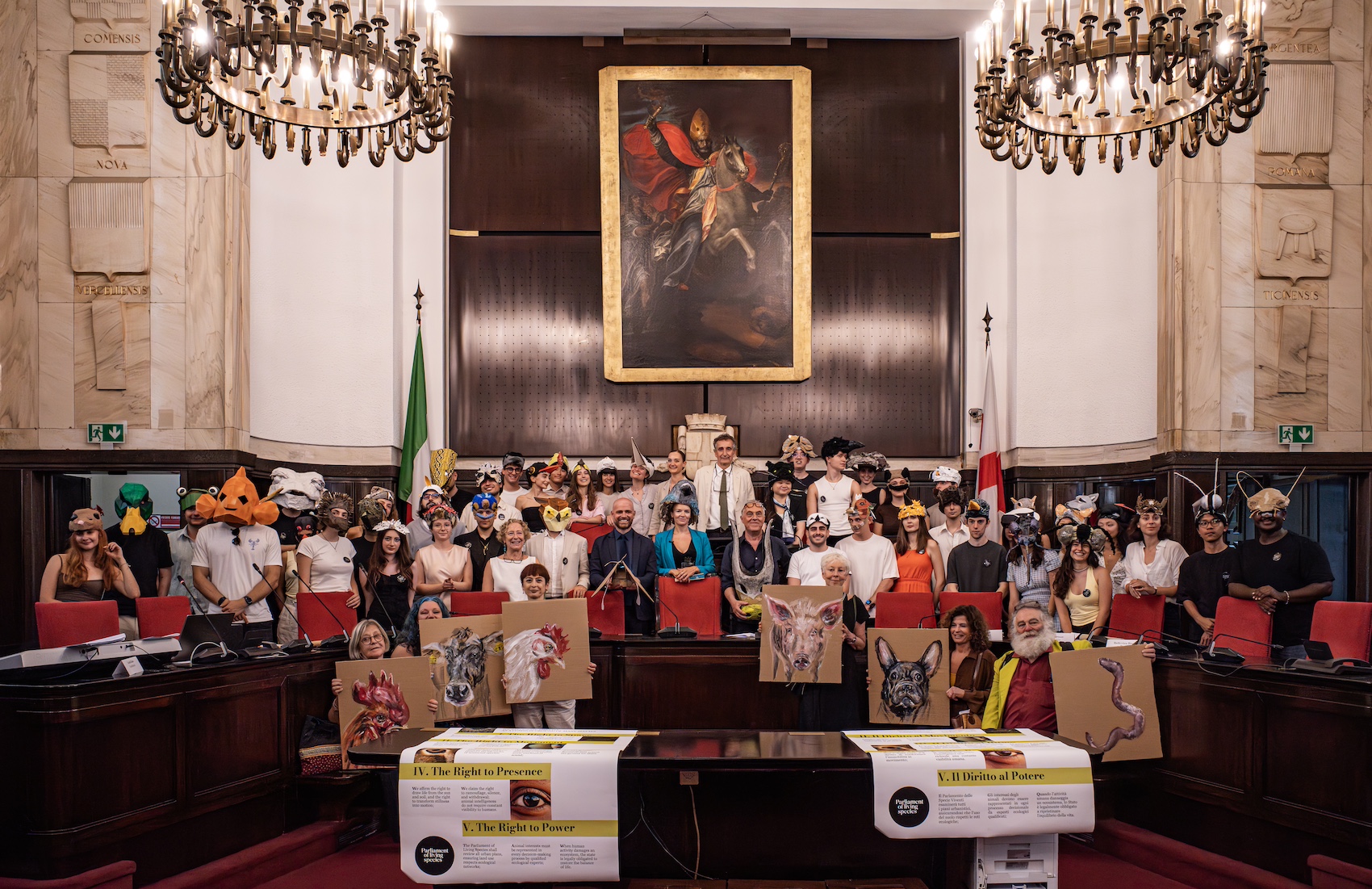
Many of the debates focused on familiar planning proposals viewed from unfamiliar perspectives. During discussion surrounding the future of San Siro, for example, swifts argued that the stadium functions not simply as a sporting venue but as an established nesting habitat accumulated over generations, while other delegates questioned whether demolition should also account for embodied ecological relationships rather than solely architectural or commercial value. Elsewhere, discussions on reopening the Navigli shifted attention from civic regeneration towards water as climate infrastructure and habitat, while conversations around glass façades explored the impact of contemporary architecture on bird populations and urban biodiversity.
The theatrical format allows complex environmental questions to be explored through humour and satire as much as scientific argument. Throughout the performance, delegates challenge familiar planning language by questioning terms such as regeneration, maintenance, infrastructure and degradation. In doing so, the project suggests that concepts routinely used to evaluate cities are rarely neutral, instead reflecting priorities that largely exclude non-human forms of life.
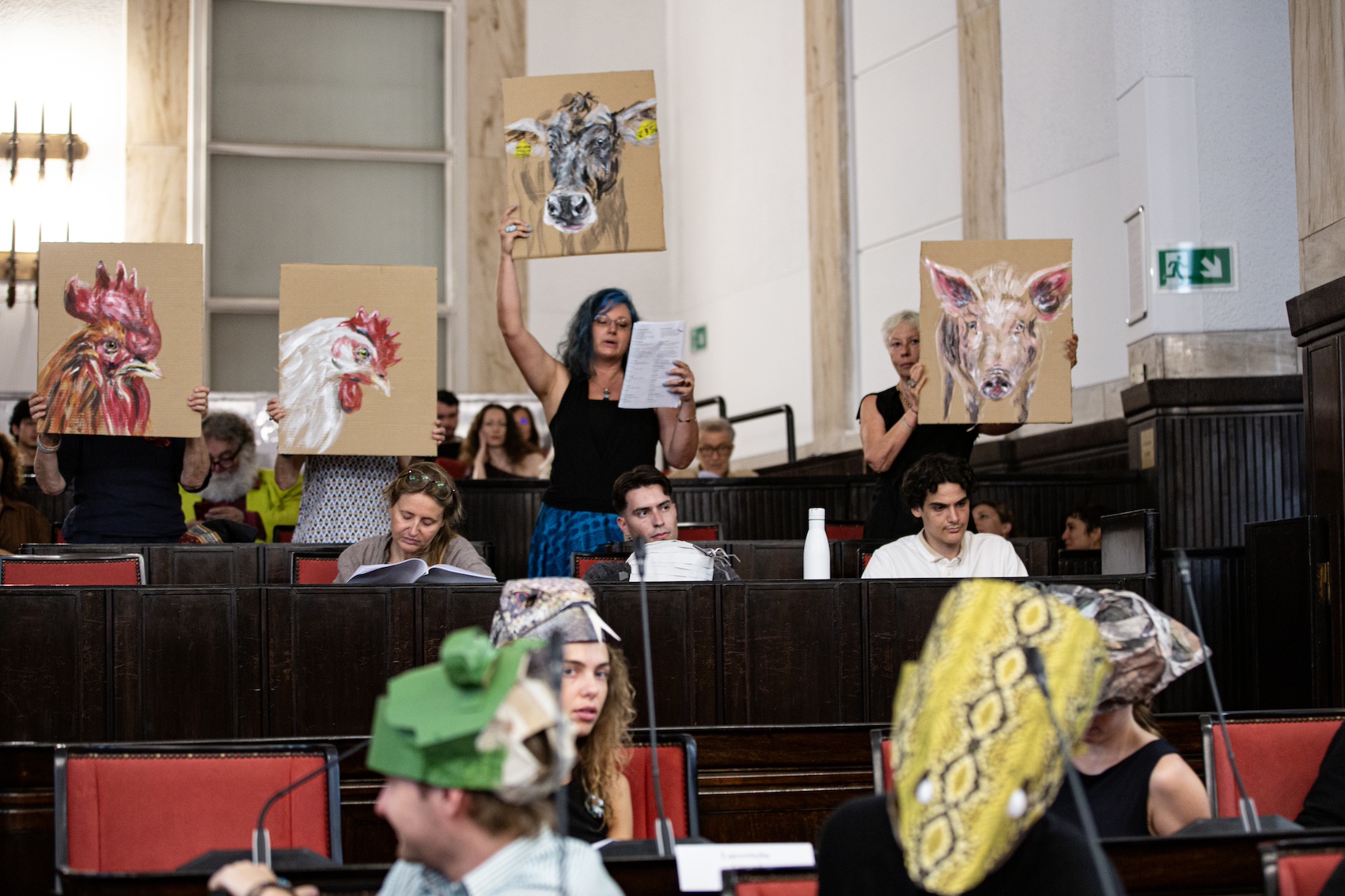
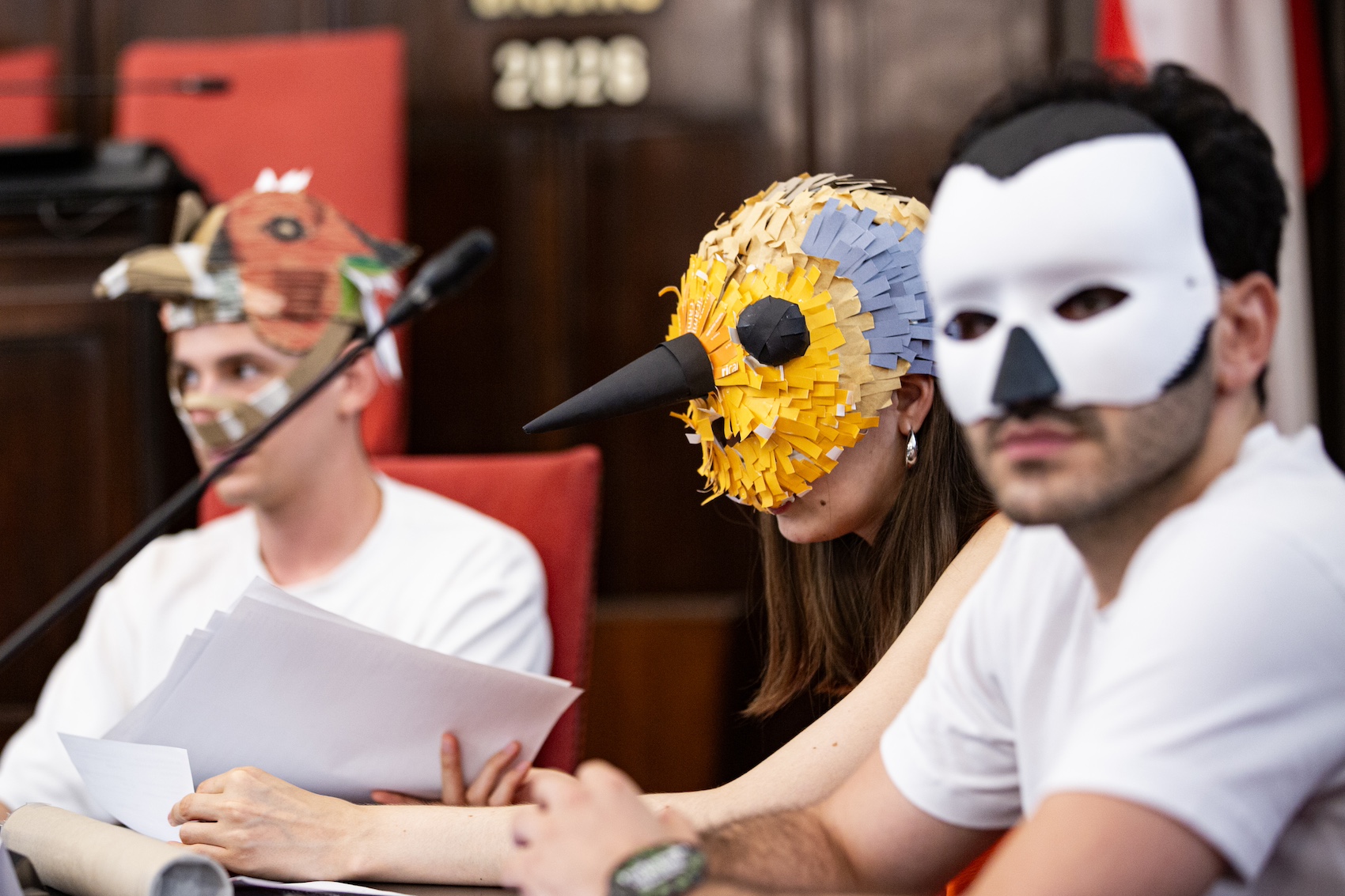
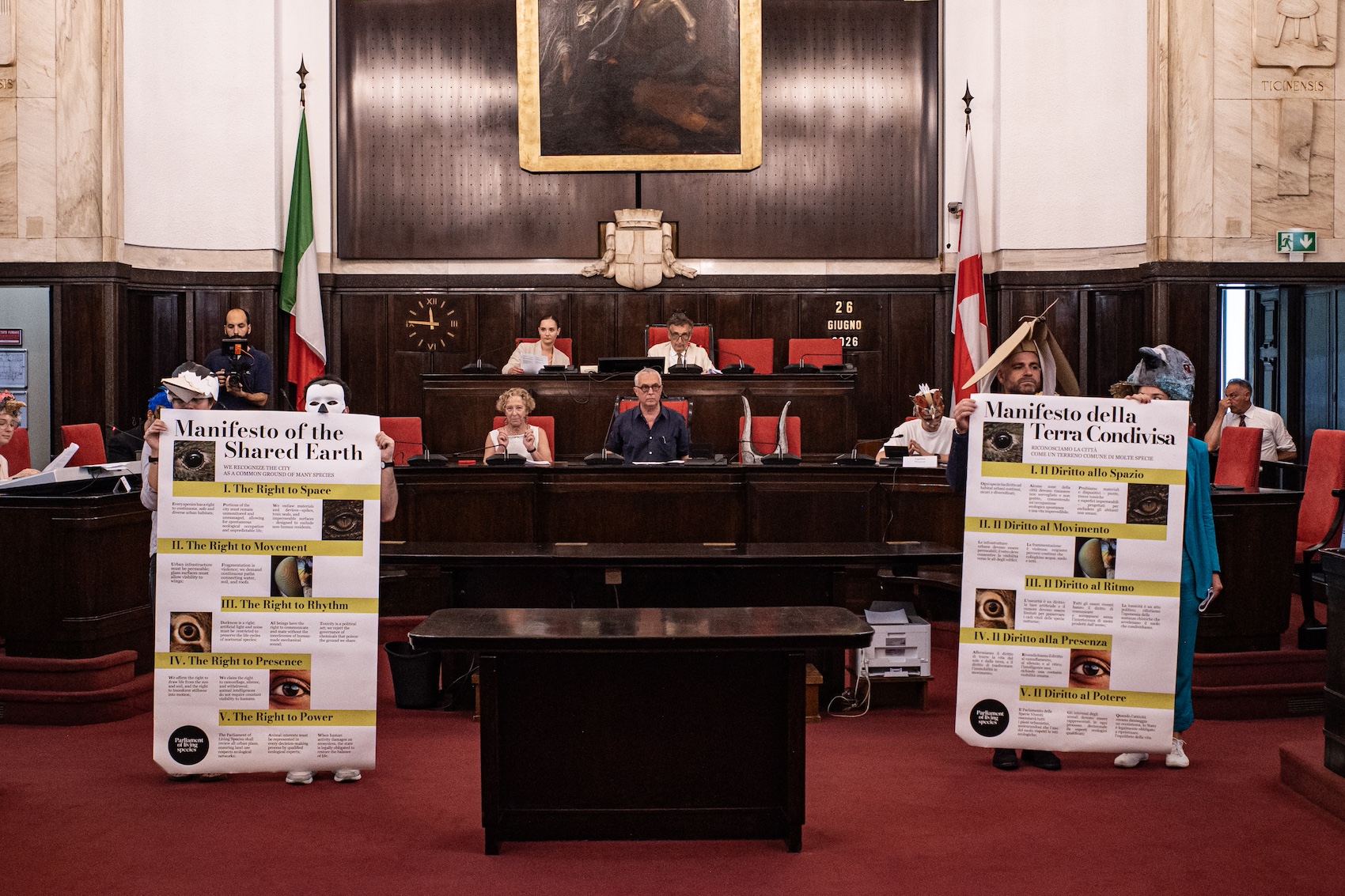
The production culminates in a draft Manifesto of the Shared Earth, proposing five fundamental rights that should underpin future urban development: the right to space, movement, rhythm, presence and political representation. Rather than offering a finished programme, the manifesto is presented as an evolving framework intended to stimulate further debate around how cities might better accommodate ecological systems alongside human needs. The accompanying Parliament of Living Species manifesto expands these principles into a series of urban design propositions, including continuous habitats, permeable infrastructure, ecological corridors and multispecies governance.
For Boeri, the exercise is intended less as theatrical fiction than as a design tool. By imagining how planning decisions might be scrutinised through the interests of multiple species, the project seeks to reveal the often overlooked ecological consequences of urban development while encouraging a broader understanding of citizenship, coexistence and the future responsibilities of architecture. Rather than resolving competing interests, the Parliament proposes that cities should acknowledge and negotiate the complexity of shared habitats, recognising that urban life extends far beyond the human population alone.
More pictures