The winners of The 2026 LINA Writing Award discuss In Deep Trouble: The Trepça Mine, a project commissioned by the Irish Architecture Foundation and produced in collaboration with dpr-barcelona exploring the architecture of the Kosovan mine through it’s lift shaft that reaches a depth of 850 metres providing access to a network of kilometres of tunnels.
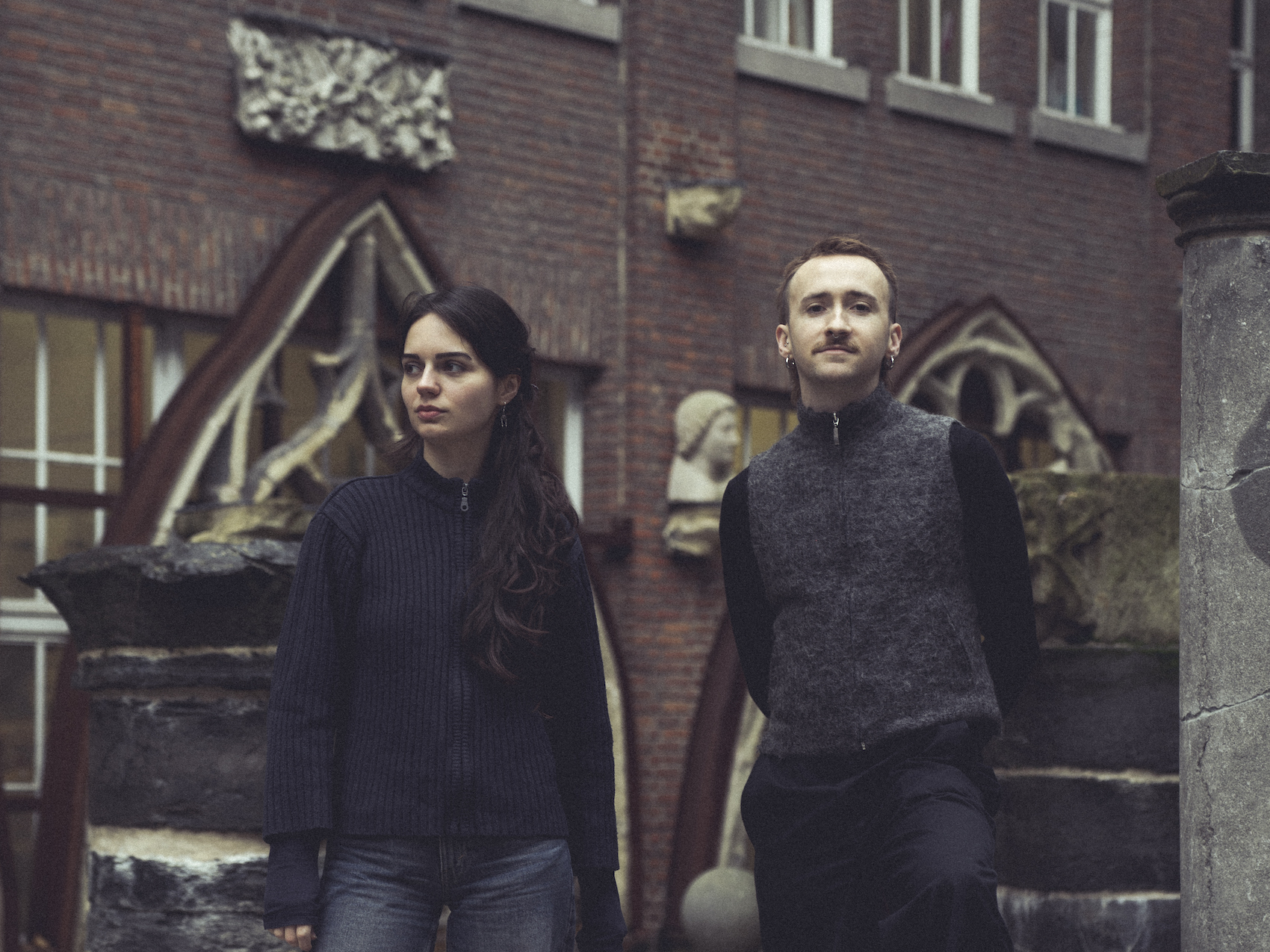
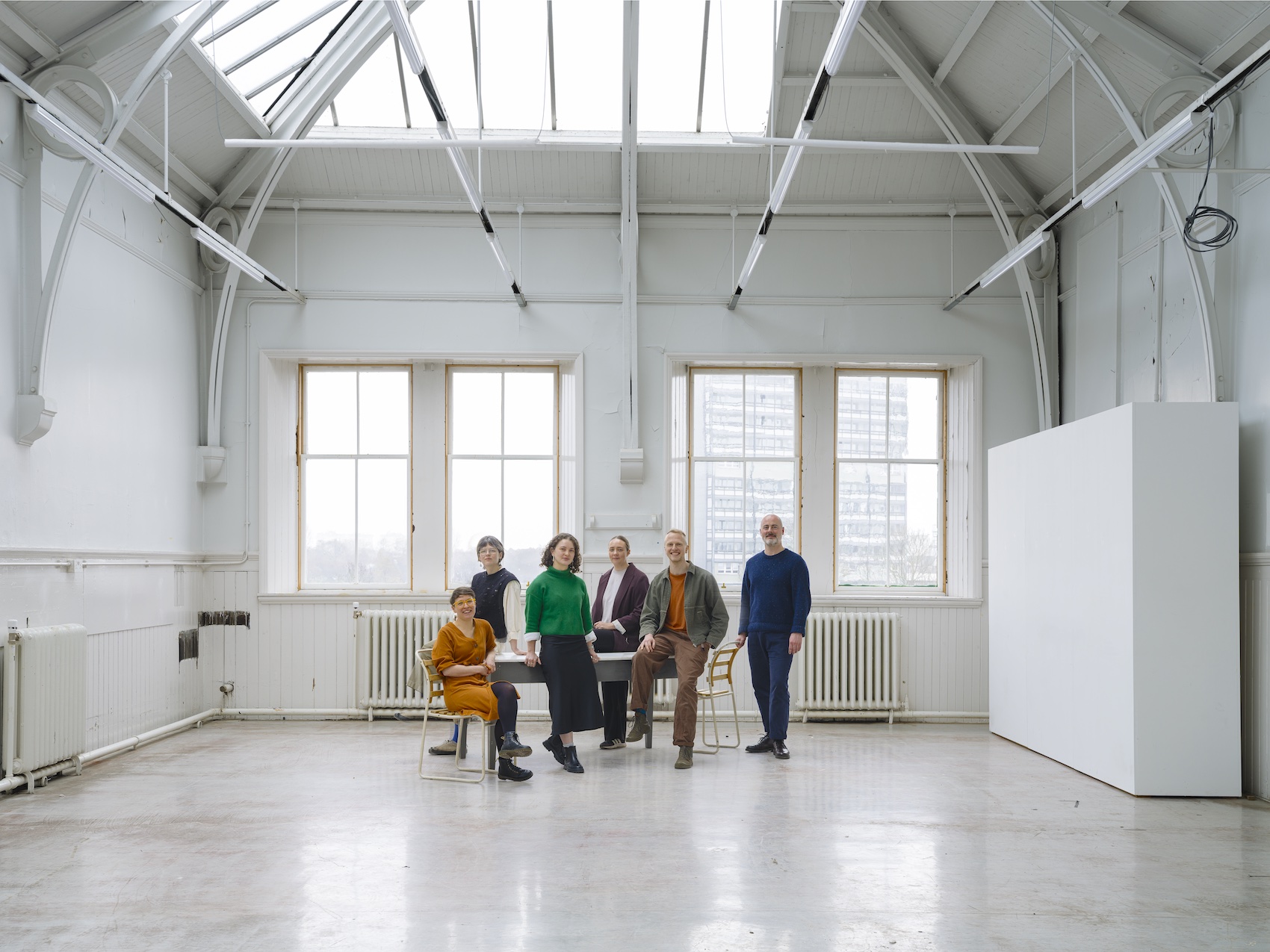
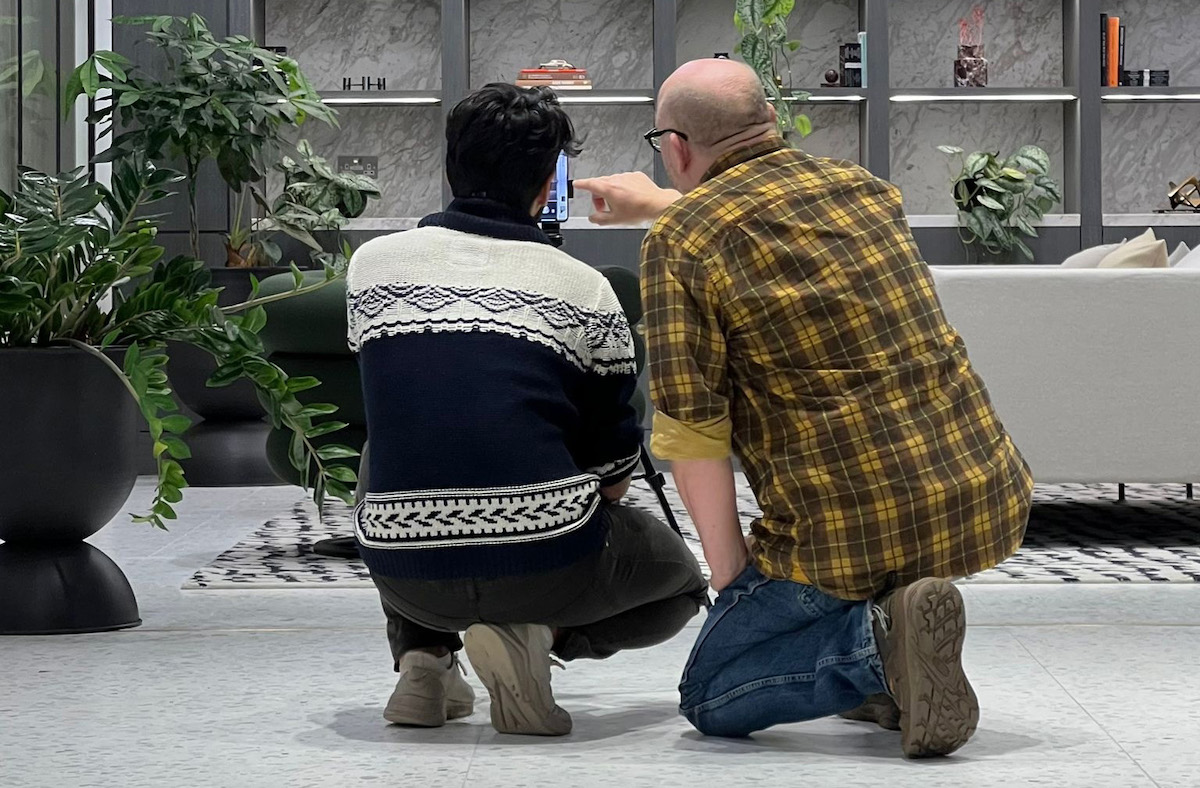
Gjiltinë Isufi (left) is an architect and researcher from Kosovo, currently teaching and conducting a PhD at KU Leuven, Belgium, on the intersection between space and trauma. Fiachra McCarthy (right) is an architect and artist working between Belgium and Ireland, having studied at TU Dublin and KU Leuven. The LINA Writing Award is in it’s fourth year and is awarded by the LINA Architecture Programme; a European network of institutions spanning working across the intersection between architecture and spacial culture. The programme is coordinated by the Faculty of Architecture at the University of Ljubljana and co-funded by Creative Europe. As LINA members, the Irish Architecture Foundation and dpr-barcelona’s collaborative LINA Writing Award supports emerging talent as part of the overall LINA programme. Image credit: Femke Appeltans
What is it about the Trepça Mine that interests you both?
The Trepça Mine in Kosovo is a layered subterranean landscape which merges environmental transformation with socio-political struggle. Its history is deeply entangled with the region’s industrial development and political shifts, most notably the miners’ strike of 1989, which marked a critical moment in Kosovo’s recent history. But, apart from this complex trajectory, what compels us most is the persistence of miners who to this day hold a strong sense of solidarity, pride, and commitment in extremely difficult working conditions.
As their struggles are directly linked to the spatial environment of the mine, we investigate how these spatial conditions shape and are shaped by extraction and labour. The book will uncover the mine primarily through workers’ stories, documenting moments such as lunch breaks in extreme underground microclimates, overcrowded corridors during long strikes, and the movement of mineral bodies from the deep underground to distant global circuits. By disclosing these overlooked practices, we seek to foreground the human dimension of an industrial site, which is often understood only through its economic or political significance.
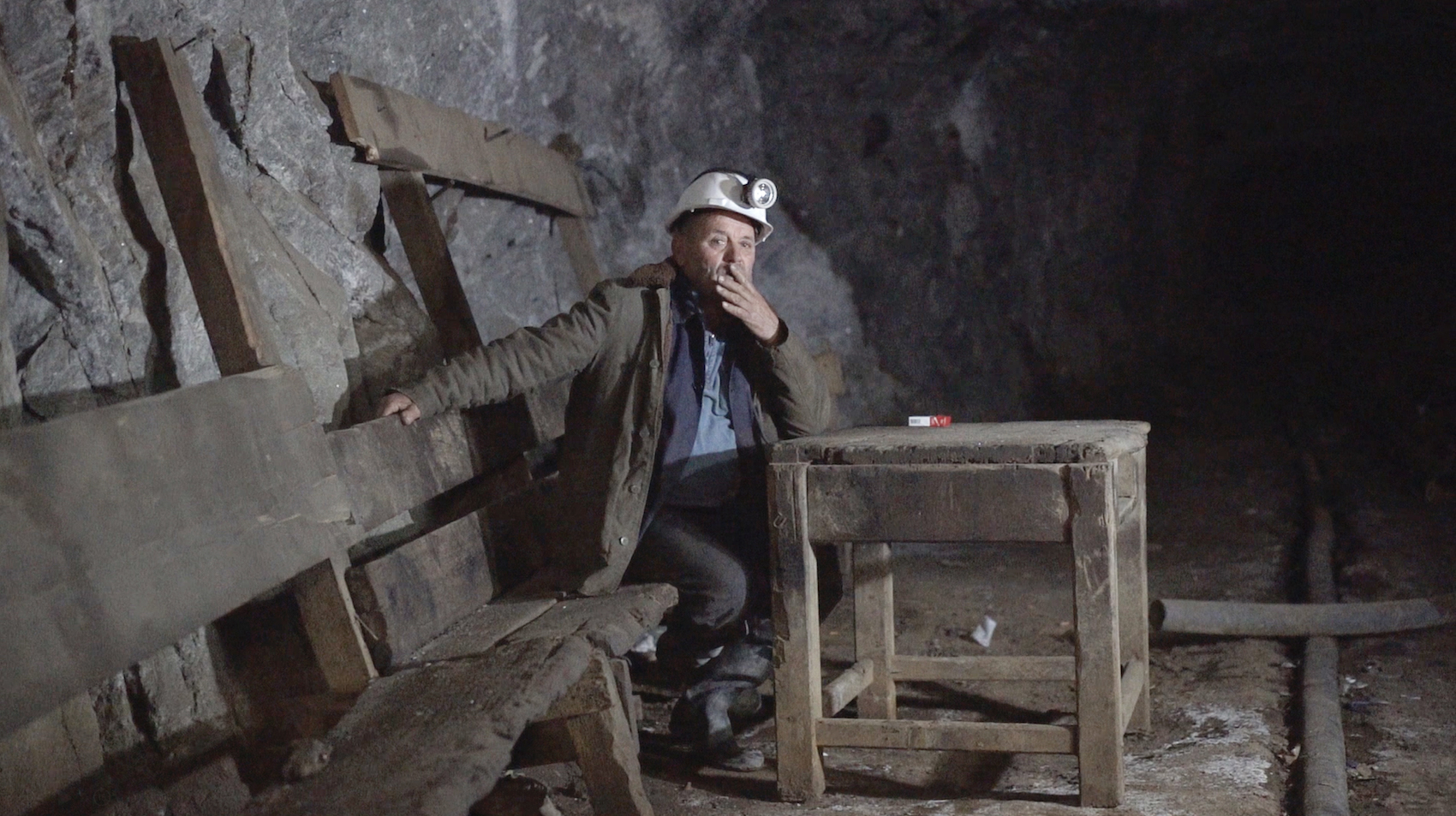
Gani Osmani recalls the 1989 strikes from the same location in Horizon 8, 560 meters underground. Trepça Mine in mitrovica, Kosovo, 2025. Credit: Gijtinë Isufi
How would you describe the architectural environment of The Trepça Mine as you currently understand it?
Due to the scarcity of existing architectural documentation, our understanding of the mine remains partial and in flux, relying heavily on site visits and conversations with miners. Within this process, the act of drawing also becomes essential in engaging with the mine’s complexity. Trepça extends across 11 levels underground and reaches the depth of 850 metres, with kilometres of corridors branching horizontally. With a horseshoe-like formation, it is composed of a central ore body with an approximate decline of 45 degrees, and additional bodies extending into the northern and southern wings. The main character in the book will be the elevator shaft, as it plays a key role in the mine’s spatial organisation and power dynamics. Through this element, we will touch on domestic, political, and environmental dimensions, each explored in a separate chapter.
Is it the mine as a piece of architecture that contributes to its socio-political climate? What is it about the mine as a physical space that influences or encourages such politics?
We do indeed argue that there is a political agency inherent in subterranean space itself, and this forms a central premise of our book.
Underground environments have long been understood as spaces of resistance and concealment, from mythological underworlds to sites of upheaval throughout history. In 1989, at a moment when Yugoslavia’s foundations were being shaken on multiple fronts, images of the Trepça miners locked underground to protest the abolition of Kosovo’s autonomy circulated across international media.
These scenes played a crucial role in drawing international attention to Kosovo, heavily influencing the course of events in the following decade. Moreover, the extreme risks of the underground during the strike, where even a minor incident could have been catastrophic, fostered a profound sense of solidarity among Albanians in Kosovo, which subsequently inspired broader mobilizations on related causes. The mine itself is structured through architectural conditions that both produce and reinforce relations of dependency: the elevator controlled from above; limited and disorienting circulation; dependencies on systems such as electricity, ventilation, and material infrastructures, etc. These spatial conditions render the mine a particularly charged environment, aspects of which will be elaborated in detail throughout the book.
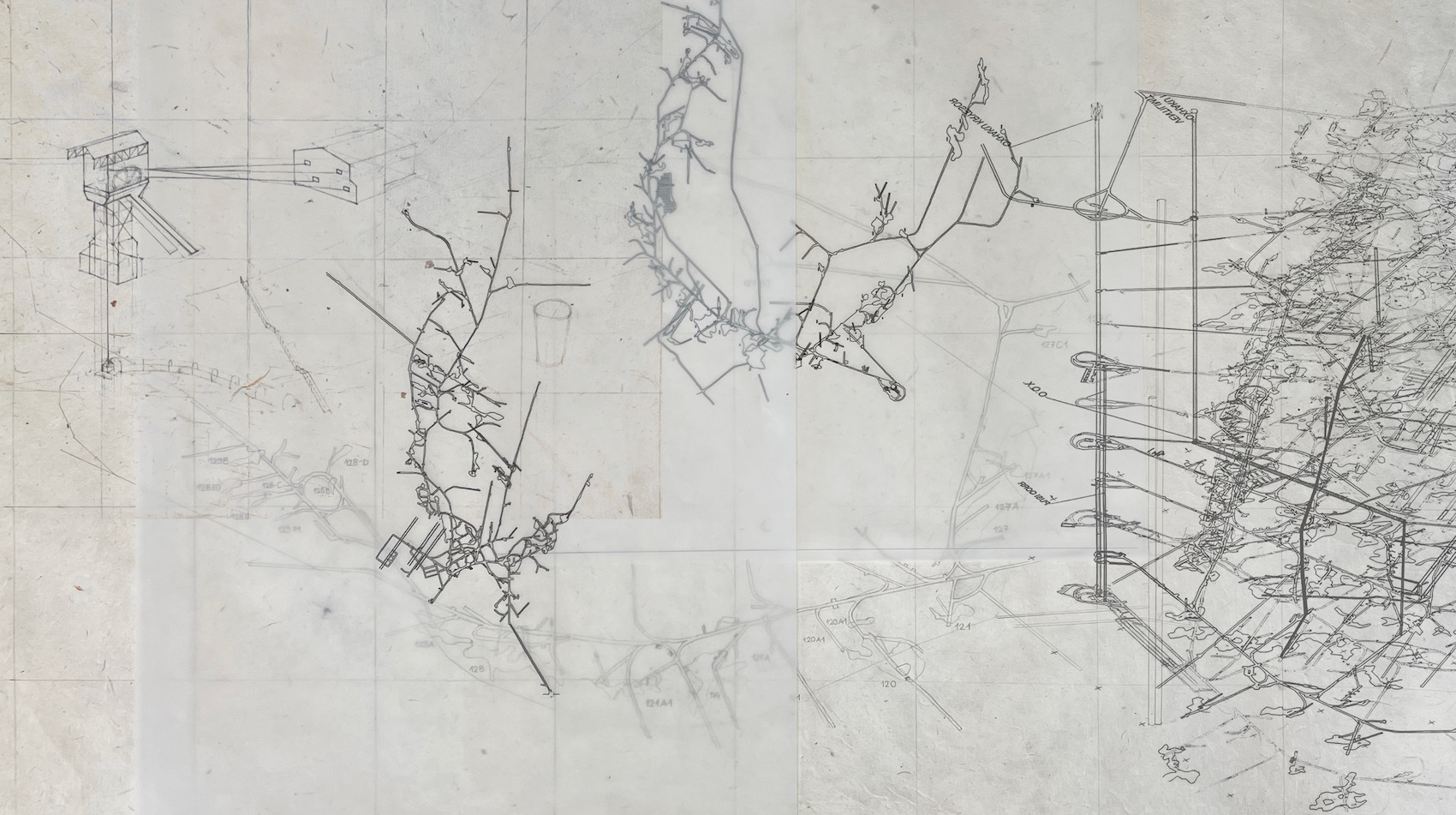
Drawing by McCarthy and Isufi demonstrating the dependencies on the lift in Trepça Mine, 2026. Credit: Fiachra McCarthy and Gjiltinë Isufi, technical data from the Geological Service of Trepça
How has your practice and training as architects influenced your approach to this investigation and exploration of the Kosovan mine?
Our training as architects generally shapes the way we read, interpret, and document space. In this case, we do not approach Trepça solely as an industrial or historical site, but we analyse it through its spatial structures and material conditions. This allows us to foreground aspects that are often overlooked, such as the spatial organisation of labour, bodily experiences of moving underground, or social relations embedded within the subterranean.
Practically, how do you plan on completing your enquiry? Is it important that you spend time in the Trepça Mine, or will you rely on re-told stories of the space and less so the actual realities of it?
Our inquiry combines both direct engagement with the site and the narratives of those who inhabit it. Entering the mine and descending 850 metres underground was in itself an essential part of the process. We all carry images of what the underground feels like, either through movies, books, or photos. But, being there and witnessing the unimaginable conditions in which miners work every day, such as the heat, humidity, and the weight of the mine, gives a crucial firsthand understanding for writing the book. At the same time, the miners’ stories are key in representing the human presence and resilience that is embedded there.
In a similar vein, do you intend on producing scaled drawings of the mine, or are these technical accuracies being cast aside to a more narrative-based architectural drawing style?
When it comes to representations of the underground, we like to emphasise the fact that rendering the underground legible is a rather recent historical development. While we do use the limited existing technical drawings of Trepça, mostly for our own understanding of the mine, we deliberately strain away from their original technical purpose. So, instead of producing scaled documents, we are working with free drawing in order to trace the spatial relationships that miners so often discuss in abstract forms.
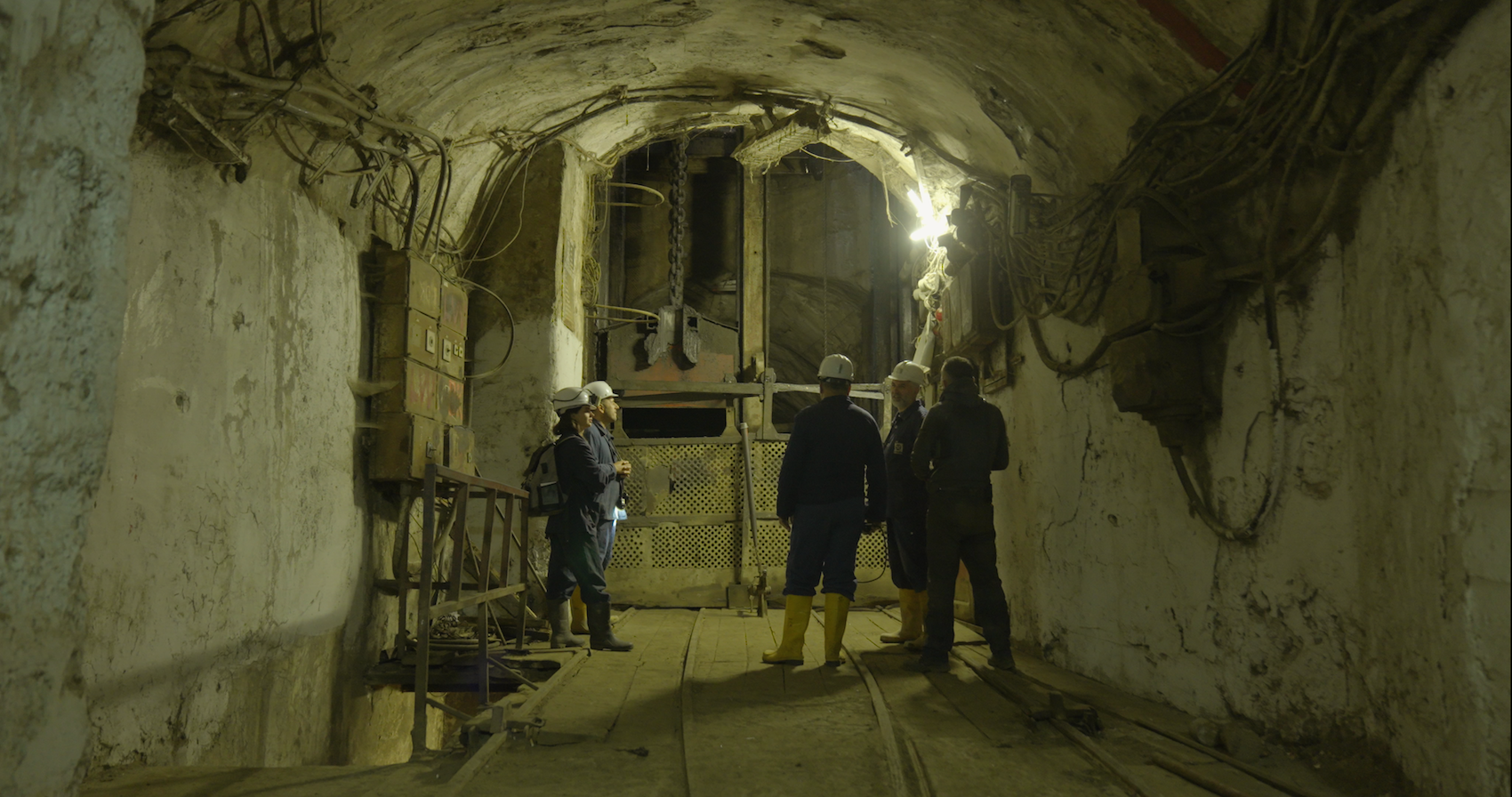
Miners waiting for the lift, taken on a field trip, 2025. Credit: Agon Mehmeti
The initial research leading to the publication stems from a larger PhD project of Gjiltinë Isufi, In Space We Read Trauma: Disclosing Microhistories in Kosovo, 1980–1999. The project is funded by FWO (Fonds voor Wetenschappelijk Onderzoek) and conducted at the Faculty of Architecture, KU Leuven, Brussels.