Heatherwick Studio and SPPARC have unveiled the first phase of Olympia’s £1.3 billion transformation, reimagining the historic west London exhibition venue as a mixed-use cultural neighbourhood and opening up a site that has remained largely inaccessible for more than a century.
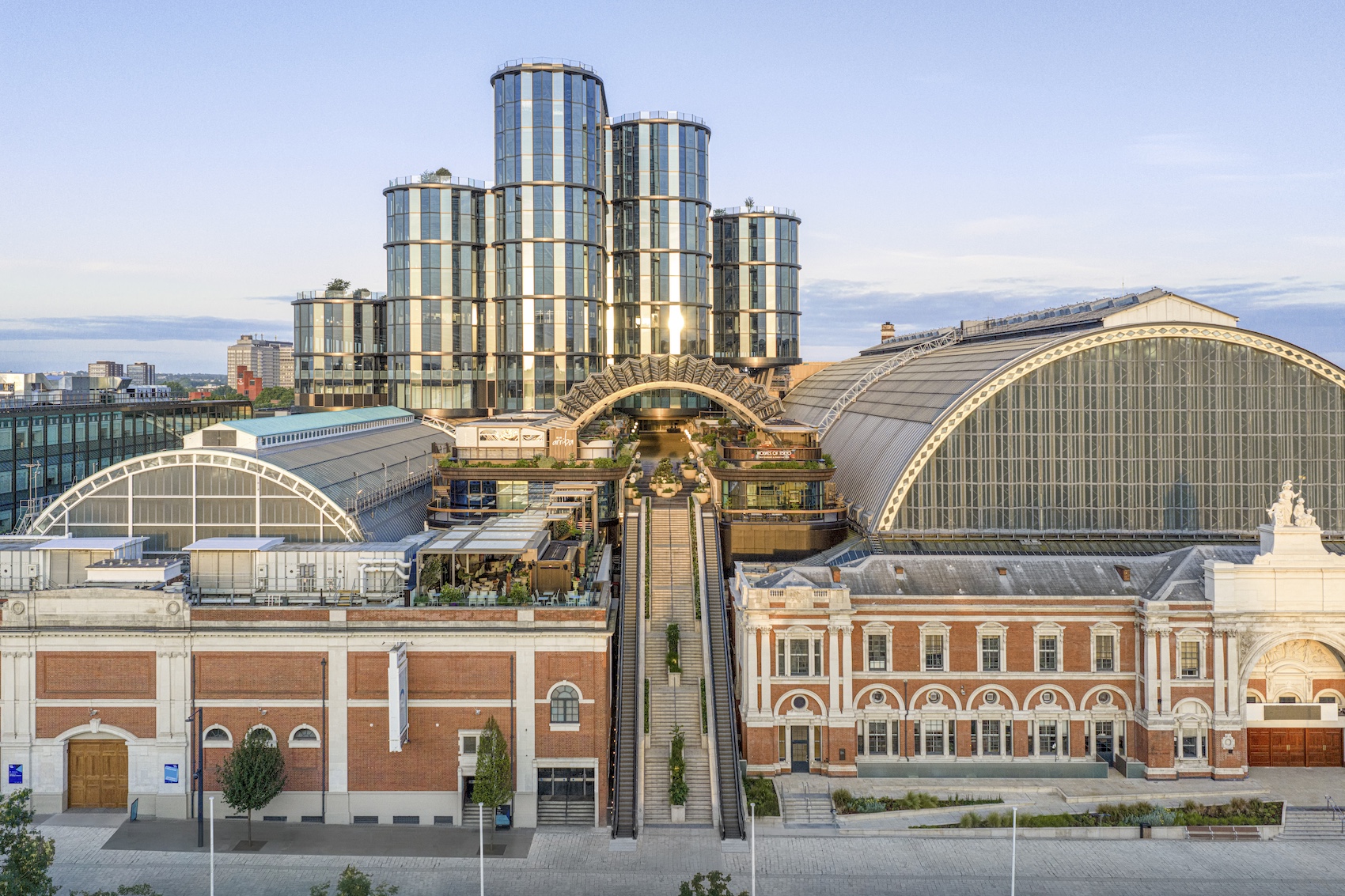
Heatherwick Studio and SPPARC have revealed the first completed elements of the long-awaited regeneration of Olympia in west London. Originally opened in 1886, the Grade II-listed landmark has been reimagined as a new cultural destination that combines exhibition halls, performance venues, workplaces, hospitality and public realm across a 5.7-hectare site. The project seeks to reconnect Olympia with the surrounding city while preserving the character and function of one of London’s most recognisable Victorian buildings.
For much of its history, Olympia operated as a largely inward-facing complex. Although it hosted everything from international exhibitions to landmark concerts and fashion shows, its kilometre-long perimeter remained closed to everyday public life. The new masterplan addresses this condition by opening the site through a network of streets, squares, gardens and elevated walkways that re-establish historic routes between the exhibition halls and create new connections to the surrounding neighbourhood.
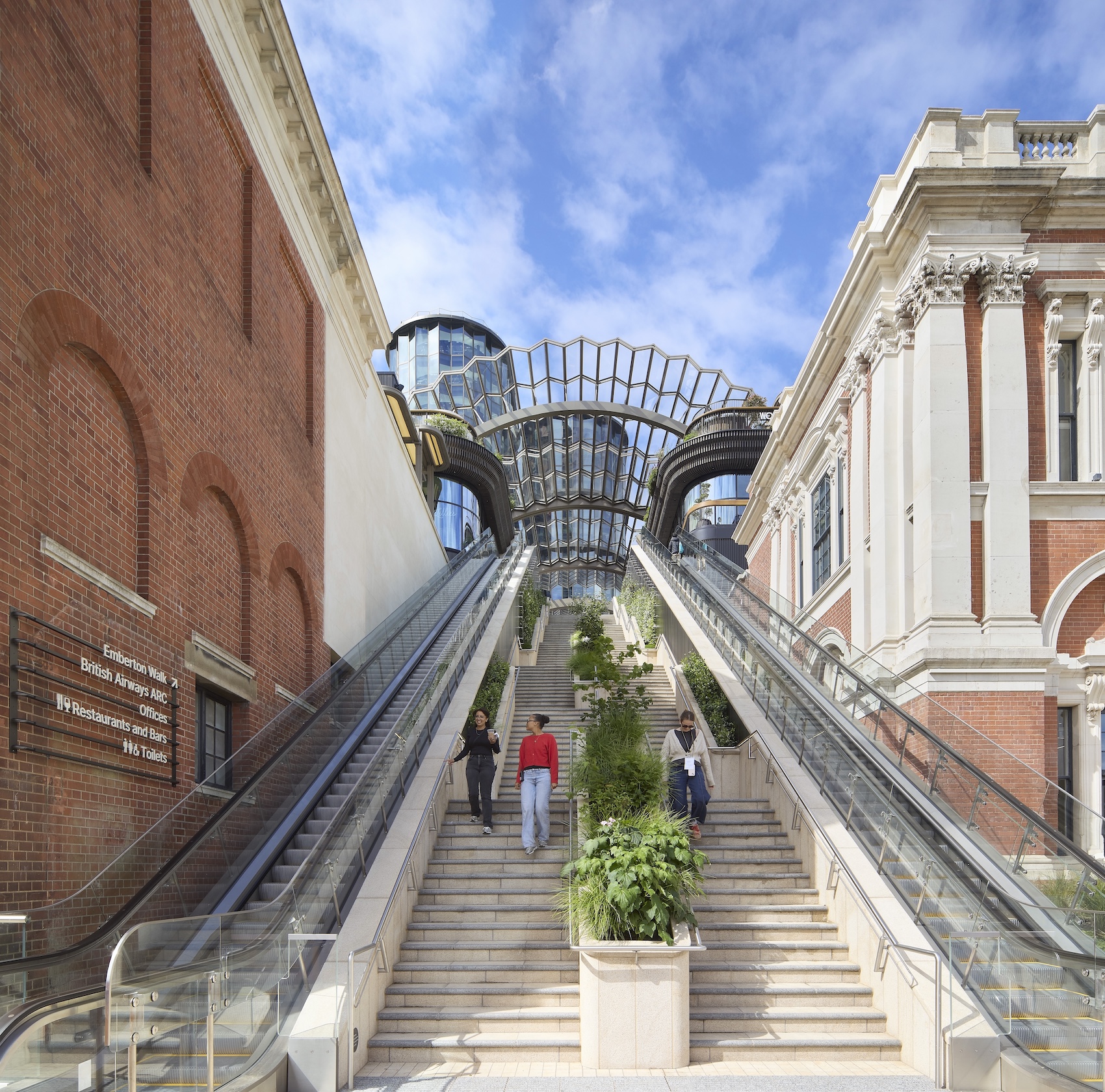
A key component of the strategy has been the relocation of servicing and logistics infrastructure below ground. This has freed up substantial areas of the site for public use, creating approximately one hectare of accessible outdoor space and allowing the historic buildings to engage more directly with the city.
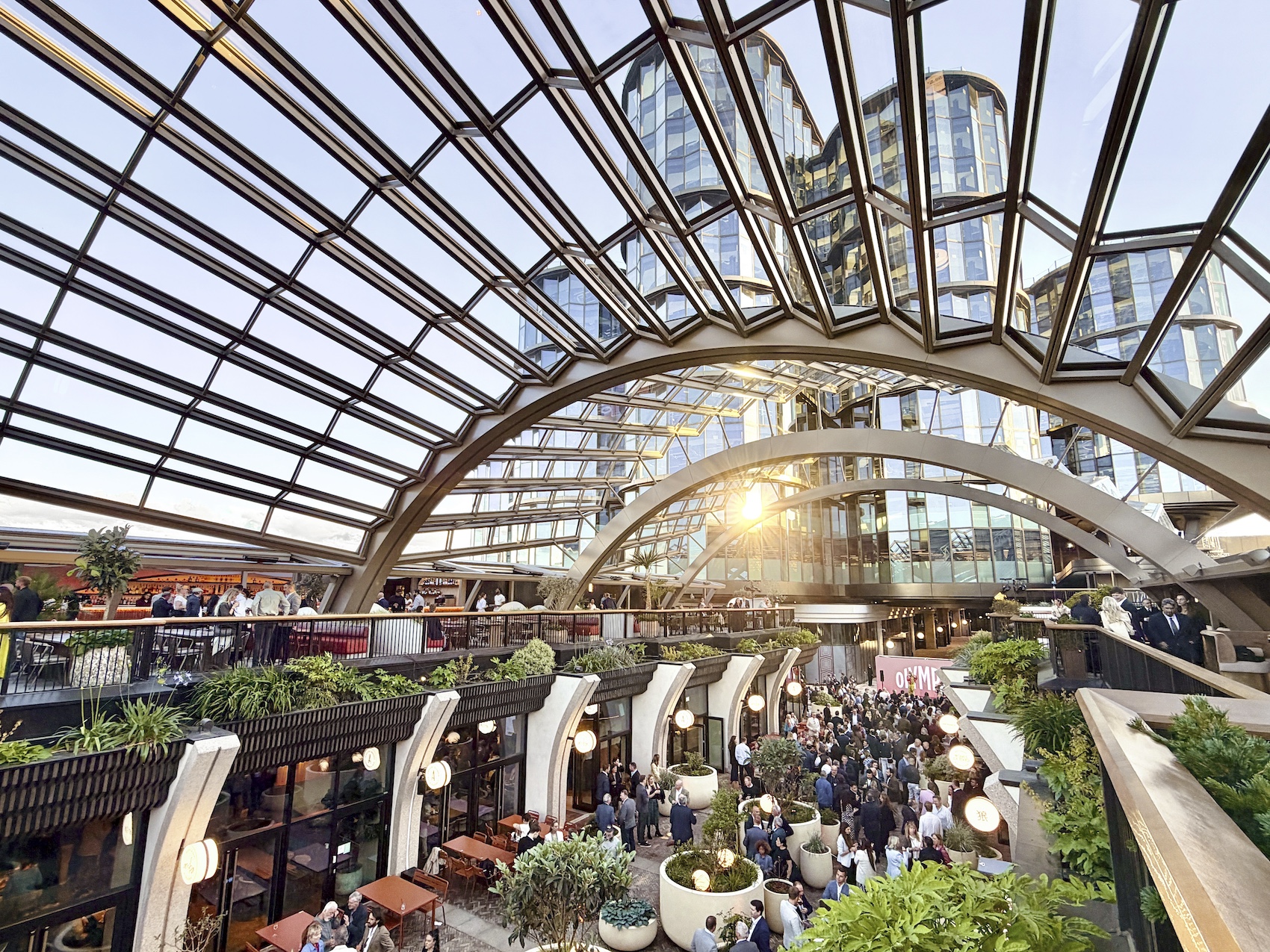
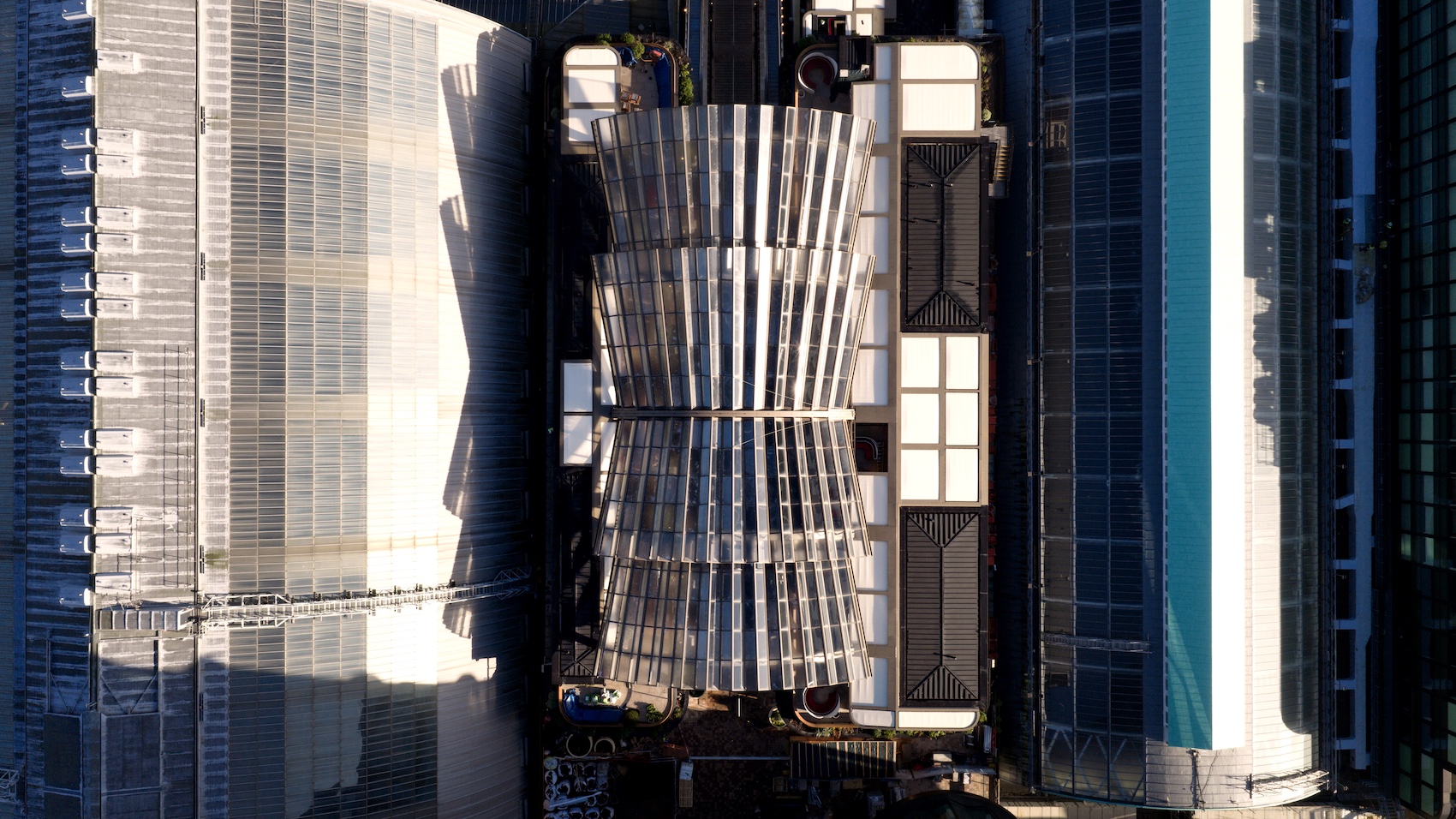
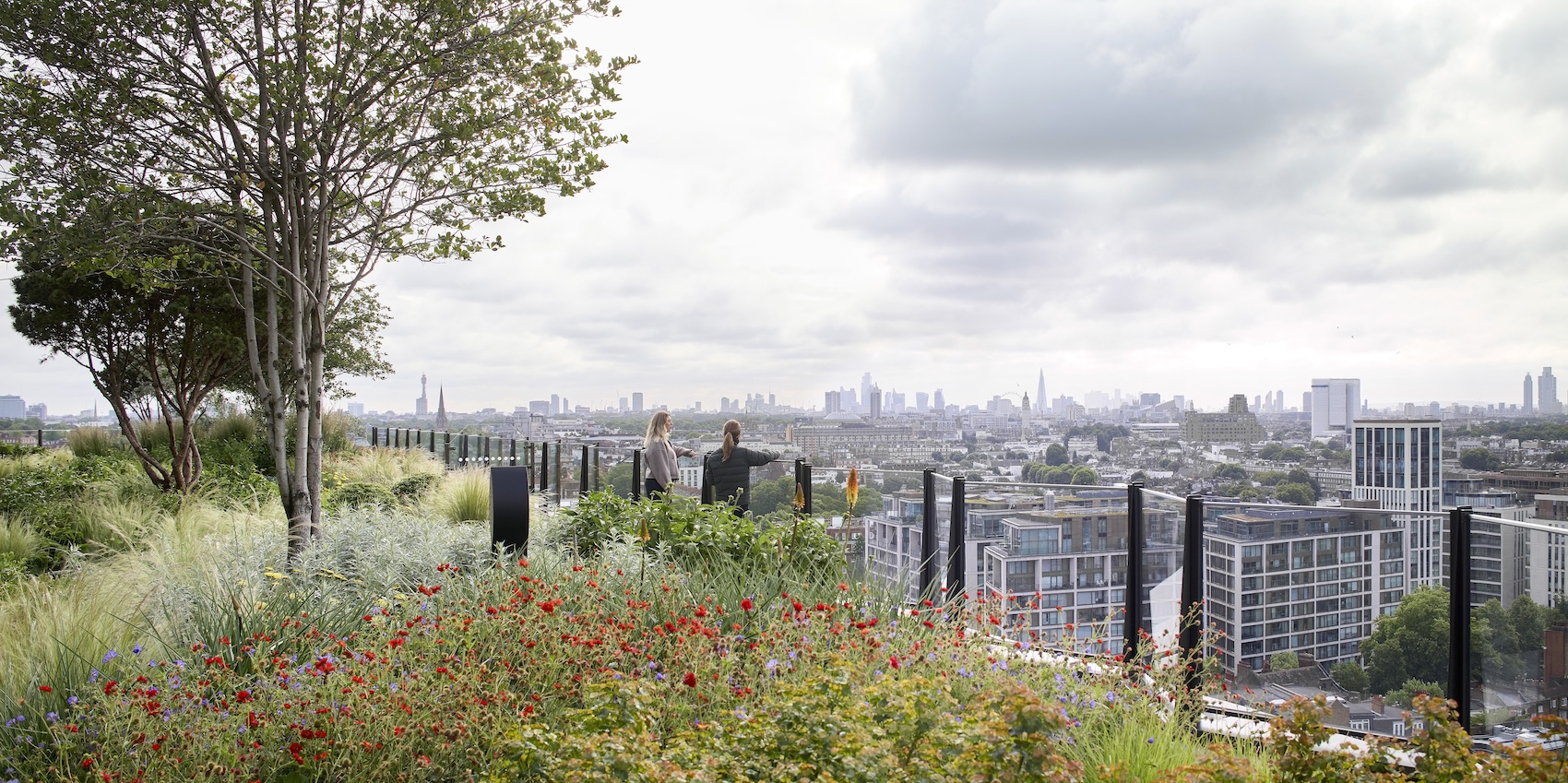
The most visible element of the first phase is a new public canopy that forms a gateway into the heart of the development. Positioned above the exhibition halls at second-floor level, the structure introduces almost 1,000 square metres of public space overlooking Olympia’s distinctive Victorian rooftops. Rising above a new public staircase and escalators, the canopy establishes a clear point of arrival from Hammersmith Road while offering elevated views across the cast-iron and glass barrel-vaulted roofs that define the complex.
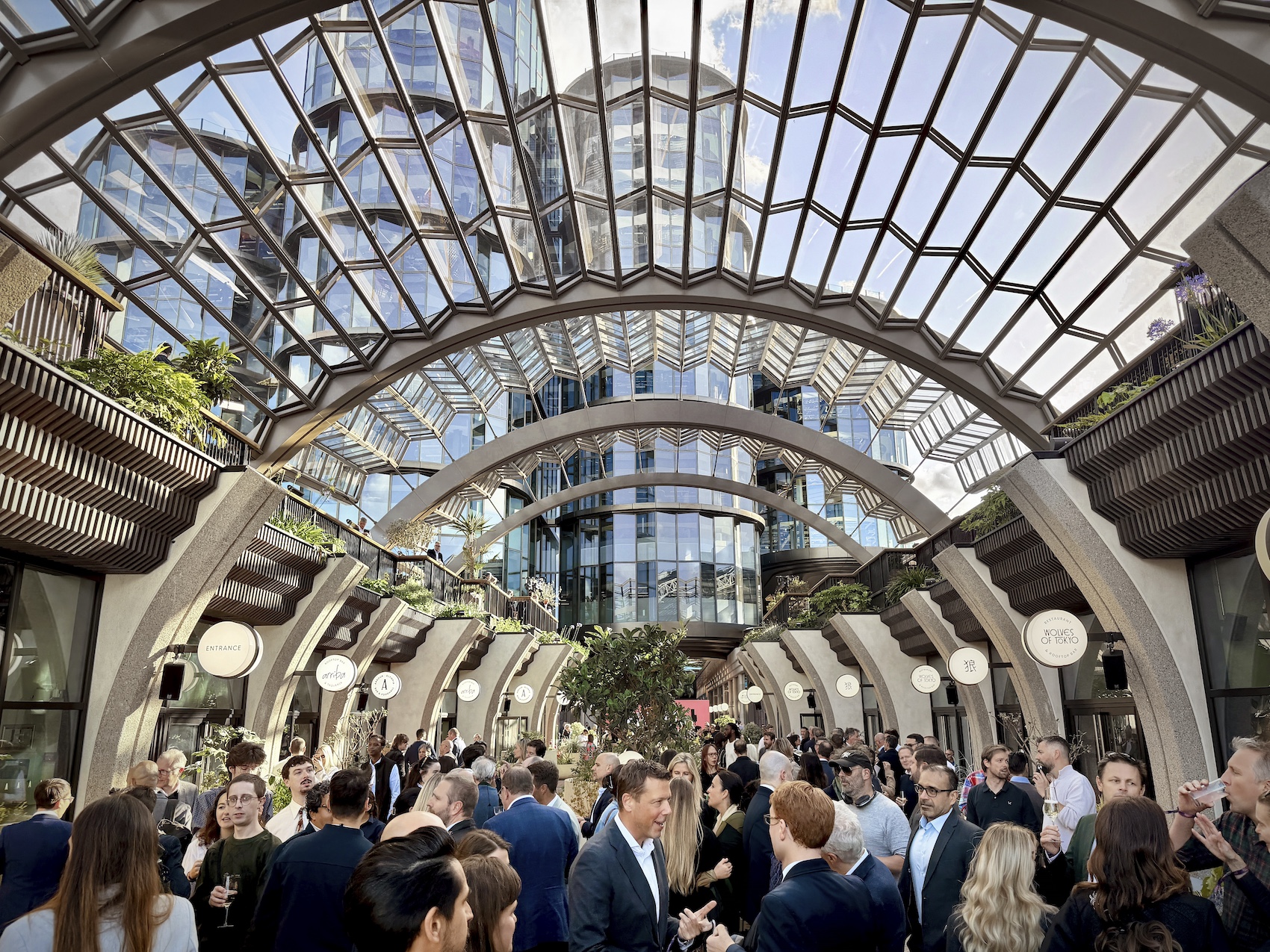
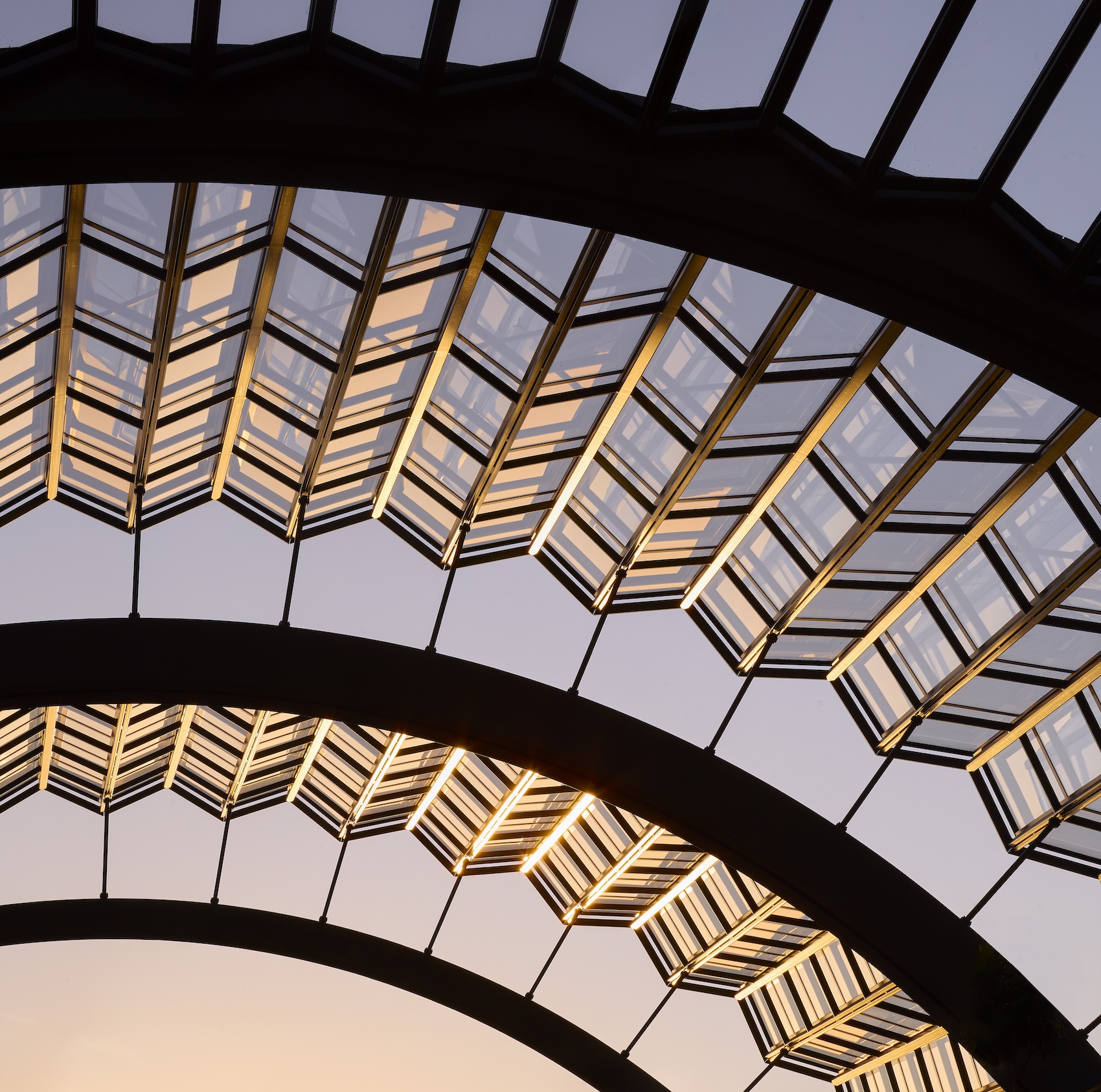
Designed by Heatherwick Studio, the canopy draws inspiration from the original architecture of Olympia and, in particular, the work of Sir Henry Edward Coe. Five curved steel arches span 22 metres across the structure, supporting a transparent roof comprising 520 pleated glass panels. The folded geometry is intended to evoke the rhythm and articulation of the historic Grand Hall façade.
The wider masterplan preserves Olympia’s role as a major exhibition venue, maintaining the existing halls and their capacity to accommodate up to 26,000 visitors. Alongside these historic spaces, the development introduces a range of new cultural, commercial and hospitality uses intended to establish a year-round destination.
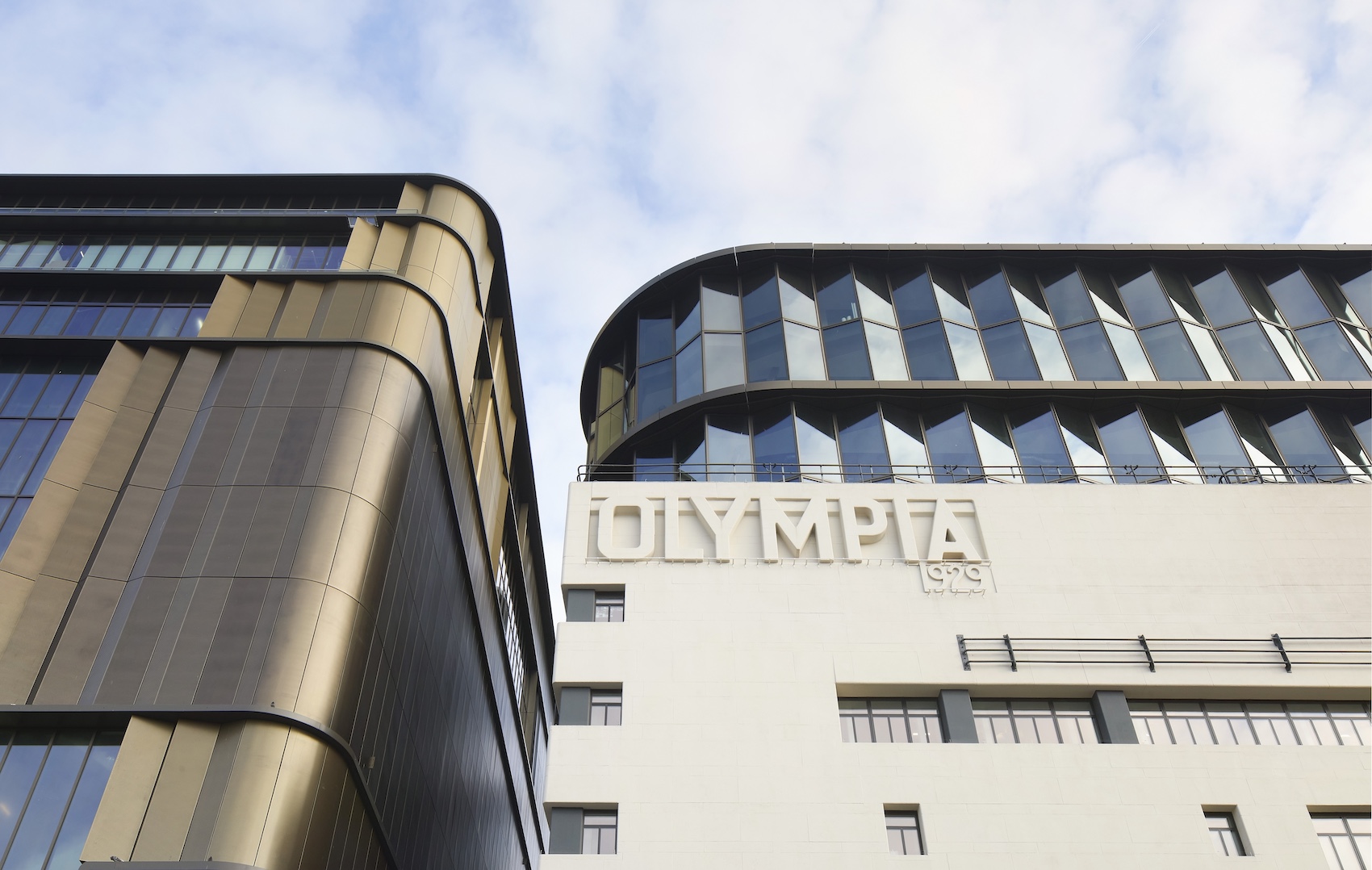
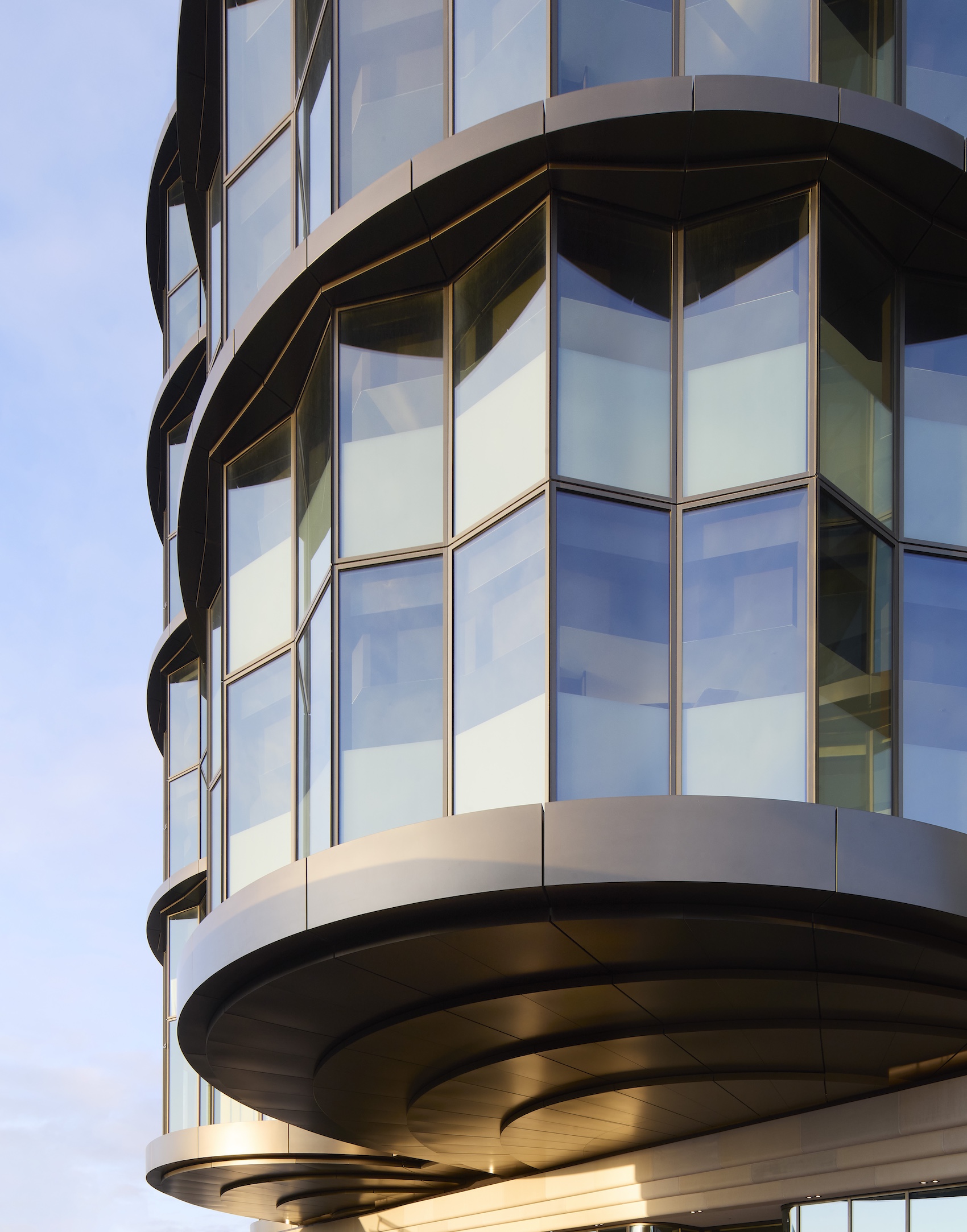
Among the major additions are the British Airways Theatre, and the British Airways ARC, both designed by Haworth Tompkins. The former is a 1,575-seat venue that will become the largest new permanent theatre to open in London for almost half a century, while the latter is a live entertainment venue with capacity for 3,800 people. New hotels operated by Hyatt Regency and citizenM will sit alongside more than 30 restaurants and bars, while 51,000 square metres of creative workspace and dedicated rehearsal facilities for local charities aim to support a broader cultural ecosystem.
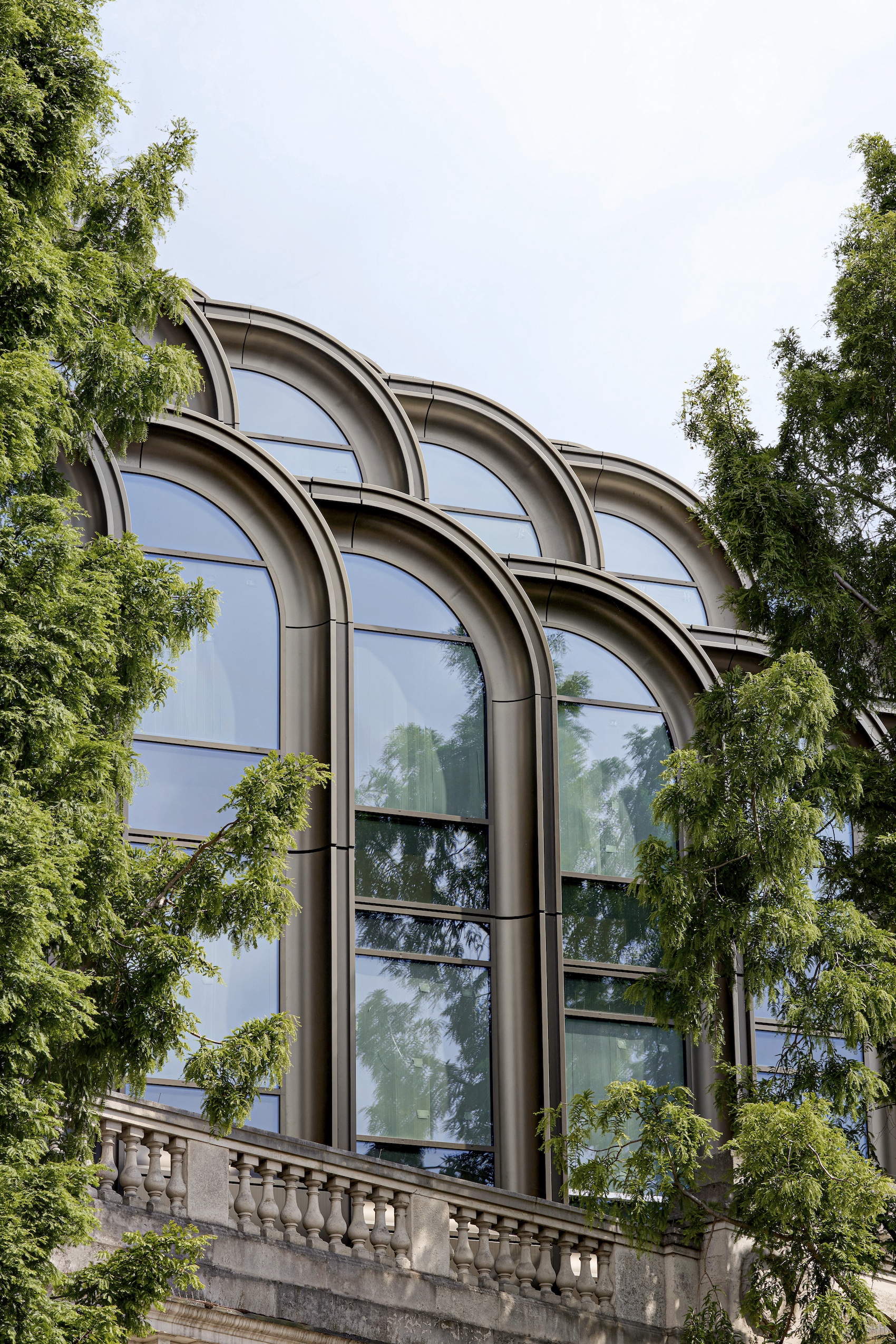
Throughout the project, the architectural approach has focused on working with the historic fabric rather than around it. Existing exhibition halls remain at the centre of the development, while new interventions are designed to reveal, celebrate and reconnect the site’s Victorian heritage. Once complete, Olympia is expected to attract around 10 million visitors annually and contribute more than £600 million to the UK economy each year.
Thomas Heatherwick, Founder and Design Director of Heatherwick Studio, said: “Olympia has held a strange place in the hearts of Londoners, sitting at the centre of our city, hosting so many unusual events, yet simultaneously closed off to most of us. It certainly wasn’t a place to take your family or go on a date. Our work over the last nine years has been about opening it up so anyone can enjoy it, whether they’re going to a play, a music concert, an exhibition, or simply wandering around.
We’ve reimagined it as part of London’s everyday life again, creating a new public street raised up in the air, sitting on top of the old exhibition halls. It’s surrounded by London’s largest theatre to open in 50 years, a music hall, two hotels, offices, plus lots of places to sit and eat and be together. What was once a lifeless perimeter is now a place where you can feel the city’s energy. The new Olympia reflects a quiet confidence, showing that we can take extraordinary British heritage andadapt it with care, imagination and purpose for the future.”
Additional Images