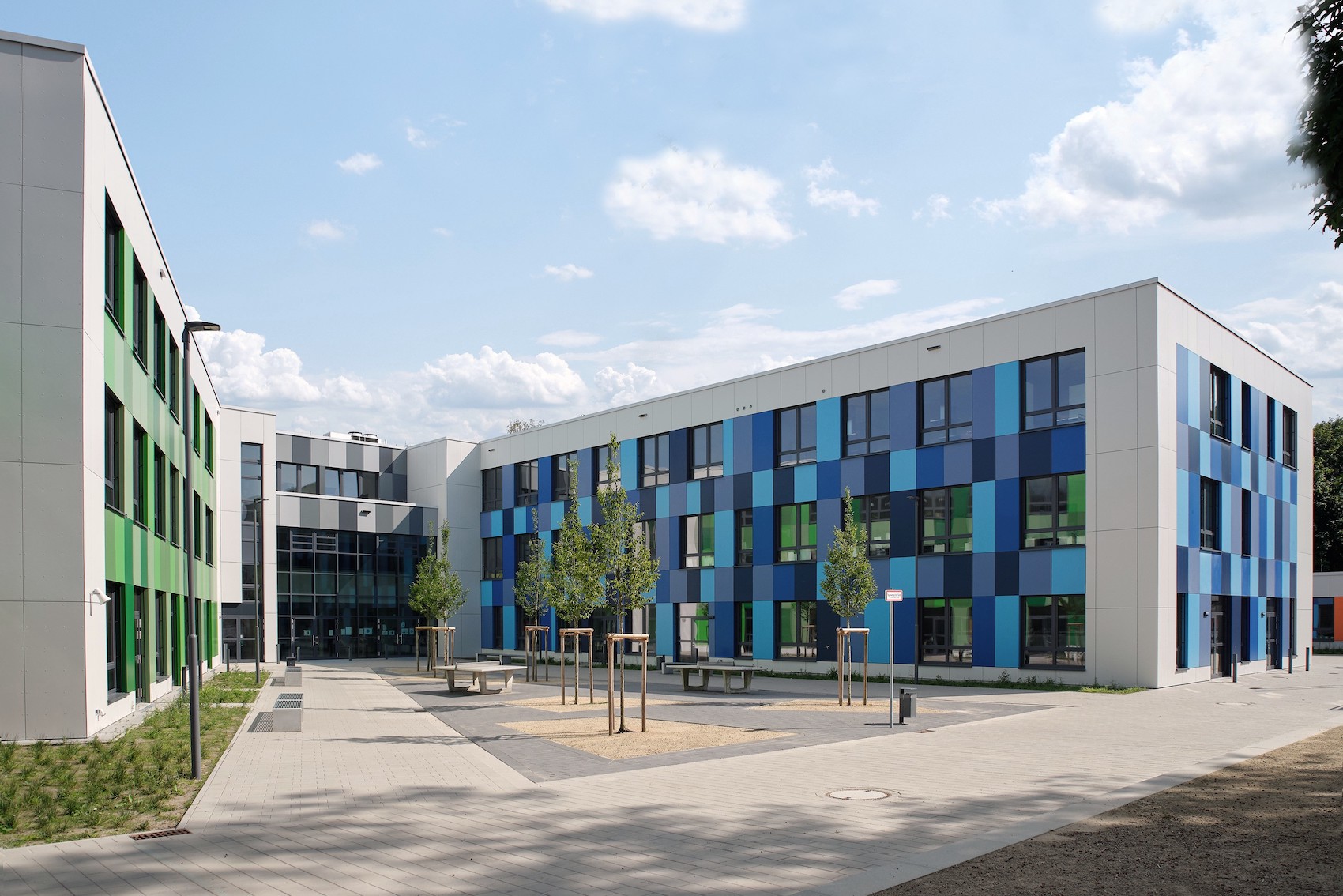
A project at Bremervörde, Germany, in which EJOT CROSSFIX was used to create the external envelope of a new school building.
EJOT’s all-stainless steel façade substructure system can play an instrumental role in the delivery of higher performing, more sustainable and stronger rear-ventilated or rainscreen facades.
EJOT CROSSFIX is a complete framing system, backed with a European Technical Assessment (ETA) to confirm its performance, which is compatible with all types of building substrates, insulation materials and cladding. It is supplied as a package, including all the brackets, rails, anchors and fasteners required to assemble a robust subframe.
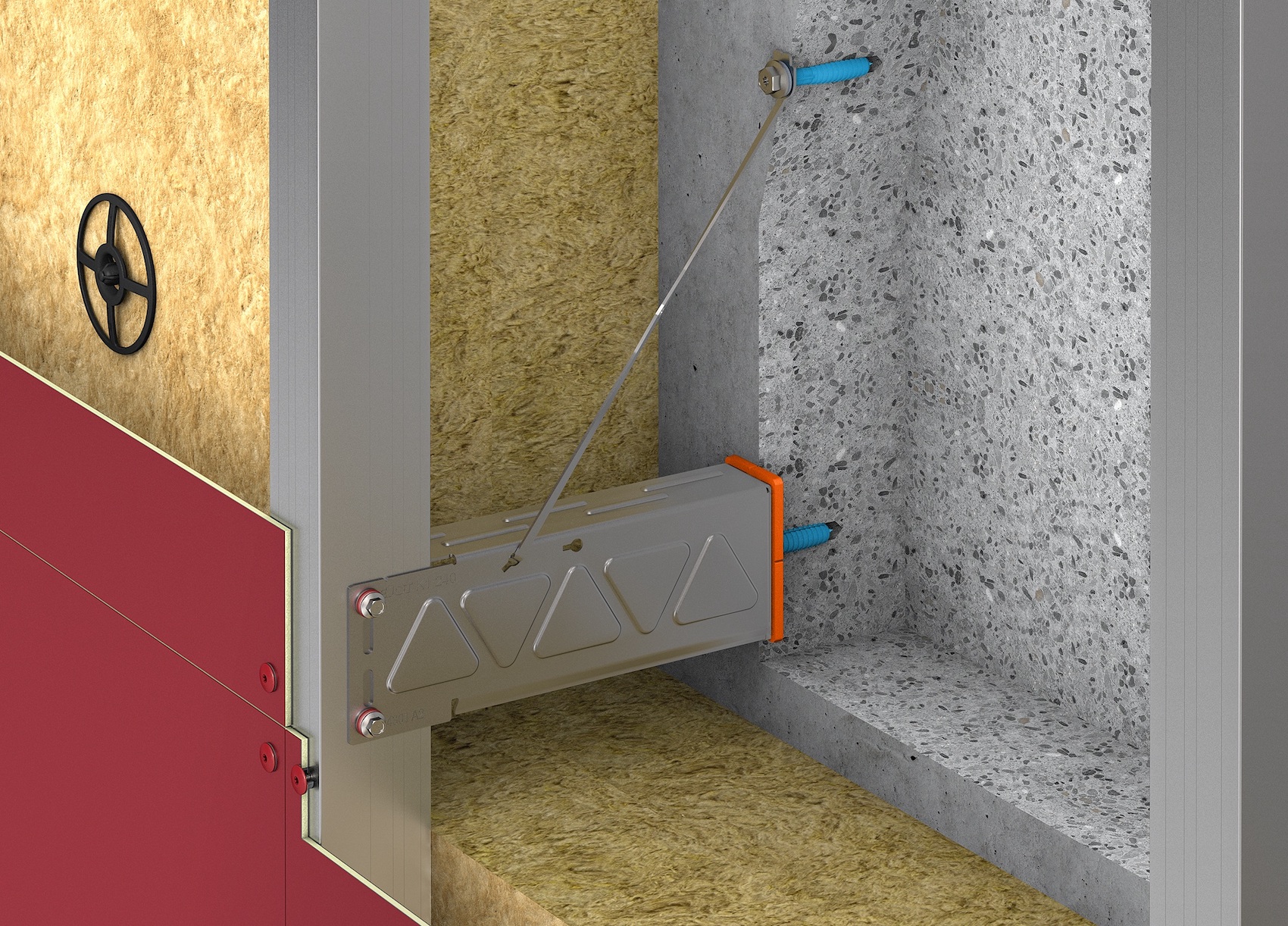
The EJOT CROSSFIX substructure is a complete package comprising stainless steel components for creating robust, highly sustainable rear ventilated facades.
By utilising stainless steel rather than aluminium and the optional ‘Powerkey’, which ensures the best possible load distribution between anchors, the system achieves significantly higher load-bearing capacities than other substructures. Its innovative design offers more than simply structural strength and stability, however. The system also enables enhanced performance and sustainability targets to be achieved, offering major benefits to the building as a whole, and compatibility with buildings designed in accordance with BREEAM, LEED and Passivhaus.
Attendees at the Zak World of Facades event in Manchester in June will be able to find out more about how CROSSFIX has contributed to successful façade projects globally. The EJOT UK team will be exhibiting at the event on 3rd June to give architects and façade designers the opportunity to discuss the technical characteristics and design features of the system which won a coveted German Innovation Award in 2021.
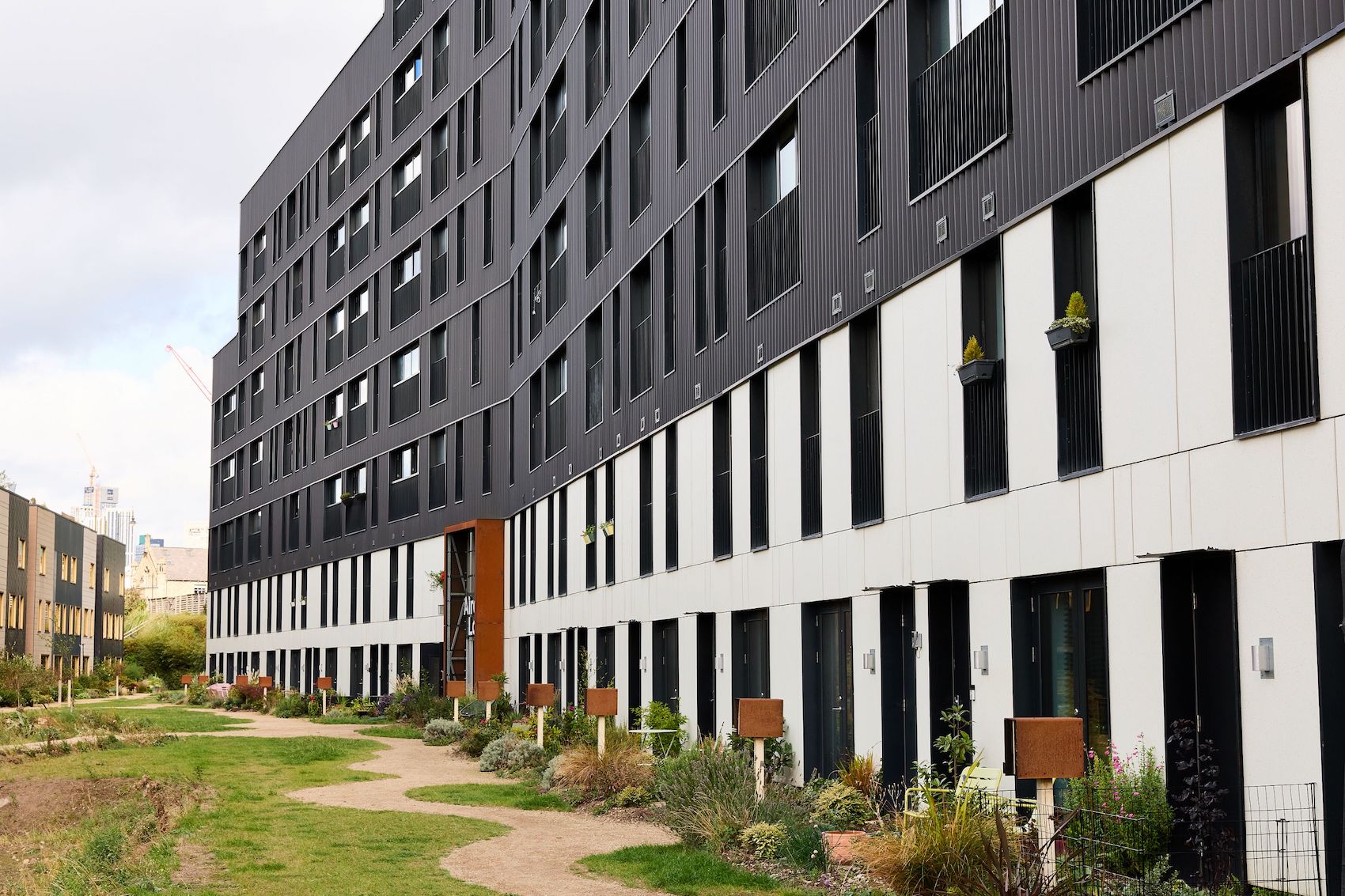
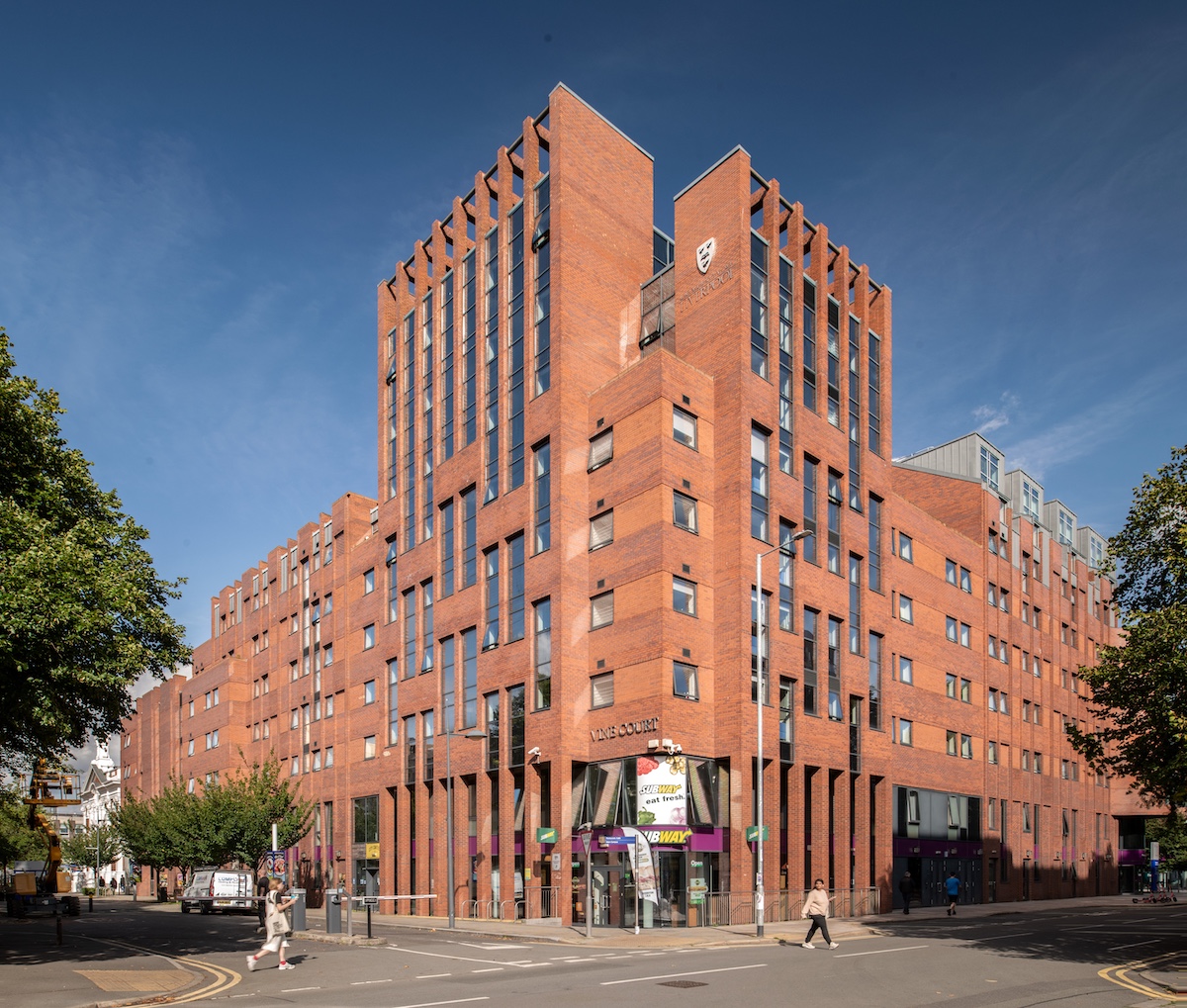
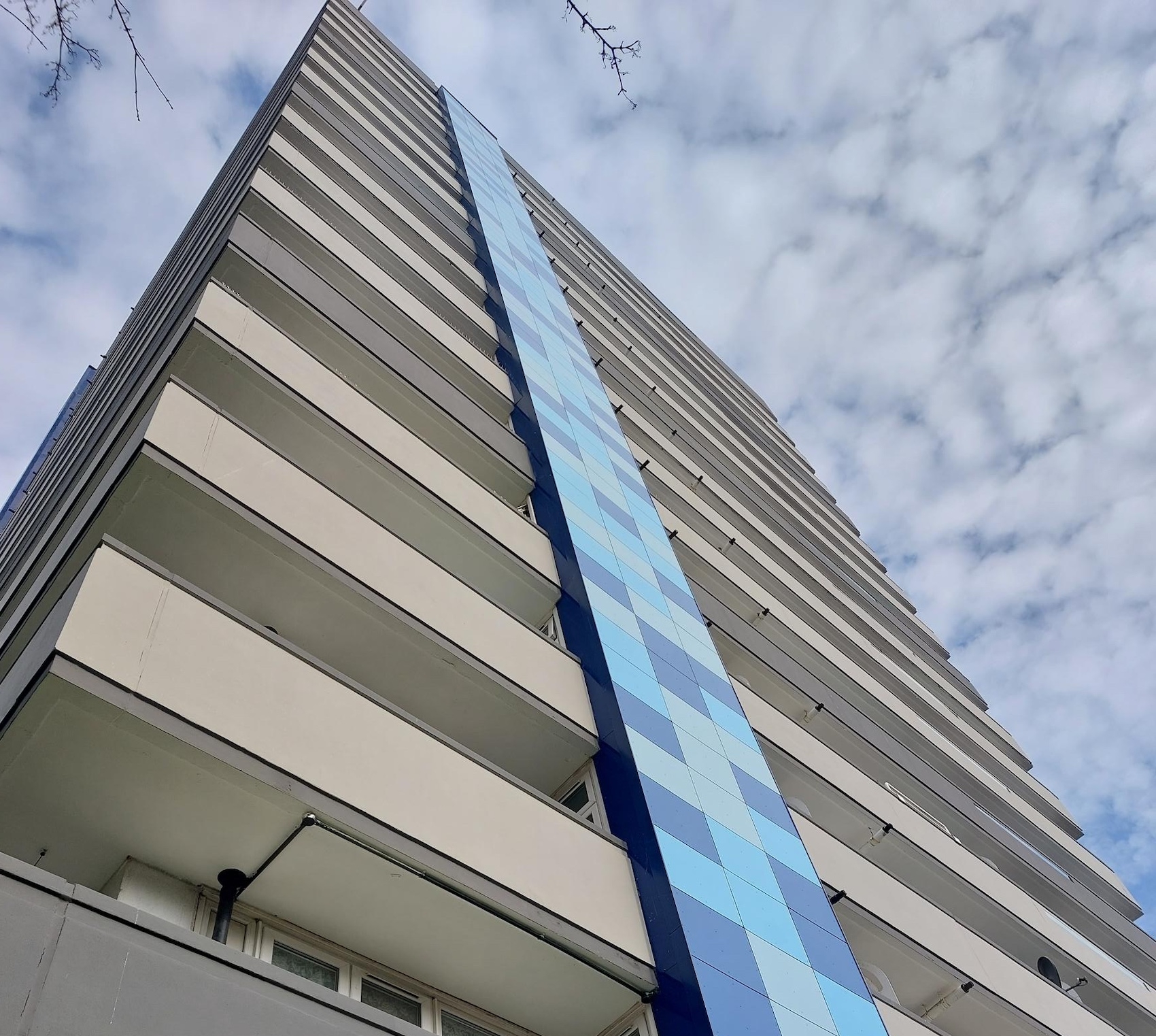
EJOT CROSSFIX was used to create the façades of two apartment buildings in the Citu Climate Innovation District in Leeds, accommodating the requirement for two types of cladding and a high level of insulation.
Reduced thermal bridging + greater strength = less material use
The advantages offered by CROSSFIX mainly result from its stainless steel composition. The material’s low thermal conductivity means thermal bridging in each bracket of the substructure is far lower than it would be for aluminium equivalents. The material’s increased strength versus aluminium also reduces the number of brackets required when building with CROSSFIX, resulting in fewer structural connections from the building substrate to the outer sheet – further reducing thermal bridging potential.
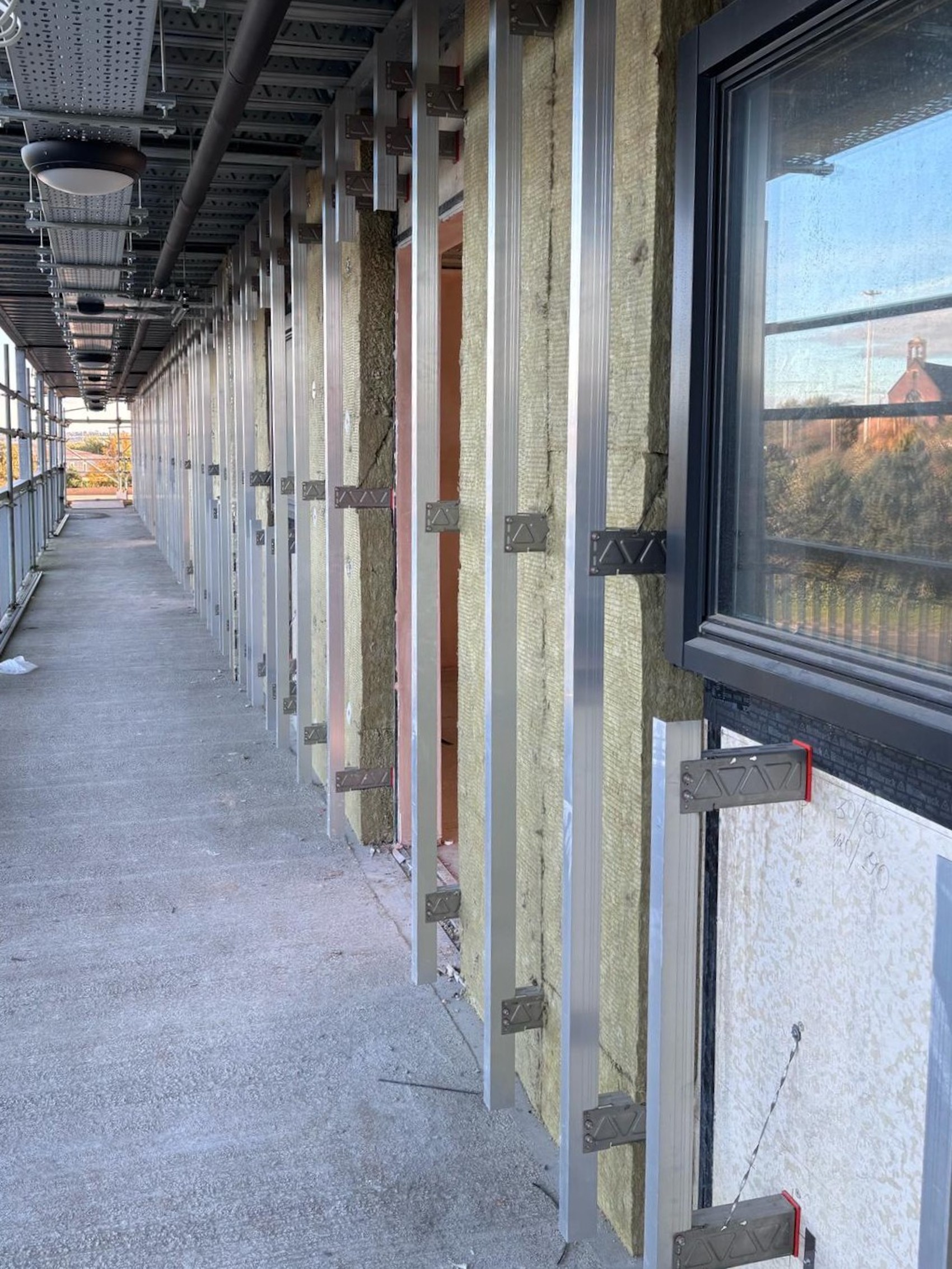
In the Climate Innovation District project in Leeds, the CROSSFIX Konsole bracket secured vertical rails.
This thermal efficiency means insulation depth can be decreased in a façade built with CROSSFIX without compromising U-values. That makes it possible to either achieve higher levels of thermal insulation without increasing the wall depth, or reduce the overall wall thickness to increase the amount of floor space within the building.
By opting for a reduced wall thickness, resource-use can be cut because less insulation will be required. And with fewer brackets and rails to connect, substructure assembly time and cost can also be lowered.
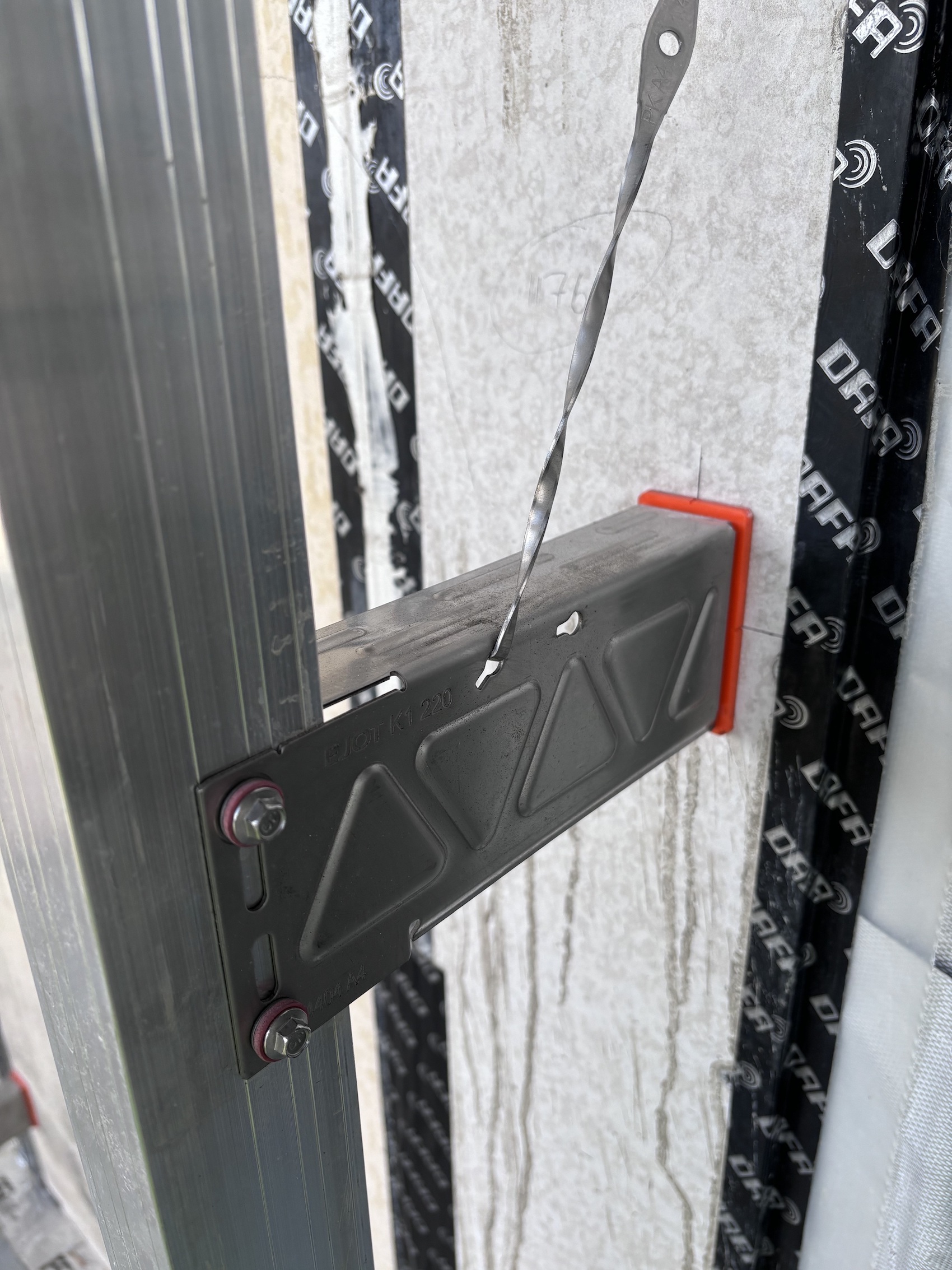
The Konsole is the core component of the EJOT CROSSFIX system, engineered for use with both vertical and horizontal rails and incorporating a thermal stop to minimise thermal bridging.
Innovative design for vertical and horizontal rails
The design of the CROSSFIX Konsole bracket enables it to be used with both vertical and horizontal rails, providing a number of practical benefits compared with substructure brackets that can only accept a rail in one direction – particularly greater design flexibility.
By enabling both vertical and horizontal rails in a single bracket, the rail orientation can be matched more easily to the cladding format and fixing locations optimised for aesthetic joint alignment. Complex geometries, façade setbacks and mixed cladding systems on the same building are also more straightforward, with greater flexibility to change façade materials late in the design process.
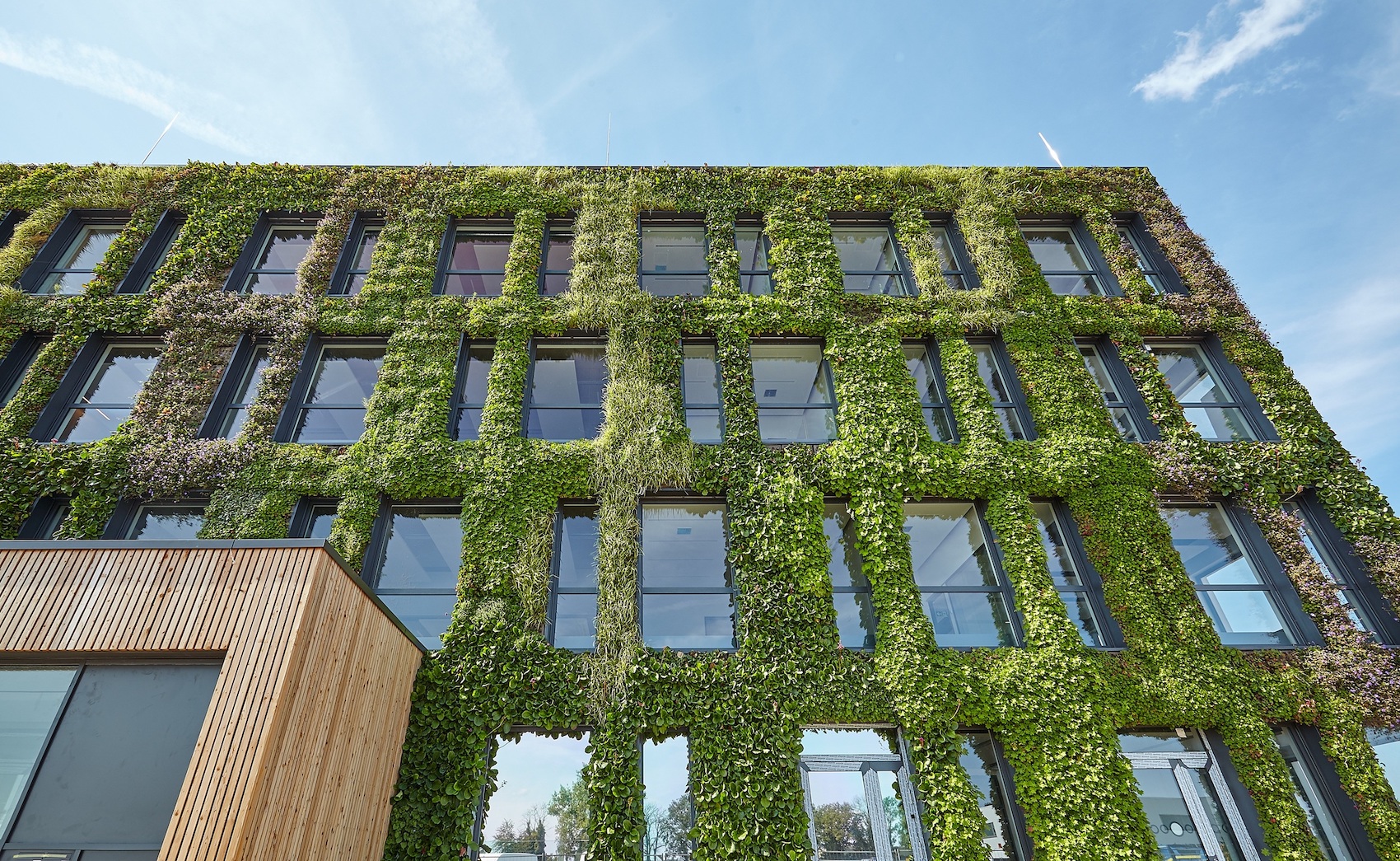
CROSSFIX is also suitable for creating facades with living walls, as this new office development project in Germany demonstrates.
Compatible with more demanding fire safety standards
CROSSFIX’s stainless steel composition is also ideally suited to construction’s new building safety regime, particularly in respect of its ability to withstand high temperatures. The system is classified with an A1 fire rating according to EN 13501-1, the highest possible classification for non-combustible materials, signifying that it does not contribute to the spread of fire. For this reason, CROSSFIX may be preferable to substructure systems manufactured from aluminium or hybrid materials including plastic.
Click here to find out more about CROSSFIX.