Rob Delius from Stride Treglown and long-standing resident Kristian Coleman explain how Great Bow Yard in Langport, Somerset – Residential Award winner at the Test of Time Awards 2025 – has settled into its landscape, and why its residents never want to leave.
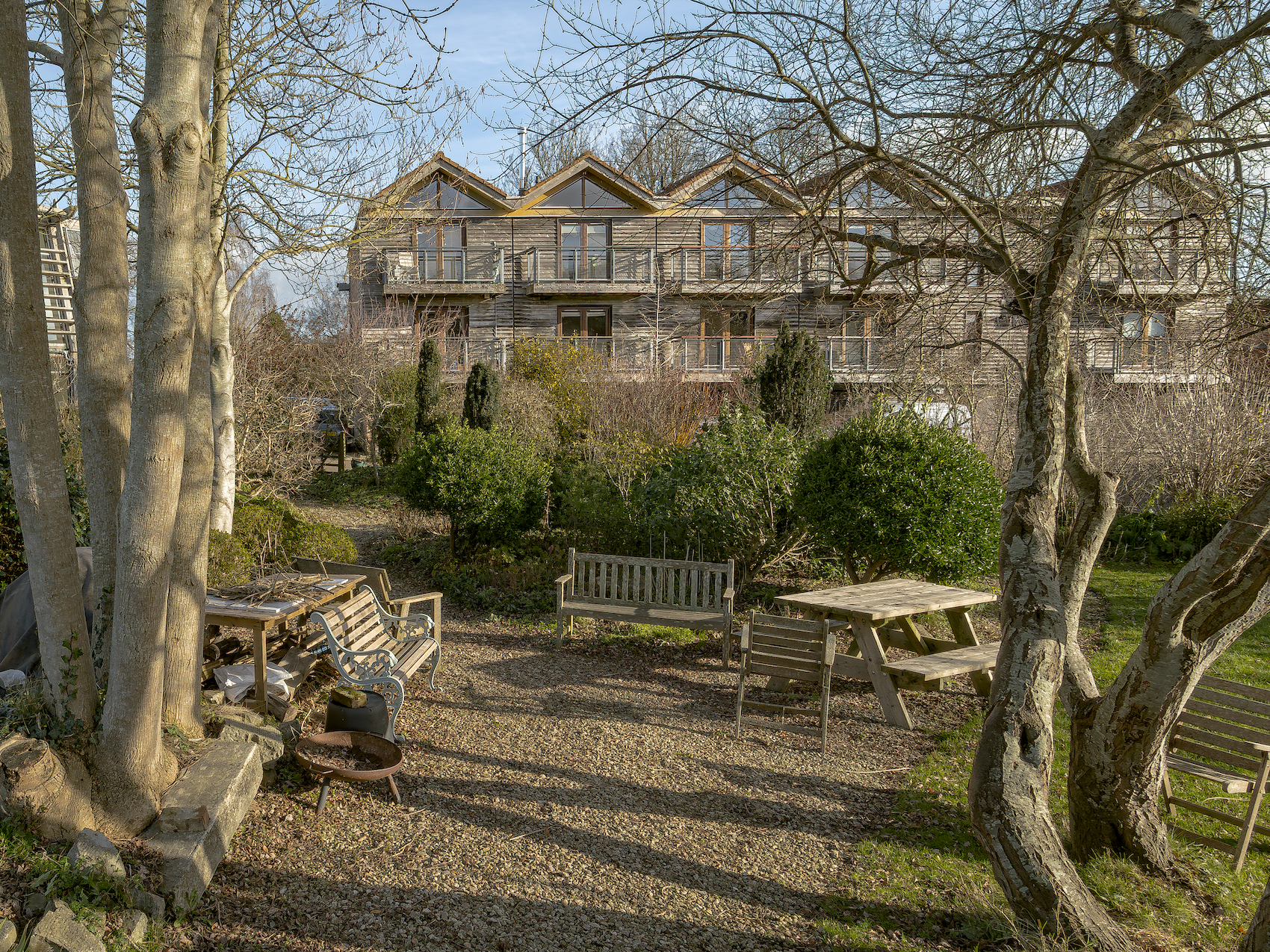
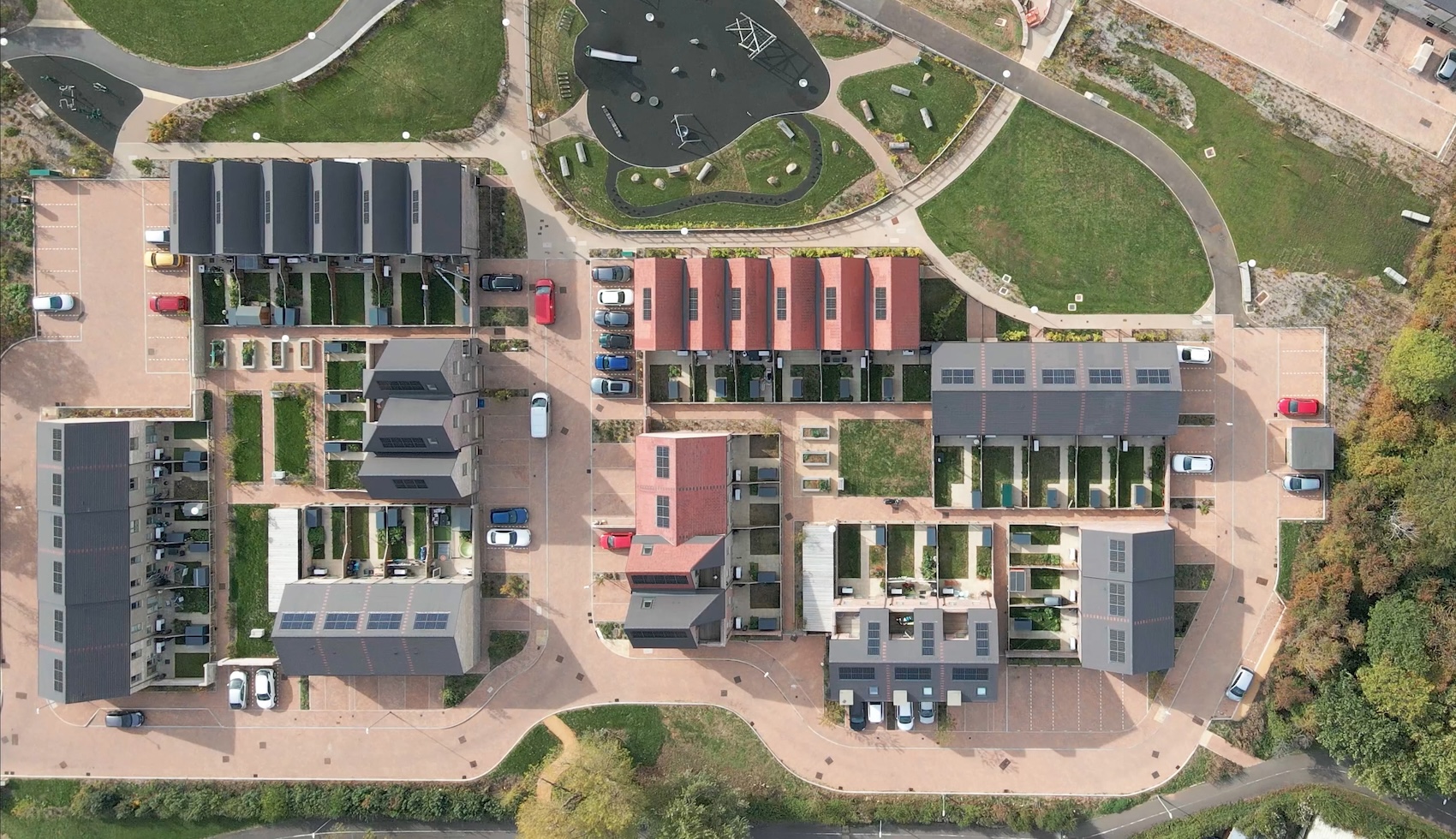
Conceived by the client, ECOS, Stride Treglown’s Great Bow Yard was an early demonstration project for regenerative design. Built on a contaminated, flood-prone site with mature trees, and on a prominent location at the entrance to Langport in the Somerset Levels, the 12-home development comprises two distinct buildings facing a shared garden. The south-facing terrace includes five three- and four-bedroom homes, each featuring integrated sunspaces as part of a passive solar design strategy. The west-facing terrace houses townhouses and apartments. Residents were closely involved in selecting details, such as window surround colours, and shaping the vision for shared outdoor spaces.
Over time, the communal garden has flourished through resident stewardship, softening the buildings and enhancing biodiversity. The western red cedar cladding has weathered, blending into the landscape. Residents have adapted rainwater harvesting systems for washing machine use and retrofitted roof-integrated solar PV systems using pre-installed infrastructure. The site’s layout – cars discreetly tucked between the buildings and homes facing the shared green – has created a strong sense of neighbourliness, with feedback highlighting the importance of shared spaces to wellbeing and social connection.
The team published a book to share learnings from the project. Independent studies found the homes to be among the most energy-efficient in the UK at the time of completion. Residents report high-comfort levels and low-energy use, supported by bio-based construction, extensive insulation, solar technologies, and thoughtful passive design. The sunspaces, which double as thermal buffers and light-filled living areas, have proved popular, shaping subsequent projects by Stride Treglown.
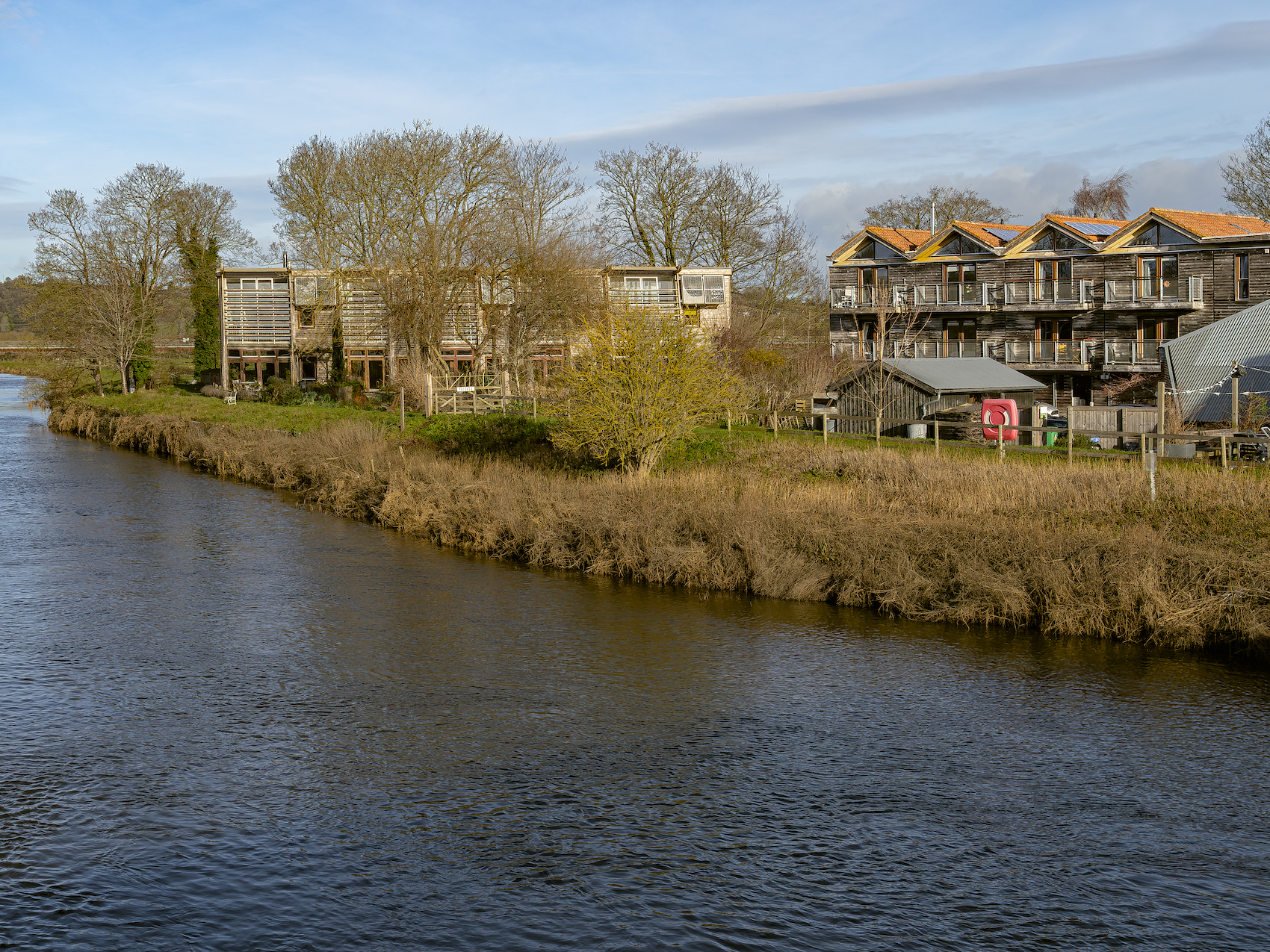
On its completion in 2006, the 12-home development was among the most energy-efficient schemes of its kind in the UK.
Rob Delius The development borders the River Parrett in the town of Langport in Somerset. It was a brownfield site with a warehouse on the corner, but with great potential and beautiful views. The practice, along with several other architects, was invited by the client to do a proposal for about 12 homes. We divided the development into two residential blocks surrounded by a little community garden in front. There were a number of existing trees that we wanted to retain, and that was a driver for the design. We imagined that the old warehouse building would be turned into a community hub, and we wanted to explore how we could really connect to the site and get an inside/outside feeling for the homes. This approach is contrary to the typical developer home, which has small windows and is very much separated from the outside.
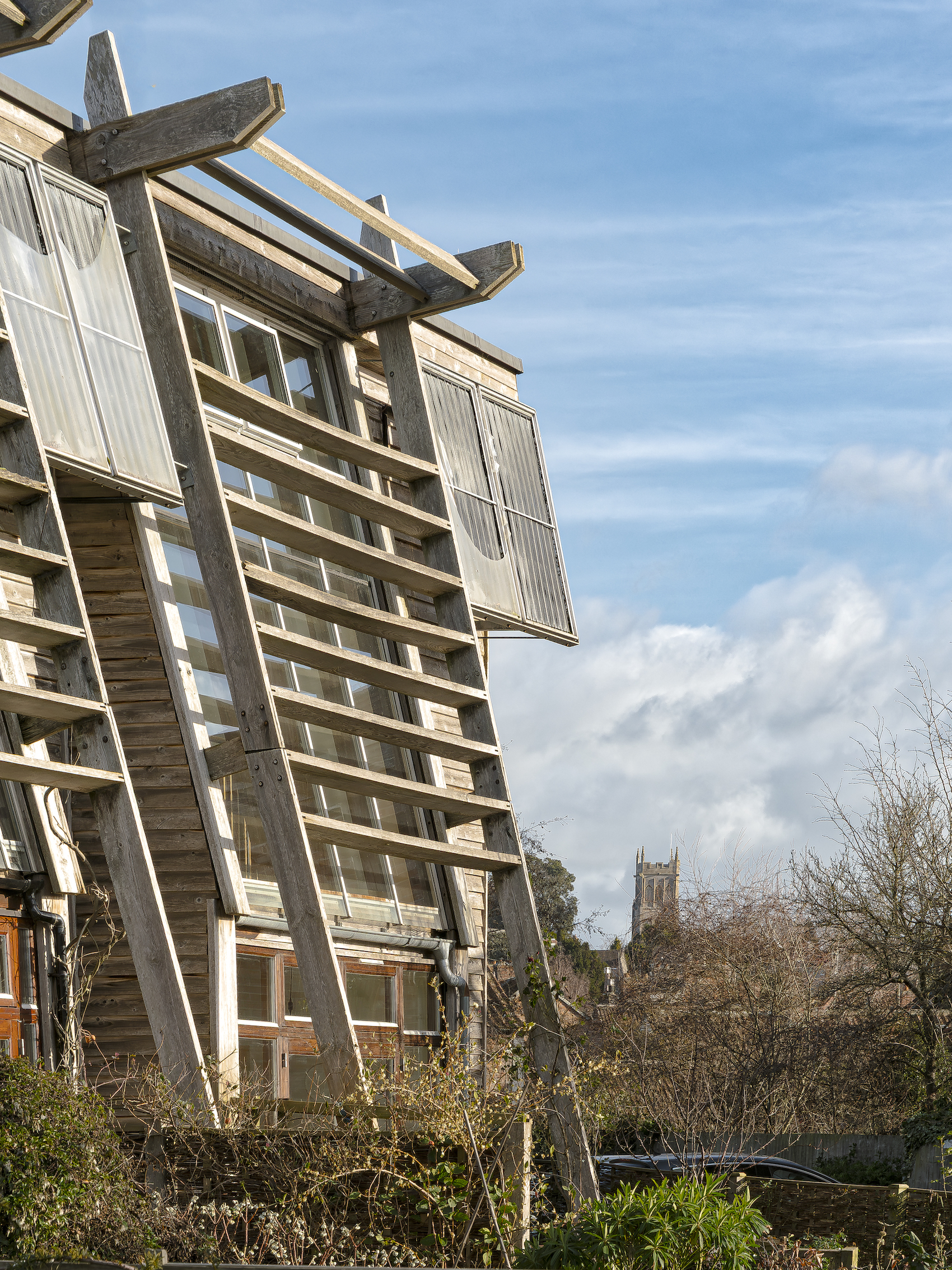
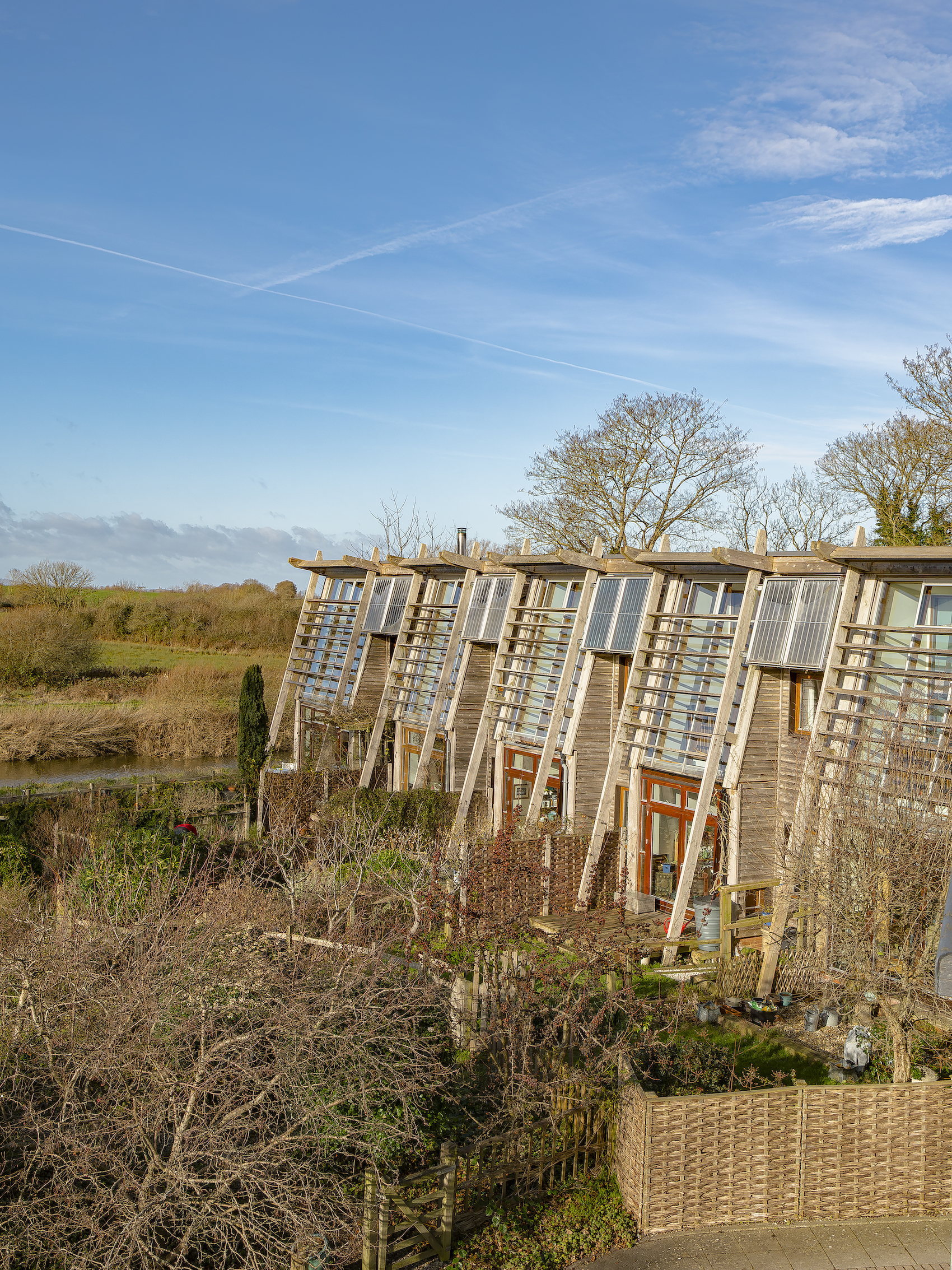
Left: Integrated double-height ‘conservatory’ spaces with timber brise soleil promote stack ventilation while minimising overheating in the summer.
Right: The visually-striking south-facing building contains five, three- and four-bedroom units.
Kristian Coleman One thing I really liked about this place is the unusual design. It wasn’t a typical square box, but has a very European feel to it, which I fell in love with the first time I saw it.
Rob Delius We were very interested in doing a passive solar scheme. Bear in mind this was back in 2006 when there was a lot of focus on that in the industry. We noticed that houses often have conservatories put on the back of them, and we wondered why that was. Obviously, there was something about the houses which wasn’t providing enough light, enough connection to the garden, or enough space. People love having that conservatory-type space. But they get very cold in the winter and overheat in the summer. So we wanted to explore the idea of a conservatory integrated into the house in a way that would work environmentally. We designed it to be double-height so we could get stack ventilation going. It is ventilated at the top and bottom, and it has a timber screen in front of it, which welcomes winter sun in, but excludes the summer sun. So it helps it not overheat.
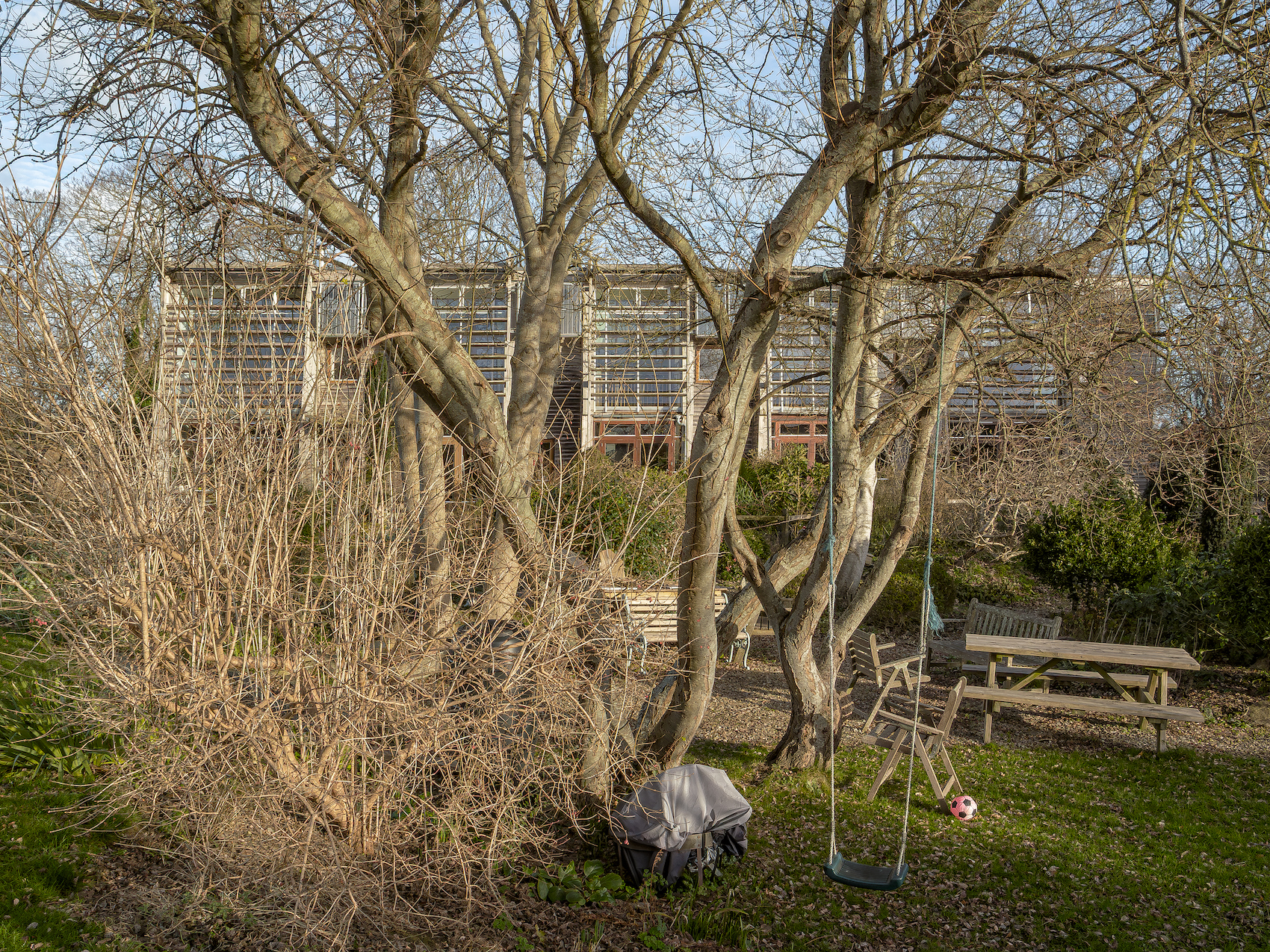
The extensive use of western red cedar cladding helps the development blend in with the surrounding mature landscape.
Kristian Coleman I’ve been living in Great Bow Yard now for 10 years and thoroughly enjoy the place. I occupy one of the south-facing houses with the double-height conservatory, which I absolutely love. It gives you that real feeling of indoor/outdoor living – especially in summer when you can have all the doors open. It does a fantastic job of heating the house in the winter. When the sun is shining it heats up the conservatory, and we can open the doors and let some warm air into the house. In the summertime, the slats in front of the conservatory do a great job of keeping the house cool. When it’s very hot outside, you walk into the house and you’d swear air-conditioning was on. I think they’re fantastic houses. Luckily we managed to purchase one, and haven’t looked back.
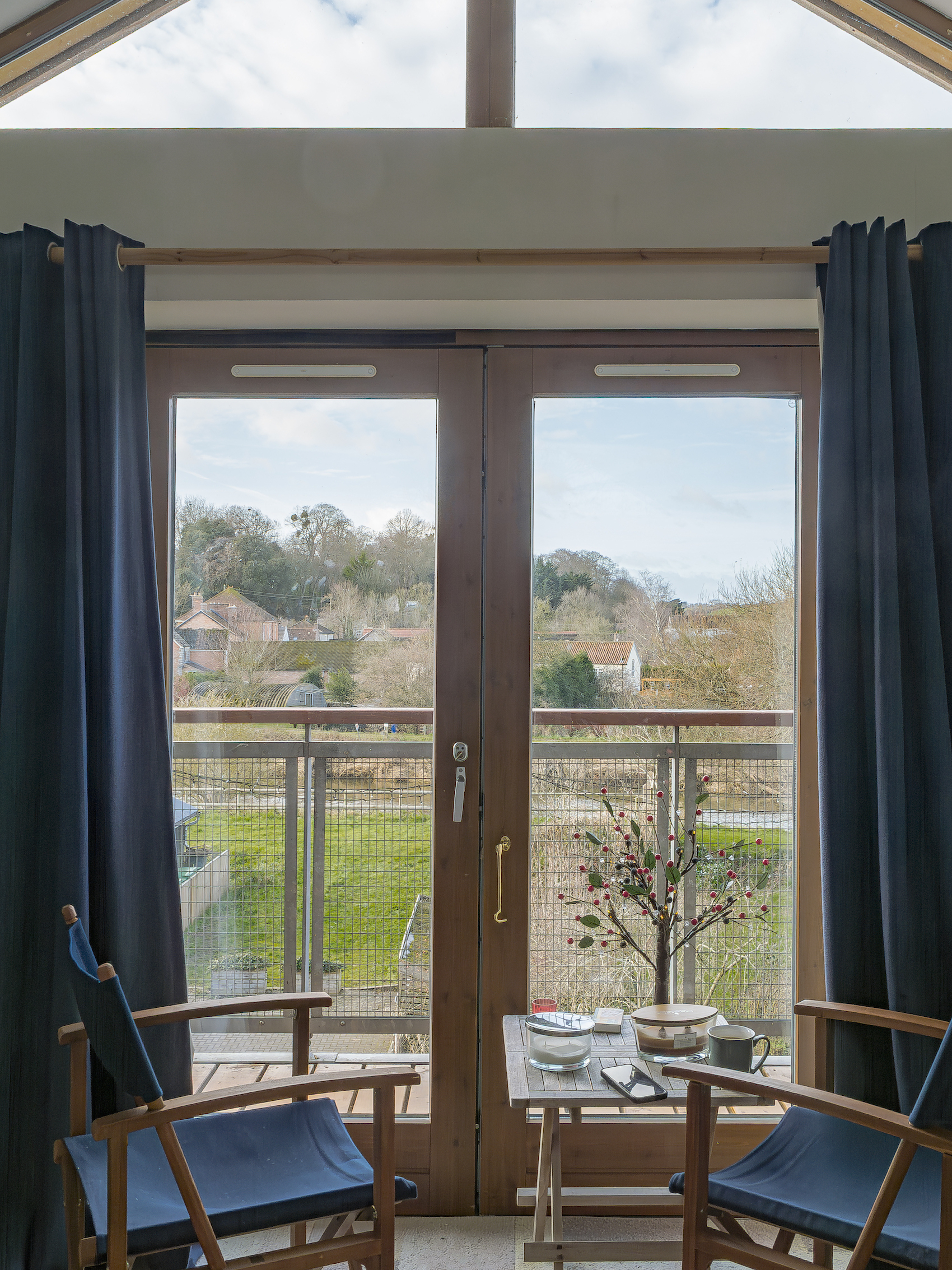
Rob Delius The south-facing terrace has a mono-pitched roof. The idea was that we would collect the rainwater from the roof, and the sun spaces, which are really light and airy, would act as a buffer for the accommodation behind it. We had the rainwater tanks at the back of the buildings and mounted on top of the porches. The site’s water level was quite high, so there was an issue about putting them in the ground. Raising them up was also good for gravity, and helped residents to see what was actually happening, rather than hiding away the mechanics of the house. The other block is more of a townhouse arrangement, with good views over the river and the community garden, which is why we put in the balconies. We flipped the accommodation, so the bedrooms are on the middle floor, but the kitchen and dining space are on the top floor, which we wanted to be a very light and airy space. We didn’t want the arrangement you get on many conventional developments, where you have cars parked in front of the homes. We wanted the community garden to be the focus and uncluttered by cars. So the cars are neatly tucked between the gardens, out of view. Kristian and I have been speaking over the last few years, and it’s great to hear about the get togethers that happen in the shared gardens. This is something we always hoped for.
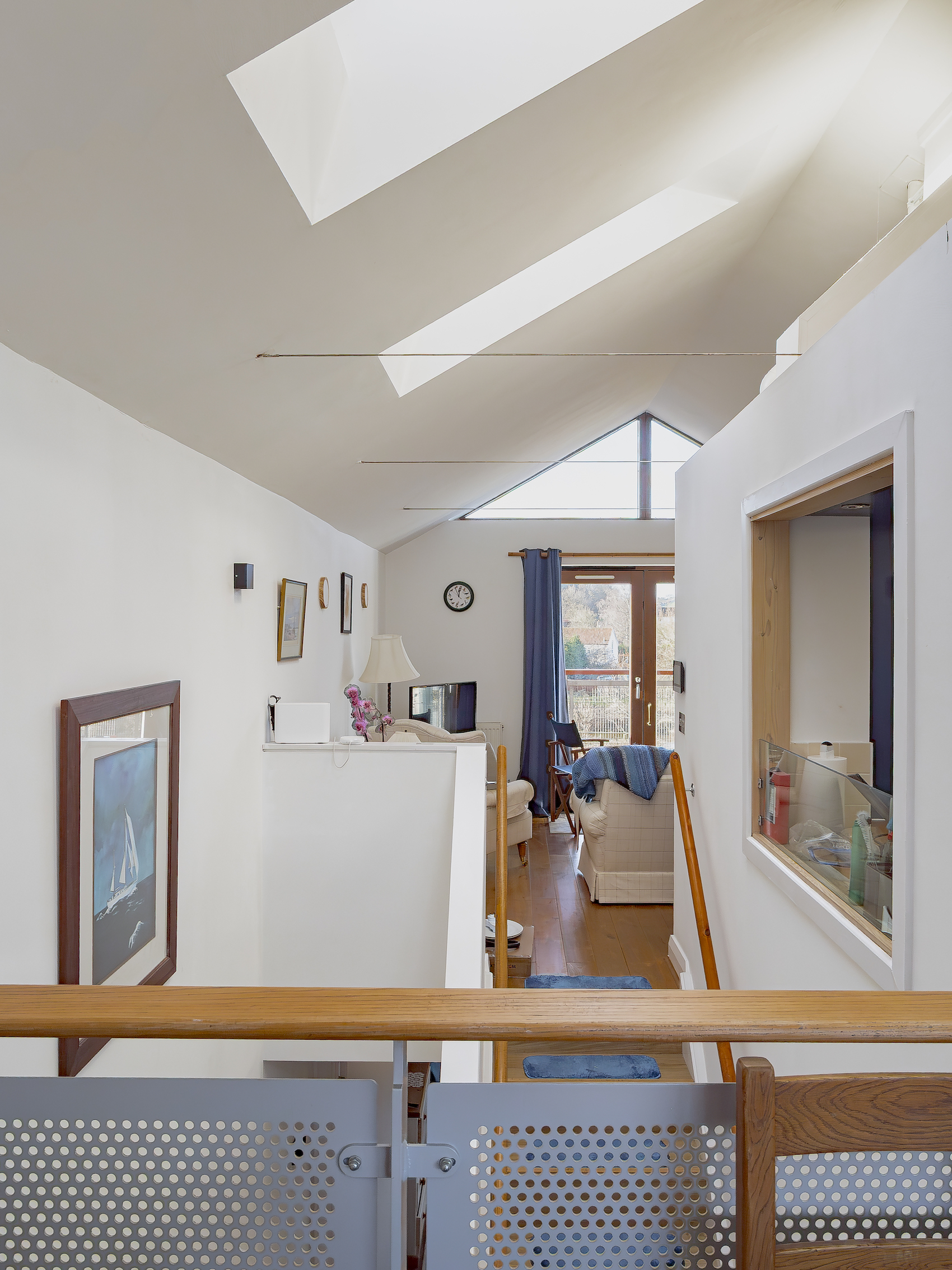
Left: View looking across the stairwell to a top-floor living space in the west-facing terrace.
Right: Balconies allow the upper-floor living spaces in the west-facing homes to enjoy views of, and access to, outdoor space.
Kristian Coleman One of the nicest things about living here is the community that it has built, which is so rare in this day and age. We’ve got one elderly neighbour who can’t manage so well on her own anymore, and we all take turns to look after her. We’ll fetch shopping if there’s anything she needs. It’s the same if somebody falls ill. Everybody gets together and sees what we can do to help. It’s a lovely, lovely, community. I work in the wharf, which is next door to these houses, so I can’t complain about my commute. I think it’s also done a fantastic job in creating a community. We are friends with all of our neighbours. We get together quite regularly and have parties in the communal garden. And people stay here; people don’t leave. It’s very rare that any of these houses come up for sale, so the fact that we managed to get one 10 years ago was just incredibly lucky. The warehouse complements the houses, perfectly, and there’s a restaurant that’s become incredibly popular with the whole surrounding area. We just walk to the end of the garden and have a meal in the restaurant.
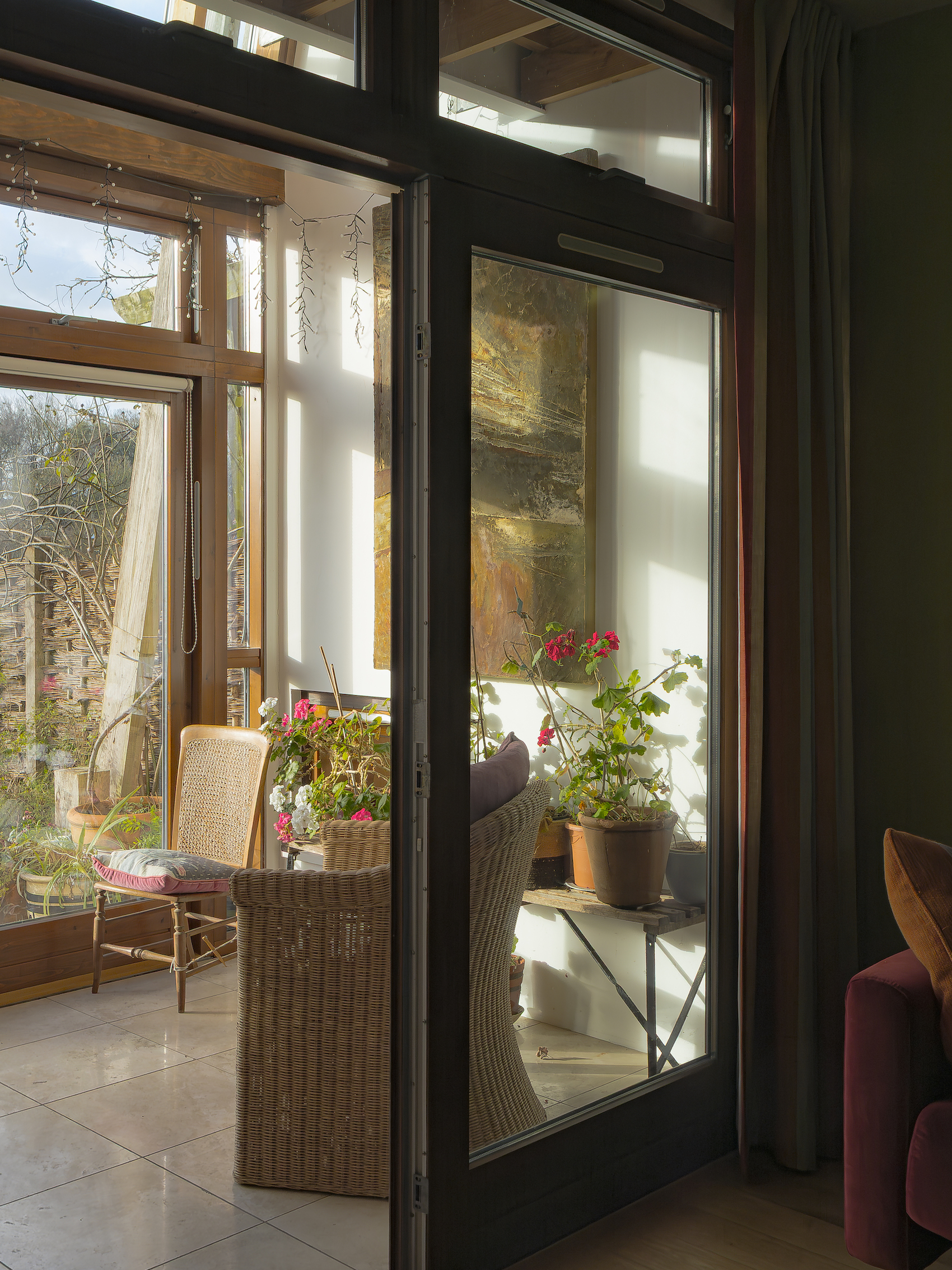
Double-height conservatory spaces give houses in the south-facing terrace a strong visual connection to the community garden.
Rob Delius We’ve really enjoyed seeing how the landscape has matured around the buildings, and the way the buildings nestle and settle into that landscape. We used natural materials for the buildings and we incorporated some reclaimed brick, but otherwise the houses are clad in western red cedar.
Kristian Coleman The buildings have settled in really well. I wish you could see the view right now. I’m sitting at the big window looking at the river and the houses. And even in the wintertime without the foliage and vegetation, they have blended in really well. The cedar has gone the same colour as the trees.
Test of Time Awards 2026
Do you have a project that’s continued to perform well after completion? If so, the AT Test of Time Awards are for you. Start your entry here.
Other finalists in this category:
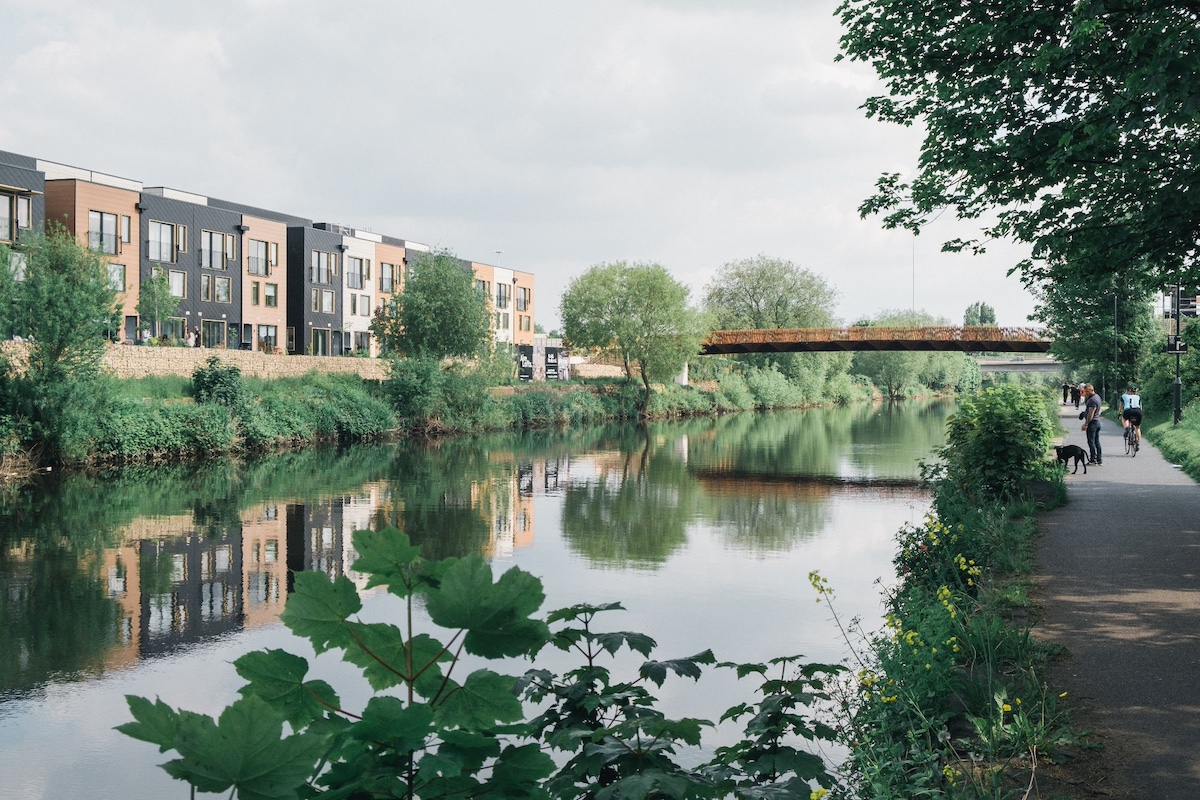
Climate Innovation District by White Arkitekter
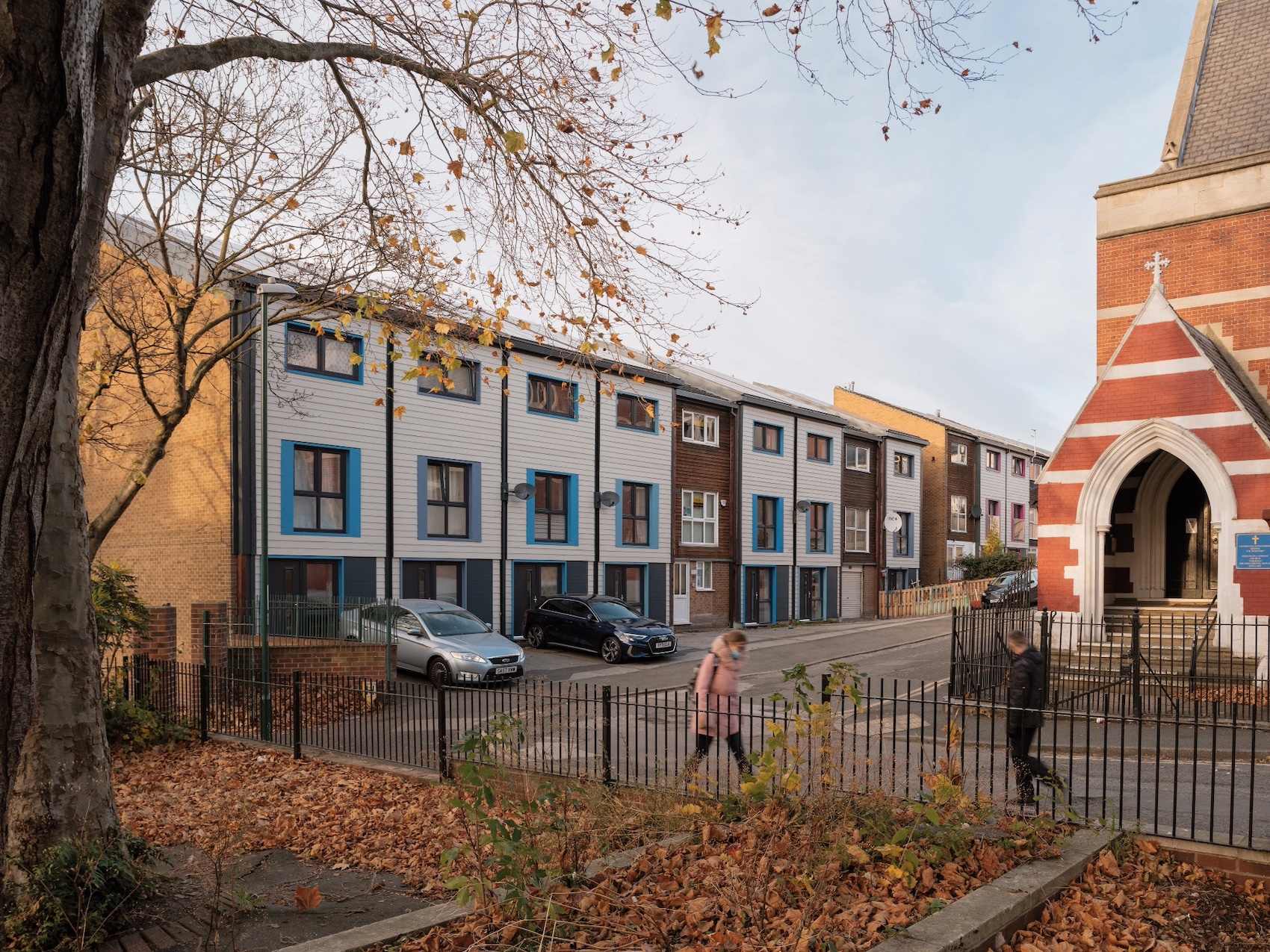
2050 Homes Nottingham Phases 1-2 by Studio Partington