Shigeru Ban on his new concert hall in Switzerland which takes the form of a piggy bank, paper tube architecture, and why architects should stop talking about sustainability and start reducing waste.
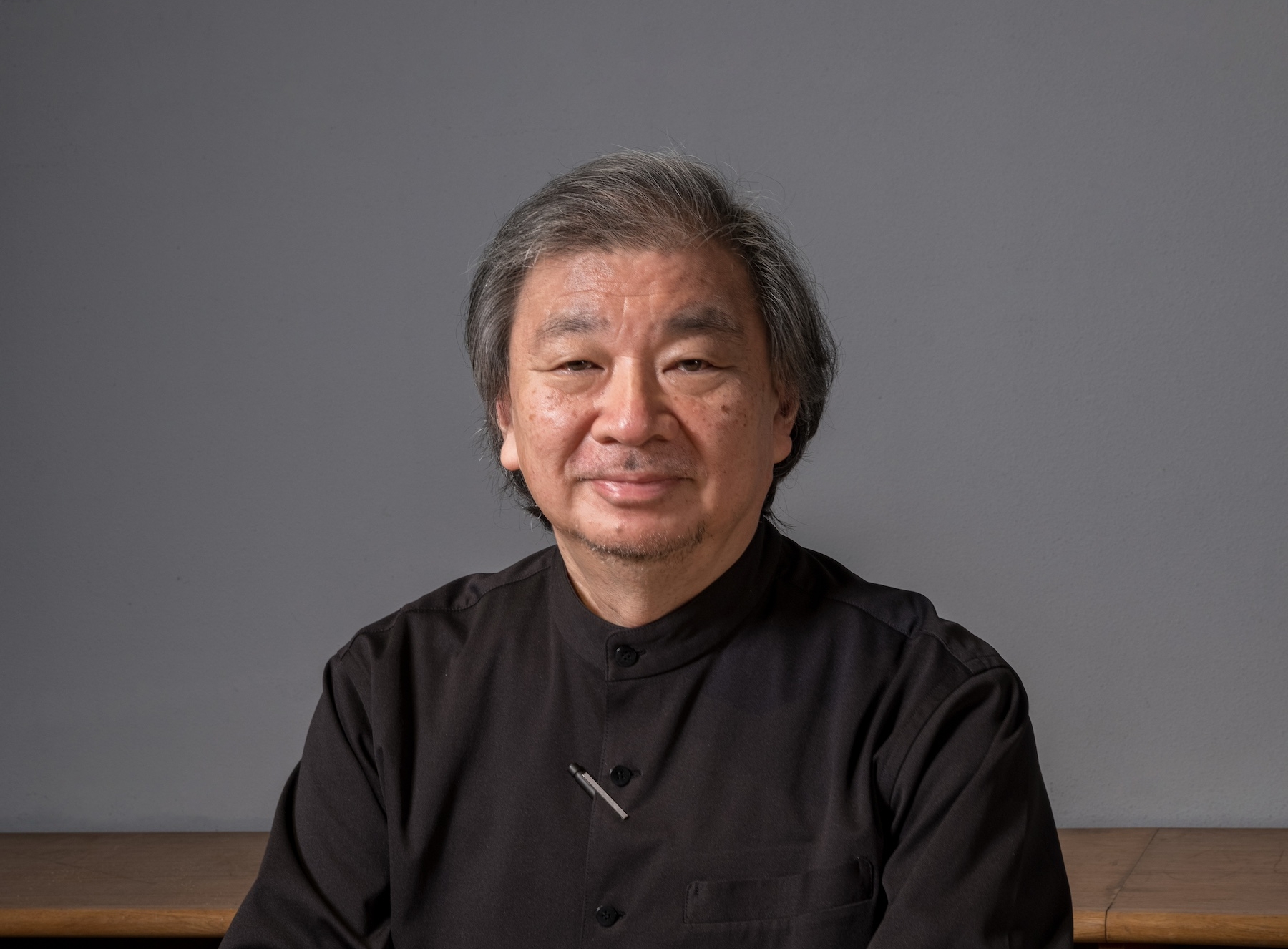
Photograph by Hiroyuki Hirai
Can you tell us about your concert hall project in Altdorf, Switzerland?
It is one of the most interesting projects. A pianist, Andreas Haefliger, asked me to design a small concert hall with 250 seats inside an existing historic building. The building used to be a storage space for arms, so it has a very rigid, rectangular form.
Yet the new timber shell within the existing building looks like a piggy bank!
Yes it does! The challenge was how to insert a new performance space within that existing envelope. I needed a volume that was large enough to achieve good acoustics, but also independent from the outer shell. At the same time, I had to create space between the new hall and the existing structure for supporting functions like dressing rooms and circulation.
That is why the form became completely different from the original building. It may look unusual – some people say it looks like a piggy bank – but the shape is not arbitrary. It comes from acoustic requirements and the need to resolve the relationship between the new structure and the old one.
I often think of architecture in terms of structure and performance rather than appearance. In this case, the geometry is driven by how sound behaves, how the hall needs to enclose the audience, and how it fits within the constraints of the existing building. So even though the form is expressive, it is the result of very practical conditions.
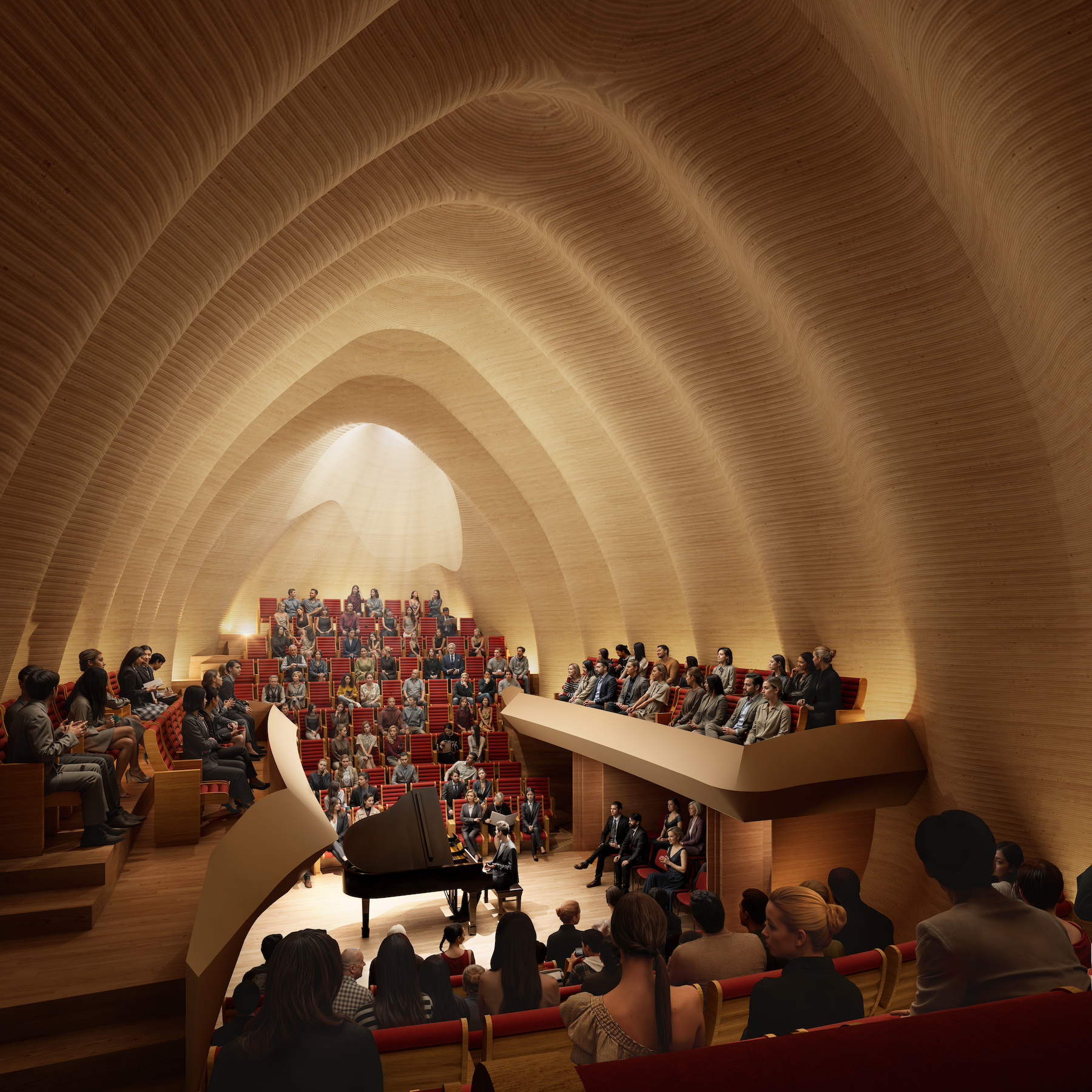
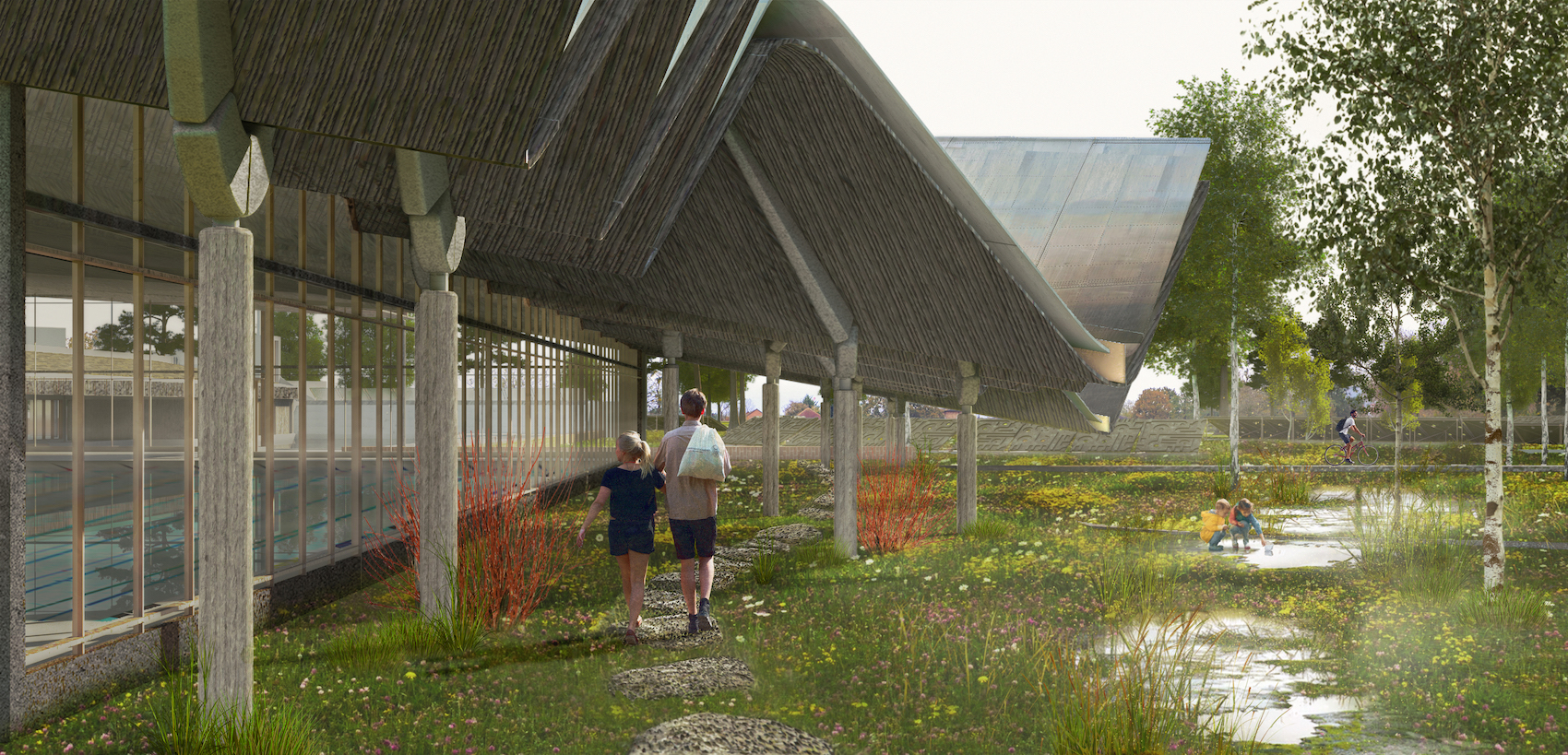
Interior render of the Altdorf Konzertsaal. Image by Shigeru Ban Architects.
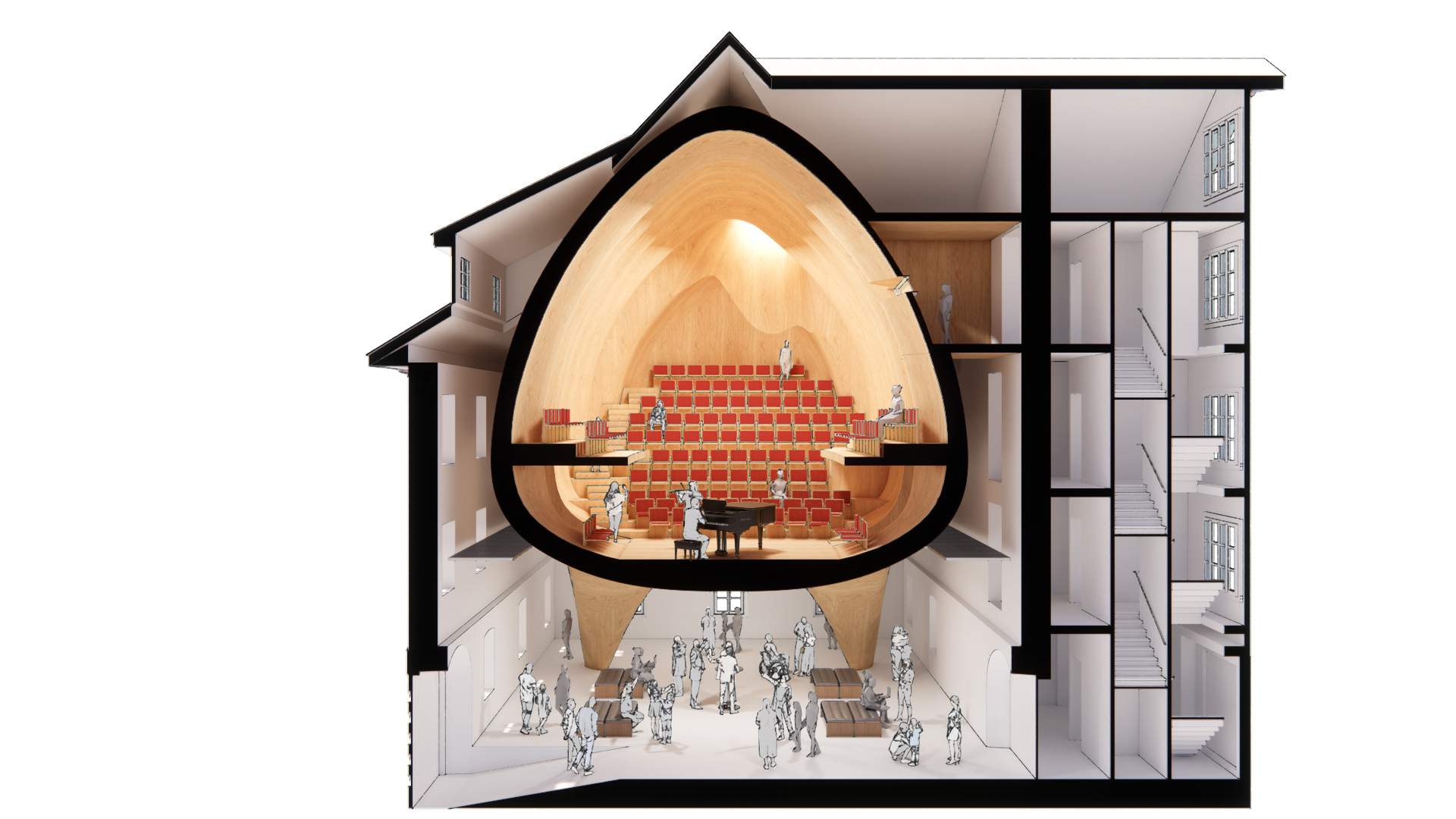
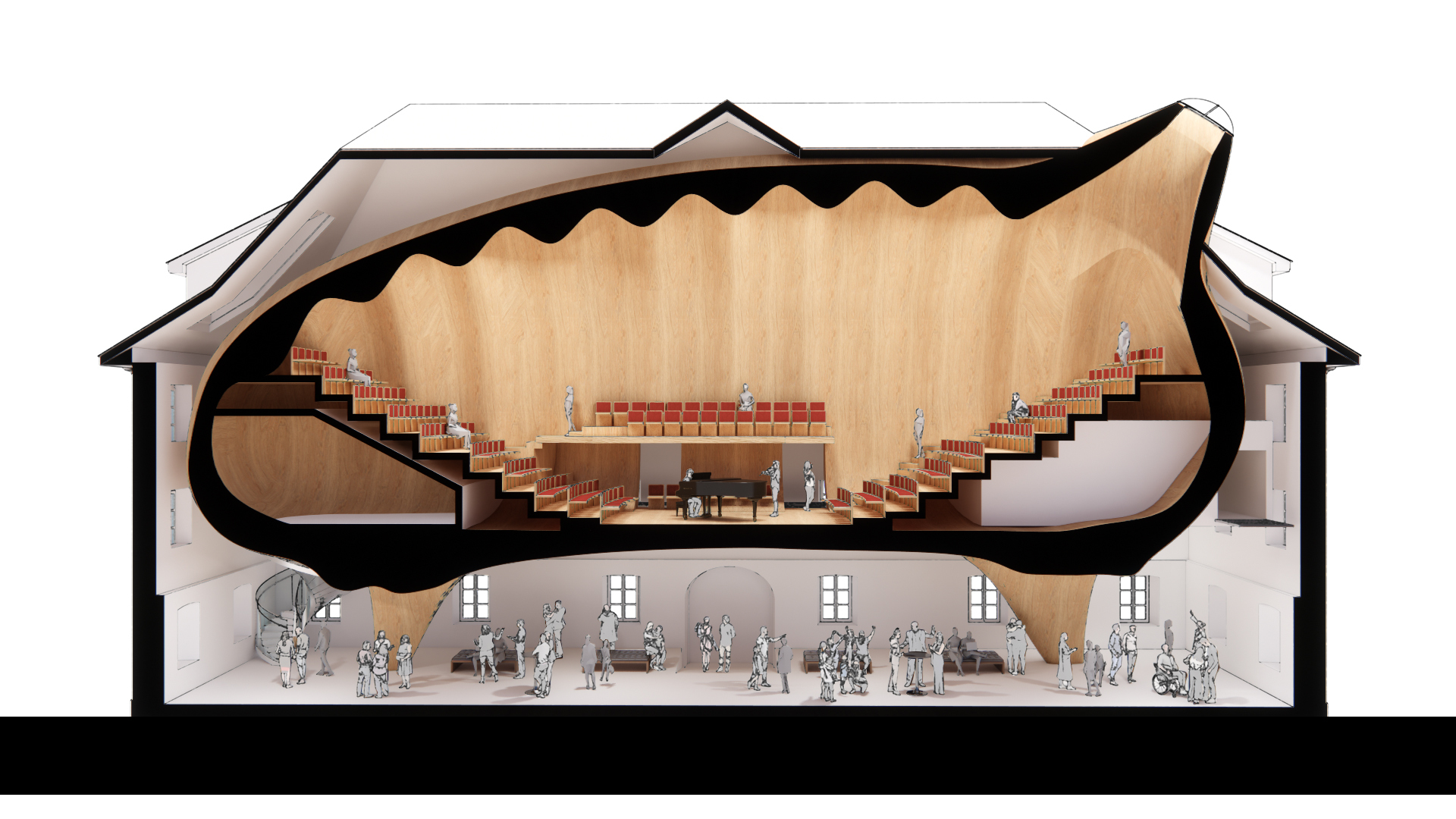
Long and short sectional drawings of the concert hall. Image by Shigeru Ban Architects.
What stage is that project at?
At the moment, we have completed the concept design and are moving towards the next stage. The structural system and material approach are still being developed, so details like whether it will use CLT or another timber system have not yet been finalised.
What’s next for the concert hall project?
As soon as the design is approved, we will move into development very soon.
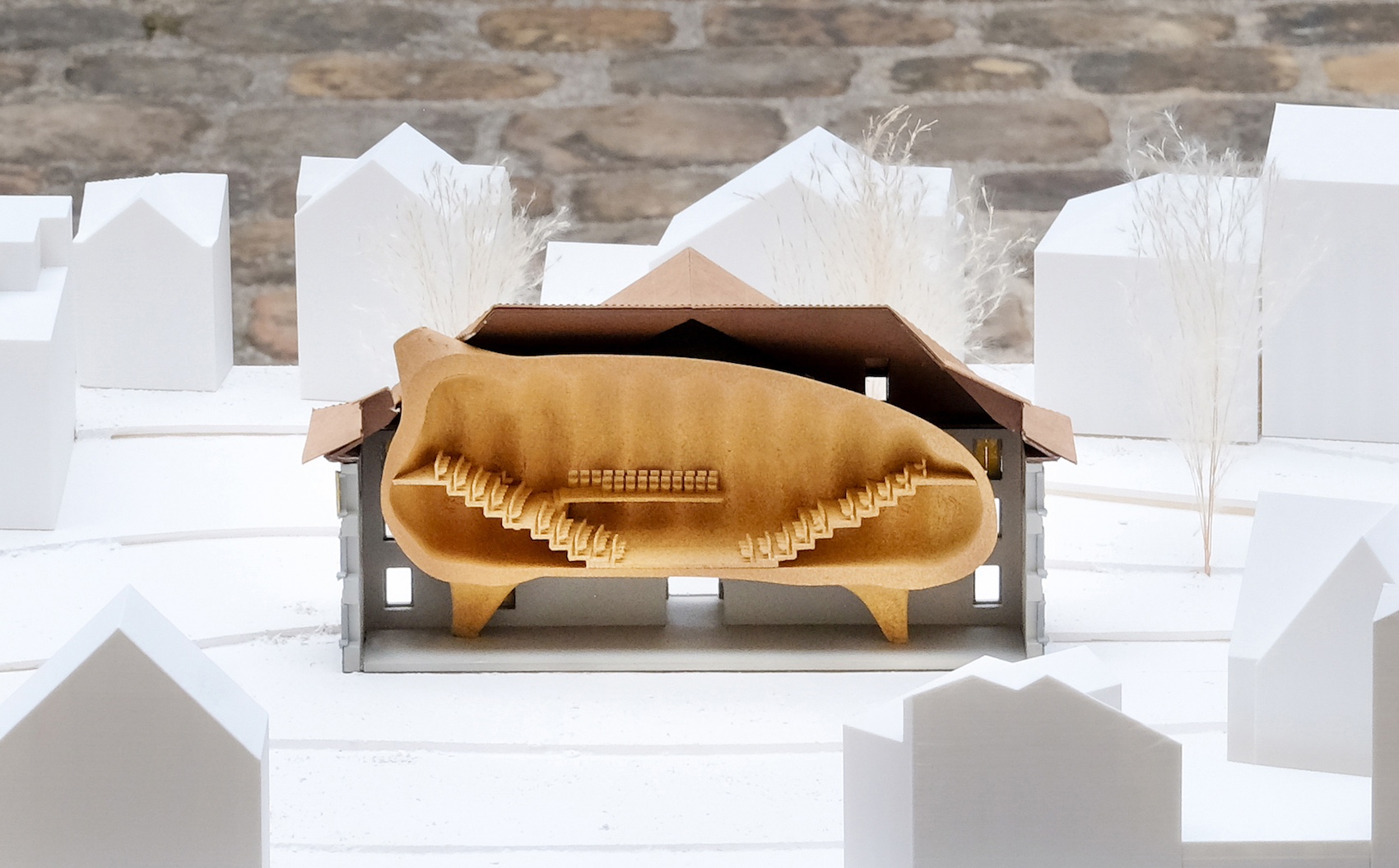
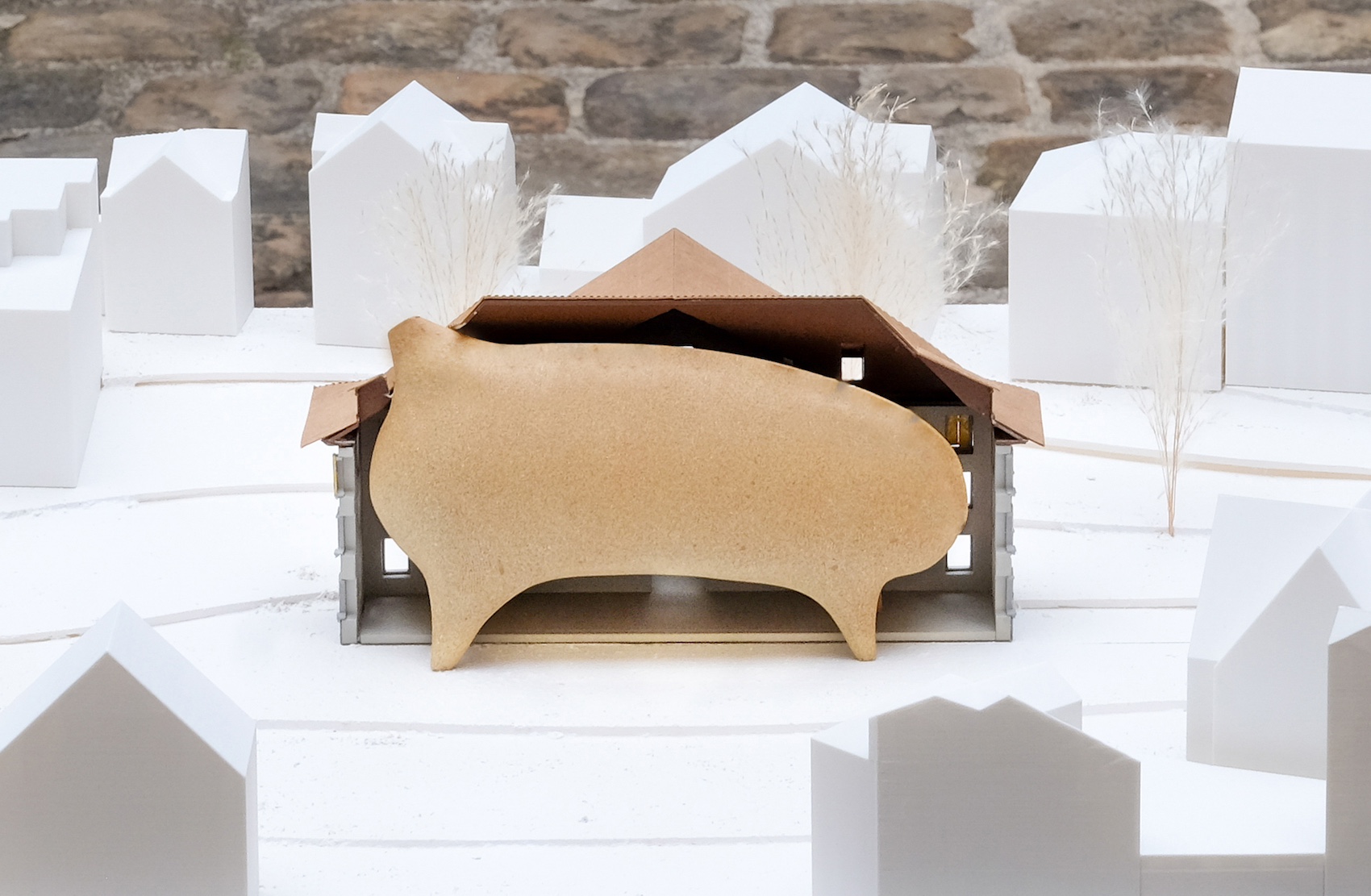
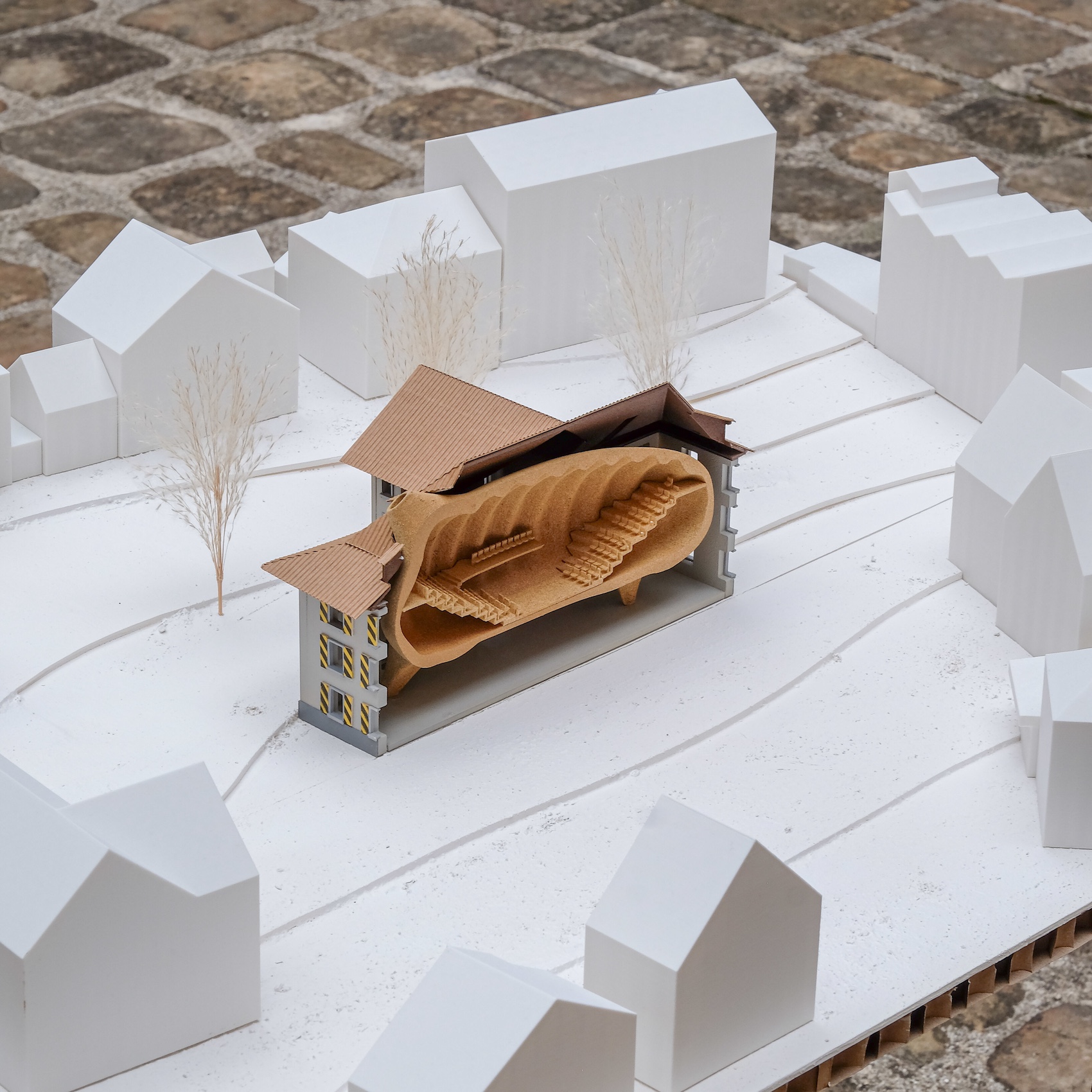
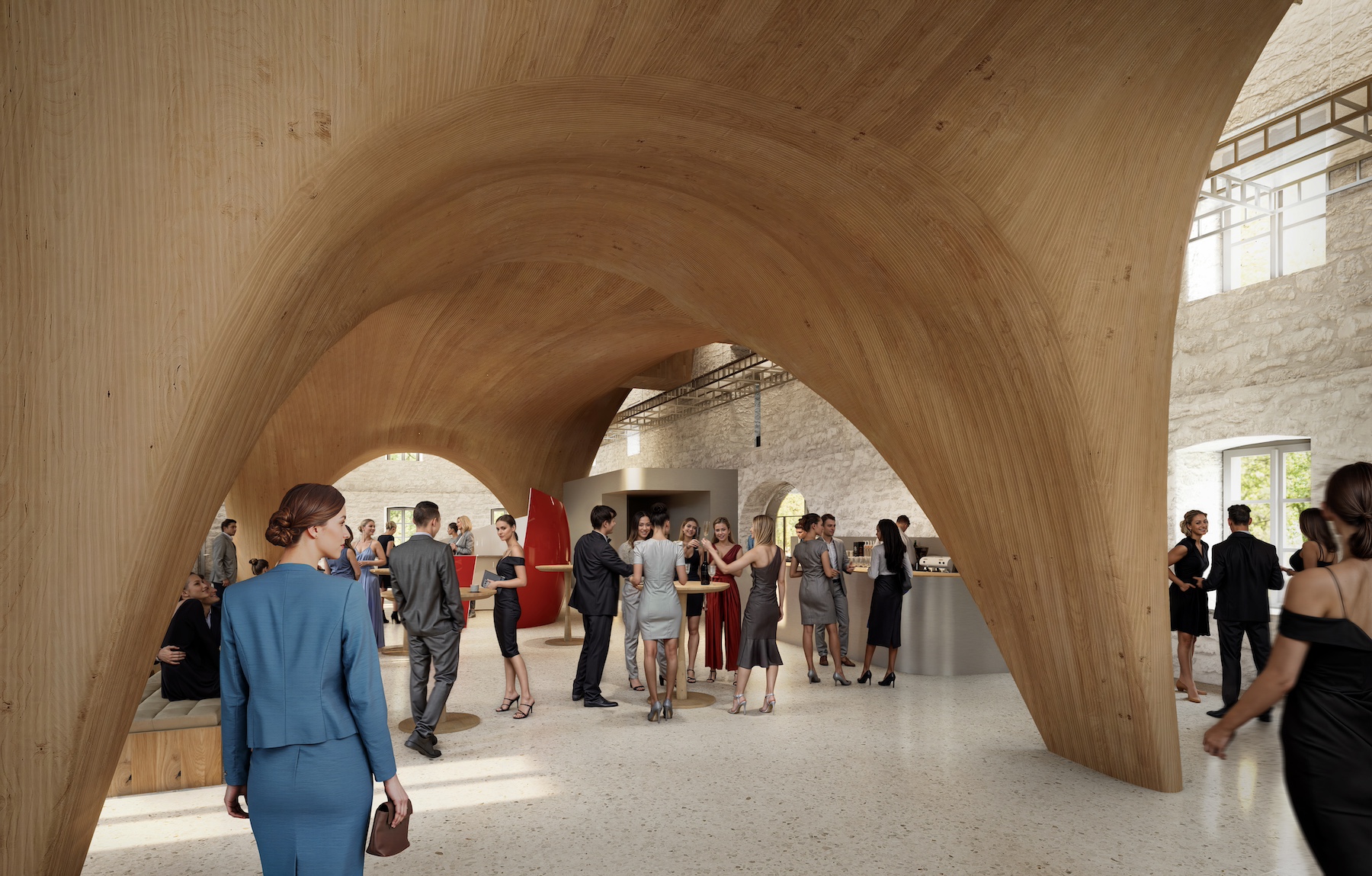
Interior render and models of the Altdorf Konzertsaal. Images by Shigeru Ban Architects.
How do you approach persuading clients to try new materials?
When I studied the history of architecture in school, every period had very good talent, but they were often influenced by the fashionable style of the time. There are only a few architects who are not influenced by fashion and instead create their own style, like Frei Otto, Buckminster Fuller, or Gaudí.
They design structures, develop construction methods and materials. That is why they can create their own style. I don’t want to be influenced by fashionable styles. Since the beginning of my career, I wanted to develop my own structural system.
When I saw strong paper tubes, I thought they could be good structurally because they are inexpensive and industrially precise. It wasn’t because of ecological movements. I started developing my own structural system to create my own architectural language.
In fact, I first used paper tubes in 1986 for an exhibition on Alvar Aalto. Because of budget constraints I couldn’t use wood, so I used recycled paper from my studio. That experience changed everything.
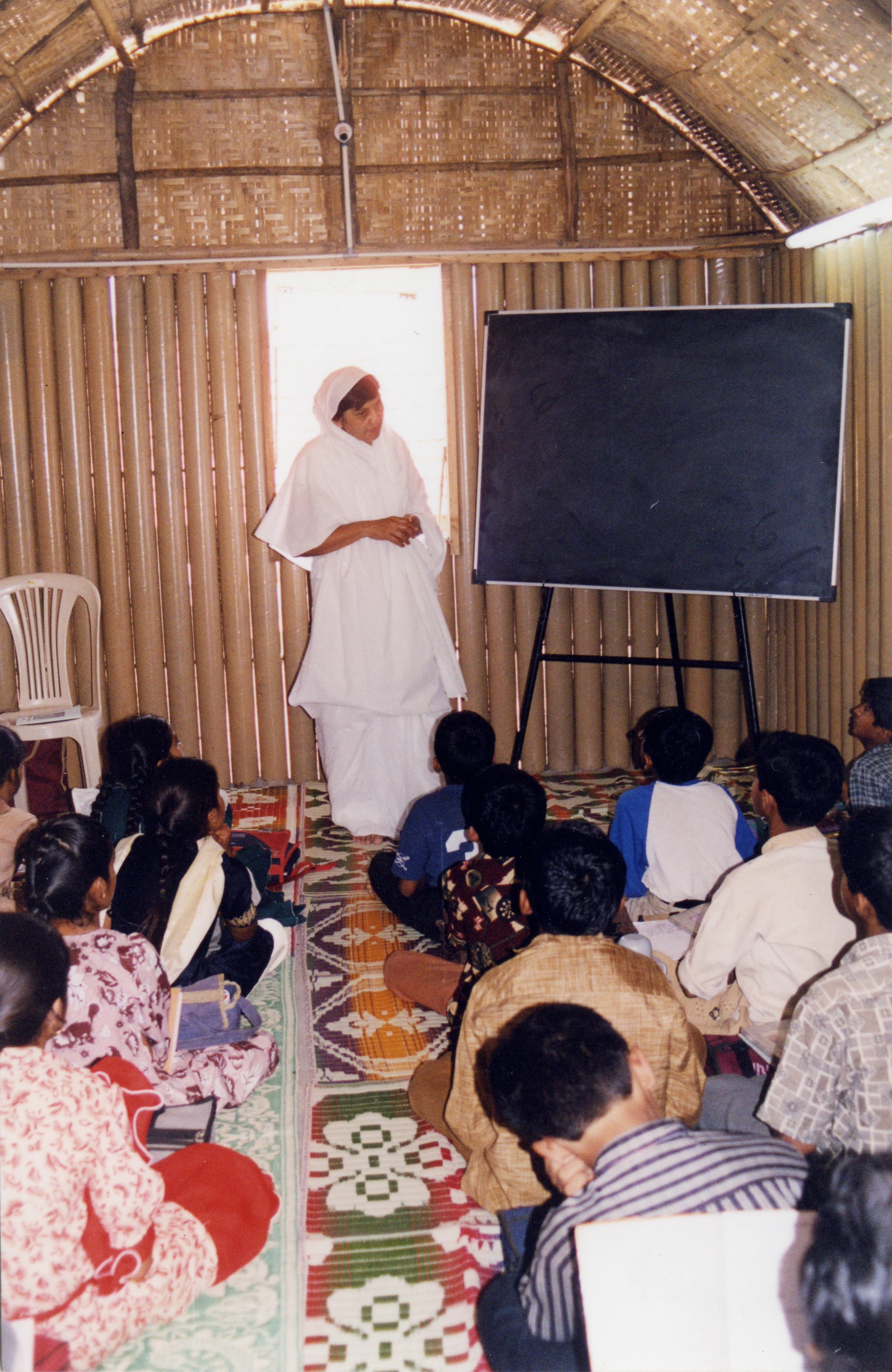
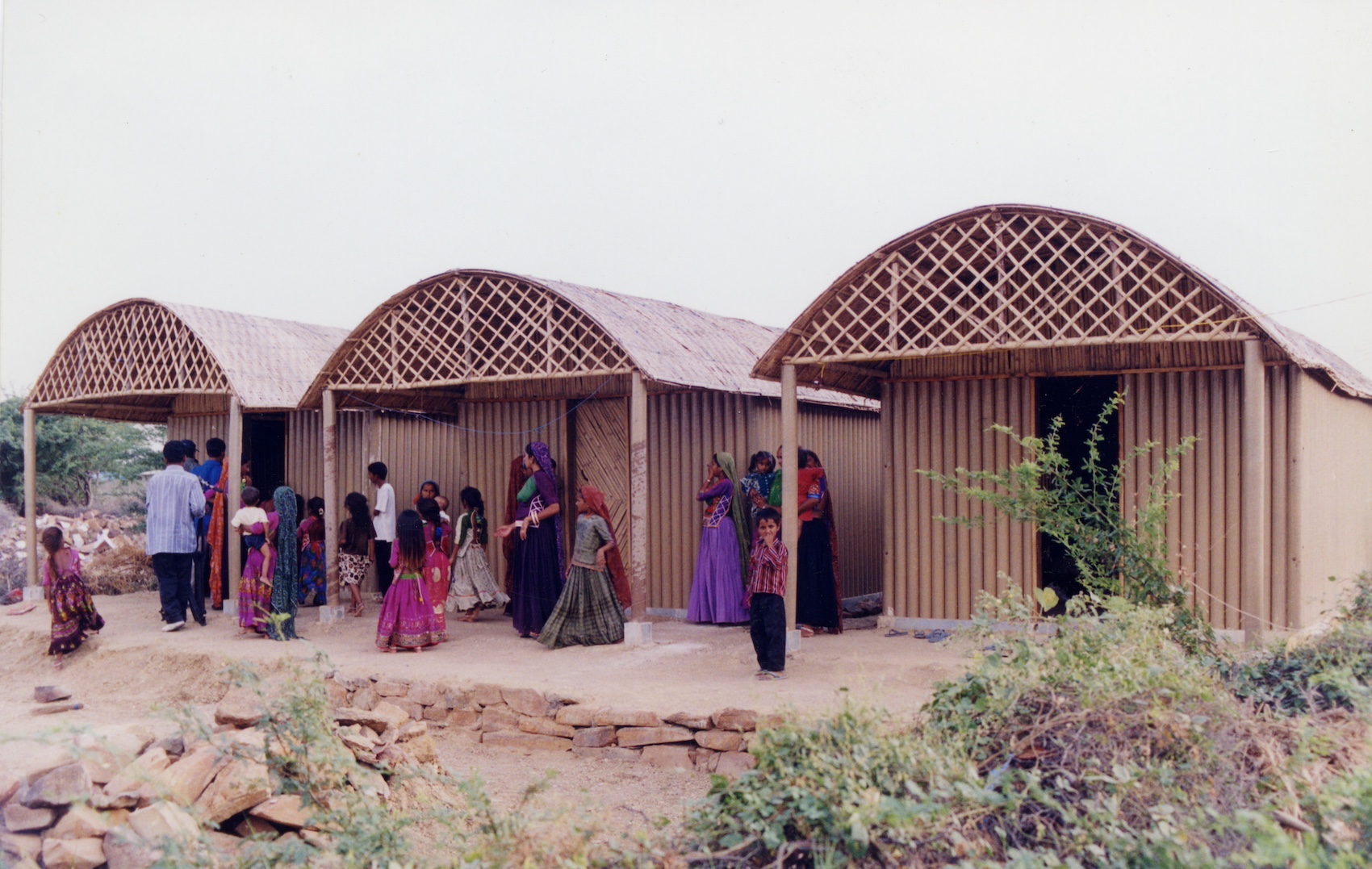
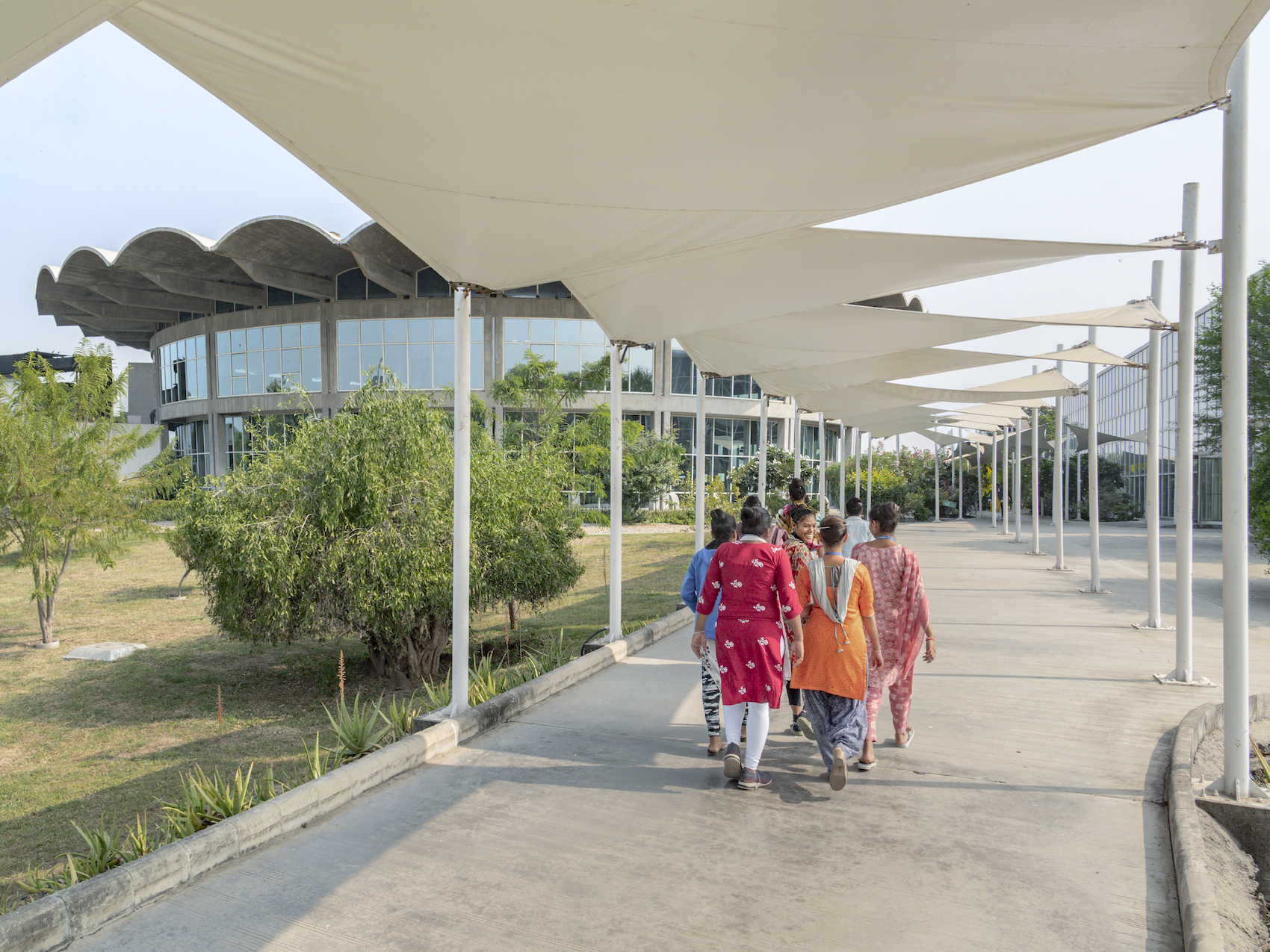
Example of a Paper Log House in India from 2001, designed as temporary housing in response to the Gujarat earthquake. Rubble from destroyed buildings was used for the foundation, topped with a traditional mud floor. For the roof, split bamboo was used for the rib vaults and whole bamboo for the ridge beams, covered by two mats of woven bamboo sandwiching a plastic tarp. (Credit: Kartikeya Shodhan)
You do a lot of testing and research, but how does that work as a business model?
Whenever I have new ideas, I have to test them to get special permission, and that is normally not paid for by the design fee.
As part of my research, I have to do it anyway. Some structural engineers are very kind and support me without being paid. It becomes a collaboration between the engineer and myself.
Students also support us, helping with testing as part of their studies.
I have always worked closely with structural engineers. I collaborated with Frei Otto, for example, on the Hannover Expo, where we used a wooden box filled with sand instead of concrete for the foundation. These kinds of collaborations train and educate you
Are there issues the profession should be addressing more seriously?
Greenwashing is a big problem now. It is very popular because, commercially, people want to show something is sustainable without really understanding what sustainability means.
If natural materials are used, people immediately say it is sustainable, but that is not always true. Sustainability has become a commercial word. I never say my buildings are sustainable. I just try to reduce waste as much as possible.
You talk about reducing waste. Do you evaluate buildings after completion?
I don’t know how to measure it precisely, but I always think about the life cycle of a building.
When I design a commercial building, I think about how it can be easily dismantled, and what materials can be recycled or reused.
It is the architect’s responsibility to consider the lifespan and life cycle of a building.
People are killed by buildings. That is our responsibility as architects. We must improve living conditions before we start rebuilding cities.
Are clients interested in life-cycle thinking?
Not yet. Sometimes these approaches are more expensive. But I think very soon they will be, especially as regulations change.
Your work spans both high-profile cultural buildings and disaster relief. How did that begin?
In 1995, after the Rwanda genocide, I went to the UN headquarters in Geneva without an appointment. There I met a German architect who helped me start working on refugee shelters.
There was serious deforestation, so using timber was not appropriate. That is why I developed paper tube structures for tents. At the same time, I was working in Kobe after the earthquake. Every Sunday I travelled there to meet displaced Vietnamese communities living in very poor conditions.
We developed temporary houses using paper tubes, with foundations made from beer crates filled with sandbags to resist wind. Eventually, a Vietnamese priest trusted me to design a paper tube church. That was an important moment.
How do those experiences influence your architecture more broadly?
Privacy is the most basic human right. Even in temporary shelters, people need dignity. This thinking carries through all my work, whether it is disaster relief or permanent buildings.

Internal render of the proposed CLT hospital in Lviv. Image by Shigeru Ban Architects.
What other projects are you working on?
I am working on a hospital in Ukraine, and also a new wing for the National Museum in Oman. It is my first project at that scale in the Middle East, so I am very excited.
I am also trying to use mud for the first time, studying existing local technologies and materials to apply them in a contemporary way.
Recently, I have been very busy because there have been many earthquakes around the world.
Looking back, what did success mean to you at the start of your career?
From the beginning, I wanted to develop my own structural system.
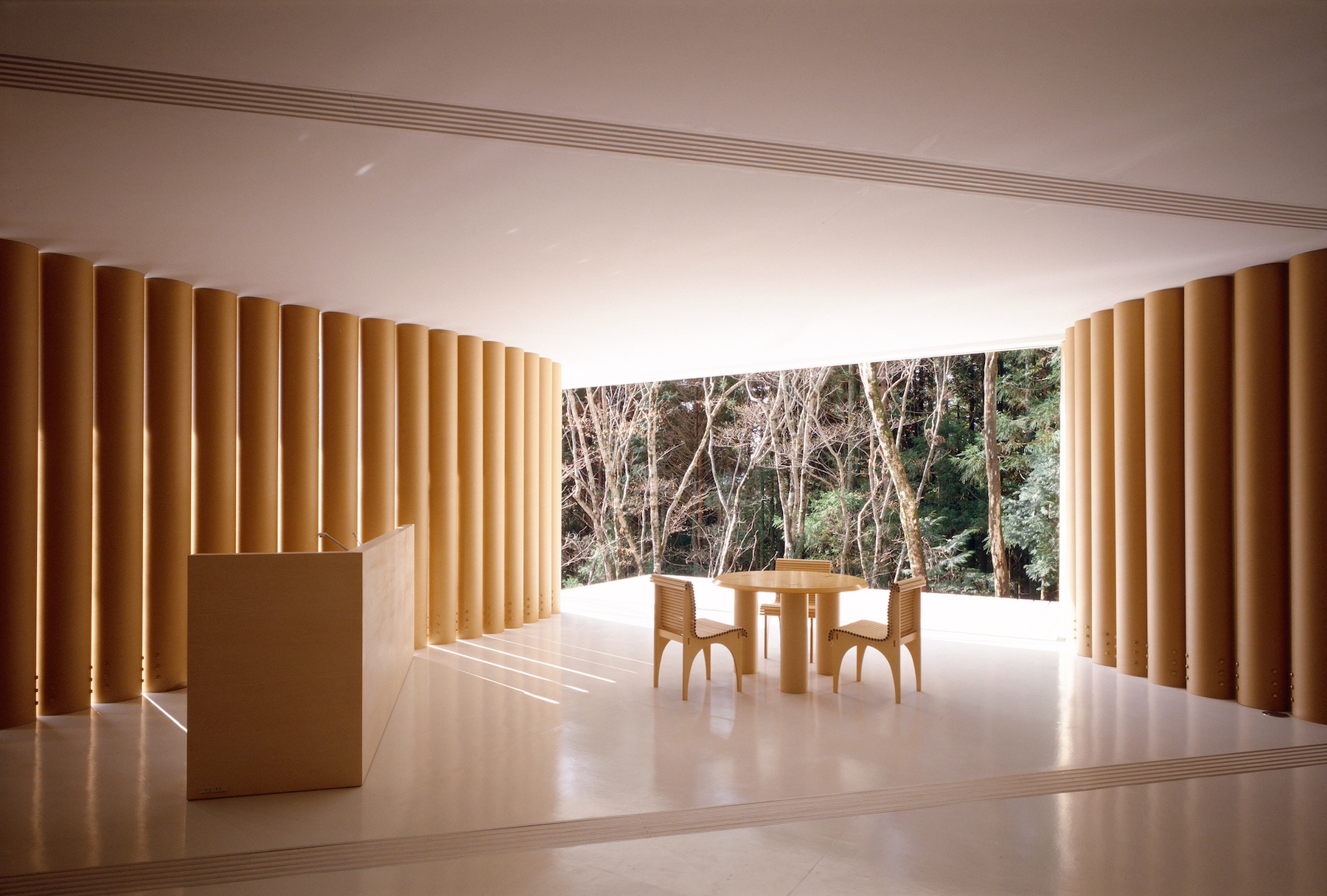
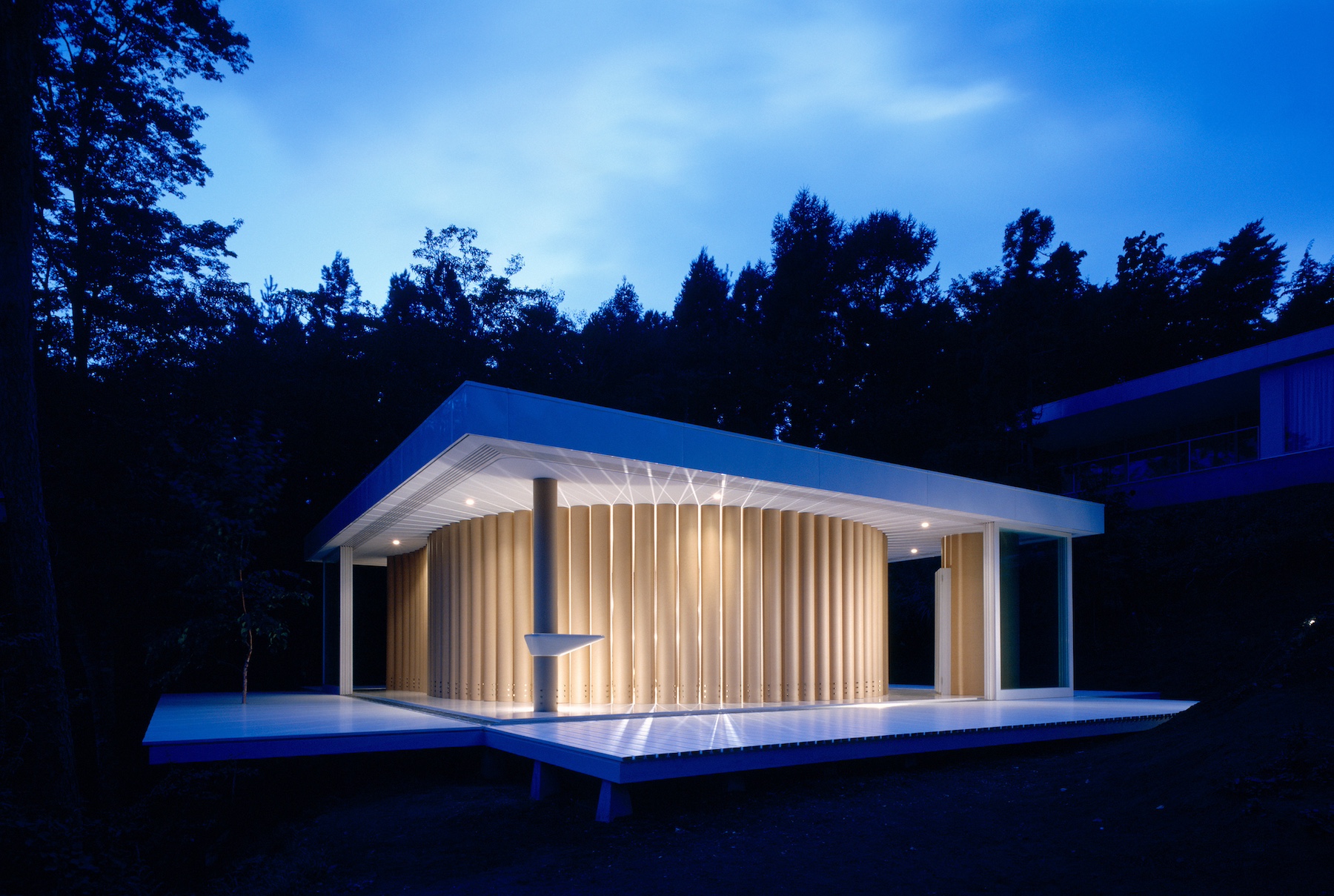
For example, when no one asked me to design with paper tubes, I designed my own house using them.
I have always collaborated with very good structural engineers. That has trained and educated me. Even now, for timber structures, I work with specialists like Hermann Blumer.
These collaborations are very important.
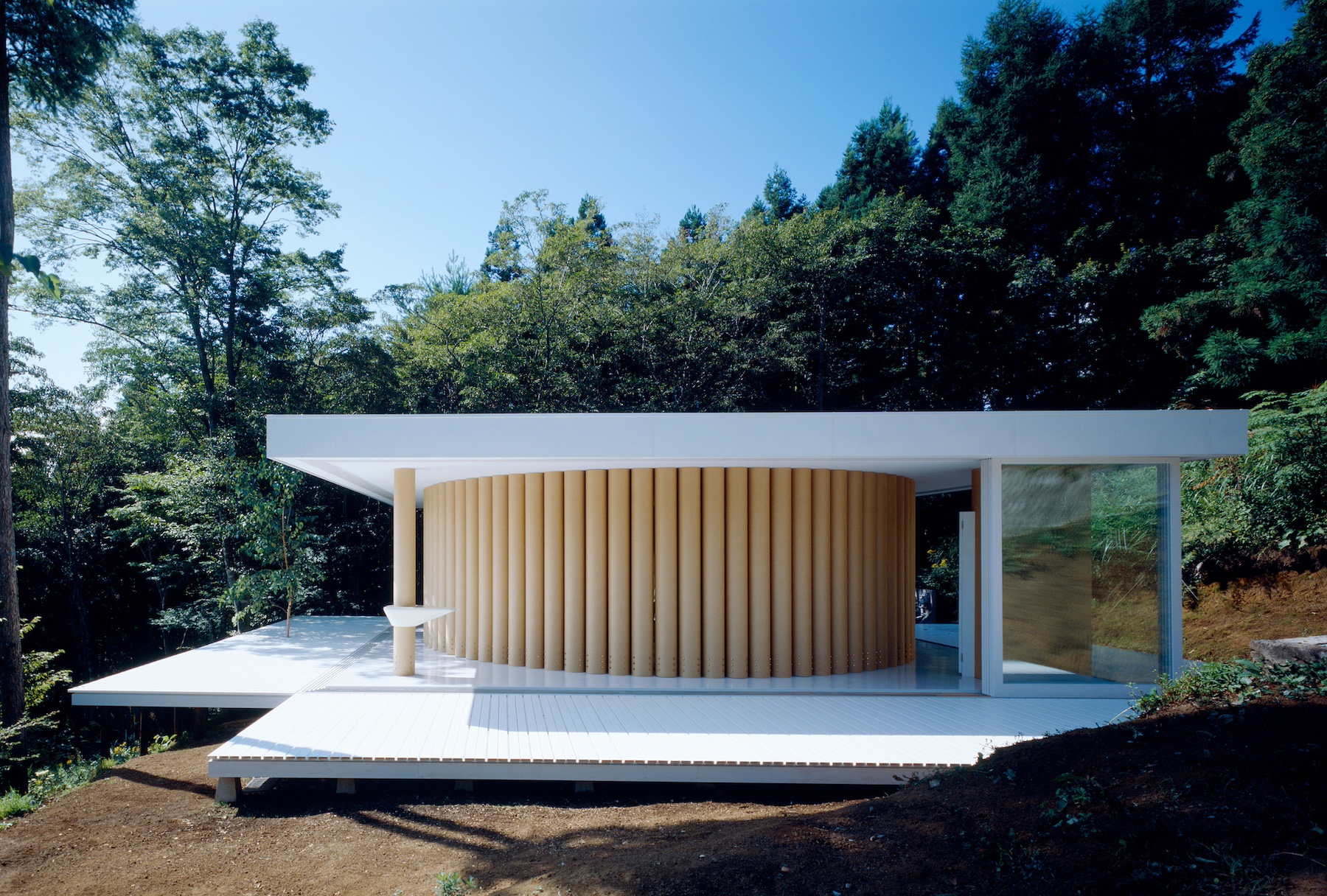
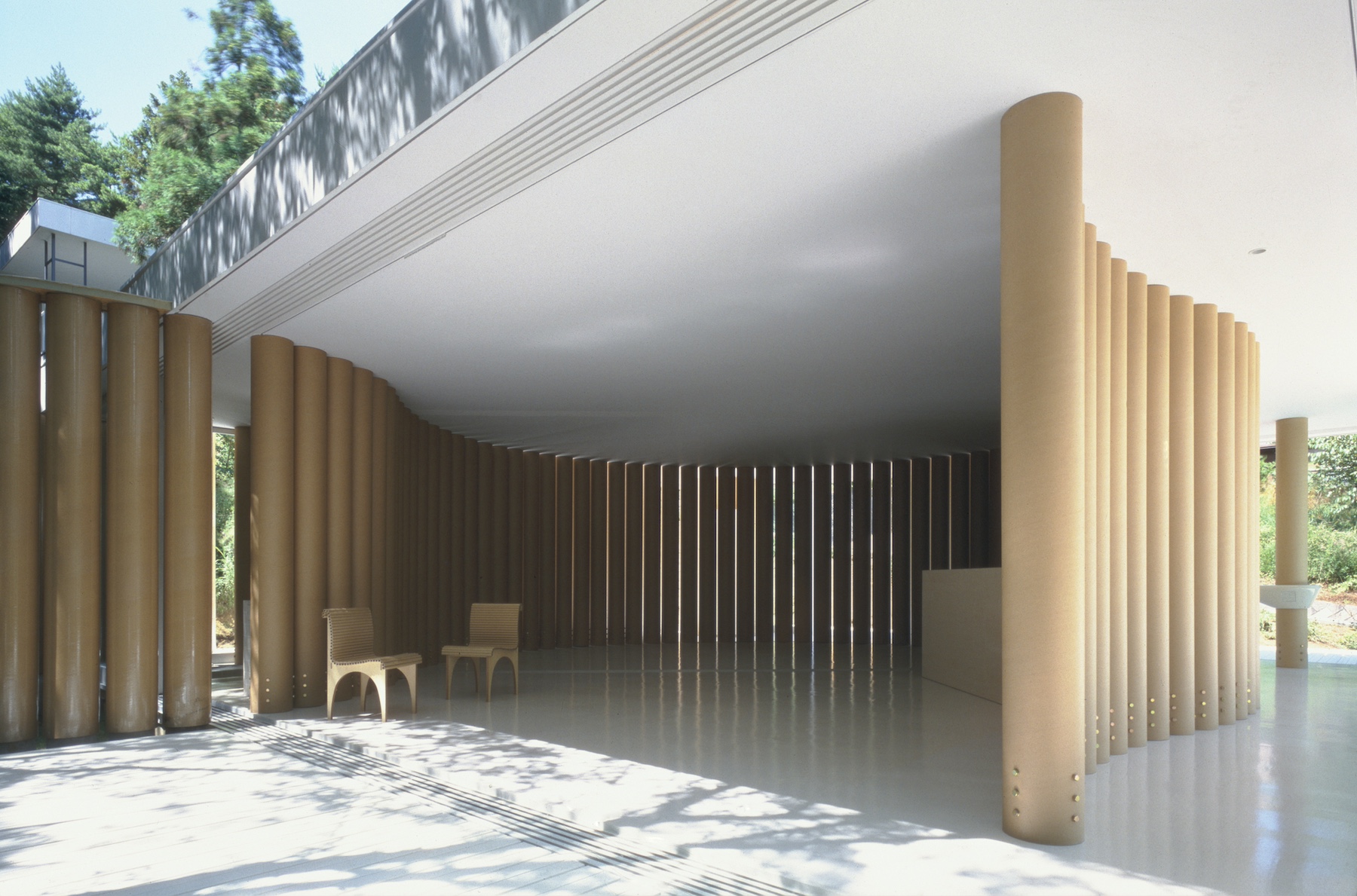
Shigeru Ban’s own Paper House. Photograph by Hiroyuki Hirai.
How do you build those kinds of collaborations?
Don’t force it.
Young students and architects are naturally interested in environmental and social issues, so collaborations develop naturally from shared interests.
What advice would you give to young architects working with engineers or new materials?
I design structures myself. I don’t depend on engineers for the ideas.
The collaboration is important, but the structural concept must come from the architect.
Even if architects work with famous engineers, they won’t get good results unless they have their own structural ideas.