Open City CEO Manijeh Verghese marvels at Mumbai’s rapid transformation and asks how you can slow the pace of change to a rate that allows its people to shape its future.
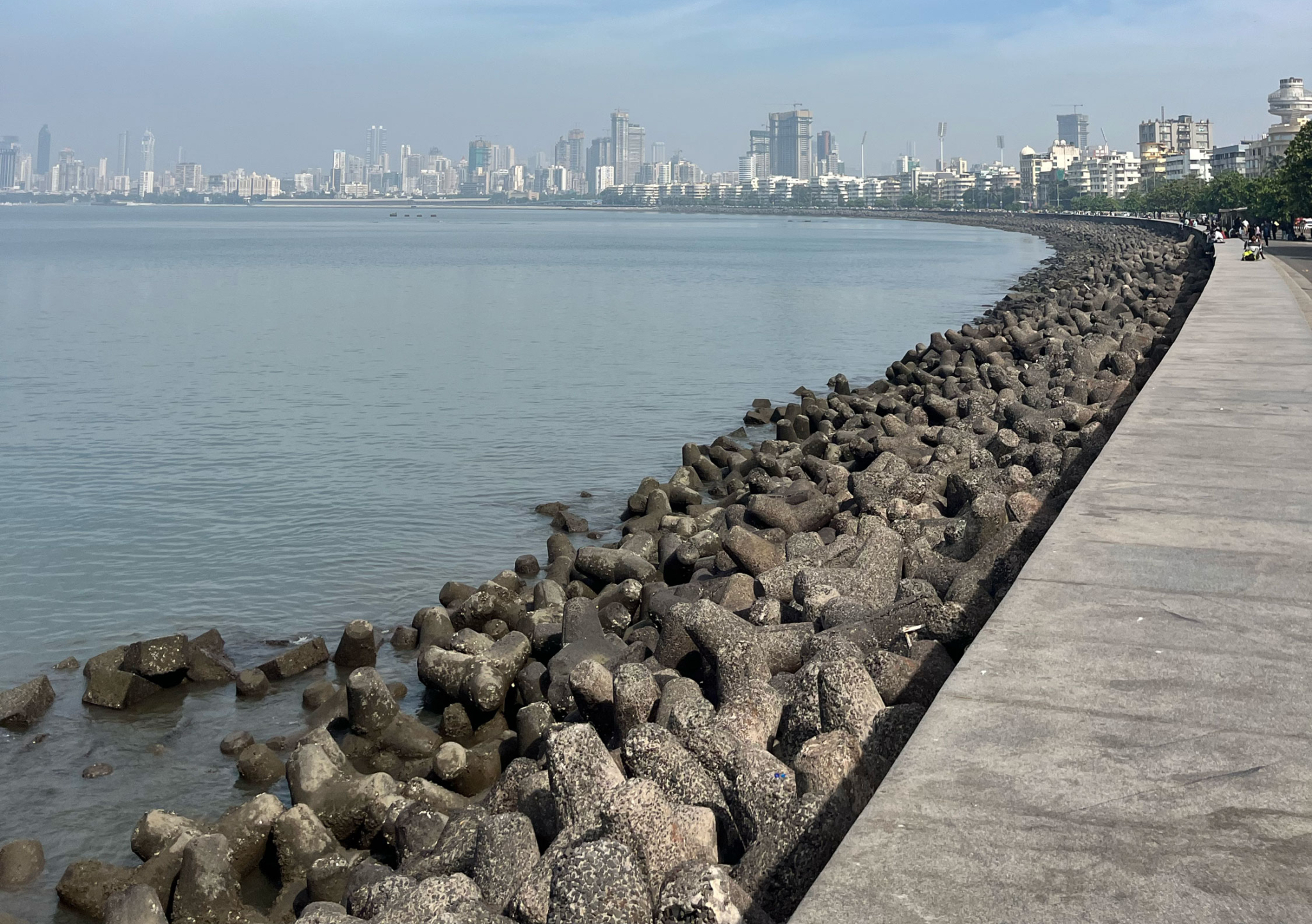
Marine Drive and the bay as seen from Nariman Point. Photograph by Manijeh Verghese.
“On the Churchgate train, past Charni Road station as it sees the sea, past the gymkhanas—Islam, Catholic, Hindu, Parsi—as the shacks fade away, Bombay becomes a different city, an earlier city, a beautiful city. All of a sudden there is the blue sky and the clear water of Marine Drive, and everybody looks toward the bay and starts breathing.”
Suketu Mehta, Maximum City
Mumbai is often referred to as the city of dreams. It is a place that many move to in search of a better life. A city of migrants, it is where people of different ages, cultures, beliefs, professions and backgrounds converge. Located at the confluence of hope and despair, this pairing is just one example of the contradictions that the city embodies. For all these reasons and more, Mumbai, or Bombay, has been a perfect backdrop to so many stories – all of which play on the multivalent and multi-sensory nature of this rich urban landscape.
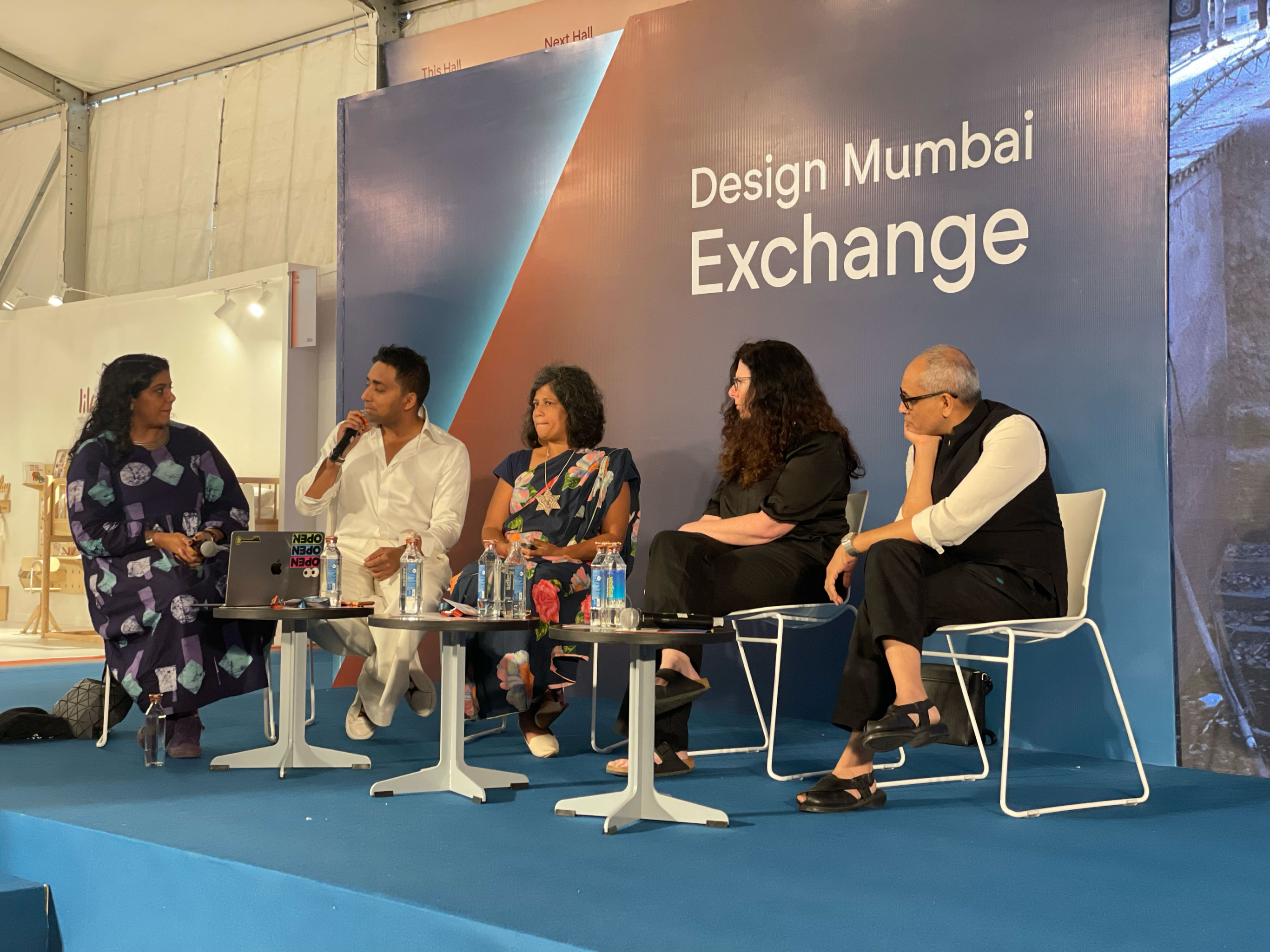
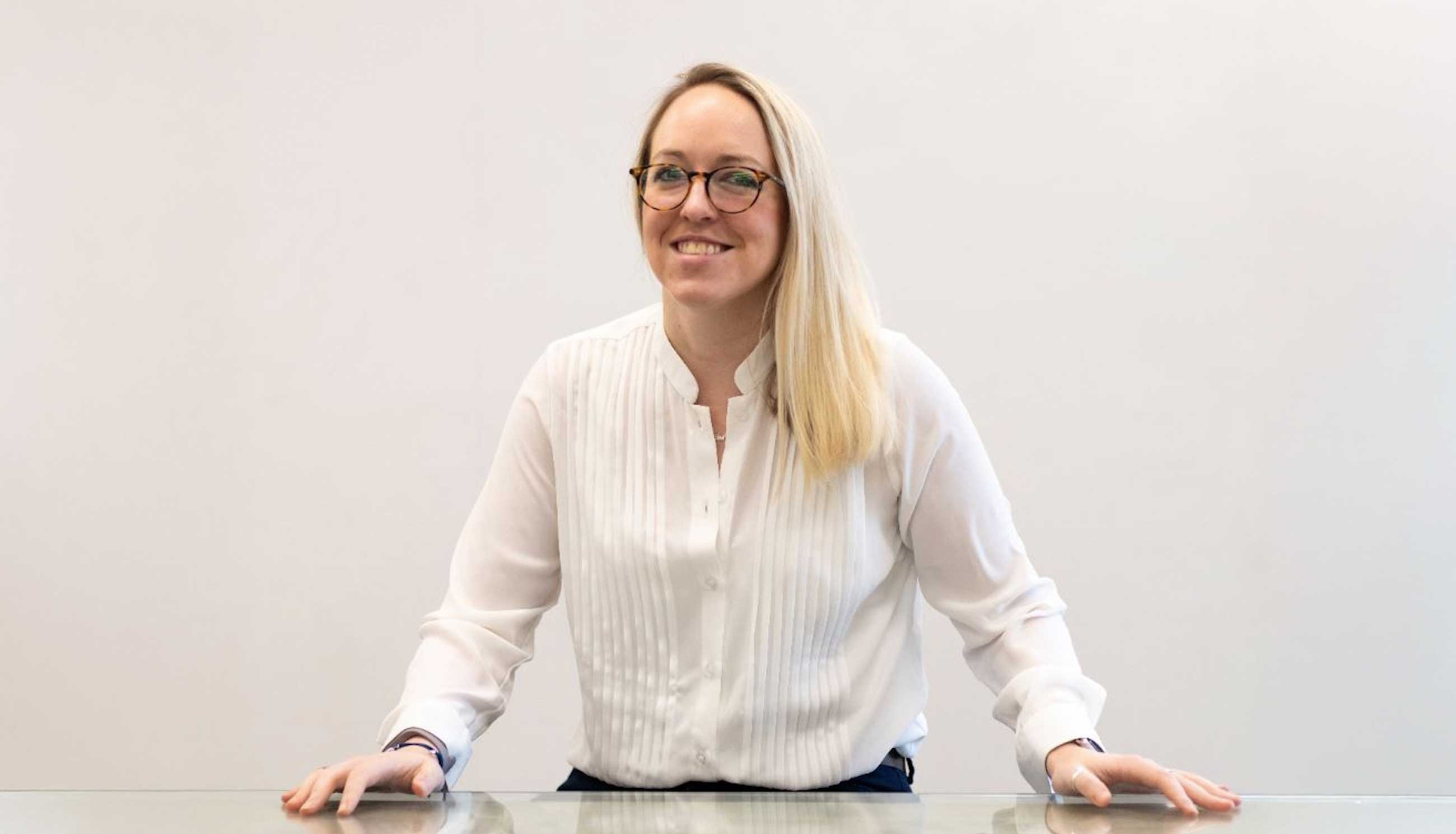
Returning to the city after over a decade, I wondered if I would even be able to recognise it, given the speed at which it is constantly changing. I was there to chair two talks as part of Design Mumbai, a contemporary design show that was entering its second year of existence. However, my mission for this trip was something bigger. When I joined the charity Open City as their new CEO a little over a year ago, I was struck by how their Open House Worldwide network, which aims to make cities more open, accessible and equitable by organising festivals in over 60 cities around the world, didn’t yet include a single Indian metropolis. This felt like a sizeable oversight since some of the fastest growing, innovative and resilient cities are on the subcontinent. It also means that there are large swathes of knowledge that we, as a network, are missing out on, especially in terms of how we plan for the challenges that lie ahead for cities of the future.
Most of my visit to Mumbai was a blur – moving from our hotel in Juhu to the Design Mumbai show inside a large tent at Jio World Garden. These areas, filled with bright lights and tall towers, obscured the celebrated Art Deco buildings characteristic of old Bombay from view. My main experience of the city was in bite-sized moments across an action-packed schedule – a quick drink in a dive bar near the Australian Consul-General’s residence ahead of an evening reception, a late-night retreat to a crowded restaurant in Bandra West to gossip with friends, and a detour to Marine Drive to take in the views of the bay from Nariman Point on my way to visit my aunt before heading to the airport.
As is typical of a city where everyone hails from elsewhere, my time in Mumbai was instead characterised by conversations about other cities. At Design Mumbai, one panel discussion debated the challenges around supercharging India’s green infrastructure, where new road, rail and air networks as well as pavements and cycle routes to encourage active travel, are overlaid on cities from Delhi to Chennai to Chandigarh that are already so densely populated and continually evolving. The other panel examined our Right to the City and how we can give the public greater agency to shape their built environment. This conversation spanned my hometown of Bangalore, Udaipur as the historic city of lakes and palaces, Goa as a state that operates more like a city, and then, moving further afield, Hobart, Australia – a city that is already part of the Open House Worldwide Network but was too small by our criteria to officially participate until a year ago. Hobart couldn’t be further from Mumbai, in scale rather than geography, especially when you compare the former’s 56,000 inhabitants to the latter’s population of 12.4 million in the city proper, which grows by an estimated 1,000 new inhabitants each day.
At the end of my two conversations, I realised that the one city that we hadn’t really spoken about at all was Mumbai itself. I asked the audience to share their perspectives, and a recent architecture graduate in the crowd raised their hand. He spoke about returning to his city and being confronted by new concrete flyovers hurtling across the city; blocking his treasured views of the horizon and the sunsets over Juhu beach. It begged the question, on whose terms does development happen? And if even an architect feels as though the city is changing too rapidly to have a say in its future, what hope does the public have? The question gave the panel pause as we faced the impossible question, how do you slow down a city as fast paced as Mumbai in order for its people to shape its future? This need for pause or to take a breath is echoed across Indian cities as they reach a crucial inflexion point in their development, where pollution goes hand in hand with progress, and exponential increases in urban populations requires new and more sustainable strategies for dealing with density. The answer won’t be simple but perhaps the Suketu Mehta quote rings true: as the thick smog that settled over the city after the rainy season starts to clear, it is only where the city meets the sea that it can finally breathe again.