From childhood days spent wandering around his fathers architecture school, to his formative arrival in the city on Schenzhen, Ole Scheeren takes us through his three-decade-long relationship with China’s tech capital, tracing it’s evolution from fishing village to global megacity.
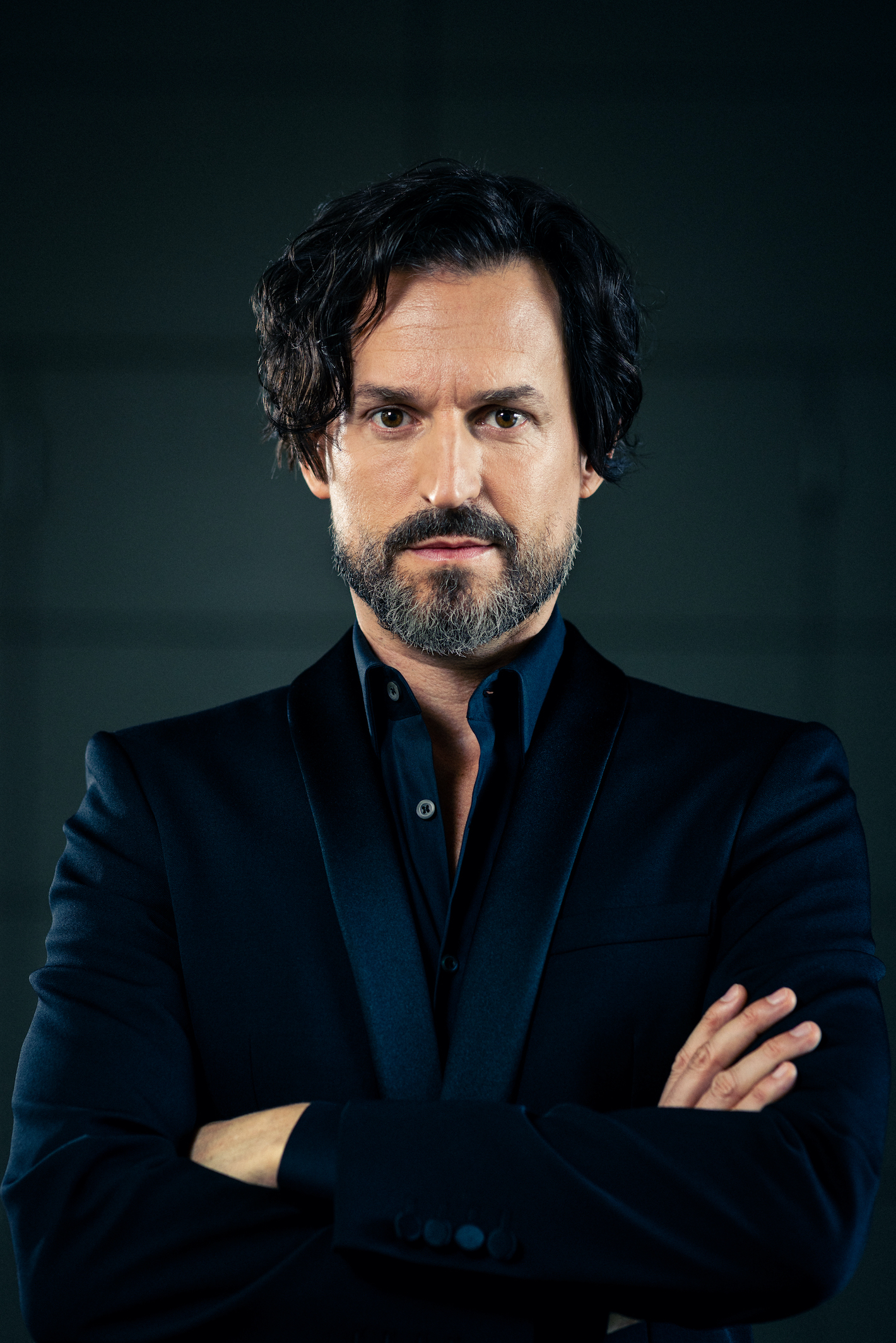
My father used to take me to his architecture school where I grew up surrounded by models, drawings, and the hum of conversations about space, form, and architectural philosophy. That environment sparked a deep curiosity in me, one that couldn’t be satisfied by books or photographs.
In the early 1990s, I set out on a journey of firsthand observation with a desire to understand how architecture shaped cities and people across the world. My destination was the ultimate unknown for me and for most Westerners at the time: China.
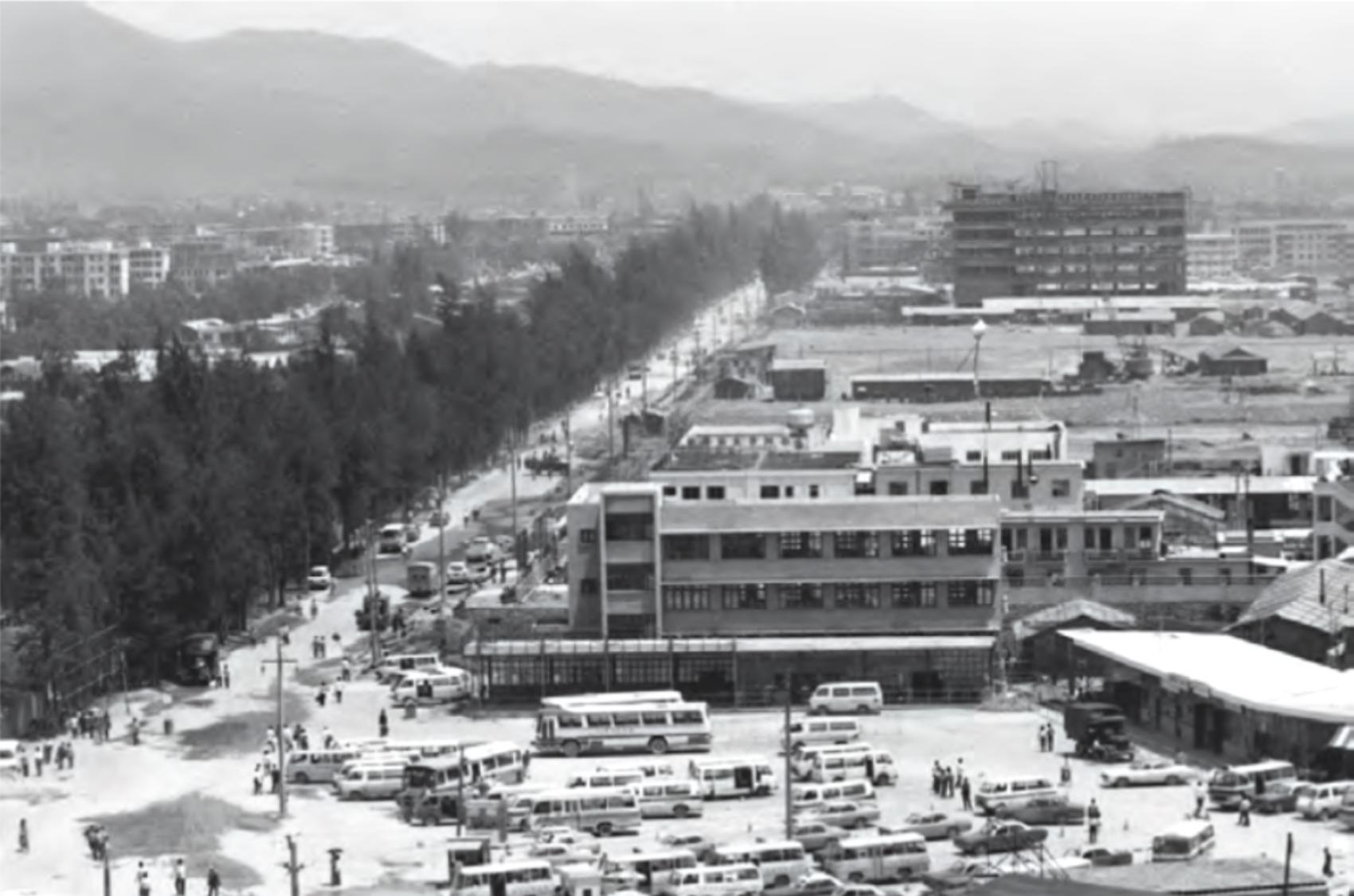
I arrived in Shenzhen in 1992, crossing over from Hong Kong. The city barely registered on the map. I spent three months immersed in China’s complexity, intensity, and humanity. It was raw, chaotic, and full of contradictions. I remember queuing for two-and-a-half days just to buy a train ticket. With no hotels available, I ended up sleeping in a workers’ dormitory with sixty others. That experience became a prelude to everything that followed in my architectural journey – and Shenzhen, as my first real entry point into China, has remained deeply personal to me ever since.
Before the 1980s, Shenzhen was little more than a fishing village. Everything changed in 1979, when China designated it as the country’s first Special Economic Zone – a bold move that welcomed foreign investment and launched a radical economic experiment. Its proximity to Hong Kong and favourable policies attracted waves of manufacturers and foreign companies. The pace of transformation accelerated after Deng Xiaoping’s visit in 1992, which reaffirmed China’s Open Door Policy. By 2004, Shenzhen announced it had achieved 100 percent urbanisation, becoming the first Chinese city to do so. Today, it’s known as the ‘Chinese Silicon Valley,’ home to giant companies like Huawei, Tencent, BYD, and DJI.
In 2006, while I was a partner at OMA, we were invited to join the international design competition for the Shenzhen Stock Exchange Tower. That was when I started to observe the city from an architect’s perspective. Since then, I’ve witnessed Shenzhen’s transformation first hand – its remarkable speed, scale, and ambition.
Since setting up Buro Ole Scheeren in 2010, our practice has contributed to several high-profile projects across the city. As Shenzhen continued its evolution across its east-west axis, two of the most prominent centres – the Shenzhen Bay Super Headquarters Base and the Qianhai Bay – emerged. Both were fully master-planned districts designed to represent Shenzhen’s next chapter.
With no hotels available I ended up staying in a workers’ dormitory with 60 others “
At Shenzhen Bay, we designed Shenzhen Wave, the headquarters for ZTE, in 2020, followed by Scenic City, JD.com’s Headquarters, in 2022. In 2024, we won the competition to design a new global headquarters for Tencent, one of the world’s most valuable tech companies. These projects are now under construction and will soon become part of the city’s evolving skyline.
What fascinates me most about Shenzhen’s transformation is how architecture has physically embodied the city’s evolving identity. As millions migrated to build this new metropolis, Shenzhen became a mosaic of cultures and aspirations. With no dominant dialect or entrenched traditions, it emerged as a city of newcomers defined by potential rather than by legacy. More and more, people identify themselves as belonging to Shenzhen rather than to their city of origin. “Once you come here, you are a Shenzhener!” is one of the city’s slogans. This openness fostered a culture that is very much prevalent today; youthful, experimental, and entrepreneurial.
Shenzhen’s story is one of the most extraordinary urban transformations of our time. In many ways, it has become a blueprint for how cities can reinvent themselves, balancing economic ambition with liveability, and using architecture not simply to accommodate growth, but to shape identity and imagine new futures.