Howells’ 40-acre Sea Gardens masterplan in Bray, County Wicklow, is set to deliver 1,200 new homes alongside shops, cafés and parks. With phase one now complete, project lead Daniel Mulligan reflects on what this former golf course will bring to Bray’s future – and how the team approached the sensitive town extension.
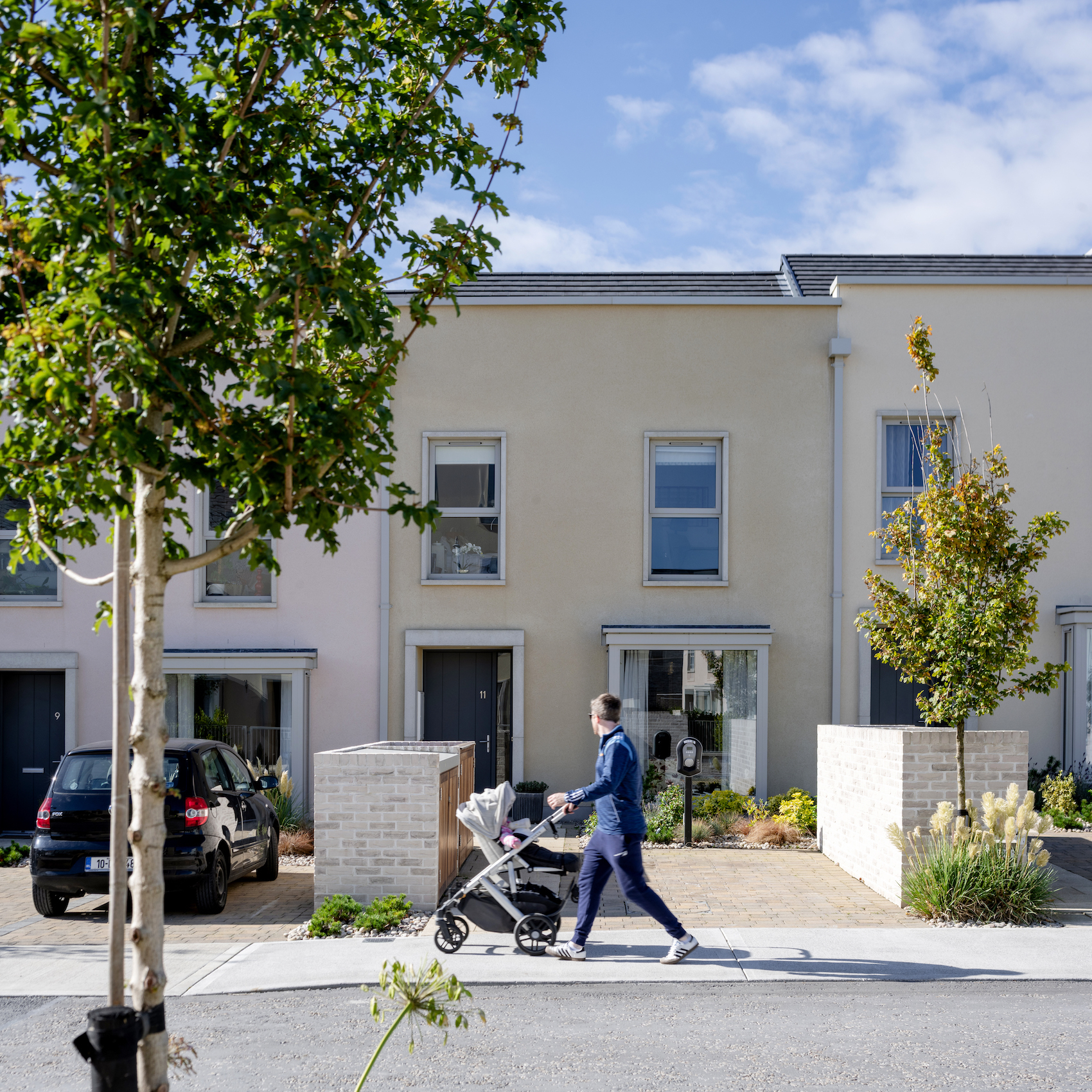
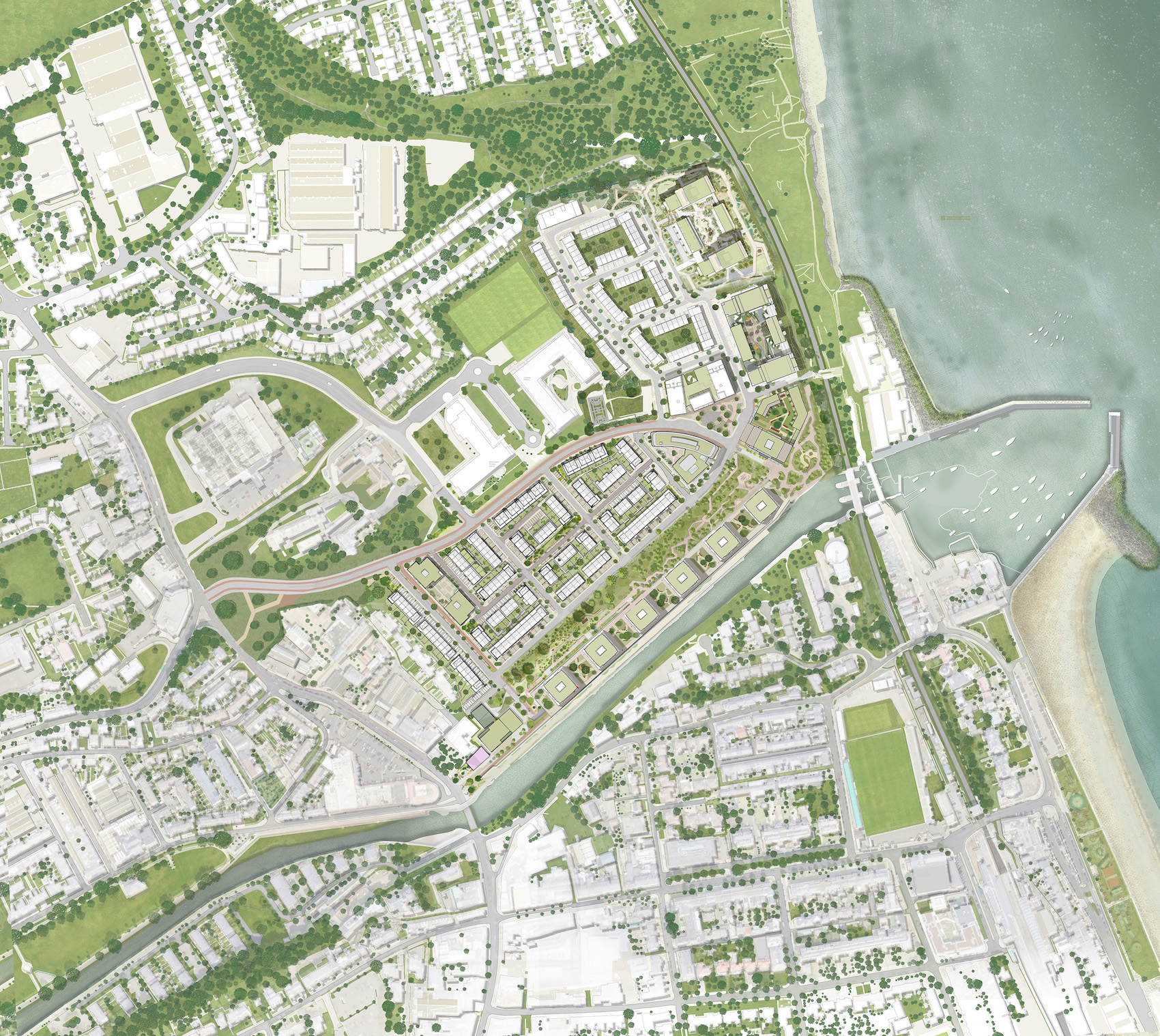
Howells Sea Gardens development in Bray, County Wicklow, transforms a former golf-course into a new coastal neighbourhood spanning 40 acres. The project will provide 1200 homes alongside shops, cafés and a Market Square, beginning with a new network of streets, squares and parks that continues Bray’s existing urban grain and walkable routes. Phased delivery is tied together by a pallet of pale stone, coastal planting and Scots Pine. Green space threads through the neighbourhood, including a two-hectare Central Park that preserves mature trees and strengthens the town’s flood resilience.
Victorian and Georgian terraces fan off from a traditional high street of two and three story shopfronts, while ornate brick and stone detached houses with Wicklow granite walls can also be found further out. With 40 minute train links into Dublin city centre, Bray has a growing population with a variety of needs. The new masterplan, led by Daniel Mulligan, Partner at Howells, is set to build an additional 1200 new homes by 2030, and initially emerged from a thorough understanding of Bray’s existing, historic context. The challenges of expanding this traditional coastal town are sensitive: an influx of new homes require appropriate supporting infrastructure, necessary despite Howells early commitment to a ‘landscape-led’ plan. Tucked on Ireland’s east coast, Bray is vulnerable to coastal erosion, yet thrives off a quaint, nature-oriented history and ‘unmanicured’ aesthetic, calling for tasteful, subtle coastal defence methods.
Architecture Today spoke with Mulligan about how Howells approached the sensitive extension of a town rich with identity and tradition while also navigating the plethora of challenges at hand. The result: a people led, organically devised development, choreographed by local and prospective residents, working with architects to simultaneously care for the towns past, present and future.
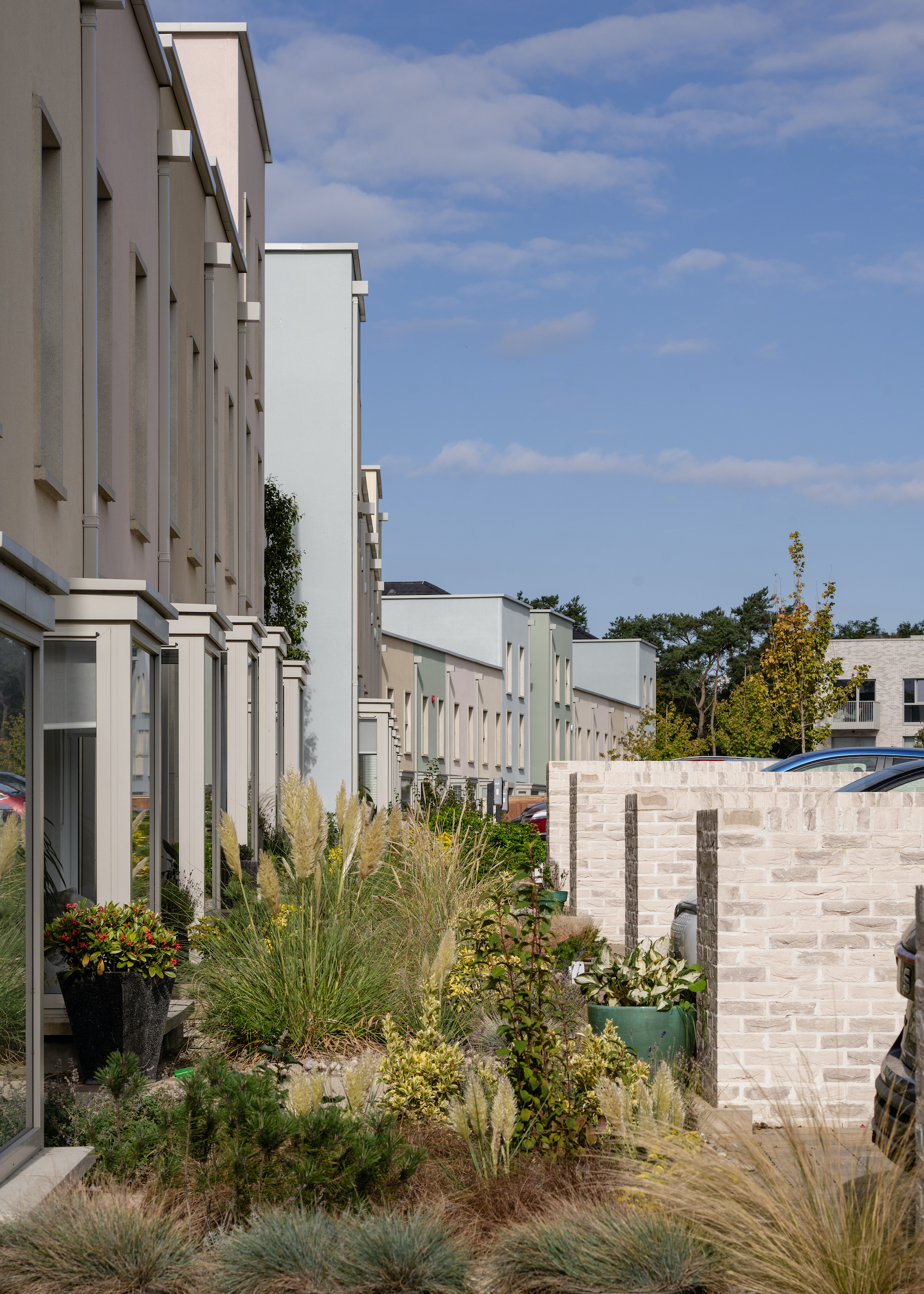
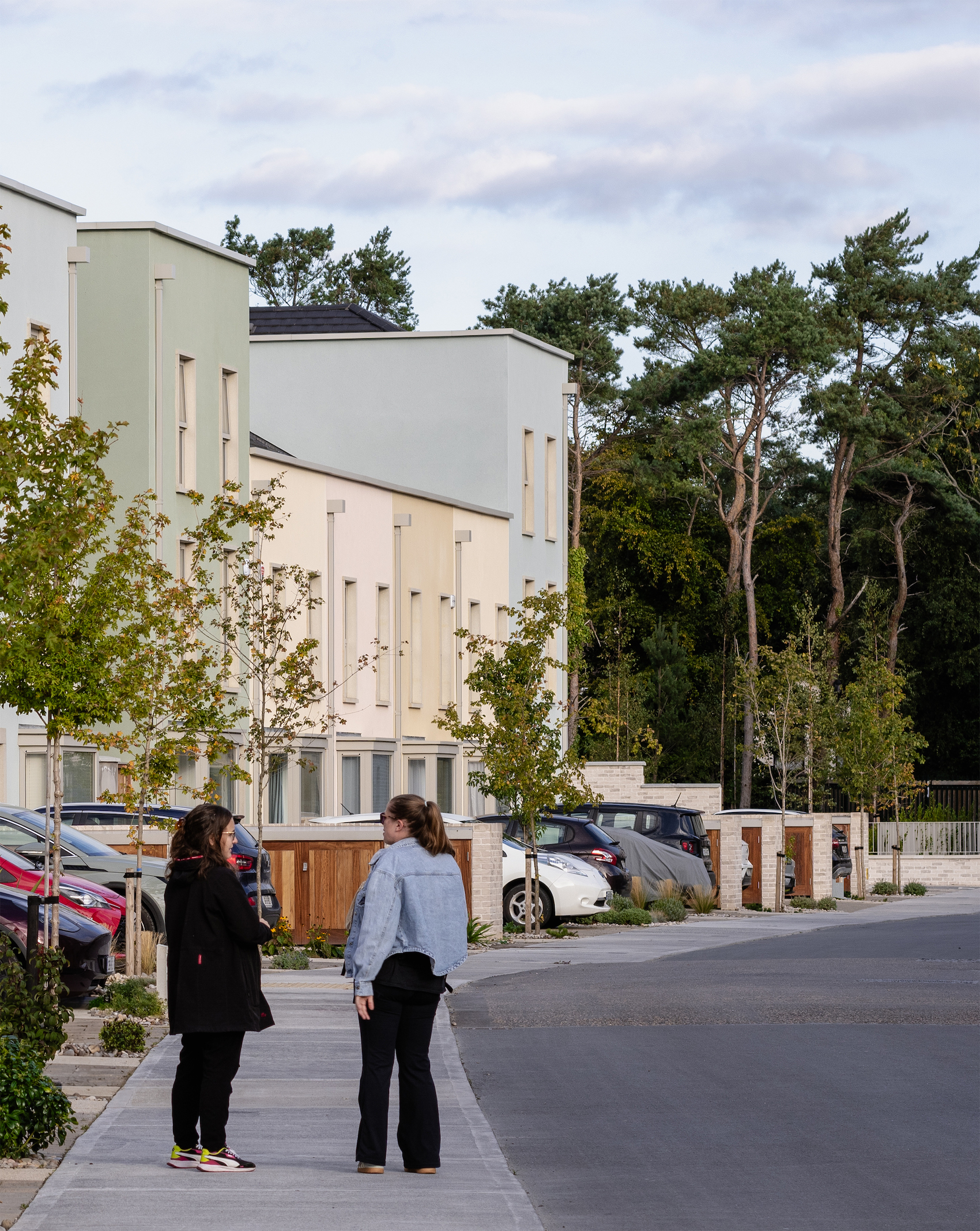
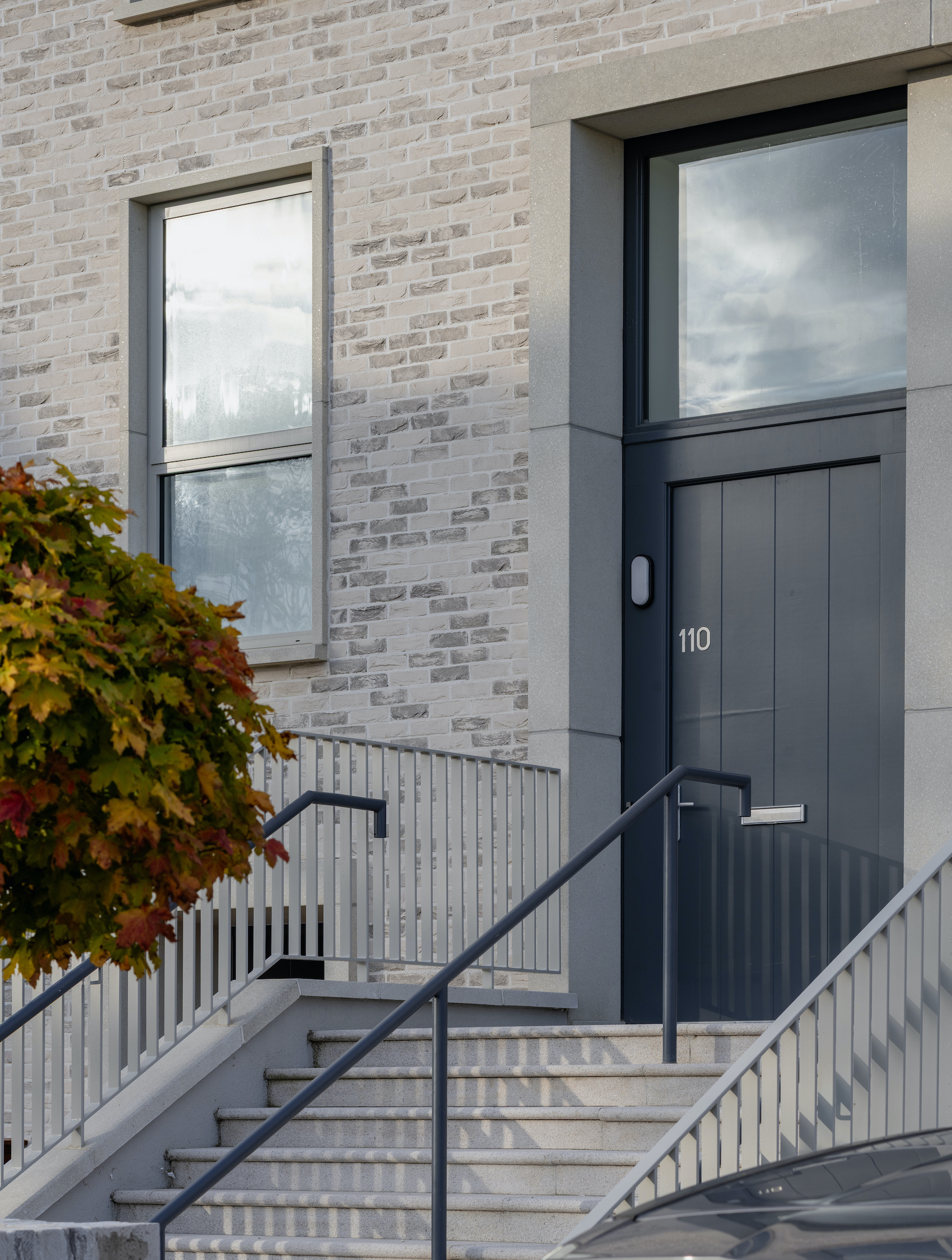
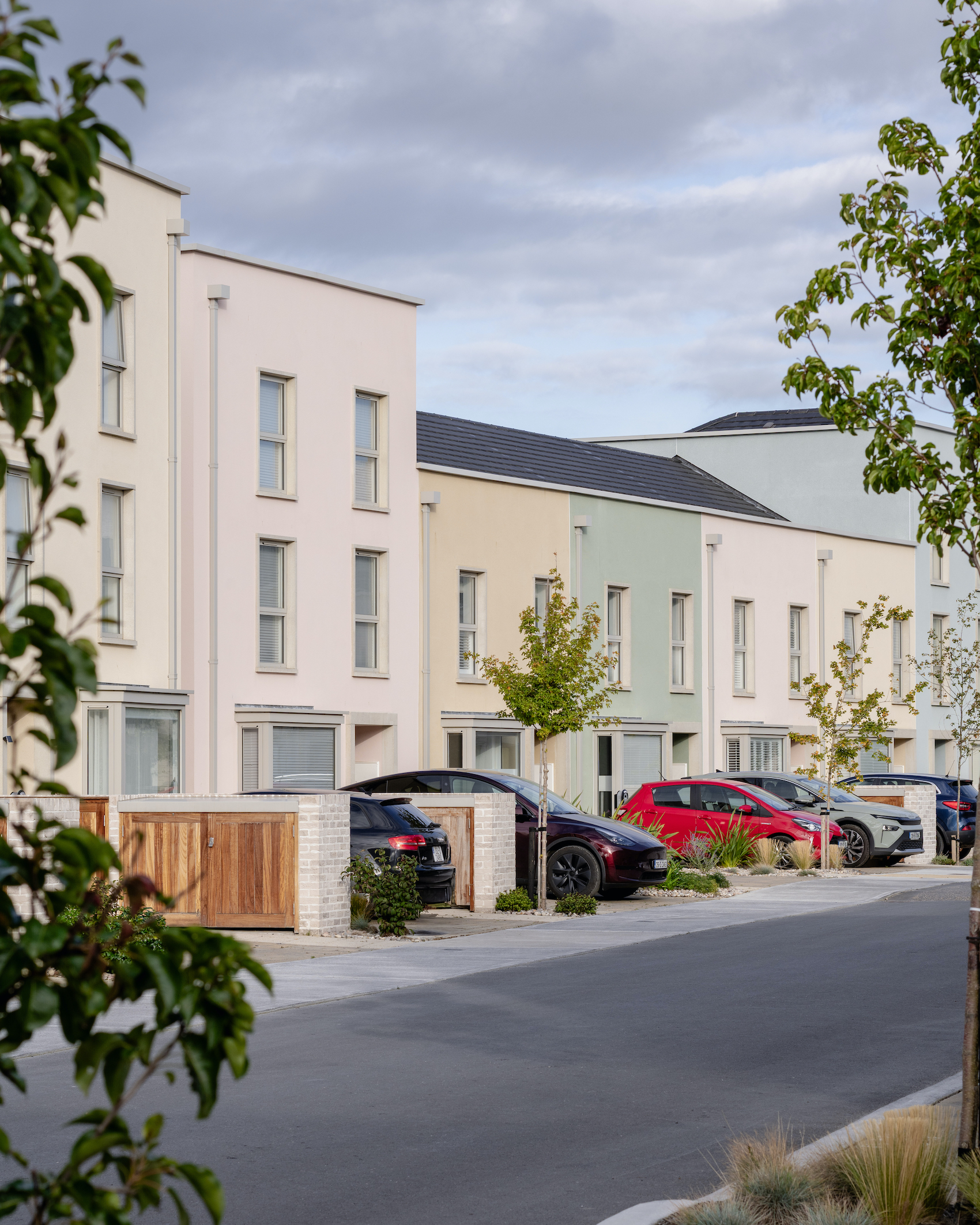
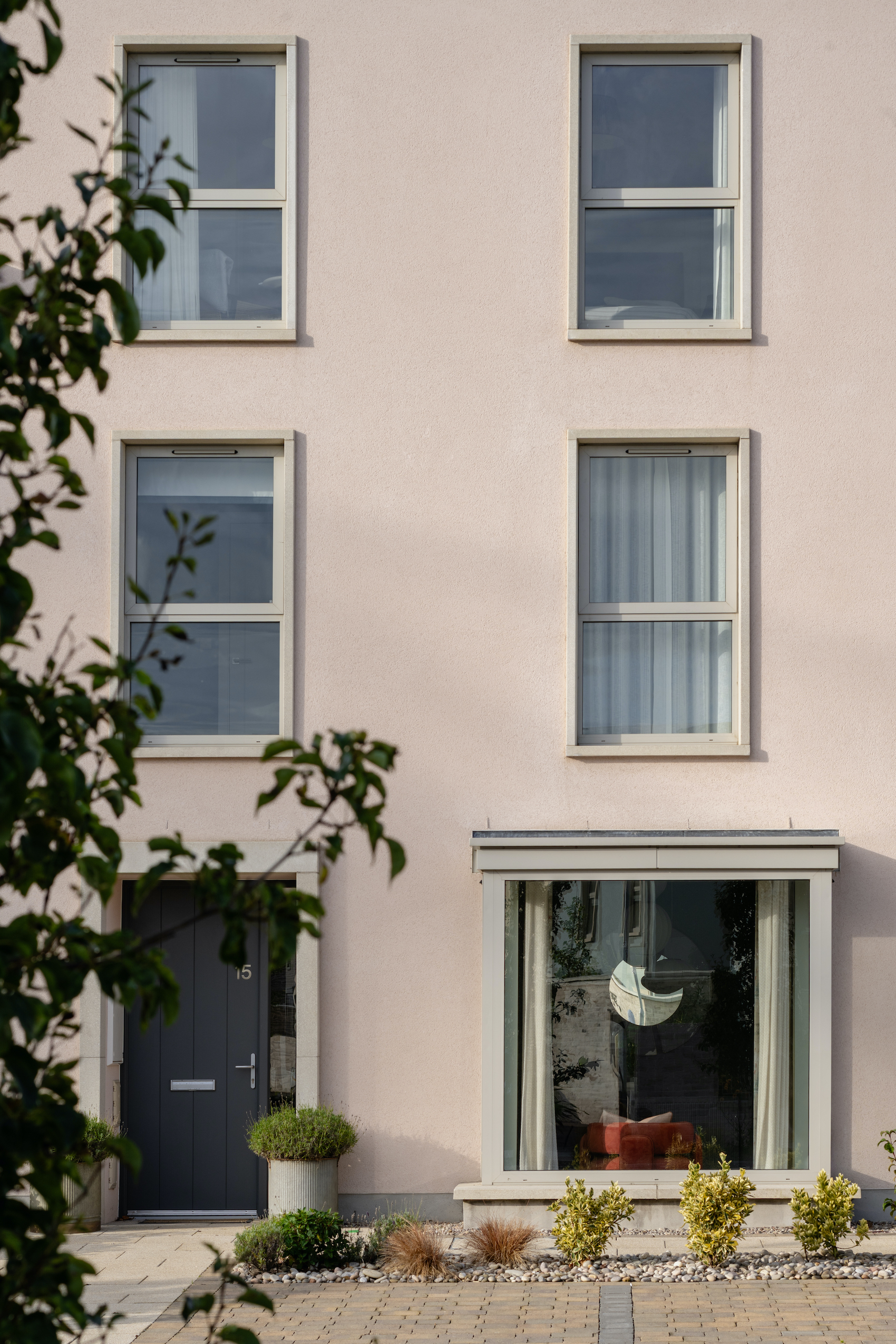
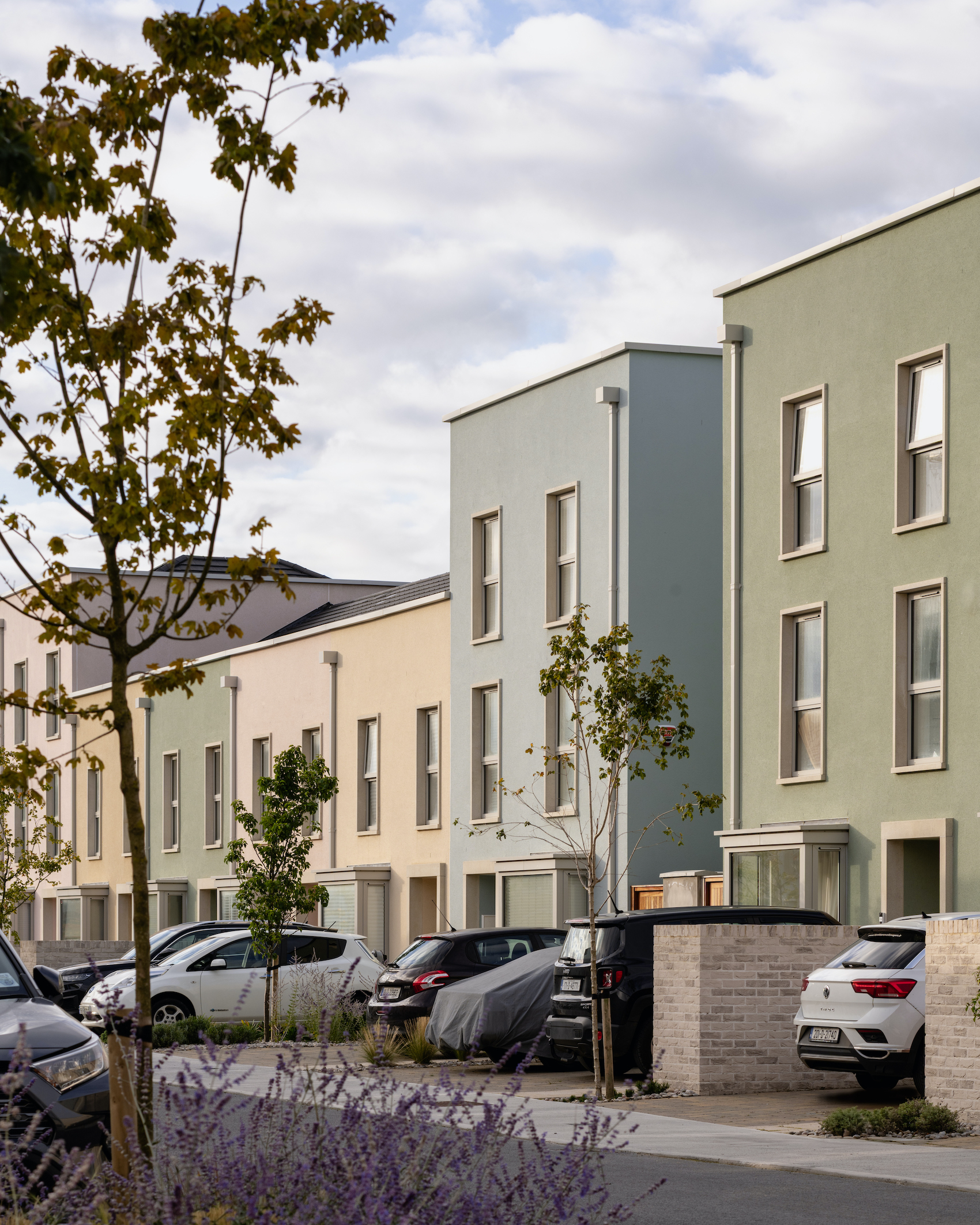
Phase one B saw the practical completion of 230 homes in November 2025. Ranging between two and three storey homes, including an ‘over and under’ typology which arranges a two storey home above a single storey home on the ground floor.
Give us an idea of Bray, the seaside town as you found it. Where did you find the need was for intervention?
Bray is a very special place that grew from a medieval Norman frontier town into Ireland’s premier Victorian seaside resort. Today it is still a relaxed, nature-oriented resort town, distinct from the capital in character and pace. It remains a place centred on leisure rather than work, celebrated for its arts and music scene, sea swimming and surfing, and ready access to the Wicklow Mountains.
Walking the town and site with our client, Ballymore, it was impossible not to fall for its charm.
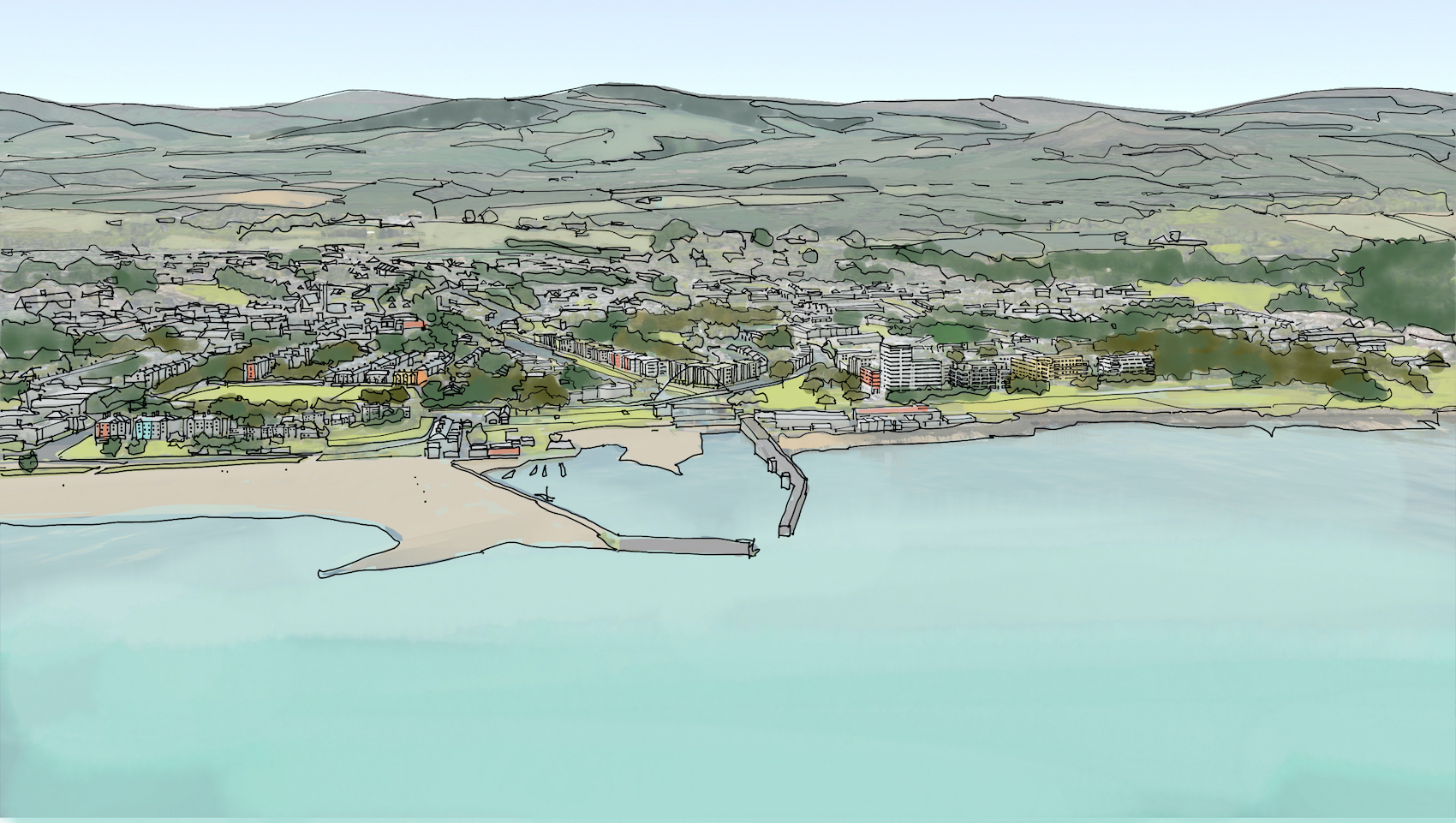
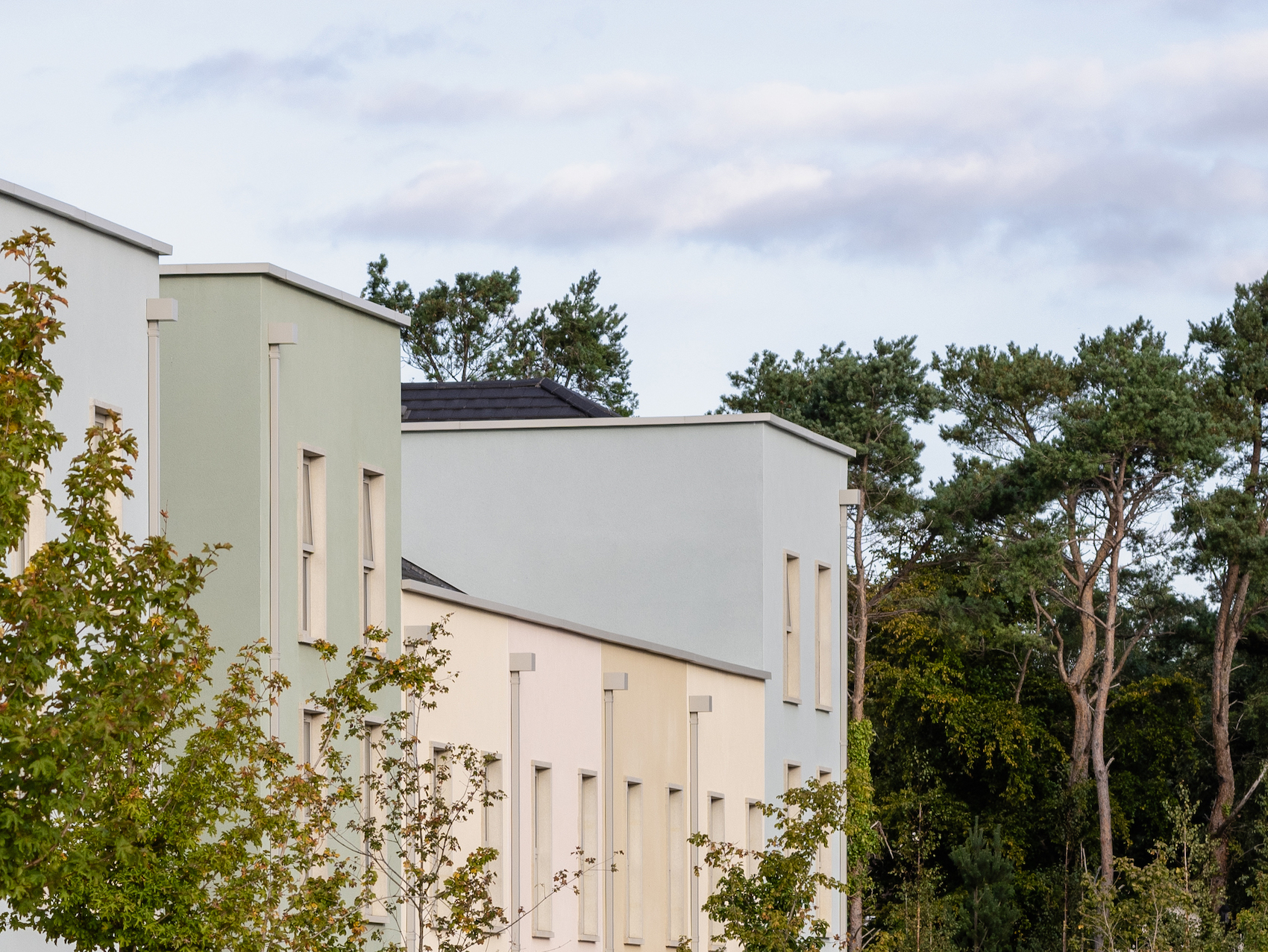
We worked “small to big,” shaping new neighbourhoods to be places that enrich daily life and feel genuinely communal. Scale was critical. We’ve put two and three storey family houses alongside the existing two and three storey homes and the school to the west and north, creating lived-in streets that sit comfortably with their neighbours. Denser apartment buildings were placed beside the parks, riverside and coastline, where the landscape could naturally hold taller forms.
This approach to scale and adjacency allowed the masterplan to achieve 75 dwellings per hectare (dph) while stitching seamlessly into the surrounding 20–30 dph neighbourhoods.
Considering Bray’s coastal location, have you incorporated methods for coastal defence?
Yes, very much so, we have created a new park that provides the necessary flood capacity which sits at the heart of the site which also retains mature trees from the old golf course.
The River Dargle forms the site’s southern boundary. As a tidal river receiving stormwater from the Wicklow Mountains, it requires careful flood management. A new defence wall along the southern edge channels stormwater to the harbour, while the two-hectare park beside it provides additional flood-storage capacity during extreme events.
A sluice valve at the park’s eastern edge allows controlled release back into the Dargle. Arup modelled a range of exceptional scenarios – including Hurricane Charley-type events – to confirm the robustness of the approach.
How has feedback from the community shaped the scheme?
Our approach to sensitively extending the town and providing a rich mix of housing types came from listening to local voices. Two key themes significantly influenced the design, the first being a demand from downsizers. There was a stronger-than-expected interest from downsizers seeking to remain in Bray. This led to an increase in duplex-over-ground-floor units, which have proved particularly popular with this group. The second theme was concern over the scale of taller buildings. Local feedback focused on the height and visibility of apartments on the eastern edge. Extensive testing and modelling have refined these heights to maximise high-quality homes while ensuring the town’s historic character remains dominant.
Once complete, how do you envision Sea Gardens’ relationship to Bray, and what impact will it have?
We very much hope and believe Sea Gardens will be seen as a natural and authentic extension of Bray that will also benefit everyone by providing new parks, amenities and spaces that connect the old town to schools and communities to the North.
Sea Gardens is complementary in scale, respectful in character, and aligned in materials and urban rhythm. Phase 1B already demonstrates that it is a good neighbour, enhancing routes north–south and east–west and opening the site for active travel. Over time, Sea Gardens will give Bray a significant new civic asset: a two-hectare town park and a natural extension of Main Street. It will connect existing neighbourhoods, the seafront, harbour and town centre in a way that supports everyday life.
In the context of national policy to increase density, Sea Gardens shows how 75 dwellings per hectare can be integrated into a town of 20–30 dph without losing its identity. Bray’s form is shared by many Irish market towns; Sea Gardens aims to illustrate how understanding the existing structure, beauty and character of a place can guide a sensitive, contemporary extension.
Our ambition is to create neighbourhoods – not housing estates – where a rich pattern of daily experiences binds people together. This is a continuation of the best traditions of 19th and early 20th century European urbanism: incremental, human-scaled and rooted in everyday life.
We start with small things – materials, informal routes, sheltered spaces – and let them shape the whole. We focus on how new neighbourhoods connect to existing ones, how people move between home, school, work and places to gather. Sea Gardens is about creating places that feel like natural extensions of their landscape and culture: irregular, grown-in, and made for everyday joy – walking, eating, gardening, playing, exercising, meeting, and simply living well.
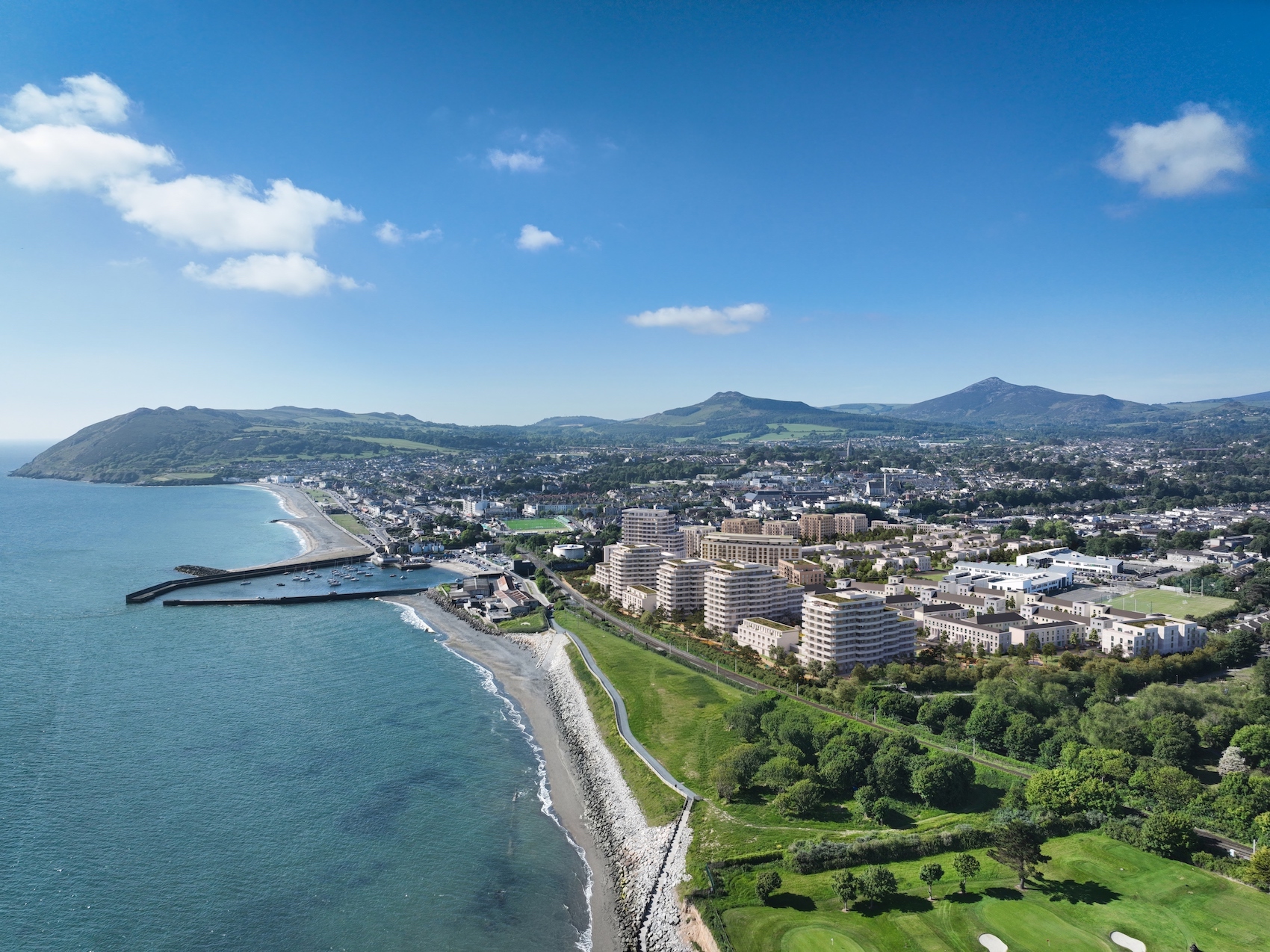
Visualisation showing future phases. Phase one B will start on site in early 2026, subject to approvals, and promises 150 apartments. Phase two plans for 600 homes, with construction beginning in late 2026, and phase three will begin in 2027 with a further 300 homes. The prospective timeline will see all 1200 homes completed by 2030.
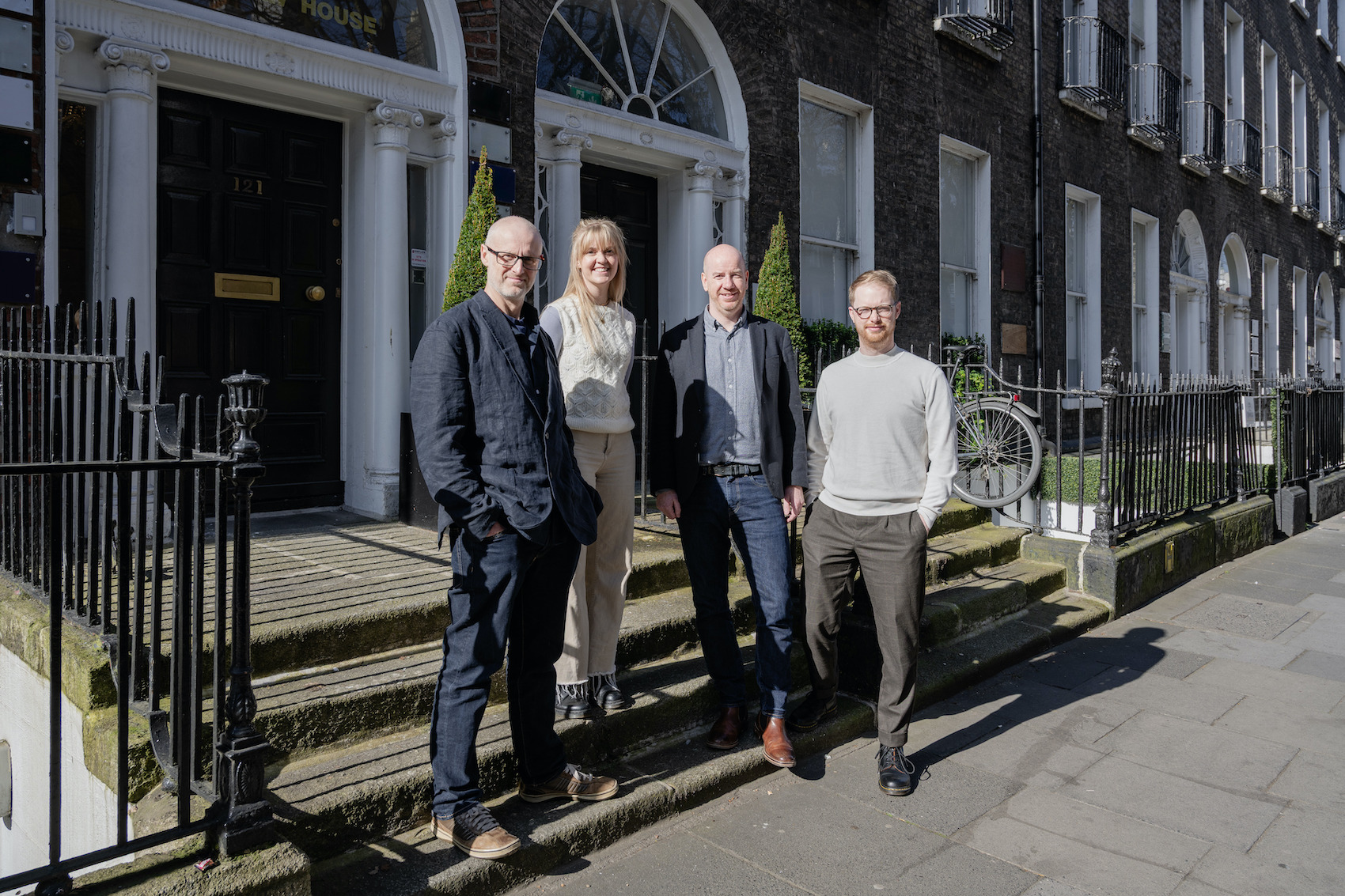
Photographed from left to right outside the Howells Dublin office which opened in May 2025: Simon Pearson, Jessie Low, Daniel Mulligan and Stephen Jackson.
Credits
Client
Ballymore
Architect
Howells
Structural engineer
Atkins
Highways engineer
Atkins
Main contractor
Ballymore
MEP Engineer
Metec/ JAK
EIAR consultant
Atkins
Landscape consultant
Park Hood / BSLA
Planning consultant
RPS
Fire engineer and DAC
BB7
Additional images