Nissen Richards Studio and SP(R)INT Studio’s permanent exhibition and interior design for a visitor centre at Lake Mývatn uses Iceland’s volcanic landscape as both subject and setting, creating an immersive environment that draws geology, ecology and culture into a single, coherent experience.
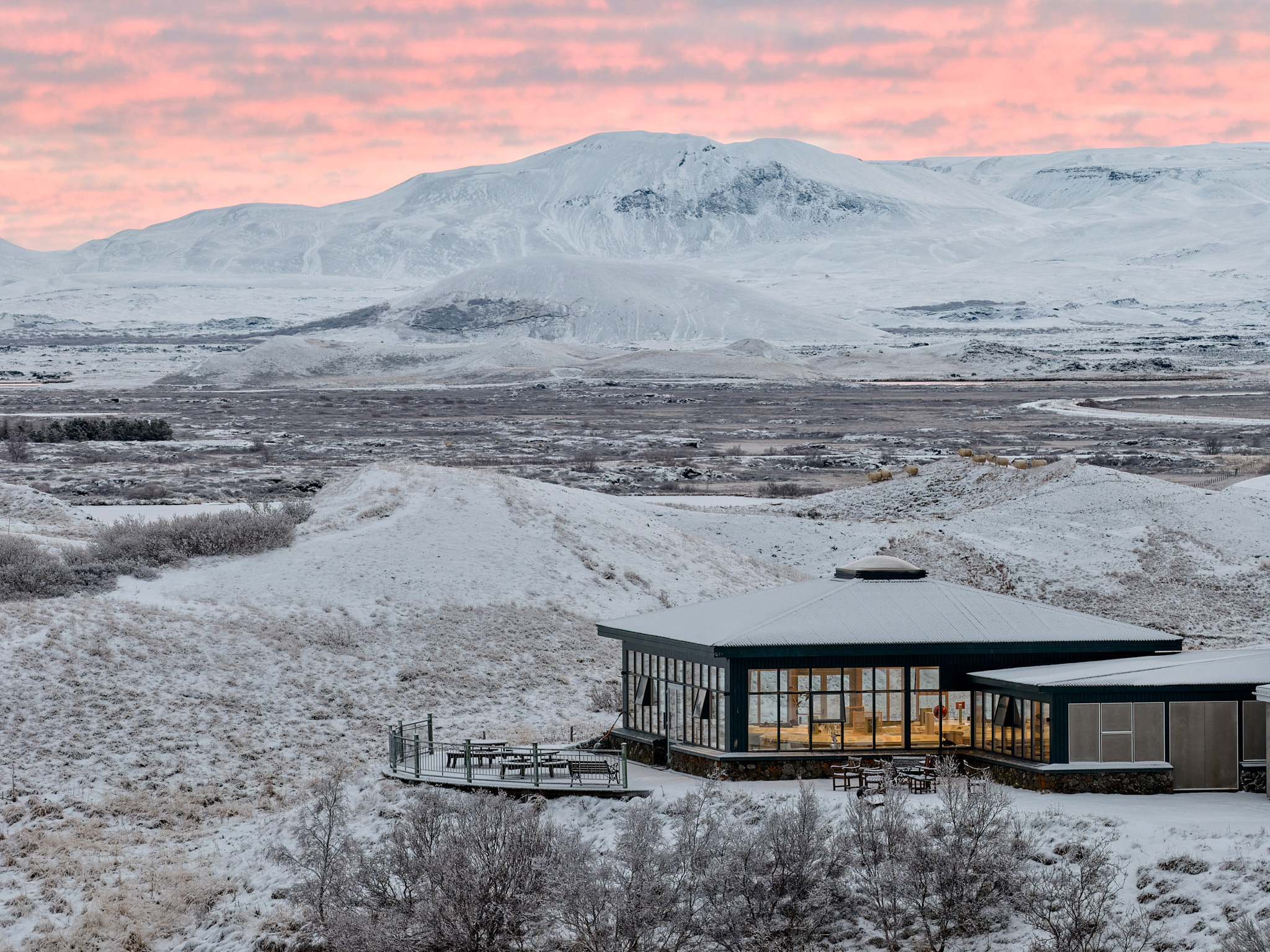
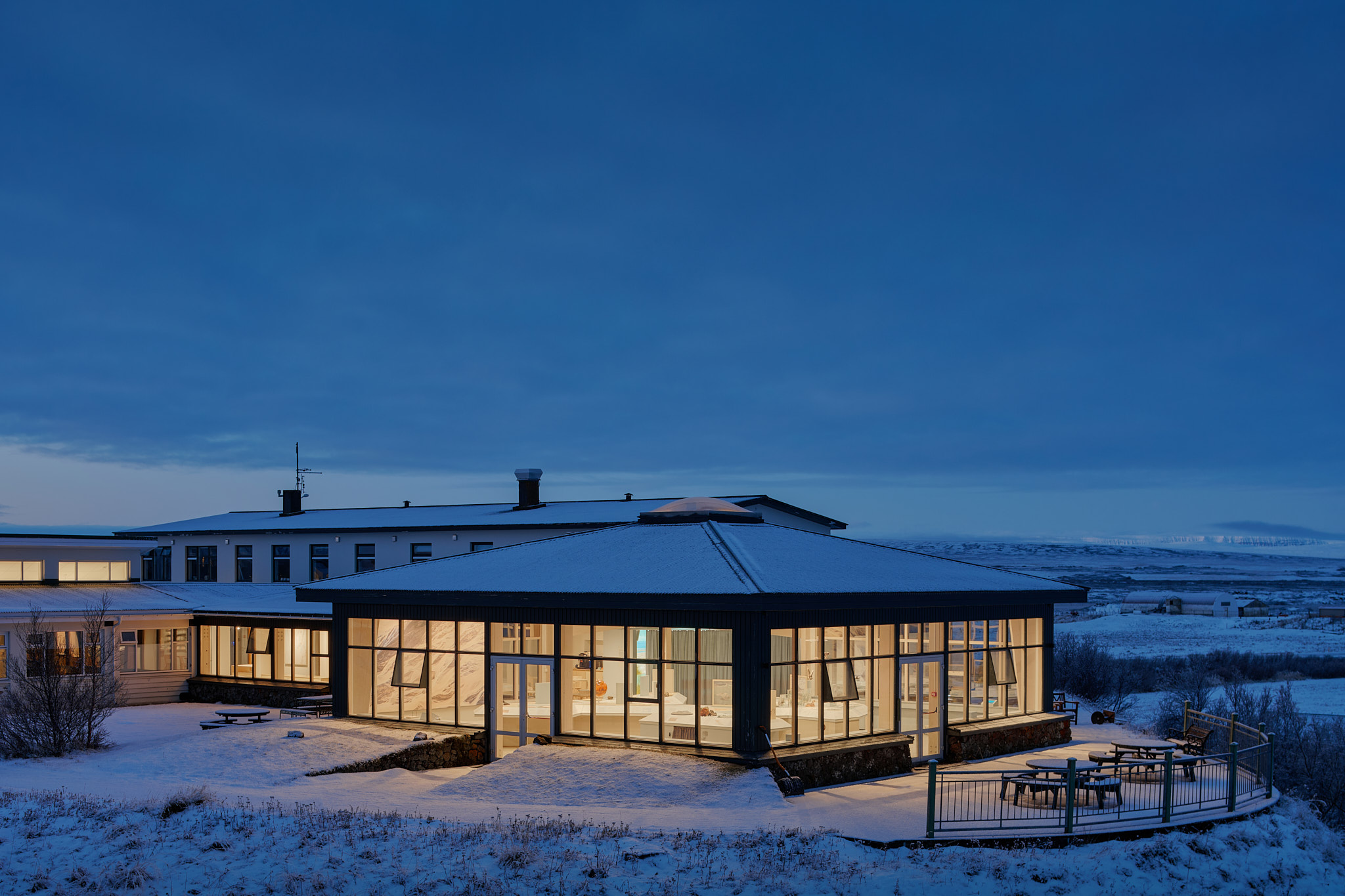
Nissen Richards Studio, working with Reykjavik-based SP(R)INT Studio, has completed the permanent exhibition and interior design for the Gígur Visitor Centre in northern Iceland. The project transforms an existing 400-square-metre building within the Mývatn nature reserve into a destination that is at once interpretive and experiential, bringing together exhibition design, spatial planning and light-touch refurbishment under a unified design language.
The centre sits close to Lake Mývatn, a landscape formed by volcanic activity and rich in birdlife, and serves as a gateway to the wider Vatnajökull National Park. The brief required a permanent exhibition capable of communicating the region’s complexity, from geology and ecology to cultural narrative, while also accommodating a welcome area, café and shop within the same environment.
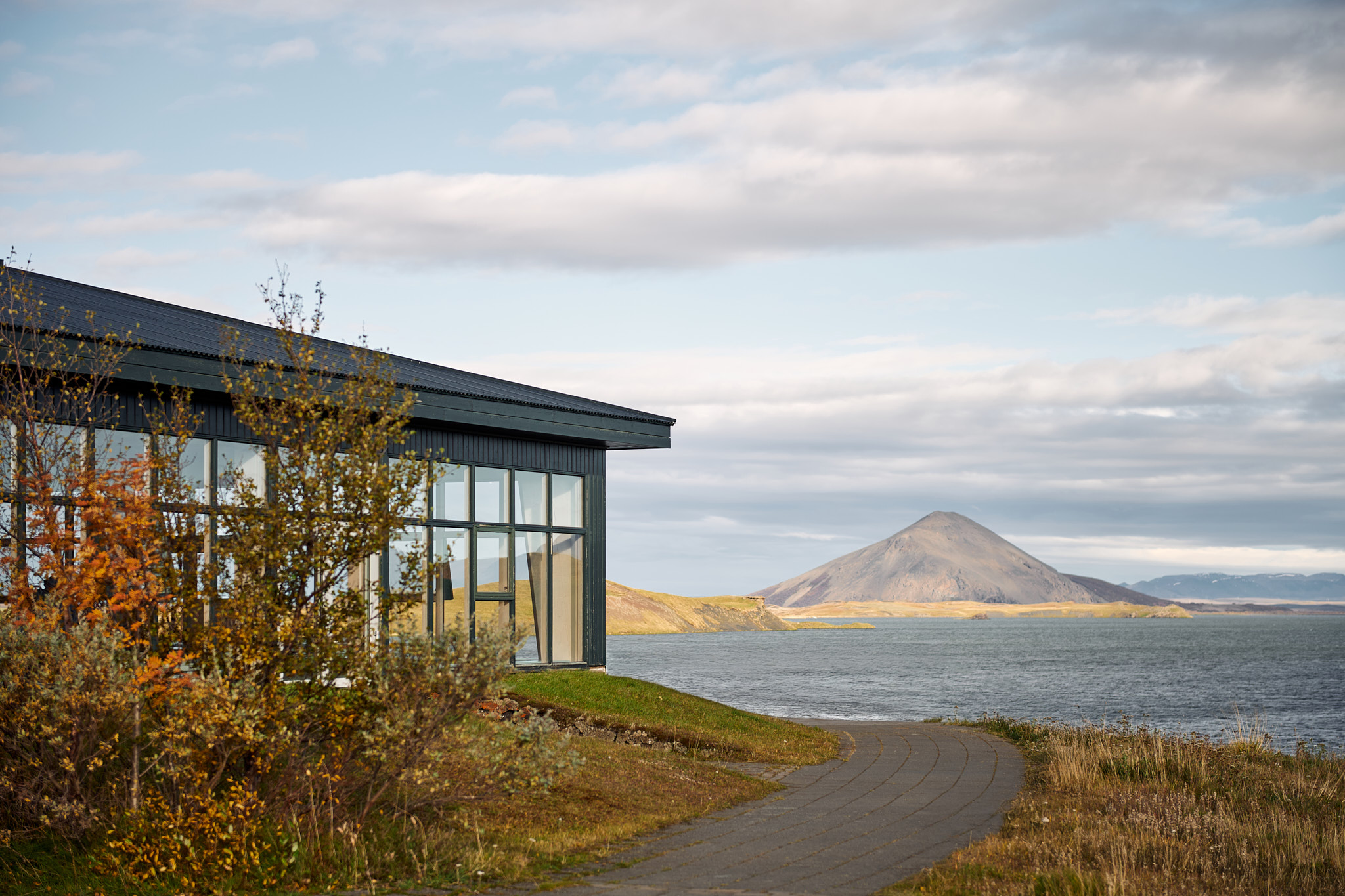
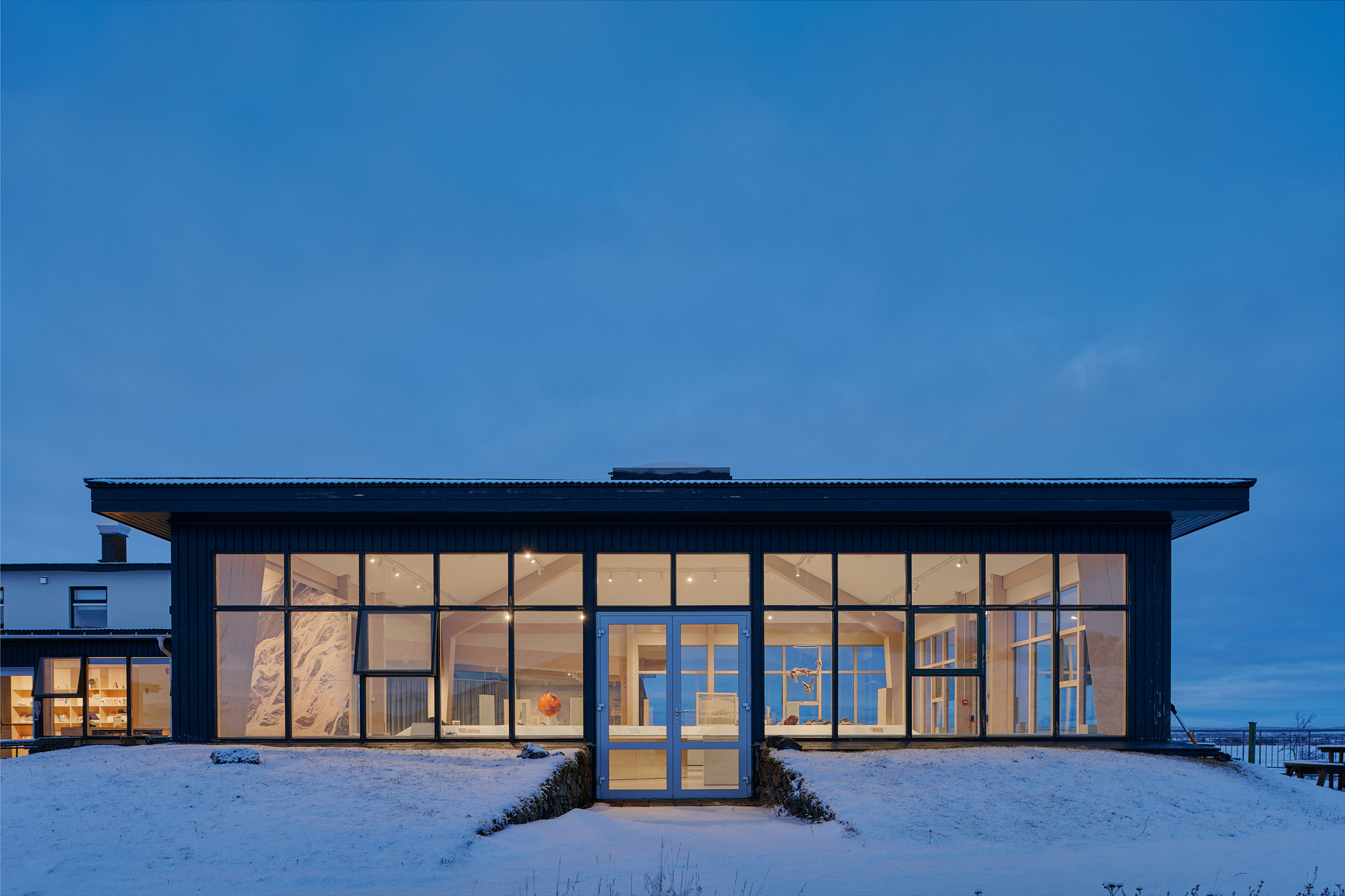
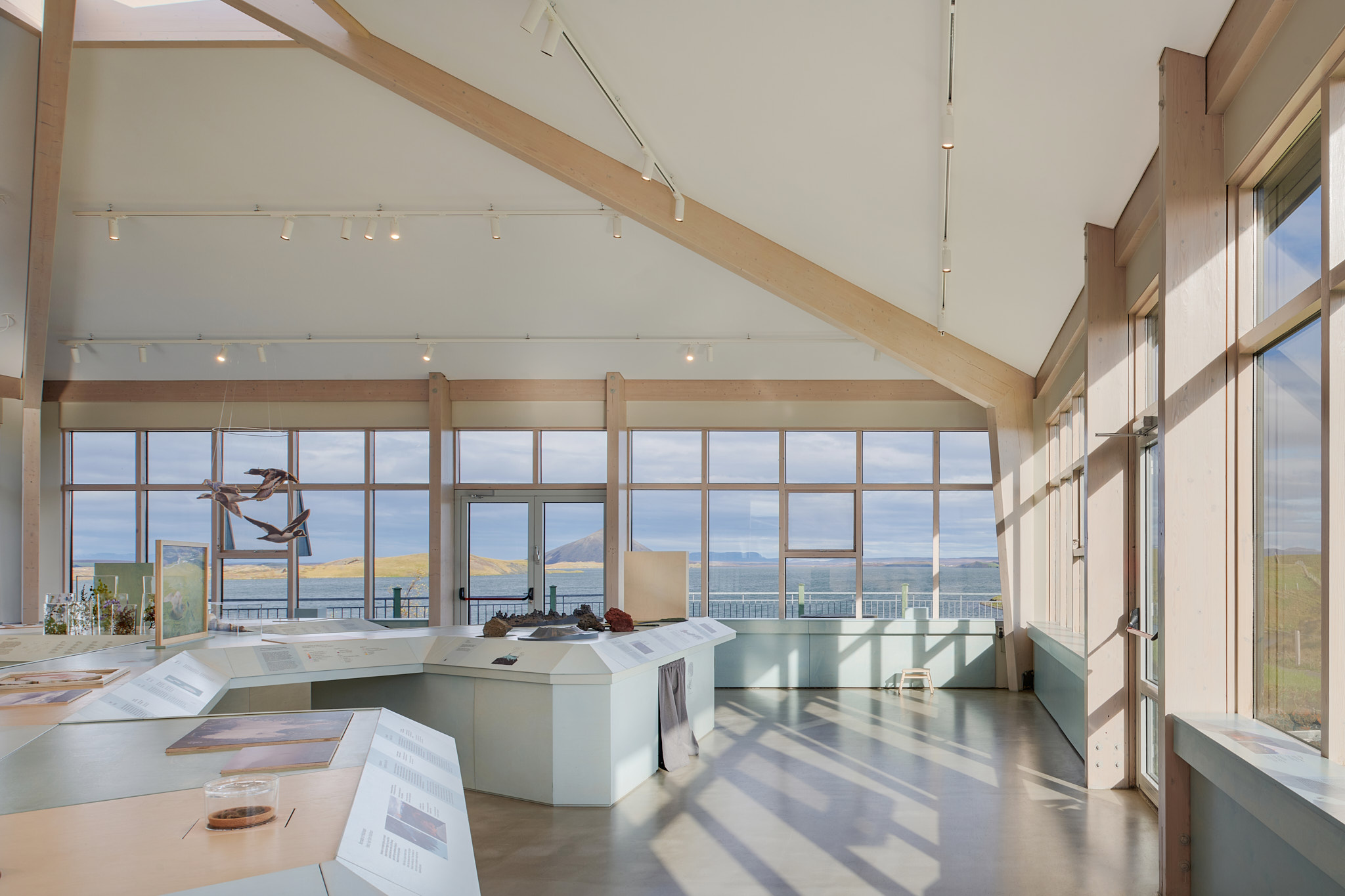
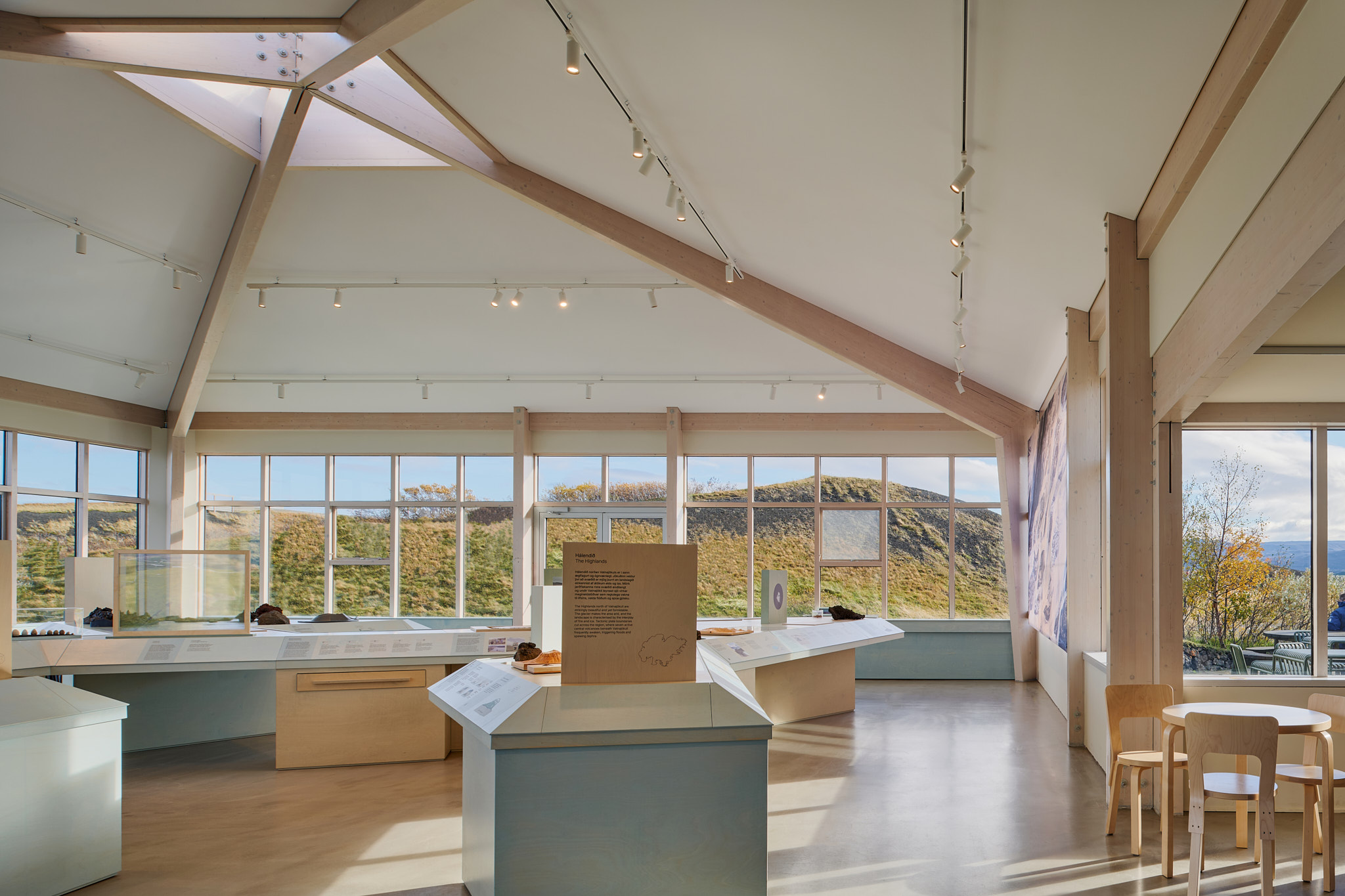
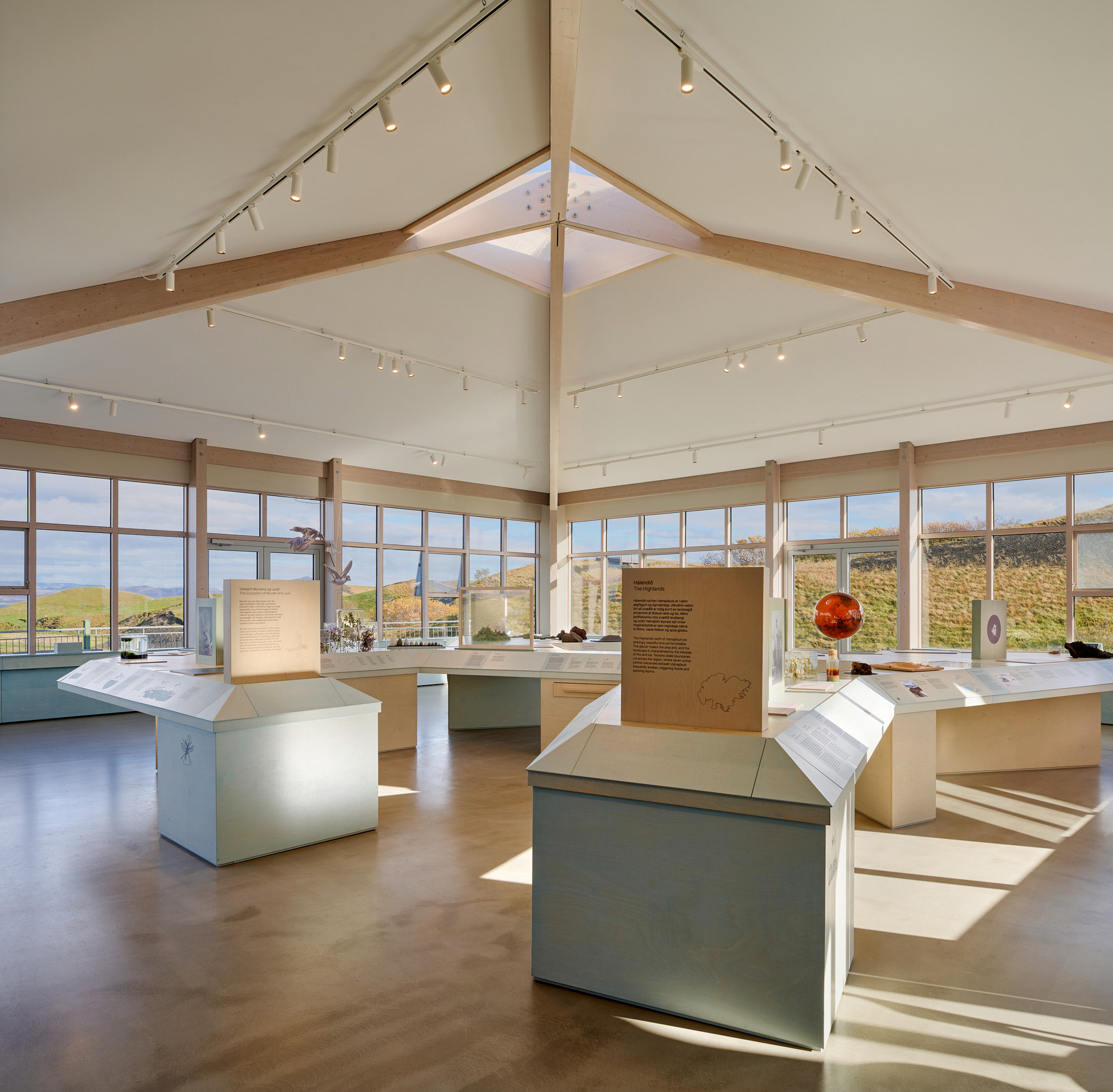
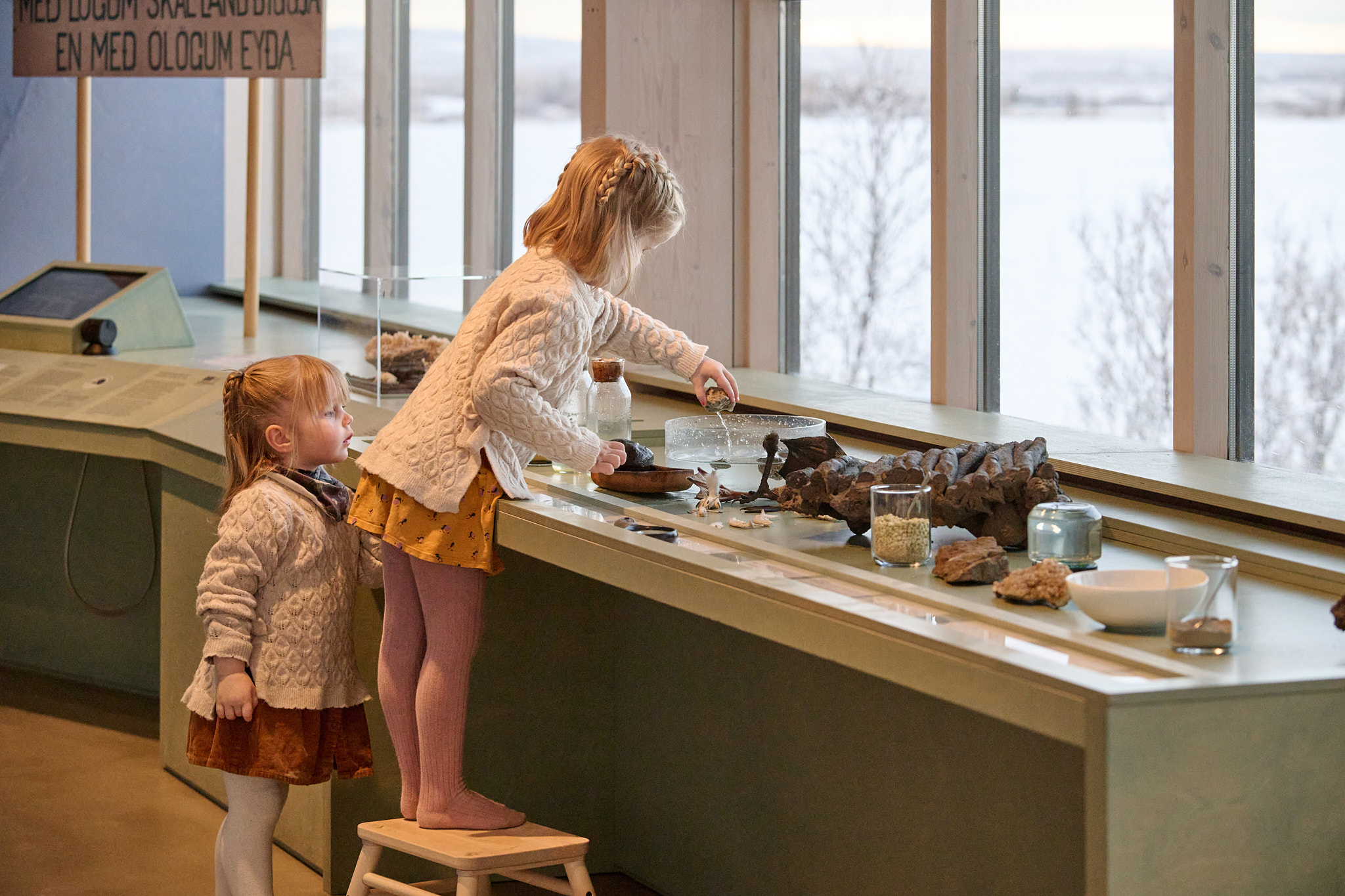
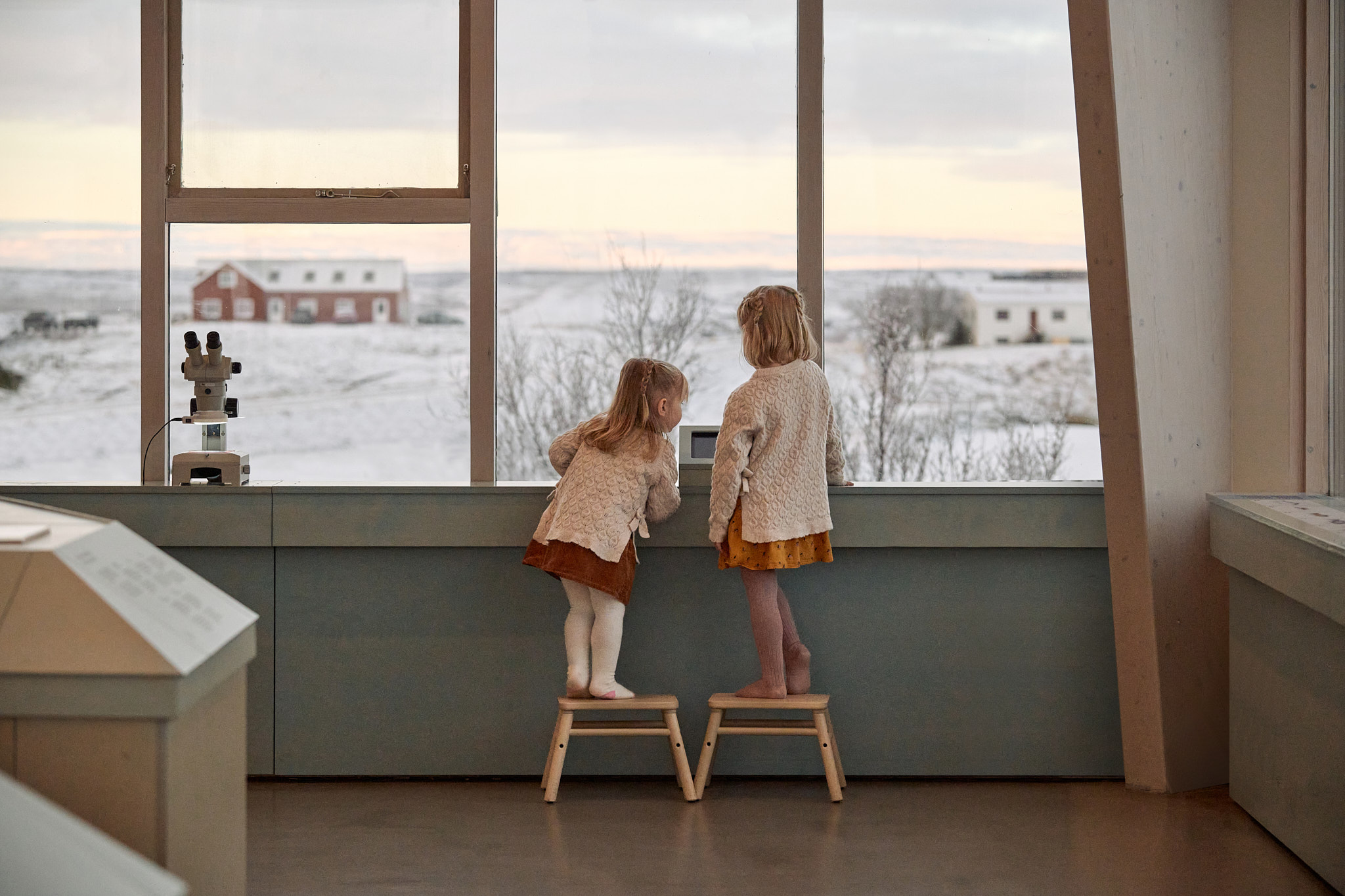
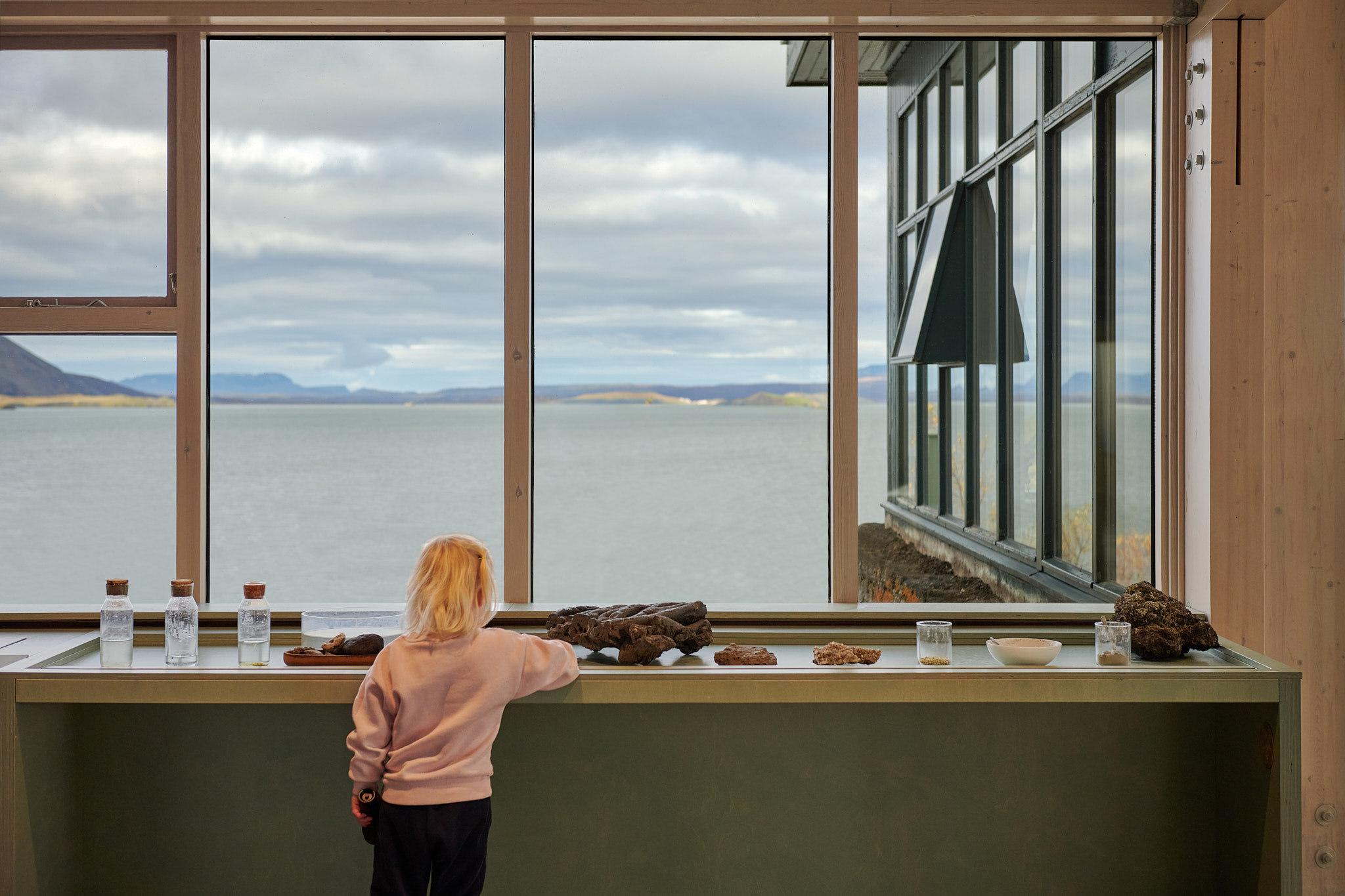
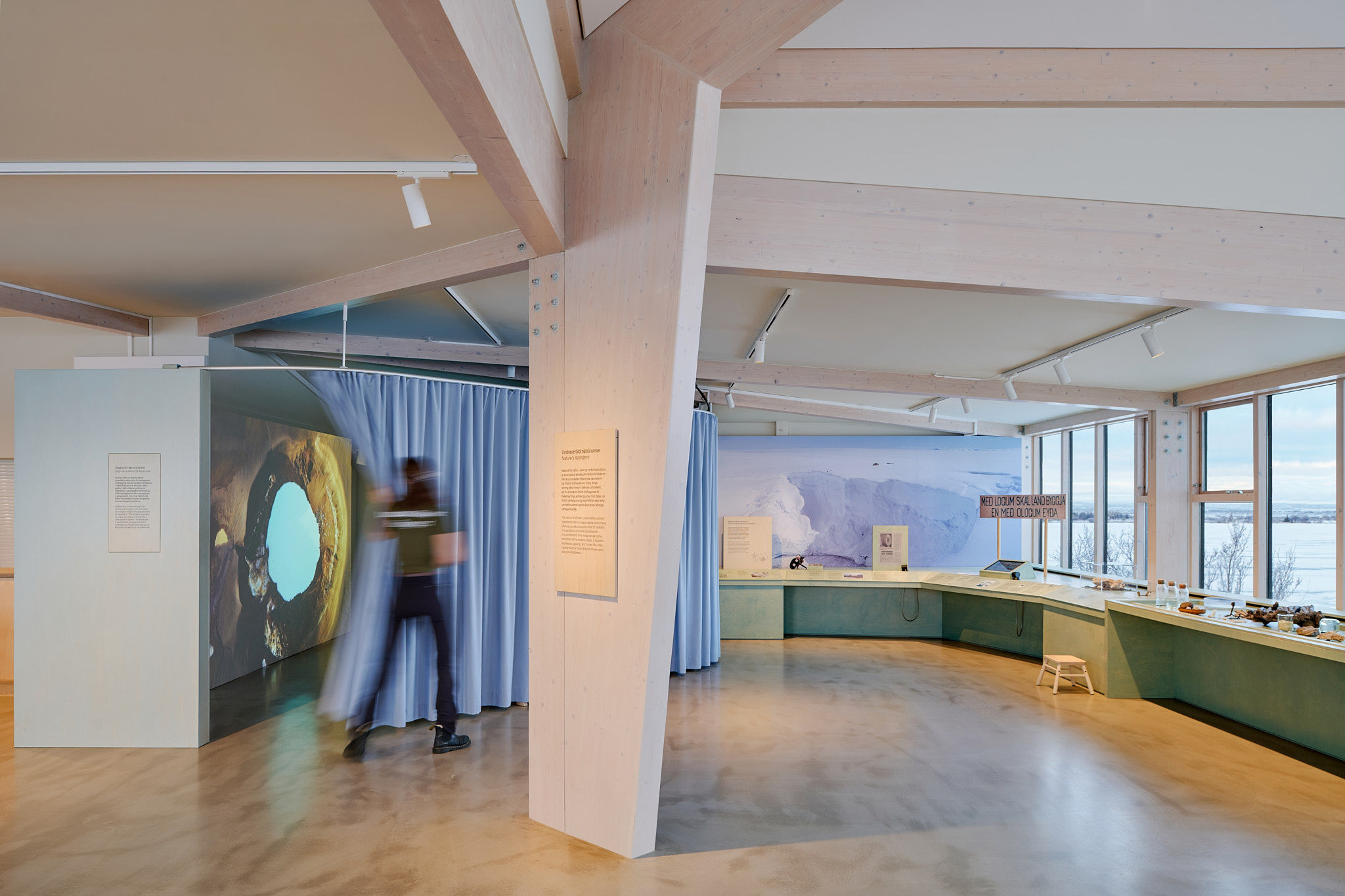
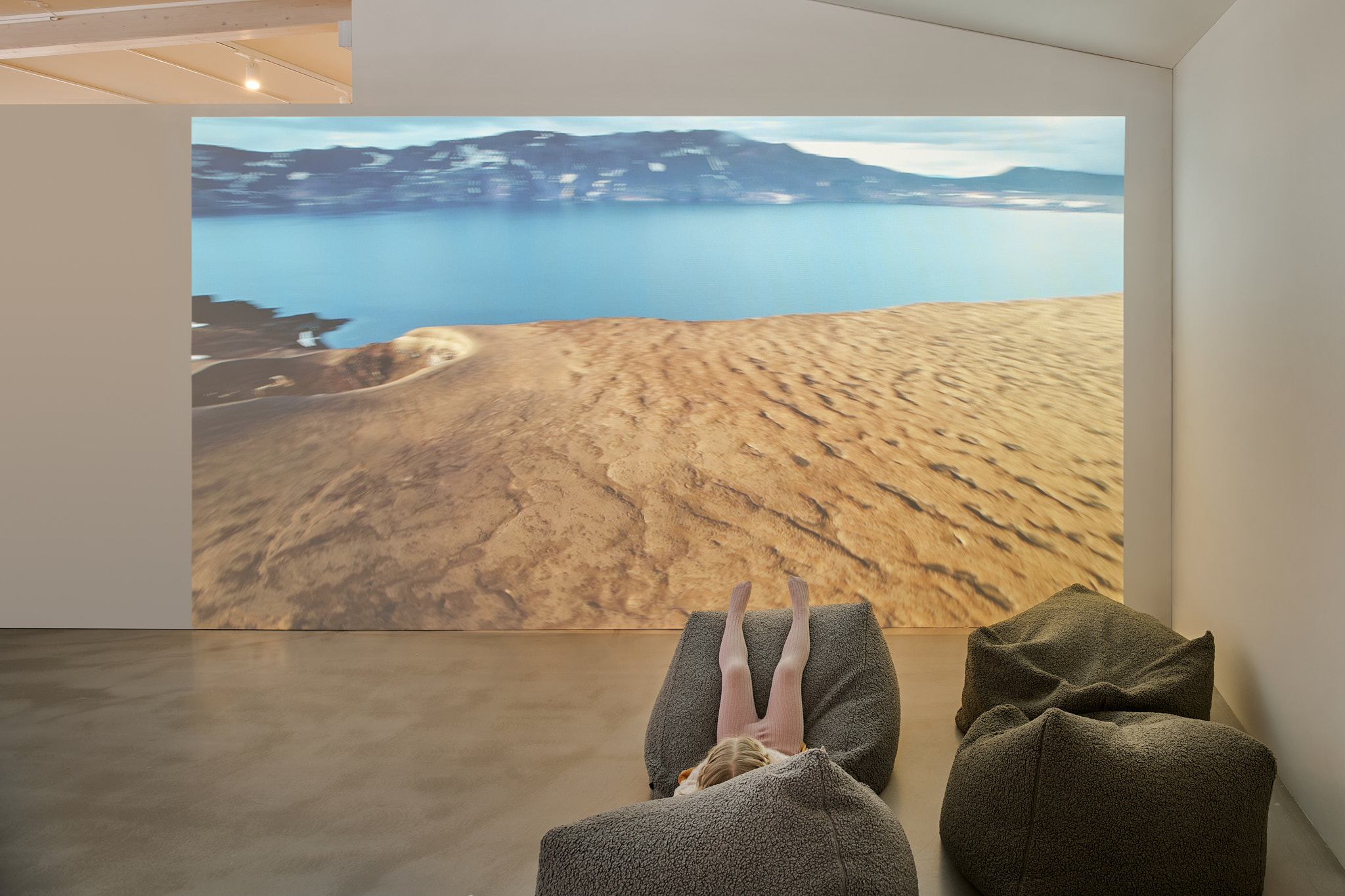
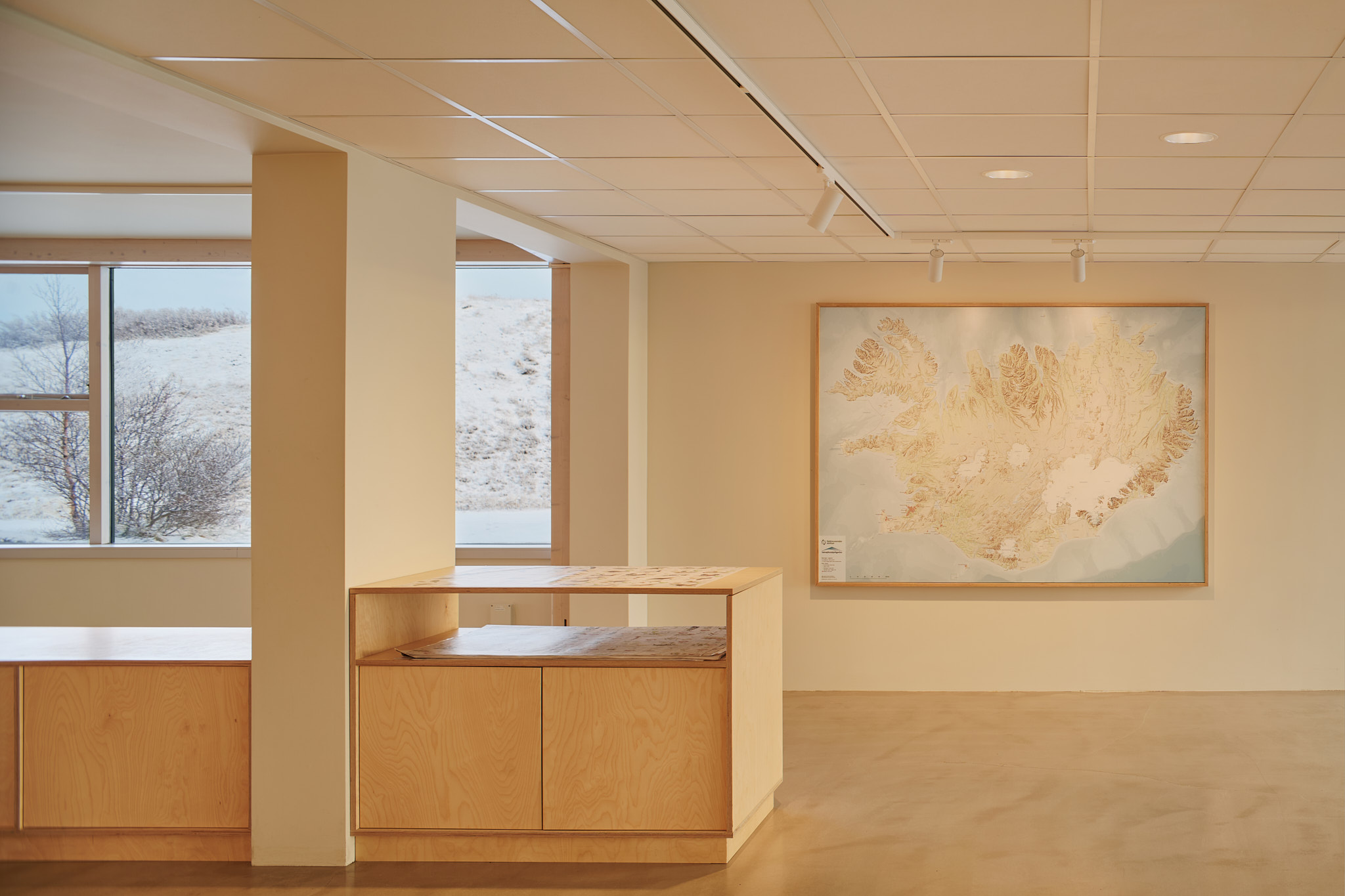
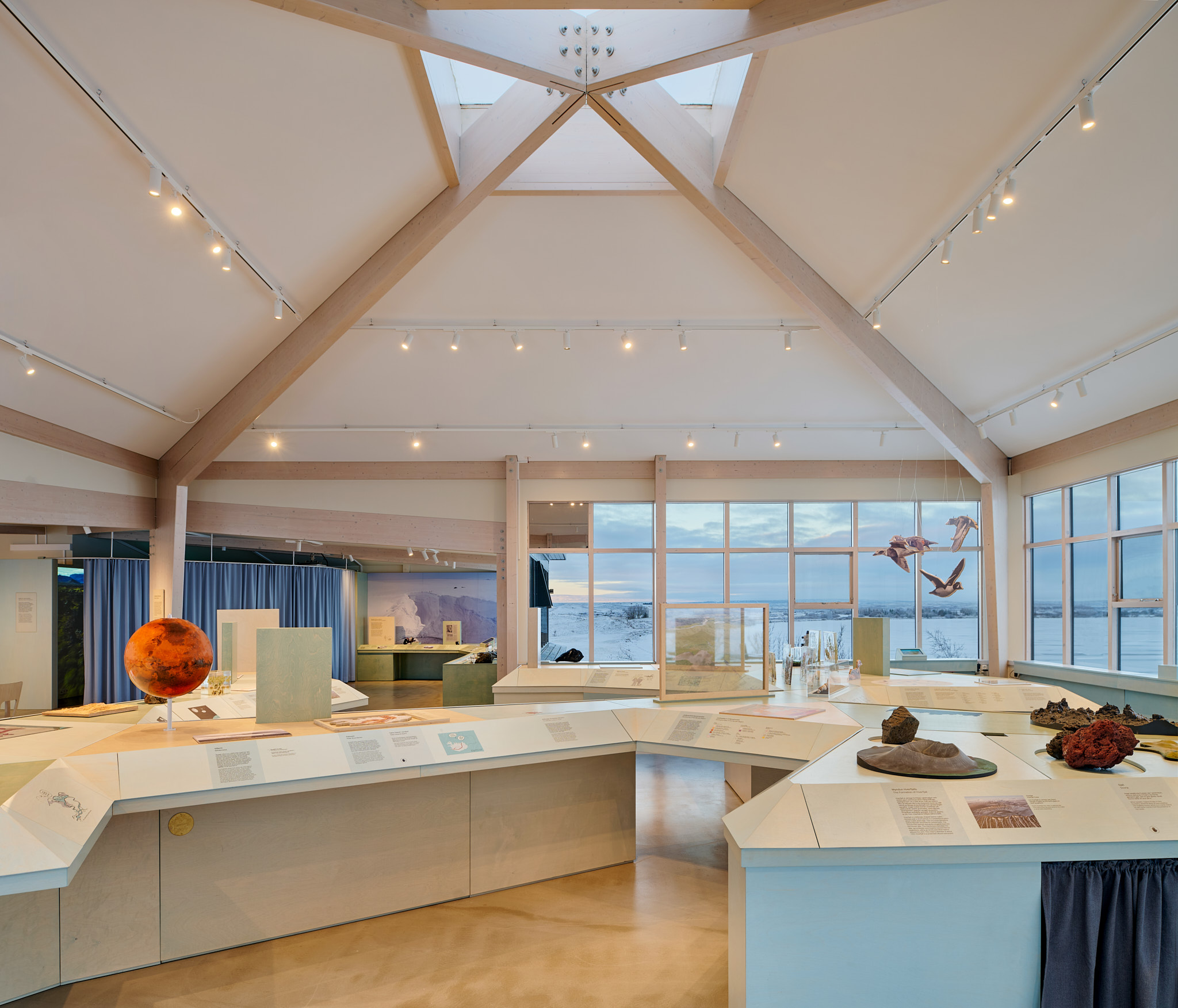
Glazing on all sides, combined with a restrained spatial strategy, keeps the surrounding landscape ever-present. Displays are conceived as low-lying interventions that sit beneath the horizon line, ensuring that panoramic views across the lake, pseudo craters and distant mountains remain uninterrupted. As a result, the building becomes both a place of orientation and a lens through which to read the terrain.
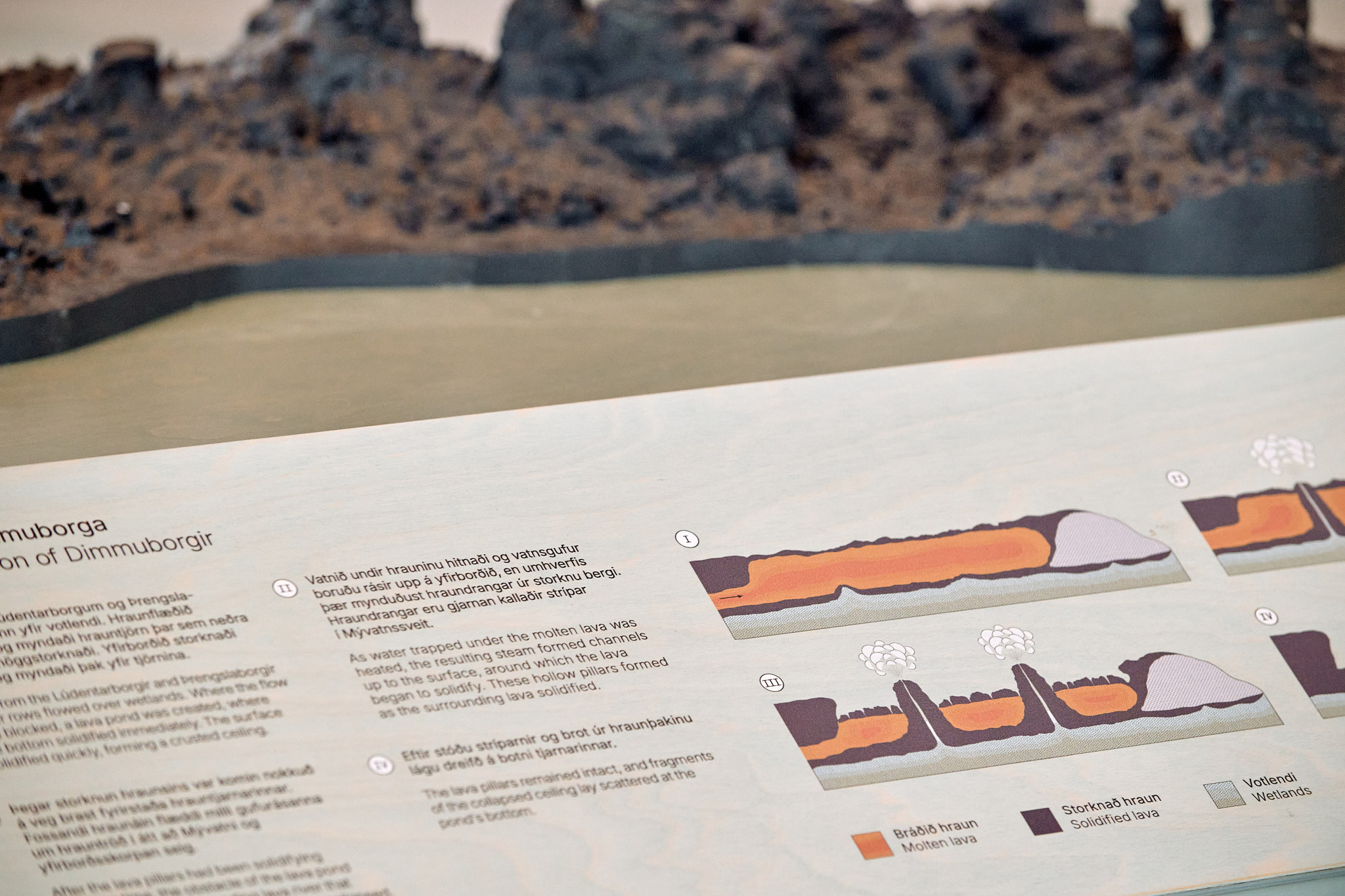
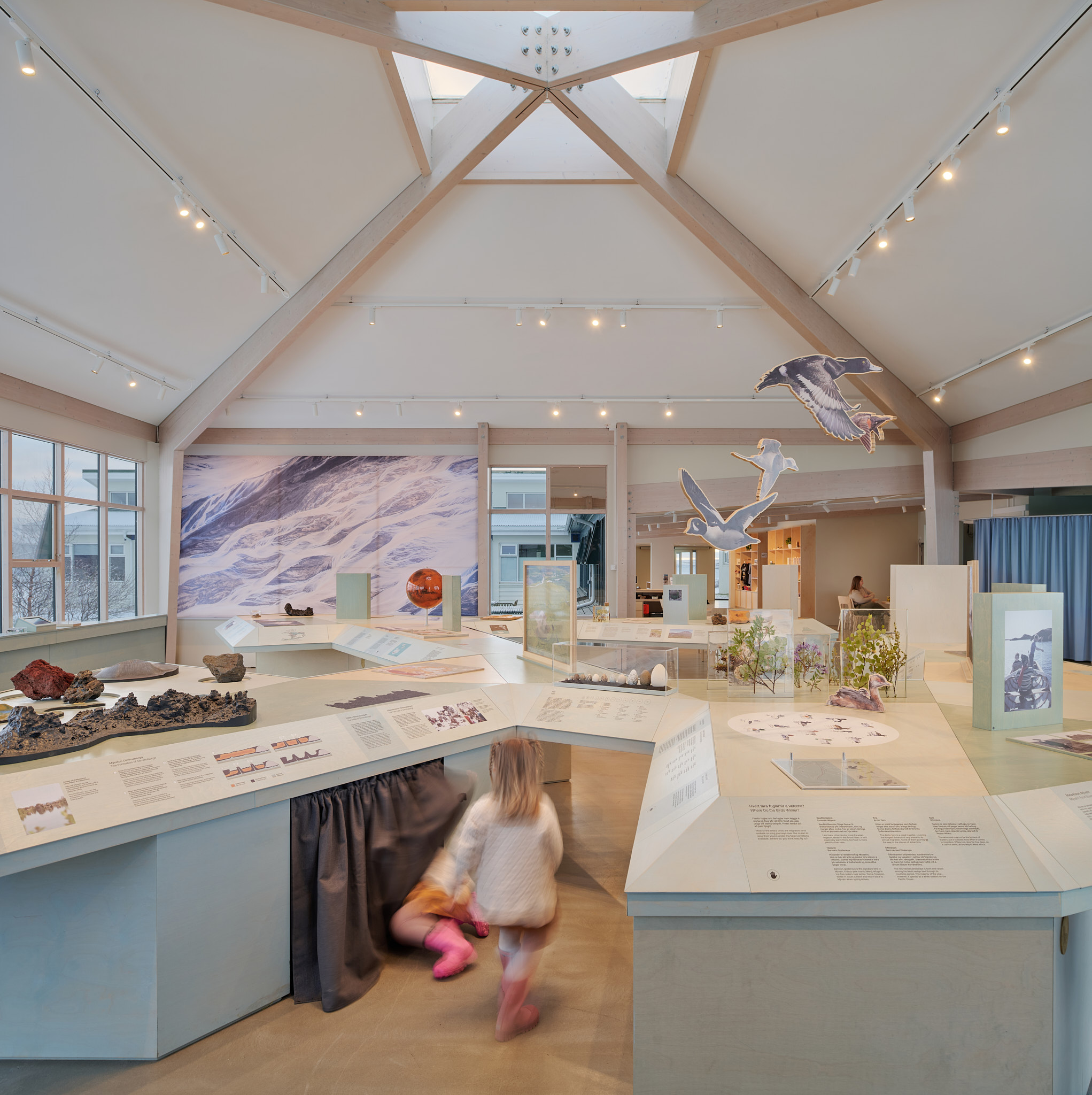
Through that approach, the volcanic geology of the site provides both content and spatial reference. The nearby pseudo craters, formed when lava flows over wet ground and generates pressurised steam, are interpreted through models, graphics and interactive displays. These are complemented by narratives that trace the interdependence of the area’s ecosystems, from insect life to bird populations, and the ways in which climate change is reshaping these relationships.
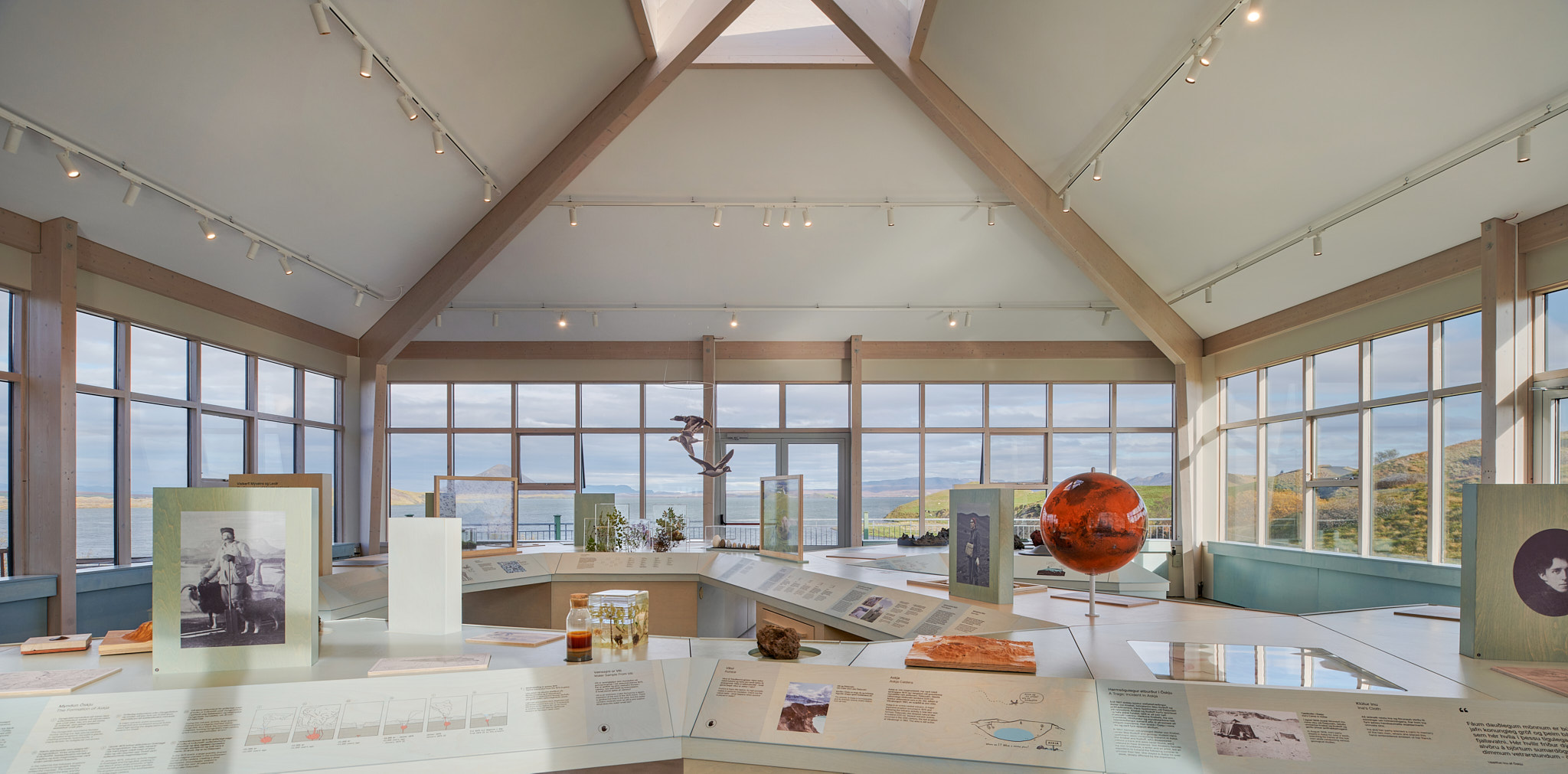
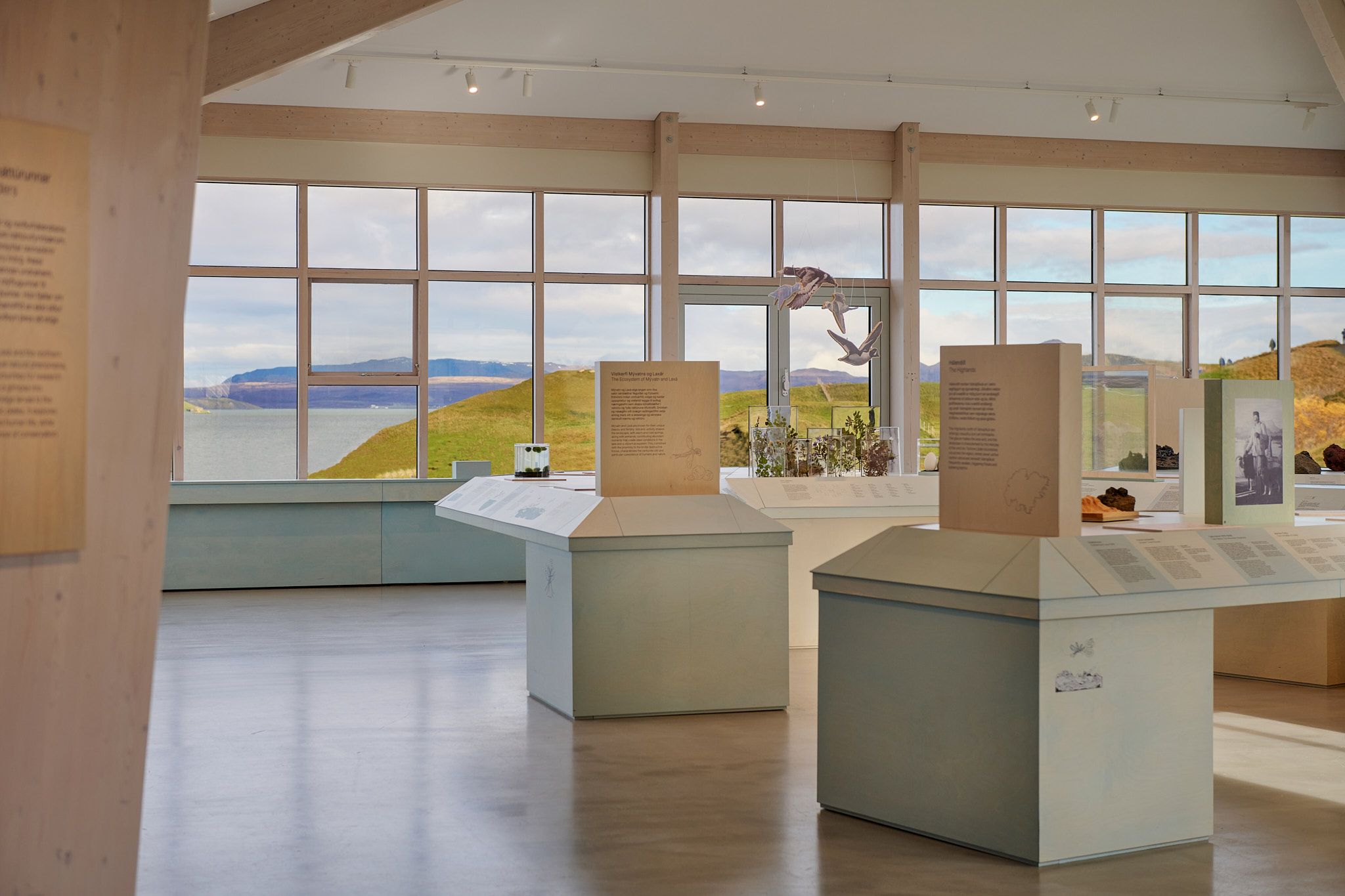
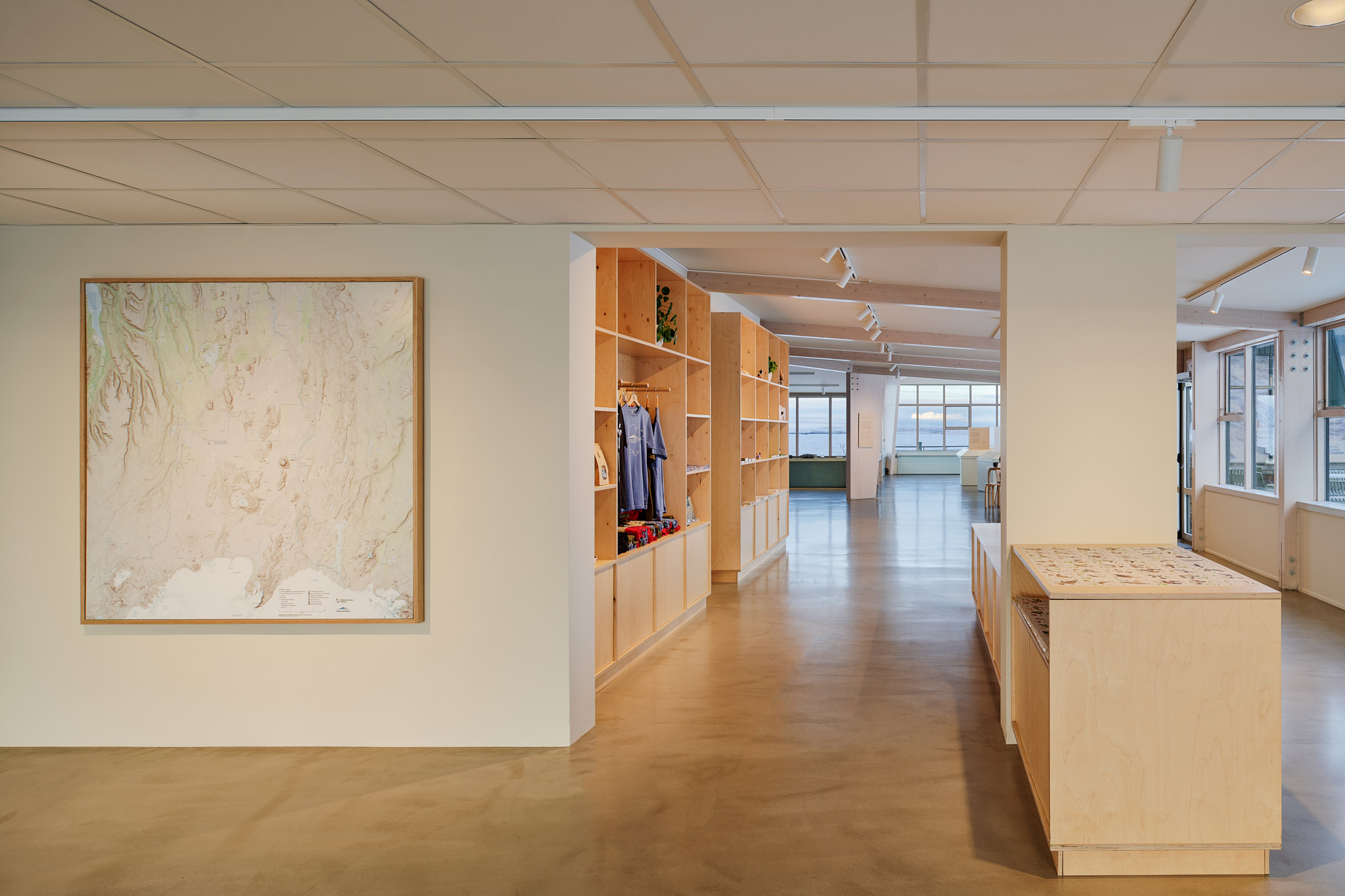
Internally, a series of timber elements organise the exhibition, with central tables, stained in tones drawn from the surrounding greens and blues, acting as both display surfaces and spatial anchors, allowing visitors to move freely between exhibits and read content from multiple angles.
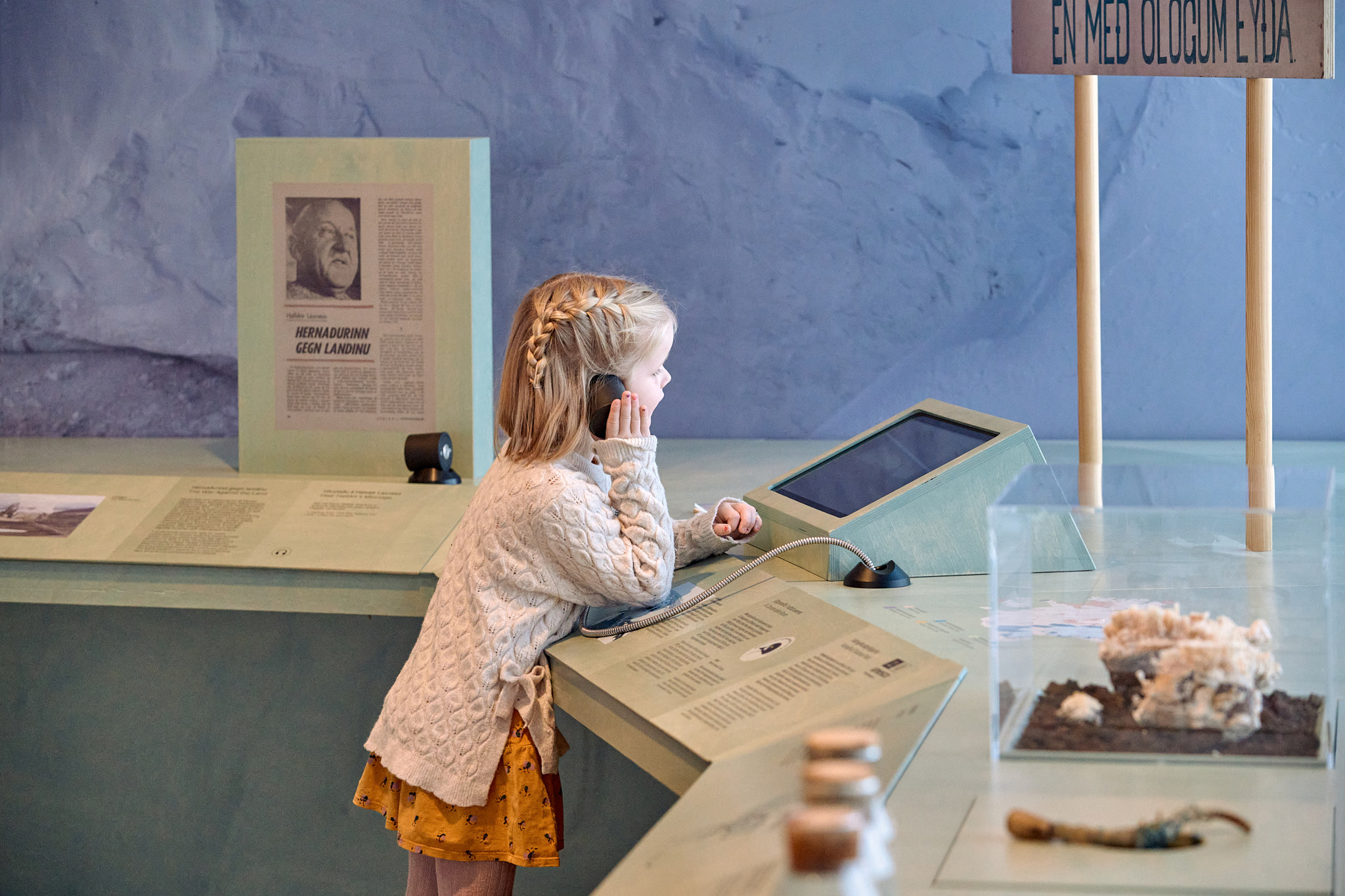
Along the perimeter, opportunities to pause and look outward are paired with audio installations that layer stories, music and poetry onto the visual experience of the landscape.
“A key design decision was not to compete with the stunning panoramic views the centre offers over Lake Mývatn, the pseudo craters and the mountains but to harmonise with them’, saod Pippa Nissen, director of Nissen Richards Studio. “The bespoke exhibition furniture therefore frames the views, with interventions sitting at a lower level and individual exhibits acting like landscape elements themselves, rising from the table level. Inspired by the summer’s beautiful greens and blues, the central timber tables in the space have been stained to match, whilst the perimeter view is enriched by opportunities to look at the views whilst listening to stories, music and poetry.”
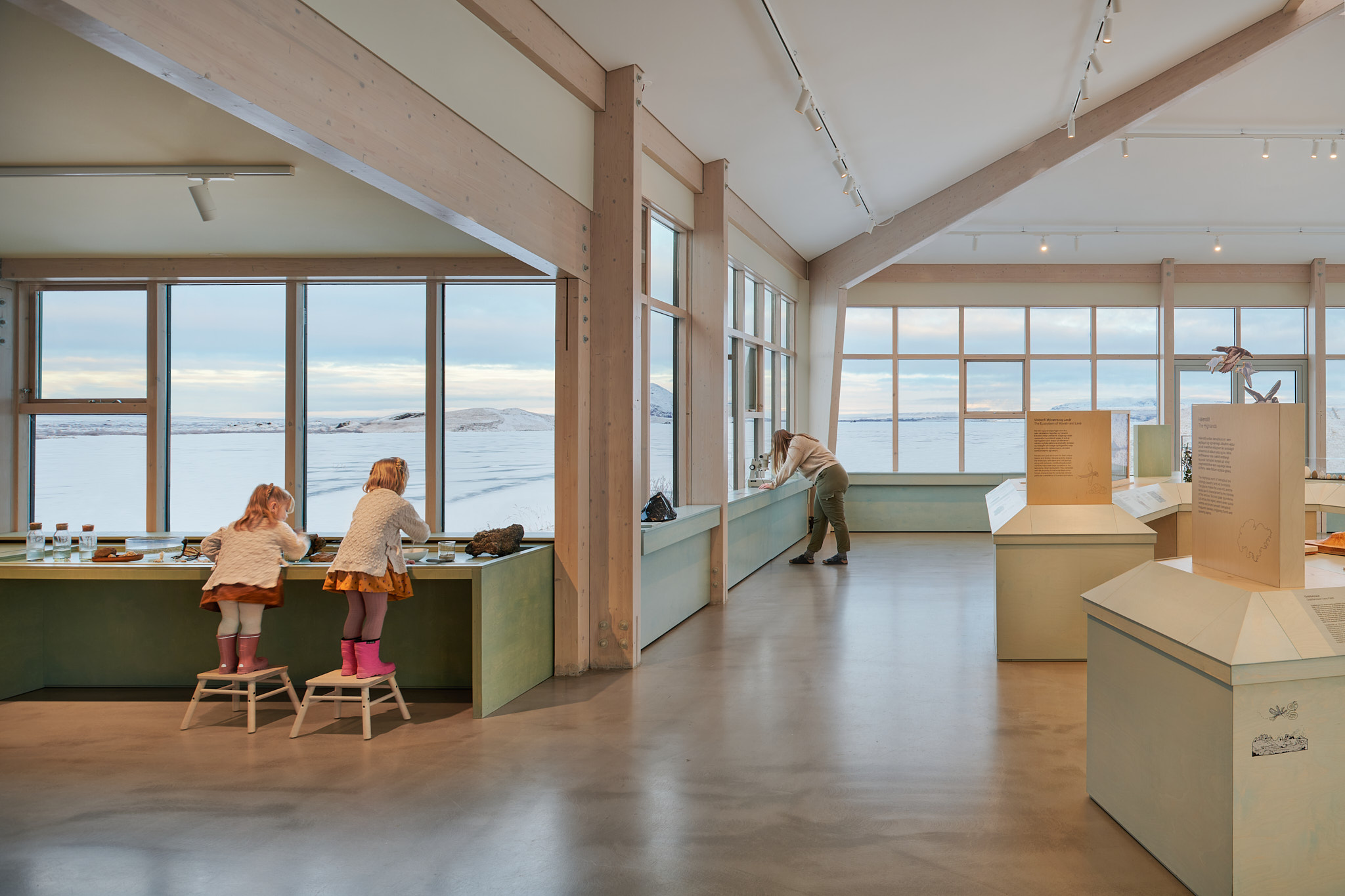
The internal perimeter of the museum is enriched by opportunities to relate exhibits to the views beyond.
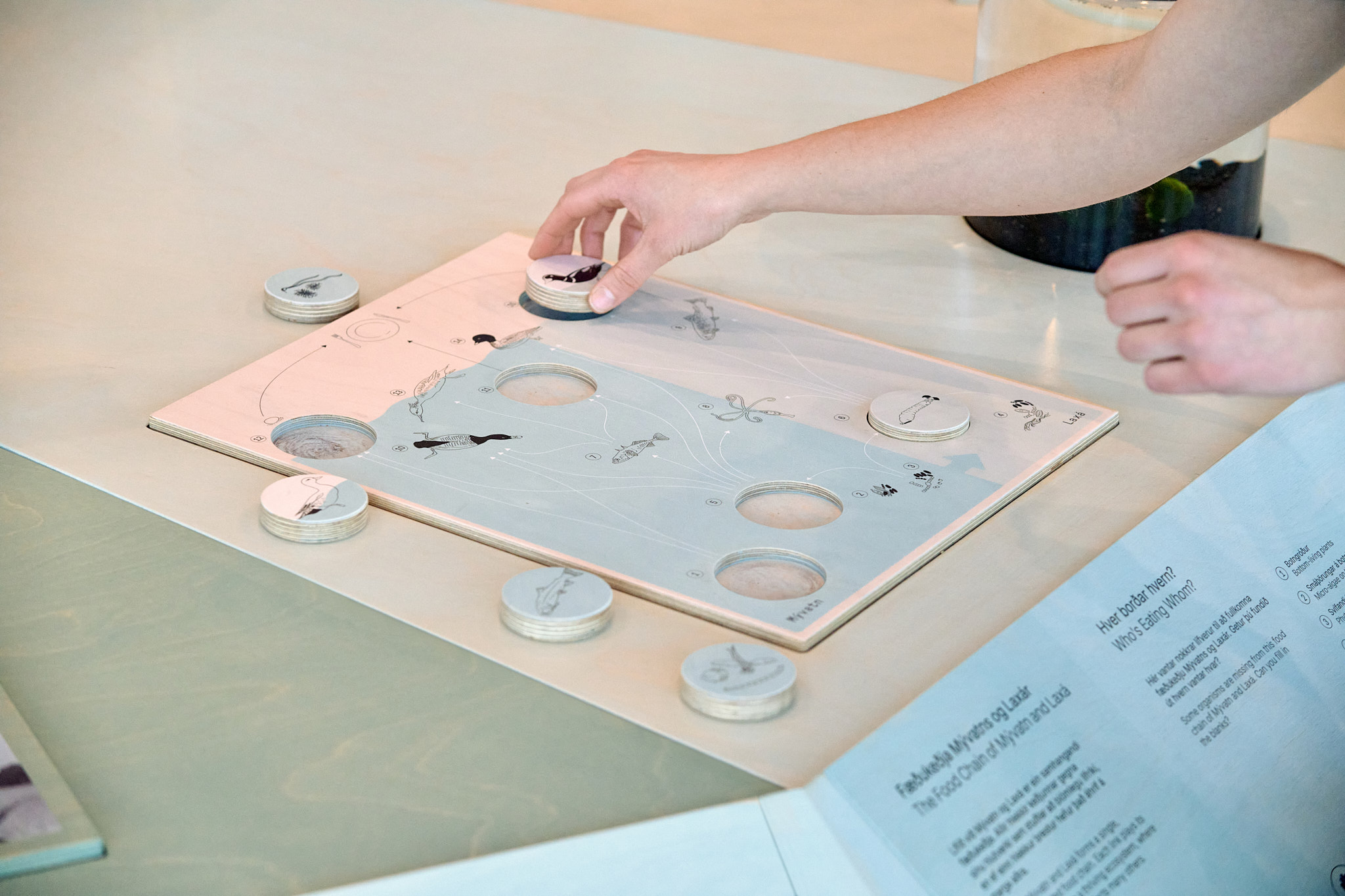
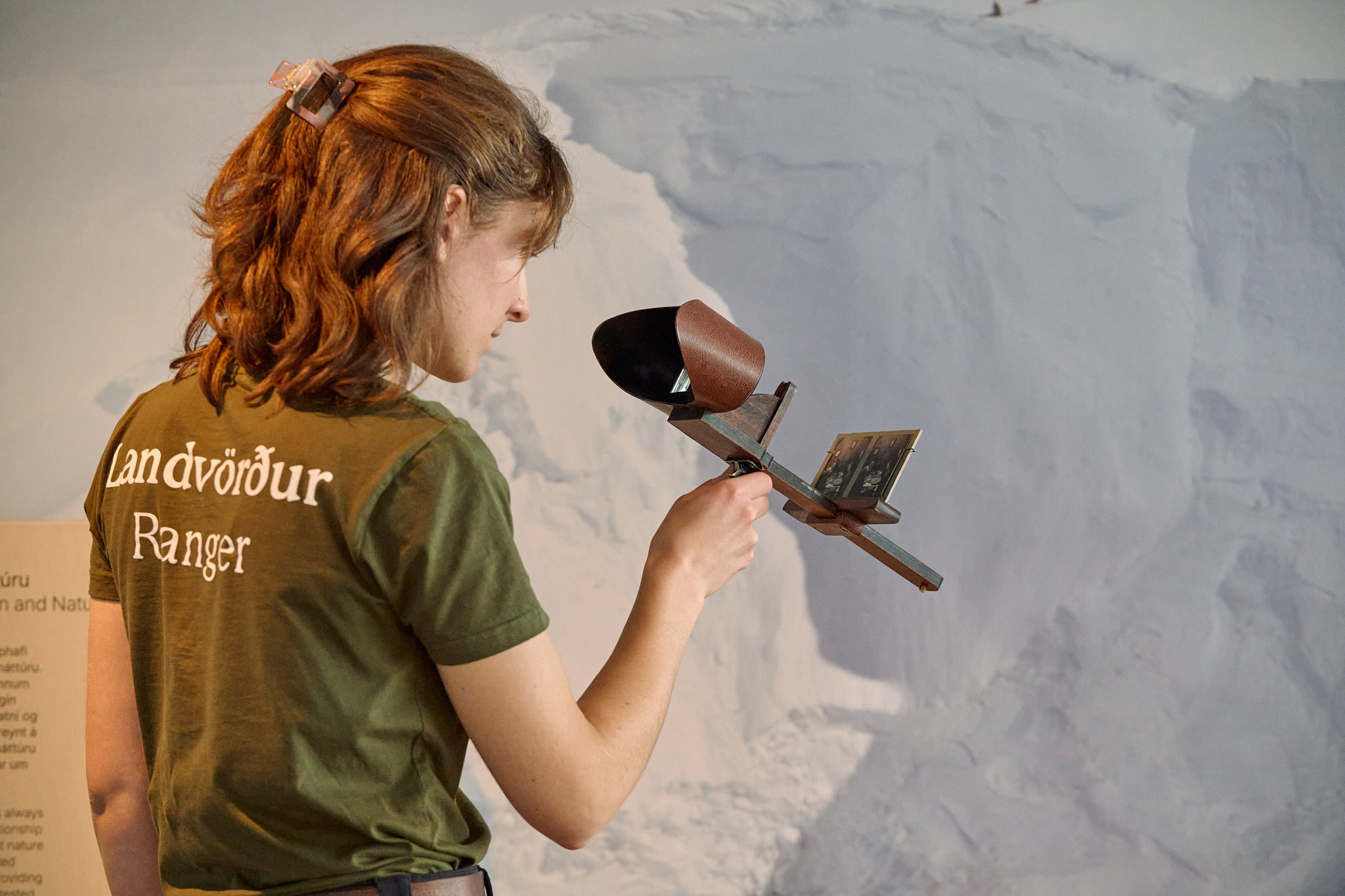
Nissen Richards, SP(R)INT, and the museum were also keen to improve accessibility for a wide range of audiences. Information is presented in Icelandic and English, with additional audio content for international visitors. Complex scientific material is translated into visual formats: diagrams, maps, and illustrations, supported by digital installations including film excerpts and underwater footage. Through clever graphic design, information has been distilled into clear visual systems that use organic geometries and fluid forms to echo natural processes, making data not only informative but visually compelling.
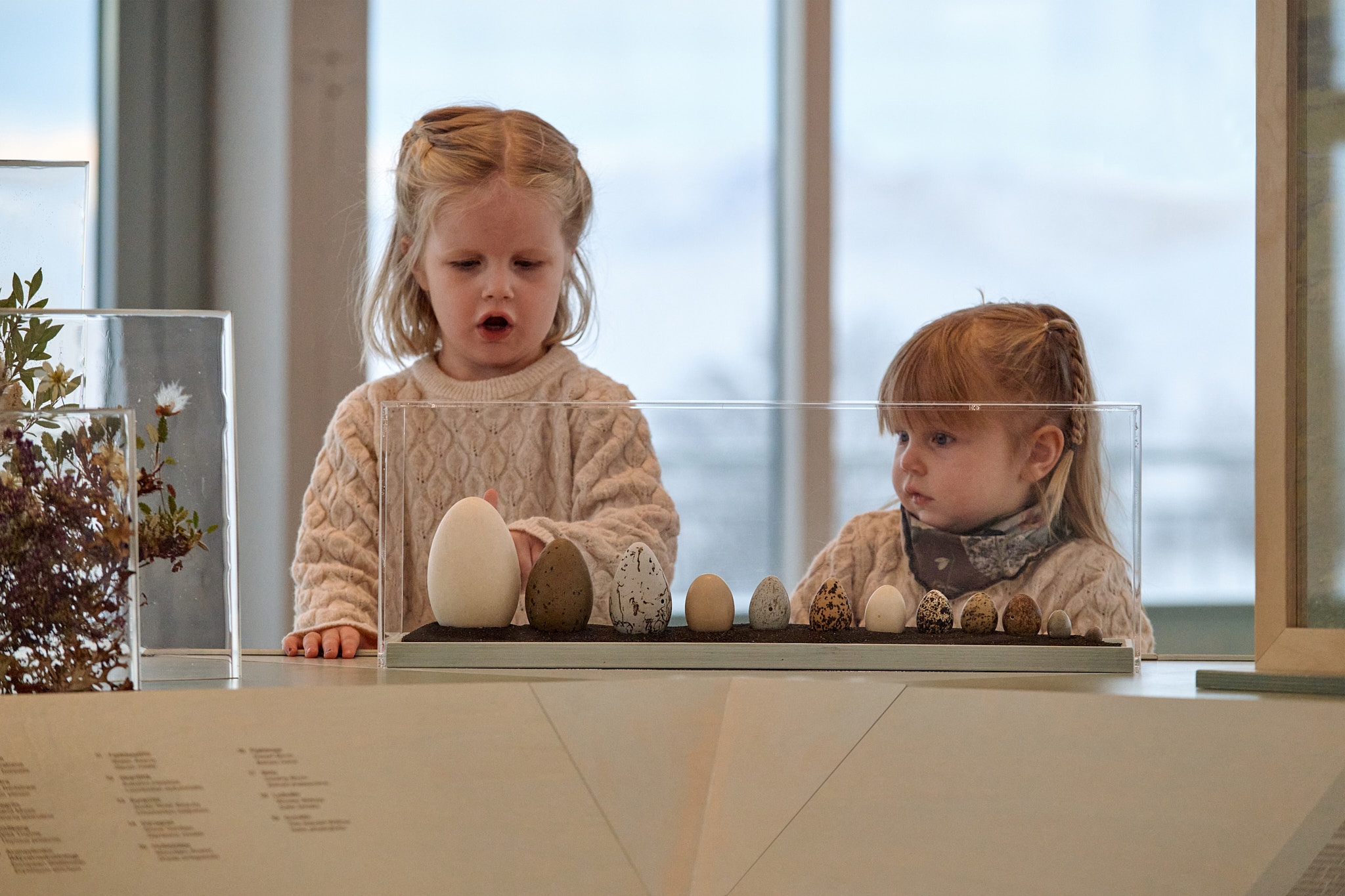
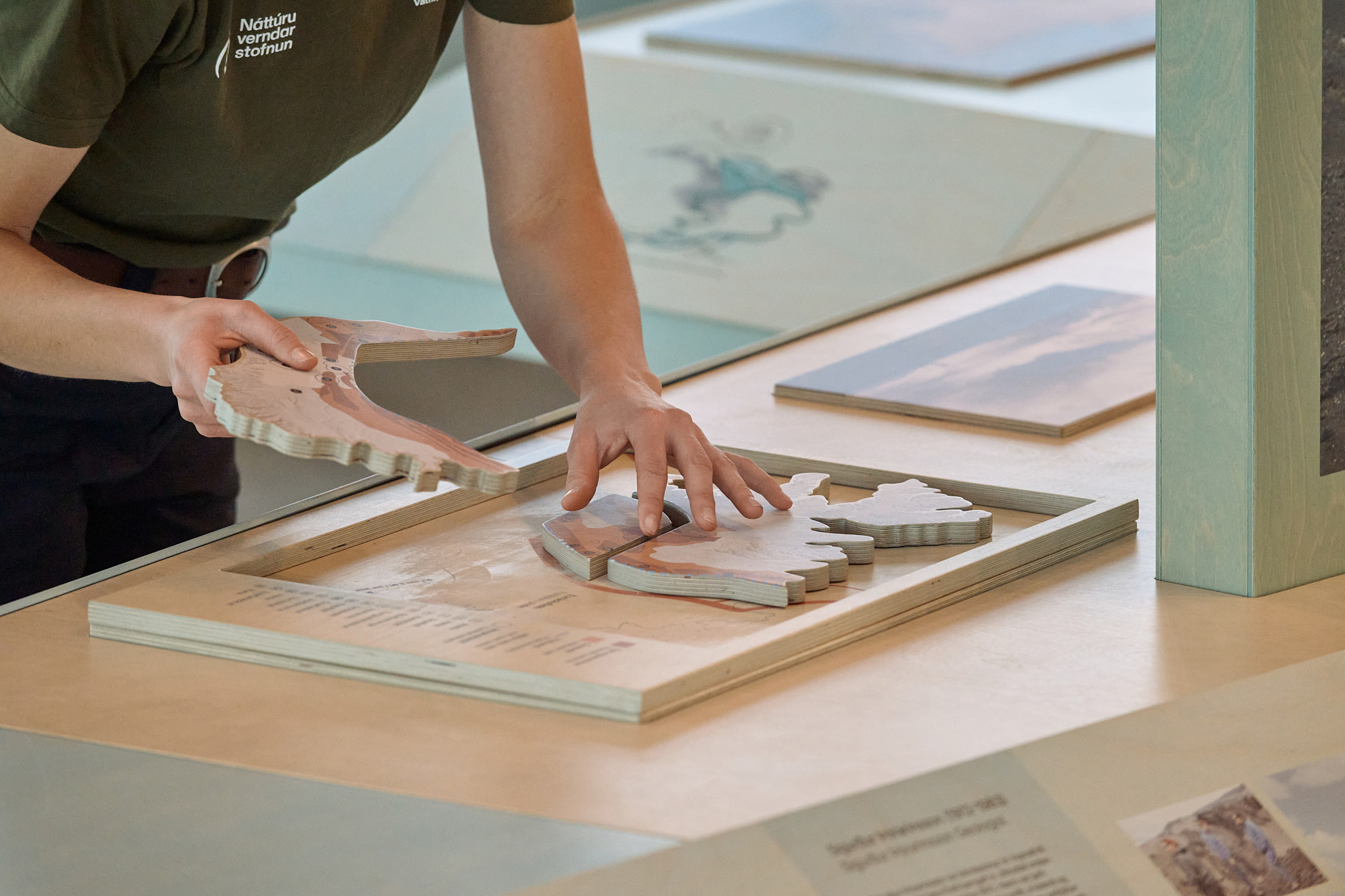
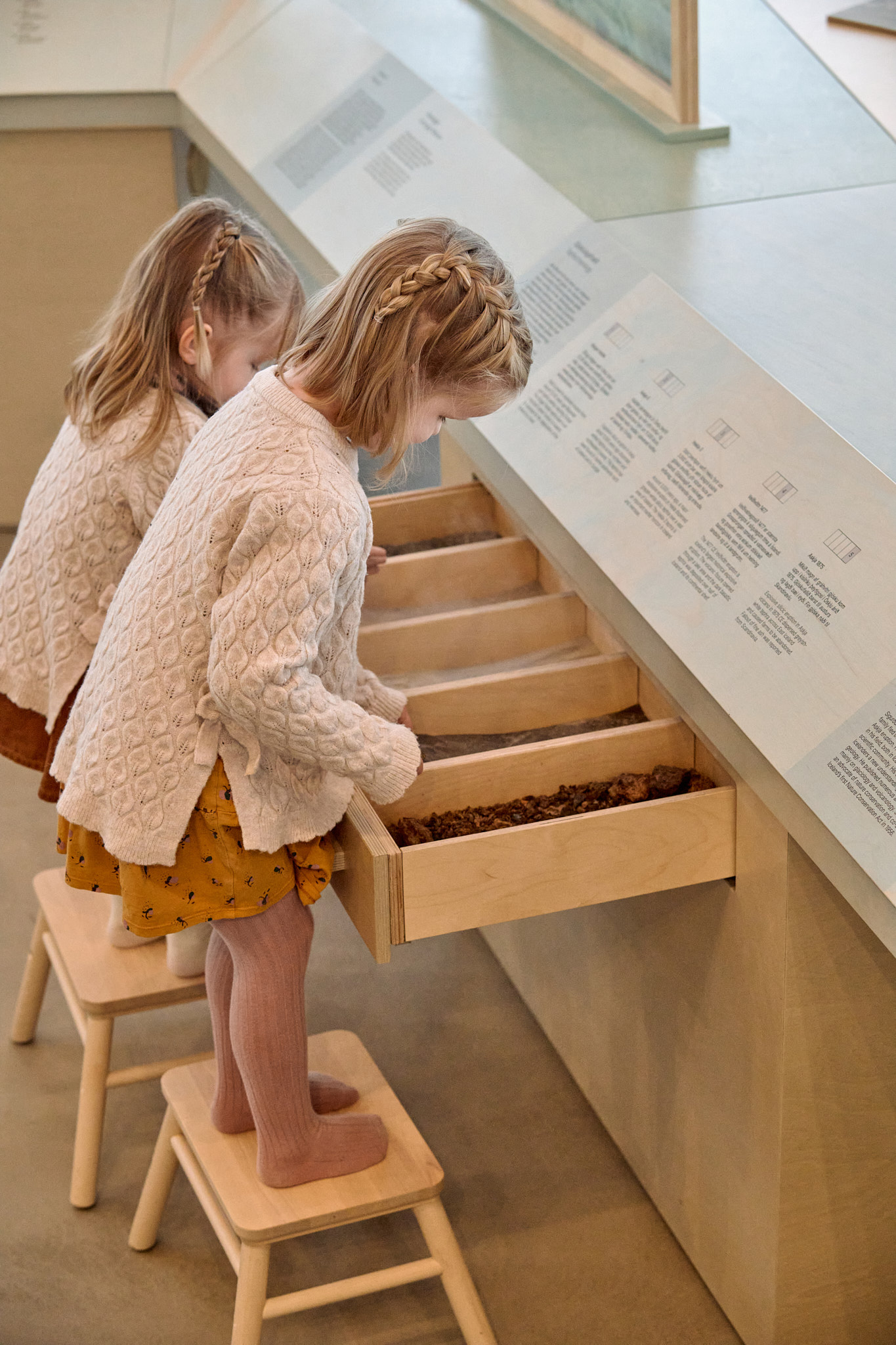
Physical models, specimens and interactive elements are designed to be handled wherever possible, encouraging a tactile understanding of the landscape. For younger visitors, hidden details and child-scaled interventions introduce an additional layer of discovery, allowing the space to operate simultaneously at multiple levels of interpretation.
“The aim of the design approach for The Gígur Visitor Centre was to create both a tourist destination and a resource for local communities,” added Karl Kvaran, architect and director at SP(R)INT STUDIO.
“It recognises that local visitors and tourists from further afield may have different needs and interests when visiting – and may interact in different ways. The content is therefore made up of a complex web of relationships. In order to make the narrative coherent, accessible and engaging, the centre has been structured with the overall aim of fostering a sense of awe and wonder at the surrounding landscape that also will hopefully inspire visitors with a desire to protect the environment.”
Credits
Client
Vatnajökull National Park and the Environment Agency of Iceland
Interior design / Exhibition design
Nissen Richards Studio / SP(R)INT Studio
Graphic design
Nissen Richards Studio
Production and installation
Spekta
Lighting design
Hildiberg
Illustration
Rán Flygenring, Árni Einarsson
Additional images