Watch the AT webinar, in partnership with Siderise, exploring how architects, practitioners and fire specialists are responding to the Building Safety Act by embedding fire, health and life safety into every stage of design, specification and project delivery.
The Building Safety Act has fundamentally reshaped the responsibilities of architects and design teams. While the regulatory framework is becoming clearer, many practices are still grappling with what good fire, health and life safety design looks like in day-to-day project delivery. Questions around competence, accountability, specification, sustainability and multidisciplinary coordination are now central to architectural practice, particularly as the industry adapts to a new era of regulatory scrutiny and responsibility.
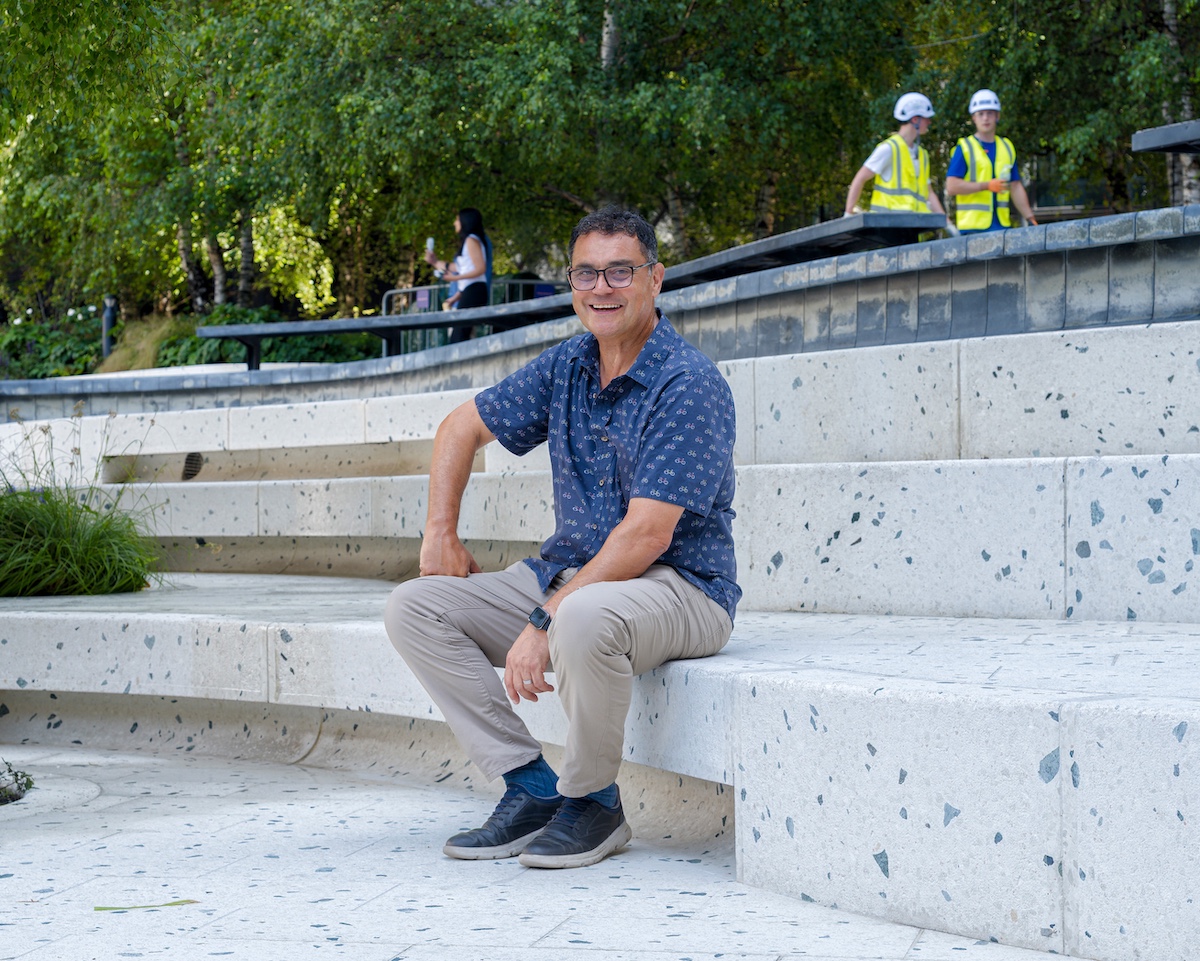
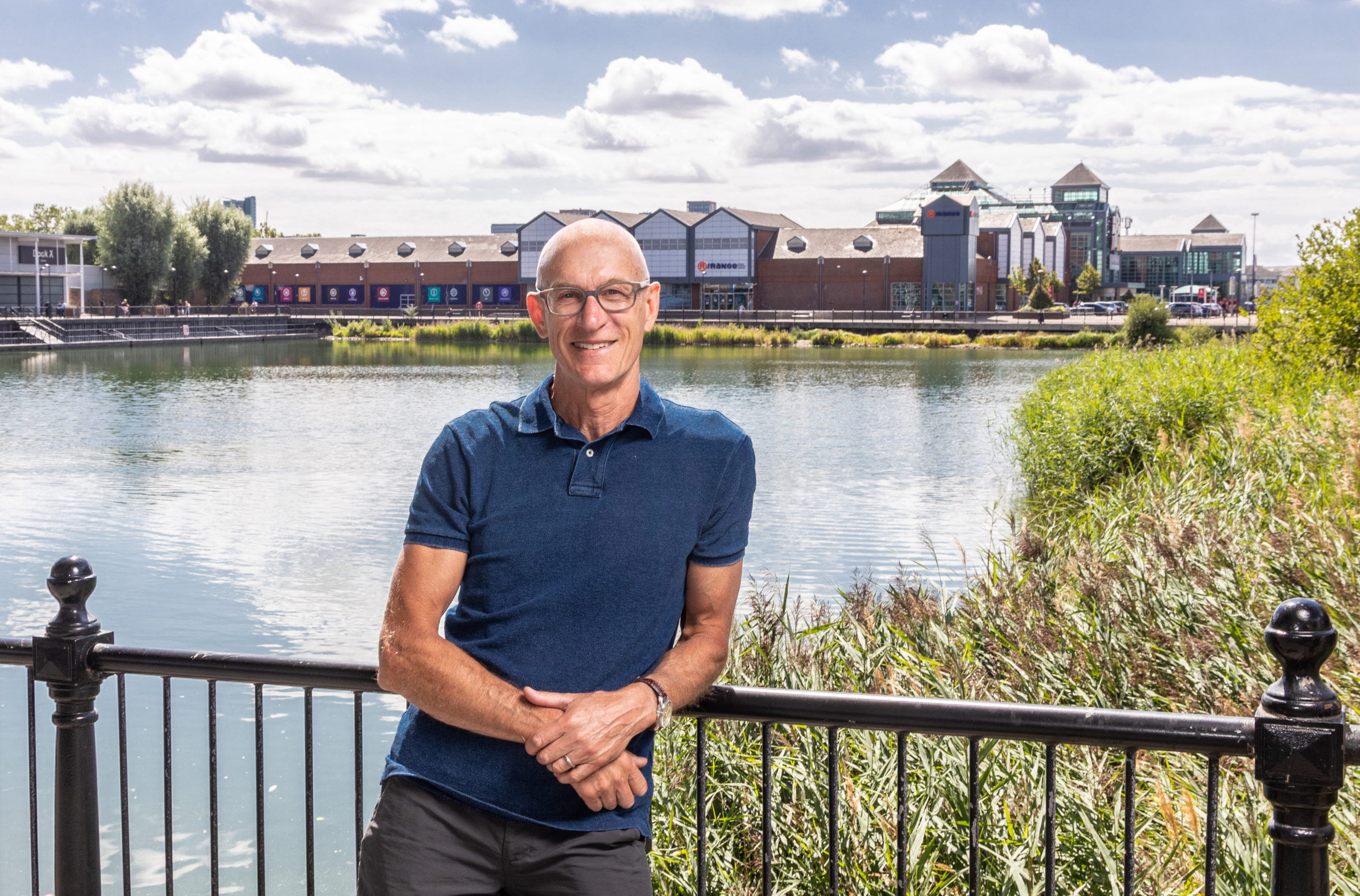
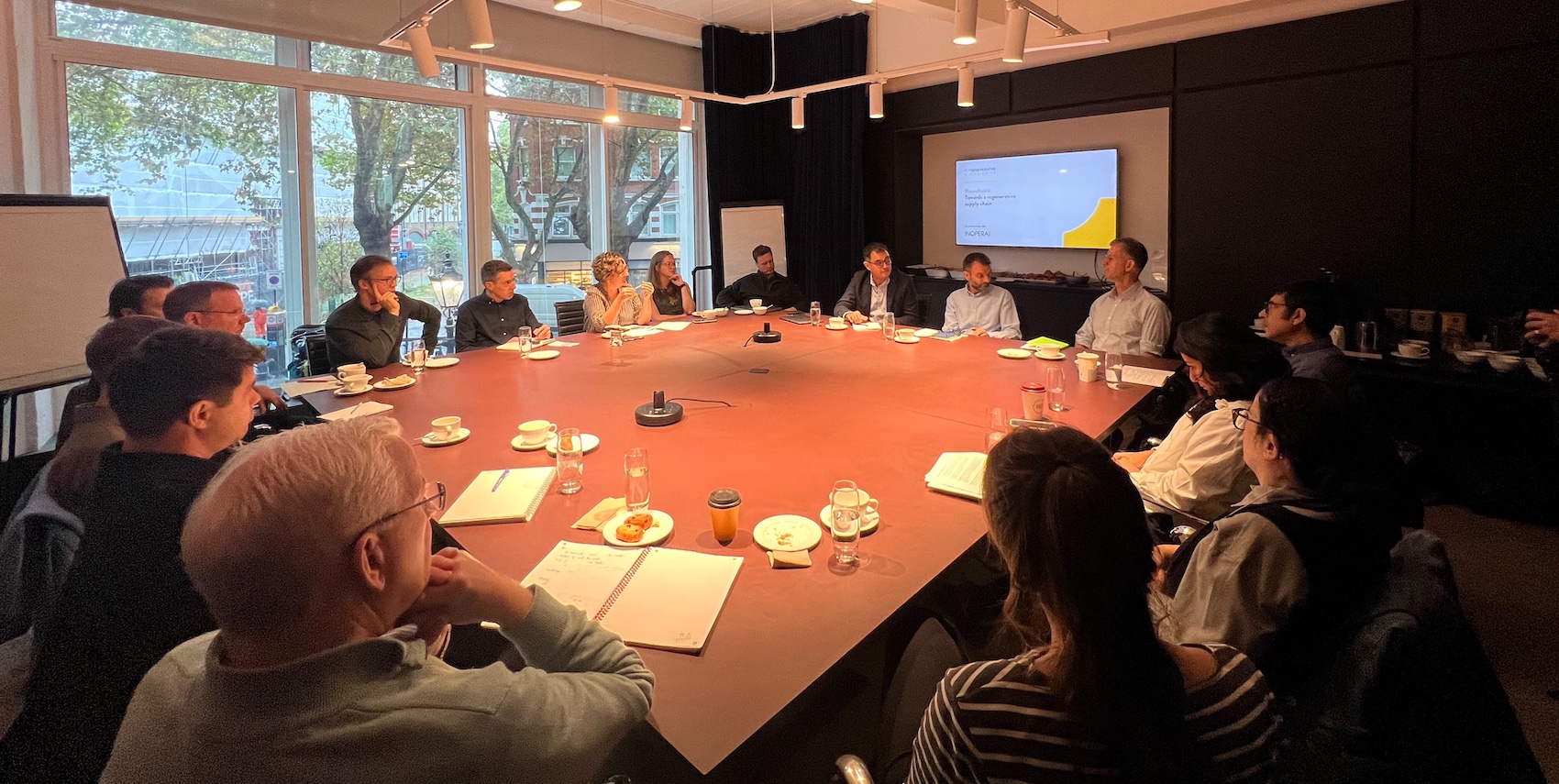
These themes were explored in this AT webinar, supported by Siderise. Chaired by Architecture Today’s Jason Sayer, the session brought together Aaron Down, Associate at Child Graddon Lewis; Darren Brennan, Specification Director at Siderise; and Simón Santamaria, Director – Fire Engineering at Stantec.
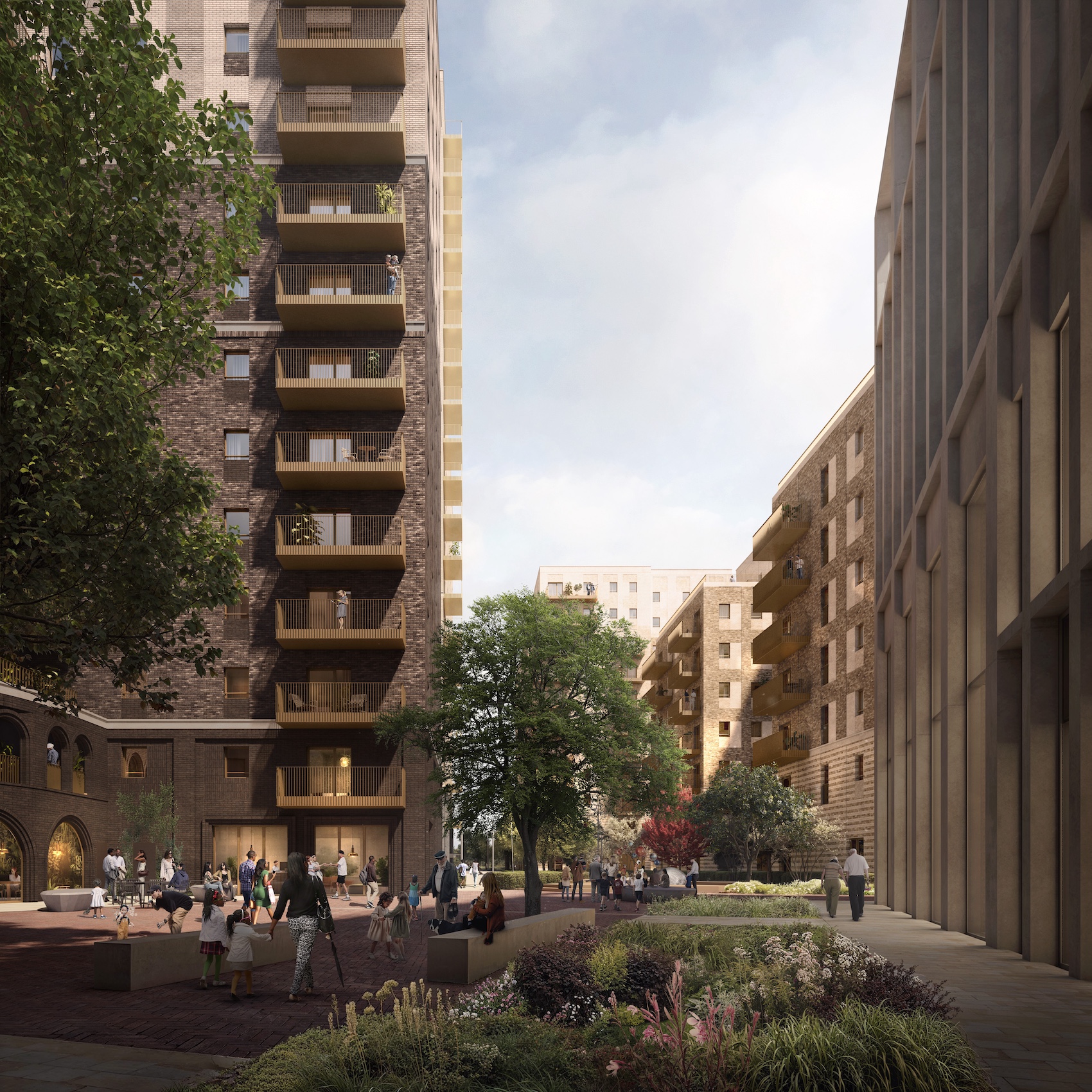
Child Graddon Lewis’ is currently preparing its Gateway 2 submission for Woolwich Leisure Centre, a five-block, 557-unit residential scheme in south London for Hill Partnership (CGI: Secchi Smith for Hill Partnership).
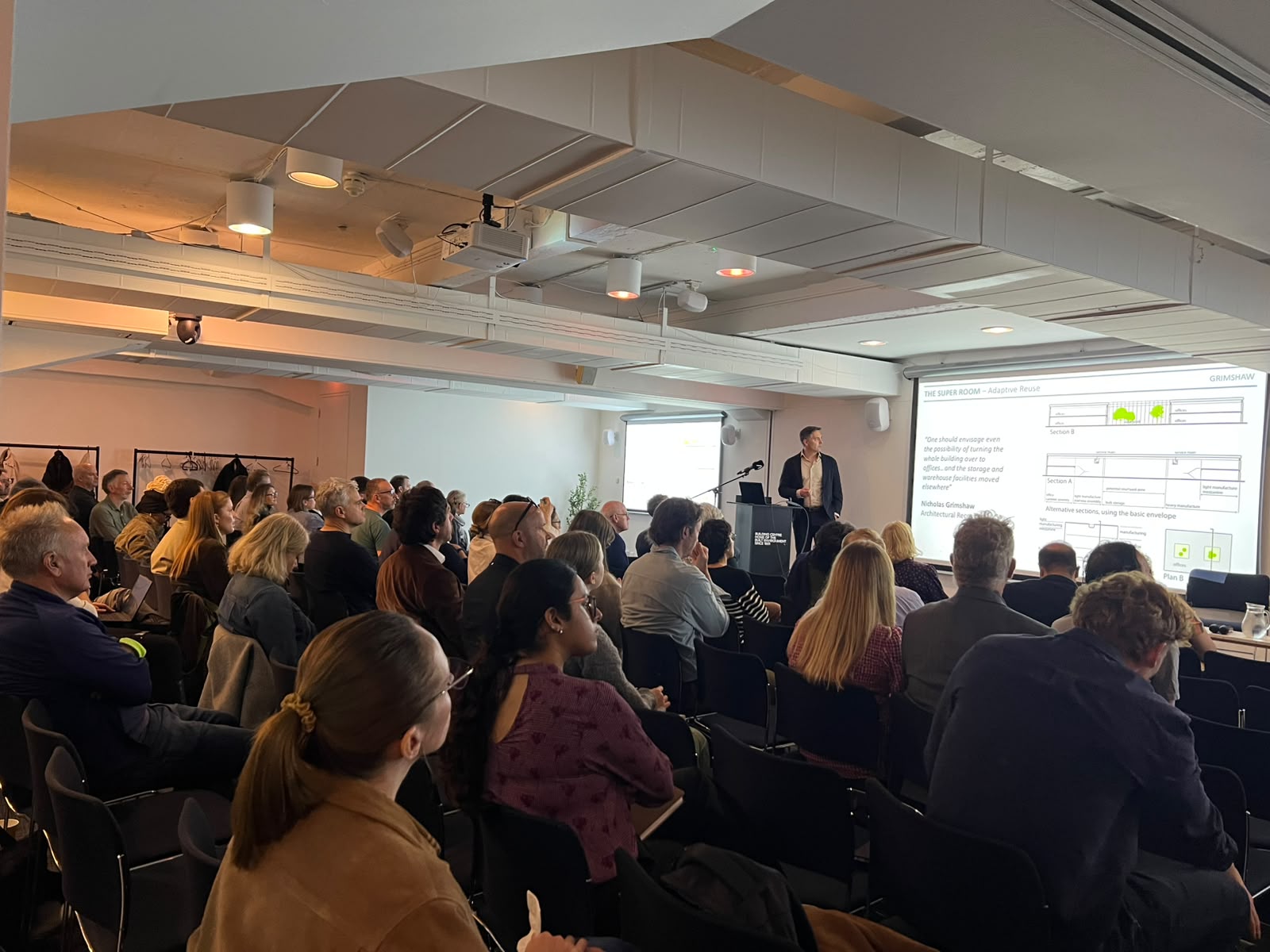
Opening the session, Aaron Down examined how architectural practices are adapting to the biggest regulatory change the construction industry has seen in decades. Framing his presentation around competence, collaboration and compliance, he explored the practical implications of the Building Safety Act and the lessons emerging from early Gateway Two submissions.“The landscape has changed,” he said. “This is the biggest change to construction in a very long time.”
For Down, one of the most significant shifts has been the industry’s growing emphasis on competence. He argued that architects must not only possess the necessary skills and experience but also be able to demonstrate them through training, documentation and robust internal processes. “We need to think about CPD in its broadest sense,” he explained. “It’s not just the free lunches from manufacturers. It’s a much broader topic.”
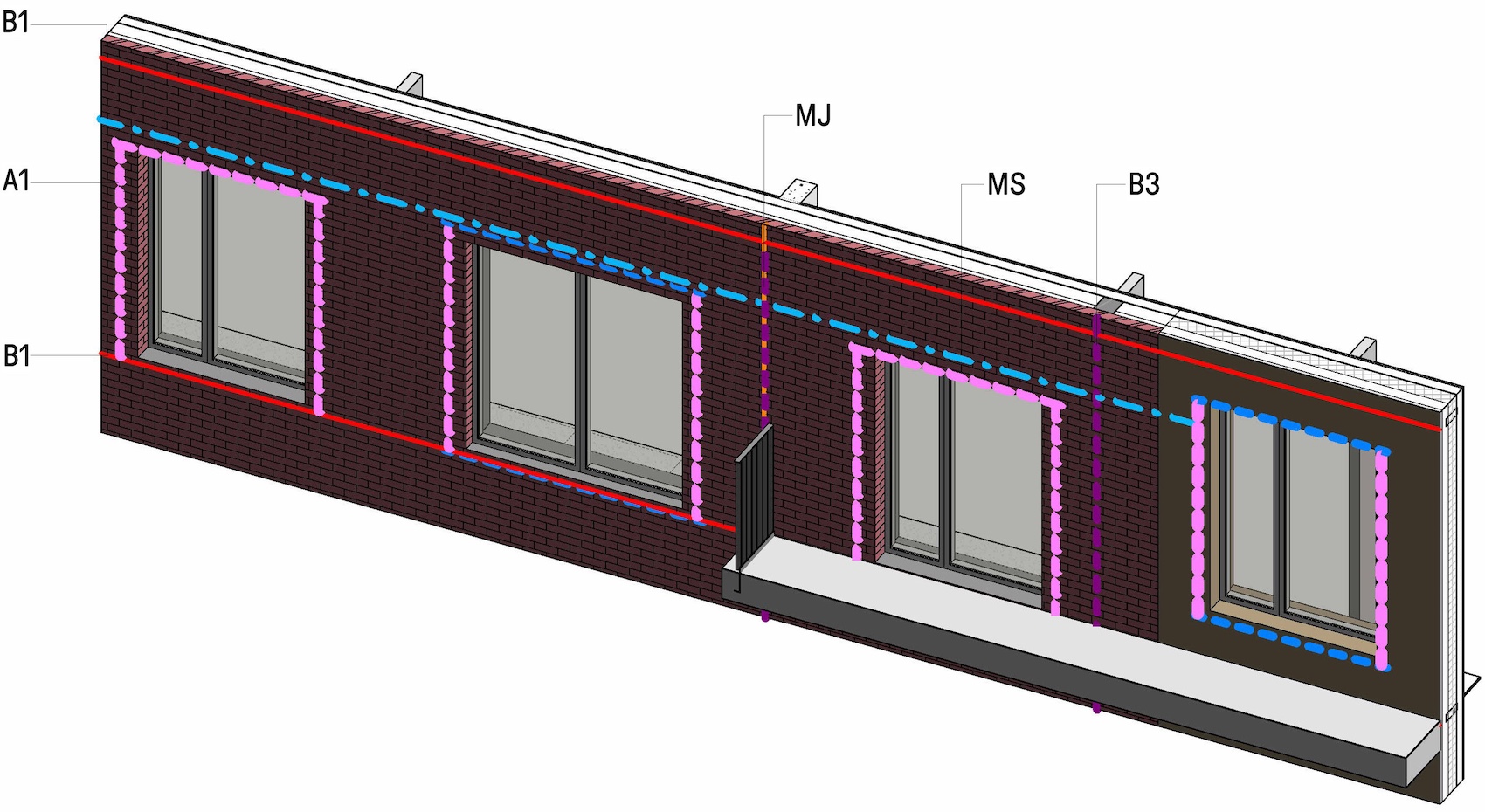
Child Graddon Lewis has produced a Revit family to help model and communicate cavity barriers and closers within its BIM models.
He also highlighted the increasing importance of collaboration, both across disciplines and within the architectural profession itself. Groups, such as the Architectural Technical Leads Group and the Designers Initiative on Health and Safety, are helping practices share knowledge, develop best practice and respond collectively to emerging challenges.
A recurring theme throughout Down’s presentation was the need to embed safety considerations into everyday design activity rather than treating them as separate compliance exercises. This extends from early-stage design decisions through to digital modelling, building physics and the management of information. “The golden thread is critical,” he said. “Not only for demonstrating compliance, but for triggering key questions as designs develop.”
Drawing on Child Graddon Lewis’ experience of Gateway Two submissions, Down emphasised the importance of clear documentation, structured information and demonstrating competence at both organisational and individual levels. He concluded on a positive note, pointing to improving approval rates and growing industry confidence in the new process. “It does look like the industry is getting to grips with the new system,” he added.

Appointed early in the design phase, Siderise addressed passive fire protection and drainage requirements for the masonry wall elements and rainscreen cavity barriers on the £195m Waterhouse Gardens development in Manchester (photo: courtesy of Salboy and Domis Construction).
Darren Brennan shifted the focus towards specification, manufacturer engagement and the practical realities of delivering compliant buildings. For Brennan, one of the most important consequences of the Building Safety Act has been the growing recognition that manufacturers must be involved much earlier in the design process.
He argued that increasingly detailed Gateway Two submissions, coupled with heightened scrutiny of fire-critical systems, are driving greater collaboration between manufacturers, architects, contractors and fire engineers. Early engagement, he suggested, enables project teams to access the evidence, testing data and technical support needed to make informed decisions. “We’re seeing much more involvement in the early stages of projects,” he explained. “It’s highlighting the significant benefit of demonstrating compliance through system testing as well as component testing.”

Siderise provided carefully integrated passive fire protection for the G-Gate Building in London, including a bespoke, tested cavity barrier solution (photo: Siderise).
Brennan outlined the range of support Siderise provides, from specification packs and compliance pathways to project-specific technical guidance and installation assurance. Increasingly, these resources are being used to support Gateway Two submissions and help project teams evidence compliance.
The importance of quality assurance during construction was another key theme. Brennan stressed that manufacturers have a role to play not only in product specification but also in installation training, inspections and maintaining the golden thread through to completion. “We need to demonstrate that what’s been designed and approved at Gateway Two is exactly what’s being built,” he said.
Brennan also highlighted growing demand for project-specific testing and system-level evidence, particularly where complex façade assemblies or unusual details require additional verification. “Getting it right at the early stages of design is really important,” he concluded. “Gateway Three could be the next significant challenge for the industry.”
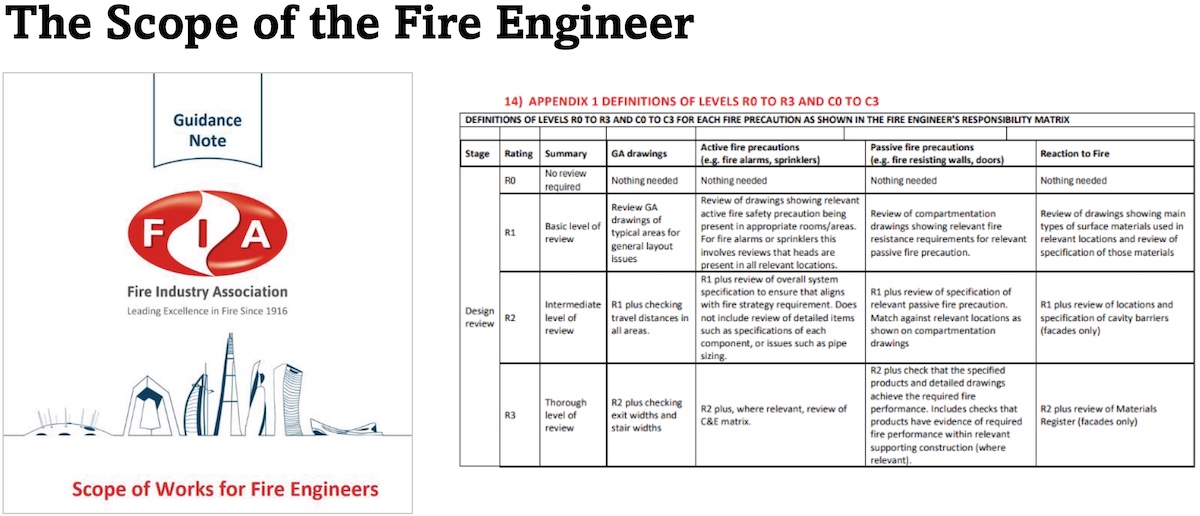
Closing the presentations, Simón Santamaria explored the evolving role of fire engineers and the wider cultural changes taking place across the built environment. Referencing the continuing legacy of Grenfell Tower, he reflected on how expectations of competence, collaboration and accountability have changed over the past nine years.
Santamaria focused on three questions: what competence looks like in practice, how project teams can balance safety and sustainability objectives, and how multidisciplinary teams can collaborate more effectively. For him, competence extends far beyond technical knowledge alone. It also encompasses ethical behaviour, communication skills, coordination and a clear understanding of risk. “Competence looks like technical knowledge, ethical behaviour, coordination with other disciplines and clear communication,” he explained.
Addressing the often-perceived tension between fire safety and sustainability, Santamaria challenged the notion that these objectives are inherently conflicting. “They only become competing requirements if they’re badly considered or not properly assessed,” he said. Instead, he argued that successful projects engage fire engineers early enough to integrate fire safety, sustainability and performance objectives into a coherent design strategy. Early engagement, combined with a first-principles approach to risk and performance, enables teams to find solutions that satisfy multiple objectives simultaneously.
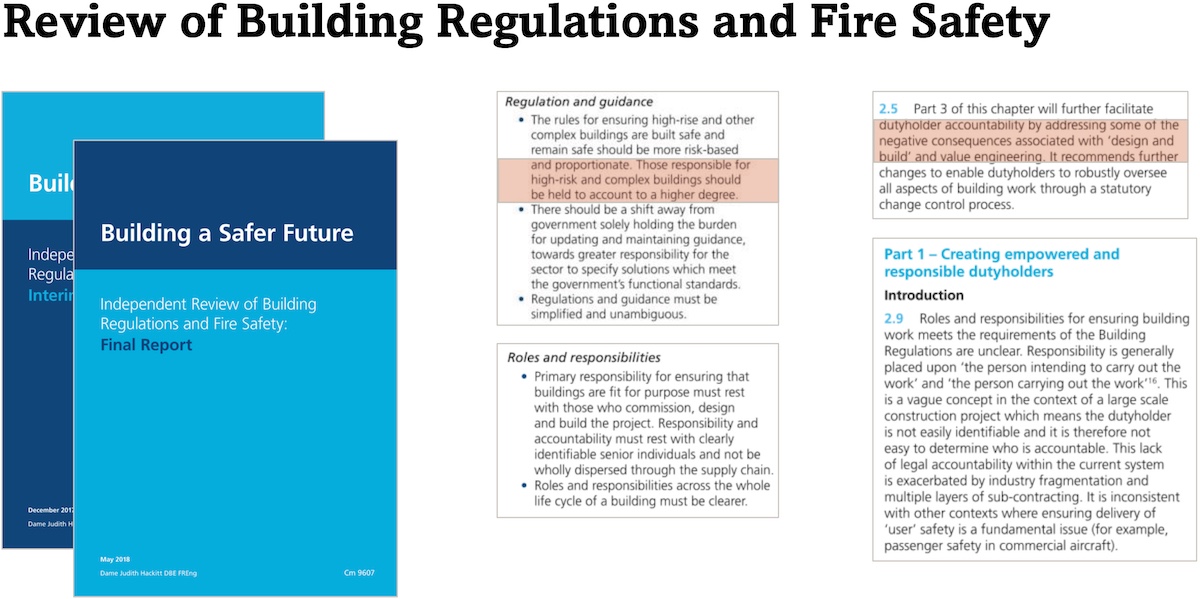
Perhaps the strongest message from his presentation concerned shared responsibility. “Ownership for safety rests on all duty holders,” he said. “There is a responsibility in ensuring safety for all designers, whether or not you are the fire safety engineer.”
Santamaria also highlighted the importance of defining responsibilities clearly from the outset and ensuring that all members of the design team understand the fire strategy and how it influences the wider project. “Understand the fire safety strategy,” he urged. “If it’s confusing or incomplete, challenge it. We should arrive at a point where design teams understand its importance and can properly interpret its requirements.”
Across all three presentations was a common message: delivering safer buildings requires more than regulatory compliance. It demands competence, collaboration, accountability and a commitment to embedding fire, health and life safety considerations throughout the entire design and construction process. As the industry continues to respond to the lessons of Grenfell and the requirements of the Building Safety Act, these principles are increasingly becoming central to architectural practice itself.