Individual House
Standing the test of time: 6 Wood Lane
Mike Russum of Birds Portchmouth Russum and his wife Sally Cox share the joys of a home that is inspired by fighter planes, boat-building and the Arizona desert, and which won the Individual House Award at the Test of Time Awards 2025.
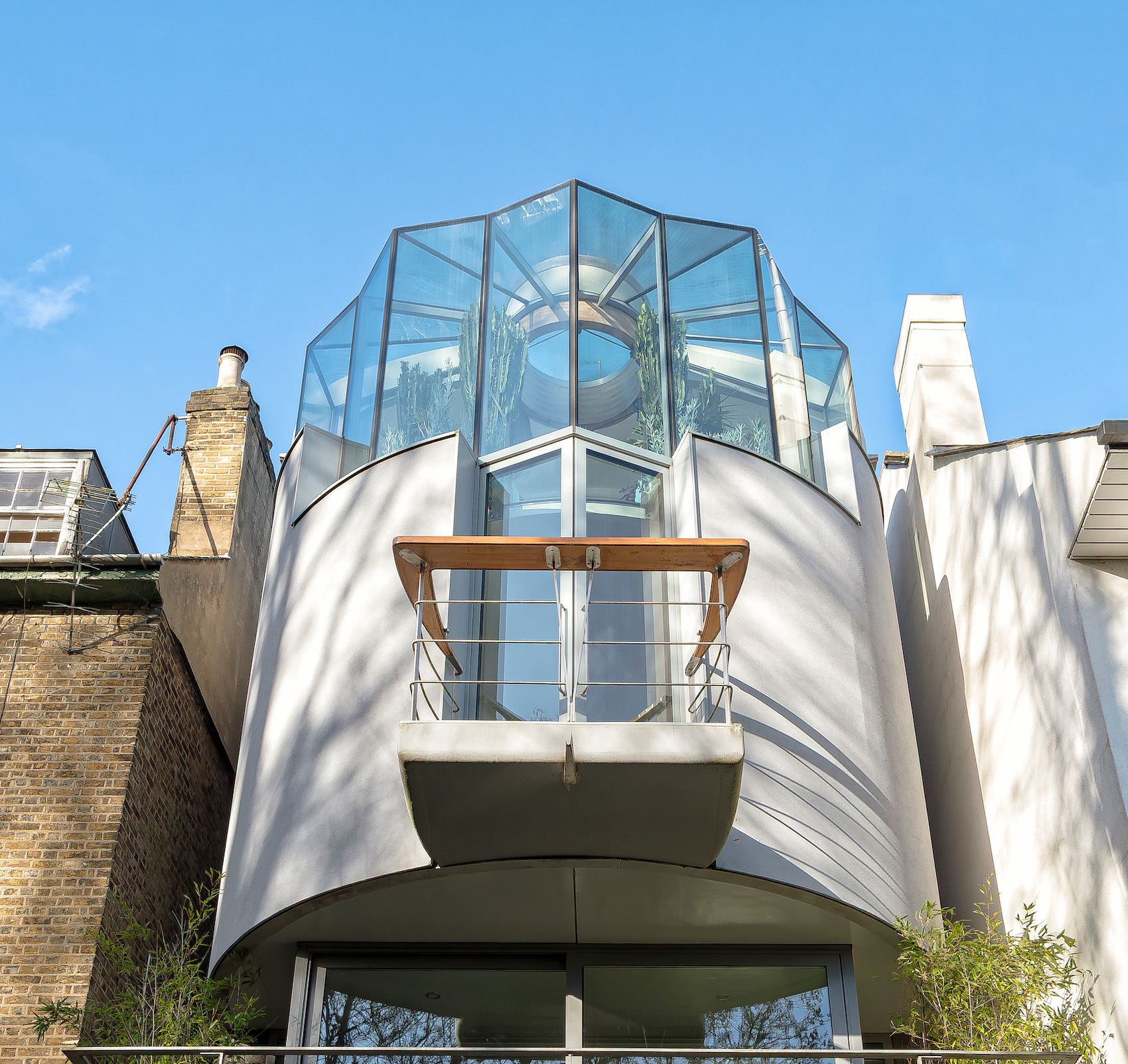
Designed by architect Mike Russum for himself and his wife, Sally Cox, this four- storey house in a conservation area in Highgate, north London, combines prefabrication with traditional construction to deliver a sustainable, flexible home on a constrained urban site.
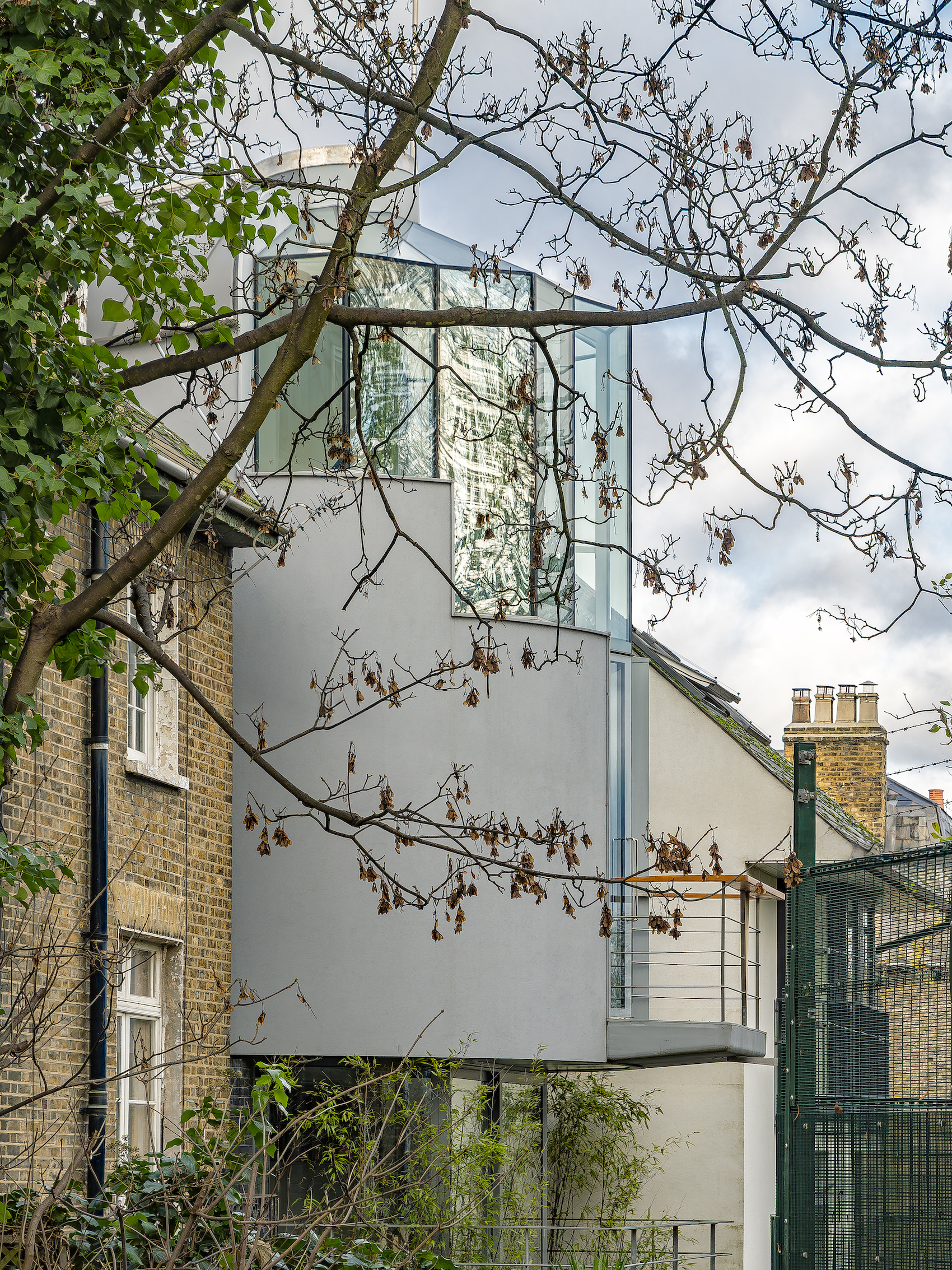
The building combines compact functional areas with expansive, light-filled living spaces, while maximising solar gain, daylight and garden views. A brick base supports a prefabricated timber shell – craned into place over a weekend – that forms an elliptical ‘ark’, housing open-plan living areas and a winter garden. The home has proved to be highly adaptable, supporting different modes of living and working, with the upper dais and lower office frequently used for art, writing, and guest accommodation. Each level has a strong visual and physical connection to the tiered garden, which includes a wildflower-roofed shed and rainwater harvesting system.
CAPTION
Materials were chosen for their recyclability and performance, including cold-moulded timber technology used in marine and aeronautical applications. The MVHR system works in tandem with passive features, such as roof lanterns and conservatory ventilation. Energy costs remain low thanks to high levels of insulation, natural ventilation, LED lighting, and a buoyancy-driven thermal strategy. Budget constraints led to a self-build approach, with subcontractors managed as funds allowed.
The house is open to the public for Open House every September, and has attracted more than 1,500 thousand visitors since it was built.
CAPTION
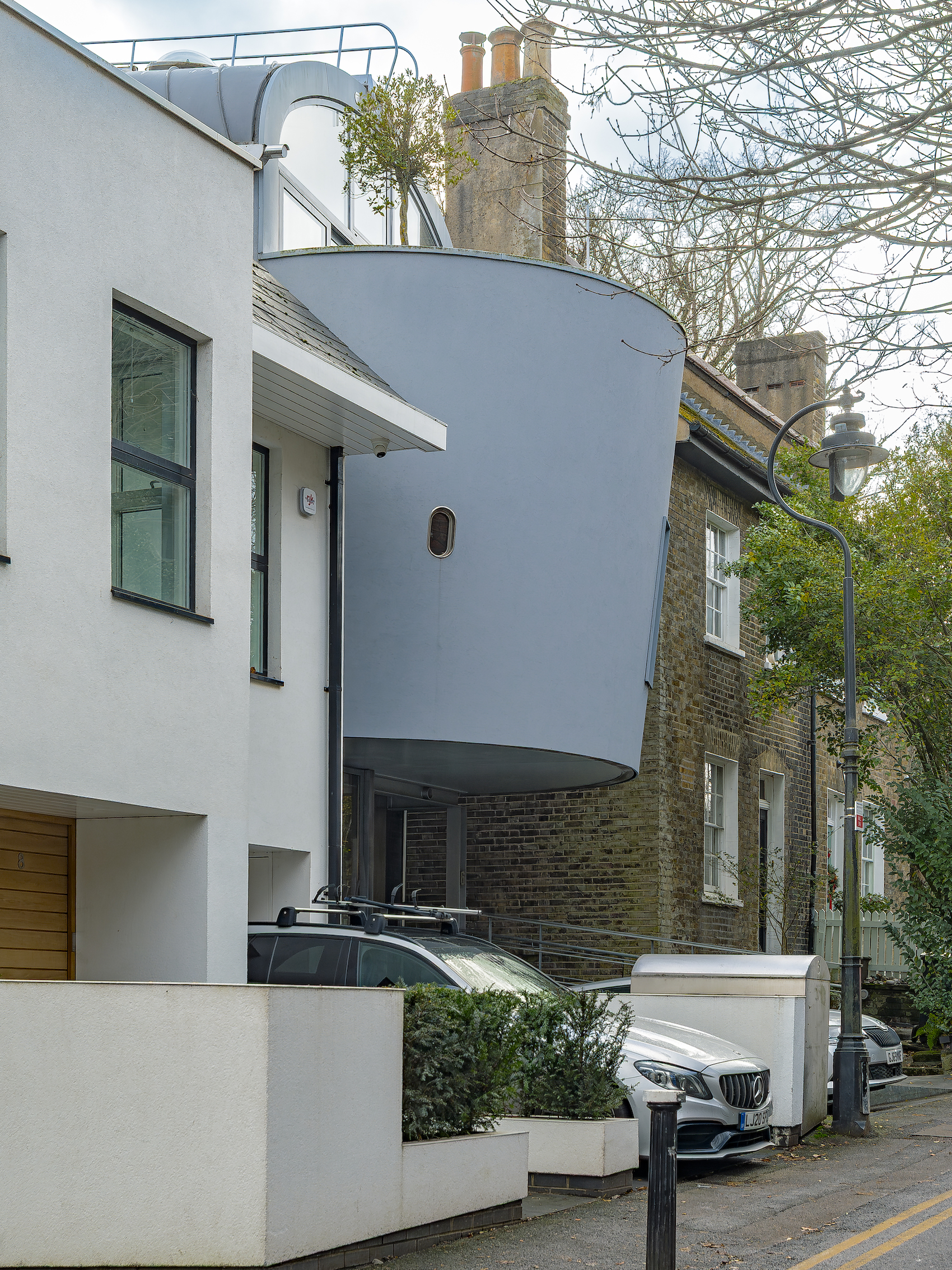
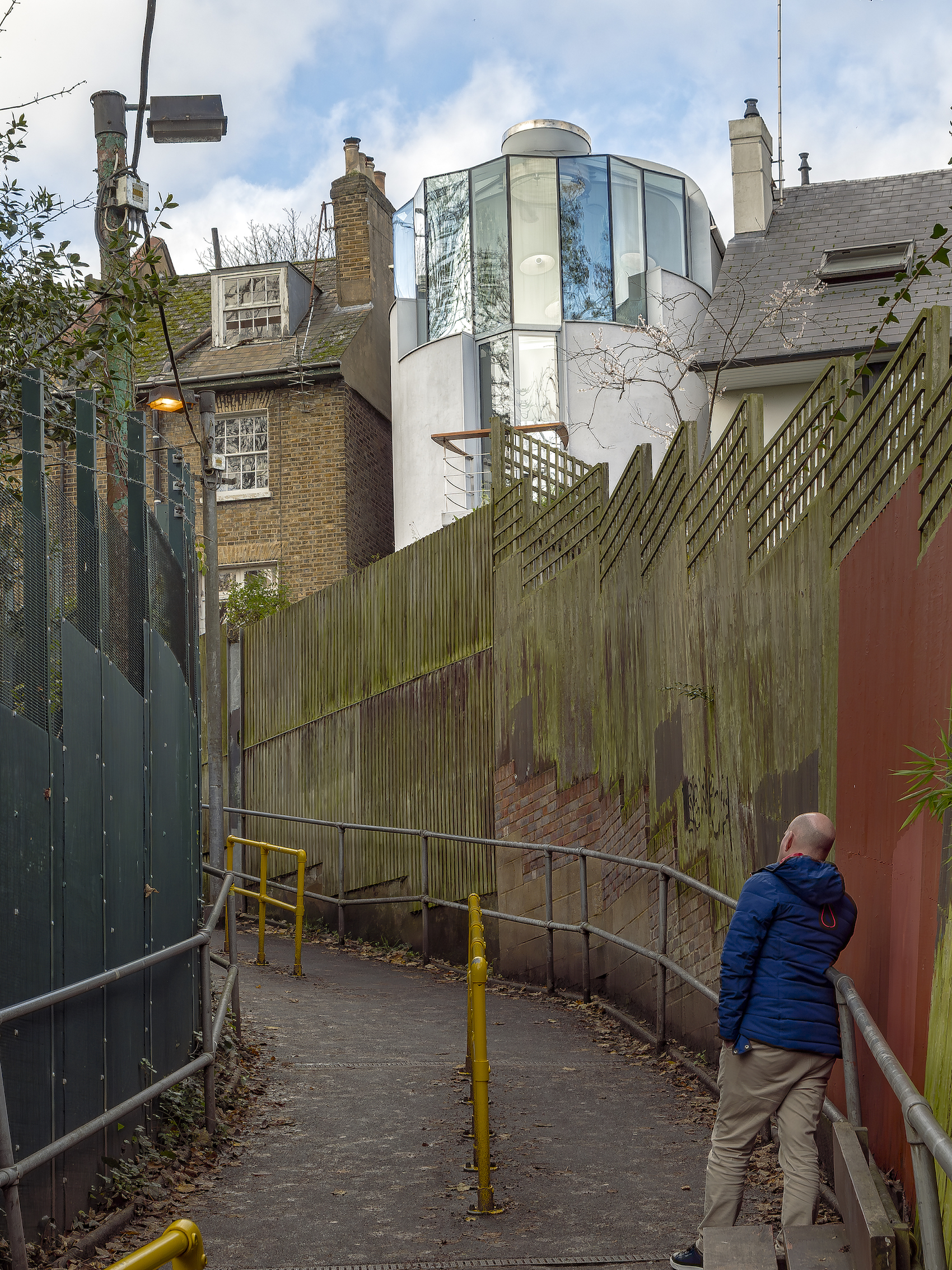
Mike Russum The site, which became available at an auction, is very close to Highgate Tube Station. It’s at the head of Wood Lane, which is quite steep, and rises towards Muswell Hill Road and Archway Road. It’s a very narrow sliver of land – about six-metres wide and 25-metres long. And at the southern edge, there’s a footpath that drops down to an entrance to Highgate Tube Station. The street is a bit of an architectural zoo. Our house lies between two masonry houses, but there are buildings from many different eras and they kind of express the architecture and technology of their times. It ranges from a little gothic pavilion to a 1960s ribbon window development, with various Edwardian houses and a 1970s brick and concrete number at the lower end of the road. We’ve pushed back the entrance façade to make space to park a car, with a cantilevered bay above. The security railings at the front of the house have this kind of wavy form, suggesting a mystery vessel floating above a sea, or an aircraft hovering above a cornfield.
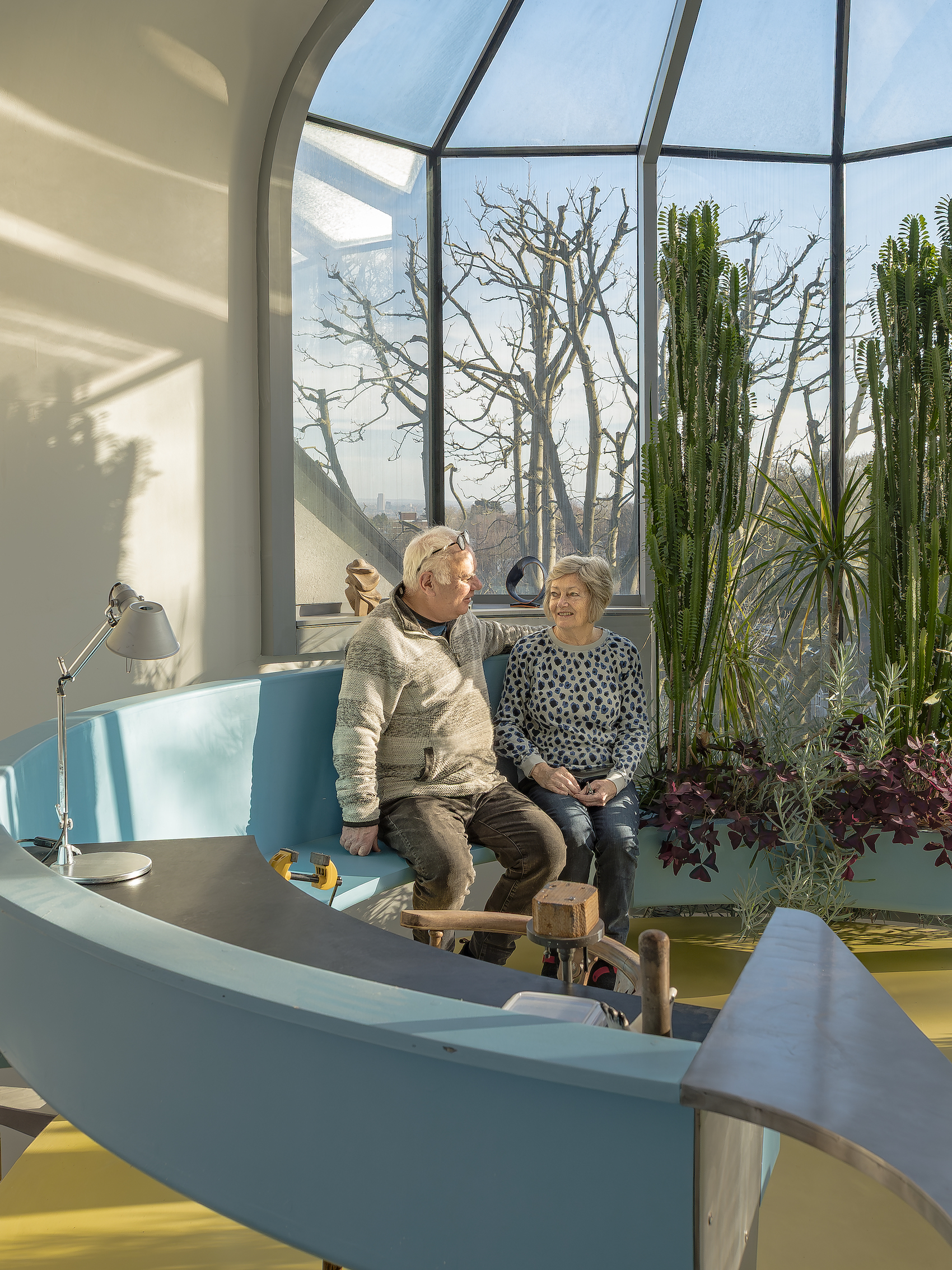
Sally Cox I really wanted a bright space with lots of sunlight – daylight – coming into the house.
CAPTION
Mike Russum On the street side, the house is very much closed to the road, because we’re trying to exclude traffic noise. But it opens up much more on the garden side. There’s a fair amount of glazing, so at any time of day, if the sun is out, it penetrates this upper space.
Sally Cox I wanted inspirational spaces for art and sculpture, since I’ve taken up sculpture in my retirement.
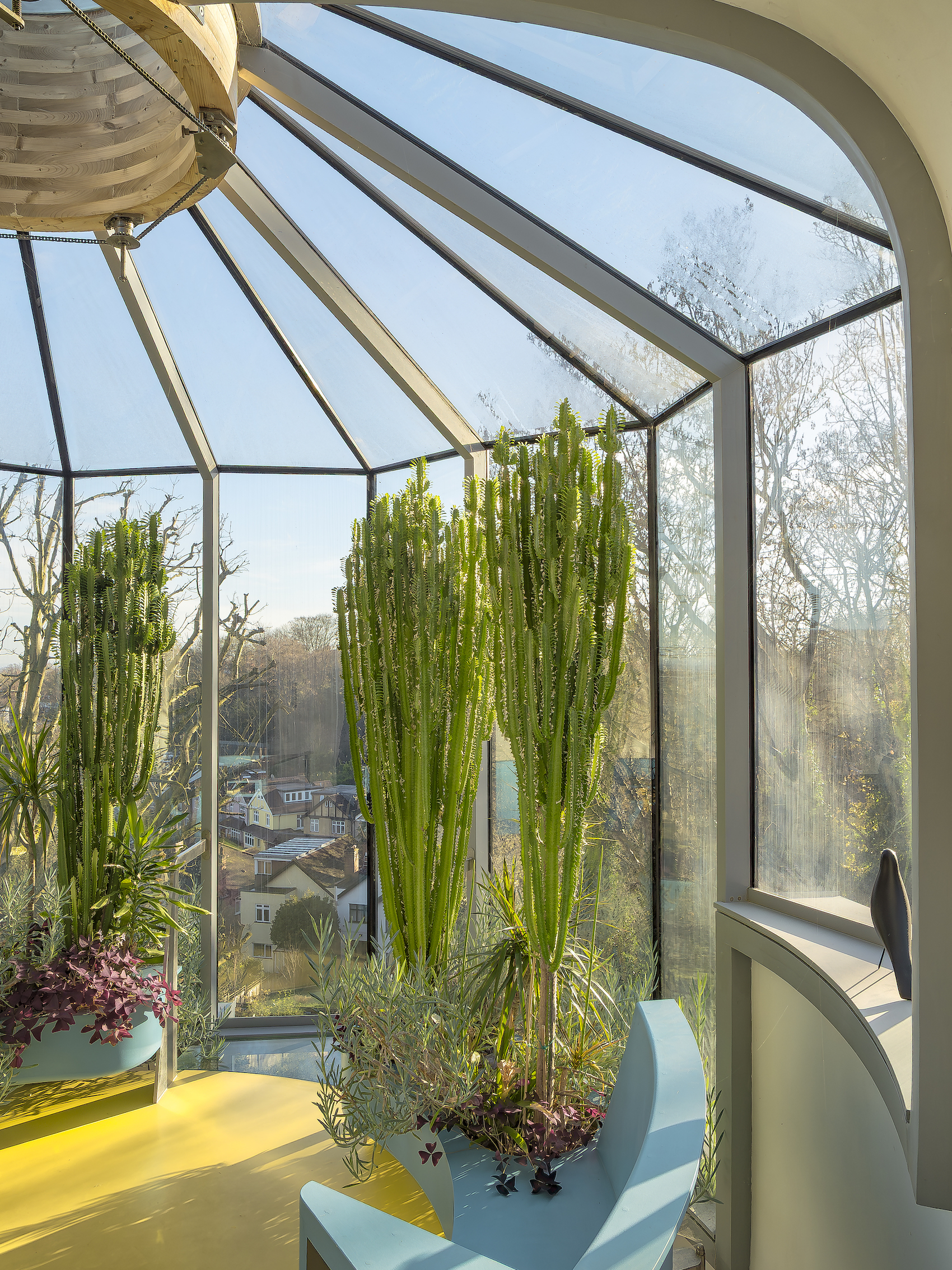
Mike Russum The project is very much about a journey onto this mystery vessel, and a narrative about how you progress up through the building. The detailing does sort of doff its cap to marine or yacht architecture. A gangway leads to the entry point and we have a kind of mini lighthouse illuminating the entrance hall. Sally’s office has a small terrace beneath the elliptical structure above, and a desk where she makes some of her lovely timber sculptures. Then you have this sloped gangway that extends up to the living area and takes you up to the final destination, the winter garden, which is held off the walls, and kind of hovers in space. The winter garden has built in circular furniture, comprising a desk, seat, and planters. The cacti in the planters came from Germany and were originally about six inches high. Now it’s like a little bit of Arizona chiselled into Highgate. They have a wonderful quality, relating to the trees beyond, but also offering up a quite magical view for people coming up the footpath from the underground station.
CAPTION
Sally Cox I wanted good views. There are lots of trees around, so in summer you get the tree canopies, and then there’s a different view in winter, when the leaves have gone.
Mike Russum From every point in the building you have this view down onto the garden, which is quite lusciously planted, and a kind of verdant open air salon. It’s terminated at the end by the footpath that extends down to the tube station. But it also has this panoramic view over trees – there’s a very attractive woodland setting on the south side – and views of east London in the far distance.
Sally Cox The bedrooms needed to be screened from noise, warm in the winter and cool in the summer.
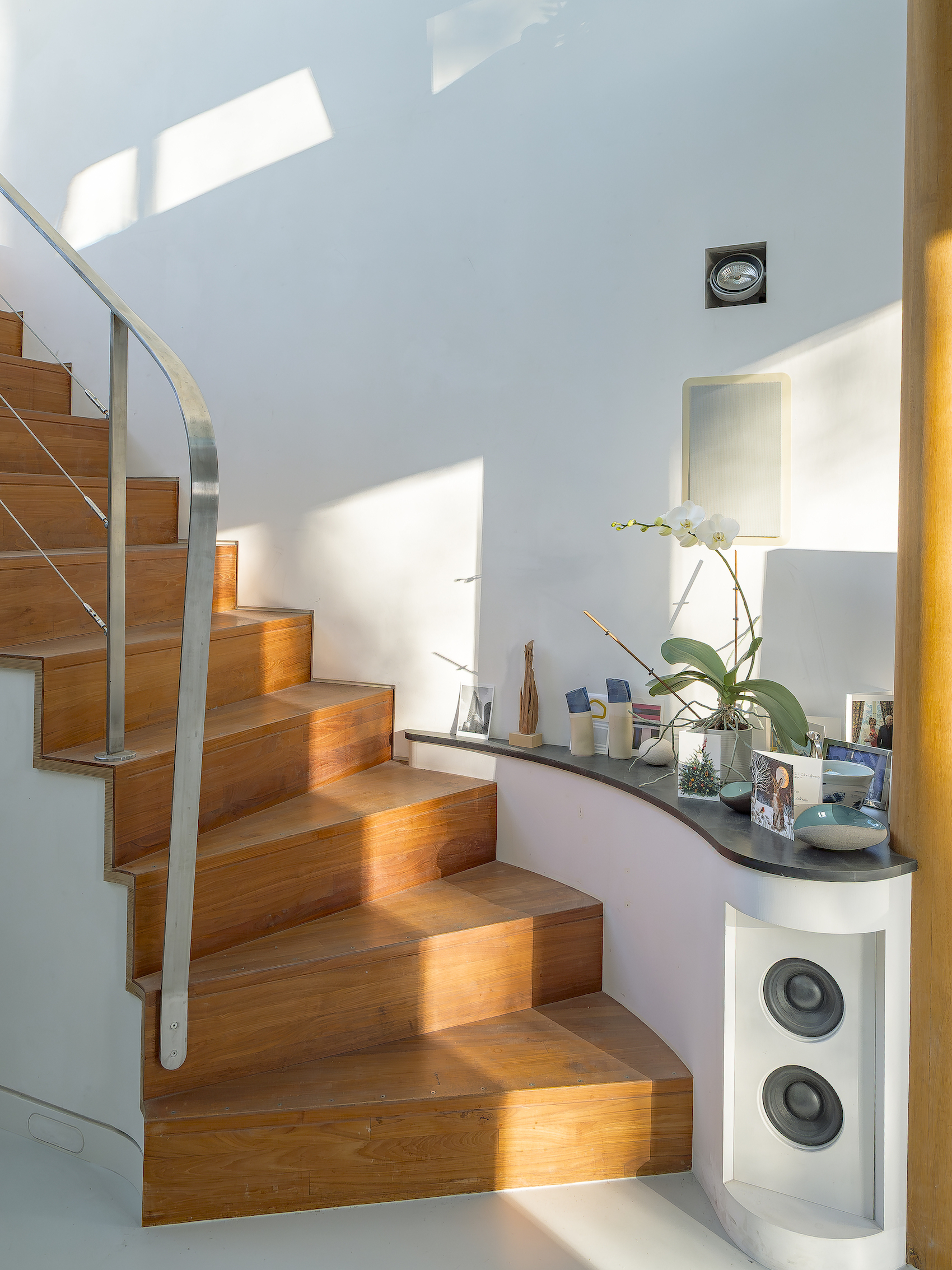
Mike Russum The house is located on quite a pronounced hill, so we’ve cut the bedrooms down into the ground level to provide acoustic screening for them. And of course, they don’t have the same need for daylight as the living areas. This lower part of the house is of masonry construction, which cost- effectively deals with embedding the spaces into the side of the hill. The bedrooms are cellular, orthogonal spaces that relate, of course, to the orthogonal nature of a bed, in a space-efficient way. There are two bedrooms. The main bedroom suite has a bathroom in the centre of the plan and a patio outside, looking towards the shed at the end of the garden, which has a glorious wildflower roof. The guest bedroom has a small ensuite bathroom tucked beneath the staircase.
CAPTION
Sally Cox I wanted a generous dining volume, which would be good for entertaining.
Mike Russum The double-height kitchen/dining area is at the base of the upper-level living space, an open-plan elliptical lozenge made from plywood cold-formed over softwood ribs. It was prefabricated offsite, in the north of England, and craned into position over a weekend. Its structure is informed by the mosquito airplane, which was devised in the Second World War, and was an incredibly agile and fast plane. In fact it was faster than the German fighter planes. It could only carry a couple of bombs, but it would drop those bombs, and then by the time the Germans had realised, it was on its way back to England, and very few of them were shot down. You had a much better life expectancy as a pilot of a mosquito than say the Lancaster Bomber. On the street side, it echoes the bay windows of the neighbouring buildings, and on the south side, it means that, as the sun passes around, there’s less shadowing of the neighbouring windows.
Sally Cox It was important that the house was ecologically and cost effective.
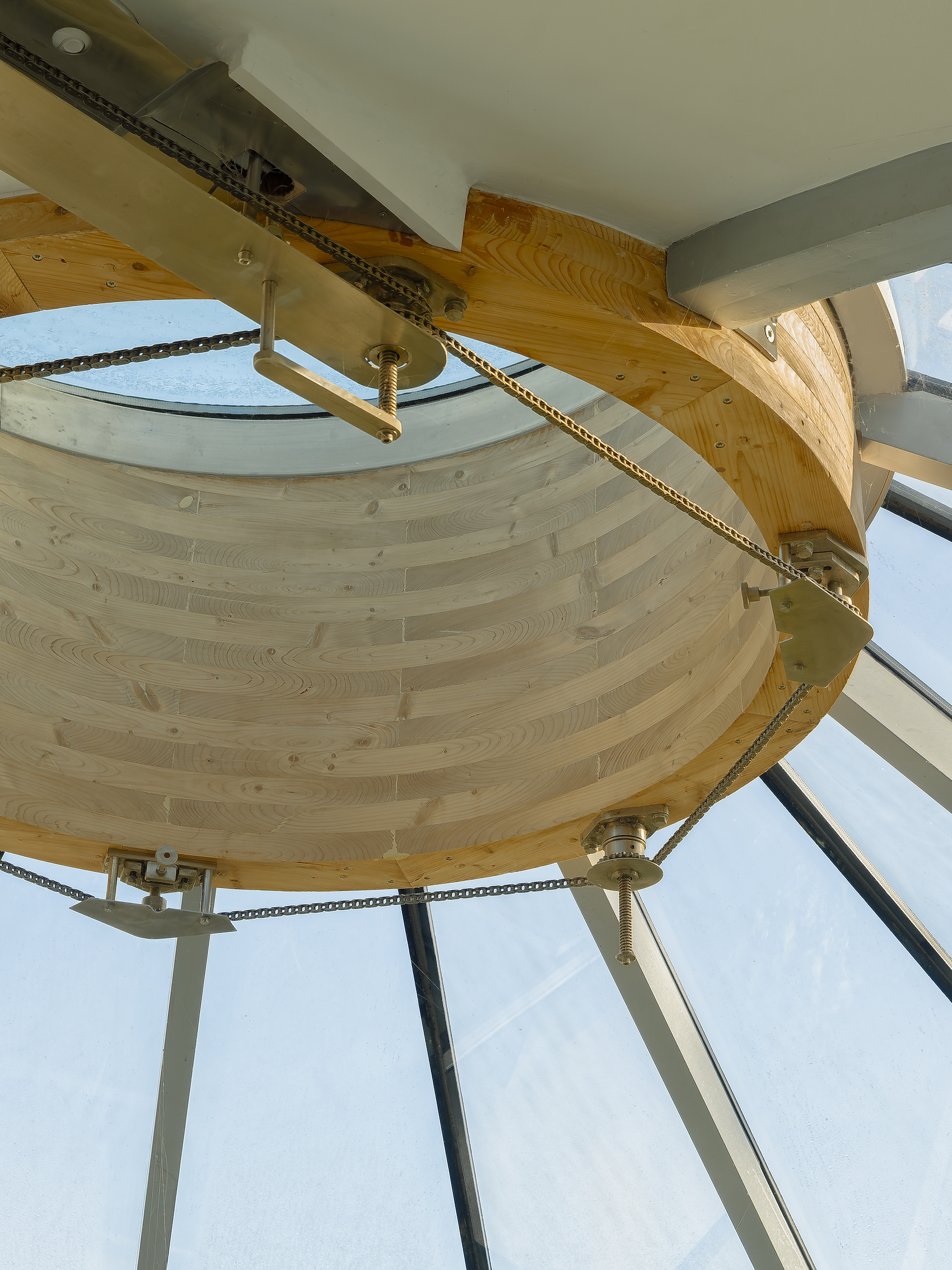
Mike Russum The central lantern has a sort of Heath Robinson lifting device, which raises the glass by six inches so we can expel hot air from the conservatory during the summer months. It’s a joyous place to live all year round.
Other finalists in this category:
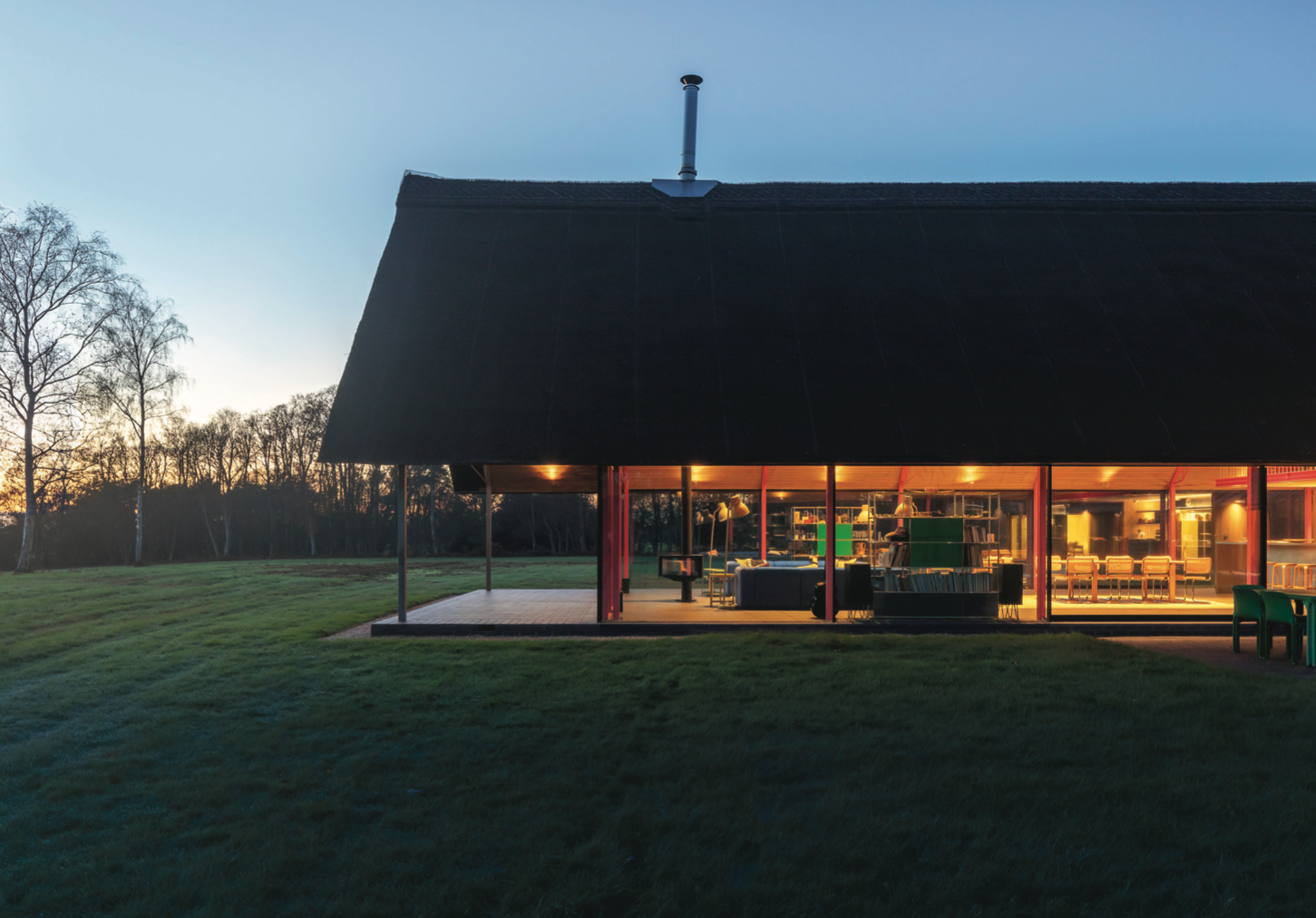
Housestead by Sanei Hopkins Architects
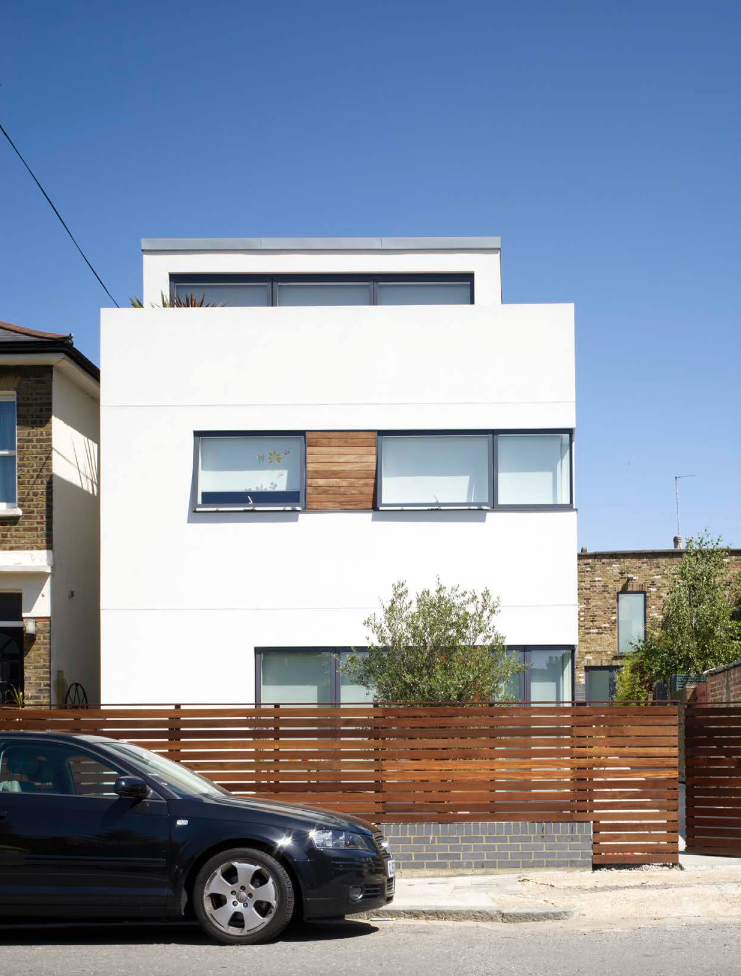
Eva’s House by RDA Architects