Peer Collective and artist Kateřina Šedá reimagine the Christmas market as a public space for reflection, sobriety and shared experience in Brno, Czech Republic.
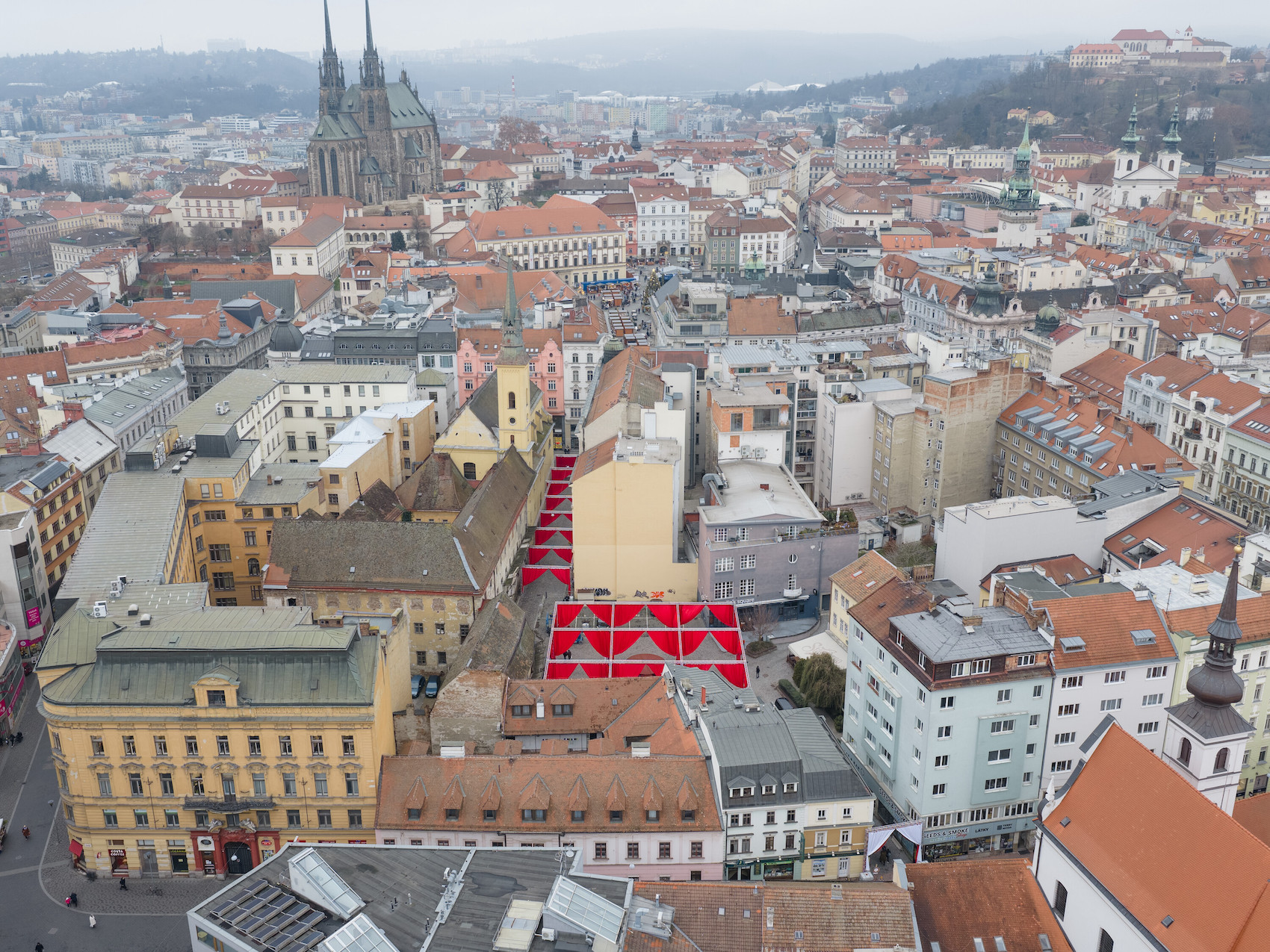
In a quiet corner of Brno, a temporary installation is challenging the norms of seasonal consumerism. Architects Peer Collective and artist Kateřina Šedá have transformed a forgotten urban site at Římské náměstí into an open-air festival of introspection. Conceived as an alternative to the commercial Christmas market, the Christmas Festival of Bad Habits reimagines public space as a journey through self-reflection.
The festival is intended to provide a calm, alcohol-free environment where visitors can explore and symbolically discard their personal bad habits. In keeping with Šedá’s participatory ethos, residents were involved in the project’s development from the outset. An autumn community event invited locals to help shape the space, turning its transformation into a shared act of placemaking.
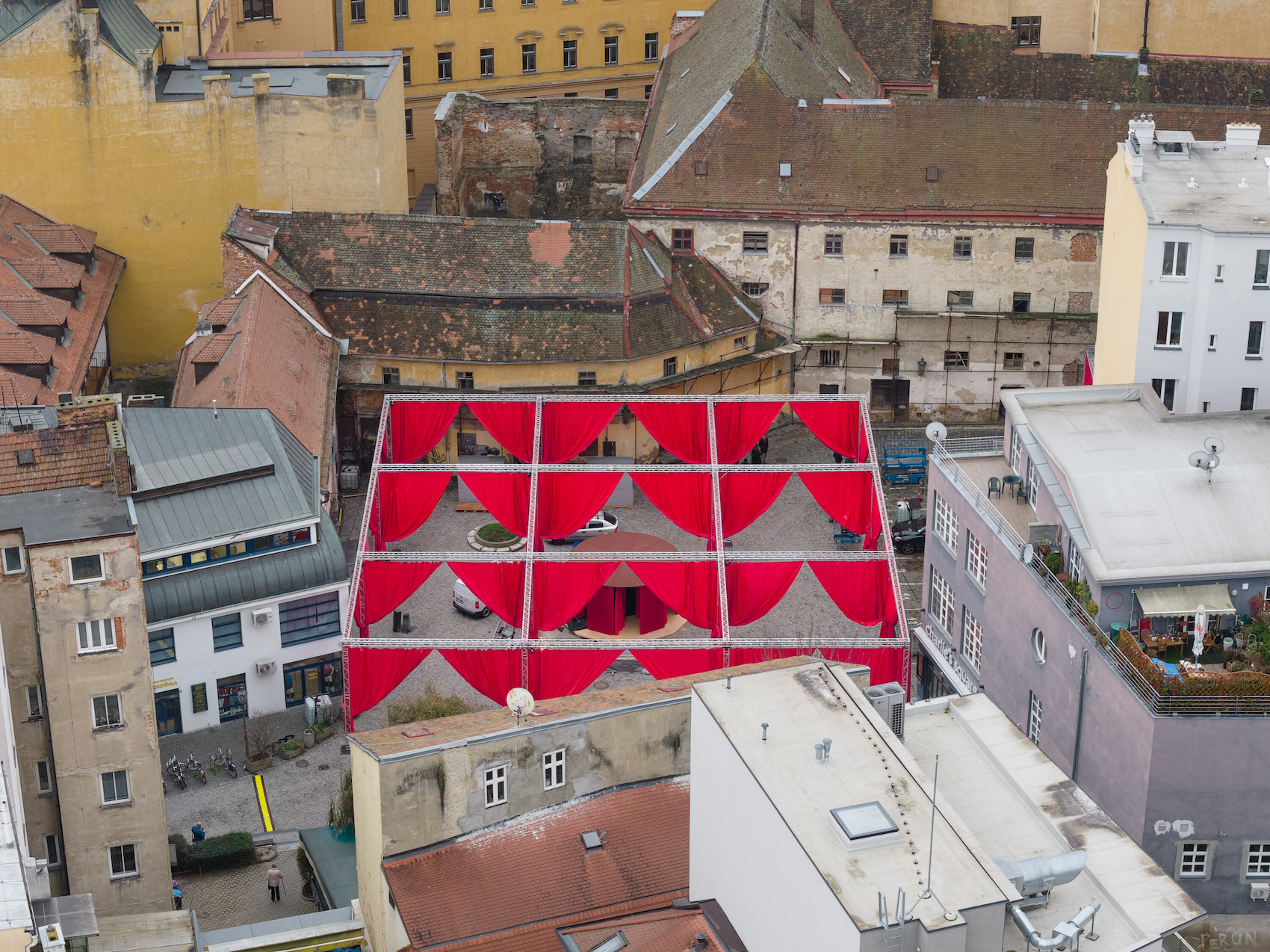
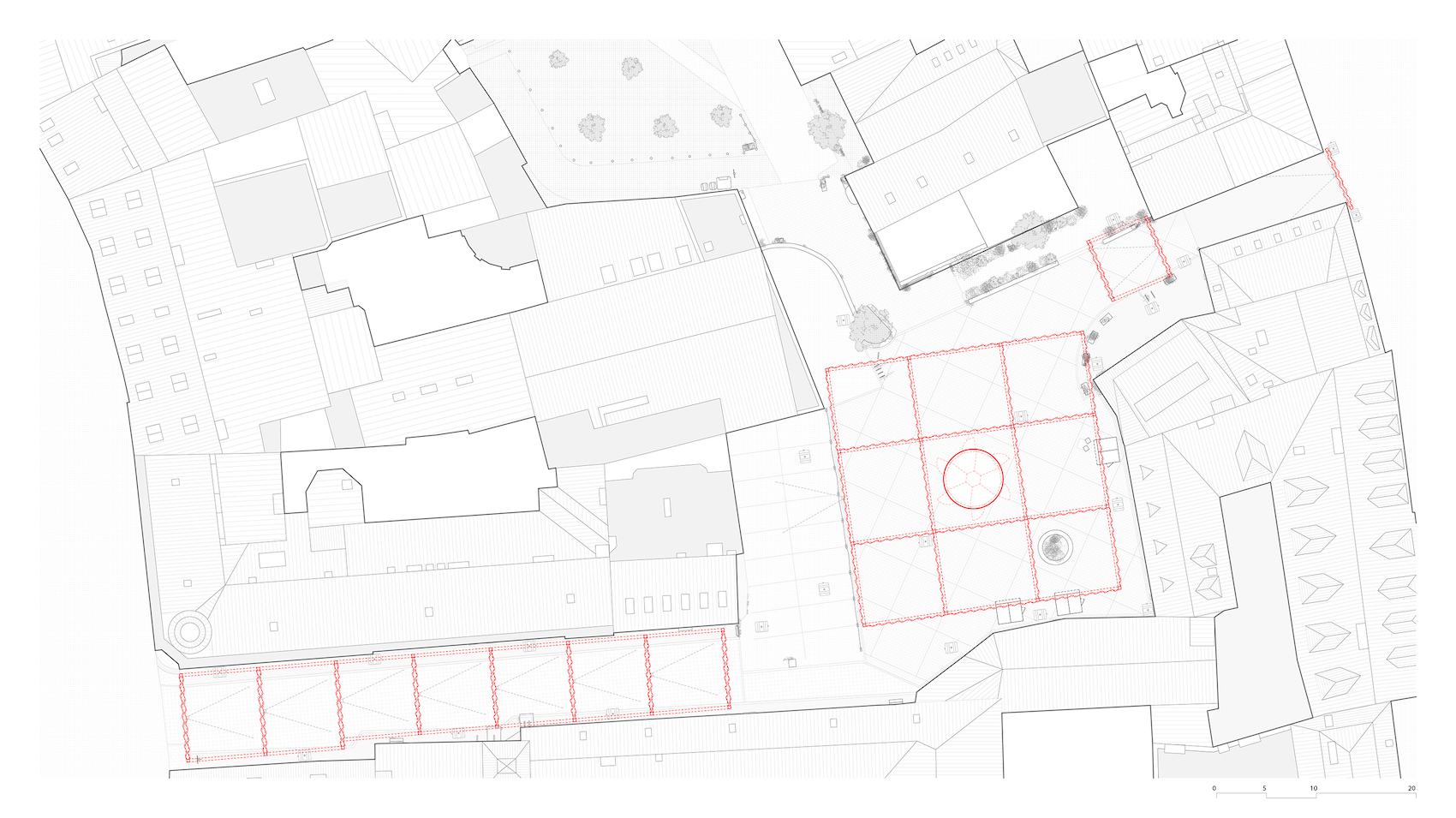
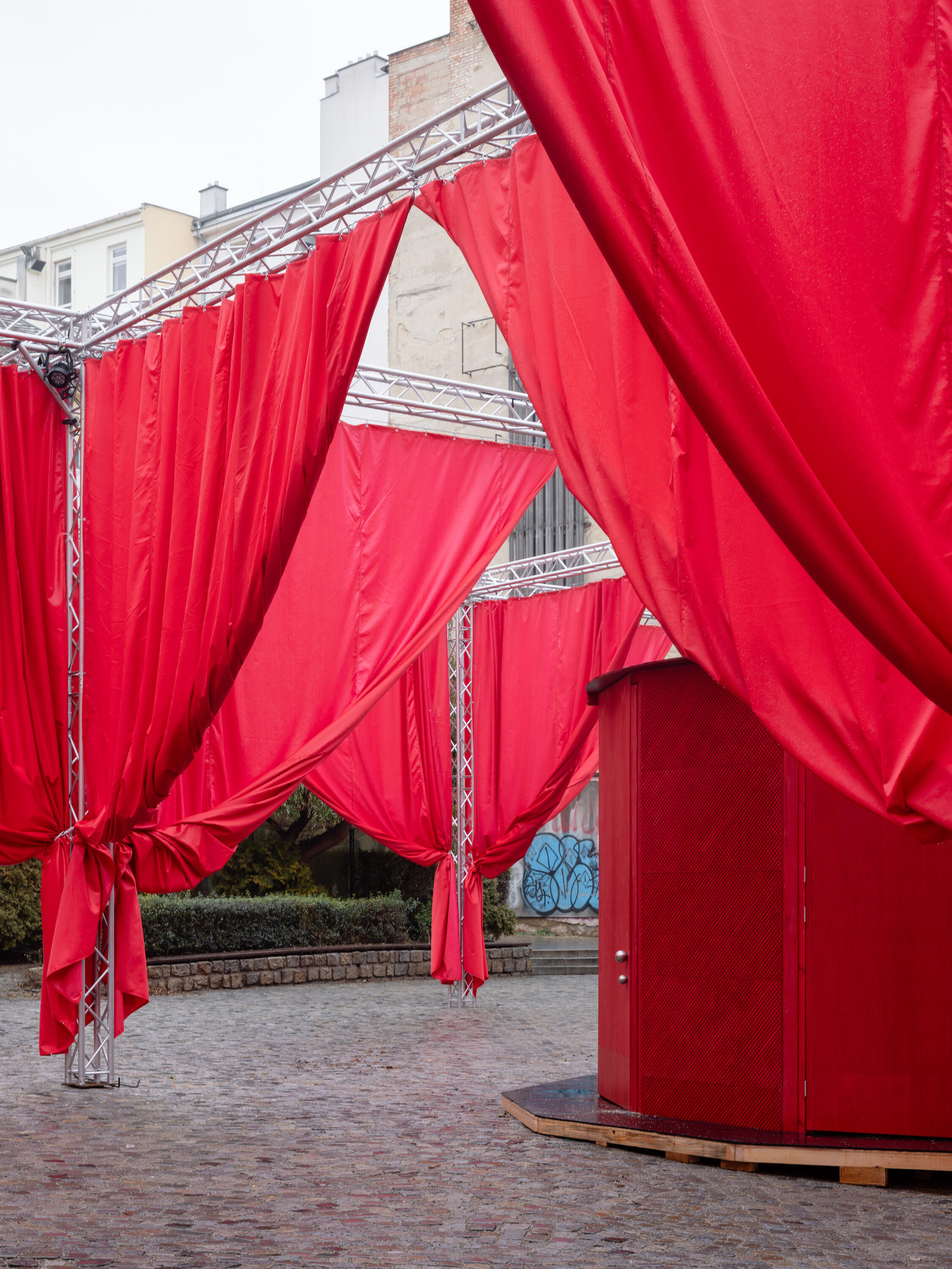
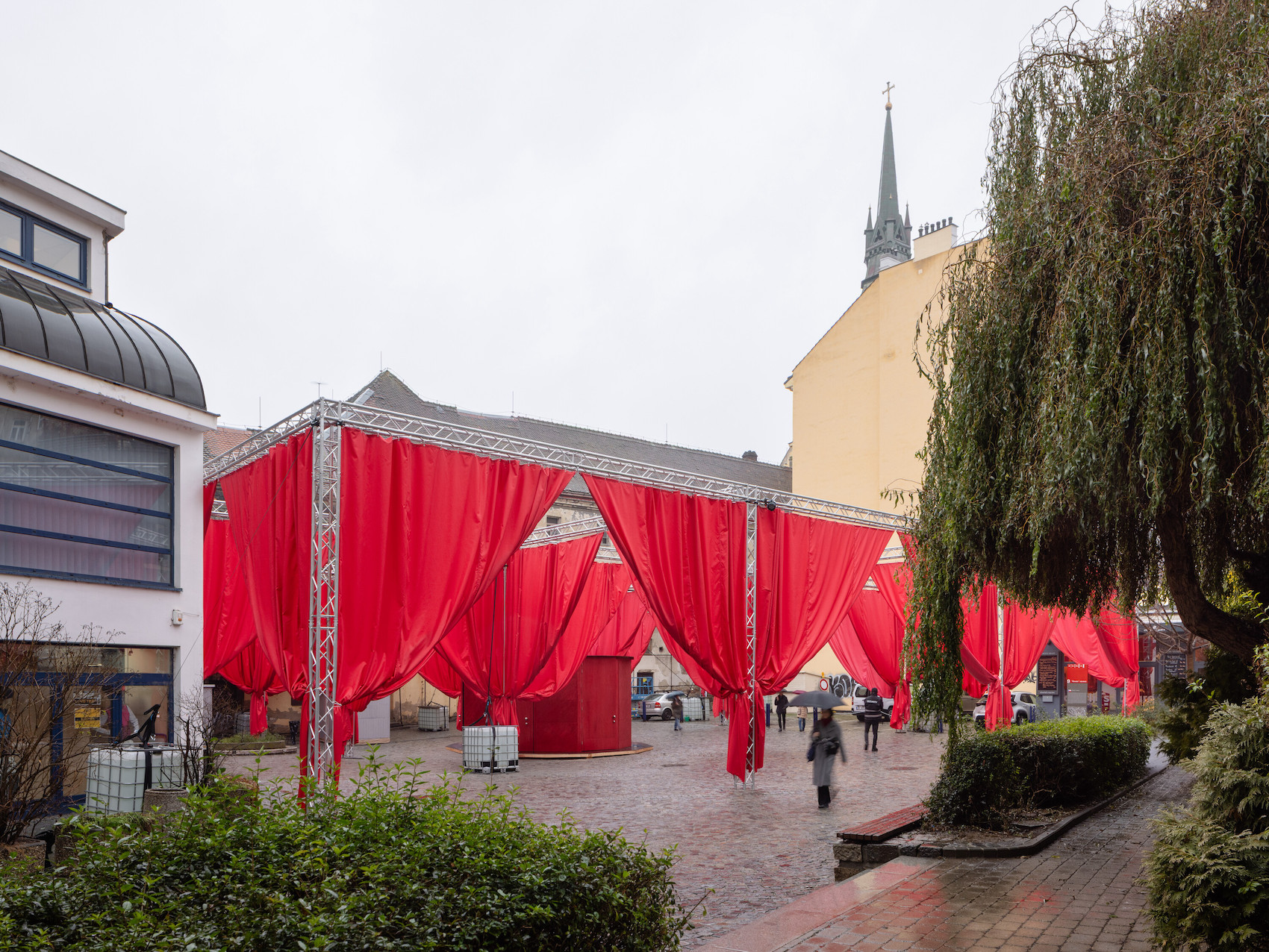
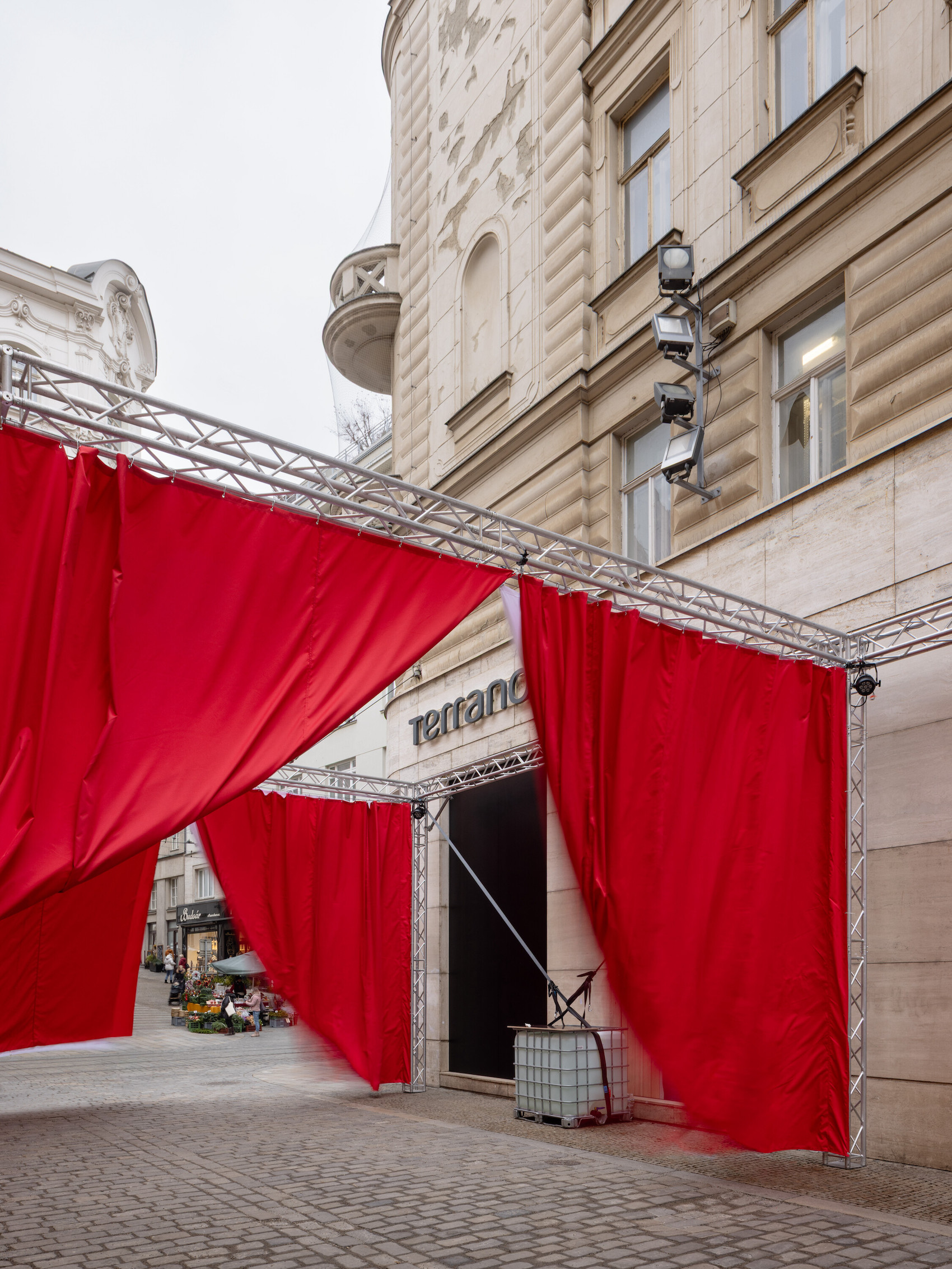
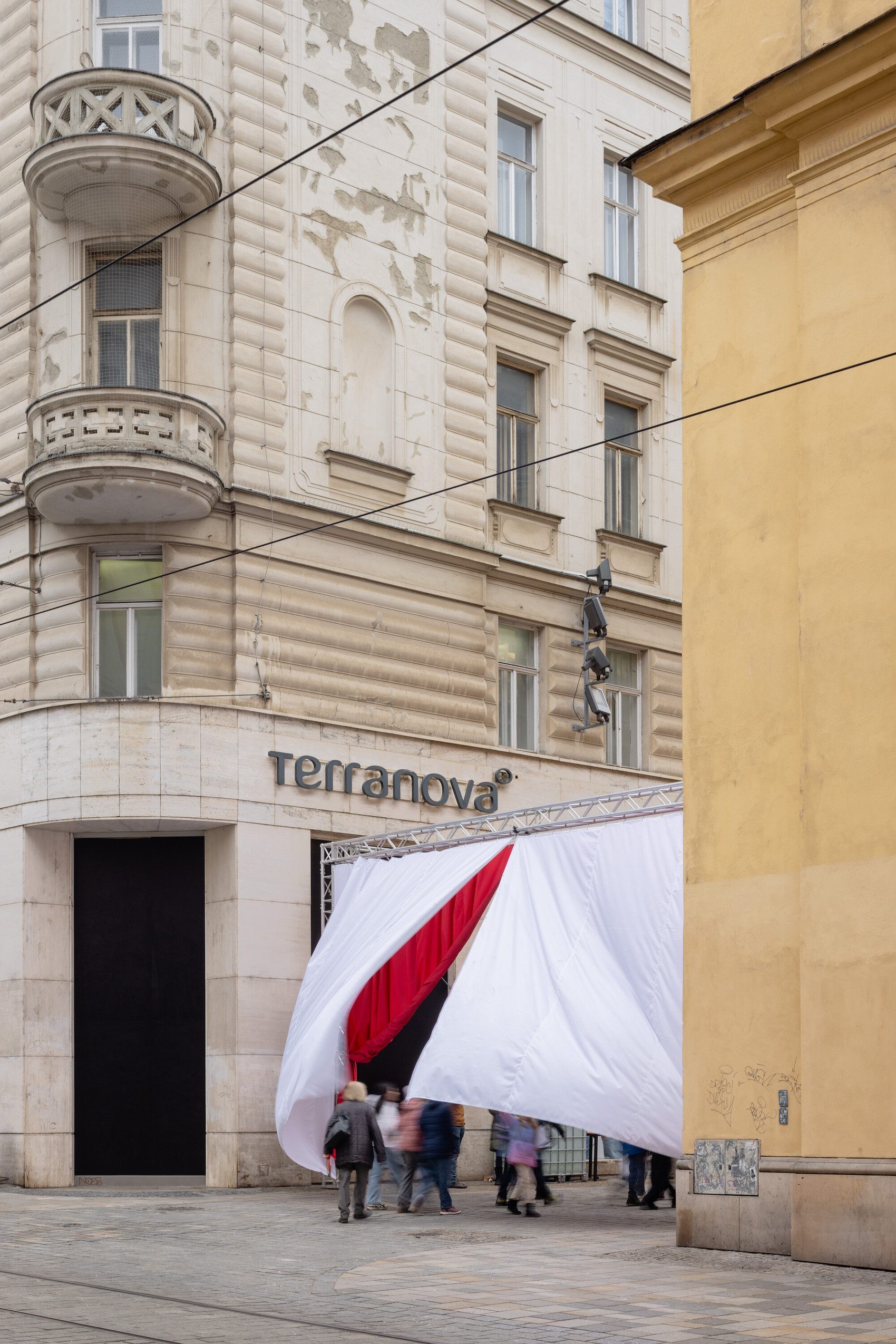
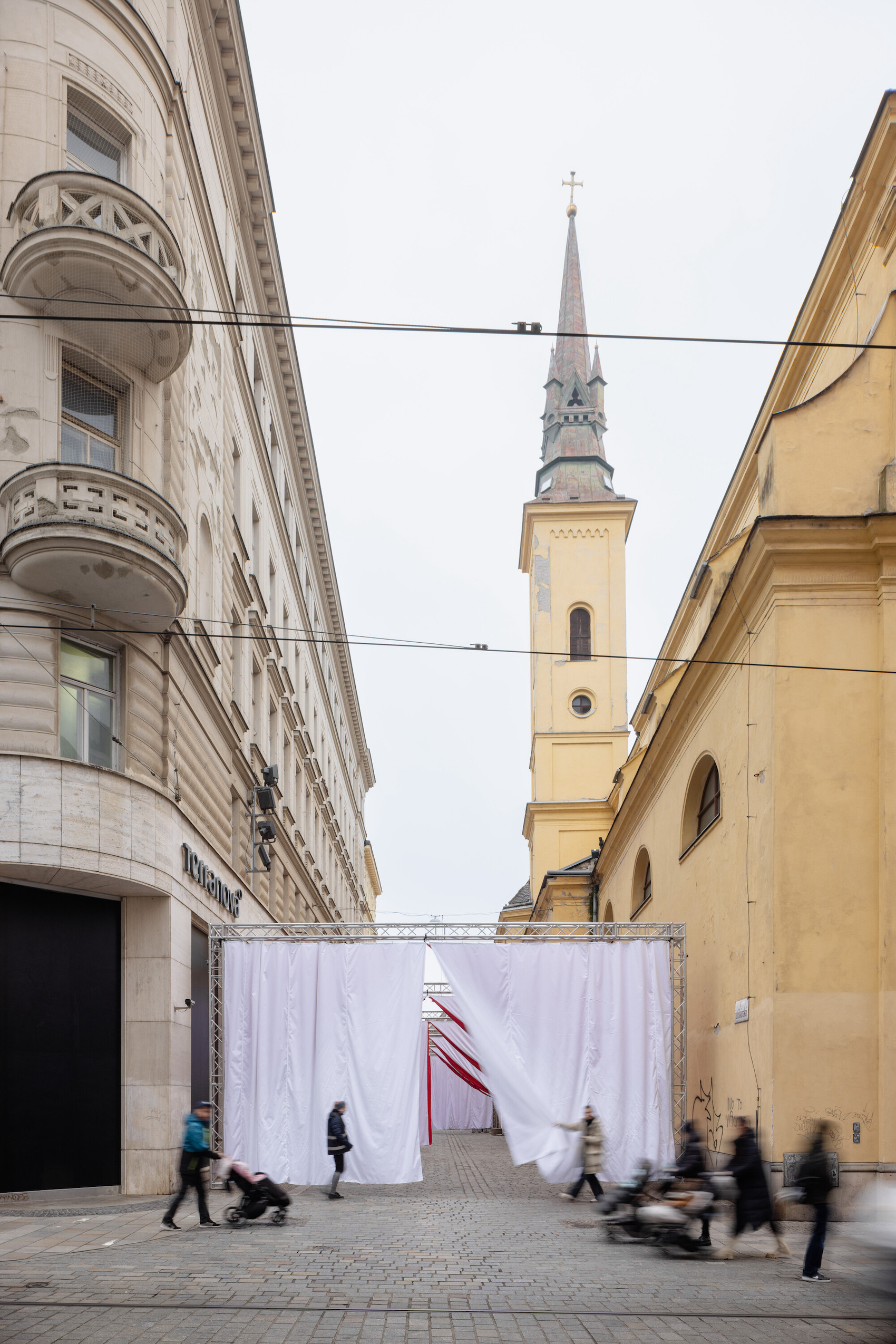
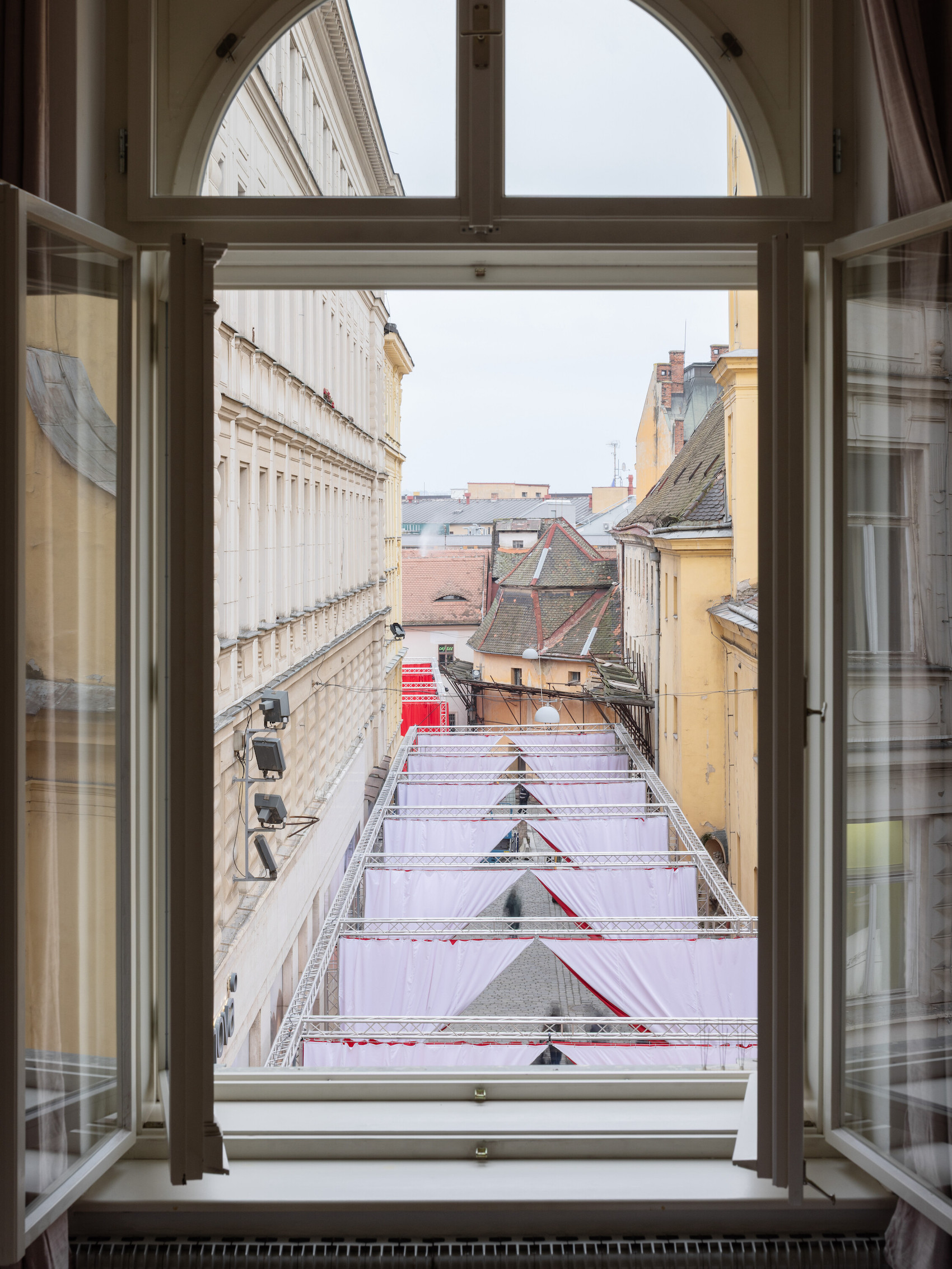
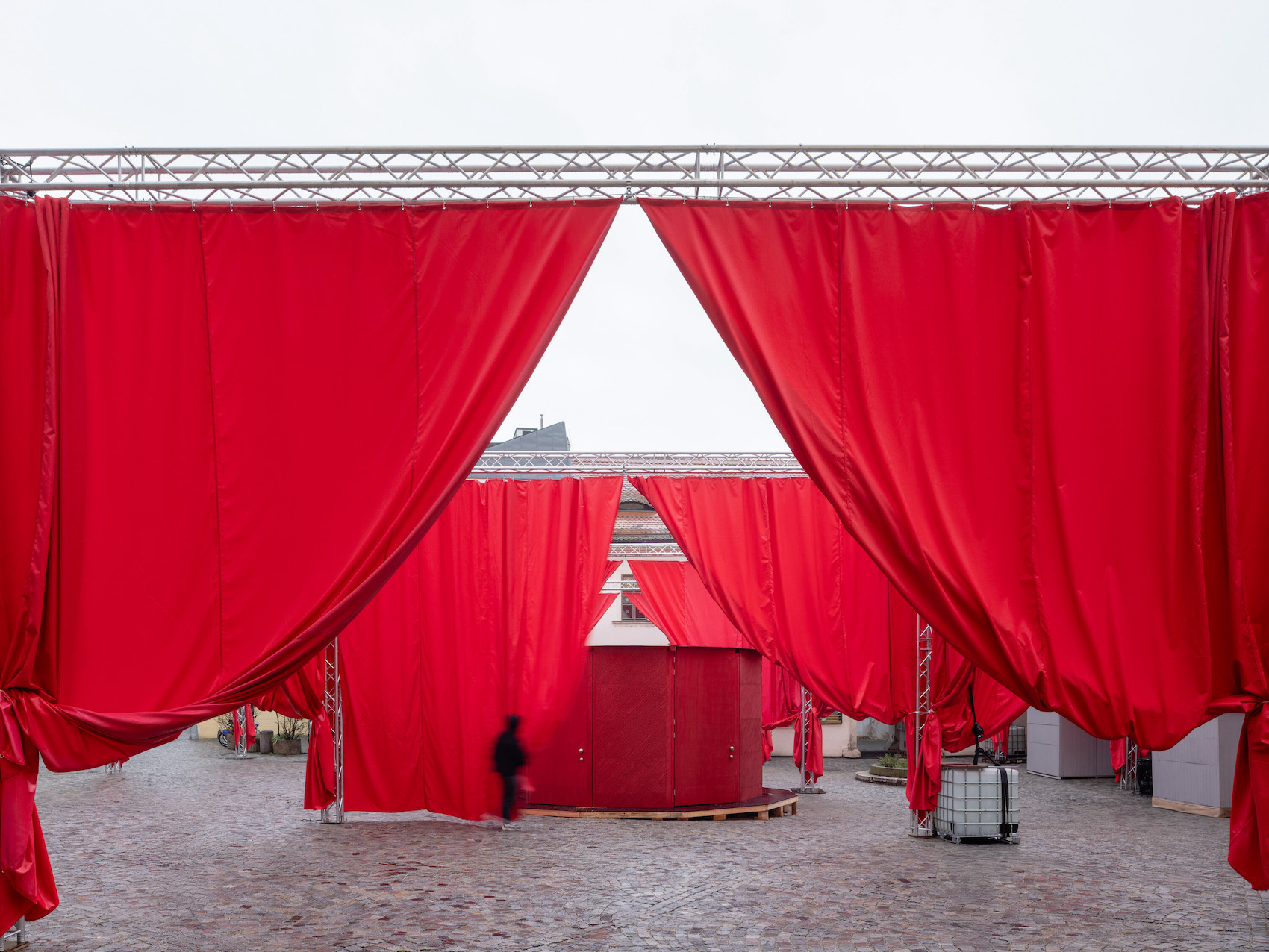
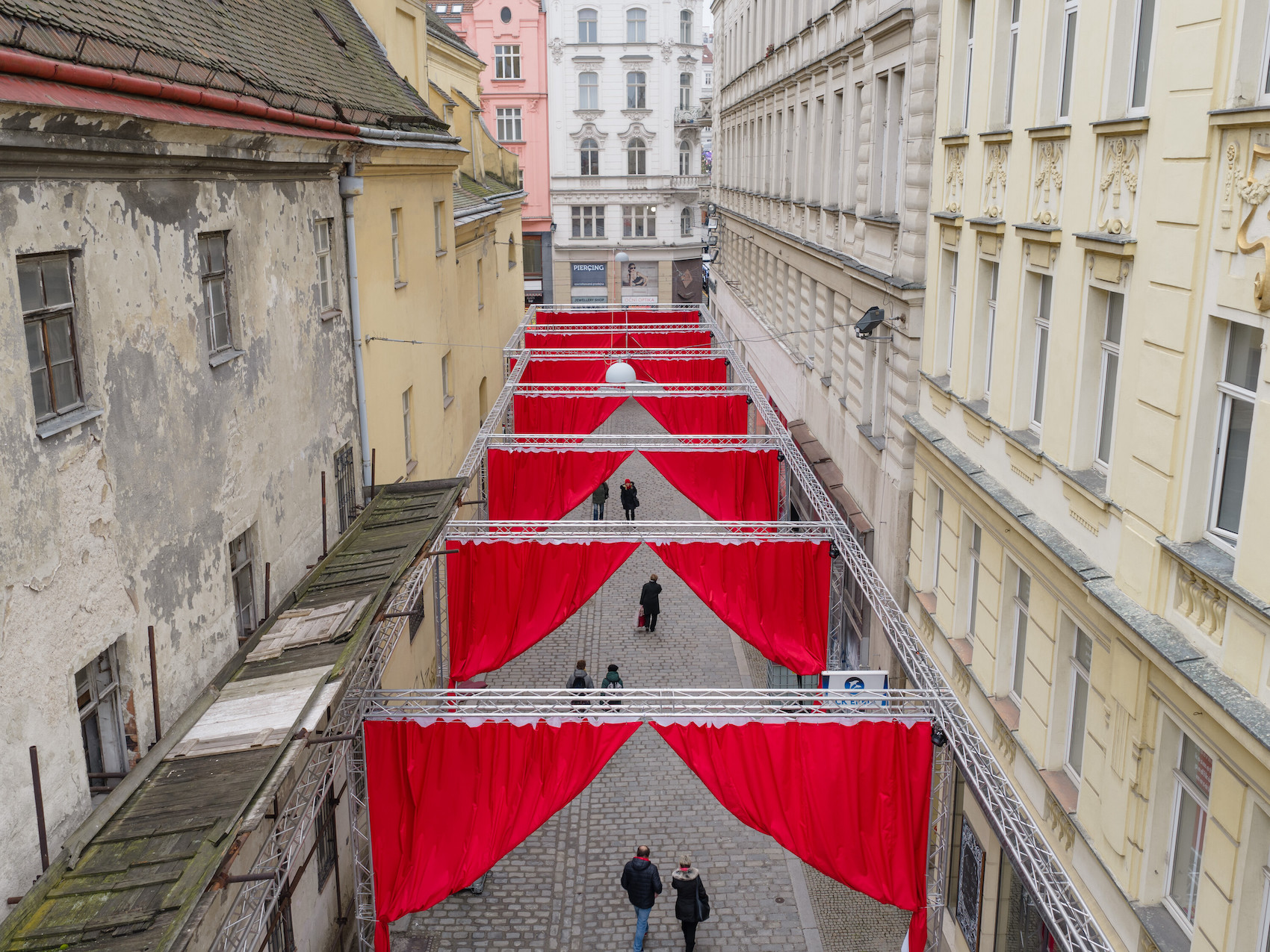
A 2,478-square-metre network of suspended red and white curtains hung from modular stage trusses divide the festival site into 18 interconnected ‘rooms’. The visual simplicity of the fabric partitions belies a richly layered experience: the structure doubles as an urban gallery at night, with ambient sound and projected testimonies from Šedá’s ongoing social archive, The National Collection of Bad Habits.

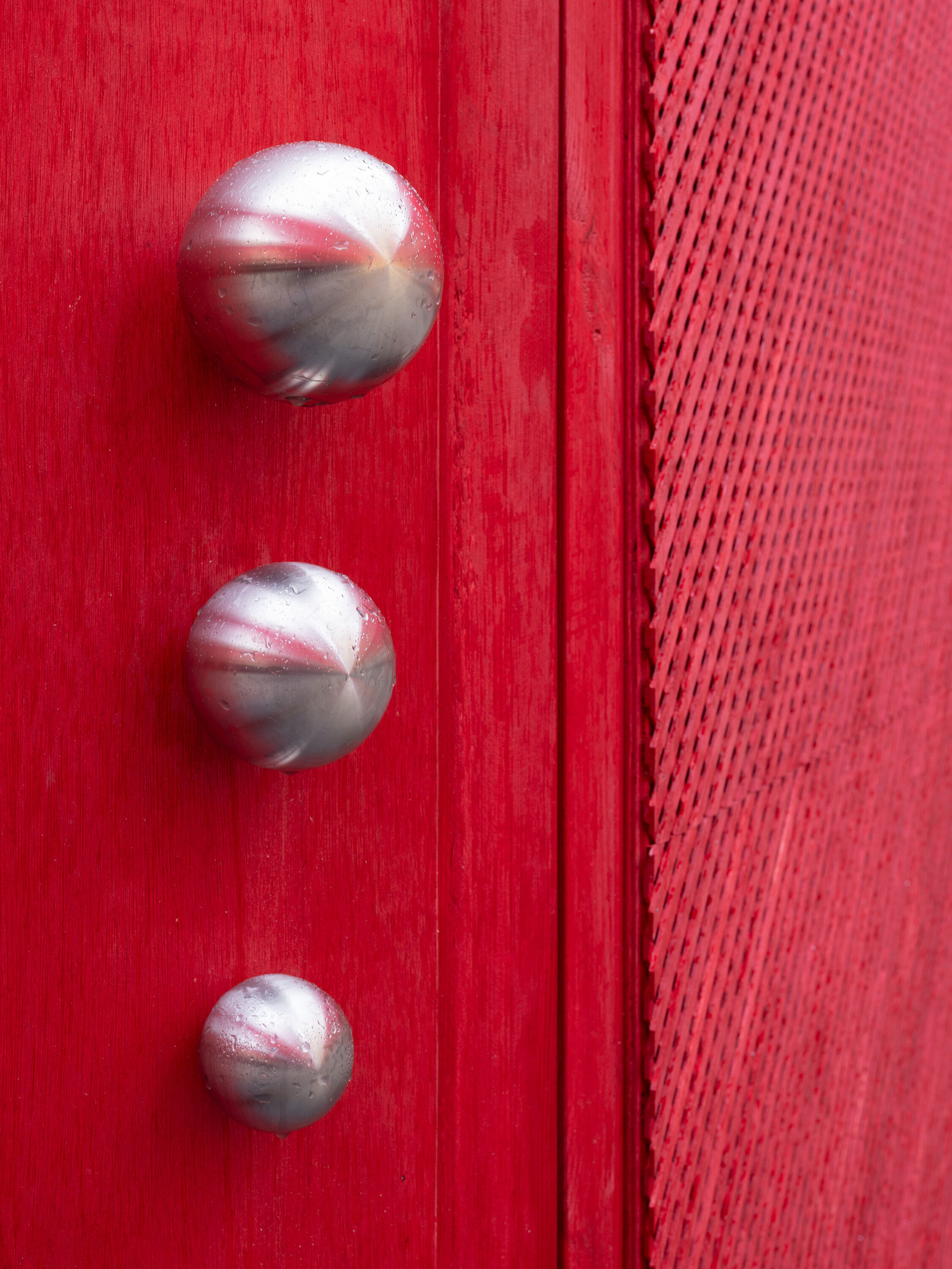
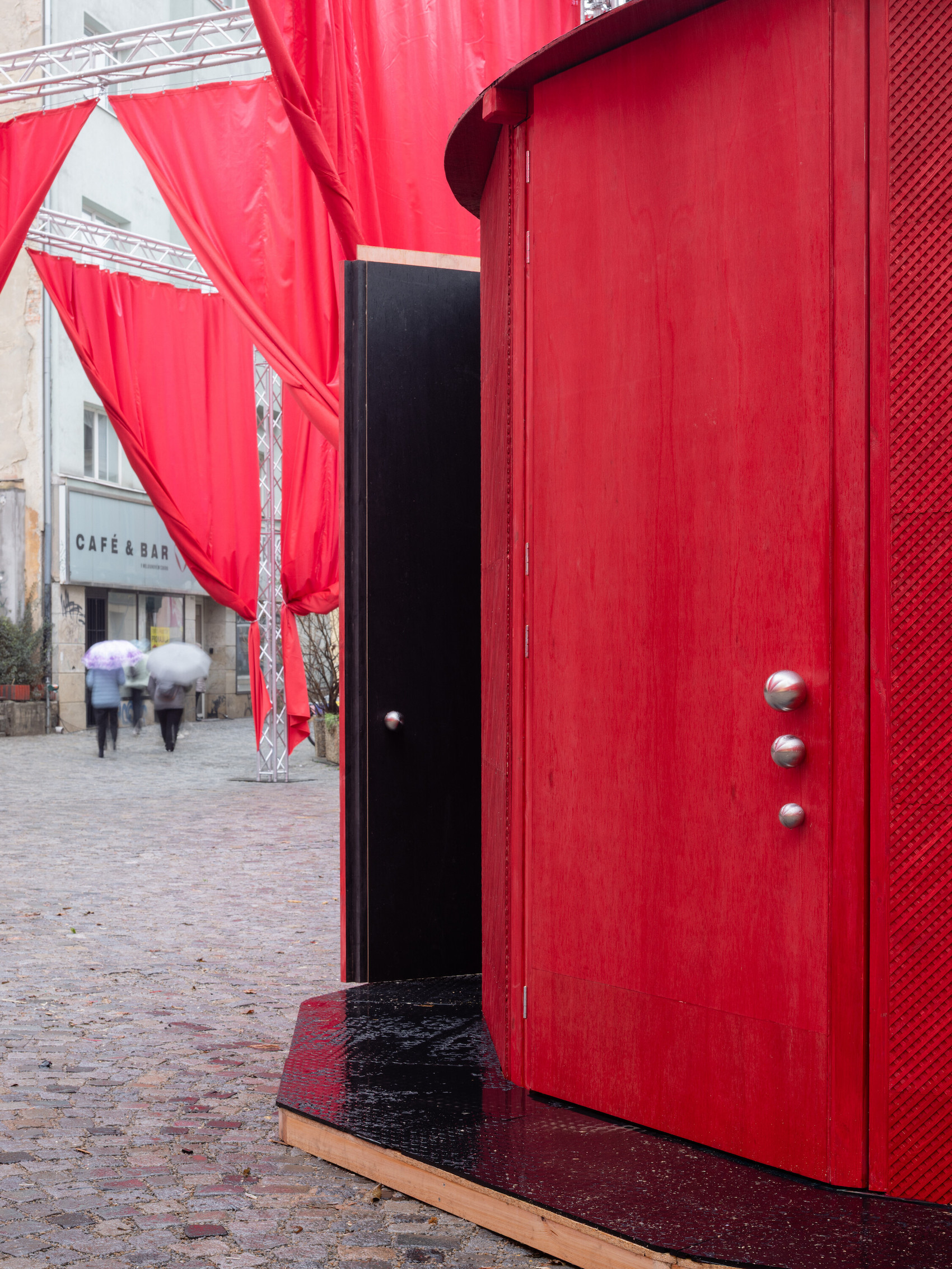
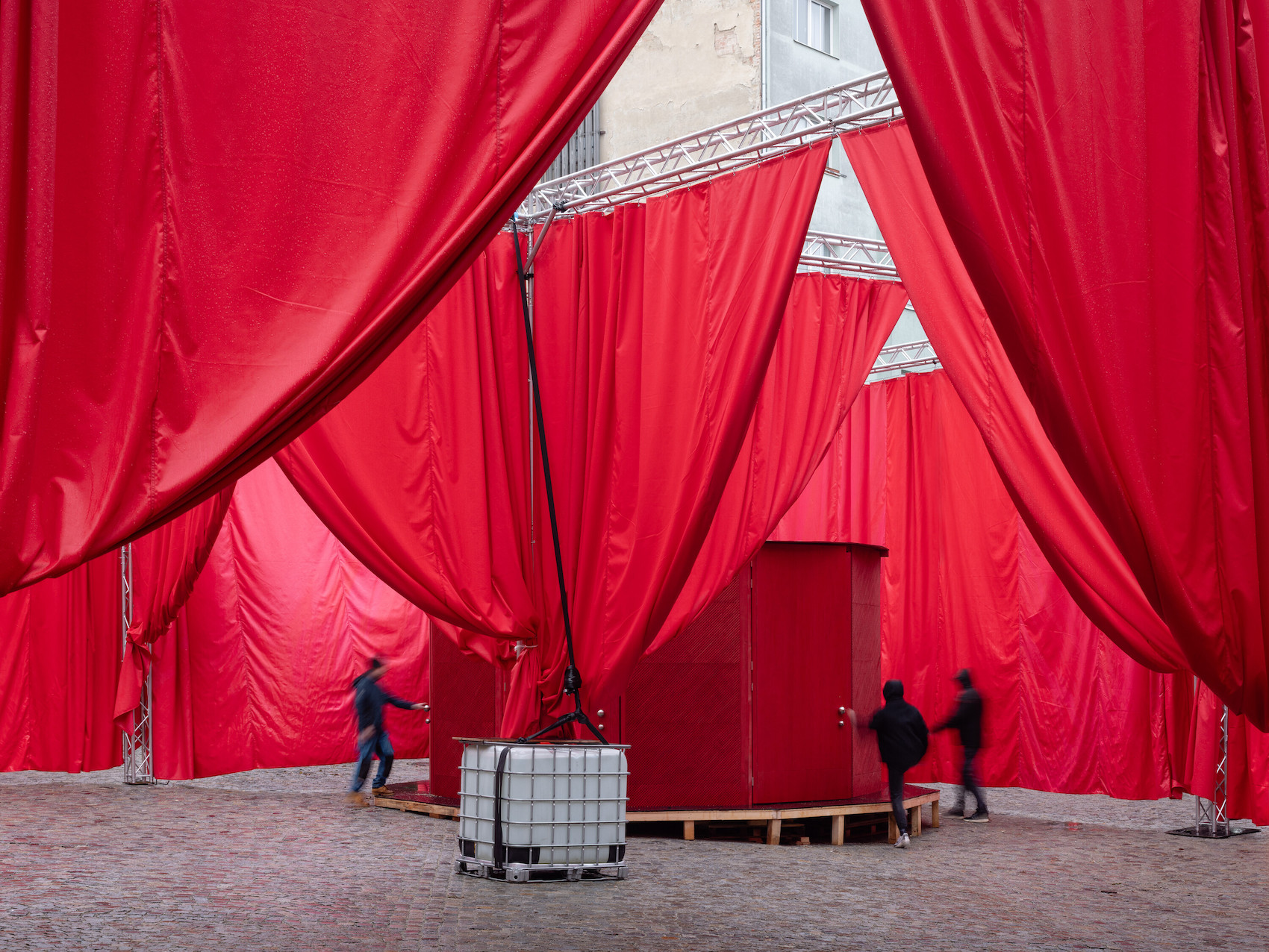
Visitors move through a pre-defined route that is designed to mirror a psychological journey. Along the way, they encounter curated prompts drawn from Šedá’s research into Czech social behaviours, encouraging reflection on everyday weaknesses. The path culminates in a circular red curtain enclosing six timber confession booths. These offer visitors the chance to share their experiences via an interactive audiovisual installation that collects and weaves their stories into a shared narrative.
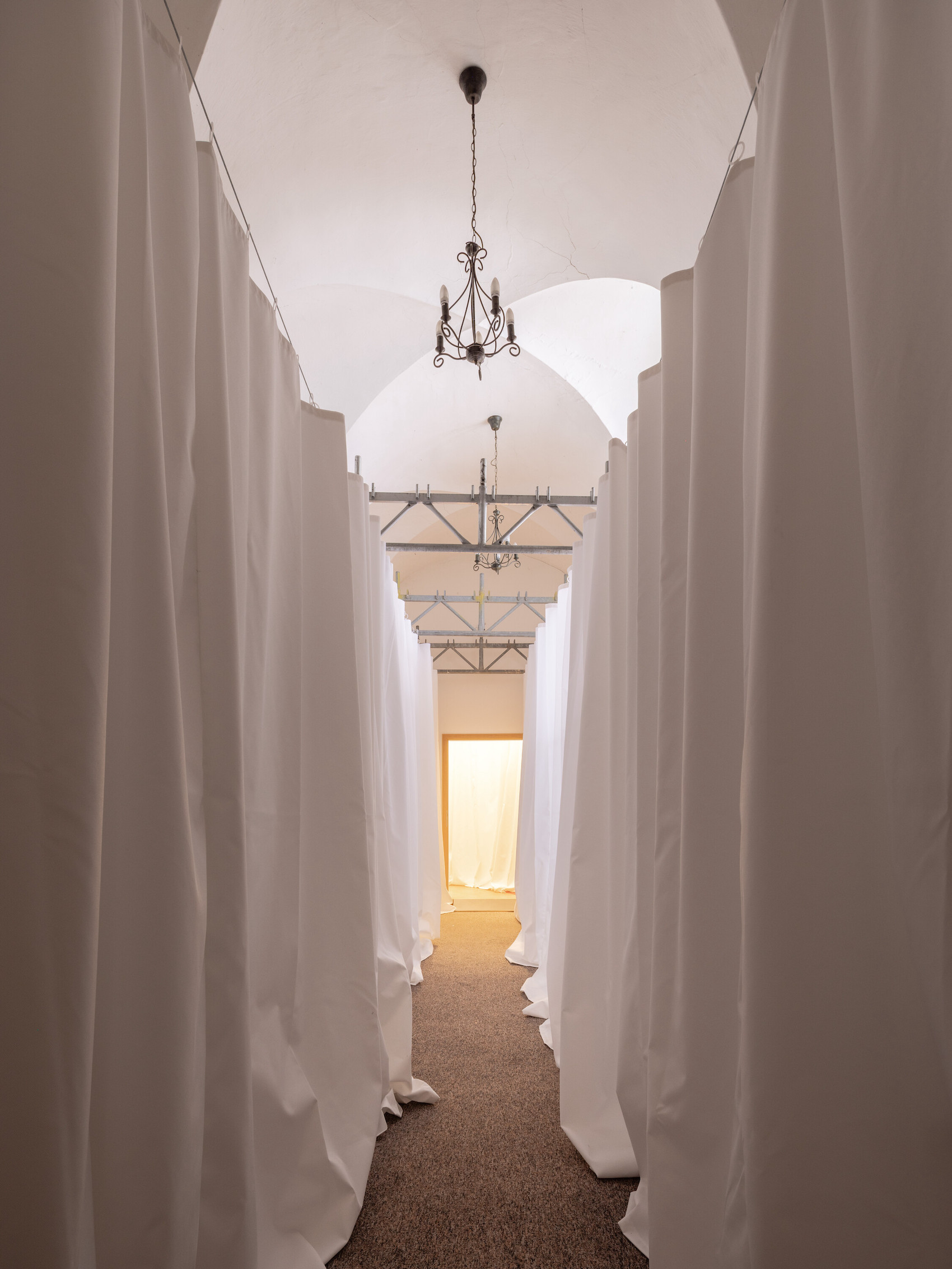

The design is deliberately inclusive. The square’s gravel surface has been levelled to provide step-free access for wheelchairs and buggies. Alcohol is not served, and the considered use of planting and ambient lighting softens the intervention, creating a safe accessible public space that removes both physical and social barriers.
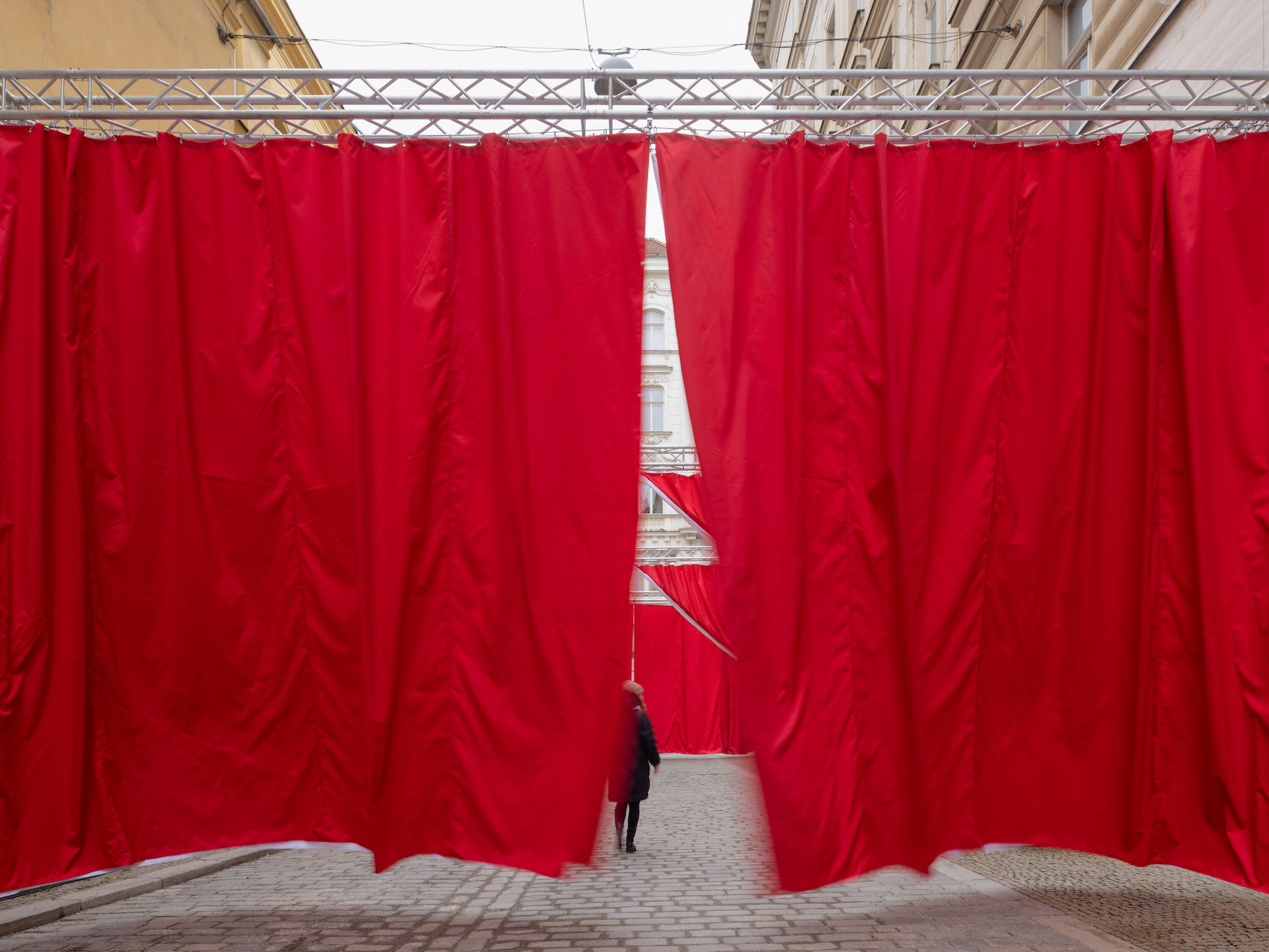
“We didn’t want the visitors to be mere spectators or passive consumers,” commented the architects from Peer Collective. “Everyone who enters the space becomes its active participant. Architecture here is not a backdrop but a framework for events that wouldn’t exist without human presence.”
Additional images