Dulux Trade’s Dawn Scott and Andrew Cleaver, in conversation with Architecture Today’s Technical Editor John Ramshaw, discusses how evidence-based colour strategies and high-performance paint systems can support wellbeing, inclusivity and long-term performance across healthcare projects.
In association with

Healthcare environments are among the most demanding building types architects are asked to deliver. In addition to satisfying complex technical and regulatory requirements, clinical spaces must support wellbeing, aid navigation, withstand intensive cleaning regimes, and create environments that feel calm and reassuring for patients, visitors and staff alike.
Colour and coating systems play a critical role in healthcare performance and experience, with well-chosen schemes not only helping to reduce anxiety, improve wayfinding and support accessibility, but also contributing to hygiene standards, reduced maintenance cycles, and long-term operational efficiency.
Dulux Trade’s Dawn Scott (Senior Colour Designer) Andrew Cleaver (National Sector Manager, Healthcare), in conversation with Architecture Today’s Technical Editor John Ramshaw, explores how colour and paint specification can help shape successful and resilient healthcare environments, drawing on guidance from the Dulux Trade Healthcare Sector Guide.
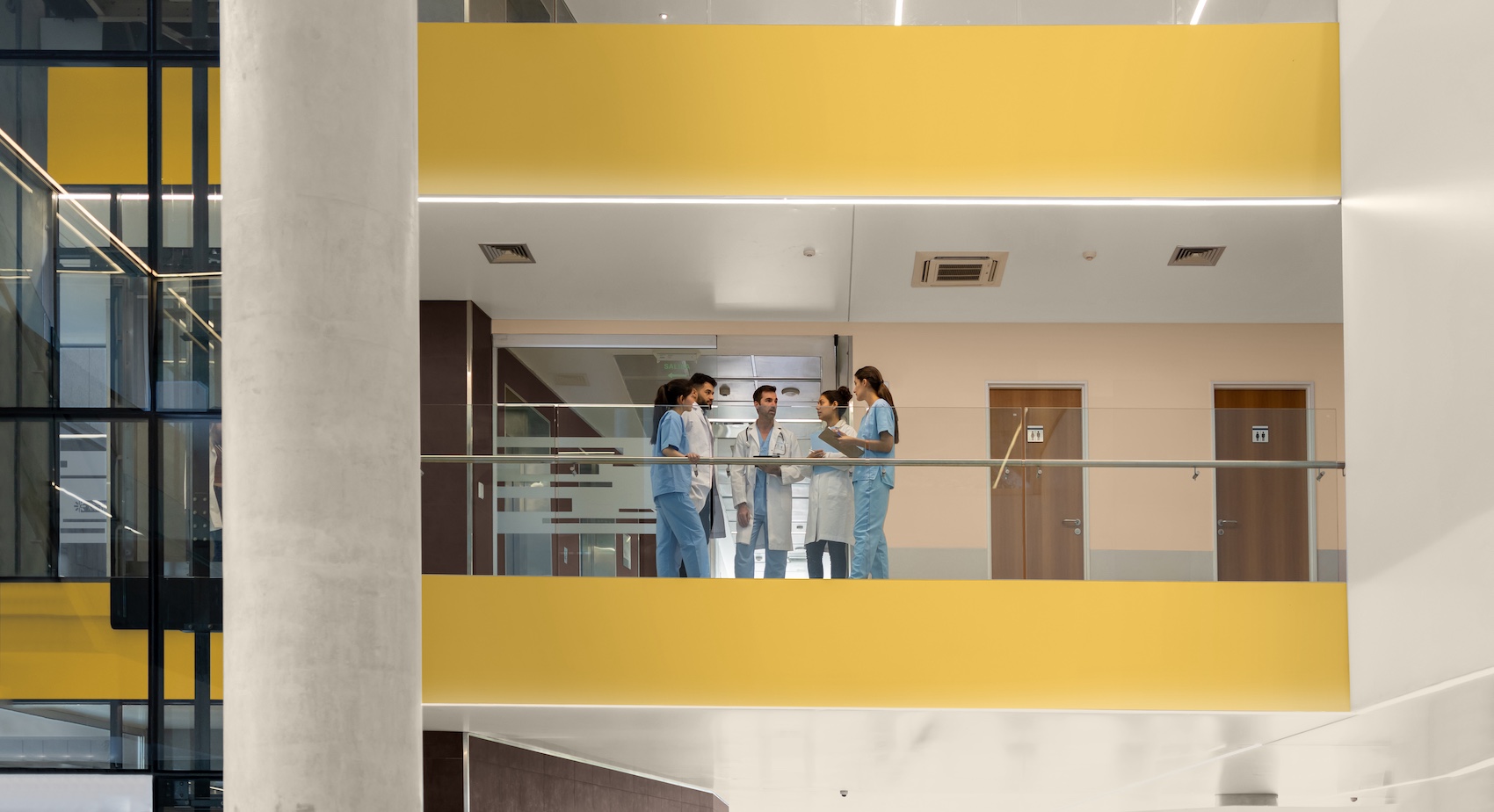
Healthcare projects place unique demands on architects and specifiers. How can colour and paint specification contribute to both patient wellbeing and building performance?
Dawn Scott Healthcare environments need to balance clinical performance with human experience. Colour can help create spaces that feel calmer, more welcoming and less intimidating, supporting patient wellbeing while also improving the experience of staff and visitors. Thoughtful colour schemes can aid wayfinding, define different functions and contribute to a greater sense of reassurance throughout a healthcare journey. From a specification perspective, durable, easy-to-clean coatings are essential in high-traffic environments where hygiene, maintenance and longevity are critical. The most successful healthcare projects combine technical performance with environments that support comfort, dignity and confidence.
What prompted the development of the Dulux Trade Healthcare Sector Guide, and how can architects and specifiers use it during the design process?
Dawn Scott The Healthcare Sector Guide was developed to help architects and specifiers navigate the complex requirements of modern healthcare environments. These projects demand solutions that support patient wellbeing, staff efficiency, infection control, accessibility and long-term asset performance. The guide brings together colour strategy, technical specification guidance, colour contrast principles and curated palettes suitable for different healthcare settings. It can be used throughout the design process, from early concept development through to detailed specification, helping project teams make informed decisions that balance operational requirements with the creation of supportive, inclusive environments.
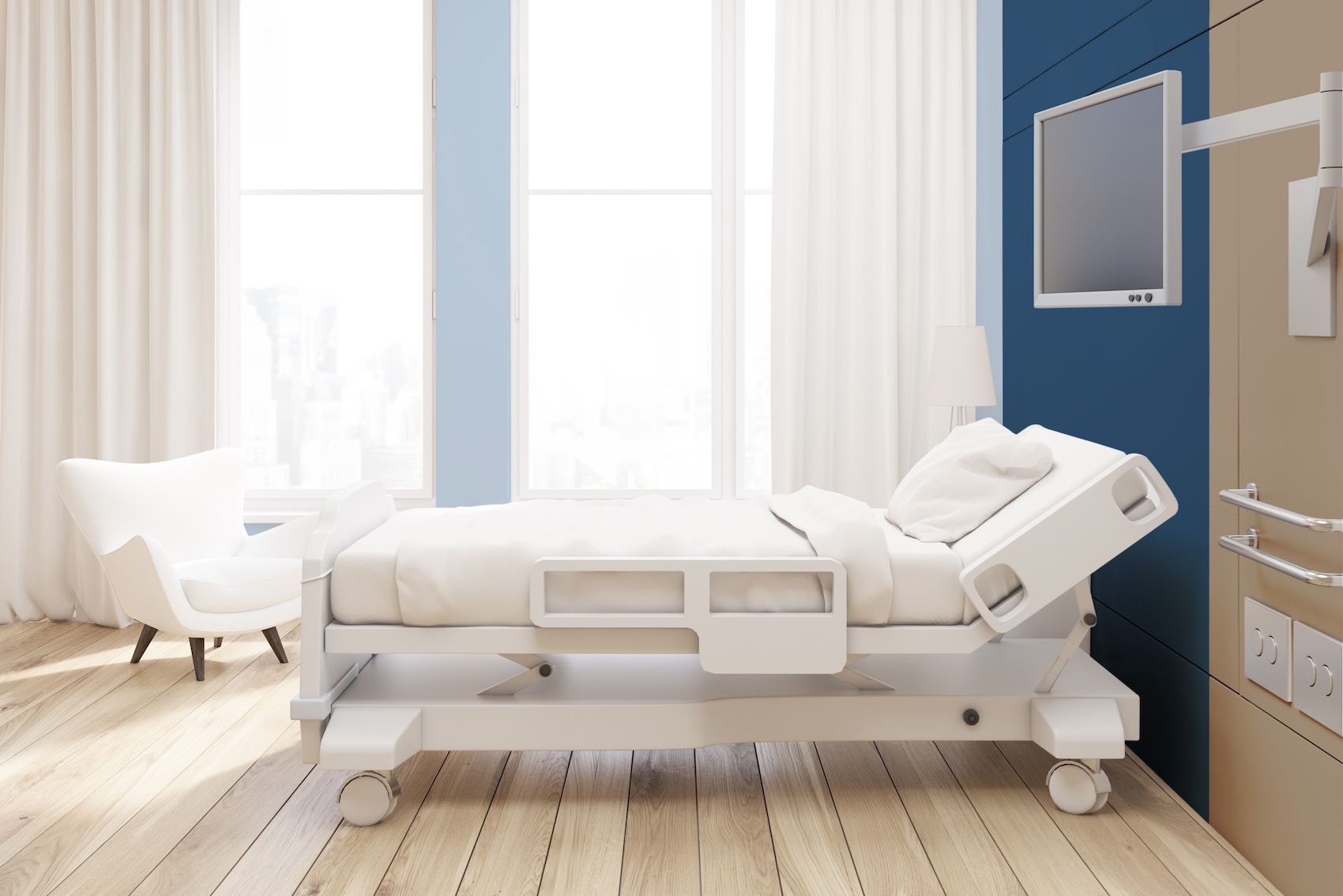
Healthcare buildings accommodate a wide range of users and functions. How should colour strategies differ across spaces such as reception areas, wards, consultation rooms and paediatric units?
Dawn Scott Different healthcare spaces serve different emotional and functional needs, so colour strategies should respond accordingly. Reception and waiting areas often benefit from welcoming, reassuring palettes that help reduce anxiety upon arrival. In wards and inpatient settings, calmer tones can support rest, recovery and comfort. Consultation rooms should feel professional yet approachable, helping foster trust and open communication. Paediatric environments may incorporate more uplifting colours and playful accents, while avoiding overstimulation. The key is to create appropriate levels of visual interest and contrast while maintaining consistency across the wider building, ensuring patients and visitors can navigate spaces with confidence.
How can colour and contrast be used to create more inclusive healthcare environments, particularly for patients with visual impairments, cognitive conditions or neurodivergent needs?
Dawn Scott Colour and contrast play an important role in making healthcare environments easier to understand and navigate. Clear visual distinction between walls, floors, doors and key features can help patients identify routes, entrances and destinations more confidently. For people with visual impairments, cognitive conditions or neurodivergent needs, environments that are visually legible and predictable can reduce stress and support independence. It is equally important to avoid unnecessary visual clutter or overly complex colour schemes. Inclusive healthcare design is about using colour purposefully to improve clarity, comfort and usability for the widest possible range of users.
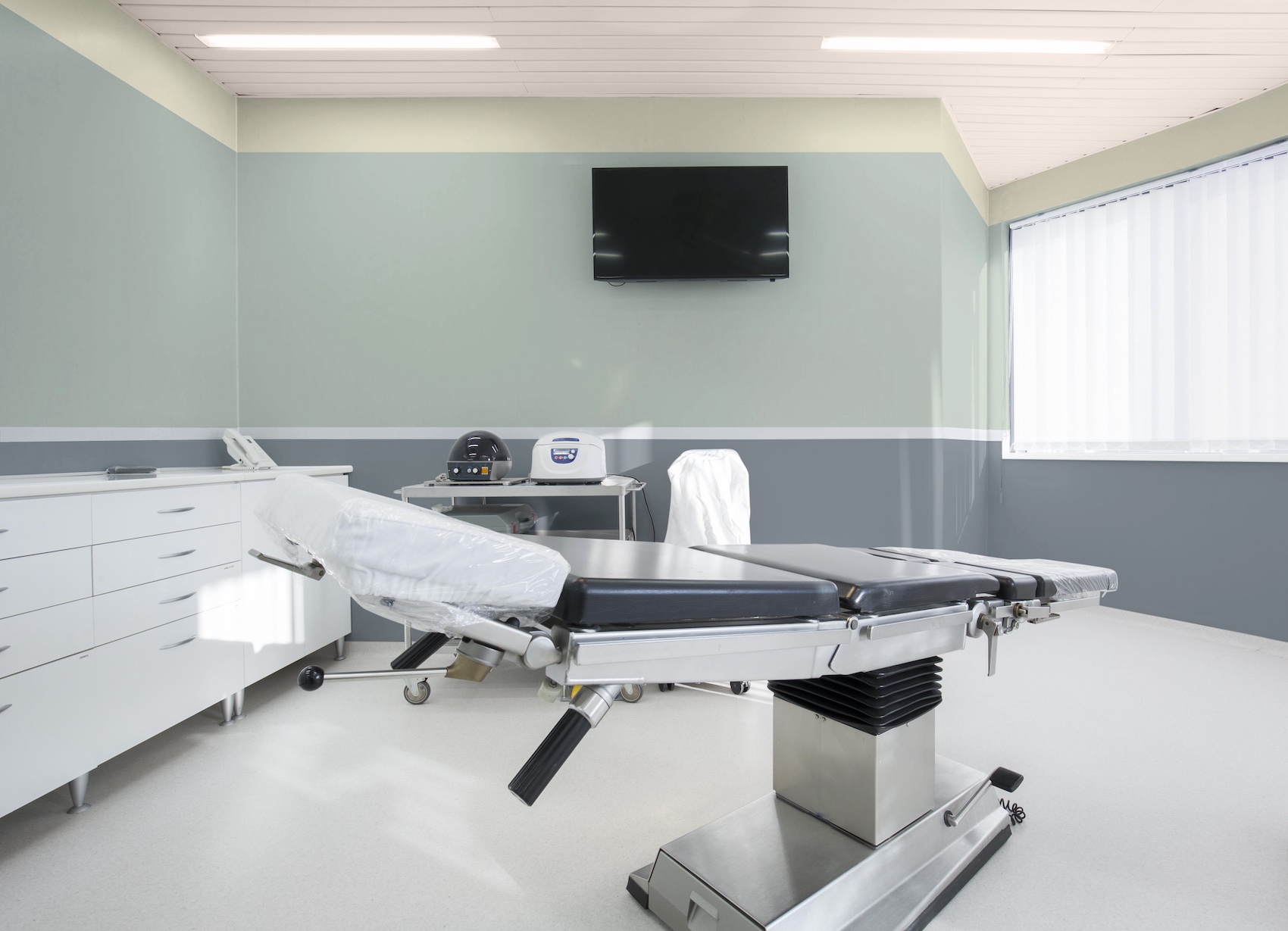
What role does Light Reflectance Value (LRV) play in supporting accessibility, safety and wayfinding in healthcare settings?
Dawn Scott Light Reflectance Value (LRV) provides an objective way of measuring colour contrast between adjacent surfaces. In healthcare environments, appropriate contrast helps patients, visitors and staff distinguish between important elements, such as walls, doors, handrails and floors. Guidance, such as Approved Document M and BS 8300, recommends a minimum 30-point LRV difference between critical surfaces to support accessibility. Effective use of LRV can improve wayfinding, reduce the risk of slips, trips and collisions, and help create environments that are easier to understand. It is a simple but powerful tool for delivering both compliance and better user experiences.
When developing paint specifications for healthcare buildings, what technical and operational factors should architects prioritise to ensure long-term performance?
Andrew Cleaver Healthcare environments place exceptional demands on interior finishes, so architects need to prioritise coatings that support infection control, durability and ease of maintenance. Antimicrobial performance is particularly important, with products such as Dulux Trade Sterishield Dual Active, Sterishield Diamond Matt and Sterishield Diamond Eggshell helping to support infection prevention strategies through resistance to microbial growth. Equally important is cleanability. Surfaces must be capable of withstanding frequent cleaning using strong disinfectants, including chlorine-based products, alcohol-based cleaners and hydrogen peroxide vapour, without compromising their appearance or performance. High scrub-resistance and long-term durability are therefore critical considerations in healthcare settings.

Healthcare spaces are subject to demanding cleaning regimes and strict compliance requirements. How can the right specification help extend maintenance cycles while supporting hygiene and infection control?
Andrew Cleaver A well-considered paint specification can significantly extend maintenance cycles while supporting hygiene and infection control objectives. Products such as Dulux Trade Scuffshield Matt, Diamond Matt, Diamond Eggshell, Diamond Satinwood and Quick Dry Gloss are designed to withstand intensive cleaning regimes without degradation, helping surfaces maintain their appearance and performance for longer. These durable finishes also help create smooth, hygienic surfaces that resist contamination, while reducing damage from everyday operational use. As a result, maintenance can be carried out more efficiently and with minimal disruption to healthcare services. Ultimately, the right specification transforms paint from a decorative finish into a long-term performance system, supporting infection control, lowering lifecycle costs and improving operational resilience.
How do standards such as HBN 00-10 influence paint and coating specification within NHS and healthcare projects?
Andrew Cleaver HBN 00-10 has a significant influence on paint and coating specification because it requires finishes to be hygienic, cleanable, durable and appropriate to the clinical risk associated with different healthcare environments. Products such as Dulux Trade Sterishield Dual Active, Sterishield Diamond Matt, Sterishield Diamond Eggshell, Scuffshield Matt, Diamond Matt, Diamond Eggshell, Diamond Satinwood and Quick Dry Gloss have been developed to meet the demands of these environments by providing durable, easily maintained surfaces that support infection control and withstand intensive cleaning regimes. HBN 00-10 also encourages a whole-life performance approach, ensuring that specifications consider long-term maintenance, operational efficiency and patient safety rather than simply focusing on initial cost. In practice, this means paint becomes a critical building component rather than a decorative afterthought.

Sustainability and indoor environmental quality are increasingly important in healthcare design. How are paint technologies evolving to support lower VOCs, operational efficiency and broader environmental targets?
Andrew Cleaver Paint technologies are evolving in step with healthcare’s growing emphasis on sustainability, indoor environmental quality and operational efficiency. Increasingly, specification is moving beyond traditional decorative finishes towards high-performance, low-impact systems that support both building performance and occupant wellbeing. Products such as Dulux Trade Sterishield Dual Active, Sterishield Diamond Matt, Sterishield Diamond Eggshell, Scuffshield Matt, Diamond Matt, Diamond Eggshell, Diamond Satinwood and Quick Dry Gloss form part of this approach, combining durability and long maintenance cycles with low-VOC, water-based formulations. These coatings help improve indoor air quality, which is particularly important for vulnerable patients, while enabling redecoration with minimal disruption in occupied healthcare environments. They can also contribute towards sustainability objectives and support compliance with assessment frameworks such as BREEAM, WELL and LEED, helping healthcare providers balance environmental performance with operational resilience.
How does Dulux Trade support architects working on healthcare projects, from early-stage colour strategy through to technical specification and delivery, and what key advice would you offer specifiers?
Dawn Scott Dulux Trade supports healthcare projects through a combination of colour expertise, technical specification guidance, digital tools and on-site product knowledge. We work with architects and specifiers from the earliest design stages, helping develop colour strategies that support wellbeing, accessibility and operational requirements. This is complemented by guidance on colour contrast, LRV compliance, product performance and long-term maintenance considerations. Our advice to specifiers would be to think beyond compliance alone. The most successful healthcare environments consider not only how a space performs technically, but also how it feels for the patients, visitors and staff who use it every day.
Contact Details
Click here to download the Dulux Trade Healthcare Sector Guide.
Click here to access the Dulux Trade Paint Specification Hub.
For more information about specifying colour and paint on healthcare projects, please call 0333 222 70 70, email or visit the Dulux Trade website.