David Coldham, Technical Director at IKO, discusses how the company’s Information & Resource Hub provides architects with the technical advice, tools and support needed to develop coordinated, compliant and buildable roofing specifications.
In association with
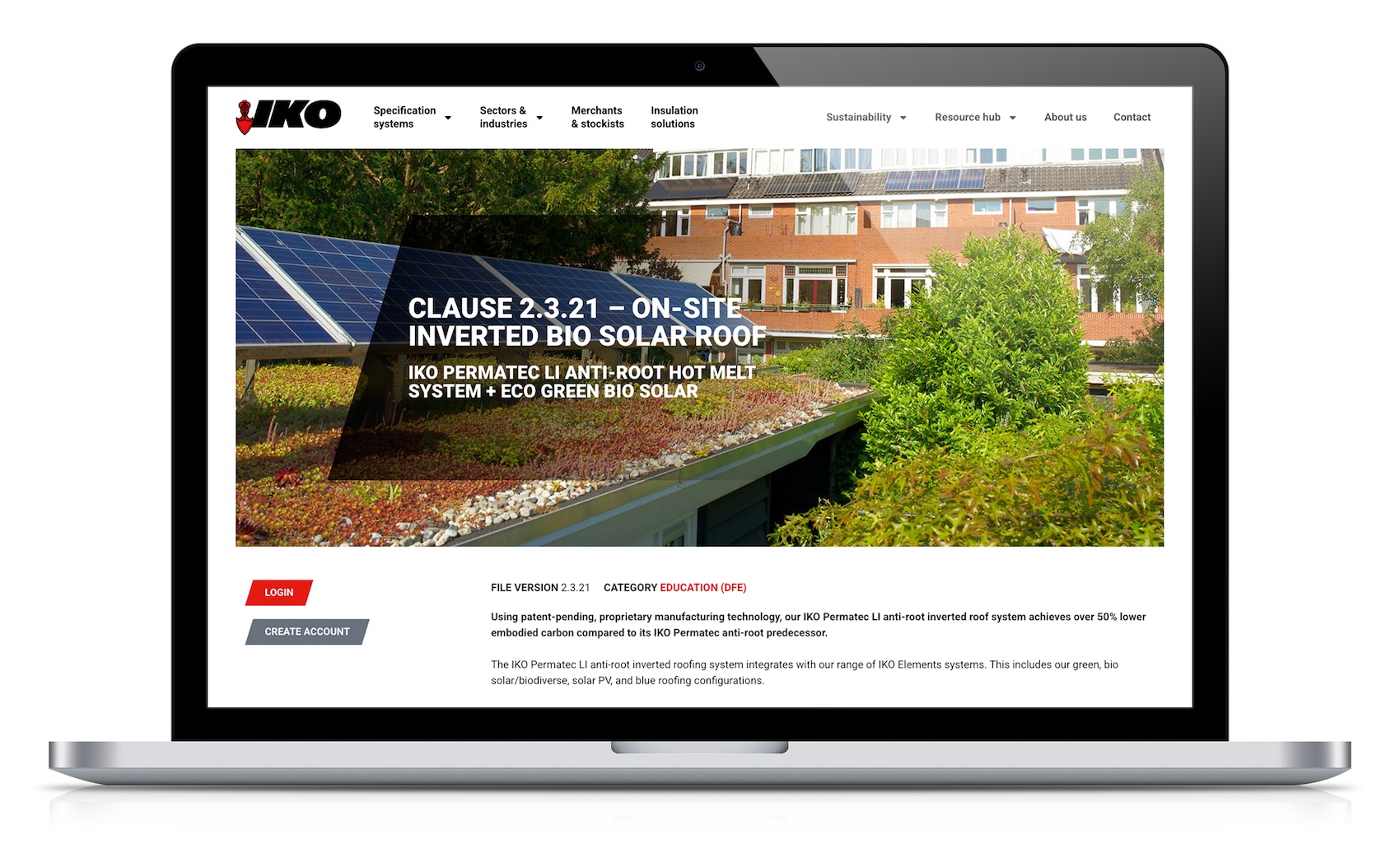
Access to clear, reliable technical information is becoming increasingly critical in the specification of roofing and waterproofing systems as product and project complexity increase, and regulatory requirements become ever more stringent. For architects, this means navigating an expanding array of data, from performance criteria and certifications to detail drawings and system build-ups, while ensuring that roof designs remain coordinated, compliant and buildable.
IKO’s Information & Resource Hub has been developed to support this process, bringing together a wide range of assets in a single, accessible platform. David Coldham, Technical Director at IKO, in conversation with Architecture Today’s Technical Editor John Ramshaw, explains how the hub is evolving to meet the needs of design teams and how it can help improve coordination, reduce risk and support more robust roofing specifications.
How is IKO structuring its Information & Resource Hub to better support architects in delivering compliant, buildable specifications?
IKO’s Information & Resource Hub is designed to give architects and specifiers a more direct route to the technical information they need when developing roofing and waterproofing specifications. It brings together literature, standard details, specifications, certifications, CPD information, calculation tools, case studies, sample requests and technical support in one place.
The aim is to support better-informed decision-making, not simply provide downloads. Alongside the main hub, IKO has introduced a Construction Framework Compliance Portal, which currently includes a dedicated DfE CF25 section, with further development planned for CWAS and NHP. This gives project teams a clearer route to information aligned with specific procurement and compliance requirements.
What technical resources are available through the hub, and how should architects be using them to inform early-stage design and specification decisions?
The hub includes technical data sheets, standard details, specifications, certifications, declarations of performance, brochures, guides and calculation tools. At early design stage, these resources help architects test whether a proposed roof build-up is technically viable, compliant and coordinated with the wider design intent. For example, tools such as the IKO U-value calculator can support early assessment of thermal performance and insulation thickness, while technical data sheets and standard details help architects understand practical implications around system selection, interfaces and buildability.
How has the platform evolved to reflect the way architects now work across procurement, compliance and specification workflows?
The platform has moved beyond a conventional document library. Design teams increasingly need information that is structured around project workflows, procurement routes and compliance requirements. IKO’s Construction Framework Compliance Portal reflects that shift. The current focus on DfE CF25 is a good example of how technical information can be organised around a specific framework rather than leaving architects to piece together requirements manually. As the portal develops to include CWAS and NHP, it should provide a more efficient route from framework requirement to suitable technical guidance and system information.
From a technical risk perspective, how should architects be using standard details and drawings to improve coordination and reduce design-stage ambiguity?
Standard details and technical drawings are most valuable when they are used early, not treated as late-stage supporting information. They give architects a consistent technical basis for developing junctions, understanding build-up options, and coordinating interfaces with the wider design team.
On roofing and waterproofing packages, risk often appears at junctions, penetrations, upstands, sequencing and changes in level. Using IKO standard details as a reference point helps reduce ambiguity before assumptions become embedded in the design. They also support more informed discussion with engineers, contractors and specialist installers.
How does the platform support architects in evidencing compliance, particularly around performance criteria, certification and test data?
The platform brings together the key evidence architects and specifiers typically need to support a compliant specification, including technical data sheets, certifications, declarations of performance and standard details. The Construction Framework Compliance Portal adds further value by organising information around framework-specific requirements. The DfE CF25 area, for example, brings together guidance, practical detail and roofing systems aligned to the relevant CF25 Technical Standards for roofs. That helps architects locate supporting information more efficiently and present a clearer technical rationale for specification decisions.

IKO personnel inspecting the roof at Preston College.
Where do you see the platform adding most value in driving robust, consistent specification, particularly on complex or framework-led projects?
The greatest value is consistency. On complex projects, specification quality depends on everyone working from the same technical baseline. The hub supports this by bringing together system literature, details, certifications, guidance documents and routes into technical support.
For framework-led projects, the portal adds another layer by aligning information with defined technical and procurement expectations. That can help reduce interpretation gaps, support more consistent specification across project teams and improve confidence that the selected approach is technically appropriate.
How is the platform structured to help architects quickly navigate to the information they actually need at different stages of a project?
The wider platform is organised around clear resource categories, including technical data sheets, certifications, specifications and standard details, brochures and guides, calculation tools, CPDs, samples and case studies. That structure supports different stages of the design process. Early-stage users may need product guidance, performance information and calculation tools. Later-stage teams may need standard details, certifications, declarations of performance and more specific technical documentation. The Construction Framework Compliance Portal provides a more targeted route for users working within formal framework environments.
Which tools or features within the platform are most effective in streamlining specification workflows or integrating with wider project processes?
The most useful features are those that reduce the amount of manual searching and cross-checking required during specification. Calculation tools, downloadable technical literature, standard details, CPD access and direct routes into technical support all help streamline the process. The Construction Framework Compliance Portal is particularly useful because it connects framework requirements with relevant technical guidance and system information. For architects working on DfE CF25 projects, that provides a more efficient route from compliance requirement to specification support.
Beyond digital resources, how do CPDs, samples and technical support contribute to better-informed specification decisions?
Digital information is important, but specification decisions are often strengthened by practical discussion and tangible evidence. CPDs help architects understand roof types, regulations, specification considerations and best practice in a structured way.
Samples can support visual review, stakeholder engagement and material selection. Technical support then helps project teams interpret the guidance in relation to a specific project. Together, these services make the hub more than a document library. They connect information with practical decision-making.
Looking ahead, how do you expect platforms like this to evolve, and what should architects expect in terms of future technical and compliance support?
Digital resource platforms are likely to become more searchable, more connected and more context led. Architects do not just need more documents, they need better-structured information that reflects how projects are procured, designed and delivered.
IKO’s move towards a Construction Framework Compliance Portal, beginning with DfE CF25 and with further development planned for CWAS and NHP, reflects that direction. Over time, architects should expect clearer framework-specific guidance, easier access to compliance evidence and a closer link between digital resources, technical advice and project delivery requirements.
Contact Details
Click here to visit the Information & Resource Hub. For further information, please call 01257 255771, email, or visit the IKO website.