U-Build has launched the Box Library, a pioneering initiative based at BLOQS in northeast London, that enables modular timber components to be borrowed, reused and returned for temporary construction.
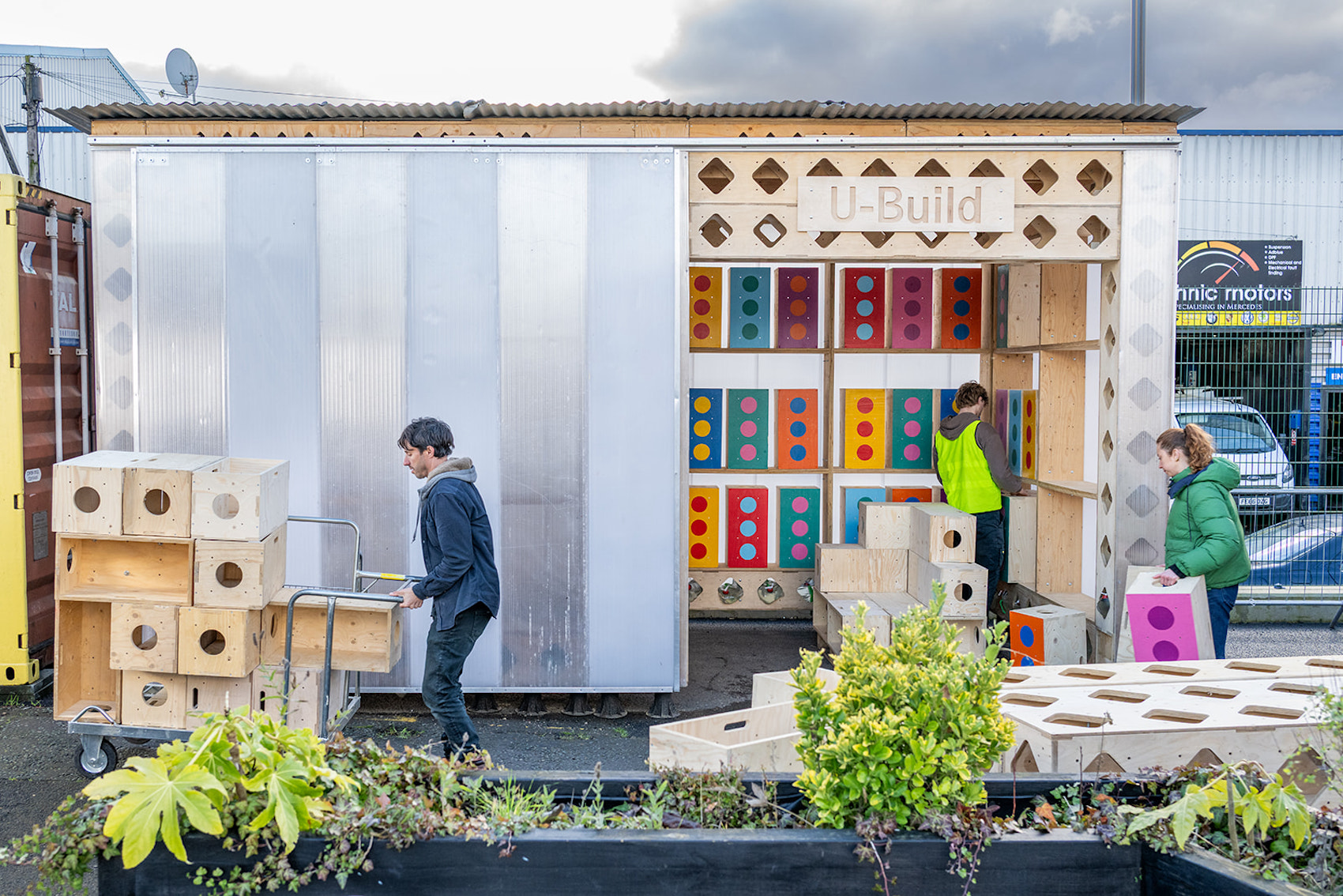
U-Build, the modular timber building system developed by Studio Bark, has launched the Box Library at BLOQS in northeast London. Establishing a circular framework for temporary construction, the initiative allows users to borrow flat-pack timber components for short-term projects and return them for future use, reducing material waste and lowering the carbon impact of temporary architecture.
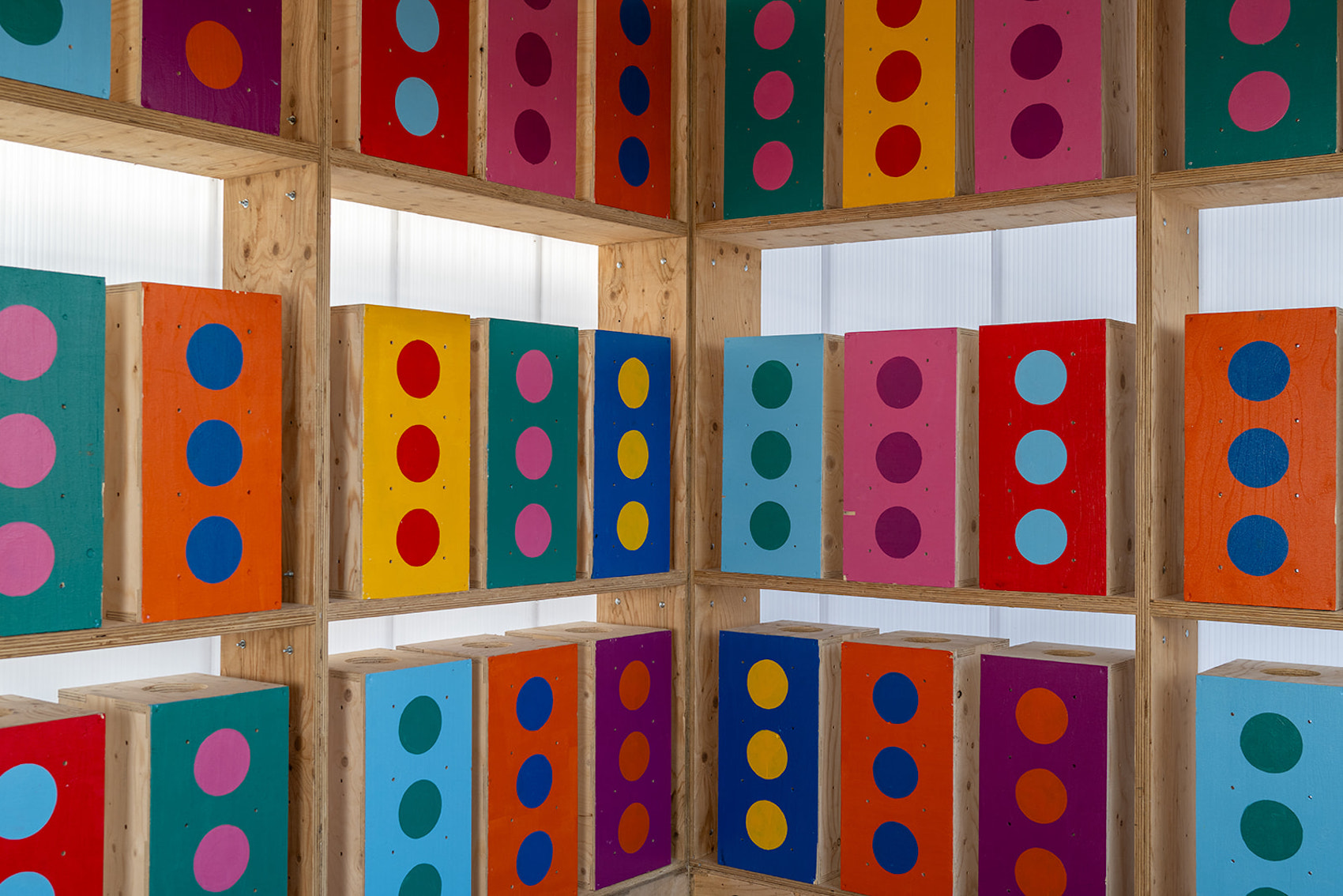
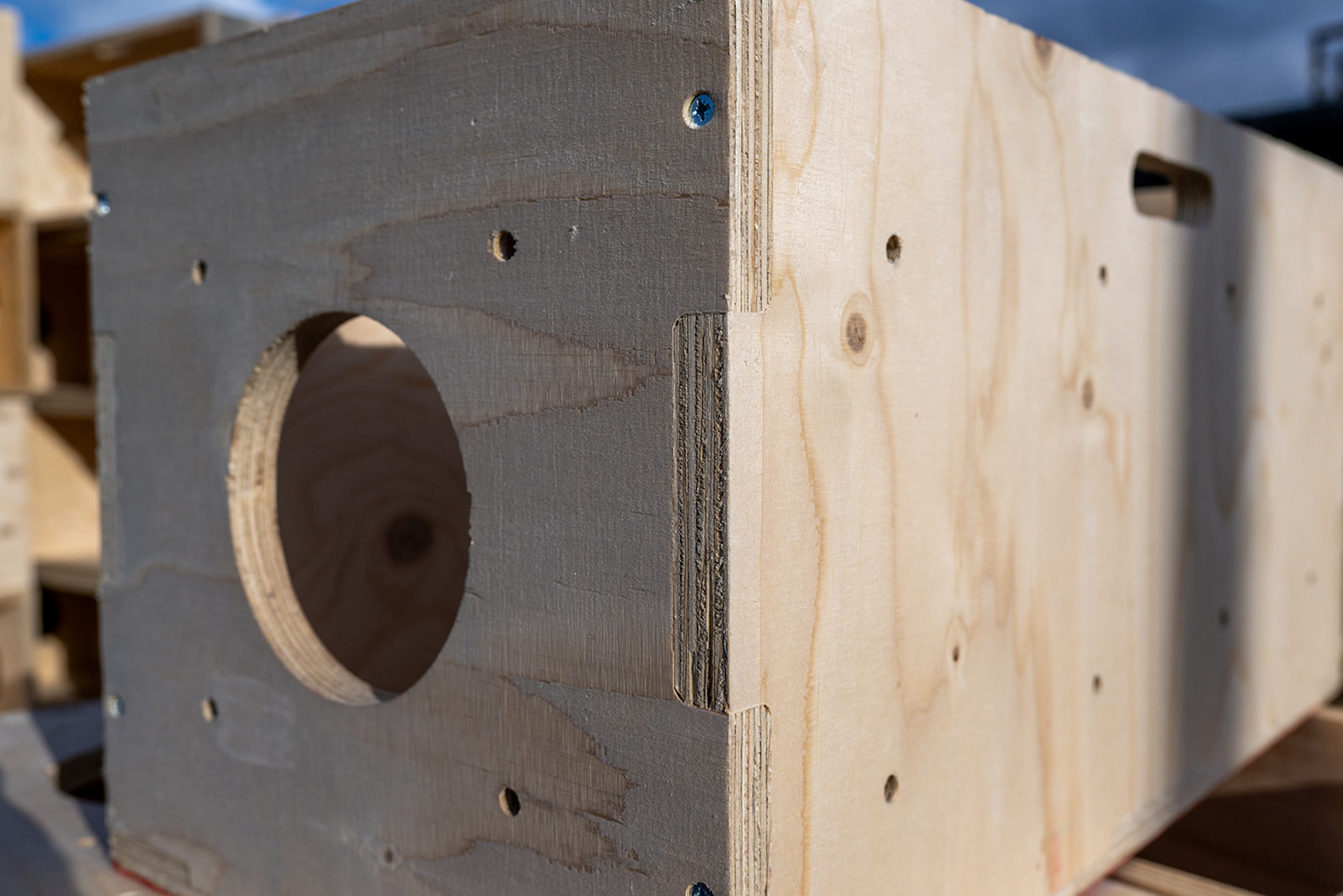
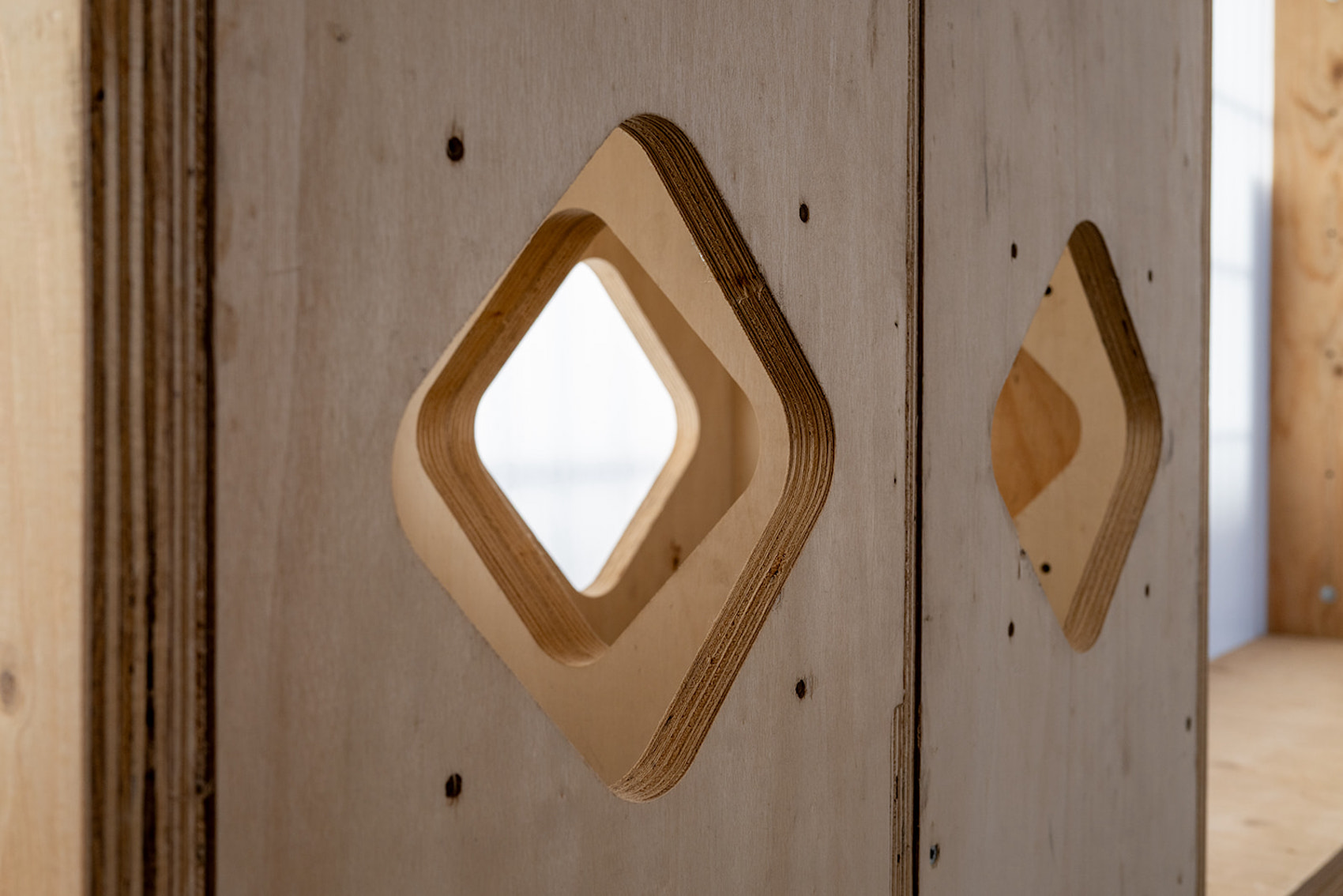
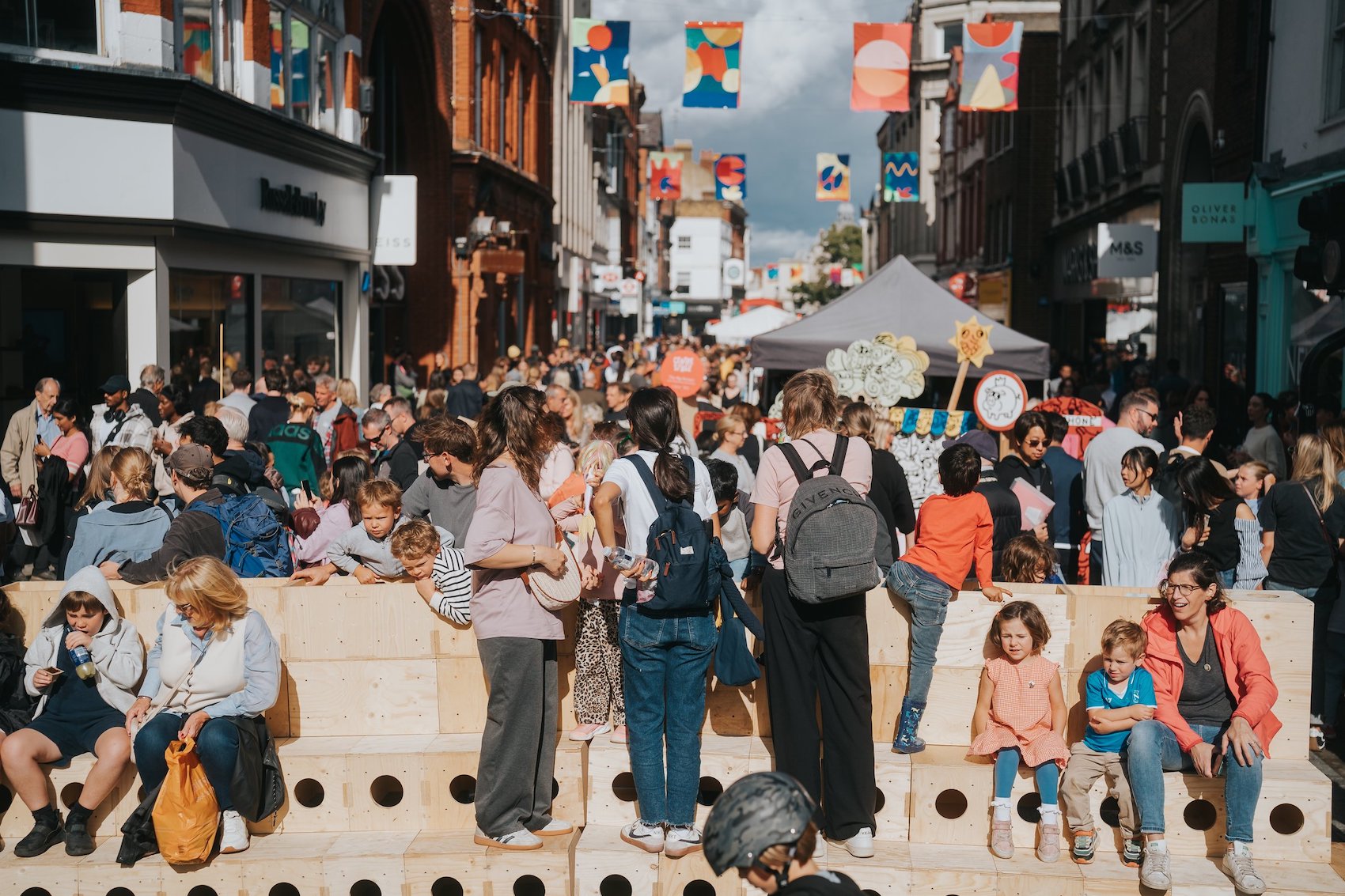
Founded as a not-for-profit in 2019, U-Build has developed a system of interlocking plywood boxes that can be assembled using simple hand tools into a wide range of structures, from small-scale furniture and installations to larger buildings and pavilions. The Box Library formalises an emerging pattern of reuse within the system, providing a physical hub where components are stored, catalogued and redistributed.
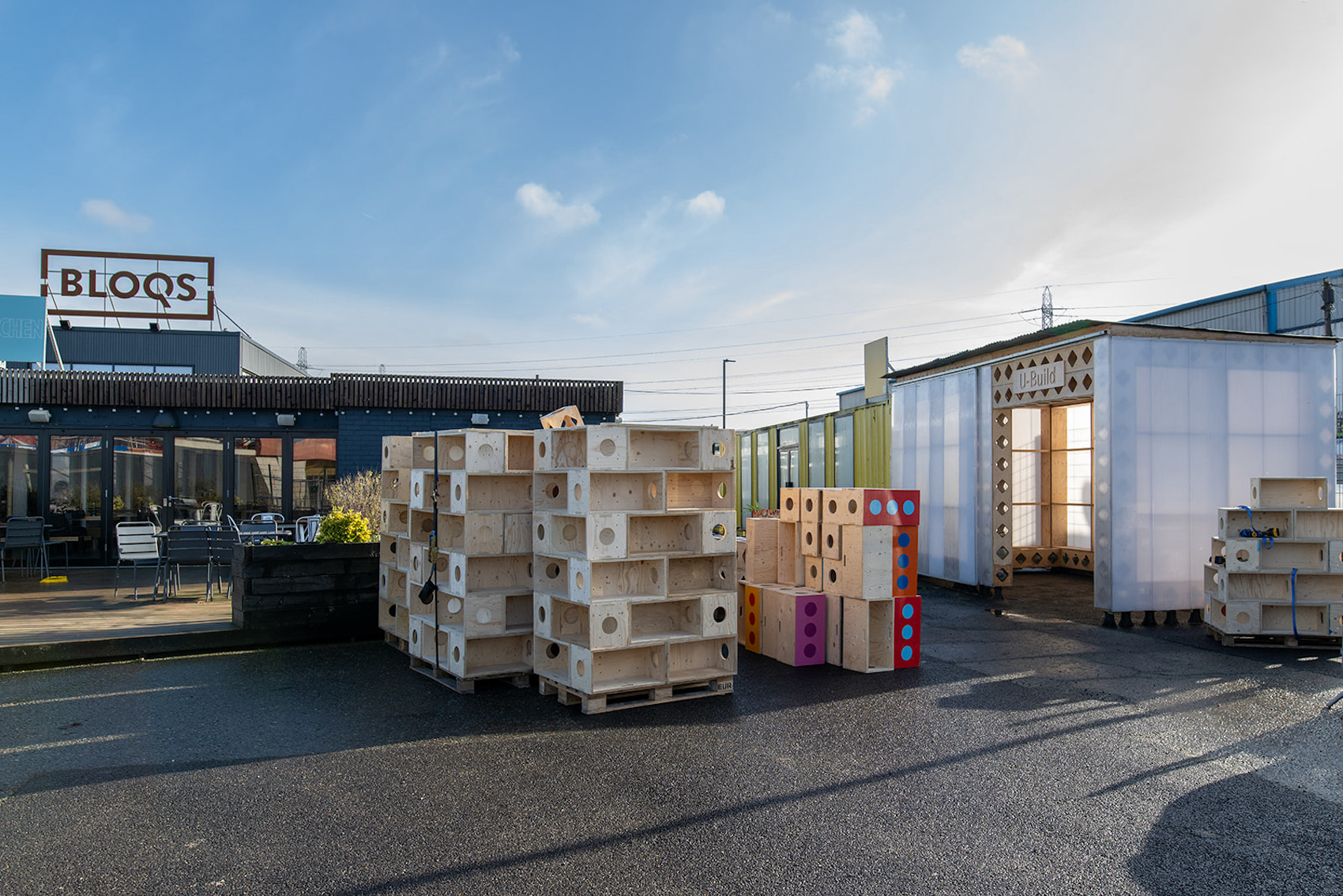
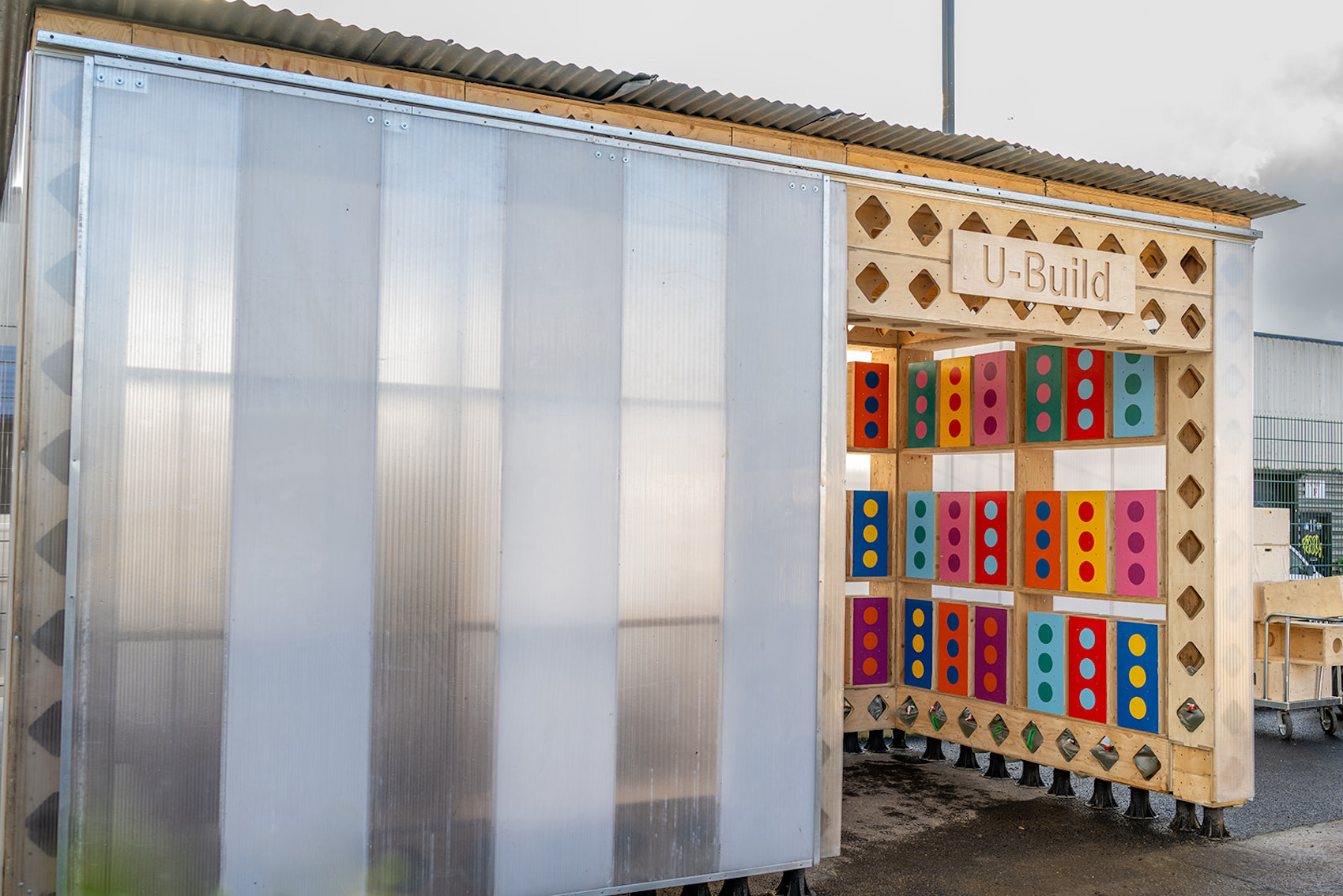
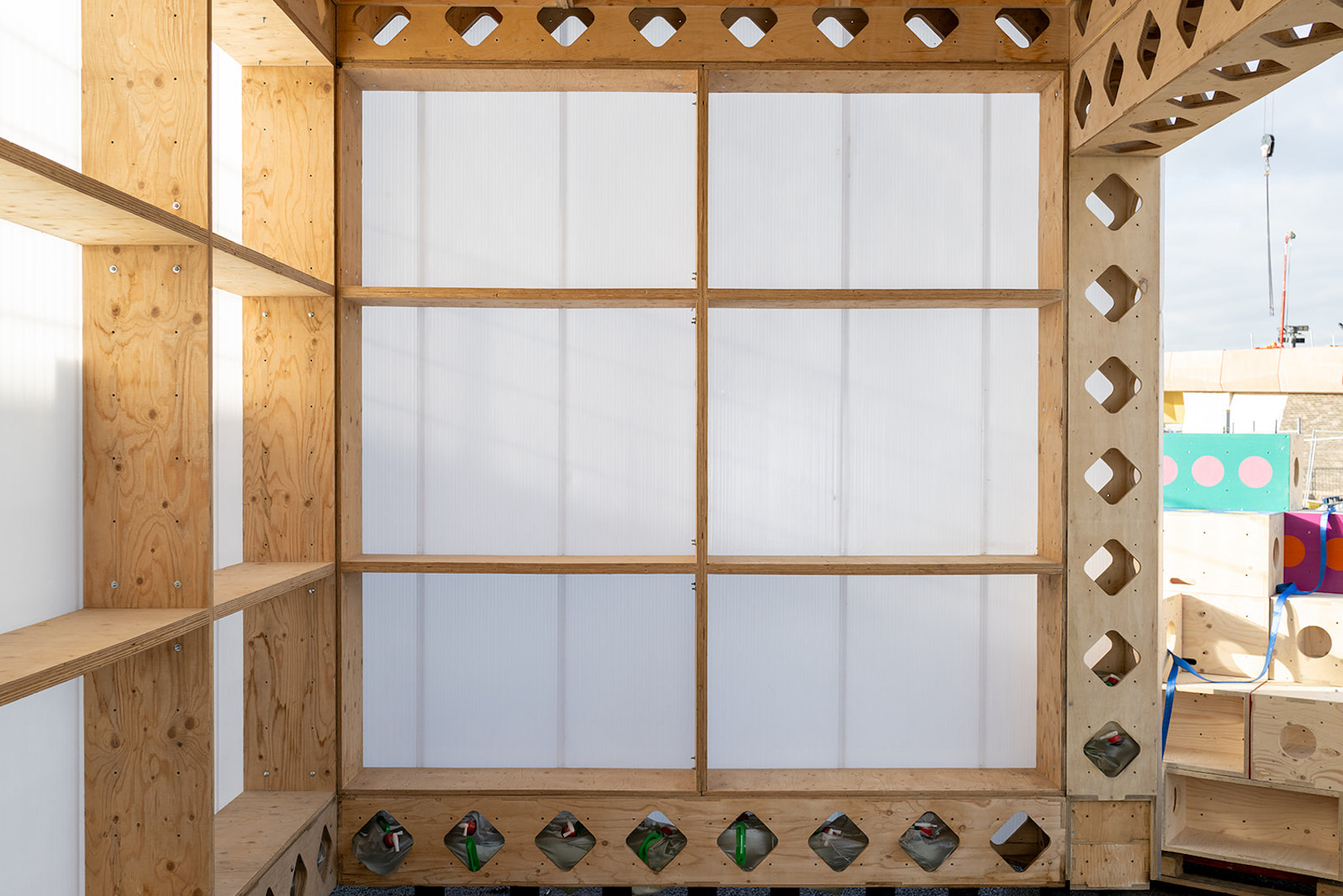
The library is housed within a compact, demountable structure that acts both as storage and as a prototype for the system itself. Constructed from CNC-cut plywood framing and modular cassettes, the building is clad in recycled polycarbonate panels that allow light to filter through. A corrugated metal roof and raised pedestal foundation protect the timber structure from moisture, reinforcing the system’s emphasis on durability and reusability.
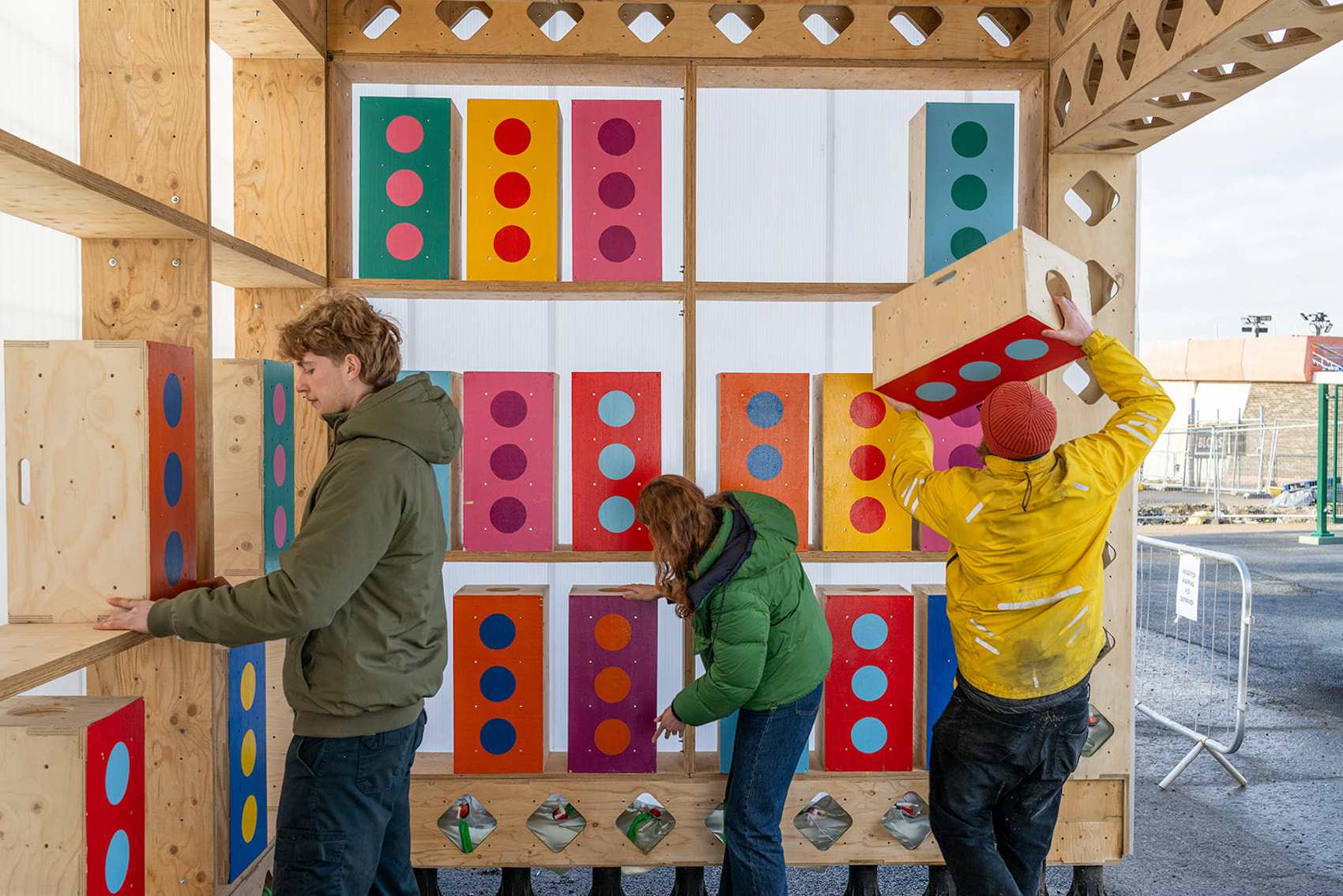
Operating on a ‘pay-what-you-can’ basis, the Box Library is designed to broaden access to construction, supporting community groups, educational initiatives and creative projects that may otherwise be excluded from architectural processes. Larger commercial users are encouraged to contribute financially, helping to sustain and expand the system.
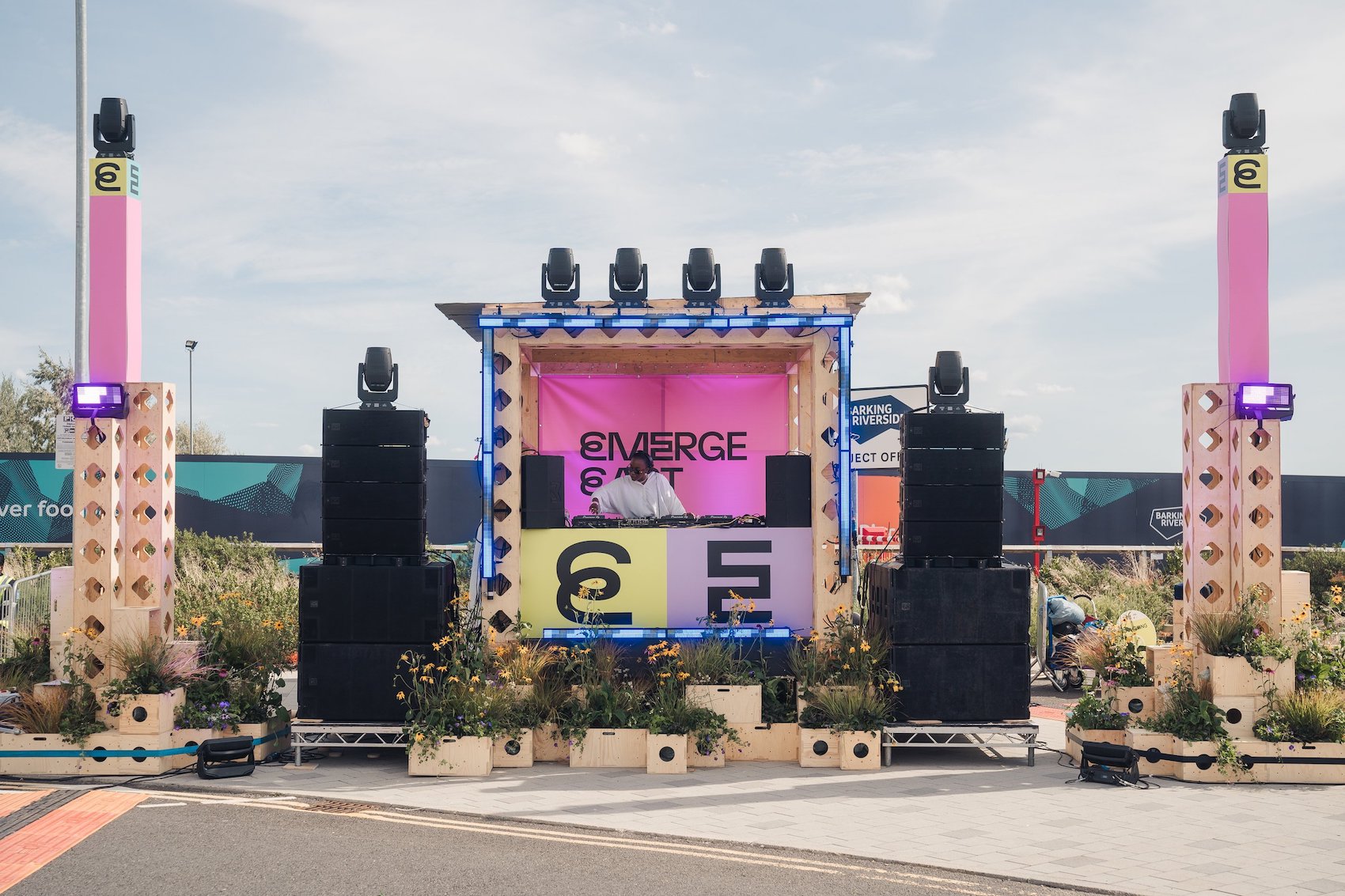
The initiative builds on previous uses of U-Build components in temporary structures, including a touring pavilion for Boundless Theatre, which was returned to the system in 2023 and helped establish the initial inventory. Since its informal inception, the library has supported dozens of projects, ranging from festival stages and exhibition installations to workshops and small-scale community spaces.
Environmental performance is a key part of the model. By enabling repeated reuse of components, the system reduces reliance on virgin materials and minimises waste associated with temporary construction. Over approximately 4,000 individual deployments, the system is estimated to have saved 13.5 tonnes of CO₂, with projected savings expected to increase significantly as the network grows.
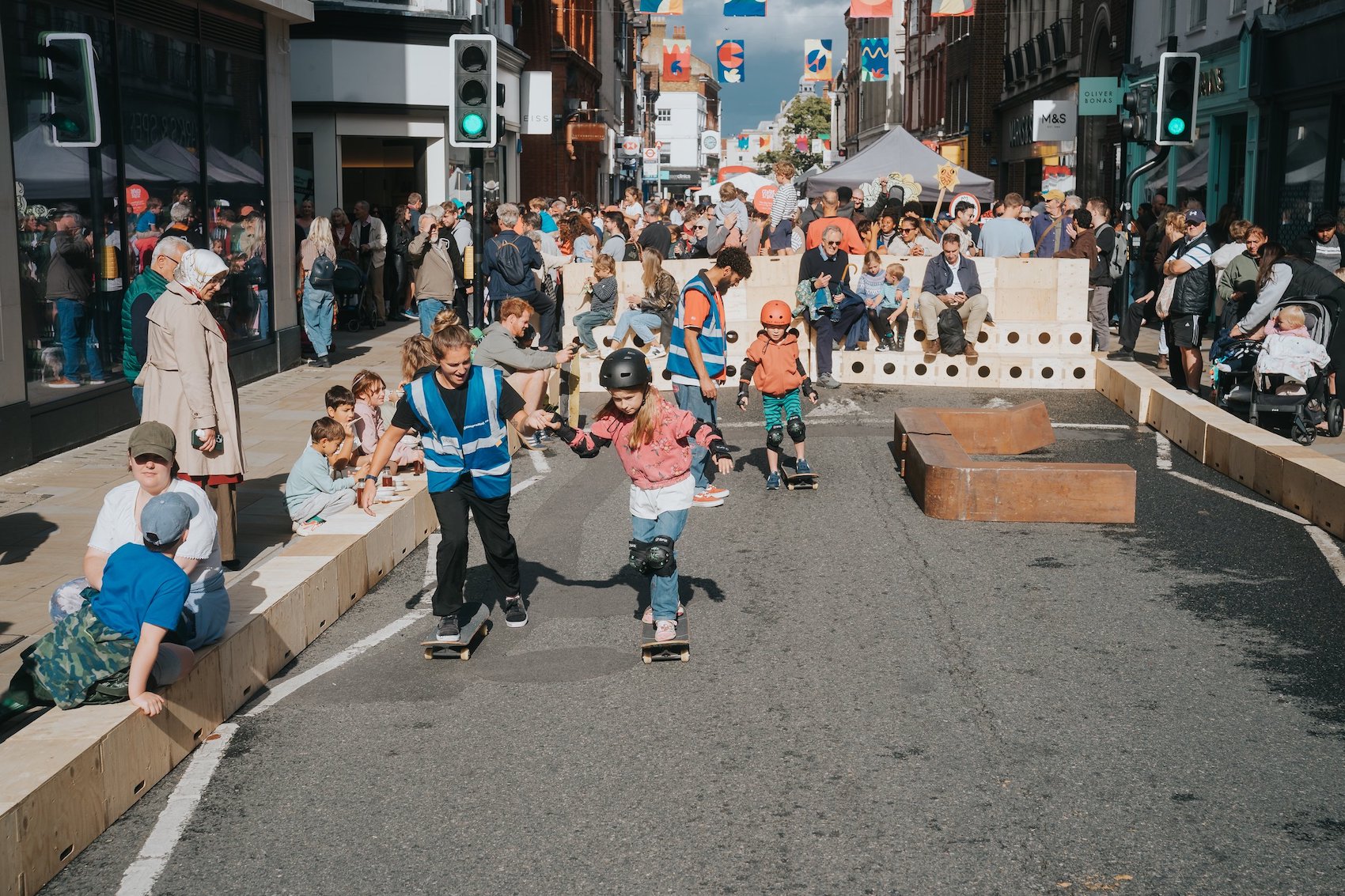
The construction system also acts as a form of carbon storage. While the manufacturing process generates embodied emissions, the timber structure sequesters carbon, resulting in a net-positive balance at the point of construction. This approach reframes temporary architecture as part of a regenerative material cycle rather than a source of environmental impact.
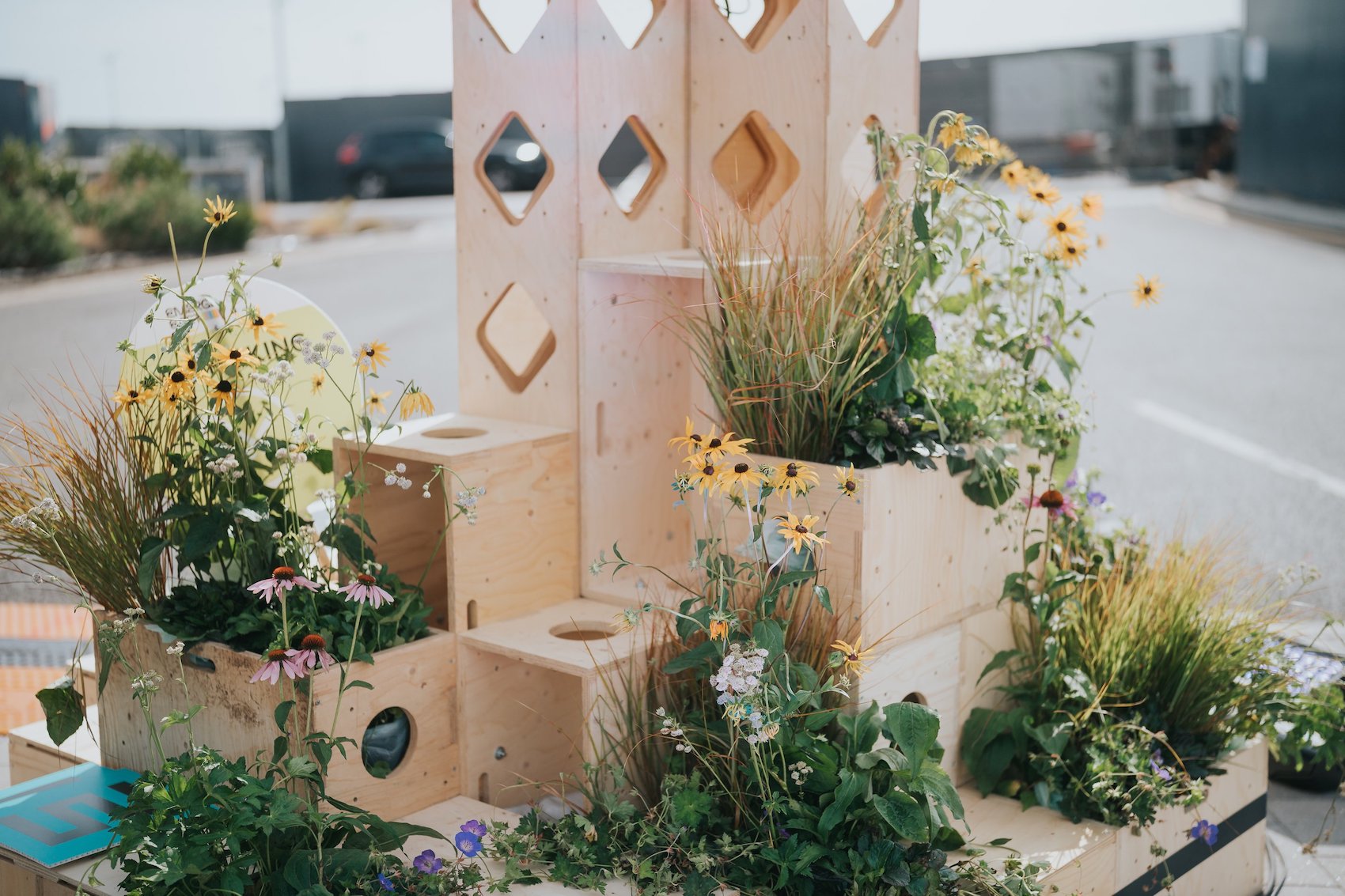
The simplicity of the system, which is based on modular timber boxes assembled with basic tools, enables users without prior construction experience to participate directly in building processes. This has supported a range of hands-on workshops and community-led projects, reinforcing U-Build’s broader aim of democratising access to architecture.
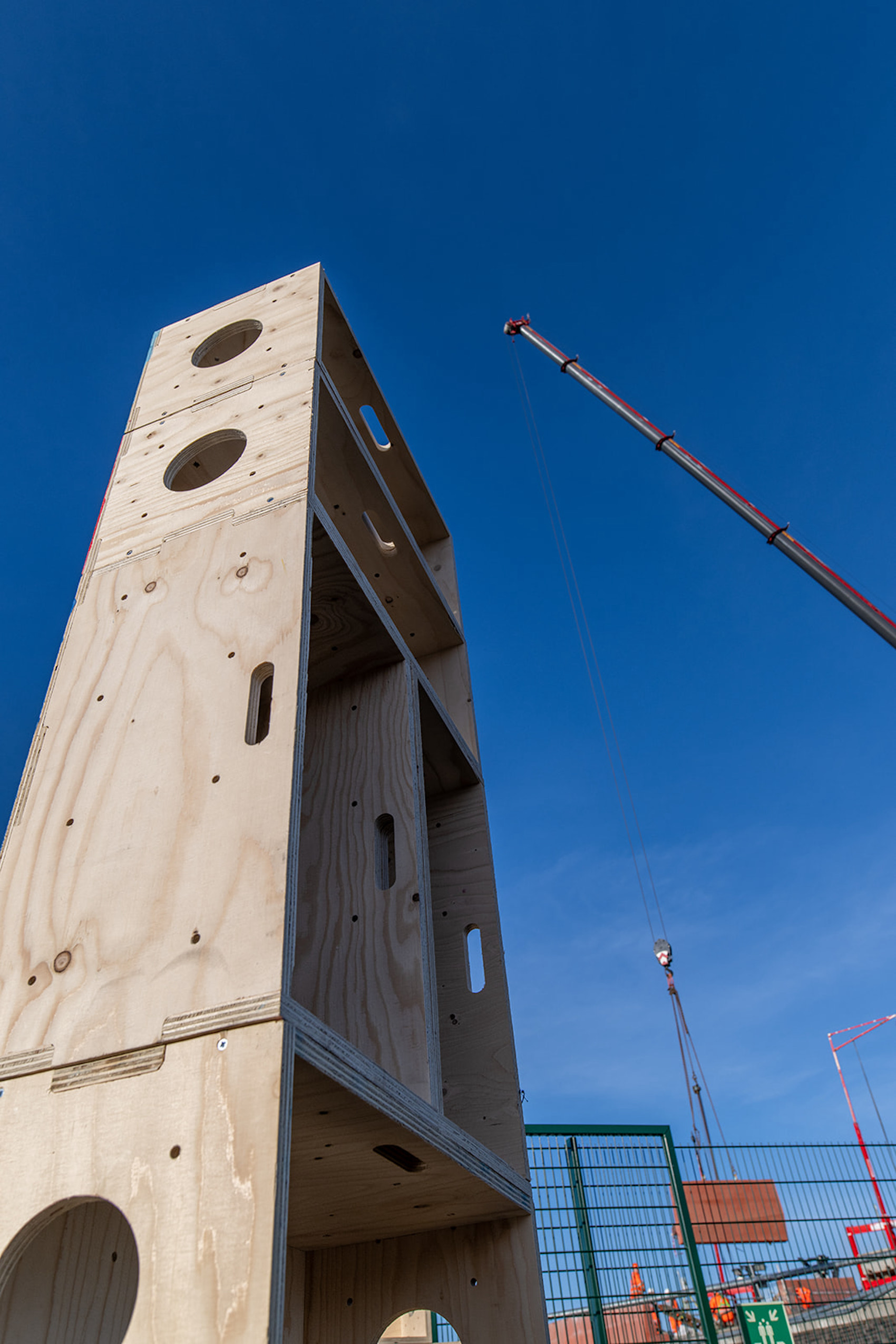
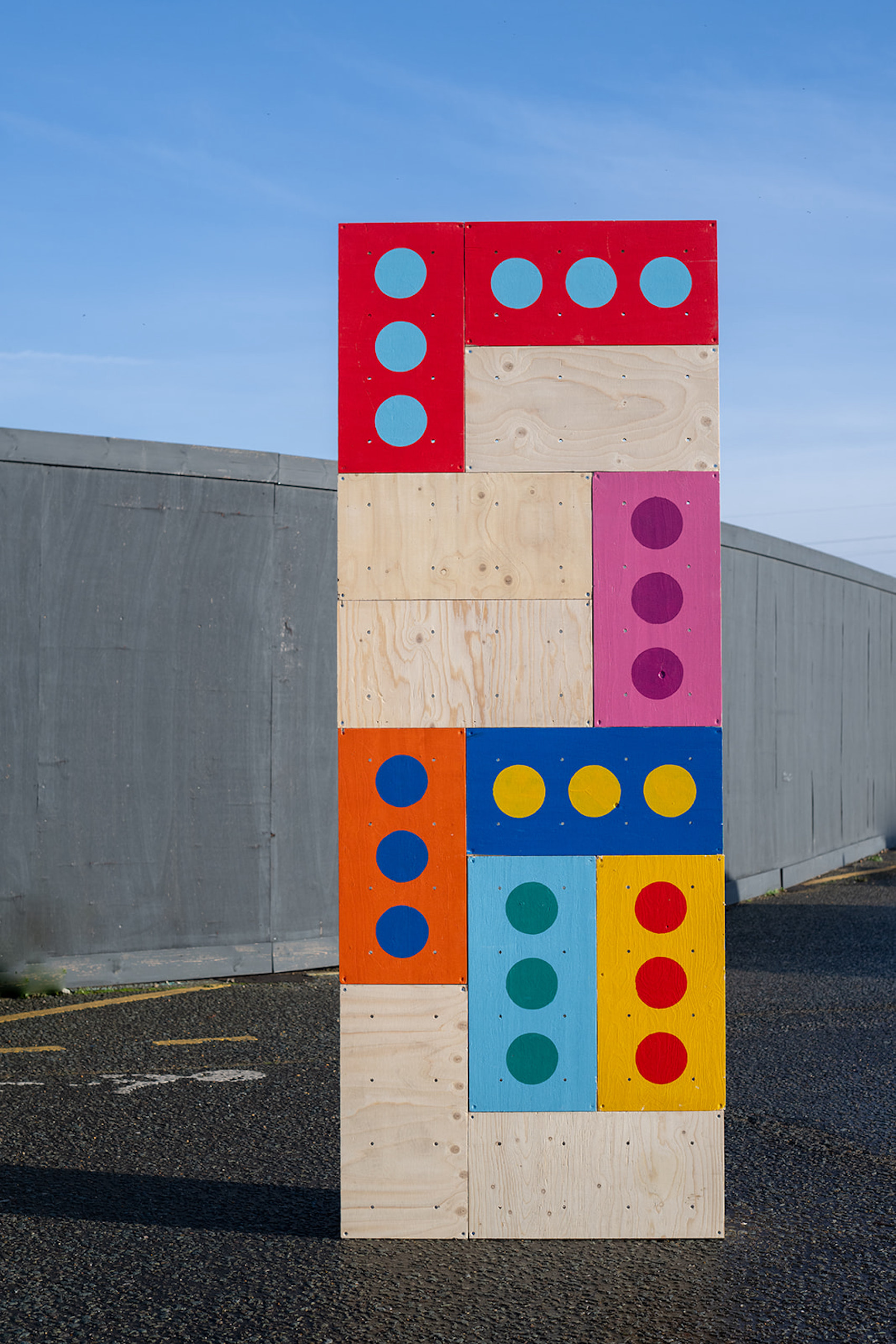
Looking ahead, U-Build is exploring the introduction of digital material passports to track the lifecycle of individual components, providing greater transparency around reuse and carbon savings. As the system expands, the Box Library offers a scalable model for circular construction, demonstrating how shared infrastructure can support more sustainable and inclusive approaches to building.
Credits
Architect
Studio Bark
Structural engineer
Structure Workshop
Main contractor
U-Build
Site and manufacturing
BLOQS
Structure
UPM Plywood
Cladding
Birchwood trading
Additional images