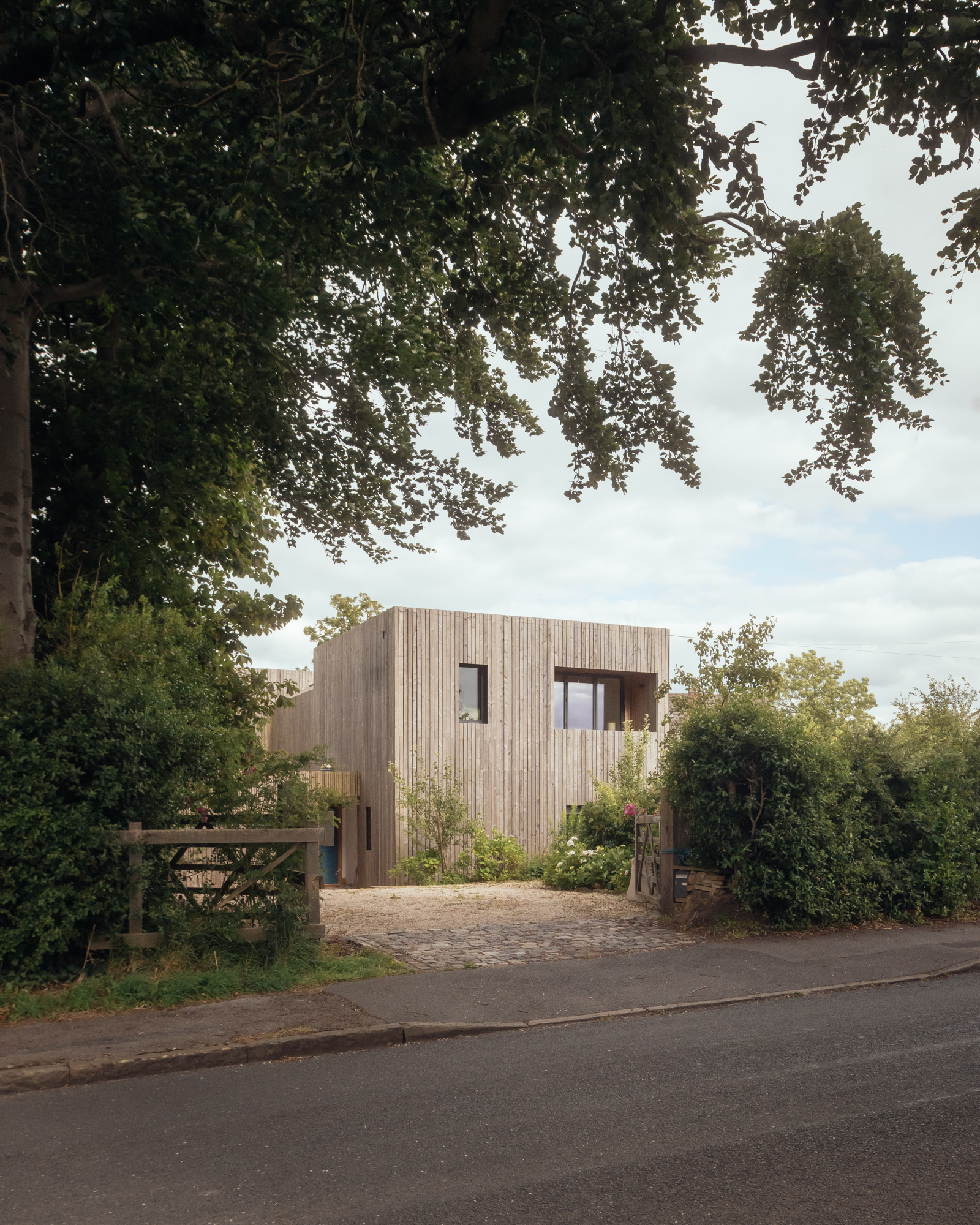
Studio Bark’s modest Paragraph 84 home in the Cheshire Green Belt re-establishes a historic orchard while delivering a low-impact family house rooted in landscape, memory and environmental rigour.
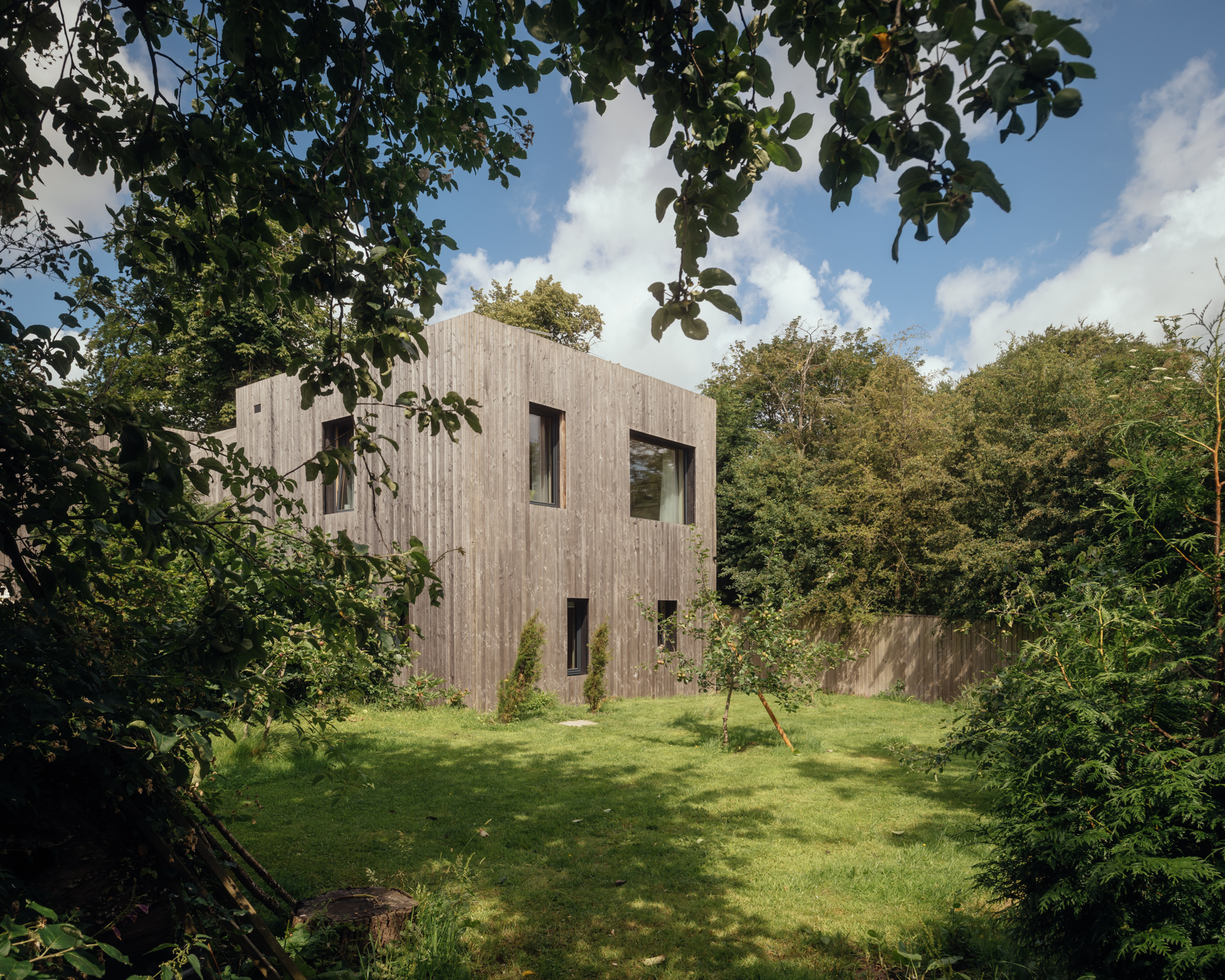
Studio Bark has completed ‘Orchard House’, a three-bedroom rural home set within the Green Belt on the site of a former family orchard in Cheshire. Shortlisted for a 2026 RIBA North West Award, the project was conceived under Paragraph 84 of the National Planning Policy Framework (the so-called ‘country house clause’) which permits exceptional new dwellings in isolated countryside locations. Three years after completion, the practice has returned to find both house and orchard maturing in tandem.
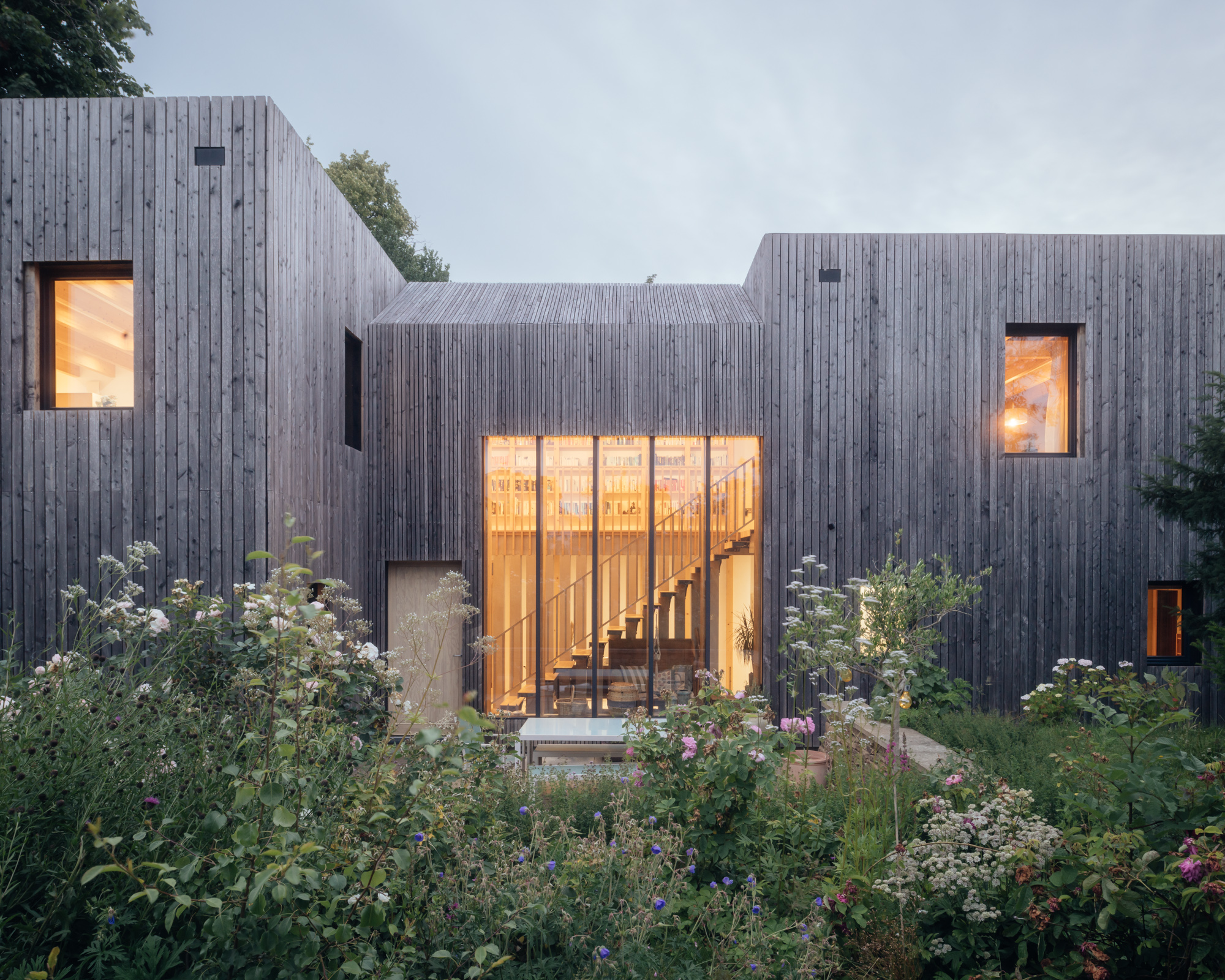
Built for a young family with deep personal ties to the land, the house occupies a plot once tended by earlier generations. Childhood memories of fruit picking and farm machinery informed a brief that asked for a contemporary home that could reinstate the orchard as a productive, biodiverse landscape. What had been classified as land of low ecological value has since been replanted with native and local varieties, including a rare pear thought to be a Cheshire specimen, preserved through grafting.
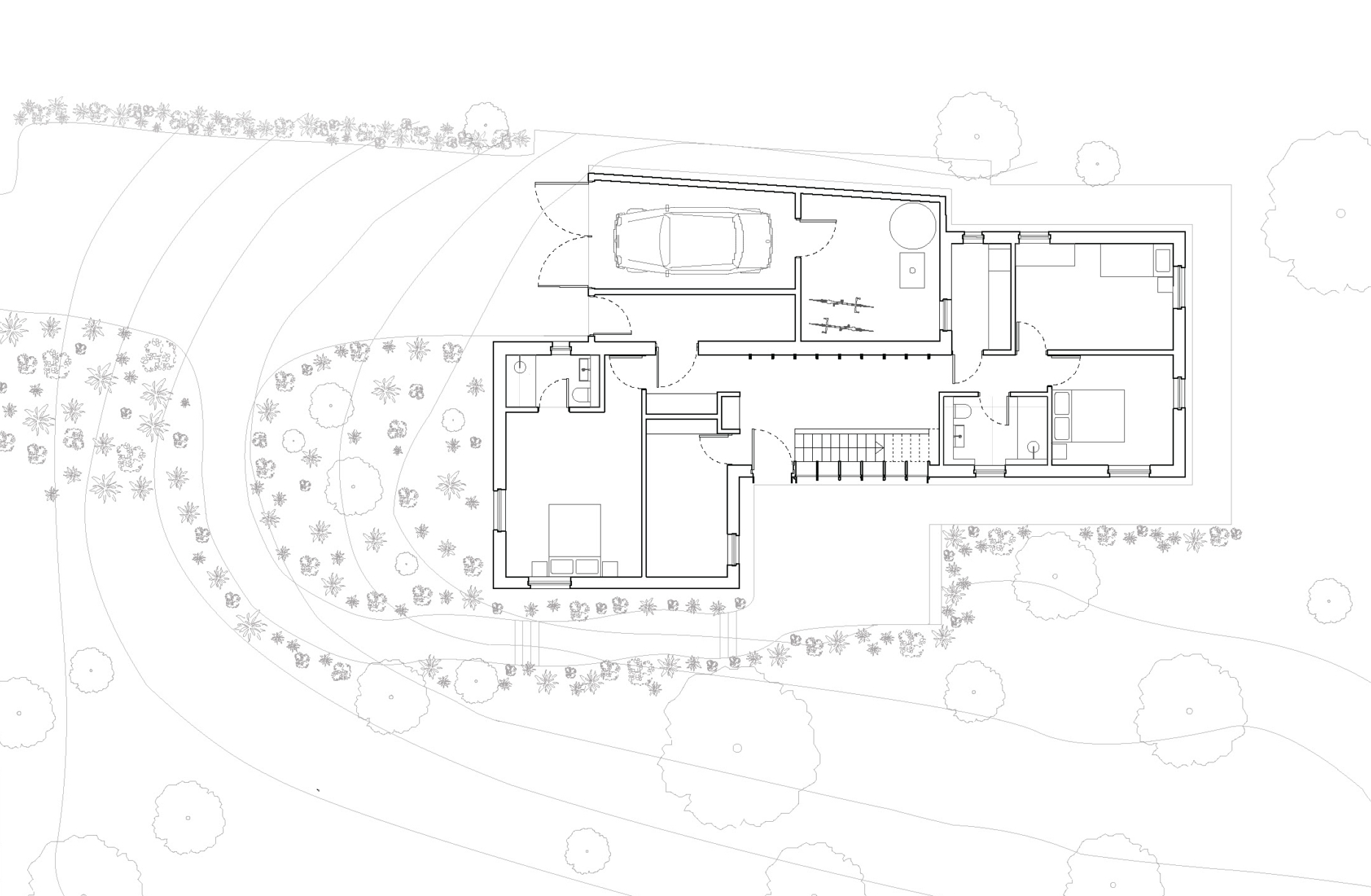
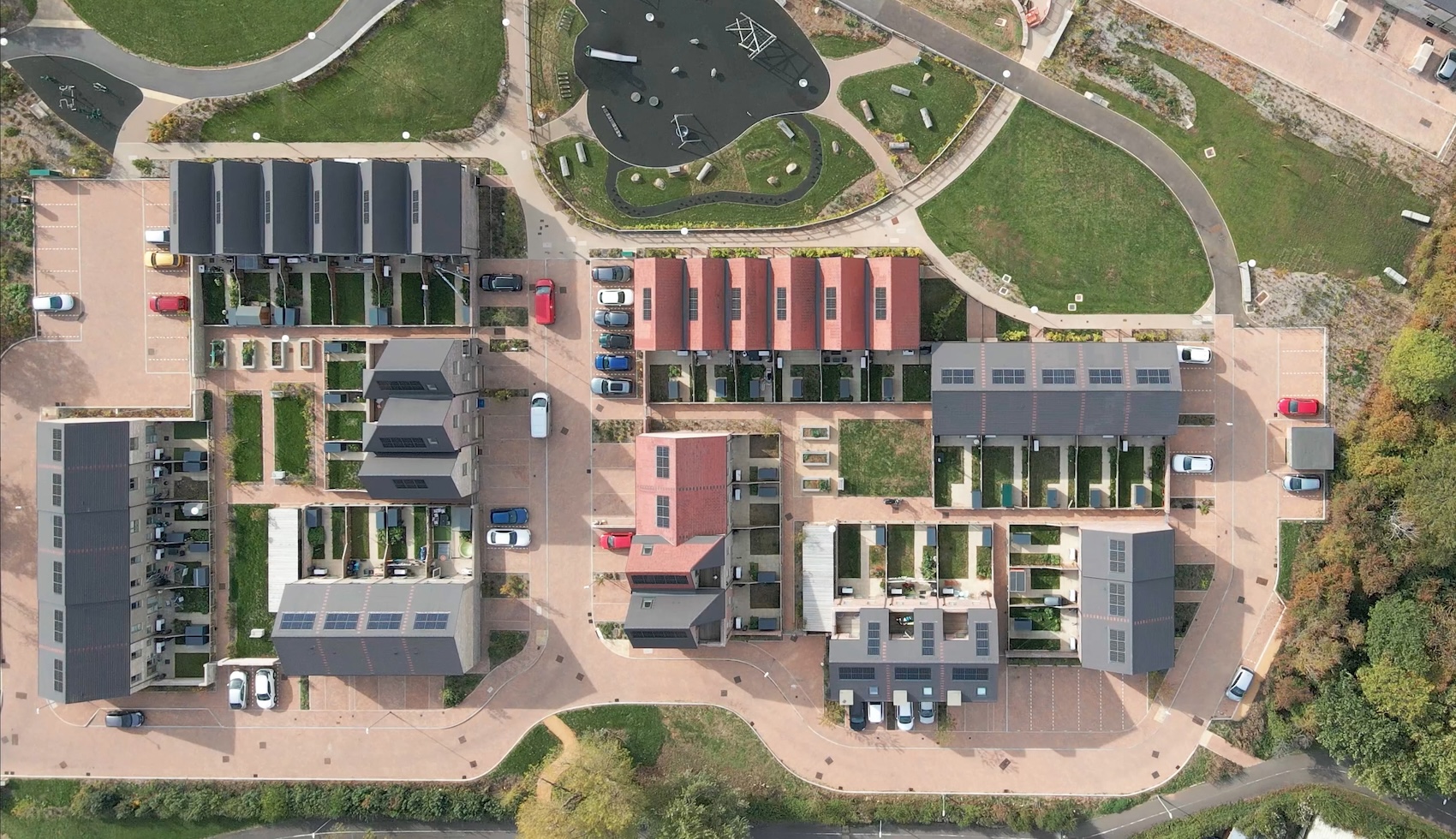
Site plan.
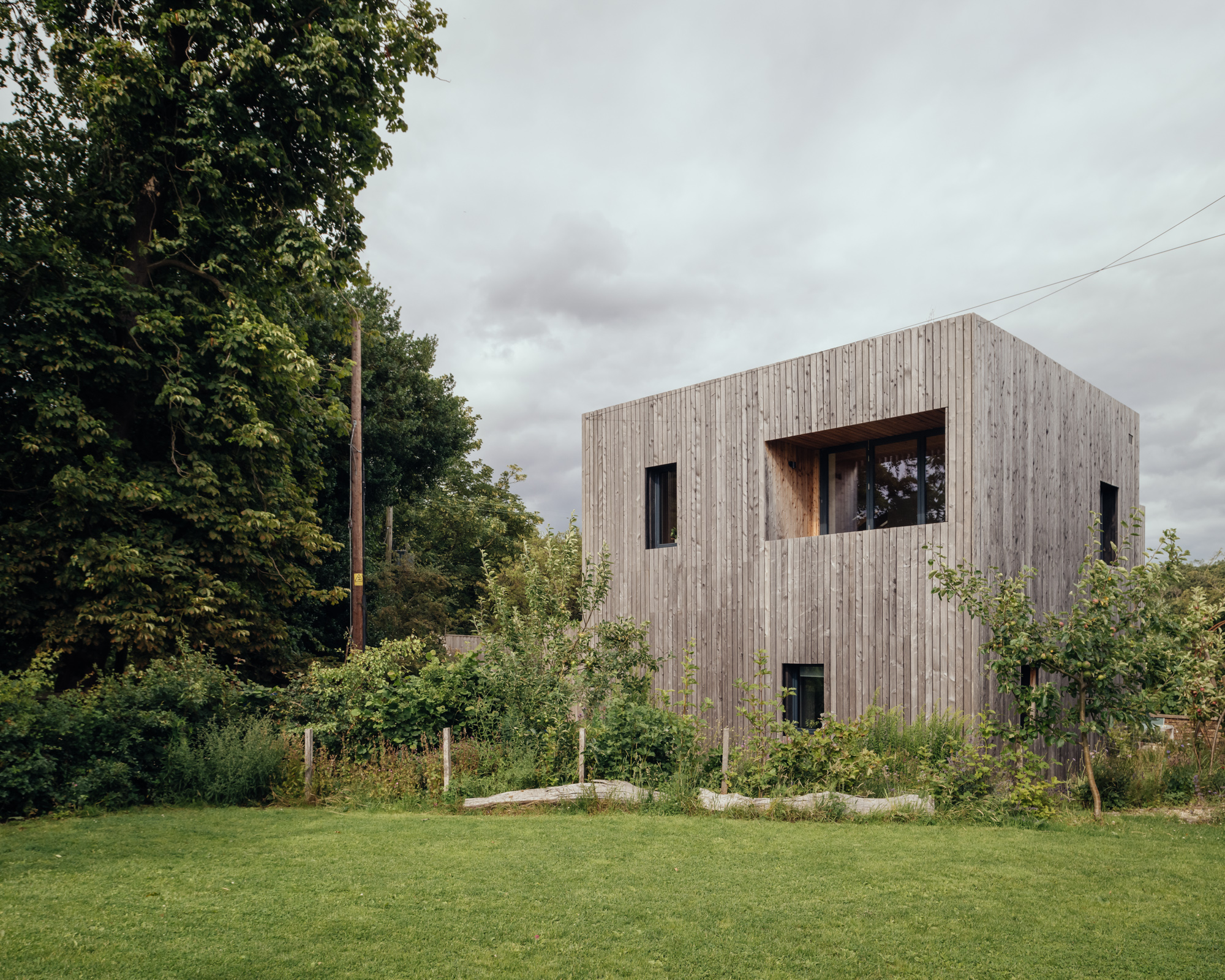
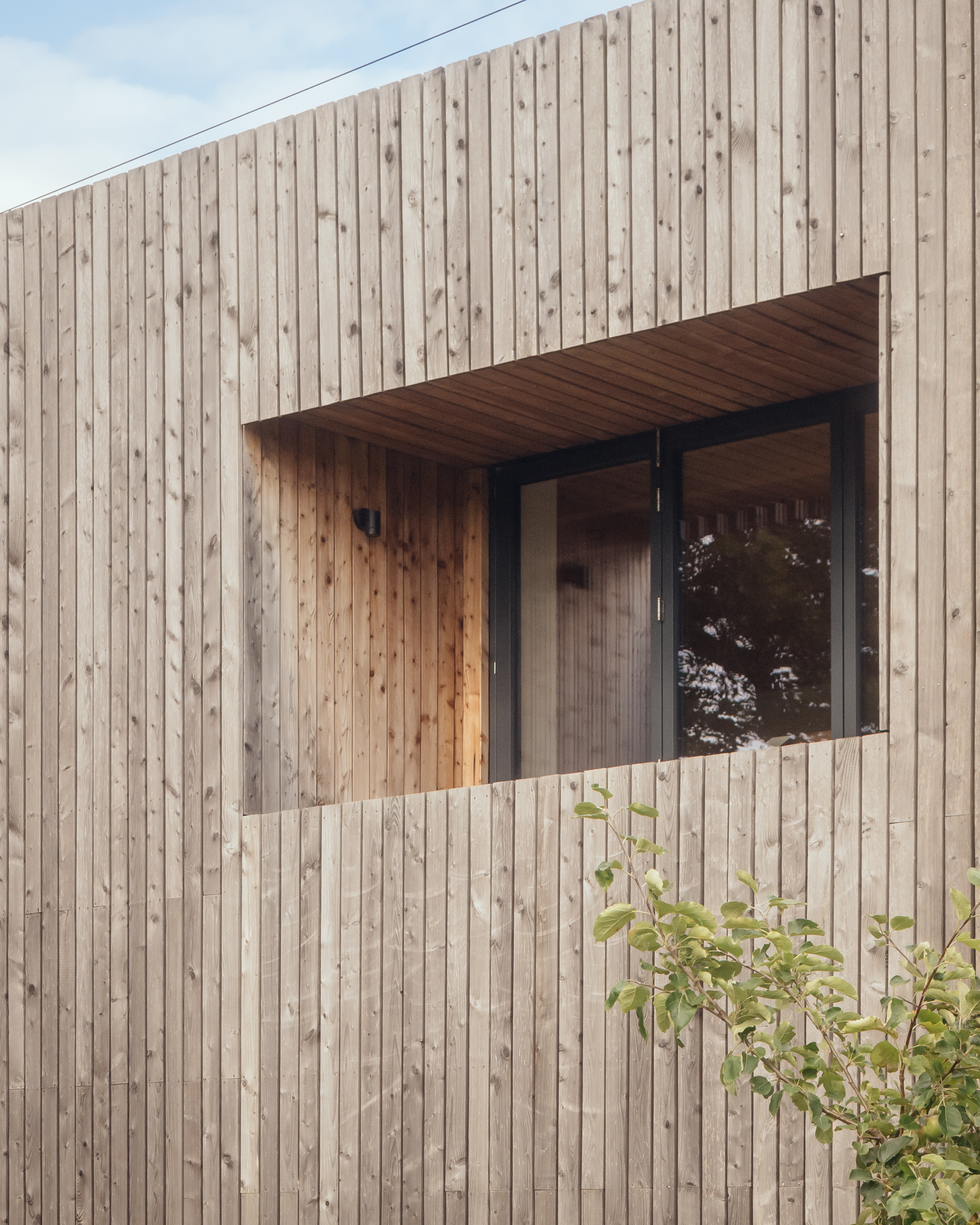
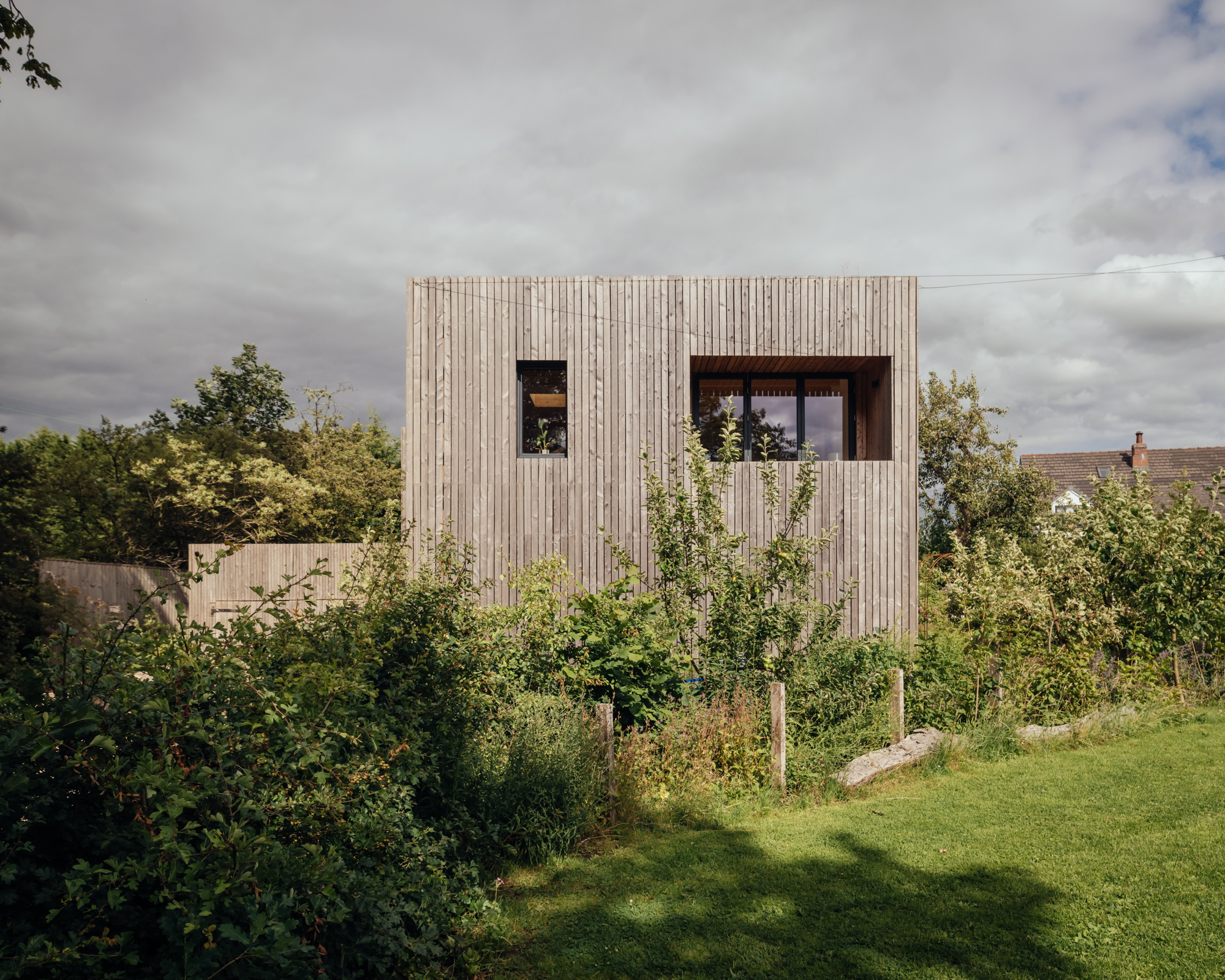
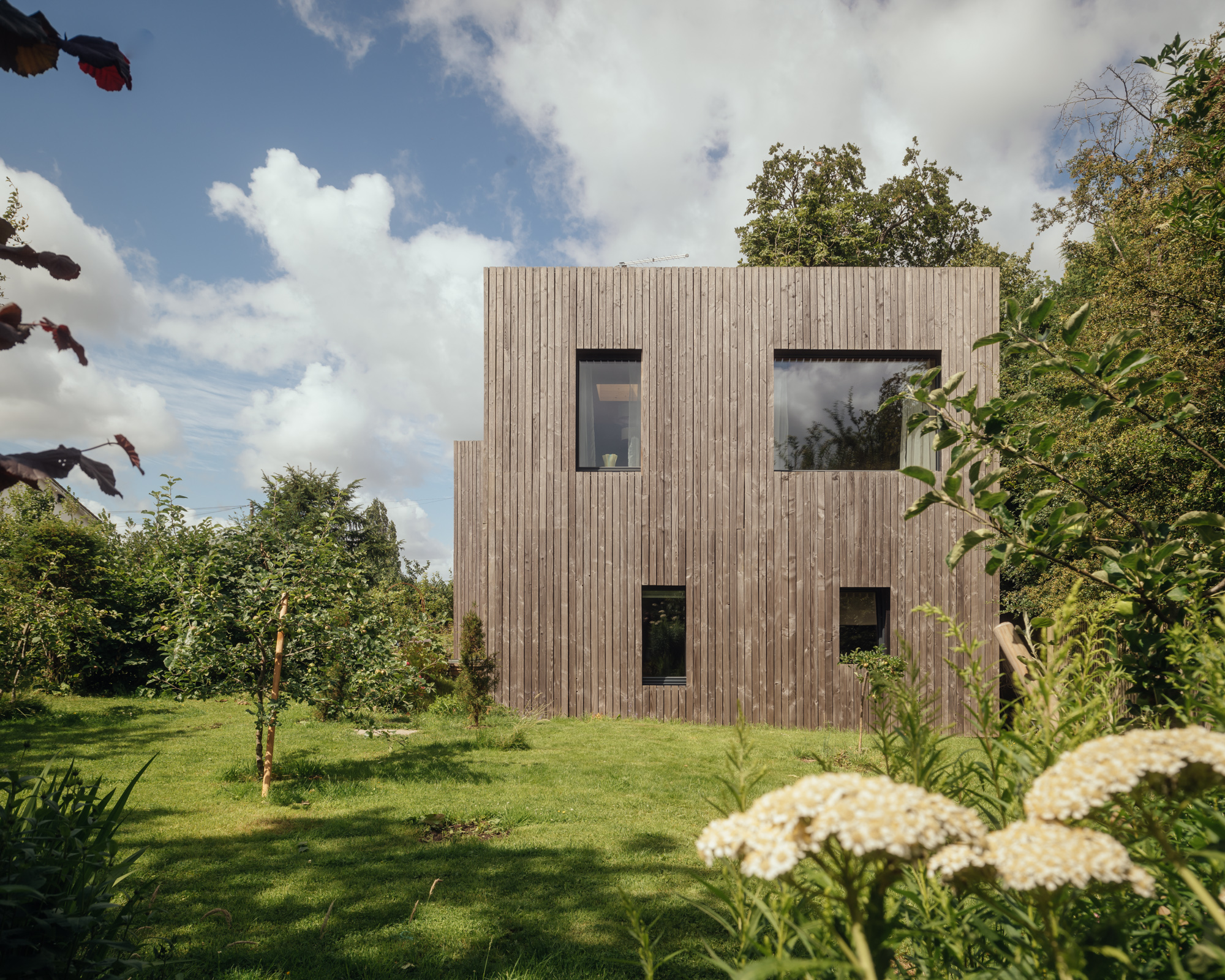
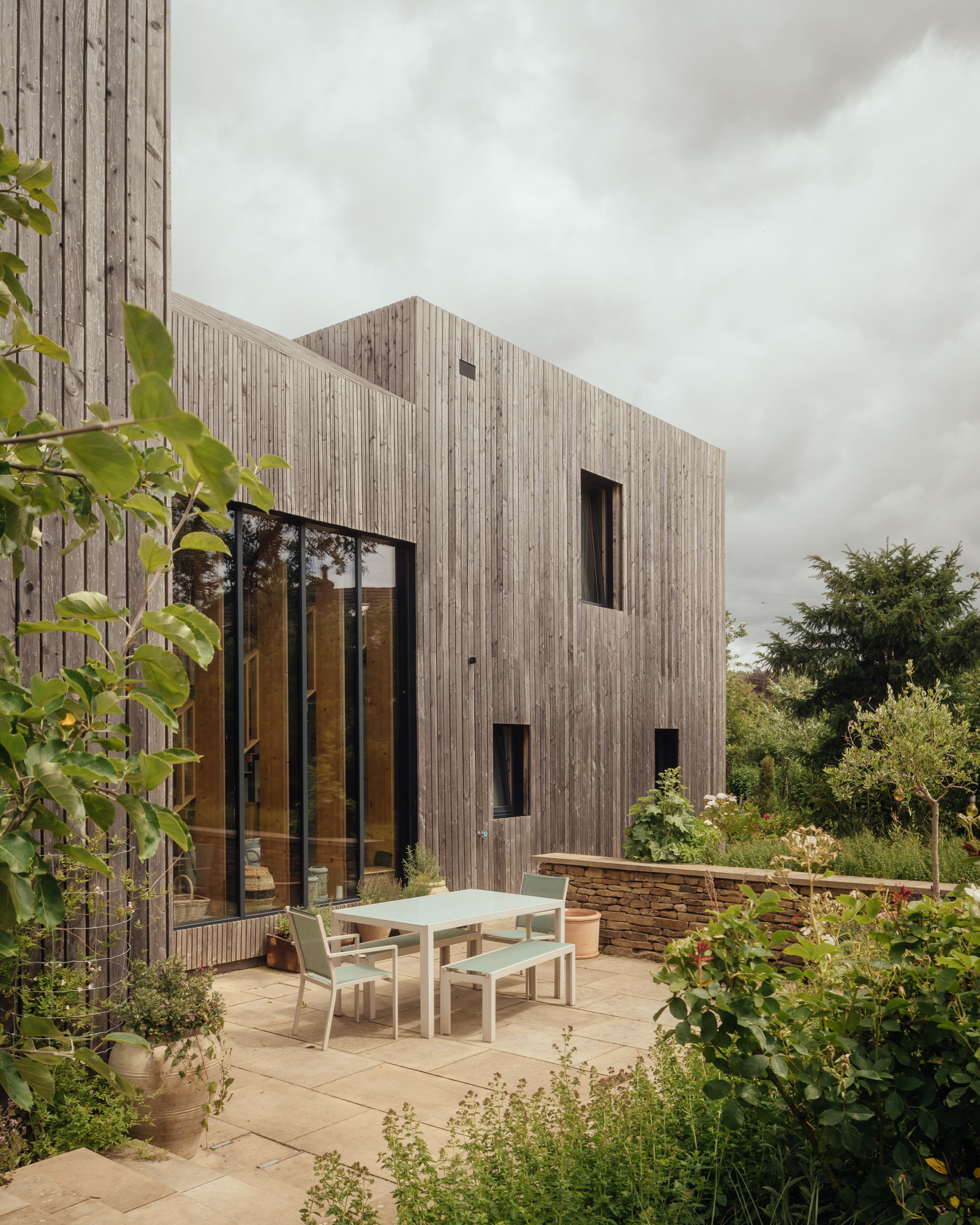
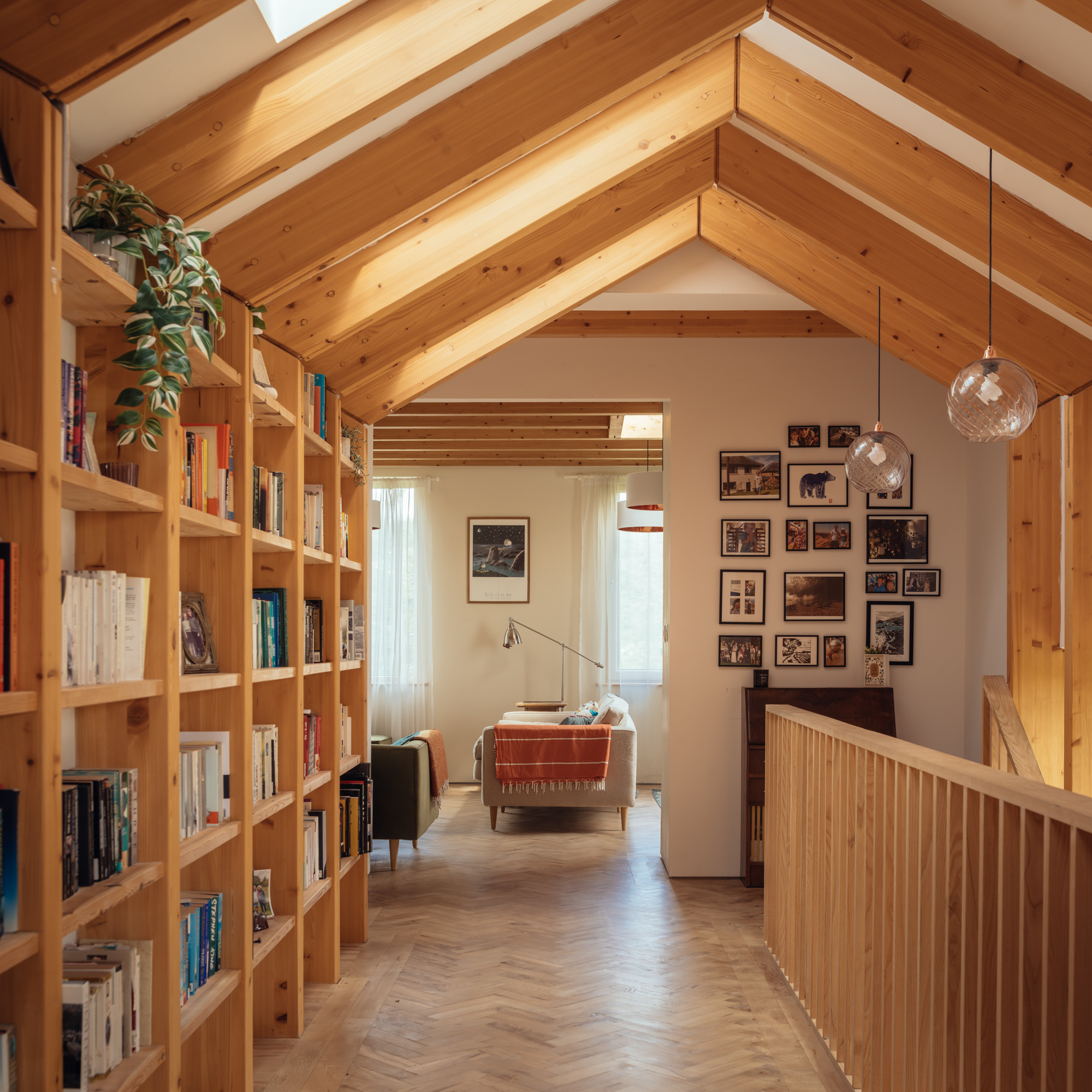
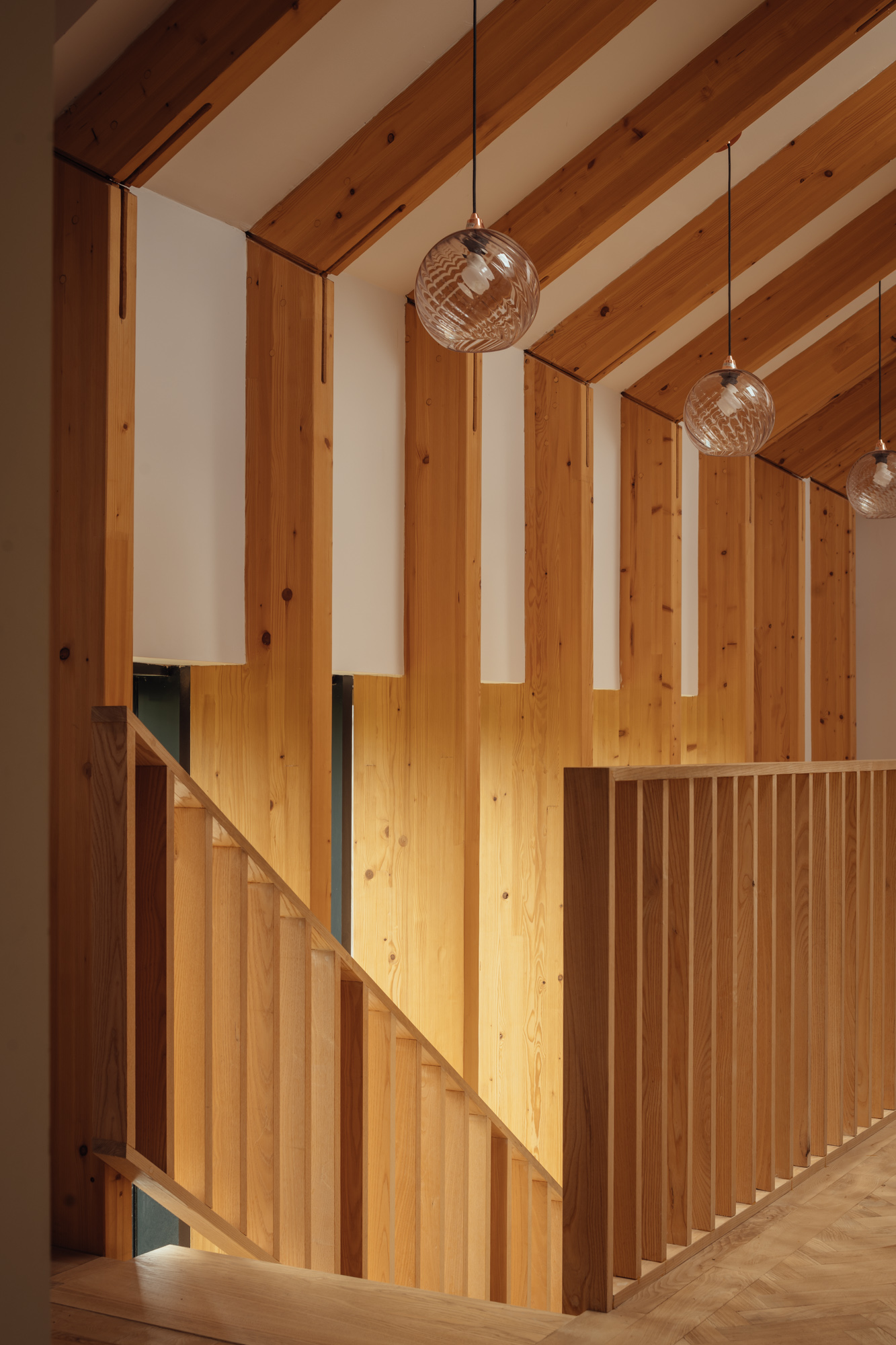
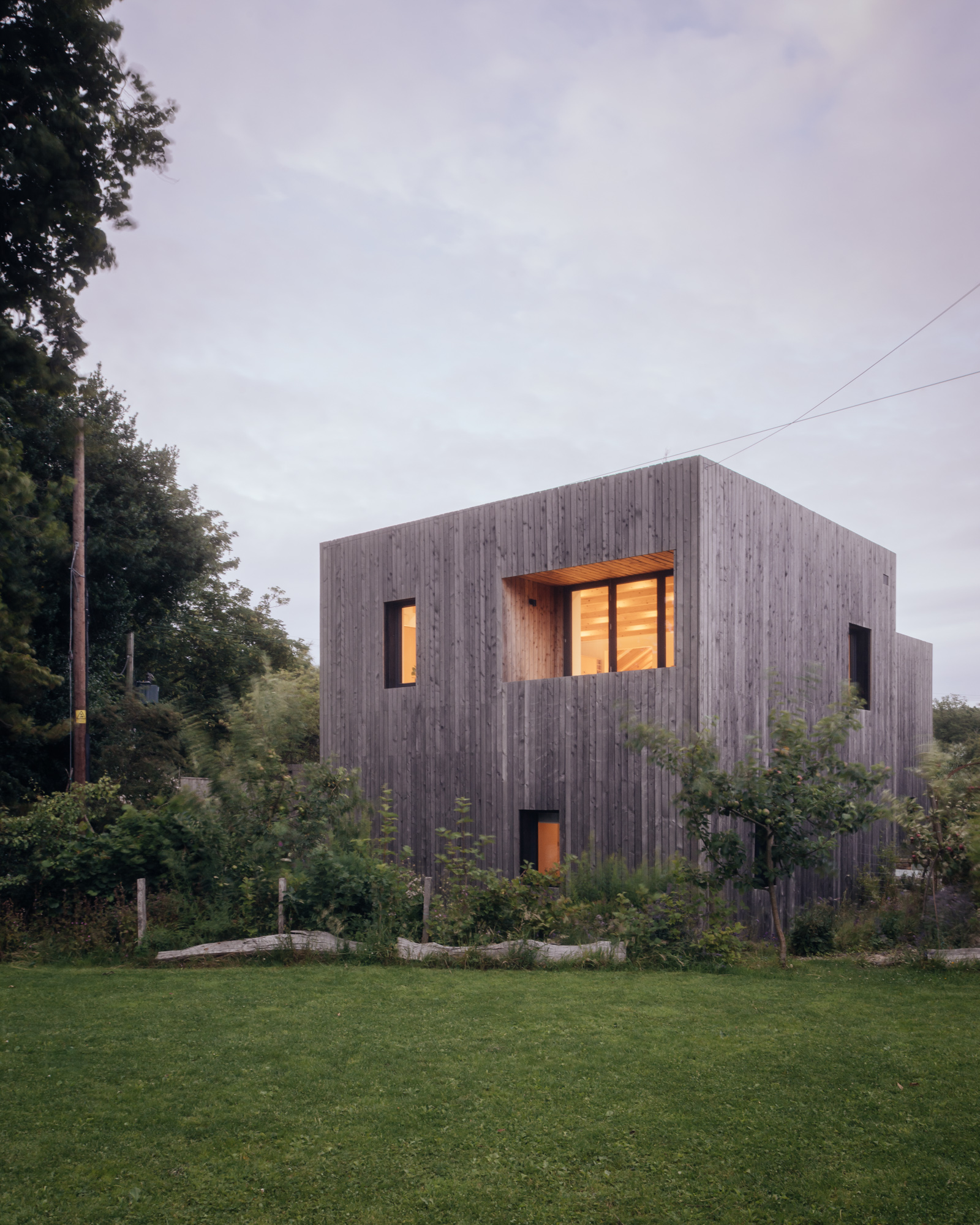
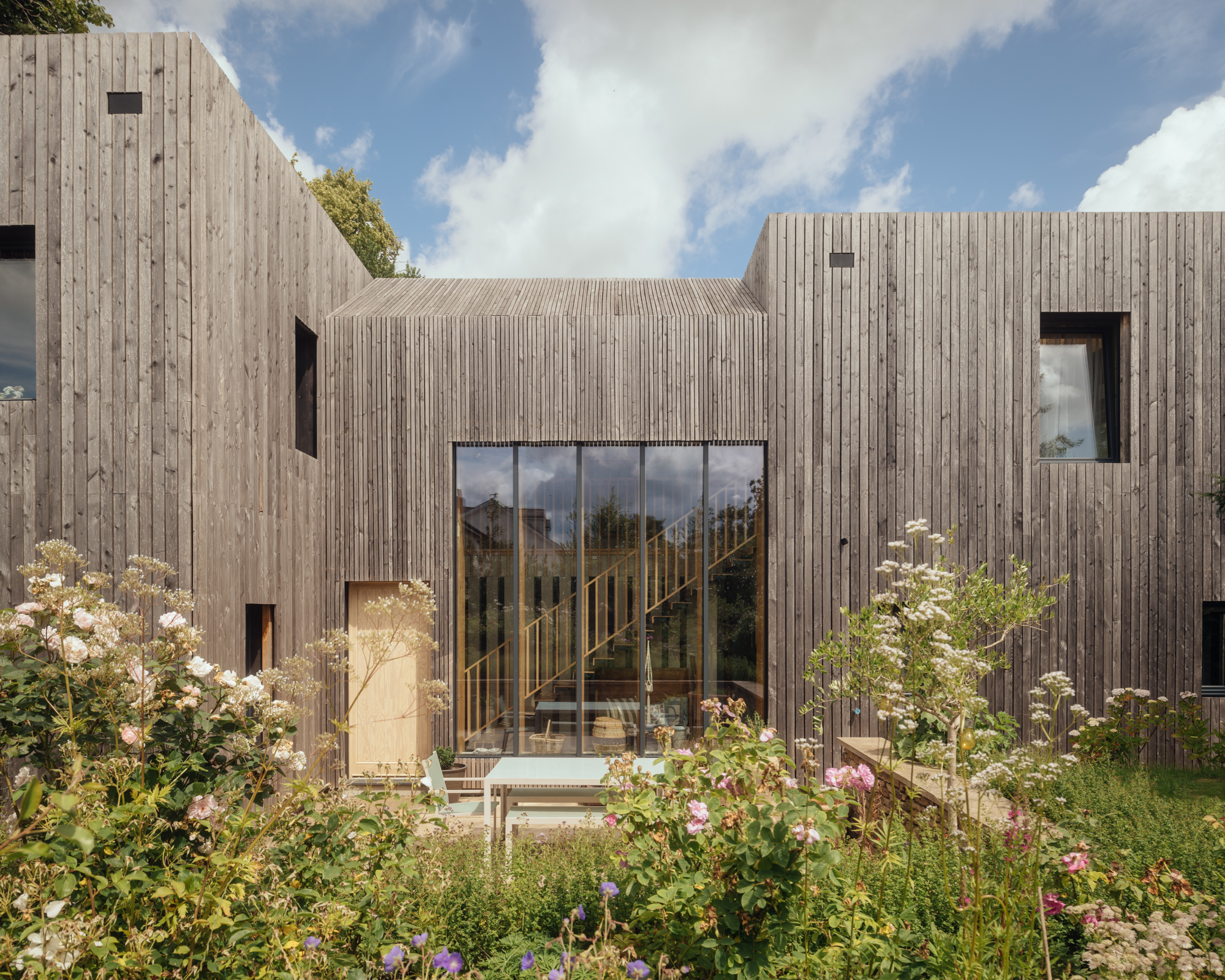
The house is composed of two near-cubic volumes set to frame long views east across open fields and south-west towards woodland. A pitched-roof timber ‘bridge’ spans between them, forming a double-height link that operates as both circulation and environmental moderator. This asymmetrical arrangement introduces depth and shadow, while silvery larch cladding softens the building’s presence against the trees and meadow beyond.
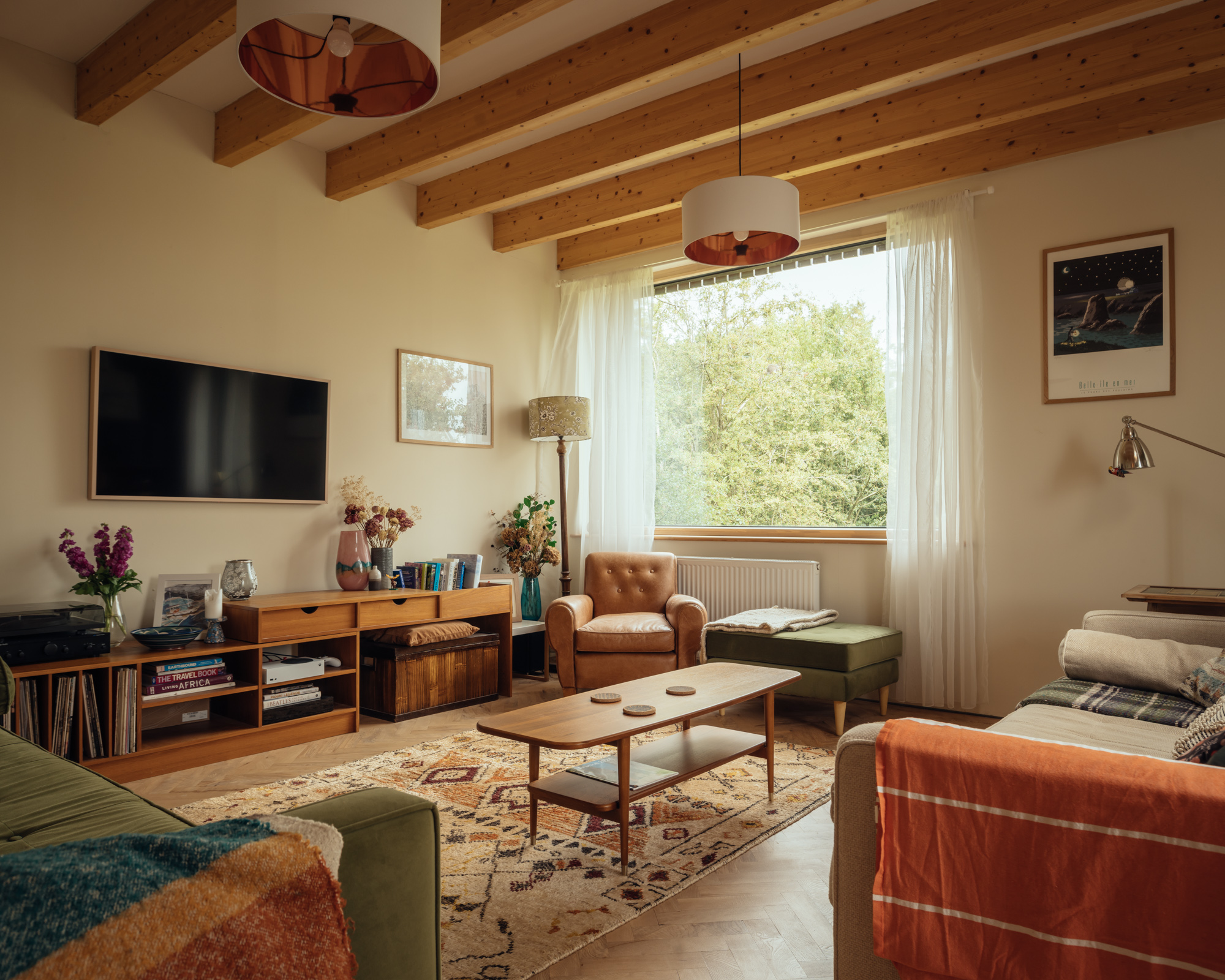
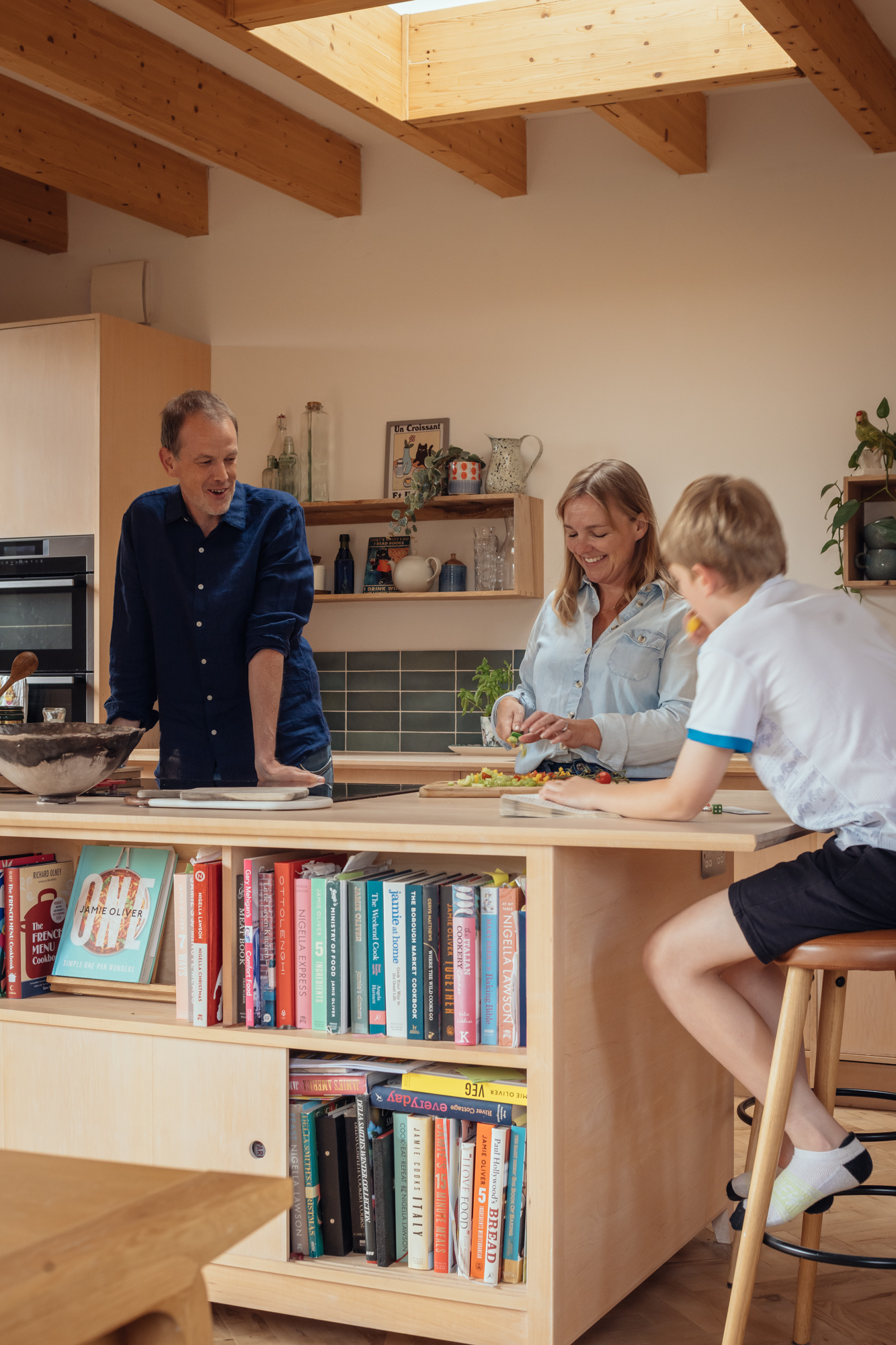
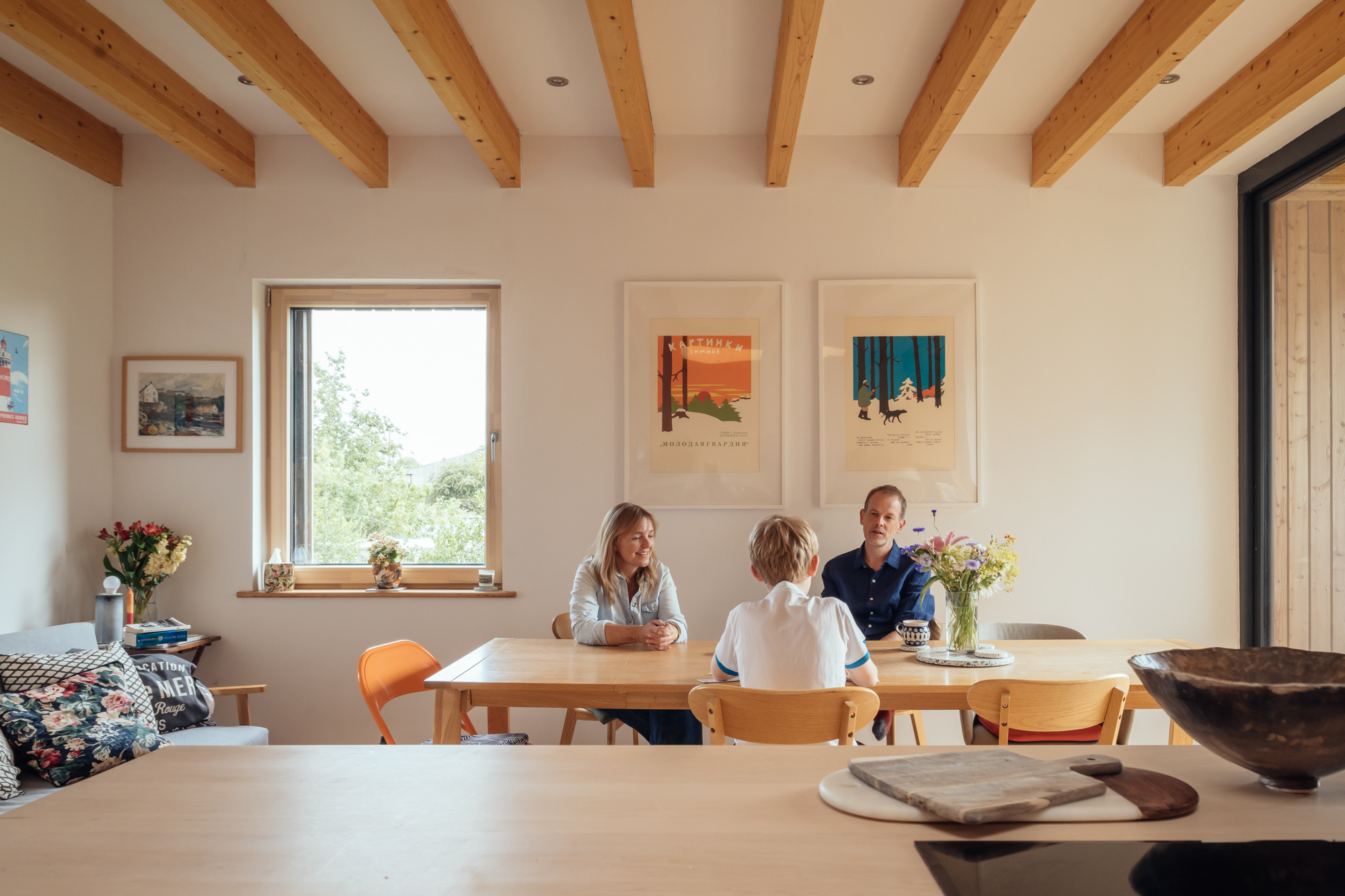
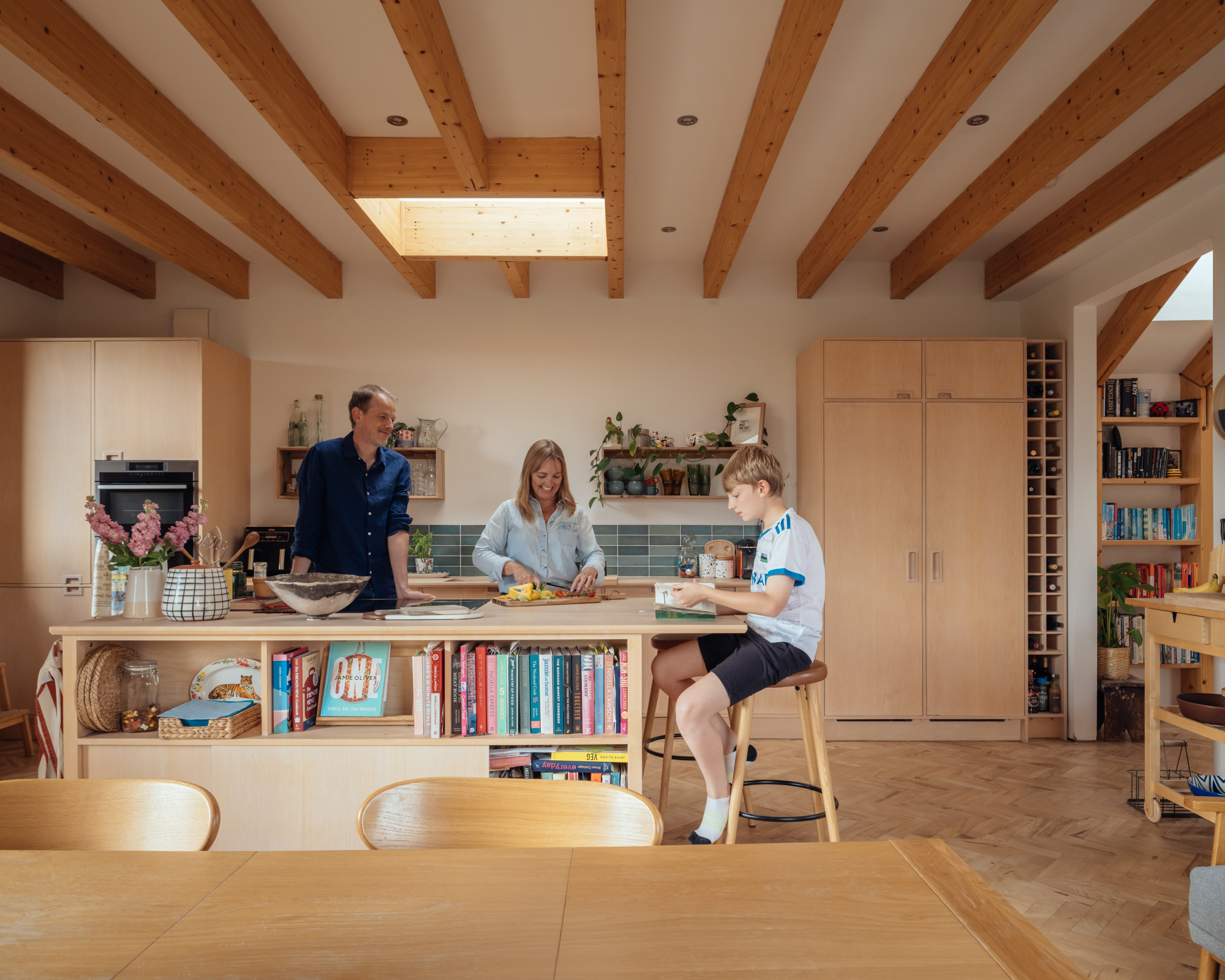
In plan, the house follows an ‘upside-down’ arrangement, with kitchen, dining and living spaces above and bedrooms below. The upper level opens to expansive views of sunrise and sunset, while reduced glazing and lower ceiling heights temper the sleeping spaces beneath. Concealed timber shutters sit flush behind the cladding line, allowing the house to close down in summer heat or at night, reinforcing its robust, almost agricultural character.
Early studies of the site mapped wind patterns, solar paths and existing biodiversity, shaping orientation and form. Passive house planning package (PHPP) modelling informed improved U-values, careful management of solar gain and reduced thermal bridging.
“A foam glass aggregate foundation system, made from recycled glass, paired with a super-insulated timber frame, triple glazed windows and two large Solar Arrays with battery backup make for a very low carbon building, both during construction and throughout operation,” explained Wilf Meynell, founder and project architect at Studio Bark.
A heavily-insulated timber frame sits on foam glass aggregate foundations made from recycled glass, while triple glazing and rooftop solar arrays with battery storage limit operational demand. Monitoring sensors and periodic thermal imaging, meanwhile, enable performance checks and fine-tuning over time.
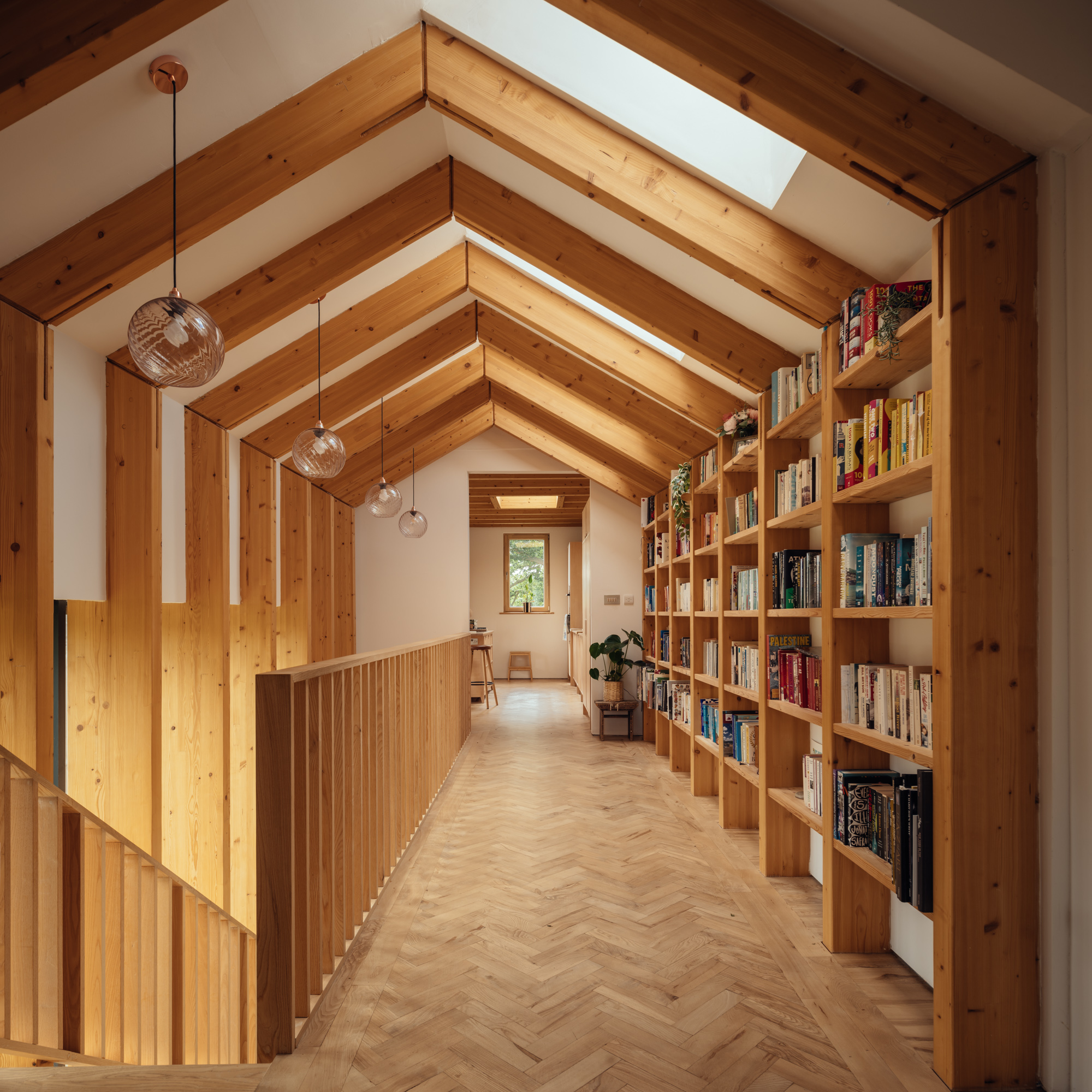
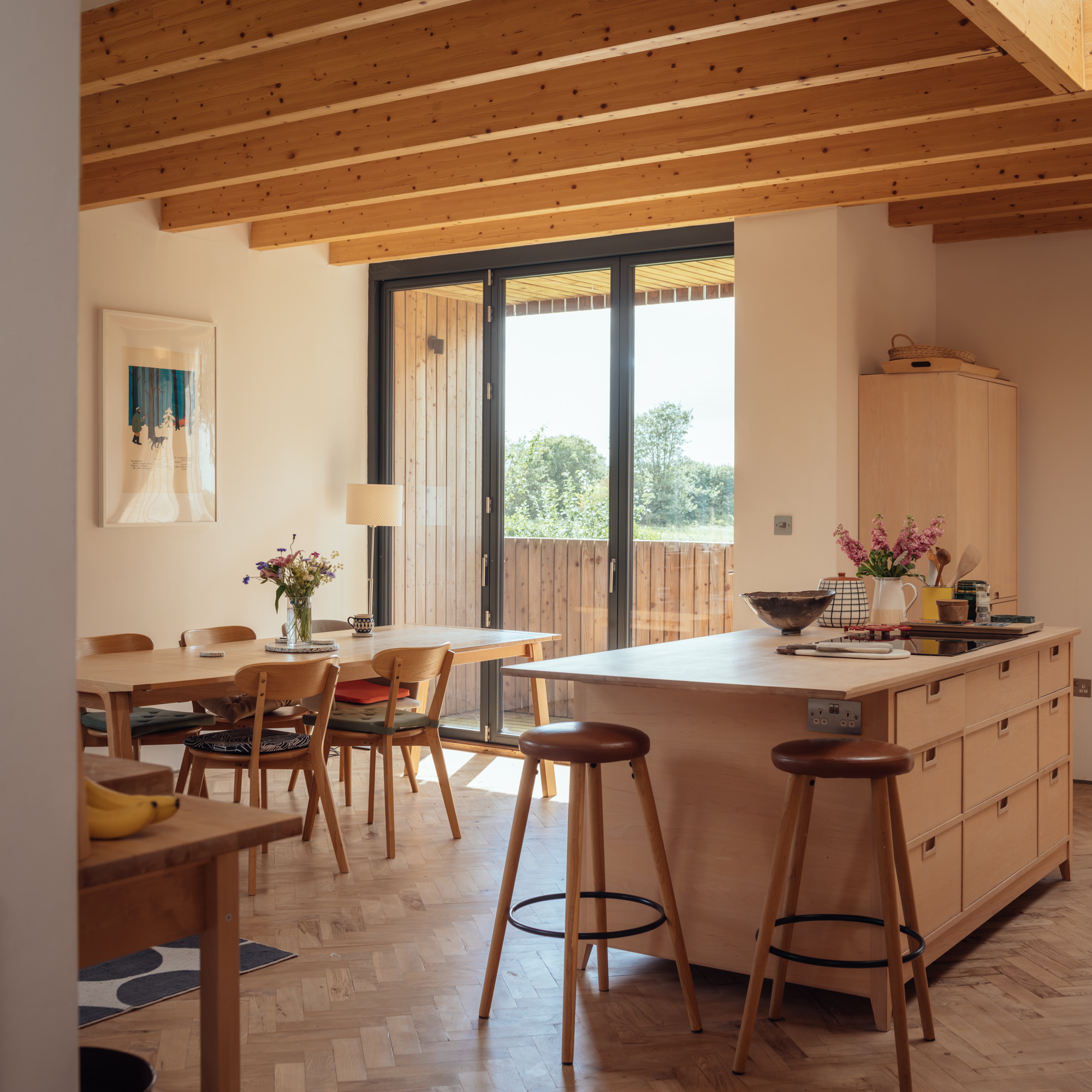
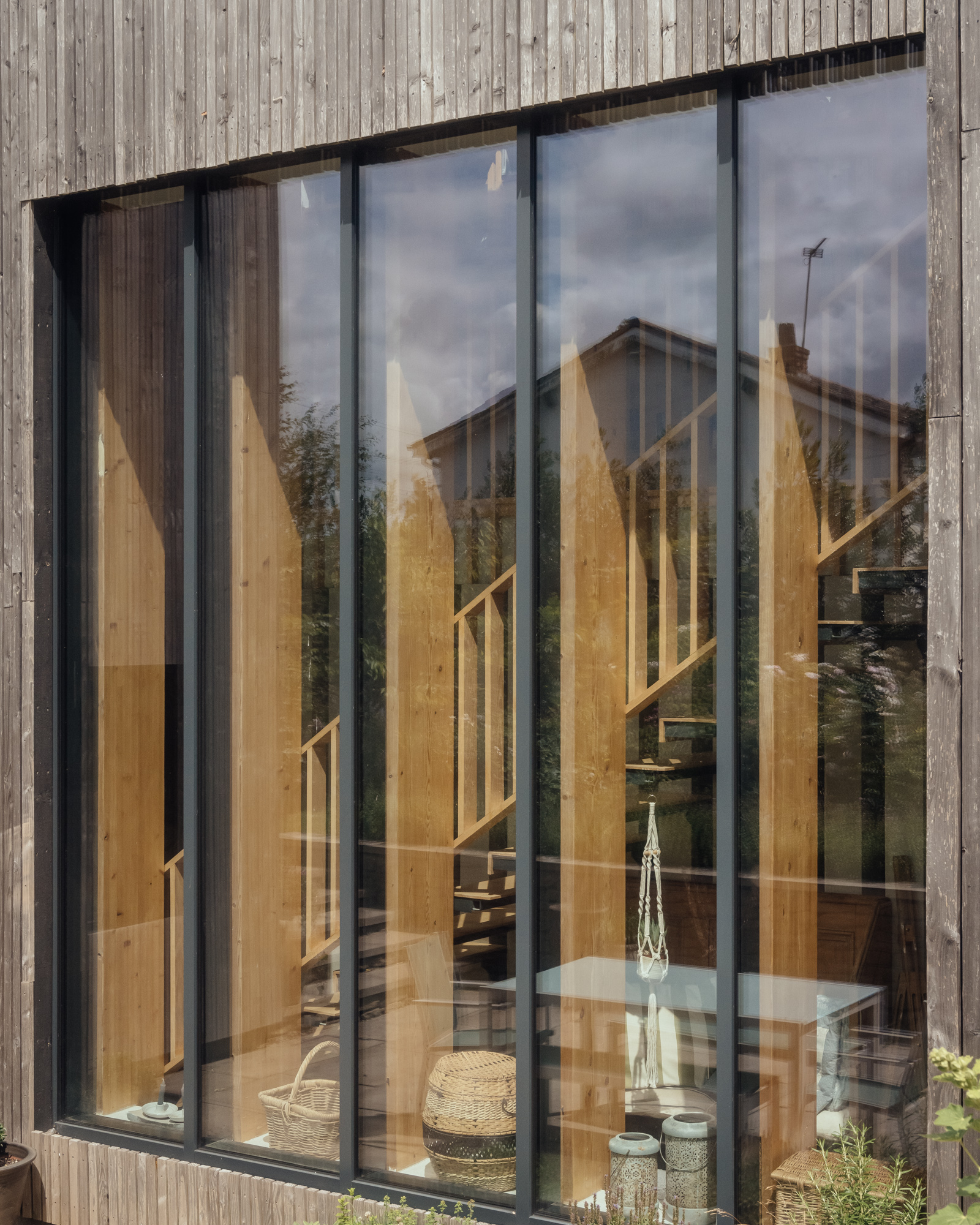
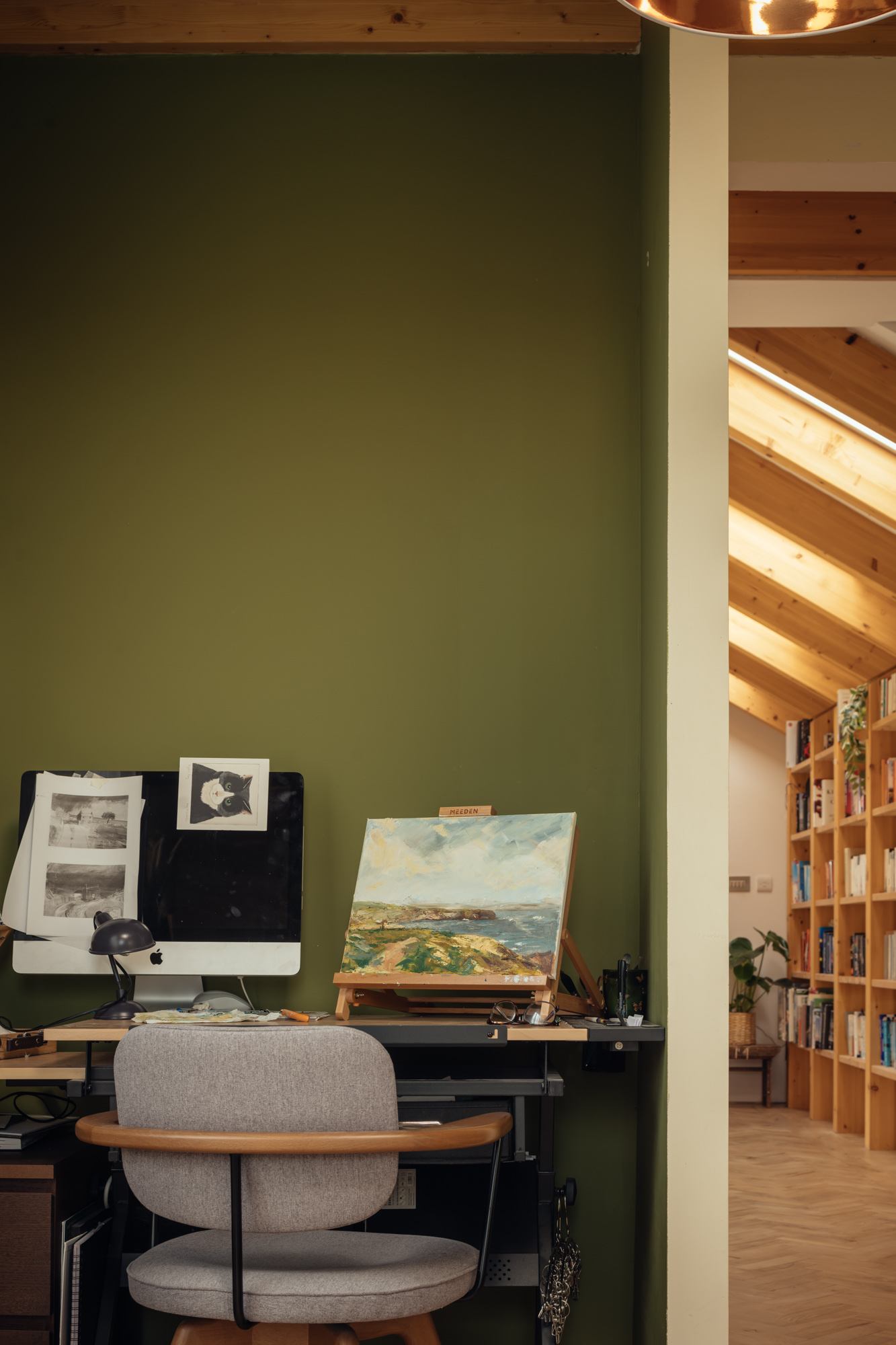
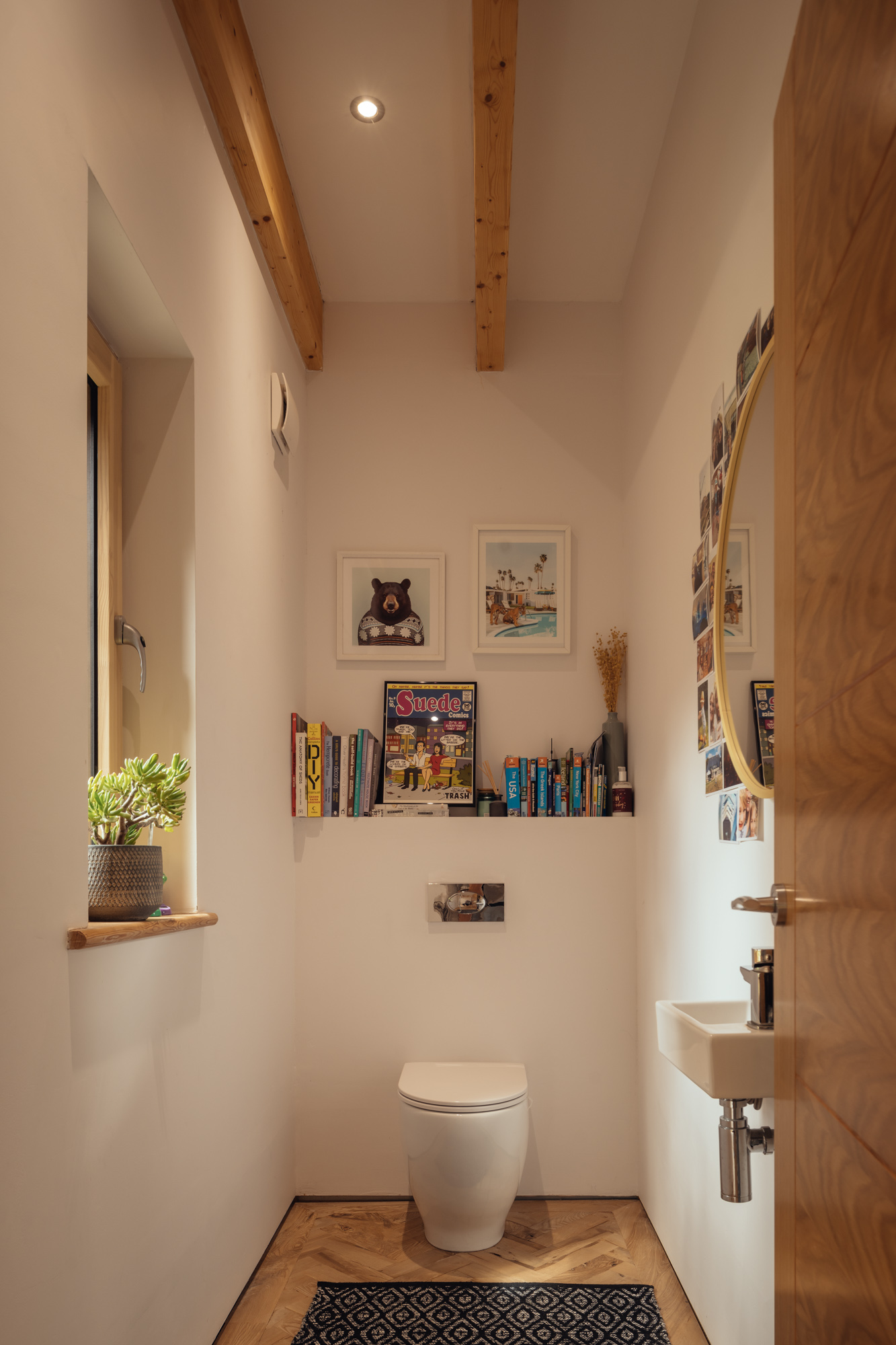
Internally, parquet flooring has been fashioned from an ash tree felled on site due to dieback, embedding the building in its own ground. A concrete Trombe stair introduces thermal mass at the heart of the plan, contributing to stable internal temperatures, with a central bridge also aiding temperature regulation, functioning as a passive heating and cooling link, allowing occupants to modulate ventilation and heat flow seasonally.
Wildflower meadows, shrubs and fruit trees now surround the house, delivering biodiversity net gain and carbon drawdown. Bat boxes, insect habitats and new planting have encouraged birds and pollinators to return.
Securing consent for an isolated home within the Green Belt demanded a rigorous case. Studio Bark obtained planning approval in 2016 under what was then Paragraph 79, demonstrating that the proposal met the “Very Special Circumstances” test through its environmental ambition and landscape sensitivity.
“Securing planning permission for isolated homes in the countryside under Paragraph 84(e) is already a demanding process, but add Green Belt into the mix and you’ve got a serious planning challenge,” added Studio Bark in a statement.
“Overcoming this demanded patience and determination, but with the unwavering support of our clients, Andrew and Janis, and their genuine desire to build with the lowest possible impact, we managed to get over the line. We developed a highly robust environmental strategy for both the building and the wider site, combining biodiversity, reduced energy demand and low carbon impact. All of this was integrated into an evolving client brief for an upside-down house, with upstairs kitchen, dining, and living. We’ve had the privilege of seeing the family and their young son grow and settle into this sociable and connected yet blissfully calm environment.”
Additional images