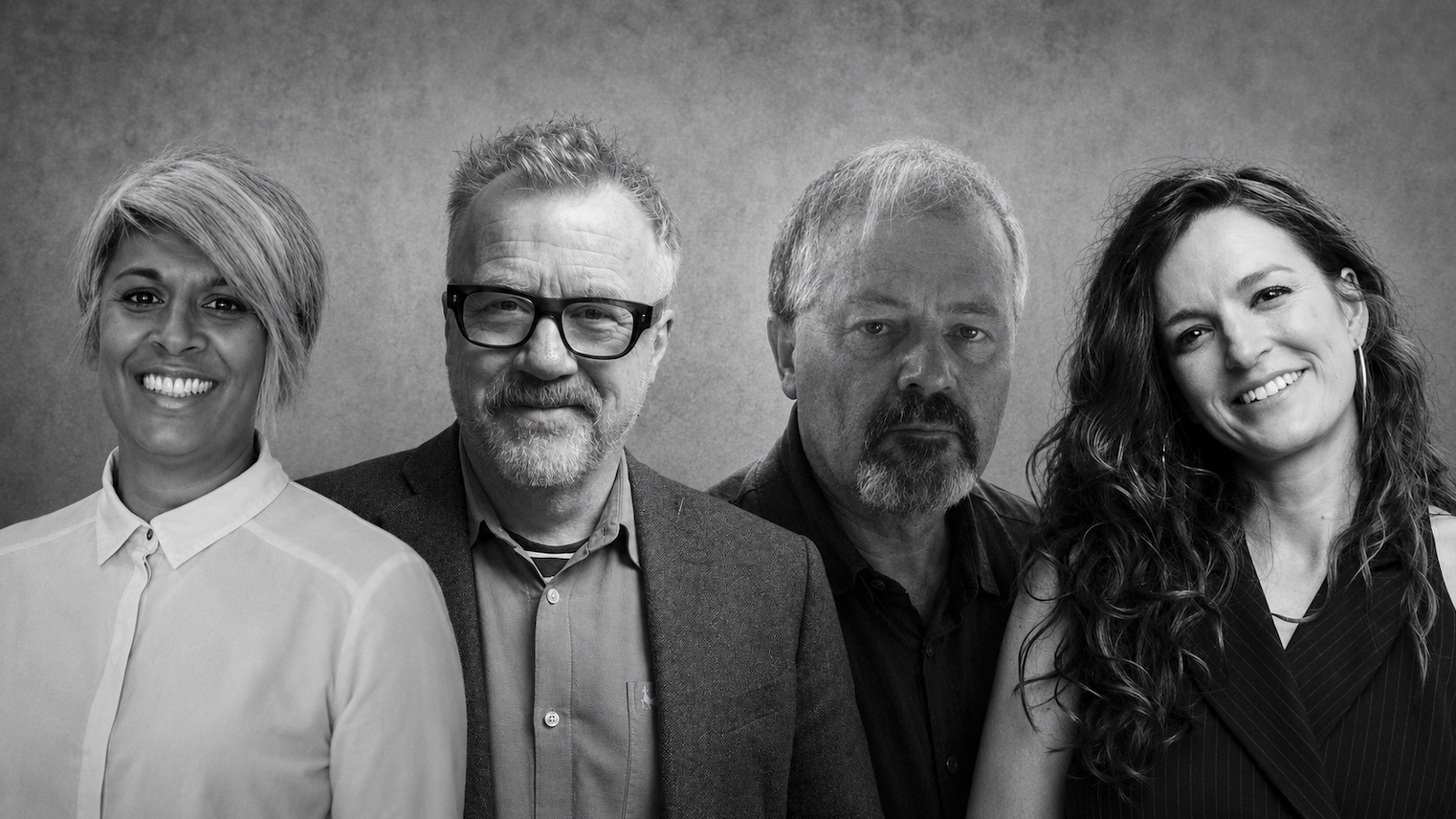
At the opening event of Regenerative Design 2026, Elora Hardy, Ivan Jovanovic, Marian Garfield, Duncan Baker-Brown, Amin Taha and Kelly Alvarez Doran explored what needs to change in the way we design, build, specify and regulate the built environment.
Watch: Elora Hardy at Paradigm shift, 5 October 2026.
What would it take for regenerative design to become the way the construction industry works, rather than an ambition pursued by individual projects? That question shaped Paradigm shift: a new mindset for a regenerative world, the opening event of Regenerative Design 2026, held at the Building Centre in London on 5 October.
From bamboo construction and engineering to industrial decarbonisation, material reuse and regulatory reform, six speakers examined the assumptions, priorities and systems behind contemporary construction. Their talks suggested that a regenerative approach requires changes both to the buildings we create and to the wider conditions in which decisions are made.
Learning to unlearn
IBUKU founder Elora Hardy opened the morning with a challenge to the idea that land is simply a site for human intervention. Drawing on her experience of designing with bamboo, she described the importance of learning from the material itself, the people who work with it and the ecosystems that sustain it.
Her argument went beyond material selection. The design process, she suggested, must begin with a different understanding of the relationship between people and the natural world. “How do we unlearn that?” she asked of the habits that have shaped conventional building practice.
Hardy’s keynote provided a frame for the discussions that followed: reconsidering established methods of construction, rather than simply finding less damaging ways to deliver familiar outcomes.
Watch: Ivan Jovanovic at Paradigm shift, 5 October 2026.
Engineering with natural systems
Ivan Jovanovic, Director of Sustainability and Environmental Design at Atelier Ten, considered how engineering practice could work more closely with natural forces. He questioned the expectation that every impact can be measured precisely before action is taken, arguing for a broader understanding of evidence, cause and consequence.
Jovanovic also addressed the difficulty of changing practices within existing commercial and regulatory structures. His response was to understand those structures well enough to challenge them from within. “We have to fight the current system with its own rules until it’s changed,” he said.
Watch: Marian Garfield at Paradigm shift, 5 October 2026.
Decarbonising industrial production
Marian Garfield, Director of Sustainability at Heidelberg Materials UK, brought the manufacturer’s perspective, focusing on the scale and urgency of reducing emissions from cement production. She described decarbonisation as a practical condition for the industry’s long-term future, with new technologies beginning to reshape production.
Garfield pointed to the Brevik carbon capture project in Norway as evidence that approaches once considered aspirational are being implemented. “This is now reality,” she said.
However, industrial technologies alone cannot deliver the transition. Garfield stressed the value of earlier, more effective conversations between designers and manufacturers, so that specification, material supply and production processes can evolve together.
Watch: Duncan Baker-Brown at Paradigm shift, 5 October 2026.
Reuse before extraction
Duncan Baker-Brown, founder and director of BakerBrown Studio, challenged the construction sector’s dependence on newly extracted resources. His proposed hierarchy begins with the retention of existing buildings and components, followed by the reuse of materials before new production is considered.
He also warned that a material’s biological origin does not automatically make its use regenerative. Timber extraction, for example, can damage habitats when woodland is poorly managed. As a counterpoint, he described productive sweet chestnut woodlands managed on a recurring cycle, where the relationship between harvesting and ecology can support biodiversity.
The lesson was that decisions about resources must account for the landscapes and systems from which materials come, as well as their embodied carbon.
Watch: Amin Taha at Paradigm shift, 5 October 2026.
Specifying materials intelligently
For Amin Taha, founder and director of Groupwork, the starting point was a deliberately provocative proposal: “We should make everything out of timber.” His intention was to establish a useful low-carbon baseline, then consider where the structural or practical demands of a building justify replacing timber with another material.
Taha argued for a more selective approach to steel and concrete, alongside greater consideration of structural stone. Rather than treating materials as interchangeable or seeking to exclude particular categories, the challenge is to use each where its properties are genuinely needed.
For architects and specifiers, this turns material choice into a sequence of decisions that can be tested and explained, rather than one fixed assumption made at the outset.
Watch: Kelly Alvarez Doran at Paradigm shift, 5 October 2026.
Changing the rules
Kelly Alvarez Doran, co-founder of Ha/f Climate Design, shifted the focus from individual buildings to the planning, procurement and regulatory systems that influence what gets built. He argued that improving the industry’s understanding of those systems is a prerequisite for meaningful action.
Planning rules, building codes and supply chains can shape both construction costs and environmental outcomes. Alvarez Doran urged designers to recognise that these constraints are open to change, and to take part in shaping them.
He also called for a more accessible public conversation about construction and climate, linking technical choices to everyday concerns such as affordability and the health of local high streets.
From individual action to systemic change
Across the six talks, a shared challenge emerged. Material substitution, building reuse and better environmental analysis are valuable tools, but their impact depends on wider change in the way the industry plans, manufactures, procures and measures success.
The event brought together distinct perspectives on the same task: learning from natural systems, making better use of existing resources, changing production methods and questioning the rules that determine design choices.
Paradigm shift: a new mindset for a regenerative world was delivered in partnership with Heidelberg Materials UK. Regenerative Design 2026, launched by Architecture Today, continues at the Building Centre throughout October.