With Oxford Street finally closed to traffic, Jason Sayer reflects on the transformation of London’s busiest shopping strip and what pedestrianisation could mean for the future of the capital’s public realm.
During Covid, when I lived in Bermondsey, my flatmate and I took great pleasure in cycling to central London for our allocated hour of exercise. Everywhere was empty, as expected. We rode around in wonder, gawping at the places usually thronging with people now desolate. One of those places was Oxford Street. Usually hellishly busy, but back then, on a very hot summer’s day in 2020, it was deserted. We knew we would never experience anything like it again.
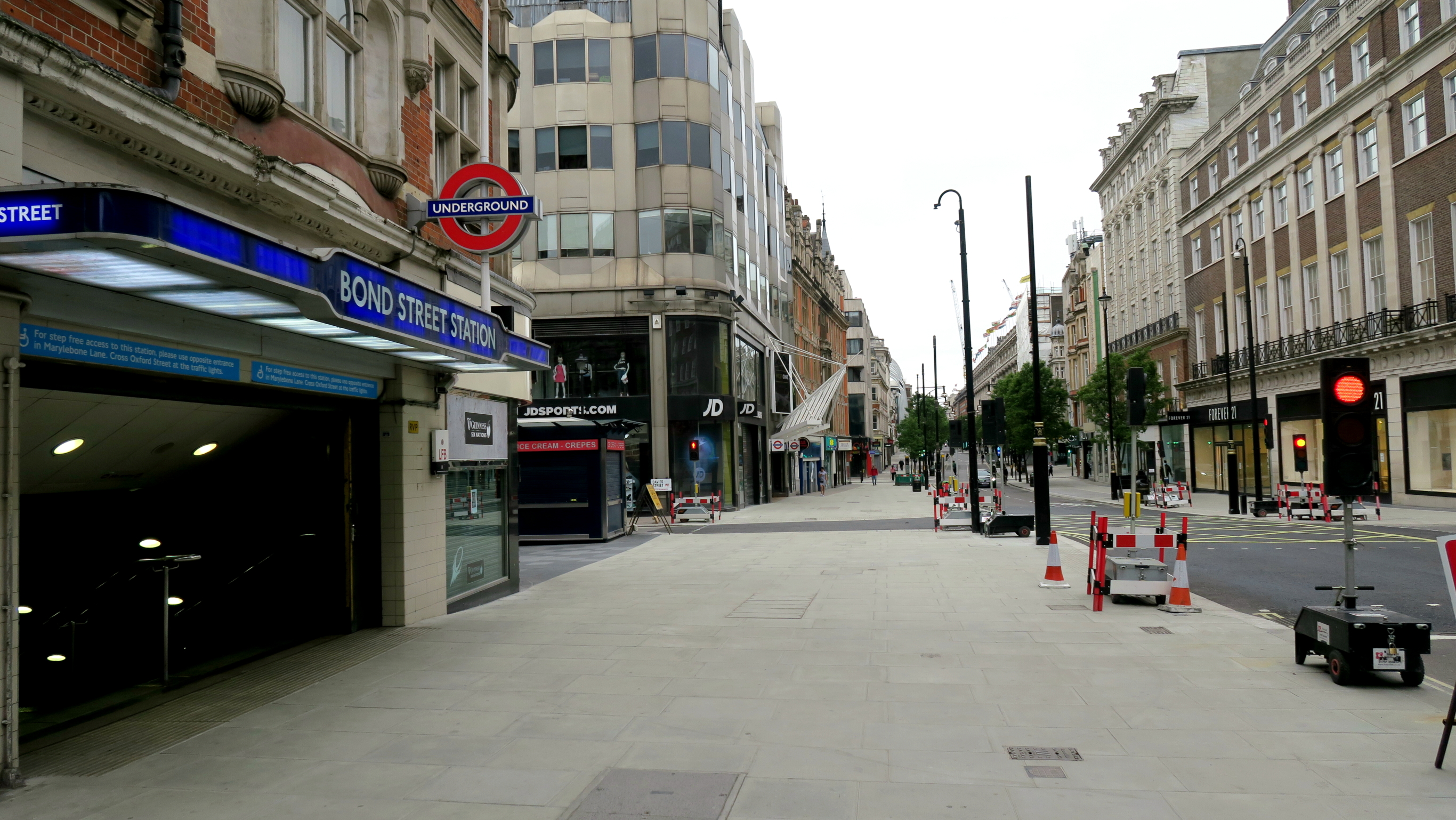
Oxford Street during Covid. (Credit: Wikimedia Commons)
Yet despite that moment of national shutdown, it can still be hard to imagine change. Oxford Street has always been busy. Busy with cars, busy with buses, busy with people, busy with everything. So busy that most sane Londoners do well to avoid it altogether.
But on Sunday, October 25, just before 8pm, Jackson Kabeeroe drove the last bus – the Number 98 – down Oxford Street. By the time the sun rose the next day, the road was closed to all traffic.
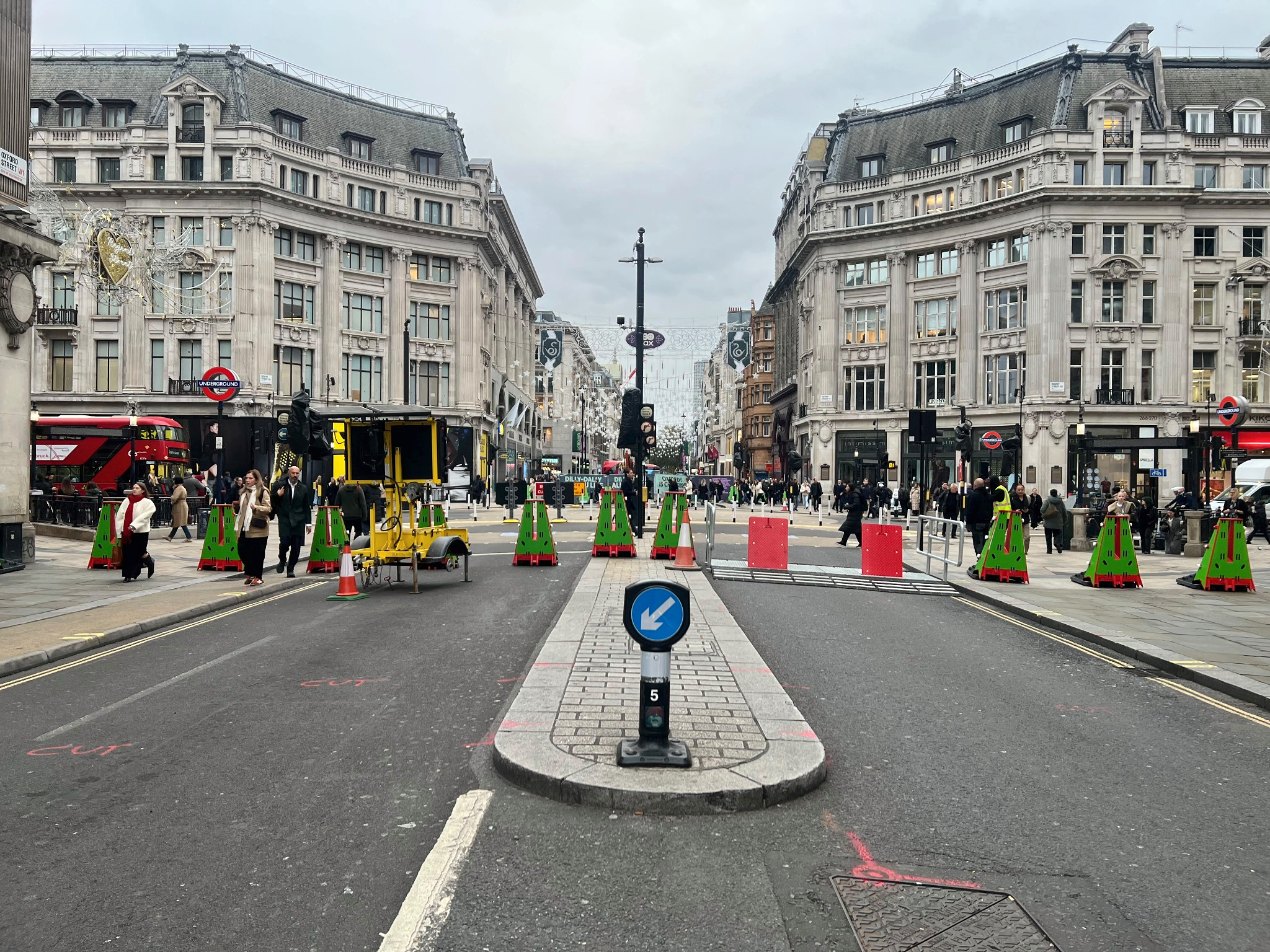
Last night, Thursday November 5, people – namely shoppers and tourists – had fully taken to the steet; this morning, ‘only’ commuters occupied the road. There were no cars, no buses, no taxis, no motorbikes. There was one cyclist.
In my previous musings on Oxford Street, I said it took serious means to delete a street. Such a task has been on Sadiq Khan’s agenda since he took office in 2016. A decade later, he’s done it.
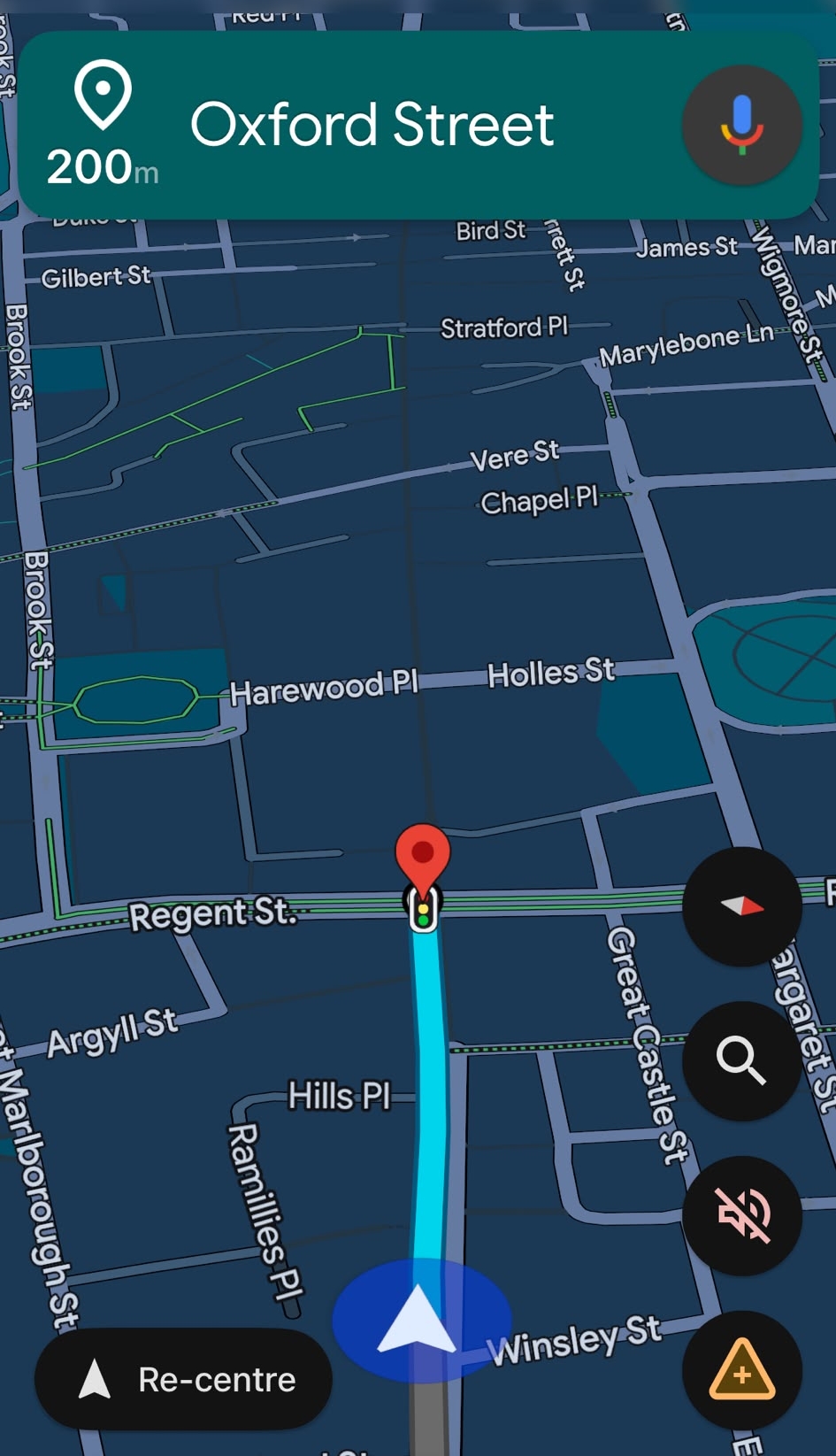
Already gone – Google Maps will no longer route you through Oxford Street.
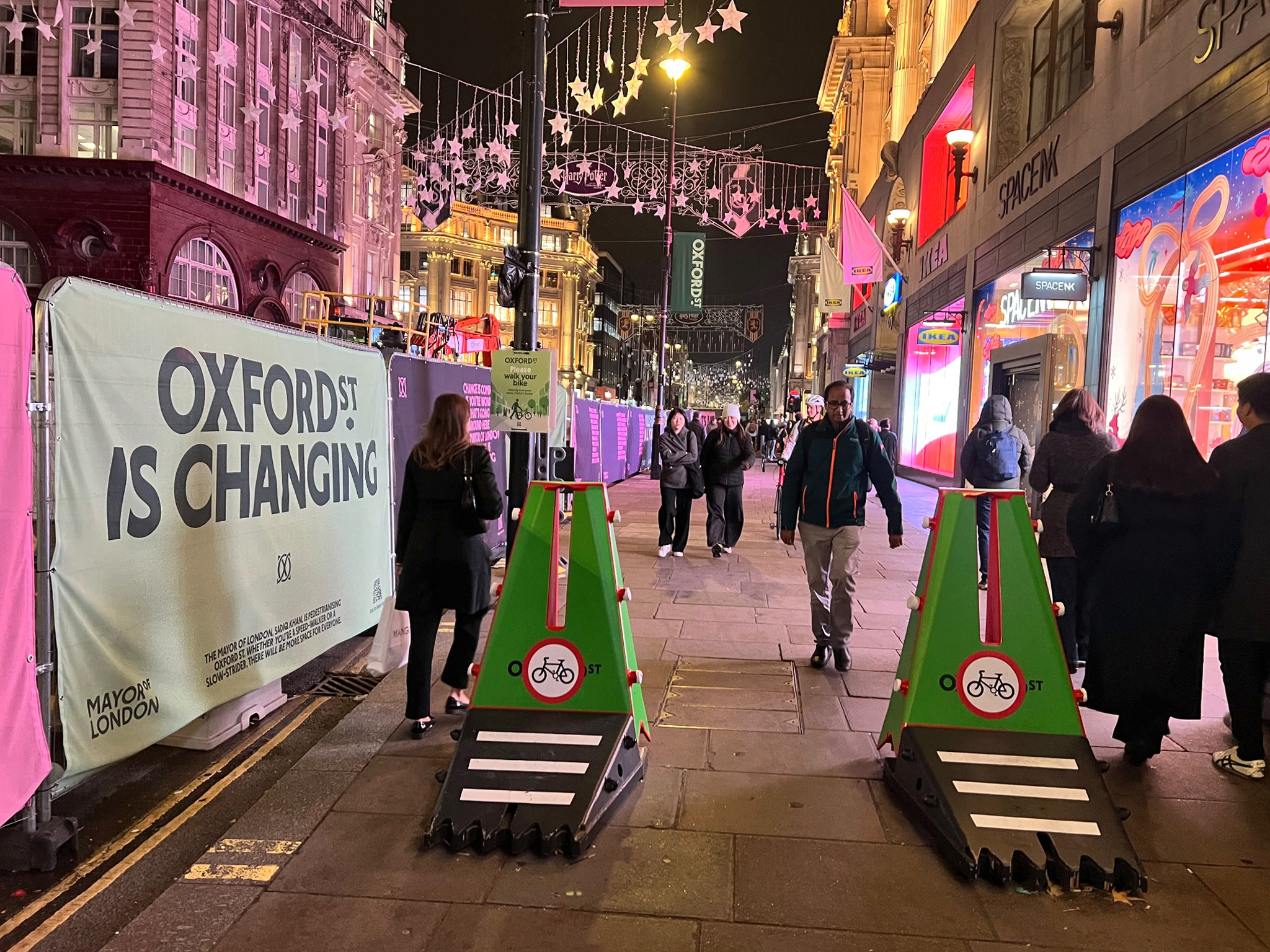
The messy work of preventing traffic and redirecting towards Cavendish Square will soon be tidied up.
And now that’s finally happened, it’s hard to imagine Oxford Street – specifically, the strip of 0.62 miles between Orchard Street and Great Portland Street – any other way. And subsequently one wonders now how so many people ever squeezed onto the pavements without spilling uncontrollably into the road in the first place.
Well, to be truthful, they already did, which is how we ended up here. Back in 1972, when Oxford Street afforded motor vehicles four lanes (four lanes?! Insane, I know), the Greater London Council introduced traffic restriction measures to reduce the growing number of incidents involving pedestrians and vehicles. Pavements were widened, four lanes became two and cars were banned between 7am and 7pm.
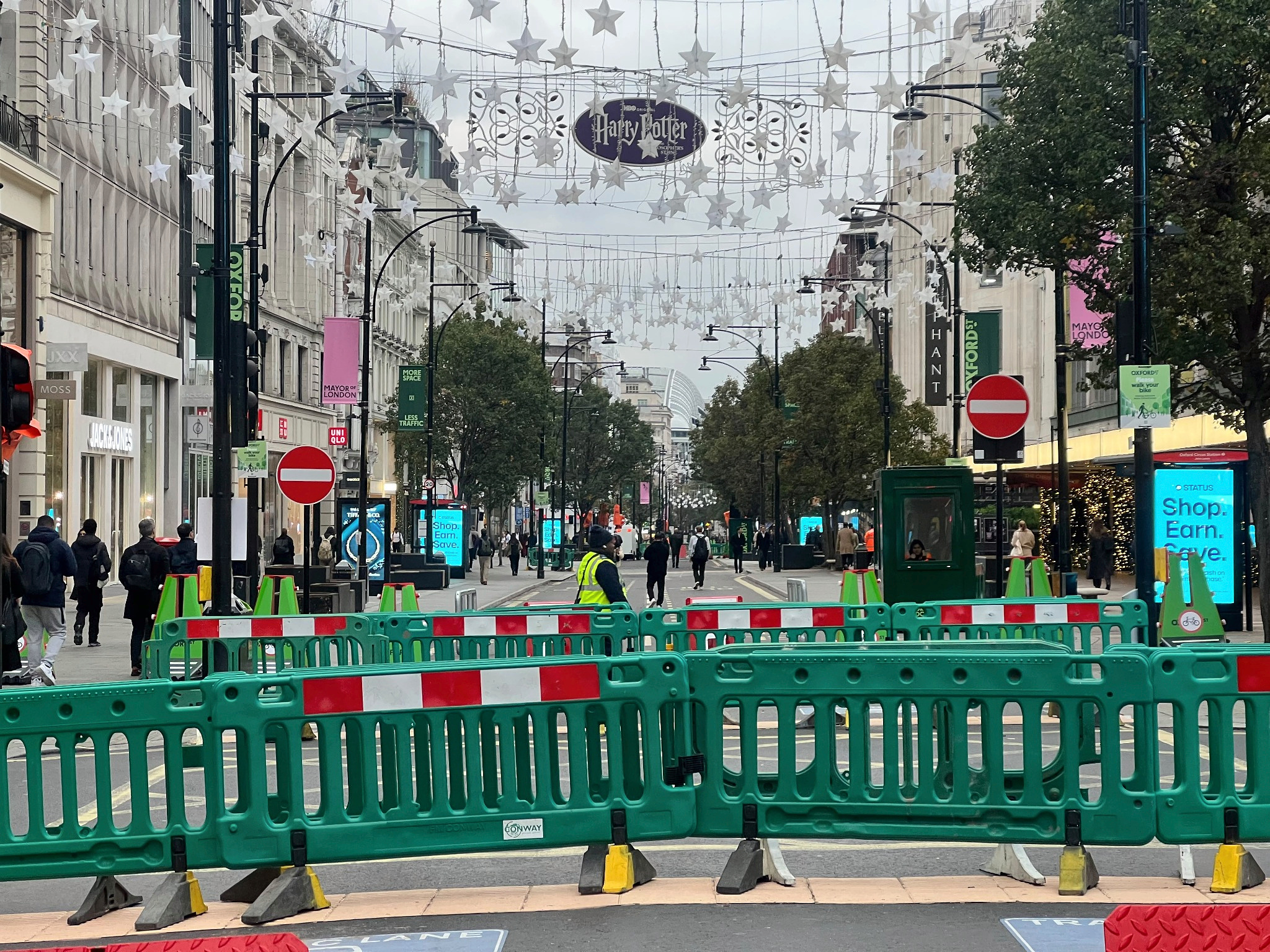
Of course the pedestrianisation of Oxford Street is not without its critics and scaremongers. News has been filled with scum-of-the-earth cyclists flouting the rules and cycling through the pedestrianised zone. But looking at the area now, it would be silly to attempt such a journey due to the sheer number of people blocking your way.
Some cyclists have been left wondering what the alternative routes will be. The answer is simple: follow the same path as the rerouted buses (Routes 98, 139, 390, N98, and N207) to Wigmore Street, or take the more southerly option of Brook Street. As a cyclist myself, I found pedalling down Oxford Street pre-pedestrianisation to be an awful experience, and often one I made by mistake while blindly following Google Maps. A forced reroute is likely to be a blessing. To do the job properly, dedicated cycle lanes for these routes should be added to keep both two- and four-wheeled means of propulsion flowing.
Other critics argue that those in need of assisted travel will be hampered by the lack of a bus route. This can be countered by the fact that the new Bond Street Elizabeth Line station halfway along the pedestrianised zone offers step-free access, and that the buses travelling down Wigmore Street will only be 227 yards away from their previous route.
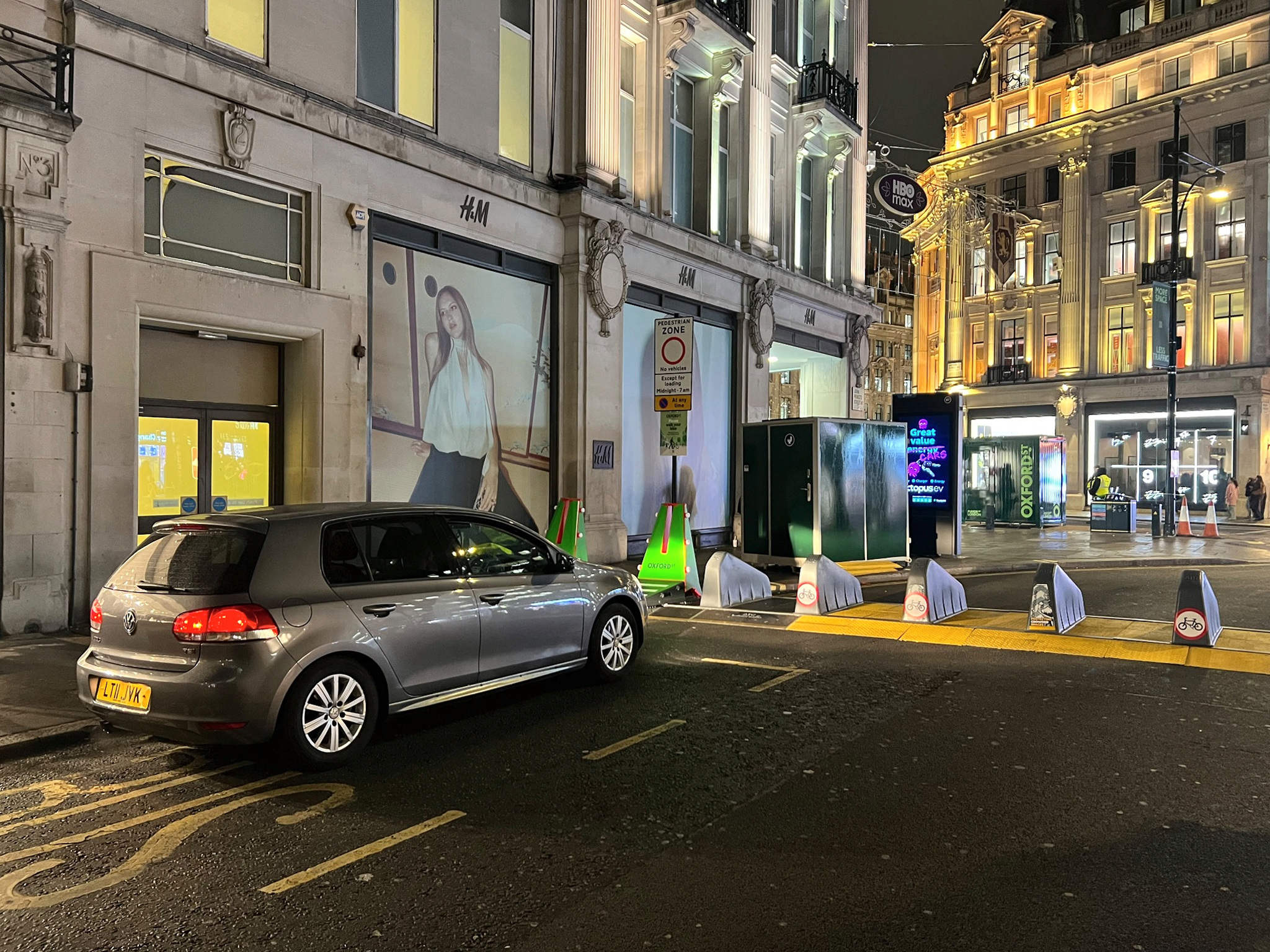
With East leading on immediate pedestrianisation infrastructure measures, one can expect an altogether much-improved public realm and level surface treatment to Oxford Street, making the area more accessible to those with mobility needs.
Other critics, including Westminster council, have argued that traffic will be displaced elsewhere, causing congestion. Studies show this isn’t always the case, but let’s say the critics’ claims do hold true: for starters, Oxford Street traffic was painfully slow at the best of times, not much got through there anyways. And if congestion elsewhere does increase, that is arguably a price worth paying to make one of London’s premier commercial destinations friendlier and safer to those walking into Oxford Street’s shops.
On that note, we should be mindful that Oxford Street needs footfall if it is to remain relevant. With commercial competition from both sides in the form of Westfields (Stratford in the east and Shepherd’s Bush in the west) Oxford Street needs to utilise as many means as possible to keep people heading through its shops’ doors.
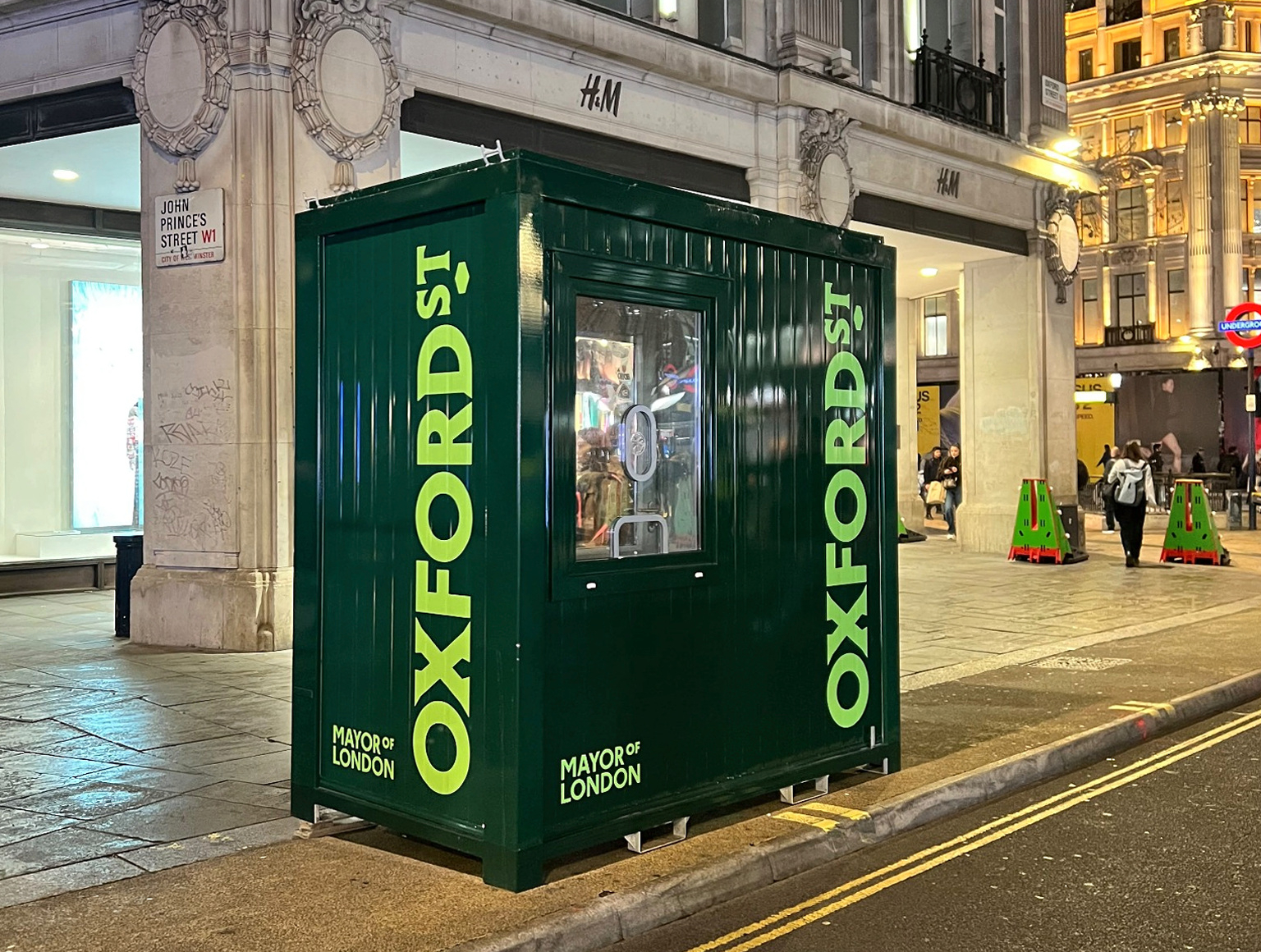
Mini headquarters for the on-street security staff who can be found by the pedestrianised zone’s start and finish. One staffer told me people in general had been well behaved in adhering to the area’s new rules.
While we’re addressing Oxford Street’s woes, Steve Smith, author of brilliant Hoxton Chronicle, argues that even the name Oxford Street is a problem. “Anyone trying to get to Oxford is on the wrong road if they are on Oxford Street, unless they take a detour via Uxbridge.”
Addressing that might prove more difficult. As for Oxford Street’s pedestrianisation, signage and hoarding around it insist this is “just a phase”. More change is to come. Helen Cansick, head of investment planning at Transport for London (TfL), said this was “the first week of a very long programme of investment and transformation.”
“We’re going to see 50 new trees by the spring, more benches and seating area and then over the course of time we will completely improve the place, level all the road surfaces and make sure it’s a really beautiful space that people can enjoy,” she added.
Nabeel Khan, CEO of the Oxford Street Development Corporation, which is overseeing the area’s regeneration, also weighed in. “This is not a privately operated and managed space,” he said. “This is the nation’s high street, and we are handing it to the people.”