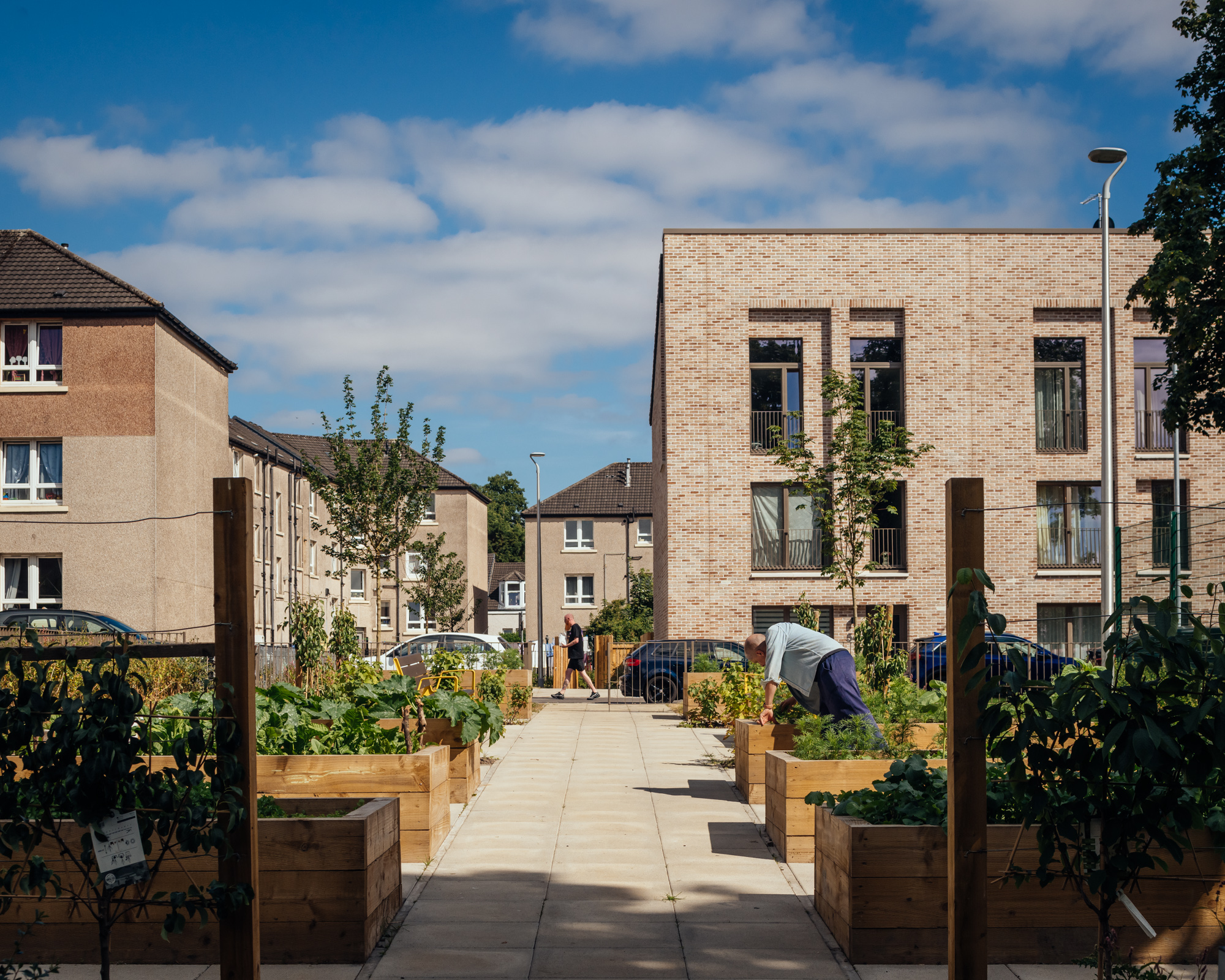
Ananya Singhal of Studio Saar explains his game plan to rescue his hometown of Udaipur, India, from the ravages of uncontrolled development and empower its residents to envisage – and insist on – a regenerative future.
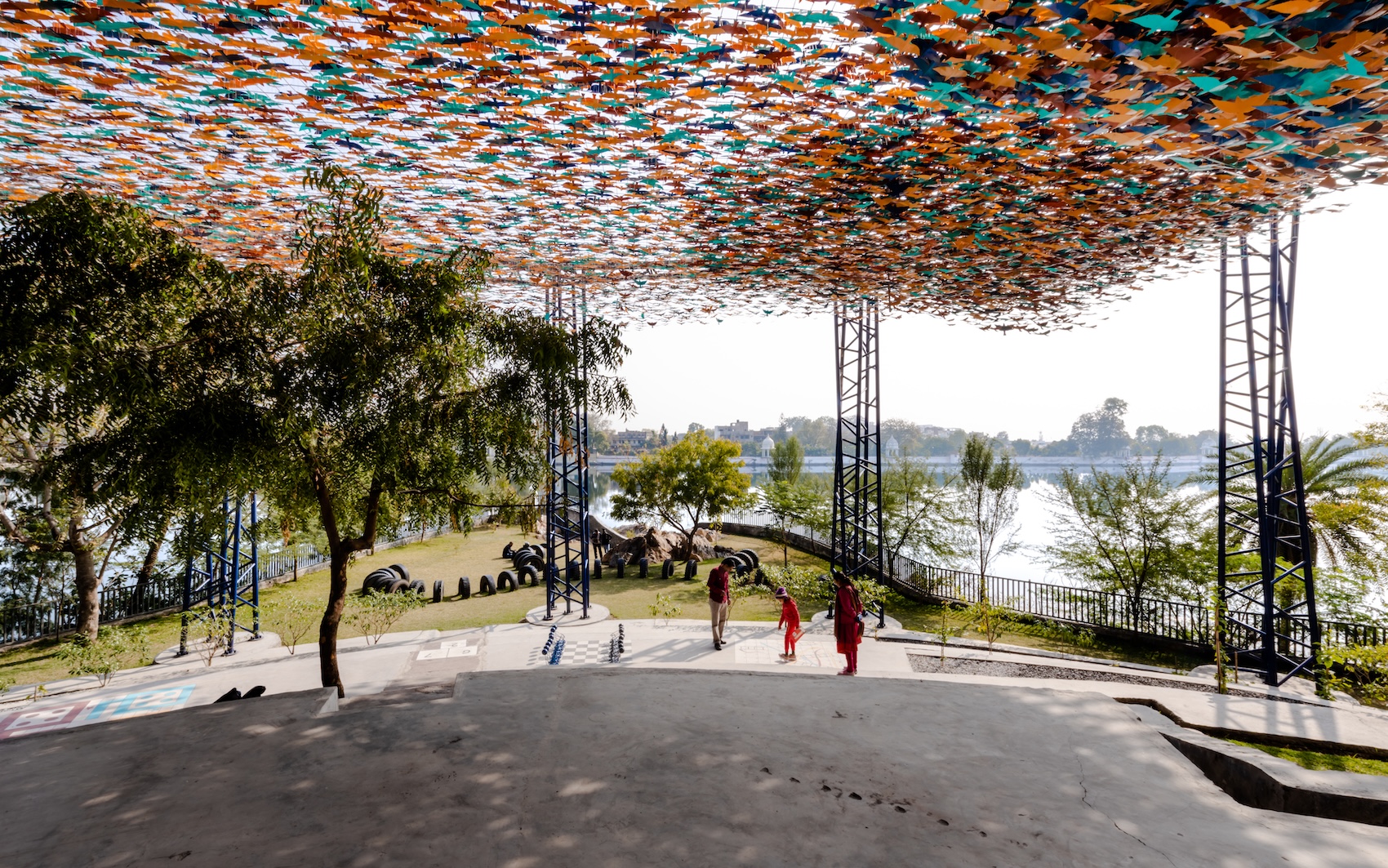
Udaan Bird Park, Udaipur. Photograph by Ankit Jain.
What’s the matter with Udaipur?
It’s a beautiful city. It’s a city where violence is at an all-time low. All the various different communities live together very happily, and we have been immune to some of the political and social problems that have beset other cities. But like any city, it has its problems. In the 80s and 90s the city was being developed by government planners. So we had urban parks, commercial infrastructure, schools, hospitals, and so on. Somehow – and I haven’t quite worked out how it happened – the developers became all powerful. So now we have developer-focused planning, which is really quite unsustainable. We believe that the city is at this most wonderful inflexion point, where we can make sure it doesn’t go the way of other cities – with huge amounts of infrastructure that nobody uses, or lots of pollution – and redirect it towards a more regenerative future.
What role does Studio Saar have to play?
We are looking to create a parallel planning department and to use our skills and resources to participate in the development of the city. As an architectural practice aligned to a global corporation, we have the capability and resources and the international perspective to look at what’s happening in regenerative urban planning around the world and to bring that knowledge into Udaipur.
How do you make a more regenerative city?
First of all, you need accurate information. Everything we think we know about the city is wrong – including the number of people who live there. If you look at any other metrics – the number of cars people buy, the number of COVID vaccines, the number of children being born and the number of people who die – either we have the most car-hungry, fast-producing, short-lived citizens in the entire country, or we have a much bigger population than the official figures suggest. In my view, somewhere between 1.2 and 1.4 million people live in Udaipur, yet the census puts the figure at 550,000. If you’re planning for 550,000 rather than 1.4 million – even if you have the best intentions in the world – you can’t plan properly.
How has the census got it so wrong?
There are many reasons. The last census was taken in 2011, but for many reasons it wasn’t accurate even then. For example, there was a lot of migrant labour; people would work in Udaipur for 11 months of the year, then return to their home village for one month of the year. The census has to make a decision as to whether these people belong to the village or to the City. They can’t be counted twice. The decision was taken to report them as living in the village.
How has this miscalculation impacted on the city?
It impacts on pretty much everything. Take public transport. It costs 20p to go 20 kilometres. It’s not a lot of money, and it’s brilliant for local people. The bus operator is desperate to provide more buses, but the city plan says it can’t, because a city of 550,000 people doesn’t need more buses. We’ve carried out an analysis of the city’s public transport and produced a map of the number of people who live within five or ten minutes walk of a bus route. It’s not straightforward, as the reality doesn’t always reflect the way the service is advertised. Buses that are meant to go on certain routes actually take slightly different routes. The bus stops are two foot high, and hard to spot, so nobody uses them. Buses often stop at places that aren’t marked at all, too. But also, the network is not complete. It doesn’t go to the university district or the industrial area, so many of the people who would most benefit from public transport are not served at all.
How are you using this intelligence?
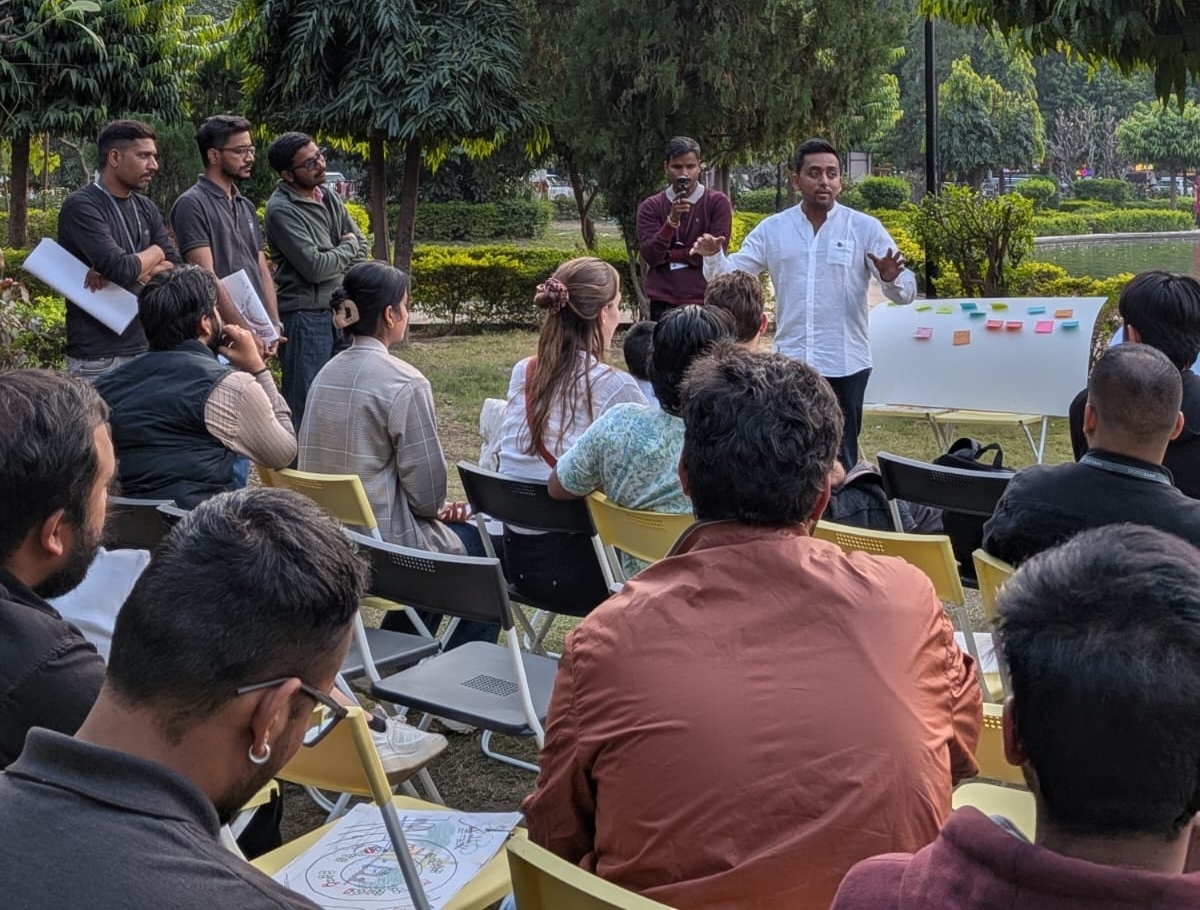
So what we’re trying to do is to empower citizens by giving them information that allows them to challenge what’s happening with regard to the city’s development, and maybe to save the city from uncontrolled growth. It’s not enough to do the research. You need to find different ways to communicate the knowledge and to inspire people and encourage them to recognise the agency they have in shaping the future of the city. For example, we have just carried out a series of workshops with Open City, to engage people in thinking about the potential for the city’s open space. This is something we feel passionately about.
How does the work you’re doing dovetail with the public sector’s role – and does the government feel that you’re stepping on its toes?
We are working very closely together. I’m certainly not interested in criticising the government. All we want to do is provide information to allow for better decisions to be made. We all want the best outcome for the City, but the scale of the challenge is huge, and we will get the best results if we can work together to find solutions. I have always found that if you go to a government officer with a good idea, they are more than happy to say, “OK, how do we find a way to make this work?”
Can you point to an example of where this has already worked?
Udaan Bird Park is a good example. One of the things our research has shown is that there are not enough public parks in the city. The government would like everyone to live within five minutes of accessible green space. By mapping all of the city’s green spaces, we have been able to identify those parts of the city that lie within a five- or ten-minute walk from a park.
Our aim is to create a city where every single resident – and particularly every single child – has a nearby green park available to use. So we have started by identifying small pockets of land that are already owned by government agencies and institutions, and seeing if we can convert these into pocket parks.
With Udaan Bird Park, the government leased the land to Secure Meters, and Studio Saar designed a public space/playground that improves access to the lakeside and provides a green haven for wildlife and people alike. Many different organisations – public sector, private sector, community groups – have been involved, and the result is a really successful, well-used public space.
Is your hope that Studio Saar will roll out numerous pocket parks across the city?
No! I really don’t want to get involved with every project. The idea would be for Studio Saar to be the matchmaker between the government, the site and the partnership. Now that Bird Park is finished and flourishing, it is becoming a little easier to reach out to other companies and persuade them that this kind of public-private partnership can work. We’ve put the stepping stones in place. Now we need to step back.