Renner Hainke Wirth Zirn Architekten and WDJArchitecten have transformed a listed early-20th-century coffee warehouse in Rotterdam into a spectacular new home for the Nederlands Fotomuseum.
A short walk from Rotterdam City Centre is the rapidly evolving area of Katendrecht – an urban neighbourhood defined predominantly by its harbour and historic docks. Flush with a layered history and post-industrial grit, the area, often described as one of Rotterdam’s “coolest new neighbourhoods”, is undergoing a resurgence due to its popularity with creative studios, a diverse culinary scene and waterfront living. Here, old brick warehouses integrate with a new creative culture.
Within this area of renewal, a listed structure known as Santos Warehouse has been repurposed as the new home for Nederlands Fotomuseum (the National Museum of Photography). Encompassing 6.5 million objects, its photography collection is one of the largest in the world. Founded in 2003, the museum has resided in the post-war Modernist Las Palmas building across the Rijnhaven dock since 2007, but more recently began to face space and capacity limitations, requiring the organisation to explore alternative locations.
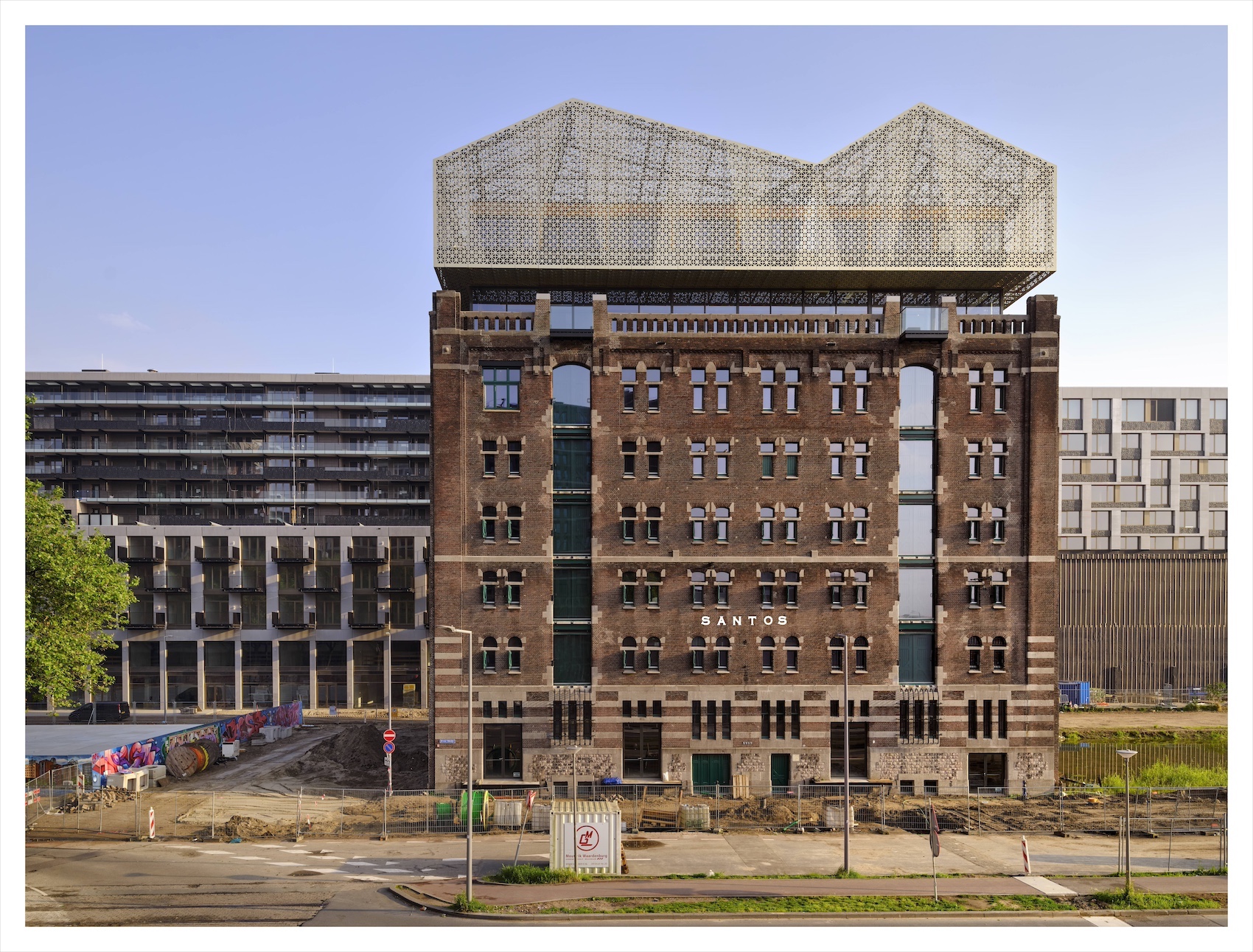
In its previous life, Santos Warehouse stored Brazilian coffee. Harking to the ‘golden age’ of the port of Rotterdam, the building opened in 1902 and remains one of the best‑preserved warehouses in the Netherlands, having avoided the devastation that razed the city centre during the Second World War. The building sat empty for many years until 2021, when a duo of architecture studios – Renner Hainke Wirth Zirn Architekten from Hamburg, and local firm WDJArchitecten – began the delicate task of restoring the building’s historic fabric. Initially intended as a showroom for German department store Stilwerk, the building was acquired by Nederlands Fotomuseum in 2023, and from then on was destined for its cultural future.
Throughout the process, the architects preserved and retained as much of the building’s historic fabric as possible, maintaining the authenticity, character and history of the original six-storey structure. But Rotterdam is not a city to focus solely on the past, and such a robust monument required an equally unique moment of architectural whimsy: a golden ‘crown’.
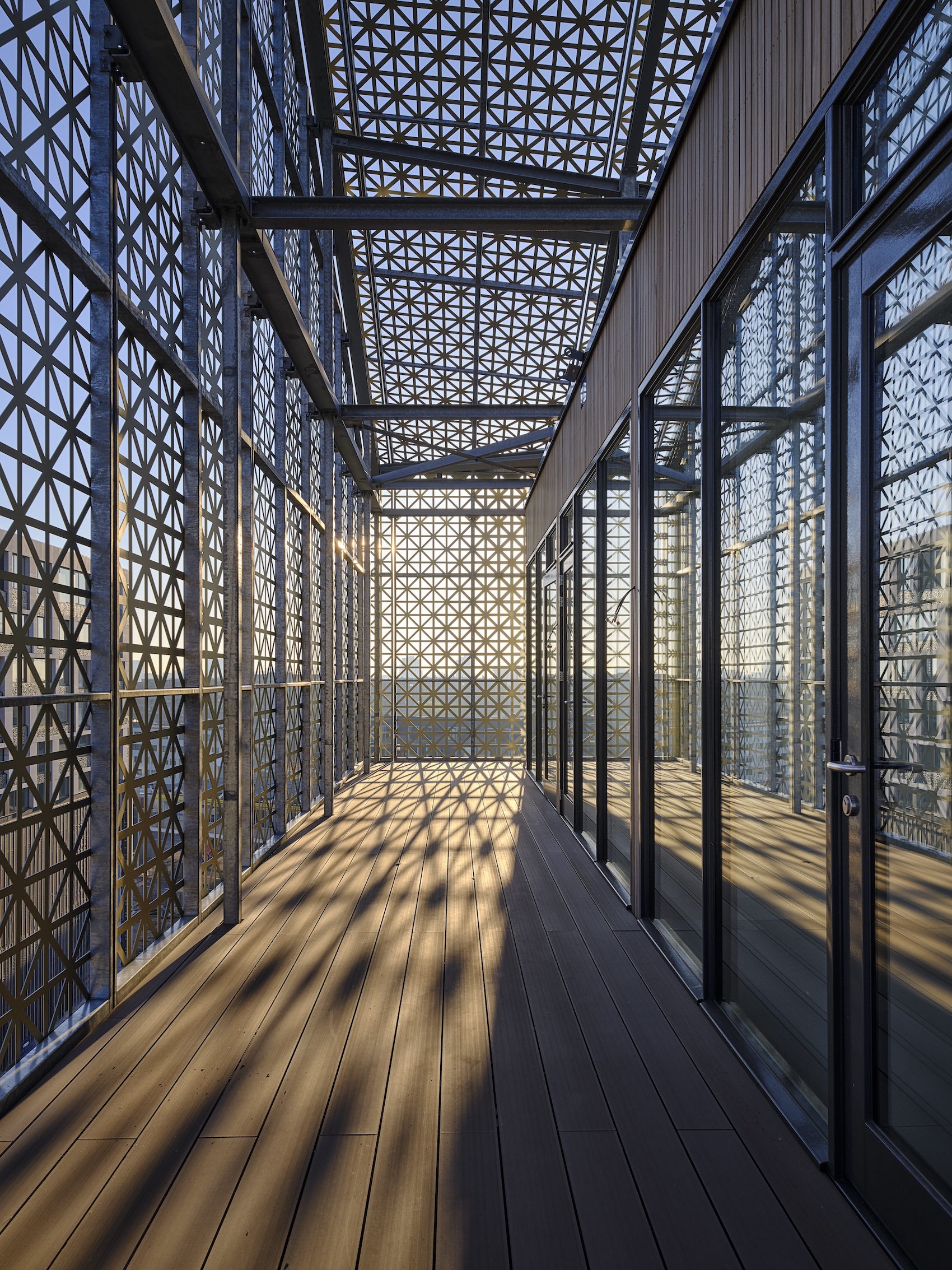
Designed as a semi-transparent veil, this two-storey extension rises from the masonry mass. In sharp contrast to the existing brick, with its strong, grounded presence, the extension is expressed as a crisp, lightweight origami of creases angled back from an archetypal house-shaped elevation, in a form evocative of folded paper. The perforated aluminium delicately hovers above the masonry, elevated by a wrap-around glazed façade at level 6 that contains staff offices and provides panoramic views from the restaurant. The top level, concealed by the gold exterior, is split into short-stay apartments.
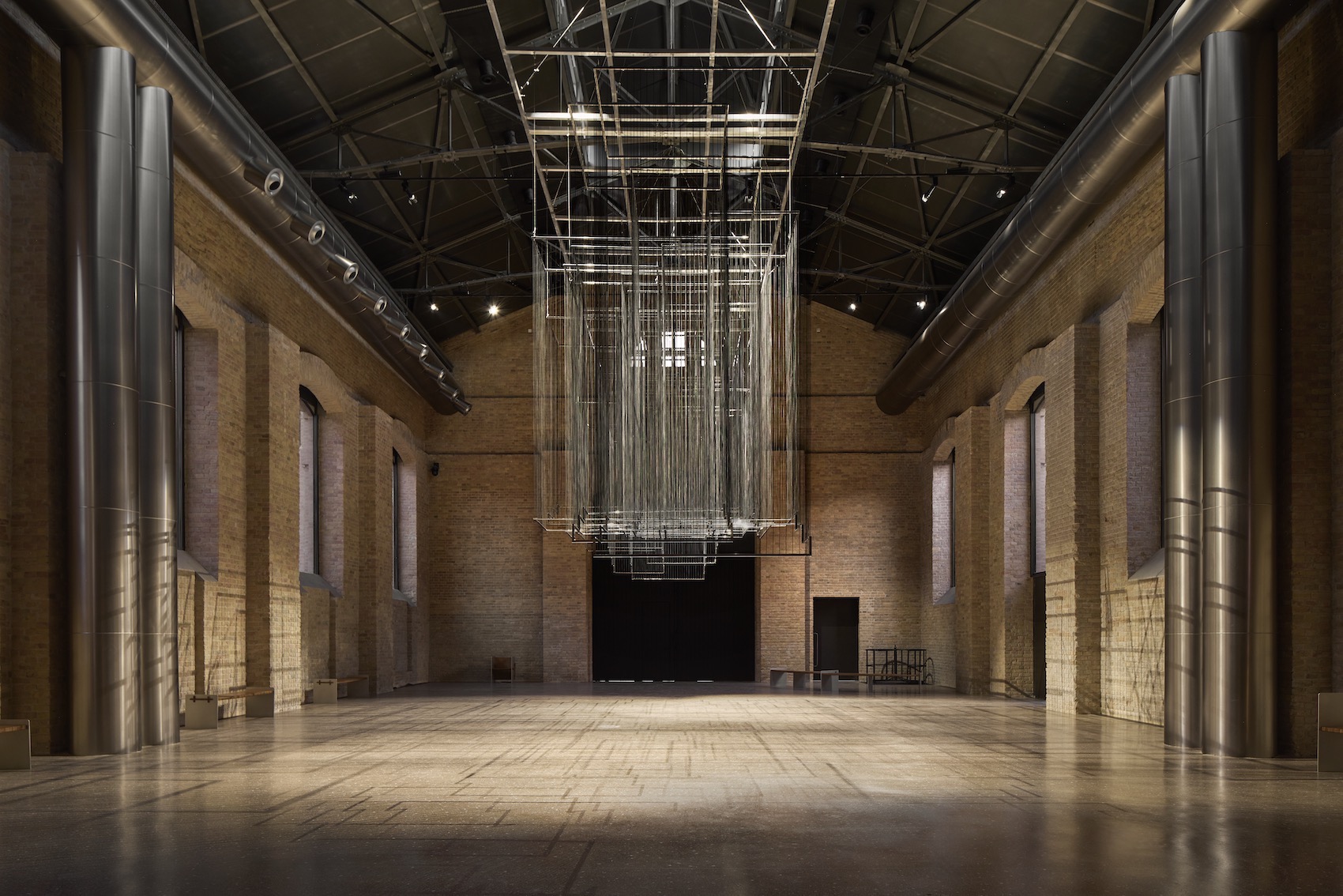
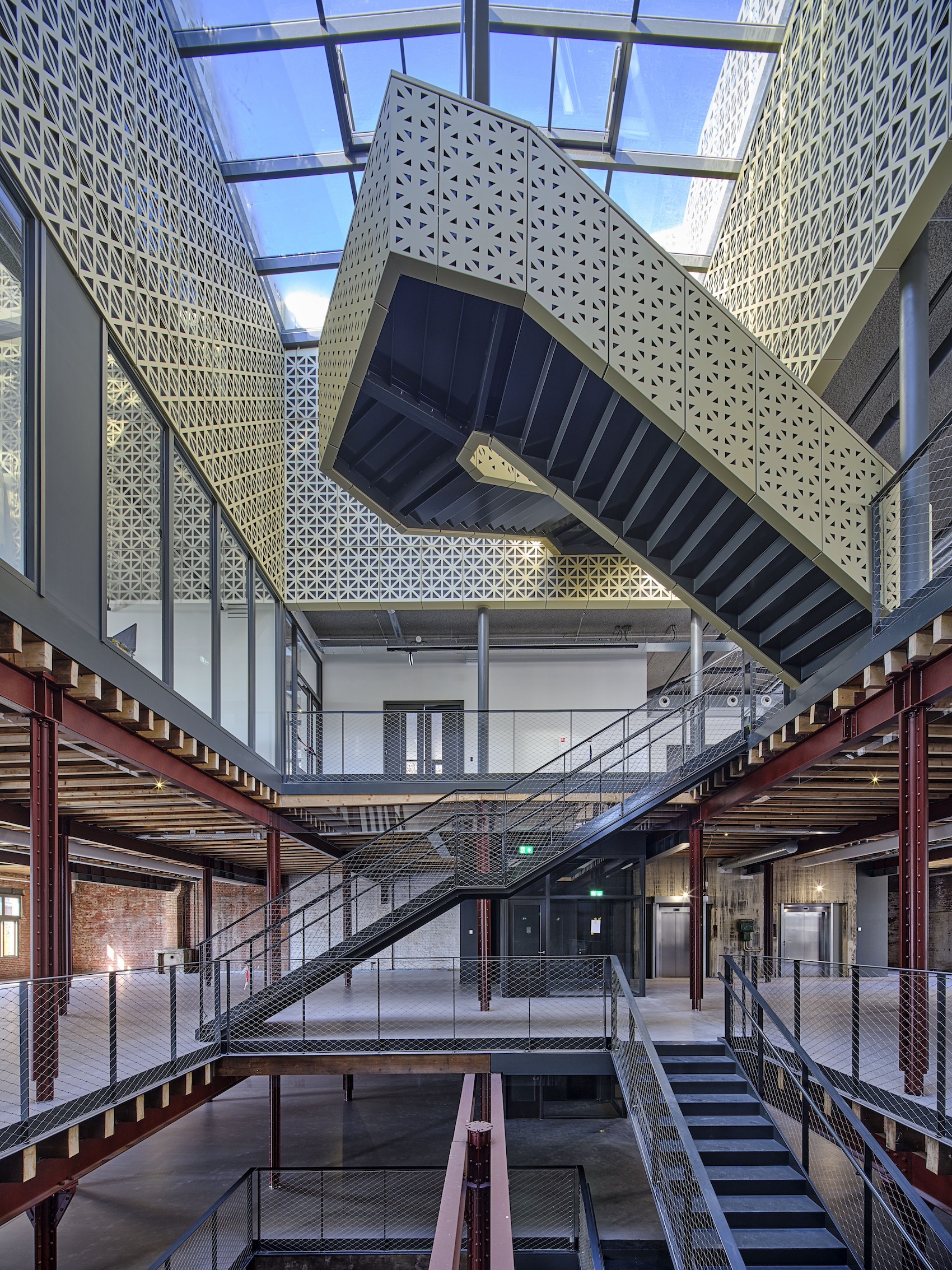
The form extends into the interior of the building, into a void carved through the centre of the entire structure that creates an atrium to draws light down through each floor without disrupting the rhythm of the original brick façade or its windows. Circulation is choreographed around this new internal perimeter, with a central stairwell connecting each level and arrival points framed by the visible section cuts through the existing timber joists.
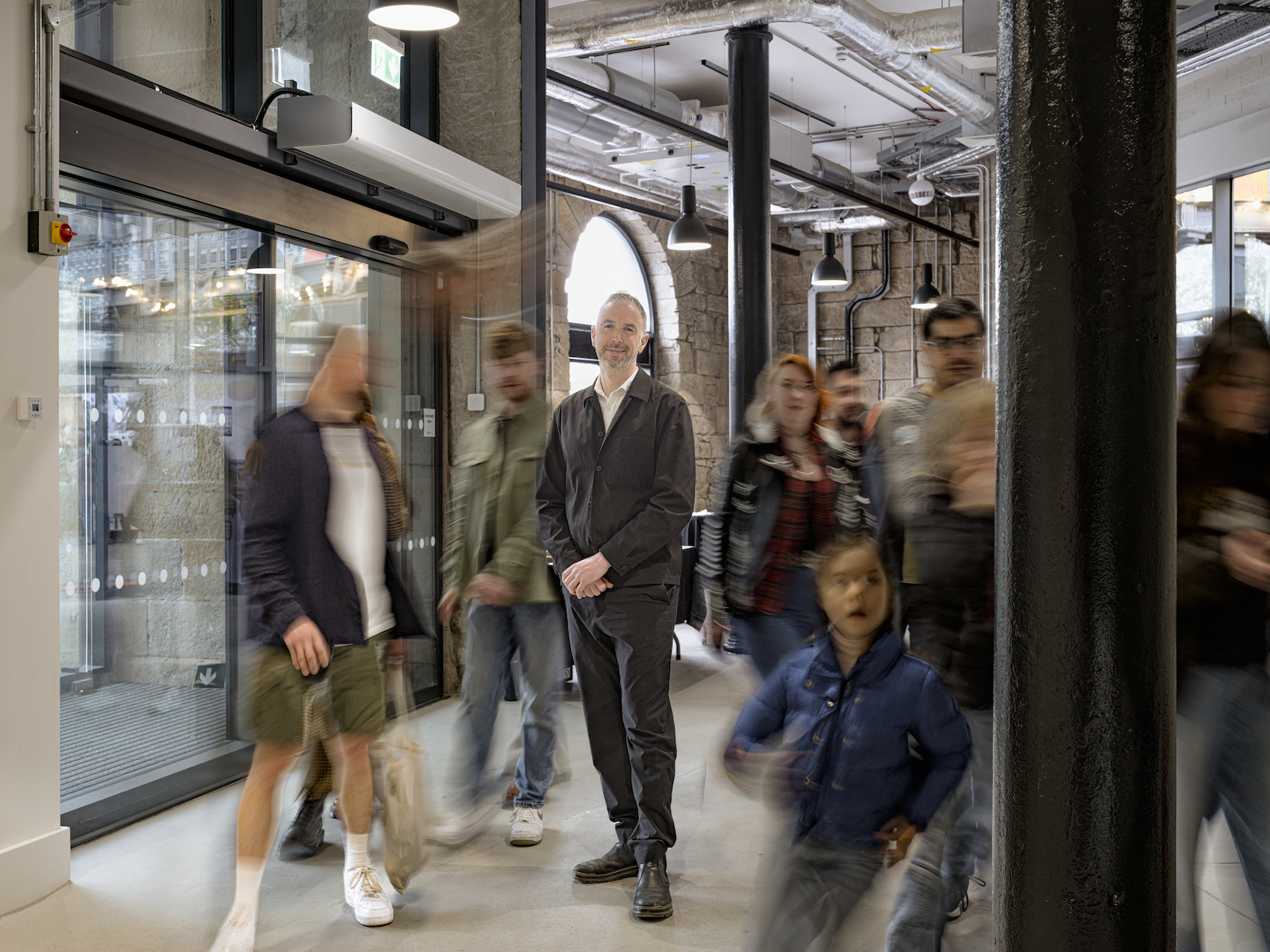
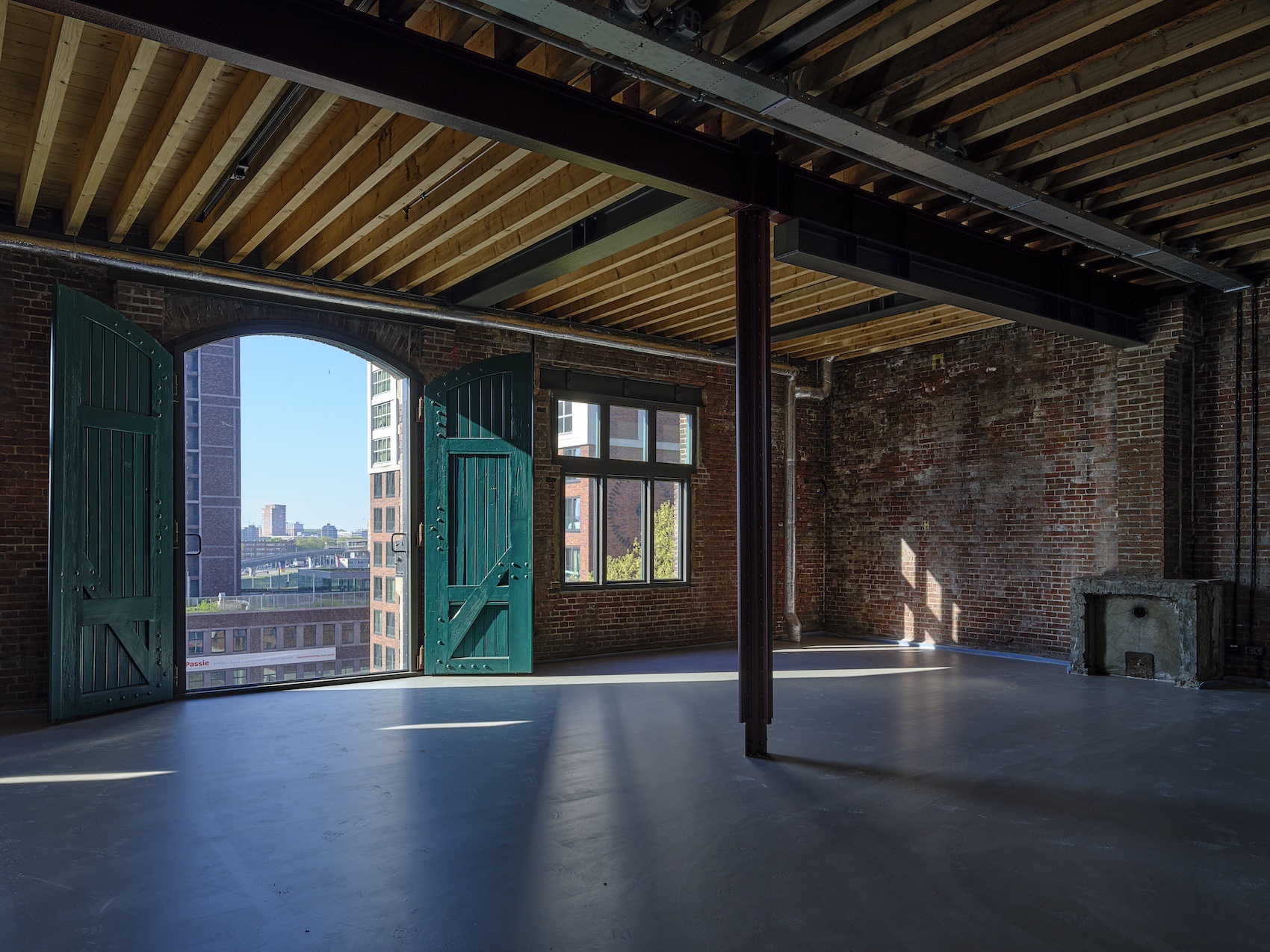
Internally, Renner Hainke Wirth Zirn Architekten and WDJArchitecten implemented a strategy of insertion, largely avoiding direct interaction with the existing fabric. Throughout, the striking red steel columns and timber beams of the original construction are exposed and celebrated. The designed exhibition spaces are given room to breathe, and visitors are afforded as much space to enjoy the ambience of the building as the exhibition content itself. On the ground floor, timber seating and bookshelves break up the open floorplan with warmth and tactility.
The new museum integrates a combination of public uses that complement its role not only as an exhibition space but as a cultural centre for photography. The ground-level entrance houses a café, library and bookshop. Stacked in between exhibition spaces for its permanent collection (ground floor exhibition space designed by LMNOP) and temporary exhibitions (floors four and five) is a suite of climate-controlled facilities and a conservation centre, with glazing introduced along the circulation routes acting as a living museum and allowing visitors to view the storage, conservation and digitisation processes undertaken by specialists. The basement provides the perfect conditions for darkroom and education space.
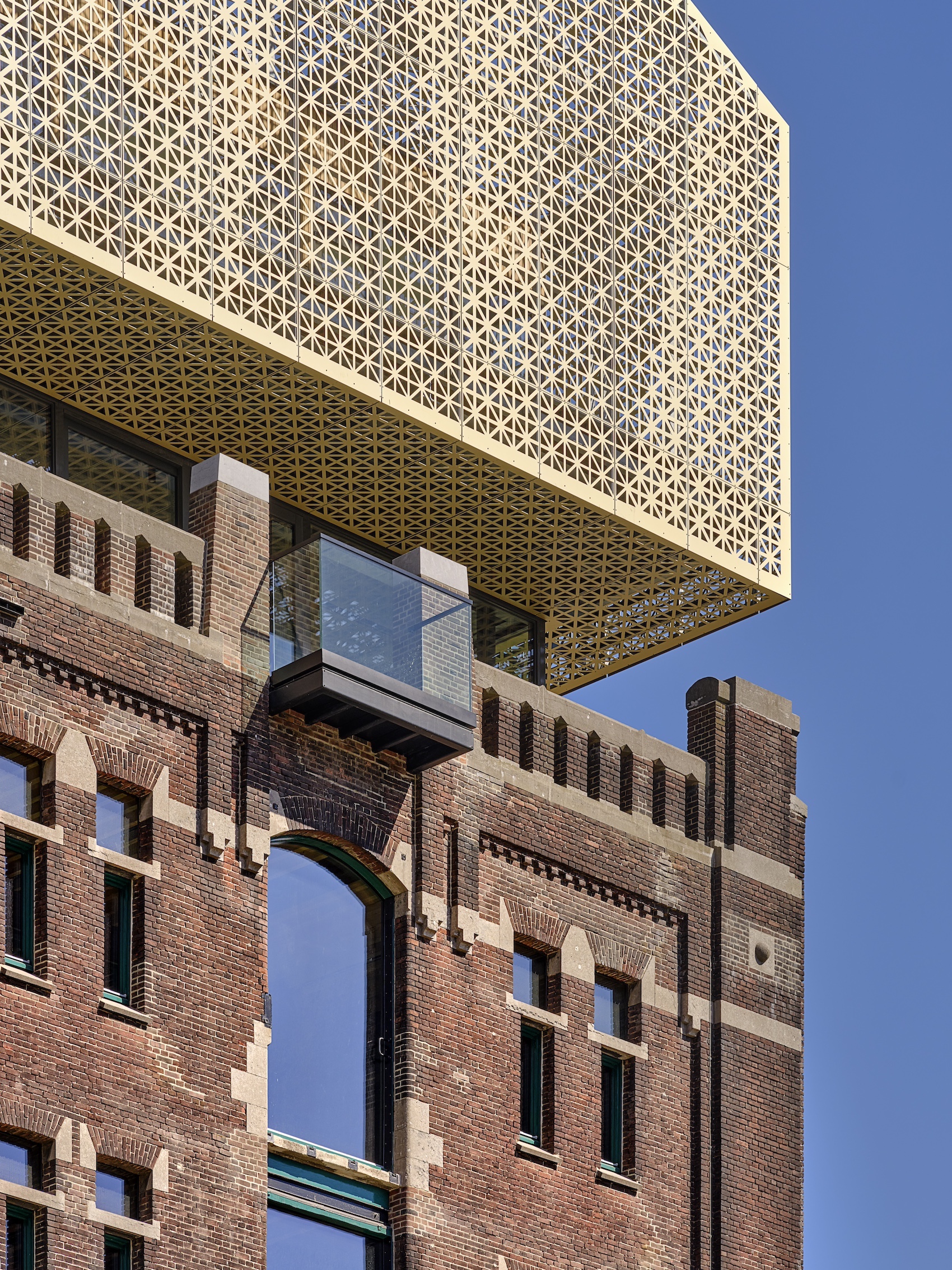
Nederlands Fotomuseum is the second significant public museum to open in Katendrecht in the past twelve months, and despite having been designed originally for an alternative occupier, its rehabilitation and contribution to the local area make it feel destined for cultural use. Across the water, Fenix – a new international art museum dedicated to migration – opened in May 2025, with an equally dramatic crowning architectural addition. Designed by MAD Architects, it shares a similar ethos of preserving the existing warehouse while introducing a distinctive external feature that asserts its presence on the waterfront.
It’s easy to conjure up images of Rotterdam as modern, studded with “iconic” buildings like Markthal (MVRDV) and De Rotterdam (OMA). But it is also a thriving cultural hub grounded by the DNA of its historic port. In a city shaped by its industrial legacy and architectural experimentation, the reinterpretation of Santos Warehouse shows how a contemporary addition can revive and reinterpret historic fabric. With its floating aluminium crown, the building flourishes with a second chance to live again.