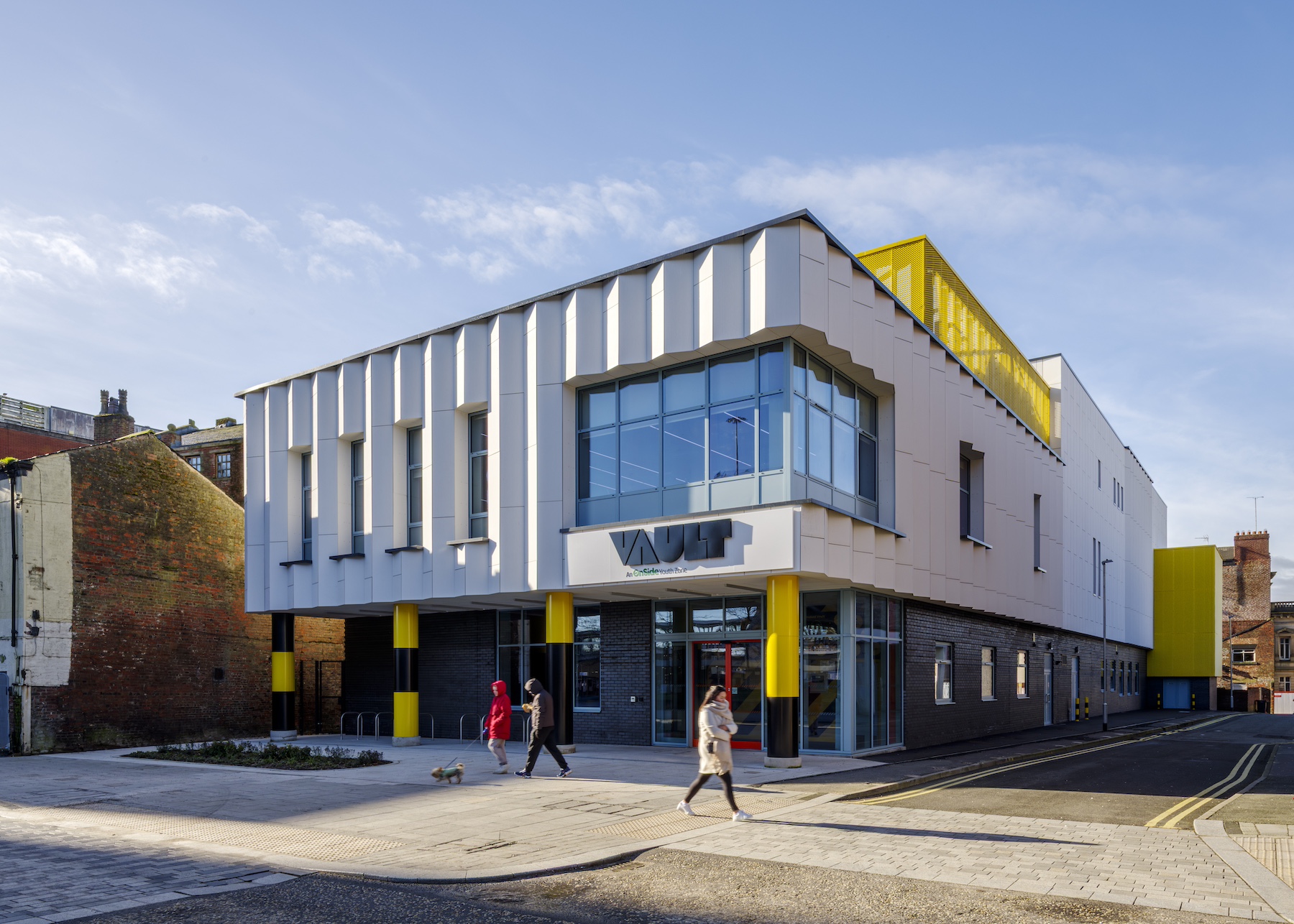
John Puttick Associates’ multi-storey youth centre for OnSide draws on Preston’s brutalist heritage to deliver a new civic landmark that treats its young members with ambition and respect.
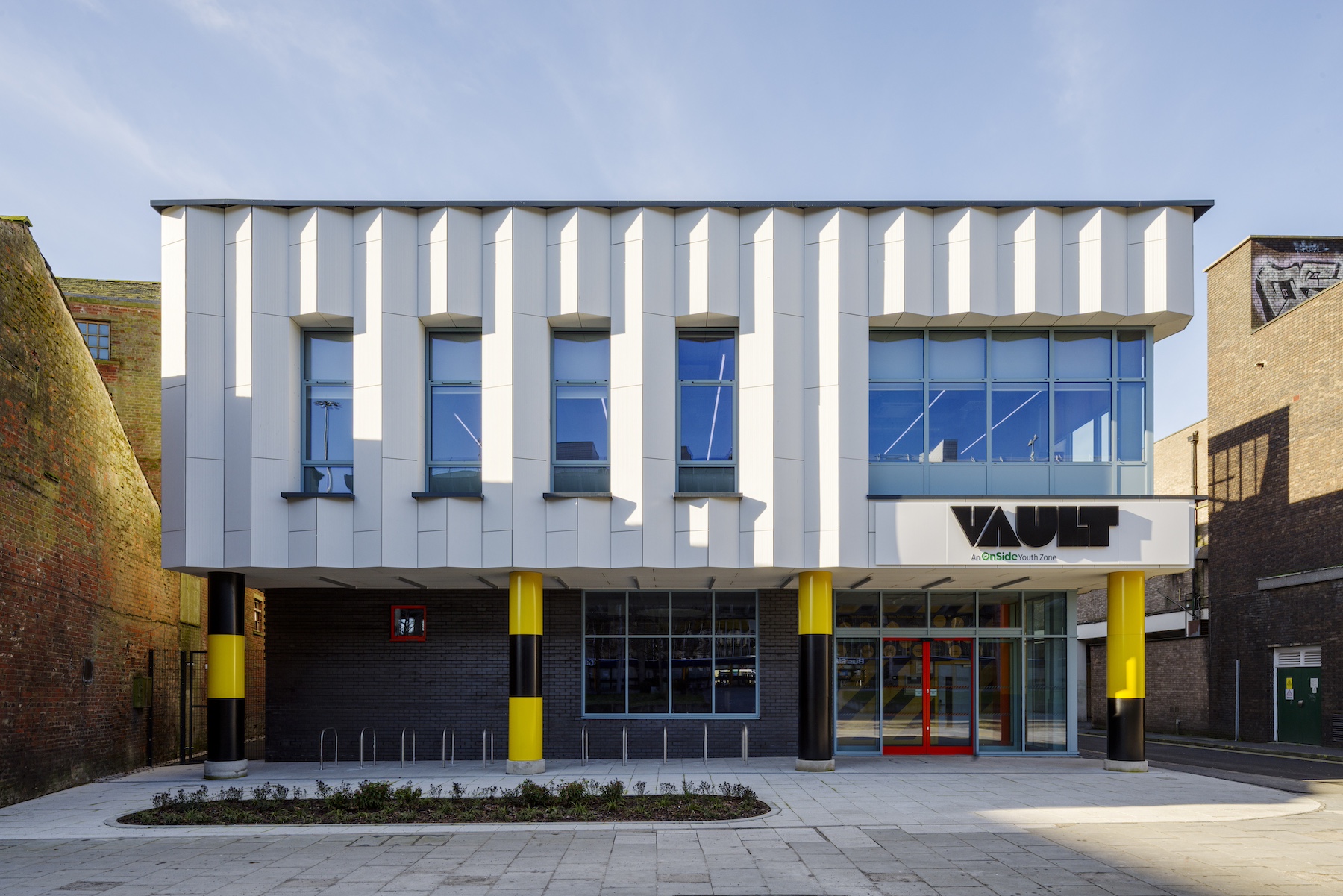
John Puttick Associates (JPA) has completed Vault Youth Zone in Preston, marking the culmination of a decade-long engagement with the regeneration of the city’s Harris Quarter. The project completes a trio of interventions by the London-based practice, following the award-winning restoration of Preston Bus Station – the Grade II-listed brutalist landmark that sits directly opposite – and the redesign of the public square between them. Together, the three schemes form a coherent programme of civic renewal led by Lancashire County Council and Preston City Council, combining transport infrastructure, public realm and community provision within a single, sustained investment in the city.
Vault is the nineteenth Youth Zone in the OnSide network and the fourth delivered by JPA, extending the practice’s ongoing collaboration with the charity. Funded in part through the government’s £20.9 million Towns Fund, alongside contributions from the Youth Investment Fund and Preston City Council, the £8.9 million building provides a permanent and prominent facility for young people at the heart of the city.
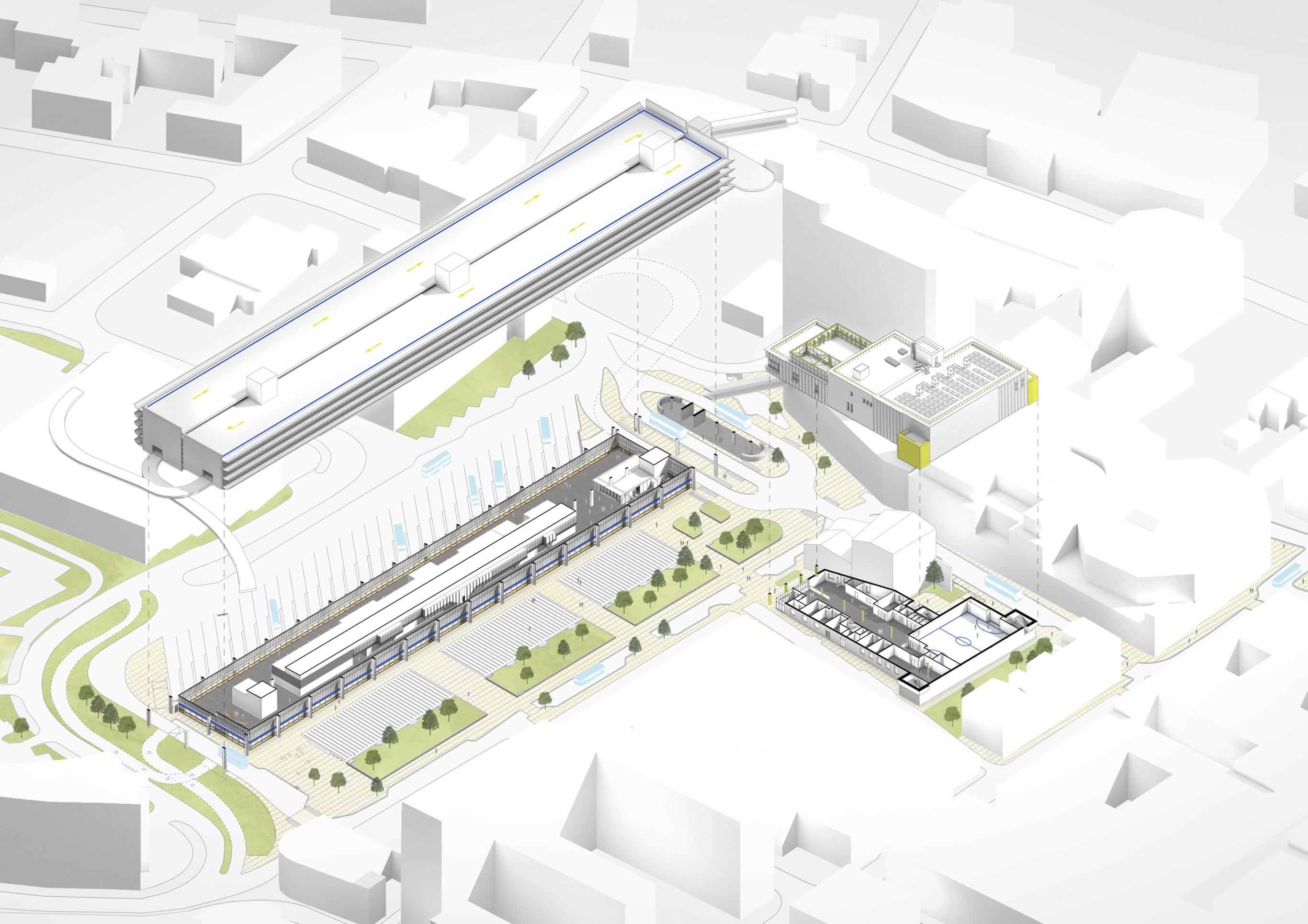
Site Axonometric.
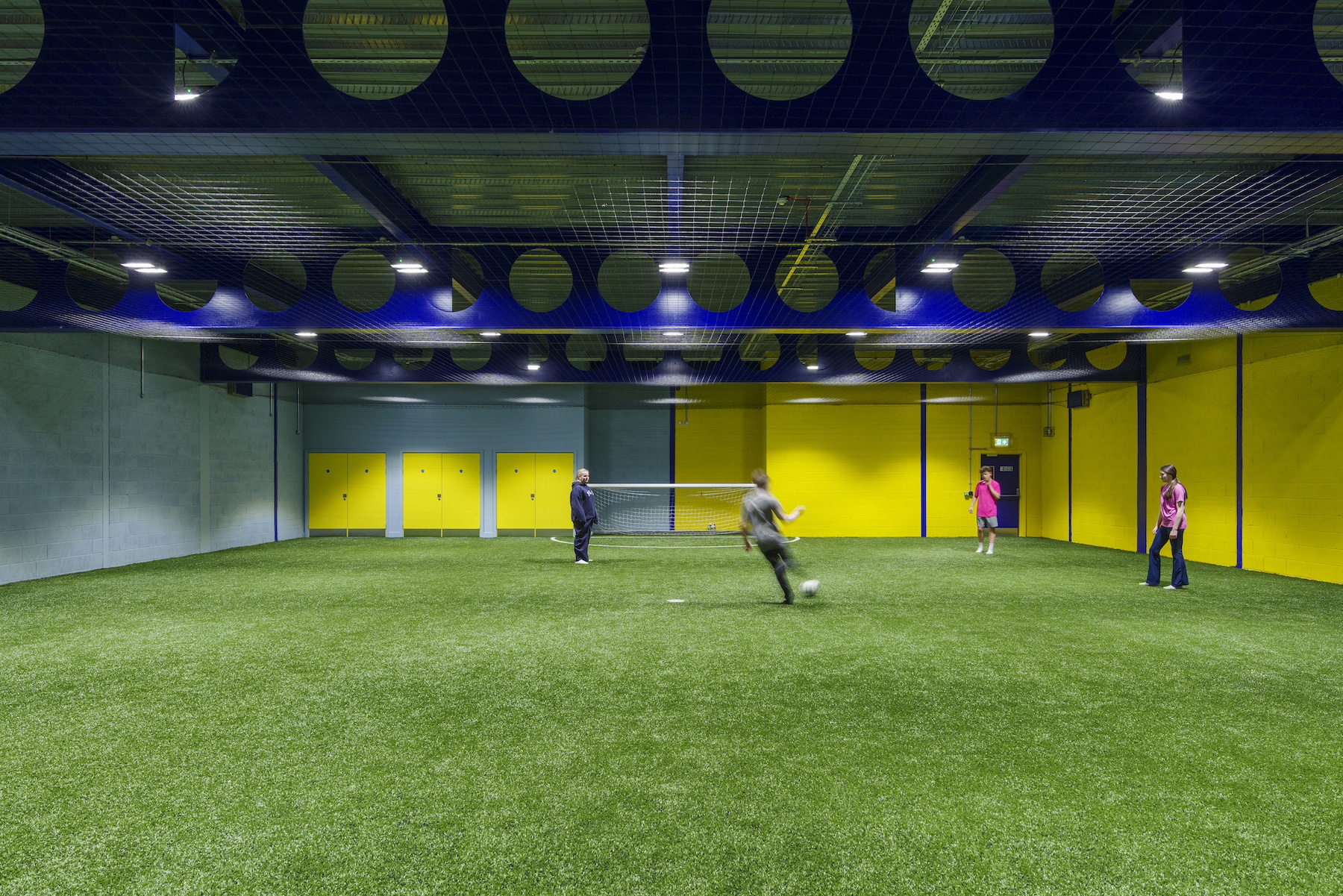
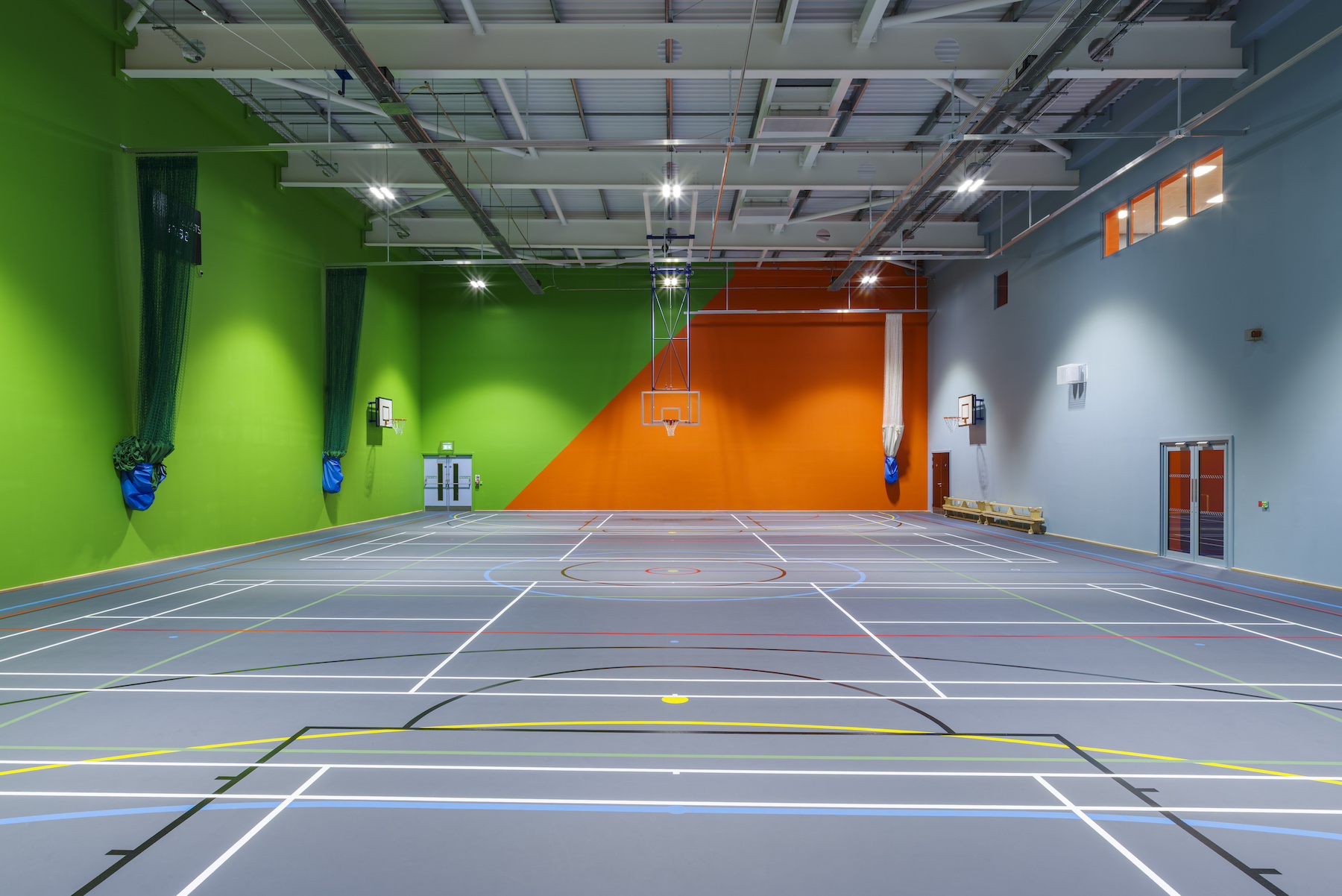
Occupying a tight urban plot, the building’s form is a direct response to its constraints. Accommodation is stacked vertically, with the largest volumes – including a full-size sports hall and indoor kick pitch – positioned towards the more enclosed rear of the site. Doing so allows the building to step up from the street, reducing its impact on the adjacent listed warehouse while maintaining a more human scale at ground level.
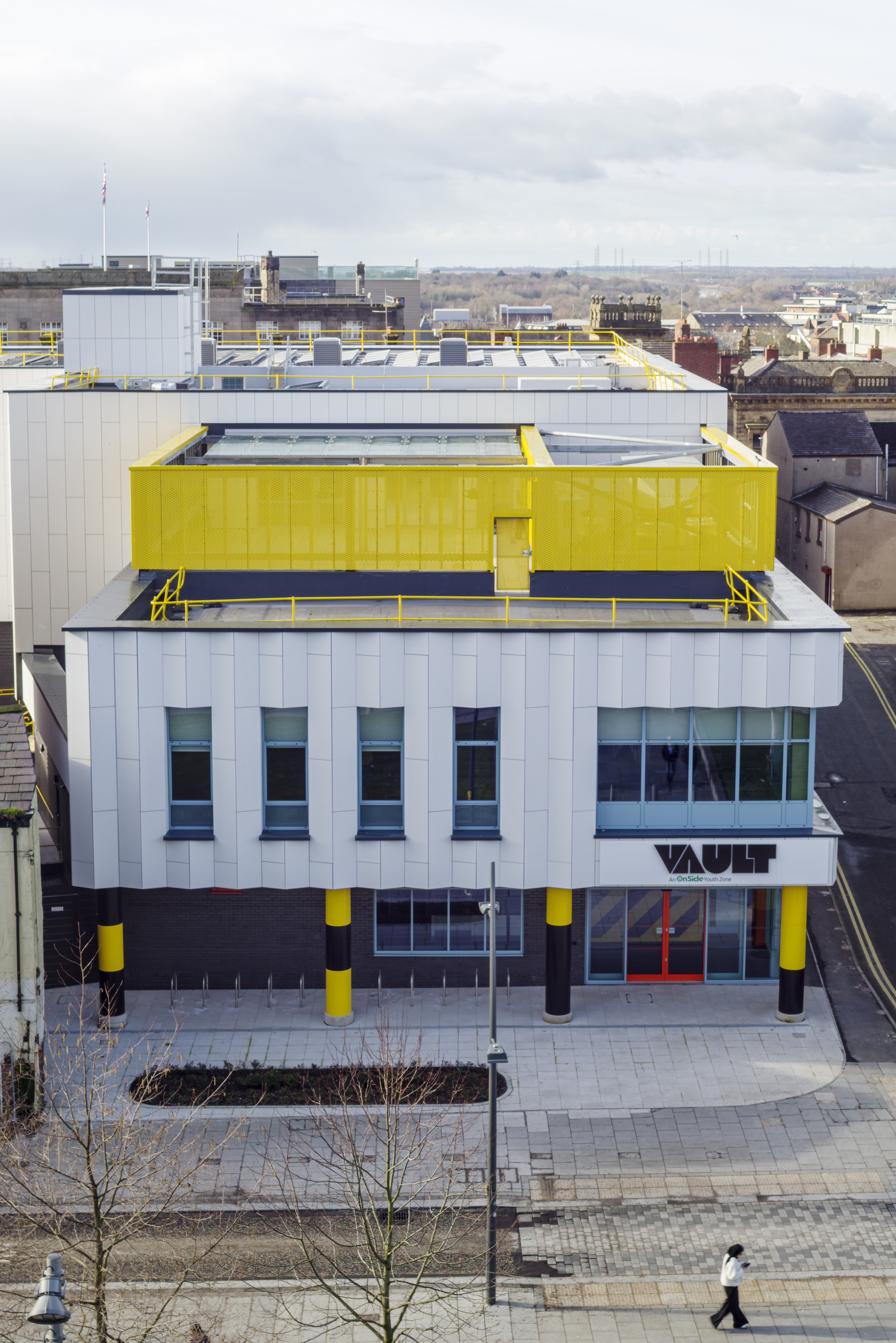
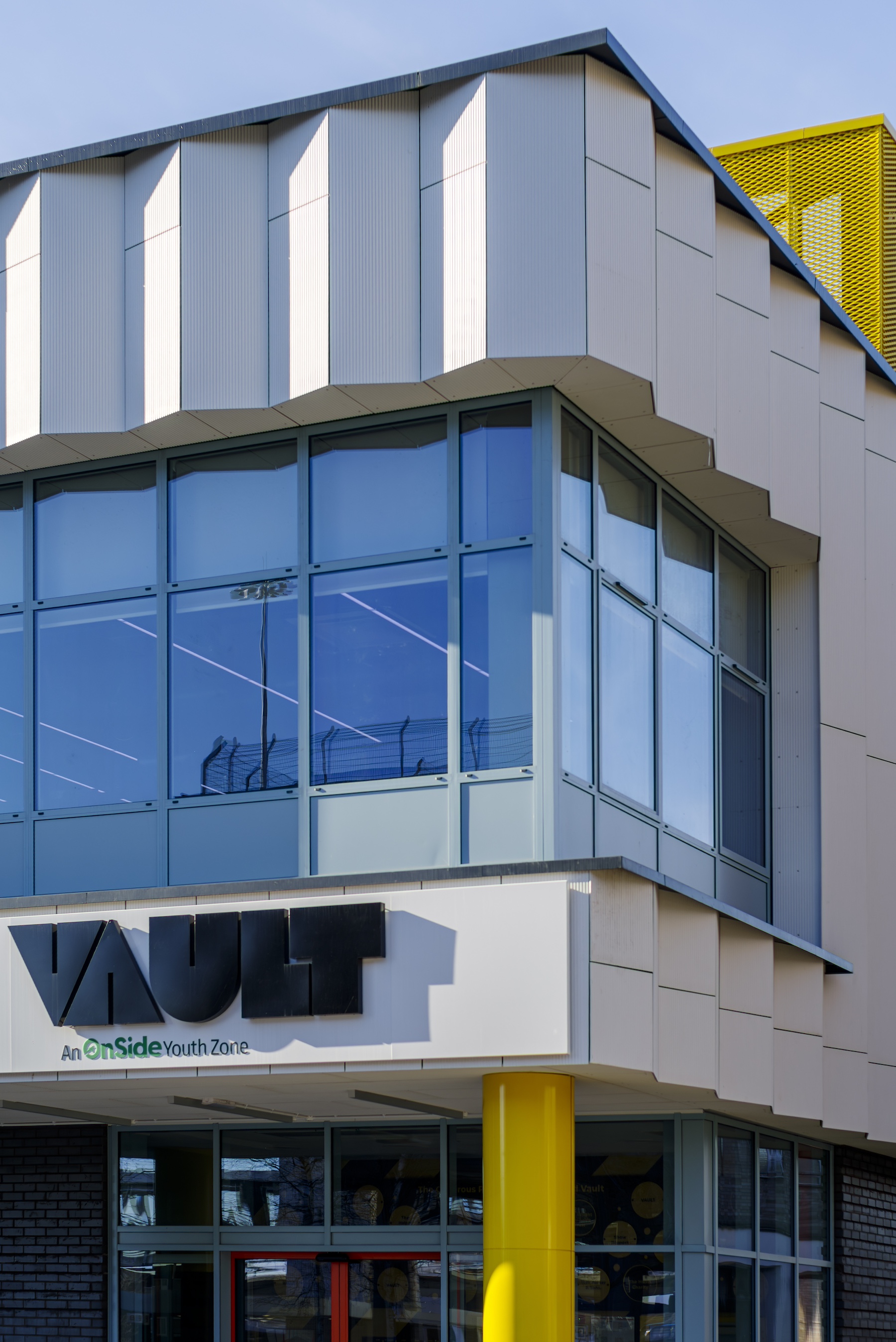
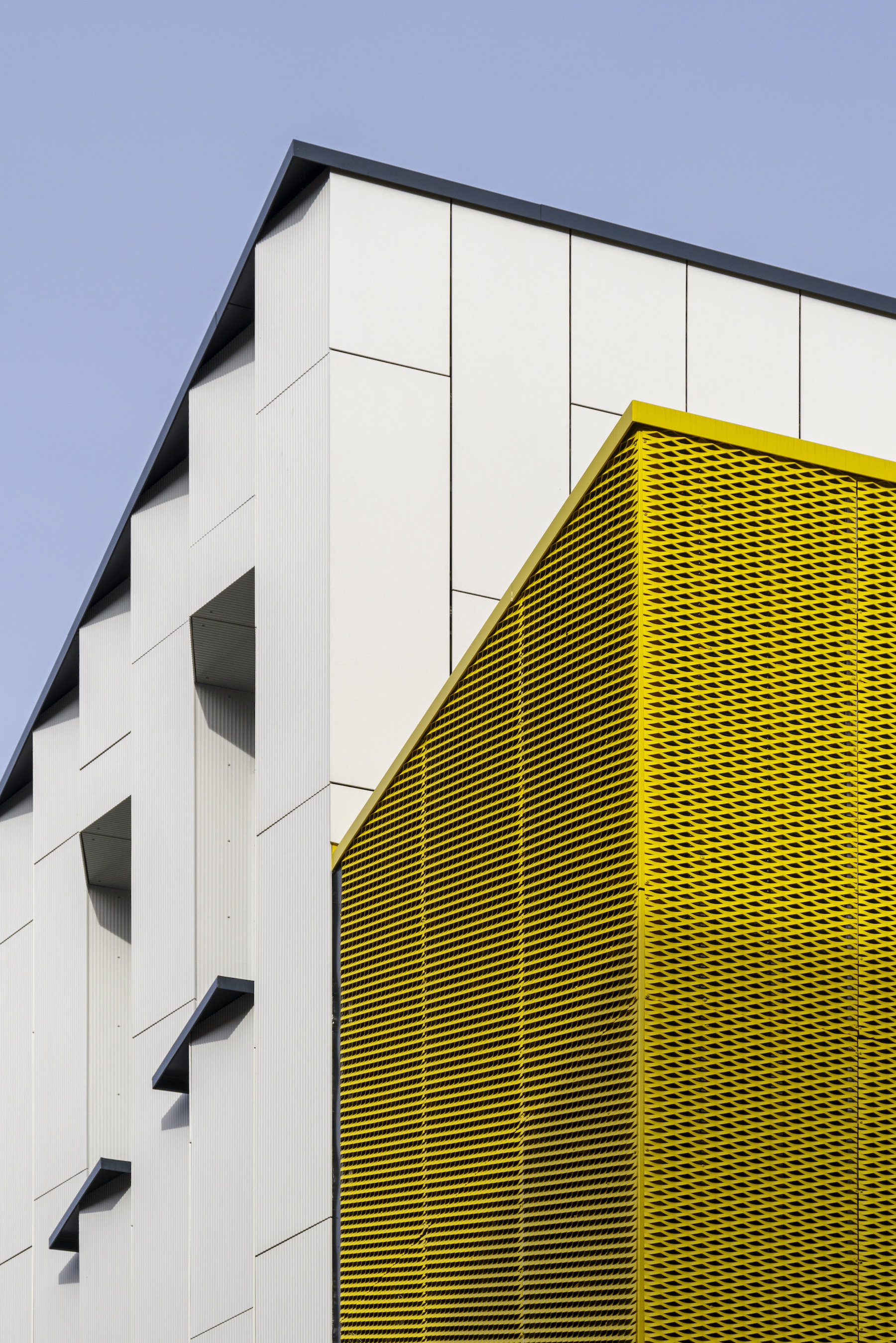
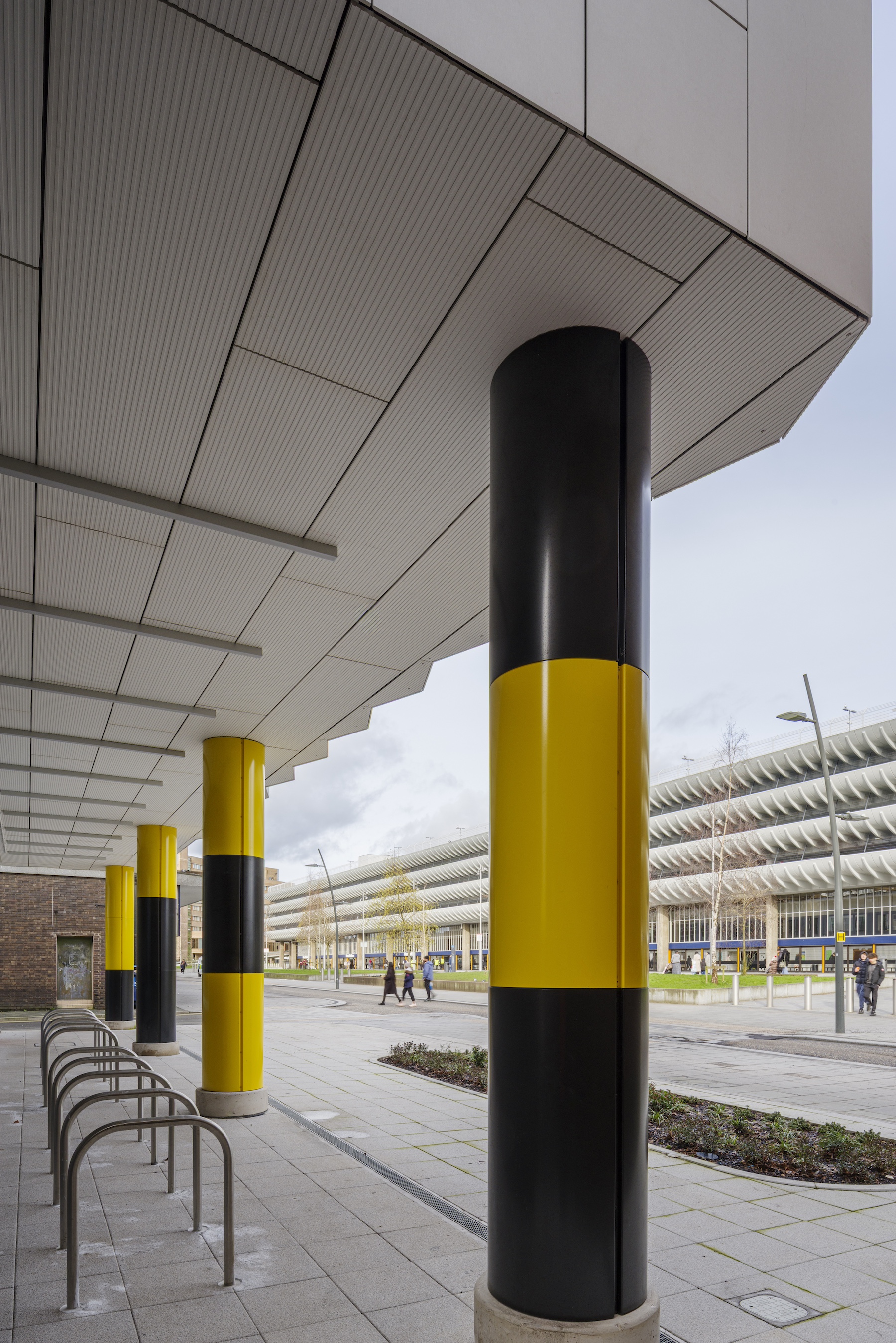
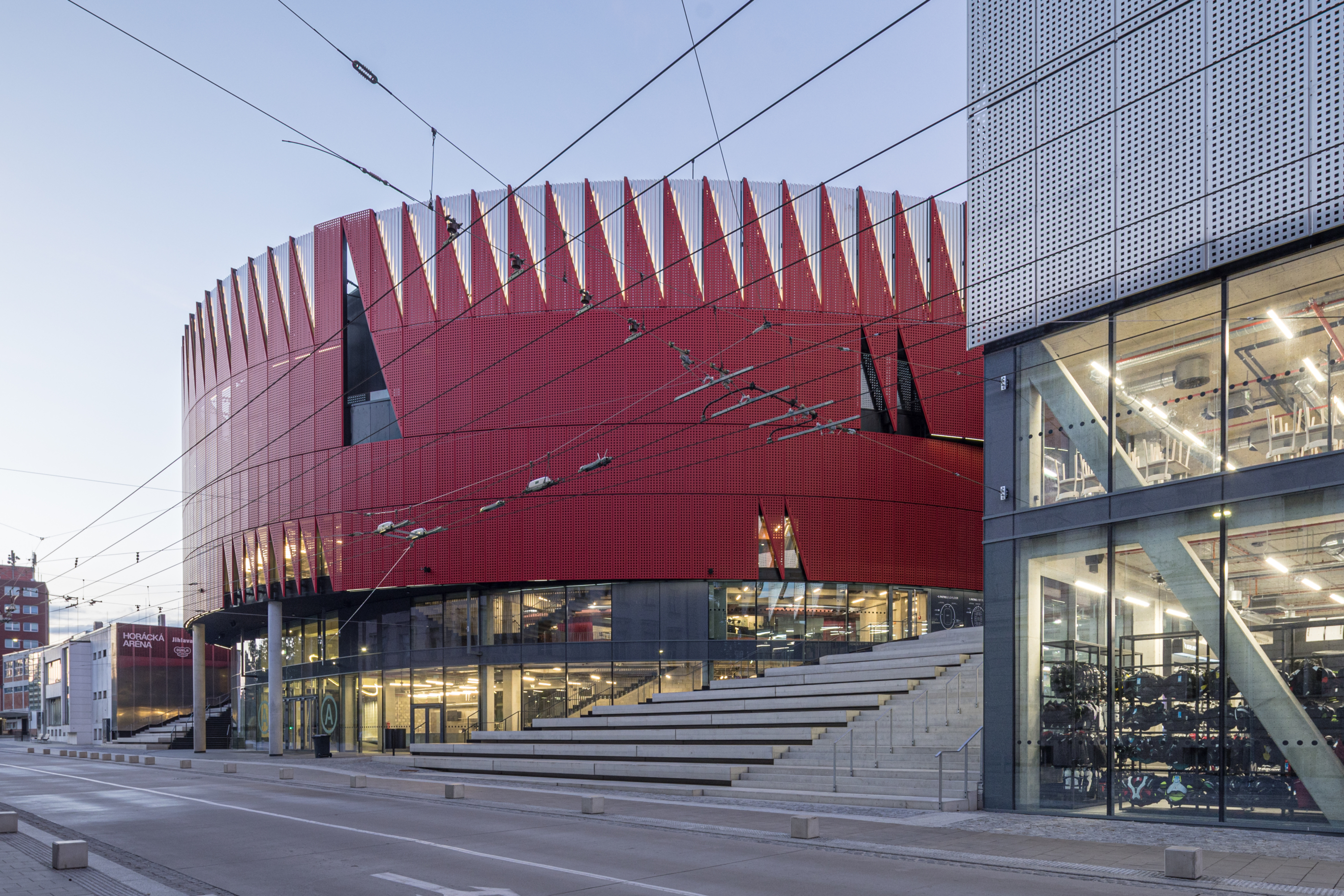
The façade is clad in light grey fluted fibre cement panels that read as almost white in direct sunlight, their folded geometry catching light and shadow across the surface. The vertical rhythm of the cladding references the deep concrete soffits of the bus station opposite, establishing a clear visual dialogue without resorting to pastiche.
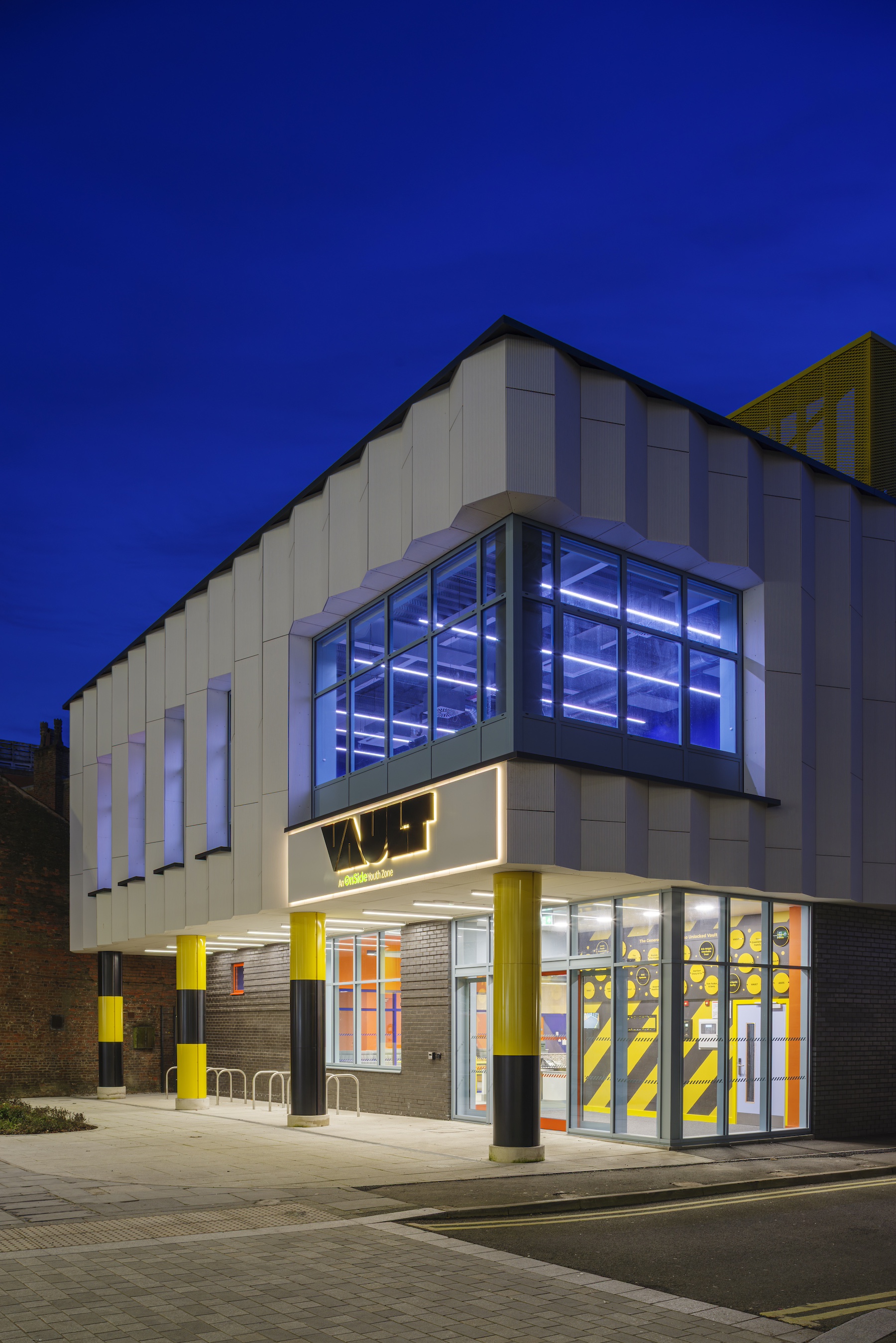
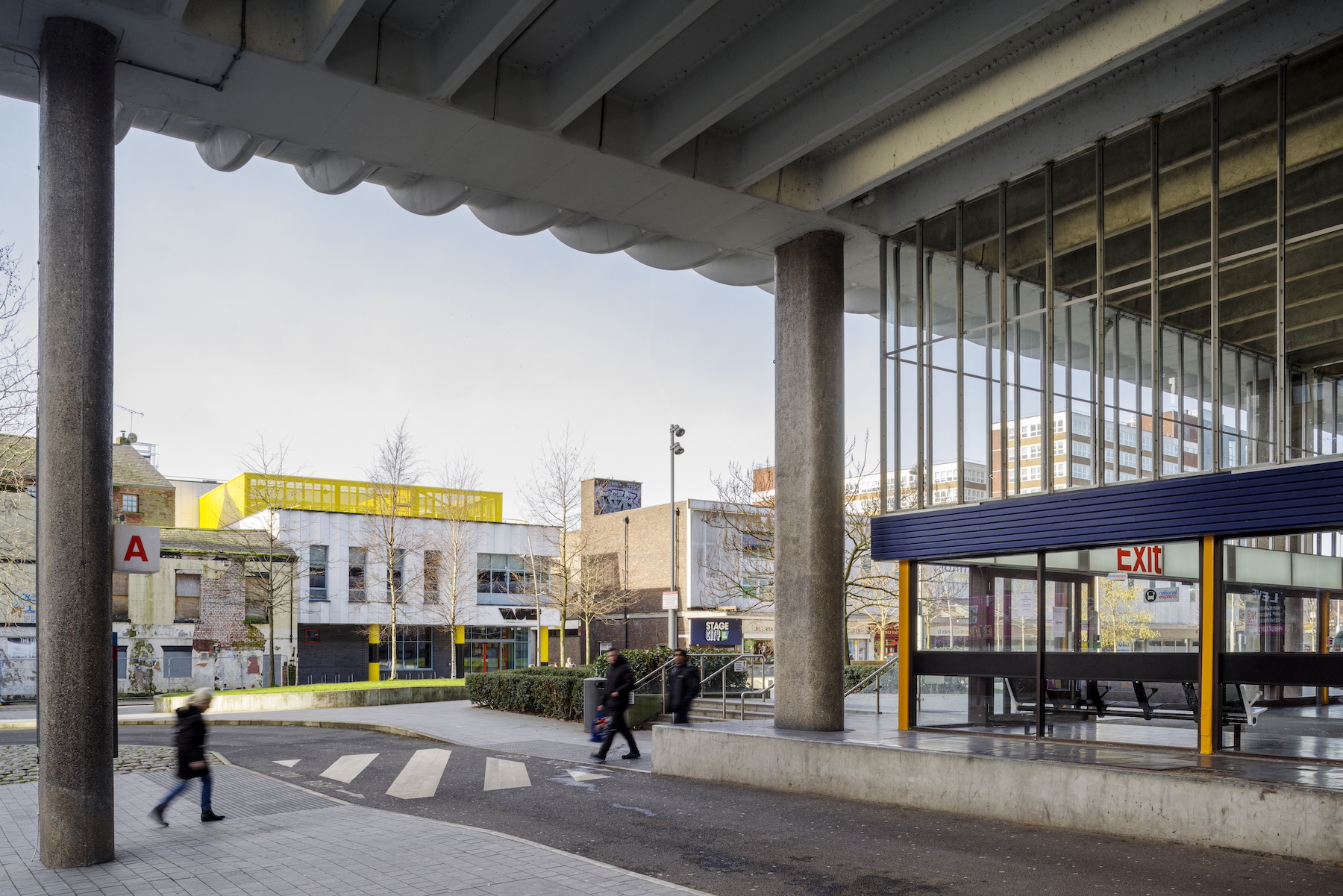
This relationship is reinforced through a more explicit use of colour and detail. Yellow-and-black columns, together with yellow metal mesh enclosing terraces and fire escapes, echo the bus station’s original steelwork. At ground level, a projecting entrance canopy supported by the same bright columns creates a sheltered threshold, while a bold yellow colonnade facing the public square establishes a strong civic presence. Highly visible from surrounding streets and the bus station itself, the building is both easy to find and clearly legible as a place of its own.
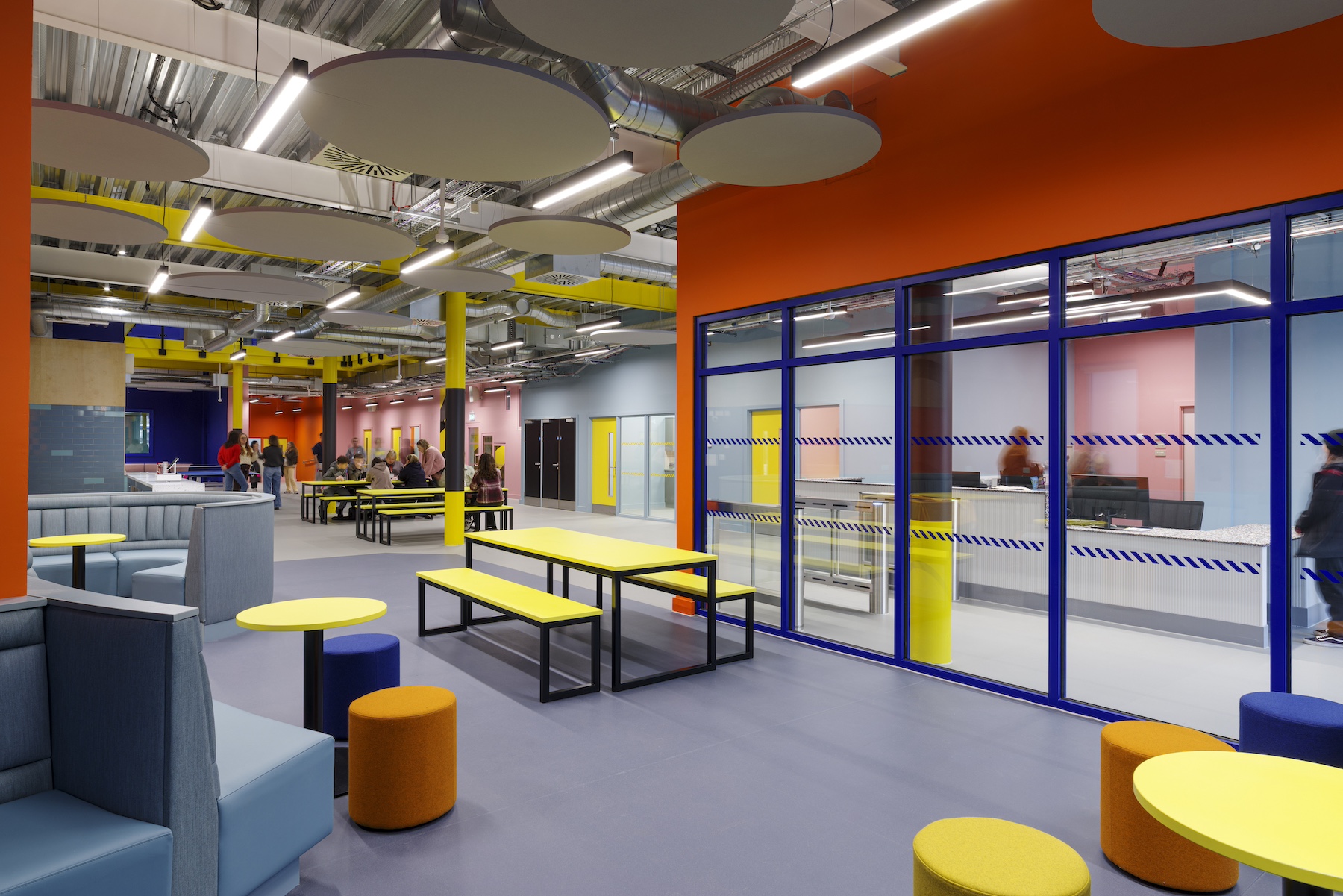
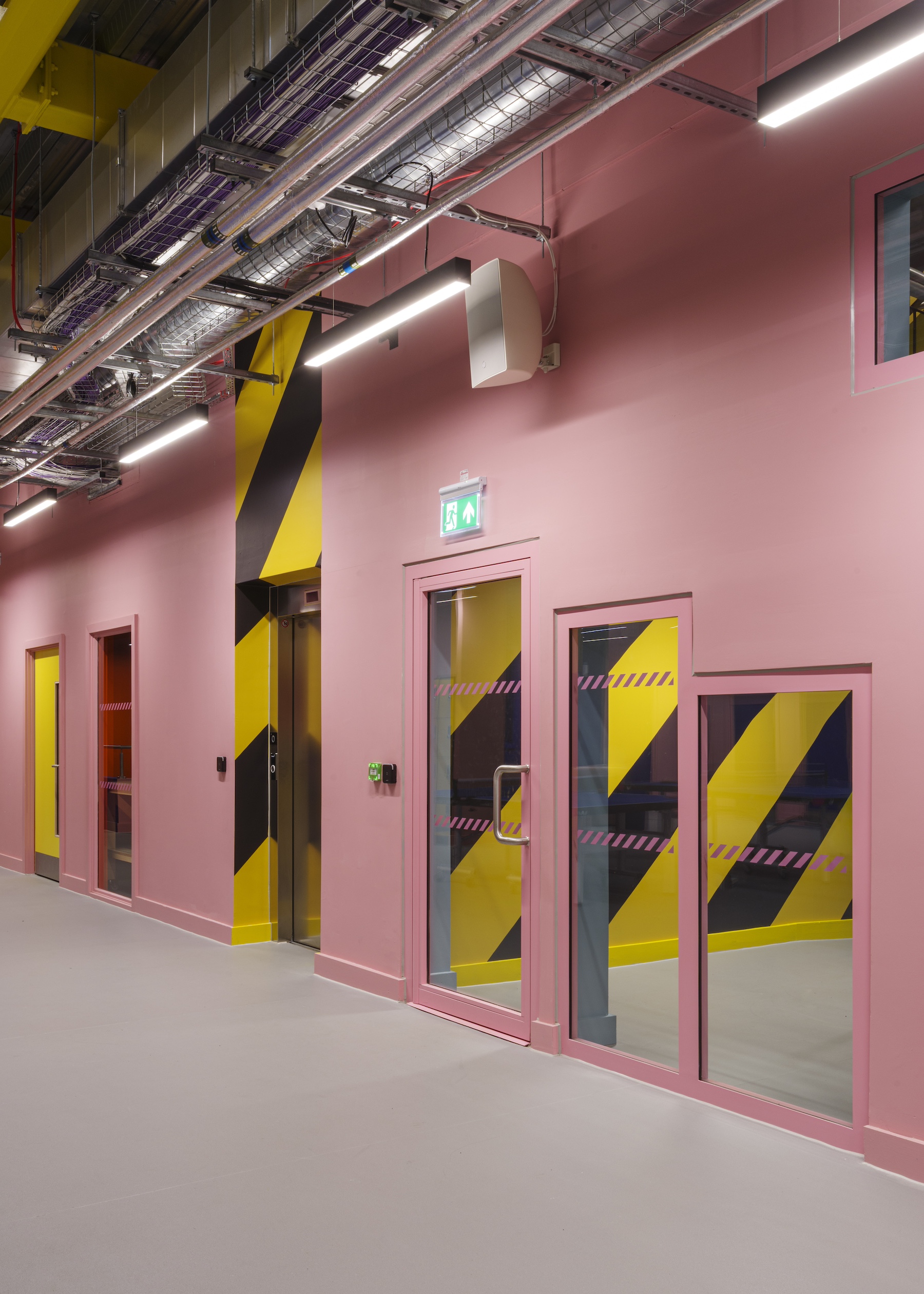
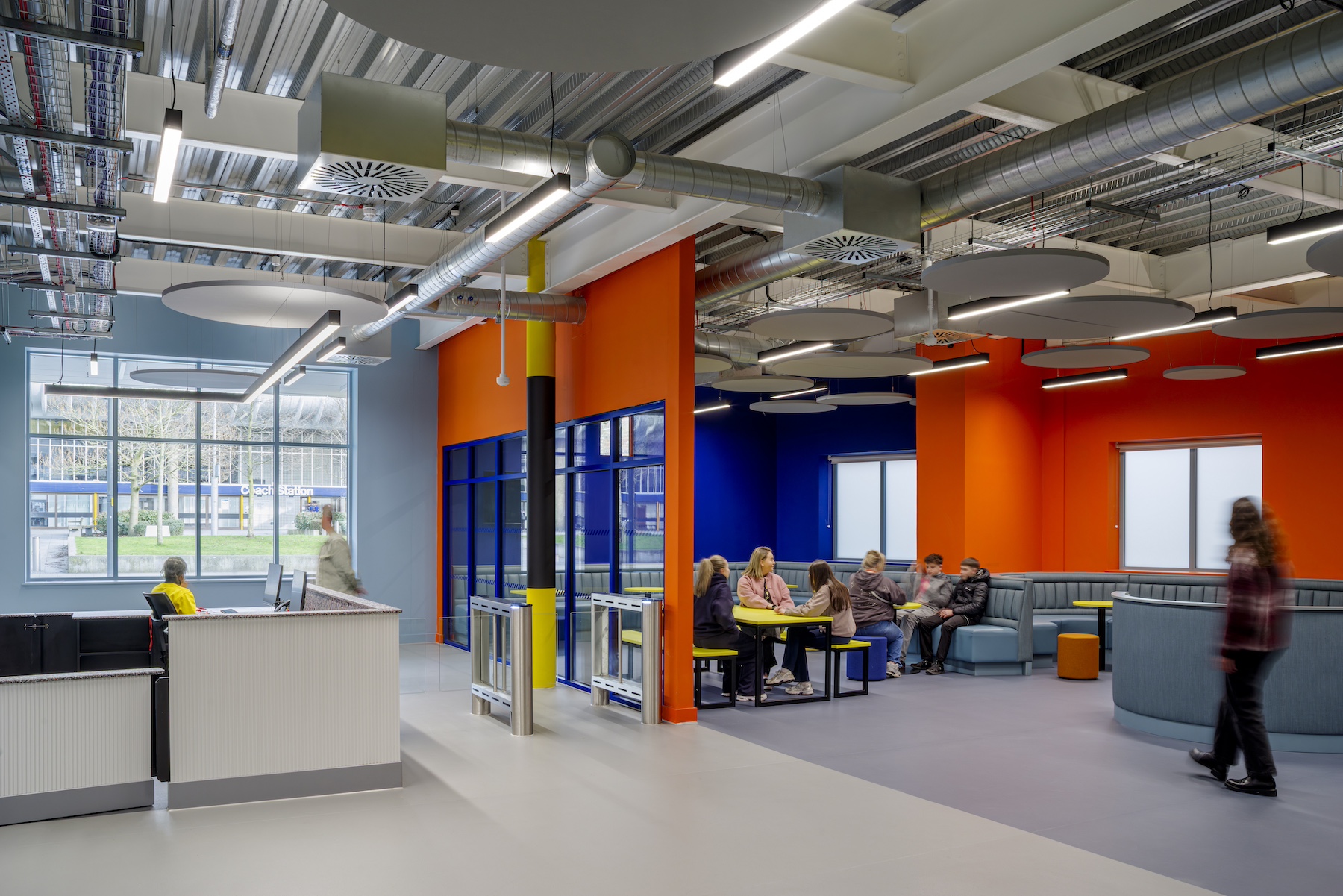
Internally, the design avoids the reductive or patronising tropes often associated with youth facilities. Developed in collaboration with designer Ben Kelly – known for Manchester’s Haçienda nightclub – the interior employs bold colour, durable materials and clear spatial organisation to create a series of distinct yet interconnected environments. Kelly’s approach aligns with the modernist language of the bus station while introducing a contemporary informality suited to the building’s users.
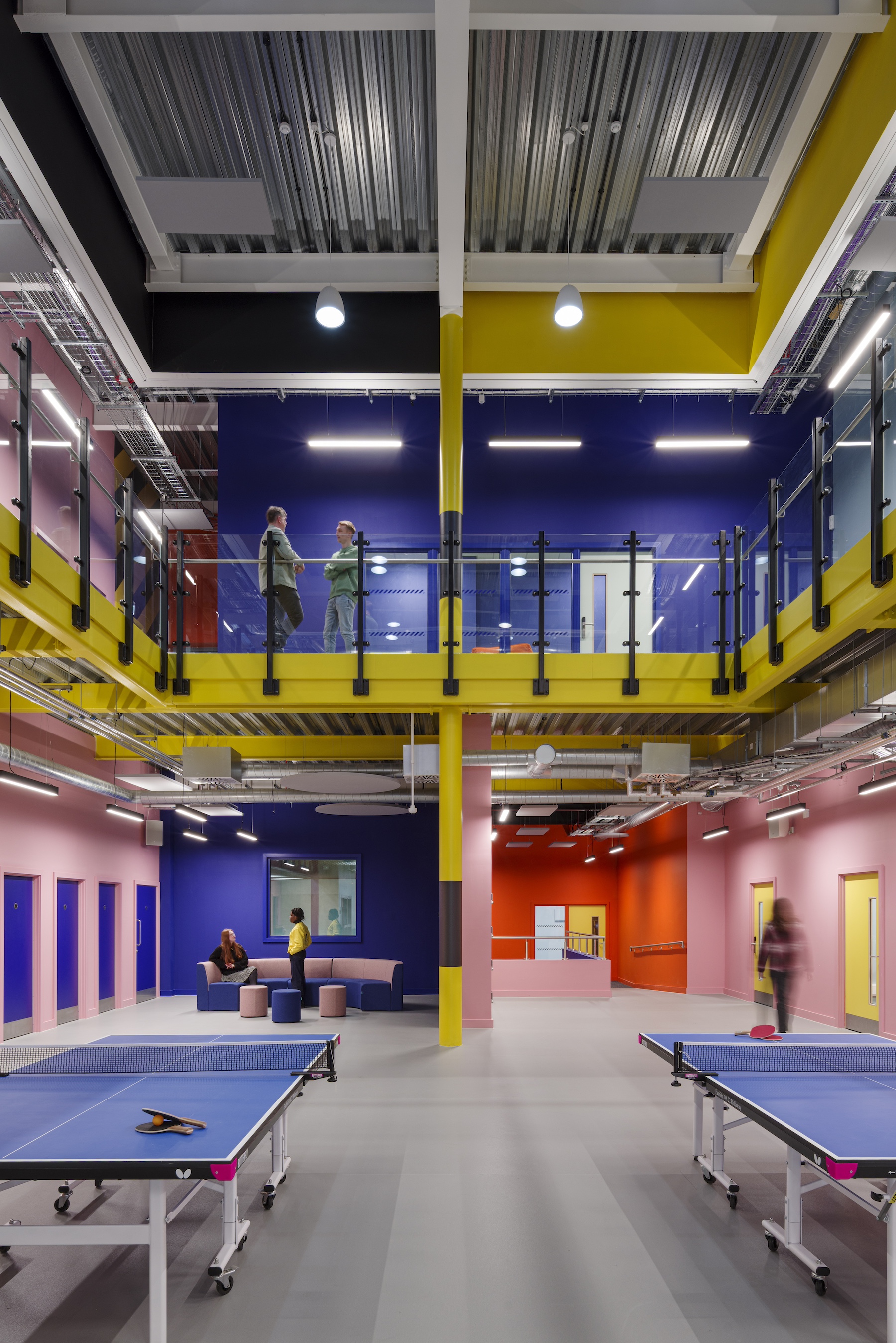
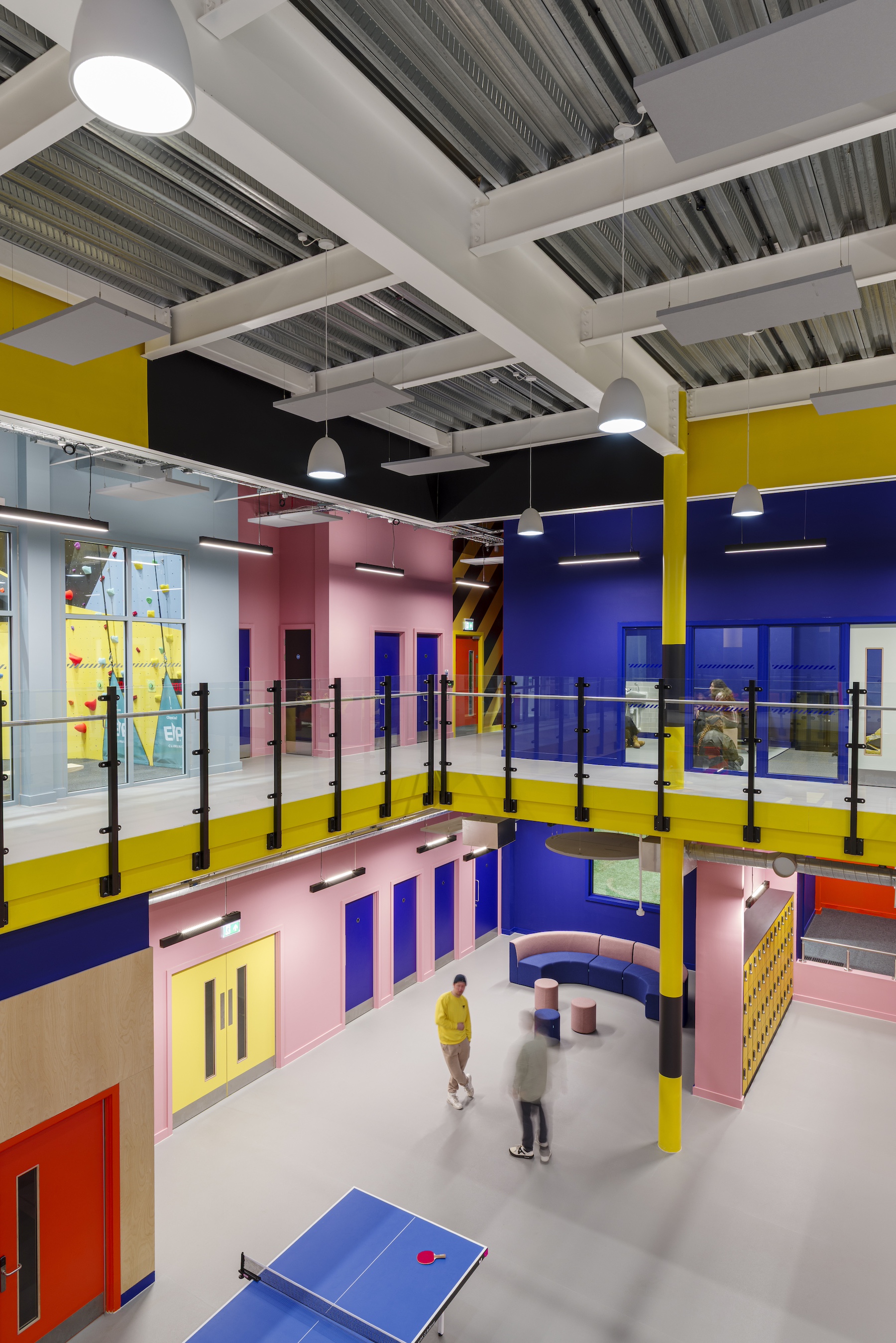
The ground floor forms the social core of the building, bringing together a central recreation space with a café, mentoring kitchen, arts and crafts room, makerspace, gaming zone, boxing gym and indoor kick pitch. Alongside these are quieter inclusion and enterprise rooms. The first floor accommodates the main sports hall, climbing wall, fitness suite, performing arts spaces, music and recording studios, a podcast studio, and health and wellbeing facilities. Staff offices and a secure rooftop terrace, enclosed in yellow mesh, occupy the upper level.
A double-height central void links the floors both visually and physically, enabling passive supervision without reliance on enclosed spaces or overt surveillance. Staff can oversee activity across the building, while users retain a sense of independence. The open-plan arrangement, supported by careful zoning of furniture and finishes, allows for a range of uses, from energetic group activities to more focused, individual pursuits.
Environmental performance has been integrated through a series of pragmatic measures: the steel frame being optimised to reduce material use, working with a highly insulated and airtight building envelope. Windcatchers provide natural ventilation, and photovoltaic panels contribute to operational energy demand, with on-site generation supplying around 19 per cent of the building’s needs. Durable materials support long-term use, and the central location – well connected by public transport – reinforces the project’s broader sustainability credentials.
“Vault Youth Zone is the culmination of our ten-year engagement with the regeneration of this part of Preston,” said John Puttick, director at John Puttick Associates. “The refurbished Bus Station, public square and Youth Zone work well together to provide an animated and community-focused area of the city. We are delighted to see young people given such a prominent location, and to see them engaging with the many activities on offer in the Youth Zone.”
Tim Jacques, CEO at the Vault Youth Zone, added: “I love the iconic look of the building, both outside and in. John and his team have created a space that meets our requirements for an impactful and inclusive operating youth zone, whilst engaging and enticing young people. Its presence adds to and lifts the surrounding area, and it’s a worthy companion for our world-famous bus station. There is real momentum with Preston’s city centre redevelopment, and I believe Vault is an important piece of this work, representing the potential of our young people and through them, our city’s future.”
Credits
Client
OnSide Youth Zones
Architect
John Puttick Associates
Local authority
Preston City Council
Structural engineer
Ramboll (design stage), Caulmert (construction stage)
M&E consultant
Hurstwood Environmental Consulting
Quantity surveyor
Walker Sime
Project manager
Walker Sime
Principal designer
CDM PD: Jacob Feasey Associates; BR PD: John Puttick Associates
Fire consultant
Clarke Banks
Approved building inspector
Clarke Banks
Main contractor
Triton Construction
Additional images