The four candidates for the RIBA Presidency thrashed out the relationship between architecture and the climate emergency at a live hustings.
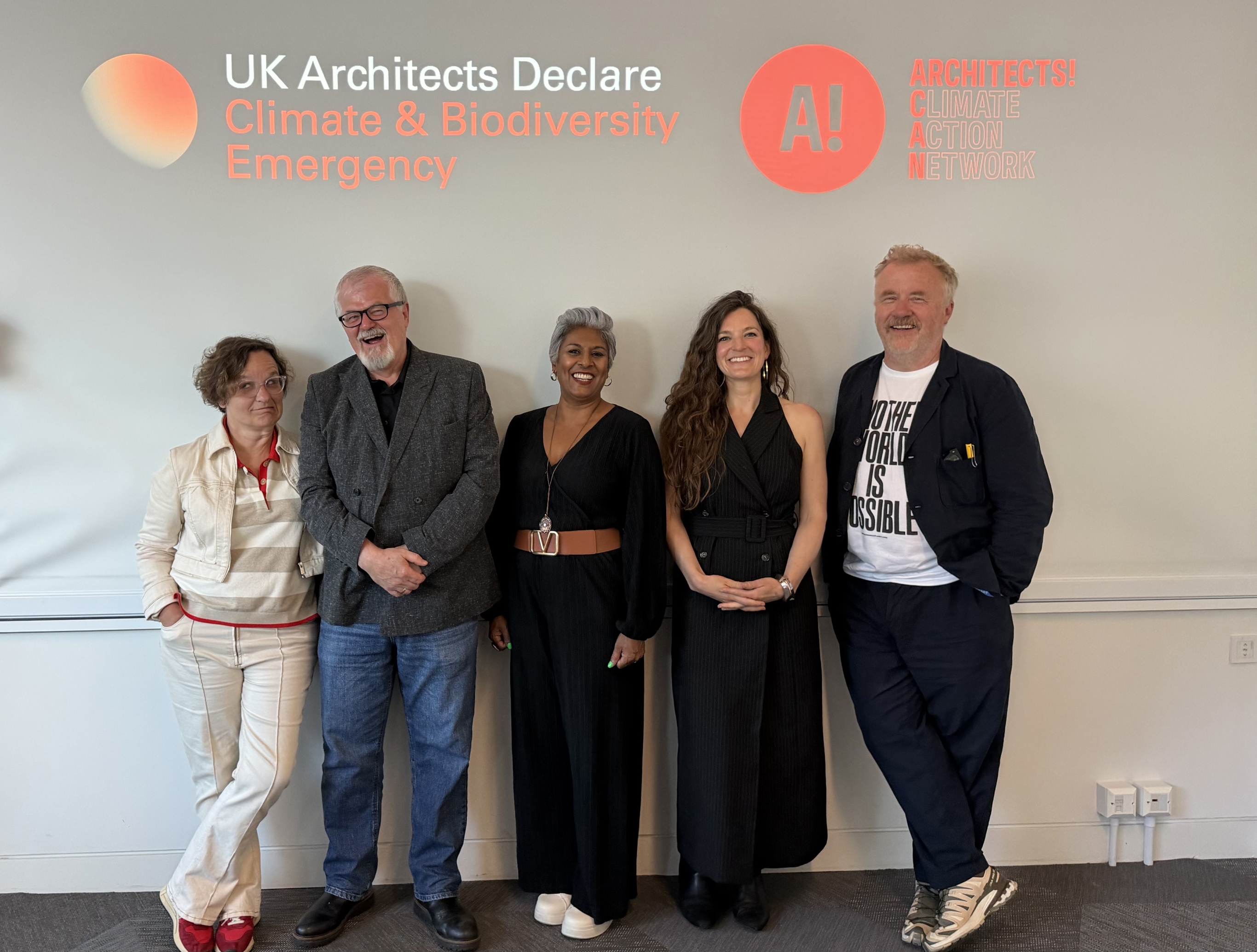
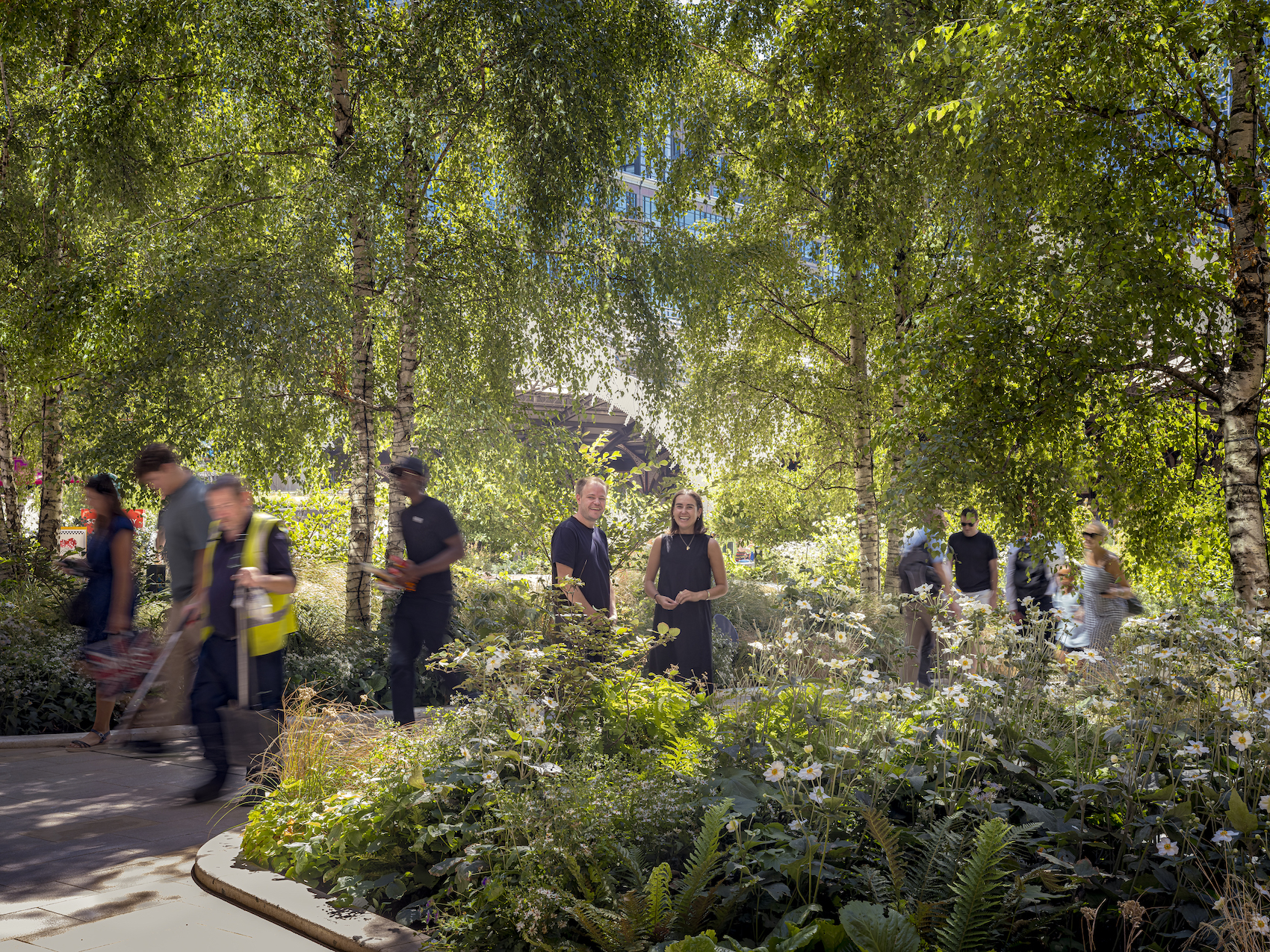
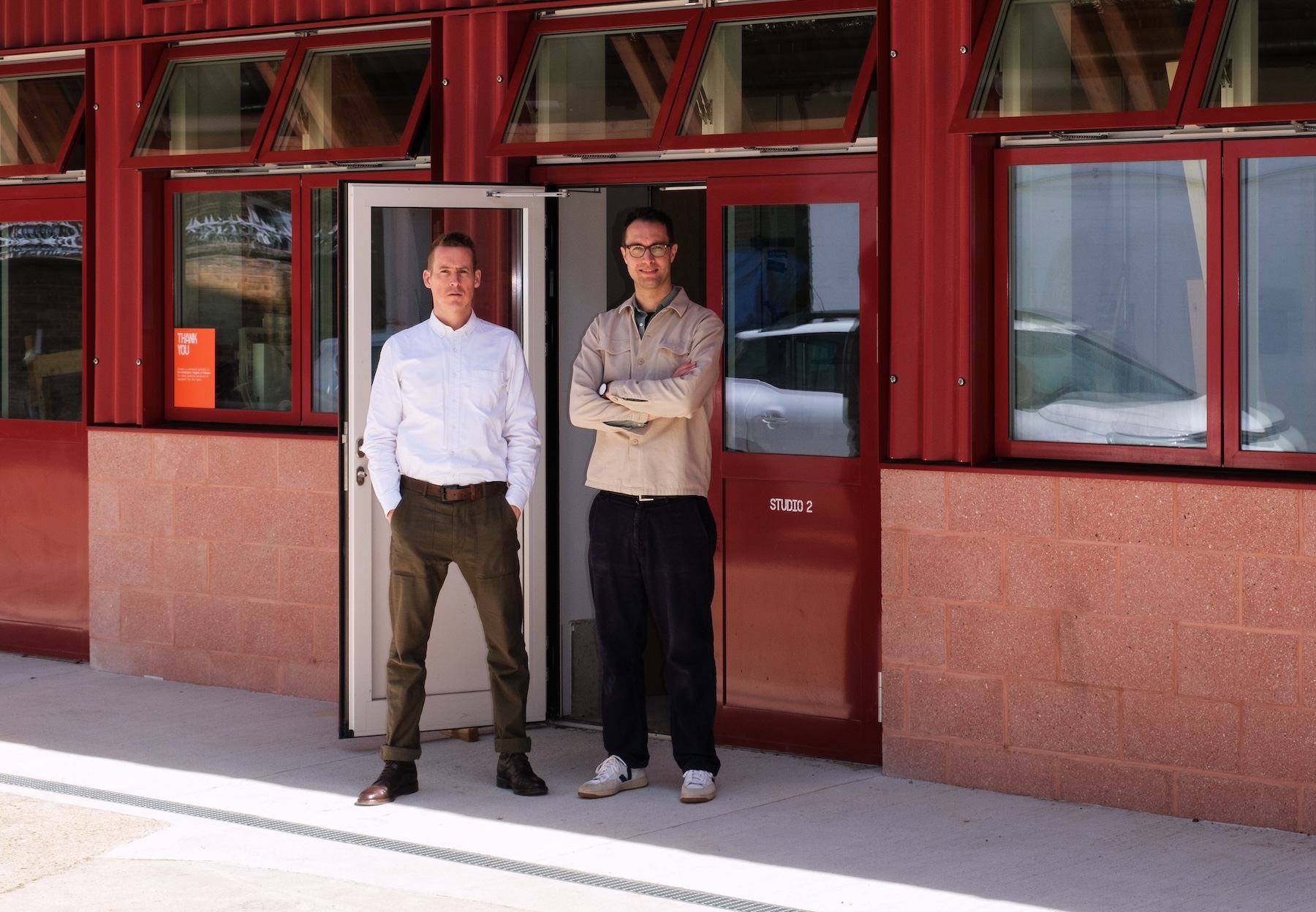
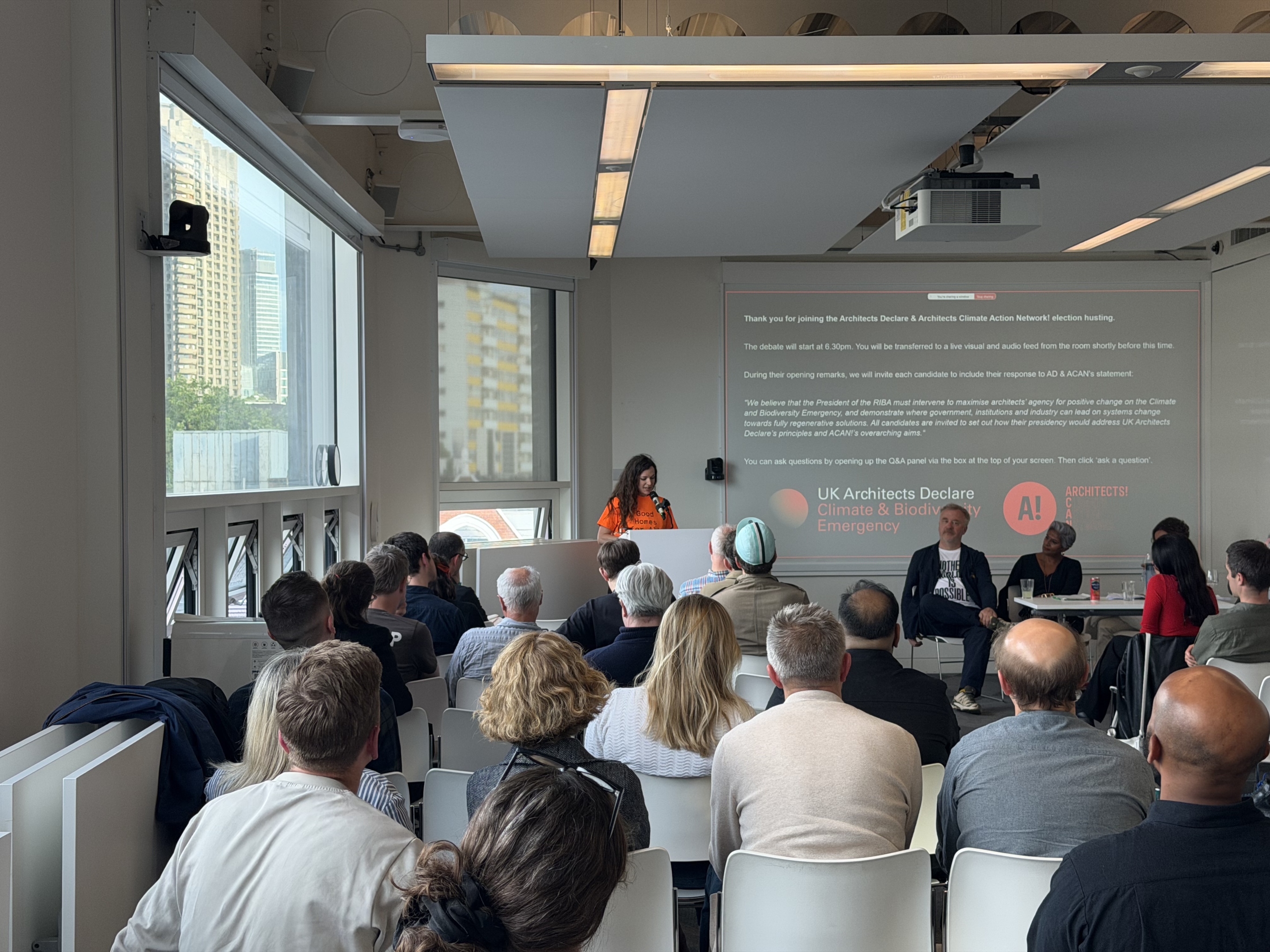
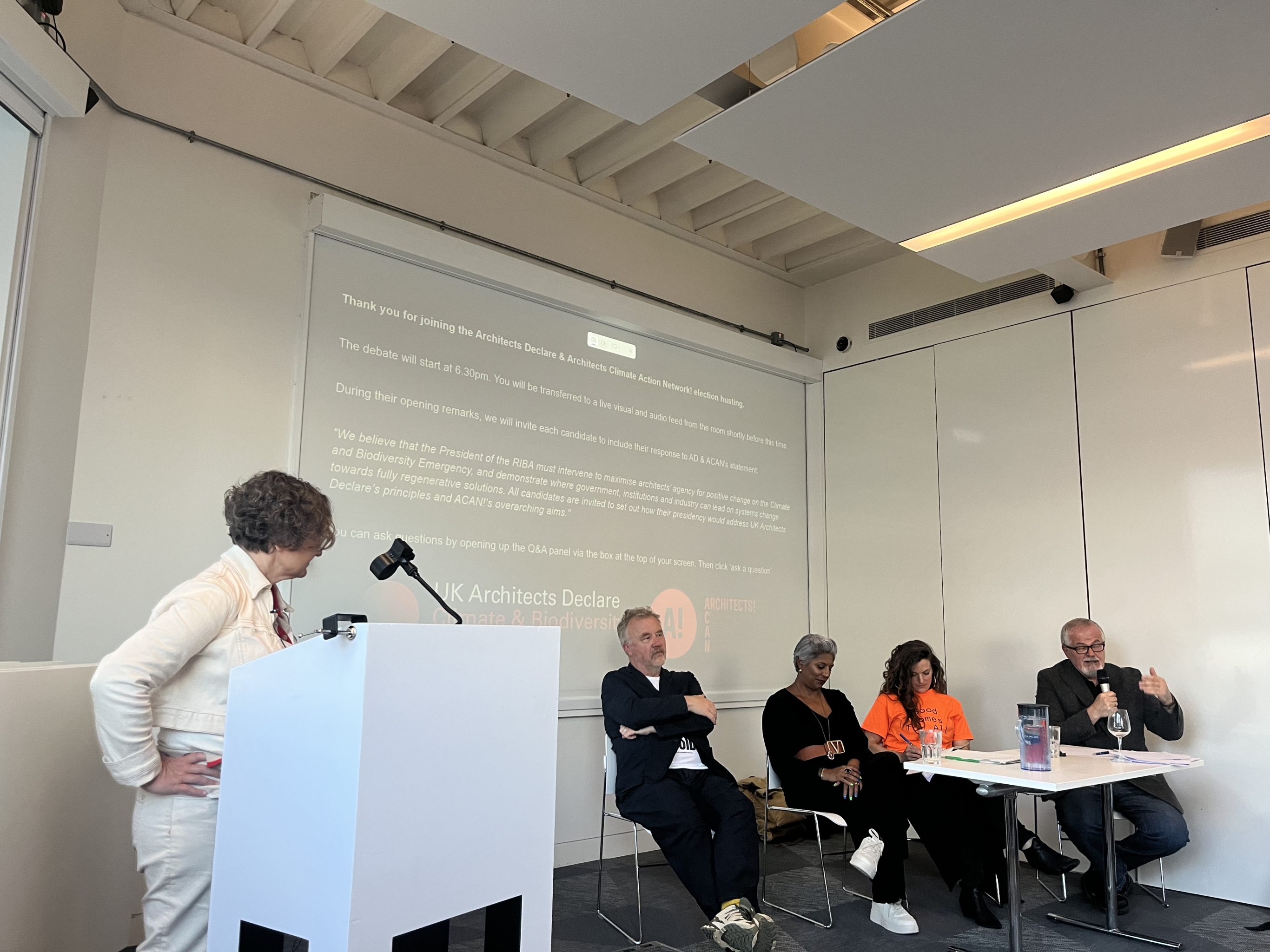
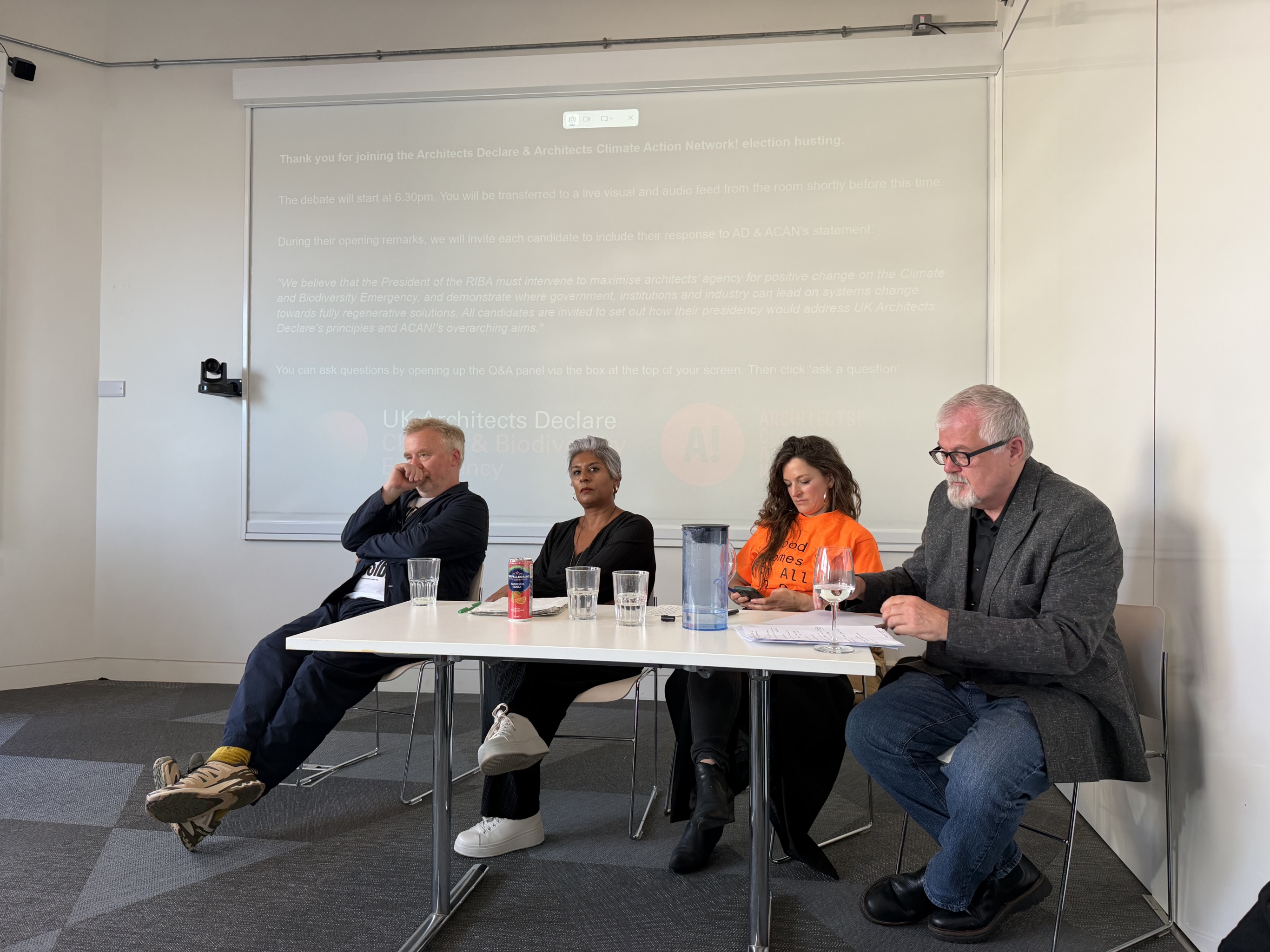
From left to right: Isabel Allen, Austin Williams, Chithra Marsh, Jay Morton and Duncan Baker-Brown.
.
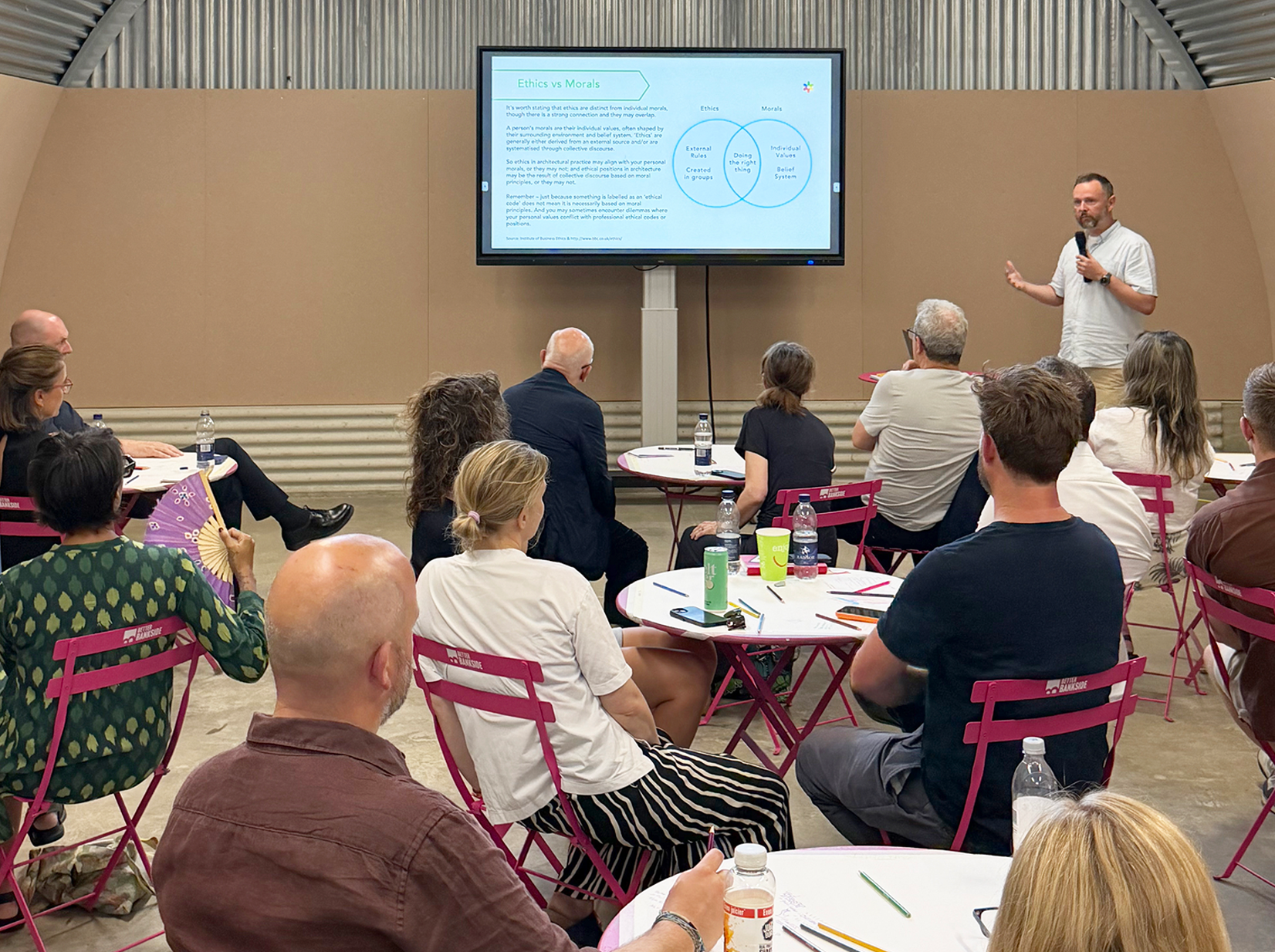
AD & ACAN! joined forces to invite each of the four candidates for the RIBA Presidency – Duncan Baker-Brown, Chithra Marsh, Jay Morton and Austin Williams – to respond to the following statement, at a live hustings event that took place on Tuesday 2nd June. The candidates set out their views on regenerative architecture at a live hustings at AHMM’s Old Street studio on Tuesday 2nd July.
Chaired by Architecture Today editor Isabel Allen the discussion asked candidates to respond to the following statement:
“We believe that the President of the RIBA must intervene to maximise architects’ agency for positive change on the Climate and Biodiversity Emergency, and demonstrate where government, institutions and industry can lead on systems change towards fully regenerative solutions. All candidates are invited to set out how their presidency would address UK Architects Declare’s principles and ACAN!’s overarching aims.”
Candidates’ election statements and short videos are available at RIBA’s nominations page.
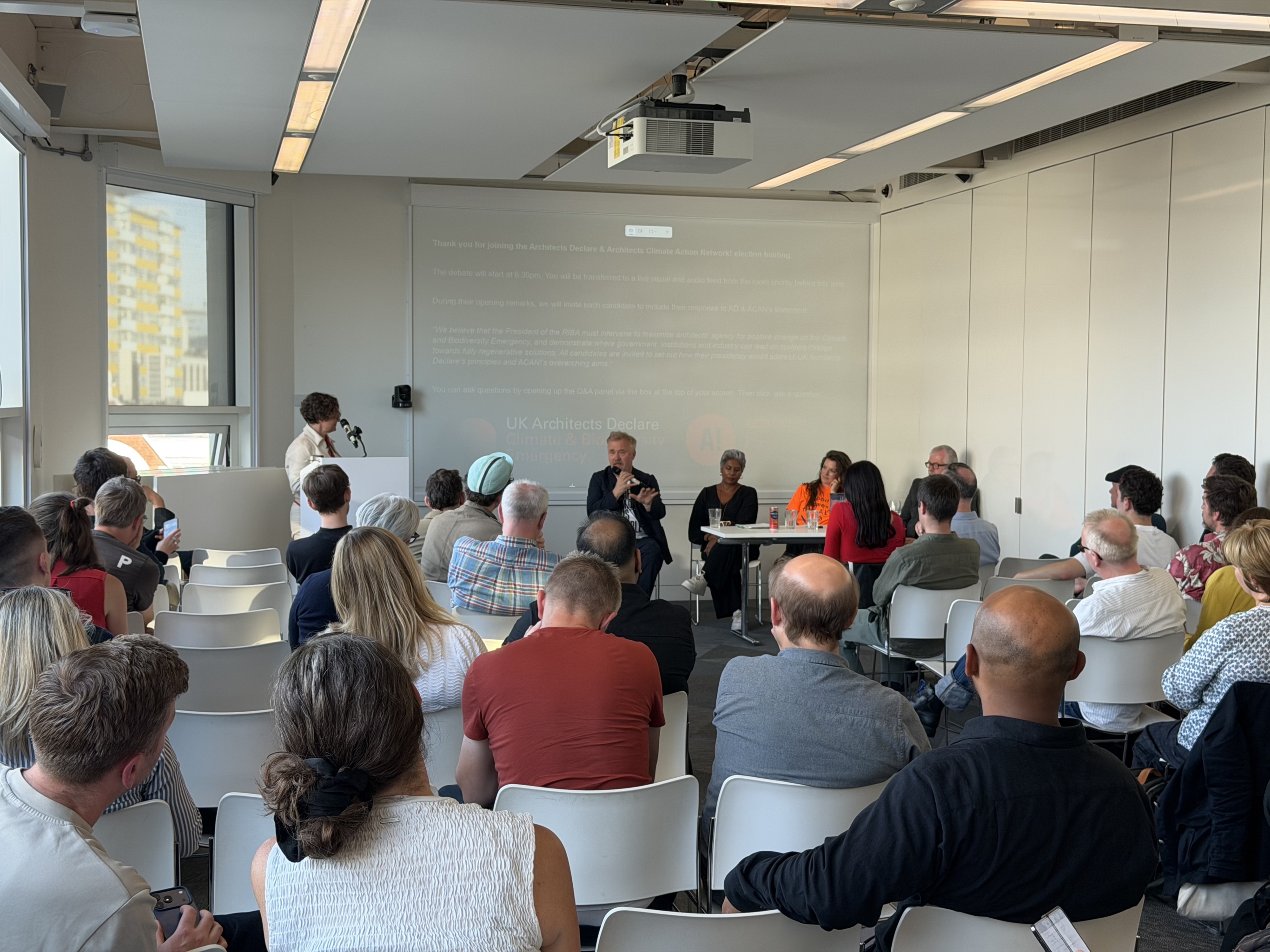
The RIBA presidential candidates debate, chaired by Architecture Today editor Isabel Allen.
The candidates approached the question from markedly different positions. Duncan Baker-Brown placed climate literacy, circular economy thinking and protection of architectural function at the crux of his pitch. Chithra Marsh argued for a presidency rooted in representation, collective action and community. Jay Morton set out a politically engaged agenda focused on influence, housing, education and low-carbon delivery at scale. Austin Williams challenged the framing of the debate itself, questioning whether climate should be treated as the profession’s defining priority and arguing instead for genuine autonomy for architects, critical thinking and less regulatory overreach.
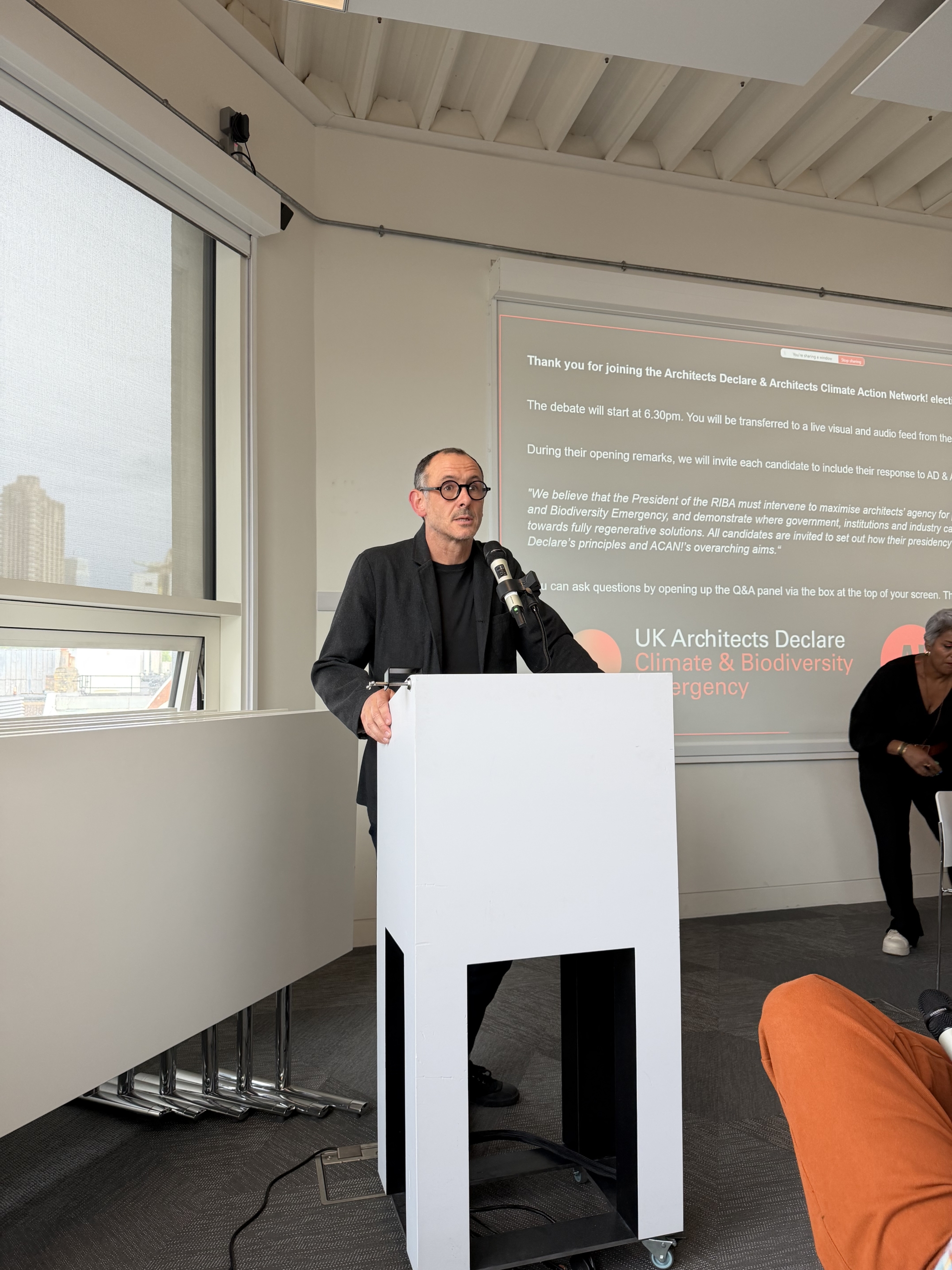
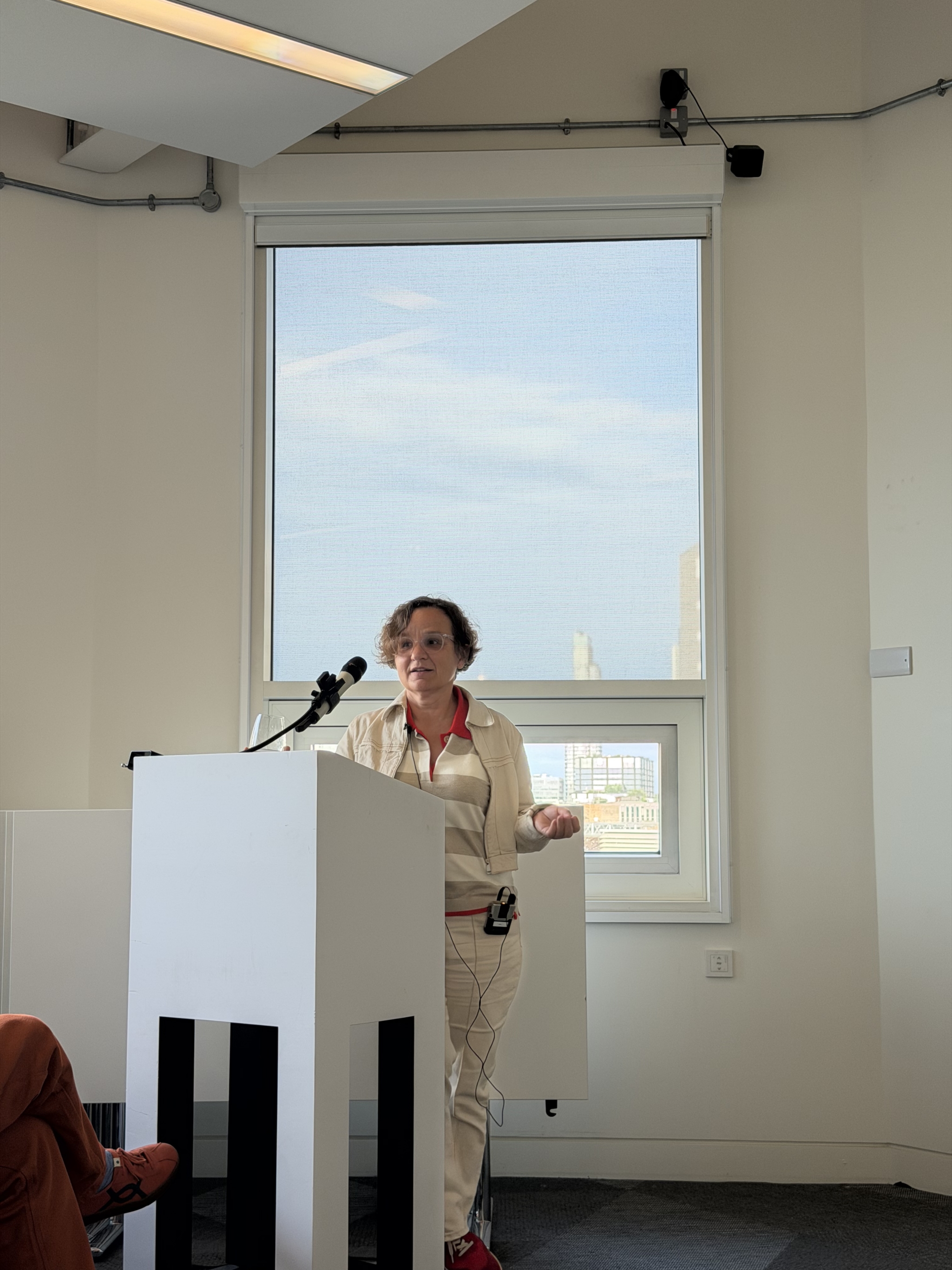
Things kicked off with introductions from AHMM’s Head of Sustainability and UK Architects Declare Trustee Craig Robertson, and Architecture Today’s Editor Isabel Allen.
So, what should the RIBA President do about climate and agency?
Duncan Baker-Brown opened by describing more than 30 years of campaigning for climate literacy, closed-loop systems, circularity and climate justice. He argued that the profession already knows what needs to be done, but lacks the legislation and professional standing to act with sufficient confidence and authority. He’s “not afraid to ask the awkward questions”, and has been doing so for 30 years.
For Baker-Brown, the RIBA presidency should put climate “front and central” in everything it does. He pointed to his work on the RIBA Climate Action Expert Advisory Group, the 2030 Climate Challenge, the UK Net Zero Carbon Buildings Standard and circular economy discussions with government.
He also linked climate action to professional viability. Architects, he said, cannot deliver low-carbon and regenerative places if practices are financially fragile, if students cannot afford to qualify, and if architects continue to be undercut by those without equivalent training.
Chithra Marsh framed the presidency as a role of advocacy, influence and connection. Introducing herself as a director of Manchester-based Buttress Architects, a B Corp and employee-owned trust, she said her purpose was to represent “the underestimated”: those who feel unheard, undervalued or disconnected from decision-making.
Marsh accepted the premise that the climate and biodiversity emergency is happening now, but stressed that architects cannot solve it alone. They work within planning, procurement, political and economic systems that often make the right thing difficult. Her proposed presidency would focus on three areas: strengthening the collective voice of architects, building collaboration for systems change, and ensuring continuity beyond any one presidential term.
“Community, community, community”, Marsh argued that the RIBA should help members feel empowered rather than overwhelmed, offering practical support, shared learning and better communication between national leadership, regions, educators, practices and members. Climate action, she said, cannot be separated from housing, social equity, education or economic resilience.
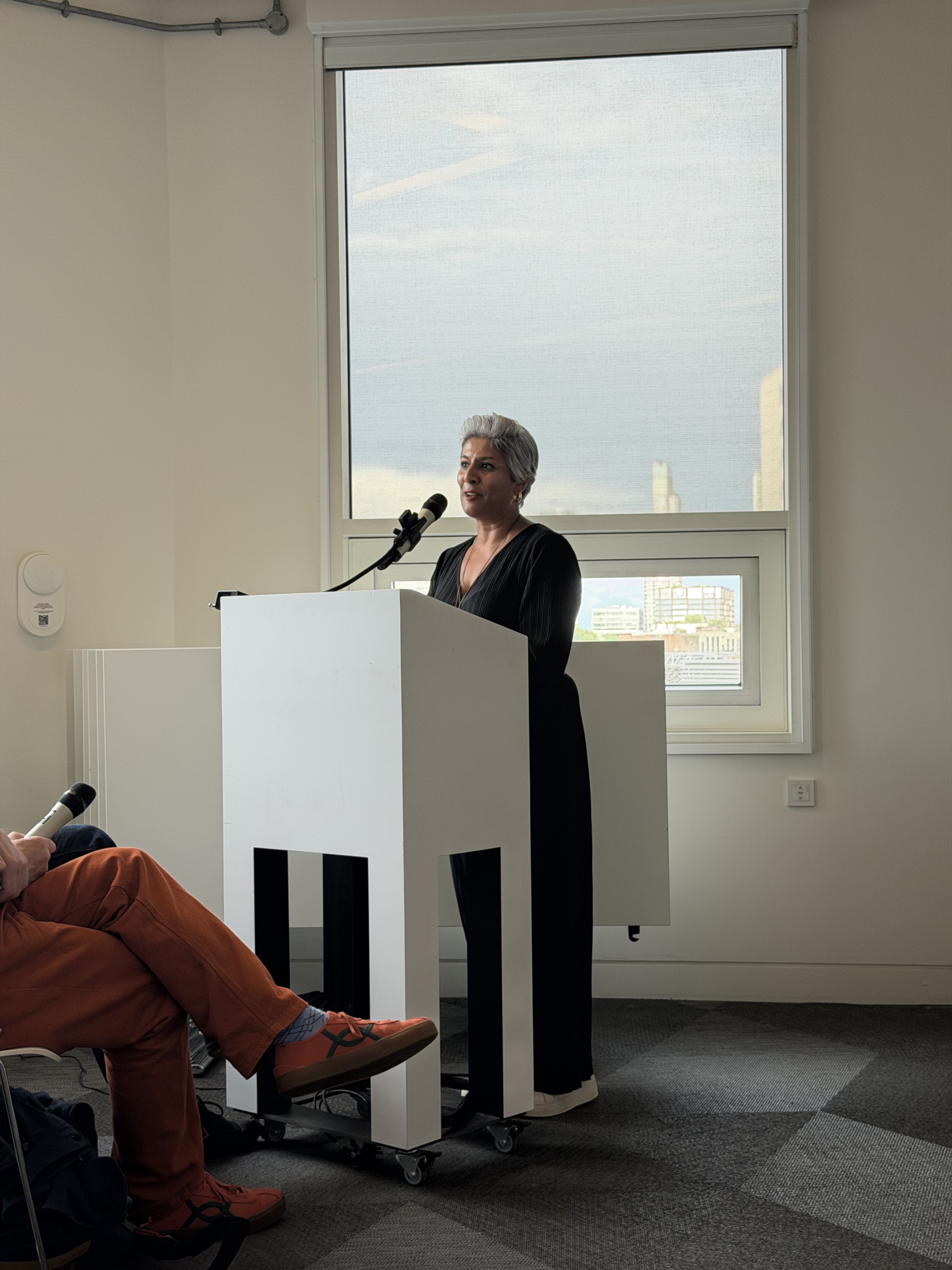
Jay Morton began with the question of agency itself. Agency, she argued, comes from being “in the room”, leading and collaborating rather than speaking from the sidelines: “There are not enough architects in positions of power.” As a practising architect, director at Bell Phillips and someone who has stood for both parliament and local government, Morton positioned herself as someone able to connect architecture with politics, saying “practice is politics”.
Her campaign was built around three themes: voice, impact and education. On voice, she argued that the profession has lost influence and needs to be louder, more visible and more politically engaged. She called for architects to be placed in front of government and select committees, not only represented by public affairs teams, and for an “architect under every mayor”.
On impact, Morton argued that the climate crisis and housing crisis are not competing priorities, but the same priority. The challenge is not to produce isolated low-carbon exemplars, but to change how the industry builds at scale. She proposed a construction innovation task force focused on low-carbon delivery, green skills and industry collaboration.
On education, she highlighted the cost and length of architectural training, the confusion created by reforms to qualification routes, and the need for both university and apprenticeship pathways. Site experience, practical knowledge and public-facing education about what architects do were, she suggested, essential to the profession’s future.
Morton concluded with the notion that the industry needs to move forwards and that required all of us: “judgement, creativity, and empathy. These are the skills of an architect.”
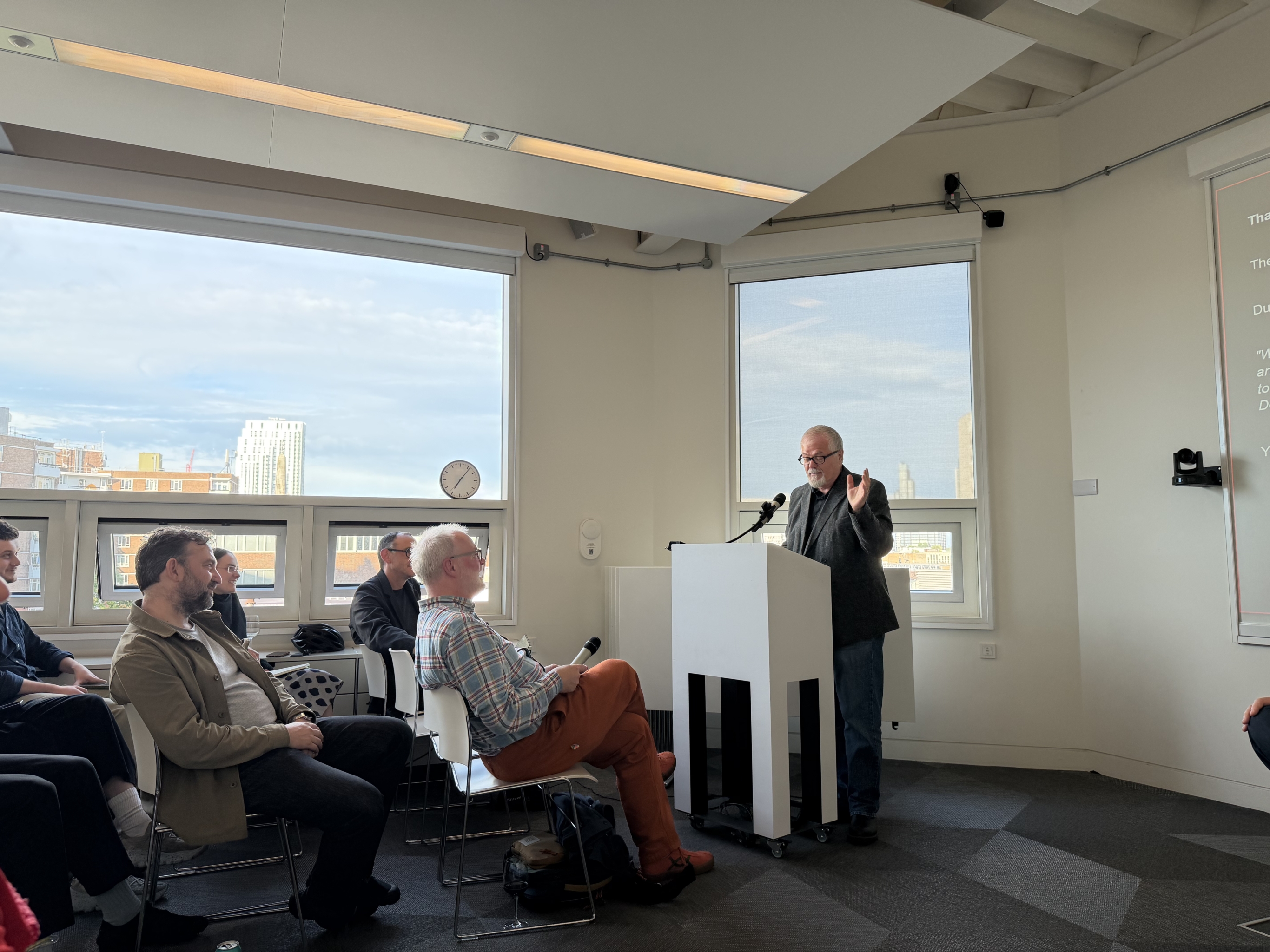
Austin Williams challenged the wording of the motion, beginning with the idea that a president should “intervene” to maximise architects’ agency. Agency, he argued, means the ability to make independent choices, and there is a danger in outsourcing judgement to institutions or third-party authorities.
Williams accepted that climate change is happening, but said he did not see it as an emergency in the way others did. For him, “poverty, housing, development, inequality, war”, education and infrastructure were also urgent concerns. He questioned whether climate should be assumed to be the number one issue for architects and criticised what he described as exclusionary and confusing language around “systems change” and “fully regenerative solutions”. He quotes UK Architects Declare’s 1,400 signatories, but asked about the remaining 14,000 architects in the UK; implying there are plenty more architects out there who do not care about the climate crisis and have more pressing matters on their hands.
His broader argument was for professional autonomy, clearer language and more critical debate. He warned against over-regulation, scaremongering and a tendency to turn climate commitments into awards, statements, CPD requirements and compliance exercises rather than meaningful action.
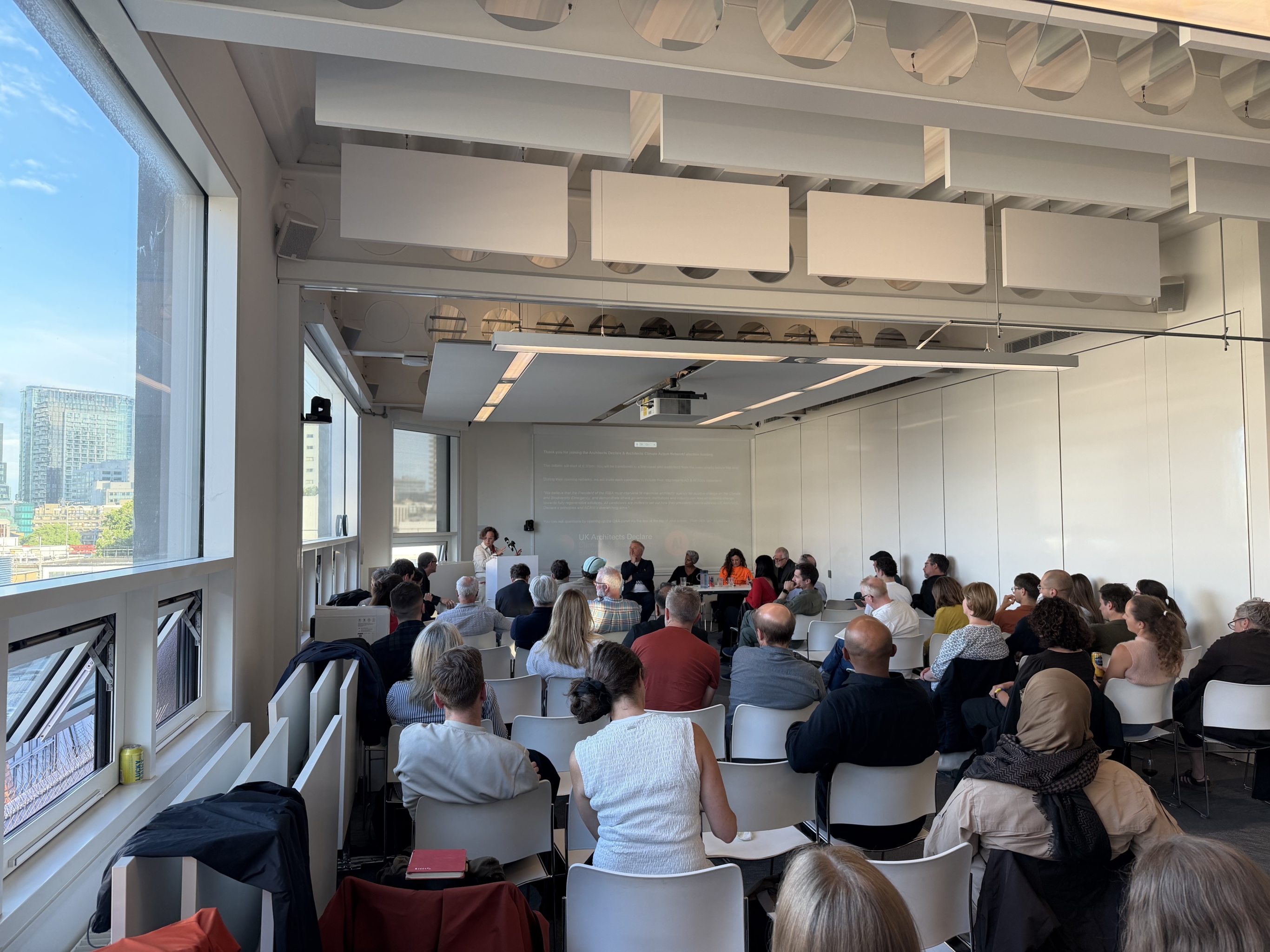
Questions were taken from the floor.
Is climate change architecture’s number one issue?
Allen asked the room whether they agreed with Williams’ contention that climate change is not the number one issue for most architects. Several audience members suggested that, while climate is clearly important, the profession is currently struggling with multiple overlapping crises.
One audience member argued that architects’ loss of control over regulation was a more immediate professional concern. Another identified fees, recognition and the ability to sustain a livelihood as fundamental. Architects, she argued, cannot focus on wider problems if they are struggling to survive. Bill Webb of Able Partners suggested that AI and project viability may be even more disruptive over the next decade, warning that the profession faces a “massive hurricane” of change.
Morton responded by arguing that climate is not a separate or “first world” issue, but something embedded in public health, housing, air quality and the design of everyday places. Architects are able to join the dots between design, retrofit, planning and social outcomes.
Marsh acknowledged the sense of overwhelm within the profession. Suggesting climate is a component of many interconnected problems rather than a single isolated priority. Her response was to call again for stronger collective action and clearer shared priorities.
Baker-Brown drew a distinction between the “parochial” challenges of architectural practice and the existential global challenge of climate breakdown. In professional terms, he said, protection of function may be the number one issue because it would help architects regain work, fees and respect. But at a global scale, he argued, the climate emergency remains unavoidable, particularly for those in the global south already losing homes and livelihoods.
What about fees, regulation and the Building Safety Act?
The Building Safety Act and professional fees emerged after another question from the audience. Williams described the current regulatory landscape as fragmented and burdensome, arguing that the Act and the Building Safety Regulator have created another major layer of bureaucracy. He said many practices are confused about new responsibilities, including the distinction between principal designer roles under building regulations and CDM.
Morton agreed that the legislation had been implemented in a “clunky” way and argued that the industry had not been consulted enough. However, she linked the issue directly to fees and professional responsibility. If architects are taking on safety-critical responsibilities, she asked, can practices continue undercutting each other in the same way? While mandatory fee scales may be prevented by competition law, she suggested that safety, competence and protection of function could provide a basis for establishing clearer benchmarks.
Baker-Brown returned to the argument that protecting architectural function would help practices earn enough to employ and train people properly, while also enabling them to deliver the kind of climate-conscious work the wider industry needs.
Can climate legislation improve jobs and salaries?
An audience member asked whether lobbying for climate legislation could improve job and salary prospects within the profession. Marsh argued that strengthening climate expertise would increase the profession’s credibility and value. Baker-Brown was more explicit: retrofit, adaptive reuse and whole-life carbon assessment could become a major design opportunity if the tax and regulatory environment stopped incentivising demolition and began supporting transformation of the existing built environment.
He argued that creative architectural expertise will be needed to avoid crude approaches to retrofit, such as simply covering buildings with external wall insulation and solar panels. With the right legislation, he suggested, low-carbon design could create thousands of opportunities for architects to make beautiful places.
Morton connected the same question to housing and the green economy. She cited her involvement in the Architects’ Action for Affordable Housing campaign, arguing that architects can demonstrate that good design delivers better places, more homes on less land, more green space, more play space and stronger communities. She also pointed to work exploring how low-rise housing could be delivered using bio-based materials, creating jobs and strengthening the UK economy.
But what can one RIBA President realistically deliver?
A question from JJ Cliff of Studio Weave asked the candidates to move beyond broad aspirations and explain what could realistically be achieved within the scope of one RIBA presidential term.
Marsh said she saw the role as a four-year responsibility, including the year as president-elect and the period after leaving office. Her first year would be spent consulting members, regions and international voices to identify shared priorities. She said she did not want to tell members what they needed, but to find out and act on it.
Baker-Brown also described the presidency as a four-year commitment. His immediate aim would be to continue meeting members across the UK and internationally, and to increase RIBA membership by 10 per cent. With fewer than half of qualified architects belonging to the RIBA, he argued, the institution needs to become more effective for its members. He also emphasised the collective buying power and political weight of tens of thousands of architects if they are properly mobilised.
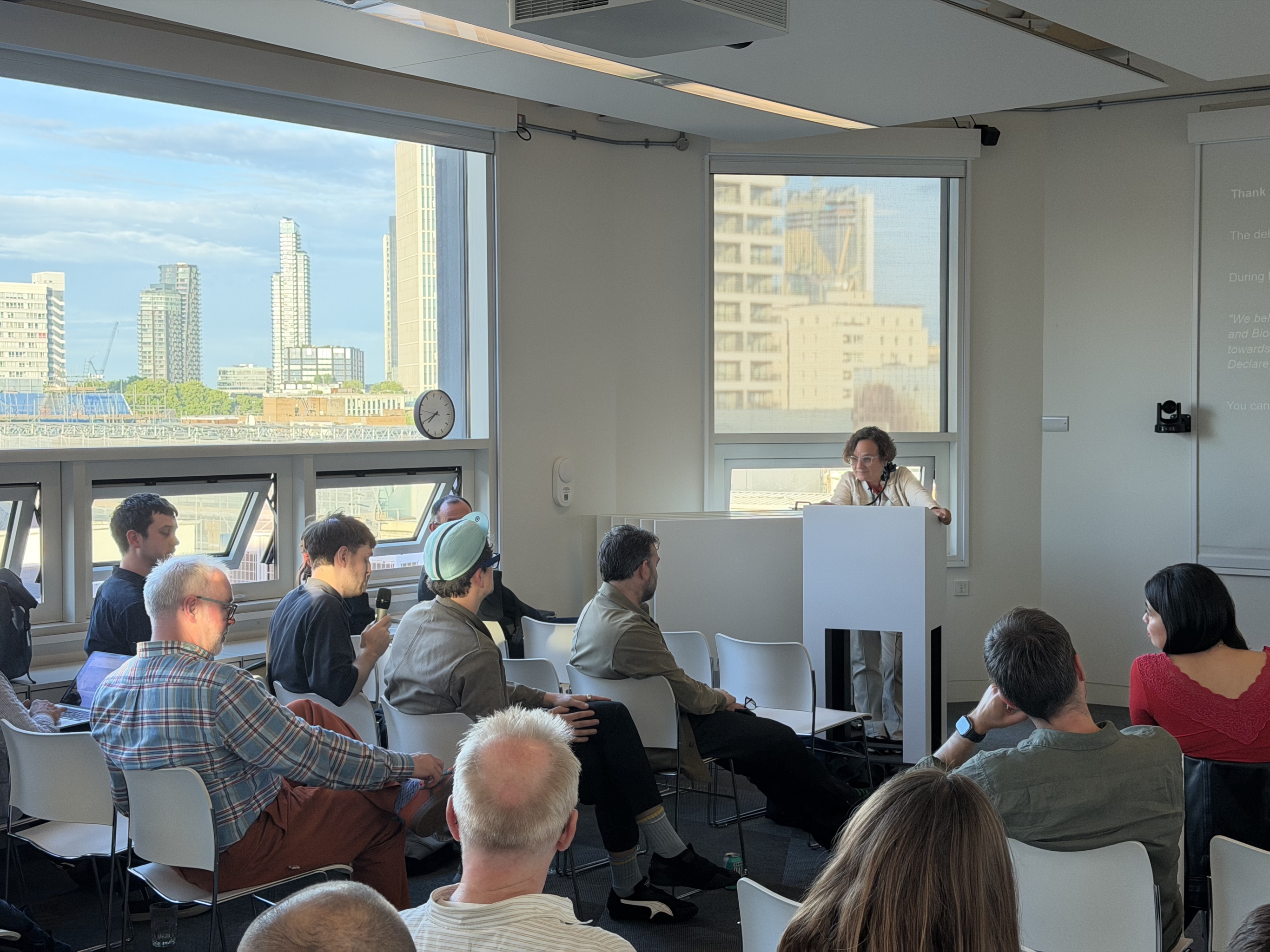
How can the profession keep young architects engaged?
The final section of the debate turned to education and the experience of younger architects. Rory, a next generation ambassador for UK Architects Declare, asked what practical promises candidates could make to keep young people in the industry when many are facing redundancy, disillusionment and a sense of broken promises.
Williams, speaking as an educator, said the impact of AI could not be ignored. He described students increasingly questioning whether they need to become architects at all. His response was to argue for a more critical and engaged education, rather than one focused on learning by rote or passing tests. AI, he suggested, could become an adaptive tool within architecture, but the profession needs to understand how it will alter generational roles and skills.
Morton said the RIBA should provide clearer support and advice for younger members, and should ask how the profession itself needs to change. The RIBA Plan of Work may need to respond to AI, and practices need to consider how younger architects develop the human skills that cannot be automated: judgement, empathy, communication and the ability to turn conversations into real places.
Marsh argued for earlier and deeper engagement between students and employers. Work experience, CV support, interview practice and sustained exposure to professional life should begin much earlier in architectural education, not only after graduation.
Baker-Brown said the profession needs more flexible routes into architecture, including apprenticeships, part-time study and integrated master’s courses that involve practices throughout education. He also argued that AI creates an opportunity to redesign architectural education, rather than a reason to retreat from it.
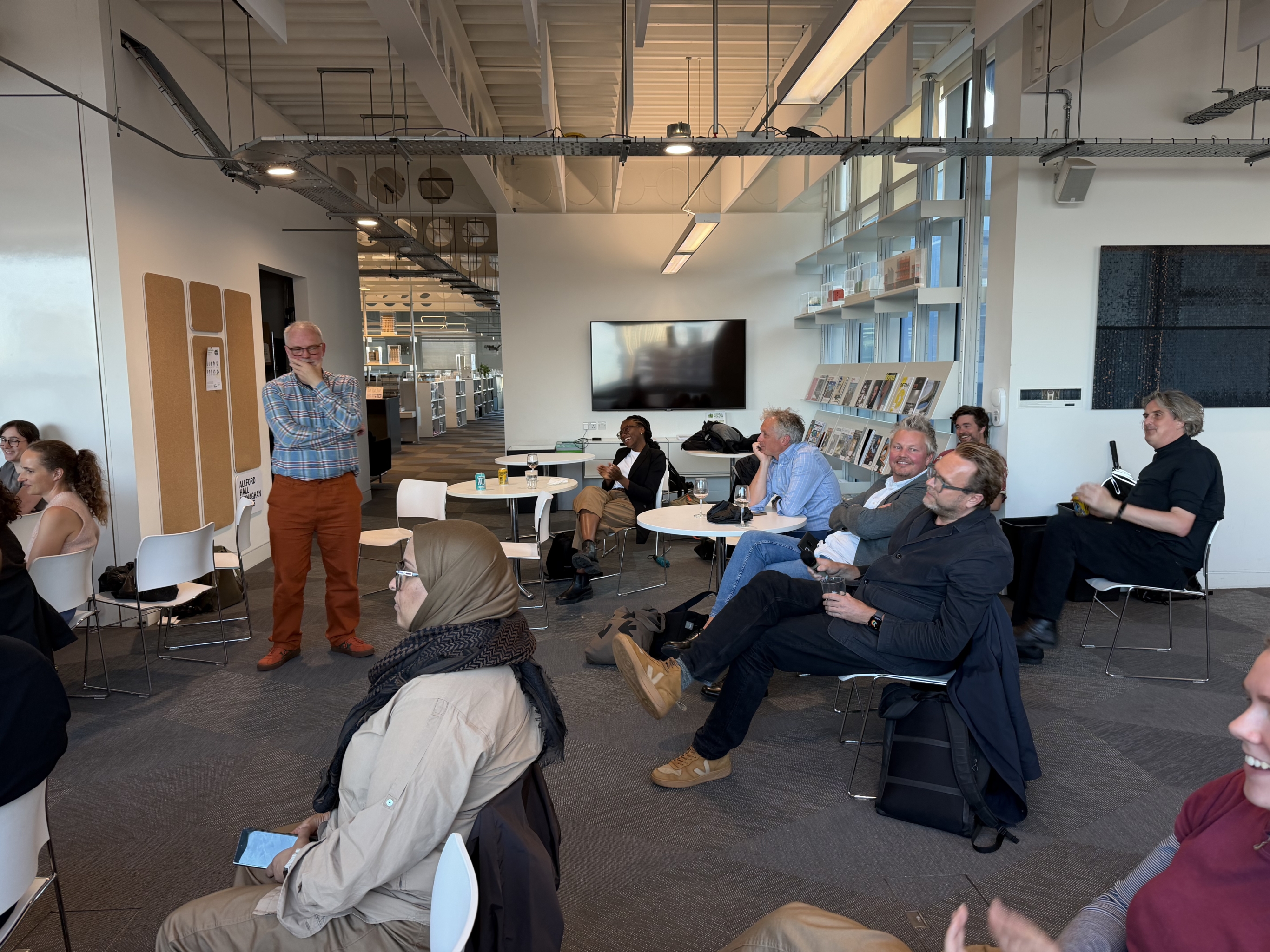
Is there still a positive vision for architecture?
The debate ended with a challenge from Tomas Stokke of Haptic Architects, who asked the candidates to offer a more positive vision for the future. Williams argued for open public debate, media visibility and more architecture conversations in the mainstream. Morton said architecture remains a wonderful profession because it is about people, communities, better places and the green jobs that could emerge from new materials and new ways of building. Marsh urged the profession to embrace change and take inspiration from the greater balance and human focus she has seen develop over her career.
Baker-Brown ended on optimism. Architecture, he said, is still “a lot of fun”. Architects are taught a broad range of skills and remain highly employable, creative and capable of tackling complex challenges. The profession may face serious pressures, but the debate suggested that its future is far from settled. Between climate action, political agency, education reform, AI, regulation and professional value, the candidates offered four very different visions of what the RIBA presidency could be, and what architecture might become.
Speakers
Chair
Isabel Allen, Editor, Architecture Today
Duncan Baker-Brown
RIBA Presidential Candidate
Chithra Marsh
RIBA Presidential Candidate
Jay Morton
RIBA Presidential Candidate
Austin Williams
RIBA Presidential Candidate