Designed by Lahdelma & Mahlamäki Architects, the Lost Shtetl Museum tells the story of Jewish life in Šeduva before the Holocaust. In the summer of 1941, 664 of the town’s Jewish residents were murdered, a fate repeated across more than 200 Lithuanian shtetls. Julian de Metz examines the building’s relationship to its highly charged physical and cultural context, and asks to what extent architecture can – or should – seek to shape collective memory and conscience.
Speaking about his 2024 Holocaust tourism film A Real Pain Jesse Eisenberg called it “the Nazis’ worst nightmare: a Jew coming back and creating something beautiful, devoid of anger and hate, instead filled with love and creativity. That’s the gift of survival.”
The Lost Shtetl Museum in Šeduva, Lithuania, is exactly this. Privately funded by an anonymous descendant of Šeduva’s Jewish community, and free of charge for anyone to visit, the project responds to one of the earliest and arguably least understood phases of the Holocaust.
From July 1941, more than 600 years of Lithuanian Jewish civilisation was obliterated with extraordinary speed, in large part not by Nazis, but by local people who had lived among their Jewish neighbours for centuries.
That the full details of this particular chapter have only become widely understood since Lithuania restored its independence from the Soviet Union in 1990 is staggering, and like so much in this museum, unknown to me.
Like my father and grandfather, I am a British architect who happens to be Jewish. Alongside my main practice, I have developed a particular interest in designing and renewing Jewish buildings: synagogues, education spaces and places for growing communities. I came to the museum curious, but also conscious of how easily remembrance can dwell on Jewish absence rather than Jewish life.
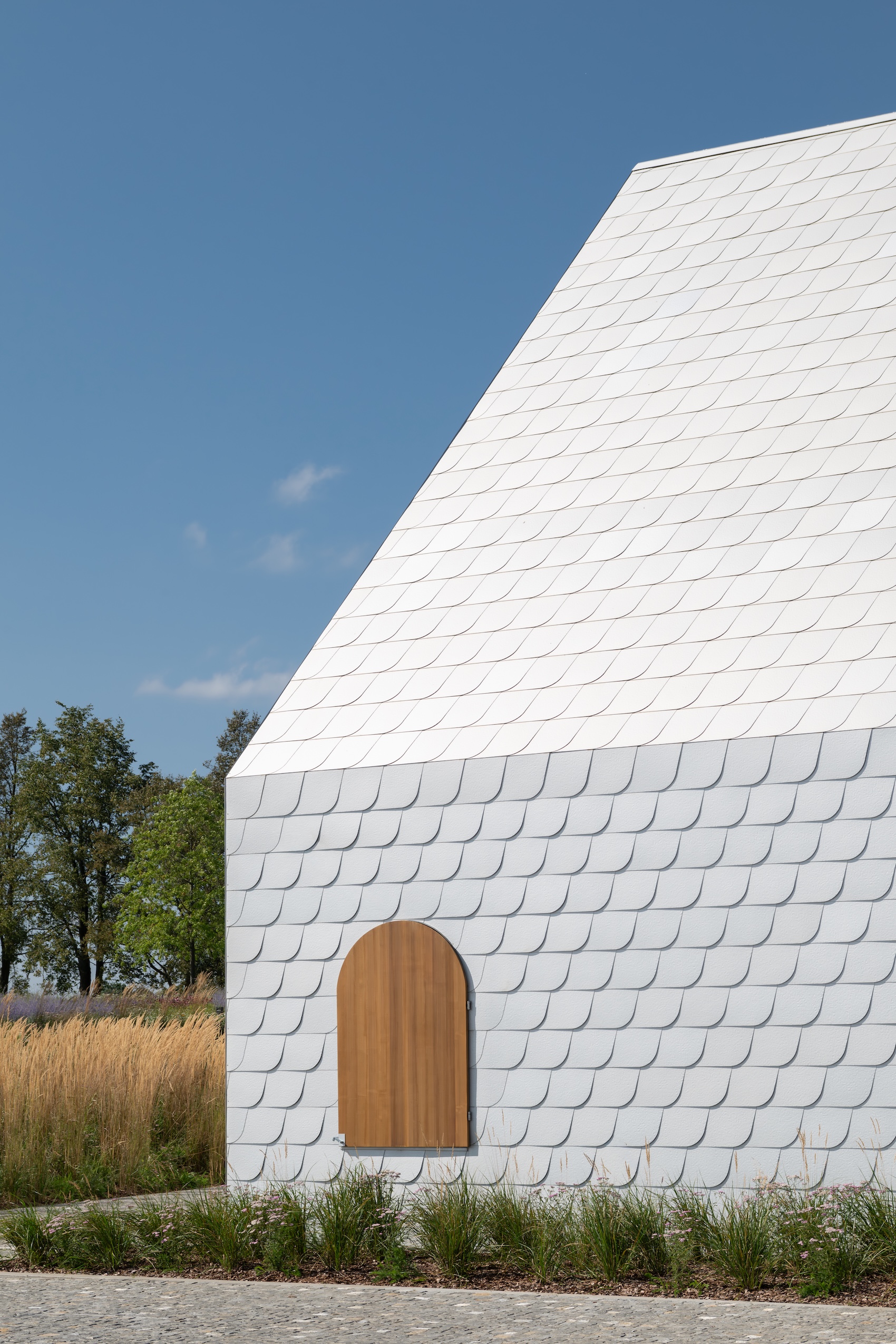
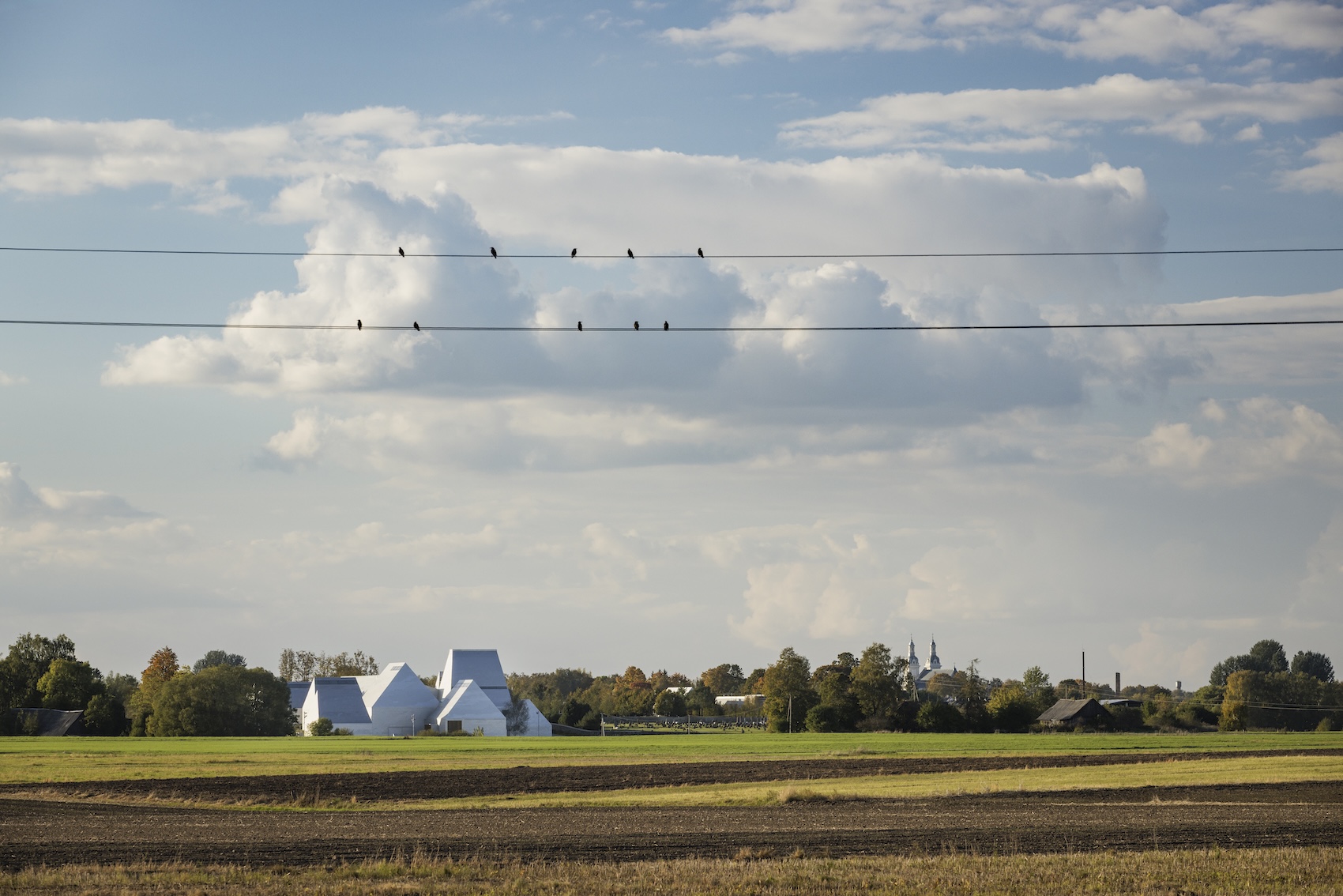
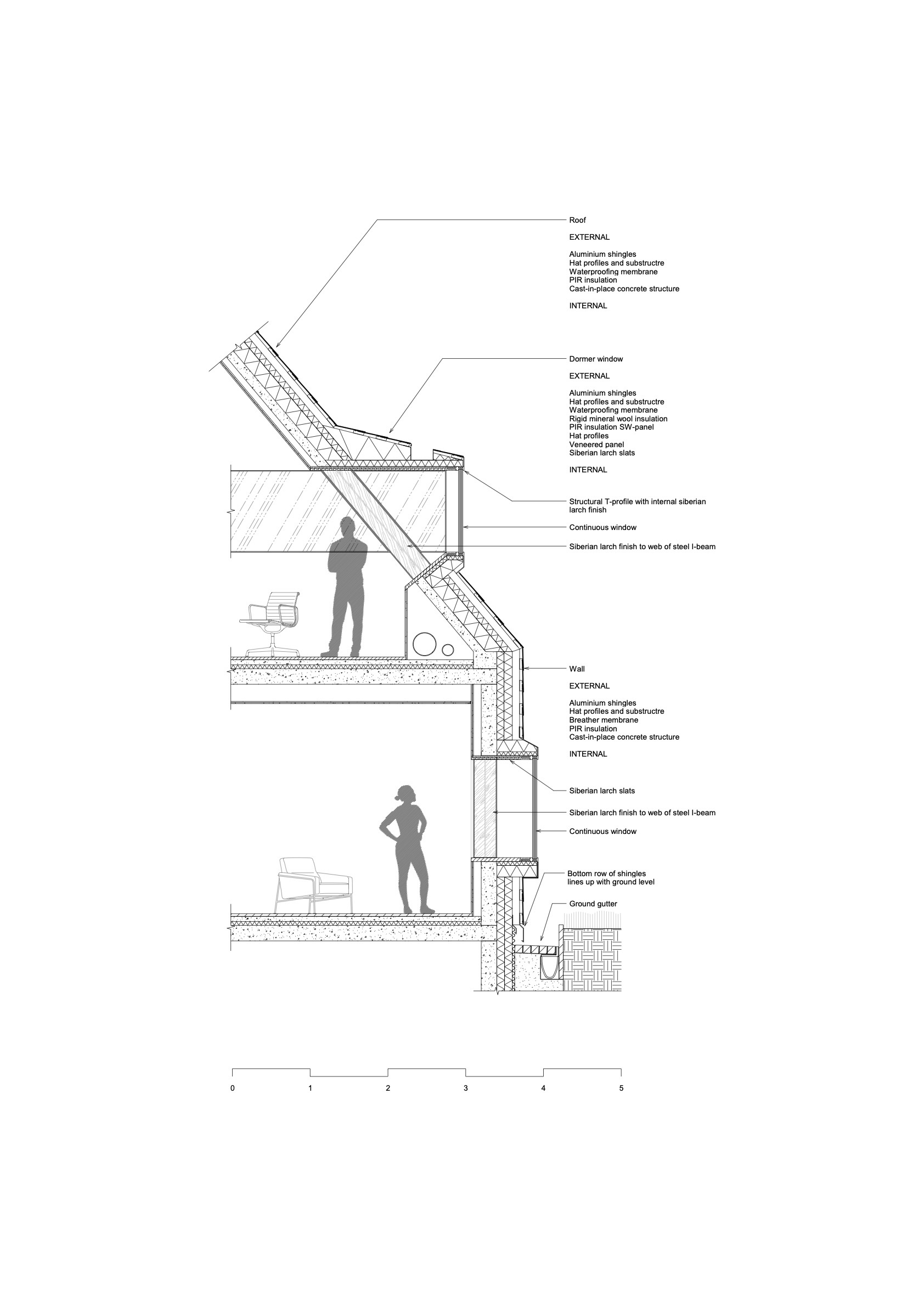
Gutterless and clad in small marine-grade aluminium shingles that reference the weathered buildings of the Lithuanian countryside, the building is described by its architect as “strong, but also neutral. It’s a ghost, a dead building. But alive.”
In her book People Love Dead Jews, writer Dara Horn warns of a culture more able to mourn Jewish destruction than it is able to deal with living Jews. My unease was sharpened by being a Jew in London at a moment when antisemitism feels less distant than it ever has. So I invited three other Jewish architects, Murray Levinson, Lucy Tauber and Dan Leon, to travel with me through Vilnius, Šeduva and Kaunas. We brought different family histories, including Lucy’s from Lithuania, different views and, in keeping with Jewish tradition, some healthy debate – especially about where to park.
Dr Jolanta Mickutė, Head of Education at the Lost Shtetl Museum, described the Lithuanian Jewish story as a “constant presence and absence” in her life. She has dedicated her career to learning as much as she could about that story and now to its accurate and joyful telling through the museum.
Postwar Soviet reframing meant that many Lithuanians either repressed or simply did not know it. The building’s primary focus is education and storytelling, not abstract memorialisation. Since its opening in September 2025, more than 75,000 people, mostly Lithuanians, have visited and confronted a difficult and shameful chapter in their history. The poetry of the architecture, as evocative as it is, comes second to this.
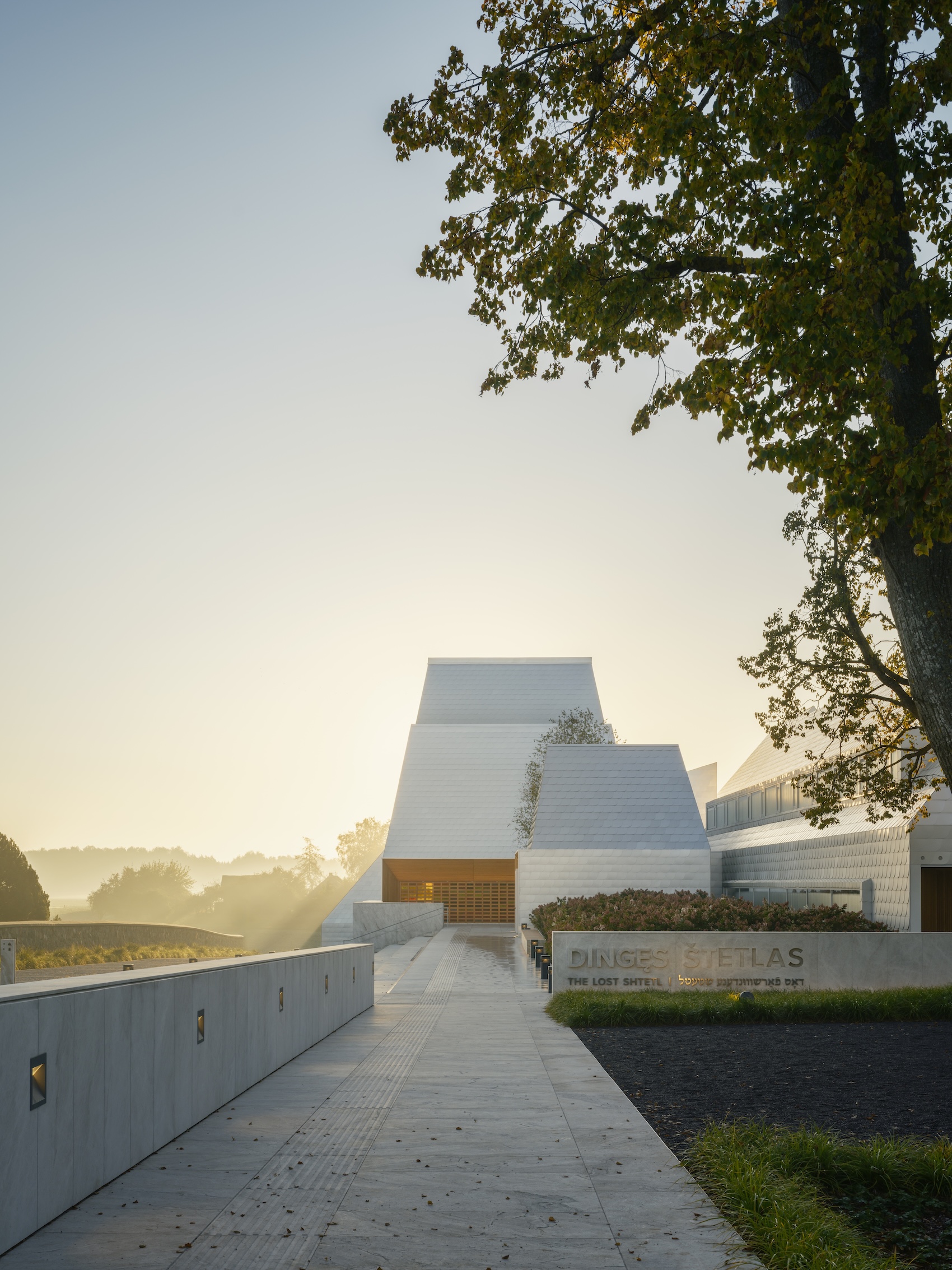
The approach to the museum. A large and technically complex institution has been broken down into a series of pitched-roof house-like volumes, creating a scale that is welcoming, human and calm.
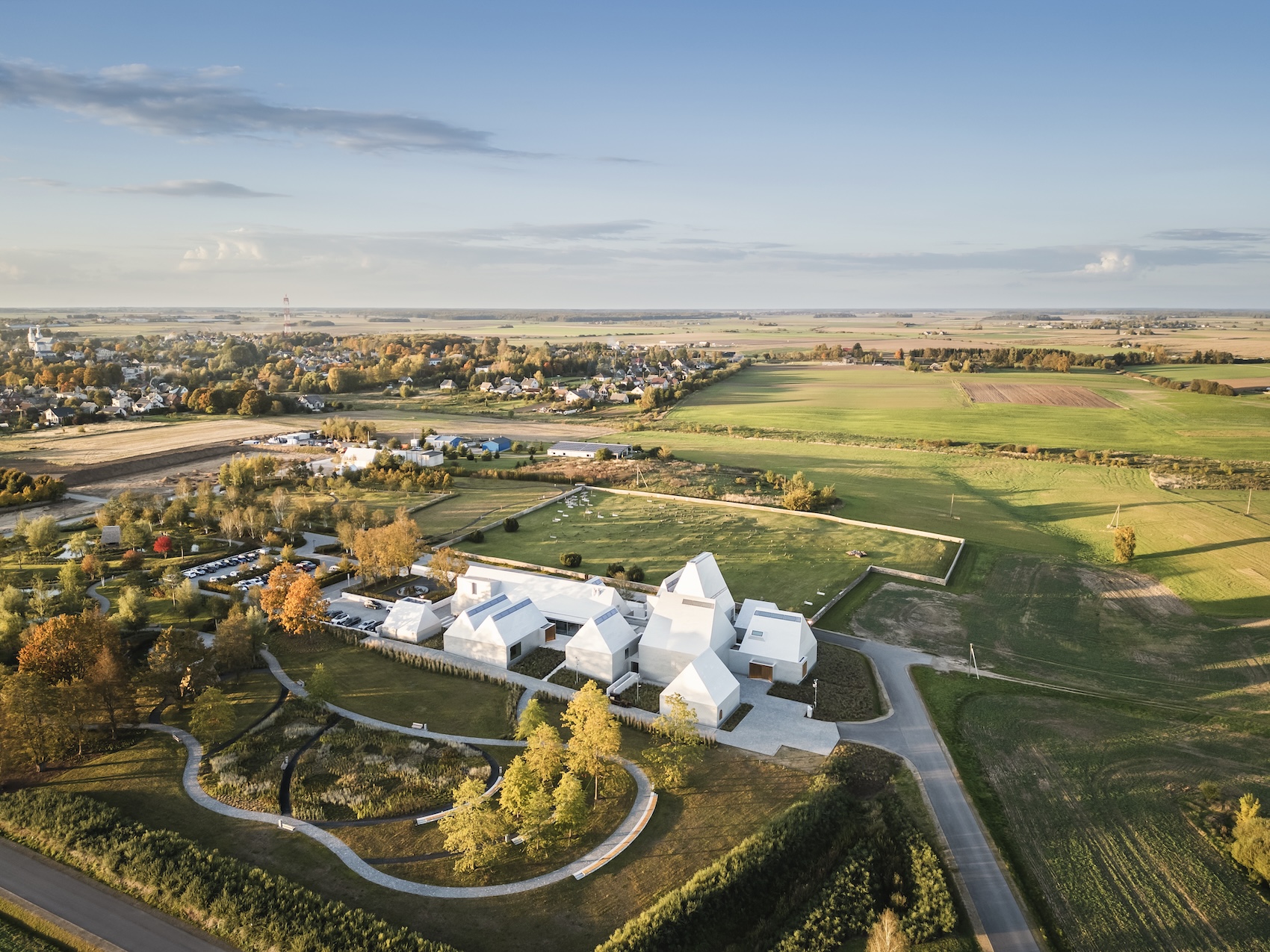
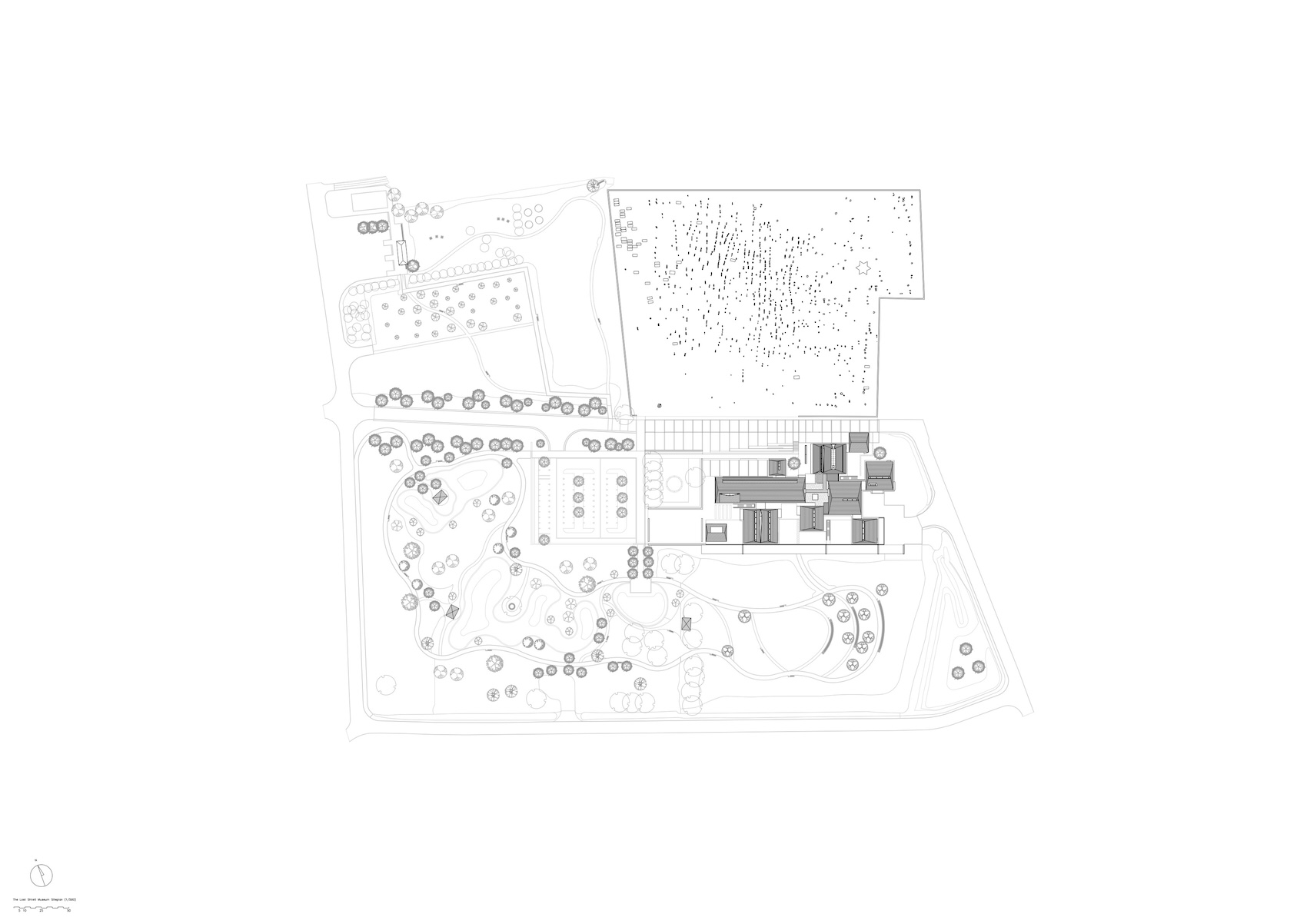
The museum stands at the edge of Šeduva and watches over the town’s restored Jewish cemetery, which until 2004 was becoming derelict. Approaching the museum, Šeduva has an air of absence: a once thriving shtetl, or Jewish town, entirely stripped of Jewish life. The museum was designed by Finnish architect Rainer Mahlamäki of Lahdelma & Mahlamäki Architects, with exhibitions by Ralph Appelbaum Associates and landscape by Enea Landscape Architecture.
Mahlamäki describes how Lithuanian farming villages were typically shrouded by trees and landscape. To reach the museum, one passes through a hollowed out Šeduva, devoid of Jewish character. The landscape then evokes that last journey of its Jewish residents. Birch avenues, meadows, wetlands and orchards echo a journey towards death, while the new planting speaks of renewal. As the visitor nears the museum, the open landscape contracts into intimate gardens evoking those that once surrounded shtetl houses.
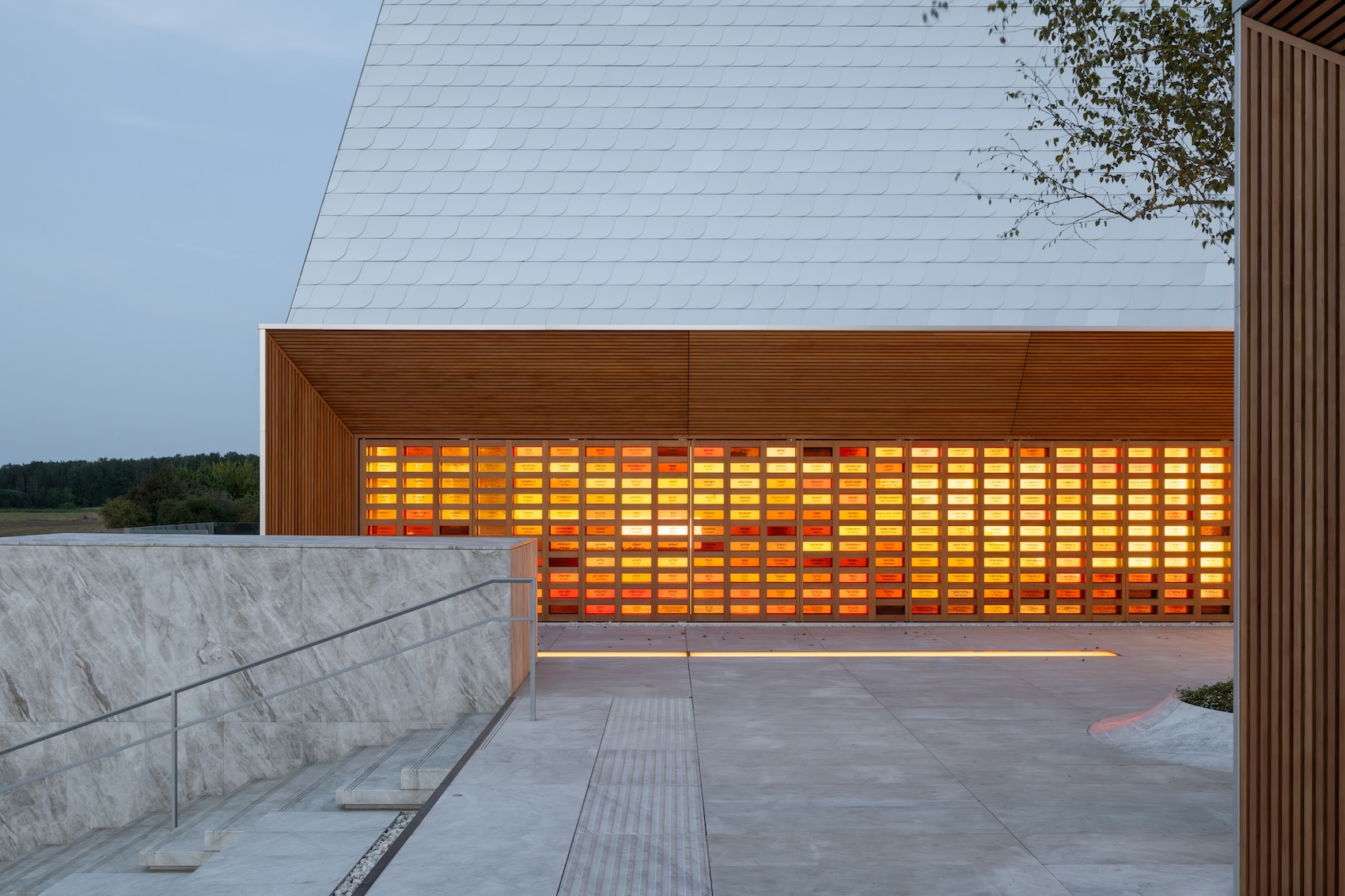
Mouth-blown glass pieces embedded in wooden grid list all 294 shtetls that existed in Lithuania before World War II, a reminder that the atrocities at Seduva were repeated across the country. Around 200,000 Jews were murdered, a figure that equates to roughly 95 per cent of the country’s prewar Jewish population.
In Šeduva, 664 men, women and children were murdered in the nearby Liaudiškiai Forest on 25 and 26 August 1941. Their fate was repeated across Lithuania, where around 200,000 Jews were murdered, roughly 95 per cent of the prewar Jewish population. Šeduva is therefore both a particular town and an emblem of a much wider destruction: a small place through which the loss of a civilisation can be understood.
The building first appears as a loose group of pitched roofs in the flat agricultural landscape. Mahlamäki said: “My job was to build a new shtetl, using simple house shapes that a child might draw.” These forms are gathered into a small settlement, but in abstract. This is not old Šeduva. “Life is there now, but only in the form of a museum and the architecture is not a replica,” he told me. “To me, this means you have to create using the tools and methods of our time.”
Gutterless and clad in small marine-grade aluminium shingles, the buildings can appear pale in sunlight, grey beneath cloud or almost dissolve into mist. “It is strong, but also neutral, and yes, it’s a ghost, a dead building. But alive,” says Mahlamäki.
This is not a theme park of loss. Mahlamäki gives us just enough to symbolise the shtetl, then he stops. At the entrance, a mezuzah marks the threshold. Visitors may touch it as Jews have done for generations when entering a home. This symbol makes the museum not simply a building about Jewish life, but a Jewish place.
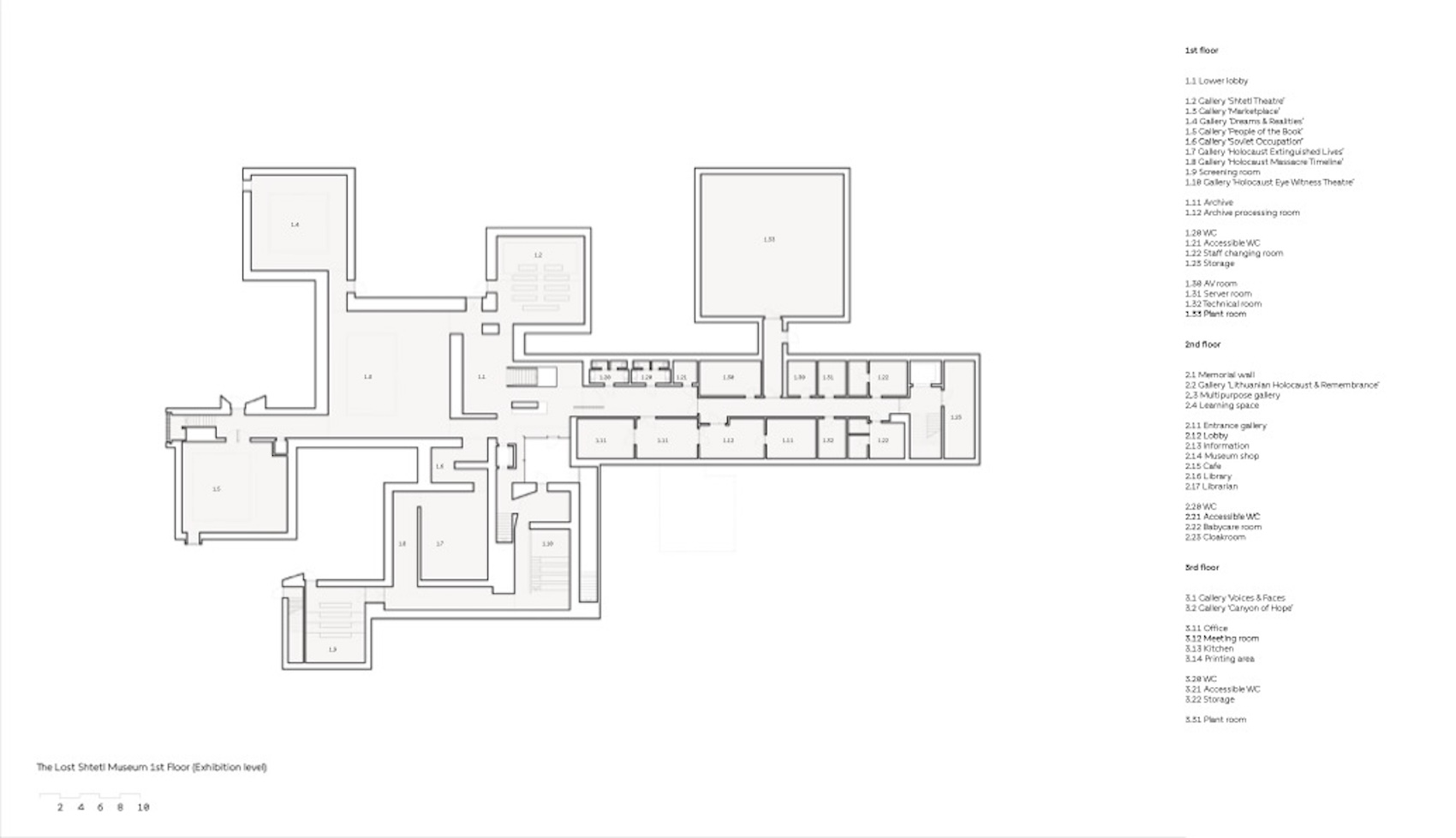
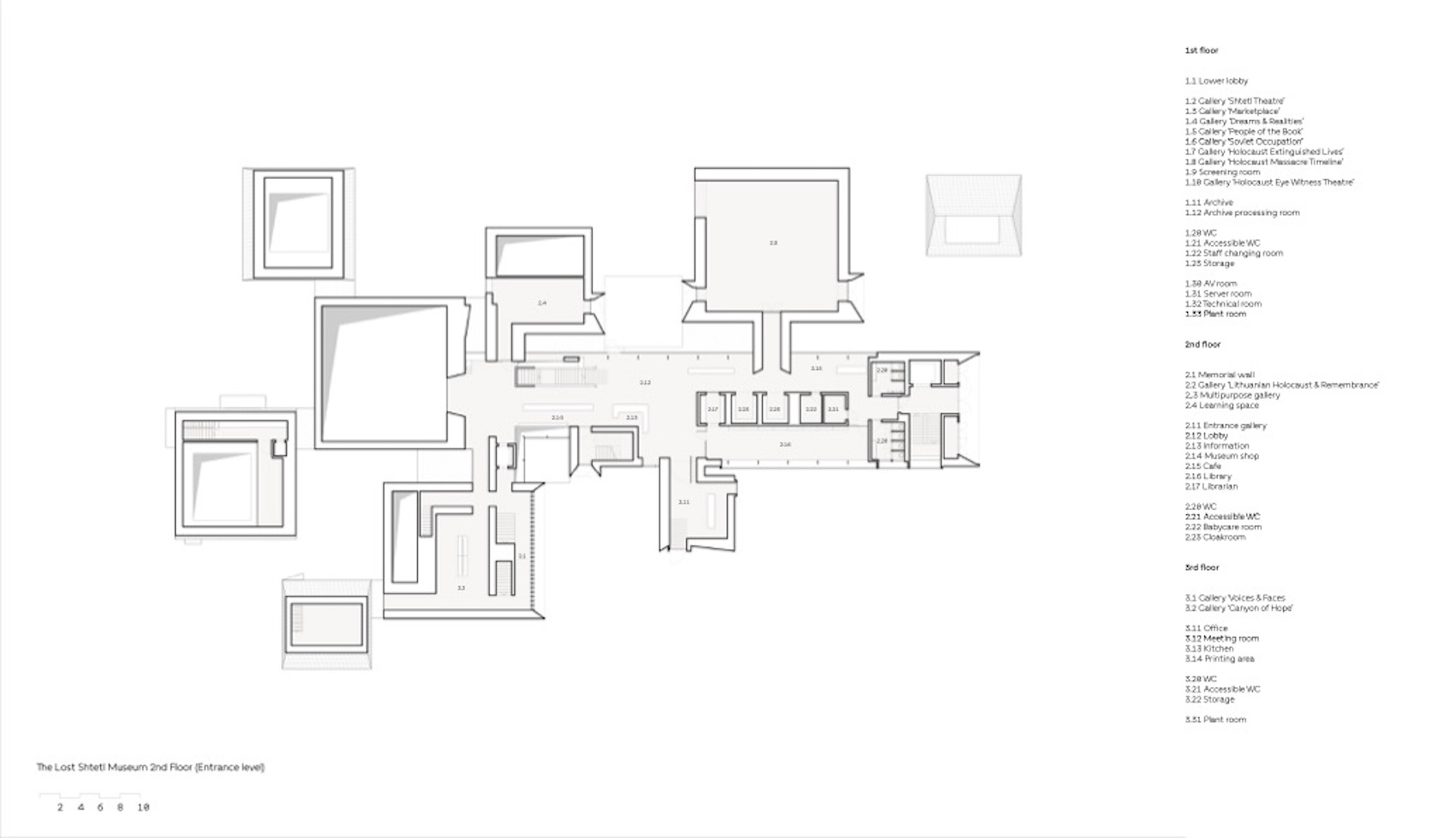
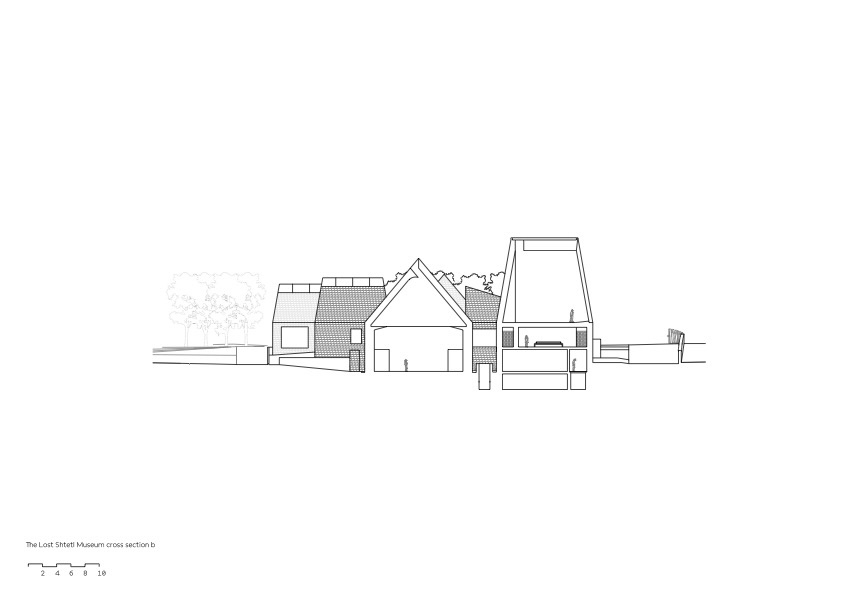
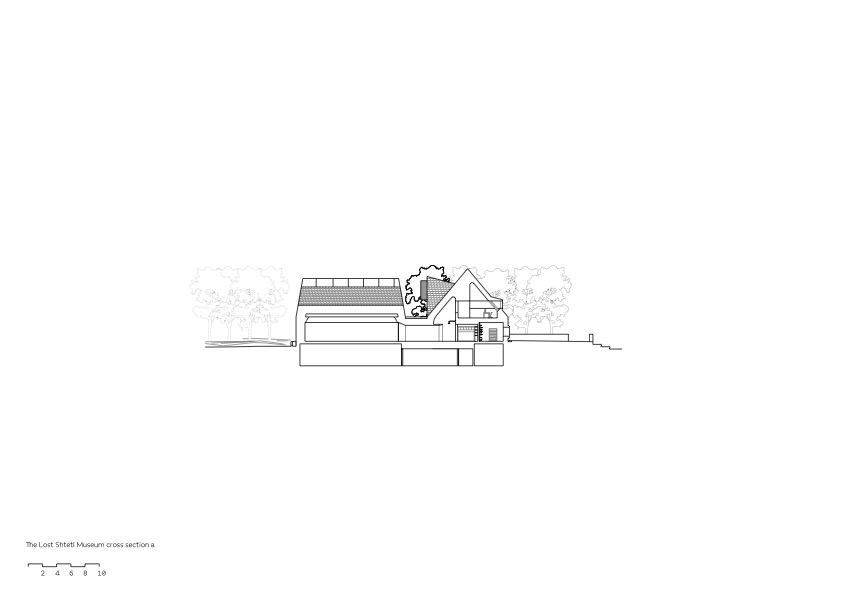
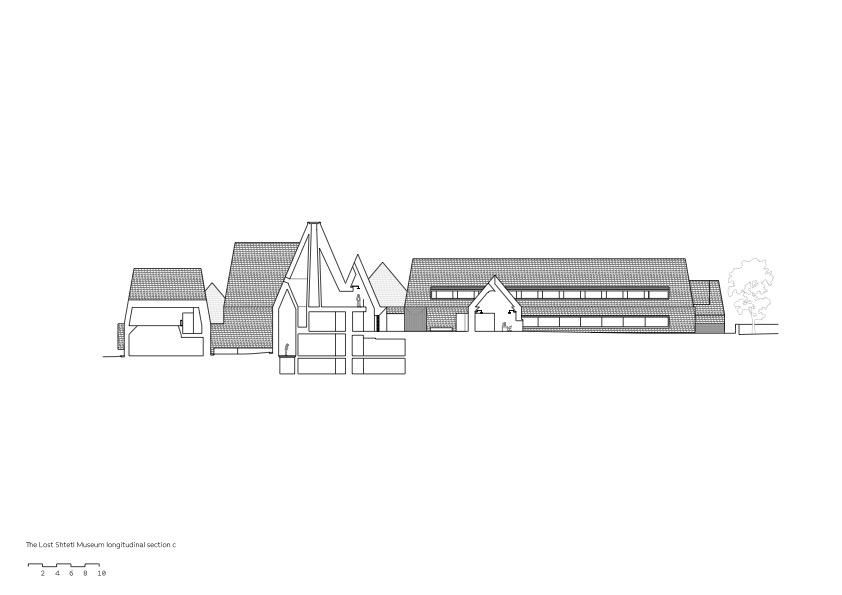
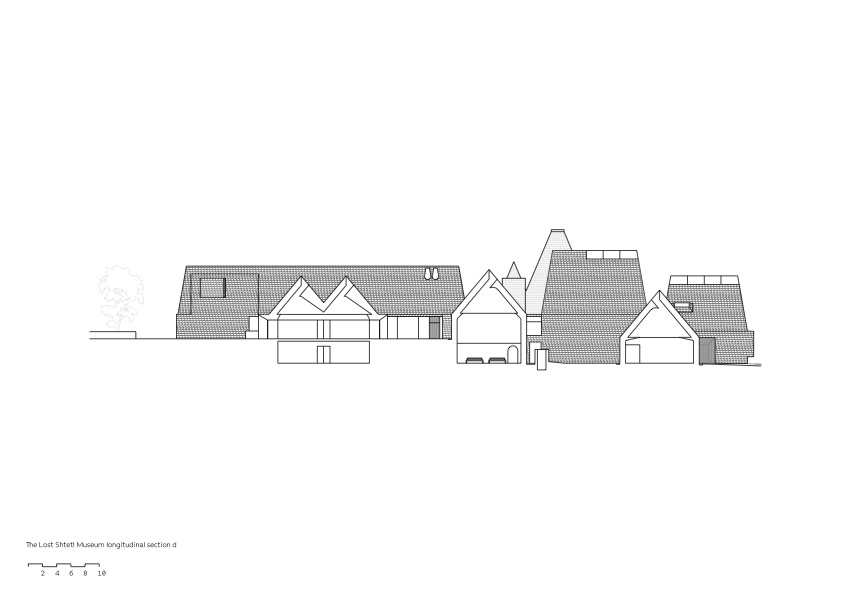
In practice, the broken up pitched roof forms divide a large and technically complex institution into smaller parts, creating a scale that is approachable, calm and human. Each volume loosely suggests a house. The photographs inevitably favour the ground floor, which is largely a collection of useful rooms for education, assembly, learning and gathering, many with framed views towards the landscape and cemetery. However, the less photographed main elements of the museum are housed below ground, sometimes breaking up into the pitched volumes above.
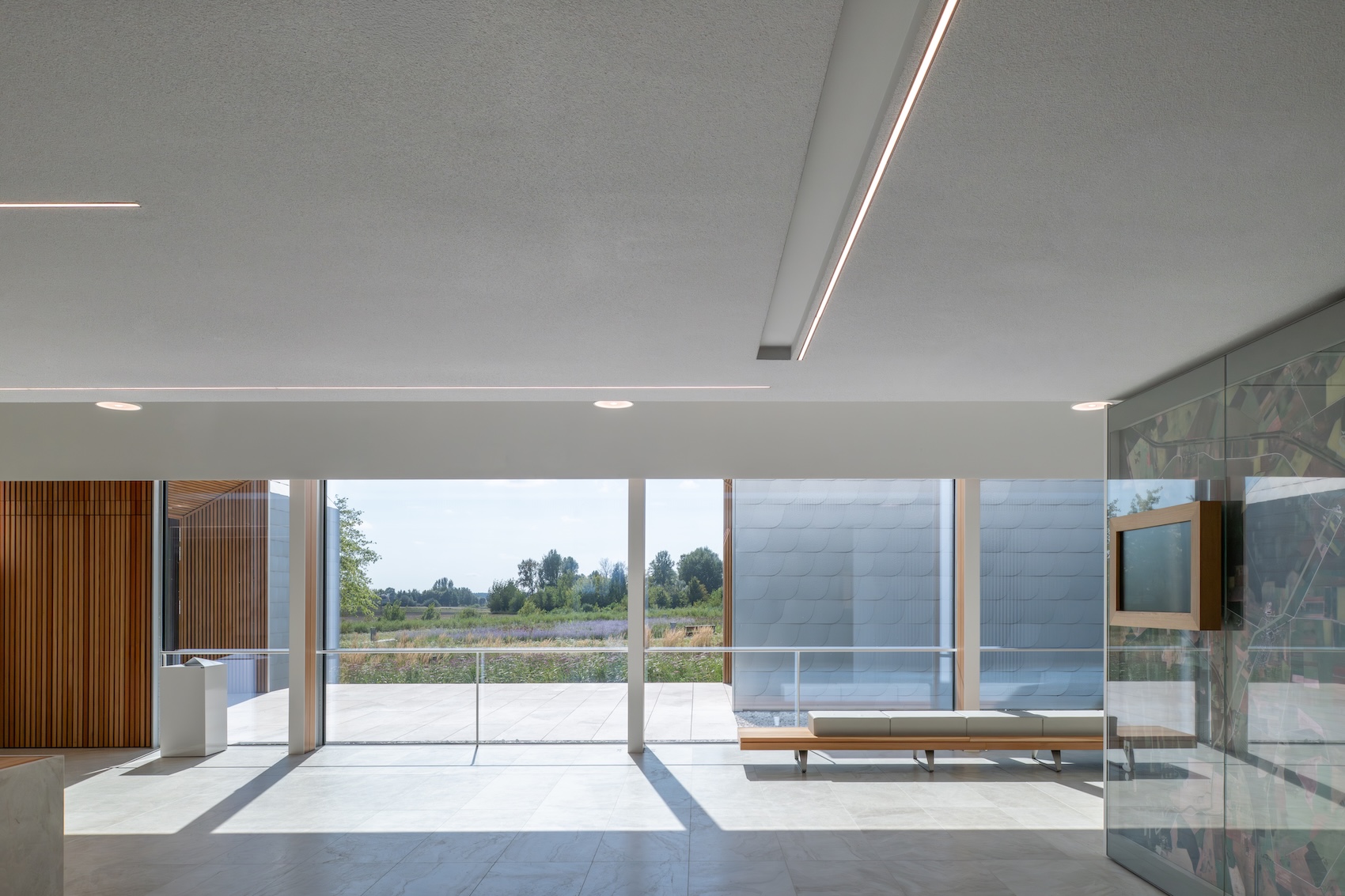
The entrance hall looks onto a flower meadow.
“This is not a Holocaust museum, it is a history museum,” says Mahlamäki. It dwells on life, not murder.
At basement level, its tall central gallery recalls Šeduva’s market square, once a bustling, joyful and characterful place, now the sedate square we drove through on our way to the museum. Words, objects, models, music, photographs, testimony and original and recreated films build a picture of the community.
Jolanta quickly dispelled the perception that this was the insular, poor shtetl of Fiddler on the Roof. Here was a vibrant, modern thinking, educated, industrious and political hub, integrated into Lithuanian society and home to many non-Jews.
Many Holocaust museums are shaped by what the visitor knows is coming. The Lost Shtetl resists this for as long as it can, letting people live before they die. It forces us to consider the loss of potential: that the destruction did not end with those murdered in 1941, but included future teachers, artists, traders, parents, eccentrics and benefactors.
Eventually, the spaces suddenly become dark, low ceilinged and more oppressive. Sound becomes more controlled and the vibrant earlier world evaporates with shocking speed. We learn that the Nazis had little trouble finding ordinary local people to shoot their Jewish neighbours. A single black and white film shows Jews, terrified, running to dig a giant ditch, where men, women and children will end up.
This story was repeated across Lithuania in those short months and later across Europe in different forms, becoming the Holocaust as we know it. “Auschwitz was the end point of a much longer road of horror. If you want to know where the Holocaust really begins, you begin in Lithuania,” Simon Schama said in his 2025 BBC documentary The Road to Auschwitz.
For 50 years after the Second World War, Lithuania was under Soviet occupation, and economic and political oppression was accompanied by control of the narrative. After our visit to the museum, we stopped at the Ninth Fort Museum in Kaunas, with its violent, fractured, 32-metre-high concrete monument, built in 1984 by sculptor Alfonsas Vincentas Ambraziūnas. This vast Soviet monument largely submerges the specifically Jewish character of the killings, referring instead to the “victims of Nazism”.
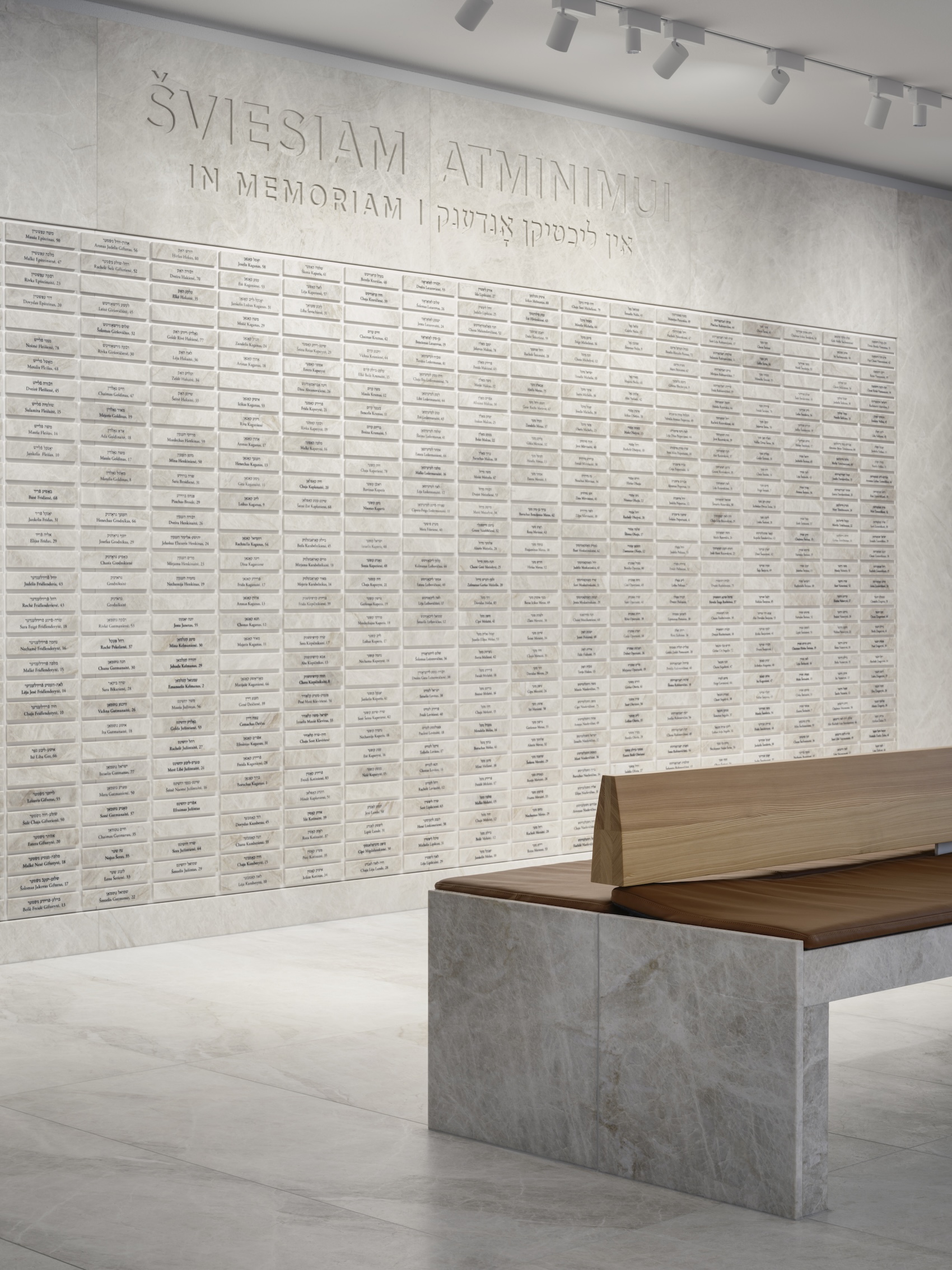
A memorial wall lists the names of the 664 Jews who were murdered in August 1941. Blank spaces represent those whose names are not known.
The final section of the Lost Shtetl creates an opportunity for accurate, previously repressed testimony. Perpetrators are named, eyewitnesses describe what they saw and historical truth is presented. Jolanta described how many Lithuanian people have as little awareness of the rich culture that existed as they do of the way it was destroyed. Others share untold stories of friendship, loss and shame.
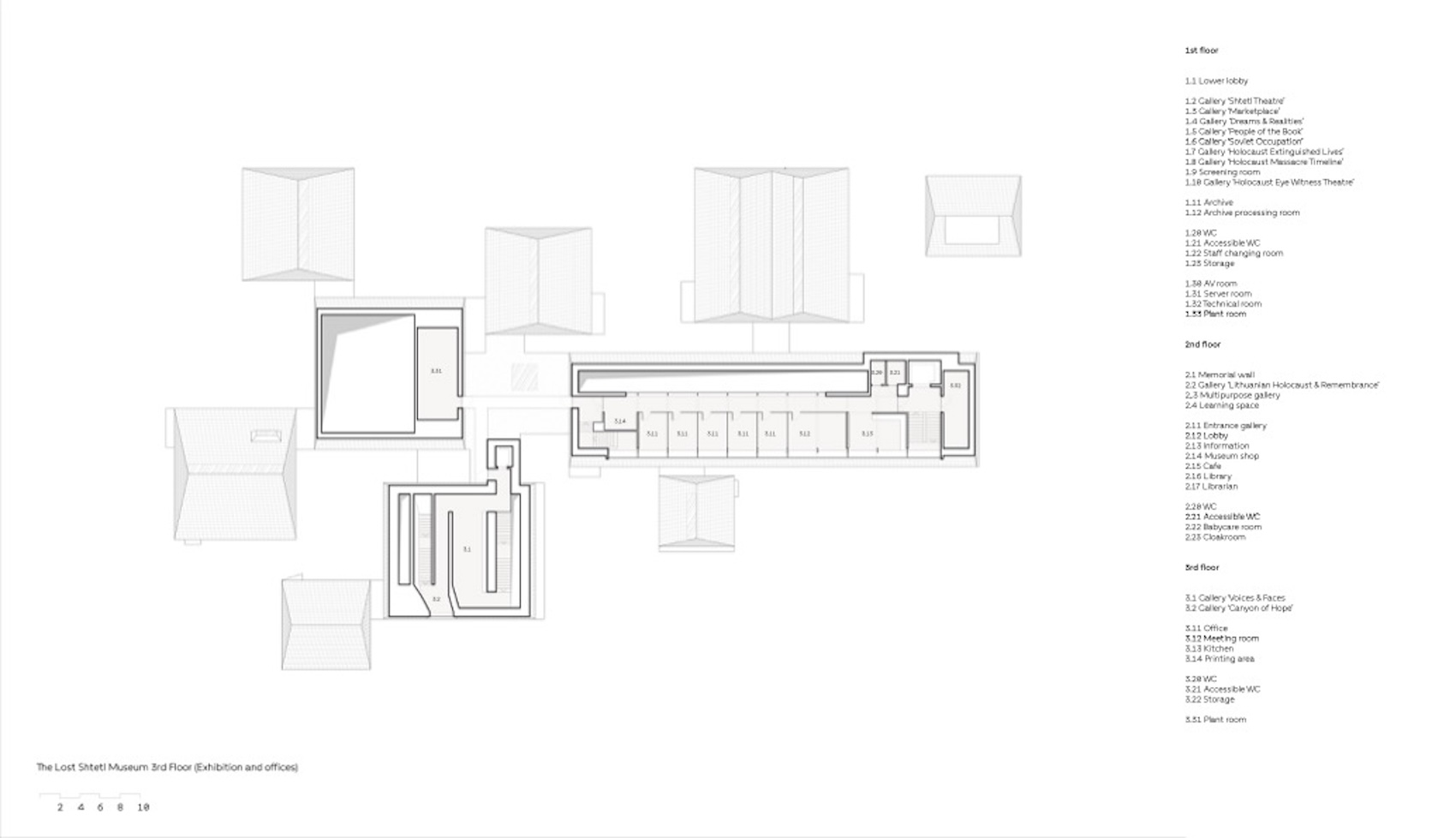
The route then returns to the architecture. A soaring, empty white canyon, devoid of information and wide enough for two people to walk side by side, opens a framed view towards the fields, sky and cemetery.
Writing about Holocaust tourism, Tanya Gold questions whether memorials can become “mirrors in which you only see your own reflection, so that you do not have to look into the past at all”.
At the Lost Shtetl, education is the primary purpose, and Mahlamäki understands this well. The building asks Lithuanian visitors to consider not only the loss, but who was lost, who killed them and how this is a key part of Lithuanian, and ultimately European, history.
At the beginning of my interview, Mahlamäki excitedly showed me his competition model for the proposed UK Holocaust Memorial and Learning Centre in Victoria Tower Gardens. David Cameron initiated the project after research revealed serious gaps in young people’s understanding of the Holocaust. The 2017 winning submission by David Adjaye and Ron Arad remains unbuilt, almost a decade later.
In the current climate, can Britain be confident that the lessons of the Holocaust have been learnt? Finchley Reform Synagogue, a building I helped create, was attacked in April 2026 in an incident treated by police as an antisemitic hate crime Mahlamäki says: “We are living in bad times again. We should have more and more buildings that tell the story of the Holocaust.”
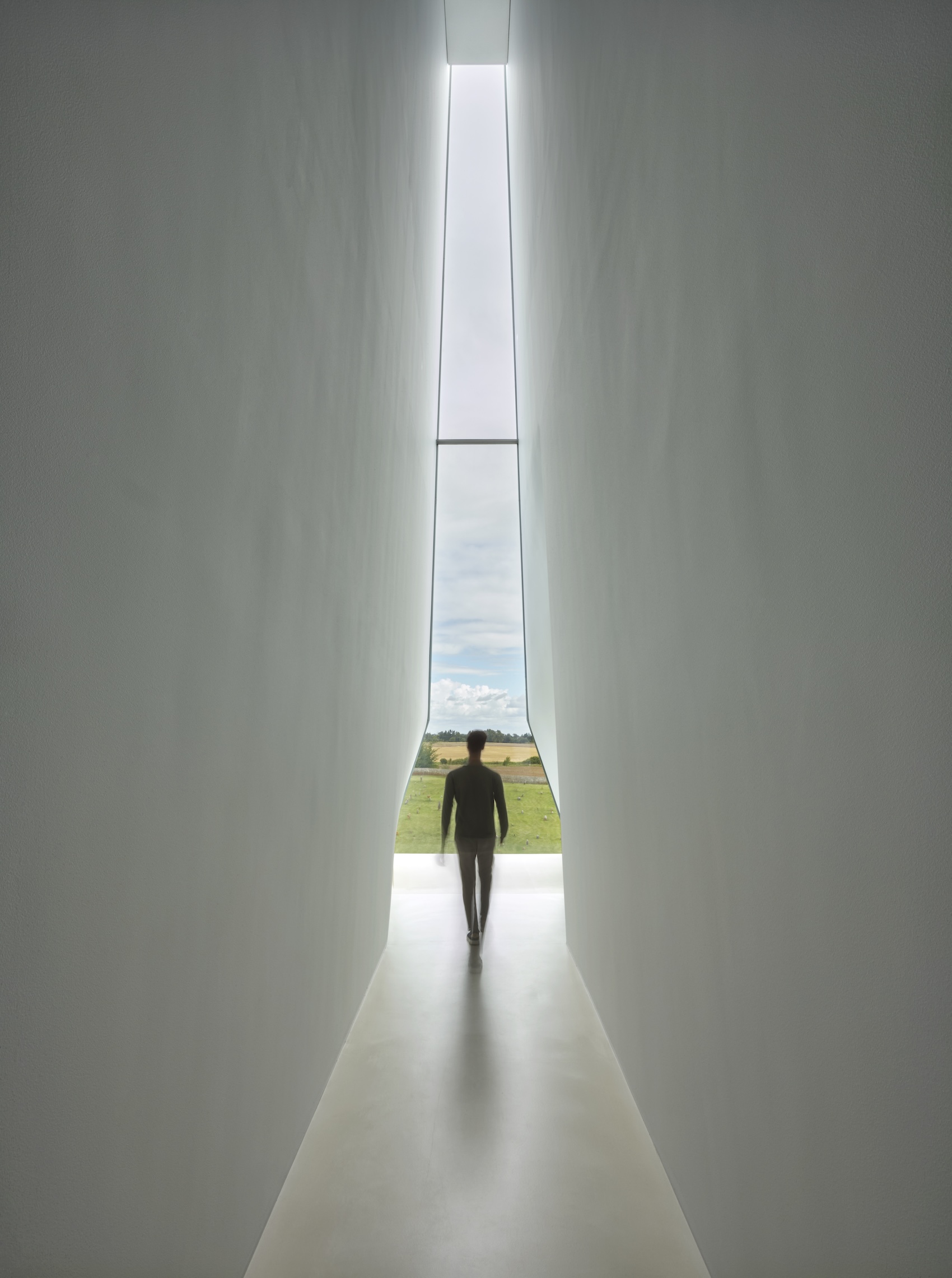
The Canyon of Hope opens a framed view towards the cemetery. fields and sky.
As an education project, the Lost Shtetl is essential. It was packed with Lithuanian visitors when we went. The architecture is a key part of its appeal, but its primary purpose is to confront difficult truths and to educate.
Before reaching Šeduva, we happened to meet a young Jewish couple living in Vilnius who were building Jewish life in the present; rare birds in Lithuania today. They were creating a community centre, and she was restoring violins once played by persecuted Jewish musicians. We had just passed a statue of Leonard Cohen, unaware of his Lithuanian roots. His song Dance Me to the End of Love was inspired by Jewish musicians forced to play in the camps. Our new friend told us of her plan to have Jewish violinists perform the song on the restored instruments in Vilnius in September 2026, as a celebration of Jewish life.
On the plane over, Dan Leon questioned what was more important in the Jewish world: the ‘minyan’ (the people), or the‘binyan’ (the building).
The Lost Shtetl shows that it’s both.
Drawings
Credits
Client
The Lost Shtetl Museum
Architect
Lahdelma & Mahlamäki Architects
Executive architect
Studija 2A
Exhibition design
Ralph Appelbaum Associates
Interior design
Lahdelma & Mahlamäki Architects
Landscape design, construction and maintenance
Enea Landscape Architecture
Structural engineer
Ribinis Buvis
Building services engineer
Veda
Building physics
GS Bauphysik & Akustik
Fire safety engineering
Gaisrines Saugos Centras
Lighting design
Valosuunnittelu HN
Acoustic engineering
Akukon & Akustika Plius
Quantity surveyor
Ecas AG
Construction management
Ecas AG & Baltijos Plienas
Electrical engineering
Projectum