In the winter months especially, rain will permeate an external skin of a typical cavity wall. It will do so more rapidly when accompanied by wind. Bricks are porous, and mortar more so.
The term brick vapour permeability refers to the ability of brick to allow moisture vapour to pass through it rather than trapping it. Un-trapped and unresisted water should drain outwardly, as well as naturally vaporise into the air as conditions change. Cumulative saturation increases the risk of eventual spalling, if water retention exists.
Vapour, porosity, and hygroscopic sorption influence how and to what extent wet penetrates and accumulates within an external masonry skin.
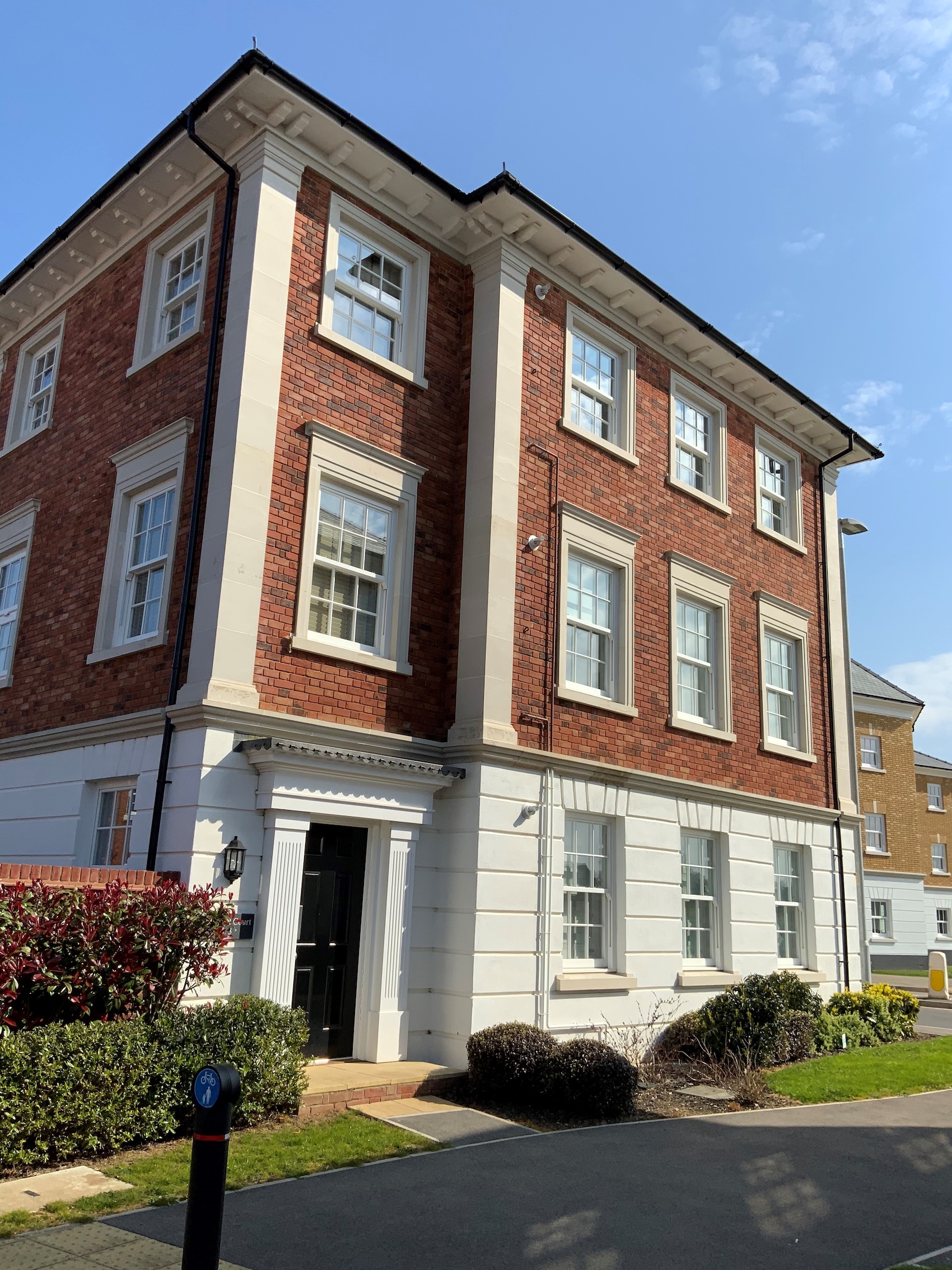
Differing and protruding finishes affect localised wet penetration volumes.
Cavity wall thermal performance is directly influenced by heat and wet. Dry external masonry skins commonly deliver lower thermal conductivity but a higher water absorption capability – a variable correlation exists.
Thermal conductivity reduction coincides with the external masonry porosity increasing, air having a greater thermal resistance than fired clay. The greater the proportion of pores in the brick, the lower the density. But more pores provide greater opportunity and capacity to hold water within the masonry module.
It is important to consider multiple criteria when attempting to quantify moisture risks and thermal characteristics. Guidance around which criteria and conditions constitute high and low risks can aid designers and benefit building maintenance.
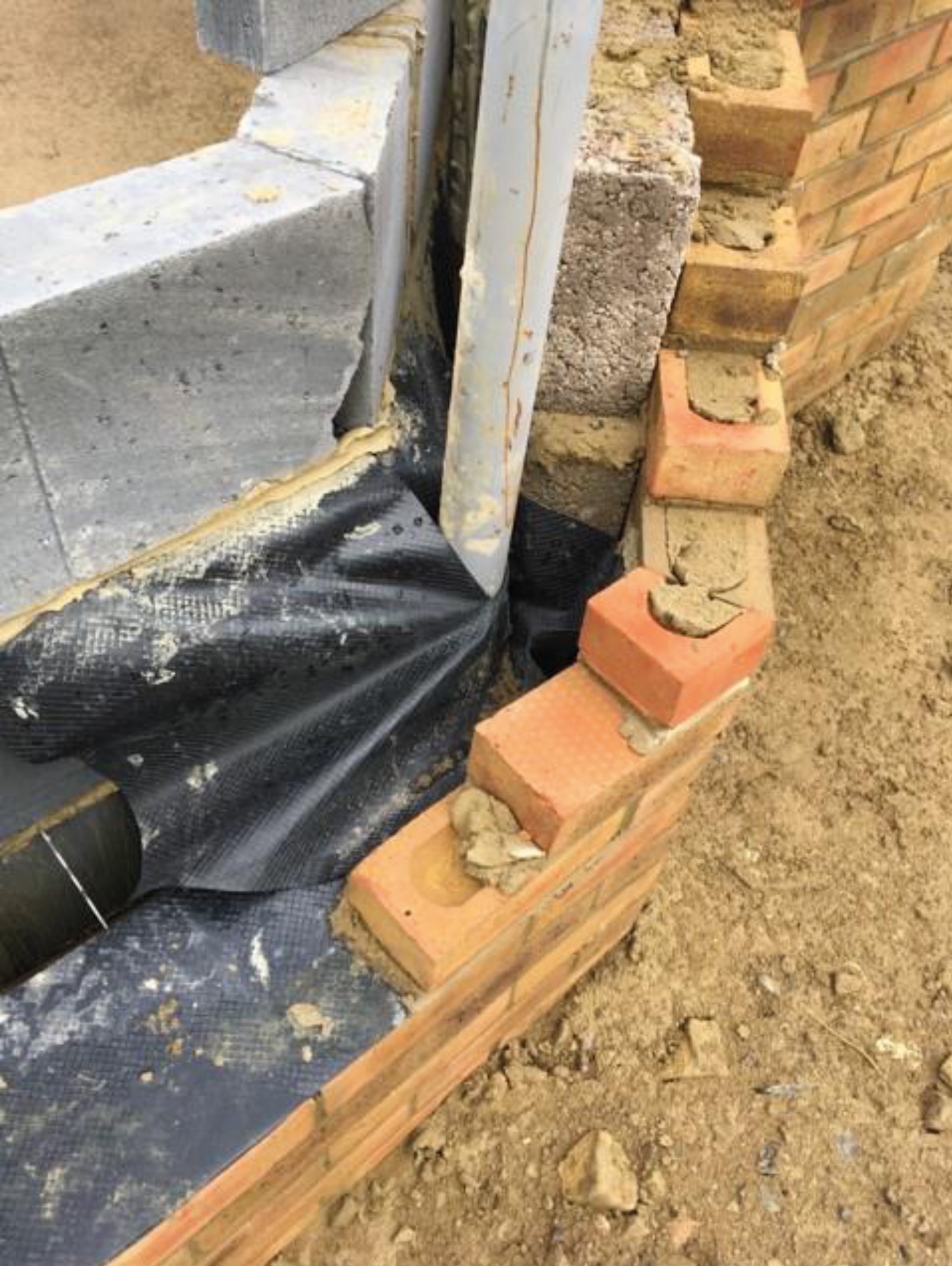
Unstructured site fabrications commonly fail at complicated junctions.
Risk or Reassurance?
Will wall construction that has performed satisfactorily in one location, perform in an identical manner in another? A notional way to proceed is to always assume worst case conditions if reliable long-term performance and peace of mind is sought.
Consider BS 4315 which is a Standard applying to some brick types. BS 4315 bricks are often described as ‘indicating very low levels of rates of rain penetration’ after being tested. Testing lasts 48 hours in total and comprises spraying water onto brickwork for just one minute only, followed by half an hour without water. This sequence goes on for 48 hours – one minute of wetting followed by a dry period of half an hour. Does the weather where you live behave so considerately? Can you expect the external wall performance on one site to match that of another? Masonry types and location do make a difference.
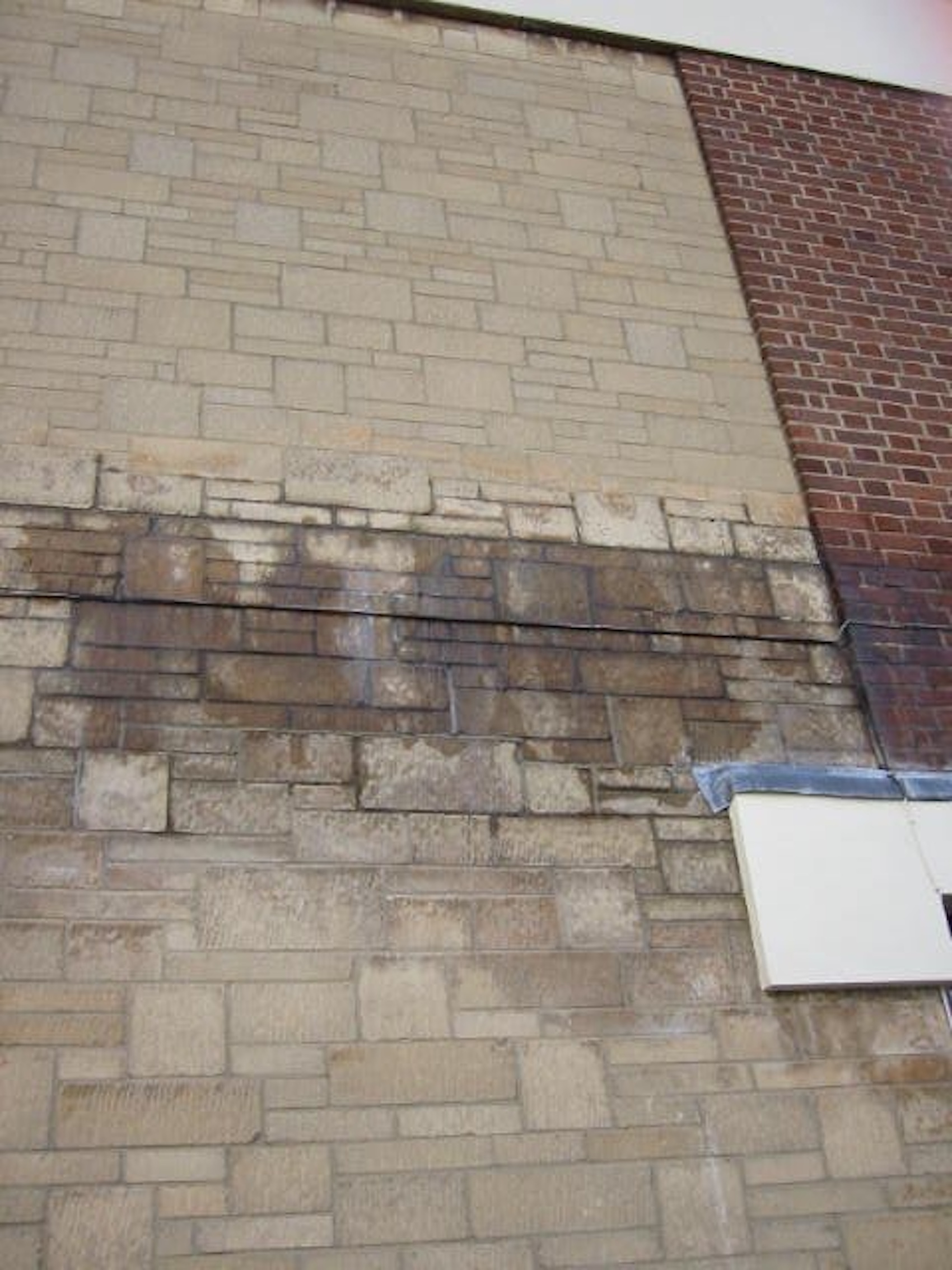
Damp problem in a masonry wall.
Incorporating a compliant cavity tray can arrest and control water that penetrates, ensuring the wet external leaf is isolated from the dry internal leaf.
UK company Cavity Trays Ltd manufacturers the widest range of standard and bespoke tray solutions and is the longest-established specialist. It can also claim to be the only UK cavity tray company awarded European Technical Approval.
Approved trays from the Yeovil-based company fulfil mandatory standards and:
- Have a life expectancy equal to or exceeding that of the building
- Resistance to compression without extrusion
- Resistance to sliding
- Adhesion to mortar
- Shape retention, robustness and support
- Resistance to damage during installation and subsequent building operations
- Workability at temperatures normally encountered during building operations
- Performance warranty
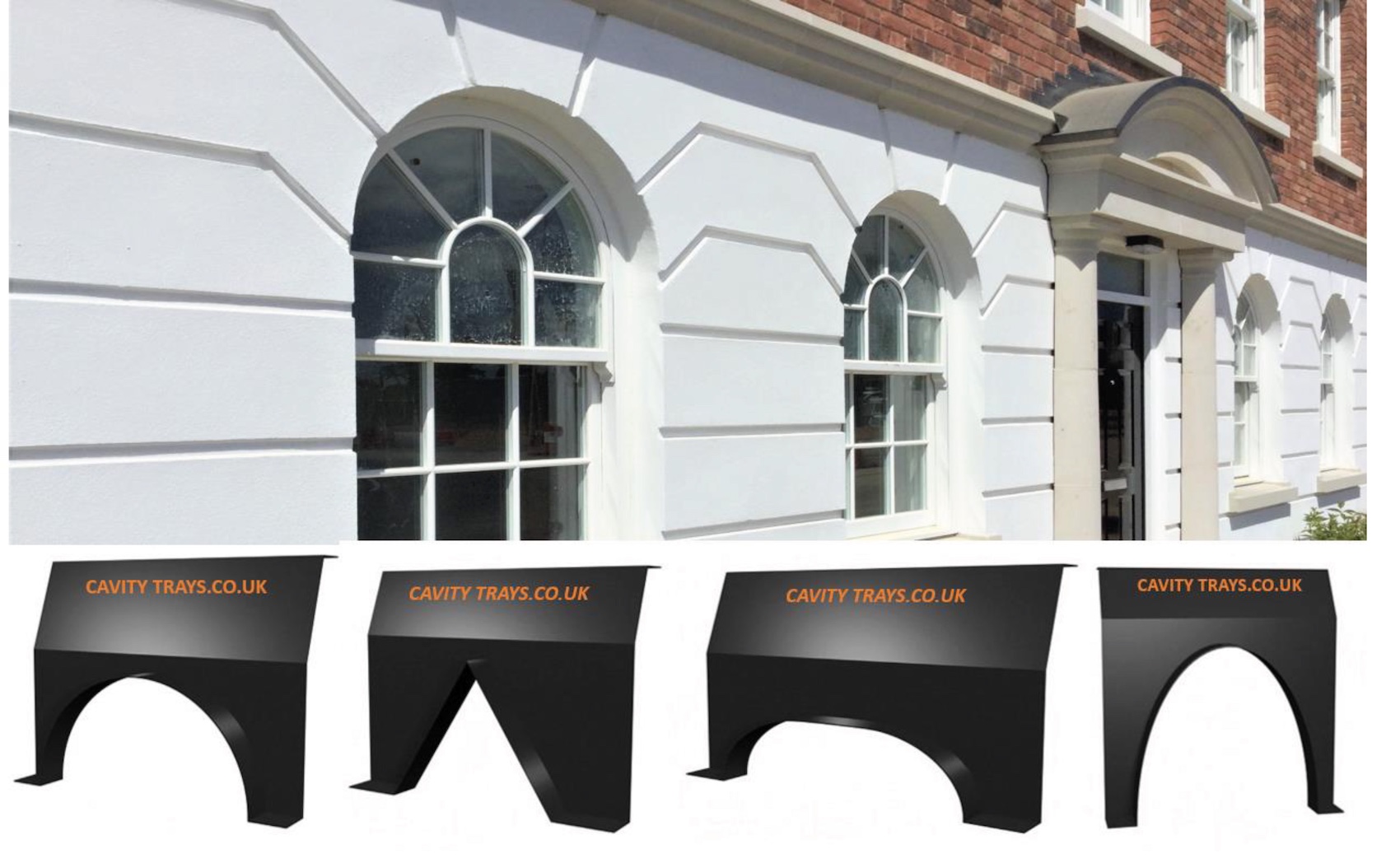
Four Cavity Trays arches.
Cavity Trays Ltd, a proven track record from the longest-established specialist.
Cavity Trays
T: 01935 474769
enquiries@cavitytrays.co.uk
www.cavitytrays.com