Fletcher Priest Architects’ new London headquarters is a low-impact workplace that prioritises reuse, adaptability and wellbeing, while also showcasing the practice’s circular design principles.
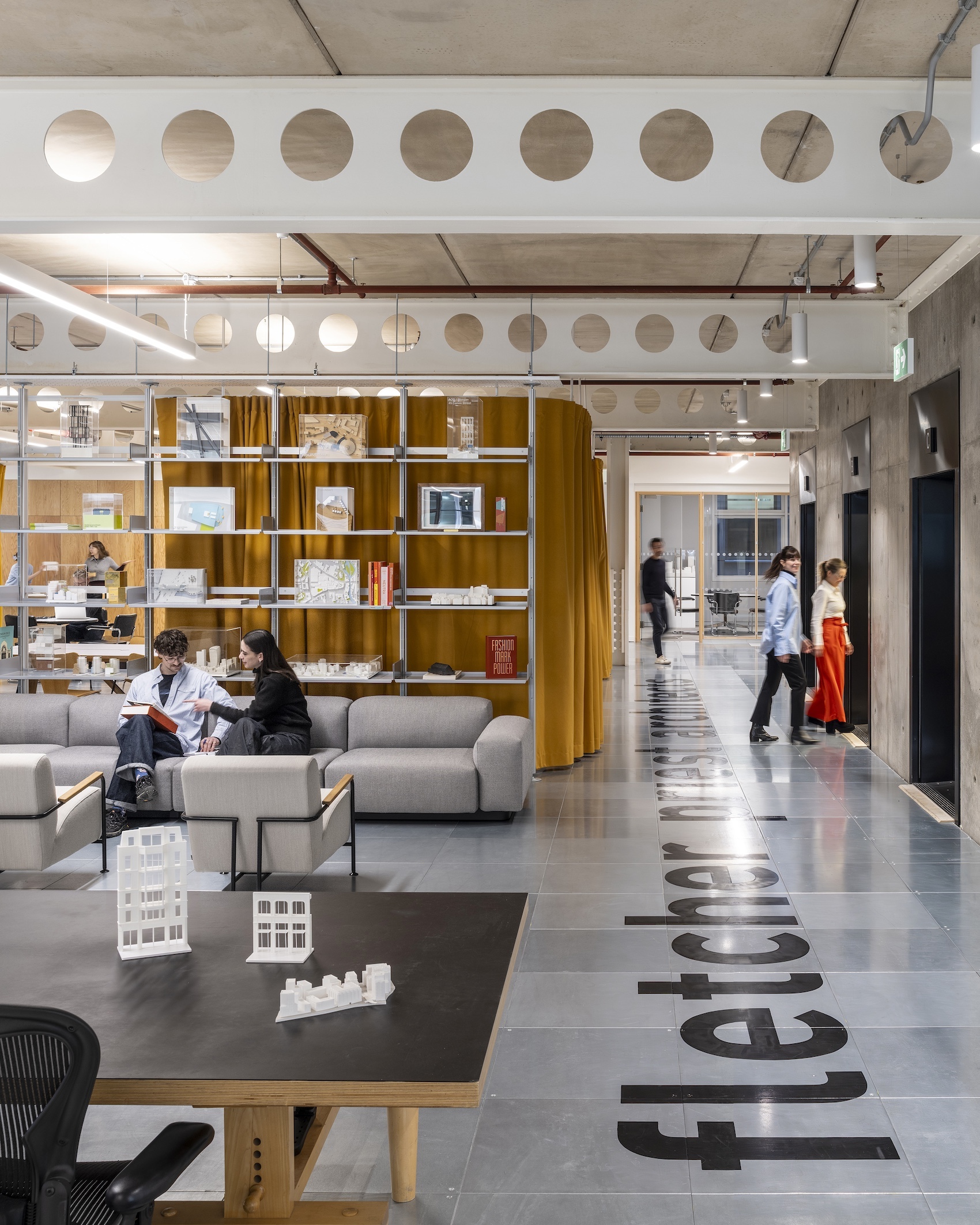
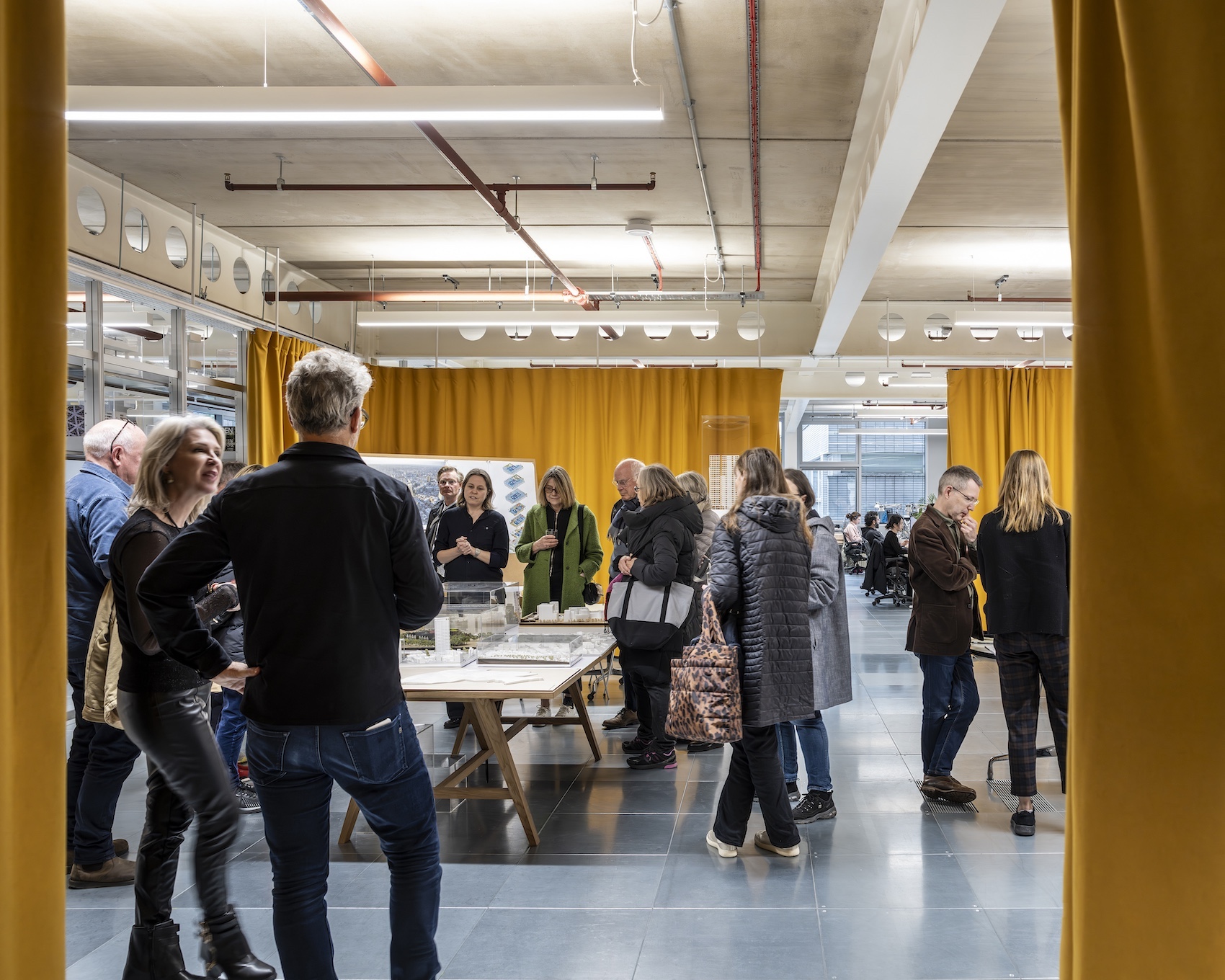
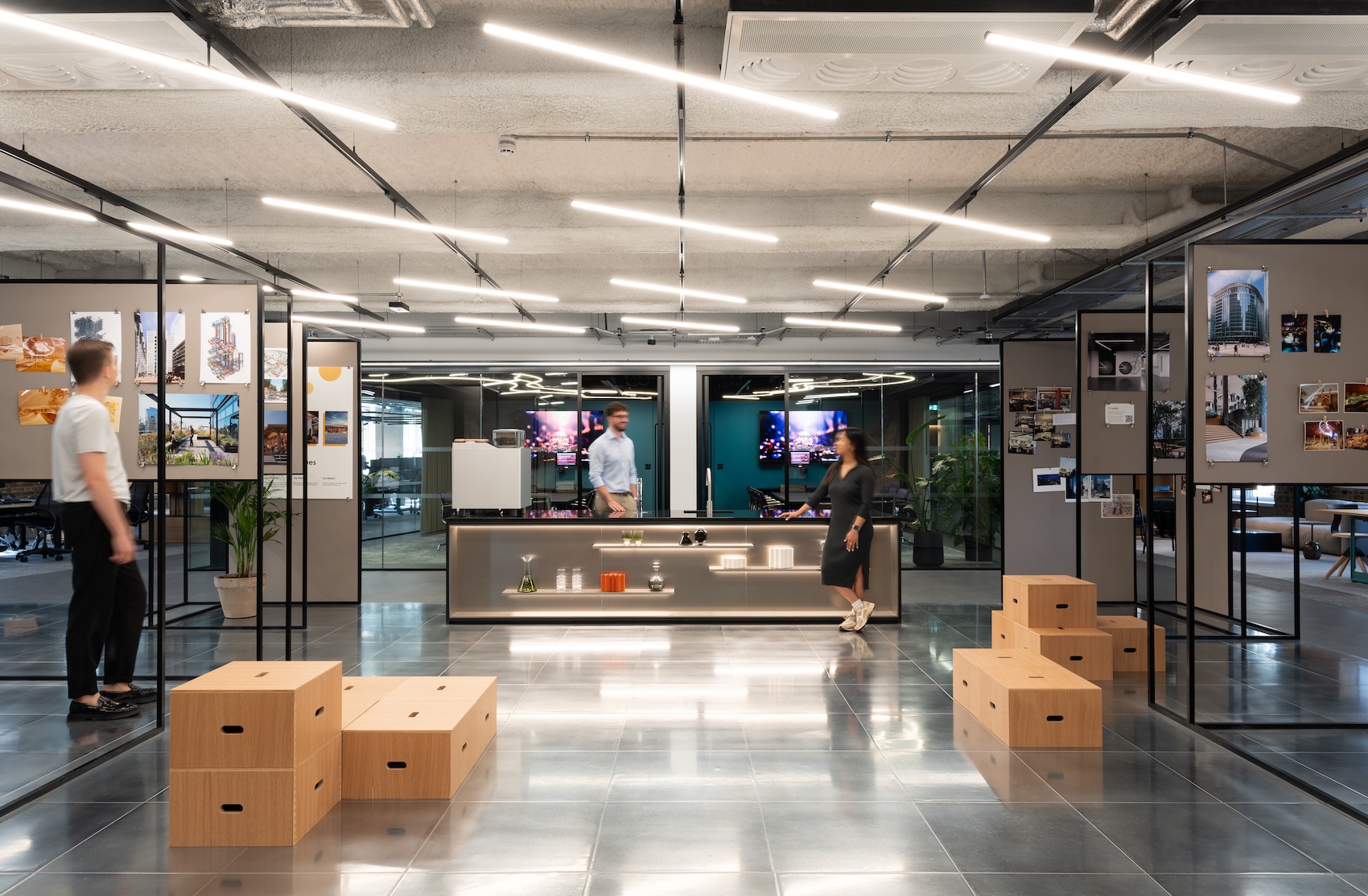
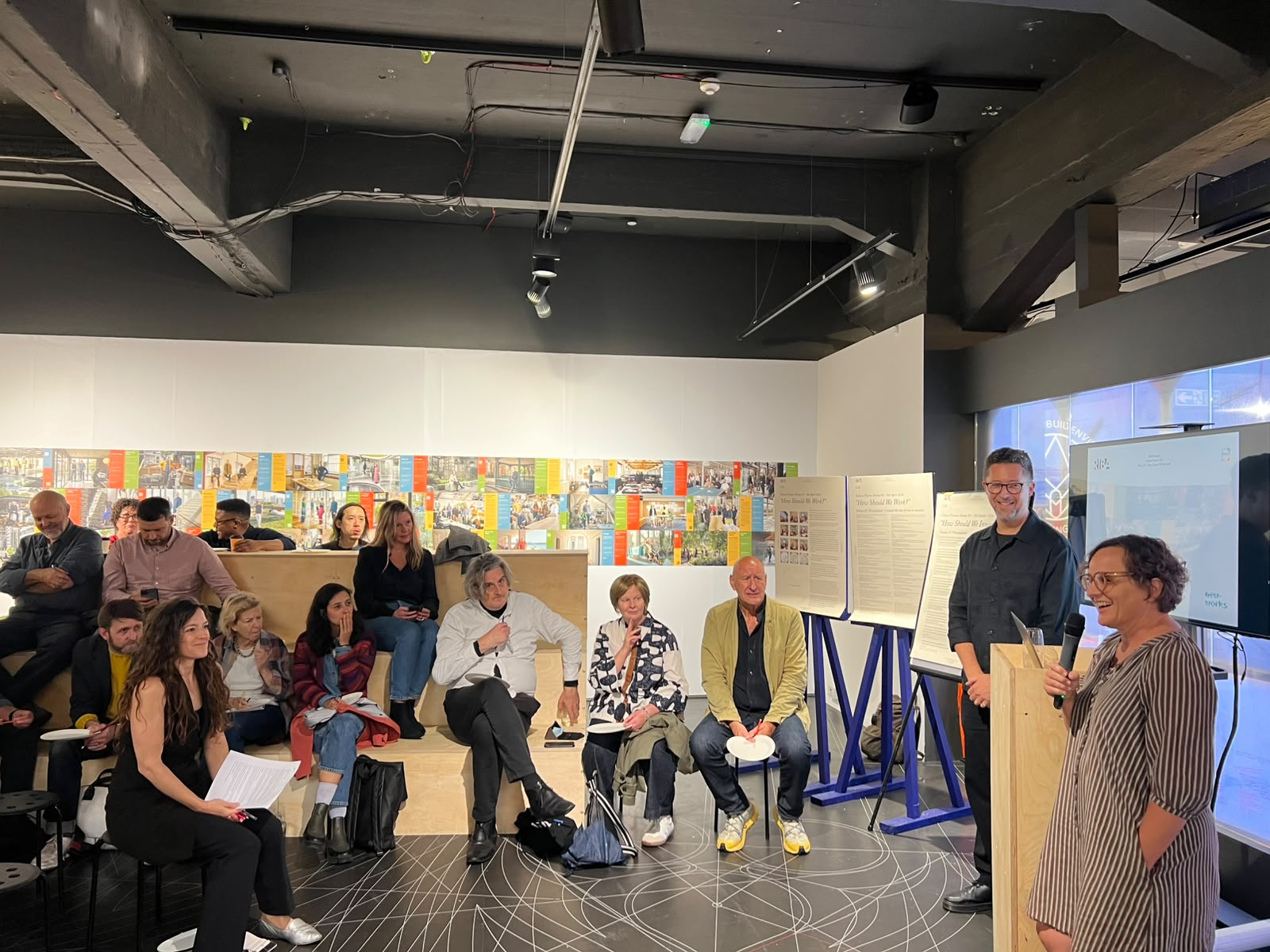
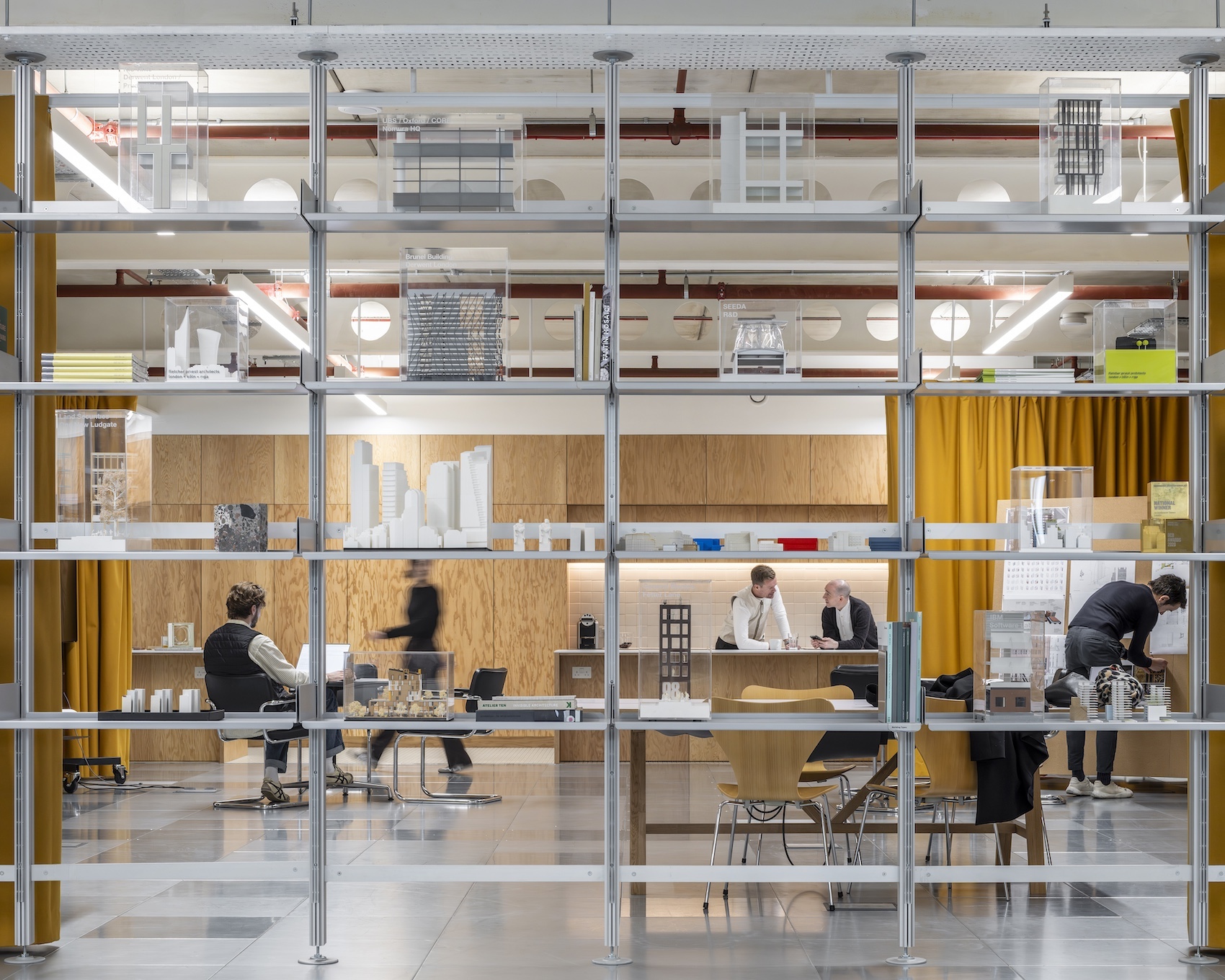
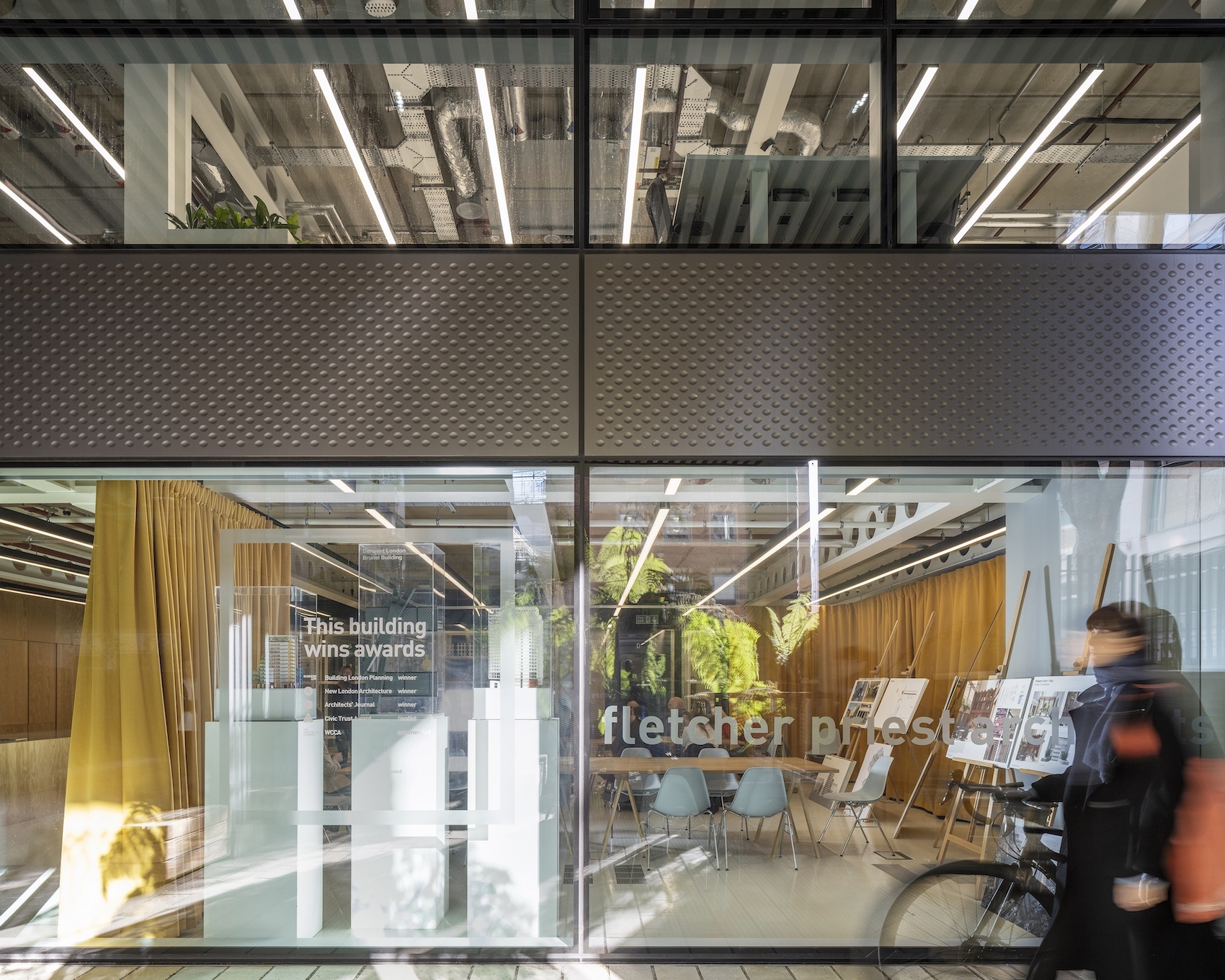
Fletcher Priest Architects has completed the fit-out of its new headquarters at 100 Fetter Lane in London. The practice occupies the ground, mezzanine and first floors of the office building it designed for YardNine and BauMont Real Estate. Accessed via a dedicated entrance through a landscaped pocket park, the 1,395-square-metre studio has been conceived as an open, collaborative workplace that balances flexibility with employee wellbeing. The ground-floor arrival space is centred around a domestic-style kitchen and a display of architectural models, establishing an informal social heart that supports everyday working alongside client events and practice gatherings.
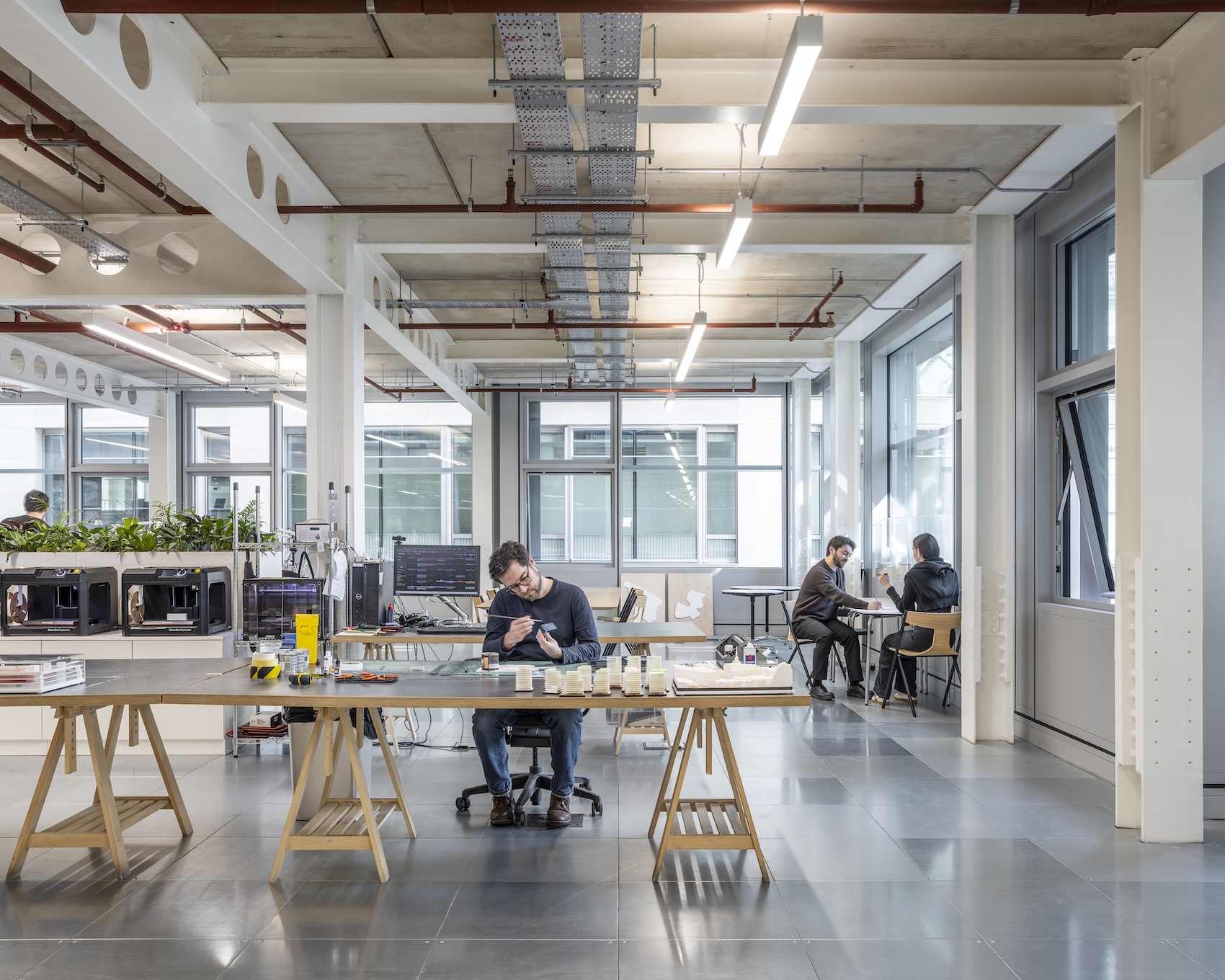
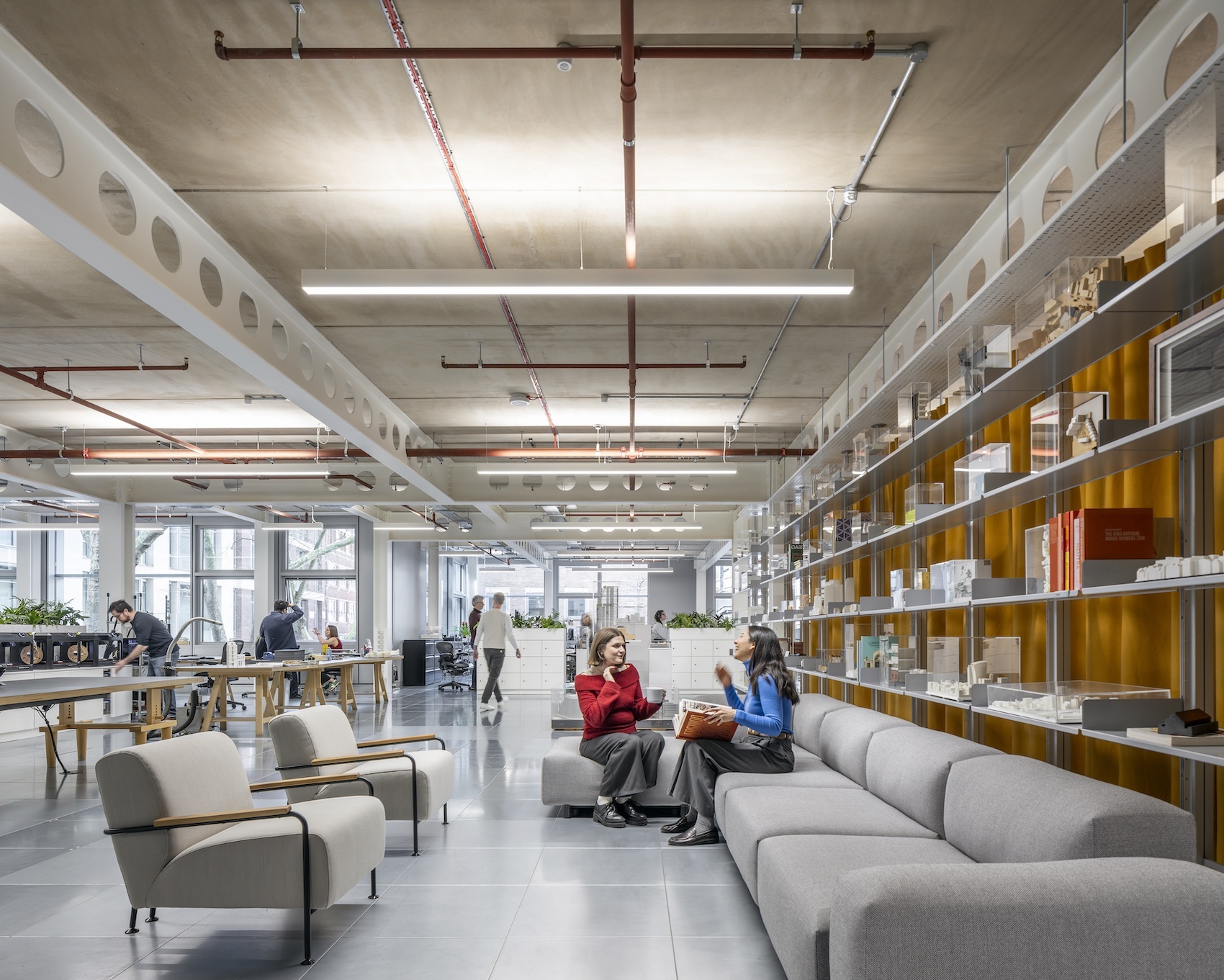
The studio floorplates are wrapped by large perimeter windows, with workstations positioned to maximise daylight and views out. Integrated planting softens the working environment and contributes to the wider environmental strategy established within the base building. Mechanical ventilation is complemented by opening windows on every floor, ensuring a continuous supply of fresh air throughout the workspace.
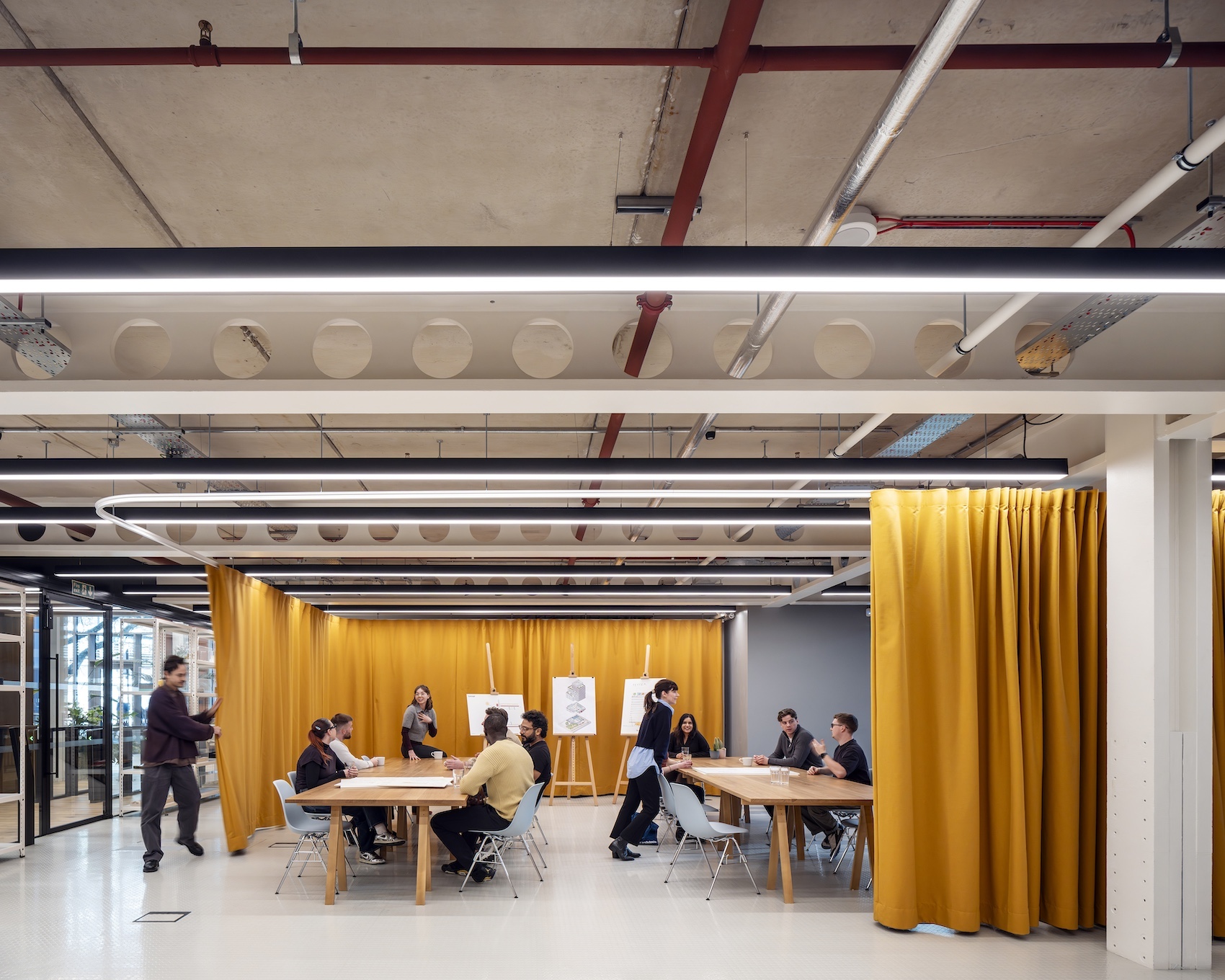
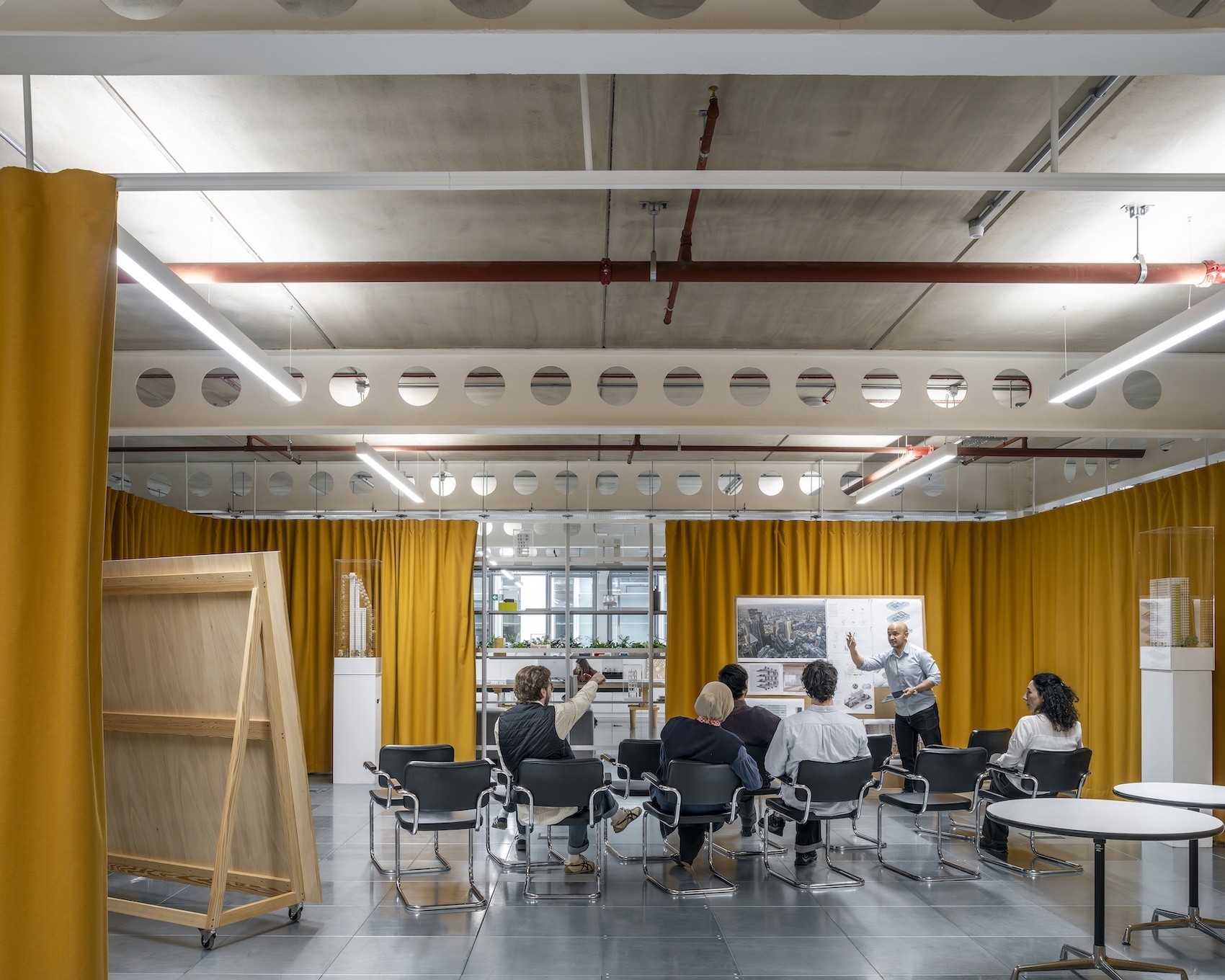
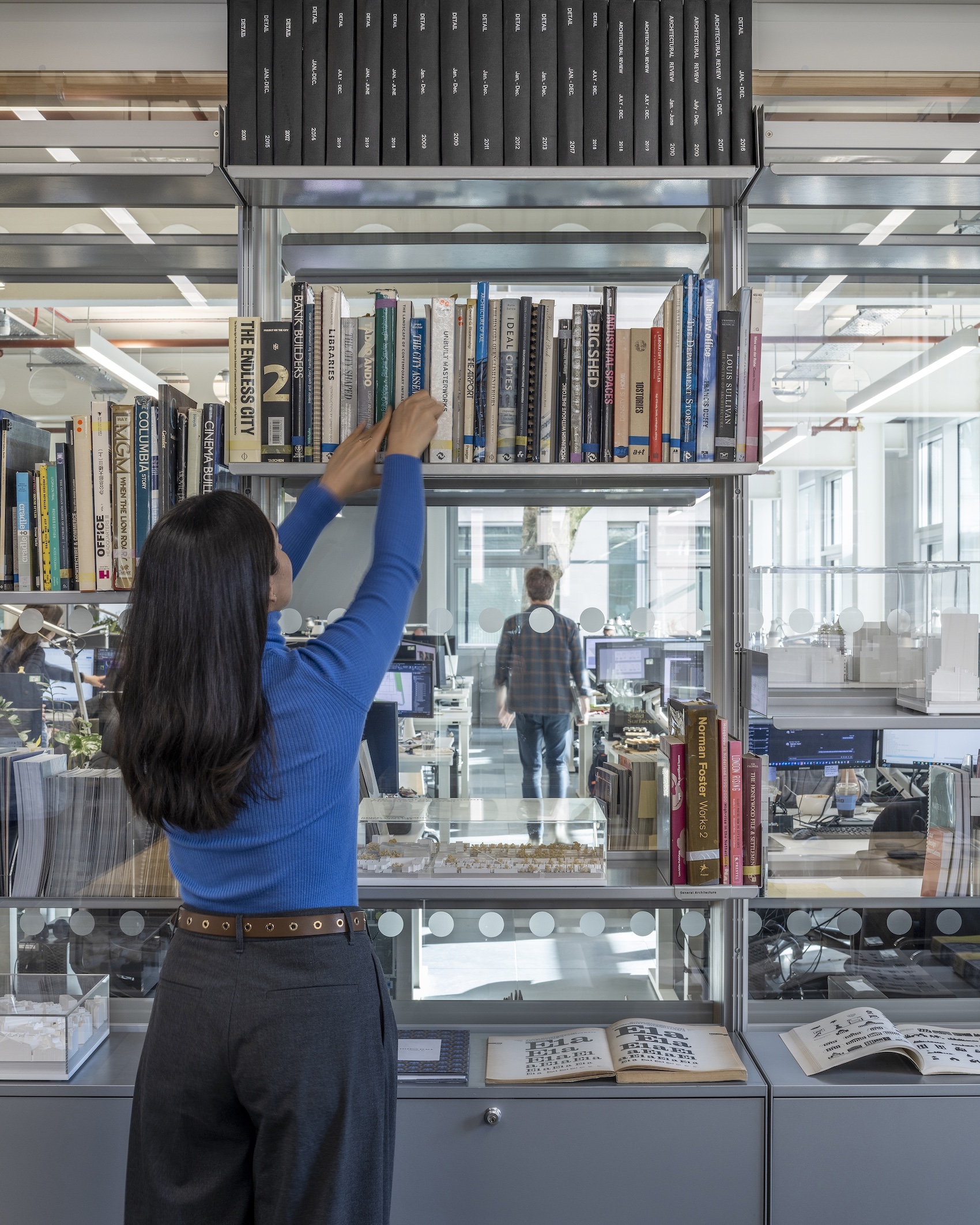
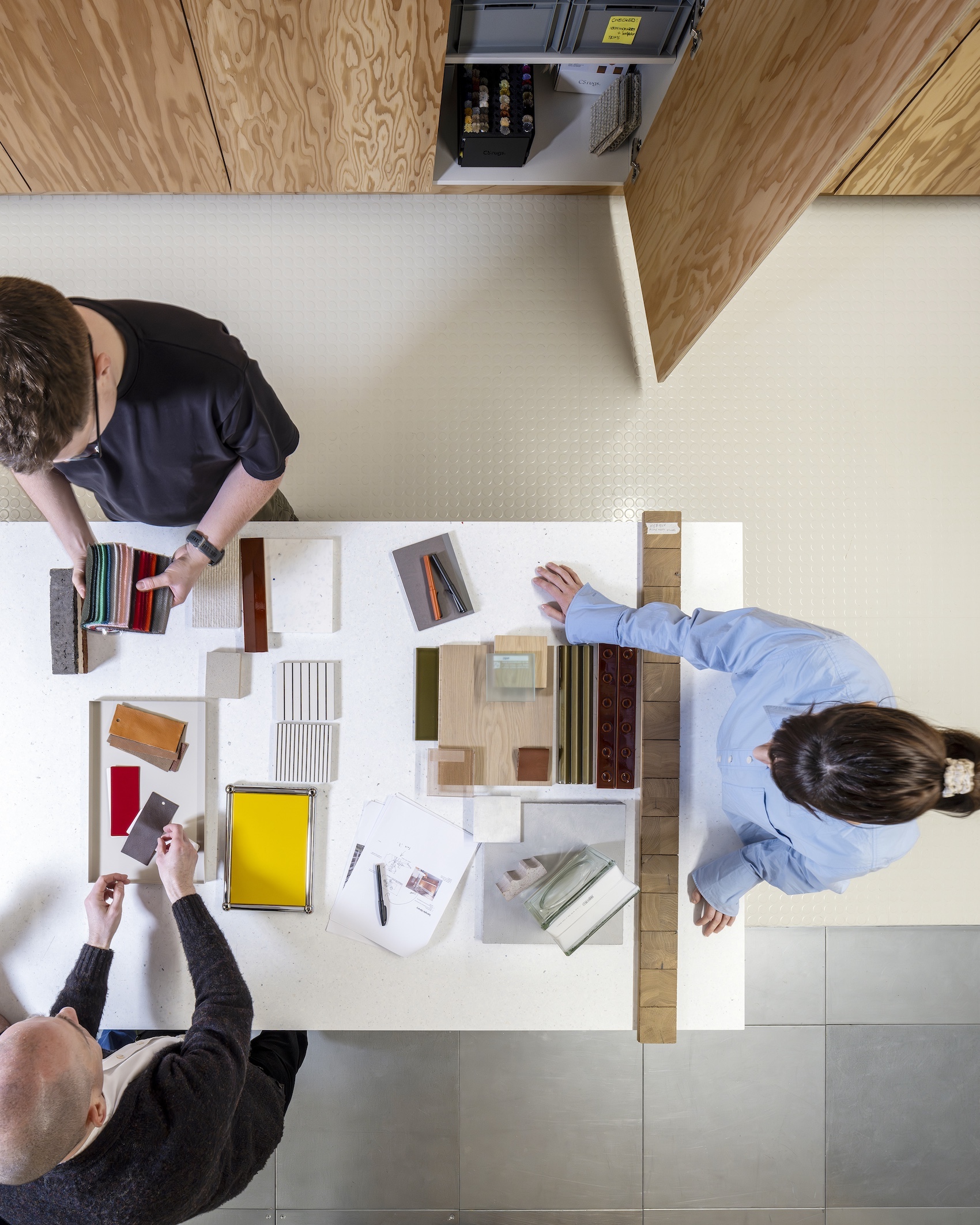
Located at the centre of the first floor is The Grid, a flexible nine-by-nine-metre space enclosed by a yellow acoustic curtain. Designed to support a range of activities, it can operate as an extension of the open studio or be enclosed for workshops, presentations, meetings and larger events. Surrounding it are a material library, model-making workshop and informal tea point, placing the practice’s creative processes on display.
Quieter spaces are distributed throughout the office, including meeting rooms and a dedicated wellness room that supports focused work, prayer and restorative breaks. The mezzanine level has been left largely open and is conceived as a flexible workspace capable of accommodating future expansion or complementary organisations.
The interior adopts a deliberately restrained architectural language that celebrates the quality of the original building. Exposed concrete soffits remain visible throughout, while the existing lighting and ventilation systems have been retained rather than replaced, reducing both cost and embodied carbon. Working with furniture auditors, the practice catalogued and assessed furnishings from its previous office, retaining and adapting as many items as possible. Pieces that could not be reused were donated for further use elsewhere.
Irene Georgakis, Partner and Head of Interiors, said, “Designing the fit-out in parallel with the building has meant we could create a studio that genuinely supports collaboration between architecture and interiors, elevates day-to-day engagement, and feels intuitive for the teams who use it. The fact that this approach also reduced both cost and carbon makes the outcome even more rewarding for our new studio.”
The headquarters also extends the material passporting strategy first developed for the base building. More than 5,000 individual building components, representing some 80 per cent of the building’s mass, have been digitally documented, making 100 Fetter Lane the first building in the UK to implement material passports across the majority of its construction. The fit-out integrates this information into the building’s BIM model, with physical QR codes providing direct access to material data and future reuse information.
In terms of environmental performance, the building targets a BREEAM Outstanding rating and has achieved WiredScore Platinum certification. A fabric-first approach, combined with careful retention of existing systems and a flexible fit-out strategy, has helped deliver an upfront embodied carbon figure of 561kgCO₂e/m² GIA, while supporting the project’s ambition to meet the emerging UK Net Zero Carbon Building Standard.
At street level, the development also introduces a new public destination through the relocated Wild Swan pub. Wrapped in blue faience brickwork with bespoke relief detailing inspired by the history of Fetter Lane, the venue extends the civic presence of the building and reinforces the wider ambition of 100 Fetter Lane as an active, mixed-use workplace embedded within the city.
Ed Williams, Managing Partner of Fletcher Priest Architects, said, “Treating ourselves as a client has been a (mainly fun) learning process for us throughout the design of our new studio. It has given us a better understanding of creating a considered design approach which we can transfer to our client relationships as we support them on future projects.”
Additional Images