A demountable gym concept by Madrid-based practice Canobardin uses a simple kit of parts to create a calm adaptable environment that can be replicated across multiple locations.
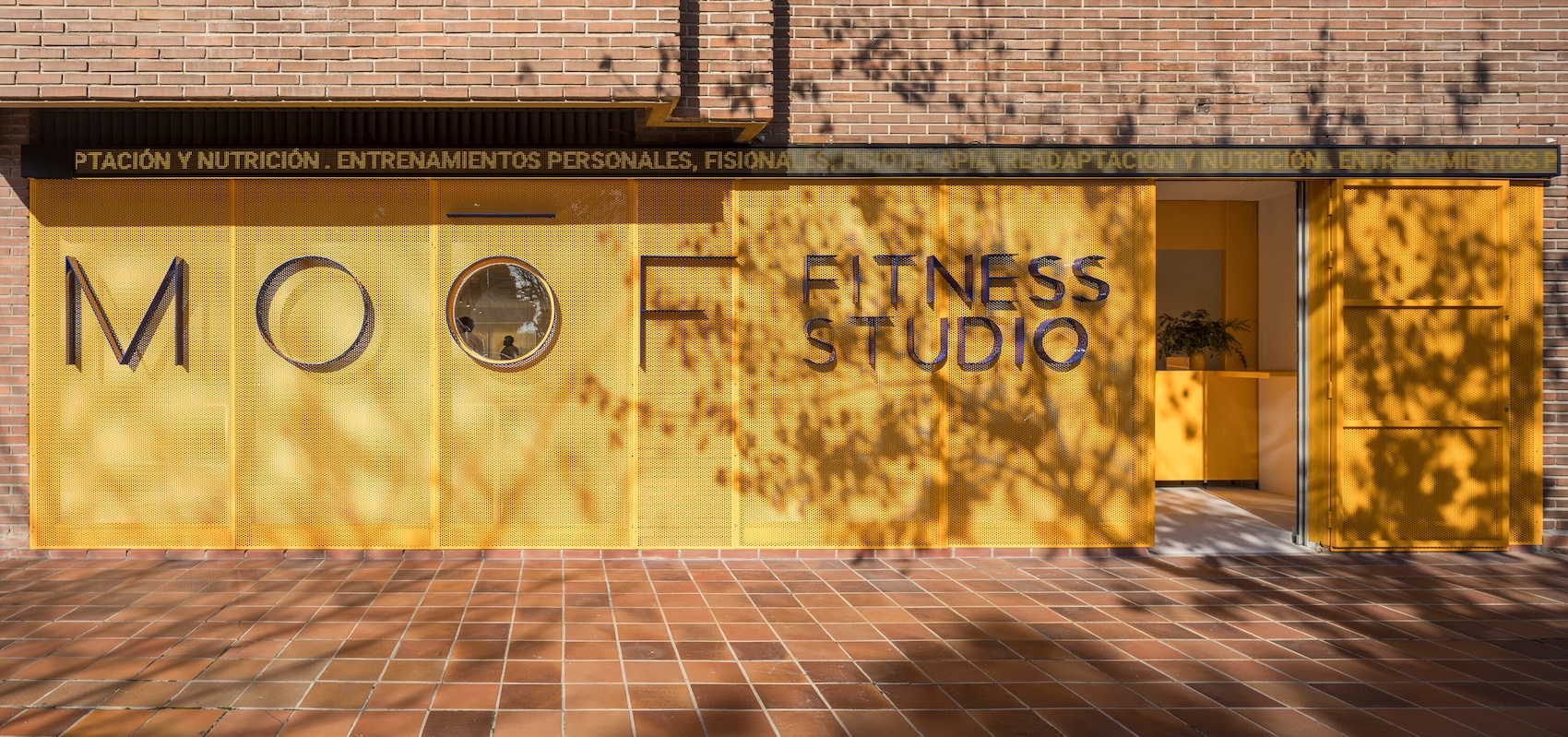
Canobardin has completed Moof Fitness Studio in Pozuelo de Alarcón, Madrid, developing a new architectural identity for a growing network of boutique fitness centres. Rather than designing a one-off interior, the practice conceived a flexible system of prefabricated components that can be assembled, dismantled and reconfigured, establishing a coherent design language for future locations.
The brief sought to challenge conventional gym design by creating a unisex environment defined by calm, clarity and adaptability. Rejecting the visual clutter and sensory intensity often associated with fitness spaces, the architects developed a restrained architectural framework that prioritises openness, simplicity and user experience.
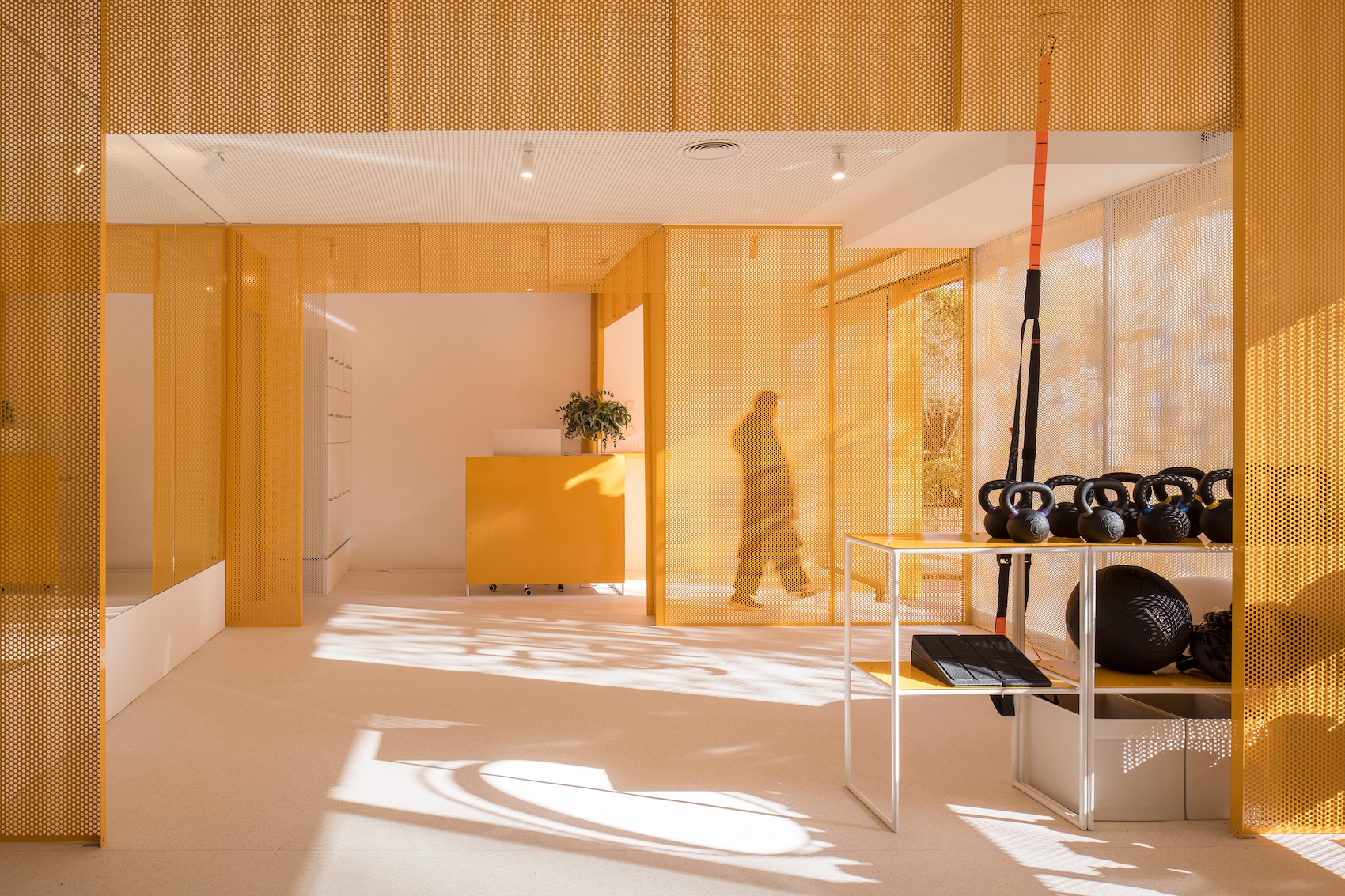
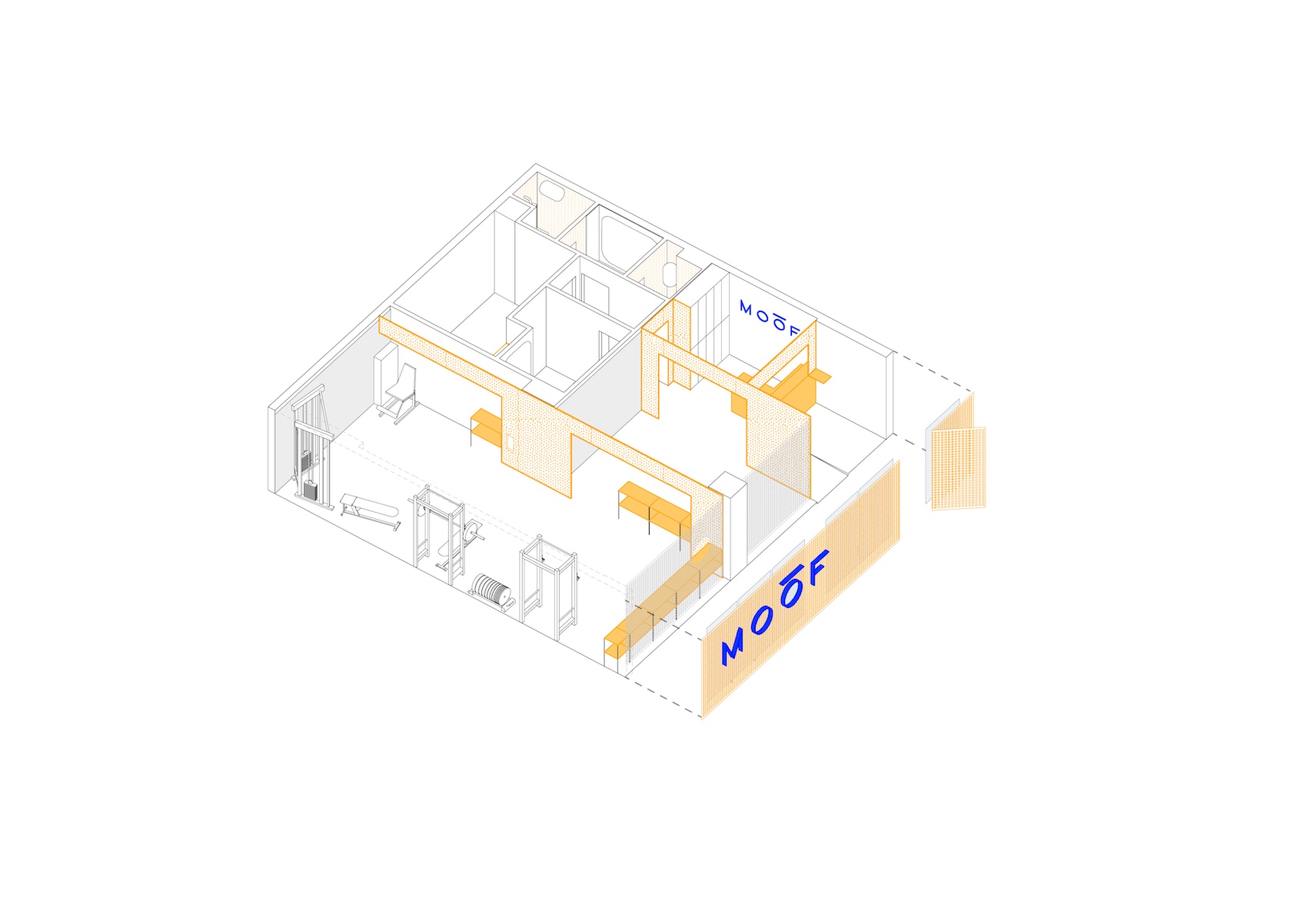
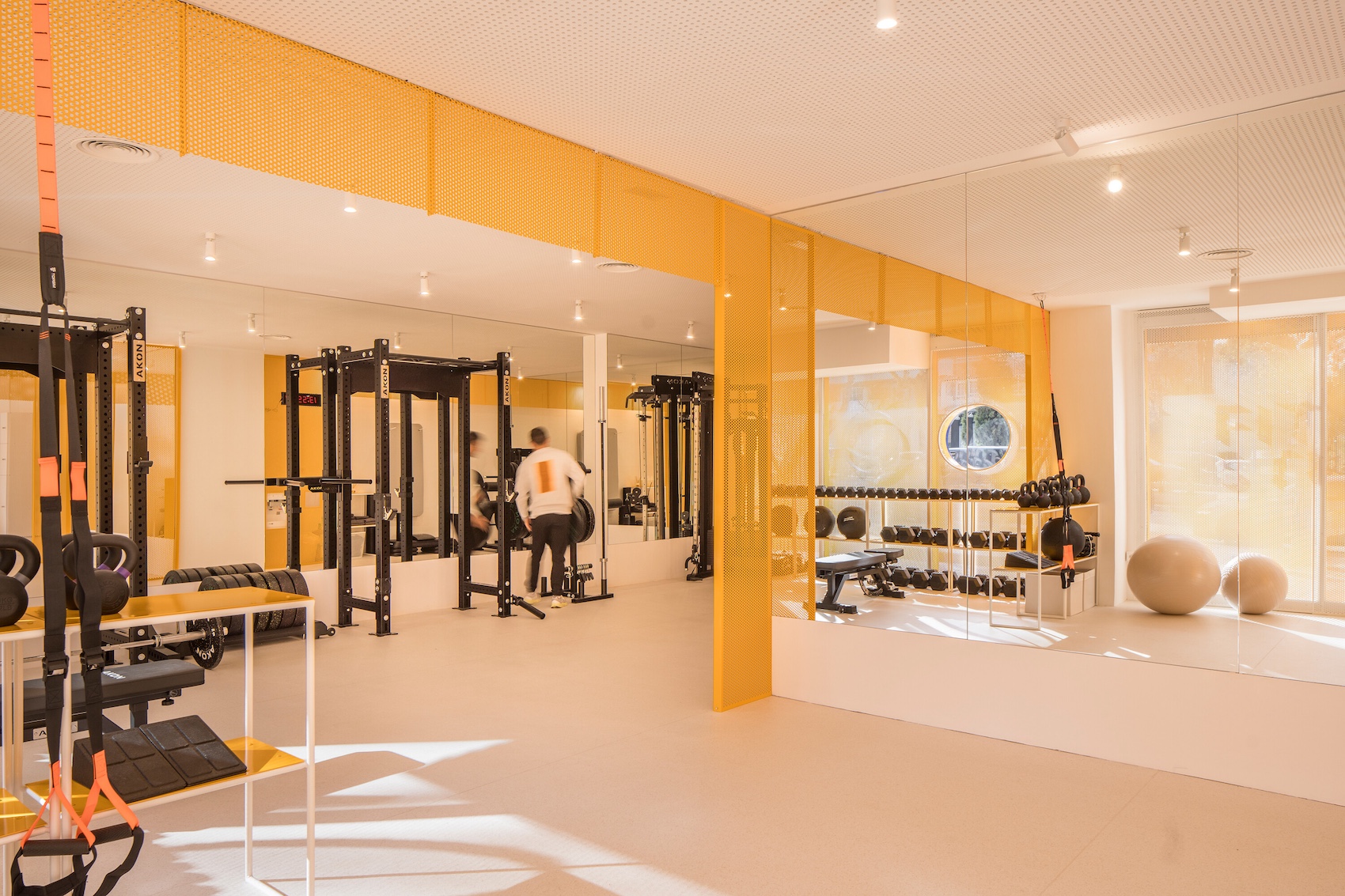
The studio is organised around two principal activity zones: floor training and strength training. Rather than separating these areas with solid partitions, Canobardin employs a continuous language of perforated steel panels that divide the space while maintaining visual continuity. The semi-transparent screens create varying degrees of privacy without interrupting the openness of the plan, allowing the different activities to coexist within a unified environment.
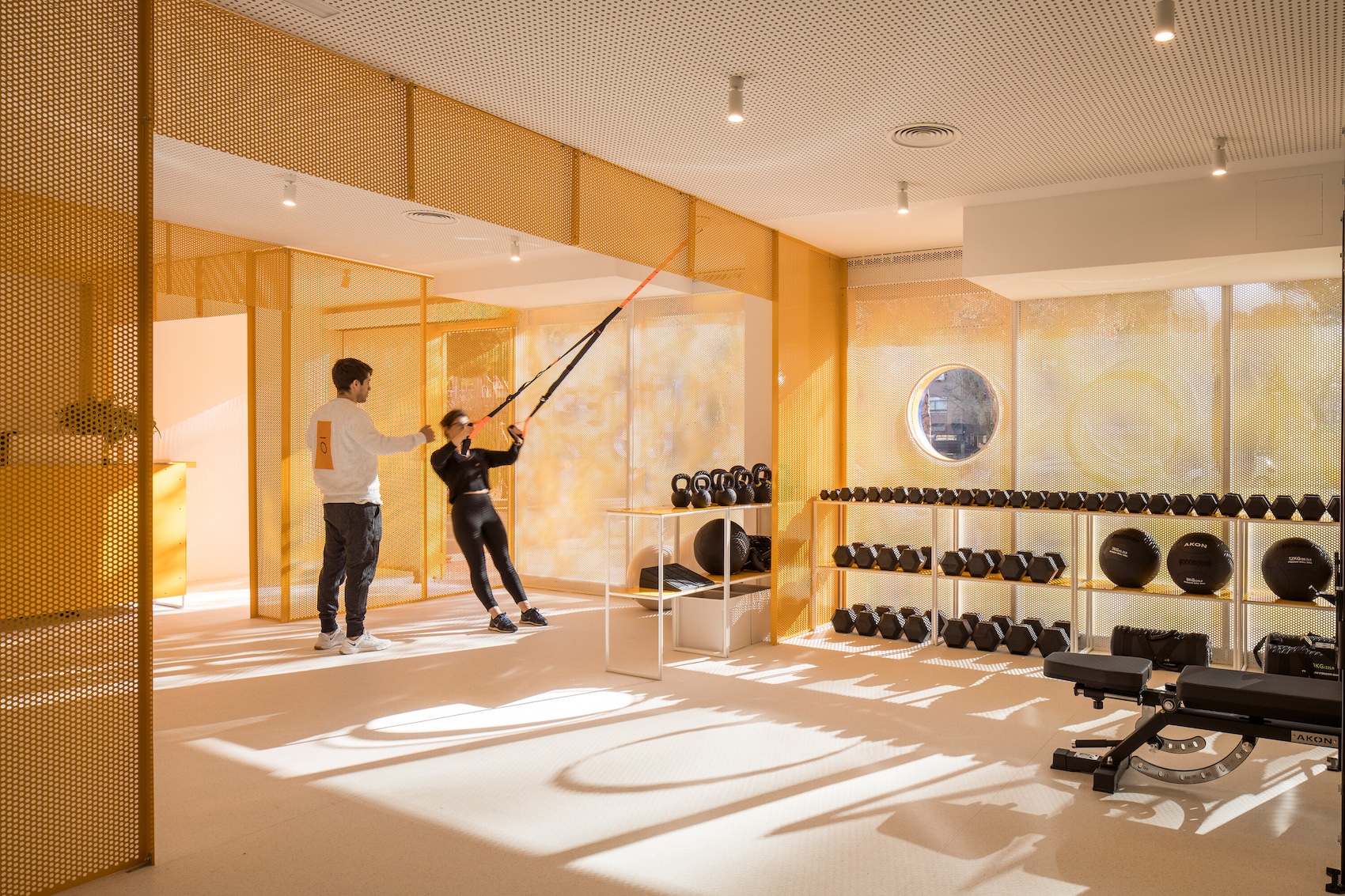
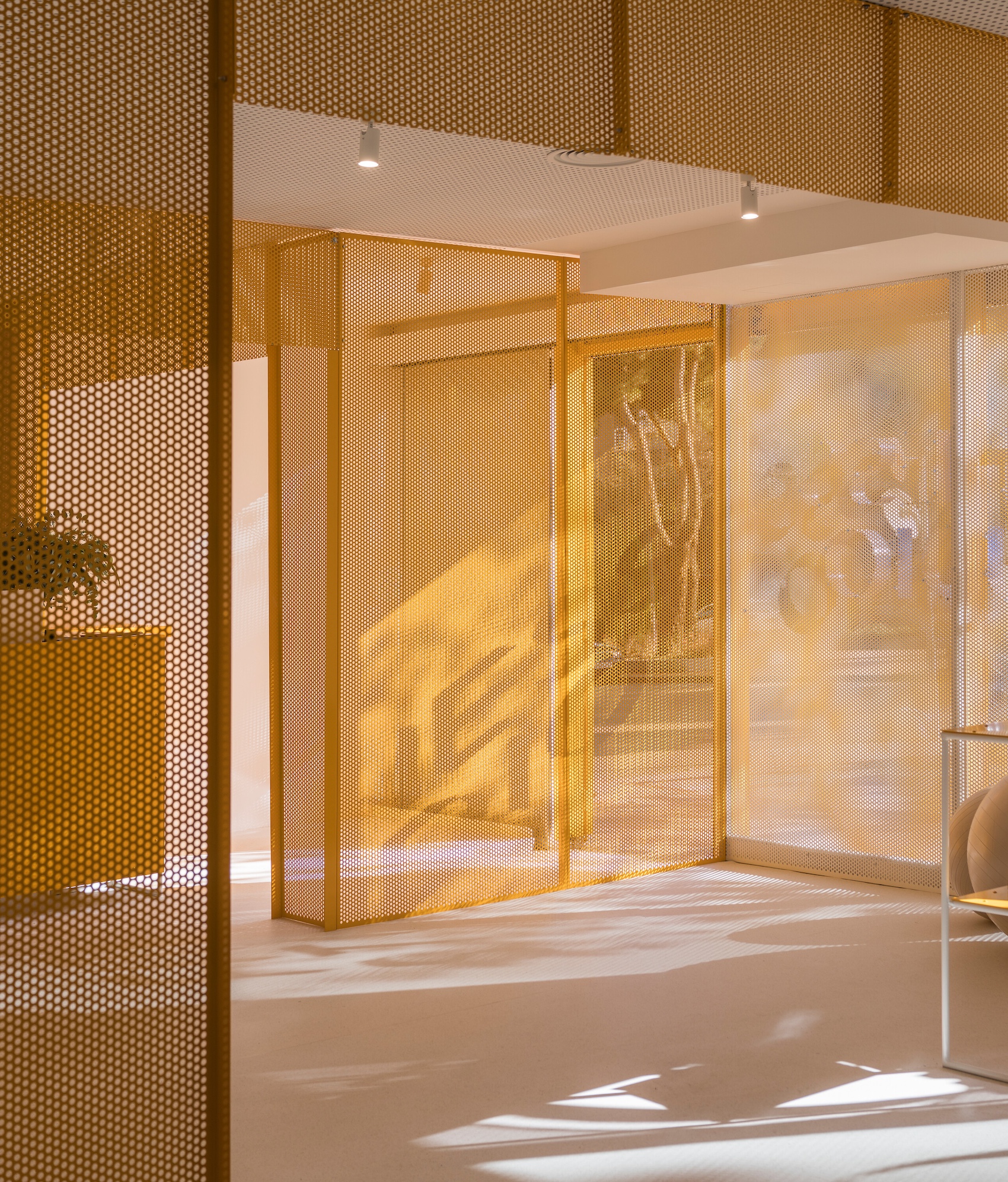
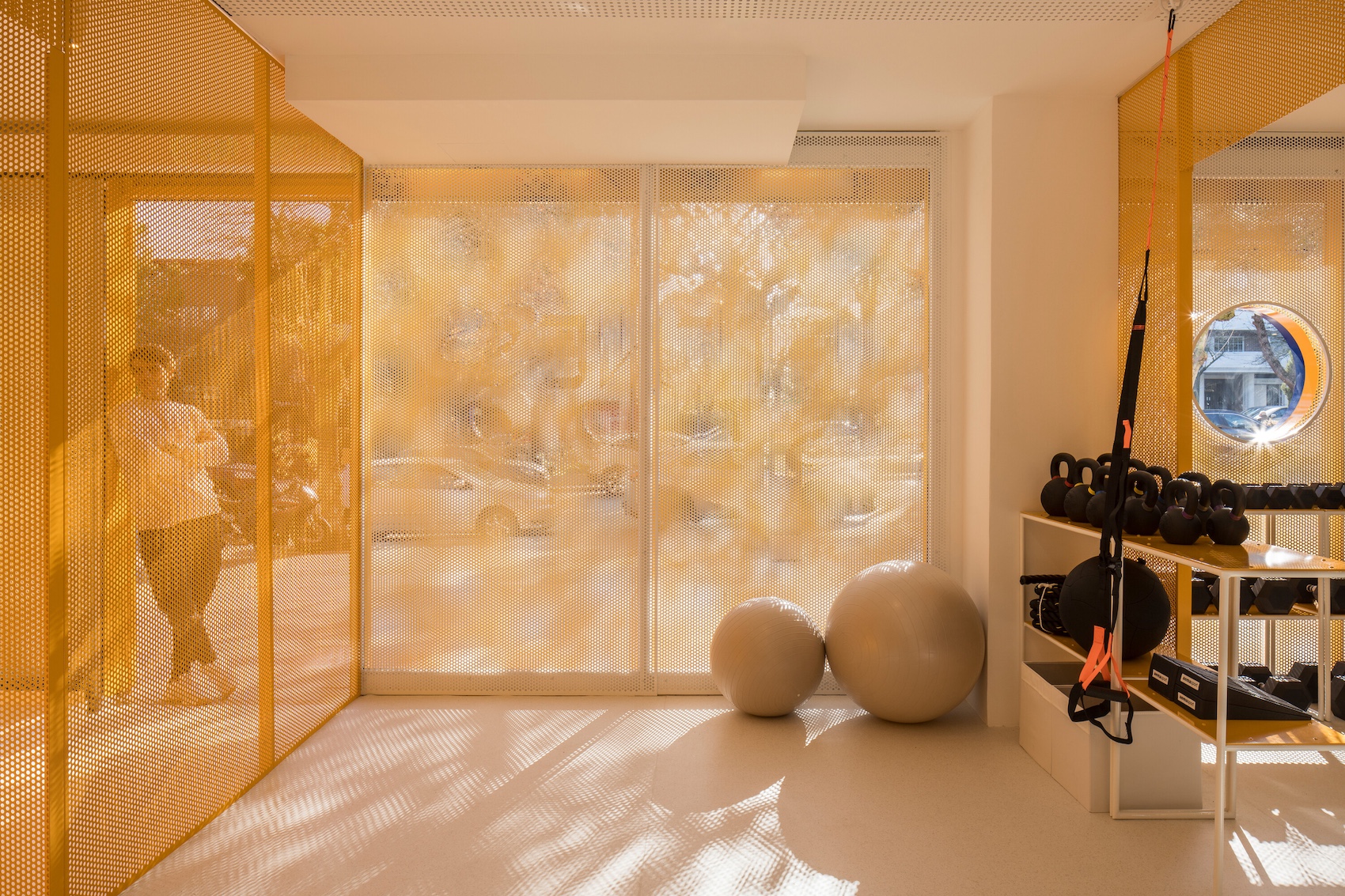
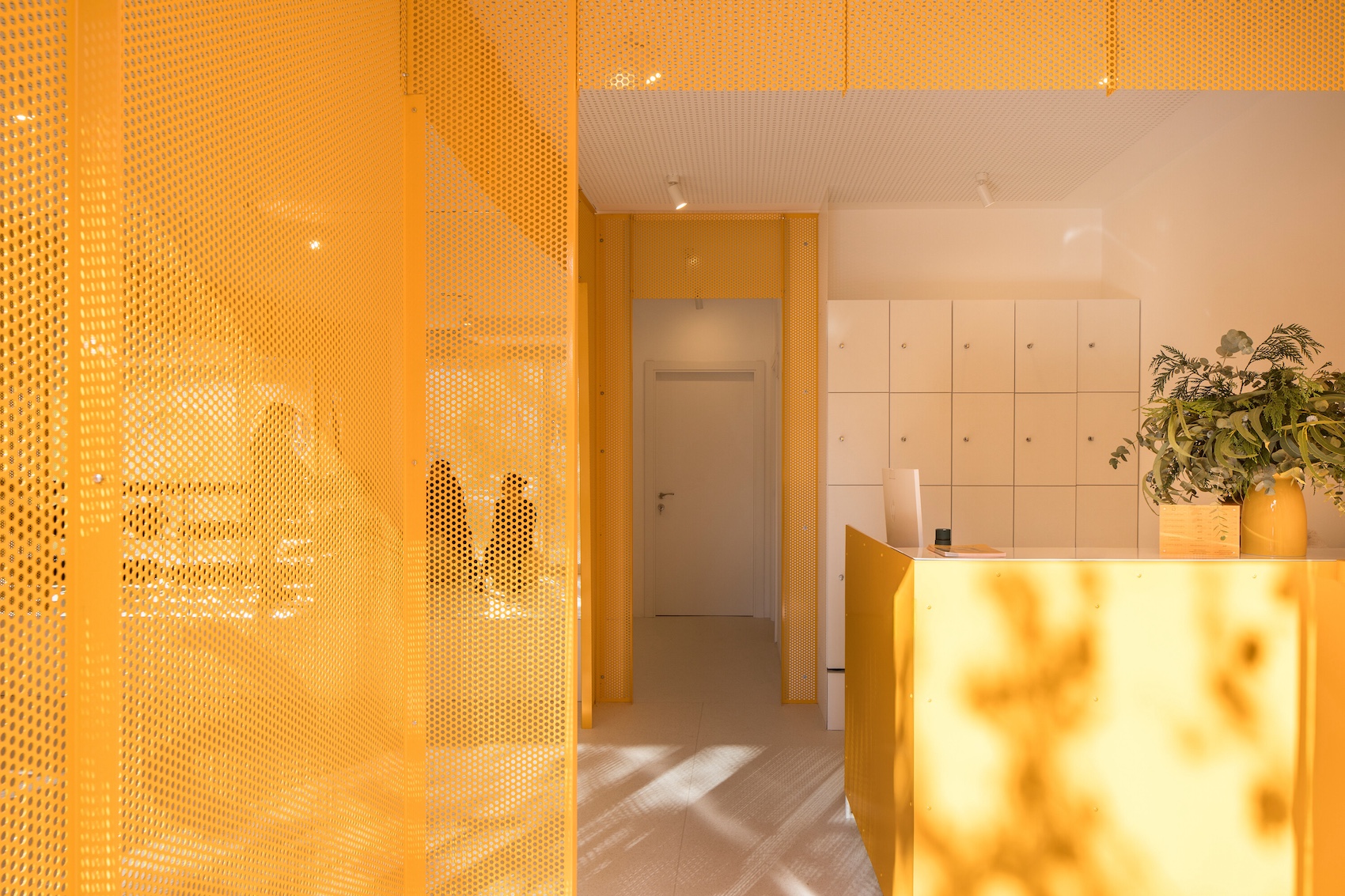
Perforated powder-coated steel is the defining material of the project, extending beyond partitioning to form furniture, wall linings and elements of the façade. The material acts as a filtering device, modulating views, light and movement throughout the interior. As daylight passes through the perforations, shifting patterns of shadow animate the space and subtly reinforce the changing rhythm of daily activity.
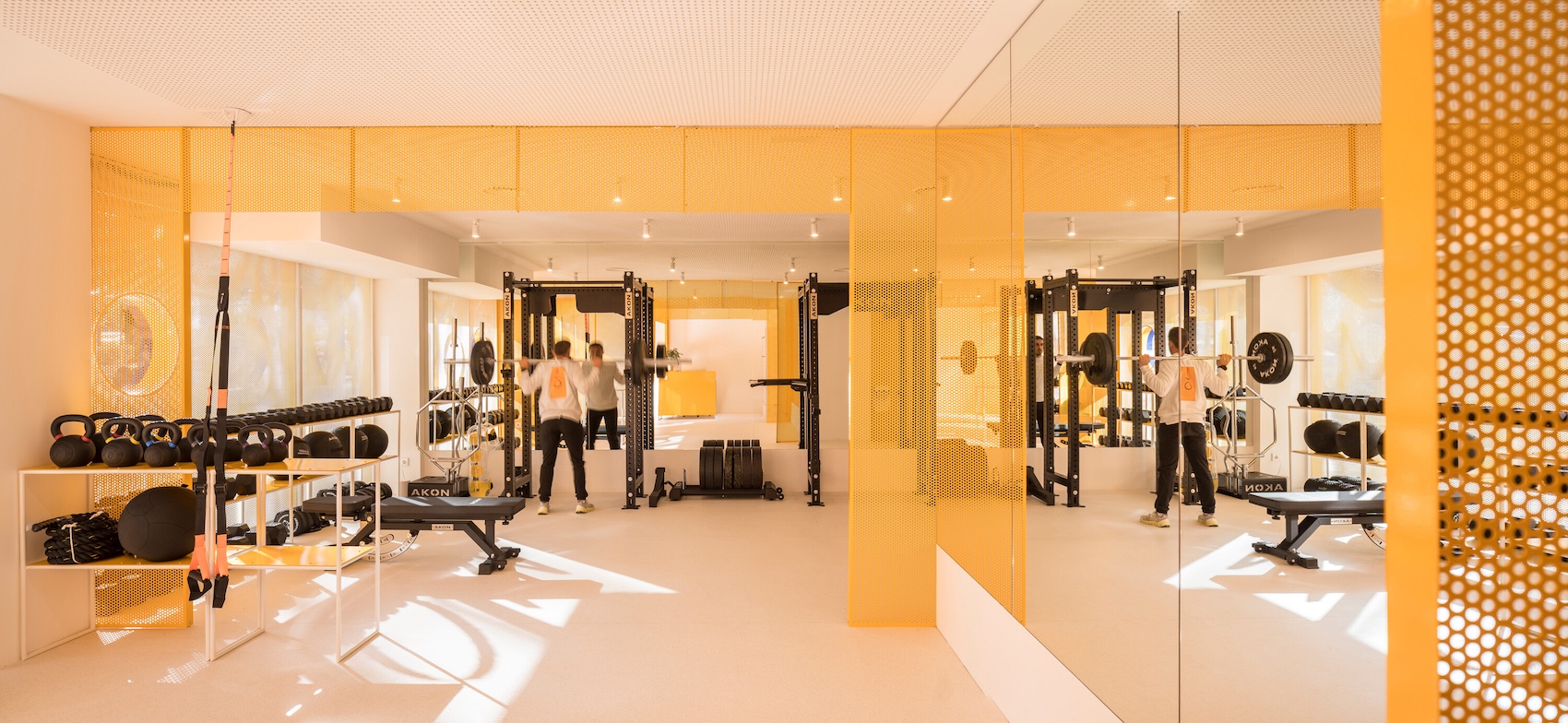
The project is conceived as an architectural kit of parts. Powder-coated steel elements are prefabricated and dry-assembled on site, allowing the studio to be adapted, expanded or relocated with minimal intervention. This modular approach not only simplifies construction but also provides a robust framework capable of evolving alongside the client’s future requirements.
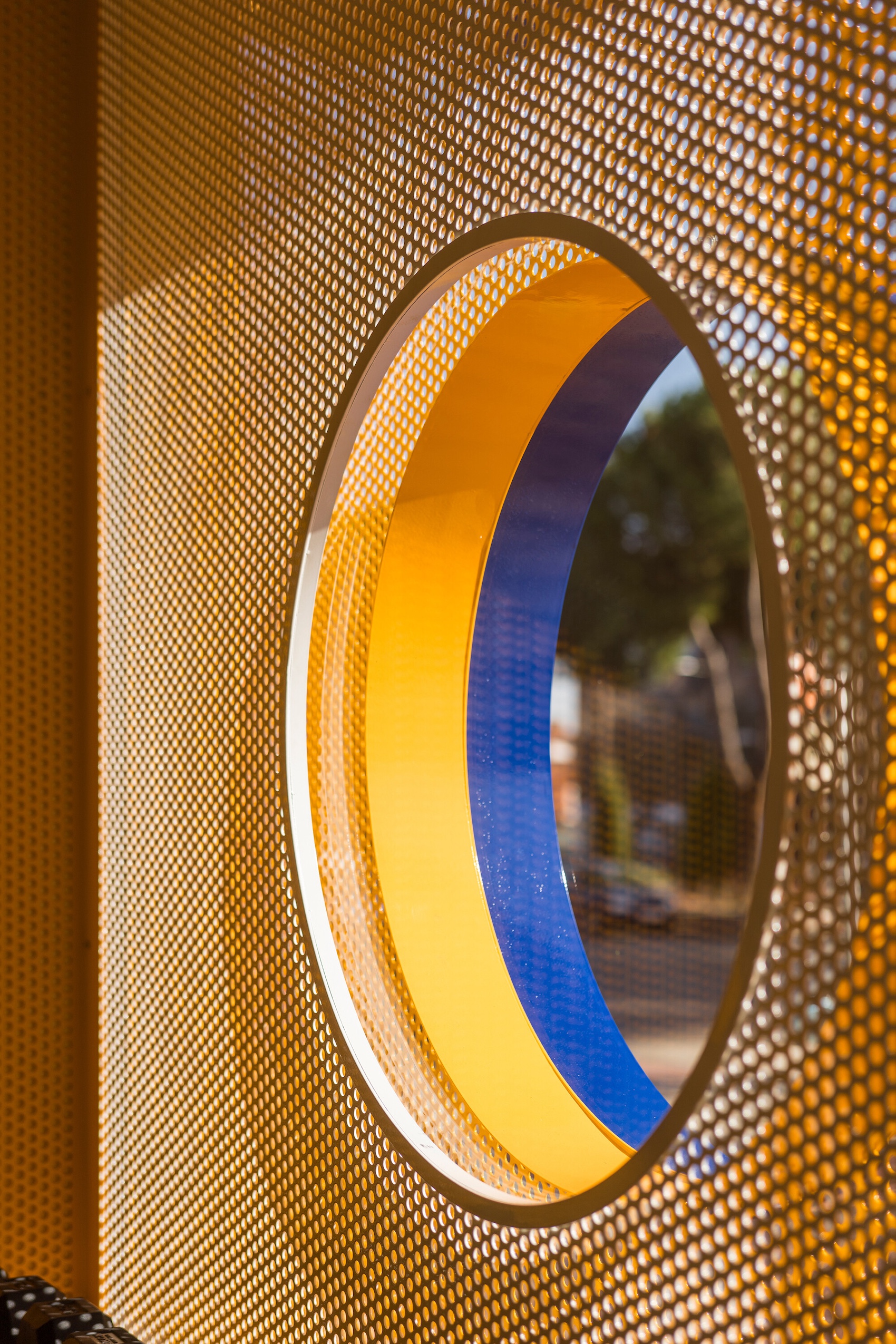
A restrained palette reinforces the clarity of the design. Warm yellow structural elements introduce energy and warmth, while white surfaces maximise brightness and emphasise the openness of the interior. Carefully placed electric blue accents provide moments of visual definition within signage and wayfinding, giving the space a distinctive graphic identity without overwhelming the overall composition.
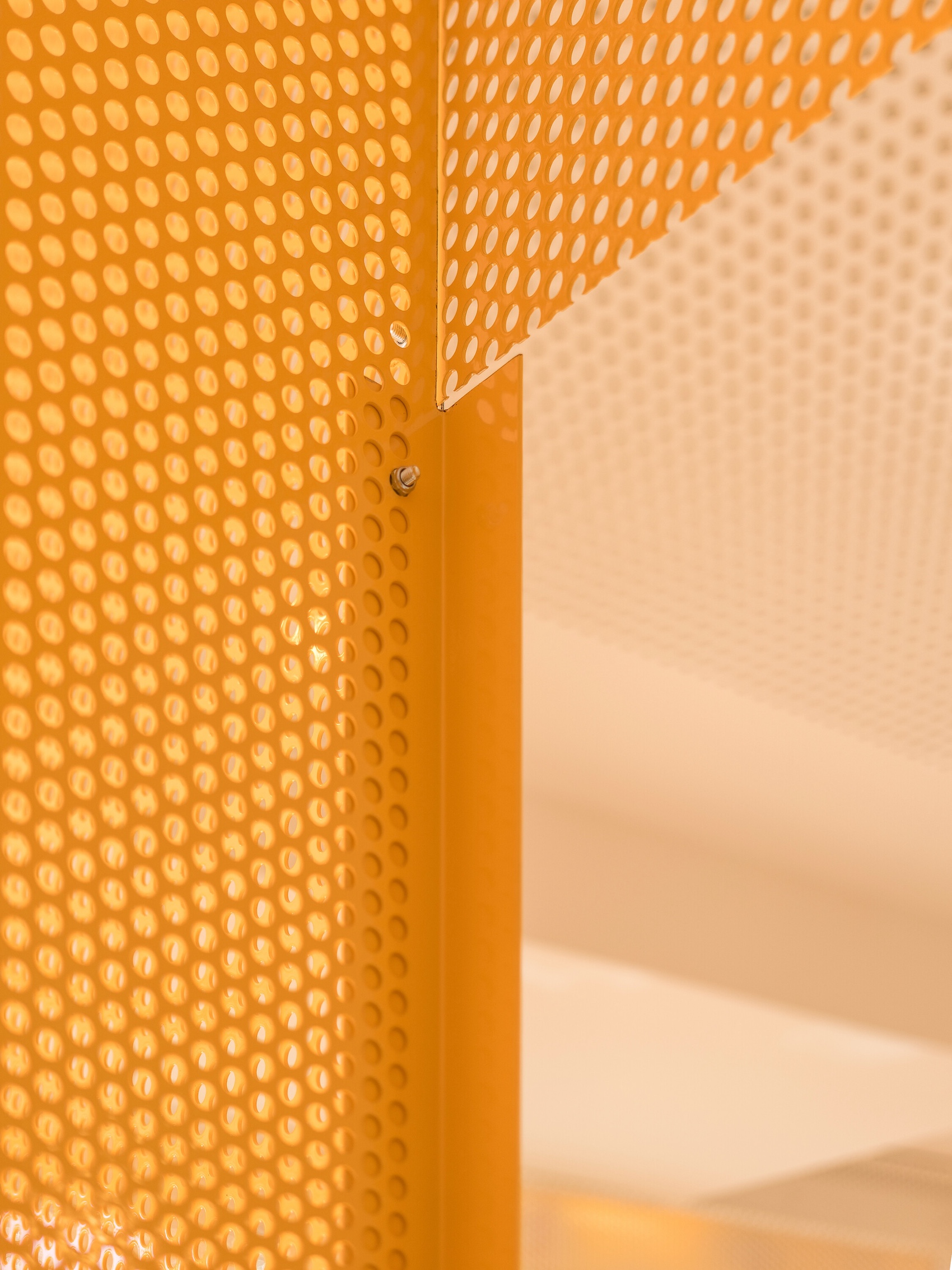
The architectural language continues onto the street through a perforated metal façade that acts as a secondary skin. Folding and layering the metal creates depth and changing visual effects as light conditions shift throughout the day. An illuminated horizontal band establishes a clear presence within the surrounding urban environment and reveals activity inside without fully exposing it.
Additional Images