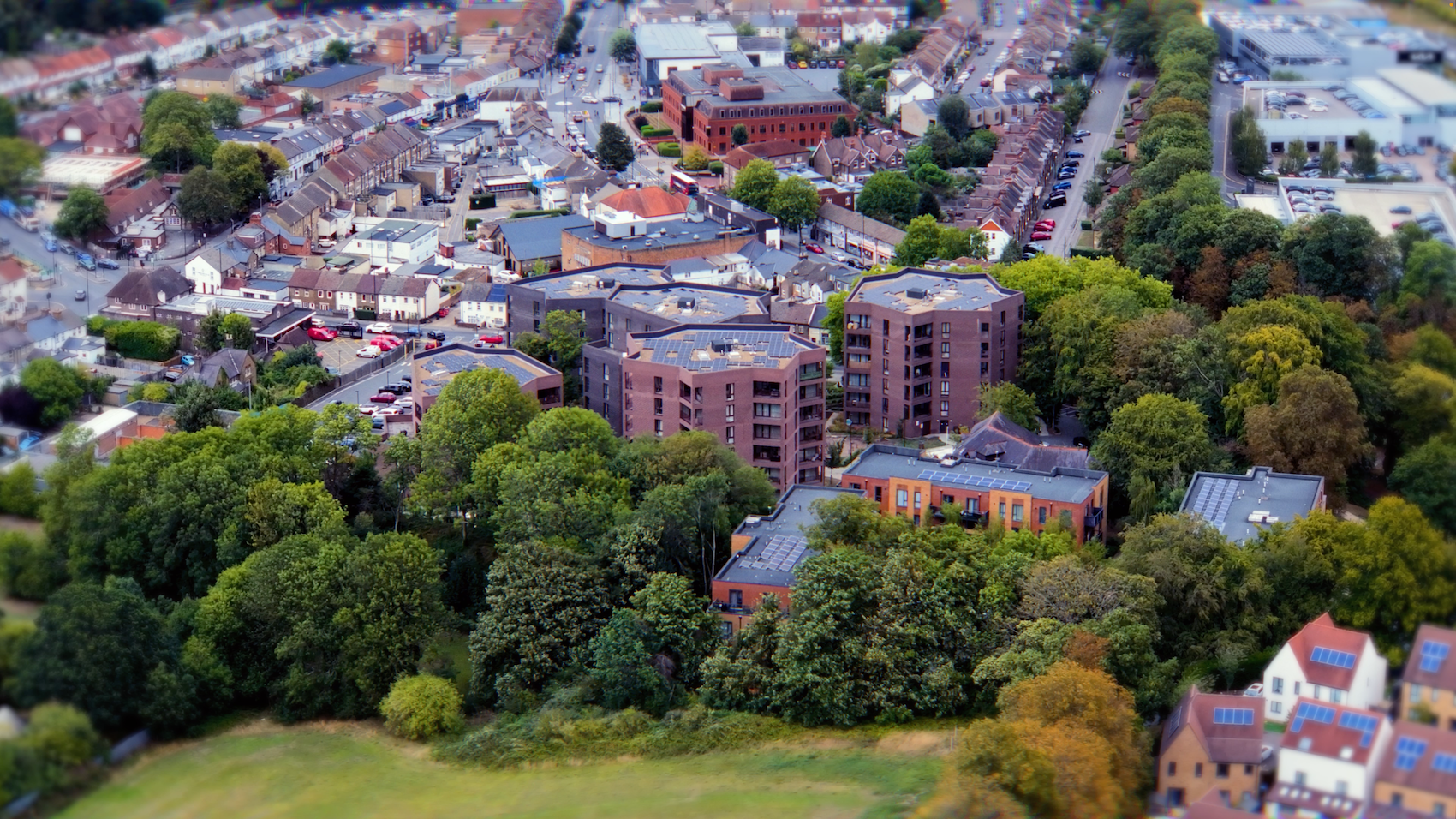
HTA Design, Bromley Council and Crystal Palace Park Trust have delivered the first major phase of Crystal Palace Park’s regeneration, restoring its celebrated dinosaur sculptures and Italian Terraces while introducing new landscapes, visitor facilities and routes through the Grade-II* listed park.
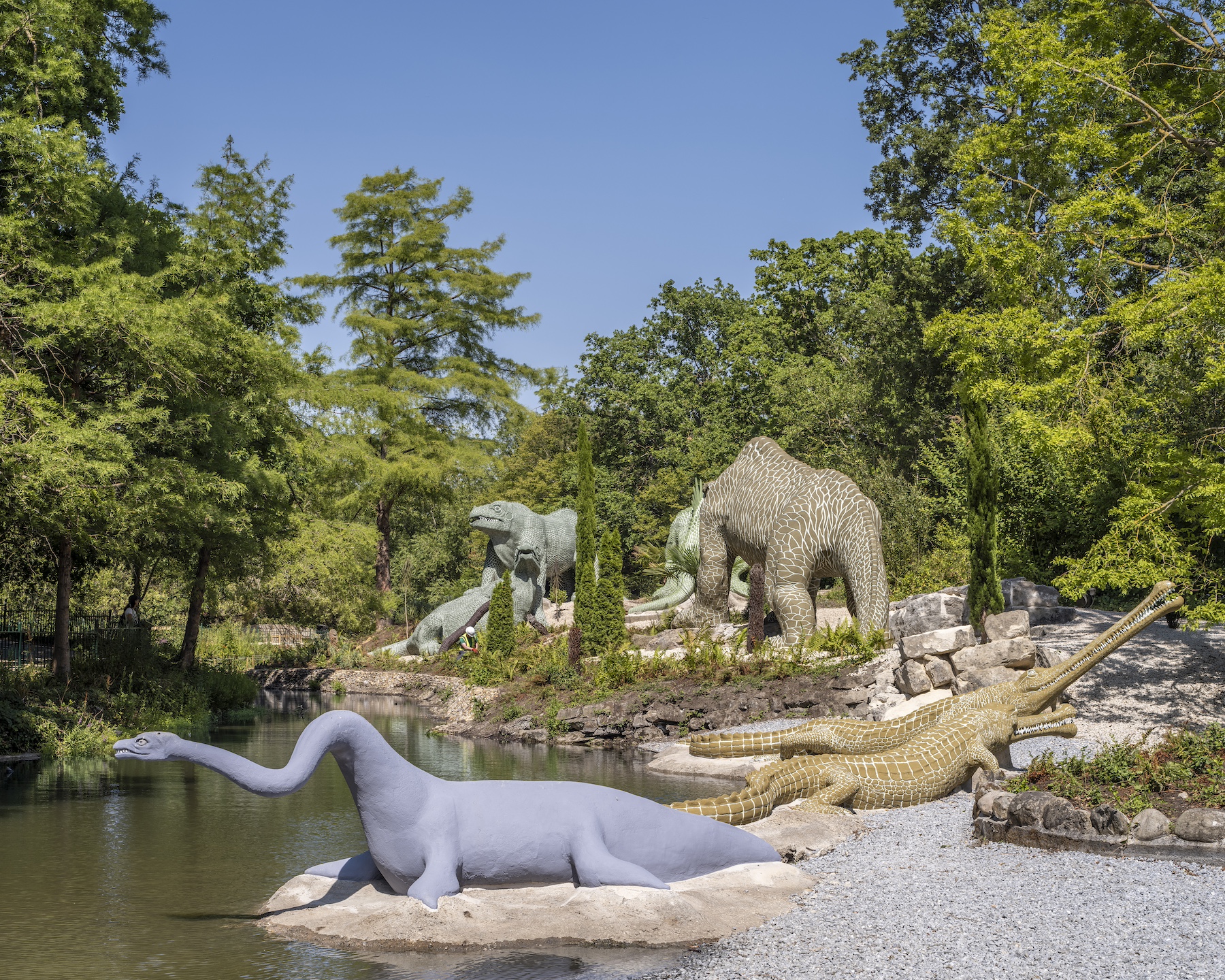
Bromley Council and Crystal Palace Park Trust have completed the first major phase of the regeneration of Crystal Palace Park in south London. Led by HTA Design as lead consultant and landscape architect, the project restores some of the park’s most important Victorian structures and landscapes, alongside new planting, play facilities, interpretation and improved access. The work was undertaken by Maylim with a multidisciplinary team of 20 specialist consultants and support from Historic England and the Friends of the Crystal Palace Dinosaurs.
The park was created following the relocation of the Crystal Palace from Hyde Park after the Great Exhibition of 1851. Its designer, Sir Joseph Paxton, conceived the landscape as a combination of science, education and entertainment, taking visitors on a journey from prehistory, represented by the dinosaur sculptures of the Geological Court, to the technological achievements of the Victorian age. HTA Design’s scheme develops this idea through the restoration of historic structures, the renewal of the wider landscape and the introduction of new opportunities for learning, play and discovery.
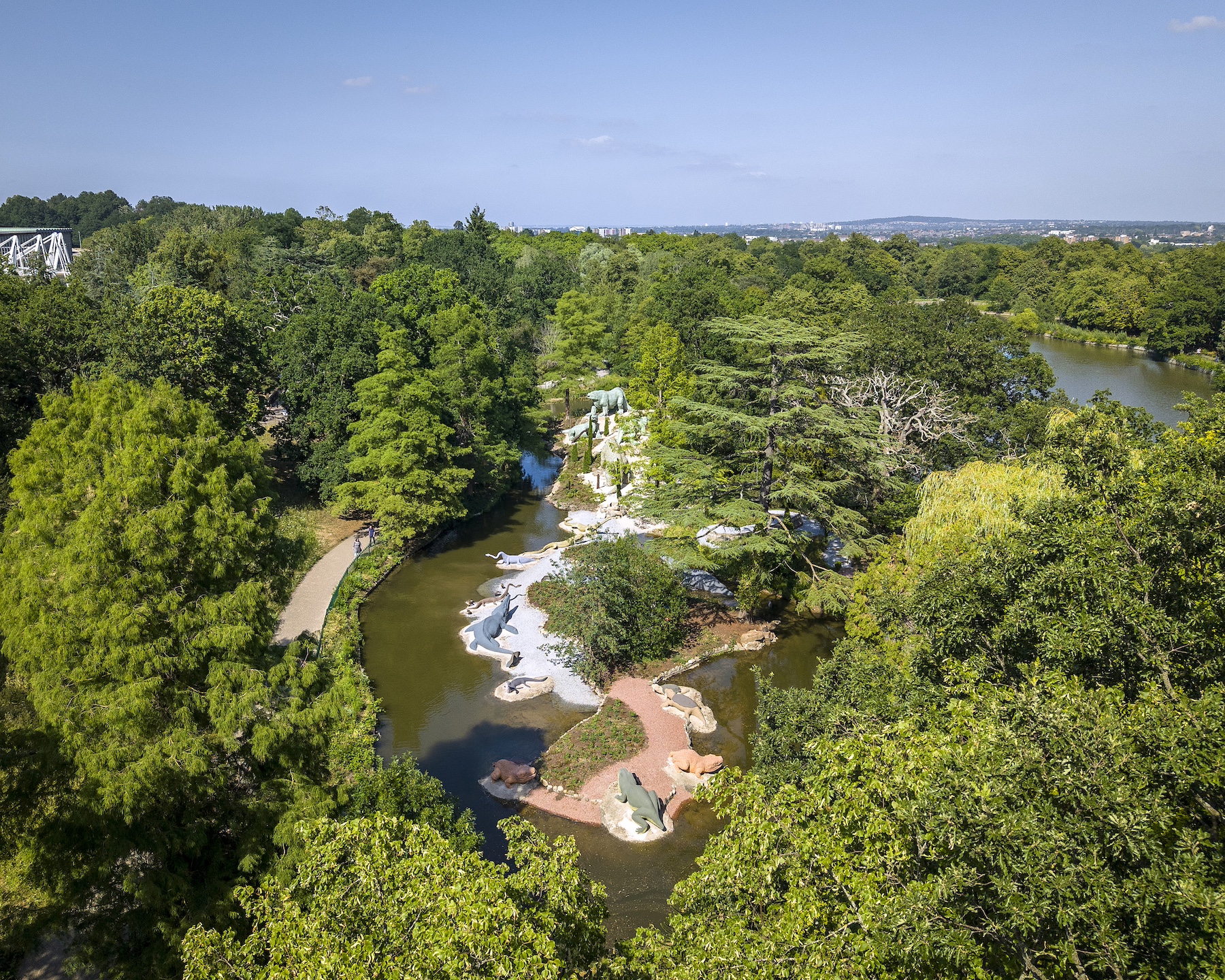
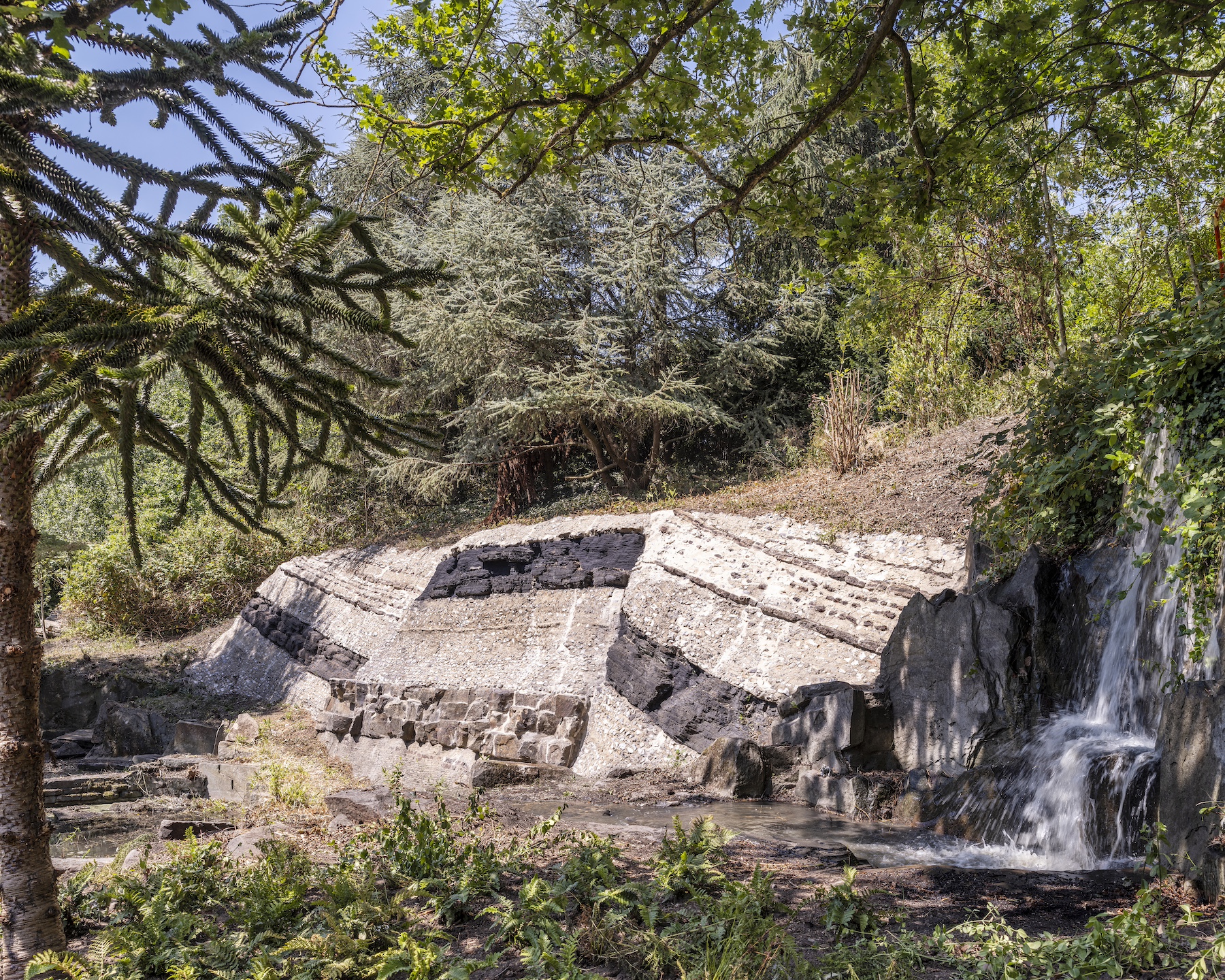
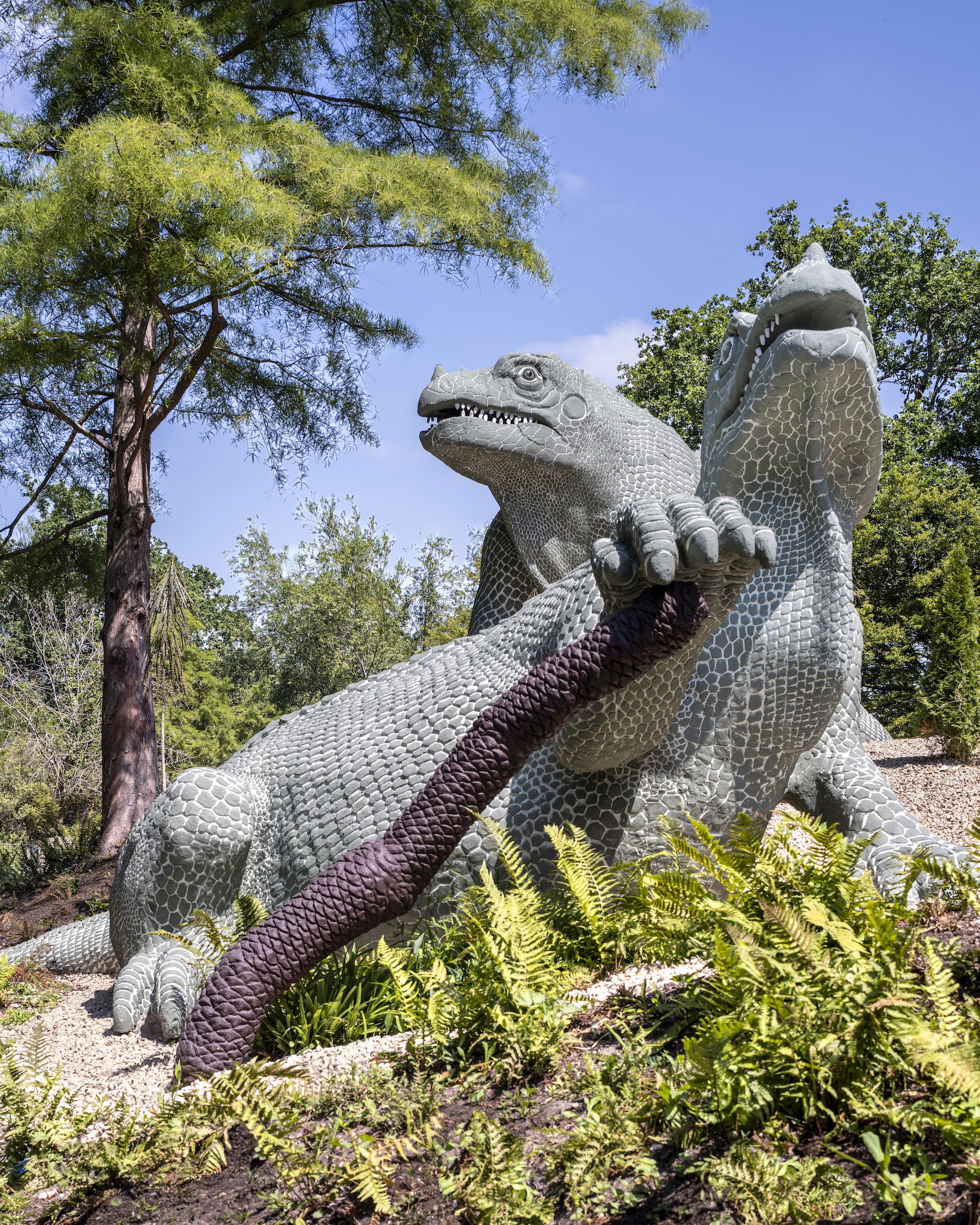
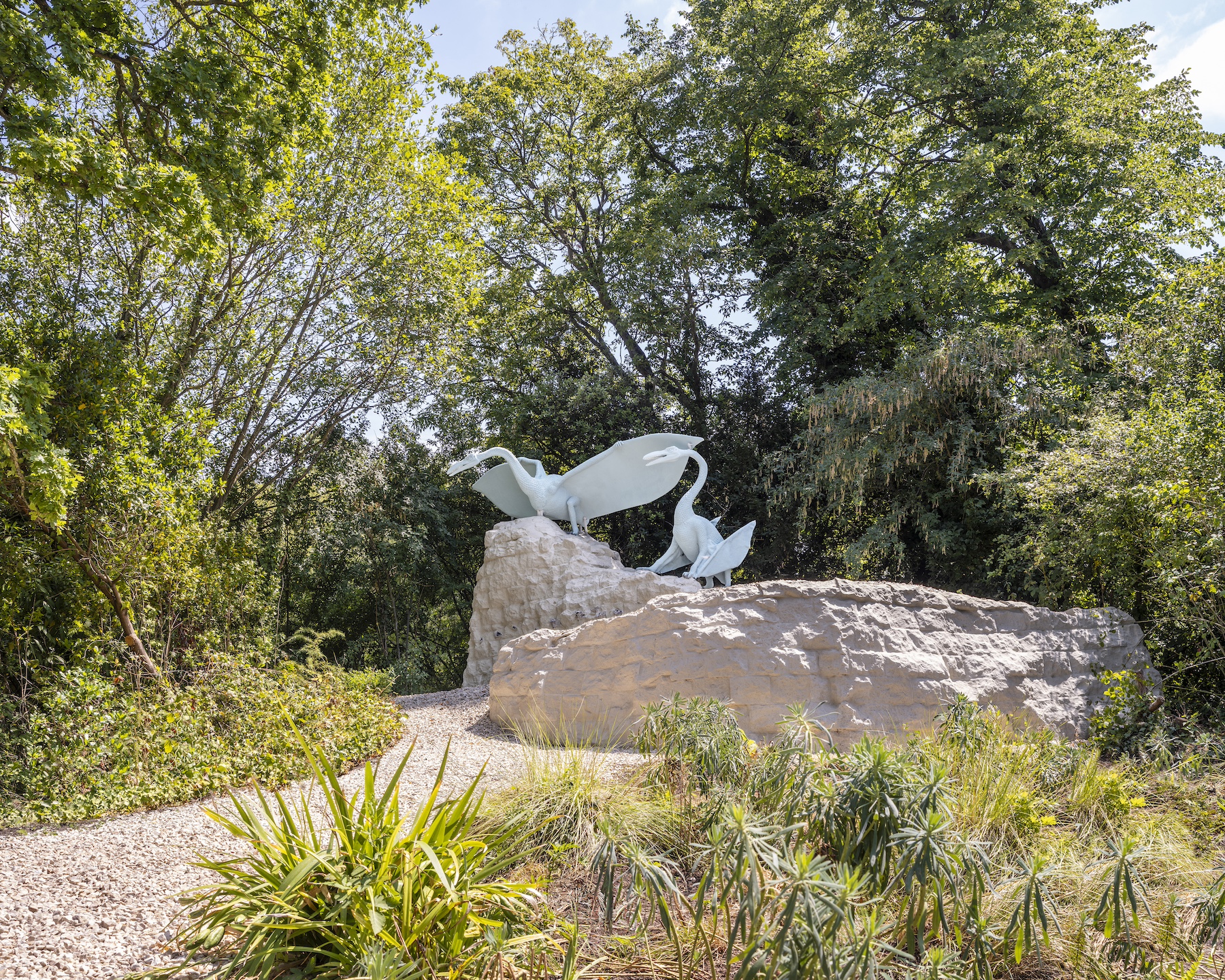
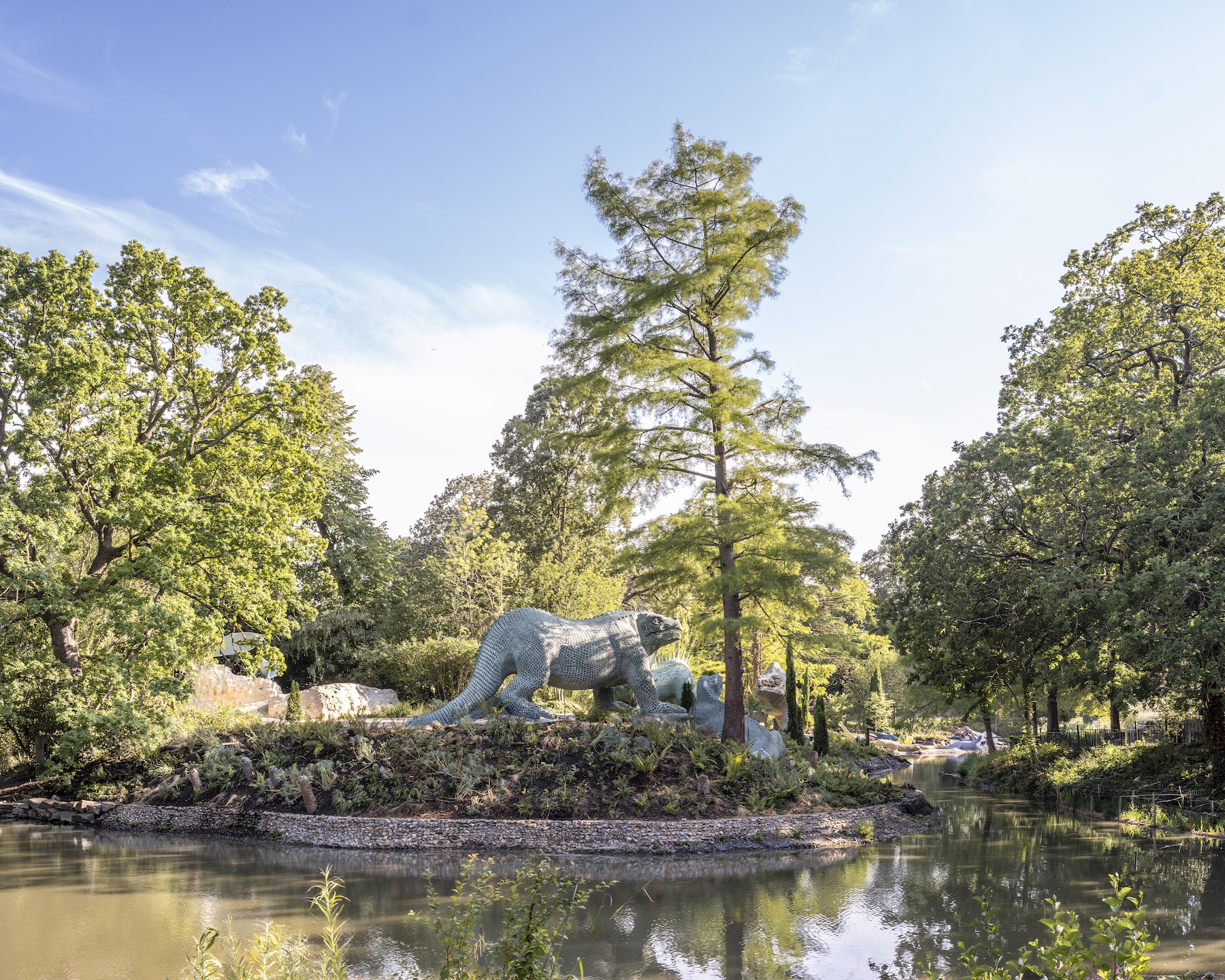
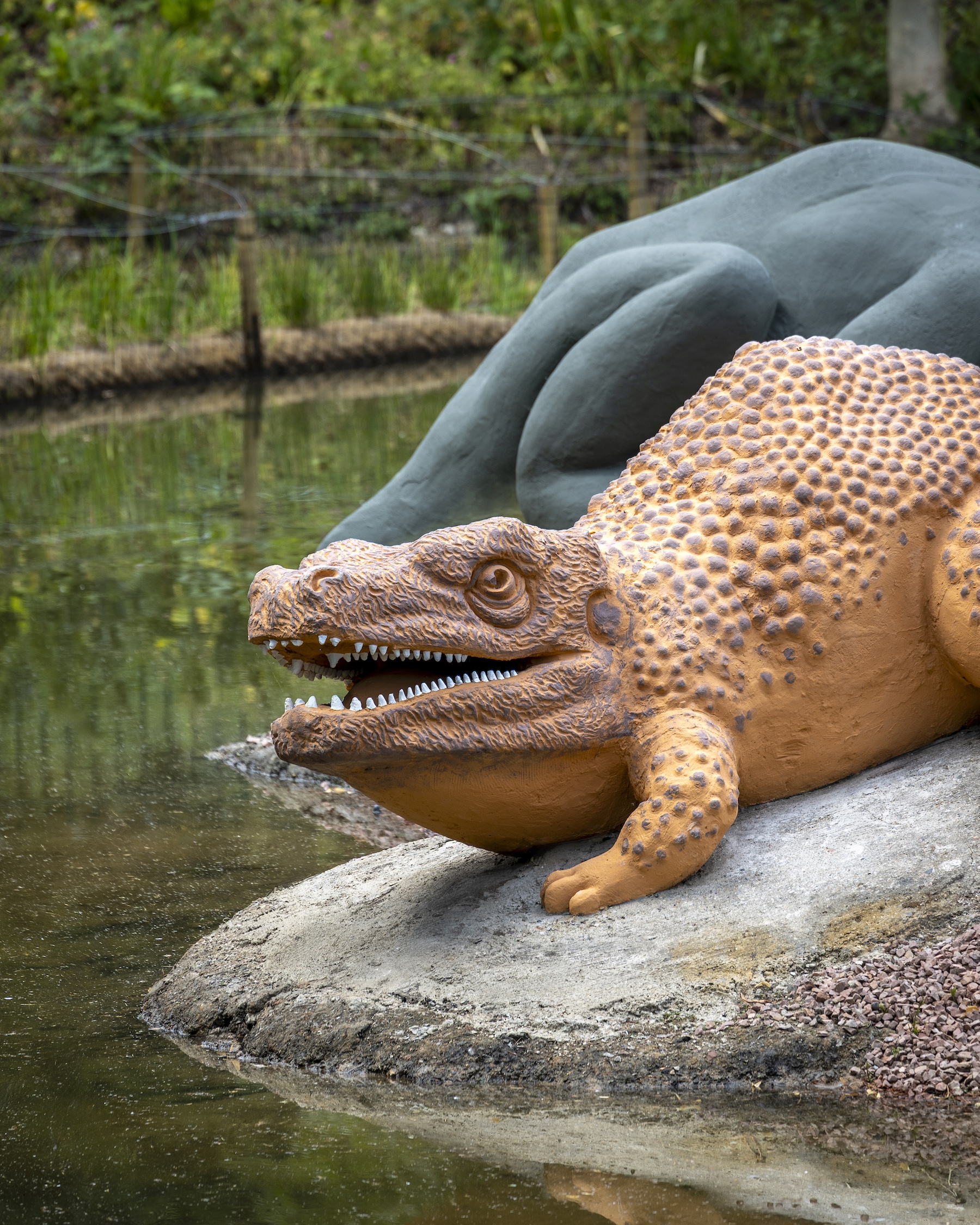
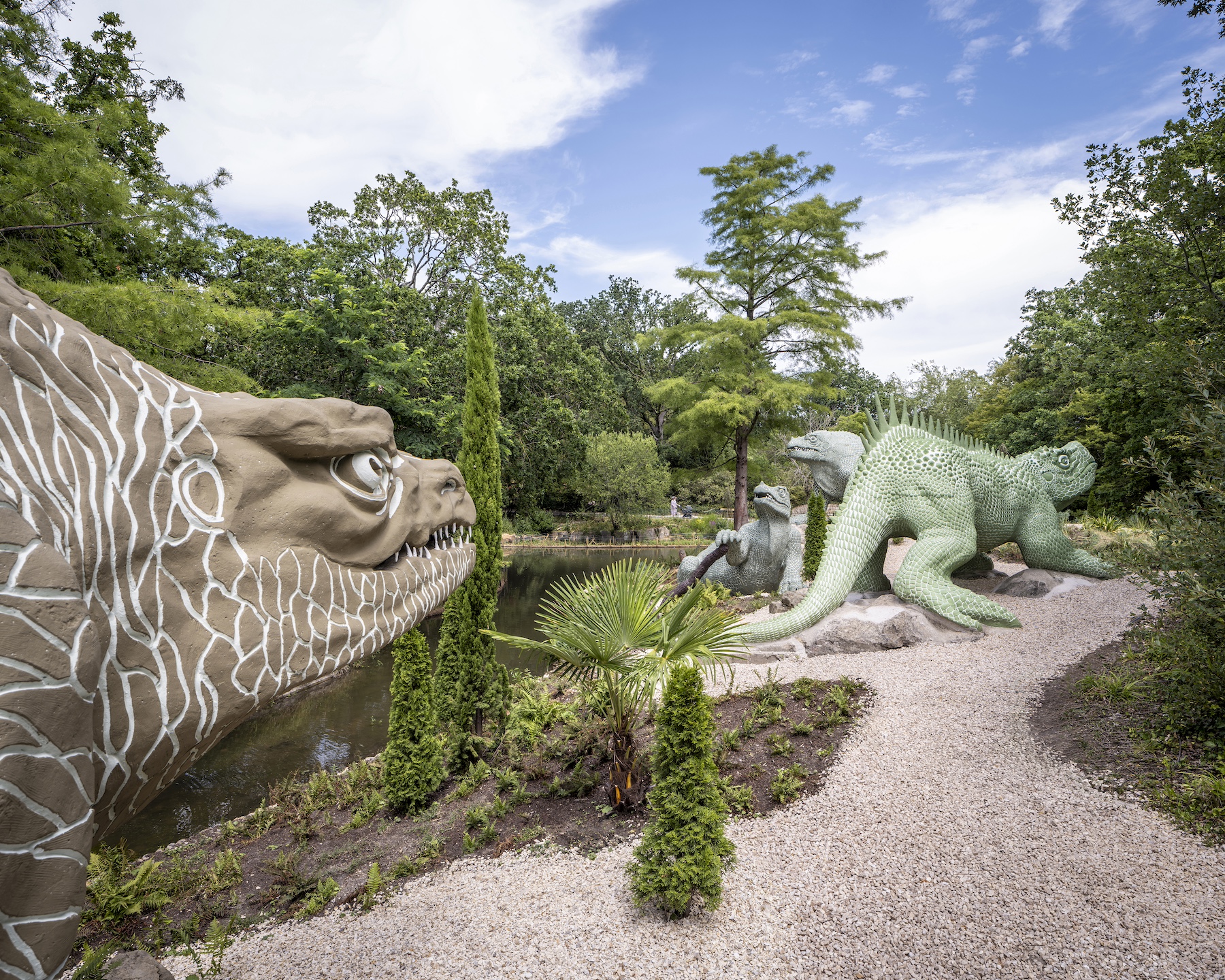
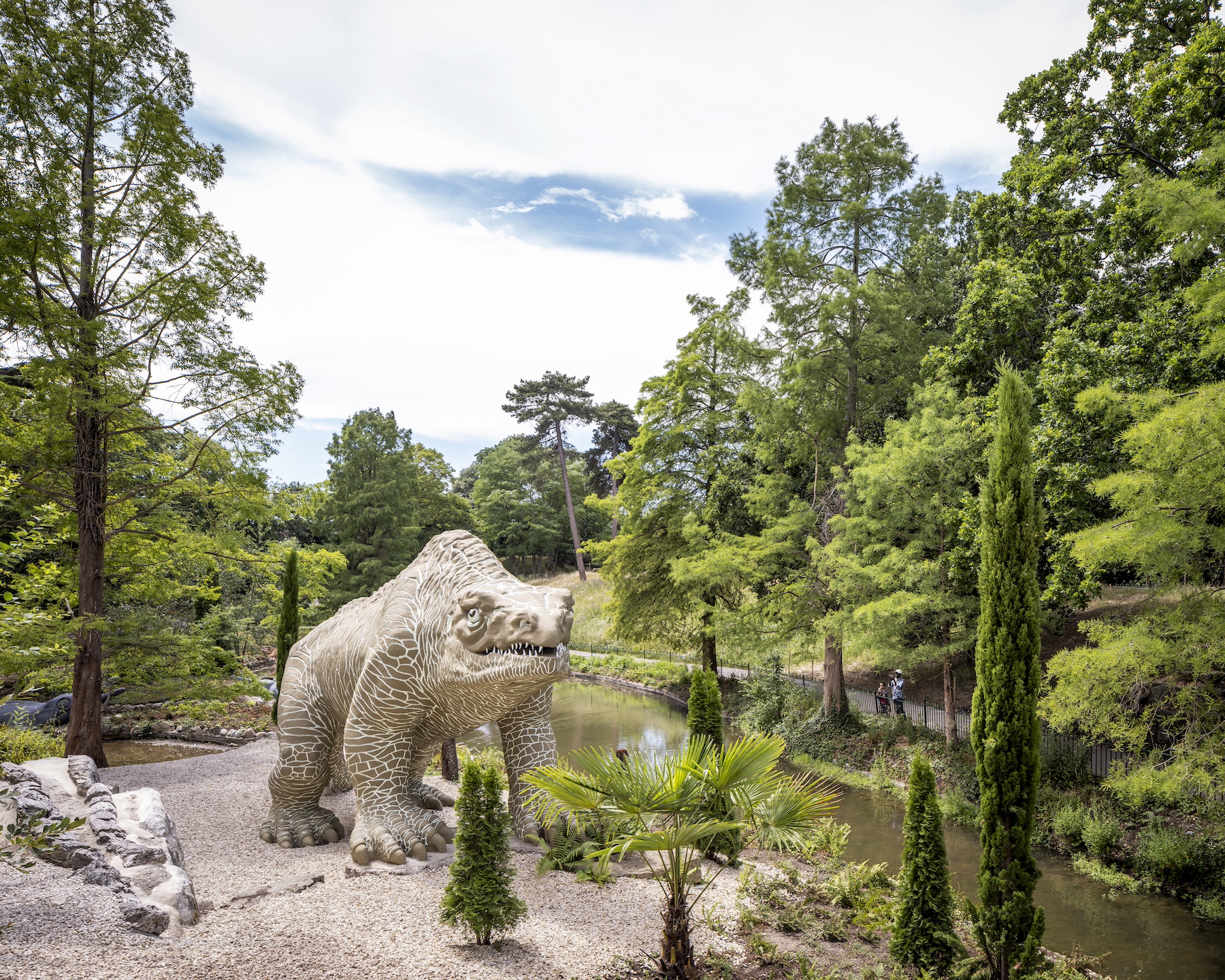
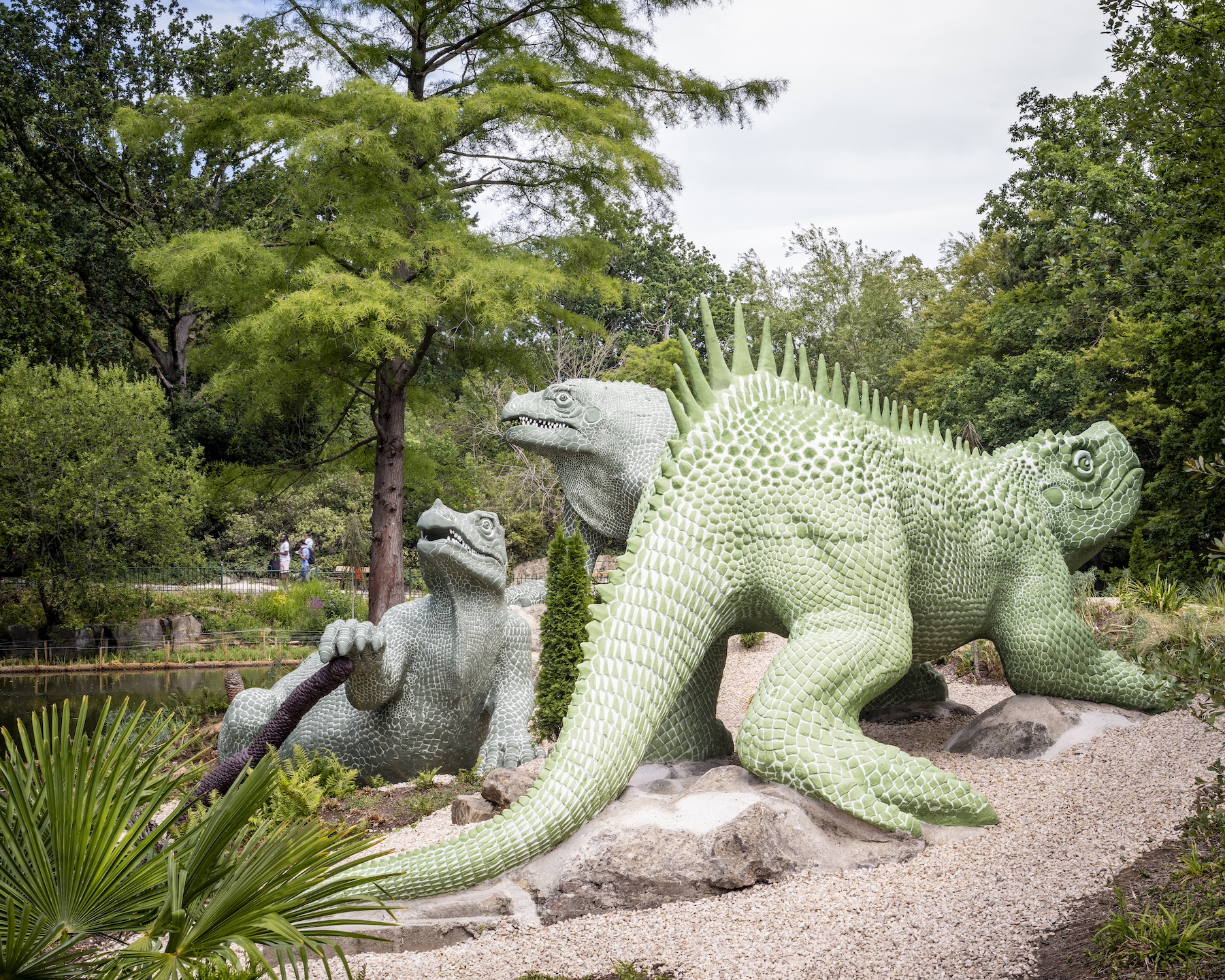
A main aim of the project was the conservation of the Grade-I listed Geological Court and Benjamin Waterhouse Hawkins’ dinosaur sculptures. Scientific research, material testing, historic paint analysis and detailed surveys informed a programme of cleaning, structural repair and consolidation, with 3D printing used to reproduce elements where appropriate. The work has resulted in the dinosaurs being removed from Historic England’s Heritage at Risk Register.
The landscape surrounding the sculptures has also been reworked to clarify its original topography and reveal views across the Geological Court. Gravel formations representing successive geological periods reinforce the journey through prehistory, while planting based on ferns, grasses and other ancient species illustrates the evolution of plant life. The Upper Lake has been de-silted and fitted with a recirculation system that improves water quality and brings the park’s waterfalls back into use.
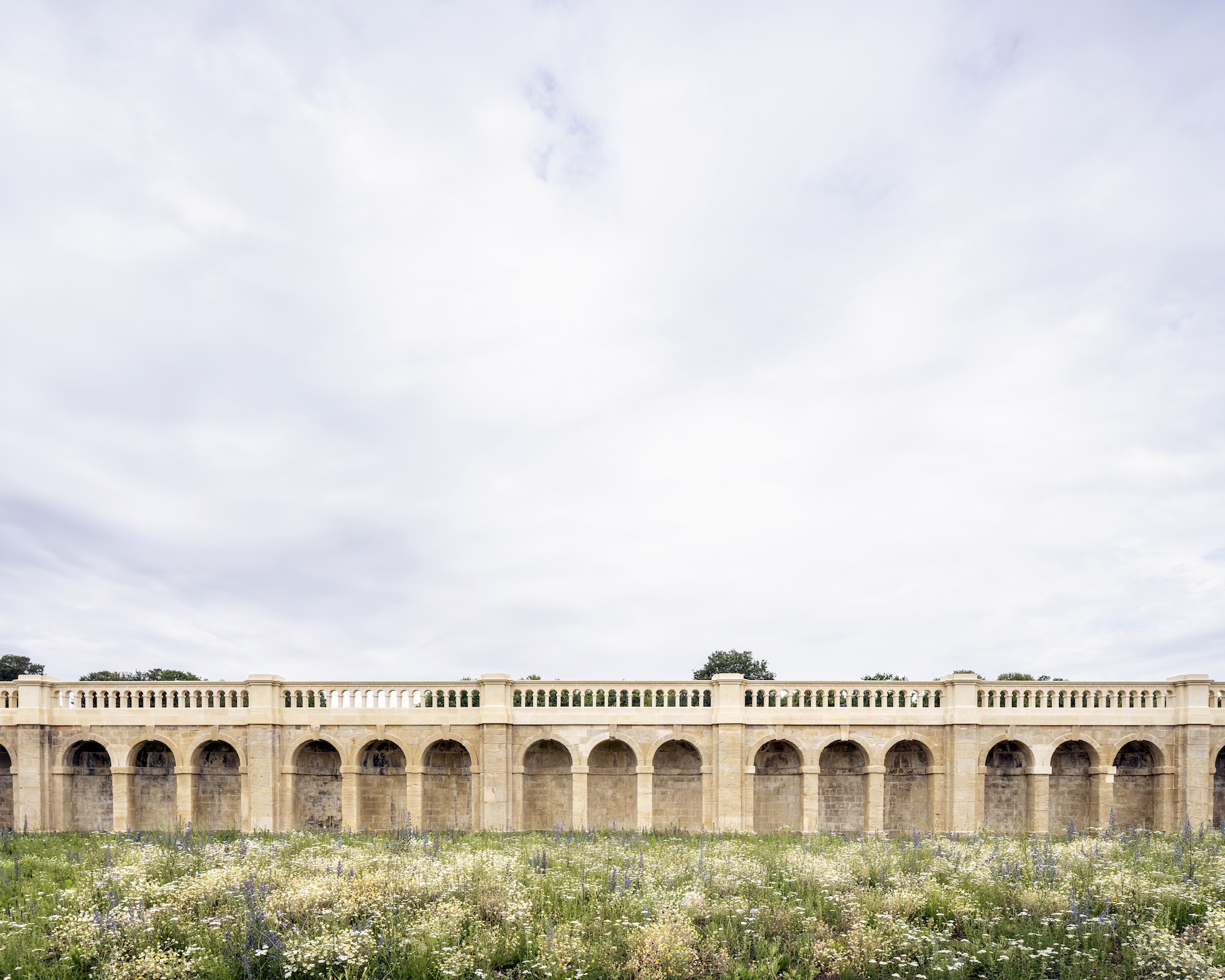
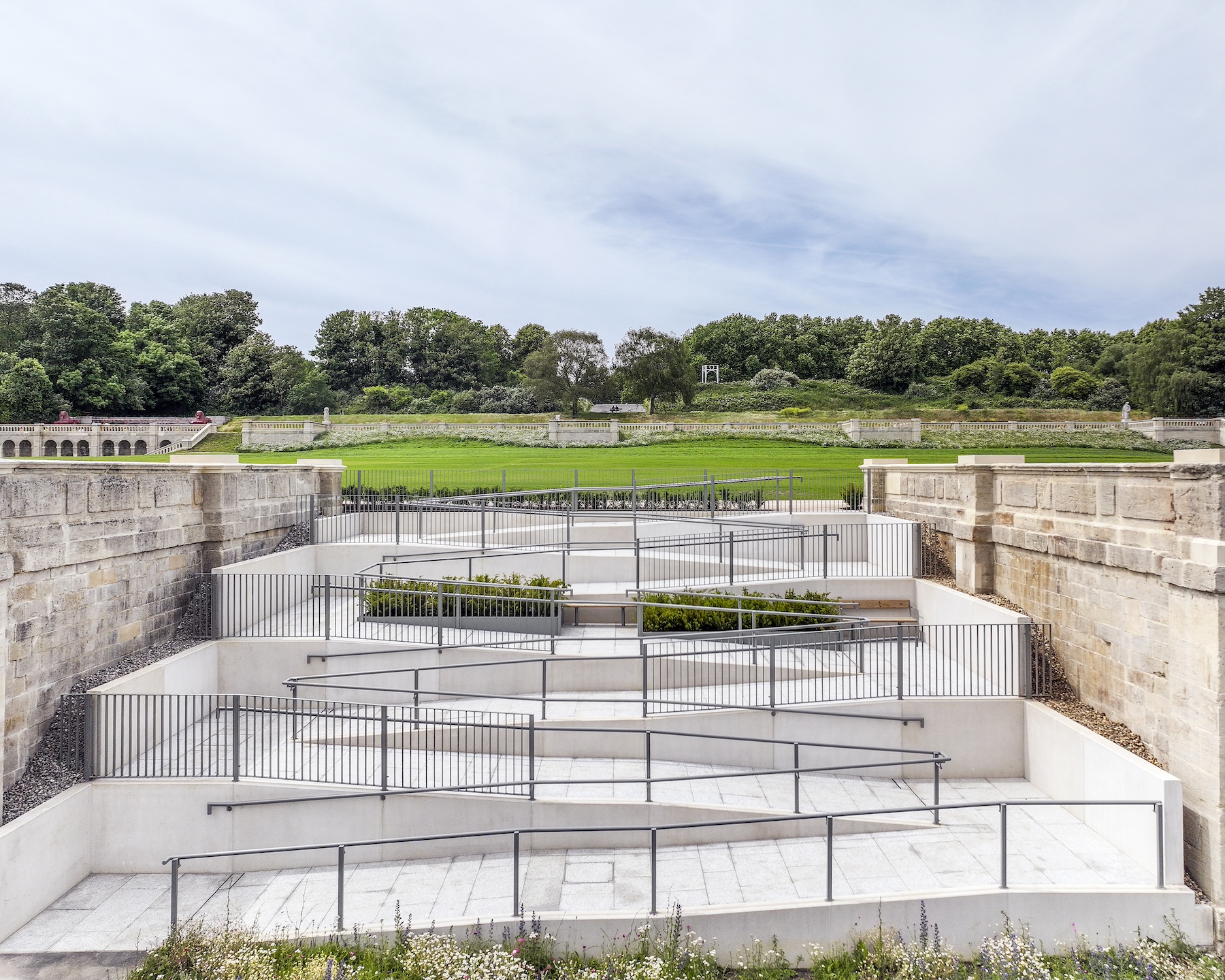
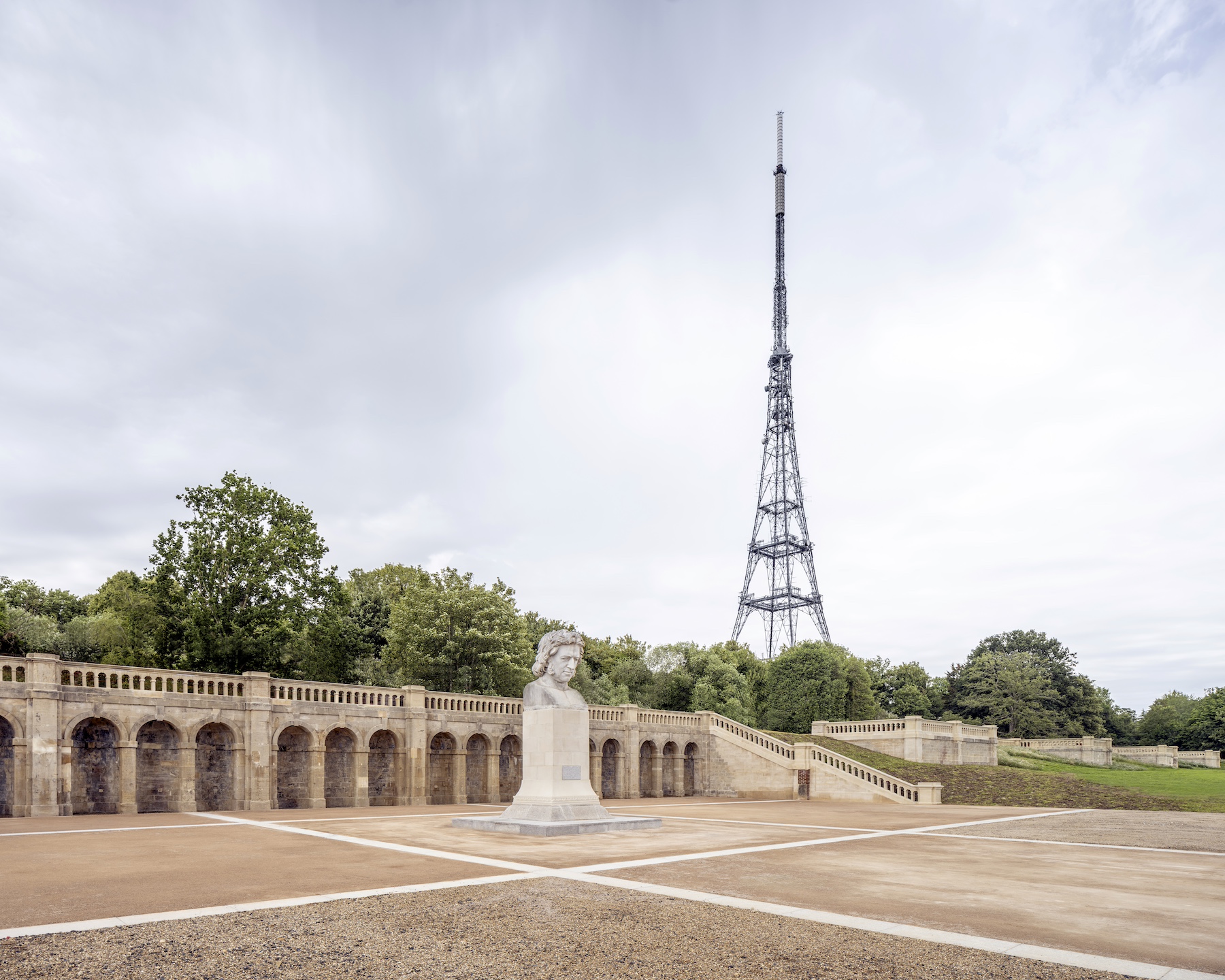
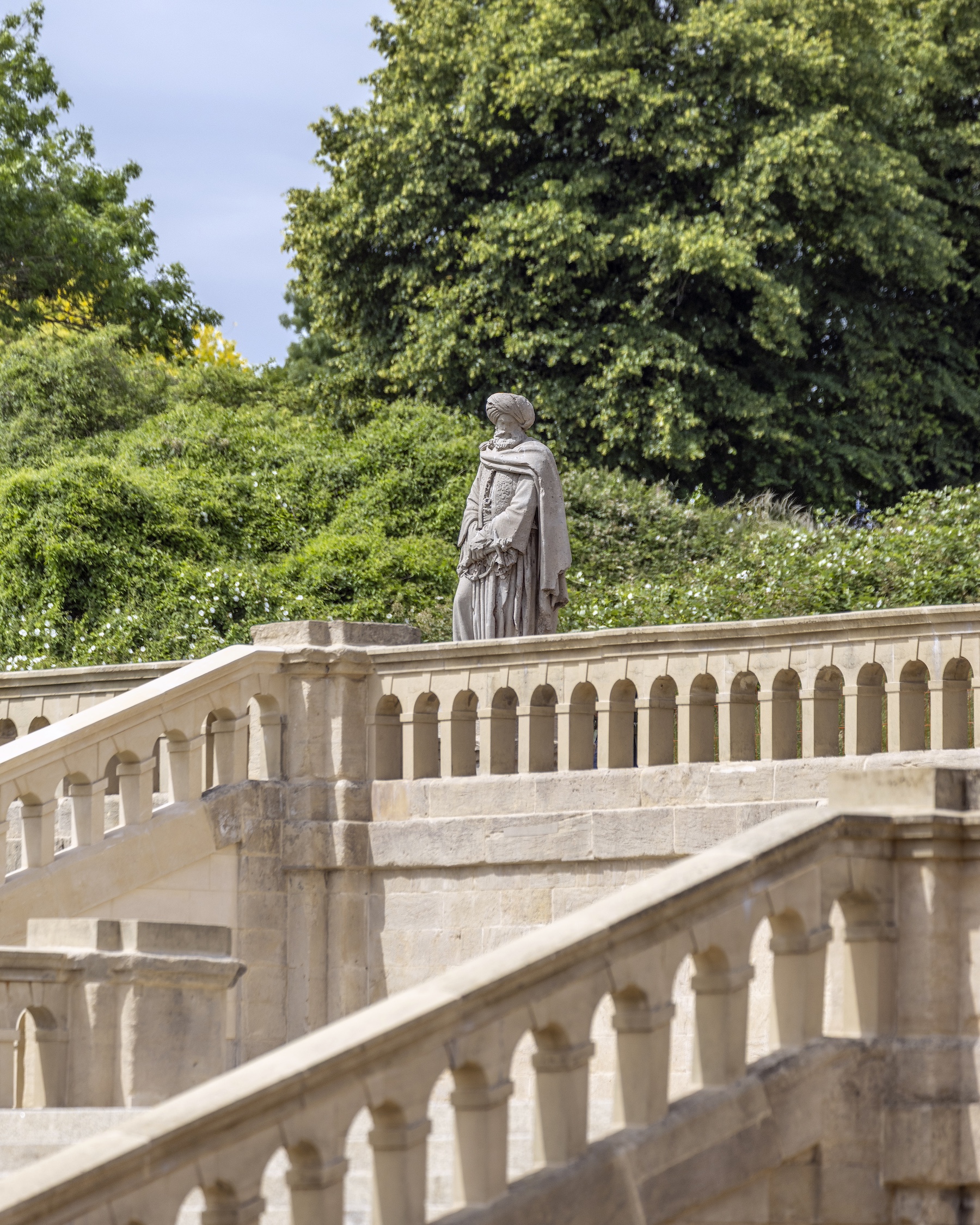
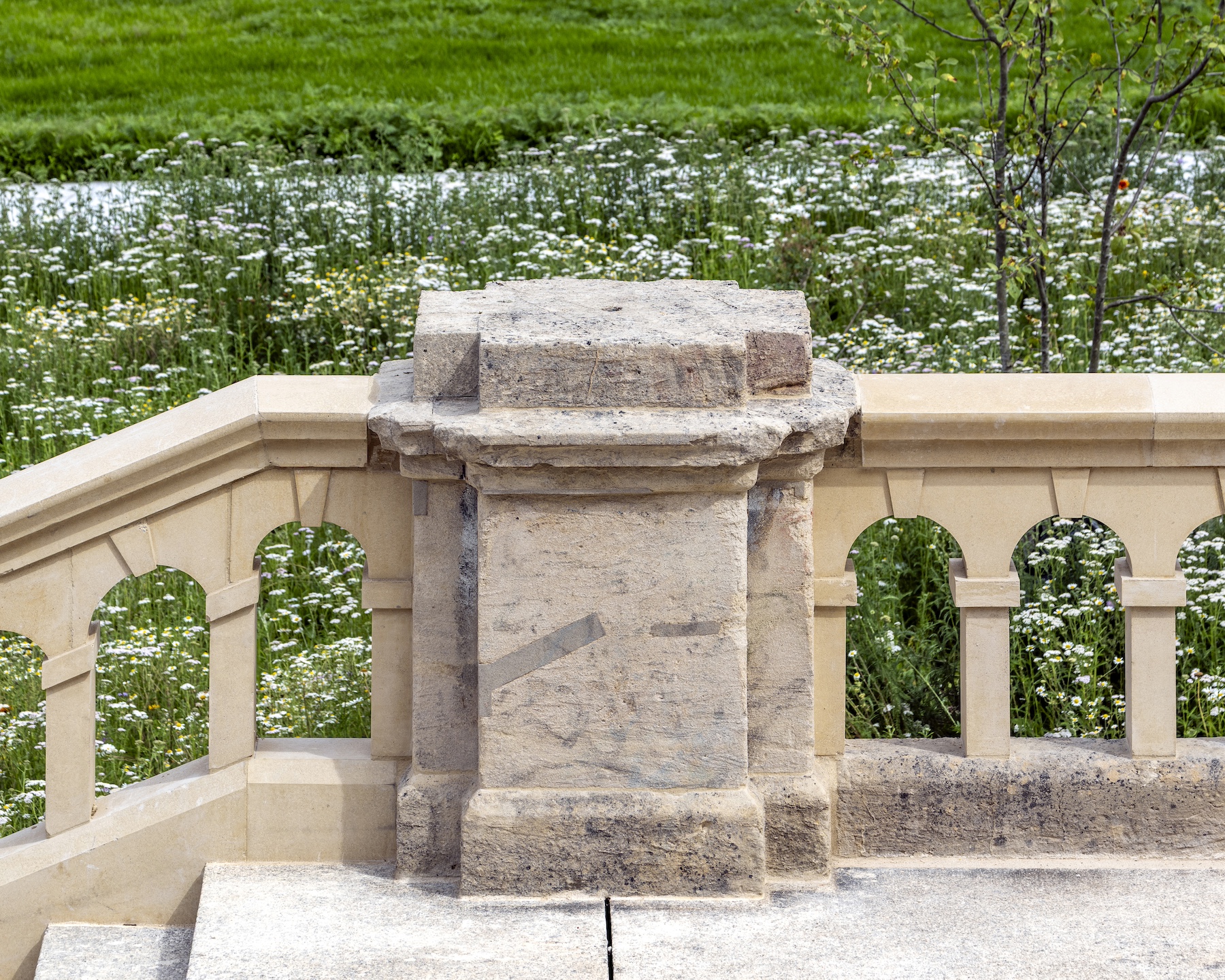
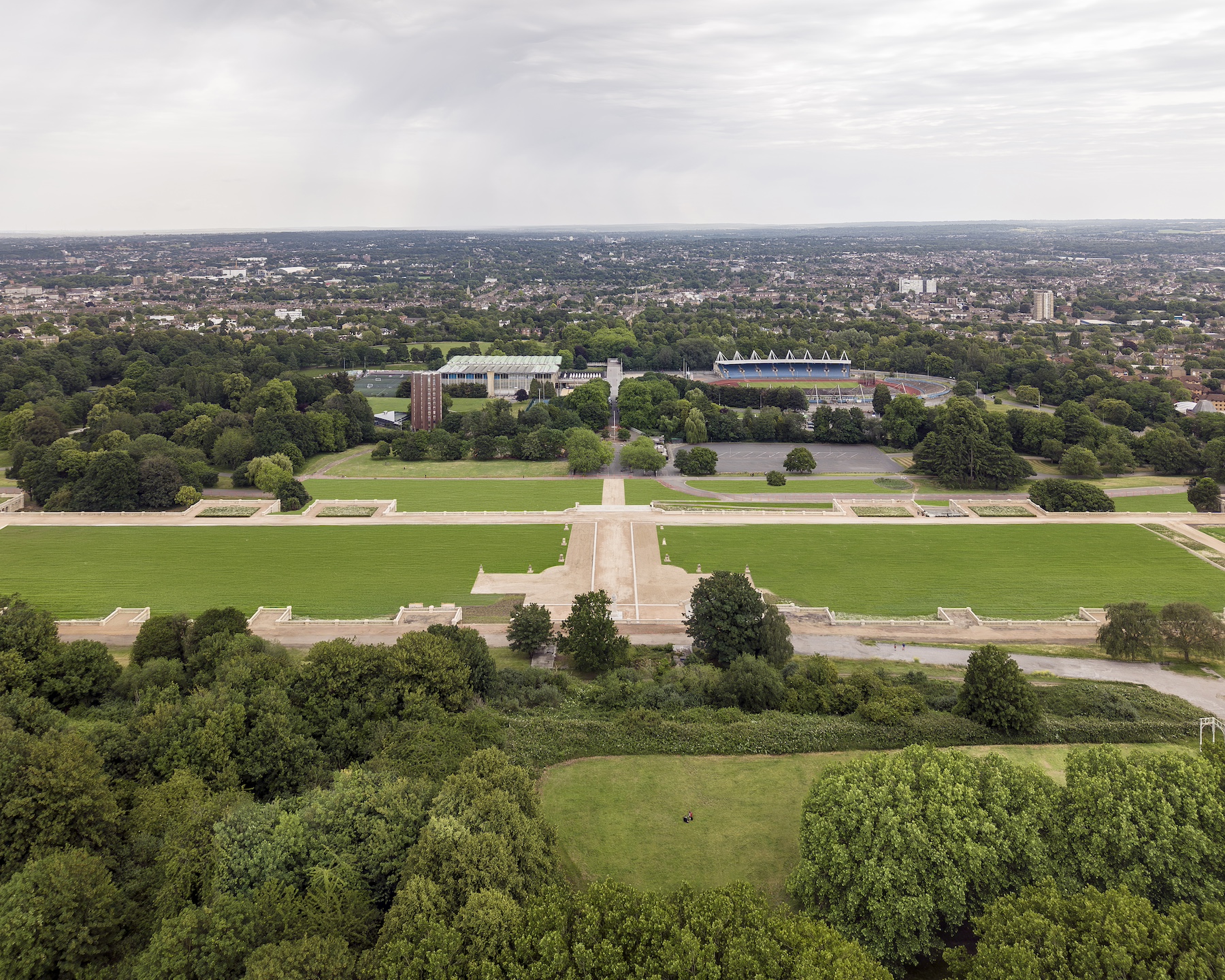
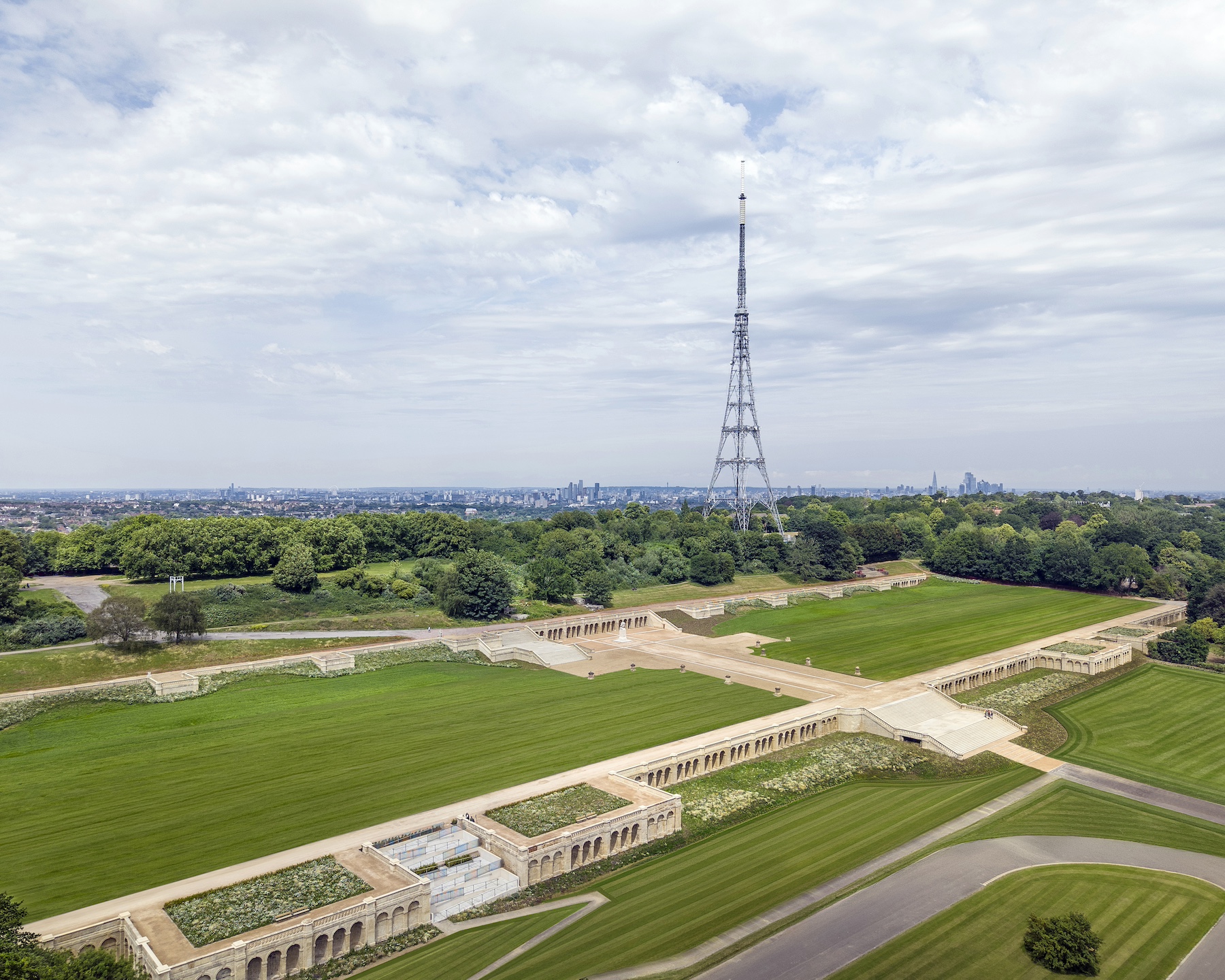
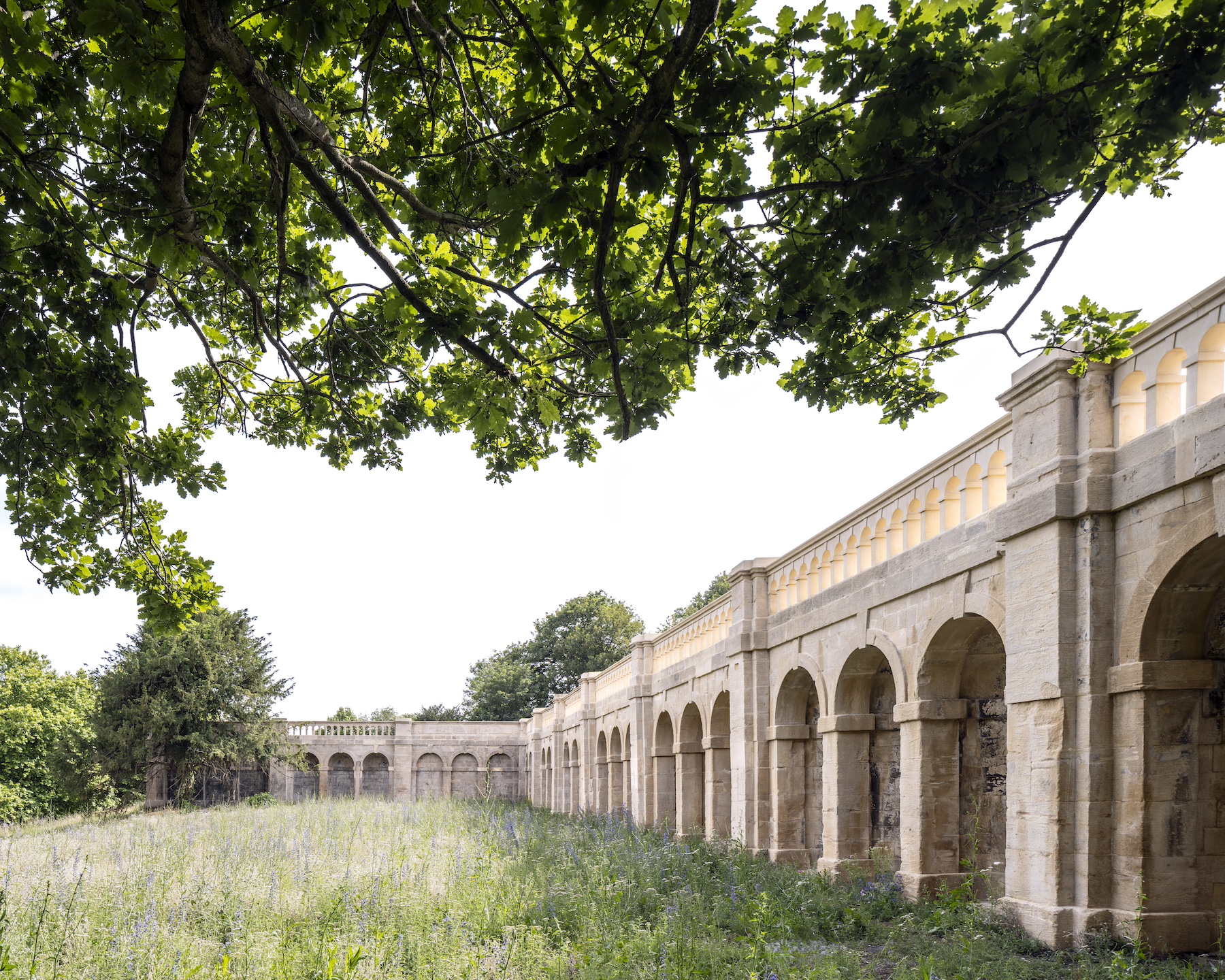
At the other end of the park, the Grade-II listed Italian Terraces have undergone extensive stone conservation. Walls, balustrades, copings and statues have been repaired to restore the scale and character of the last surviving part of the Crystal Palace itself. Paxton’s Grand Centre Walk has been reinstated as the principal route through the park, reconnecting the Geological Court, terraces and other destinations. Following archaeological investigations, the Grade-II listed bust of Paxton has also been returned to its original position.
The wider landscape strategy combines new habitats with measures to manage rainfall and reduce the quantity of material taken off site. More than 7,500 tonnes of excavated soil have been reused within the park, while sediment removed from the lake has formed 500 square metres of new marginal planting shelves. Rain gardens, swales and improvements to the lake infrastructure contribute to the drainage strategy and provide additional habitats.
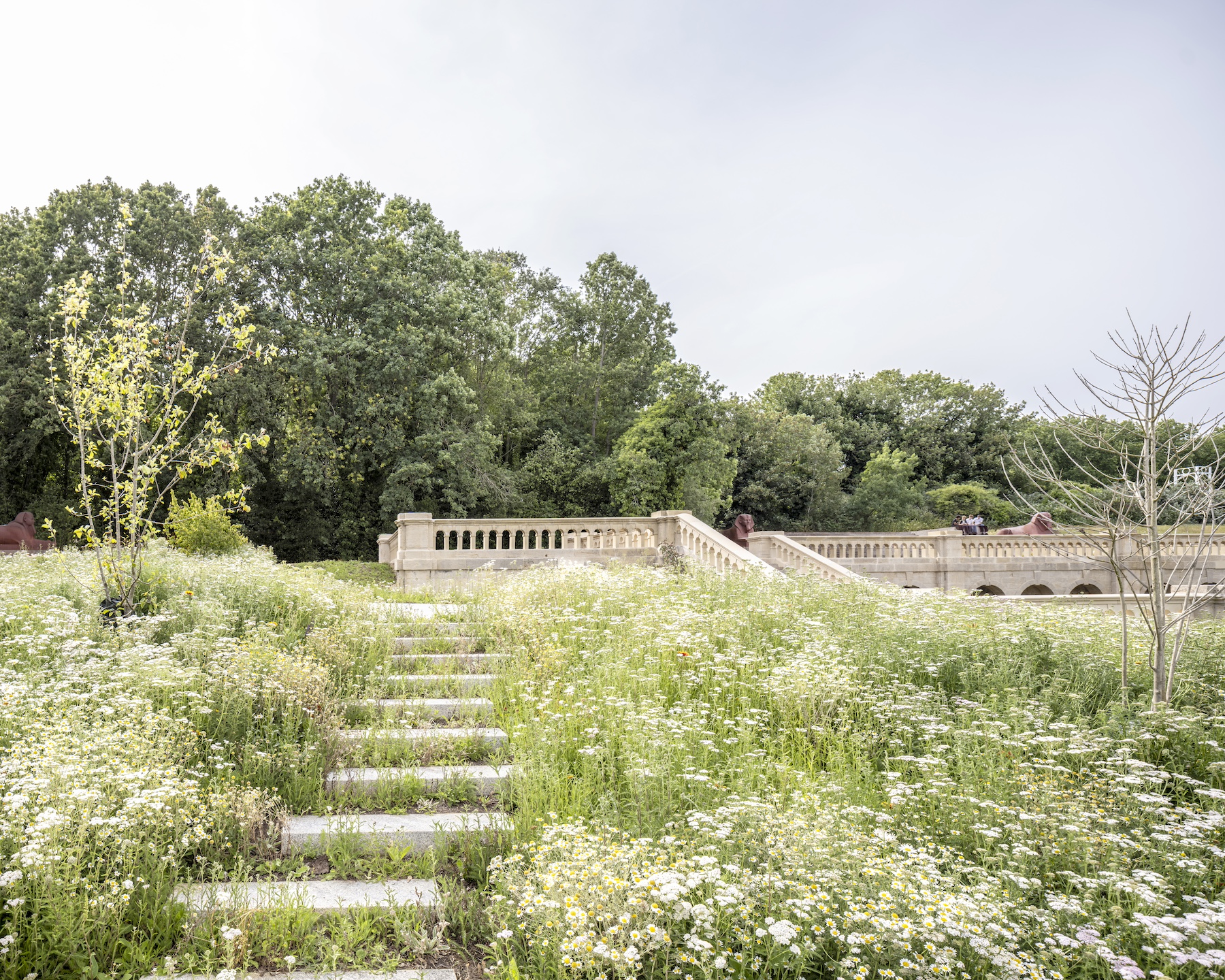
Around 58,000 square metres of flowering meadow and species-rich grassland have been introduced, together with more than 64,000 herbaceous perennials. The planting includes over 260 species intended to support bees, butterflies and other wildlife, while recalling the horticultural displays for which the Victorian park was once known. New step-free routes, upgraded paths, lighting and wayfinding make the 200-acre landscape easier to navigate. At Penge Gate, a redesigned entrance draws on the modular geometry of the former Crystal Palace.
New visitor facilities extend Paxton’s combination of education and entertainment. A palaeontological dig-themed play area (read more about that here) developed with local children and accessibility specialists, uses sculptural structures based on fossils and dinosaur anatomy to create an inclusive setting for play. Nearby, a timber Visitor Centre by Tate + Co reuses the concrete foundations and floor slab of the previous building, providing flexible space for exhibitions, learning, community events and meetings. A new heritage trail connects the building and play space with the Geological Court and the wider park.
The project was funded through the sale of land adjoining the park for affordable housing, together with a £5m grant from The National Lottery Heritage Fund and contributions from the Garfield Weston Foundation, London Marathon Foundation, the Wolfson Foundation and Pilgrim Trust.
“With this major regeneration project now complete we’re thrilled to ‘throw open the gates’ so that the Crystal Palace Dinosaurs and wider park can do their job inspiring joy, wonder and curiosity among visitors, just as the park’s visionary founder, Sir Joseph Paxton, always intended,” said Victoria Pinnington, CEO of Crystal Palace Park Trust. “This September marks the third anniversary of the Trust’s custodianship of the park. With this major project now complete we look forward to caring for these internationally historic 200 acres, and all 12 listed assets within them, for the enjoyment of many generations to come.”
Natalia Roussou, Landscape design director at HTA Design, added: “Crystal Palace Park has always been a place of innovation, bringing together education, entertainment and discovery. That legacy shaped our approach throughout the project, combining the restoration of internationally significant heritage assets with the revitalisation of the wider landscape and the creation of new experiences for future generations to enjoy.
“Working closely with Bromley Council, Crystal Palace Park Trust, Historic England and an exceptional multidisciplinary team, our ambition has been to reveal and celebrate what makes this place so special and help more people connect with its remarkable story. Whether visitors come for the dinosaurs, the Italian Terraces, nature or play, we hope the park once again inspires the same sense of curiosity, wonder and delight that made it famous more than 170 years ago.”
Credits
Client
London Borough of Bromley
Development partner
Crystal Palace Park Trust
Key stakeholders
Historic England
Friends of the Crystal Palace Park Dinosaurs
Lead consultant and landscape architect
HTA Design
Planning consultant
HTA Design
Interpretation and wayfinding consultant
HTA Design
Energy and sustainability consultant
HTA Design
Principal designer
HTA Design
Project manager
Leadenhall
Contract administrator
Ian Sayer
Heritage architect
Donald Insall Associates
New-build architect
Tate + Co
Structural engineer
Alan Baxter
Heritage consultant
Alan Baxter
Lighting designer
Speirs Major
Civil engineer
Pell Frischmann
Transport consultant
Pell Frischmann
Ecology consultant
Pell Frischmann
M&E engineer
Desco
Soil consultant
Tim O Hare Associates
Arboriculture consultant
Aspect
Accessibility consultant
Lord Consulting
Building control
Stroma
Fire consultant
Semper
Play specialist
PlayEquip
Historic paint analysis
Hirst Conservation
Main contractor
Maylim
Conservation works contractor
Sally Strachey
More pictures