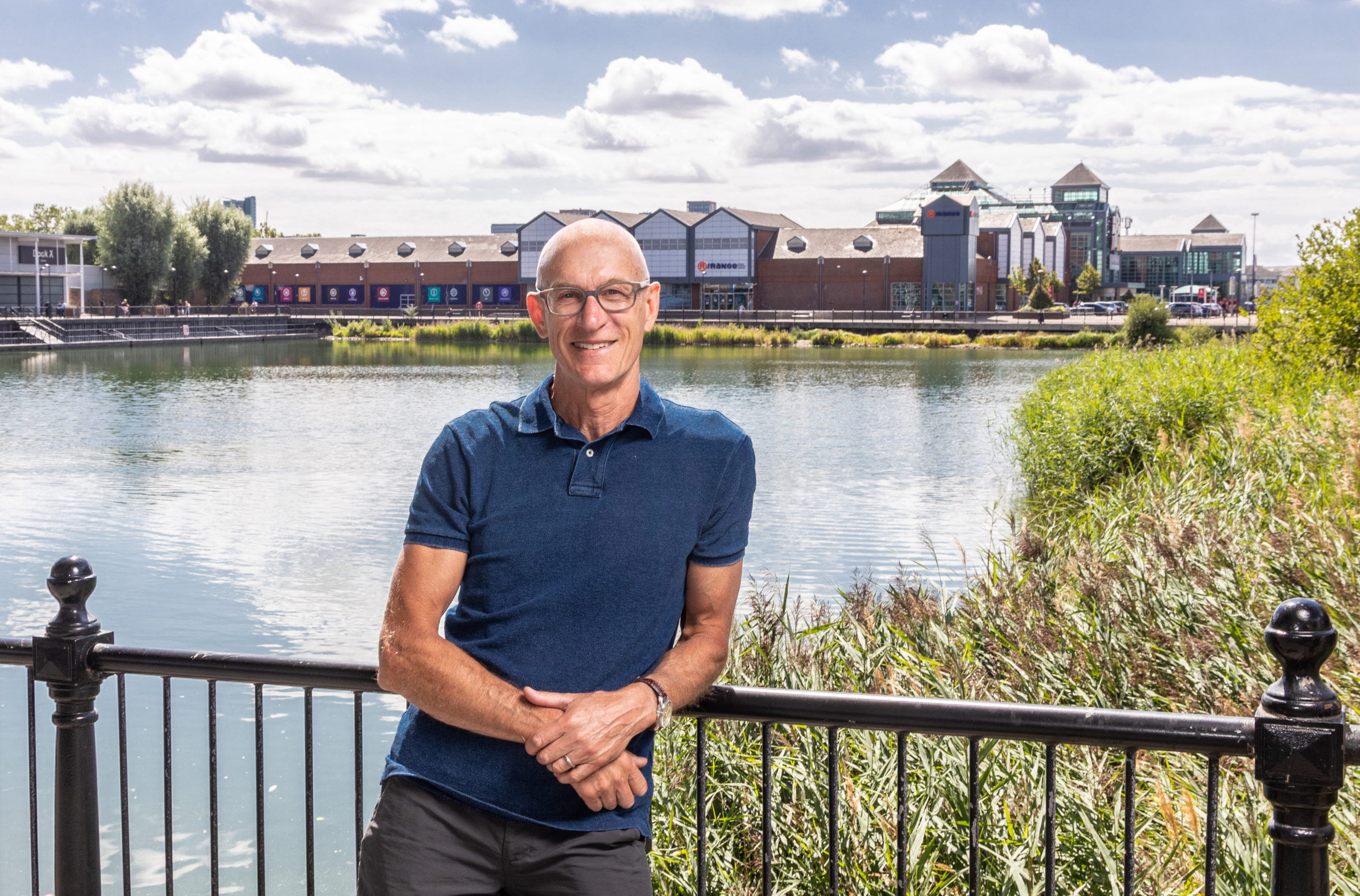
Founder of Exploration Architecture, Michael Pawlyn explored how biomimicry, systems thinking and a fundamental shift in our relationship with nature could transform architecture and help create a regenerative future, in a keynote at Regenerative Design 2026.
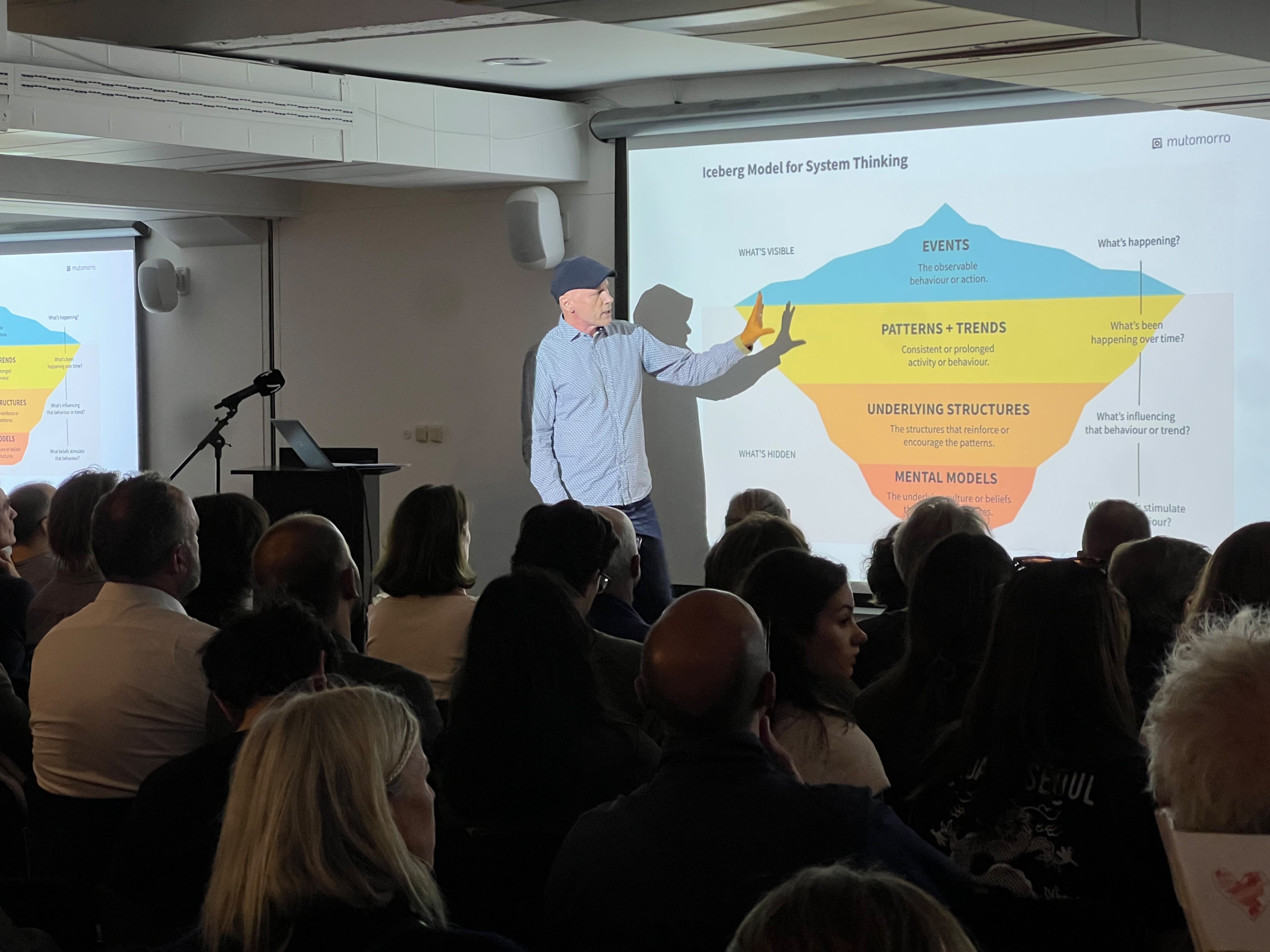
At the Building Centre in London, Michael Pawlyn challenged architects to rethink their relationship with the natural world, arguing that the planetary emergency demands far more than incremental improvements in sustainability.
The keynote, delivered as part of Architecture Today’s Regenerative Design 2026 programme in partnership with Interface, was introduced by Becky Gordon, who outlined the flooring manufacturer’s longstanding commitment to regenerative practice and its ambition to become carbon negative by 2040.
“We’re at a really critical moment in history,” Pawlyn told the audience. “And to meaningfully address the planetary emergency, I believe we’re going to need to bring about an epochal shift.”
Central to his argument was the need to change the thinking that underpins design. Drawing on systems theorist Donella Meadows, he explained that the most powerful interventions address the mental models governing human behaviour.
“It’s not just technology we need, but more profoundly, we need cultural shifts,” he said. “The outcome of any particular technology is dependent on the mindset behind it.”
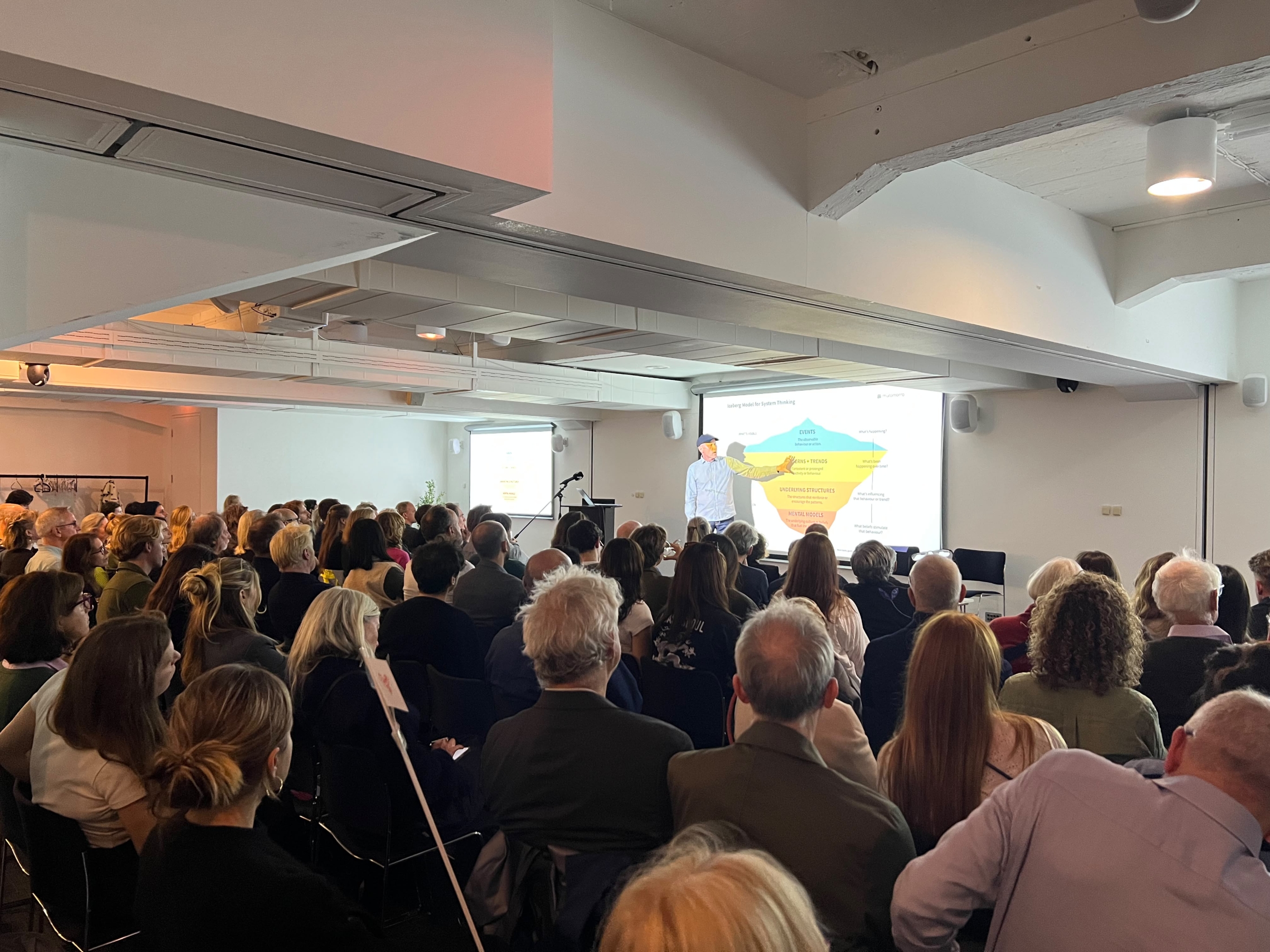
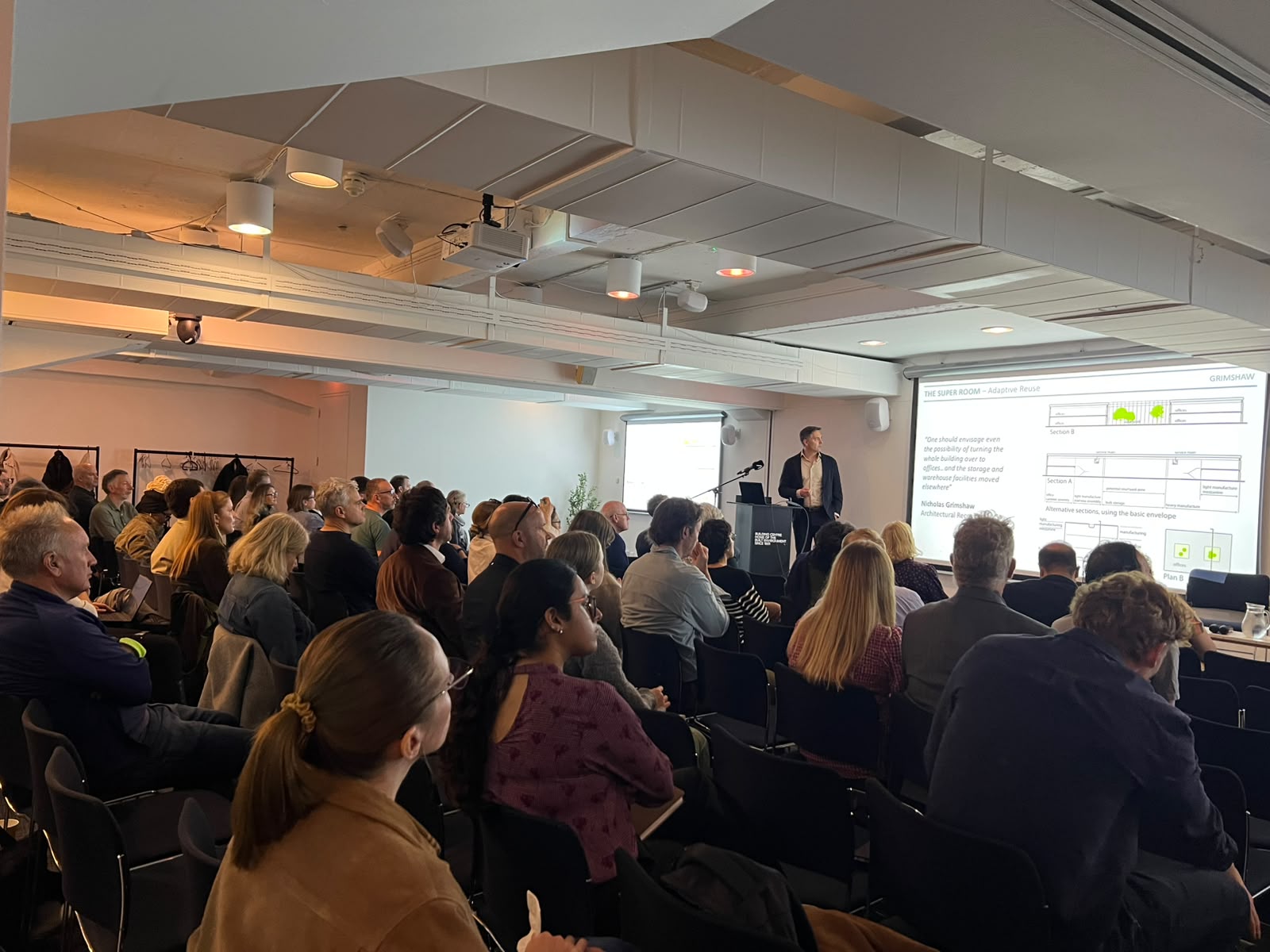
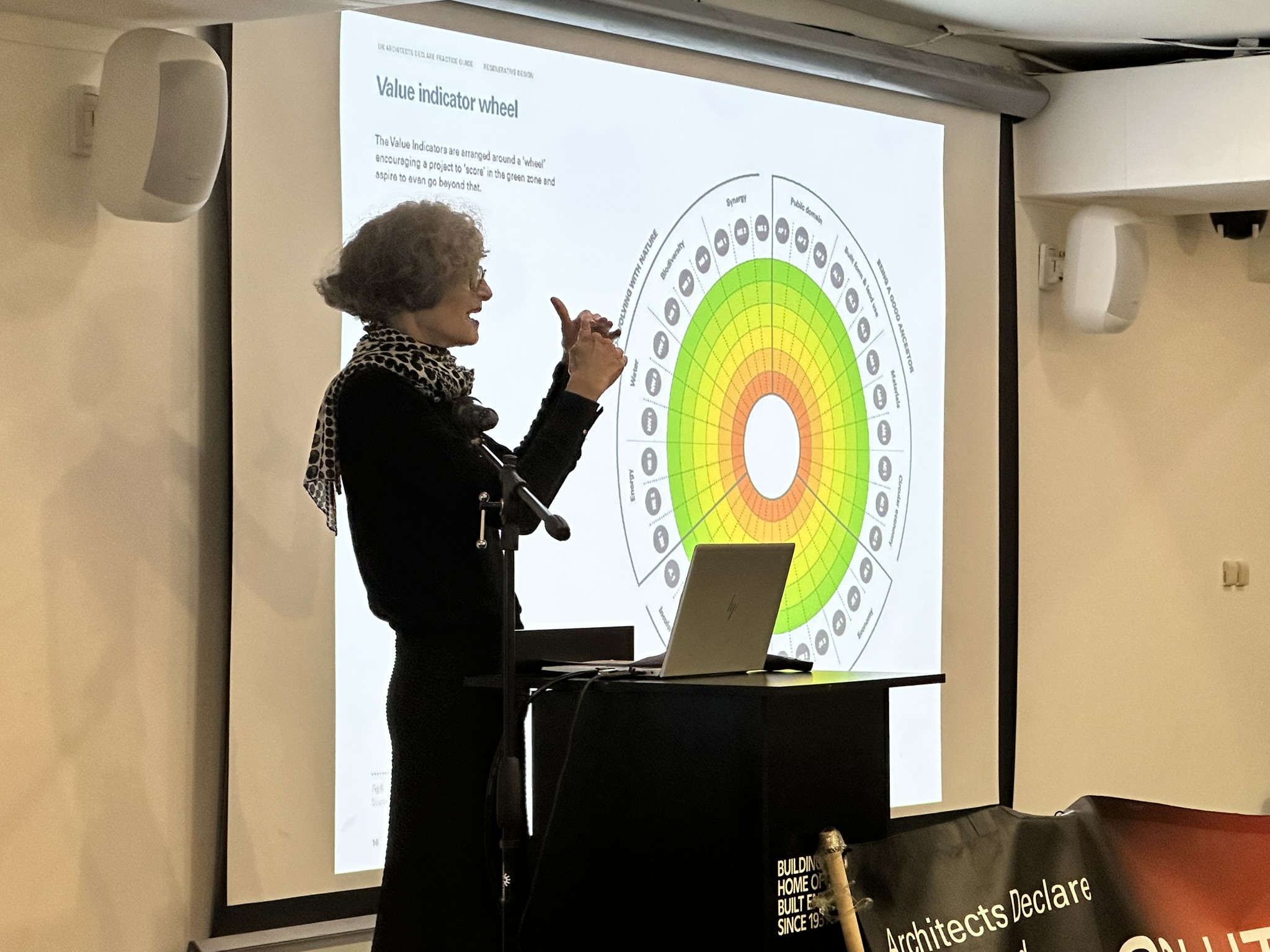
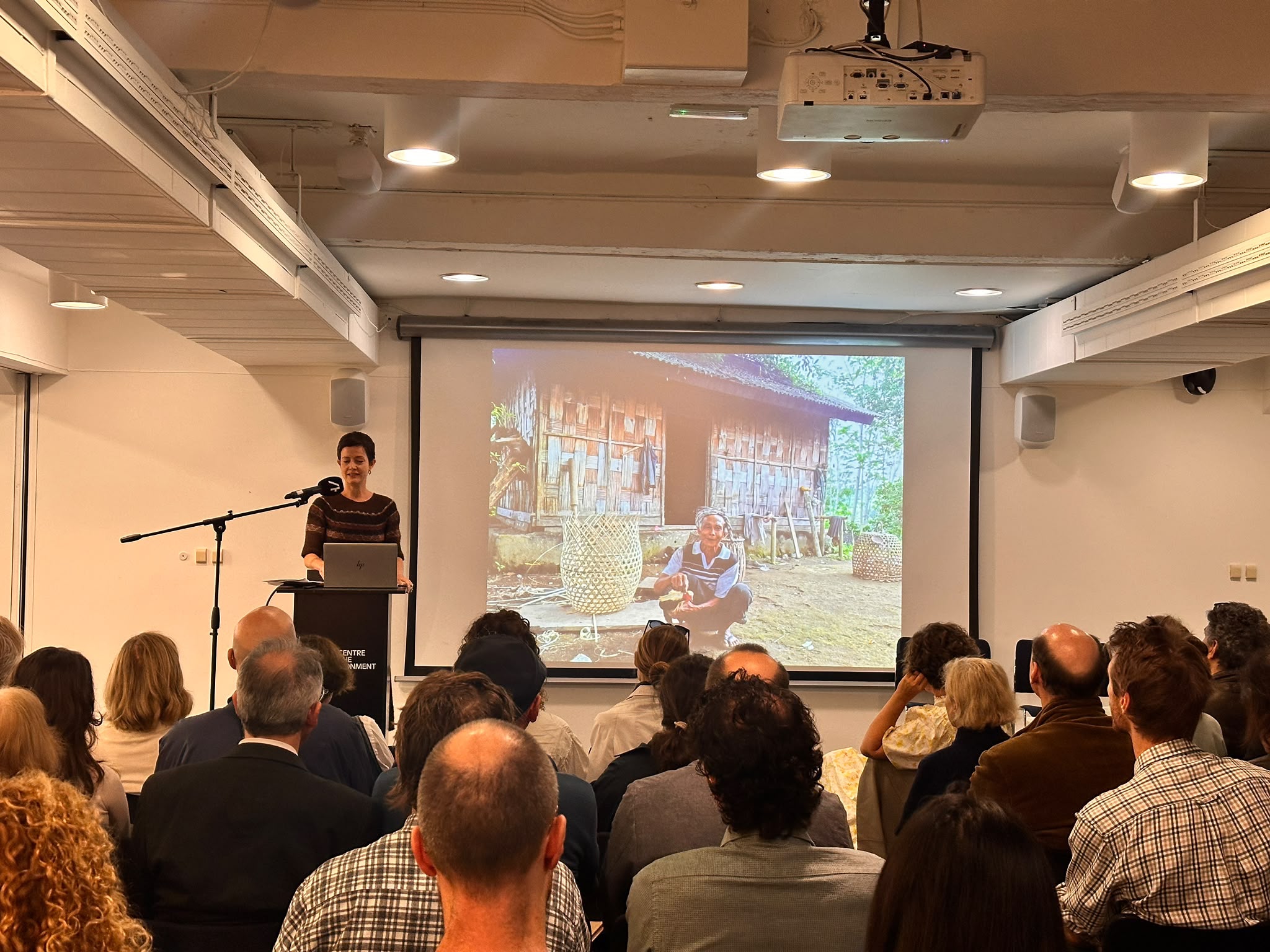
Pawlyn presenting the ‘Iceberg Model for Systems Thinking’.
Beyond sustainability
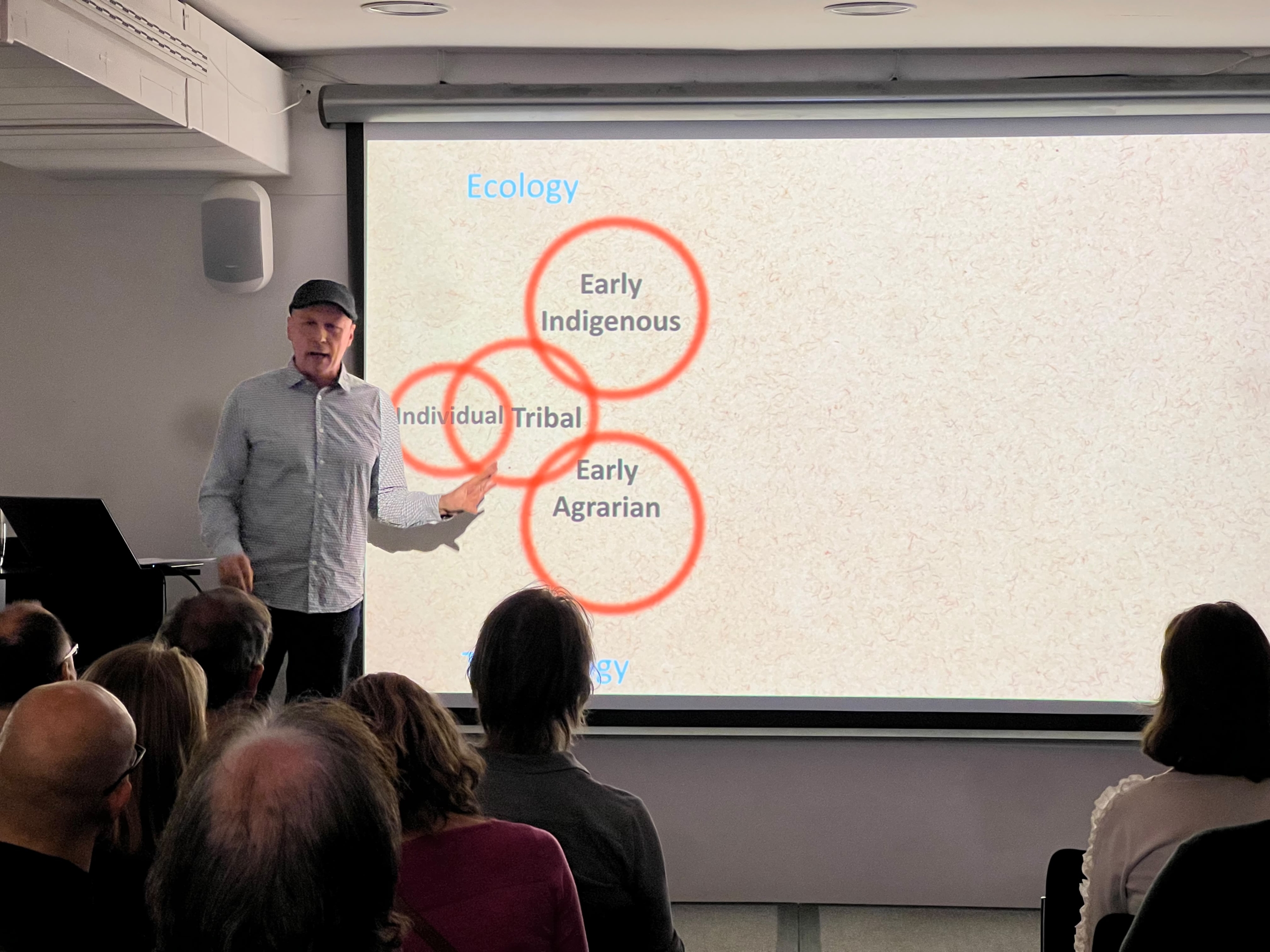
Tracing the evolution of human societies, Pawlyn contrasted indigenous cultures, which developed an understanding of humans as part of nature, with industrial societies built around extraction, consumption and economic growth.
He argued that regenerative design offers an opportunity to reconnect these traditions, bringing ecological understanding together with technological innovation.
"I think it's clear that it was time to really think about a whole new paradigm," he said, questioning whether conventional sustainability could adequately address the scale of the environmental crisis.
Biomimicry, he suggested, could play a pivotal role. Its potential extends far beyond copying natural forms or improving individual products.
"I think we can use biomimicry to deliver a much more radical rethinking of architecture from first principles."
Learning from living systems
Pawlyn illustrated how ecosystems could inspire the redesign of buildings, infrastructure and entire cities. In Namibia, a brewery transformed its waste streams into a network of interconnected processes, producing food, fuel and fertiliser alongside beer. The resulting system generated twelve products rather than one, with four times as many jobs.
He also explored the extraordinary efficiency of natural materials, contrasting the energy-intensive manufacture of synthetic fibres with spiders producing silk at room temperature.
"Nature has evolved to make materials with equal or higher performance than the ones that we have made," he observed.
Structural lessons could be equally transformative. Using examples including lobster shells, abalone and branching trees, Pawlyn demonstrated how geometry and material organisation could dramatically reduce resource consumption.
For urban designers, he highlighted an approach developed by Biomimicry 3.8, which proposes measuring new developments against the ecological performance of mature local ecosystems. Rather than simply reducing environmental damage, cities could be designed to sequester carbon, support biodiversity, filter water and contribute positively to their surroundings.
Regeneration in practice
One of the most compelling examples was Pawlyn's Sahara Forest Project, which combined solar energy, seawater-cooled greenhouses and desert revegetation to address food production, water scarcity and land degradation simultaneously.
A pilot project in Qatar successfully grew cucumbers through the summer using half the freshwater required by conventional approaches. It also demonstrated how quickly biodiversity could return. Birds, butterflies, dragonflies and eventually indigenous mammals appeared on a previously barren site within eight months.
"It seems that if you can create the right conditions, nature does have an amazing capacity to recover and regenerate," Pawlyn reflected.
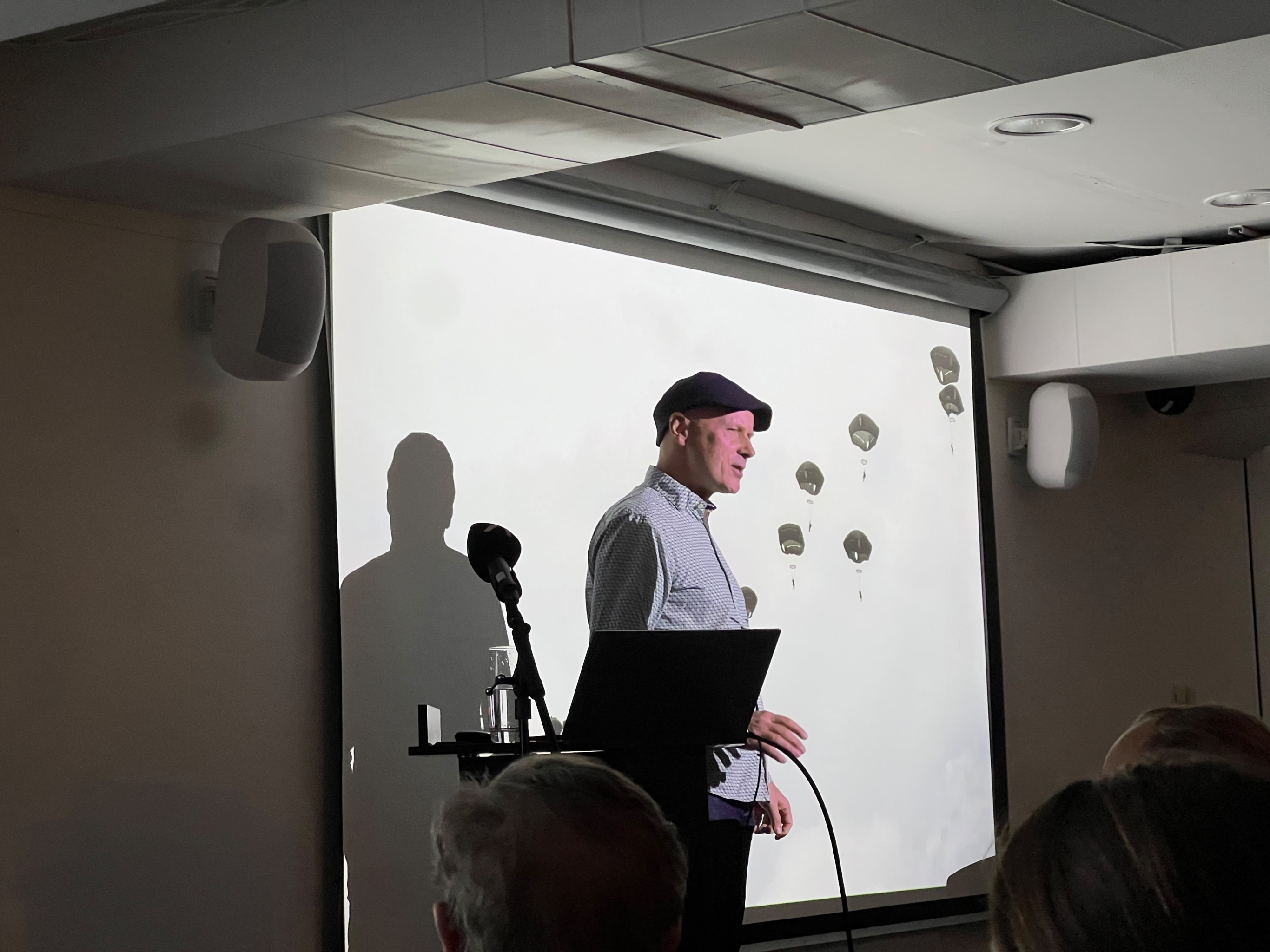
Pawlyn also touched upon what happens when we interfere with the complicated system that is the natural world, highlighting the WHO’s incredible 1960 ‘Operation cat drop’ in Borneo that saw cats parachuted in to help contain the rat population - which exploded after a series of knock-on events which occurred due to an earlier effort to control mosquitoes.
From ambition to action
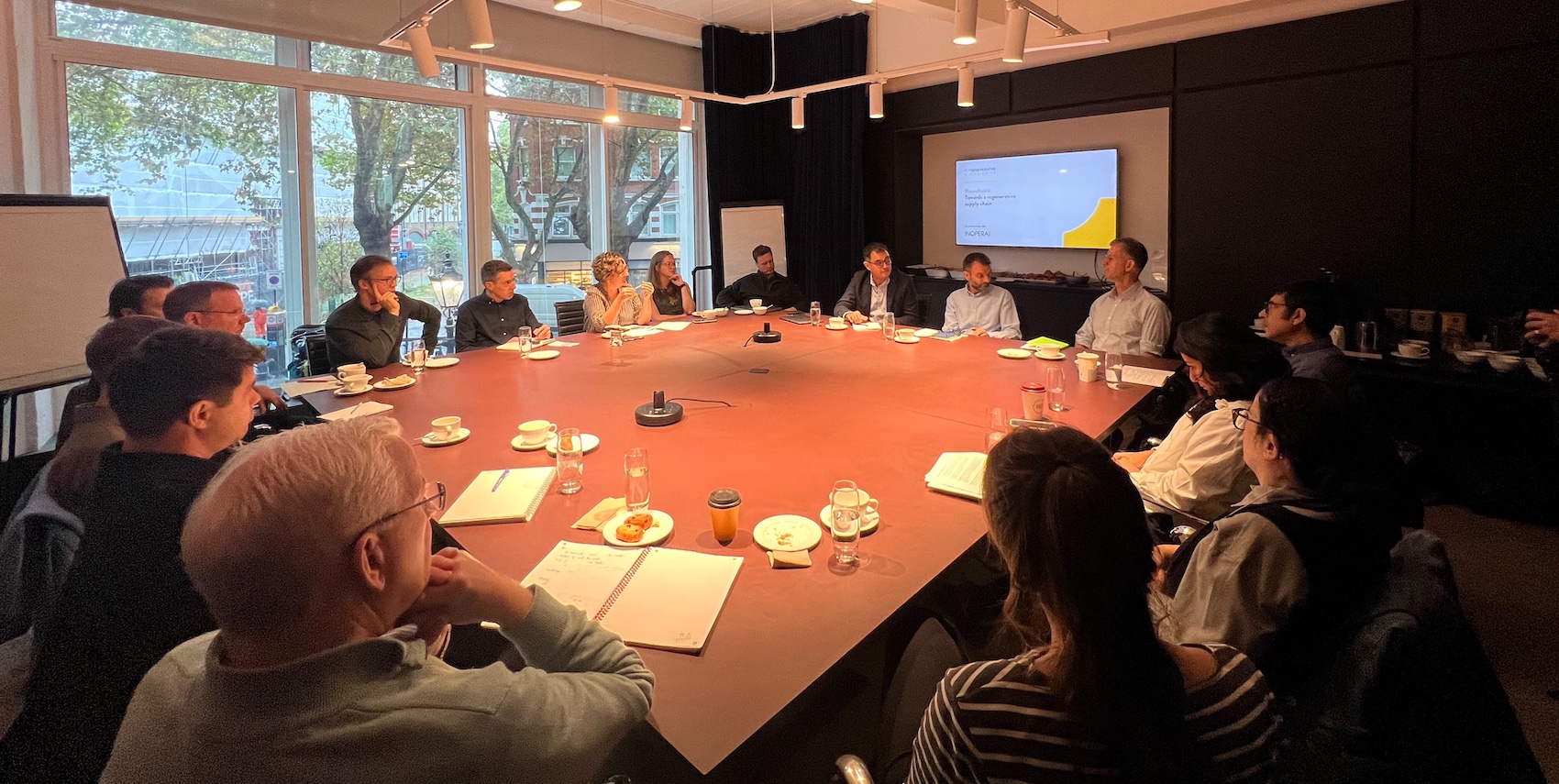
During the subsequent Q&A, chaired by Gordon, the discussion turned to how architects could implement regenerative principles within everyday project constraints.
"Sometimes the best that you can do is just choose one aspect of the project and try and push that as far as possible in a regenerative direction," Pawlyn advised. "Learn from that, share that knowledge, and move on."
He also emphasised that reusing existing buildings should be the default, with new construction undertaken only when necessary. Pawlyn invited the profession to imagine humans becoming a positive ecological force, comparable to keystone species that create conditions for other life to thrive.
"We could be the first generation to witness the great return," he concluded, envisioning the restoration of forests, rivers and wildlife through humanity's new role as "co-enablers of the flourishing of all life for all time."