Dave Johnstone, Technical Services Manager at Michelmersh, answers readers’ questions on brick bonds.
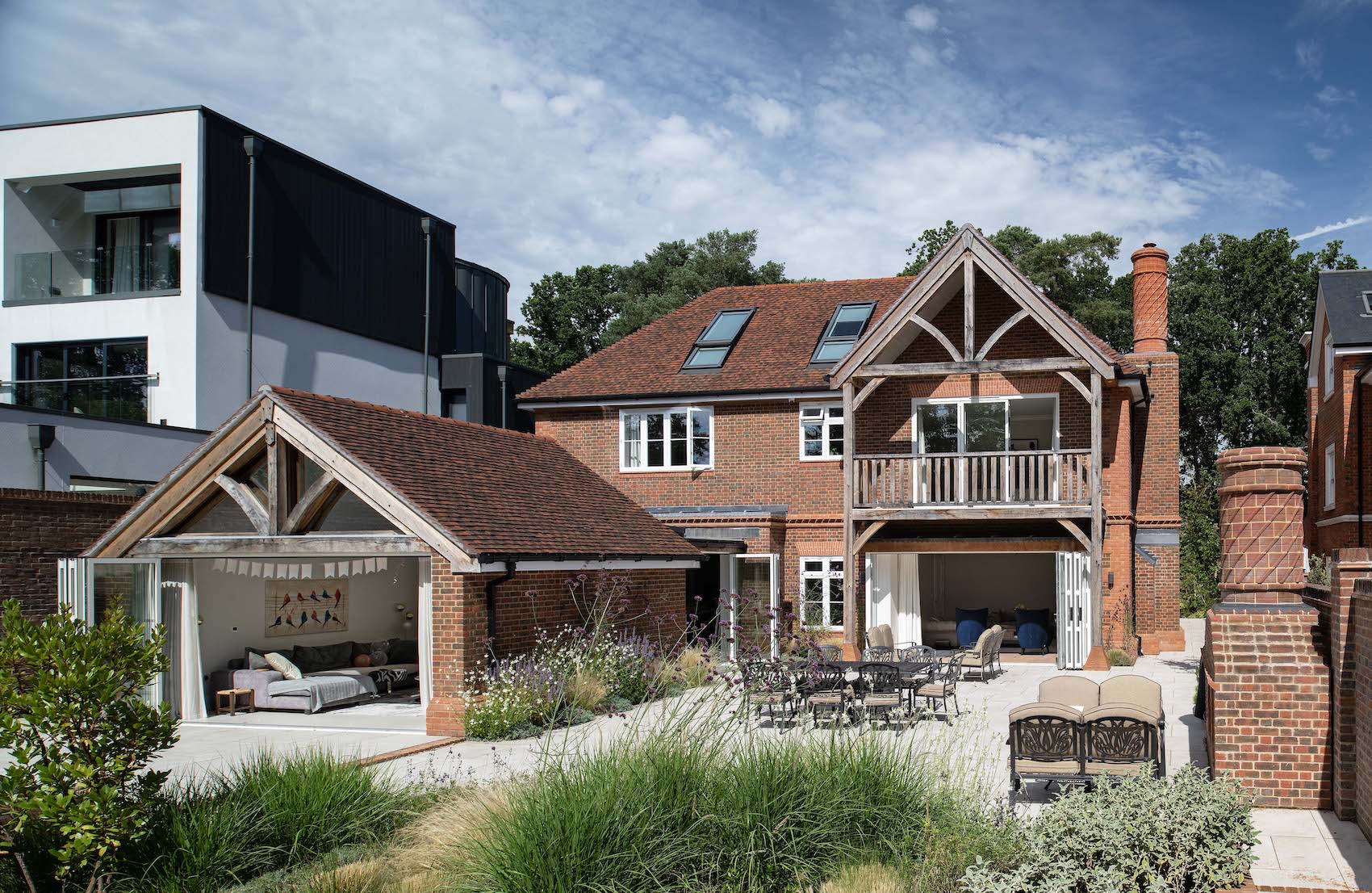
Marchwood House in Berkshire employs Flemish bond with stretcher bond on the chimneys (photo: Beccy Lane).
What are the most common brick bonds used in contemporary UK projects, and how are they evolving?
Stretcher bond is used overwhelmingly in the UK today. It requires minimal cutting and ensures maximum productivity. Flemish bond is often used in the domestic sector, when decorative walling is sought and commercial considerations allow. It is ideally suited to smaller panels of brickwork with its arrangement of alternating headers and stretchers in each course. A brick header will frequently have a different hue to that of a stretcher, and the use of a mixed header and stretcher bond immediately adds colour and texture to a wall.
The utilisation of more than one brick type or colour, in conjunction with a mixed bond, can be effectively used to create ‘diaper’ patterning. This typically involves the use of blue wood-fired headers and red bricks to create a variety of symmetrical – often diamond shaped – patterns. These motifs are often found on historic buildings, such as Hampton Court Palace and Sutton Place.
English and St Andrews cross bond and many others can also be used to good effect. Flemish and English Garden wall bonds tend to be better suited to larger expanses of walling but can still be employed in other applications with good results. Bed joint reinforcement and other structural considerations have enabled Stack bond – in various orientations – to produce strong visual statements. The bond can be used on localised panels to highlight specific features or across entire façades.
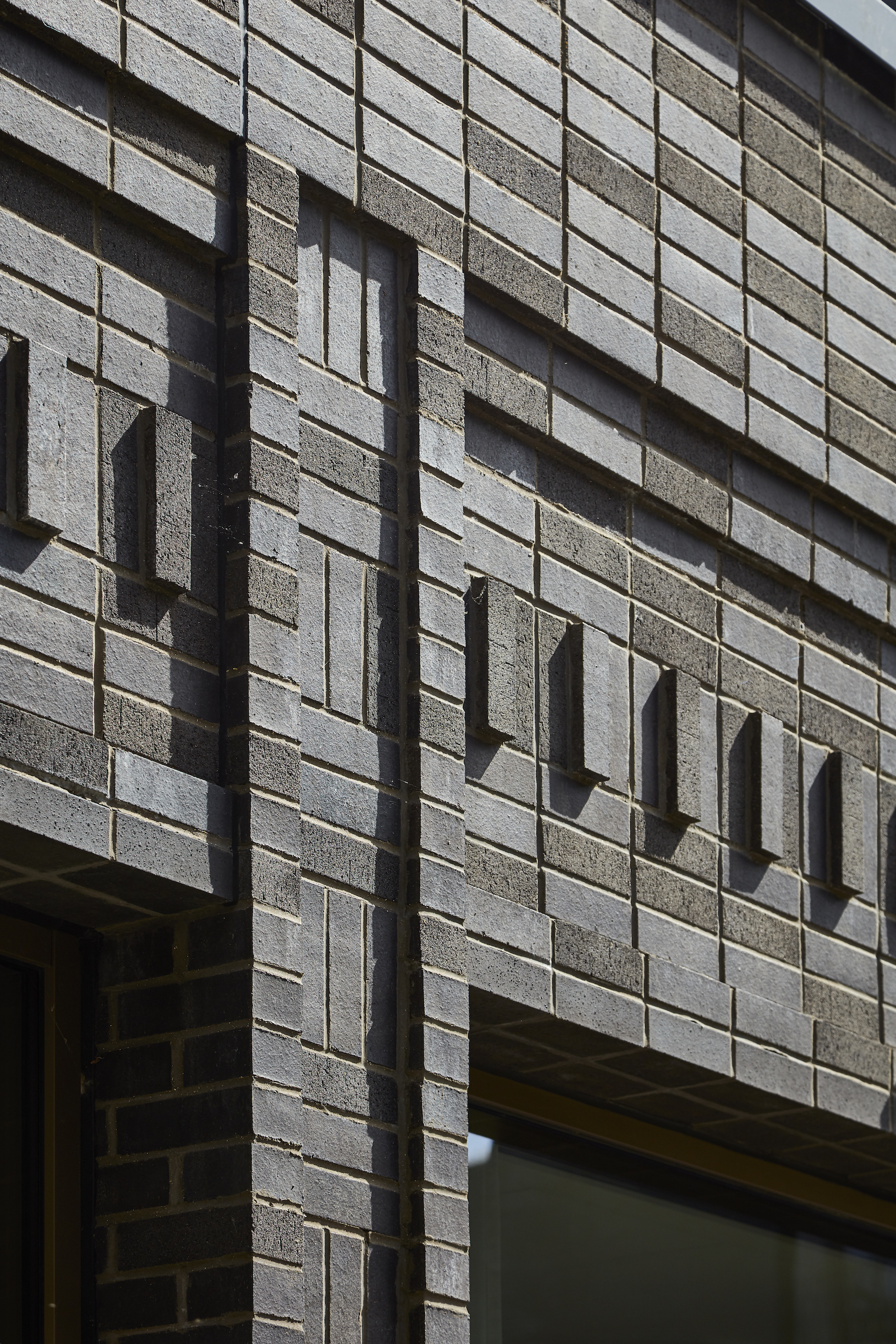
The Denton in Hertfordshire uses a range of bonds and projecting bricks (photo: Rob Parrish).
How can bond pattern be used to introduce texture, shadow and articulation into façades?
In the same way that mixed bonds can bring articulation to the façade with colours and hues, they also lend themselves perfectly to projecting or recessed bricks or courses, adding depth and shading to the elevation. Flemish bond is commonly adopted, however the breadth of innovation brought by many architects has seen a wide variety of alternatives adopted, creating some very exciting and inventive permutations.
Hit-and-miss detailing has also come to the fore in recent years, and its adoption, use and implications are becoming better understood. It has a variety of functions, including reducing visual mass, providing ventilation and privacy, and acting as a brise-soleil. Again, this is frequently associated with a Flemish type bond, but other arrangements can also be effective. Specifiers should always refer to the manufacturer when assessing the suitability of a specific brick for perforated and projecting masonry work.
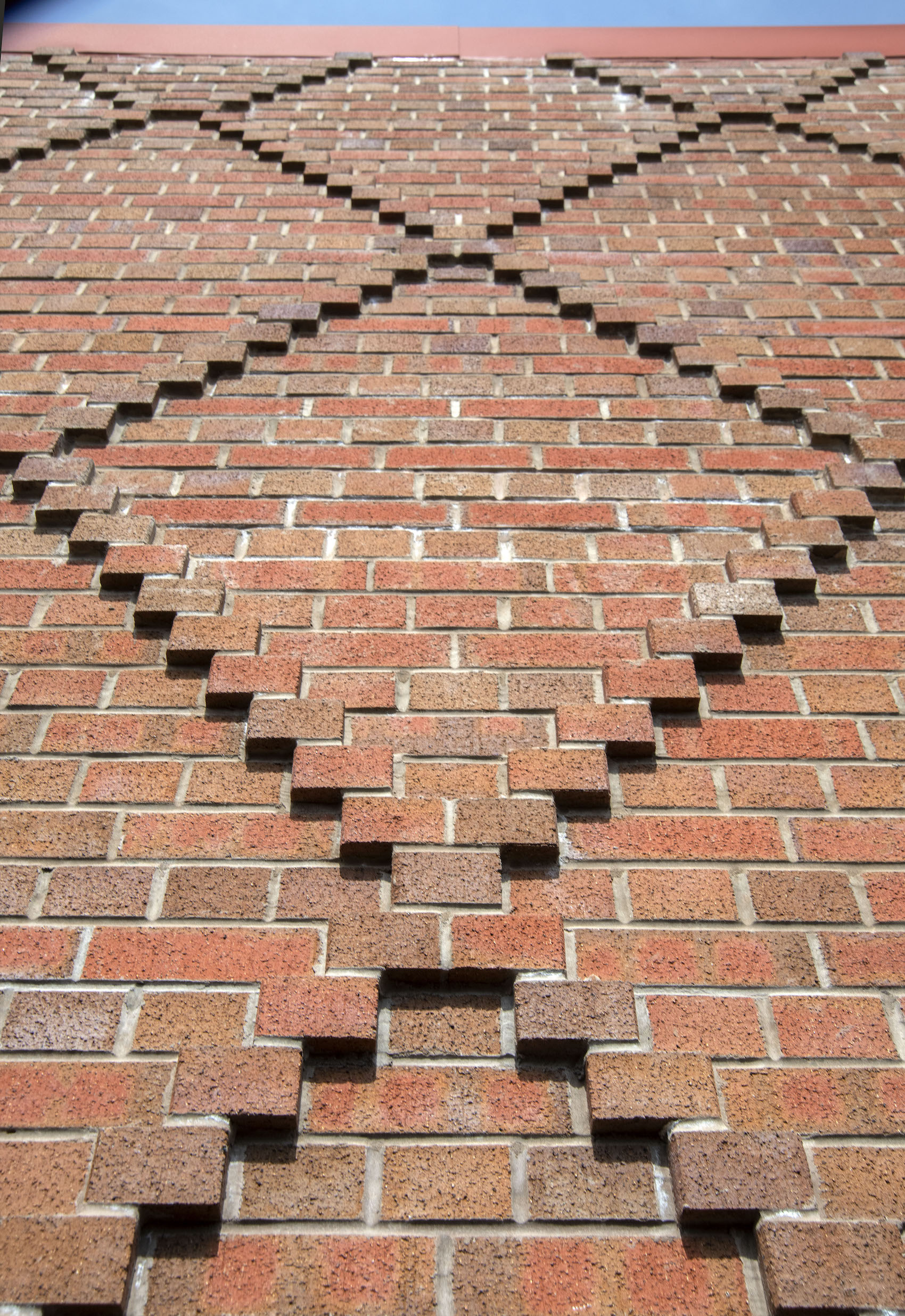
St Lukes Church in Blackburn showcases diaper projection and English bond (photo: Beccy Lane).
What technical considerations should architects keep in mind when specifying stack or non-traditional bonds?
Each application will have its own specific requirements in terms of maintaining structural integrity. However, it is generally accepted that if masonry units overlap by a nominal 25 per cent of the length of the unit, it is taken as a running bond. Less than a quarter lap is taken as a stack bond from
a structural perspective. In this case, bed joint reinforcement must be introduced and, depending on the individual circumstances, additional wall ties may be required. A stack-bonded panel can achieve stability equal to that of normal running bond construction with appropriate support and restraint.
What are the common detailing pitfalls associated with complex brick bonds?
Individual brick panels will ideally be symmetrical with the first brick at either end of a course being the same i.e. both headers or both stretchers. However this is not always possible, and the next best option is to reverse the bond. The designer should calculate and dictate the positioning of any cuts and closers to ensure that finished work achieves the desired aesthetic. This should be carried out with knowledge of the brick type and its dimensional range and tolerance, expressed as R1-R2 and T1-T2. Undertaking this work ahead of construction will help avoid the ad-hoc positioning of closers that sometimes occurs. Careful setting out of the first course is also important. Establishing the correct positioning of each brick in the course will assist in achieving quality work, as will the adoption of good workmanship practices, including checking the alignment of every third perpend joint with those below.
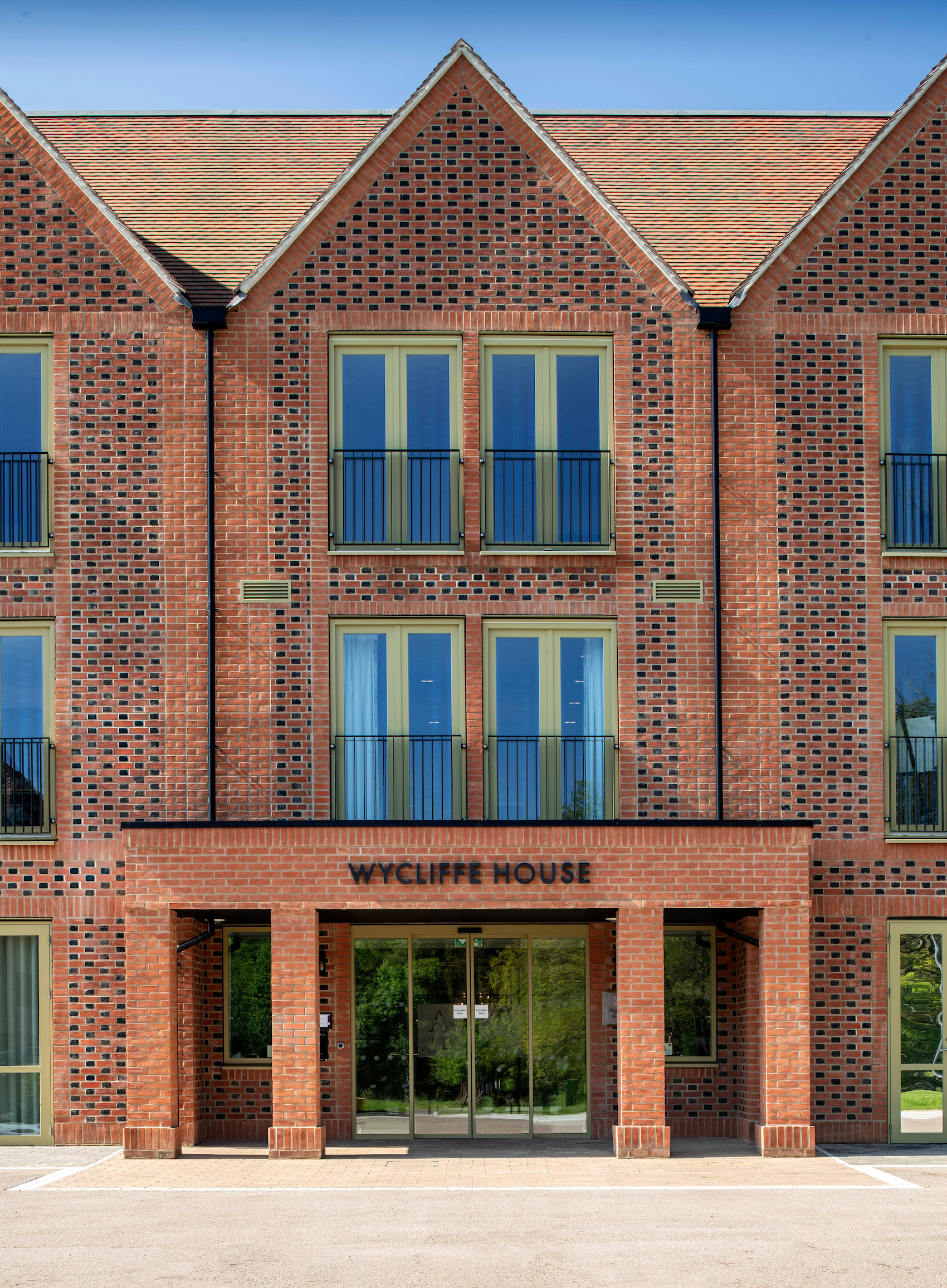
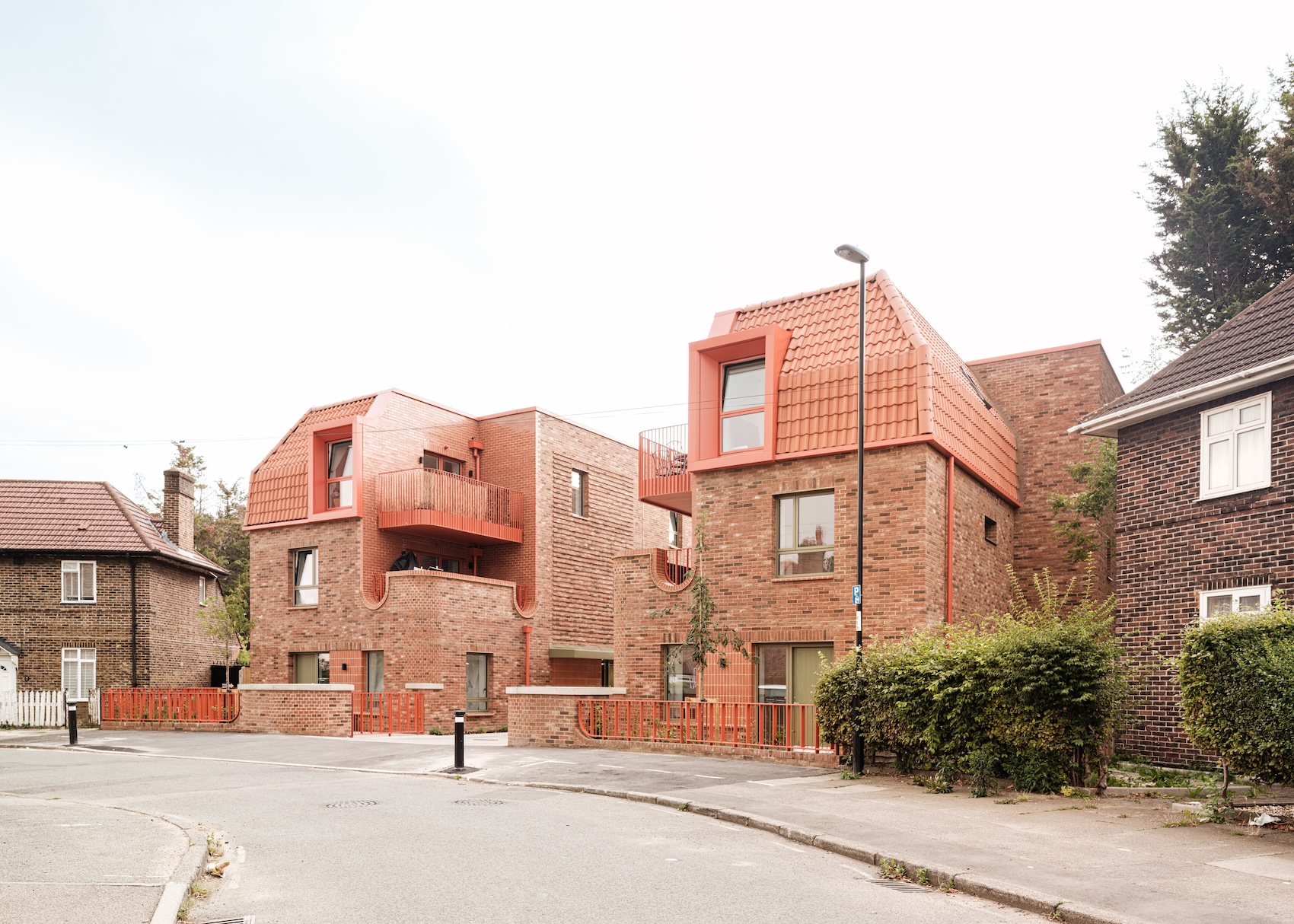
Wycliffe Village in Buckinghamshire uses a range of bonds with differing bricks (photo: Beccy Lane).
How does mortar choice and joint profiling affect the visual clarity of different bond patterns?
We have all seen brickwork where the mortar colour has changed at different lifts and where this is mistaken for a variation in brick colour. Up to 18 per cent of a brick wall made from standard UK bricks will be mortar, so choosing the right colour and profile is very important. A flush brushed joint will make the walling appear more homogenous, whereas a profiled joint that has a rebate, such as weatherstruck or birdsmouth, will accentuate the shape of the individual bricks. Even with the most basic of joint profile, the bucket handle, is affected by the continuity of the application. The stage in curing at which it is applied will affect the hue and sometimes the reflectivity of the finished mortar, potentially causing patchiness.
What advice would you give architects who want to push the creative potential of brick bond while maintaining buildability and compliance?
Bear in mind what has gone before, what has worked, and what has not. Consider using bricks of different sizes, such as long thin Roman style bricks, where the ratio of length to height and breadth are not the 1:3:2 of standard UK bricks, to facilitate new mixes and proportions of headers to stretchers.
For further information, please visit www.mbhplc.co.uk