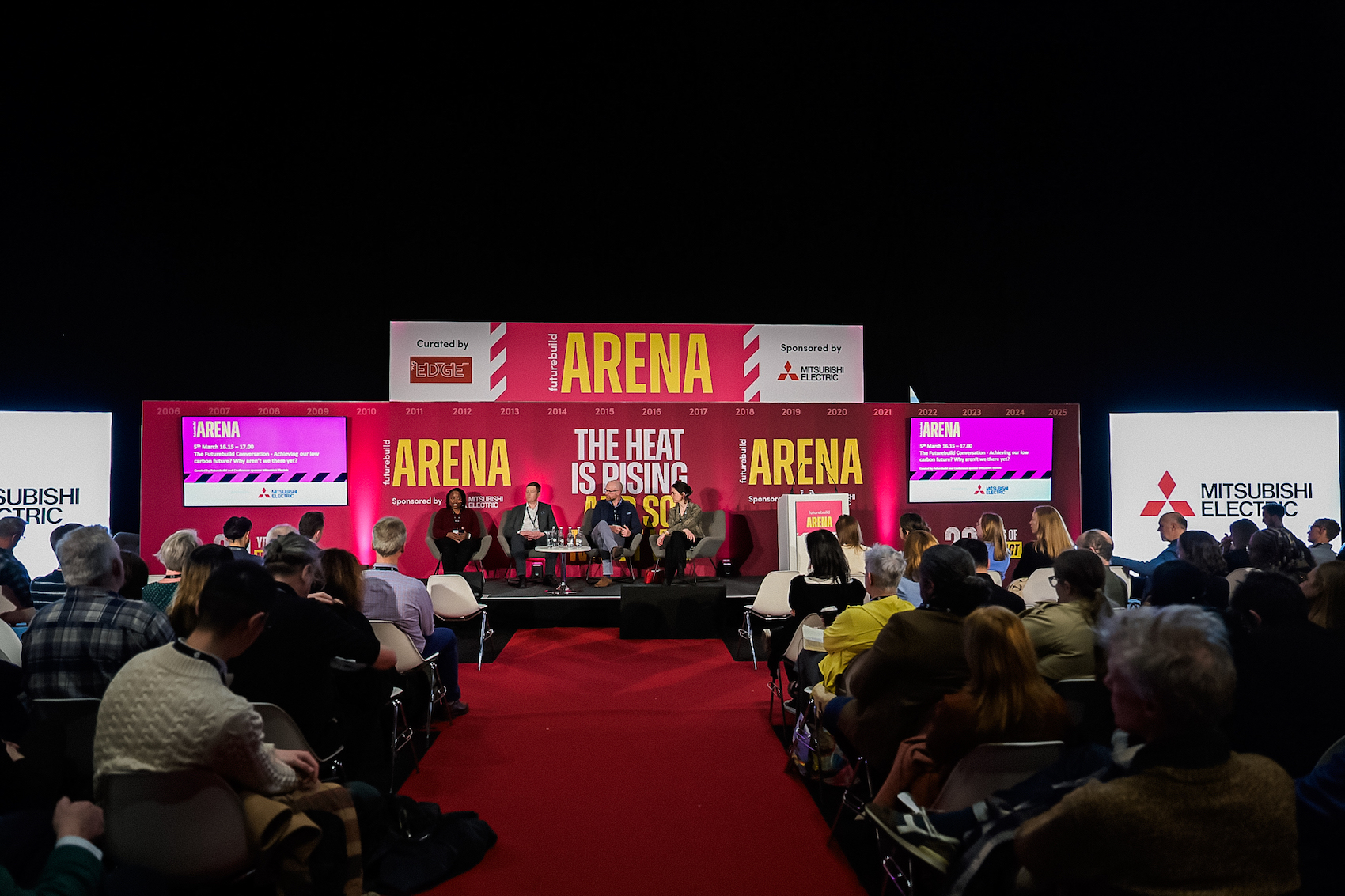
How can the construction industry accelerate the transition to net zero? And where do the main challenges and opportunities lie in relation to intelligent design and specification? These questions were addressed by a panel of experts at a round table discussion in London hosted by AT in partnership with IKO.
In association with

Round table participants
Louisa Bowles
Head of Sustainability, Hawkins\Brown
Clare Murray
Studio Director of Sustainability, Levitt Bernstein
Lizi Cushen
Associate Director, White Red
Simon Wyatt
Sustainability Partner, Cundall
Anna Woodeson
Sustainability Director, Buro Happold
Gerry O’Brien
Design Director and co-founder of Agentia Design Engineering
Dr Shamir Ghumra
Executive Director of Responsible Business, NHS Property Services
Ali Francis
Project Manager, Opera
David Thornley
Partner, Exigere
Jess Elliot
Head of Sustainable Design and Building Services Engineering, Multiplex
Marcus Lee
Sales Director, IKO
Louis Weir
Sustainability Manager, IKO
Isabel Allen
Editor, Architecture Today, and round table chair
Design and specification lie at the heart of the UK’s transition to net zero – influencing how buildings perform, age and deliver value over time. The products and systems chosen at design stage determine not only durability and whole-life carbon, but also user wellbeing and maintenance outcomes. So how can consultants, clients and manufacturers collaborate to make better, evidence-based decisions? What barriers remain to achieving meaningful carbon reduction across the supply chain? And how can intelligent specification deliver lasting social, environmental and economic value?
These questions and more were explored at a round table discussion hosted by Architecture Today in partnership with IKO at The Building Centre in London. Chosen for their diverse perspectives and experience, the round table participants comprised architects and engineers, as well as an estate manager, project manager, manufacturer, cost consultant and contractor.
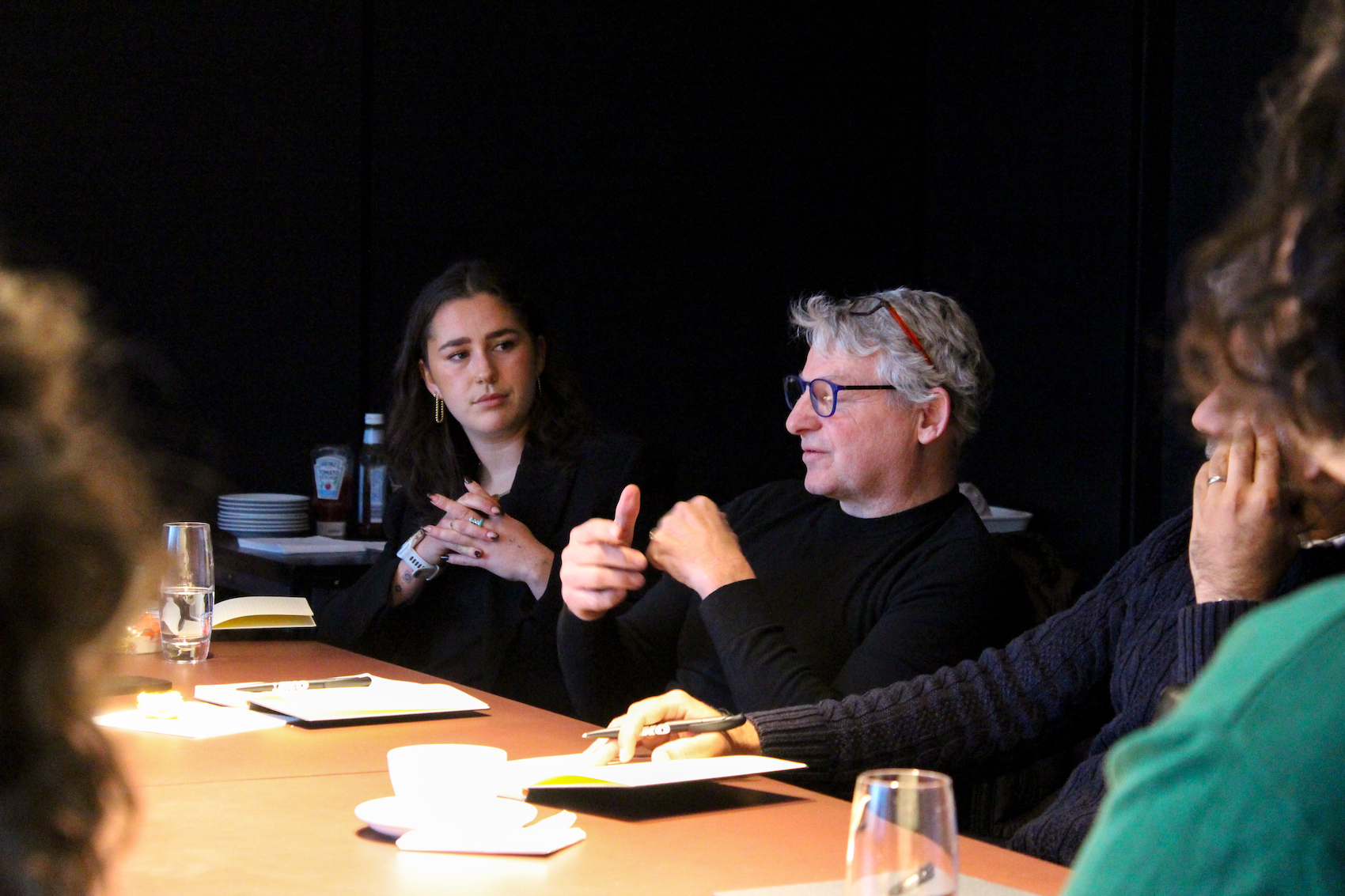
Ali Francis and Gerry O’Brien.
Skills, education, and the gap between design intent and delivery
Isabel Allen began by asking the panel if graduates arriving in practice were equipped to interrogate products, analyse performance and understand the links between specification, viability and carbon? Several panellists noted that many graduates now arrive in practice with a sharper understanding of embodied carbon than ever before, and are often familiar with lifecycle tools and basic carbon accounting. But this fluency rarely extends to specification. “There is an enthusiasm and awareness,” reflected Ali Francis, “but knowing the vocabulary of carbon isn’t the same as knowing how to apply it meaningfully once real-world constraints appear.”
For Lizi Cushen, the challenge is structural. Young architects, she argued, rarely leave education with an appreciation of how design, specification and viability intertact under real project constraints, or of the consequences of poor detailing or material selection. These lessons only emerge once they have encountered a live project, seen construction defects first-hand, and understood the relationship between durability, warranty, risk and long-term performance. “You can’t really teach resilience without exposure,” she suggested, “because until you’ve stripped back a failed detail on site, the consequences simply aren’t real.”
Others agreed that the greatest missed opportunity lies in the earliest design stages. Several speakers noted that many carbon decisions are effectively made before any product is specified: through form, massing, structural strategy and the presence or absence of basements. If these fundamentals are not addressed early on, the conversation about low-carbon materials becomes largely cosmetic. “If you start measuring carbon at stage two or three,” warned David Thornley, “you’ve already potentially lost the battle.”
A recurring sentiment was that students are beginning to grasp reuse instinctively; often proposing retrofit-led schemes long before professional teams consider them. But the educational system still lags behind when it comes to the realities of procurement, insurance and regulatory compliance. As Clare Murray noted, “Innovative materials are difficult to adopt in housing schemes, because fire regulations and certification narrow the palette so dramatically.” Enthusiasm therefore often collides with compliance; ambition with insurance; and ideals with viability.
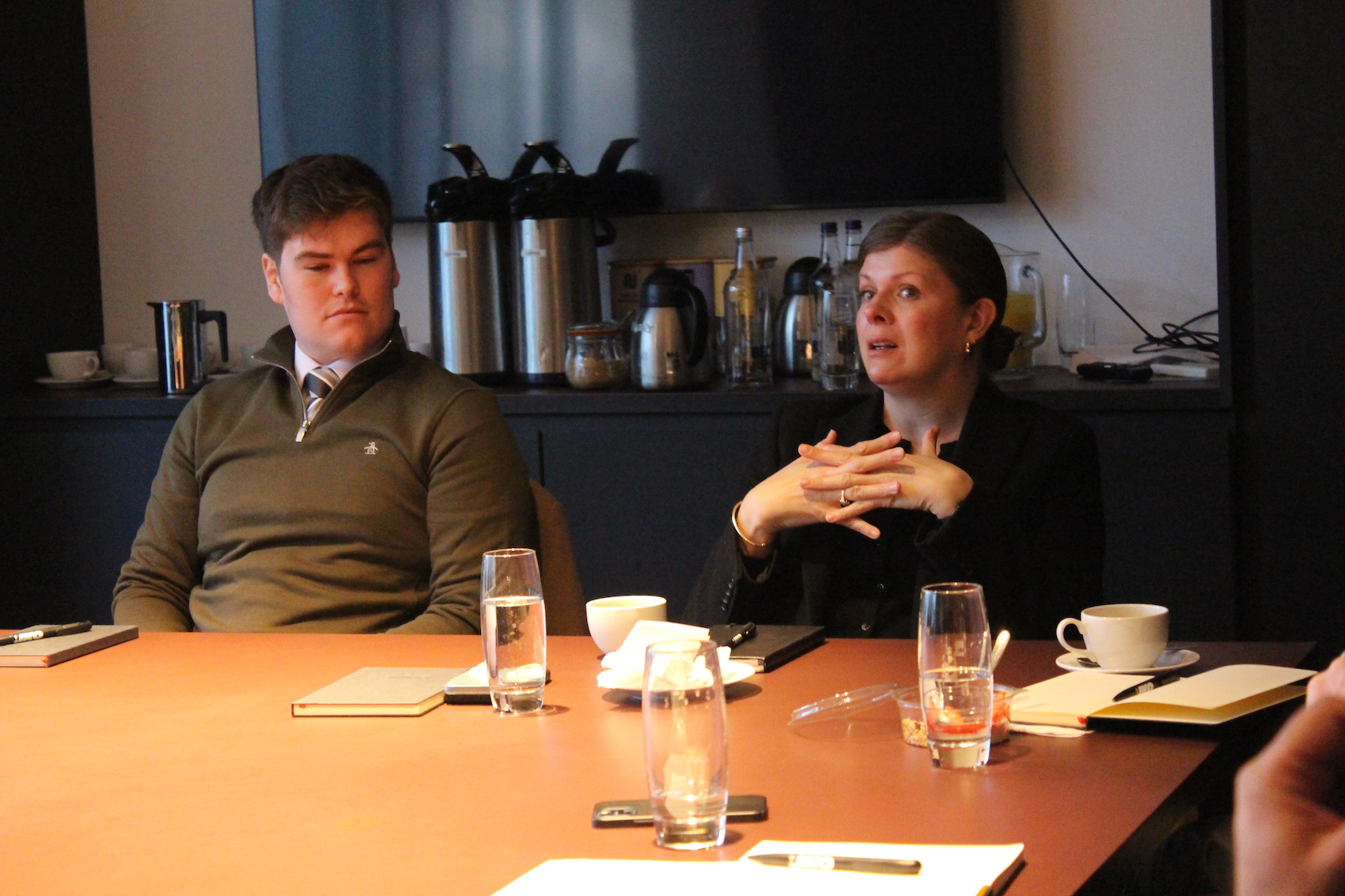
Louis Weir and Jess Elliot.
Retrofit, complexity and the limits of good intentions
From education, the panel moved onto the difficult topic of retrofit. Here too the consensus was clear: the industry is trying to unpick decades of overly complex construction. “We’ve reached a point where we’re retrofitting buildings that are barely 20-years old,” observed Anna Woodeson. She argued that many early-2000s facades had become so complicated – to satisfy a cocktail of energy, fire and acoustic requirements – that they are now almost impossible to adapt or reuse.
Several participants described an uncomfortable paradox: the most adaptable, lowest-carbon buildings are often those built 40, 60 or even 100 years ago, not the ones completed a decade ago. Victorian and Georgian structures, despite their poor acoustic performance by modern standards, are comparatively forgiving to refit. By contrast, tightly optimised post-2000s buildings often fail at the first hurdle: shallow floor-to-ceiling heights, labyrinthine MEP systems, and over-engineered facade build-ups.
The panel agreed that a new approach to reuse is emerging, which is driven as much by economics as sustainability. Rising materials inflation, the cost of waste disposal, and the pressure from funders to demonstrate climate resilience are collectively pushing retrofit into the mainstream. But the shift is uneven. Simon Wyatt recalled developers who, after purchasing relatively young office buildings at a premium, were shocked to discover that they required more invasive retrofit than older stock with simpler bones.
The discussion also highlighted the role of policy. Woodeson pointed to Westminster City Council’s reuse-led planning requirements, which have accelerated circular economy adoption on several recent projects. But others, including Gerry O’Brien, warned that rigid reuse targets risked constraining density in precisely the places where high-intensity development has the lowest transport emissions. “We must start with societal need,” he argued, “and only then determine what should be retained following a holistic assessment of how much carbon would go to atmosphere as a consequence of the buildings existence; this must include carbon released through transit in operation.”
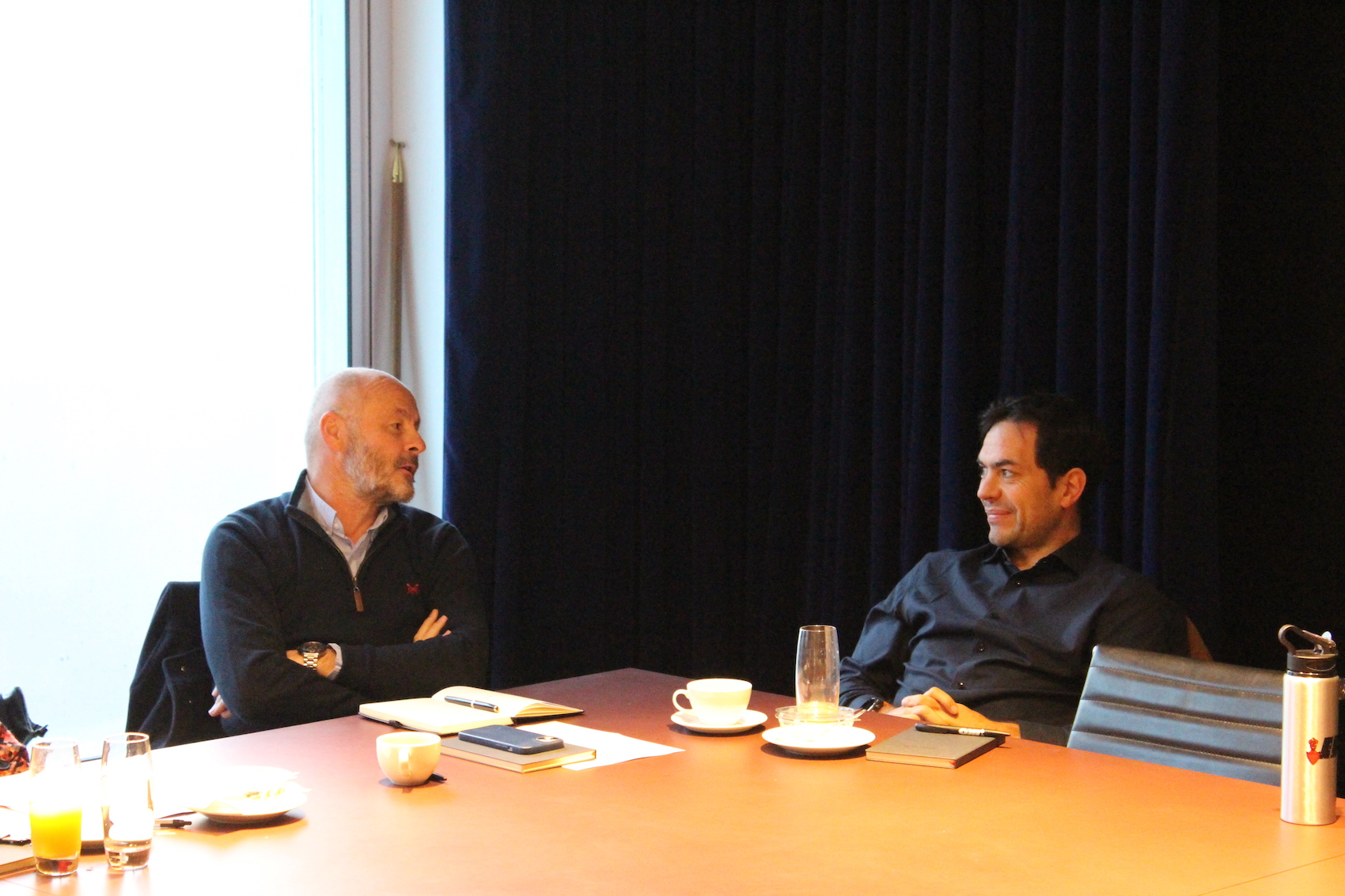
David Thornley and Simon Wyatt
Risk, warranties and the barriers to intelligent substitution
Few topics generated as much interest as the question of shared risk. Across the table, panellists described situations where sustainable substitutions were technically possible, materially beneficial and often cost-neutral, yet still rejected due to insurance constraints or unclear responsibility. Contractors in particular felt the strain, with Jess Elliot describing an attempt on a project to switch from copper to advanced composite pipework – to mitigate market volatility – only to be told by the design team that the change could only be accepted as a contractor’s proposal. “That transfers all the risk to us,” she argued, “even when everyone agrees the substitution makes sense.”
The same pattern emerged in retrofit. While some contractors, like Elliott, were willing to certify the retained performance of existing structural and fire-resisting elements, most avoided the liability. Without that confidence, teams routinely over-engineer replacement solutions, adding cost, carbon and complexity. As Francis noted, “We all intuitively know a solid brick wall meets the fire requirement. But no one wants to sign for it when the building is 80-years old.”
This led naturally to frustration about the lack of industry-wide consistency. Insurers, procurement specialists, building control, designers, contractors and clients all operate within their own risk frameworks, which means they are rarely aligned and often mutually contradictory. Without shared models of risk acceptance, innovations are smothered by caution.
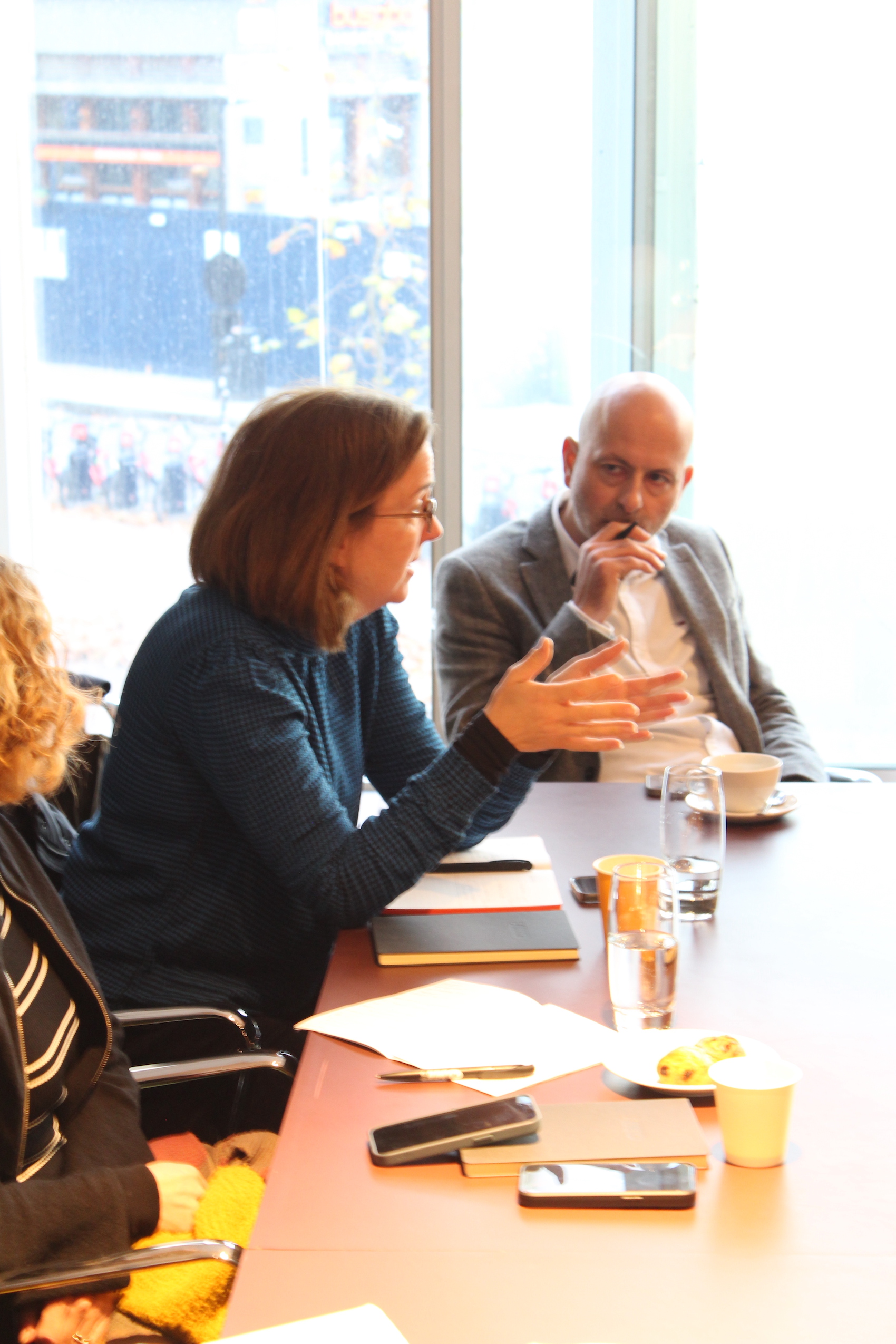
Anna Woodeson and Marcus Lee.
Circularity, deconstruction and the new logic of programme
The conversation then turned to circular economy principles. Several panellists shared examples of deep surveys, forensic auditing, and on-site material recovery that had delivered significant financial and carbon savings. Woodeson recounted how one developer saved around £18m through an exhaustive ductwork and plant audit, but only after spending £1.5m on surveys. This reflects a profound shift in how the industry should approach programme, she said. Rather than racing ahead with design before understanding what can be reused, teams will need to embed lengthy discovery periods early on. This may upend the traditional RIBA plan of work, but it is a necessary evolution. Early-stage surveys, deconstruction-led scheduling, and material exchange platforms are beginning to reshape feasible workflows.
Others noted that developers are increasingly alive to the economic logic of circularity. Housebuilders, for example, are exploring shorter supply chains, bio-based materials and standardised components. This is not simply for reasons of sustainability, but because material inflation and waste costs have become existential pressures. As O’Brien put it, “the drivers are aligning for the first time.”
The panel acknowledged that reuse often requires longer demolition programmes and greater upfront investment. Elliot described how demolition subcontractors historically relied on revenue from scrap metal, and that circularity removes that income stream. “We’re now saying the materials belong to the client,” she explained. “That pushes demolition costs up. It’s a structural change.”
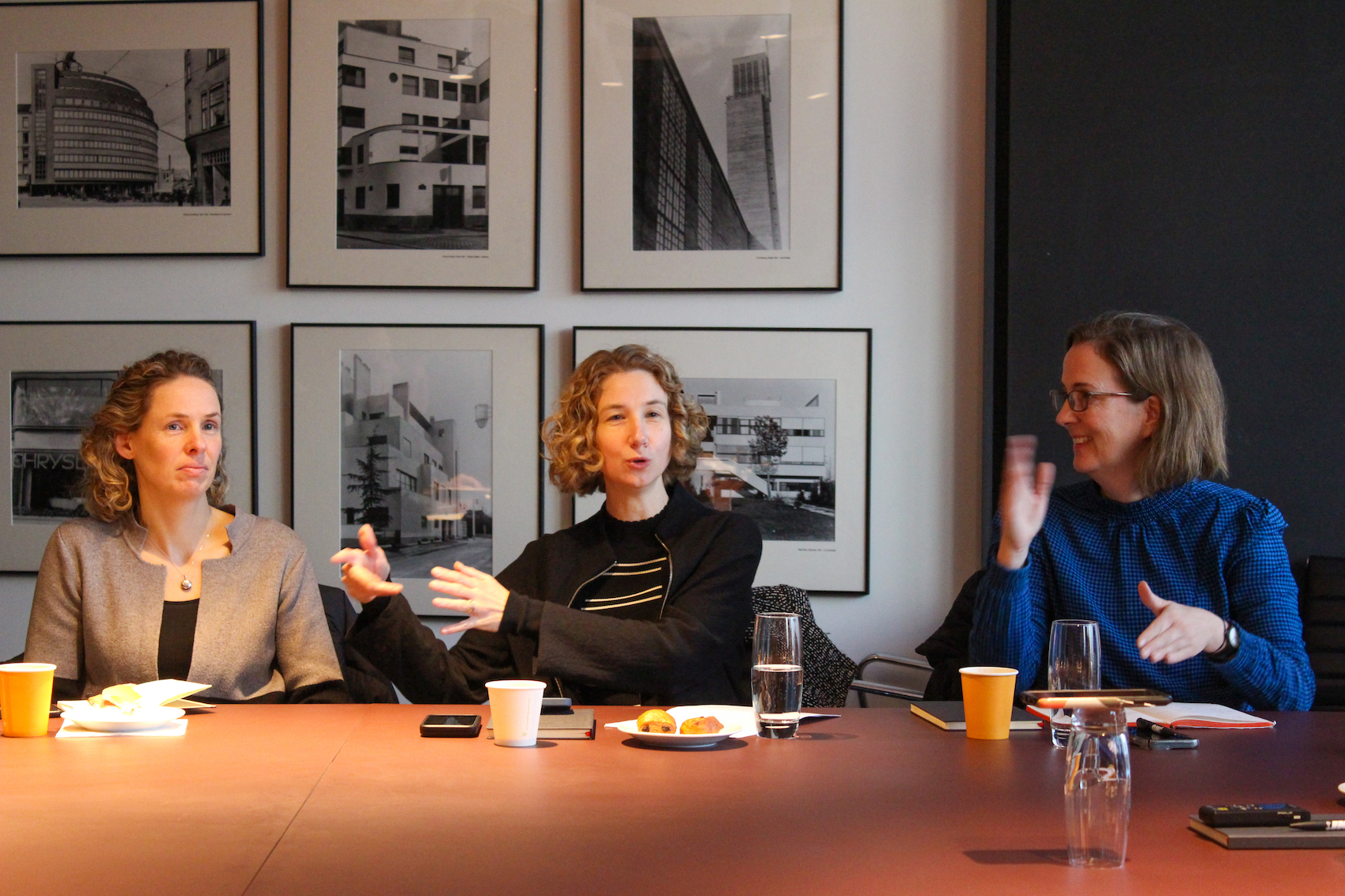
Clare Murray, Louisa Bowles, and Anna Woodeson.
Manufacturers, data and the limits of EPDs
Louis Weir and Marcus Lee offered candid reflections on the pressures facing product manufacturers. They argued that many manufacturers are ready to support circularity and transparency – citing IKO’s ability to recycle single-ply membranes into new damp-proof courses – but struggle to find clients and contractors willing to accommodate slower programmes, alternative installation methods, or end-of-life take-back schemes. “We can recycle,” said Weir, “but only if the membrane was installed in a way that facilitates removal, and only if the project team actually returns it to us.”
There was widespread agreement that Environmental Product Declarations (EPDs) have become baseline expectations, yet still suffer from wild inconsistencies. Several contributors noted that EPDs can present misleading results when manufacturers choose unrealistic end-of-life scenarios, or when data quality varies substantially between suppliers. “An EPD means verified data, not necessarily good data,” commented Wyatt.
The group also stressed the importance of looking beyond carbon. Ethical supply chains, water consumption, toxicity, geopolitical risk and local environmental impact were all cited as equally important – yet vastly harder to measure. As Louisa Bowles noted, “A material can look excellent on carbon but disastrous on everything else.” Until methodologies improve, she suggested, the safest rule of thumb remains: use less, reuse more, and source locally where possible.

Lizi Cushen and Clare Murray.
Digital information, material passports and the operational gap
Next, the panel explored digital integration, an area where ambition often outstrips deliverability. Material passports, despite their appeal, were widely described as underutilised, misunderstood or simply orphaned within projects. Without a clear end user, they risk becoming expensive, data-heavy artefacts with no operational purpose.
Several participants highlighted the parallel problem in digital O&M information. Despite the growth of digital twins and AI-enabled compliance checking, most facilities managers remain unsupported, under-resourced and peripheral to project decision making.
Shamir Ghumra, drawing on his experience across manufacturing, BREEAM and the property sector, described how poor data quality and fragmented processes can make facilities management more difficult than it needs to be. The NHS, he explained, is experimenting with AI agents to sift compliance requirements – a step forward, and is also rolling out utilisation sensors to counter years of legacy information and inconsistent approaches.
The panel agreed that the industry systematically underinvests in operations. Even when design and construction teams hand over detailed information, FM teams frequently change within months, erasing continuity. As Wyatt observed, “We set performance targets, but then place no investment into the people responsible for achieving them.”
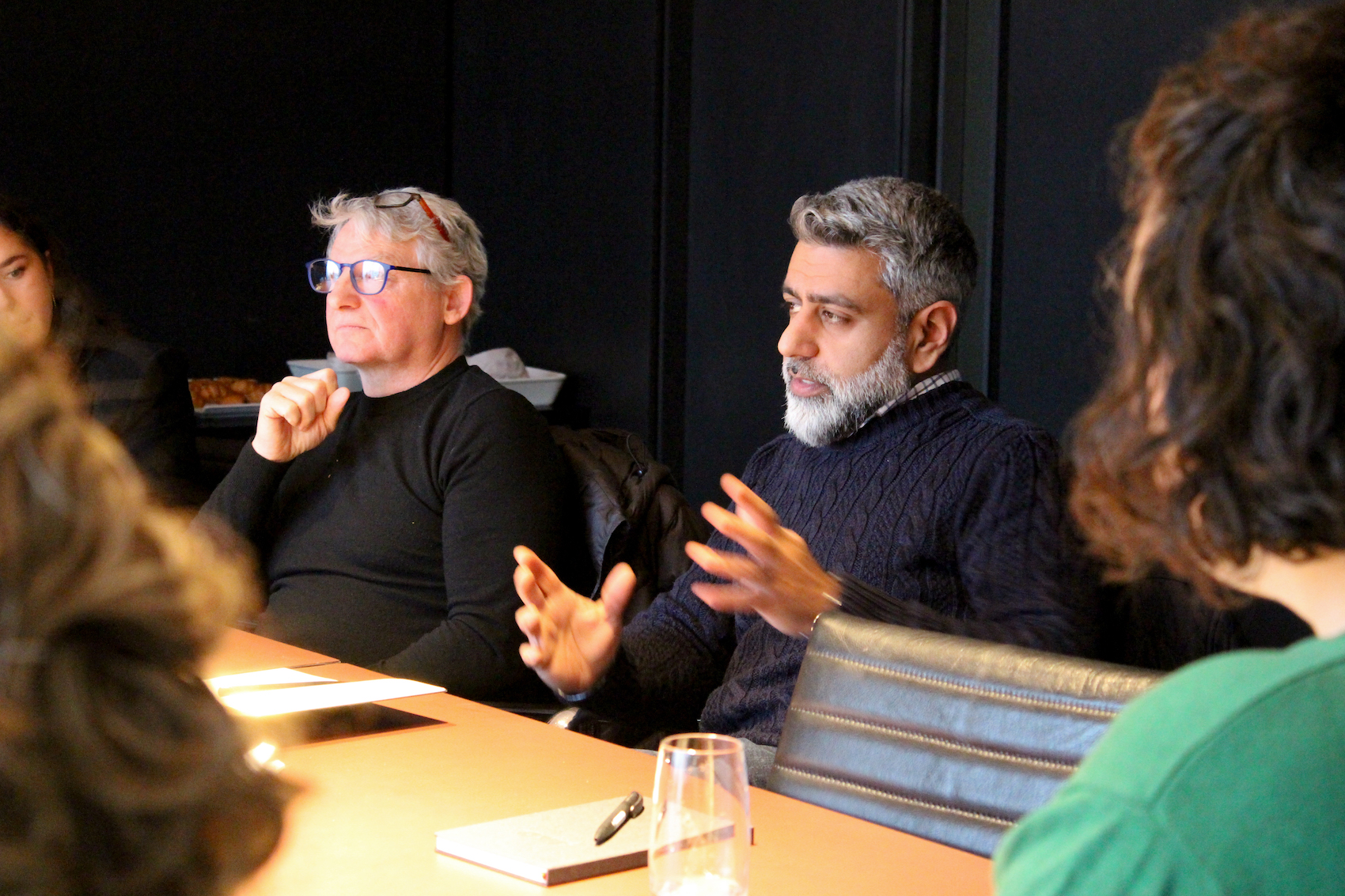
Gerry O’Brien and Dr Shamir Ghumra.
Procurement pressures and the erosion of good specification
Procurement emerged as a critical fault line. Many panellists described a persistent mismatch between the quality of early design aspirations and the reality of late-stage value engineering. Murray lamented that positive design decisions, such as lean structures, efficient form factors, simplified facades, are rarely costed as savings in the baseline. Instead, sustainability measures appear only as uplifts. “So when the budget tightens,” she argued, “the first thing cut is sustainability, even if the project was already benefitting from earlier carbon reductions elsewhere.”
Elliot echoed this frustration. “Without contractual carbon targets, product substitutions are judged solely on cost. If the specification doesn’t mention carbon, my package manager will choose the cheapest compliant product. That’s the incentive structure.” Others described emerging positive shifts. Lighting manufacturers, for instance, are beginning to withdraw high-carbon products that specifiers consistently reject. But progress remains patchy, especially with smaller components or complex composite systems where carbon data is fragmented or hard to compare.
Collaboration, early engagement and the role of manufacturers
Throughout the discussion, manufacturers were repeatedly described as an “untapped resource”. Lee noted that earlier engagement could prevent mis-specification, reduce whole-life carbon and avoid costly mid-project redesigns. Several architects agreed, adding that they often receive specifications that are simply not suited to the project type – a mismatch that manufacturers could resolve quickly if brought in earlier. The challenge, however, lies in managing influence. As one participant put it, “you don’t want to commit too early to one system or supplier, but you do want their guidance.” The group agreed that performance specifications, rather than product specifications, provide the fairest balance: setting outcomes while allowing teams to explore multiple compliant solutions.
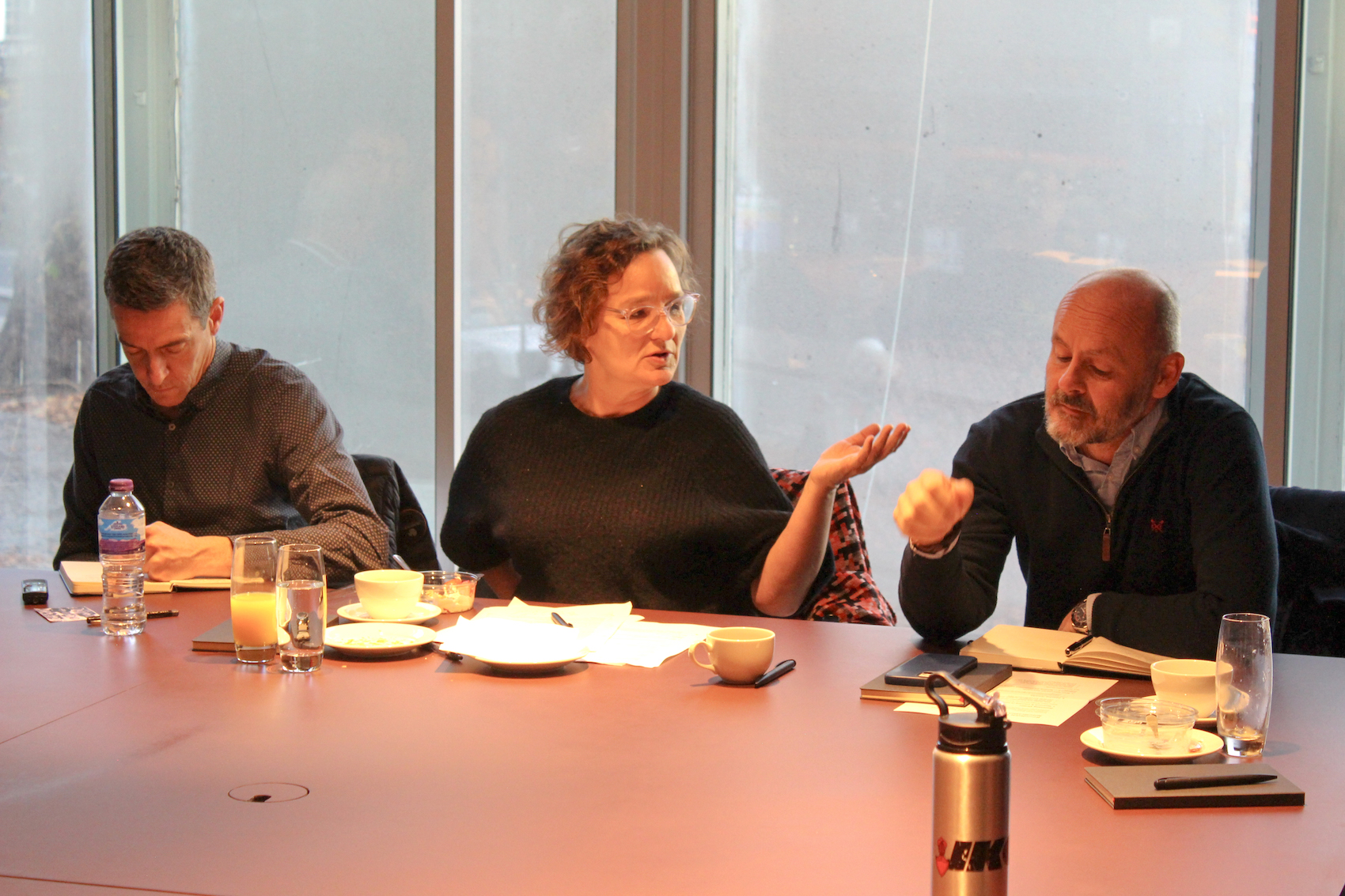
John Ramshaw (AT Technical Editor reporting), Isabel Allen, and David Thornley
Towards clearer roles, shared risk and simpler buildings
The discussion closed with a shared recognition that intelligent specification is inseparable from culture, risk, procurement, education and operational reality. The tools exist – EPDs, material passports, digital models, carbon modelling – but often lack the consistency, incentives or governance to deliver meaningful change.
The panel agreed that what the industry needs is not additional layers of complexity but far greater clarity. This means clearer early-stage carbon targets, transparent ownership of risk, and more intelligible information flows from manufacturer to installer to facilities manager. It also requires clearer time allocations for surveys and reuse, lucid performance-led specifications, and improved education around the practical realities of construction. Above all, the discussion emphasised the value of simplicity. Whether through stripped-back façades, shorter supply chains, reusable systems or standardised assemblies, the route to lower carbon is also the route to lower risk, lower cost and longer-lasting buildings.