Architects Declare’s Next Gen Ambassadors take over The Building Centre for the last event of Regenerative Design 2026, bringing together emerging architects, designers and researchers to explore alternative approaches to practice, material reuse, architectural education and collective action.
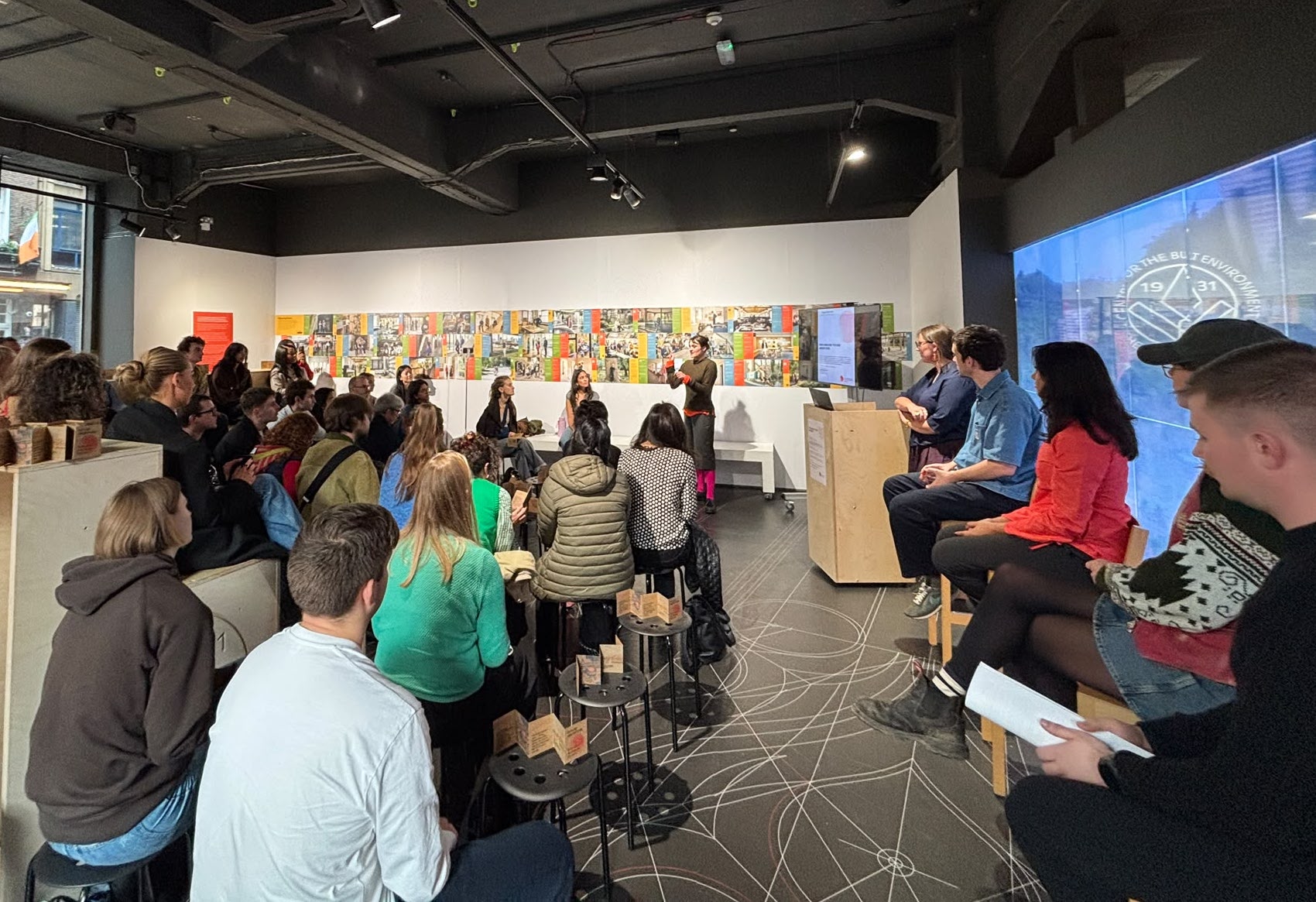
The closing event of Regenerative Design 2026 gave a platform to early-career practitioners challenging conventional approaches to architecture. Chaired by Architecture Today’s Nelly Greig and Next Gen Ambassador Eimear Kernan, New Grounds / Future Ancestors explored how a new generation is putting regenerative principles into practice, from rethinking architectural language to establishing circular material networks and creating alternative models of education.
Rory Thomas, Umarell
Rory, co-founder of architectural publication and collective Umarell, explored how language shapes our understanding of sustainability. Presenting research undertaken for Scotland’s Architecture Fringe Festival, he demonstrated how architectural terminology can obscure rather than communicate important ideas. Thomas presented the three types of language used in architecture: public, theoretical and practice, pointing out that the word ‘sustainability’ does not care for any of these categories, brazenly thrown around in discourse, lacking any specificity or context. He argued that sustainability is too often discussed through scientific jargon, making it difficult for the wider public to engage with regenerative principles. Thomas called for clearer, more accessible language that reflects the cultural, political and economic dimensions of environmental responsibility.
Yukta Chegu, Rubble Futures
Presenting Rubble Futures, a research project supported by the Norman Foster Travelling Scholarship, Yukta Chegu explored informal material salvage economies in India and their potential lessons for circular construction. Examining practices ranging from community-led waste collection to the reuse of demolition materials in new buildings, Chegu questioned why so much construction waste remains undervalued. She highlighted the importance of awareness, accountability and supportive policy, but cautioned against romanticising informal economies, which can involve poor pay and unsafe working conditions. Chegu’s research seeks to identify transferable lessons without overlooking these social challenges.
Freya Bruce, YesMake
Freya discussed the work of YesMake, a design and build organisation working with reclaimed materials at Tipping Point East in London. Sharing space with Material Cultures and Resolve Collective, YesMake is developing practical infrastructure for circular construction, diverting more than 350 tonnes of materials since opening its yard in February. Projects range from small community structures to the recovery and reuse of construction materials at scale. “Beyond words, by doing, we highlight exactly the nuances that need to be unpicked in order to make reclaimed materials viable at scale,” she explained, emphasising the importance of experimentation and collaboration.
Adam O’Neill, EASA Seanchaí
Adam O’Neill reflected on this year’s European Architecture Students Assembly (EASA), a student organised network that gather together once a year to take part in a four week symposium of alternative architectural education. Drawing on the 2026 gathering in Waterford, Ireland, which brought together around 600 participants for workshops and communal living, O’Neill explored how non-hierarchical collaboration can reshape learning and practice. Rather than focusing exclusively on buildings, O’Neill argued that regenerative design must also consider how knowledge, responsibility and decision-making are shared. “The process matters: how knowledge is shared, how people work together through problems, and how different skills and perspectives shape the outcome.”
Riya Shah, Next Gen Ambassador
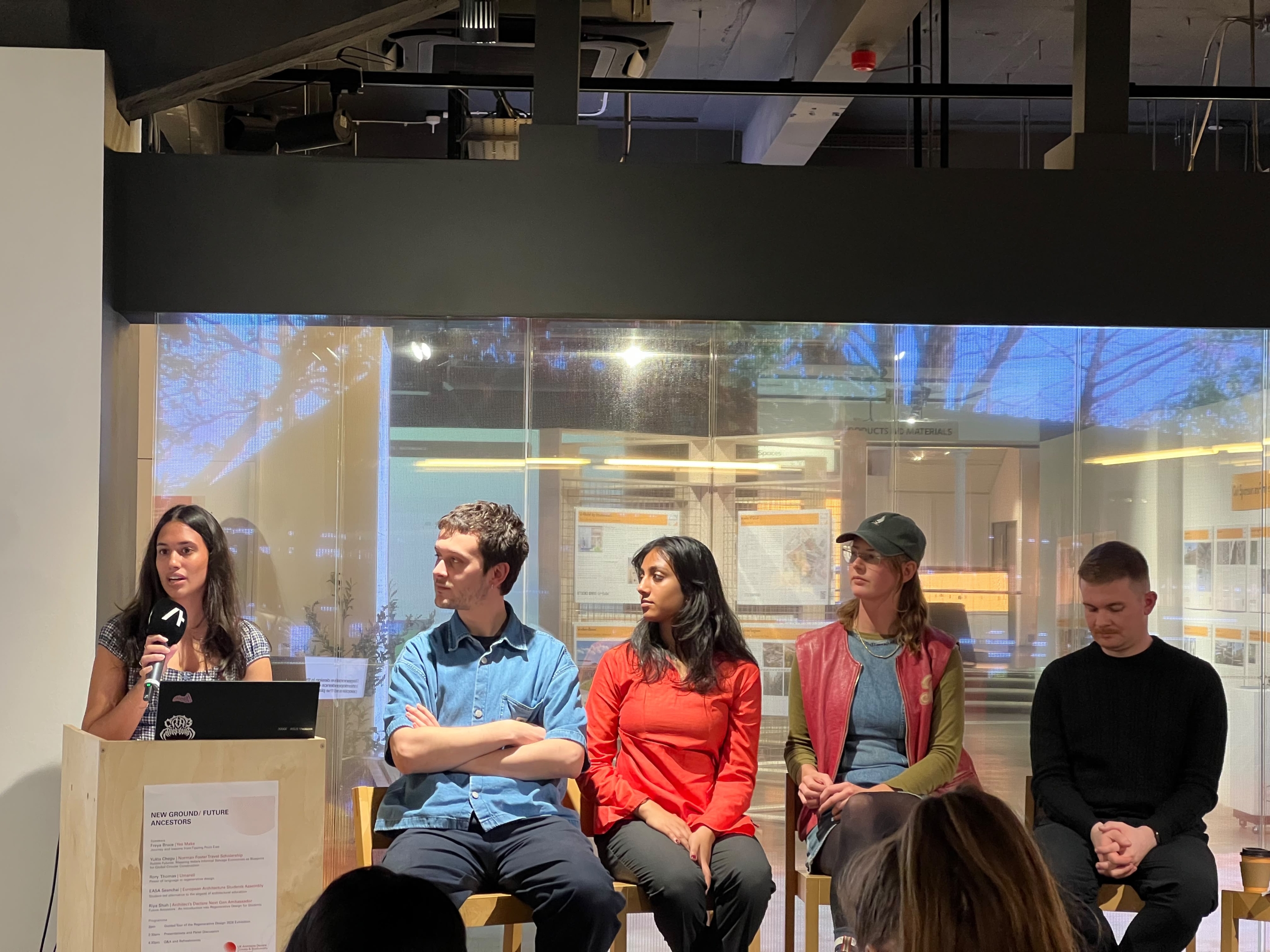
The final speaker of the day was Riya Shah, a Next Gen Ambassador who took to the mic to introduce Future Ancestors, a student-led effort to put regenerative design at the heart of architectural education. The group decided to write a grassroots introduction to regenerative design, referencing work exclusively by students, for students. The approach goes beyond doing less harm; it aims to create just spaces and asks whose voices shape these spaces, and whom they serve.
The publication opens with a manifesto, introducing the central section ‘From the Studio’, which presents student work which touches on the three themes of the Regenerative Architecture Index: co-evolving with nature, creating a just space for people, and being a good ancestor. Shah points out that arguments that students’ work is premature are easy to dismiss, stating that student projects can not only give their peers an encouraging starting point, but can also show educators what is possible when regenerative design is taught beyond one guest lecture.
Shah and the Next Gen Ambassadors then opened the call for work, welcoming projects, research, conversations and insights that advance regenerative design in radical, creative and inquisitive ways. Work can include a building design proposal, retrofit, landscape or research project. Submissions will be considered for print in the first edition of Future Ancestors. Work can be submited via the link here.

Launched by Architecture Today, Regenerative Design 2026 is a month-long programme of exhibitions and events that takes place at the Building Centre throughout October 2026.