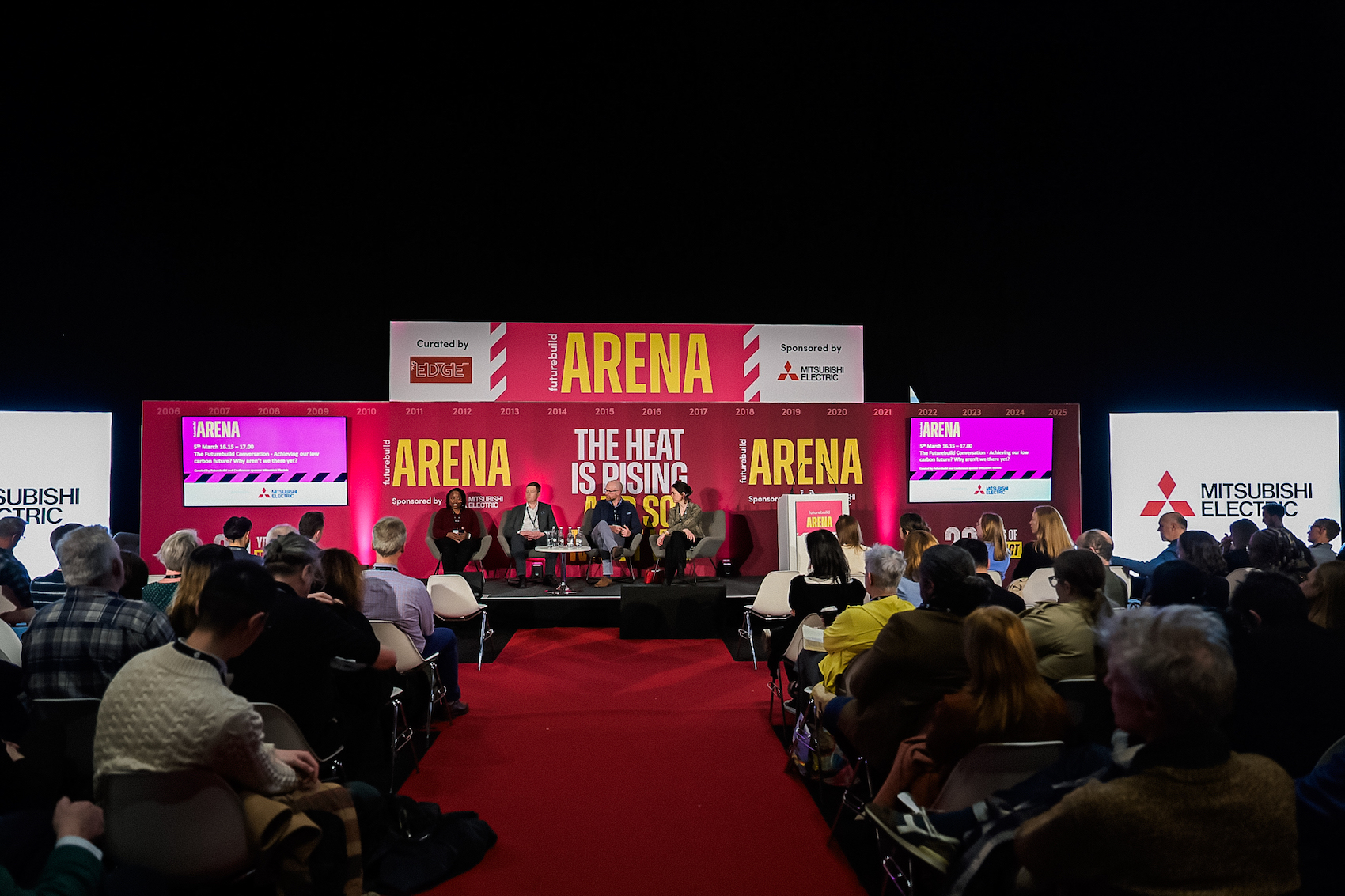
Watch the AT webinar, in partnership with Oscar Acoustics and The Rooflight Co, exploring how architects and construction specialists are balancing environmental comfort with performance and inclusivity.
In an era defined by climate urgency, urban density and rising expectations around wellbeing, how can architects design buildings that are healthier and more comfortable without compromising energy and carbon targets? And how can sound, light and air be treated not as competing technical demands, but as interconnected drivers of environmental quality? These questions and more were explored in this AT webinar, supported by Oscar Acoustics and The Rooflight Co.
Chaired by Architecture Today’s Jason Sayer, the event included presentations by Hawkins/Brown’s Oliver Milton (Managing Partner) and Louisa Bowles (Partner); Ben Hancock, Managing Director of Oscar Acoustics; Jerome Wren, Senior Architect at Carmody Groarke; Harry Montresor of the Montresor Partnership; Peter Daniel, Innovation Director at The Rooflight Co; and BDP’s Dominic Hook (Architect Director) and Peter Ruffell, (Associate).
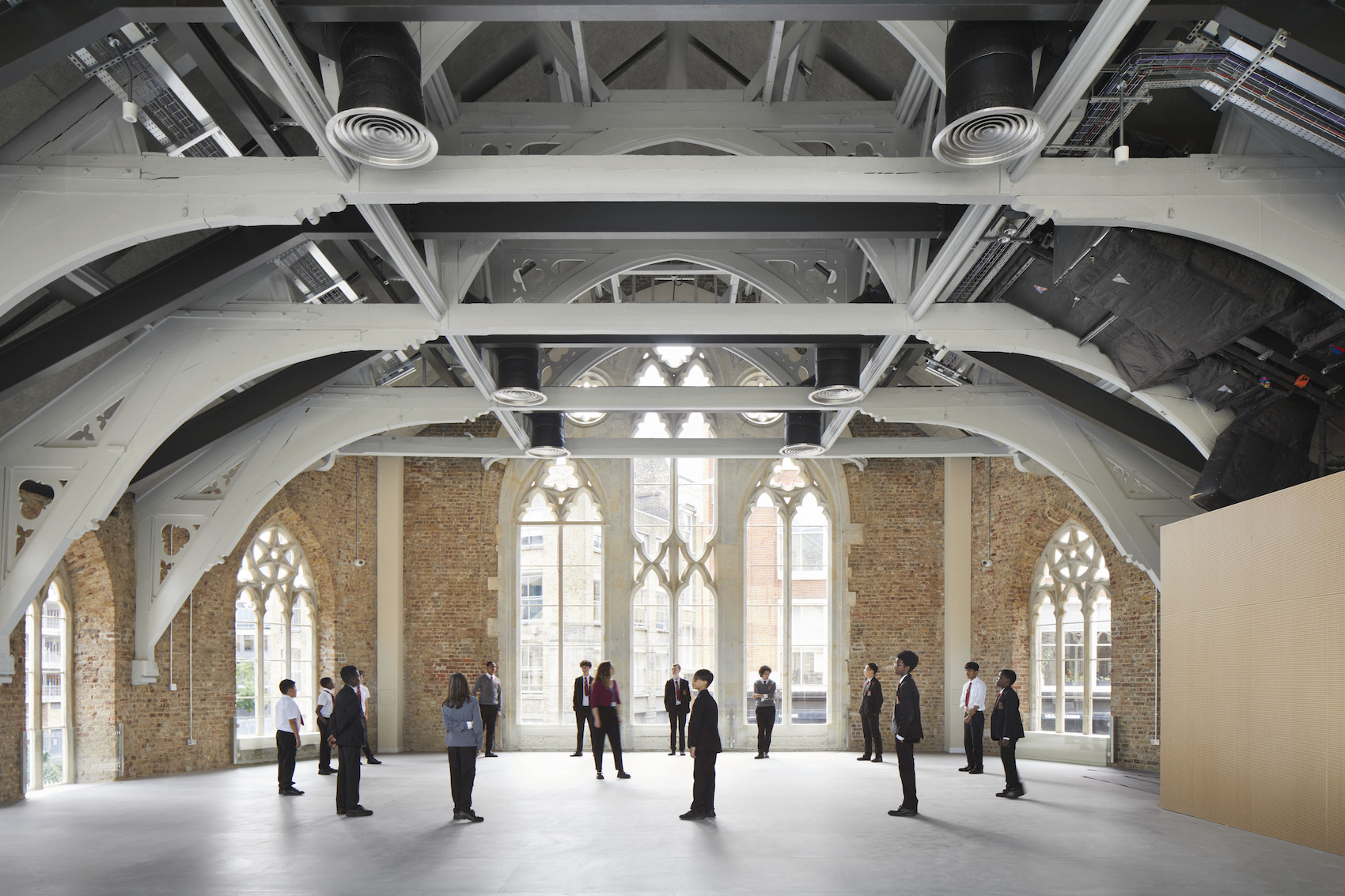
Hawkins\Brown’s sensitive redevelopment of the Central Foundation Boys’ School in east London involved transforming a dilapidated 19th-century chapel into a creative arts centre. Prior to renovation, the chapel’s windows were boarded over and its timber roof structure was hidden by modern suspended ceilings (photo: Jack Hobhouse).
Oliver Milton and Louisa Bowles of Hawkins\Brown opened with the practice’s long-running transformation of Central Foundation Boys’ School in London. The project, delivered in multiple phases over more than a decade, sought to revitalise a constrained urban campus near Old Street while significantly improving environmental quality. “Comfort isn’t a luxury – it’s fundamental to how people learn, work and interact,” said Bowles, framing light, ventilation and acoustics as intrinsic to educational outcomes rather than technical afterthoughts.
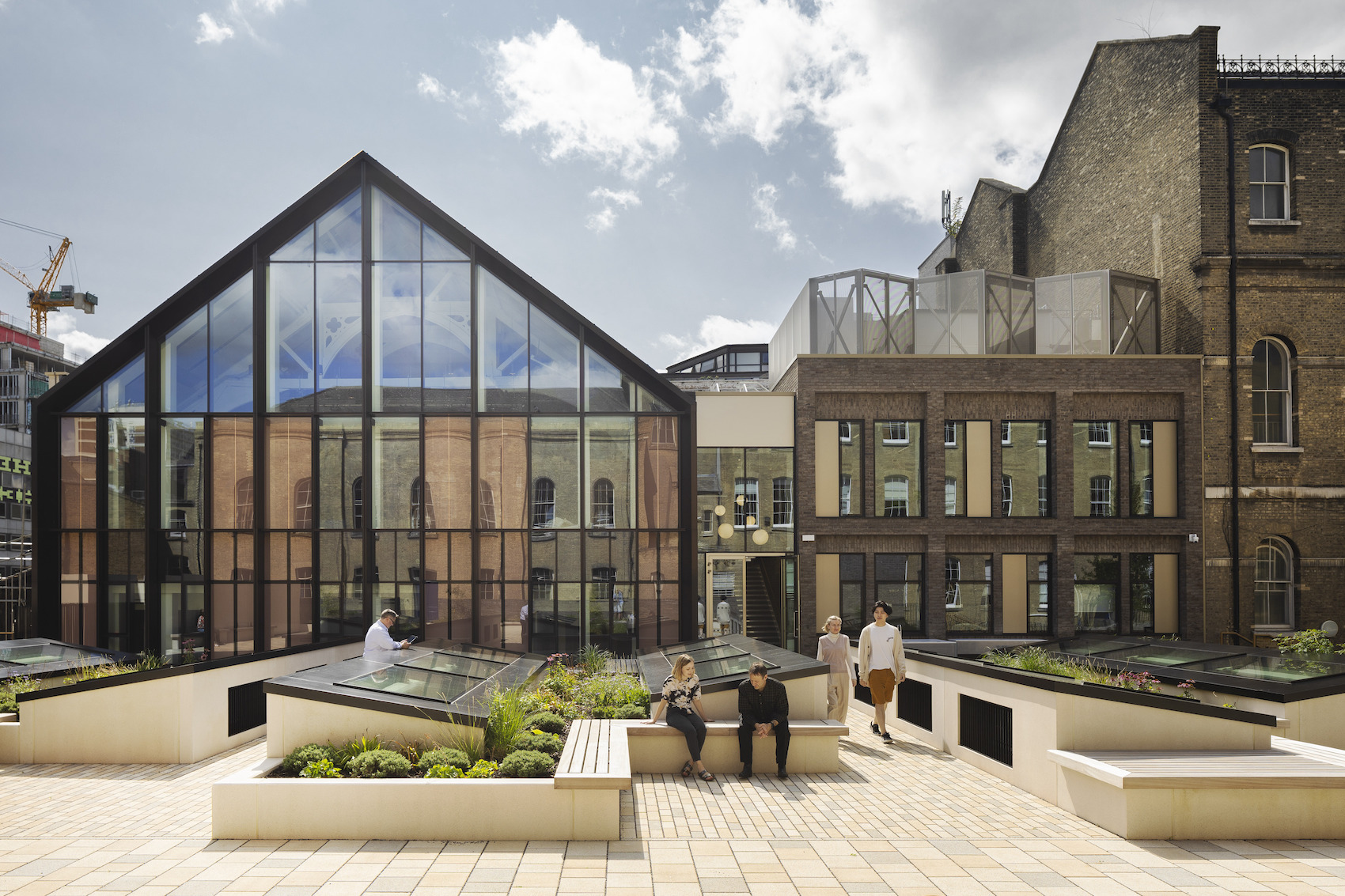
The chapel’s new, fully-glazed north elevation brings daylight deep into the building and creates a ‘shop window’ effect, making the arts activities visible to students in the central courtyard (photo: Nick Caville).
Milton described the ambition to “build a bigger and better school for future generations” while working within tight funding envelopes and a complex cluster of historic buildings. The redesign of the courtyard – once likened to a prison yard – became central to improving daylight penetration and air movement across the campus. Crucially, Bowles stressed, “We have to deliver healthier buildings without increasing operational carbon,” with passive-first strategies embedded across old and new elements to ensure consistency over time.
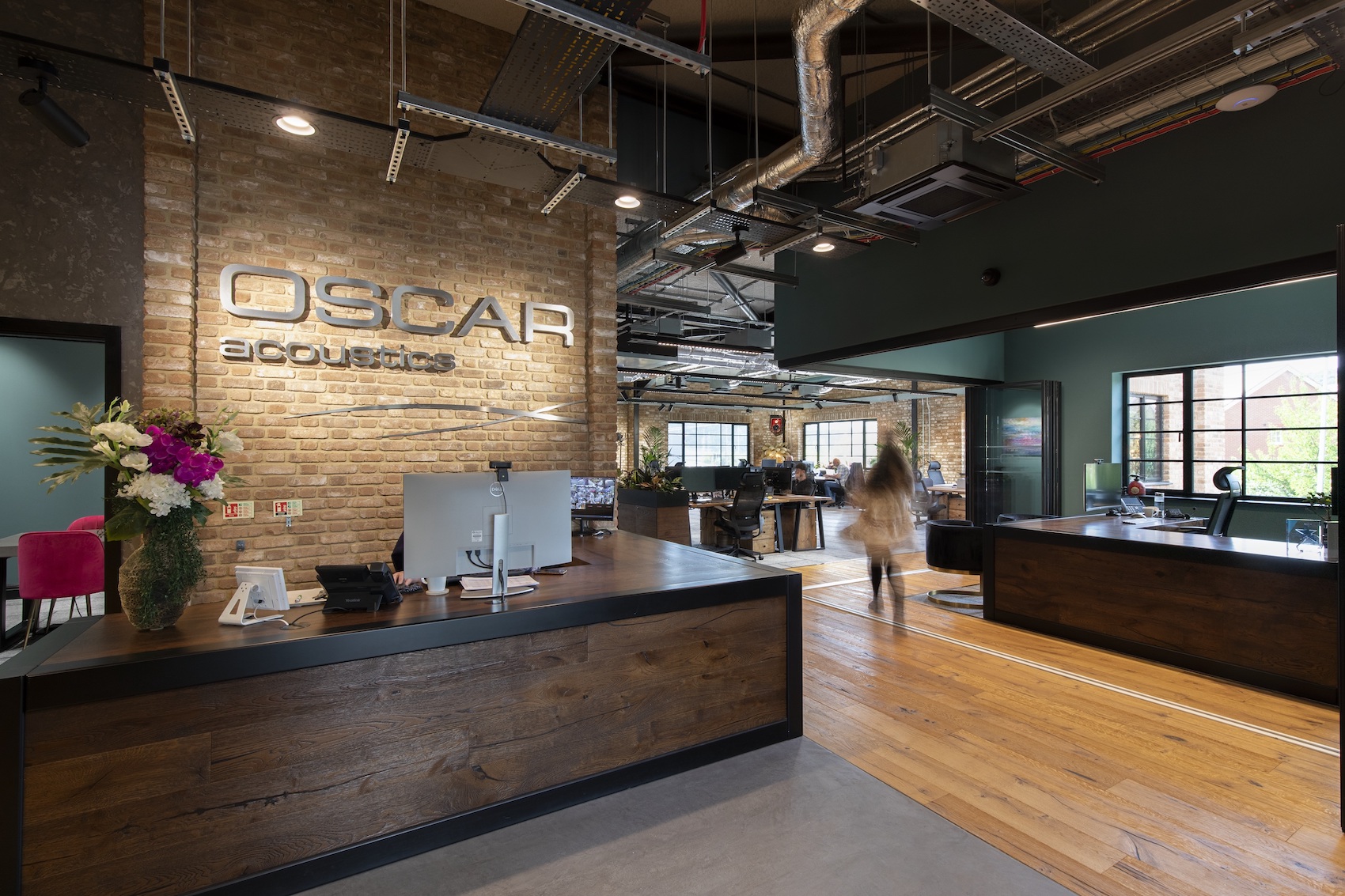
The Oscar Innovation Centre’s open-plan office and reception treated with SonaSpray K-13 Special acoustic ceiling spray (photo: Antonia Stuart).
If Hawkins\Brown’s presentation foregrounded long-term masterplanning, Ben Hancock of Oscar Acoustics shifted the focus to lived experience. Opening with the familiar scenario of struggling to hear across a restaurant table, he reminded the audience that for many people this is not an occasional inconvenience but a constant reality. “For millions of people, that isn’t a bad night out – that’s every night out,” he said, noting that around 30 per cent of the population live with hearing loss, visual challenges or neurodiversity.
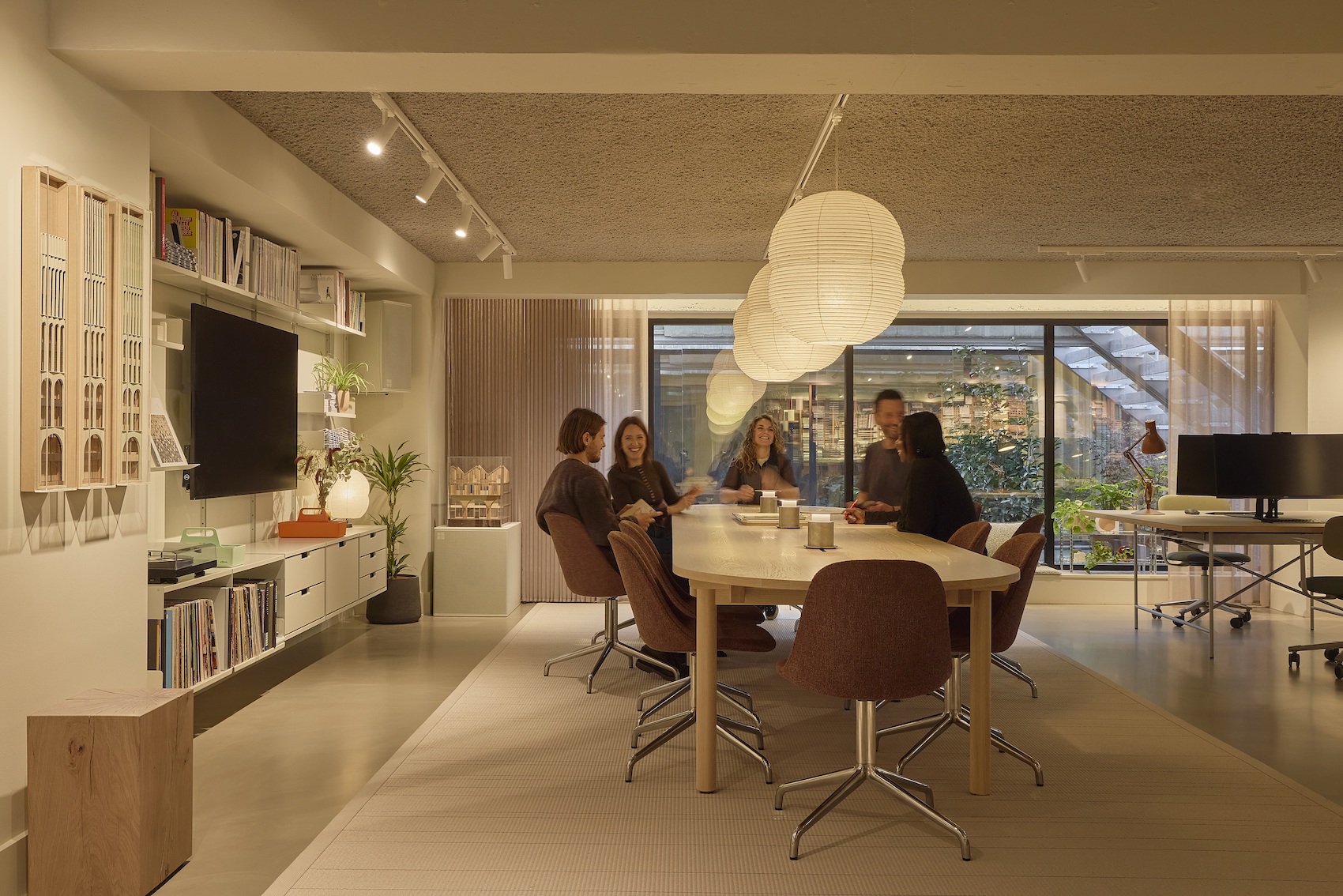
SonaSpray Eco+ acoustic ceiling spray in ‘Downstairs at dMFK’ in London (photo: Ed Reeve).
Hancock argued that acoustics is too often overlooked. “We keep designing spaces where sound is an afterthought,” he observed, despite research showing that “around 80 per cent of people won’t return to a restaurant if it’s too noisy.” Drawing on his own experience of tinnitus, he reframed sound as an inclusion, health and commercial issue. “Noisy environments aren’t just annoying, they’re excluding,” he said, urging architects to integrate acoustic thinking from the outset rather than treating it as remedial.
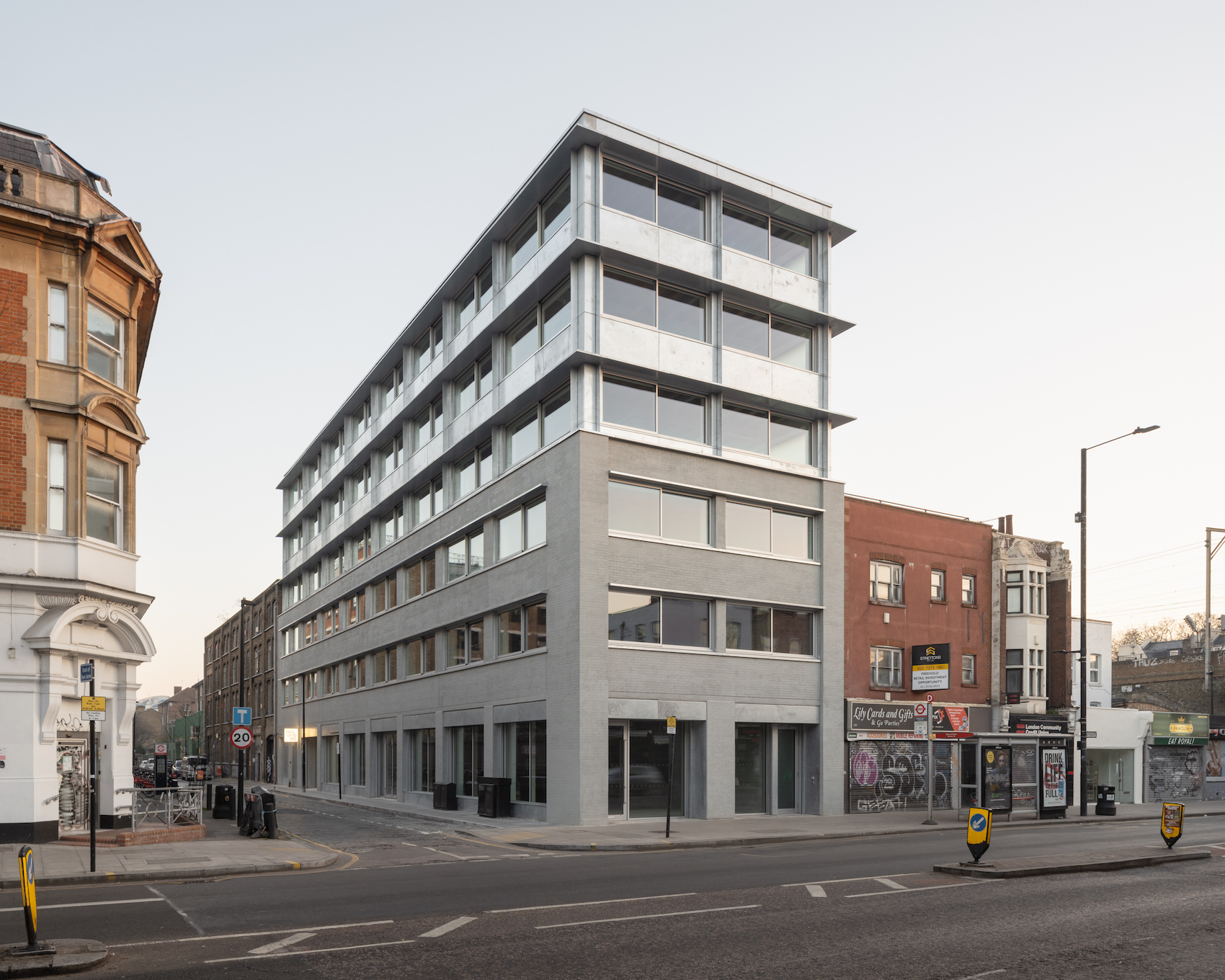
Designed by Carmody Groarke, 469 Bethnal Green Road, London, is a redeveloped and extended 1970s textile workshop that prioritises sustainability, structural retention, and architectural clarity (photo: Johan Dehlin).
The theme of early integration continued with Jerome Wren and Harry Montresor, who presented Carmody Groarke’s 469 Bethnal Green Road, a former 1970s textiles workshop reimagined as a contemporary low-carbon workspace. Located at the junction of Bethnal Green Road and Cambridge Heath Road, the building sits within a pluralistic east London streetscape of varying heights and materials.
Wren described the found structure as “utilitarian” and “robust,” with free spans that enabled flexibility in use and configuration. Rather than demolish, the project preserves and doubles the existing volume, increasing its presence on the high street while upgrading environmental performance. “Every intervention has to negotiate between conservation, comfort and performance,” Wren explained, highlighting the careful calibration of façade strategy, daylight and envelope improvements.
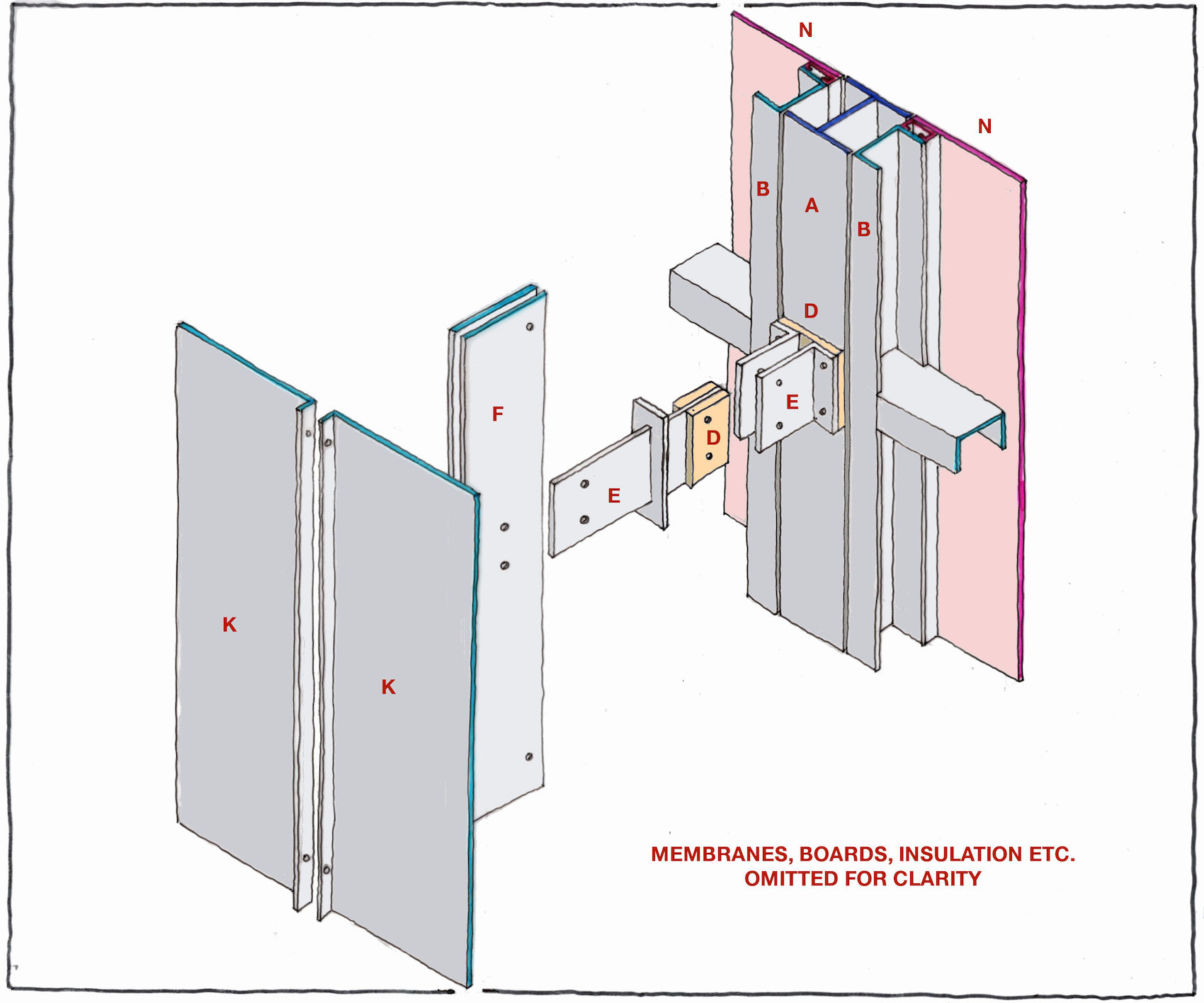
Strategic isometric spandrel detail for 469 Bethnal Green Road. The galvanised steel façade – just 3mm thick – is shaped into deep window reveals and horizontal fins, providing passive solar shading and a sense of depth for the external skin (drawing: Montresor Partnership).
Montresor, who has collaborated with the practice for two decades, emphasised the importance of façade detailing in reconciling character and performance. The project’s environmental upgrades were embedded within a precise architectural language, demonstrating how adaptive reuse can align carbon reduction with spatial and experiential enhancement.
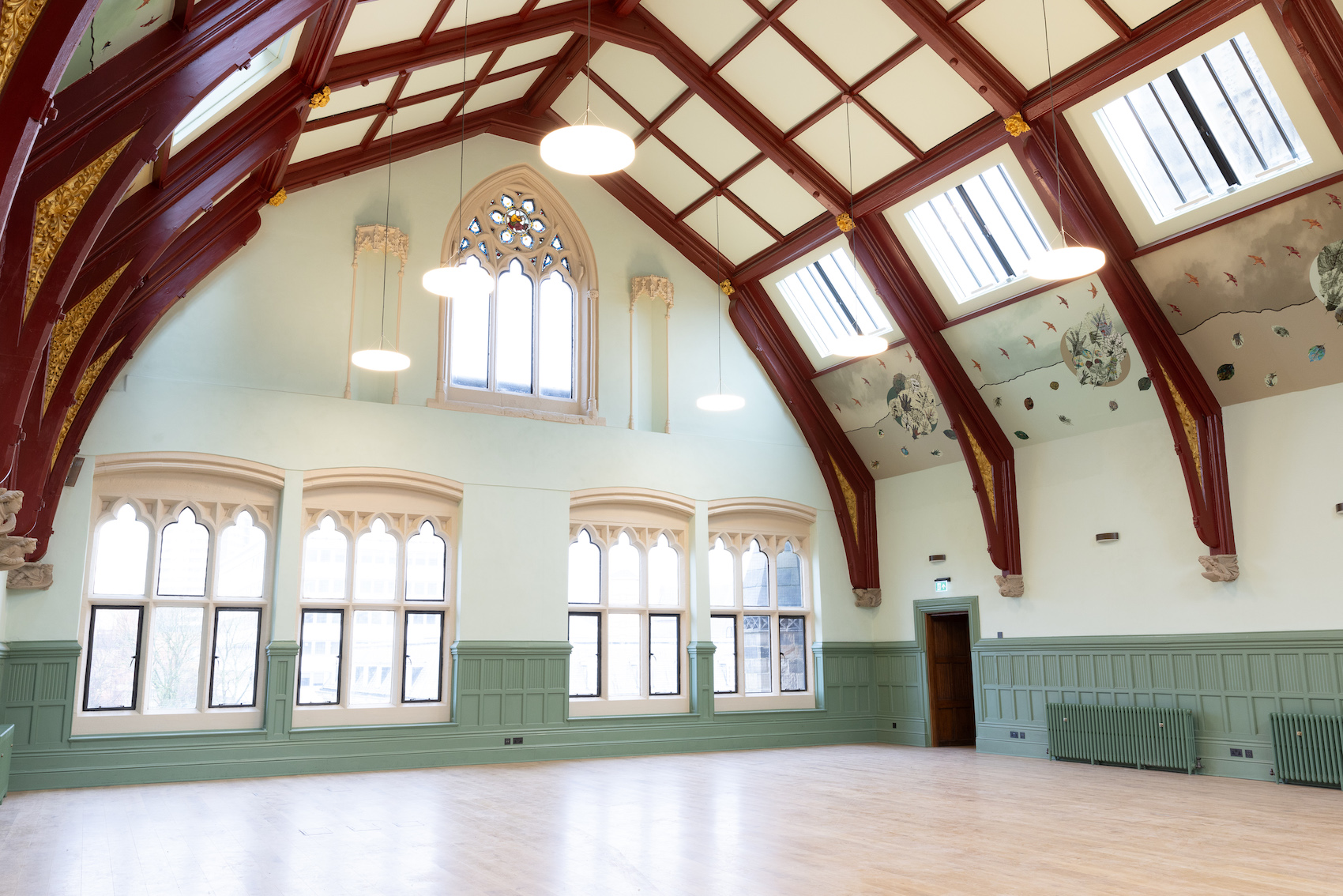
Conservation Studio Rooflights from The Rooflight Co are a feature element in Bright Hall at Rochdale Town Hall, complementing the historic structure and providing high levels of daylight (photo: Joanne Crawford).
Peter Daniel of The Rooflight Co then examined daylight as both a physiological necessity and a design strategy. Founded to reinterpret the Victorian cast-iron rooflight for contemporary standards, the company now works across heritage and modern contexts. “Choosing the right rooflights is not just a technical decision – it’s a design strategy,” Daniel said, positioning rooflights as central rather than peripheral components.
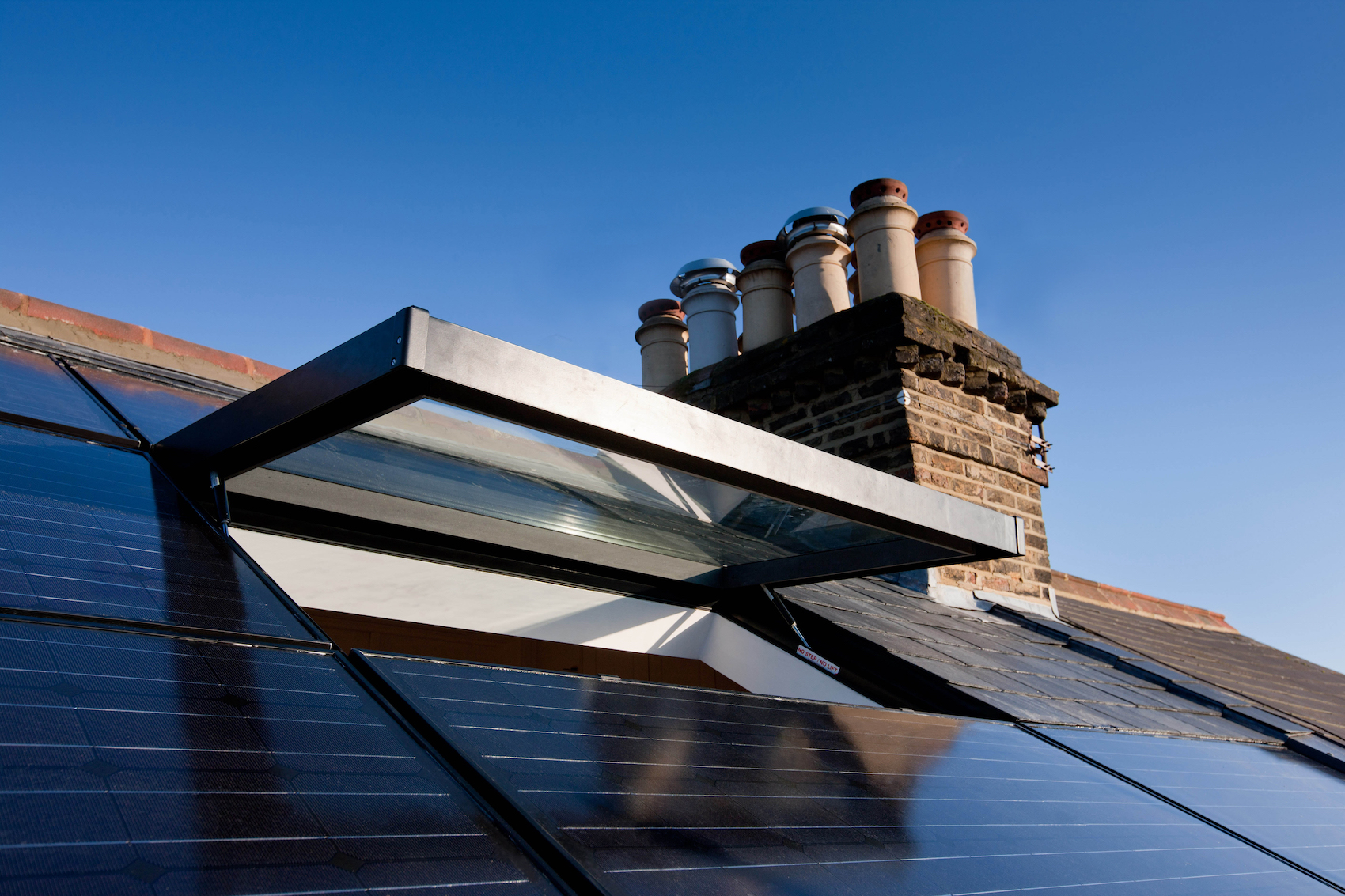
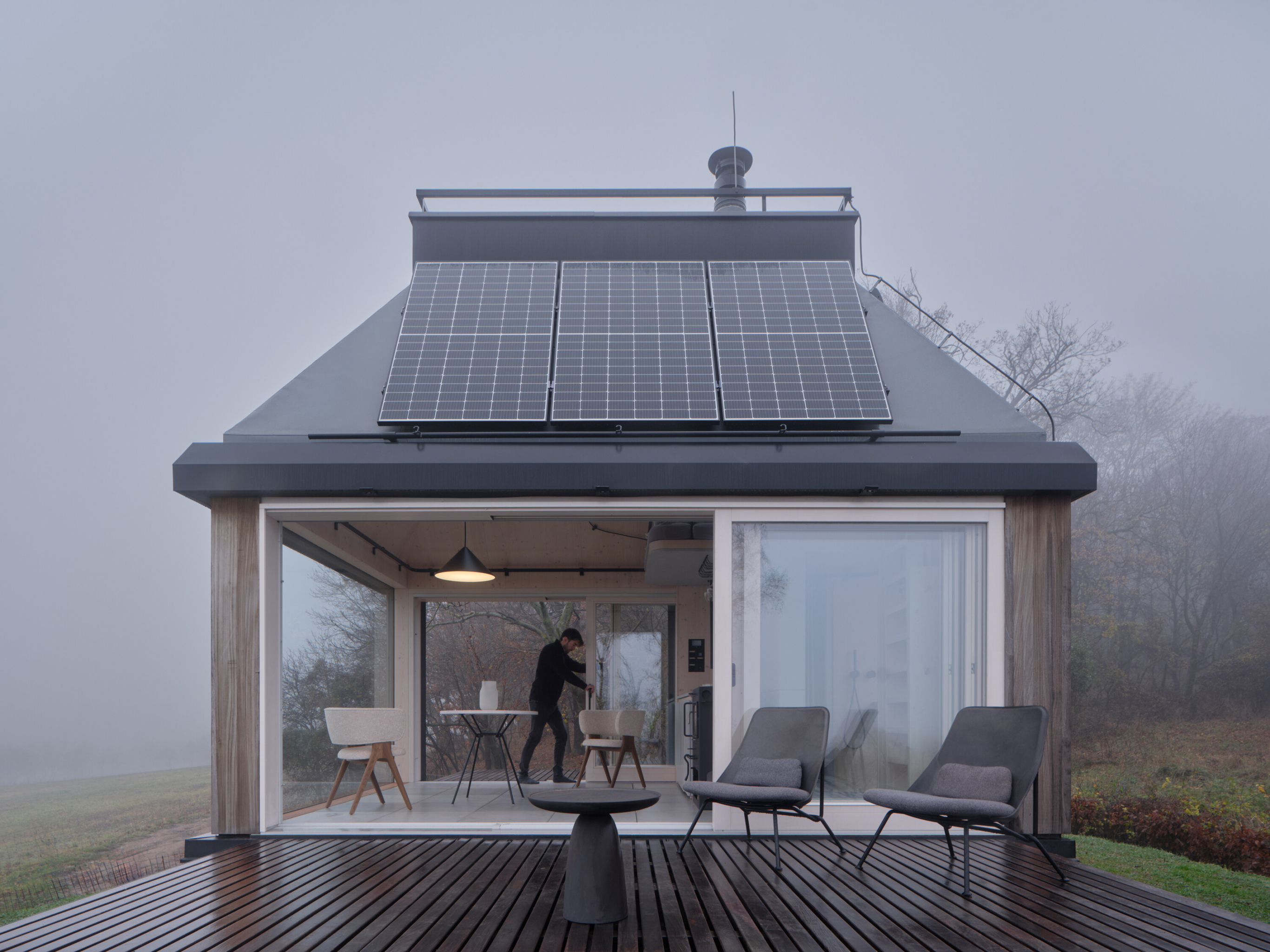
This Neo Rooflight from The Rooflight Co has been expertly detailed to sit alongside solar panels, balancing renewable energy with natural light and ventilation. (photo: Simon Merrony Architects).
“Rooflights should never be an afterthought – they could be central to your architectural intent,” he continued, highlighting their role in reducing reliance on artificial lighting and improving thermal comfort. Referencing EN 17037 on daylight in buildings, Daniel stressed that careful balancing of daylight distribution, glare and uniformity directly affects how people “live, work, heal and learn.” In this sense, the roof becomes a key interface between architectural expression and environmental performance.
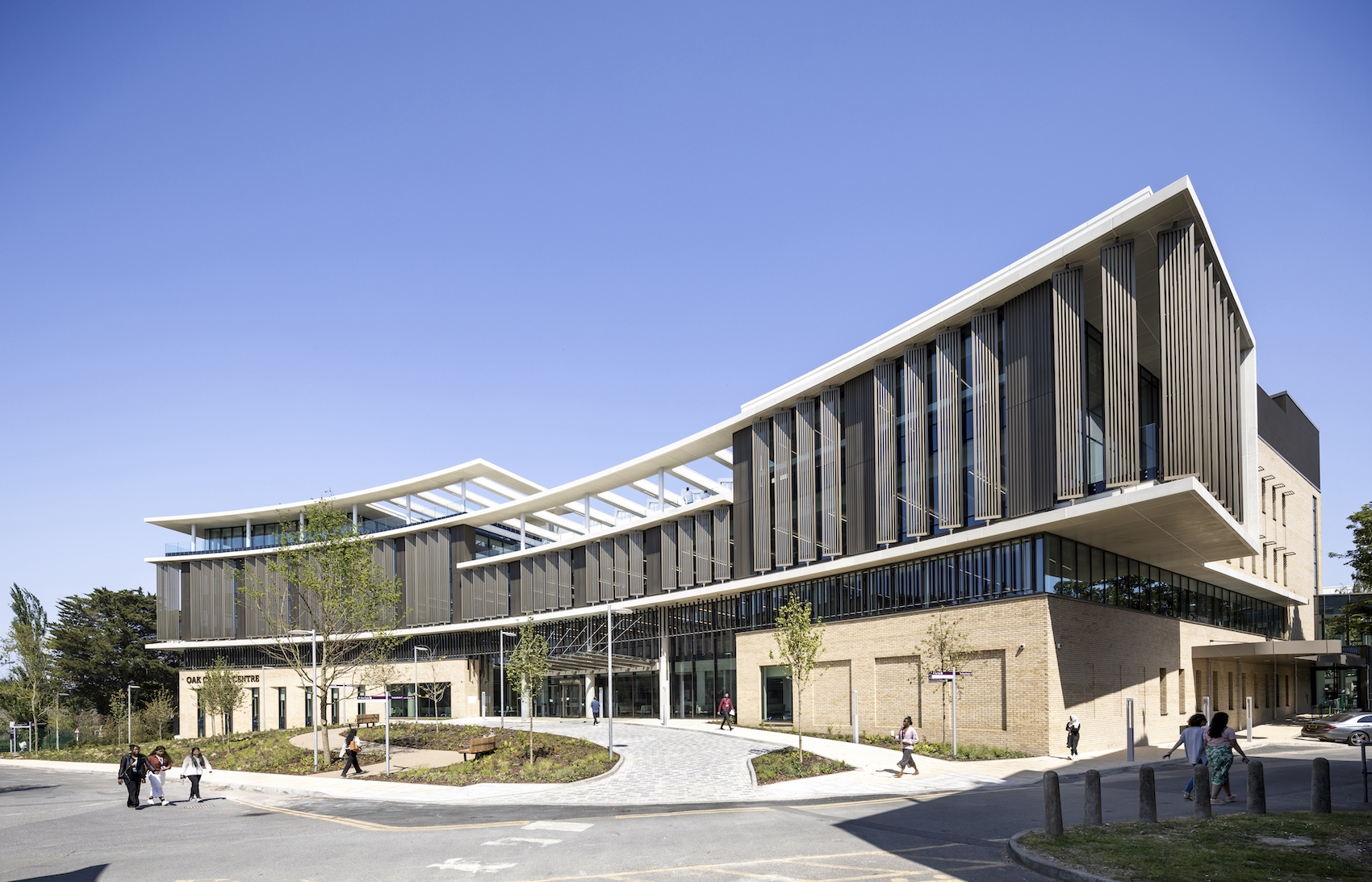
BDP’s Oak Cancer Centre, Royal Marsden Hospital in Sutton, London, has been designed to significantly enhance patients’ healthcare experiences (photo: Nick Caville).
The webinar concluded with Dominic Hook and Peter Ruffell of BDP, who presented The Oak Cancer Centre at the Royal Marsden in Sutton. Set within the wider London Cancer Hub, the building repositions a specialist healthcare campus within a growing knowledge cluster while prioritising patient wellbeing.
“You can’t consider daylight in isolation from overheating risk, or ventilation in isolation from acoustic impact,” said Hook, calling for a holistic approach. In a healthcare context, where patients may be physically and emotionally vulnerable, sensory calibration becomes critical. Daylight had to be generous but controlled; ventilation effective but discreet; and acoustic separation carefully managed between clinical, research and public areas.
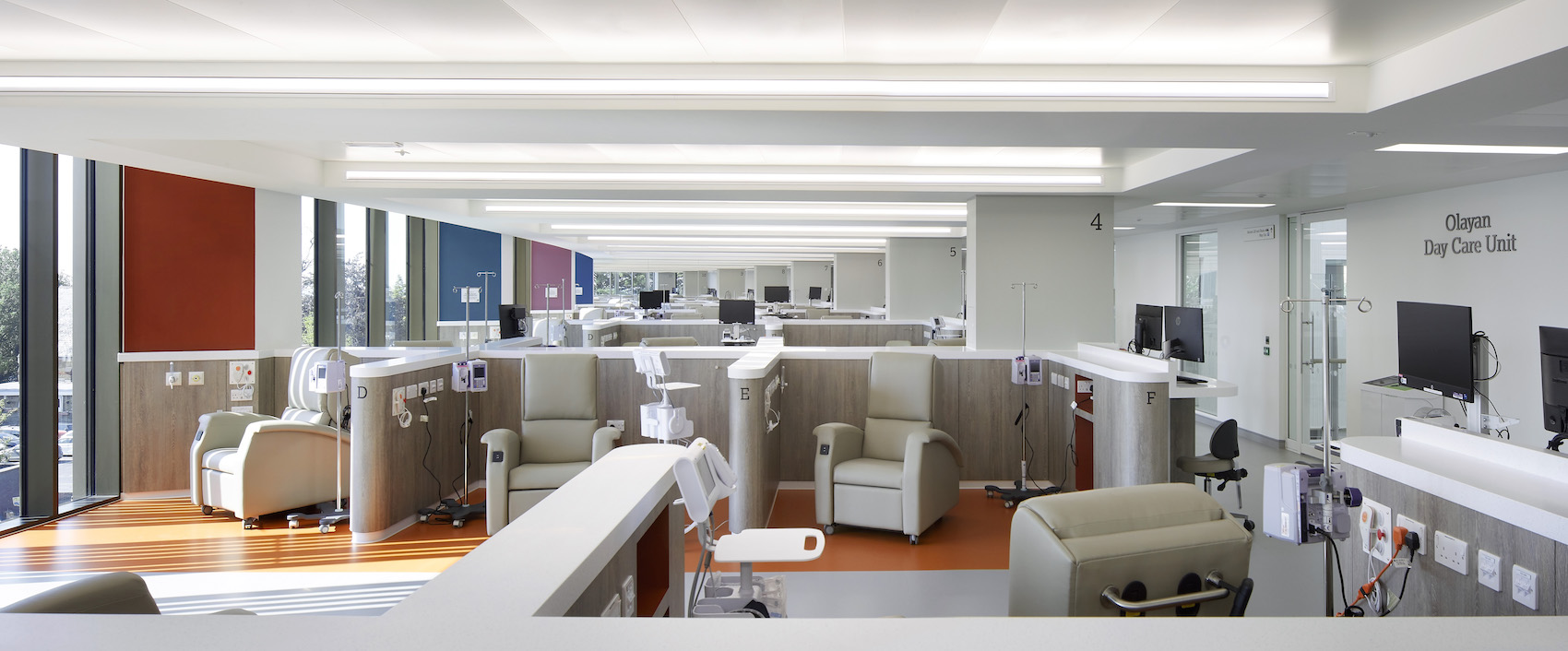
Olayan Day Care Unit within the Oak Cancer Centre. Generous floor-to-ceiling windows ensure excellent daylighting and good views out, connecting patients with the healing qualities of nature (photo: Hufton+Crow).
Ruffell explained how early collaboration between architects, engineers and specialists shaped façade design and orientation, ensuring that environmental strategies were integrated rather than layered on. Hook reinforced the importance of early engagement: “The earlier we bring specialists into the conversation, the more elegant the solutions become.” In a building operating long hours within a demanding clinical environment, modelling and coordination were central to balancing energy efficiency, resilience and user comfort.
Across education, hospitality, adaptive reuse and healthcare, the message was consistent. Environmental comfort is not an add-on but a foundational design concern. Whether addressing cognitive load in noisy restaurants, transforming an inner-city school, introducing daylight into a former workshop or calibrating light in a cancer centre, the speakers demonstrated that sound, light and air are inseparable from architectural quality.