We revisit Níall McLaughlin Architects’ International Rugby Experience in Limerick: a project that combines everyday public use with an international sporting experience to create a contemporary monument to the game of rugby and to Limerick itself.
Following the announcement of Níall McLaughlin as the recipient of the 2026 RIBA Gold Medal, we revisit one of the practice’s most socially engaged works in Ireland. The International Rugby Experience in Limerick is a building that has contributed as much to its immediate urban environment as it has to the sport at large, as an international destination for rugby fans and a local resource for Limerick residents. The building stitches a tight, and previously derelict site, back into the city’s high street, creating an interactive exhibition centre that blends public space with entertainment to reinvigorate Limerick’s high street.
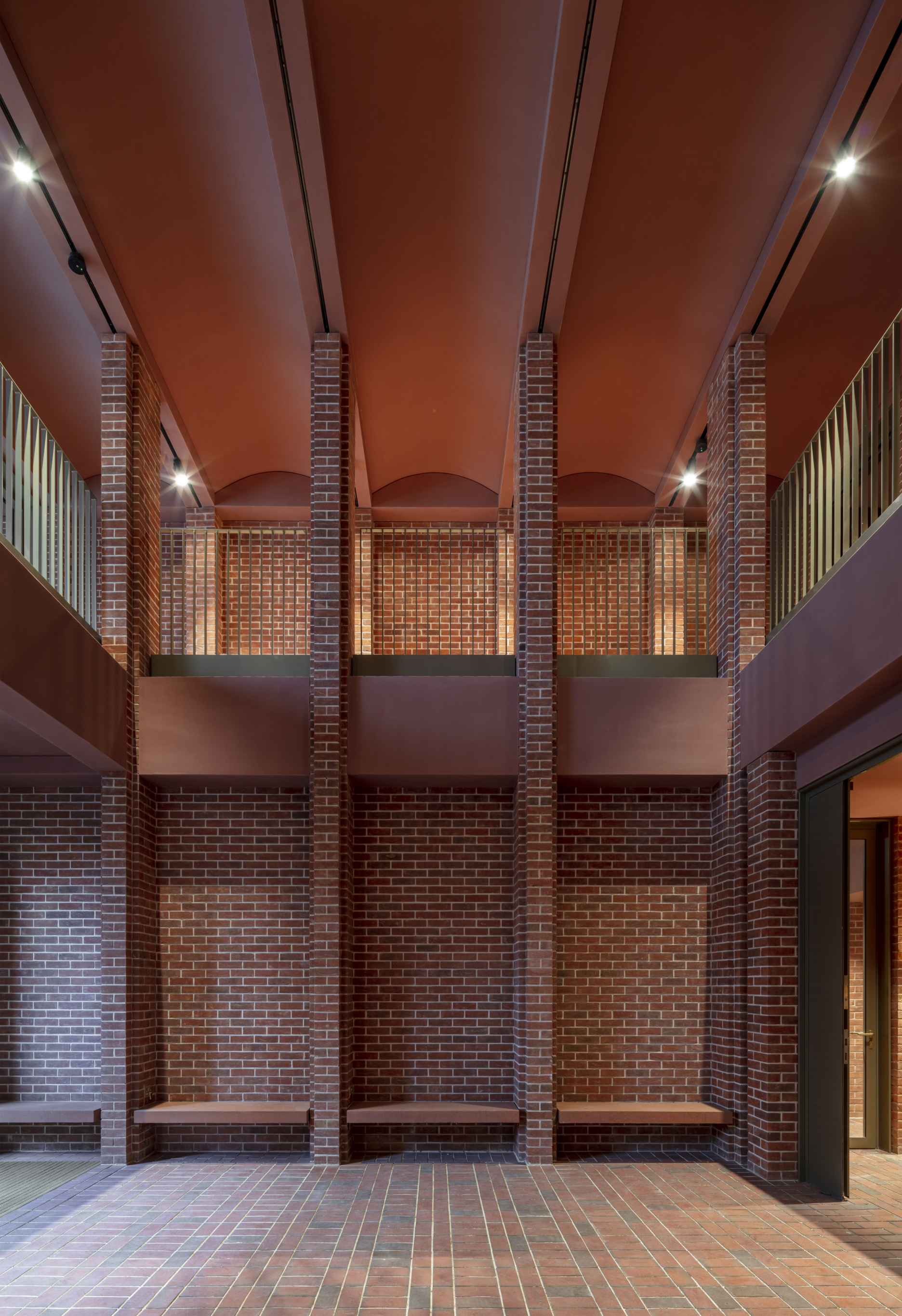
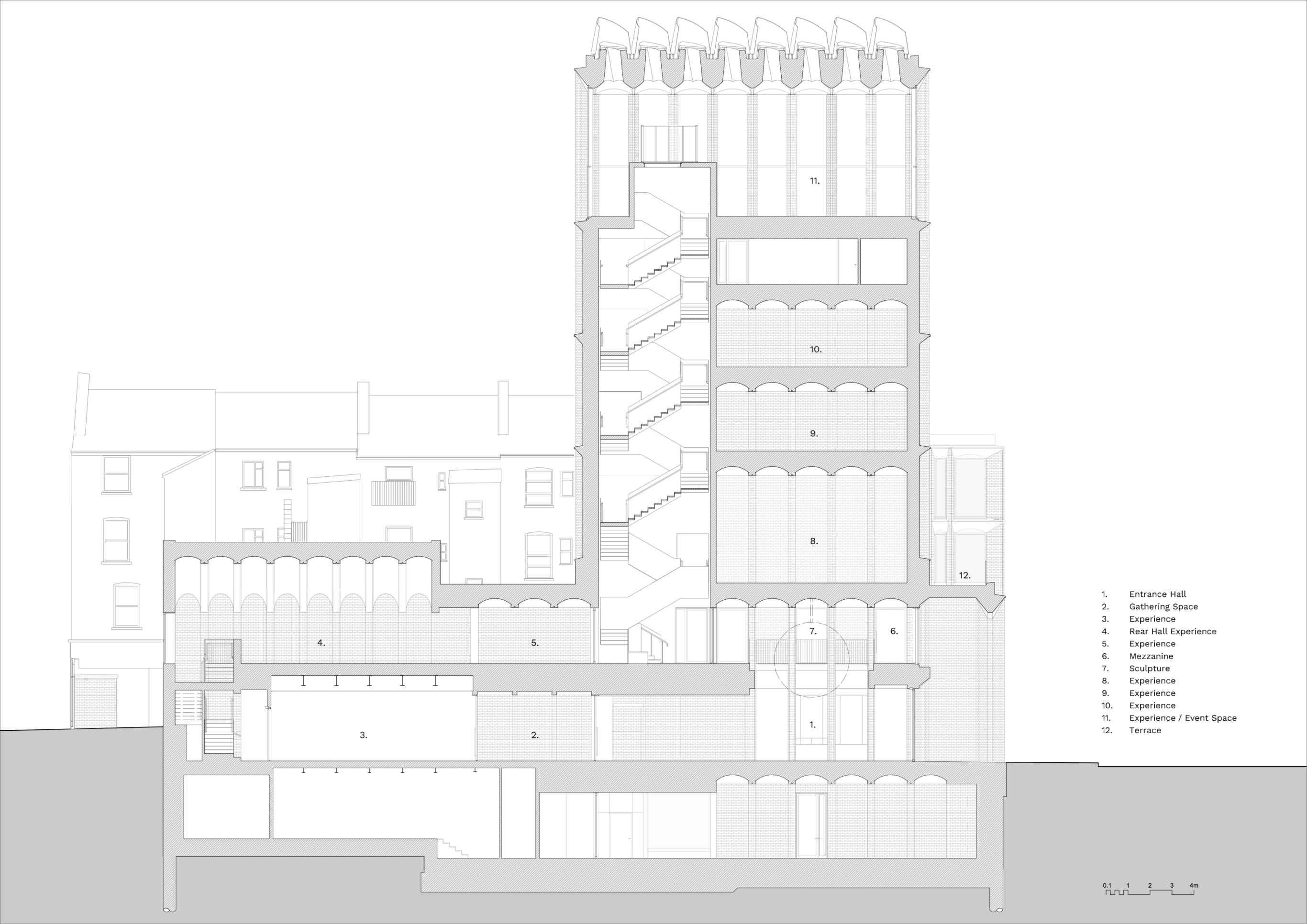
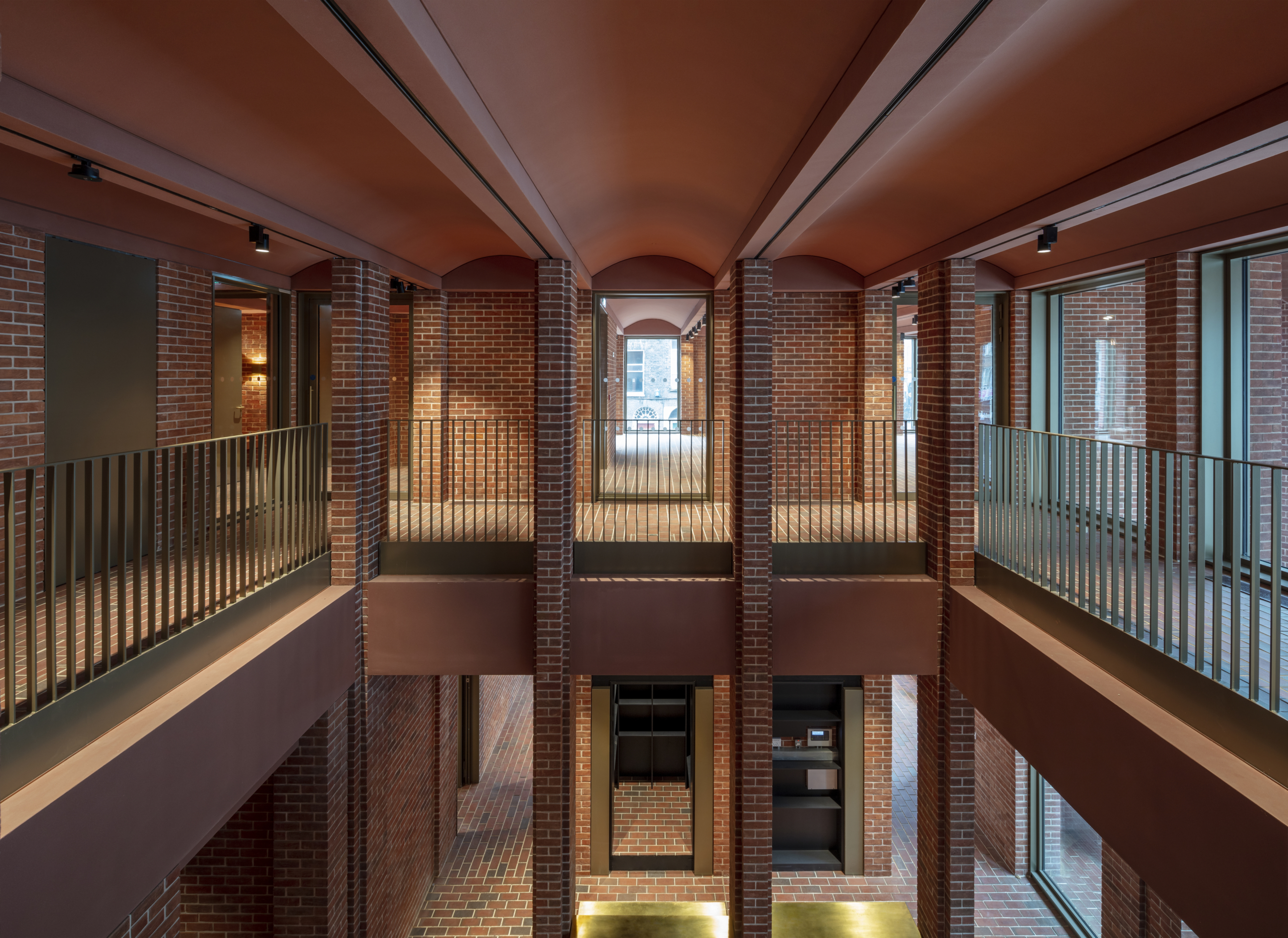
A cafe mezzanine overlooks the double-height entrance hall.
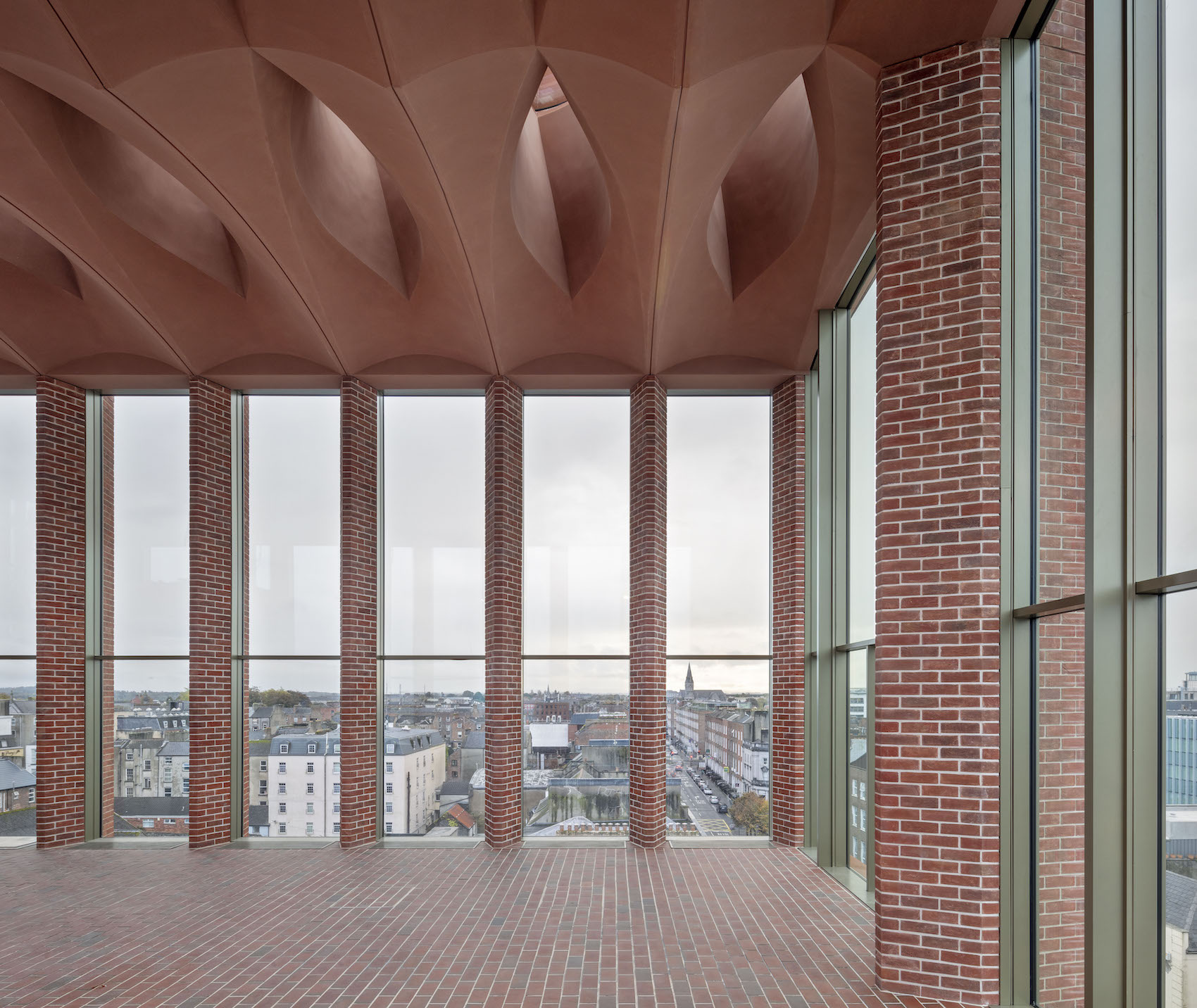
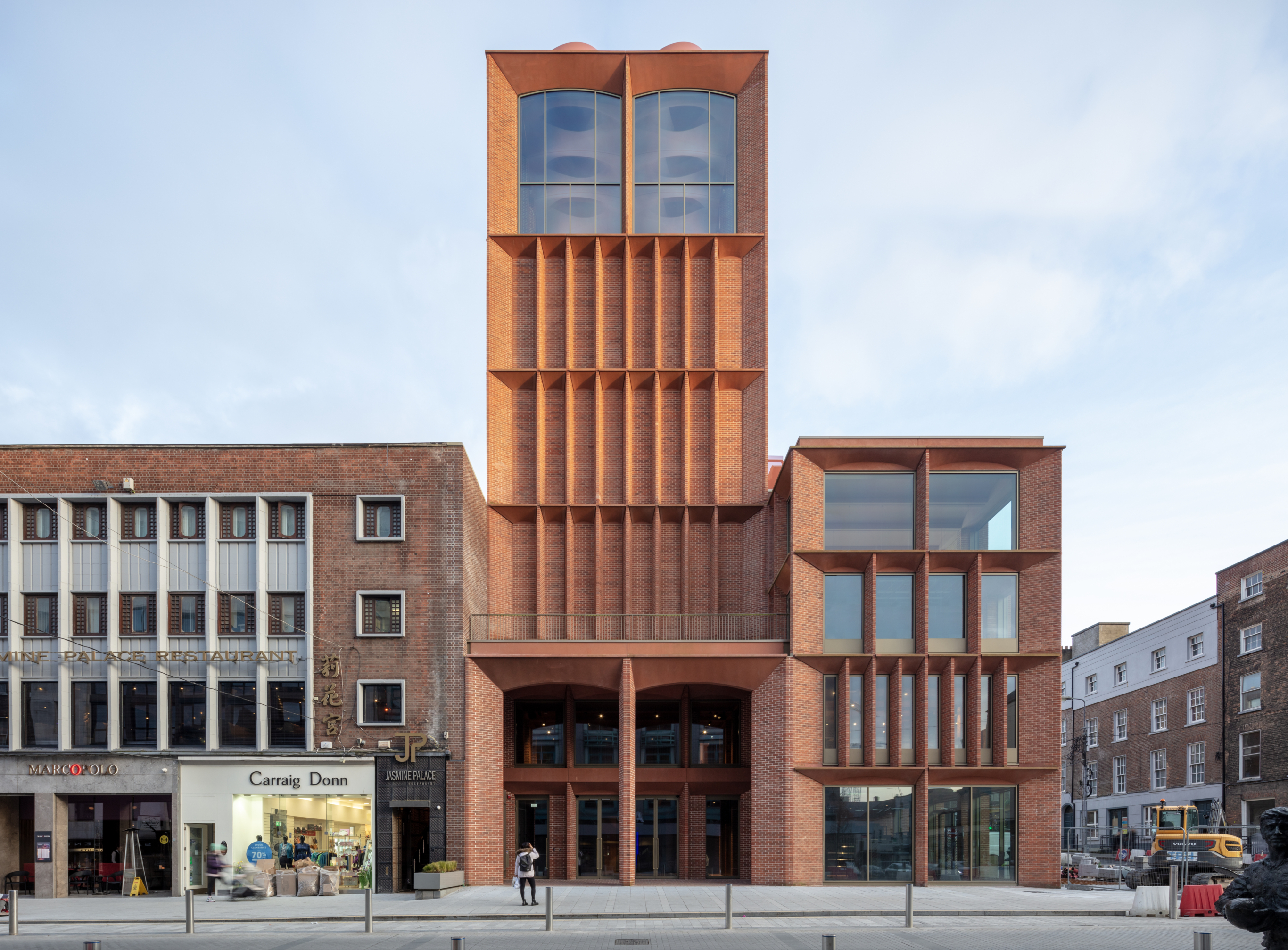
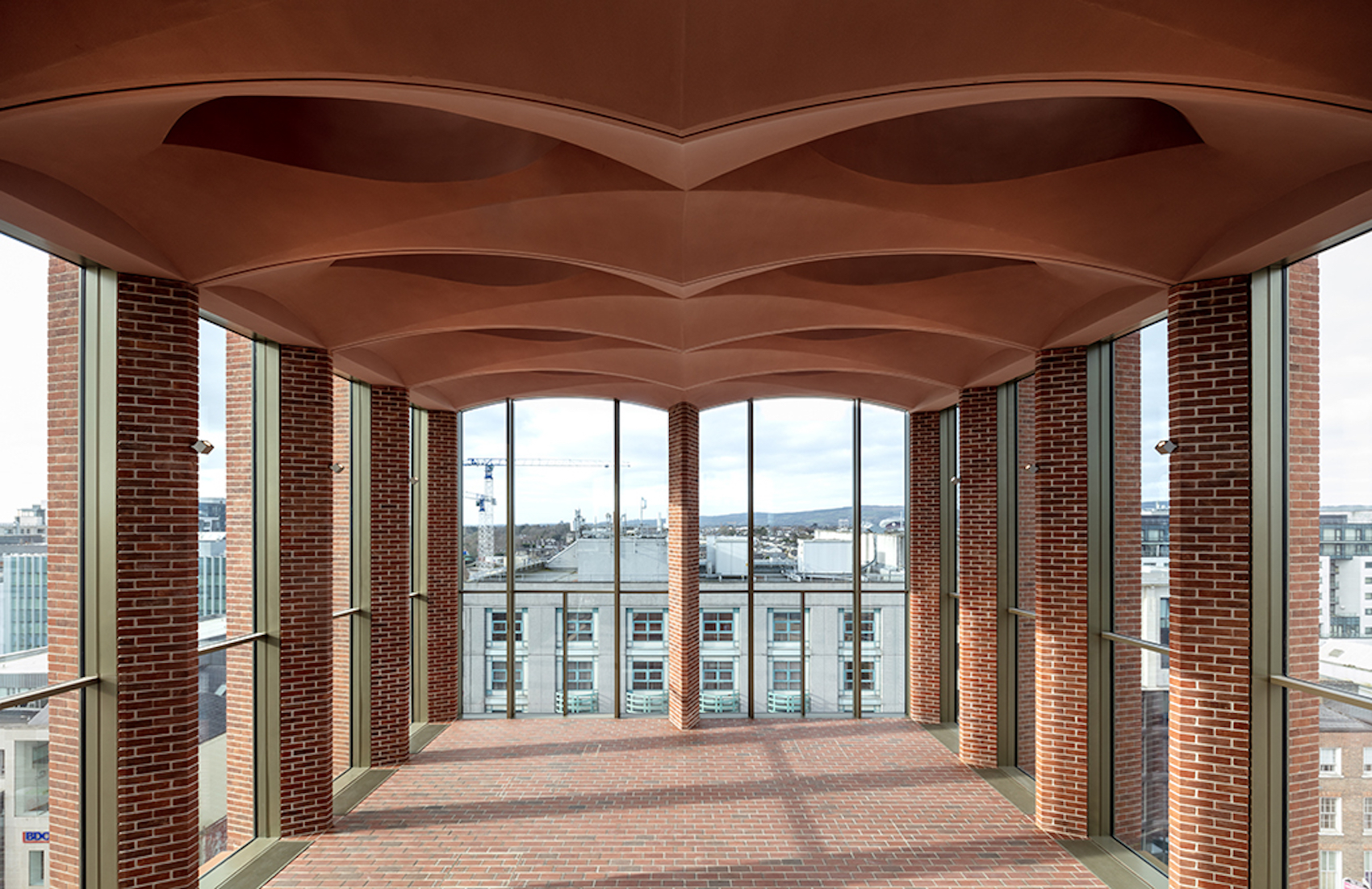
Sitting on the former footprint of three derelict Georgian houses, the site is a relatively narrow urban plot, which bookends Limerick’s main high street. The façade continues the street line, with a four-storey base meeting the height of the surrounding Georgian Quarter. A large, seven-storey tower rises up from the rear, protruding above the skyline and topped with a double-height event hall, glazed with floor-to-ceiling windows on all sides.
Back down on street level, two large arches separated by a thin brick pillar, frame a deep logia which leads into the double-height entrance hall: a space large enough for people to meet and gather on match days as the site is conveniently located between Limerick train station and Thomond Park Stadium. A vertical emphasis is echoed across the façade through red-brick fins which are divided into tall bays by horizontal bands of precast red concrete.
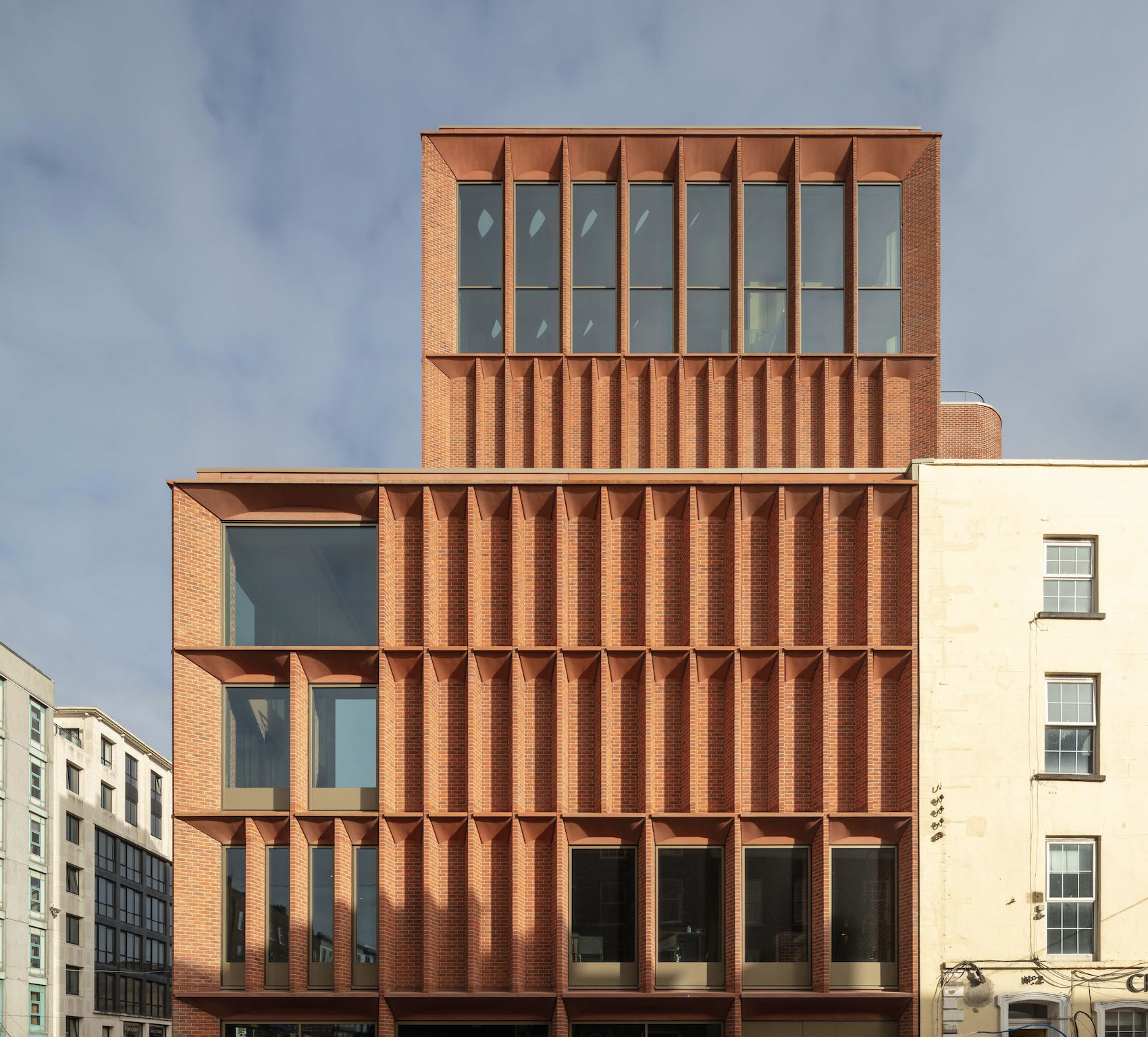
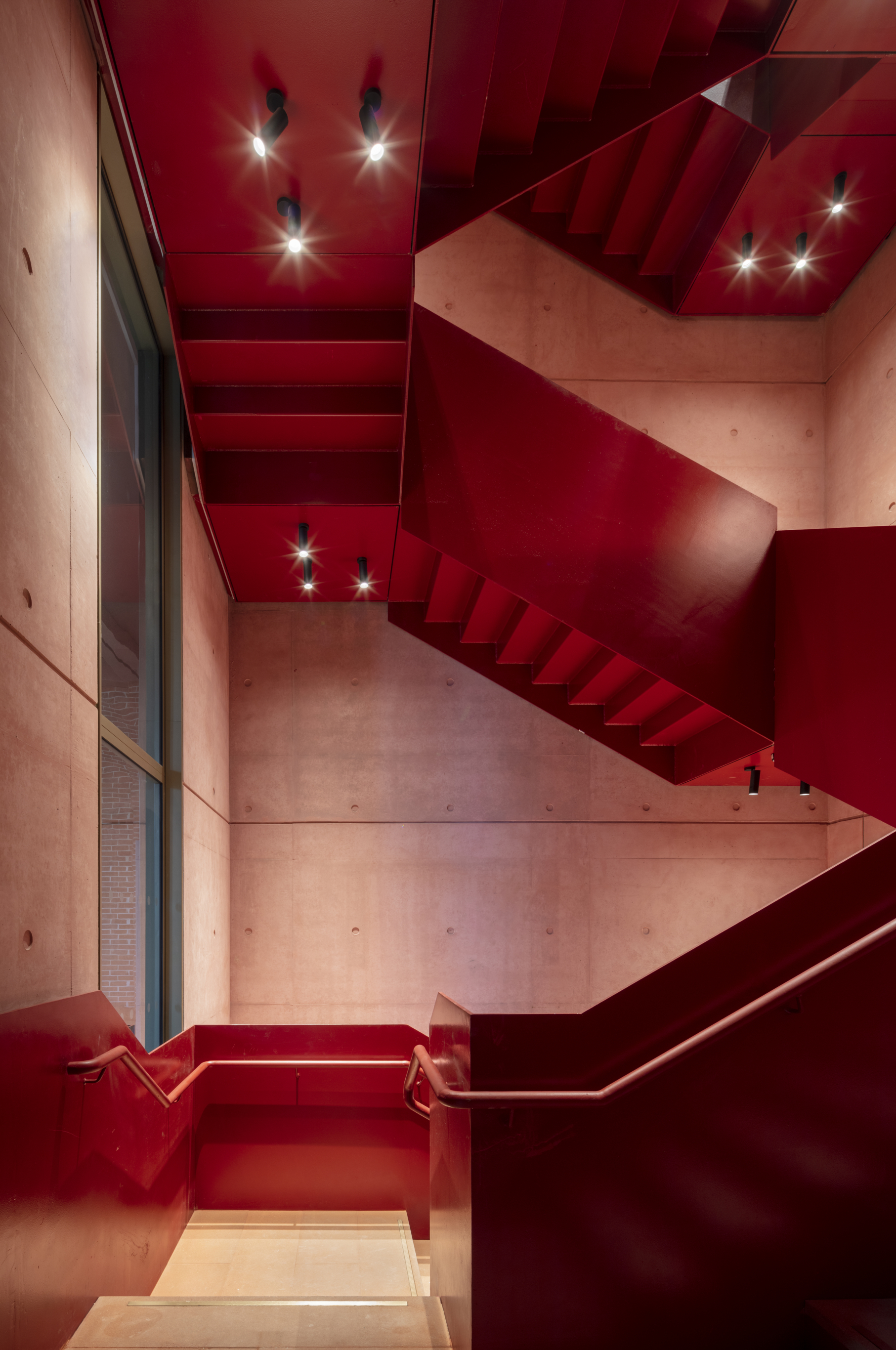
The façade’s proportions were generated in response to the surrounding Georgian buildings, as was the colour palette which is made up of three types of handmade red bricks, red pigmented concrete, and a pale mortar. The earthy tones contribute to the architects ambition of a building appearing carved out from a brick mass: creating a robust, firm monument. Inside, visitors ebb between cavernous thin stairwells, sloped ceilings, and airy, bright communal halls; a design tactic intended to mimic the game of rugby, with its juxtaposed moments of compact contact in a sweeping open field.
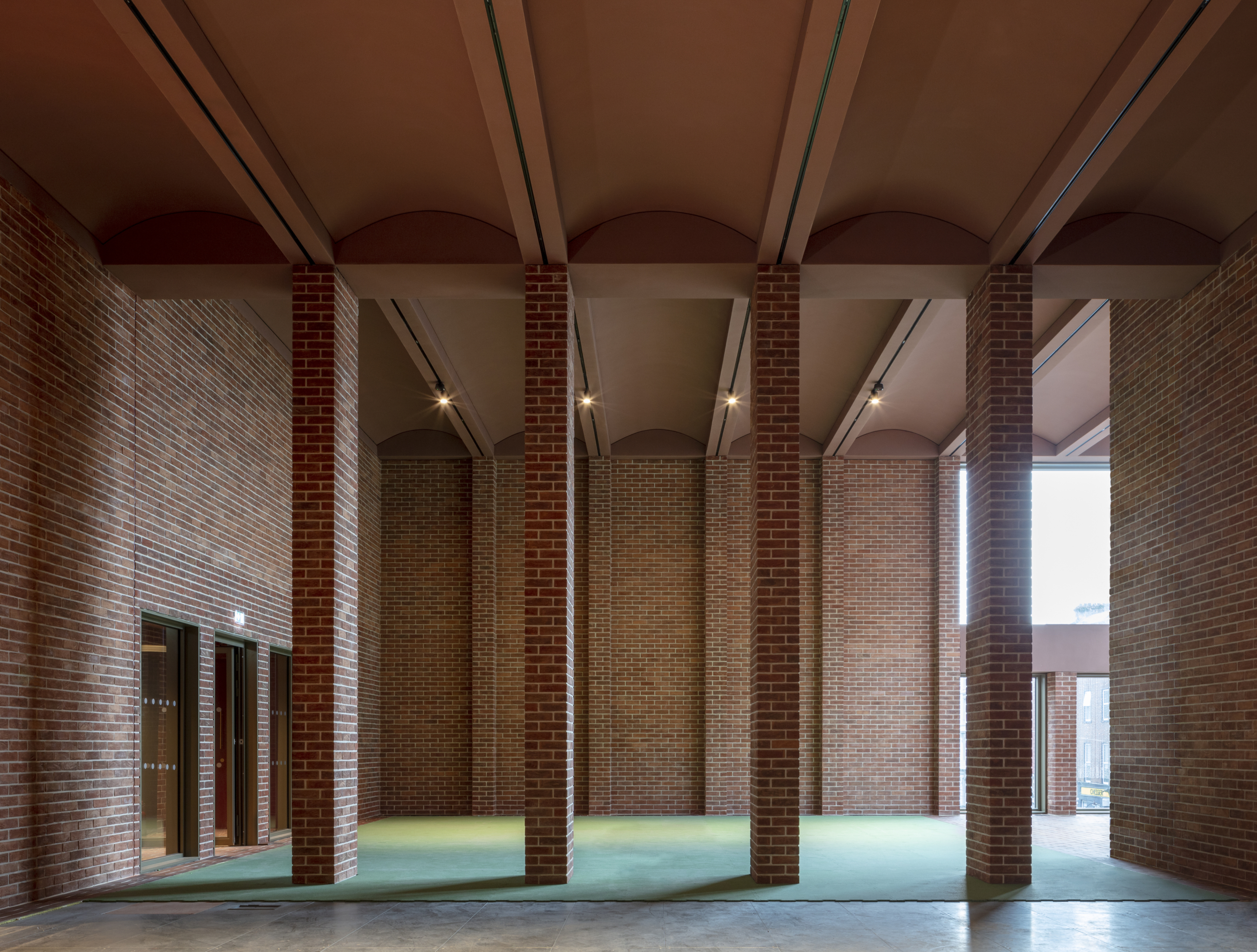
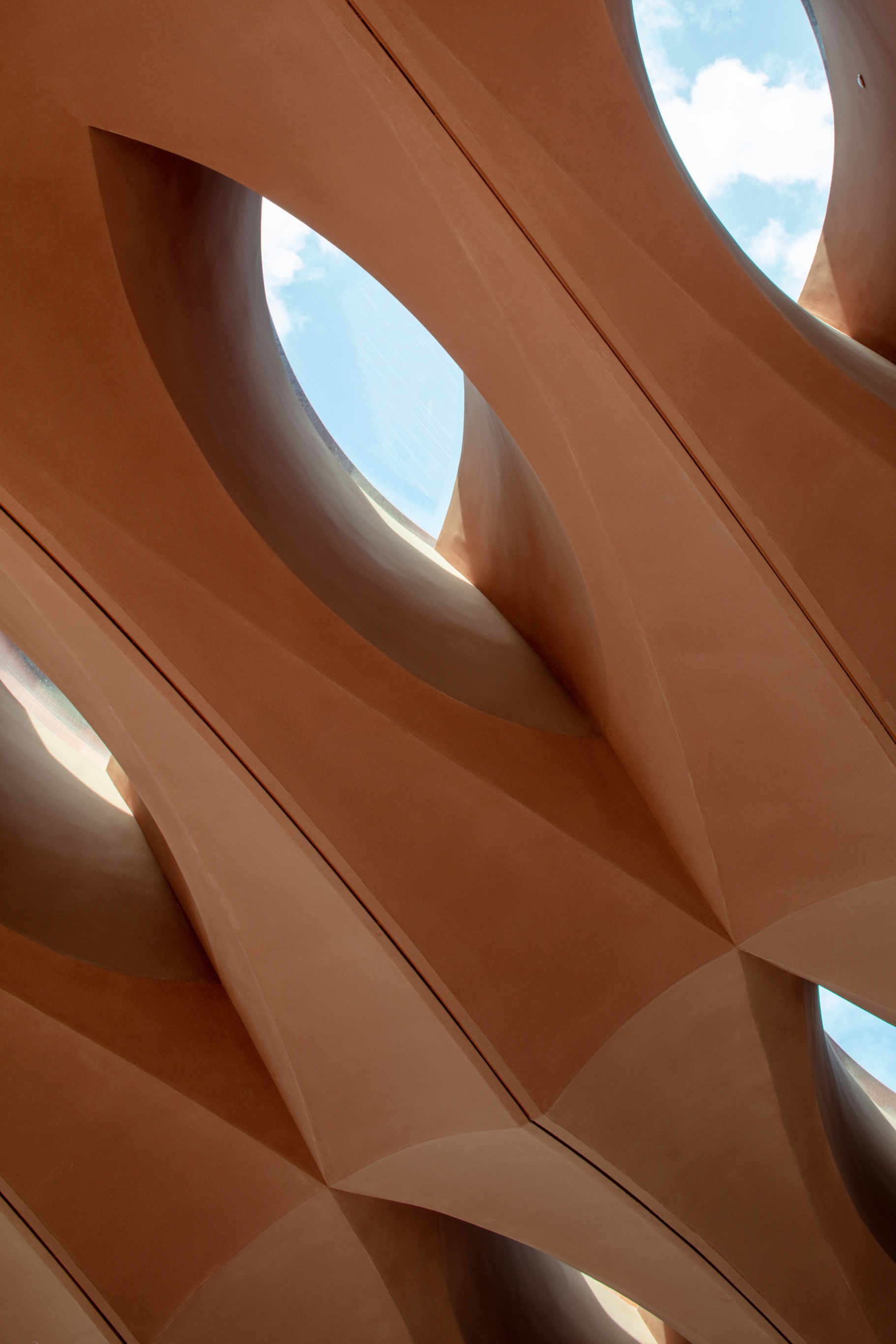
Inside, vaulted ceilings, scalloped walls, pillars and arches create a latticed structure, stacked together in a sturdy scrum-like mesh. These details frame views across the city and filter light into several large, open-plan spaces. Many of these are situated towards the base of the building, as areas become more intimate as you move up the tower, with thinner pillars and quieter exhibition spaces, before opening up again into the lantern-like hall.
The project’s success has been recognised by the Royal Institute of Irish Architects, winning its Public Choice Award and Cultural and Public Building Award. The Architectural Association of Ireland awarded it the Architectural Project of the Year, and in 2023 the building won a Schüco Excellence Award.
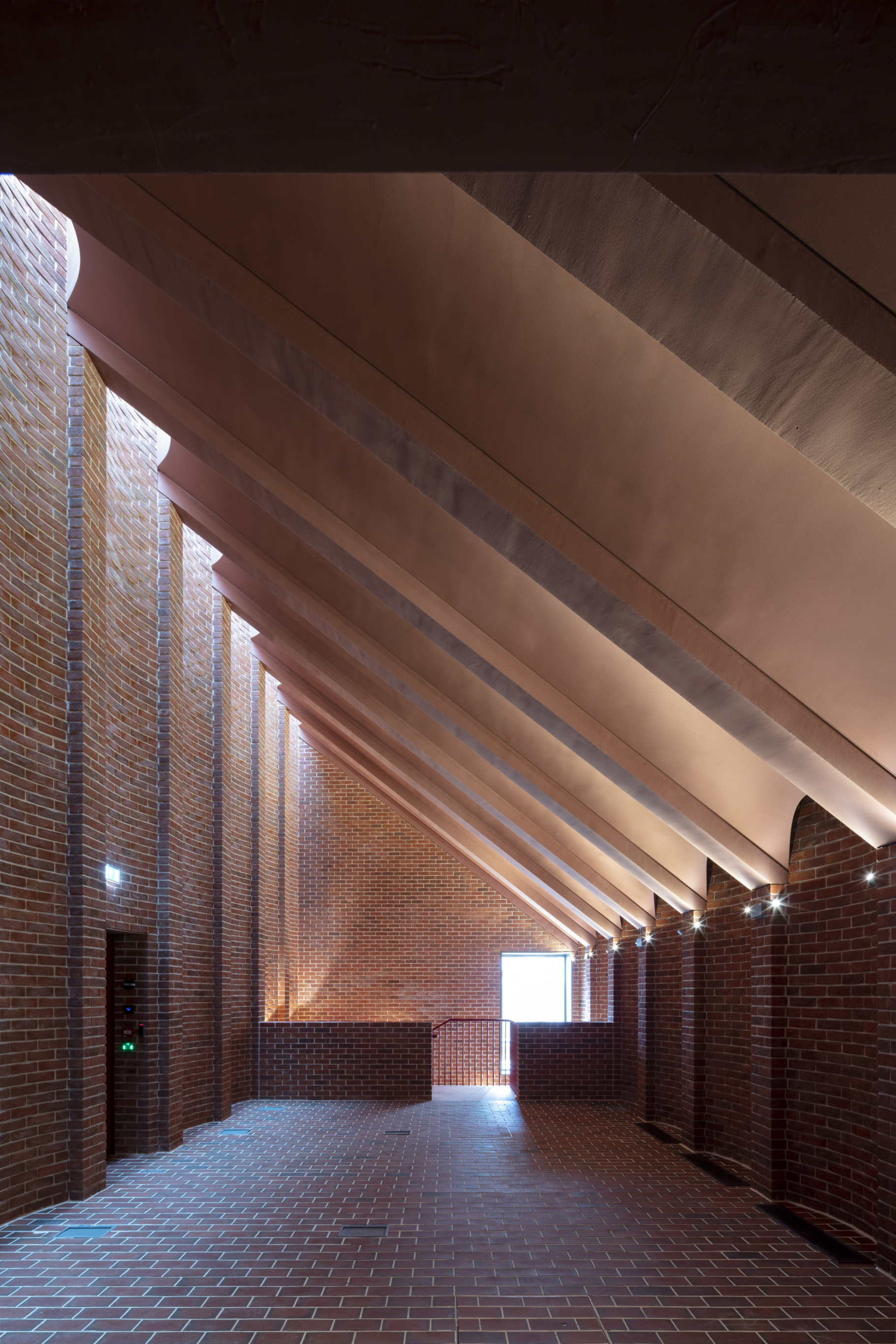
Ceiling vaults made from plasterboard on a metal-frame grid act as acoustic panels to counter the large, brick rooms.
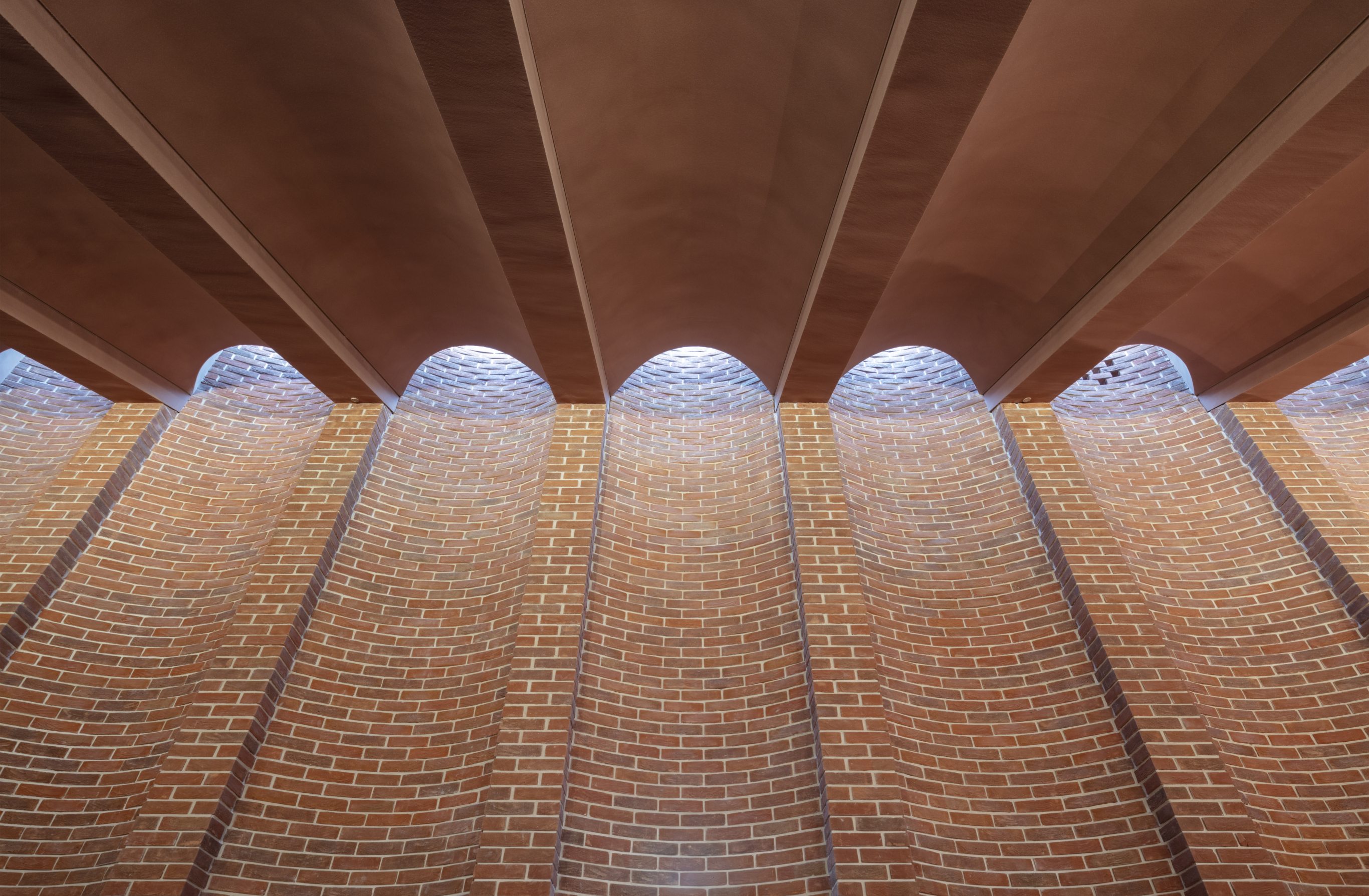
Coated in a rough, acoustic plaster gives the appearance of concrete, but avoids the use of embodied carbon where not necessary.
Credits
Client
International Rugby Experience
Architect
Níall McLaughlin Architects
Structural and civil engineer
Punch Consulting
Quantity surveyor
Engage PMS
Planning consultant
Town & Country Resources
Project manager
Engage PMS
Heritage consultant
Consarc
M&E engineer
Metec Consulting Engineers
Experience designer
Event Communications
Fire consultant
CK Fire Engineering
PSDP
Aegis Safety Management
Assigned certifier
Punch Consulting
Daylight consultant
BRE
Main contractor
Flynn
Additional images