How can timber contribute to healing environments in hospitals? Jens Axelsson, architect at White Arkitekter, and Cristiana Caira, healthcare architect at White Arkitekter, discuss salutogenic design, the evidence behind wood and wellbeing, and the technical, cultural and regulatory barriers that still shape its use in healthcare buildings.
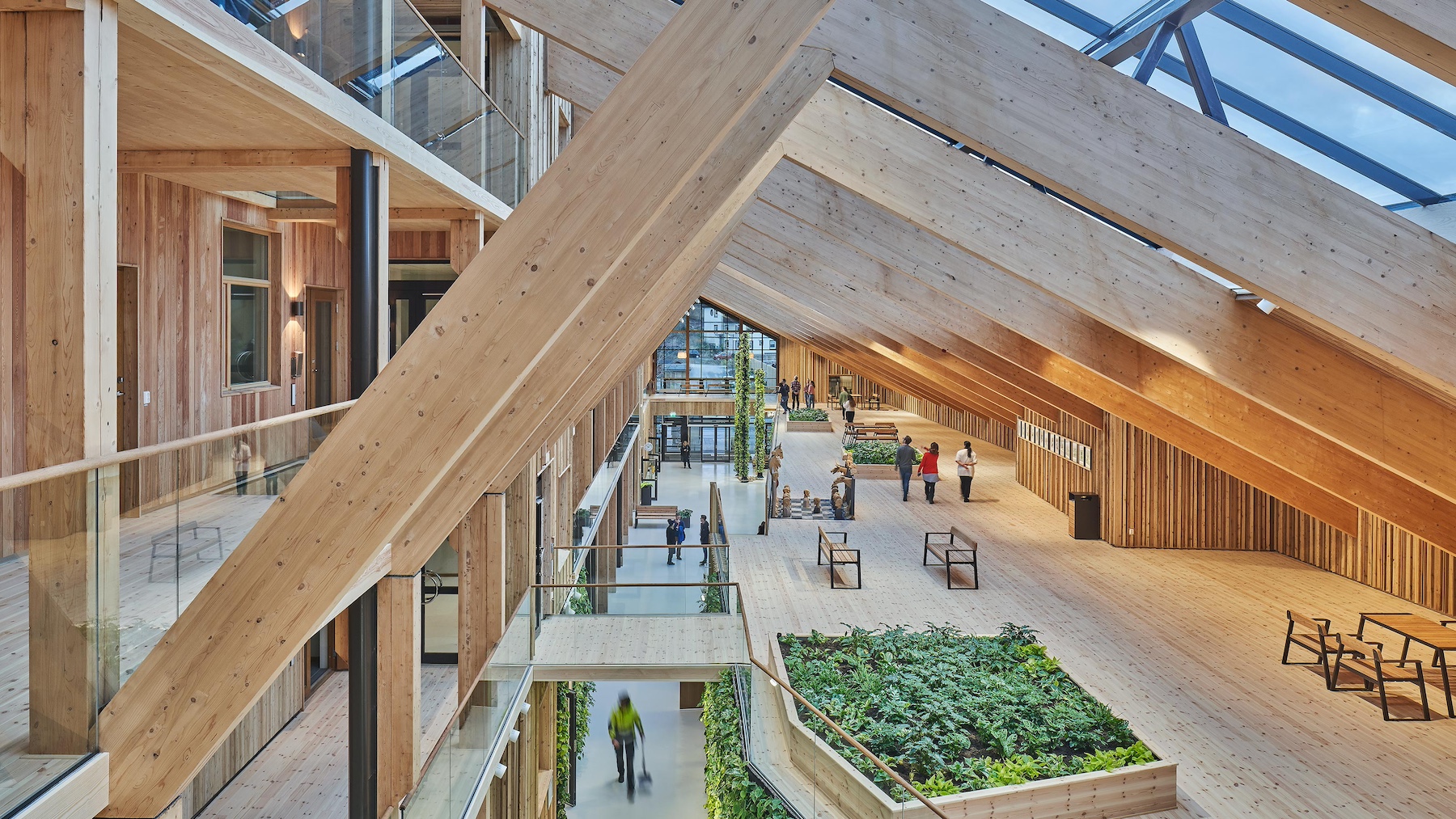
Lindesberg Health CentreLindesberg Health Centre by White Arkitekter.
How did the idea for producing the Wood for Health report come about?
Jens Axelsson We already had the sense that wood or timber is a healthy material, or at least one that carries healthy connotations. So the idea of wood in healthcare buildings existed before the report. We were approached by a research institute in Norway that was gathering a team to carry out this project, and they wanted to have an architect on board to bring the perspective of people designing buildings.
But the questions and topics had already been discussed within our firm for a long time, and also more broadly within the industry. We were approached partly because we had projects in our portfolio that used timber in clinical areas in hospital buildings. We already had this hypothesis that it is a good, healthy, or soothing material, with salutogenic qualities.
What do you hope the report will achieve?
Jens Axelsson The aim of the report is to share knowledge and experiences, but also to share the current state of research within the field, whilst reflecting on the difficulties and what aspects of research need to be pushed further. We need a commitment to more research on the topic, from a technical perspective, but also from a perspective on wellbeing and health impacts.
In the report you refer to ‘salutogenic design’. What is it? And what was your first encounter with ‘salutogenic design’?
Cristiana Caira The word consists of ‘salus’ (health) and ‘genesis’ (origin) – this means a stride towards improved health and wellbeing, rather than a pathogenic approach, which looks only at treating illness.
Jens Axelsson I think we were already talking about the aspects of salutogenic design when I studied architecture at school, quite a long time ago. It’s about working with healthy materials, thinking about how people feel, how people move around inside buildings – all those aspects are part of everyday architecture.
How are you applying it to your work?
Cristiana Caira To achieve salutogenic design, it is important to broaden the perspective of design and architecture to include everything from spatial configuration and wayfinding to material choices, natural daylight and interior design. In hospital design, it is not only about the strict functional requirements, but also about health promotion, biophilia, and user wellbeing, to name a few.
Jens Axelsson You can talk about salutogenesis in many fields – lifestyles, medicine, and so on. Everything that architecture can do to make people feel better, in a way, is a salutogenic approach. We’ve been working with those questions and topics as part of the design process, sometimes more explicitly than others. But being very aware of it, and deliberately framing design in those terms, often leads you towards healthcare buildings or medical infrastructure, where these questions become especially clear.
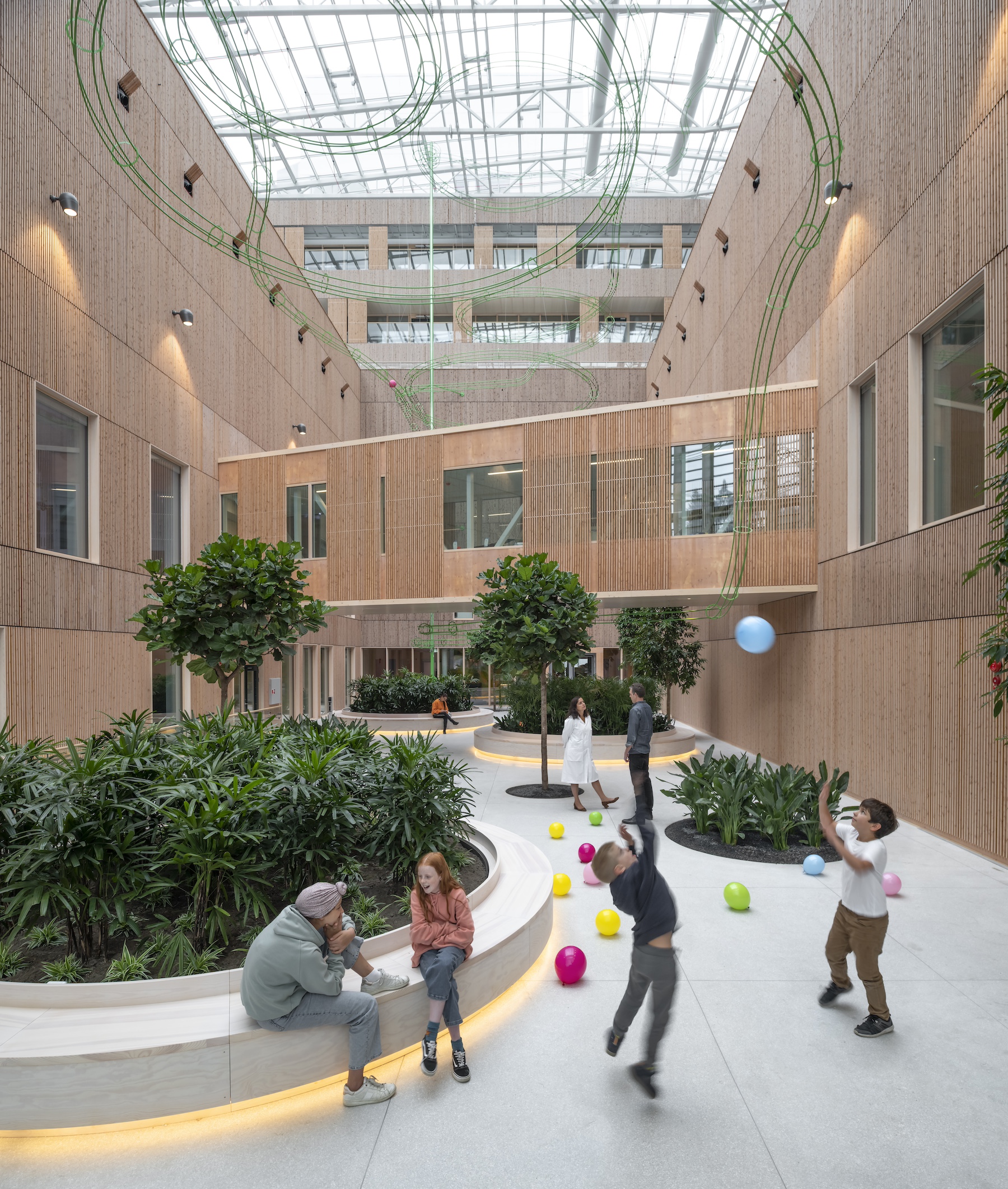
Queen Silvia Children’s Hospital in Gothenburg by White Arkitekter.
In what ways can wood contribute to patient recovery?
Cristiana Caira The aim of design is to always design with a user-friendly approach. Using the salutogenic approach to design a healing environment is key to contributing to patient recovery. There are many studies that point in the direction of wood supporting the recovery of patients. For example, incorporating panels of wood may reduce certain indicators of stress and pain, leading to reduced recovery time and ultimately a shorter length of stay in hospital. An example is a study from a hospital in Trondheim (Norway) where they measured patients’ experiences of wood, ultimately indicating that exposure to wood is psychologically beneficial. A similar study is currently ongoing at Skellefteå Hospital in Sweden.
Secondly, wood is a familiar material that reminds the user of nature. Its biophilic aspects should not be underestimated, and we know that spending time in nature can have positive outcomes on healing and recovery. Studies suggest that patients recover faster when they have a view of nature from their hospital room, compared to a view of a building. This illustrates the importance that a connection to nature has on our wellbeing.
What are the assumptions about hygiene and timber in hospitals? And what can shift client and stakeholder attitudes?
Cristiana Caira The common concerns around the use of wood in hospitals are around porosity and microbial growth. While not all environments are suitable for exposed timber, there are surface treatments for wood that make it suitable for environments with high demands on infection control.
Showcasing built examples and the results from research can also help shift attitudes to timber in healthcare settings. Wood and timber have several advantages, both in user experiences and maintenance efforts. Wooden panels are easy to replace, withstand abrasion and do not need to be repainted or fixed if there is minor wear. We hope that this report acts as a starting point to change attitudes towards the use of timber in hospitals.
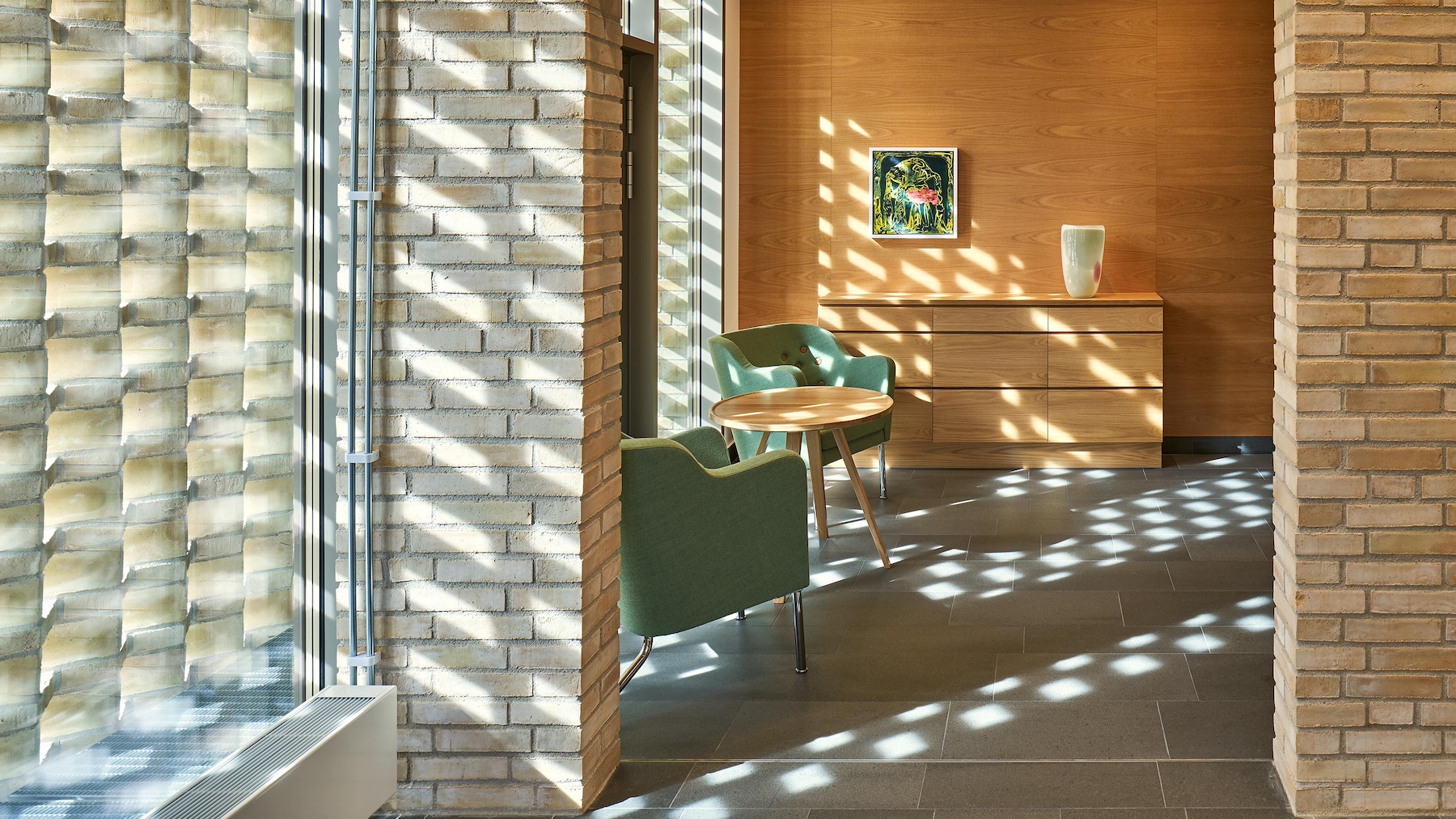
‘Future Academic Hospital – Entrance 100’ at Uppsala University Hospital by White Arkitekter.
People often ask about maintenance, particularly in healthcare environments. How should clients think about specifying and maintaining timber surfaces?
Jens Axelsson There are lacquers, varnishes and other treatments that make timber suitable for most areas. Of course there are some zones where exposed timber is difficult to use, but you can still use timber structurally and leave it unexposed if necessary.
In terms of maintenance, I’ve worked on projects where management actually preferred timber wall claddings, such as plywood panels, because they are easier to maintain. In areas where beds or equipment move around a lot, painted drywall can get scratched very easily. Timber sheet materials are often more robust, and if they do become damaged, boards can be replaced quite easily.
You also tend not to see scratches in the same way you do on painted walls, which can look worn very quickly. So from a maintenance perspective, timber can be a very practical material.
It’s also important to determine the type of environment the wood should be in, as the demands on infection control and fire safety differ based on if the space is a high-risk area. Public spaces often have lower levels of infection control, rather than clinical environments, so it’s about finding the correct material to optimise its performance in different spaces.
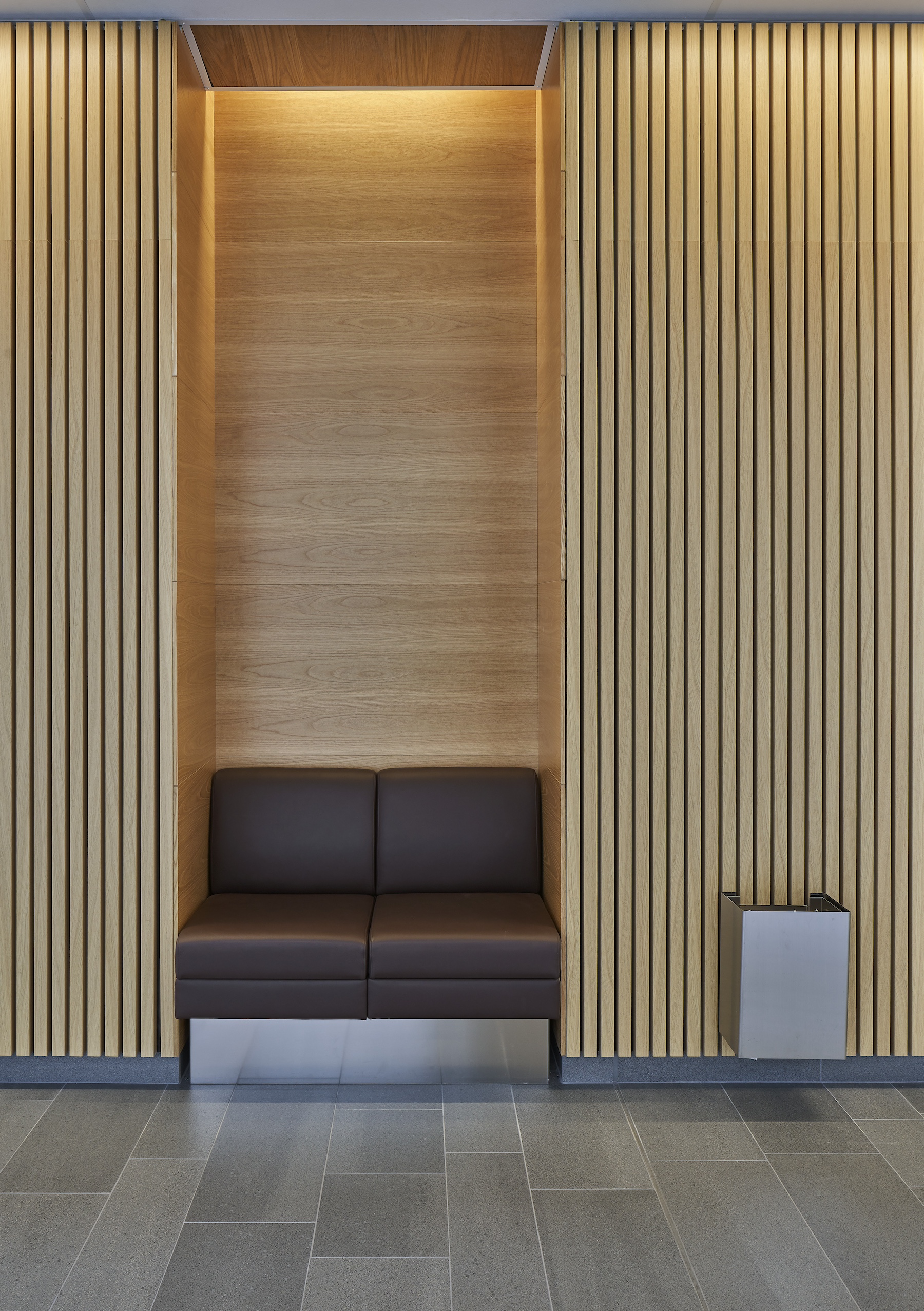
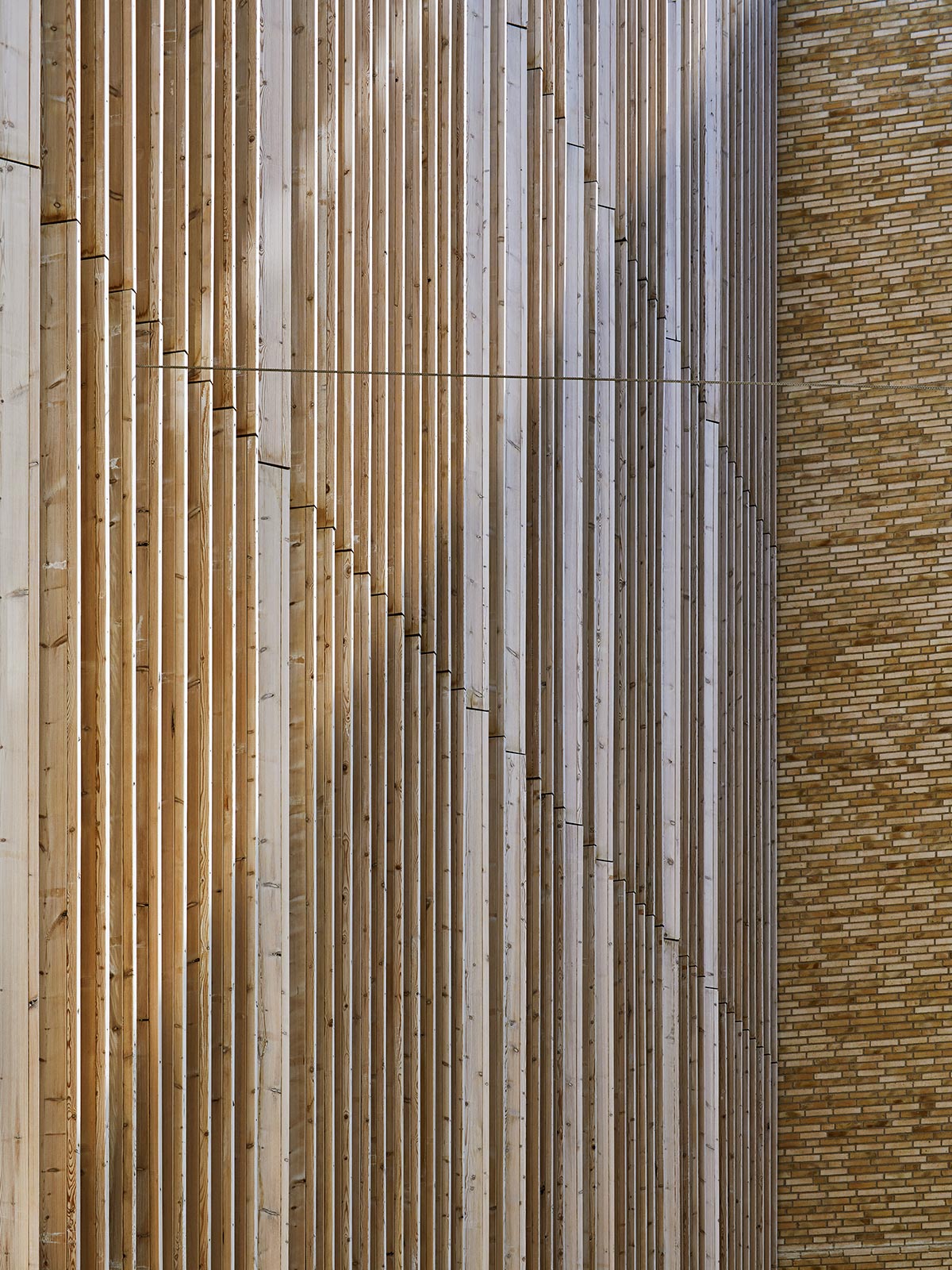
Close-ups of internal timber detailing inside the ‘Future Academic Hospital – Entrance 100’ at Uppsala University Hospital by White Arkitekter.
Wood for Health discusses coatings as critical enablers for wood in clinical environments. How closely do architects need to work with manufacturers and researchers to specify appropriate finishes?
Jens Axelsson Often very closely. We need to ensure a certain level of performance on coatings and materials, and similarly ensure that wood withstands various disinfectants that are commonly used in healthcare environments.
One of the advantages of using wood over other materials is that lacquer or advanced stains on exposed wood do not greatly affect the material’s moisture buffering, making the wood less permeable. In the end, it is always a collaboration between user, client, architect and contractor to find the correct material
Where do you see the biggest remaining knowledge gaps that still need to be addressed before wood becomes mainstream in healthcare design?
Jens Axelsson We need to fill the knowledge gap on how much of a positive impact wood has on recovery processes and staff experience. If wood can reduce stress, pain and recovery time, there can be significant economic savings for healthcare management and families, as lengthy hospital stays are expensive.
For staff, an attractive workspace is crucial, especially considering the shortage of healthcare staff globally. Attracting and retaining staff is necessary, and an important factor in this is the appeal of the work environment and wellbeing.
It’s also important to continue developing more technical knowledge about wood – both as a surface material, as well as a constructive and load-bearing material. If we want wood to become mainstream in healthcare design, coatings, material performance, technical control and fire safety need to be studied further, and more reports need to be published.
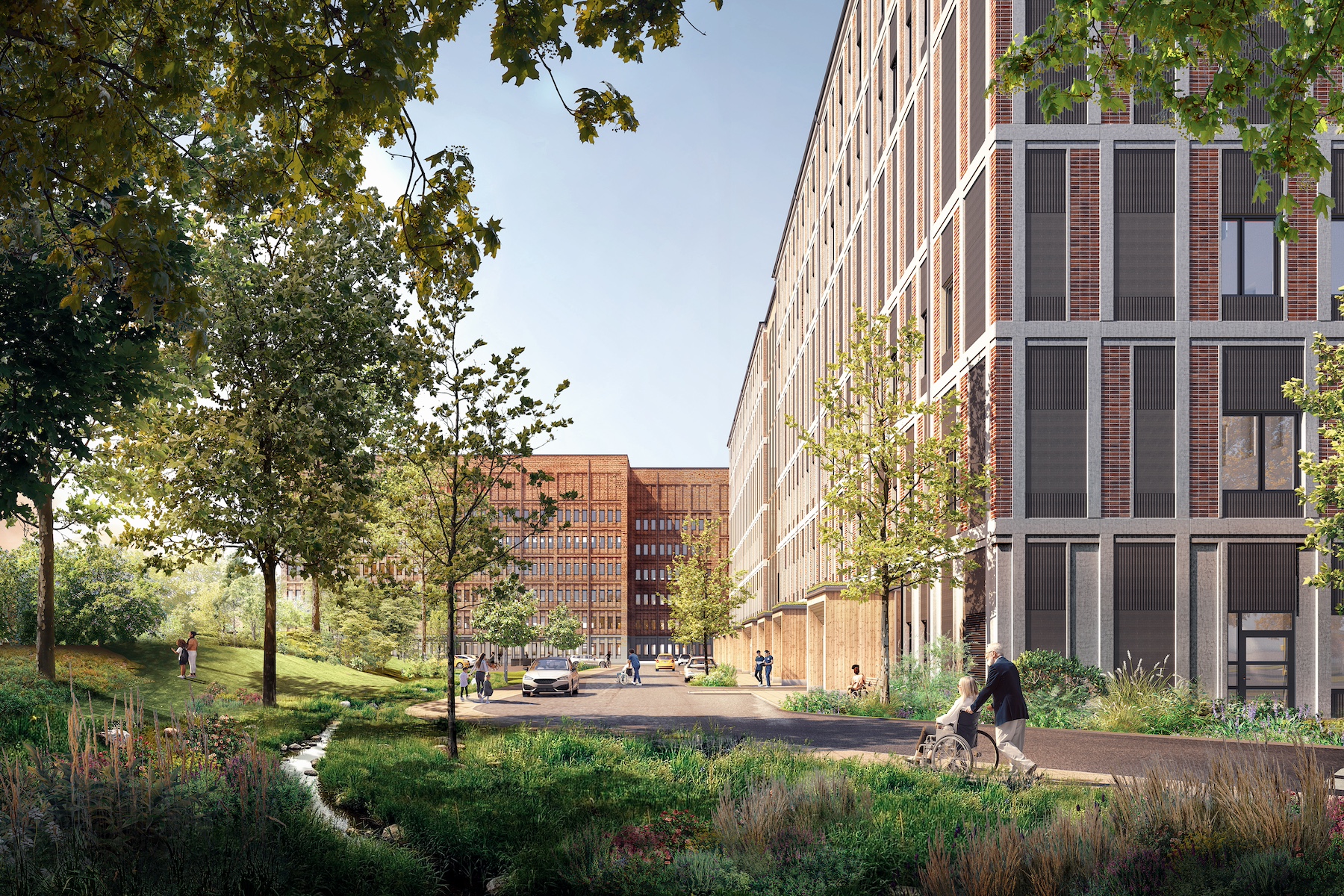
Render of White Arkitekter’s proposal for Central Hospital in Karlstad.
You’ve practised in London and now in Gothenburg, and worked in several other countries. What differences do you see in attitudes towards specifying timber, and what can the UK learn?
Jens Axelsson In Scandinavia, and also in parts of Germany, we use a lot of timber, both as a load-bearing material and for wall claddings, façades and interiors. We are very familiar with it as part of the palette of materials. In Sweden, for example, almost every detached house is made from timber, so it’s something everyone has seen or touched, whether or not they work in construction.
Nature is also very close in most Scandinavian cities. It’s where we exercise or take a walk, so timber feels like a natural material to use – often the first material that comes to hand.
The UK is driven by standards, especially fire safety, as well as layout and functional requirements, which favour the use of well-known materials. But leaving standards open for innovation and development can play a key role in improving the design of new buildings.
The Wood for Health report shows that there are available coatings that are suitable for disinfectants and infection control. Regarding fire safety, some coating products either improve or reduce classification. This means that it is very important to study the classification and documentation of materials and carefully assess the precise location of wood, to evaluate the correct type of treatment. It is still crucial to regard fire safety, but the discussion has to be deepened and widened to allow for alternative solutions.
If you were advising a UK client embarking on a new healthcare project today, what would be your key message about the role wood can play in creating genuinely health-promoting environments?
Cristiana Caira Wood can play a key role in not only delivering sustainable projects, but also delivering spaces that focus on user-centred design to create attractive environments both for staff and patients. During a time of staff shortages in healthcare, it is very important to create attractive environments so hospitals can retain and grow their workforce.