Martin Williams of Williams Griffiths Architects explains how – and why – the practice took on a flood-prone site in rural Suffolk, complex technical constrants and an extremely low budget to give an extraordinary client the home that she deserves.
How did you find the client? Or how did she find you?
She went thought the RIBA enquiry system – we’ve had a few projects that way in the past. The client, who has been involved with education and design over the years, had this opportunity to get hold of this piece of land from a local landowner. She had an extremely small budget, but this amazing site.
What’s so special about the site?
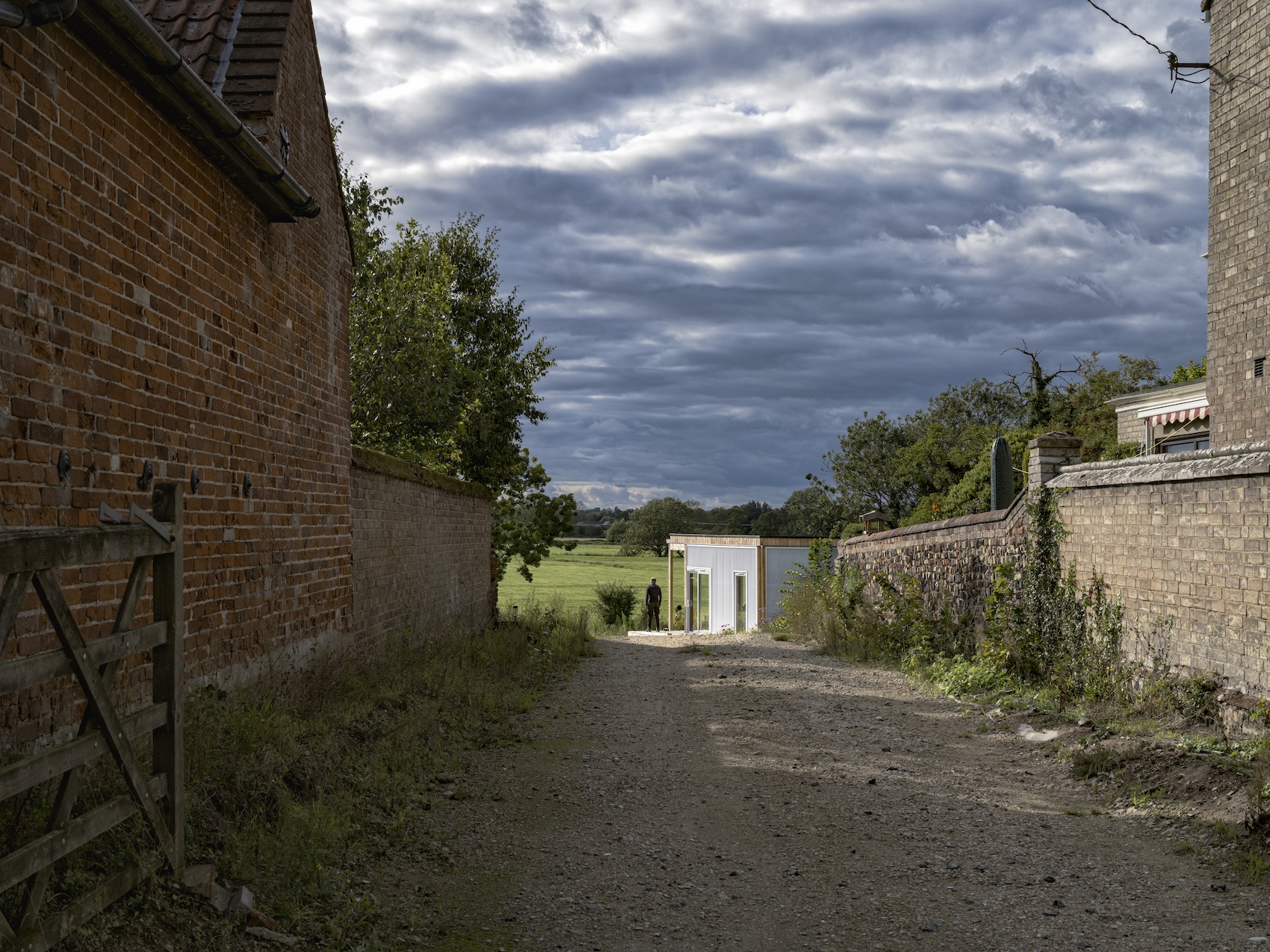
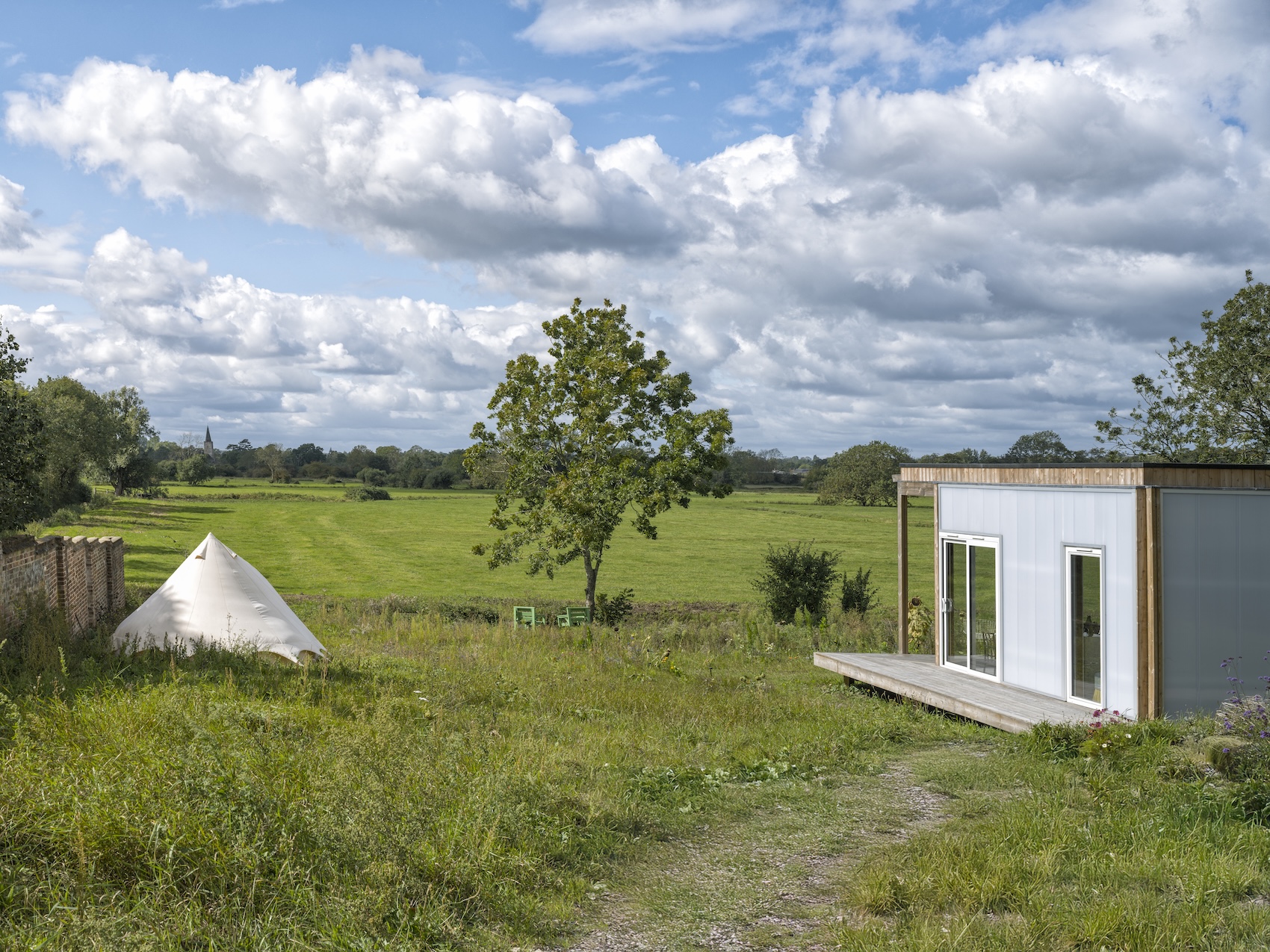
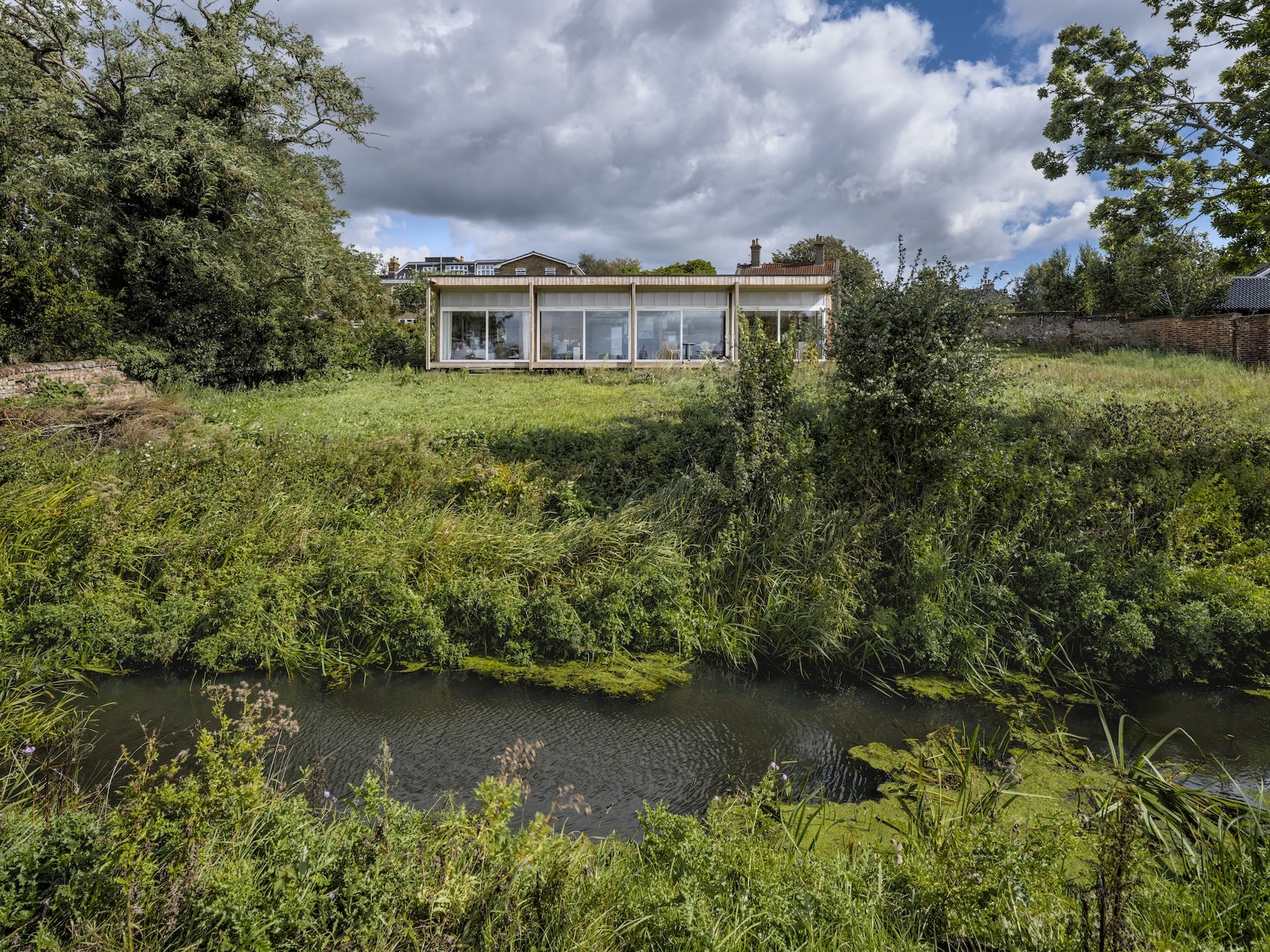
It’s on the edge of a historic town, with listed farm buildings to the left hand side of the entrance, and a very nice series of Victorian houses next to it. Then this narrow ginnel between two masonry walls, before the site opens up to this long vista across the landscape to the church in the distance. So you’ve got this spire of the church as your focal point for the site. And it’s just beautiful. It’s by a water meadow, so there is flooding at certain times of the year. The rest of the time there are Friesian cows meandering around, doing their thing. They make local cheese and butter at the local farm. The remains of the former St Mary Magdalene Chapel are thought to be nearby, and there’s a medieval causeway – you can see the inflexion in the landscape in the distance. So it’s this beautiful historic landscape setting. But of course these things can come with degrees of difficulty.
So what were the constraints?
The view across the site is not a protected view, but it was stressed to us by the planners as being important for visual permeability from the town through to the wider landscape beyond, and they didn’t want anything obscuring that. Also, the garden belonging to the neighbouring house is quite elevated, and it just felt unreasonable to put something on the site that blocked their enjoyment of the landscape. So we chose to take on board this self-imposed restriction – to keep the building as low as we possibly could. More prosaically, there is a high-pressure water main and outflow drainage running through the site.
How did these challenges impact the design?
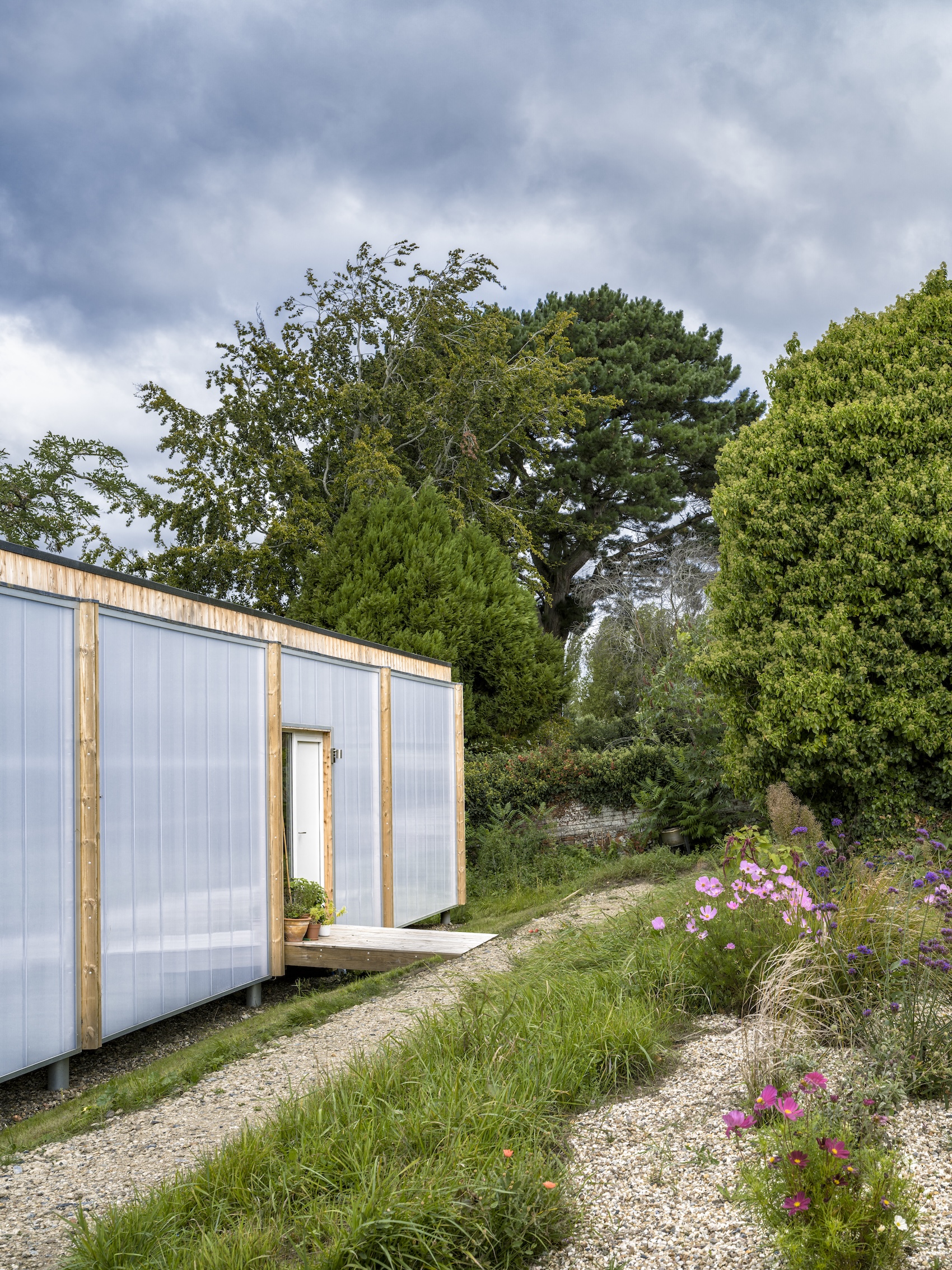
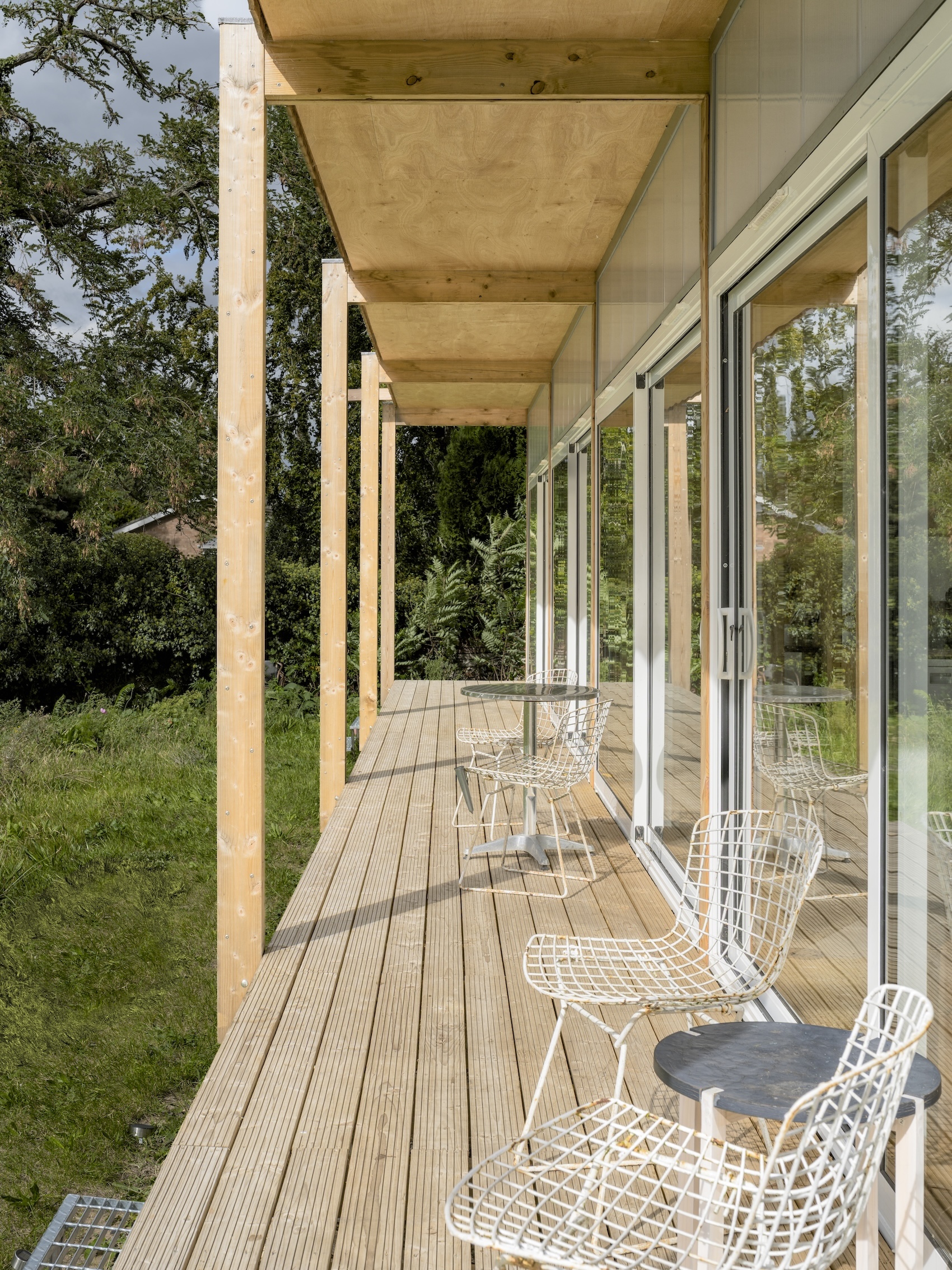
All of these ‘positive constraints’ start to inform where and how you can work. The flood plain, and the various issues immediately underneath the site, meant that the building couldn’t be ground-bearing. It would need to float off the ground, and we would be threading the structural feet through this matrix of pipework. So we had this concept of a light-touch building that could be flooded with light. Scott Boote of Agnos Studio in Bristol, who did the engineering, was completely brilliant and led on the negotiations with the various water authorities to arrive at the final structural scheme.
What was the planners’ response to your proposed approach?
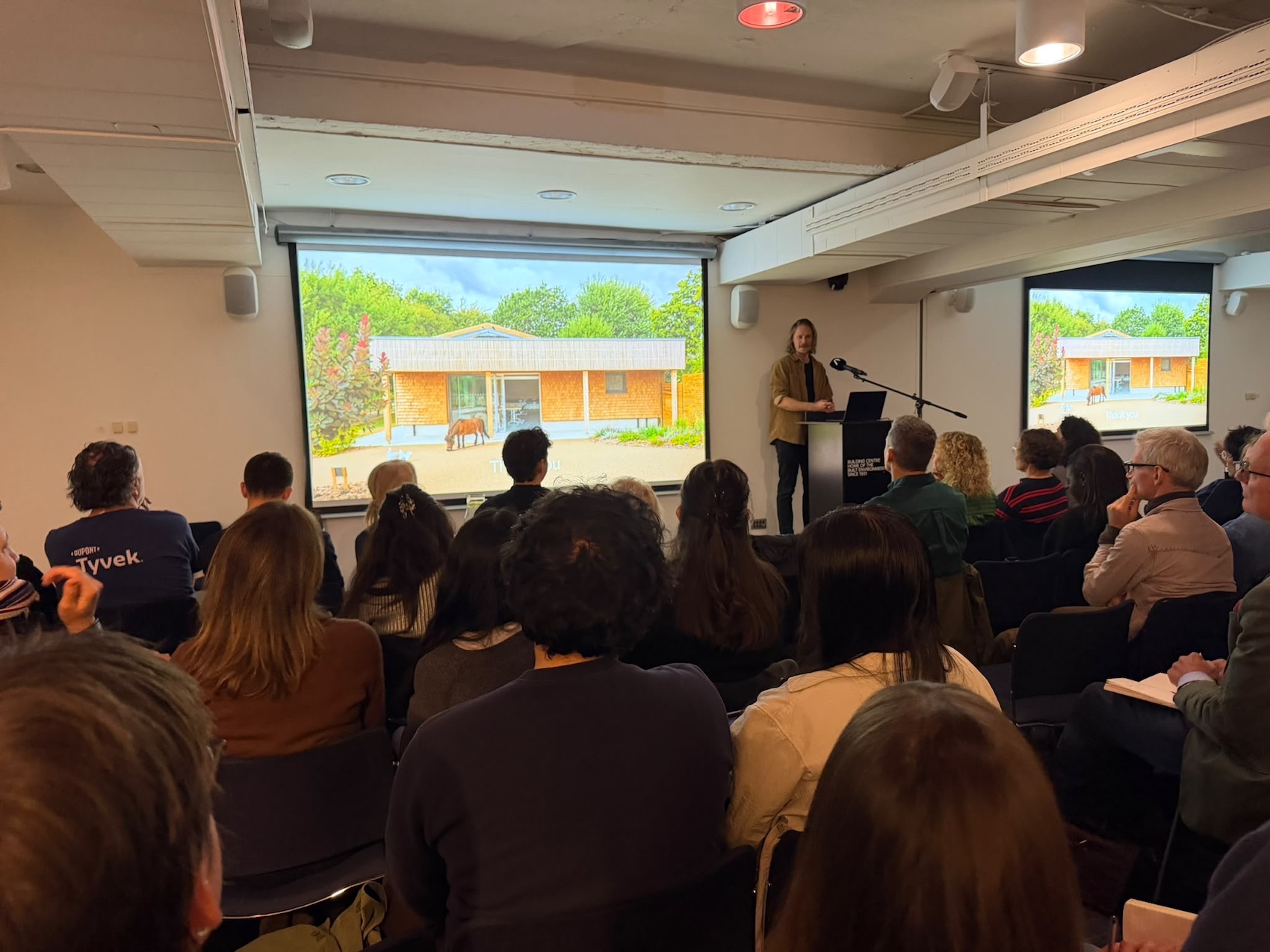
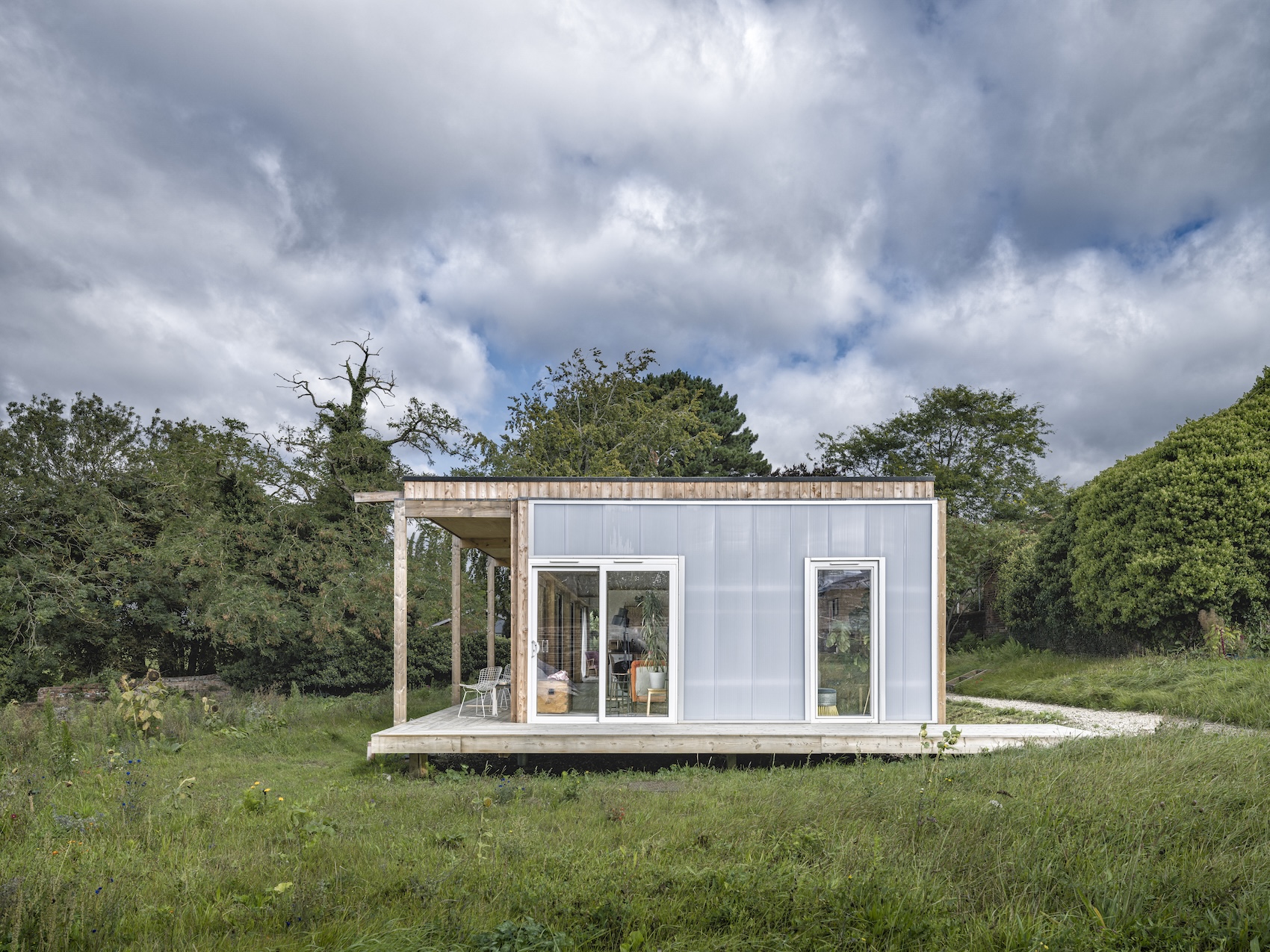
The client had already got a pre-app response, based on a little freehand drawing, and planning was pretty positive throughout the process. They didn’t want to see a multiple-home development, and were very happy with the idea of a single dwelling. We talked at length about approach and material and language, and they were very much in support of a scheme that could be seen as having a more ‘back garden’ contemporary language than something in heavy masonry materials that would feel as though the town was expanding and encroaching into the landscape. So that, along with our self-imposed height constraint, was a mandate for us to explore the idea of building on this great history of timber pavilions. It felt like the right approach: manageable; deliverable as a concept; and compatible with the technical issues around groundworks that we needed to address.
Can you tell us about the layout of the house itself?
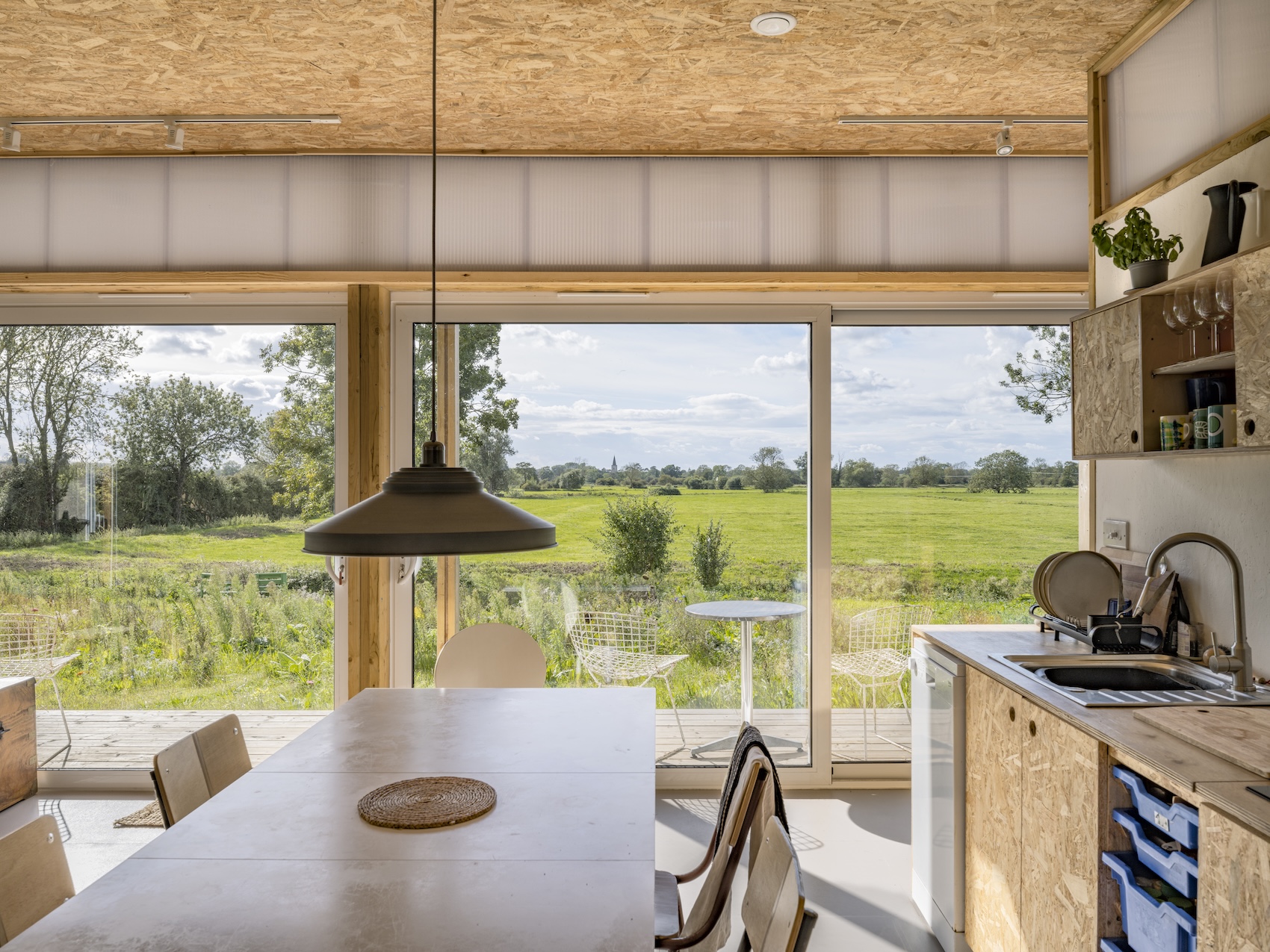
The programme is pretty straightforward: one bedroom; a living/kitchen/dining space and a secondary room that could be used as an occasional bedroom or extra living space, with everything orientated towards the view. The view is spectacular, and you only want to look one way, which is to the west.
How did you approach the build?
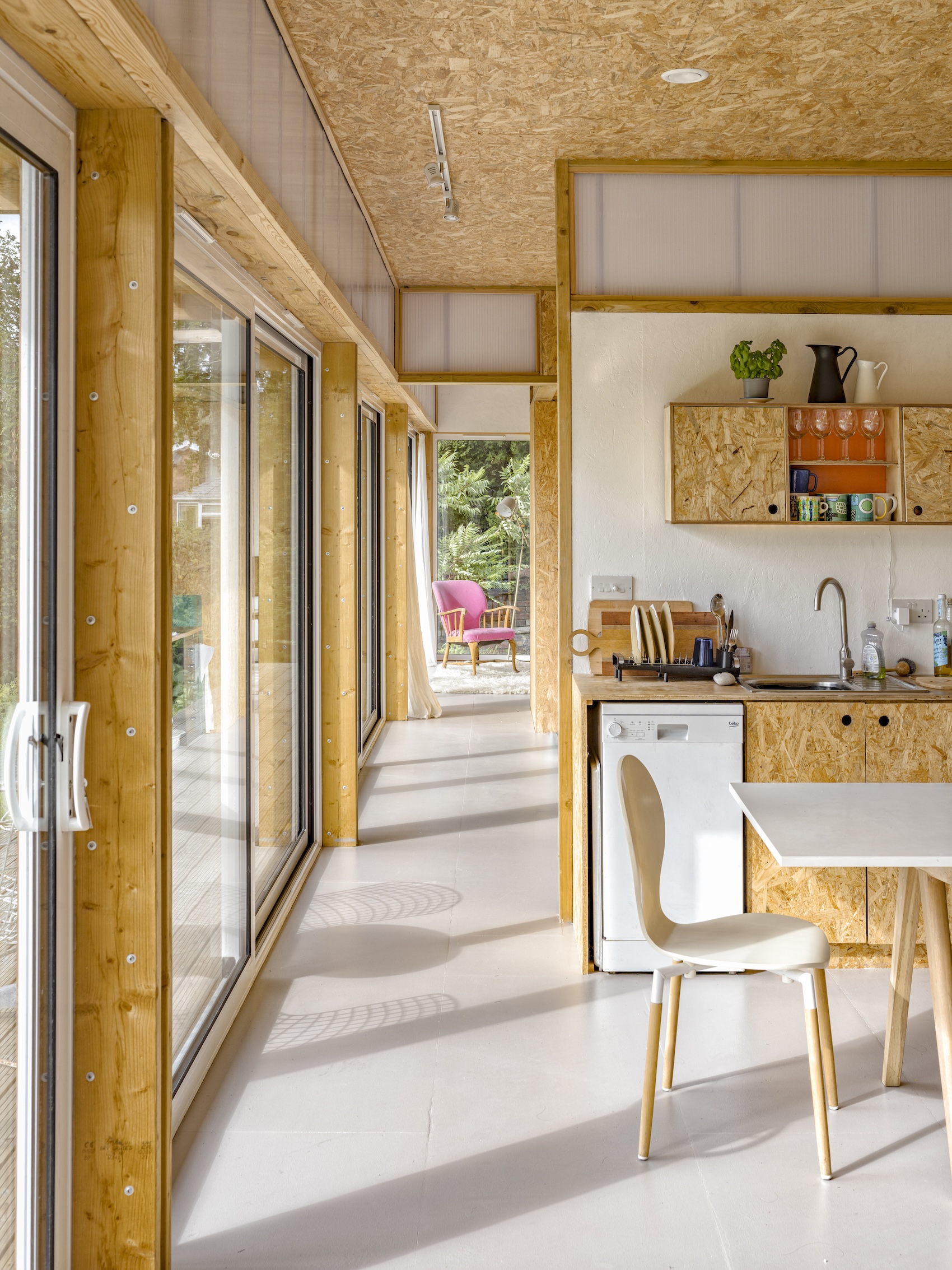
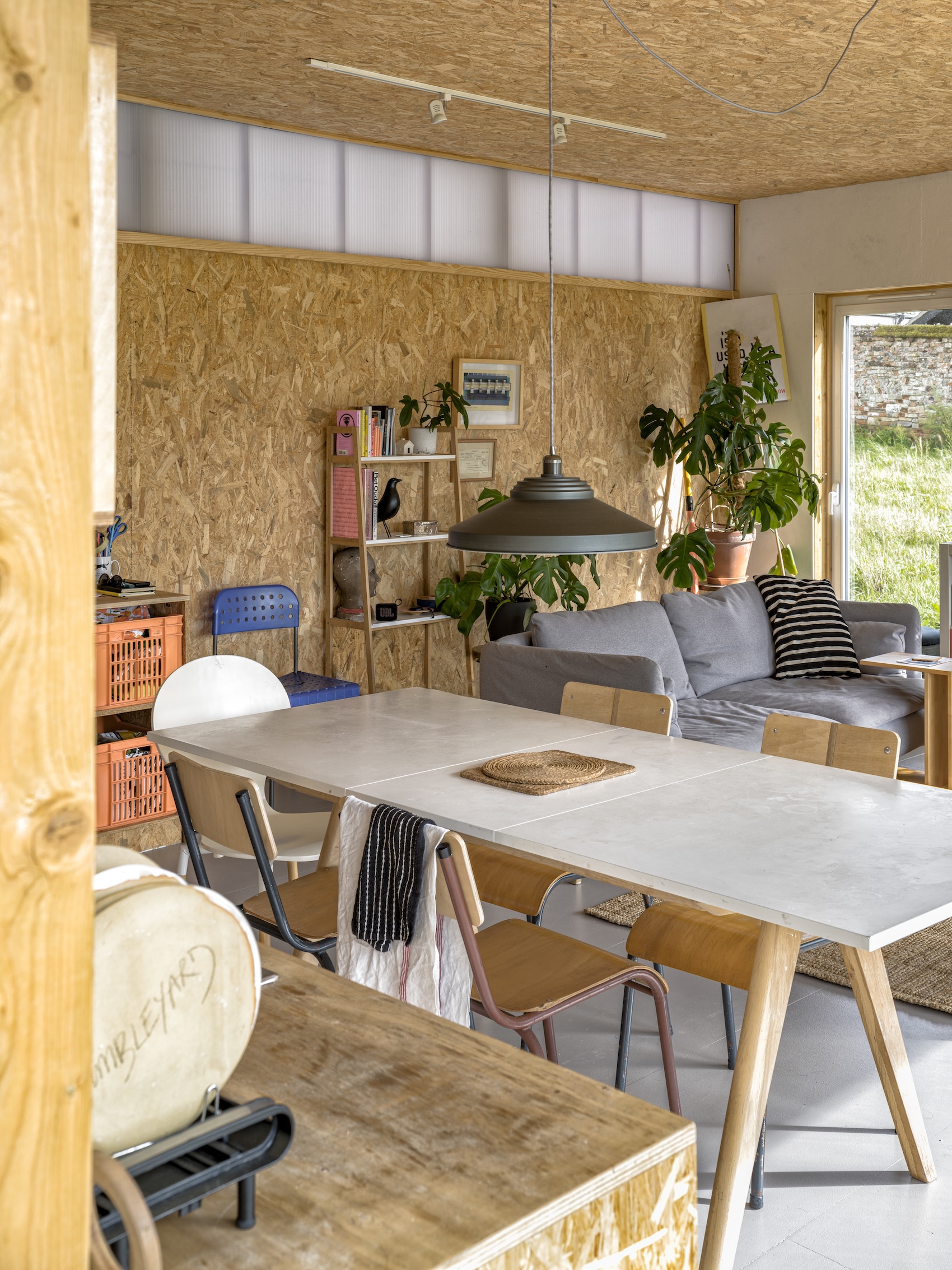
The timeline was a little protracted. The initial design period was quite quick, and planning took months rather than years. But it took about a year to build. We lost many many months resolving issues around the groundworks with the various other parties involved, and, as with so many small projects, you often get one element that arrives out of sequence. It wasn’t a self-build project in planning terms, but it had aspects of a self-build project. The contractors were two carpenters who had worked on previous projects for us, and were the right fit. They built the house from the ground up in a very hands-on way. The only thing they didn’t do themselves was install the services. We were editing the building as it went along, to look for savings and manage the budget. Everyone got stuck in to support the client and bring the project in at the lowest possible cost. At the end of the day, we all collectively helped to get it over the line.
How did this inform the approach to the interiors?
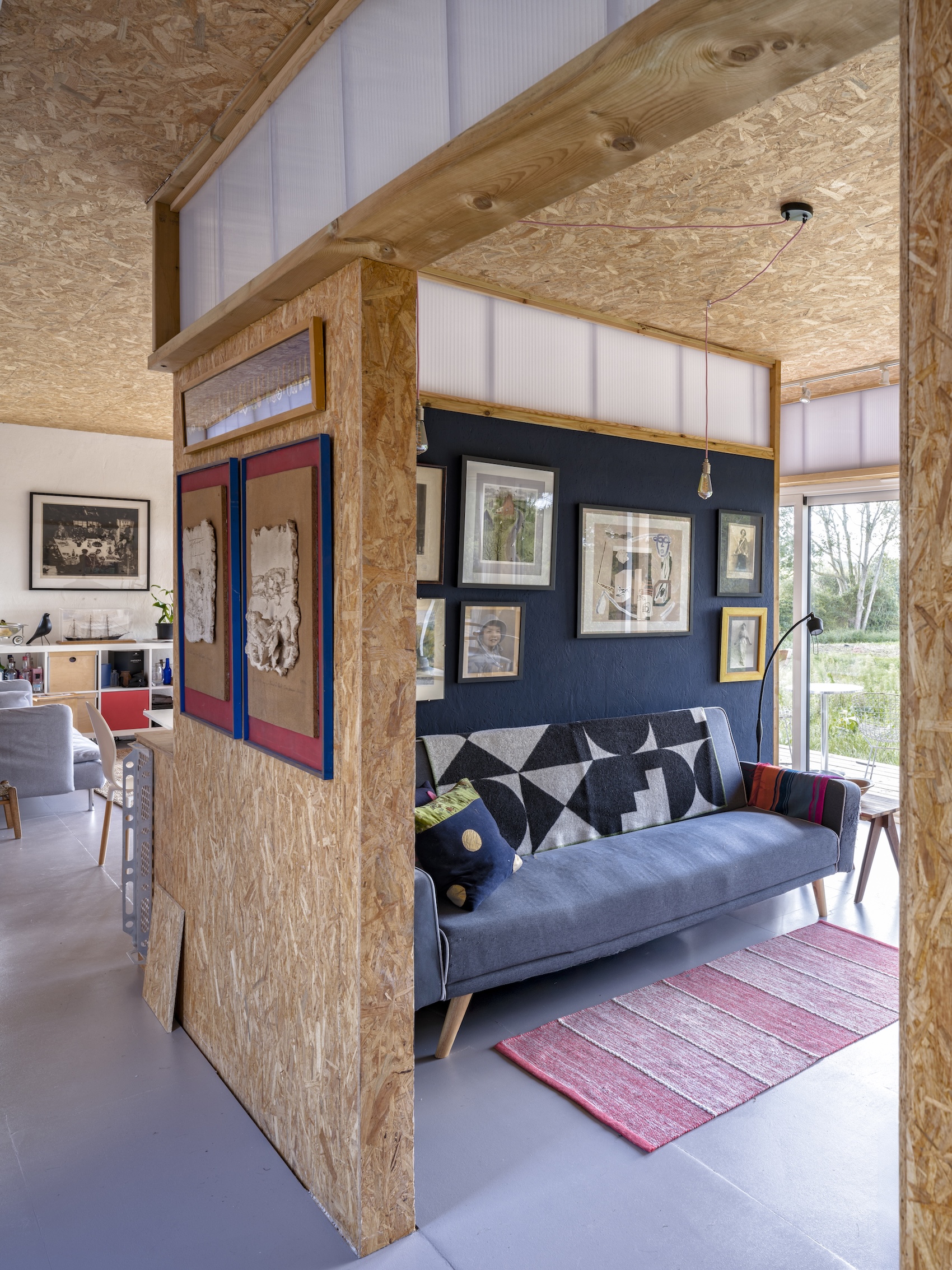
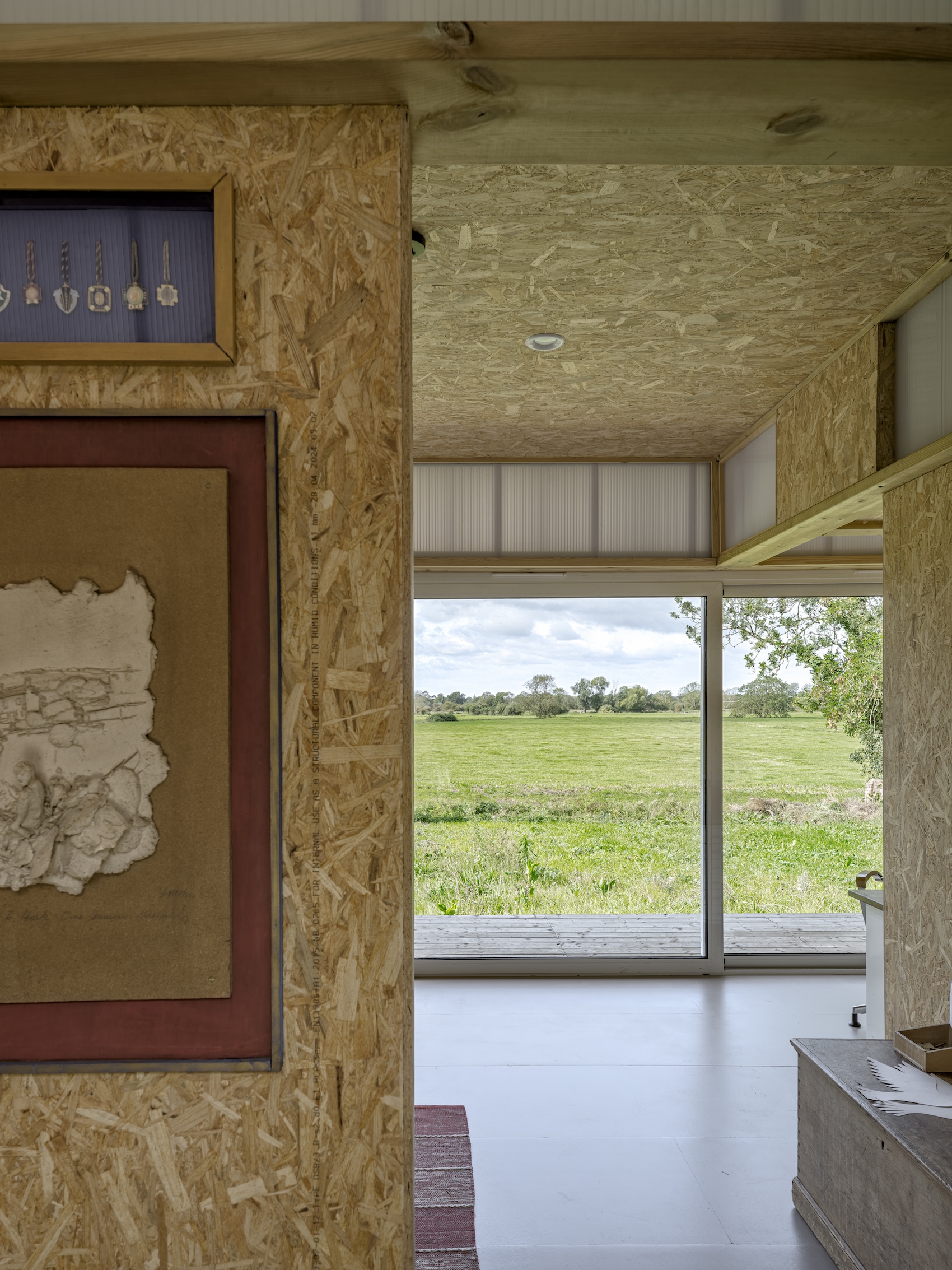
It meant that everything had to be kept very honest. The client collects things; she has this incredible ability to find amazing objects and repurpose them, which impacted the way she interacted with the whole process. We controlled the key details, and established some principles about how we were going to do that. But when it came to the interior elements, we left her to get on with it. Being super-prescriptive, and trying to control 100% of the project – not that the budget would have sustained that – wouldn’t have been the right approach. The whole process of repurposing things was fundamental to the project becoming the home the client wanted to live in. What interested us was providing the opportunity to make that happen. It’s made out of the most honest things, some of them very simple – paintings and hand-made crockery and little bits that she’s found – and somehow there’s a nice symbiosis about that. She’s a very interesting person, and if you work for somebody like that it makes your job much sweeter in so many ways. You just have to stand back and enjoy it.
Are you happy with the way it’s turned out?
It’s wonderful to visit. The client has planted out the site in a very naturalistic way, which is exactly what was required. When we first visited the site, we were standing up to our knees in grasses and brambles, and you got the sense of a green and verdant piece of land. It’s lovely to see it now that a season has passed and the site has returned to that state – except that there’s a pavilion sitting there now.