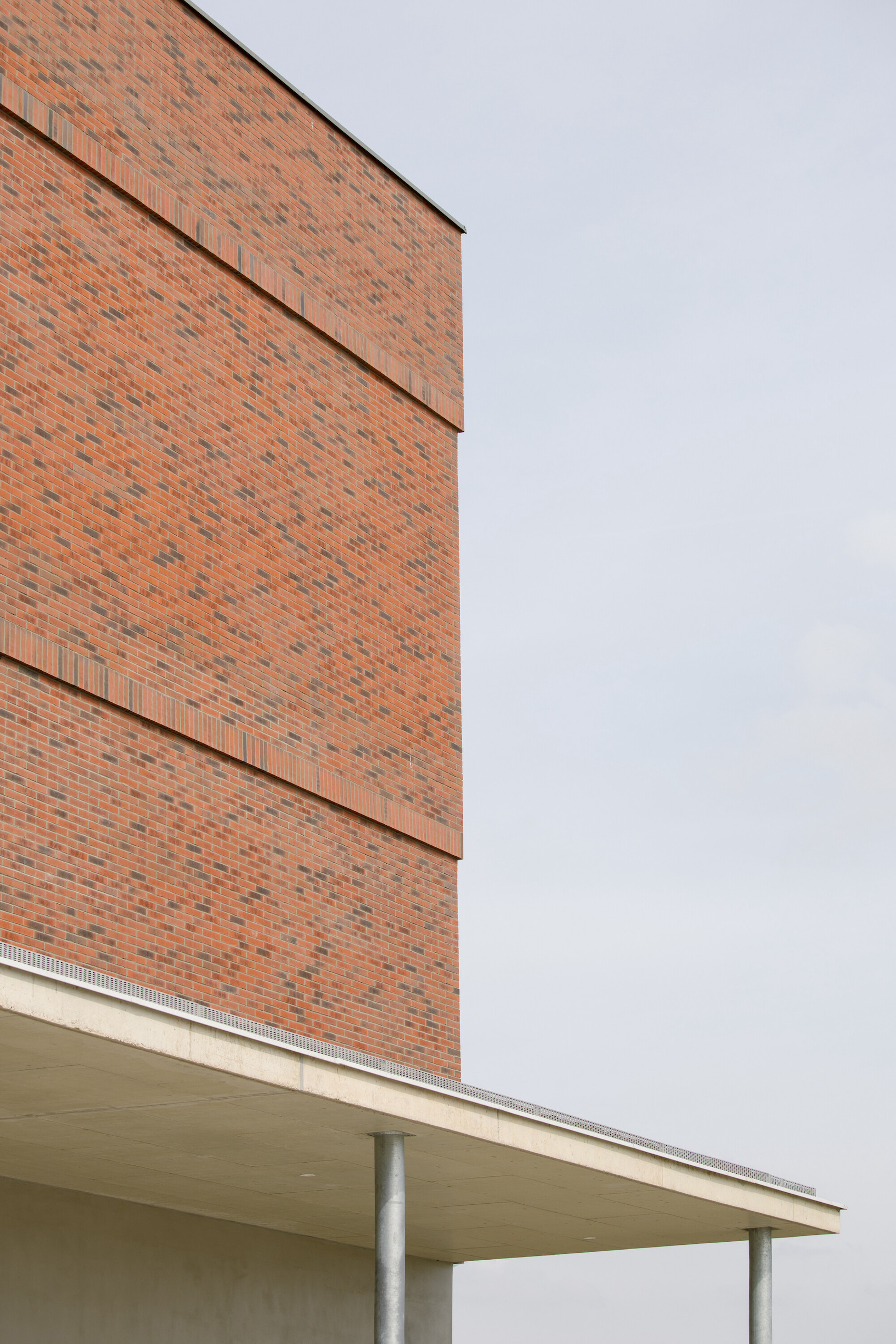
OVA’s new school in Chýně, near Prague, combines formal and informal learning spaces with sports and community facilities, creating a flexible, courtyard-based campus that welcomes people of all ages.
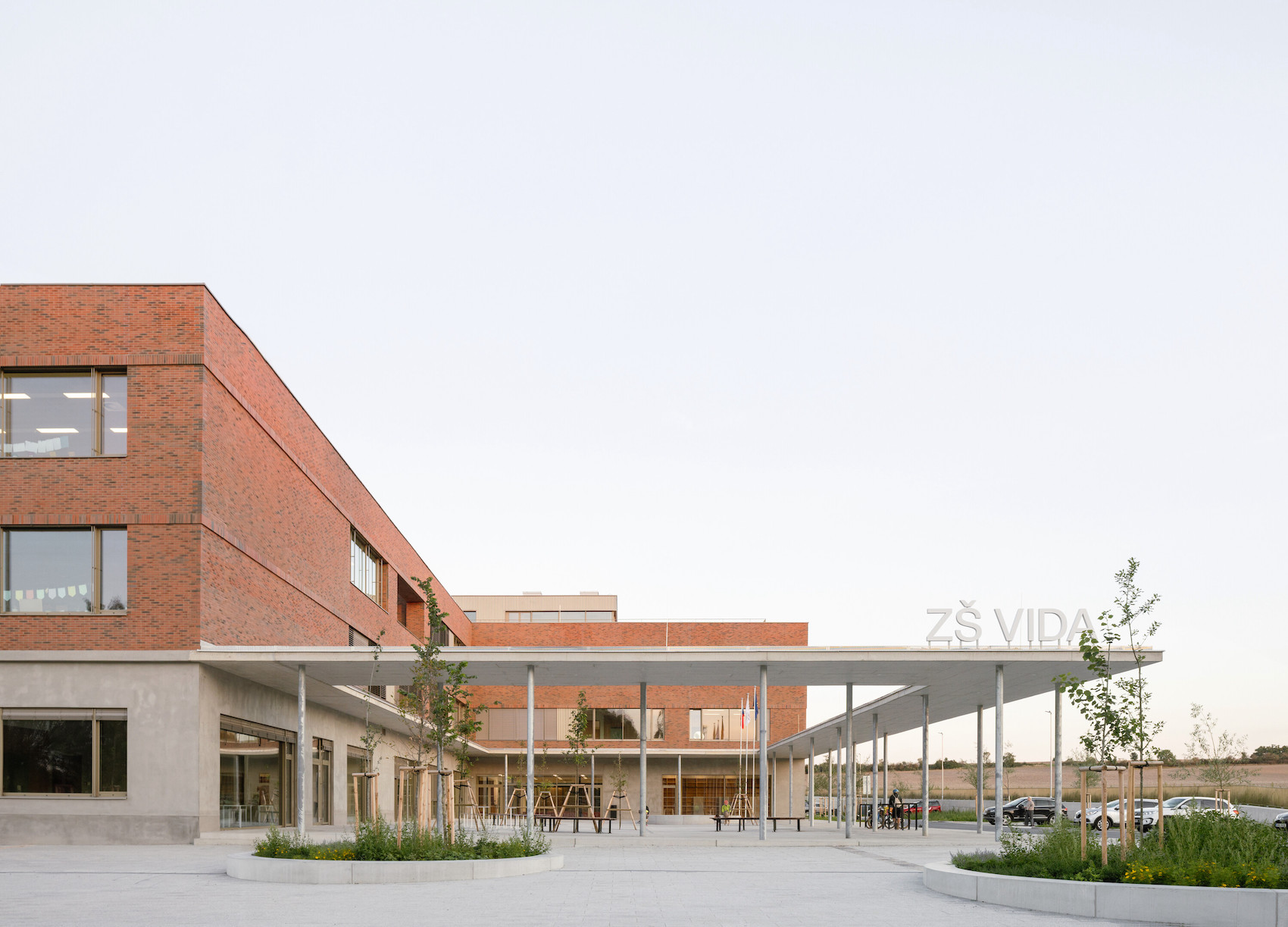
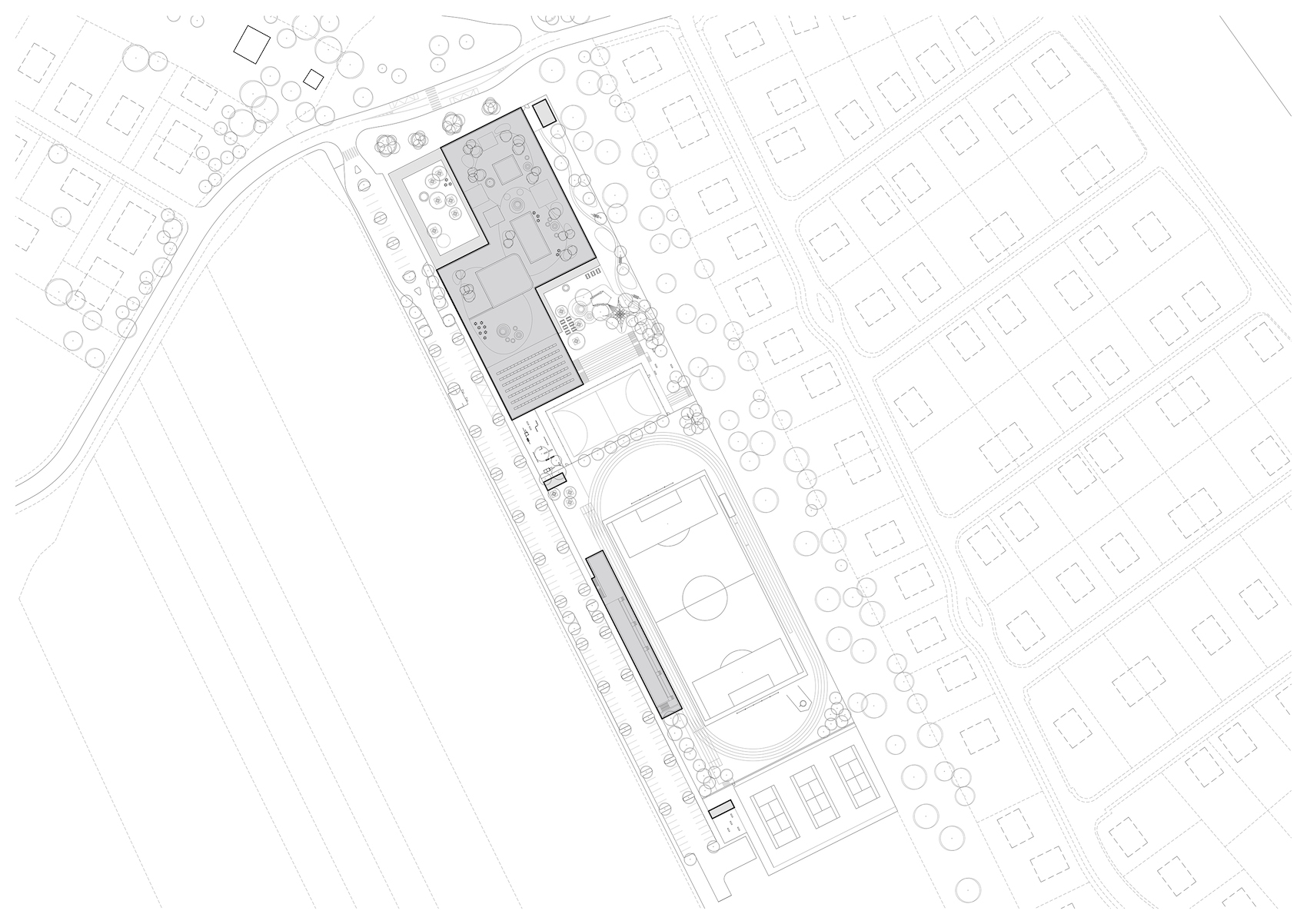
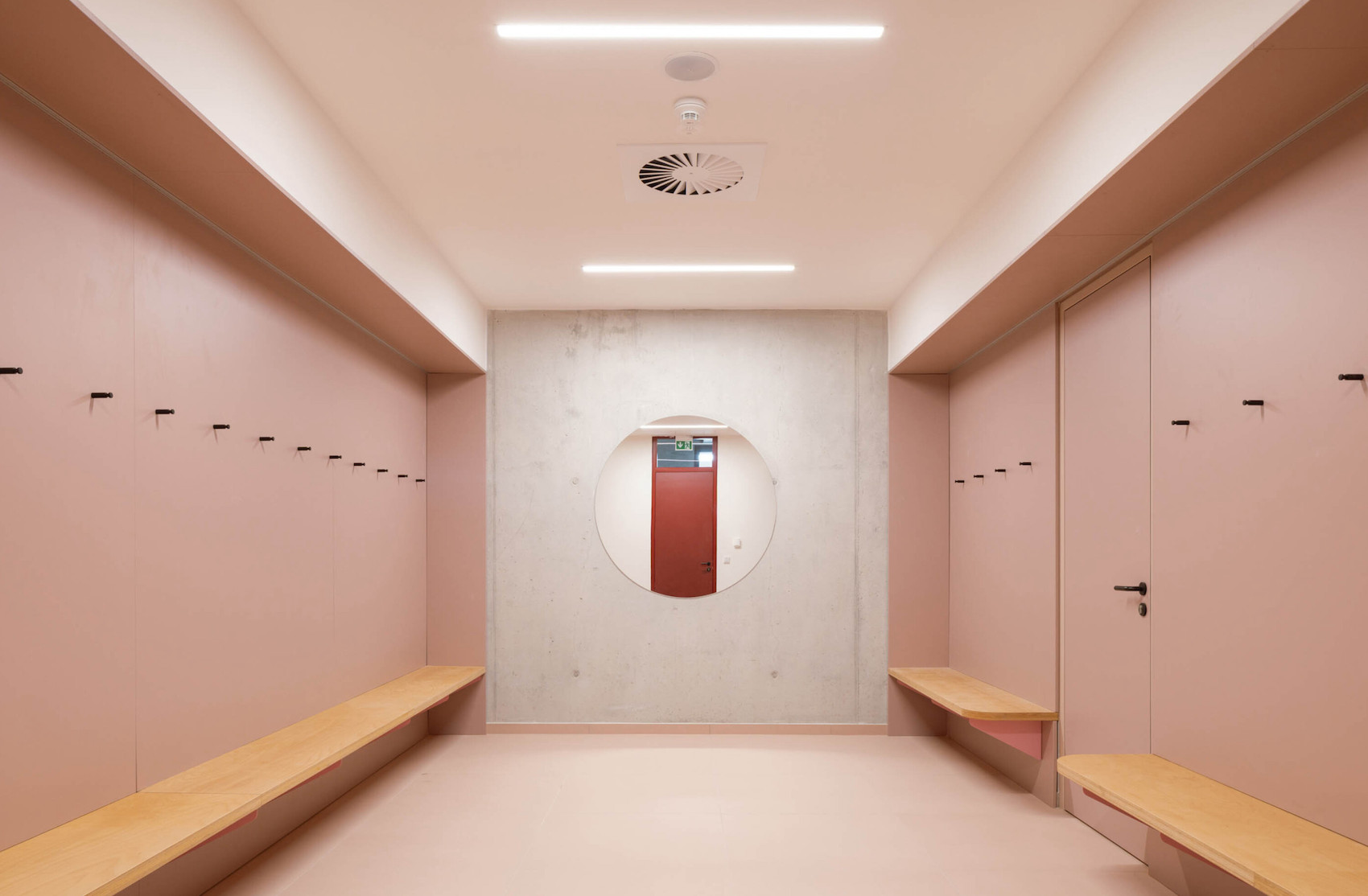
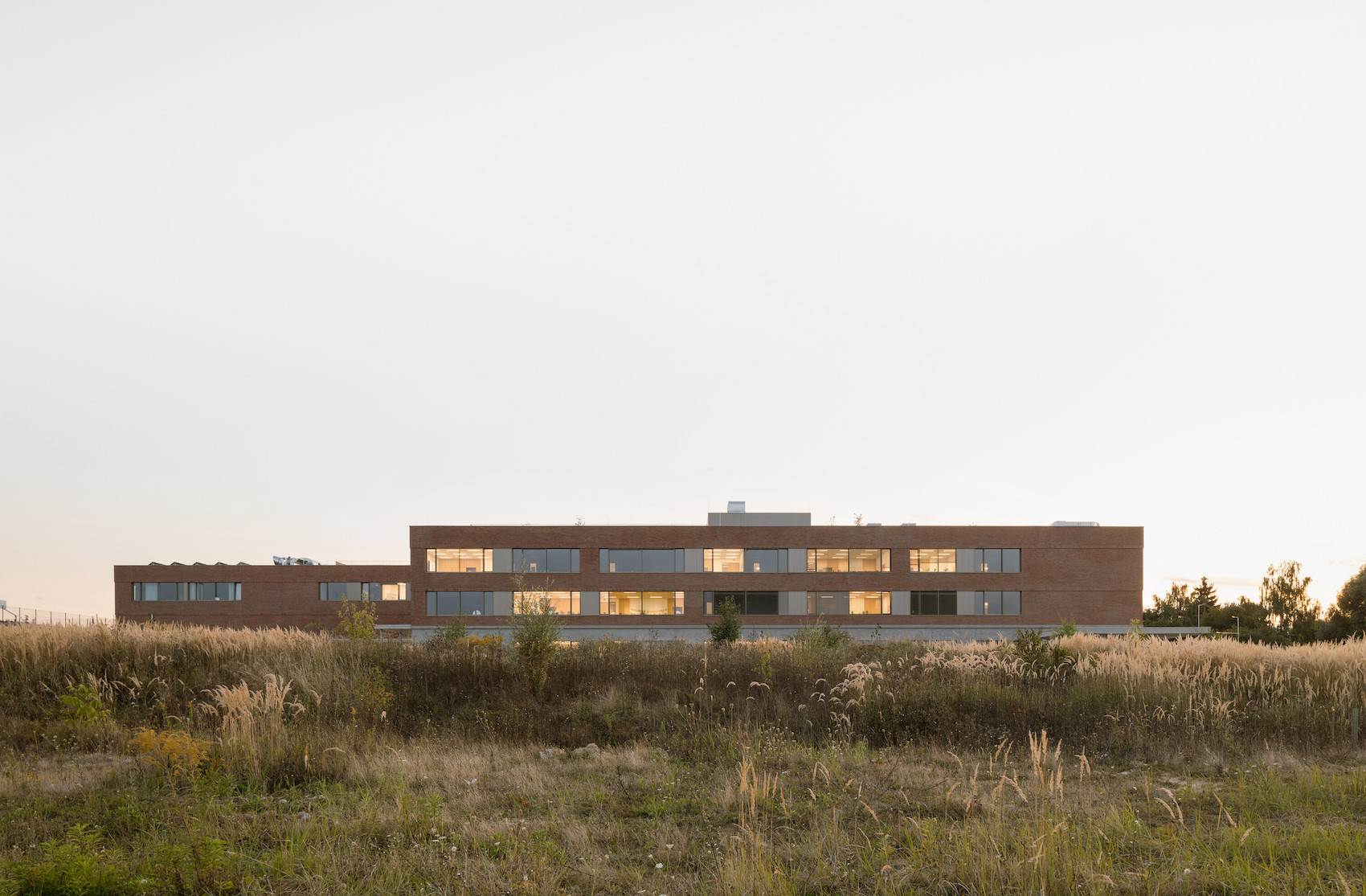
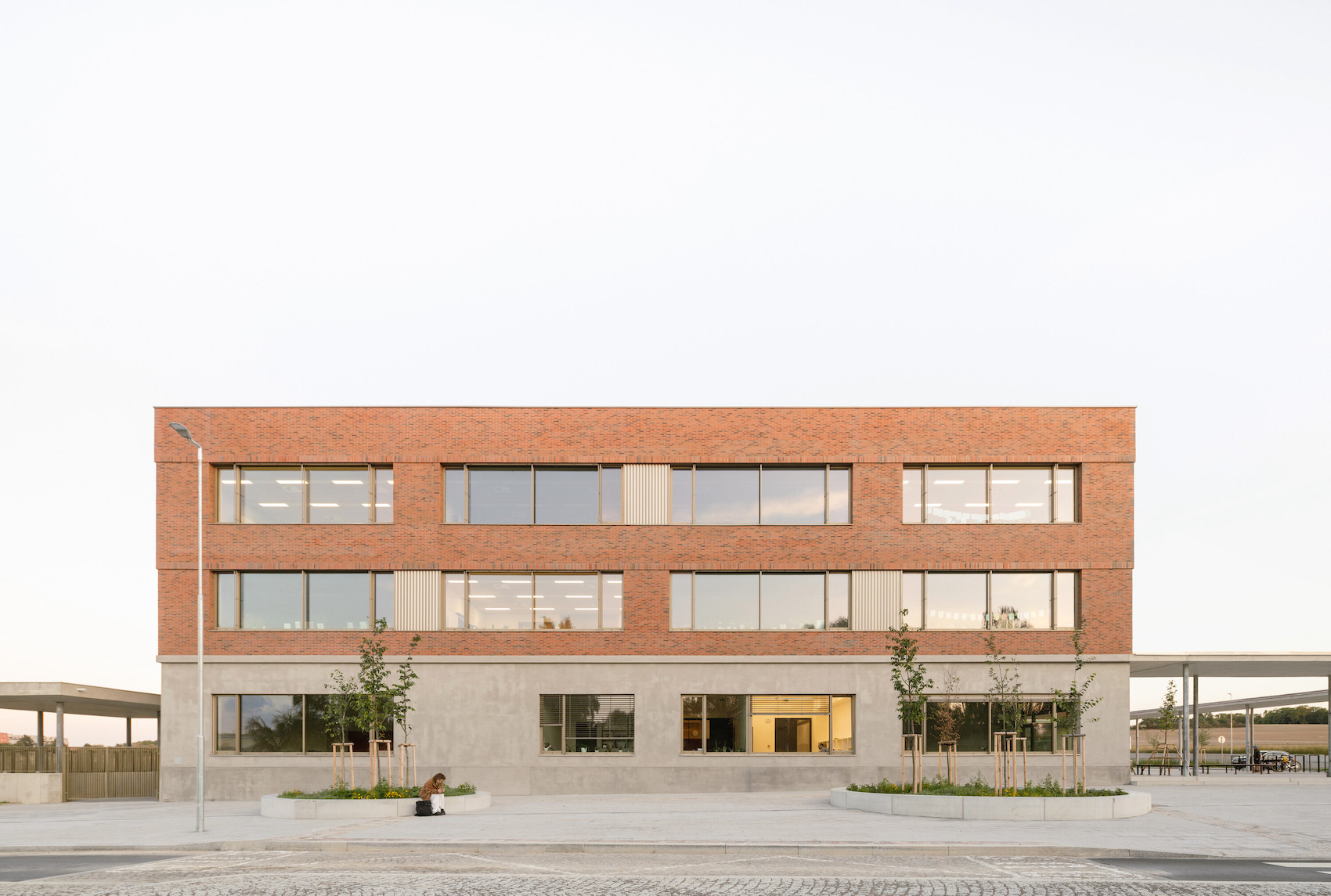
OVA has completed a new elementary school in Chýně, a rapidly growing town to the west of Prague in the Czech Republic. The three-storey building is set on a sloping site and organised around two landscaped courtyards. Designed as both a place of education and a venue for public use, the school integrates primary teaching spaces with shared facilities for sports, leisure and community life.
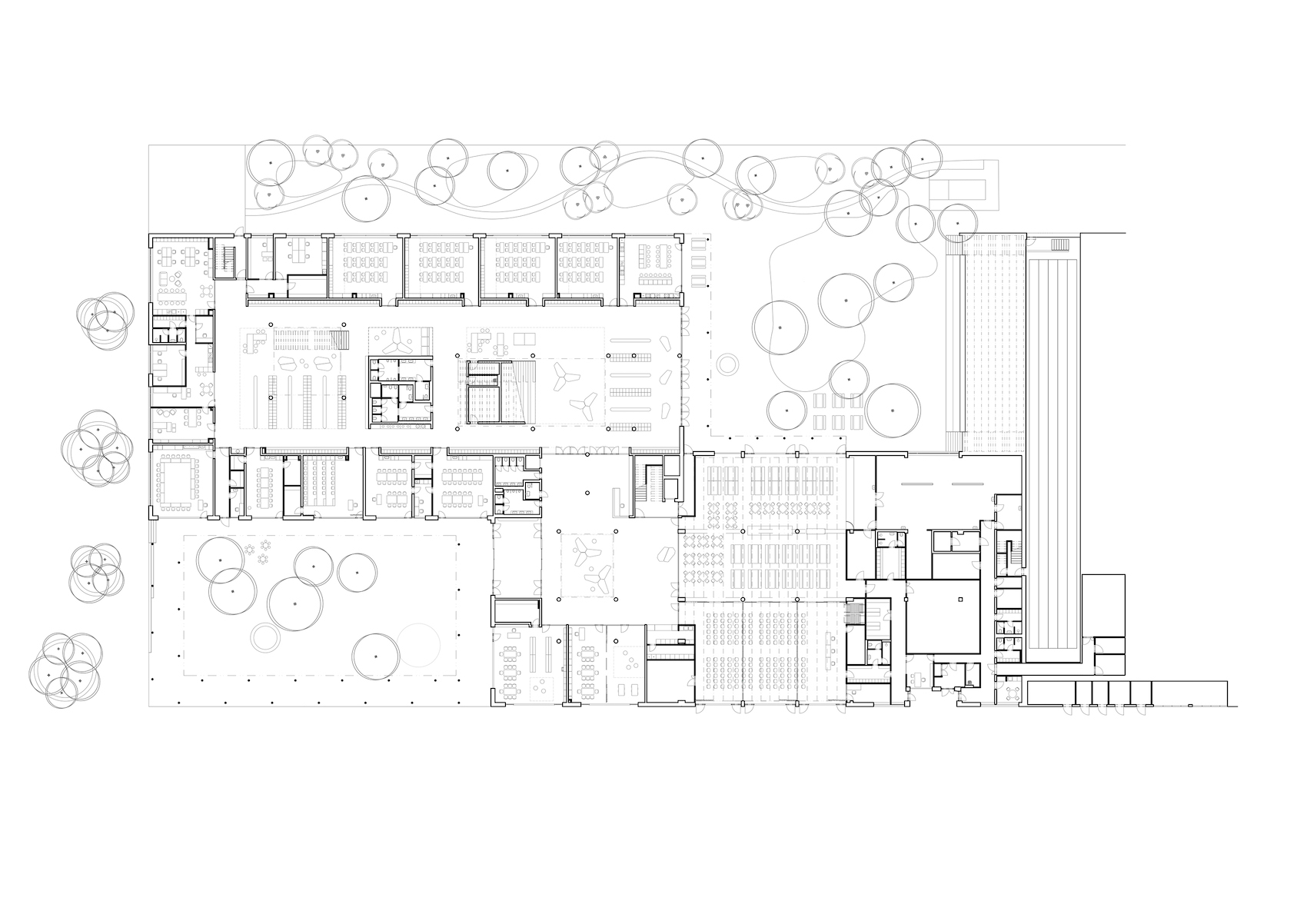
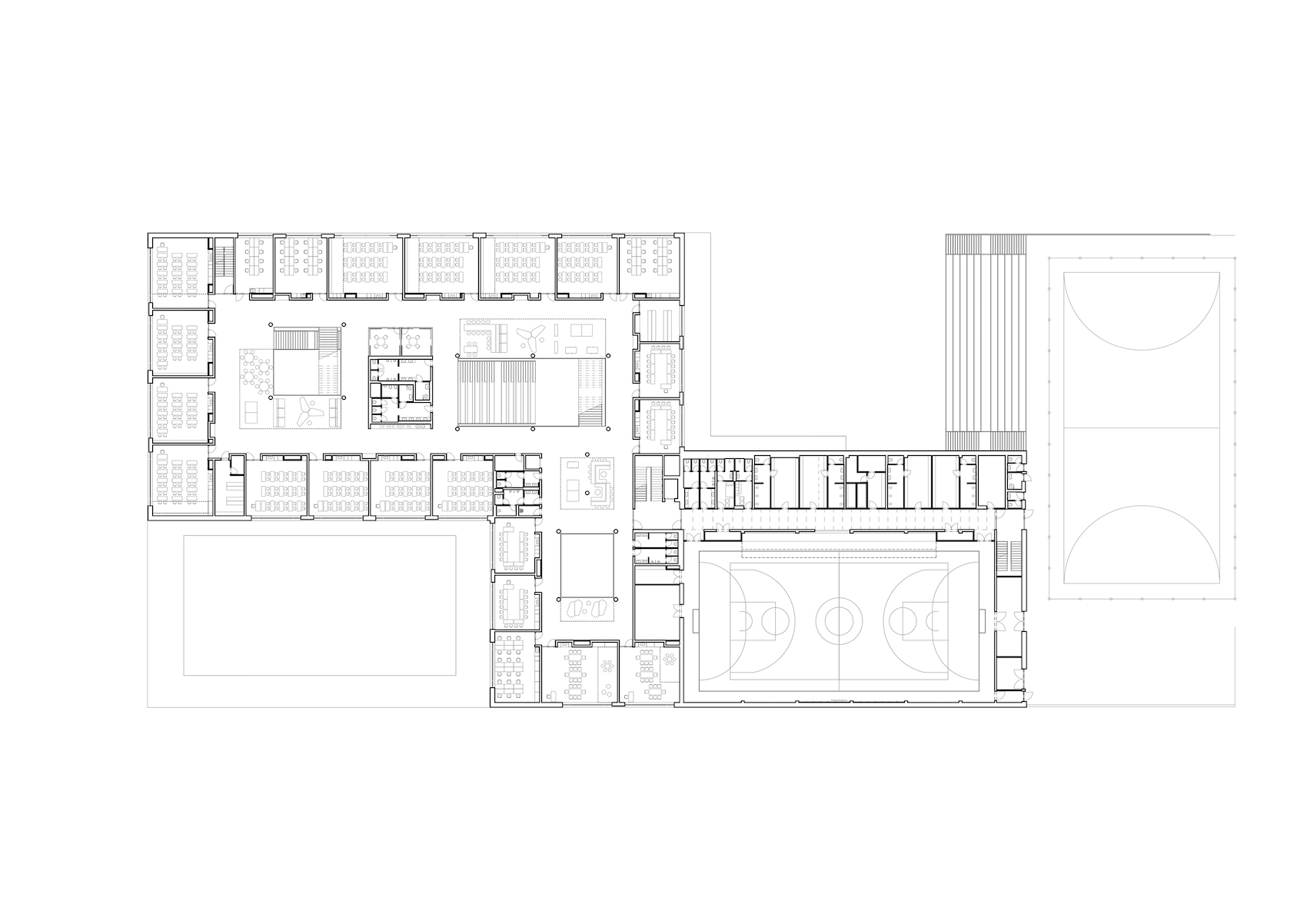
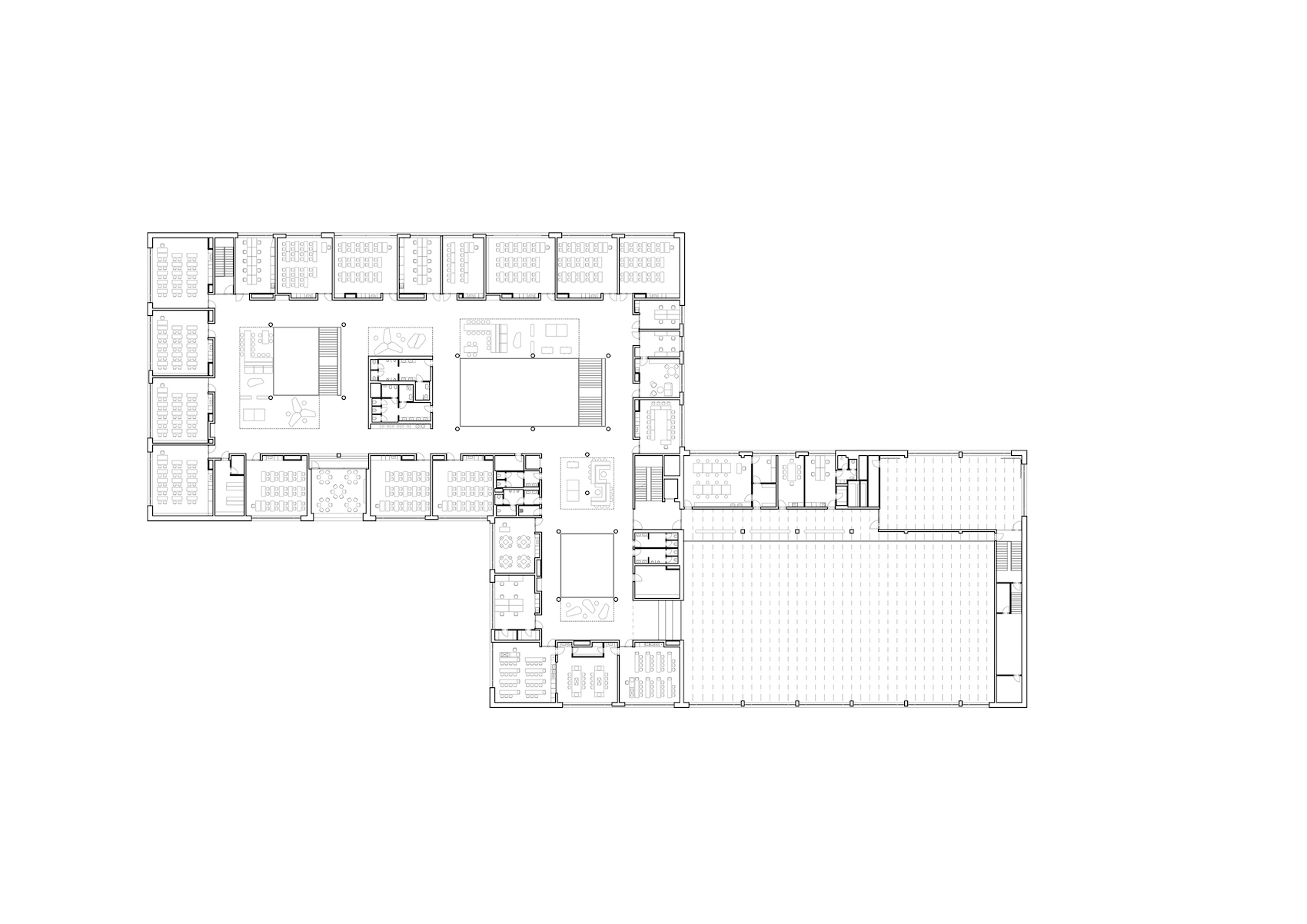
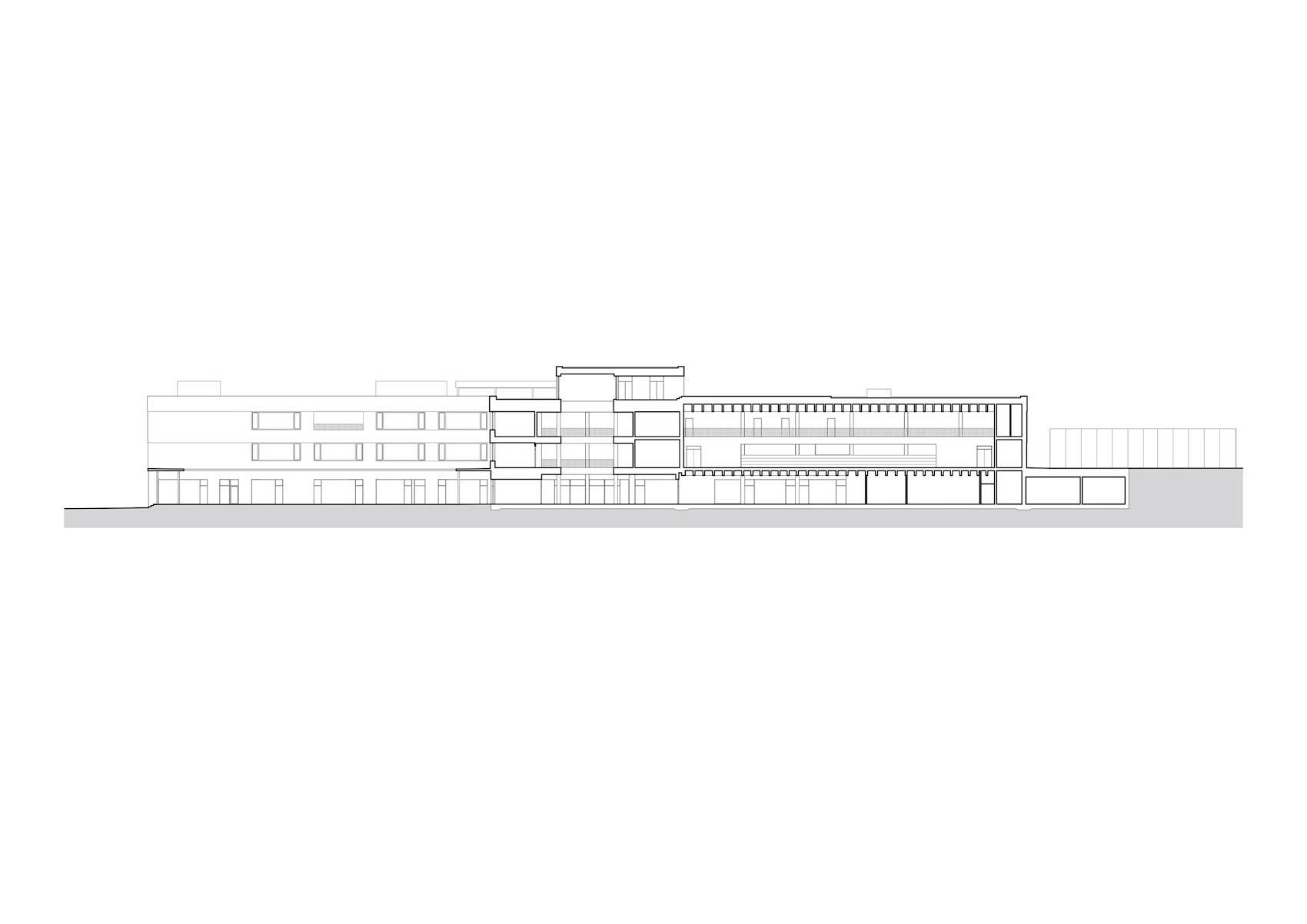
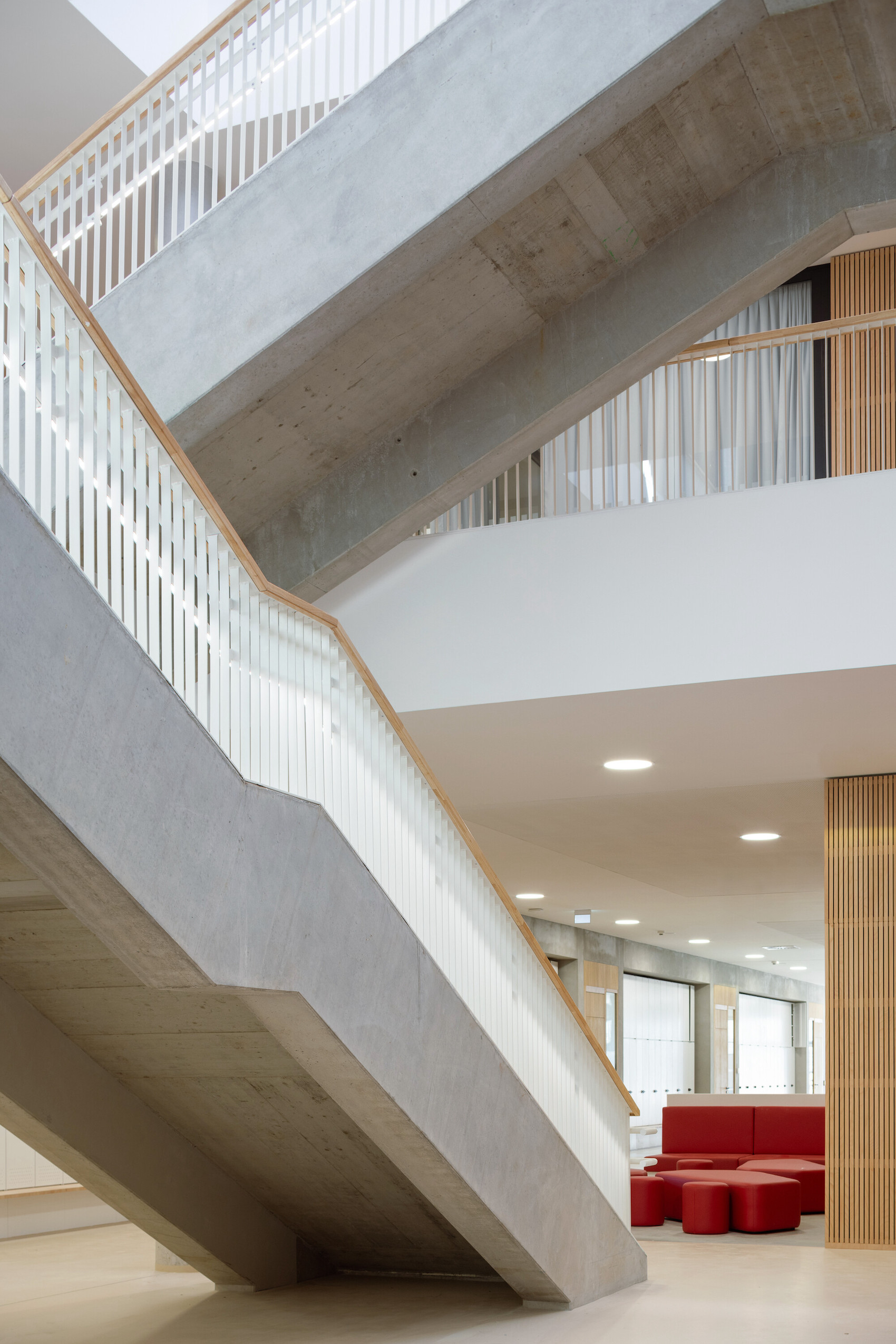
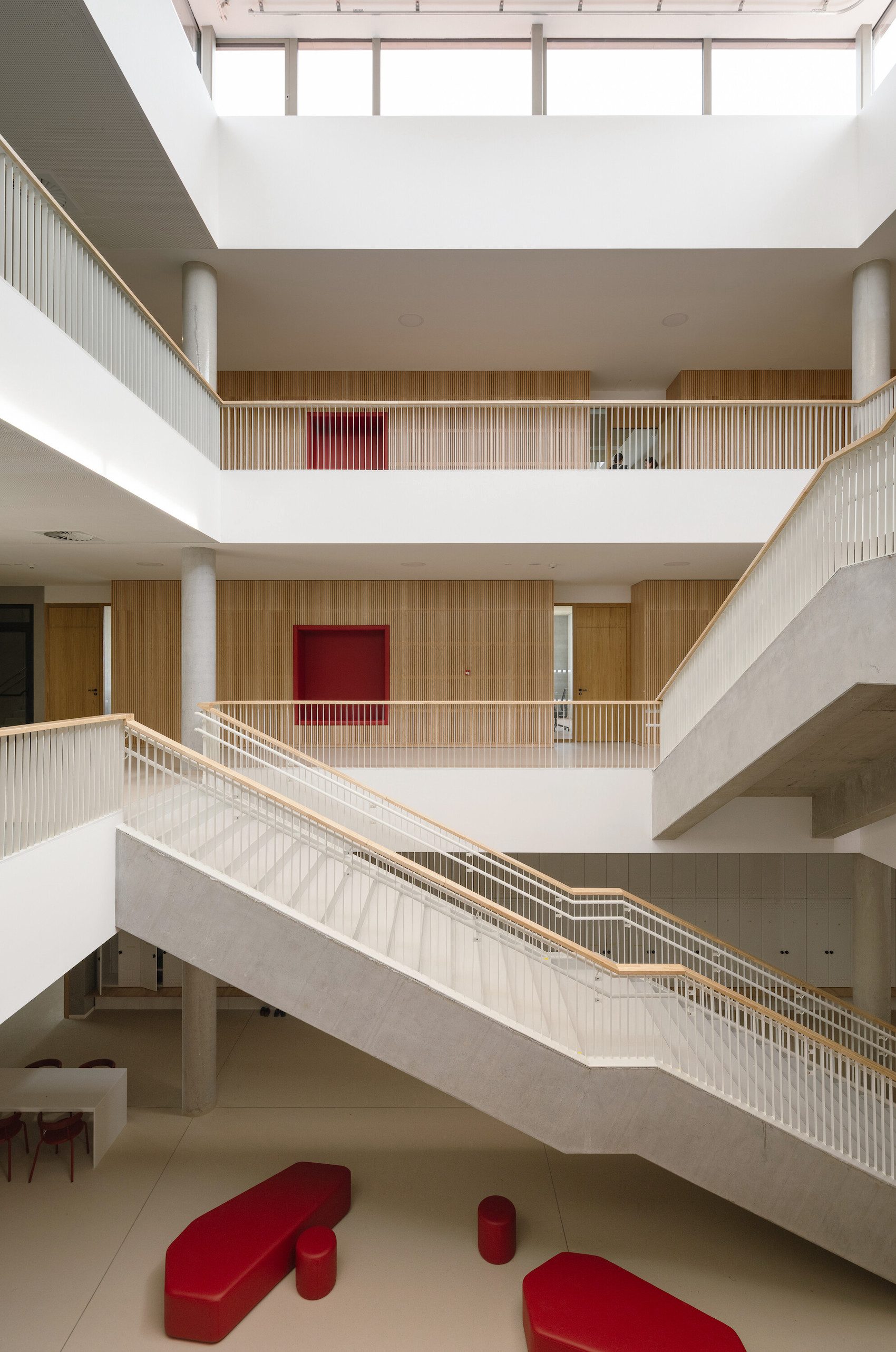
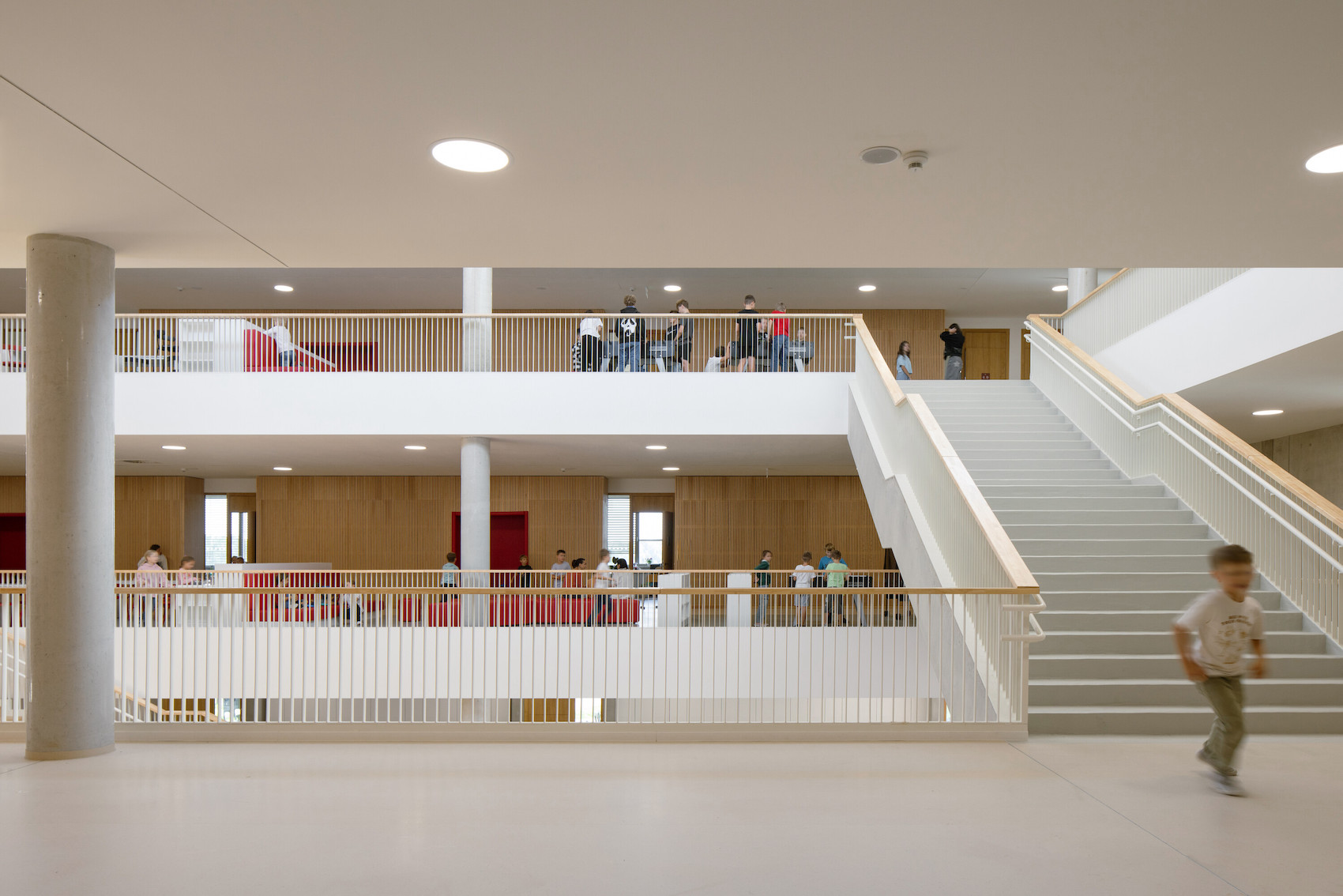
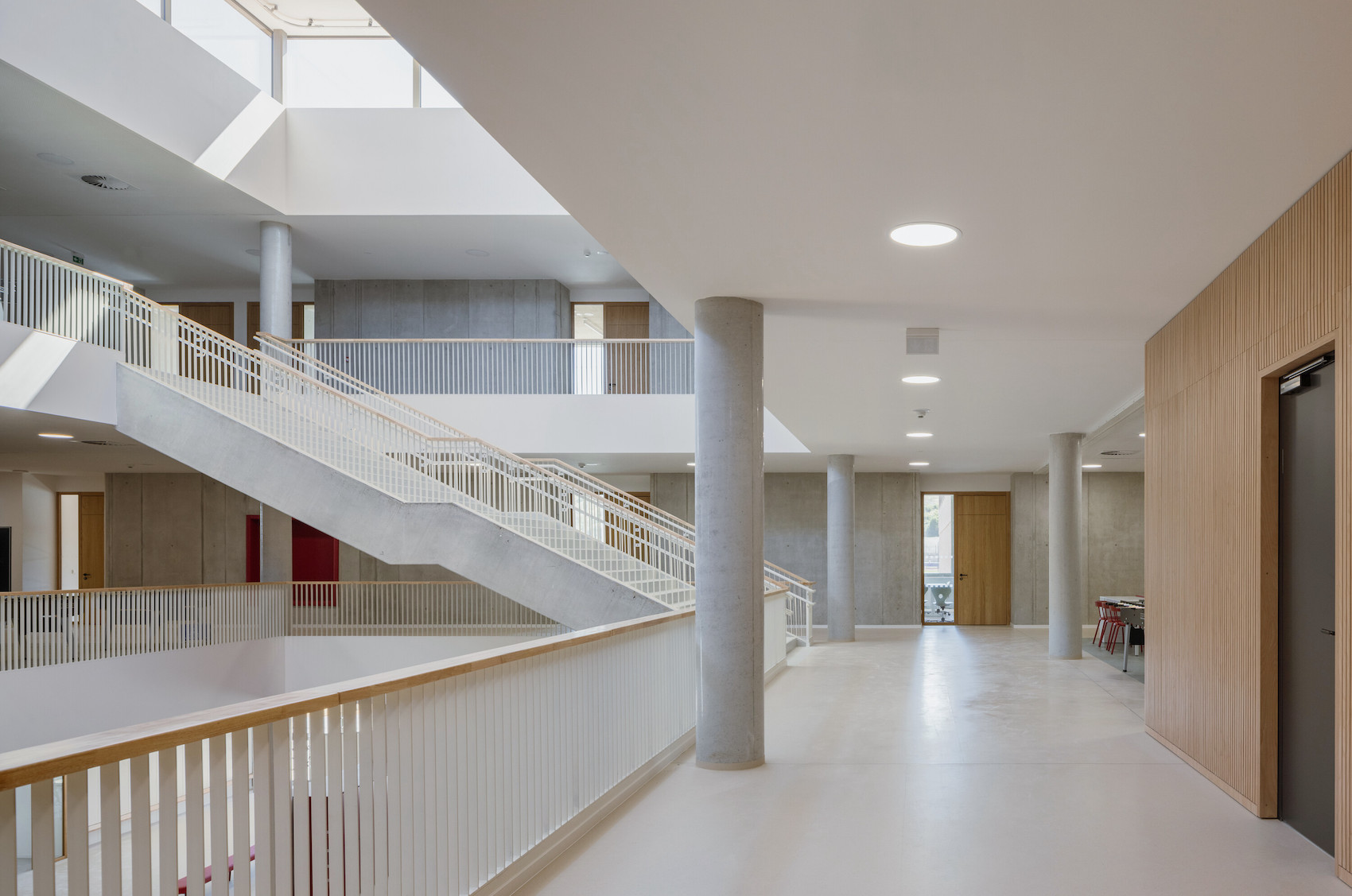
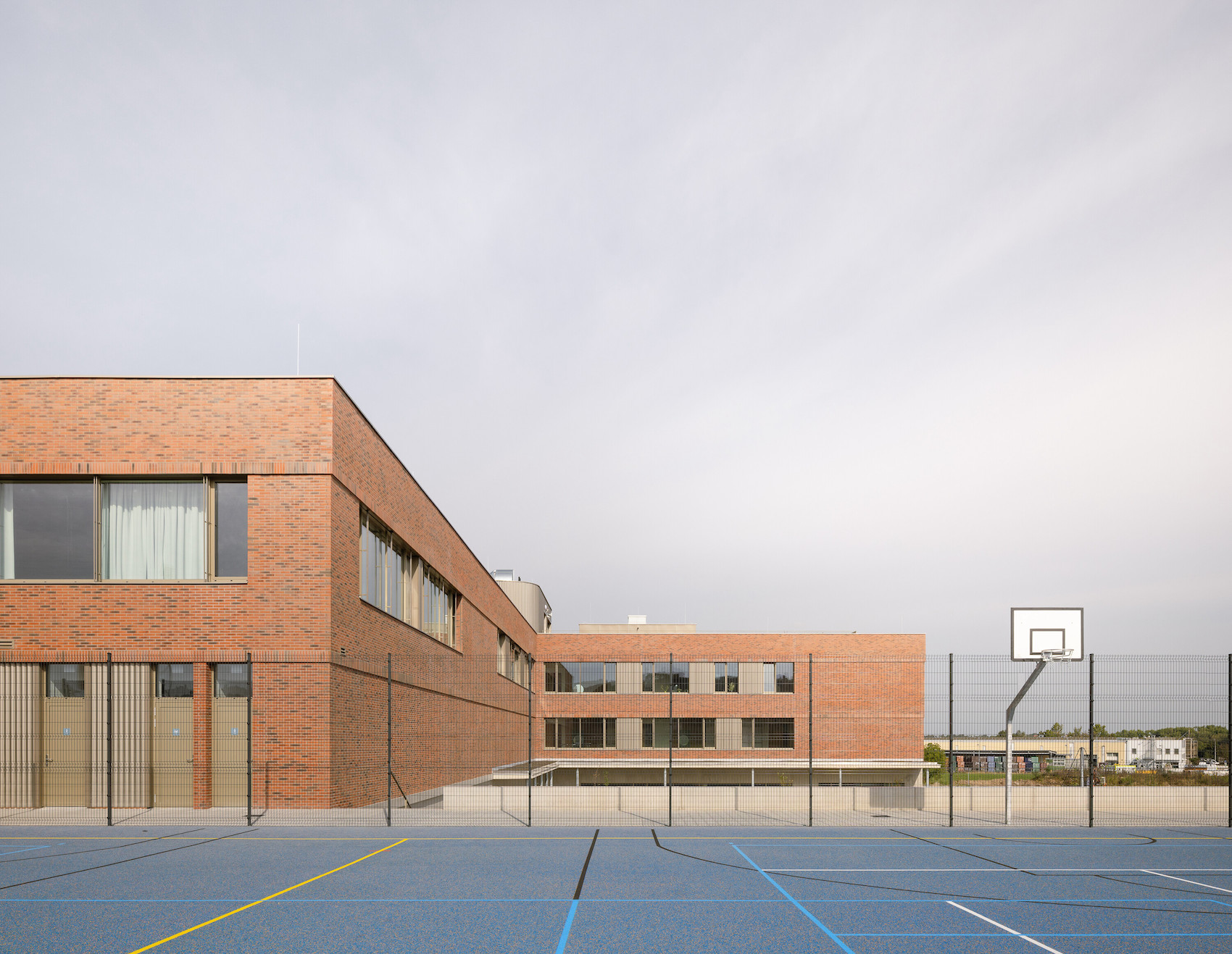
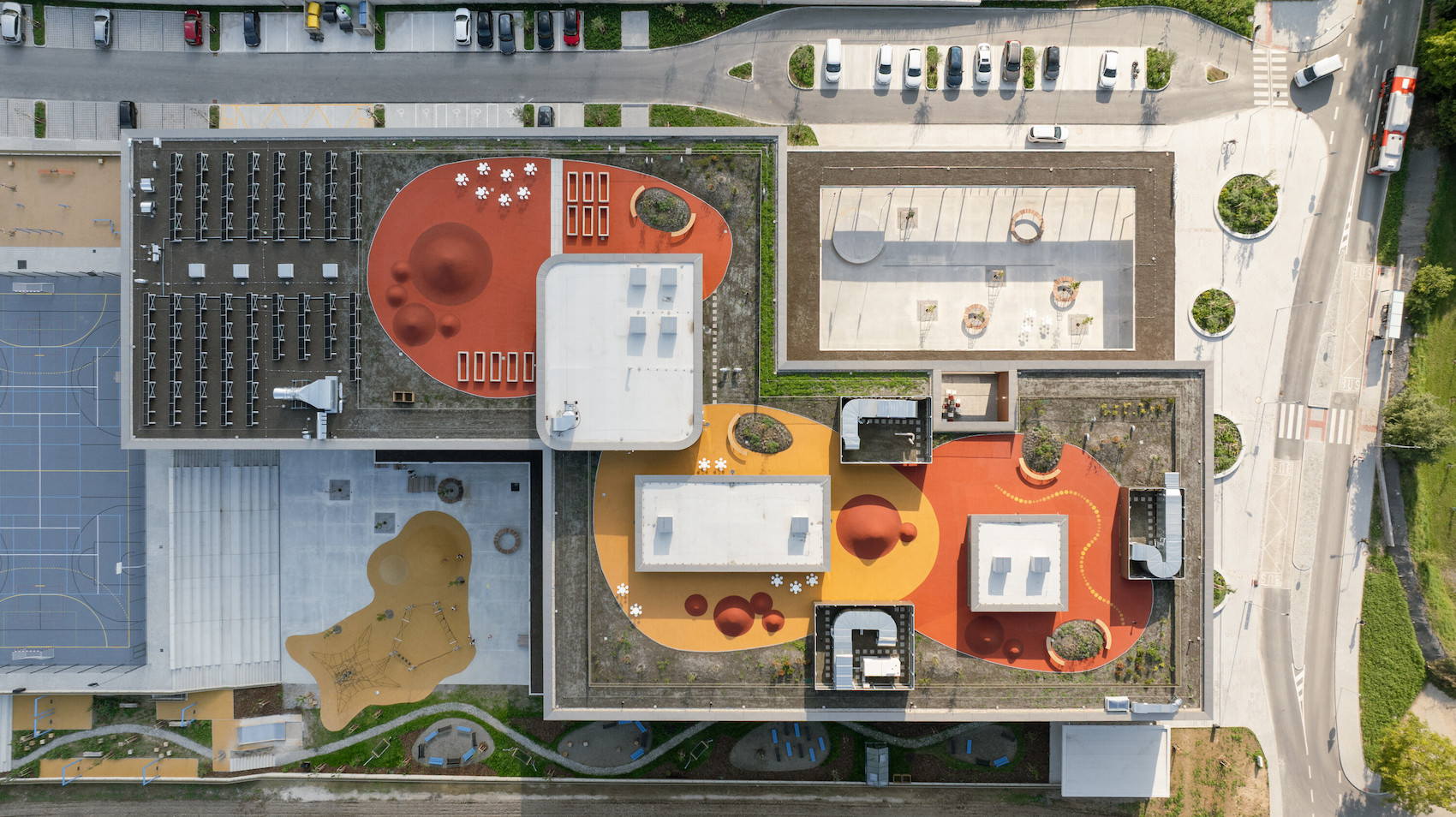
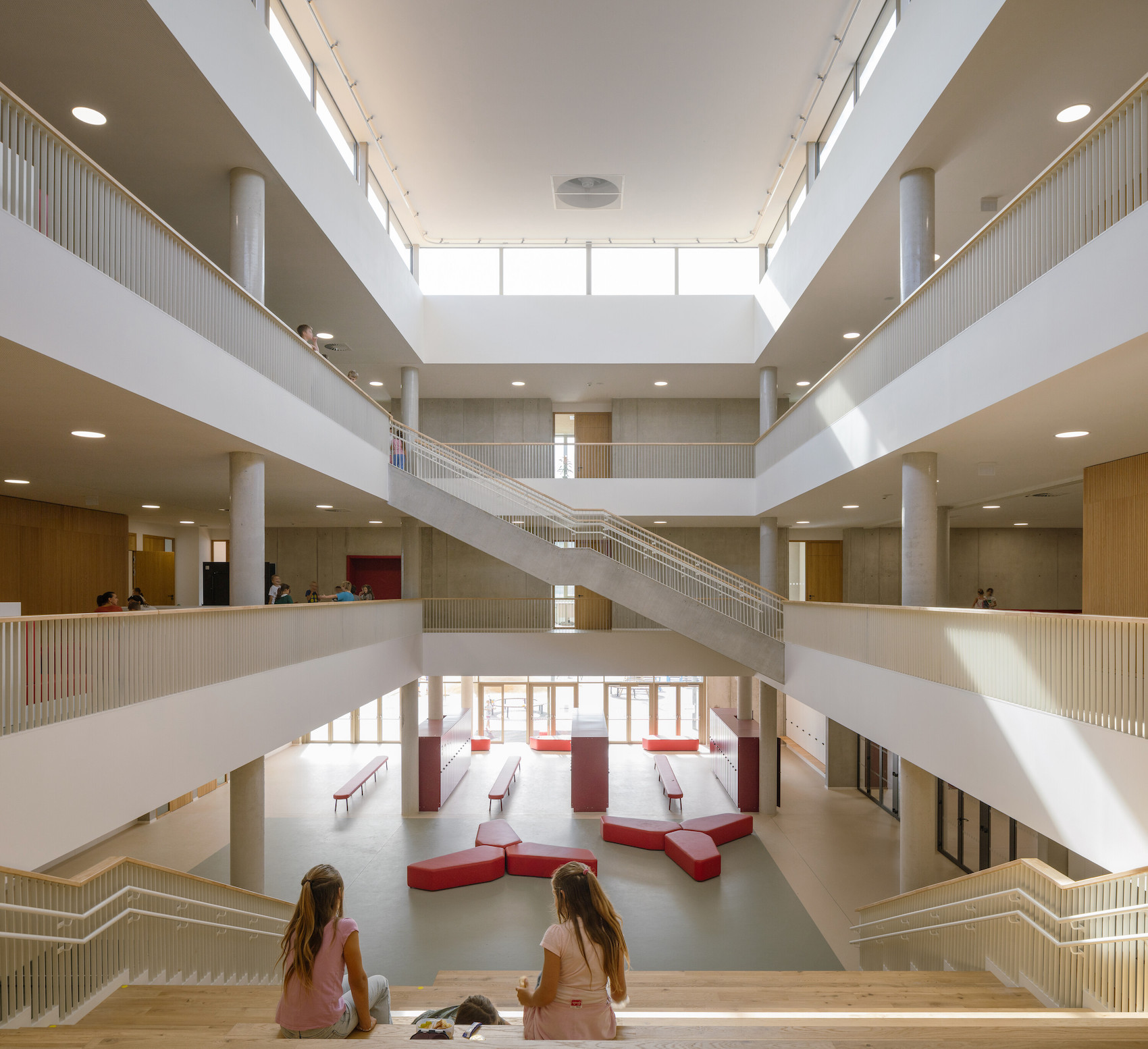
The layout comprises two key zones: the northern wing accommodating classrooms and common spaces, and the southern wing housing sports facilities, a multipurpose hall, and supporting services. These are connected by a large central hall that opens out into the two courtyards: one public, facing the town, and the other dedicated to children’s play and recreation. This dual-courtyard arrangement allows the school to operate in two modes: fully open during the day, and partially accessible in the evenings and weekends for public activities.
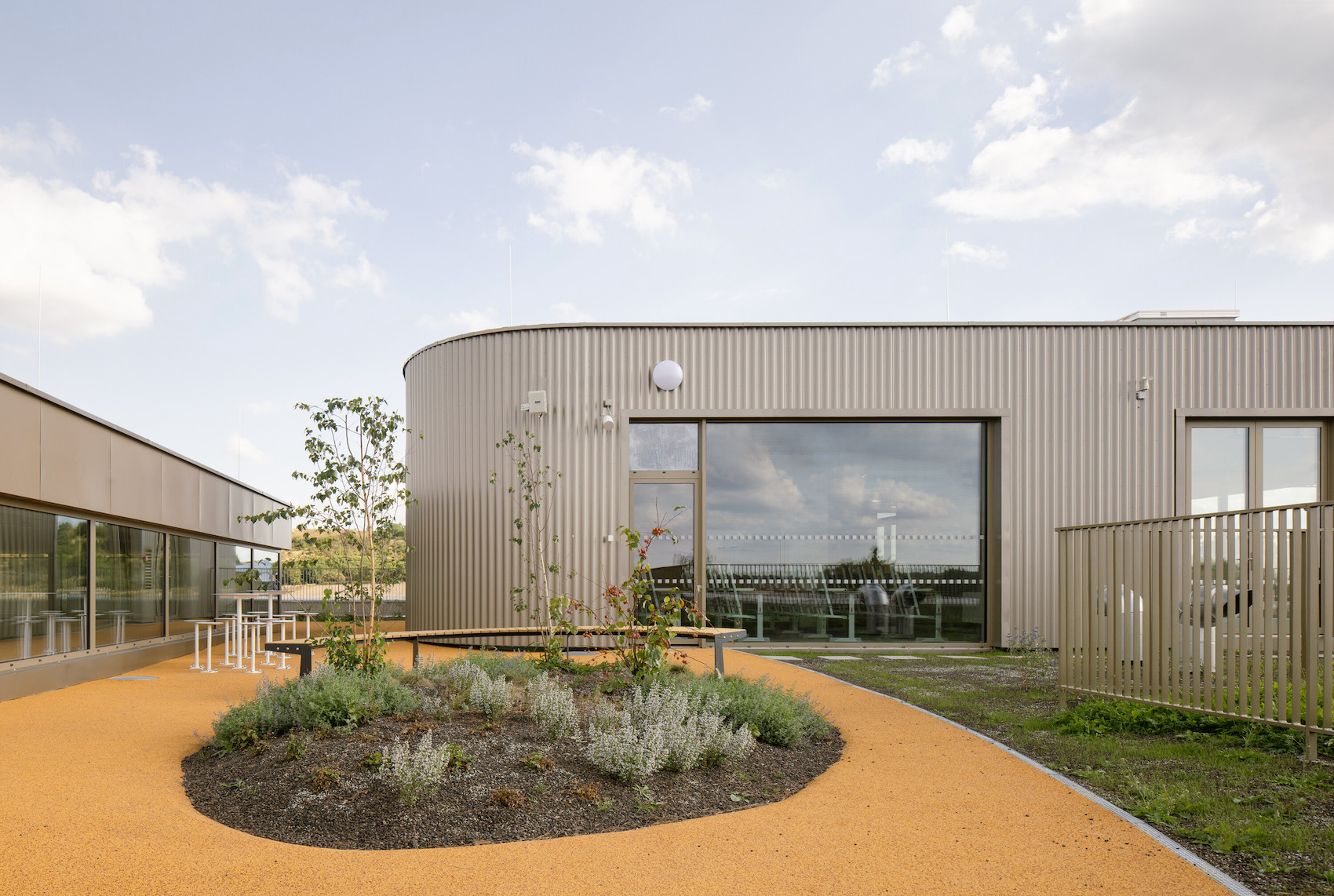
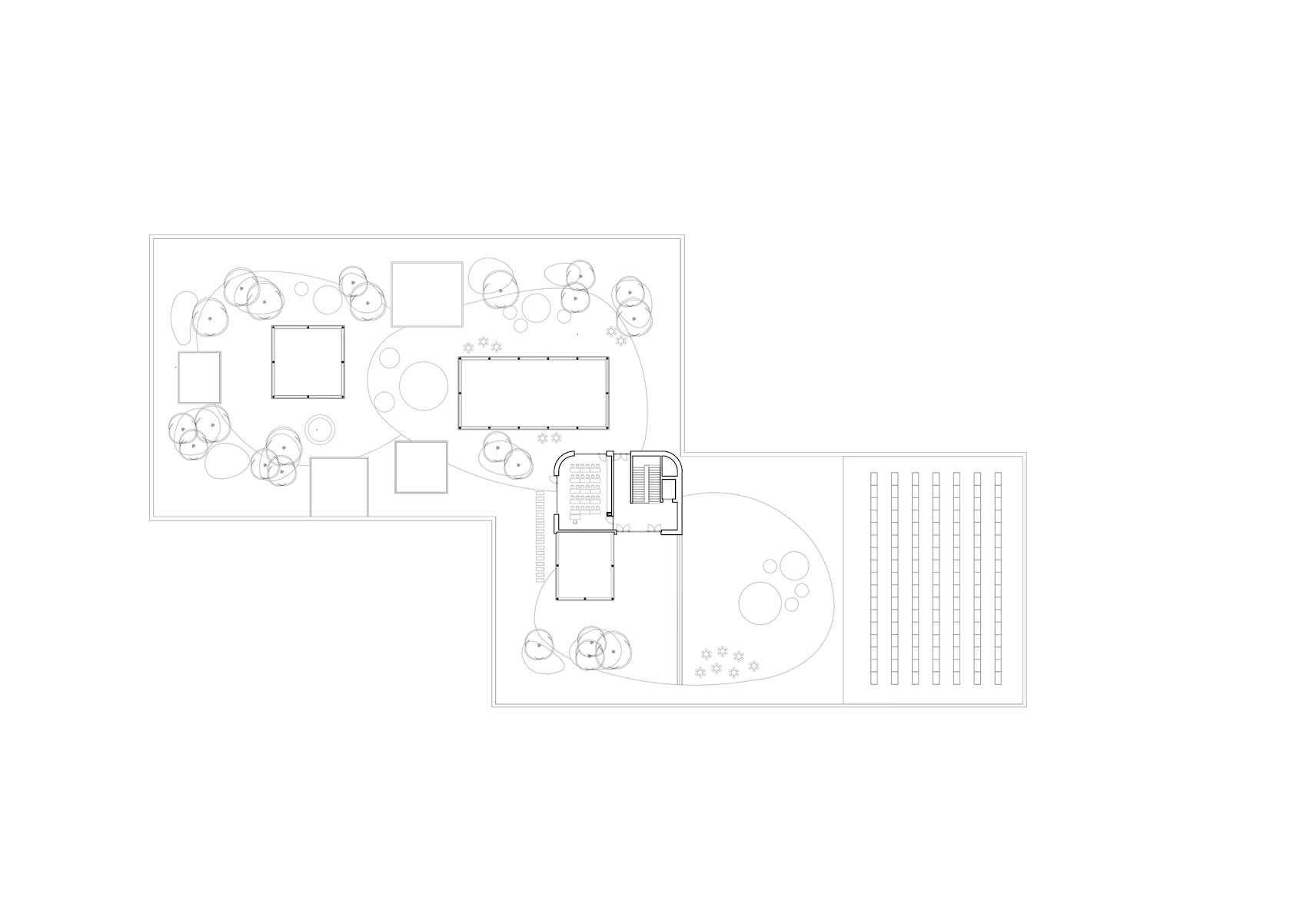
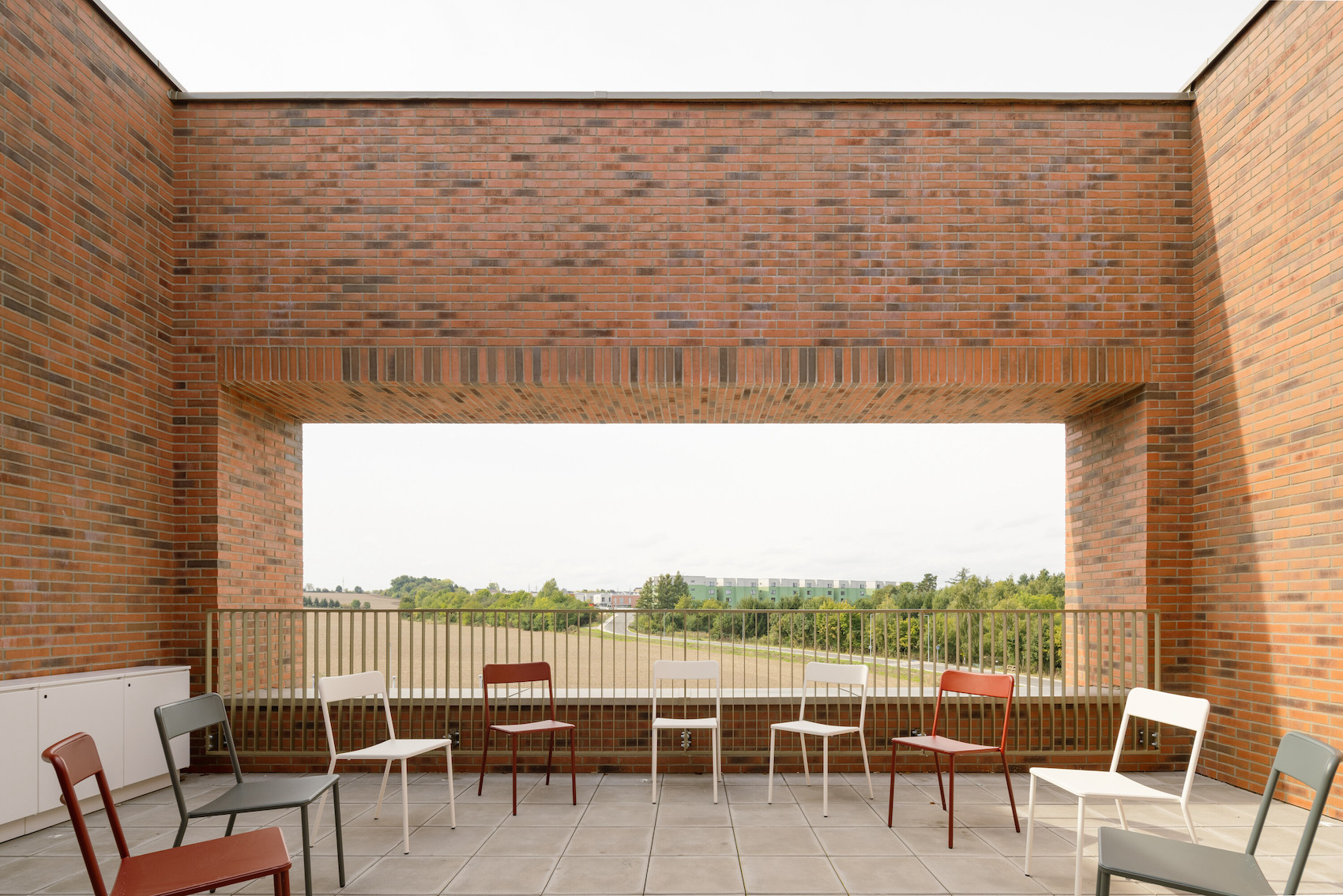
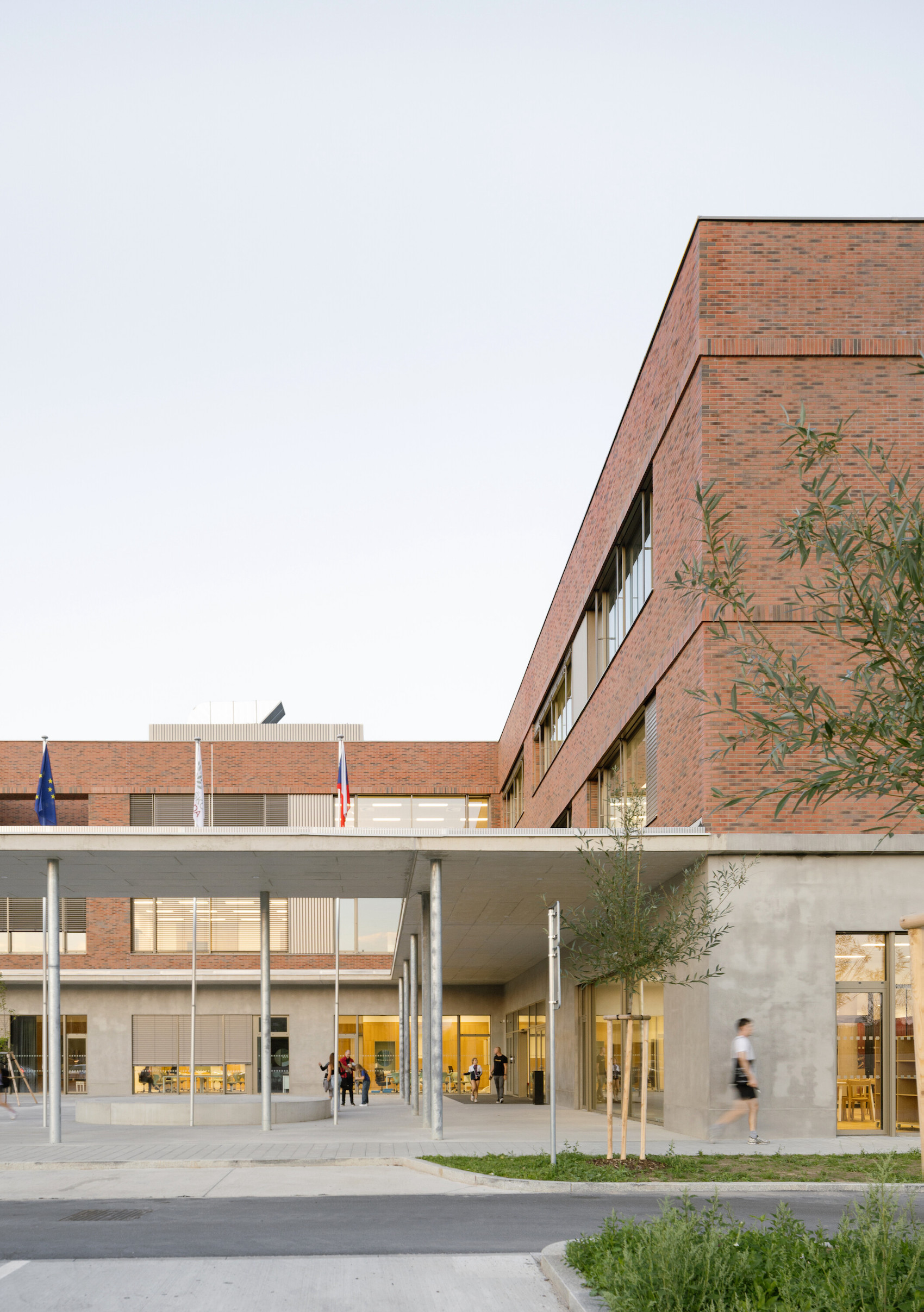
The massing responds to the site’s topography. Entrances are located at multiple levels, with access possible from both the town centre and the adjacent sports complex. On the third floor, a planted roof terrace includes outdoor classrooms and raised beds for gardening, extending learning activities into the landscape. The aim was to create a rich internal and external environment for formal and informal education across all age groups.
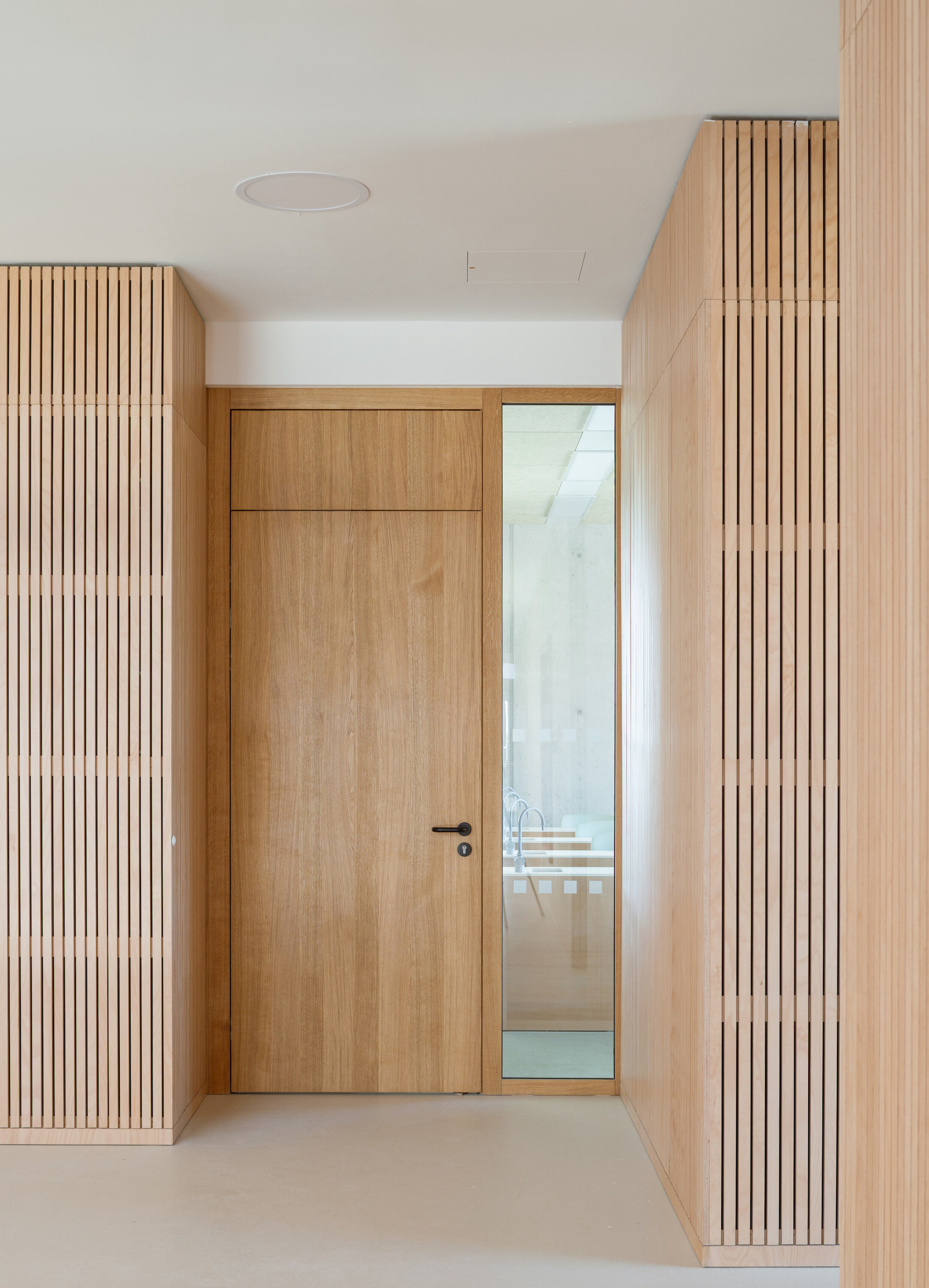
The building is designed promote flexibility and self-directed learning. Study rooms offer varied seating arrangements, while corridors incorporate alcoves and niches for small-group work or quiet conversation. Informal spaces, from the rooftop terrace to sheltered courtyards, support learning beyond the classroom and allow students of different ages to find their own place within the school.
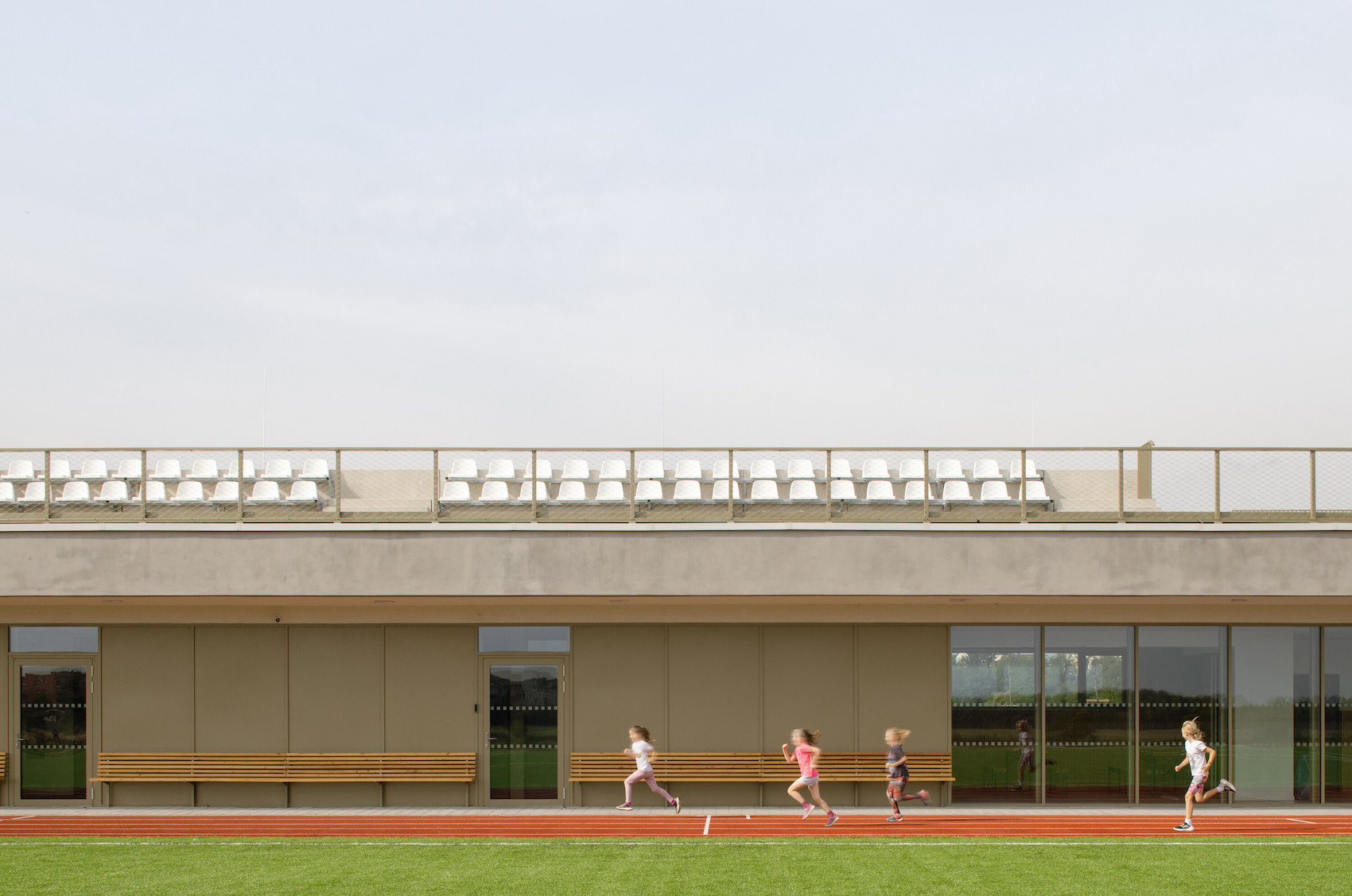
At the upper edge of the site sits an athletics field with integrated football pitch, refreshment area, and a sheltered athletics tunnel. Spectators can view events from benches or the stepped roof of the support building. A secondary training pitch is located between the school and the main track, providing additional play space during breaks.
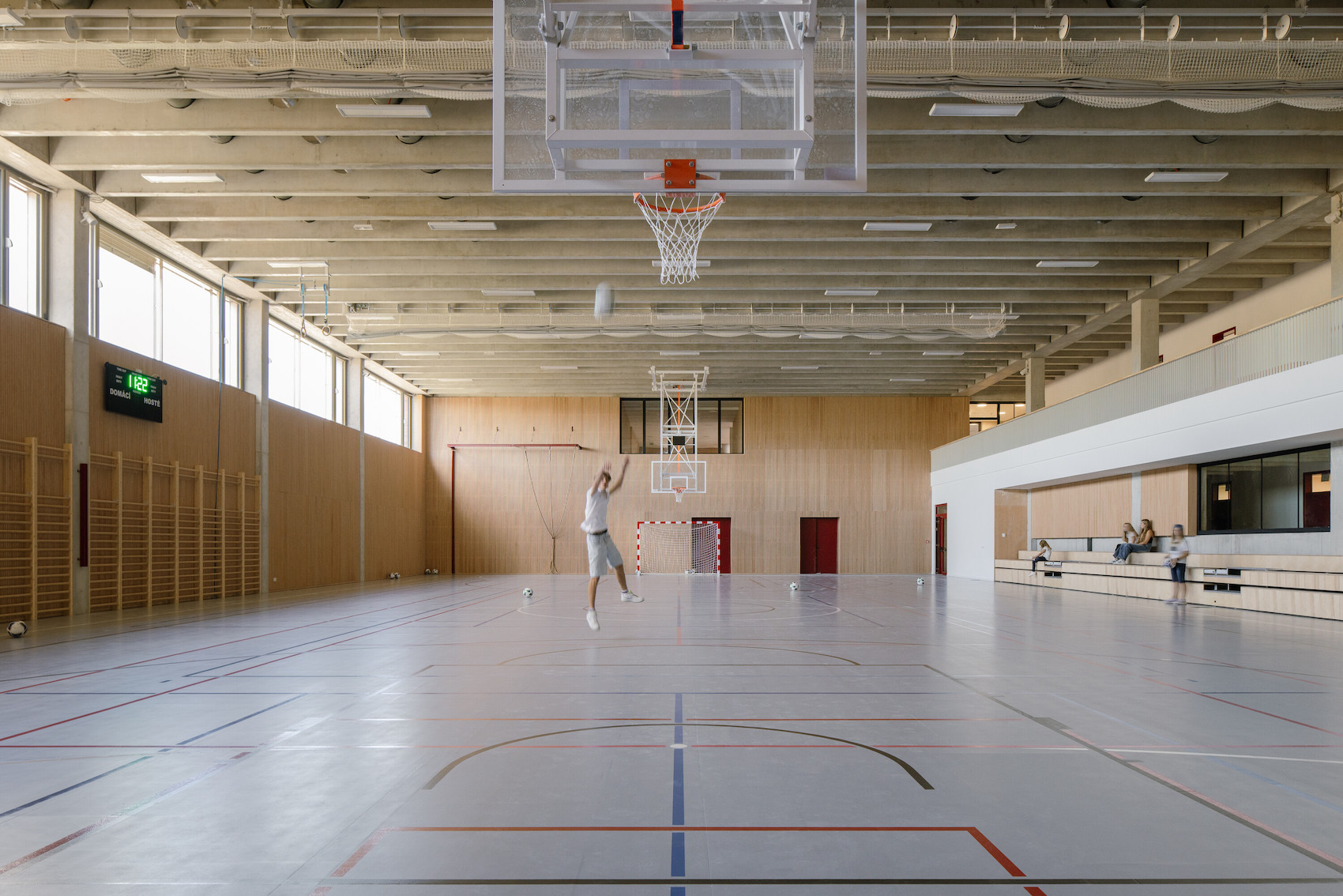
The project employs both passive and active environmental technologies. All occupied rooms are also naturally ventilated. Photovoltaic panels on both the school and sports hall roofs contribute to on-site energy generation, while deep roof overhangs, operable shading, high-performance insulation and good thermal mass reduce overheating. The external envelope is clad in ceramic panels and complemented by tree planting and shaded roof canopies to help prevent urban heat island effects.
Additional images