Piia Elo, Mayor of Turku, Finland discusses the city’s plans to become neutral by 2029 and its competition for feasible ideas to strengthen the appeal of the Aura River waterfront.

How does Turku’s diverse female leadership impact on its approach to policy, culture and innovation?
Turku is a truly female‑led city, with myself as Mayor, Marjo Kaartinen as Rector of the University of Turku, and Mari Leppänen as Bishop of Turku – the first woman to hold this position. The collective female leadership in Turku is shaping every aspect of the city – from politics, education and faith. This also connects to the city’s economy, particularly its thriving pharmaceutical sector. Turku is responsible for over 75% of Finnish pharmaceutical exports, with major institutions such as Bayer, Orion and Revvity. Pharmaceutical organisations and institutions in Turku specialise in women’s health research and innovation – a significantly underfunded area, receiving only 1% of global research and development funding (excluding cancers), despite women making up half the world’s population and facing many health challenges that lack sufficient solutions.
To address this gap, Turku established the Women’s Health Hub in 2025 – an ecosystem of pharmaceutical and diagnostics companies, researchers and public‑sector stakeholders, supported by Business Turku. Its mission is to accelerate advances and innovations in women’s health while tapping into a growing women’s health market projected to generate up to €1 trillion annually by 2040. All of the above demonstrates how Turku’s inclusive and bold governance drives its local output, with global implications.
Can you tell us a bit about the Turku Music Centre Fuuga, and its role as a cultural milestone for Finland?
Turku is a leading European hub for musical excellence and home to the Turku Philharmonic Orchestra, Finland’s oldest orchestra, and the Turku Music Centre Fuuga – opening in October 2026 – will mark a major cultural milestone as its new home. This €90 million, 1,300‑seat venue will provide a world-class concert hall in terms of both acoustics and architecture. Once launched, the Fuuga’s ground-breaking acoustics will ensure music lovers from across Europe are drawn to Turku.
But Fuuga will offer far more than concerts: its design and programming are open, accessible and inviting, with public booking hours to ensure the whole city can enjoy the space, which will be lined with curated artworks. The building will also feature a street‑level restaurant and Turku’s first rooftop wine bar, offering panoramic views of the river and city skyline, while its flexible spaces will accommodate concerts, corporate events and private functions, establishing Fuuga as a vibrant new cultural hub.
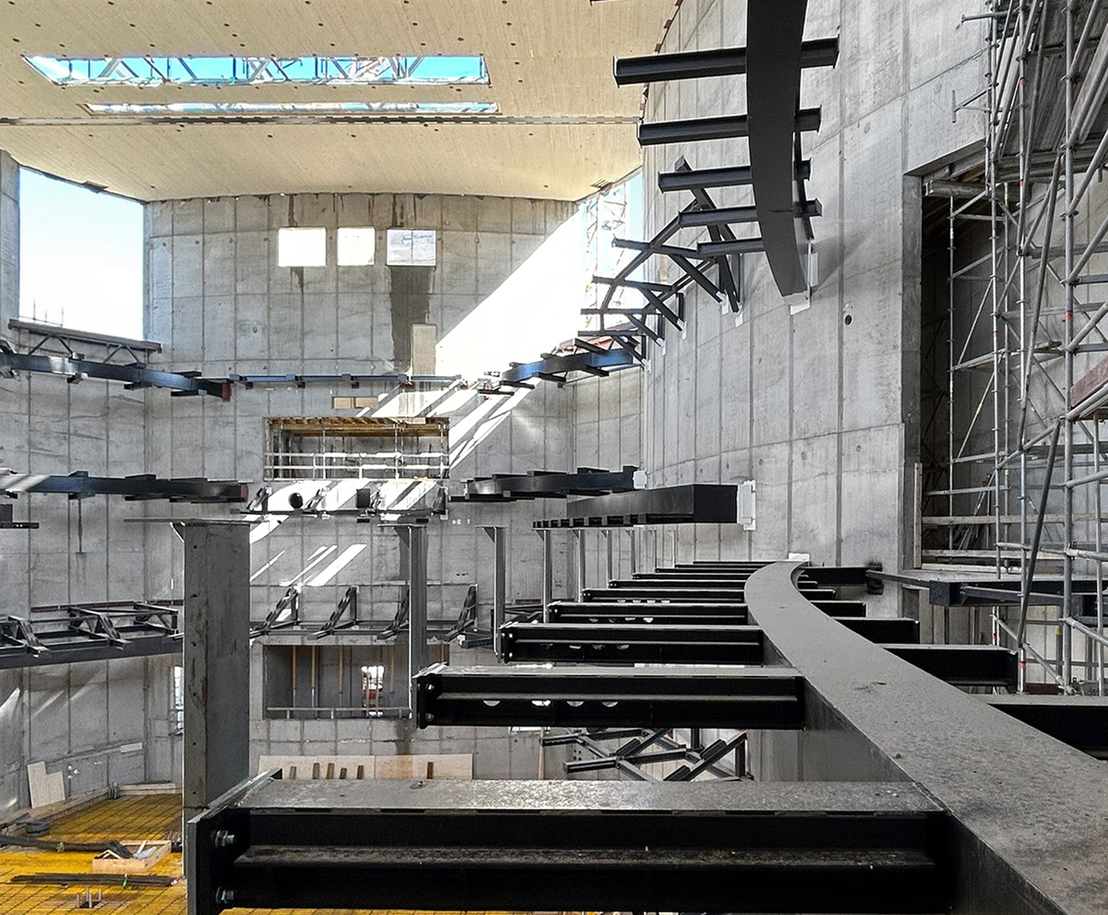
Designed by PES-Architects with WSP Finland, Hartela and acoustic designers Akukon & Kahle Acoustics, the €90 million, 1,300‑seat Turku Music Centre Fuuga is on track to open in October 2026, and will be a new link in a chain of vibrant cultural sites on the banks of the Aura River.
What other opportunities are there for architects in Finland in general and Turku in particular, and are there opportunities for UK practices to get involved?
Of course, there are opportunities for both domestic and international practices to get involved with Turku, as the city encourages an interactive and participatory planning process. A good example of this is the WAM Turku City Art Museum, also due to open later in 2026. It is currently being sensitively renovated and expanded by Chief Designer Mikko Uotila, based in the municipality of Urjala, to respect the original 1960s brutalist design by Irma and Matti Aaltonen.
We also have an upcoming project development competition opening in spring 2026, which will be open to both domestic and international practices for the Hämähäkkitontti site. It is located in the centre of Turku next to the Turku Music Centre Fuuga, with the potential to serve as an extension of the significant cultural buildings along the Aura River waterfront. Any practices with feasible ideas to strengthen the appeal of the Aura River waterfront are encouraged to watch for the competition launch.
Turku is aiming to become carbon neutral by 2029. Will you achieve this? If so, how? And what are the biggest challenges in achieving this goal?
Turku is well on track to achieve carbon neutrality by 2029, which coincides with the city’s 800th anniversary, and this goal is supported by a close partnership with the local energy company Turku Energia to expand renewable energy sources and utilise waste heat. Between 2023 and 2026, the city is investing €1.2 billion to accelerate progress in clean energy, sustainable transport and green infrastructure, positioning Turku to become the only major carbon‑neutral city in Finland by 2029, with ambitions to progress further and achieve carbon negativity in the 2030s.
Such bold action is essential to ensure that the city’s future benefits from the decisions made today, particularly given Turku’s unique geography as home to over 350,000 residents (in the Greater Turku area) as well as 40,000 islands forming the Saaristo, the world’s largest archipelago. This immediate access to extraordinary natural surroundings shapes Turku’s distinctive blend of heritage and culture, influencing everything from local food traditions to wellbeing practices such as outdoor saunas and wild swimming. Our target for carbon neutrality, as well as ambition for carbon negativity, speaks to the importance of protecting the environment that directly impacts our unique identity and the wellbeing of our future generations.