AT Editor Isabel Allen questions whether the Government’s new towns programme, defined by targets and delivery mechanisms, risks overlooking the vision, leadership and collective purpose needed to create places where communities can genuinely thrive.
The Government has unveiled its vision for seven new towns. Or rather, it’s confirmed the locations, and issued a lot of reassuring detail about the legal, fiscal and bureaucratic vehicles designed to facilitate their delivery. It’s fallen to the House of Lords to lead the call for a ‘galvanising vision’ to bring the plans to life; a reminder that elected governments, especially the uber-cautious Starmer crew, can’t afford to put their heads above the parapet. Safer to define development in numbers. To reiterate the scale of the housing crisis; the capacity of these new settlements. To paint a picture so nebulous and indistinct that nobody is offended − but nobody really cares.
Not that it makes much difference. There’ll be no shortage of punters willing to take up the offer of a new-build home in a box-fresh town, if only because other options are few and far between. Why worry about the details of utopia, when you rely on the old adage if we build it, they will come?
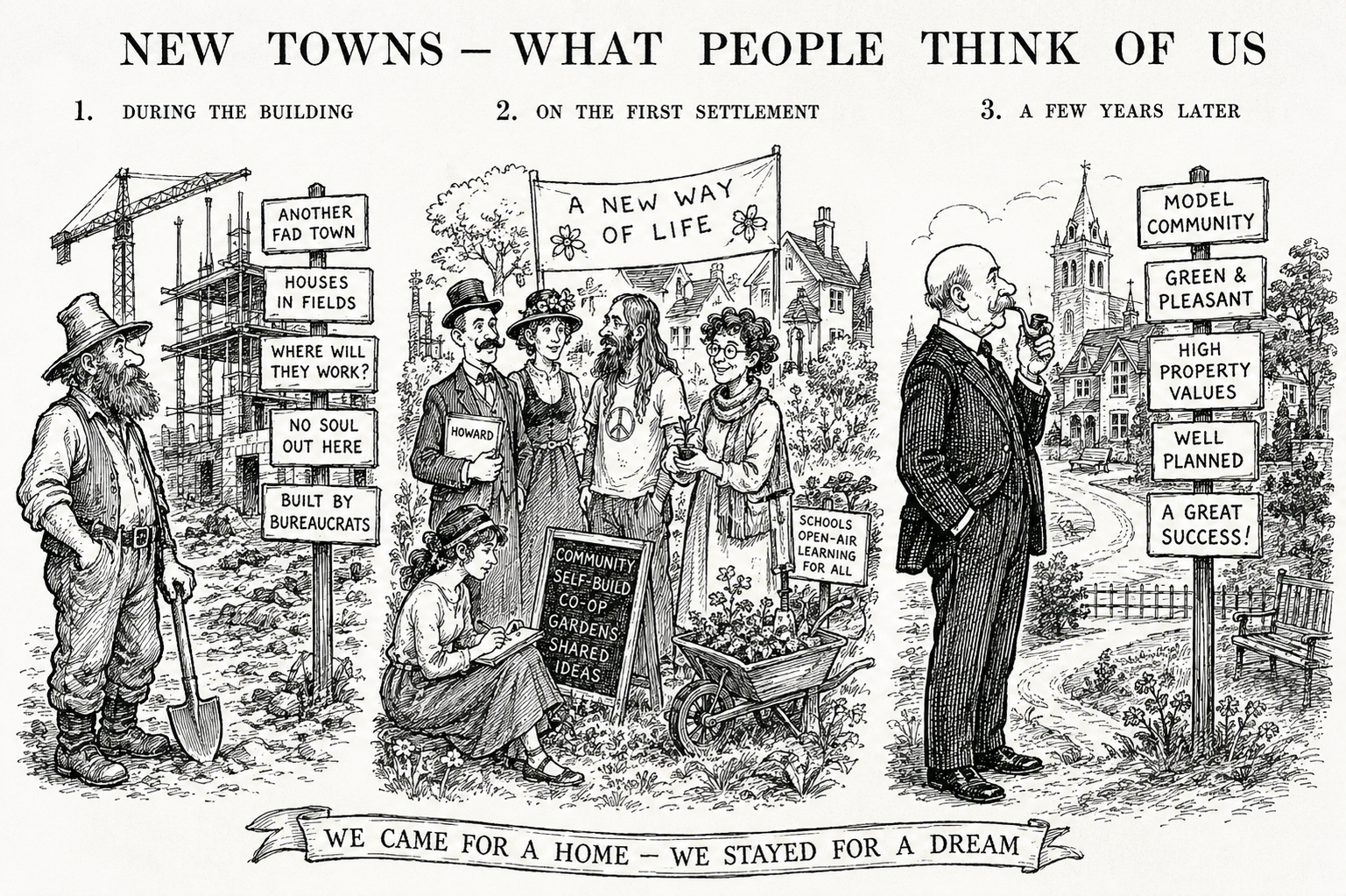
They’ll come. But will they thrive? Communities coalesce around a common purpose. A shared dream that’s repellent to many but catnip to some. Ebenezer Howard’s vision for Garden Cities, arguably the most influential tract in the history of new towns, was so compelling, that the settlements it spawned served as a magnet for a specific demographic, pithily characterised by George Orwell as ‘every fruit juice drinker, nudist, sandal wearer, sex-maniac, Quaker, nature cure quack, pacifist and feminist in England’.
New neighbourhoods need strong leadership, and solid delivery plans, but for communities to get off the ground, they need a dash of anarchy too. Letchworth, now a byword for respectable suburbia, was perhaps the most crackpot of the Garden Cities of its day. It’s Masonic Hall, perhaps the ultimate embodiment of conservative values, came into existence as an open-air school, a haven of alternative education where pupils studied theosophical meditation and slept on hammocks in their breaks.
Kinship is forged, not by pragmatism, but by passion. By optimists and dreamers with the restless energy to trade ideas and stories; to make sense of their surroundings. Or, to use the stultifying parlance of professional discourse, to craft the local narrative and hone the sense of place. They need frameworks and masterplans and design codes. But they also need mechanisms and incentives to attract self-builders, co-housing groups, community land trusts: the messy magnificent smorgasbord of pioneers and players with an interest in fashioning not just a community, but a whole new way of life.