Maccreanor Lavington’s Prisca Thielmann discusses the practice’s role in shaping the first completed residential buildings at Brent Cross Town, exploring density, community, thresholds and the creation of a new piece of London.
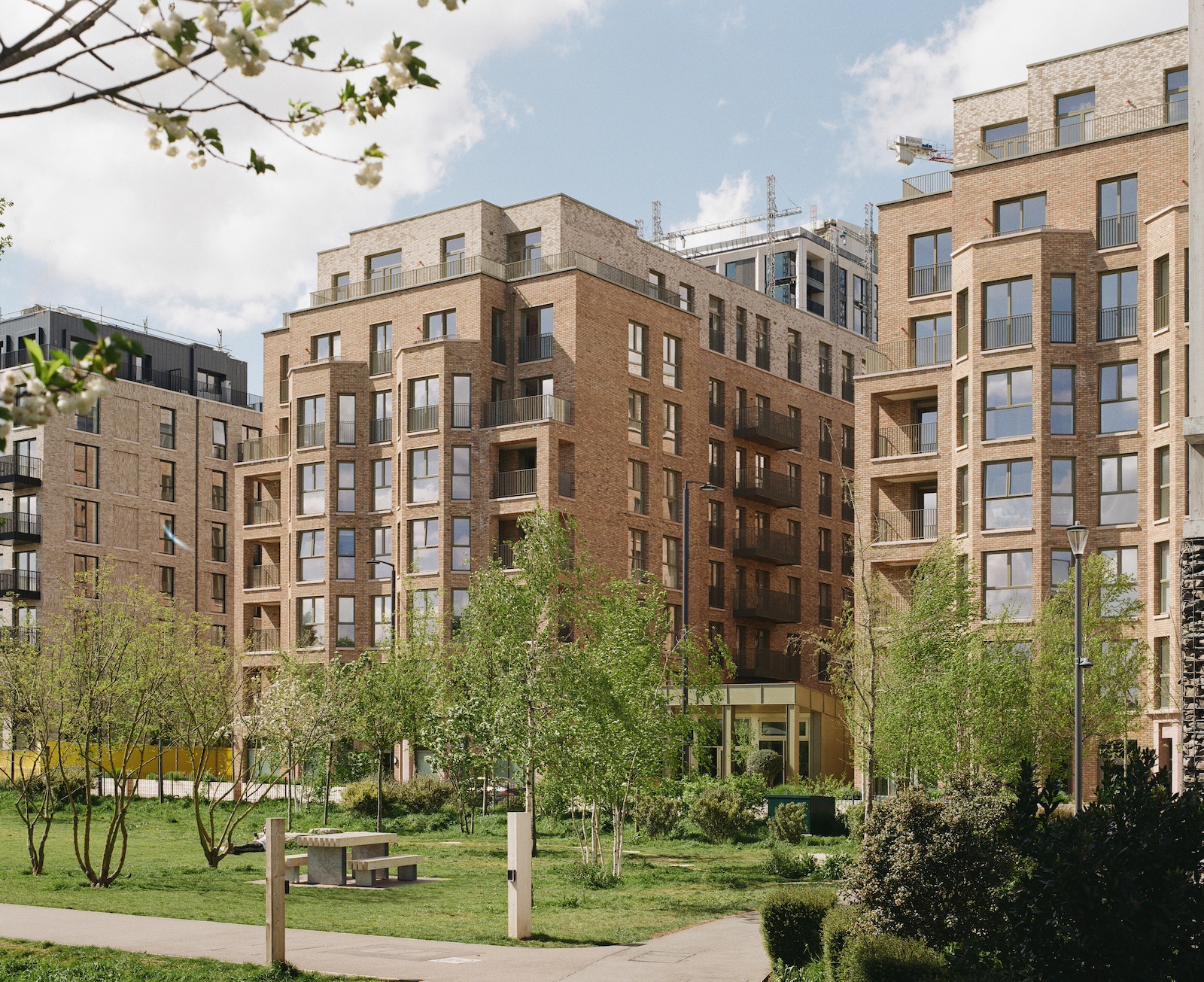
Brent Cross Town, Plots 12 & 202 by Maccreanor Lavington.
What is wider context for Brent Cross Town and your buildings within it?
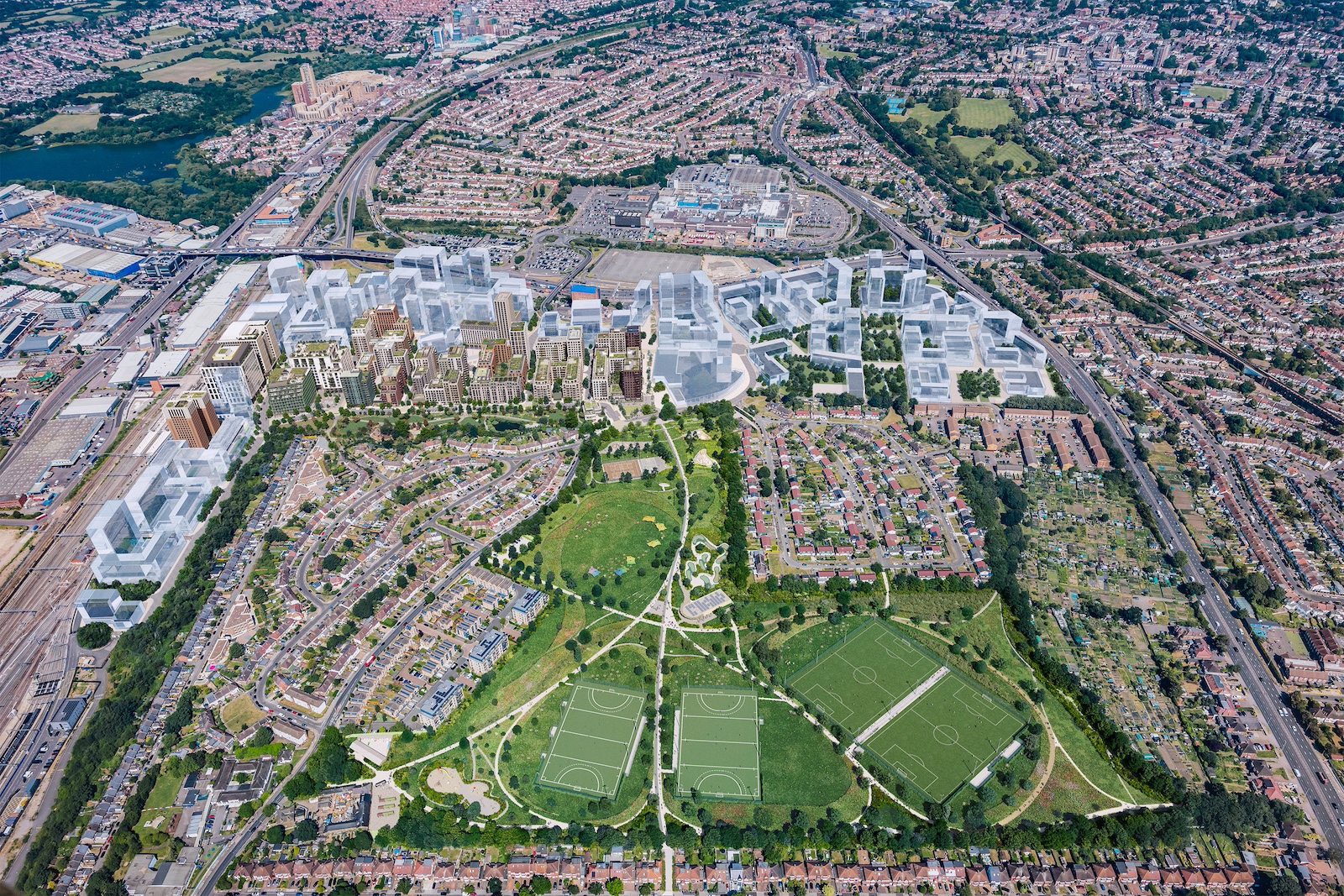
You’ll be a little bit familiar with the masterplan. It’s a huge area – around 180 acres – with 6,700 homes, 50 acres of green parks and playing fields, and a new high street running through it.
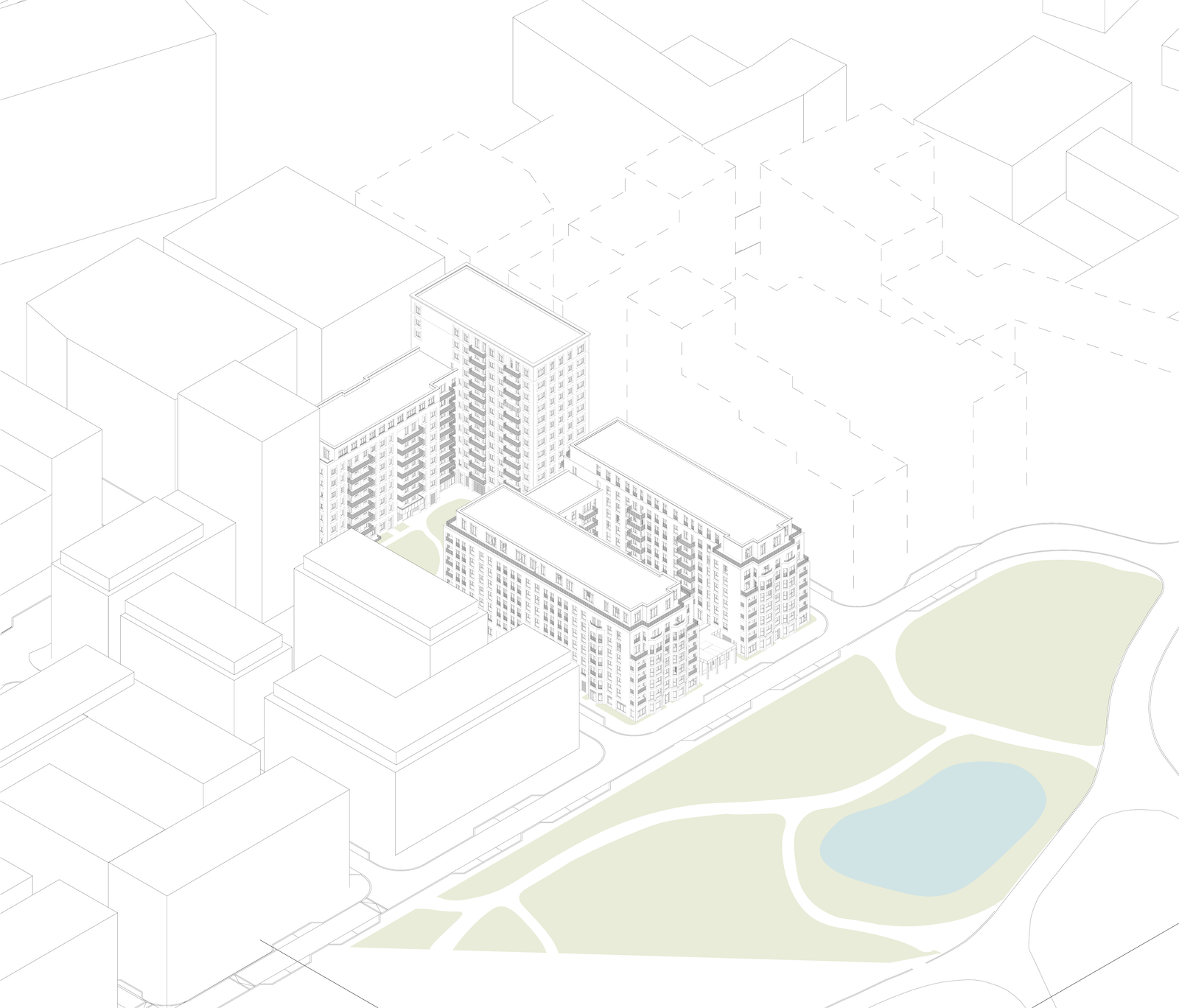
Our plot sits between two quite different environments in the masterplan. To the north is Merchant Street, which will be the new high street, running east/west from the station and to the south is Claremont Park. For the moment there’s also the temporary Exploratory park as a meanwhile use on the neighbouring plot to the east, so the buildings are very much surrounded by green space.
The special thing about our buildings is that they were the very first ones to complete construction in this large masterplan. In that respect they are setting an example for everything else to come. We’ve made decisions on our plot that have informed neighbouring designs.
What’s really interesting is how you translate an outline masterplan – something very abstract and high-level – into an actual place, into a piece of London. That’s something we’ve done before at King’s Cross as well, where the buildings we designed were among the first residential buildings in the northern part of the masterplan.
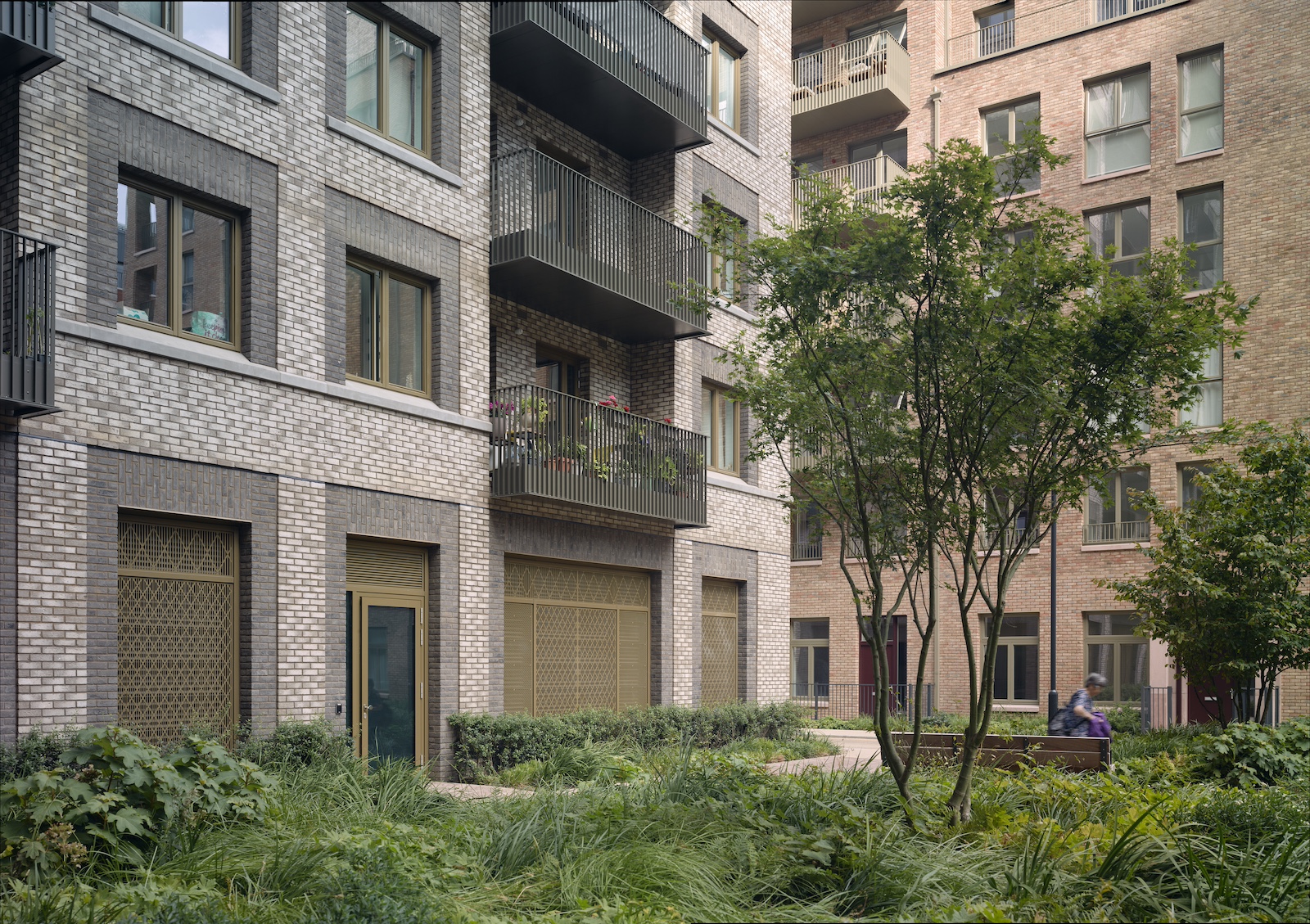
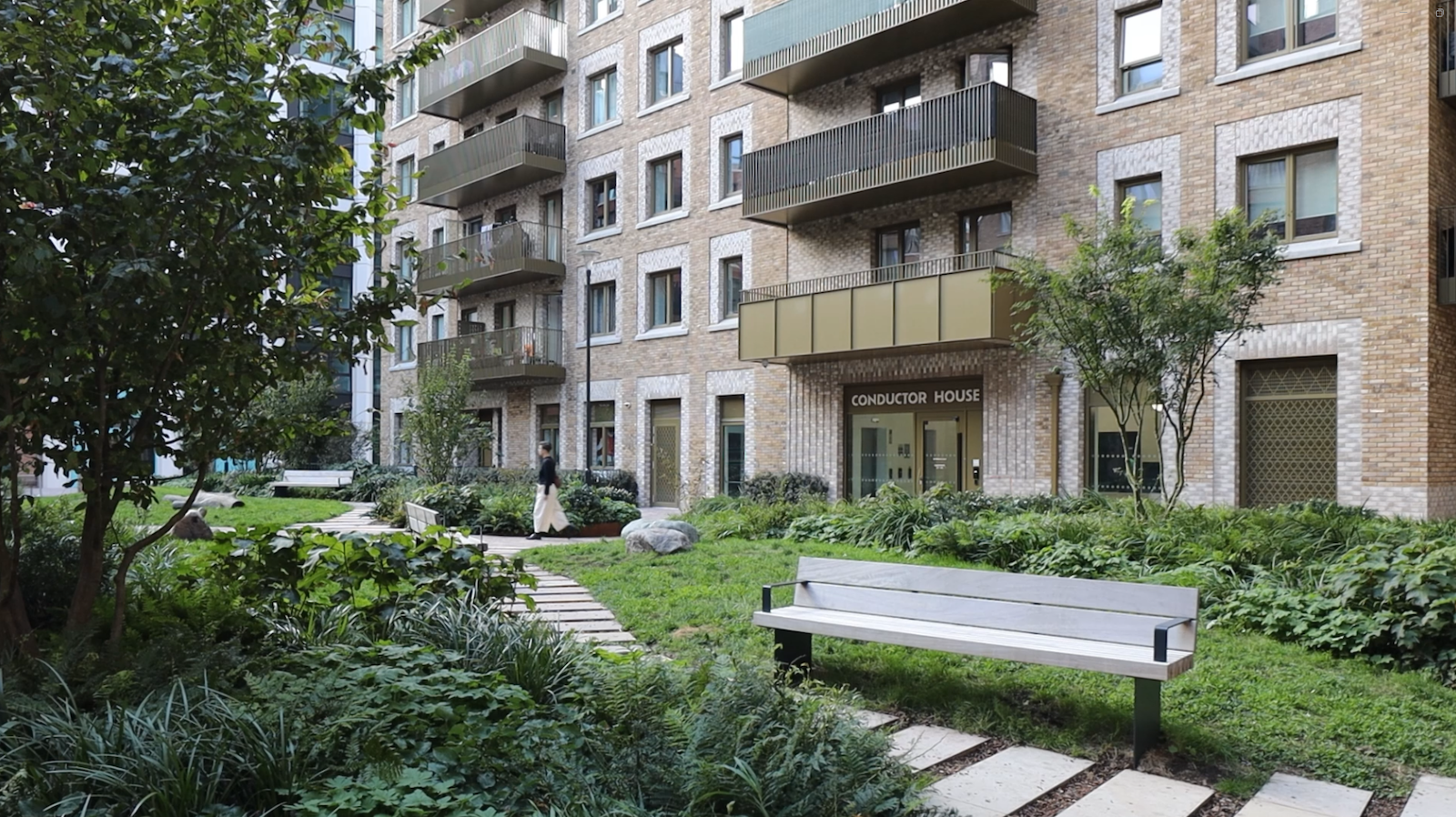
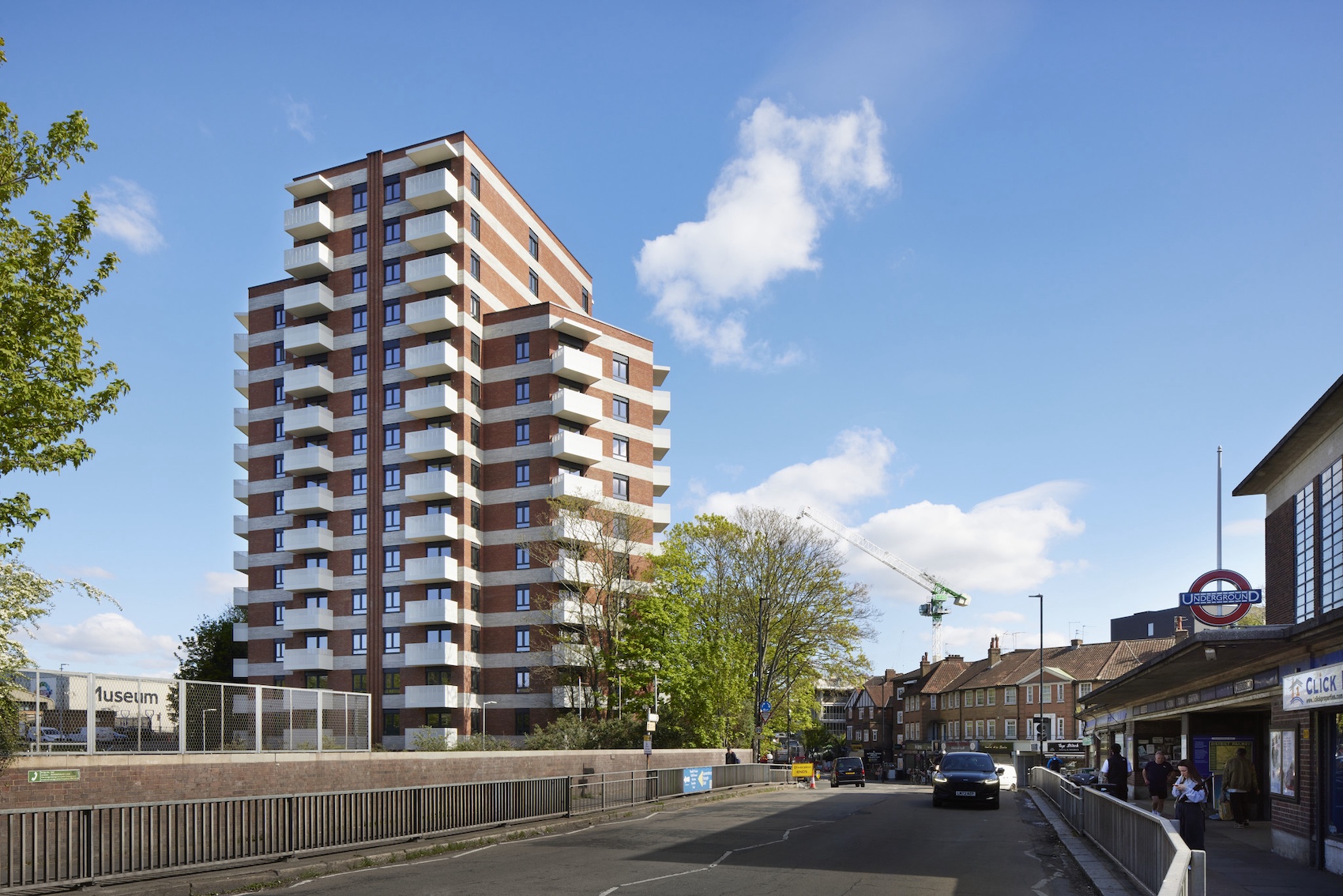
Here in Brent Cross the project consists of two buildings: the L-shaped Conductor House to the north framing the pocket park and the horseshoe-shaped Delamarre overlooking Claremont Park, with a pocket park between the two.
How did you come onto the project?
We were invited in 2016. We had previously done some plot testing for this area when Allies and Morrison were working on the masterplan for the previous site owners around 2010, so we already had some familiarity with it.
Later, when Related Argent took over the site, they ran a competition for these plots. It was quite collaborative – a kind of charrette format over a couple of months, with workshops in between.
The competition was about site capacity, but also what kind of character the place should have. Different architects explored different approaches – more fine grain, different routes through the site, neighbouring plots also included a school – and we developed our proposal through that process.
What was your response to the masterplan in design terms?
The Brent Cross masterplan was laid out to create a higher density piece of city, and when we were invited to look at two plots in the residential quarter, sitting between the future high street and the new park, it was our aim to make the neighbourhood feel urban (in a London way) but also homely. We wanted it to be welcoming, vibrant and joyful but also calm, comfortable and safe.
At the time, we were looking at the Olympic Village, which had lots of similarities and was a built example of the outline masterplan in terms of street widths and plot sizes. There, many plots are quite large ten-storey “doughnuts” with wide streets in between.
Now I really appreciate that area, but at the time it felt like it might have been better to stay closer to a more familiar London scale – something like an eight-storey height, around a 21-metre eaves, which you see in central London and historic European cities.
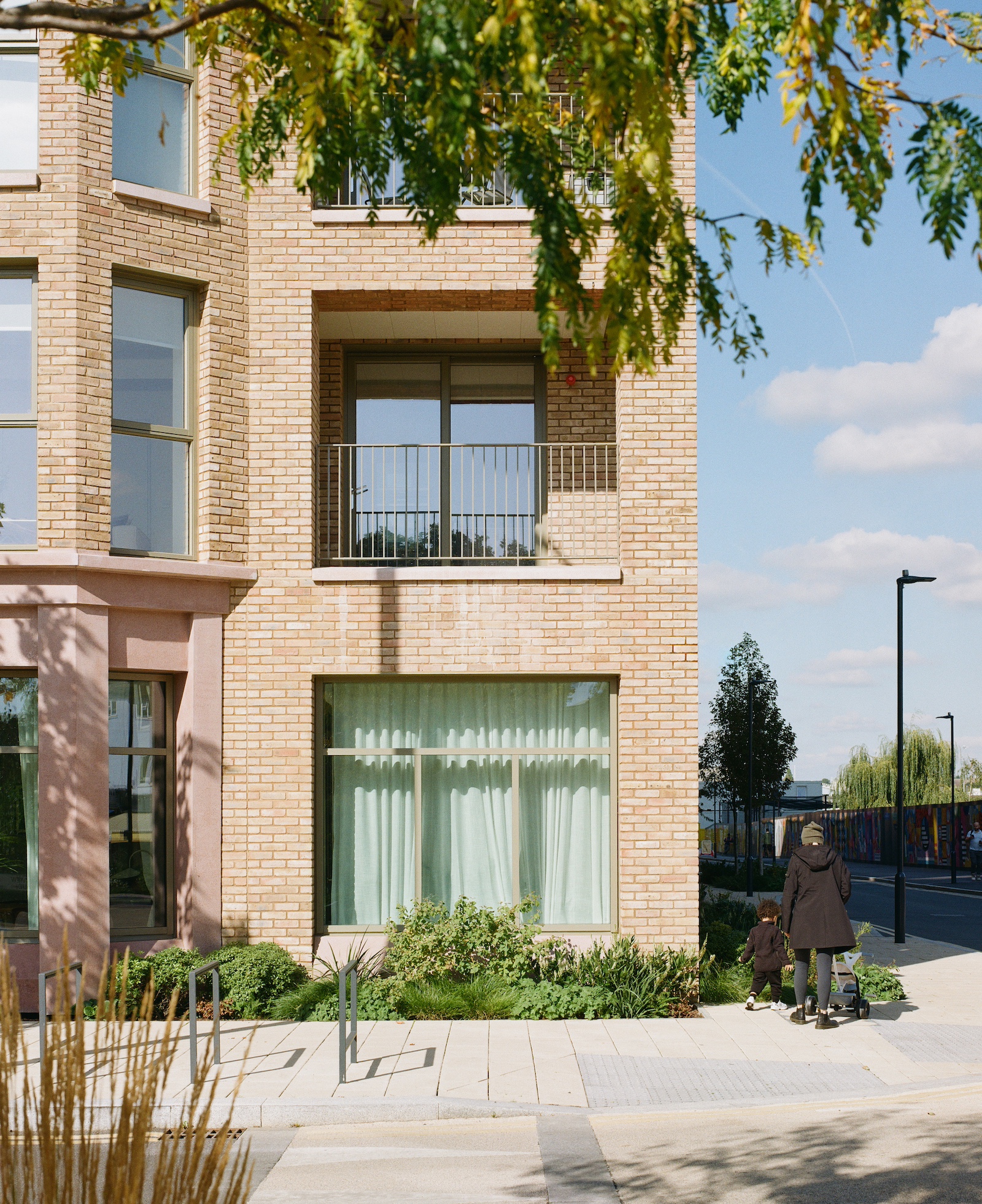
So we felt that there was an opportunity to reduce the building heights by intensifying the use the land while also making something that feels more like London.
We split the footprint area of two large plots into three smaller ones. That gave us streets and building heights that felt more comfortable, more residential, and more in tune with the suburban context. We also wanted to avoid monotony – instead of everything being ten storeys, we introduced variation, highlighting corners and creating articulation in the buildings.
We developed the idea further with “villa” buildings facing the park, a secondary route running east west through the plot. Over time, through discussion with the client, we refined this – moving routes, adjusting layouts – but keeping the core idea of creating a more intimate residential grain.
What was previously on site and what did existing residents want?
Nearby, within the masterplan area, there were three residential towers, which formed part of the Whitefield Estate, the residents of which have now all moved into one of the buildings we designed, Conductor House. These are replacement affordable homes, so those residents have been very involved in the development.
The previous buildings were really quite tired. Sometimes in estate regeneration people have more space in their previous homes than current standards allow, but that wasn’t the case here. The flats were very small, with extremely small balconies – maybe half a metre deep – and there were issues such as cladding being removed for fire safety.
So most of the residents were very happy to move. The process from the first resident engagement to the completion of construction took a long time, which can be difficult when people are waiting, but the process was very carefully managed.
There were detailed surveys to understand people’s needs – if they were overcrowded, they would receive a larger flat, for example.
Every social rented tenant also was able to choose internal finish colours and materials, to provide a sense of ownership which was really well received by the residents.
This came about over regular meetings with the Whitefield Estate Resident’s Steering Committee who had open lines of communication with the client team throughout – but also more structured monthly Q&As for all residents, and social ‘meet your neighbours’ events. So it was a real partnership approach between Related Argent as the developer, L&Q as operators and Barnet and Barnet Homes as owners of the Whitefield Estate (one half of the joint venture with Related Argent) and the residents themselves.
And we’ve had really positive feedback – people saying it finally feels like a home, that it’s warm, and that it’s a big improvement on what they had before.
With the plot sitting between the high street and the park, how did you ensure there was an appropriate threshold between the two?
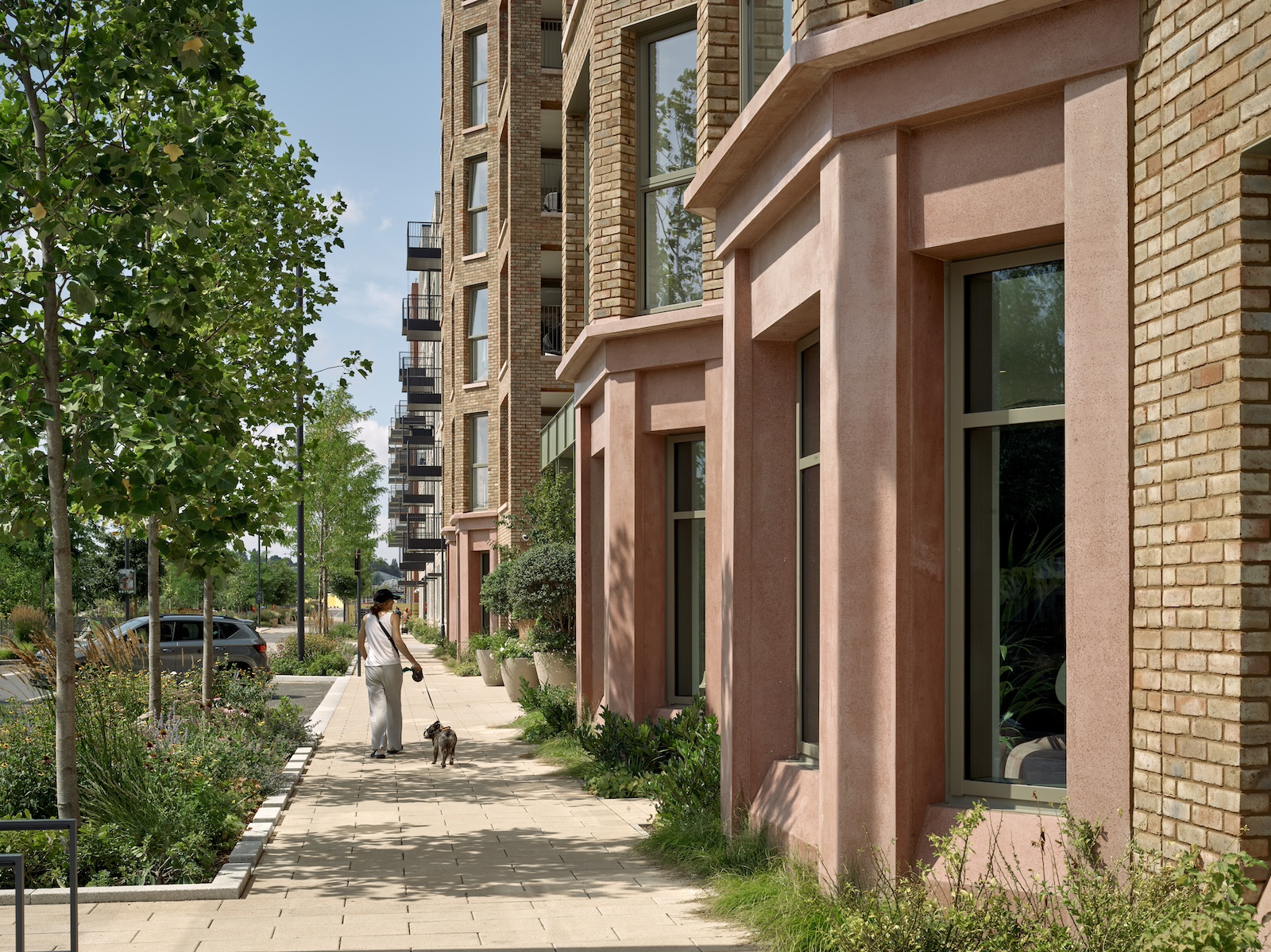
The plot straddles two clearly defined spaces: The future High Street to the north and Claremont Park to the south. We recognised that there was an opportunity to create a more residential, more intimate environment within the plot itself. We therefore split the buildings into two parts and integrated a network of smaller streets and importantly introduced a public pocket park and a courtyard garden.
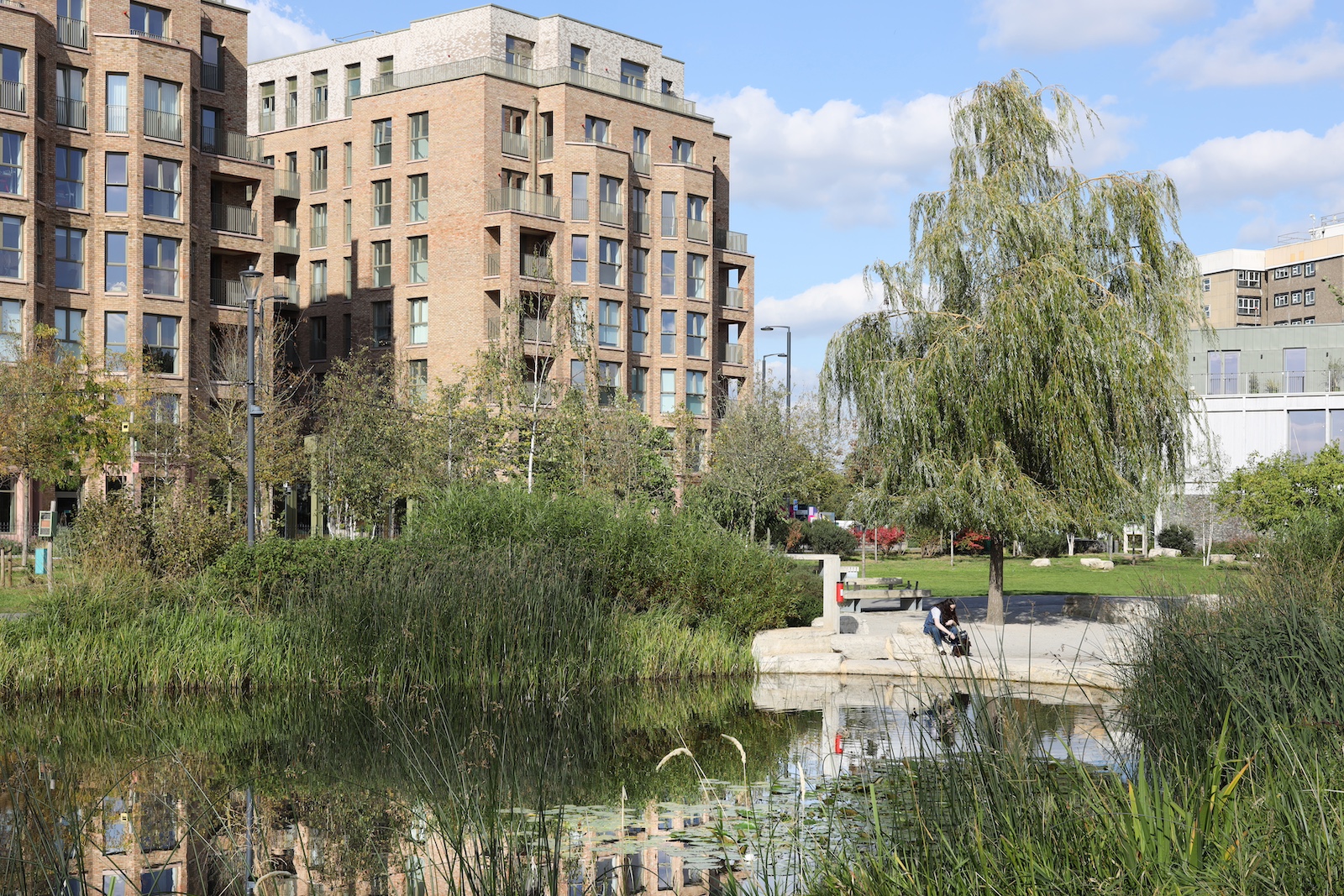
Plots 12 & 202 look south over the water into Central London.
These spaces are really important, because we strongly believe that people’s feeling of self, and their ability and desire to connect to others around them, is strongly impacted by the neighbourhood and the immediate public realm they live in.
So while the interior of the buildings are mostly private to the residents due to their nature of them being individual homes, the public realm with the facades framing these spaces, are all intrinsically linked to the experience of the homes. We see them as “outdoor communal rooms”.
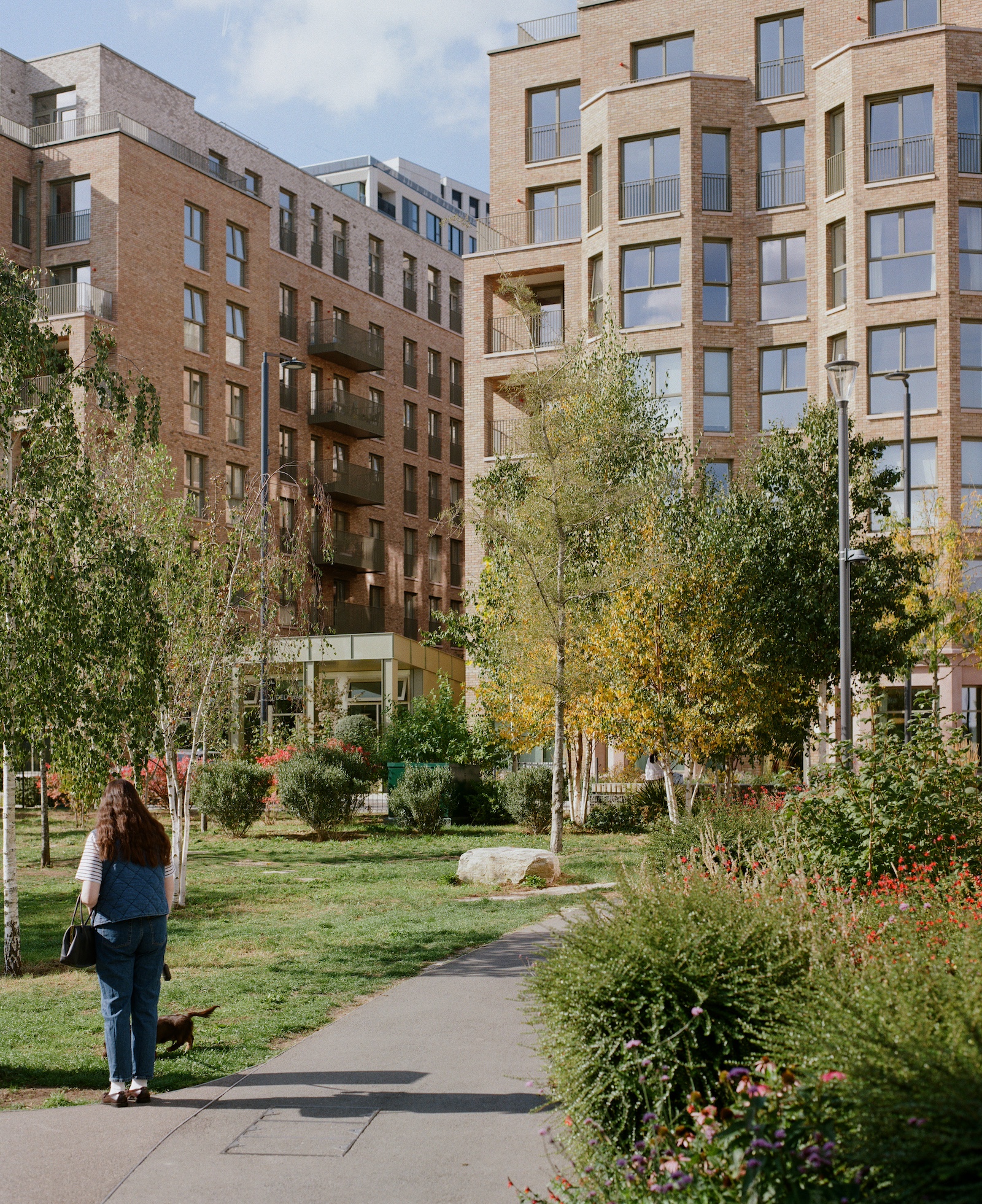
The Pocket Park is a space where different communities come together – existing residents, new residents, people moving between the high street and the park – but it’s also tucked away enough not to feel too exposed. The surrounding spaces are quite busy, so this offers something more calm and domestic.
High streets are under pressure everywhere. How is that being addressed here?
It’s a very fair question, and Related Argent see it as essential. But they see it as essential. They feel that to make this a real place, you need people to meet, shop and support local businesses. So they are committed to supporting those businesses, even if they struggle at first, because they recognise that the high street adds value to the whole development.
There are already some early successes on neighbouring plots – a co-op, a restaurant – and local businesses are being supported to move into the new units.
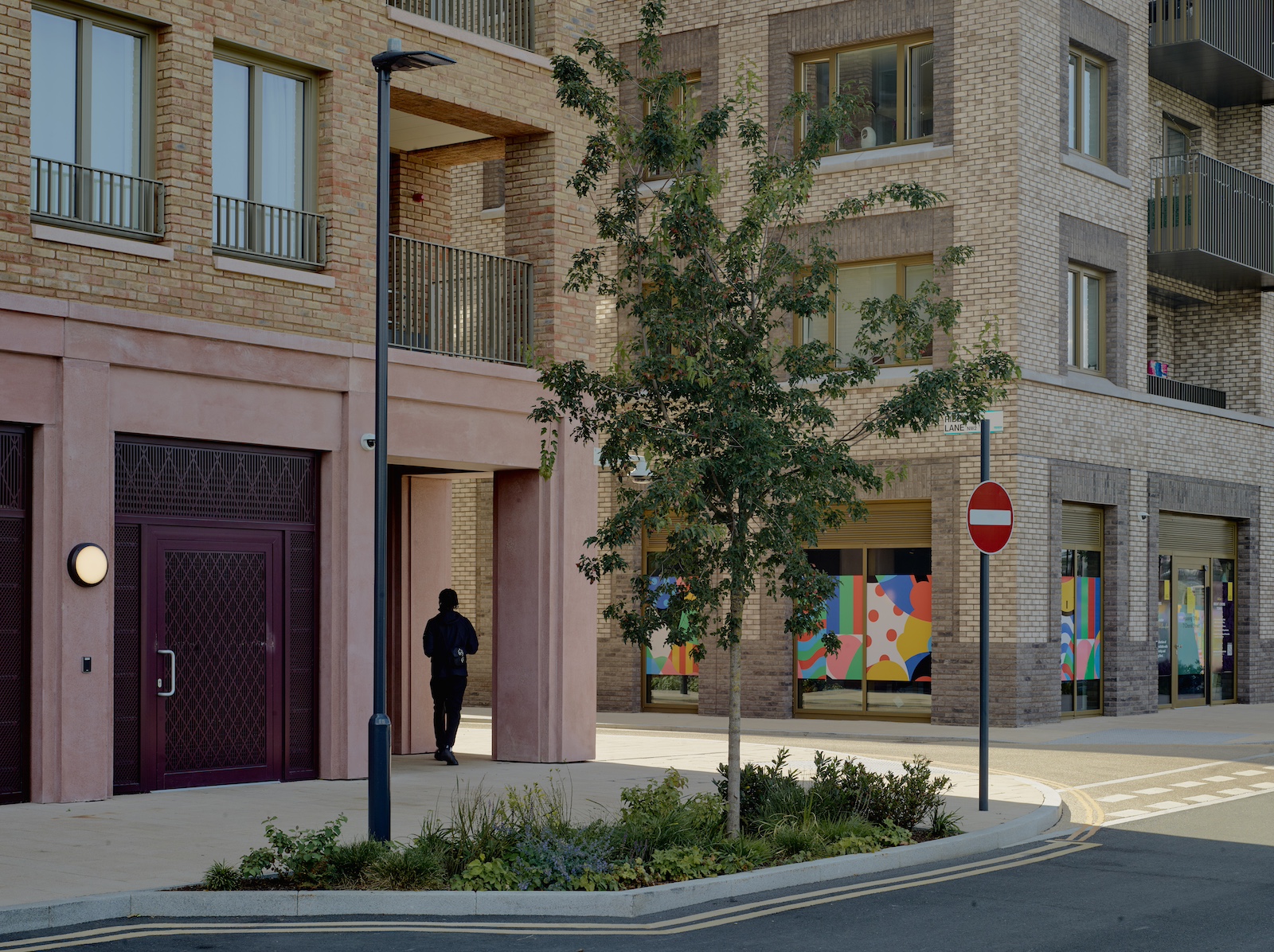
Initially, our ground-floor design along the high street was more uniform. But later, Related Argent led a process, even after planning permission and with the contractor already on board, to rethink the expression of the individual retail unit so that it would feel more like a traditional London high street. That meant introducing individual shopfronts, with variation, awnings, signage zones and the ability for each business to express itself. We worked with neighbouring architects to coordinate this approach.
The idea is that the units are adaptable over time. The shopfronts can change, signage can be added, and businesses can personalise their spaces. It might look a bit plain at first, but it’s designed to evolve.
How did you design those thresholds on the ground floor plane, between private and public realm?
We always think very carefully about the ground floor, where entrances are placed, how spaces are used, and how they animate the street. The L-shaped building is effectively two buildings, each with its own entrance, while the horseshoe-shaped building has a central pavilion entrance facing the park, with additional cores either side.
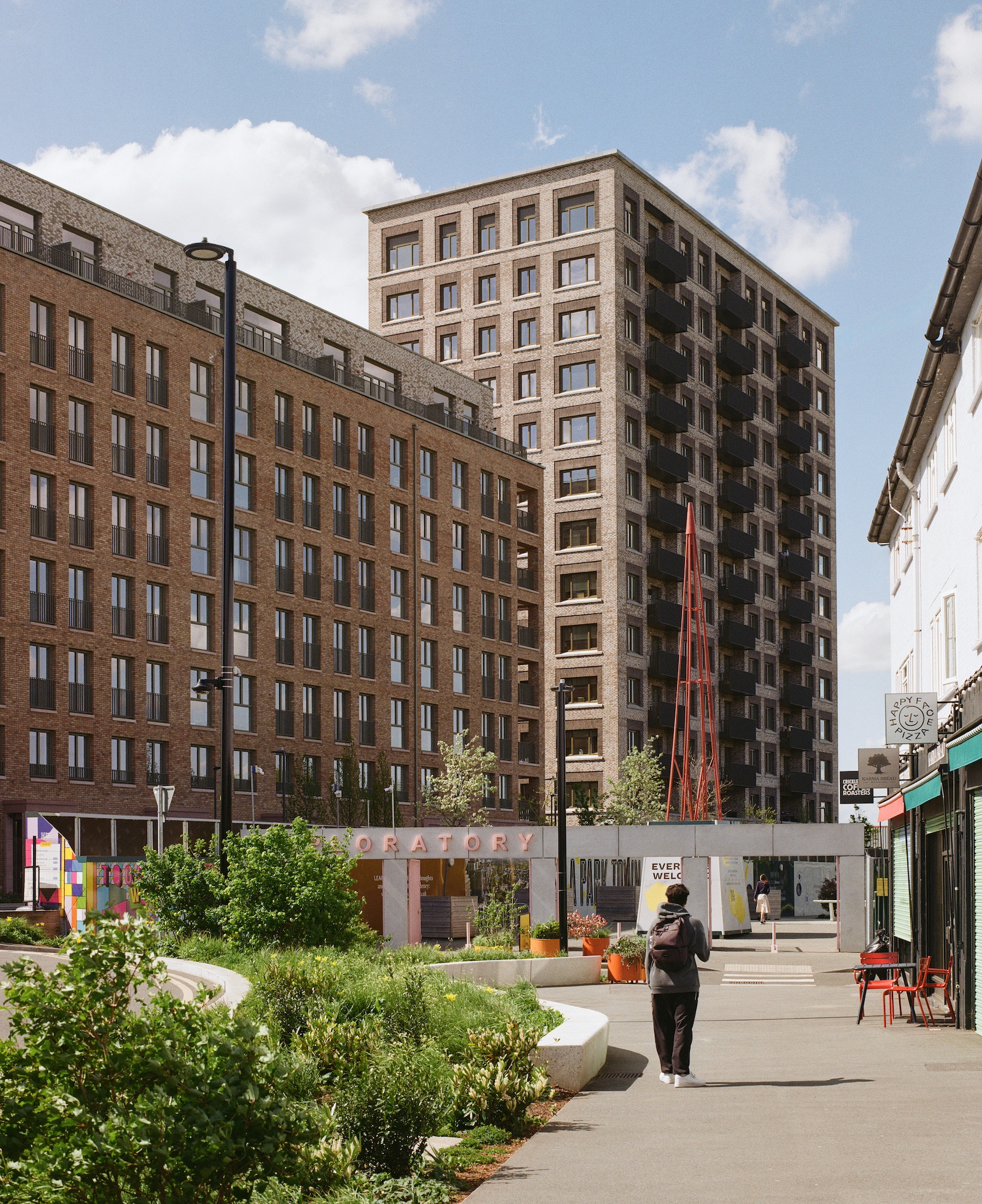
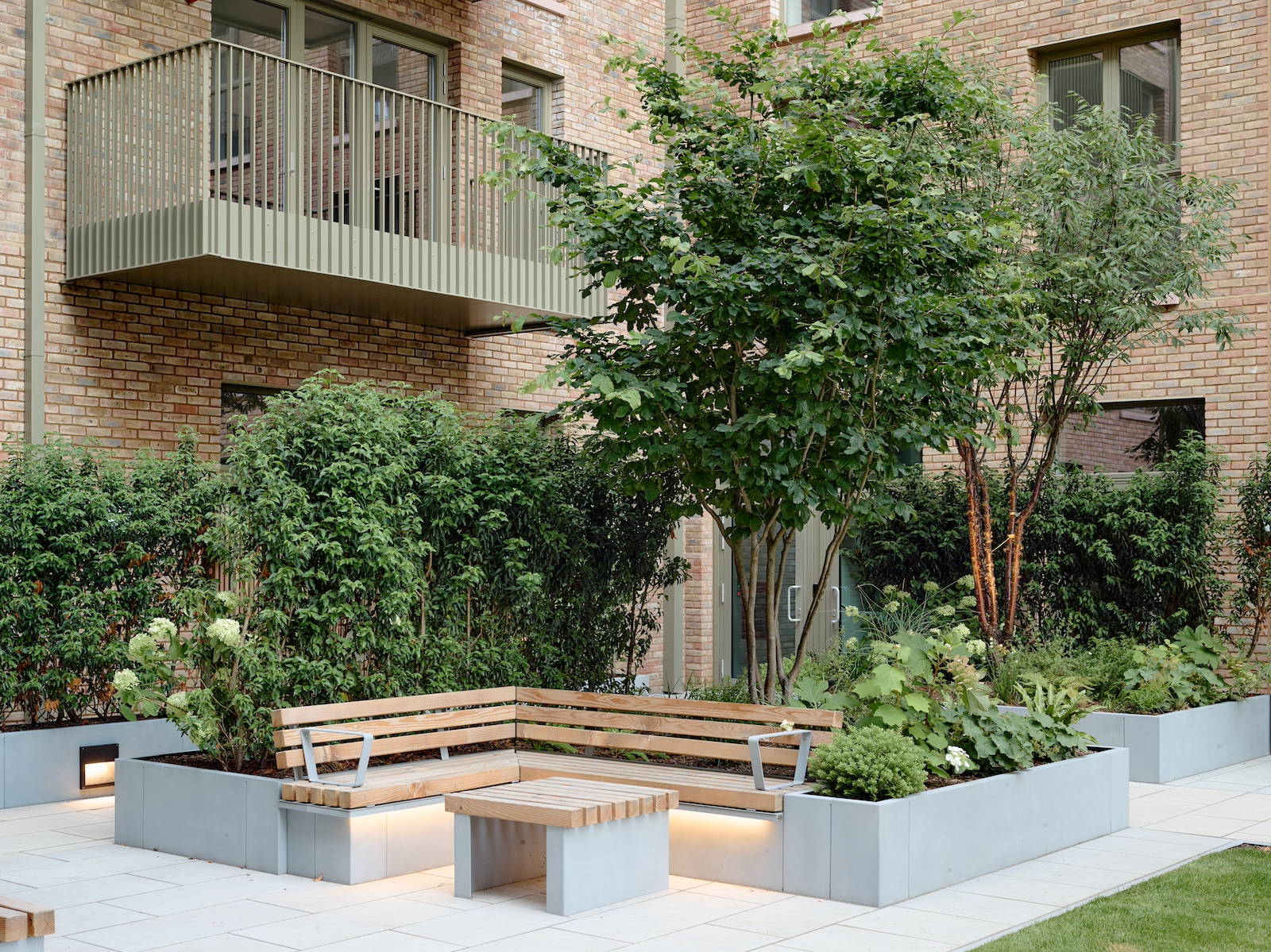
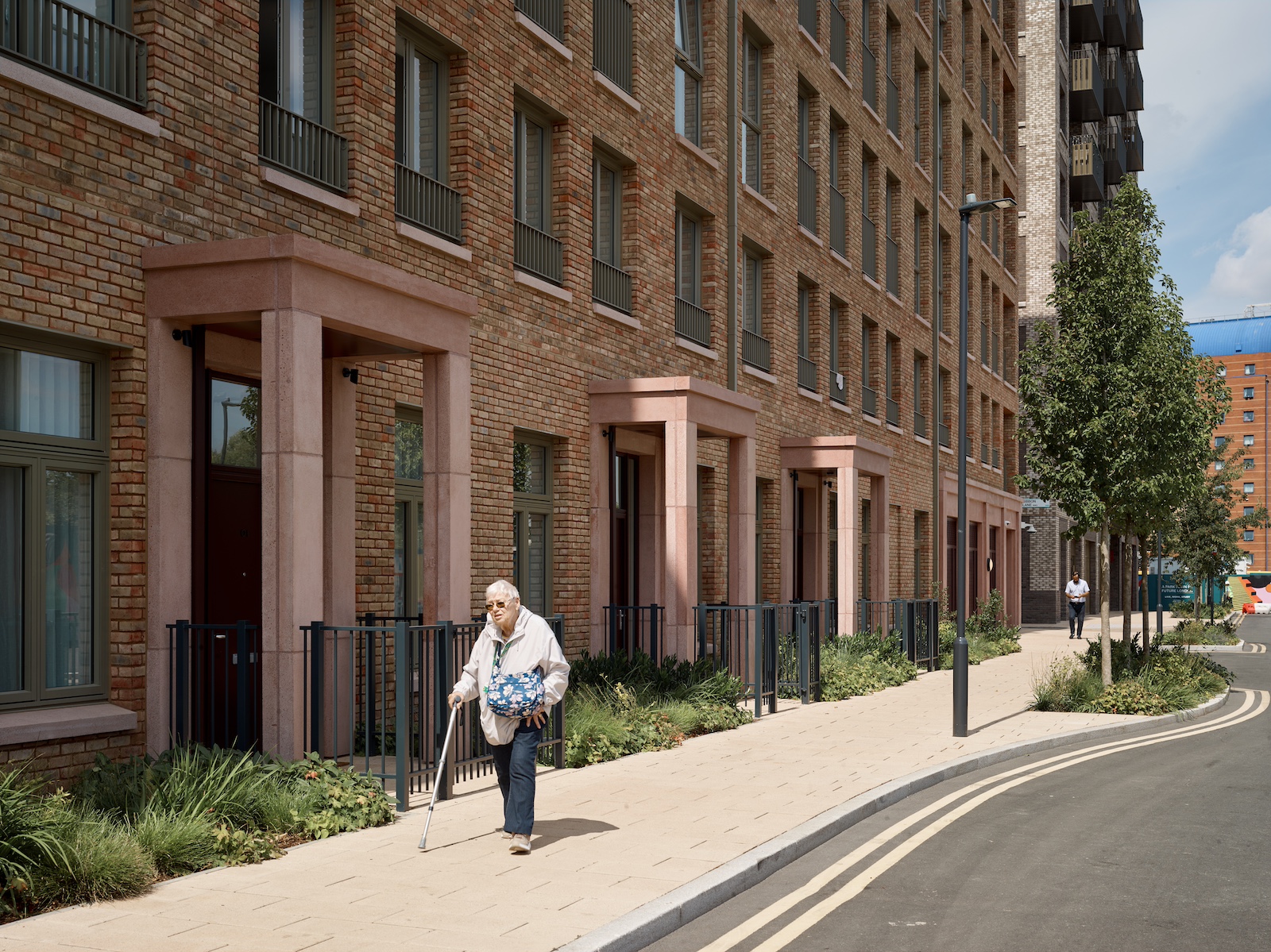
We “celebrate” communal entrances and give them a presence in the elevation design. This is to aid wayfinding and to make coming home enjoyable. On the ground floor facing the park the Delamarre has shared amenity spaces such as a workspace, dining area and gym. These provide activity and light spilling onto the street throughout the day and night, providing what you might call passive surveillance.
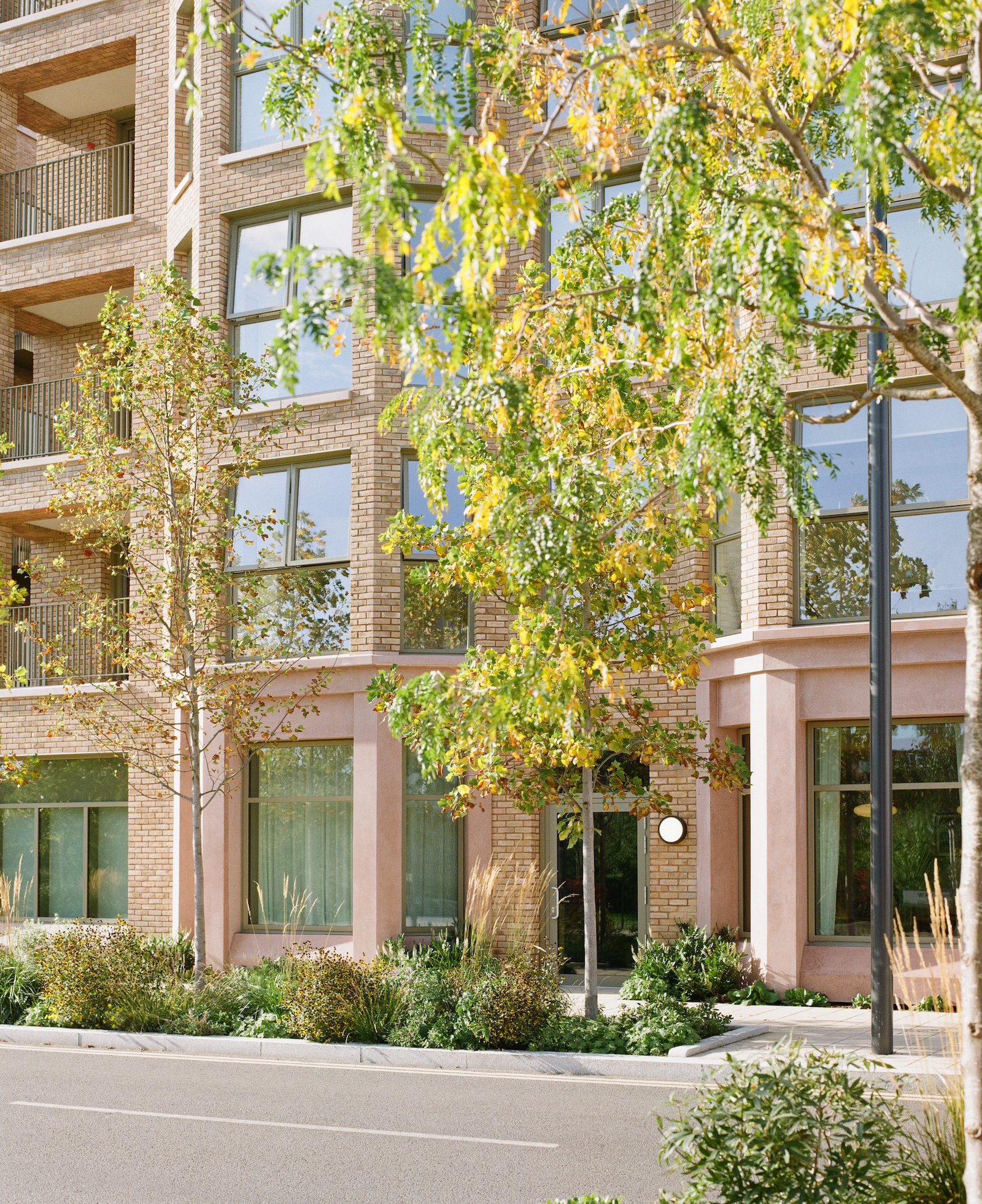
Along the residential streets, the ground-floor units have individual front doors, with small front gardens, porches and gates. That gives a degree of privacy but also encourages neighbourly interaction, people coming and going directly onto the street.
Beyond the high street, how did you approach building a sense of community?
A lot of effort went into that, both spatially and through the wider development process. Even before residents moved in, the parks and public spaces were completed, so people from the surrounding neighbourhood were already using them. Related Argent run a full programme of indoor and outdoor events in order to bring communities together.
There’s also a visitor pavilion with a large model of the site, it works as a café and community space that people can book and use. It’s a really important social hub.
There has also been a strong focus on local employment, around 20% of construction jobs were local, with apprenticeships and work experience programmes. One work experience student even became a resident in Conductor House.
How did you approach daylight, density and internal layouts?
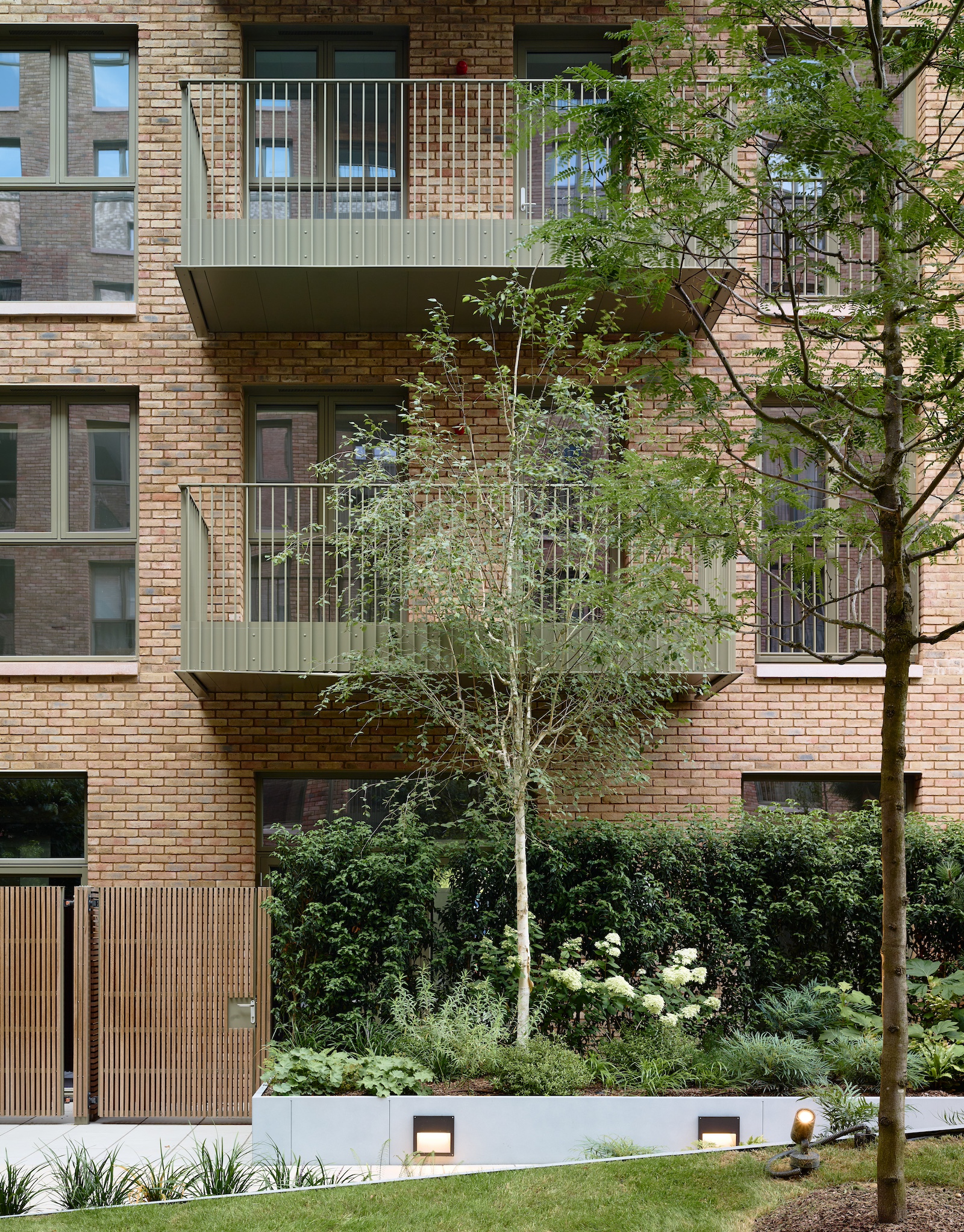
All of this is tested again and again until it works. For example, the ground-floor apartments are slightly taller to improve internal daylight levels. They run all the way through the block, with a private terrace within the communal courtyards, so they are really generous. We also think a lot about window design. Clients often want very large windows, but we feel that’s not always what people need. Particularly in affordable housing, having a windowsill can be more useful for furnishing and the placing of radiators.
So we try to balance generosity with practicality, and express the windows through brick detailing rather than just making them bigger. On Conductor House this is done through a contrasting window surround and a sloping window sill.
How was the mix of housing determined?
On the affordable plot, the mix was driven by the needs of the existing residents.
On the private plot, the mix of one-, two- and three-bedroom units was developed by the client and refined repeatedly. (Conductor House: 120 affordable homes – 77 per cent affordable rent, 15 per cent shared ownership, 8 per cent LLR. Delamarre: 170 market sale homes – 100 per cent private).
Across the wider masterplan, there’s a deliberate strategy to create a diverse community – build-to-rent, private sale, student housing, senior living. Each is in a separate building, but together they create a mix of ages and lifestyles from the outset.
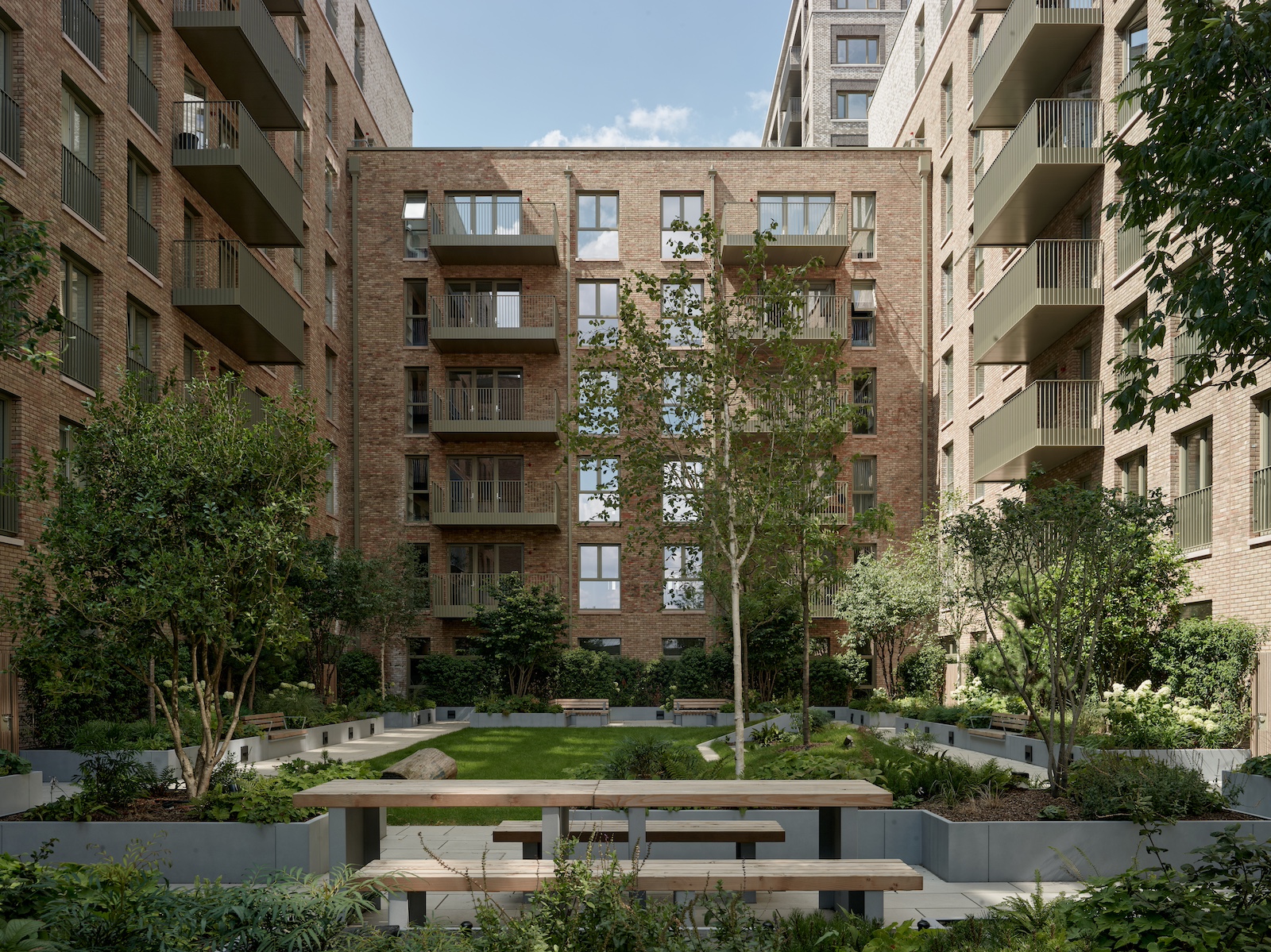
“We always think very carefully about balconies so that they are actually usable. Here, many are designed as “half in, half out”. That gives you the benefit of views and sunlight, but also a sense of enclosure. Especially in taller buildings, that makes them feel safer and more comfortable to use.”
Credits
Architect
Maccreanor Lavington
Developer
Related Argent
Housing operator
L&Q
More pictures